From "Search for Me" to "Just Gaoding It for Me" | Deep-Dive Review of the Nami AI Super Search Agent

The end goal of search isn't more information — it's better answers.
It's an Agent with search capabilities, not a search engine with Agent features.

👦🏻 Authors: Xiaoju, Jingshan
🥷 Editor: Koji
🧑🎨 Design: NCon

Internet companies worldwide are building AI Agent products, each in their own way.
Yesterday, Zhou Hongyi held a launch event in Beijing for 360's Agent product, "Nami Super Search Agent." Crossing was invited to attend and bring you firsthand coverage and a hands-on review.
After the event, Koji sat down with Zhou Hongyi for a one-on-one interview, where Zhou answered ten questions. That interview is published in today's secondary article.
🚥
The AI transformation of traditional search is no longer optional — it's a matter of survival.
Whoever can better integrate AI capabilities will gain the upper hand in the next round of competition.
According to April 2025 data from overseas research firm Similarweb on the world's top ten websites by monthly total visits, traditional search giants including Google saw widespread traffic declines. Only ChatGPT bucked the trend with growth among the top 10.
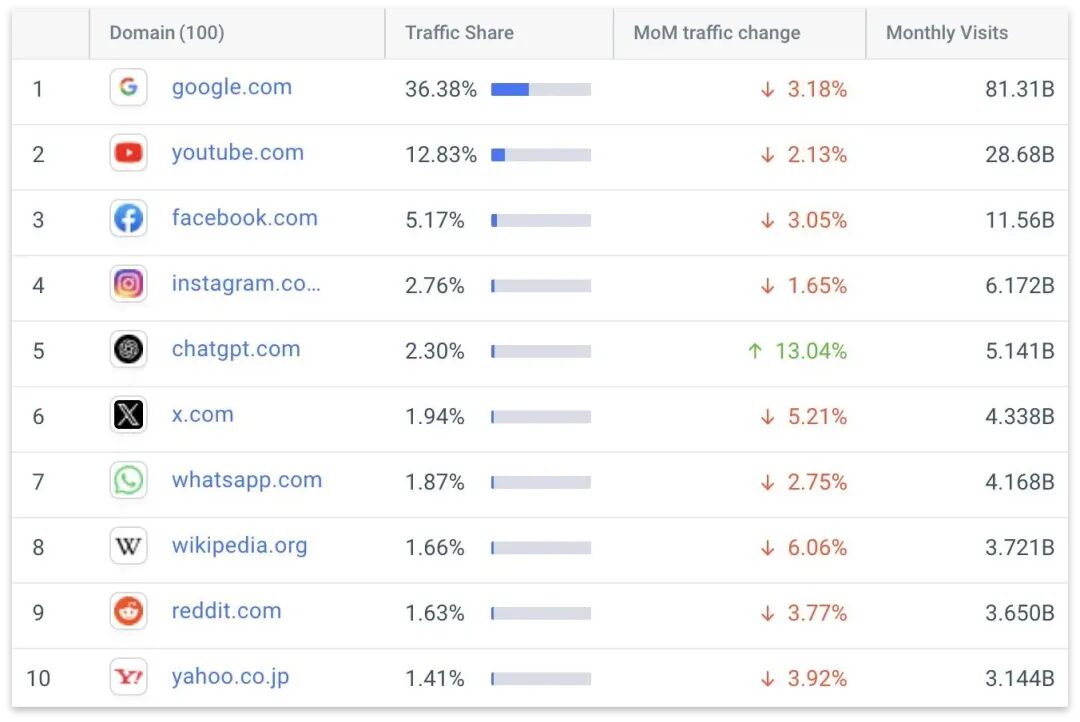
Google Search — the "lighthouse" tech giant that has witnessed the internet's entire evolution — is now using AI as a defibrillator for its traditional search business: launching AI Mode and weaving Agent capabilities into the consumer experience.
But this trend of "search engines transforming into AI Agents" isn't unique to Google.
In China, we've also found a product that recognized AI's potential to reshape search from day one:
🚦
Nami AI Super Search
A few weeks ago, Crossing published an in-depth review of 360's Nami AI Super Search. We were impressed by its ability to gather vast amounts of information, embed Agent capabilities, and autonomously compose professional reports.
At yesterday's launch, we noticed that Nami AI Super Search has been fully upgraded into an AI Agent product, with its application scenarios significantly expanded.
As for its foundational professional report-writing capabilities, Crossing has already thoroughly tested and reviewed those in our previous article, "The World's #2 AI Search: What's Behind Today's 'Super Search' Launch?"
This time around, we're "exposing" how this closely watched AI Agent product performs in new application scenarios.
Letting AI Find the Most Worthwhile Products to Buy
One of the biggest highlights of Nami AI Search this time is its new shopping scenario, which largely solves the problem of "seamless" user experience.
Now, it can log into Xiaohongshu, deeply analyze notes and guides across the platform, access Taobao and JD.com for price comparisons, and — with your consent — directly add items to your shopping cart.
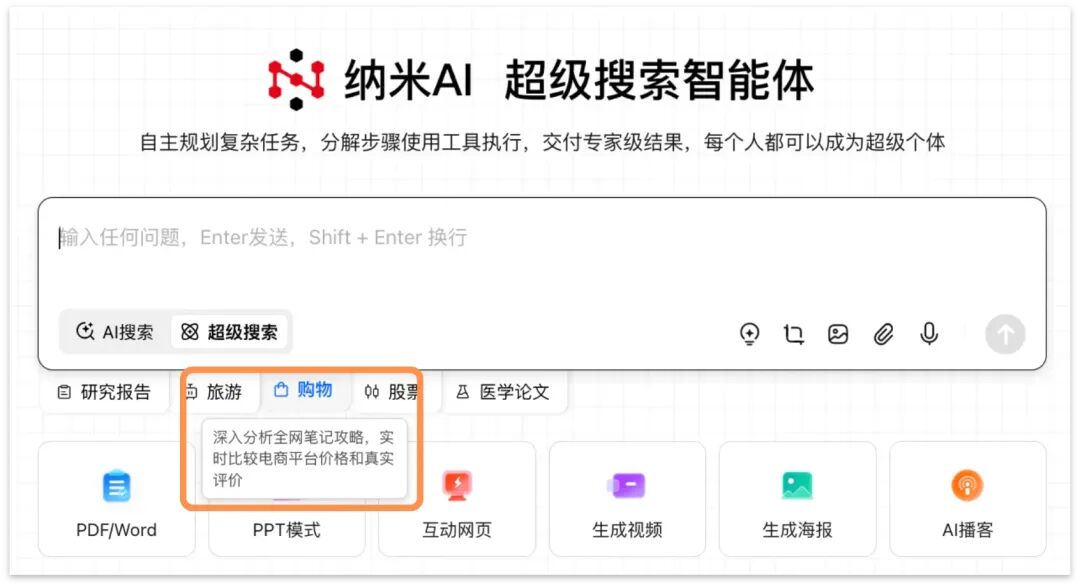
Crossing chose "film camera" as our test case for Nami AI Search.
For example, I entered a deliberately vague prompt:
I want to buy a film camera, budget under 1,000, something lightweight.
Now, Nami AI Super Search's interface has been split into two sections: a workflow panel on the left and a task panel on the right — more intuitive than the previous version:
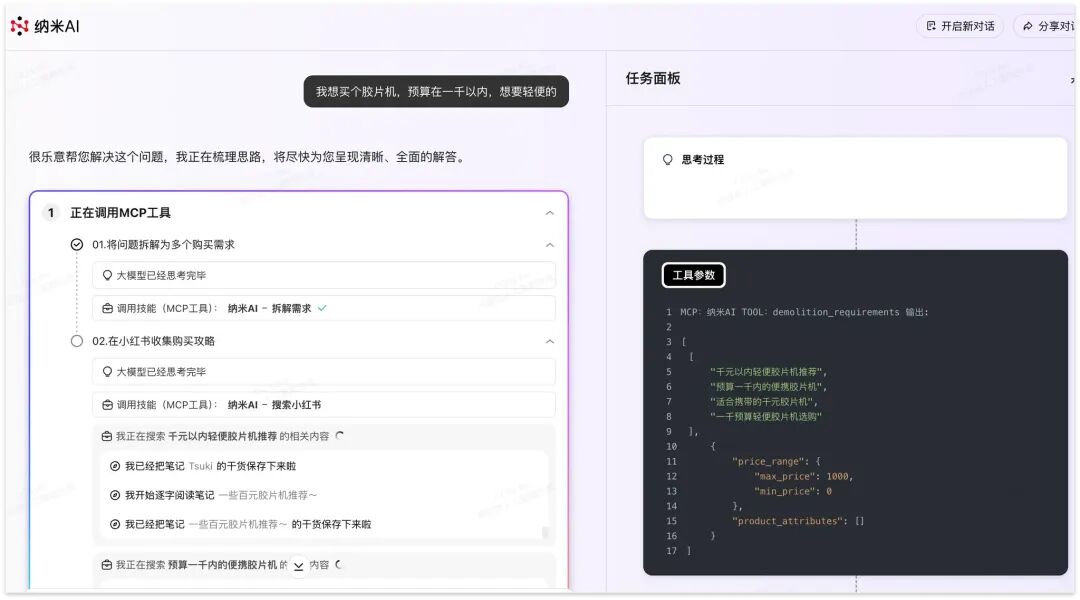
Then, based on the "purchase" scenario and my requirements, Nami AI broke down the tasks and fully simulated a person's thought process while shopping: first searching for guides on Xiaohongshu, then searching across major shopping platforms for comparison, and finally making the purchase.
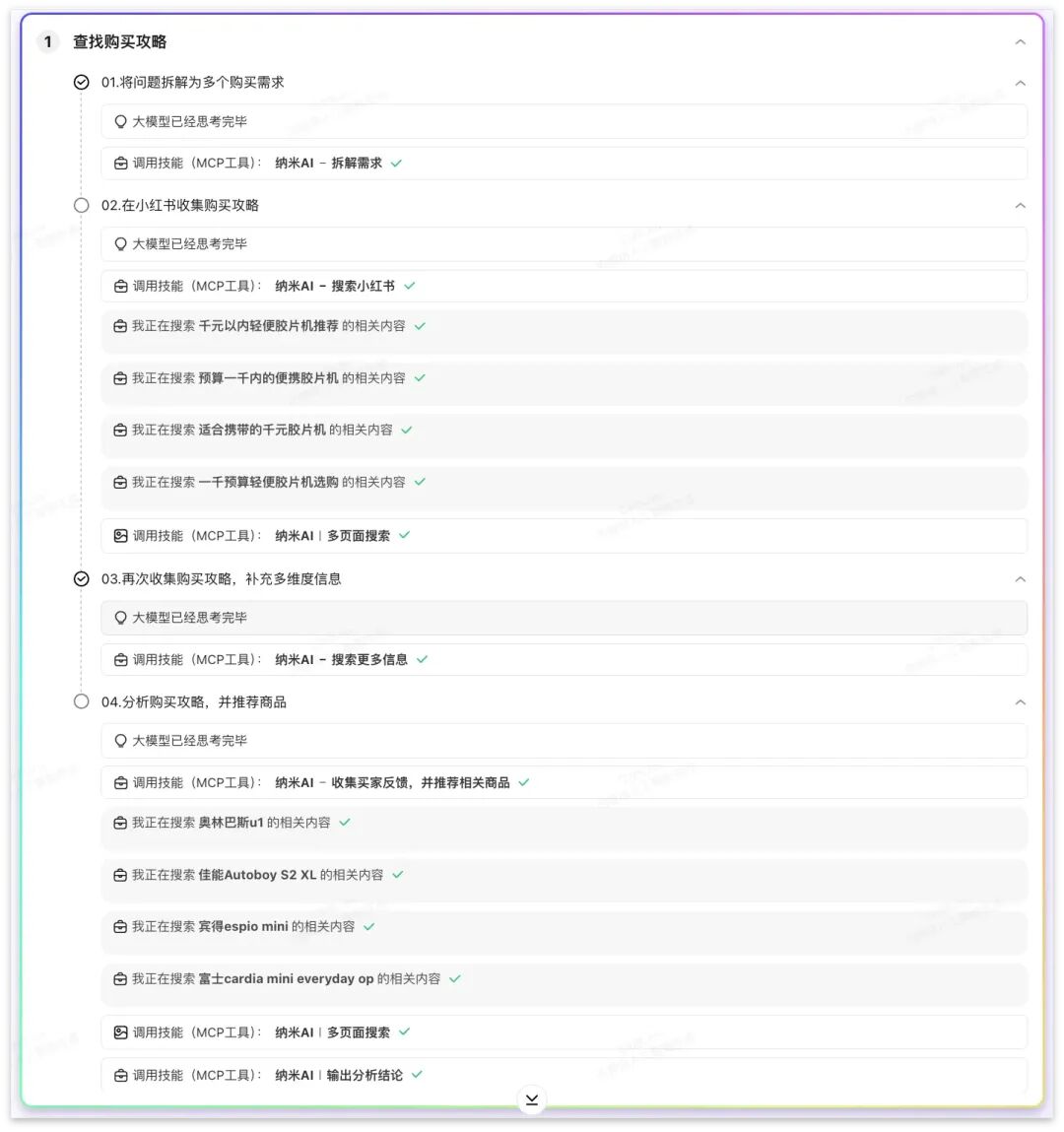
The first difference from our previous Nami AI Super Search review is that this time, its "finding purchase guides" capability is significantly stronger.
Rather than being limited to several hundred conventional web pages, it now uses Xiaohongshu as its primary source for purchase guides.
I recorded a GIF so you can see for yourself how Super Search automatically opens multiple pages and surfs through Xiaohongshu frame by frame, even reading comment sections:
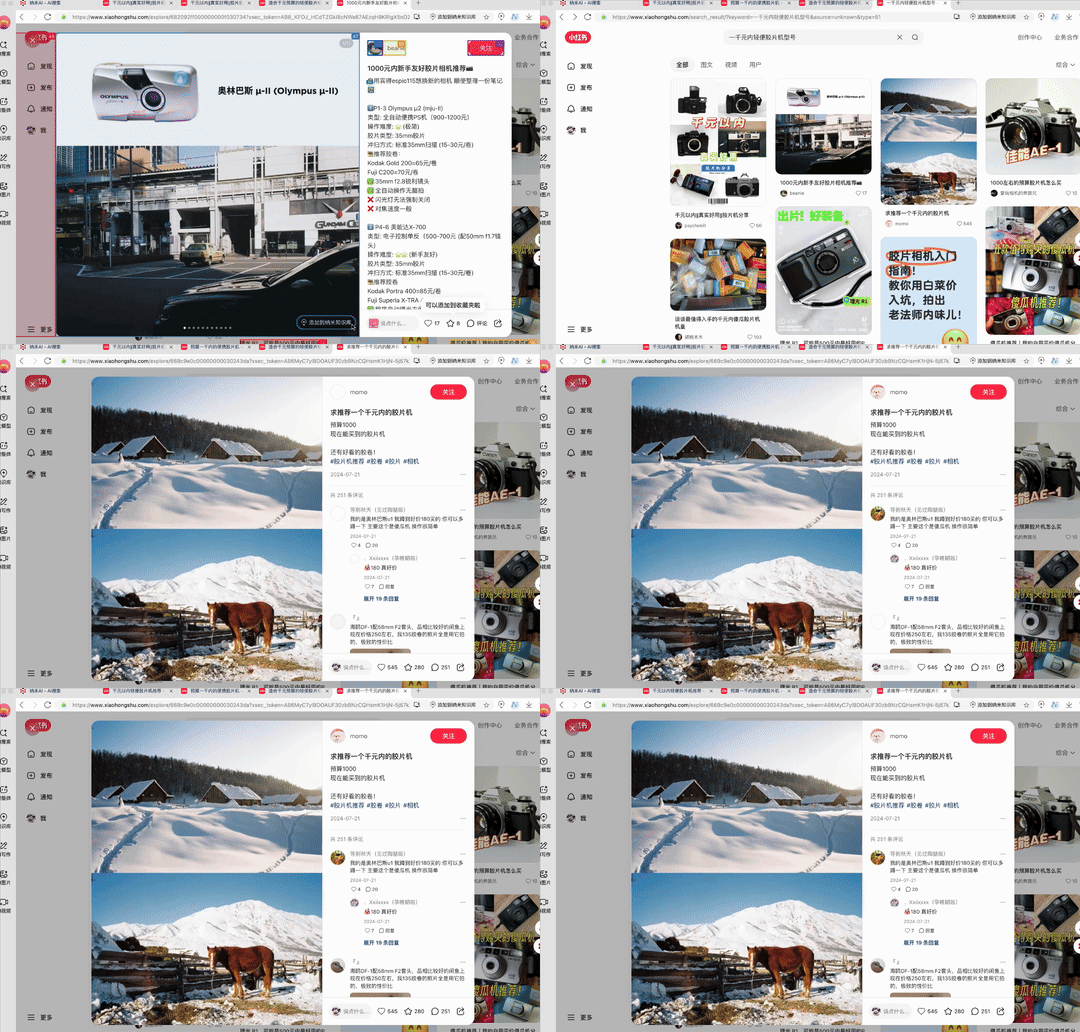
The same approach applies to gathering shopping information from Taobao and JD.com.
During task execution, Nami AI Super Search doesn't just read Xiaohongshu and its comments — it also reads e-commerce product reviews:
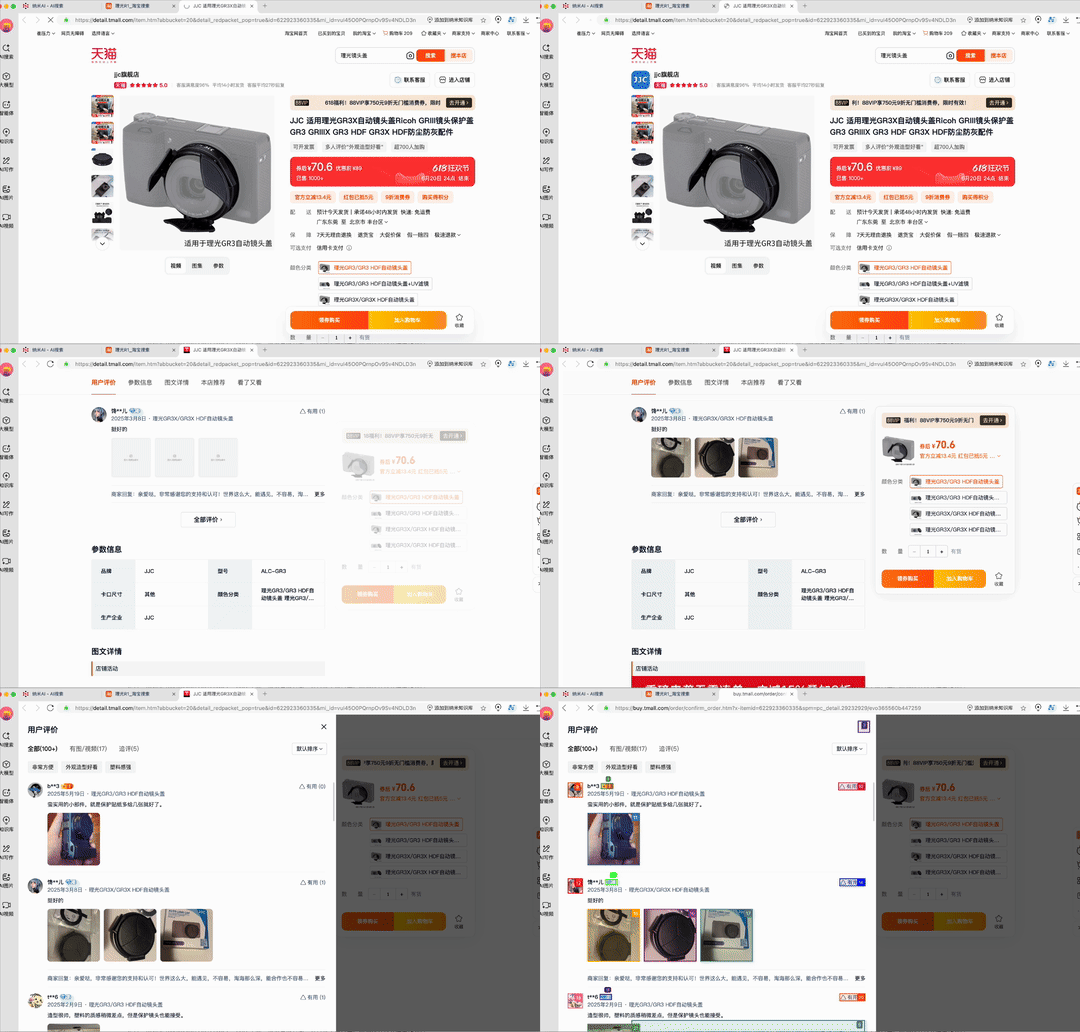
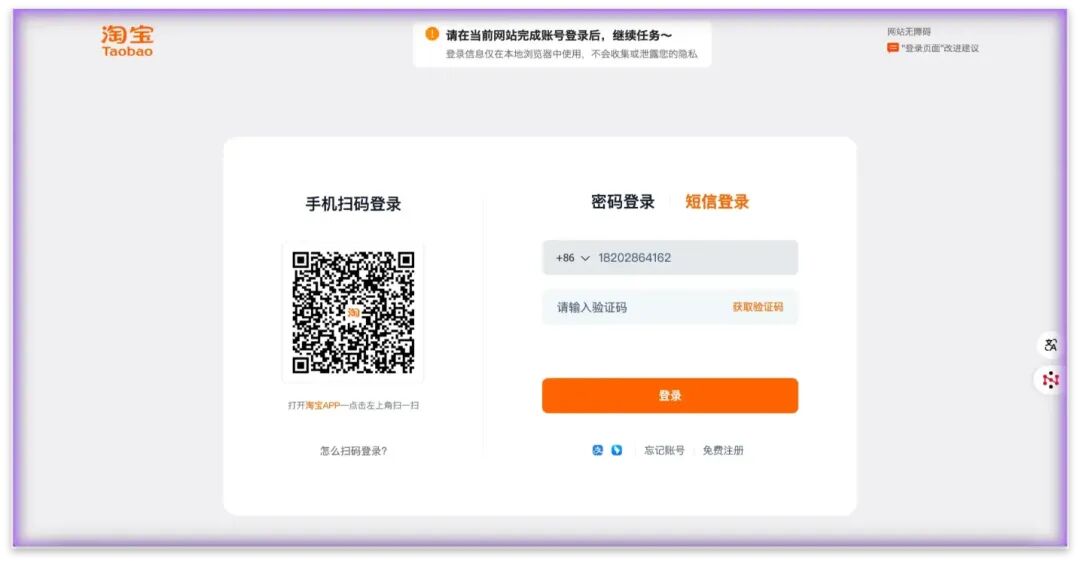
Nami AI Super Search uses your personal Taobao and JD.com accounts, so the content it surfaces isn't skewed by algorithms.
One notable point: Nami AI can execute multiple searches simultaneously, saving time.
We can see that after breaking down subtasks, it searches four related questions in parallel. How much GPU compute this burns through, we can only "imagine."
Opening multiple pages simultaneously and searching in parallel yields more comprehensive information — possibly more efficient and precise than what an individual could gather manually.
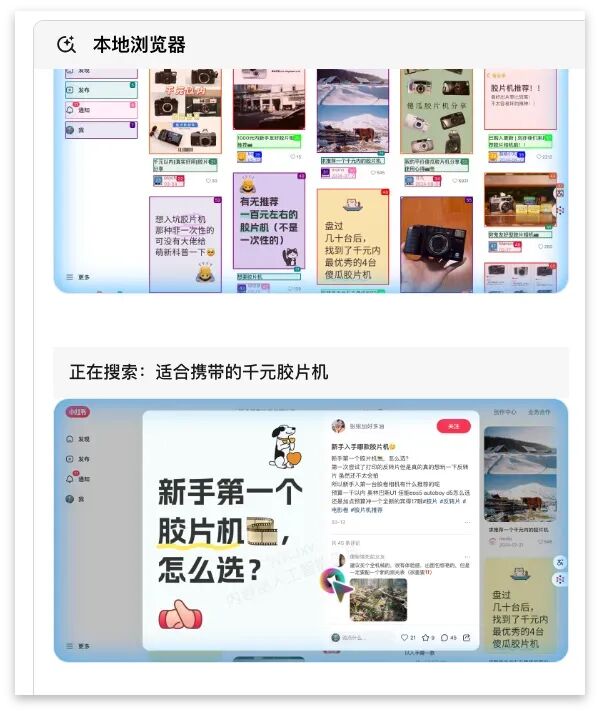
Moreover, it meticulously logs every operation, both to clarify information sources and to reassure privacy-conscious users with transparent processes.
After carefully reviewing these search logs, Crossing was pleasantly surprised to find that Nami AI Super Search can assess the reference value of notes based on their like counts.
For instance, if a Xiaohongshu guide has relatively few likes, Nami AI Super Search will automatically filter it out as an information source. This effectively reduces information screening time and quickly surfaces quality content.
This "human-like" behavior gave me a persistent feeling while using Nami AI Super Search: Isn't this something only I, as a human user, could do?


Additionally, after completing a comprehensive search, Nami AI Super Search conducted a secondary search to deeply analyze the four products that emerged from the first round.
It then compiled a comparison report, focusing on performance, ease of use, and price, with detailed breakdowns of each model's pros, cons, and ideal user profiles.
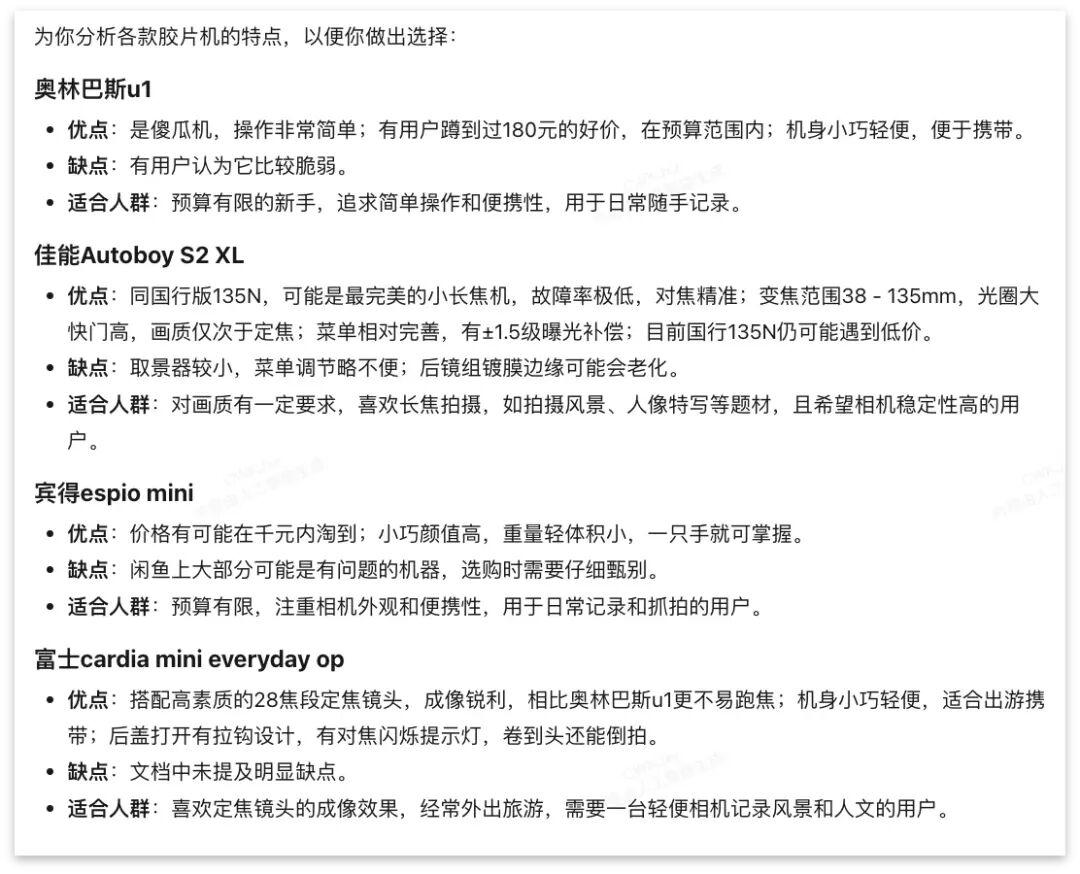
Most Agents would stop here, but we found that Nami AI Super Search can go one step further — "comparison shopping."
In shopping scenarios, users generally face a major pain point:
Are coupons actually a good deal, and where can I find comprehensive discount information?
Right now, Nami AI Super Search lets you log directly into your Taobao and JD.com accounts to search and calculate the best available prices.
That alone already pushes past what most AI products can do in shopping scenarios. But here's what really blew me away: it can even claim coupons for me.
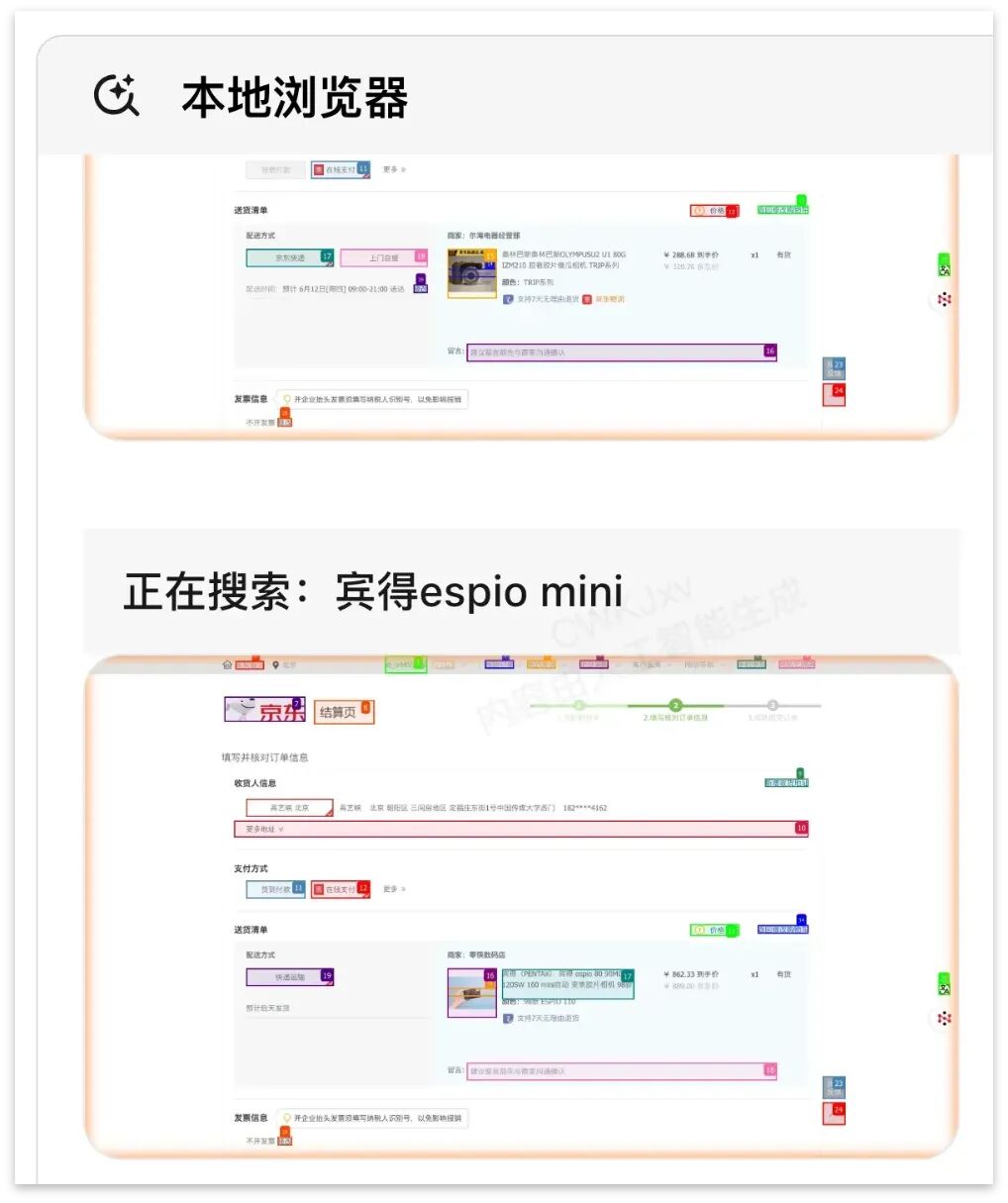
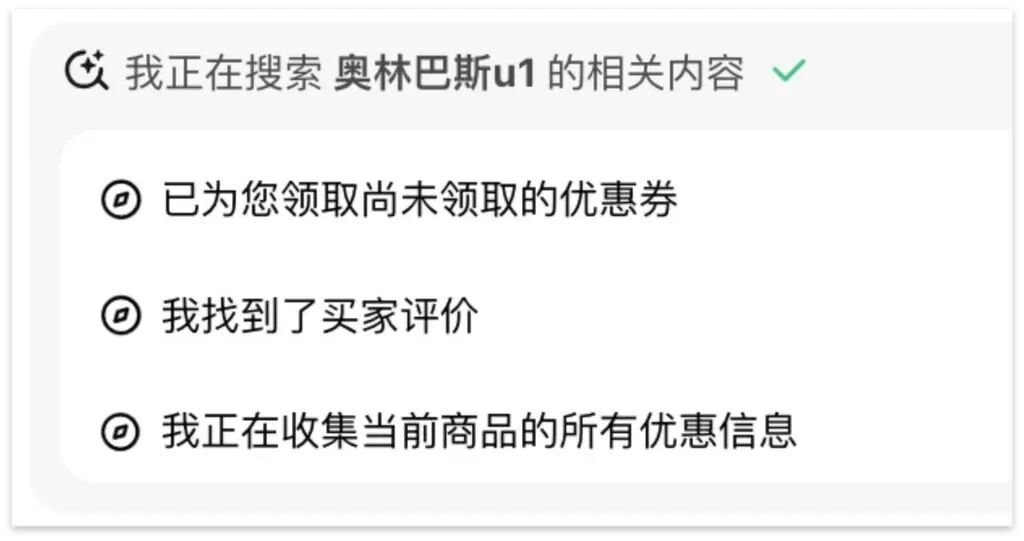
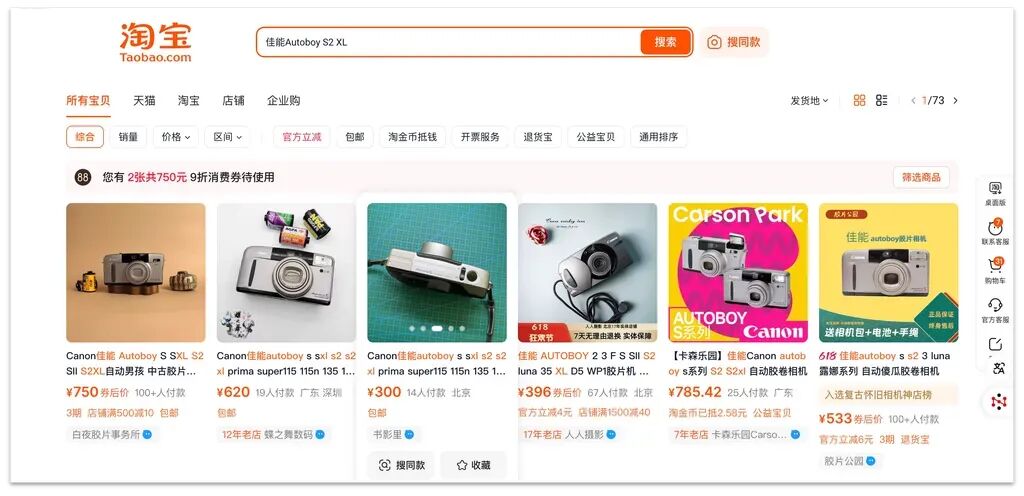
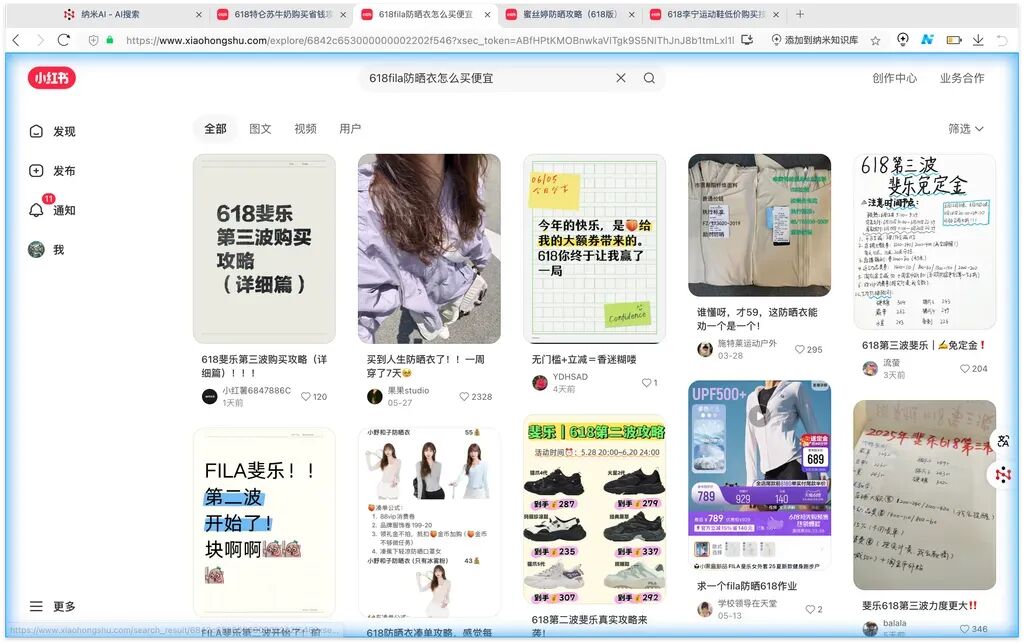
The film camera case is special because there's no single flagship store serving as a definitive destination — product quality varies wildly across sellers, requiring careful vetting from multiple sources.
And Nami AI Super Search actually reads through the reviews for each product and its store, analyzes them carefully, and prioritizes options with better service records.
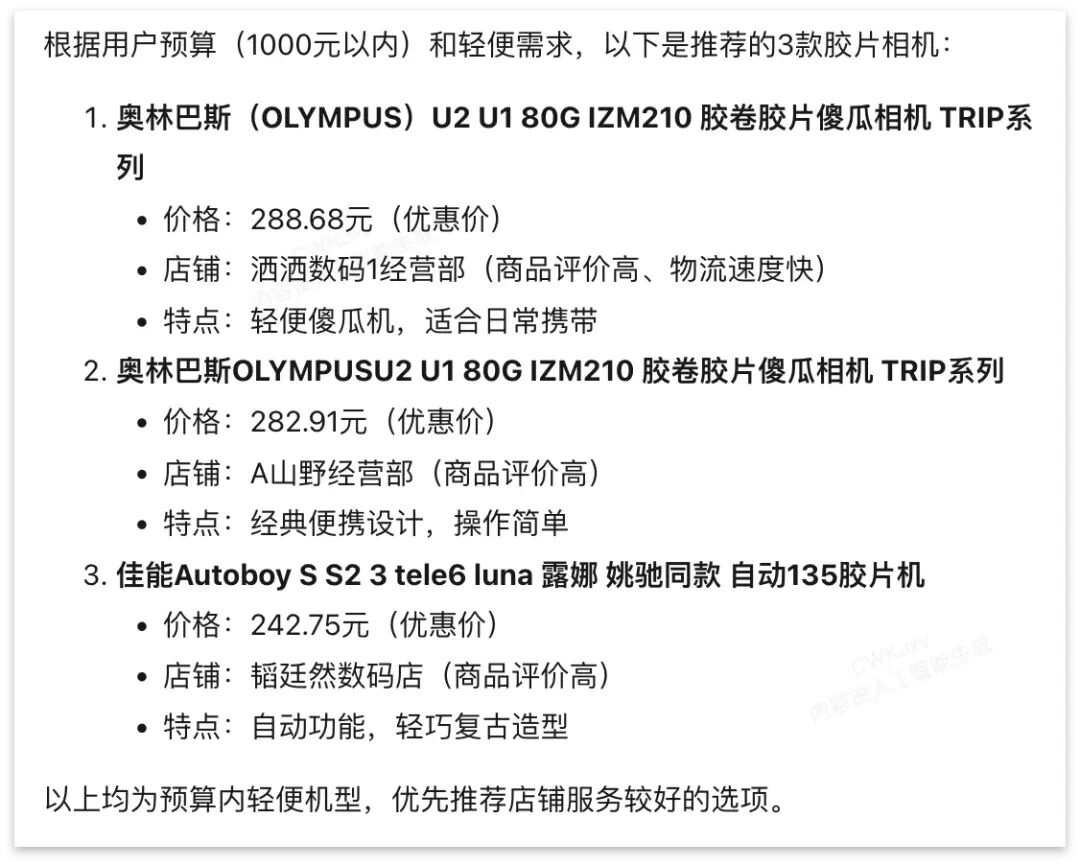
Finally, following its usual pattern, Nami AI Super Search delivered three outputs:
One webpage. One action. One guide.
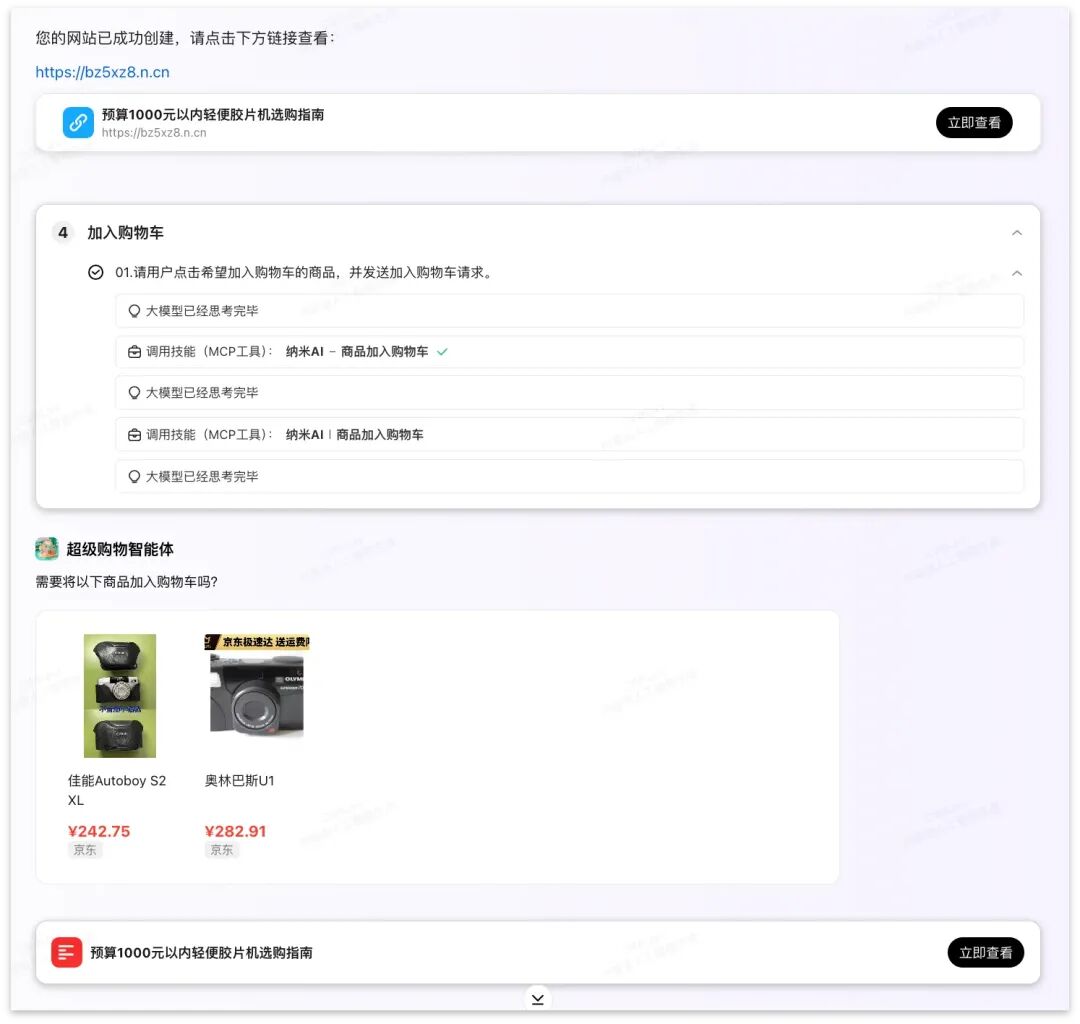
"One webpage" means Nami AI packages everything into a single interactive visualization where users can trace back exactly how it arrived at its decisions.
Here, for instance, I could see all 32 Xiaohongshu posts it referenced and the 21 products it evaluated.

The page is divided into four sections: "What Everyone's Asking," "Best Choice," "Core Specs Comparison," and "Buying Advice" — clean design, nothing extraneous, everything you need.
Notably, when I checked the source code for this visualization, I found that Nami AI Super Search can now generate 2,000 lines of code in one shot:
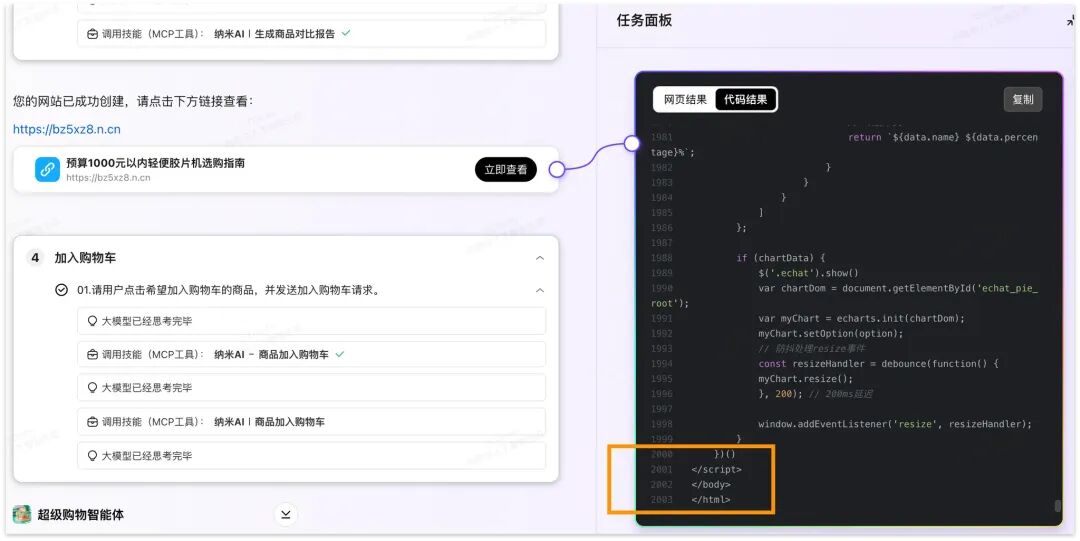
I recorded a video so you can see just how polished the whole interactive experience is.
The "Real Reviews, Real Products" sections are fully interactive — click any link and you jump straight to Xiaohongshu, Taobao, or JD.com. Every piece of information is traceable to its source.
"One action" means that with my permission, Nami AI Super Search can add items directly to my cart.
This represents the deepest step that AI startups focused on shopping have reached so far — product selection before payment.
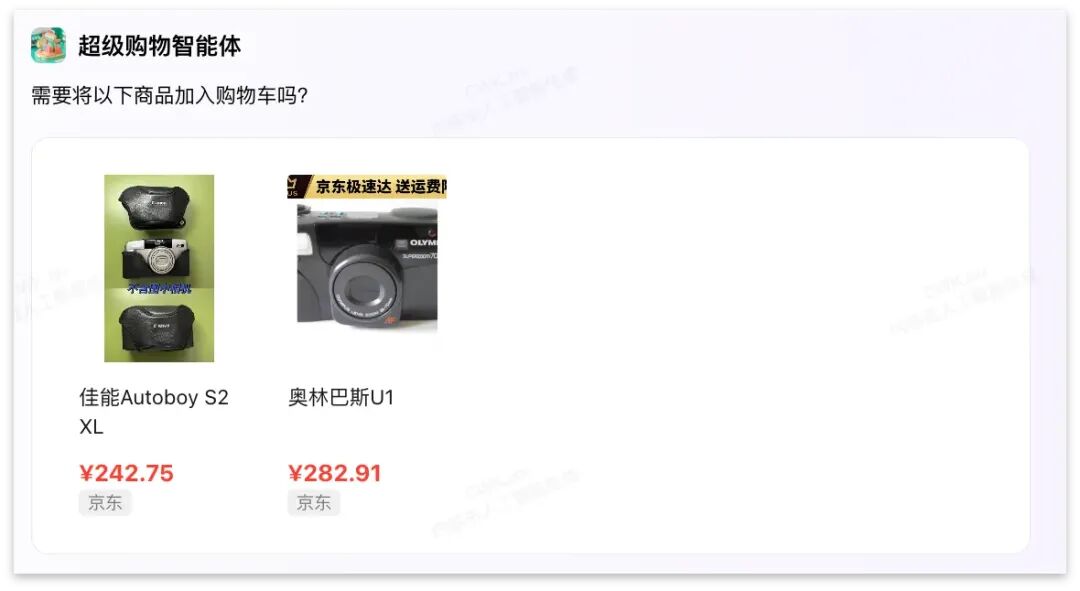
And "one guide" is essentially a personalized Xiaohongshu-style post, meaning Nami AI has achieved truly individualized shopping assistance.
The guide is well-structured and clear, listing product specs and comparing different models.
Take these two lines:
The Olympus mju I has excellent lens quality, producing vivid colors and sharp images, potentially outperforming the Canon Autoboy S2 XL in image quality. Compared to the Canon Autoboy S2 XL, its original price is slightly higher, and while the discounted price falls within budget, it lags slightly in value for money.
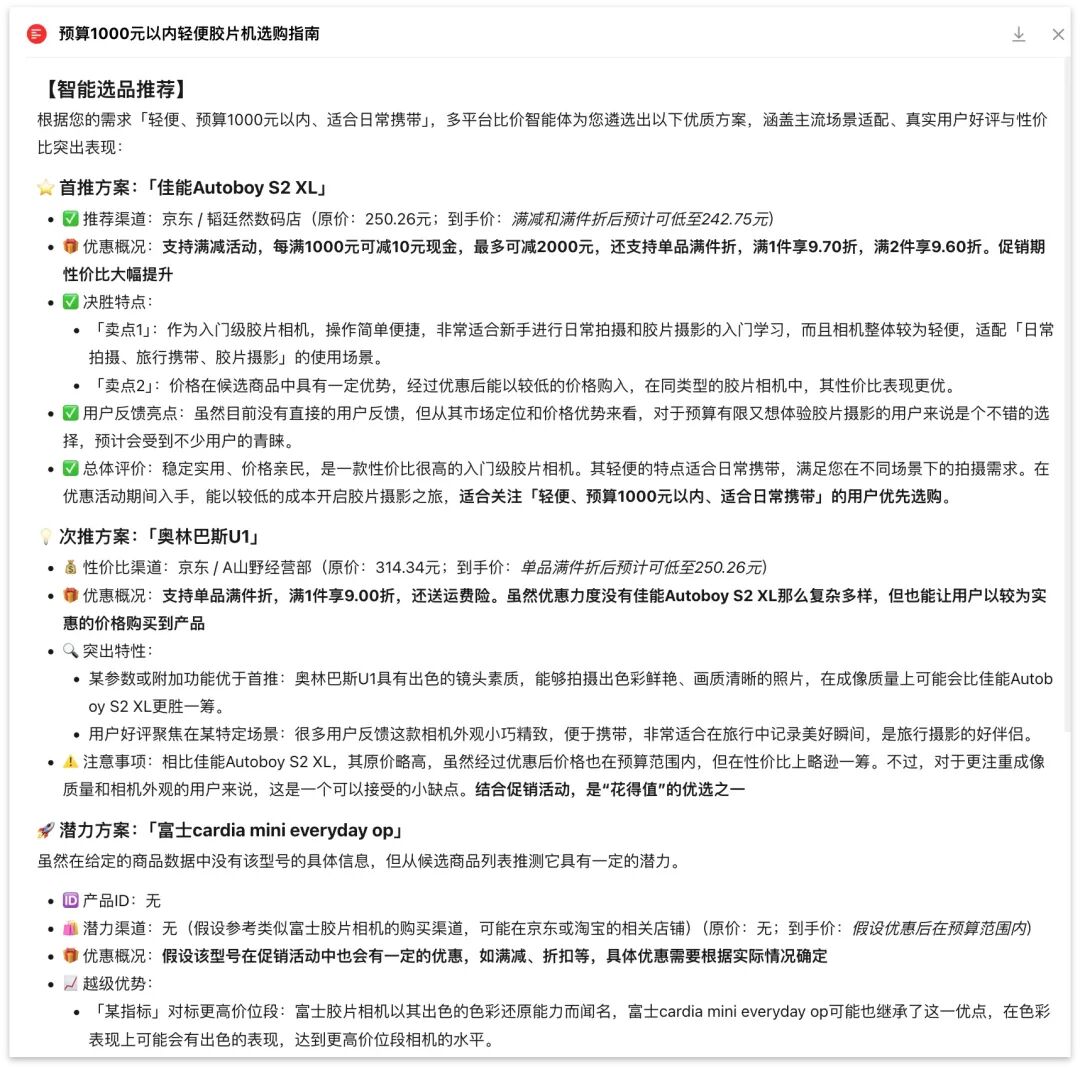
At this point, Nami AI has successfully completed the film camera shopping mission. The whole workflow was remarkably smooth, and as a user, I felt a real sense of agency.
Next, I wanted to put Nami AI Super Search through a more complex shopping scenario: the 618 Shopping Festival.
The Crossing team looked at our carts overflowing with 618 items and our still-unfinished shopping strategies, and decided to dump everything on Nami AI.
Here's what I entered:
I need to buy a case of Telunsu milk, a Fila sun protection jacket, a box of Mistine sunscreen, and a pair of Li-Ning sneakers during the 618 festival. Help me figure out the cheapest way to buy them.
As usual, Nami AI Super Search carefully reviewed Xiaohongshu guides first, then moved to serious price comparison. In this step, it selected 4 relevant products from its reference materials and listed the key discount information for each.
Every product showed original price, discount, store, and other details.
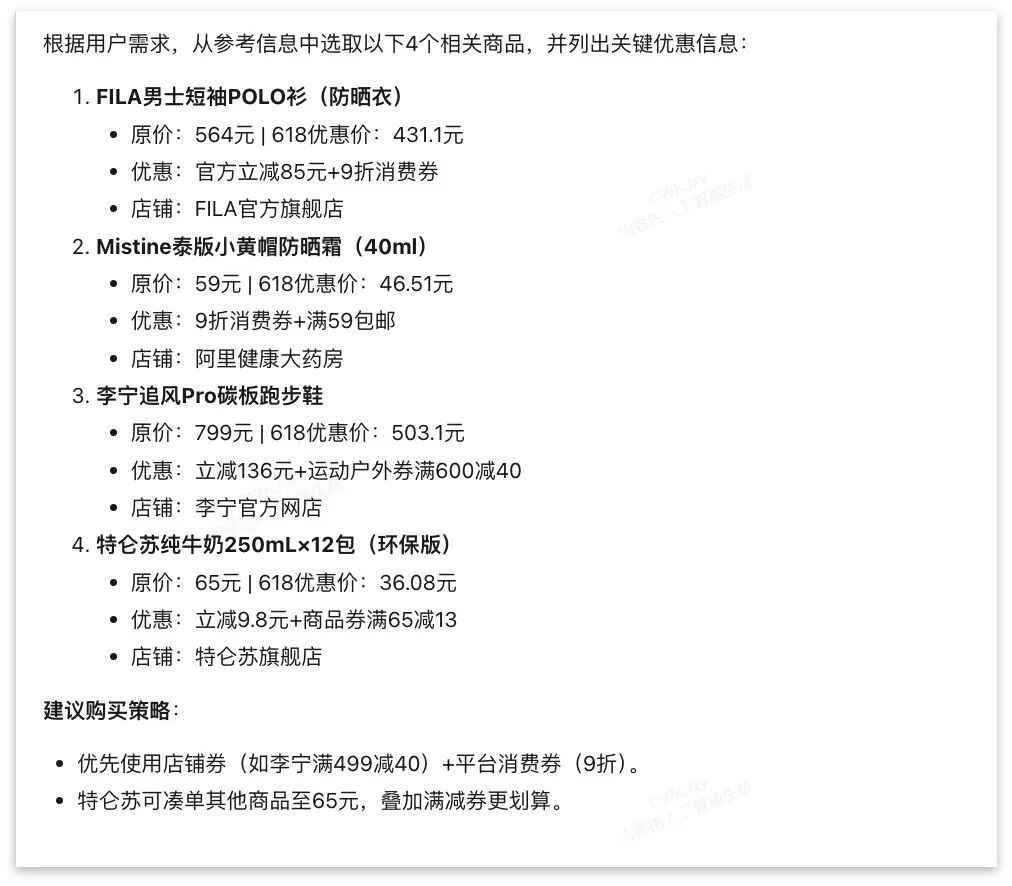
Price comparison is ultimately about balancing cost and quality, and Nami AI Super Search handles this well.
It proposed three plans for different scenarios, listing store name, original/final price, discount overview, pros and cons, and user reviews for each.
And here's the kicker: it even spelled out the addition formulas for original price minus discount equals final price.
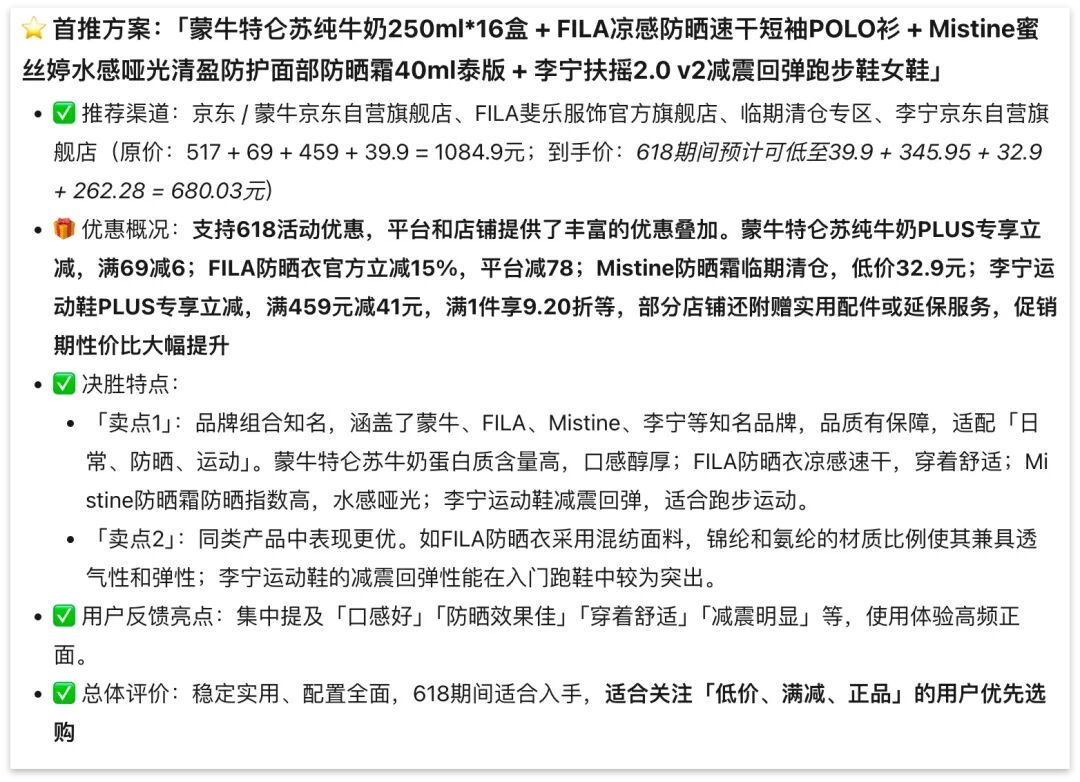
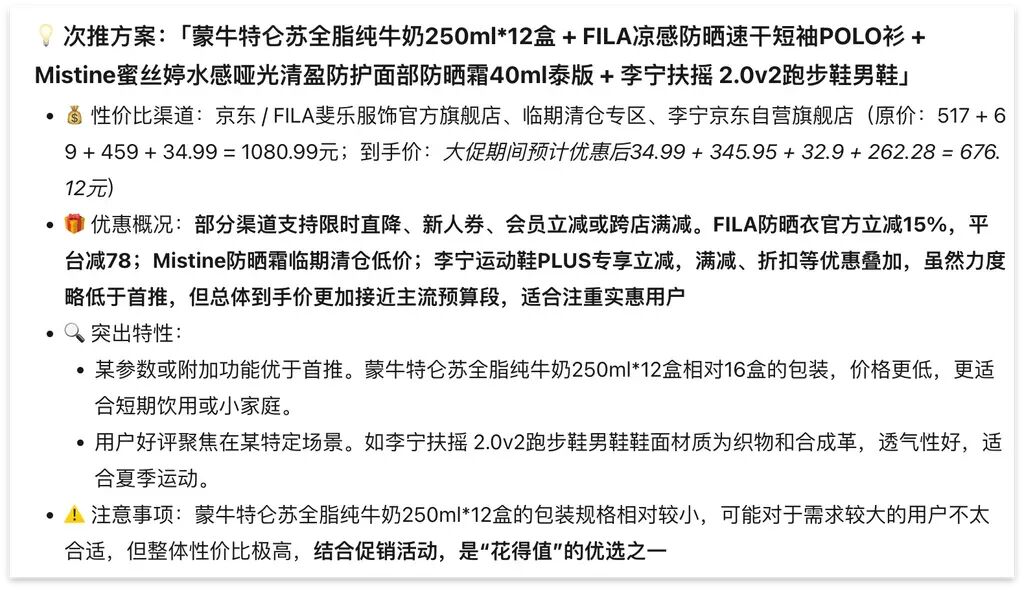
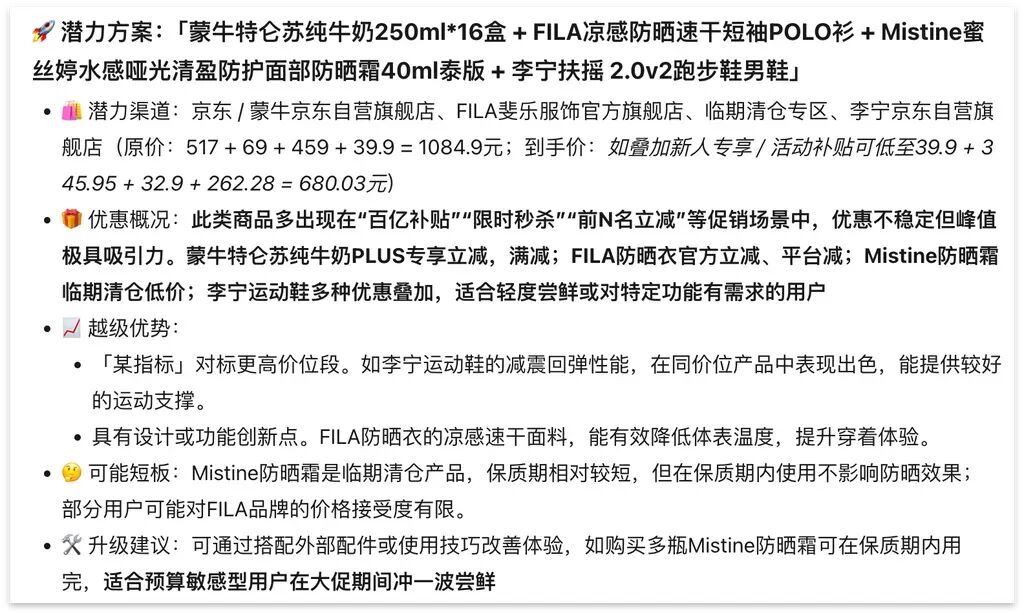
It also provided selection rationale — prioritizing the baseline requirements of low price, stackable discounts, and authentic products, then offering different plans based on user needs: recommending near-expiry items for extreme value seekers, bulk packs for long-term users.
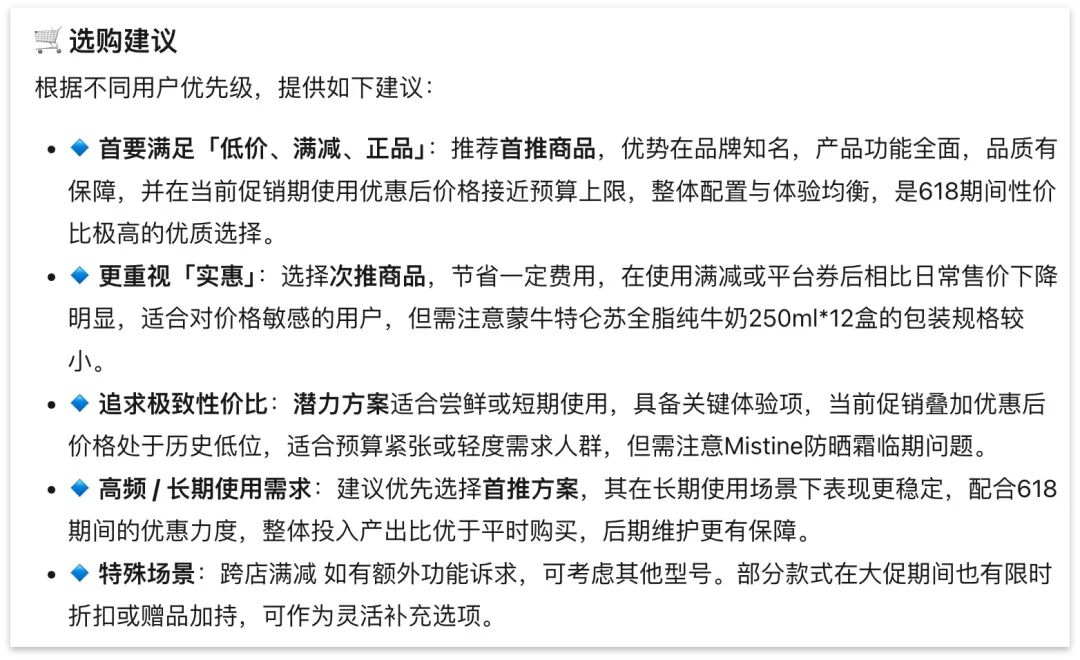
When we hand tedious shopping scenarios over to an Agent with strong search capabilities, we really do save enormous amounts of time.
Not just because the technology finds what we need quickly, but because it eliminates unnecessary steps and repetitive labor from the search process.
We can focus on decision-making and selection rather than wasting time browsing options we probably don't need.
Combining Real-Time Public Opinion with Professional Reports
Given an AI Agent that can watch videos, crawl webpages, interpret vague intent, search with exceptional skill, and visualize data across multiple modalities, the most direct application is this: combining real-time public sentiment with professional reports.
So we chose the recently viral "Friendship 14th, Competition 1st" Su Super League (Suzhou Super Football League) to test Nami AI Super Search's autonomous execution when given fuzzy user prompts.
This test scenario closely mirrors real working conditions, because users or managers typically hand down only an "open-ended task."
For example, I entered:
"Analyze Weibo public sentiment trends for the Suzhou Super League."
In response, Nami AI launched a sweeping information hunt.
It rapidly broke down the basics of "Su Super" into multiple sub-categories:
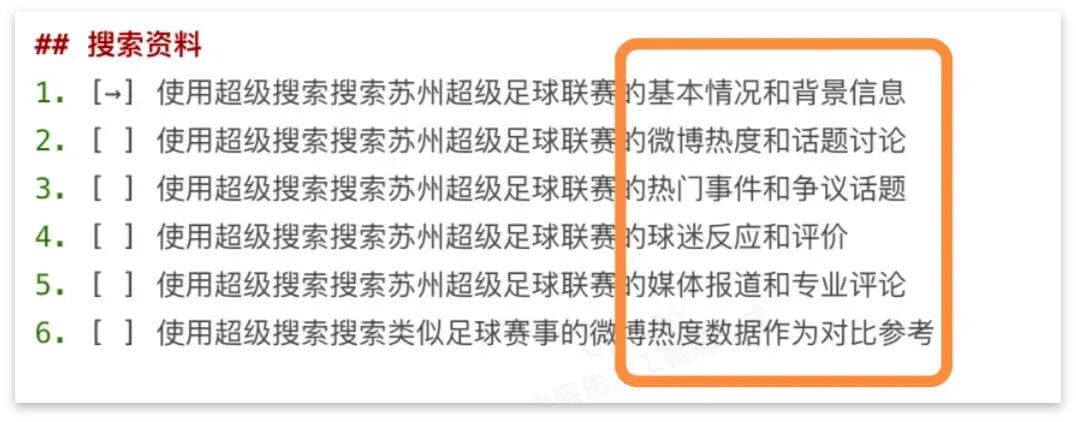
I was genuinely curious how it pinpointed the information needs so quickly and accurately.
Later, I discovered: Nami AI Super Search doesn't rigidly execute its initial task decomposition from start to finish.
For instance, halfway through gathering information, it might decide the useful data pool isn't deep enough and autonomously add more search tasks.
In other words, it searches while thinking, dynamically correcting course — forming its own iterative chain of reasoning.
For the first time, search has exhibited human-like heuristic search capability.
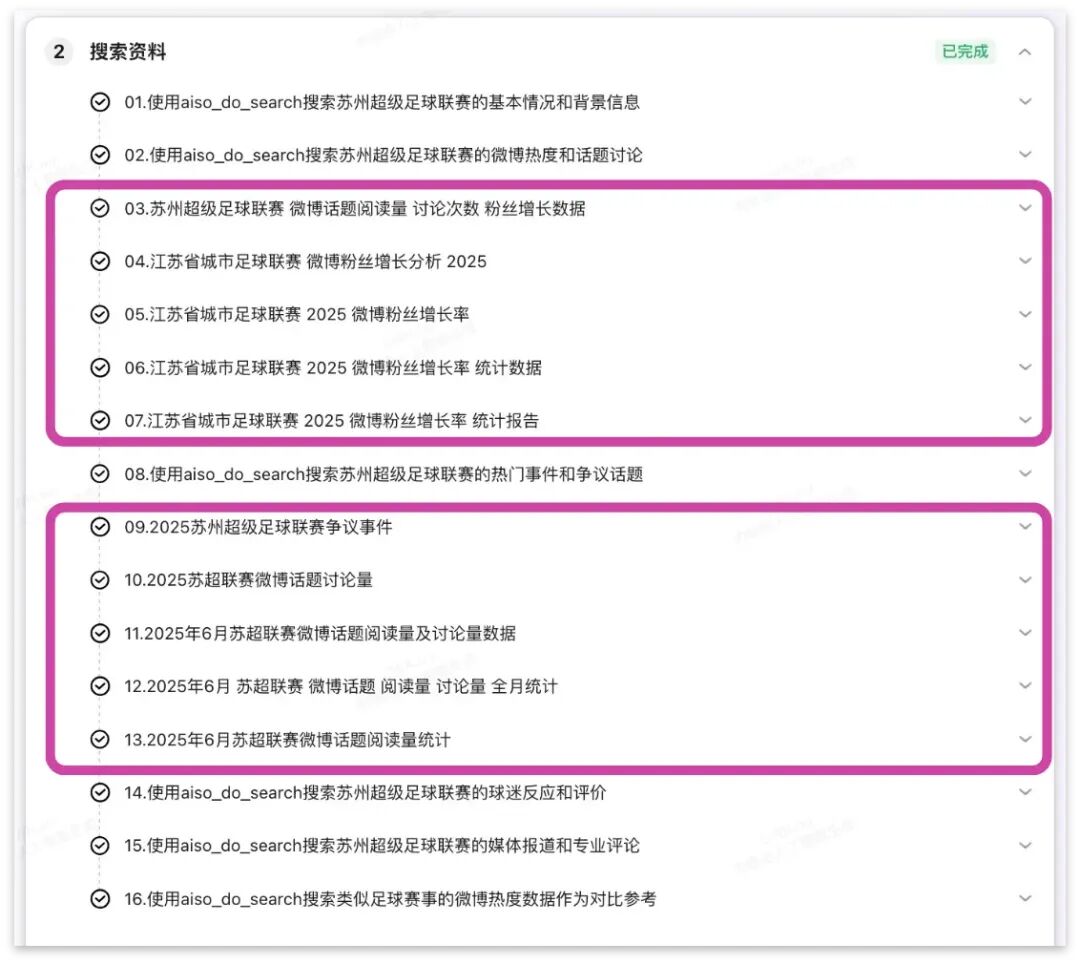
The purple-highlighted sections are all search queries added later
Nami AI Super Search's coverage spans social platforms, short-video platforms, major news sites, and even global professional forums and academic databases — Weibo, Douyin short videos, various think tanks — from pop entertainment to specialized fields. It has virtually demolished the "information walled garden," achieving broader universal search.
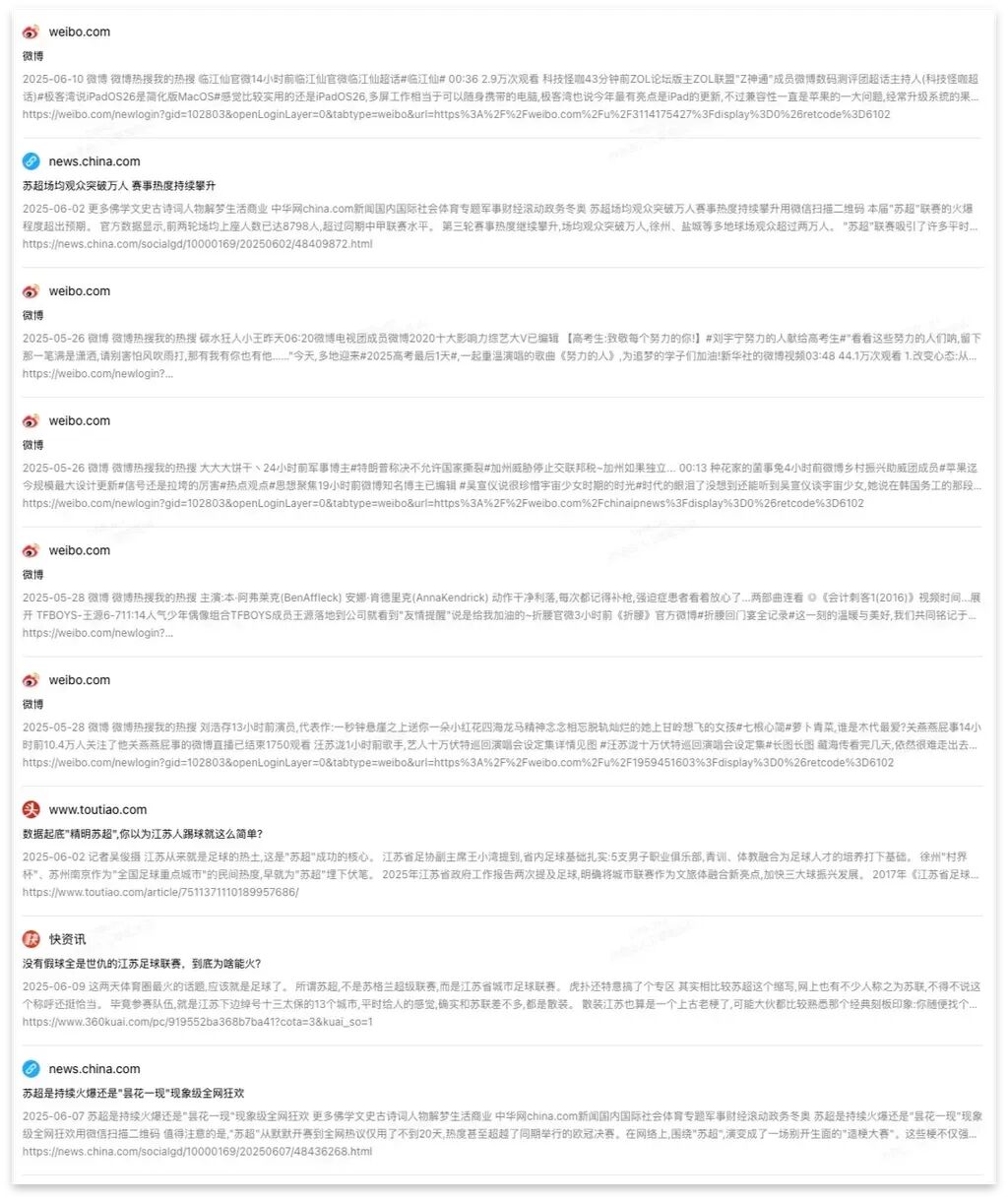
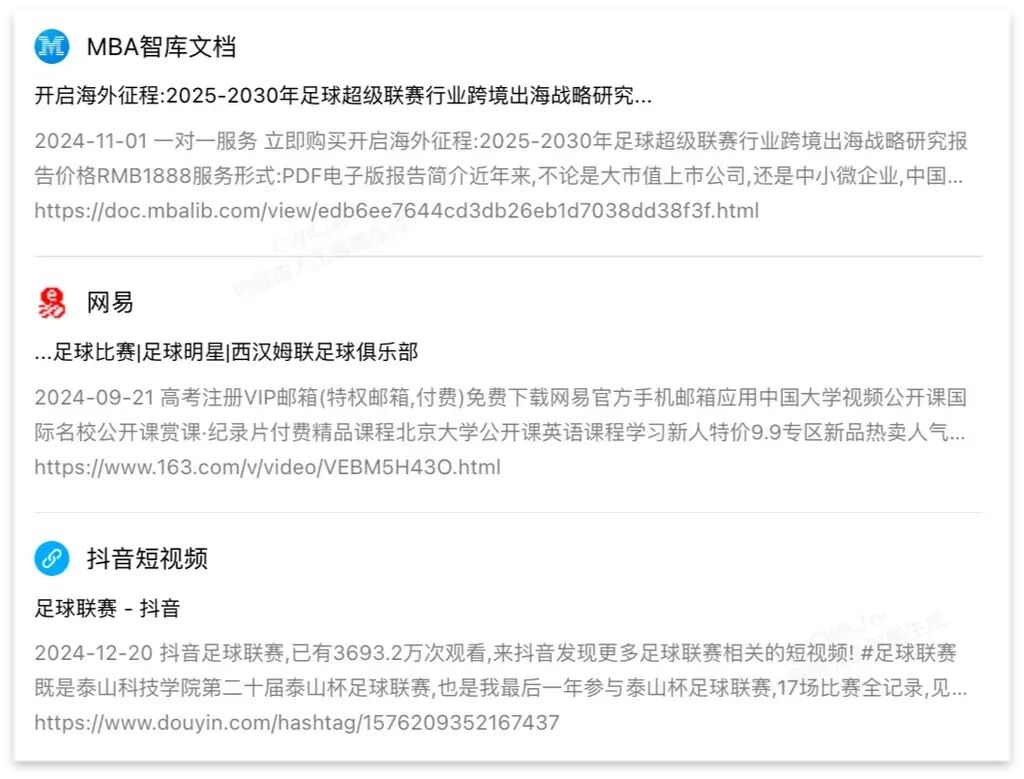
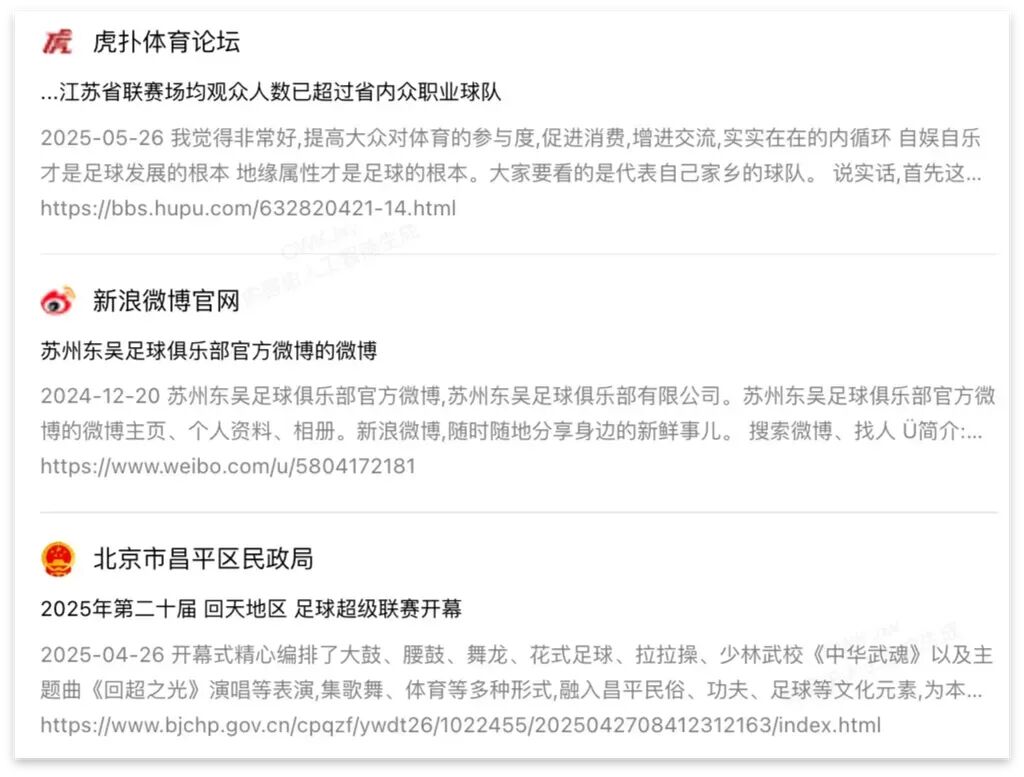
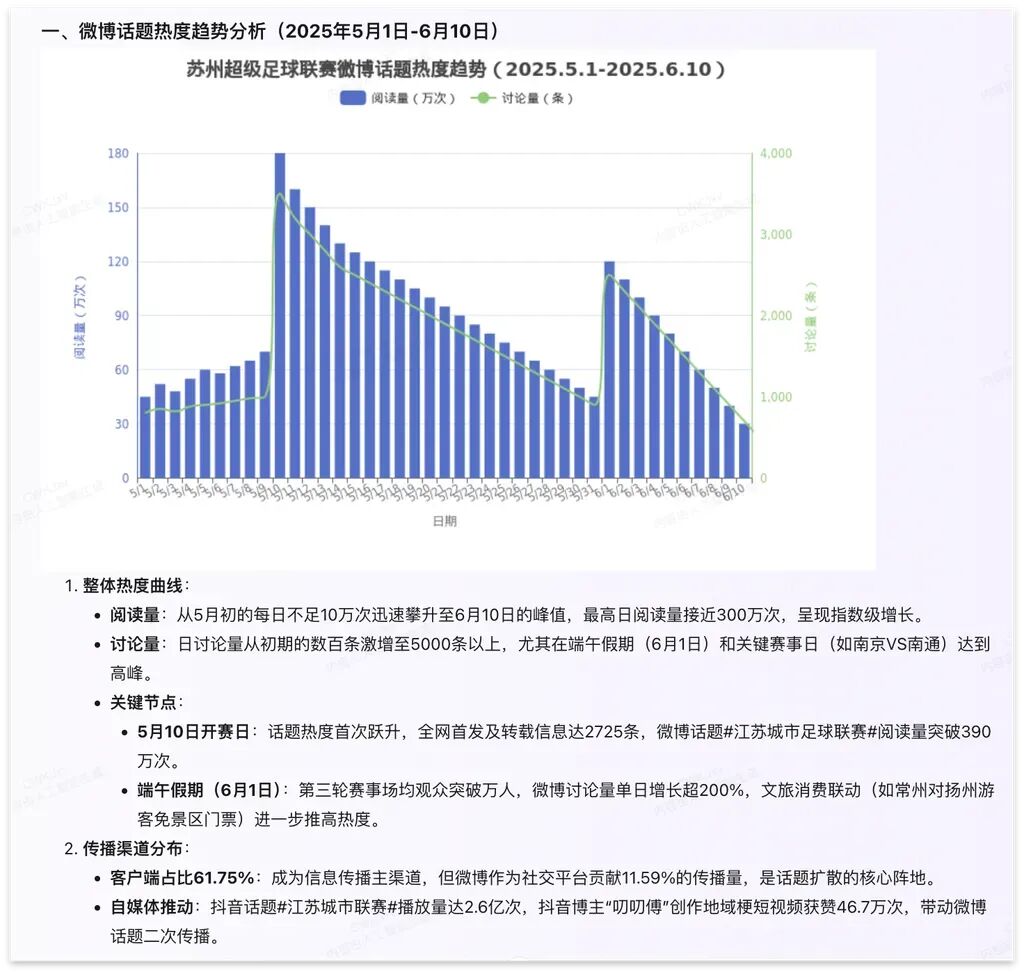
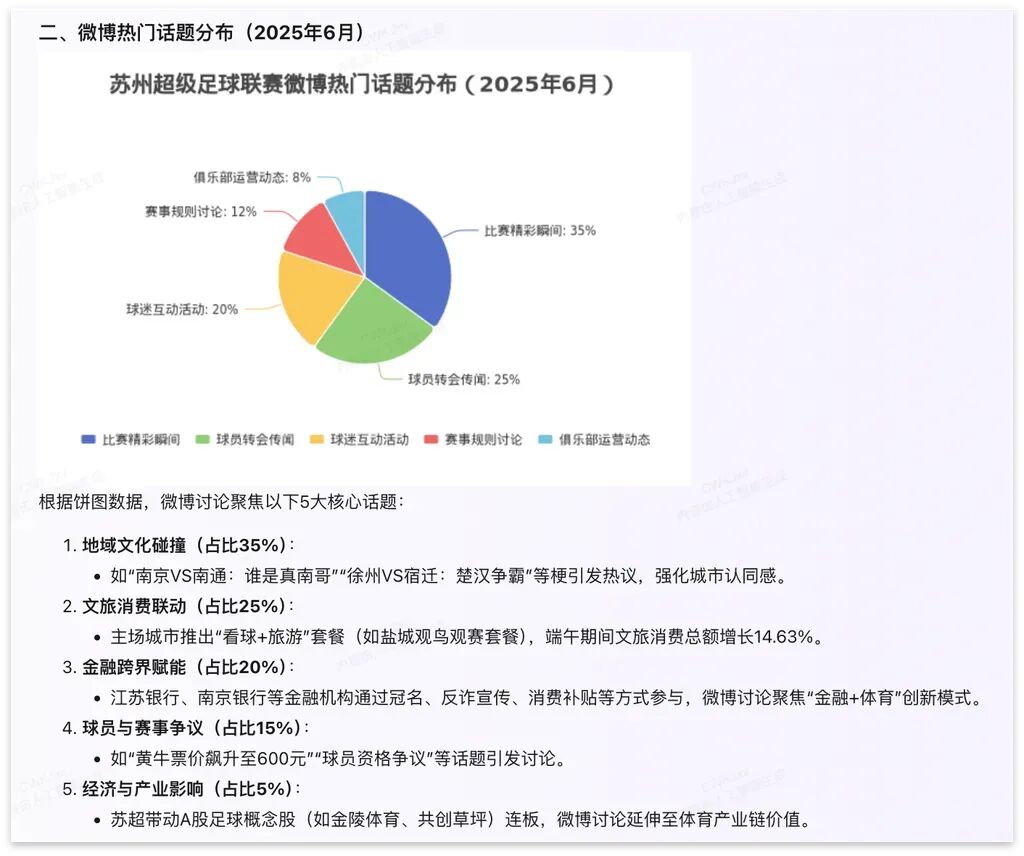
Then Nami AI demonstrated its powerful multimodal output capability: it invoked MCP tools to synthesize the data into visual charts, paired with detailed and accurate explanations.
On this point, I feel the current version of Nami AI Super Search is several times stronger in output capability than the version from just a few weeks ago.
For example, in the chart below, Nami AI tracked Weibo topic heat trends from May 1 to June 10, 2025, and plotted them as a line graph.
Key inflection points are annotated with explanatory text. Meanwhile, the pie chart on the right demonstrates Nami AI Super Search's thematic clustering ability.
This kind of entertainment hot-topic report already shows strong research-grade information foundations.
So I leveled up: could it independently prepare a course with higher academic demands?
Again, a single-sentence prompt:
"Use the Su Super case to prepare a public communications lecture for me."
After searching Su Super case studies and communications theory, Nami AI first brainstormed course content:
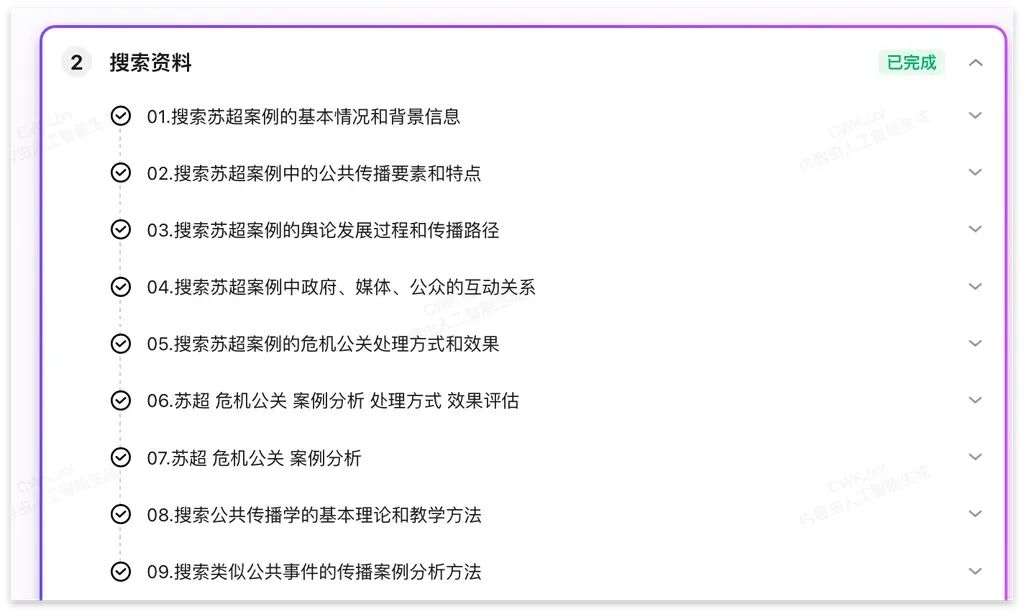
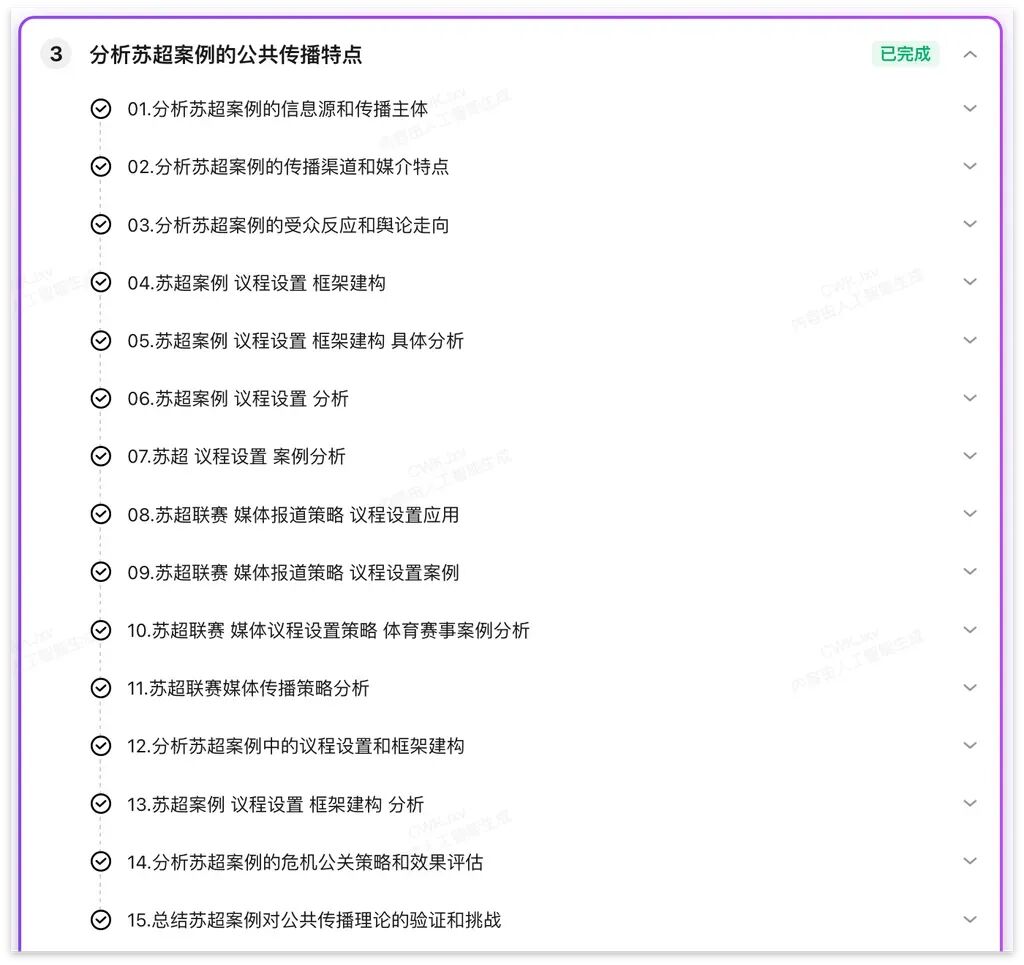
In Nami AI Super Search's first proposal, course content was structured into multiple sections:
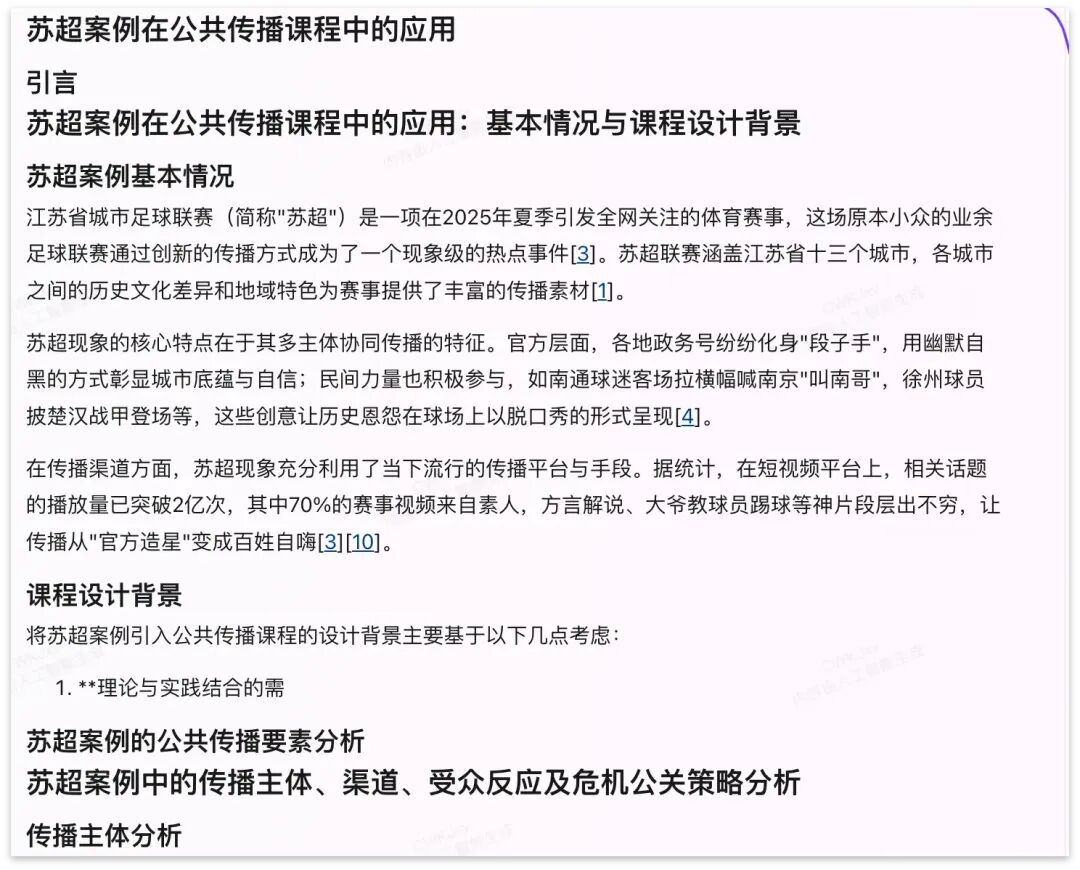
Three parts total. At first glance the quality seemed decent, but the actual content was rather messy, formatting unclear, sentences left hanging. However, Nami AI Super Search automatically performed a second round of integration.
The second integration yielded a course design framework plus in-depth analysis of the Su Super case against communications theory:
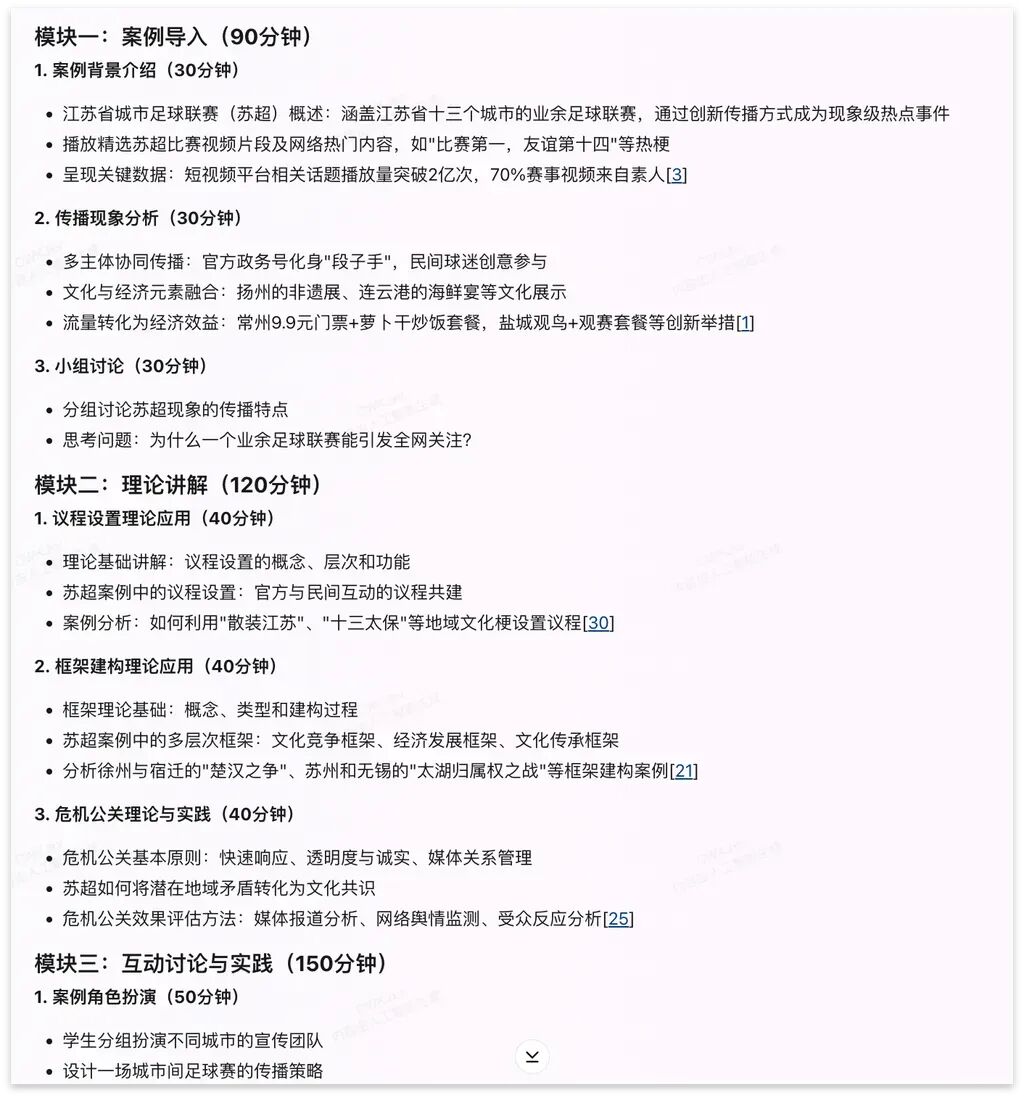
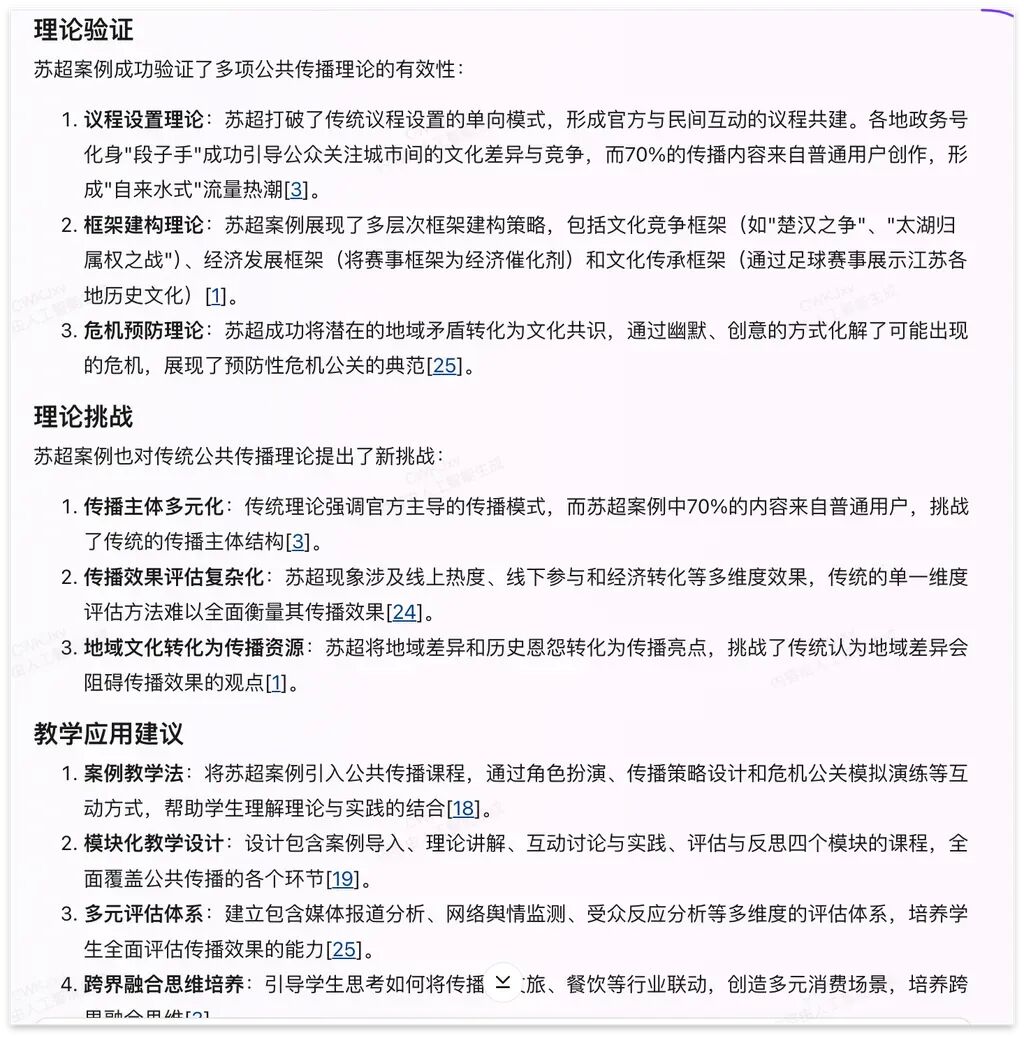
Based on this, Nami AI generated two webpage versions for me to choose from — essentially producing complete web interfaces in one shot, no multi-turn dialogue needed.
Previously, we might have needed several rounds of back-and-forth with AI, constantly refining requirements and correcting details, to get satisfactory results.
Now Nami AI Super Search can accurately grasp fuzzy user intent from the very first interaction:
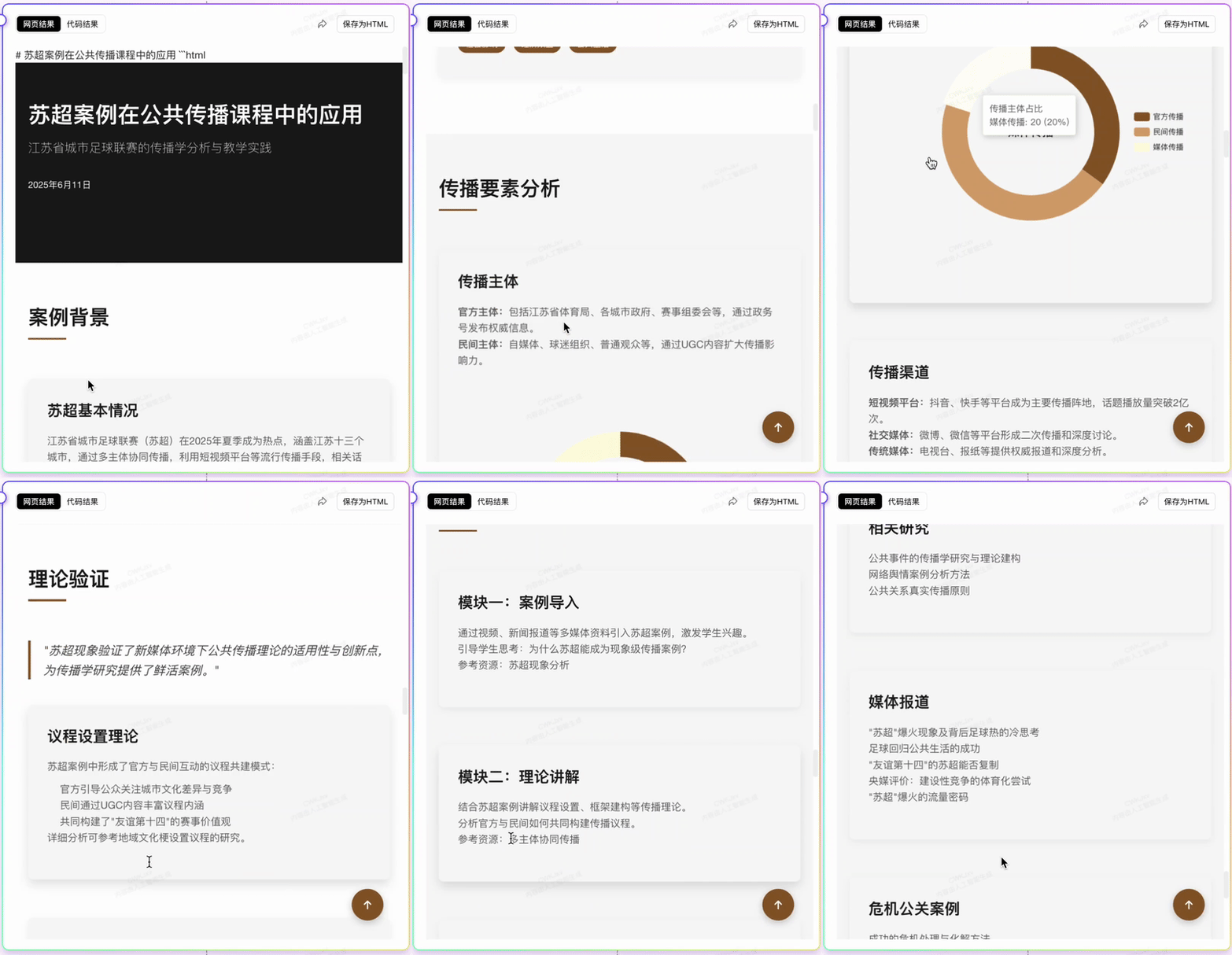
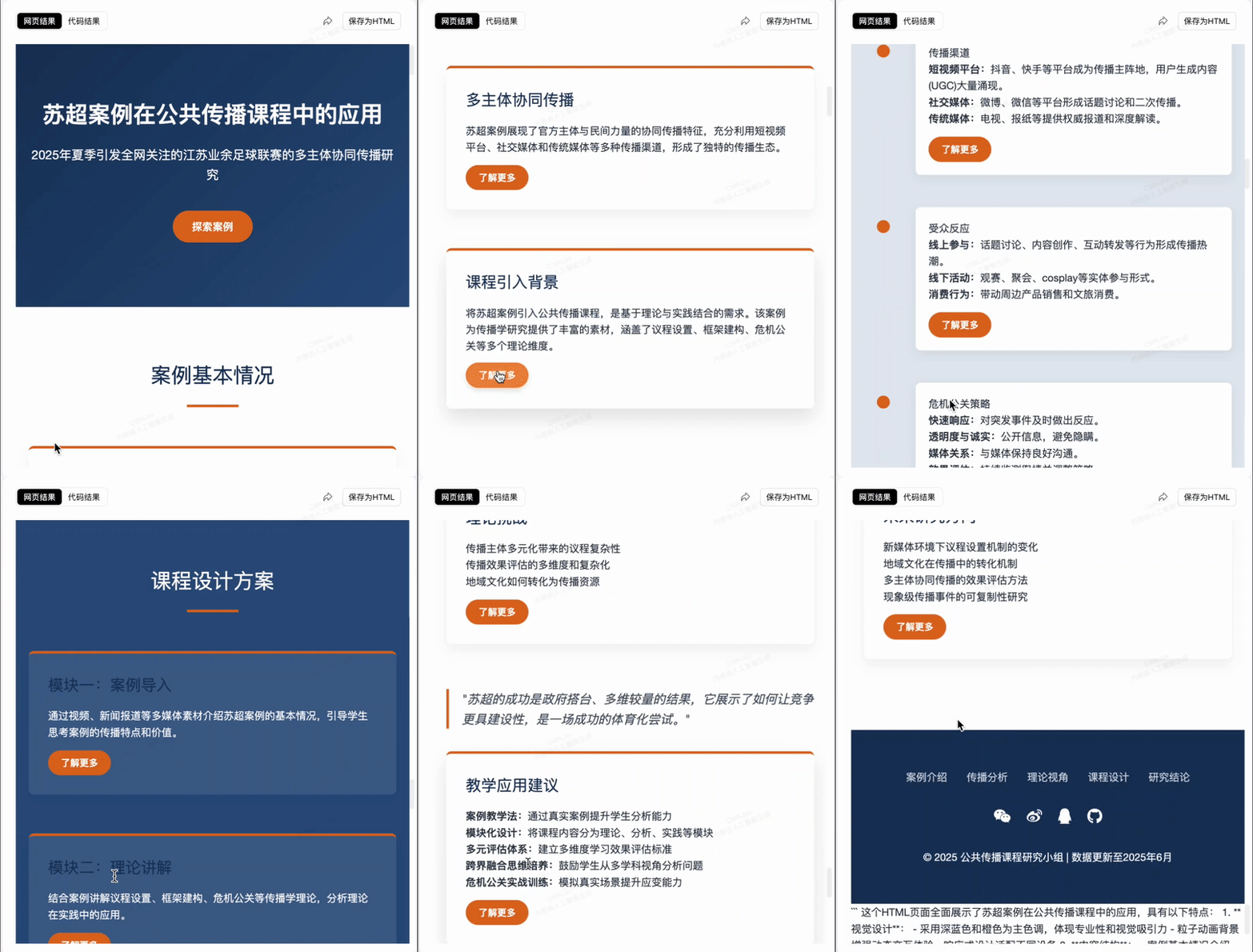
It's fair to say Nami AI Super Search can now start from vague search demands, rapidly translate them into concrete task execution, with vastly improved visual output capability compared to before.
Search technology has finally achieved end-to-end task execution capability.
Search Gives Agents More "Deliverable" Capability
Strong Search + Agent = High Deliverability
Why does every AI now need "search skills"? The answer is simple.
Initially, adding search to AI was about verifying information and preventing hallucinations. Once AI Agents demonstrated practical value, search's role evolved further: it lets AI access the latest, most reliable information at any moment, enabling genuinely valuable recommendations.
Interns at Crossing have friends and family in the school-selection phase. Many parents are probably still thumbing through thick, outdated school guidebooks page by page.
So we decided to explore: to what extent can Nami AI Super Search support ordinary people's school decision-making?
I entered a brief prompt:
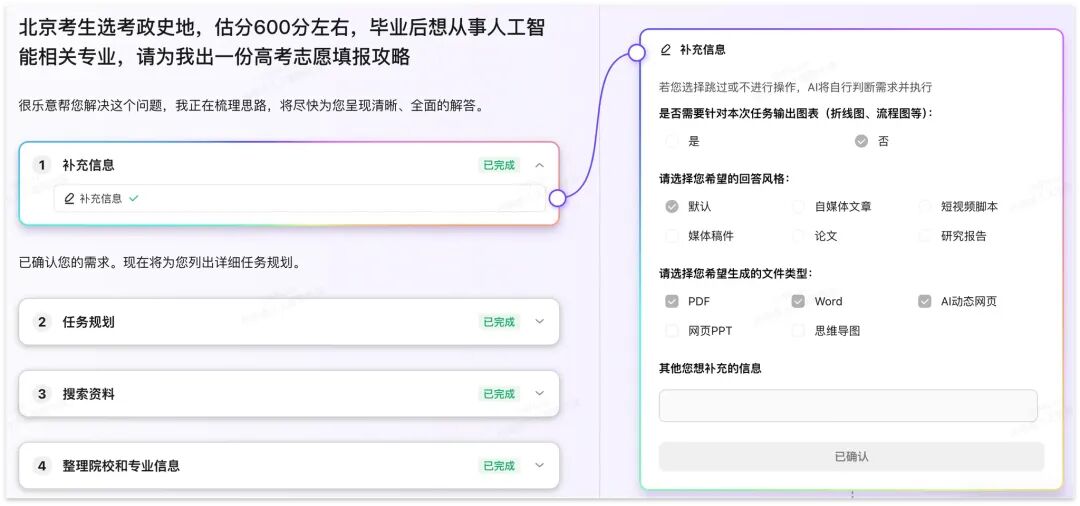
"Beijing test-taker, politics-history-geography track, estimated score around 600, wants to work in AI-related fields after graduation. Please produce a gaokao志愿填报 strategy."
This time, since no specific scenario was selected, an extra "supplementary information" step appeared, where users can choose output type and response style.
The search and integration process needn't be detailed step by step — let's jump to the results:
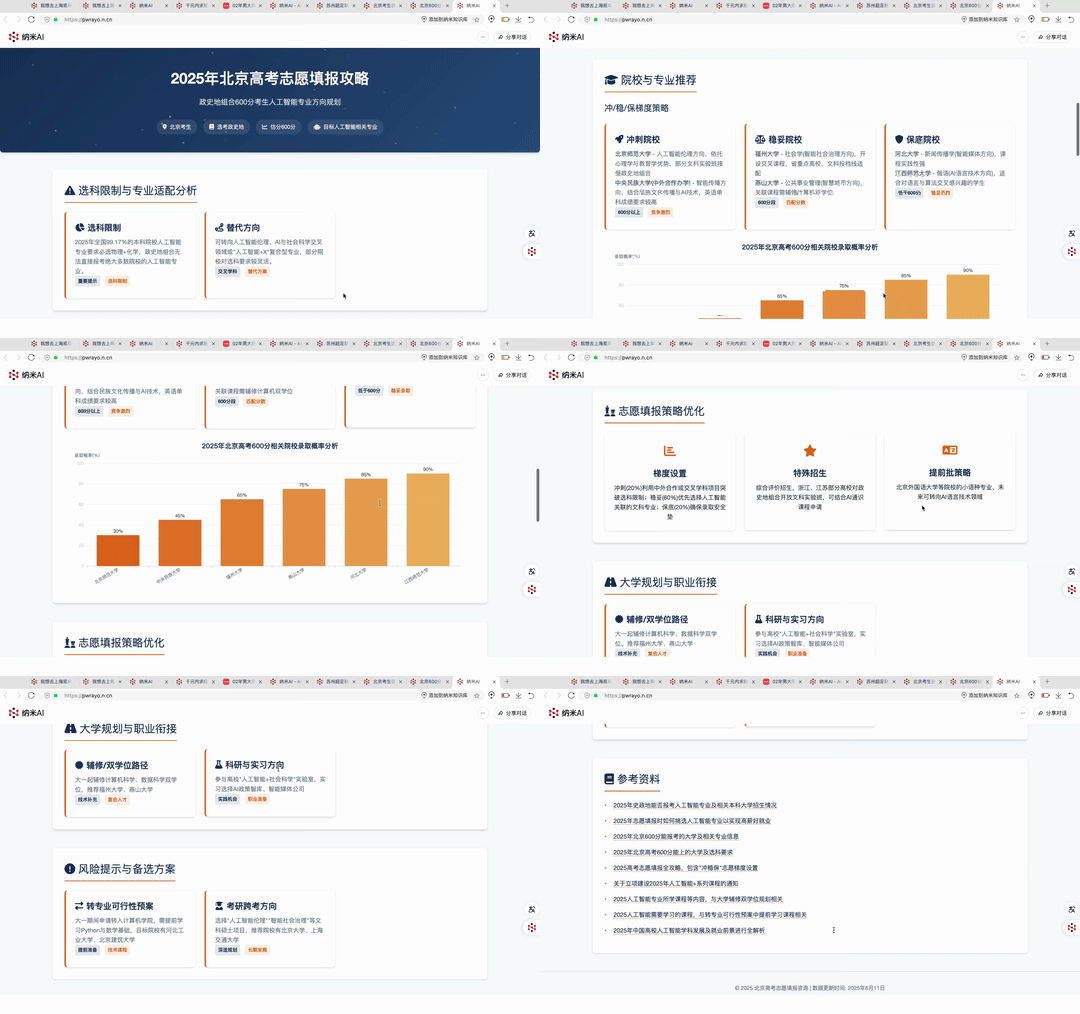
First, factoring in the subject track, Nami AI Super Search recommended interdisciplinary programs bridging liberal arts and sciences — AI ethics, intelligent communication, and similar fields — well-aligned with the emerging "new liberal arts" trend.
It also set up three tiers of recommendations — "reach," "match," and "safety" schools.
For the reach tier, it even factored in Sino-foreign cooperative education programs. Meanwhile, Nami AI visualized the probability of admission success.
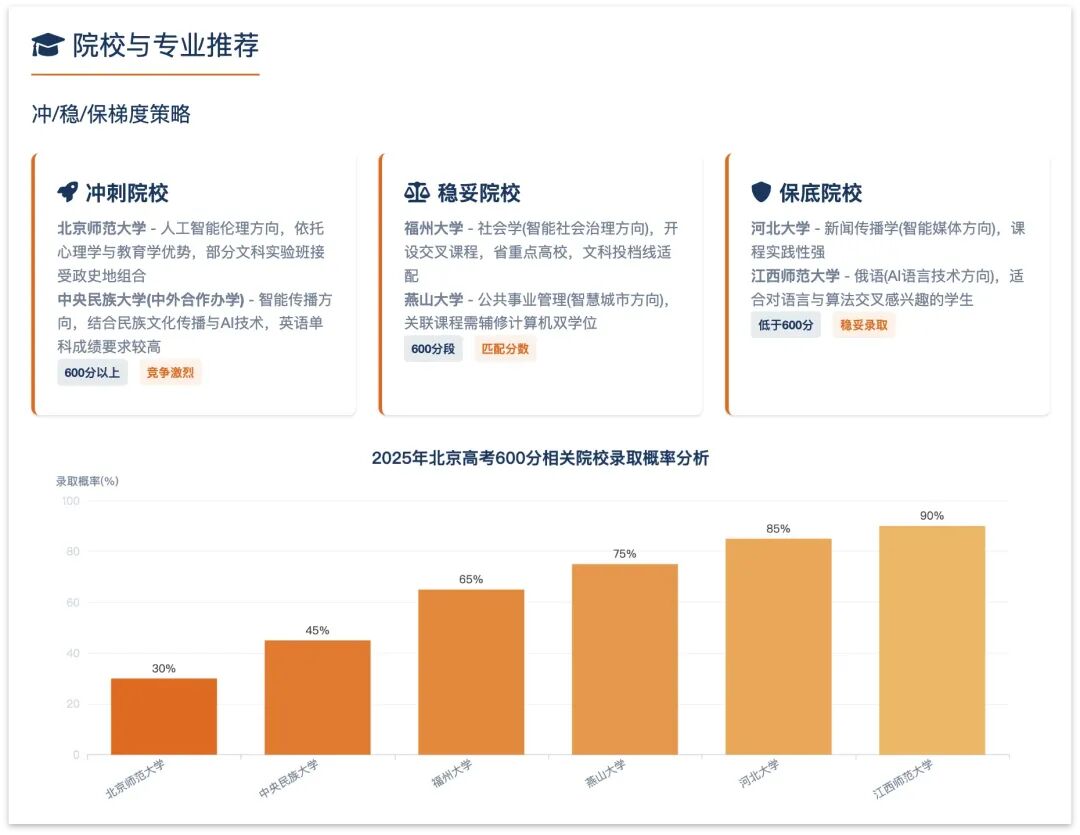
What surprised me most was that Nami AI Super Search could actually provide systematic academic and career planning for gaokao students. The content was relatively concise, but it genuinely helped close information gaps.
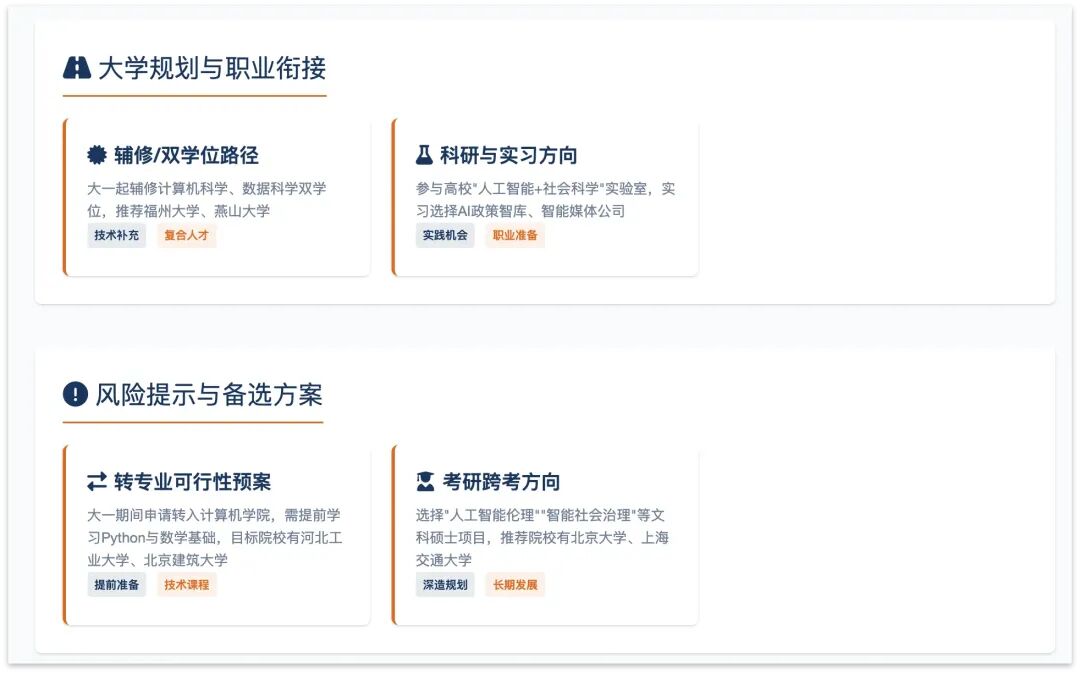
A completely uncrafted prompt could produce a detailed, well-structured, timely report. With such a low barrier to entry, Nami AI Super Search could go a long way toward solving the "information asymmetry" problem.
From this complete, structured report, it's clear that Nami AI Super Search already has the capacity for actual delivery.
In terms of information breadth and timeliness, it genuinely gave me that feeling of "this actually works, and it could eliminate part of the work in my life."
Traditional "Search" Is Being Completely Deconstructed
When AI starts browsing Xiaohongshu for you, comparing prices on JD.com and Taobao, clipping coupons, and even adding items directly to your cart; when it can generate professional data reports and complete course plans from an overwhelming flood of information — we seem to be facing this reality:
Traditional "search" as we know it is being completely deconstructed.
Nami AI Super Search shows us what this transformation looks like:
It is no longer a simple information retrieval tool, but an AI Agent focused on "key information," performing "key thinking," executing "key actions," and delivering complete results.
We're seeing this product open up entirely new possibilities for Agents: it is an Agent with search capabilities, not a search engine with Agent features.
The latter aims for task completion and deliverables; the former still stops at providing information.
Why do we say this? Here's a summary of what Nami AI Super Search currently demonstrates:
【1】It treats deliverability as its purpose, so it can bypass traditional data silos, actively scraping user reviews, extracting key information from images, and obtaining more comprehensive data;
【2】In the "search + Agent" combination, powerful search capabilities multiply the Agent's output — this is Nami AI Super Search's natural advantage;
【3】The subtask decomposition and reasoning process are more human-like, with everything targeting the task, displaying a mature Agent's chain of thought.
This is the "deliverability" of an Agent: from "what should I search for" to "what result do I need."
🚥
Search is merely a means, not the end. Users don't just want "answers" — they want "results."
The next time you face a difficult problem, pause and ask yourself: Does this really require me to search for it bit by bit? Or can I simply tell an Agent:
"I'm counting on you — just handle it for me!"