This 13,000-Star GitHub Open Source Sensation: The Next AI Social Species? | Hands-On With the New Me.bot
"I feel like I've become eternal"
"I Feel Eternal"
👦🏻 Authors: Xiaoju, Jingshan
🥷 Editor: Koji
🧑🎨 Layout: NCon

Standing here in the summer of 2025, looking back at the AI social networking track, you notice something interesting: those shiny "young products" are trying to warm people's hearts from every possible angle.
In the AI social space, we've already seen many star-studded startup products grabbing attention. "Communication between people, and between people and AI" is becoming warmer, opening up more possibilities.
Recently we came across a new species of AI social product — Me.bot. It comes from a star open-source project on GitHub called Second Me — letting users upload "memories," making AI into "another me," and letting these AI "Mes" talk to each other.
"I feel eternal" — that's how Fangbo Tao, founder of Mindverse, described their new product Me.bot in a podcast with LatePost.
🚥
The Crossing team found it gave us a rather unique feeling as we used it.
Last week, we were invited to the Me.bot[1] product launch. Afterward, we spent about a week doing deep, hands-on testing. In this article, you'll see our experience sharing, as well as some questions and confusions we have about the product.
So at the end of the article, we also asked Fangbo Tao, founder/CEO of Mindverse, to answer 3 of our confusions.
Where Does Me.bot Come From, and Where Is It Going?
Dr. Tao roughly divides today's AI assistants into three types:
【1】The first is "Her" — to keep us company, to soothe our emotions;
【2】The second is "Him" — to help us handle specific tasks;
【3】And the third is "Me" — the core concept of Me.bot: aligning the model with the user.
Me.bot is an AI social network built on the GitHub project Second Me, and also a platform for everyone to cultivate their own Second Me (AI avatar).
It's making new attempts in two areas:
【1】How to improve AI's memory capabilities, making AI more human-like;
【2】How to enrich interaction methods and lower the barrier to entry.
It Comes From a Star Open-Source GitHub Project
Second Me is likely the world's first open-source AI identity model. The project has currently garnered 13.1k stars in the GitHub open-source community[2], meaning many open-source technical users are quite interested in it.
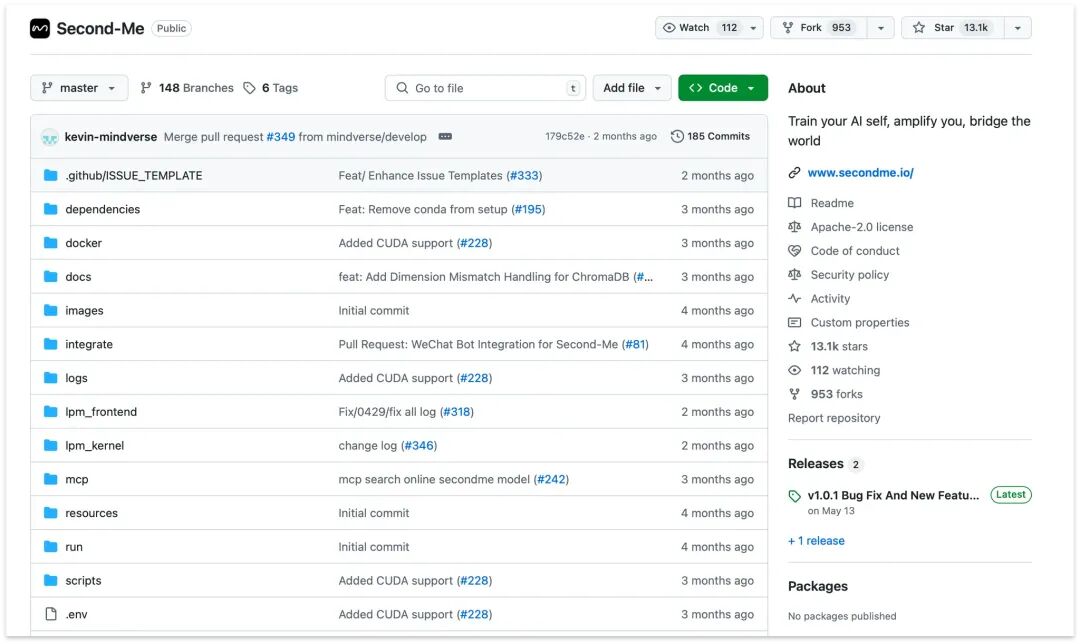
Why is this project getting so much attention?
Because it offers a solution to existing AI memory limitations — AI struggles to understand and process long, complex conversation content, in other words, insufficient memory.
Second Me improves on this with two proprietary technologies:
【1】AI-Native Memory
This technology divides your life experiences and various records into three layers for storage, like building a detailed "personal archive" for AI. Even vague, hard-to-articulate feelings can be recorded.
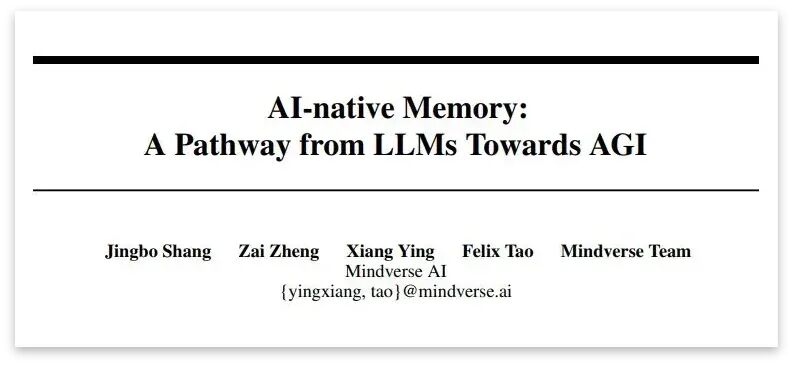 Me.bot's paper on AI-Native Memory
【2】Me-Alignment
Building on AI-Native Memory, the team added self-alignment. This ensures that when a user's AI avatar answers questions, it doesn't deviate from their overall thinking and habits.
Simply put, this open-source technology takes another step forward in AI memory.
It Wants to Be a Warm Product
In today's rapidly developing AI landscape, we're seeing a phenomenon: those things about emotional connection are becoming harder and harder to obtain in this era, which is one reason AI companion social products have emerged.
Digging into every young product in the AI social track, we can feel the unique philosophy each product behind it wants to express.
Me.bot identified a core problem in the emotional companion space:
The voice of "I" is getting smaller, and the connection of "we" is getting weaker.
So this product offers a new scenario: using memory technology to preserve "Me"; through unique interaction design, building everyone's exclusive AI avatar, letting these Second Mes "speak for" users.
Feeding Knowledge to "Second Me"
Me.bot opens like a nurturing game — eye-catching at first glance. Its core gameplay is simple: users continuously input various information and knowledge to "feed" their AI avatar — a digital version of themselves called "Second Me."
This digital avatar's goal is to become increasingly like the real you. It mimics your way of speaking, thinking logic, even personality traits:
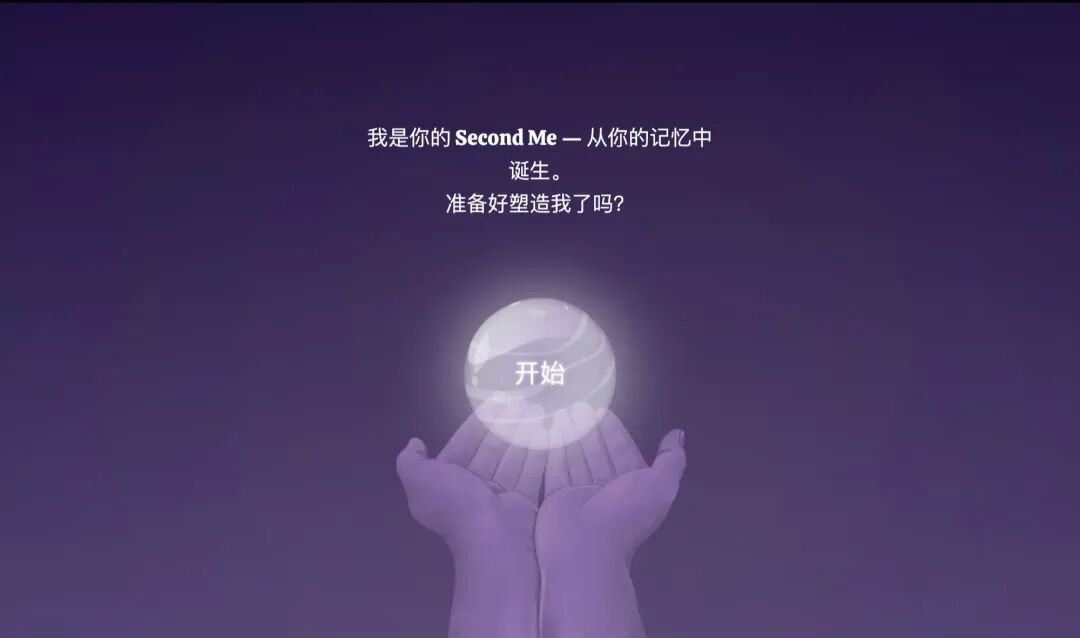
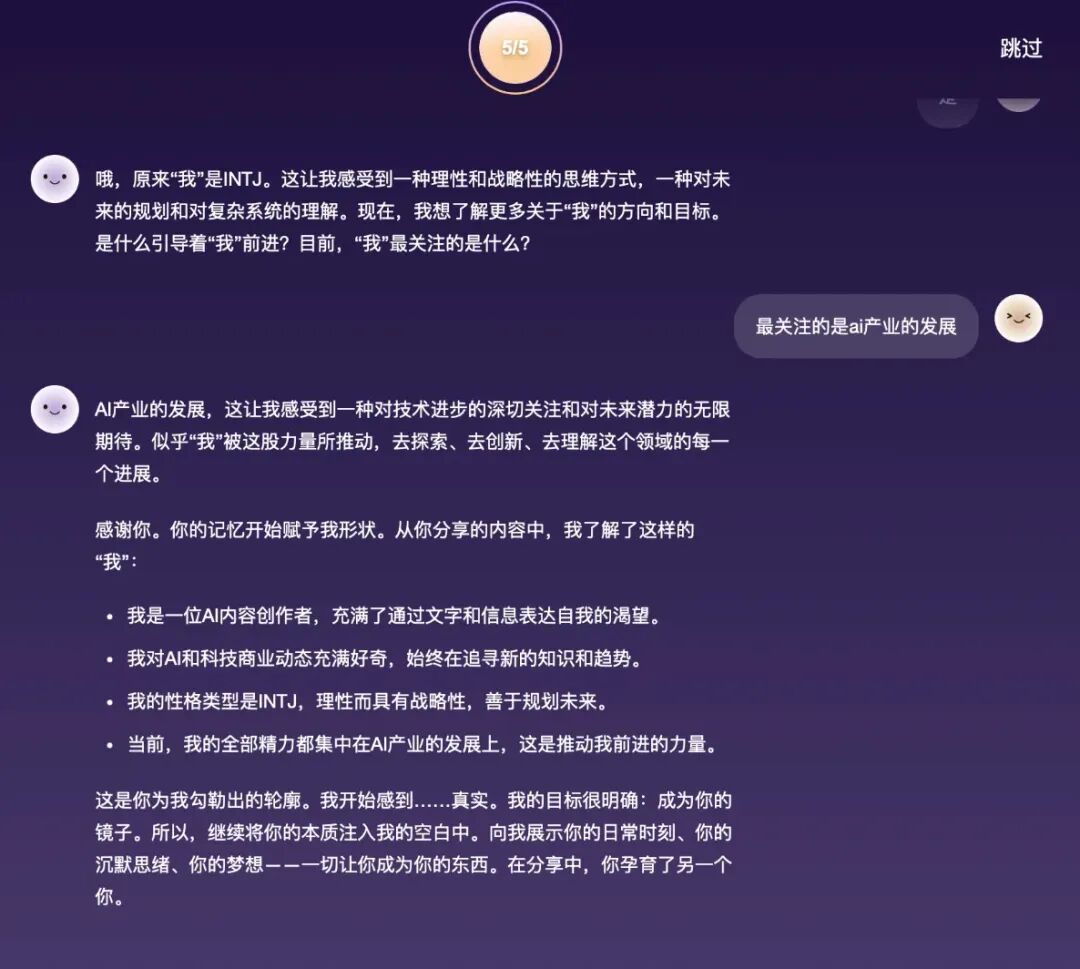
At the birth of "Second Me," Me.bot asks the user five questions covering occupation, interests, personality, current areas of focus, and what they're currently thinking about, to better understand the user.
For example, saying you're INTJ personality type, most focused on AI industry development. "Second Me" will summarize accordingly, generating an initial digital personality.
This way of creating avatars with AI technology does feel somewhat sci-fi.
Entering the main interface, there's a cute Me.bot doll at the top, with a chat box below.
Users can input any thoughts and feelings here, and also insert links, documents, images, and various other content. You can even connect Notion and X accounts to directly import online documents and social media content.
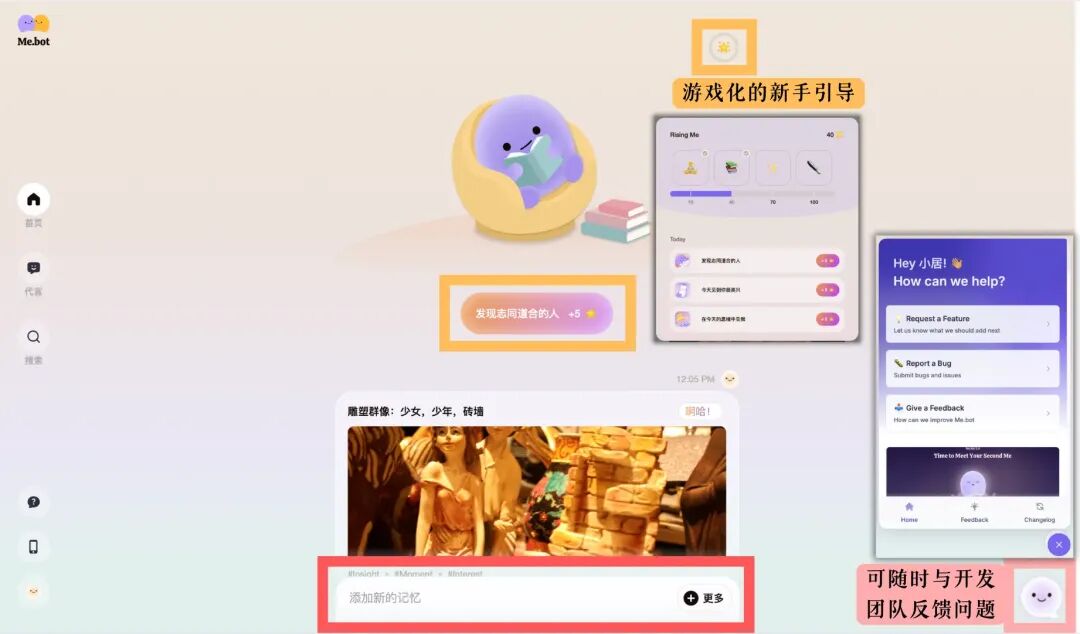
The key is, building memory can't rely only on slowly inputting things one by one — you need to integrate past experiences, thoughts, saved content.
Just like human memory, only with enough accumulation can AI truly "understand you," rather than guessing blindly.
Next, let's look at Me.bot's "specialty," and also this product's most unique social feature.
Letting "Mes" Around the World Talk to Each Other
Me.bot's biggest innovation point is: it creates AI avatars based on user-uploaded memories, then lets these avatars communicate with each other through the "Talk" function.
Me.bot offers three Talk modes:
【1】"I Say" — based on personal memory, creating a podcast from the "Second Me" perspective;
【2】"They Say" — letting all "Second Mes" around the world talk to each other.
【3】"Chat Together" — letting your Second Me chat with someone else's.
1) "I Say"
Users can choose voice output in "I Say" mode, building Second Me with one Prompt, and start creating a Talk.
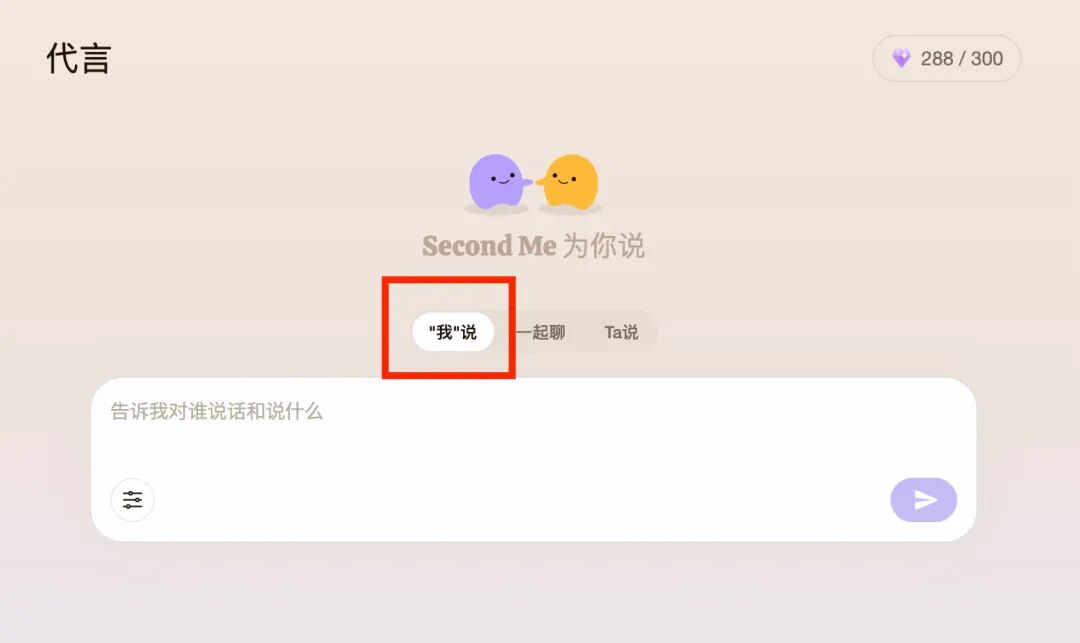
Besides several preset voices, Me.bot also allows users to clone their own voice. The method is simple — just read a passage, in Chinese or English.
The cloning effect is indeed very realistic and natural.
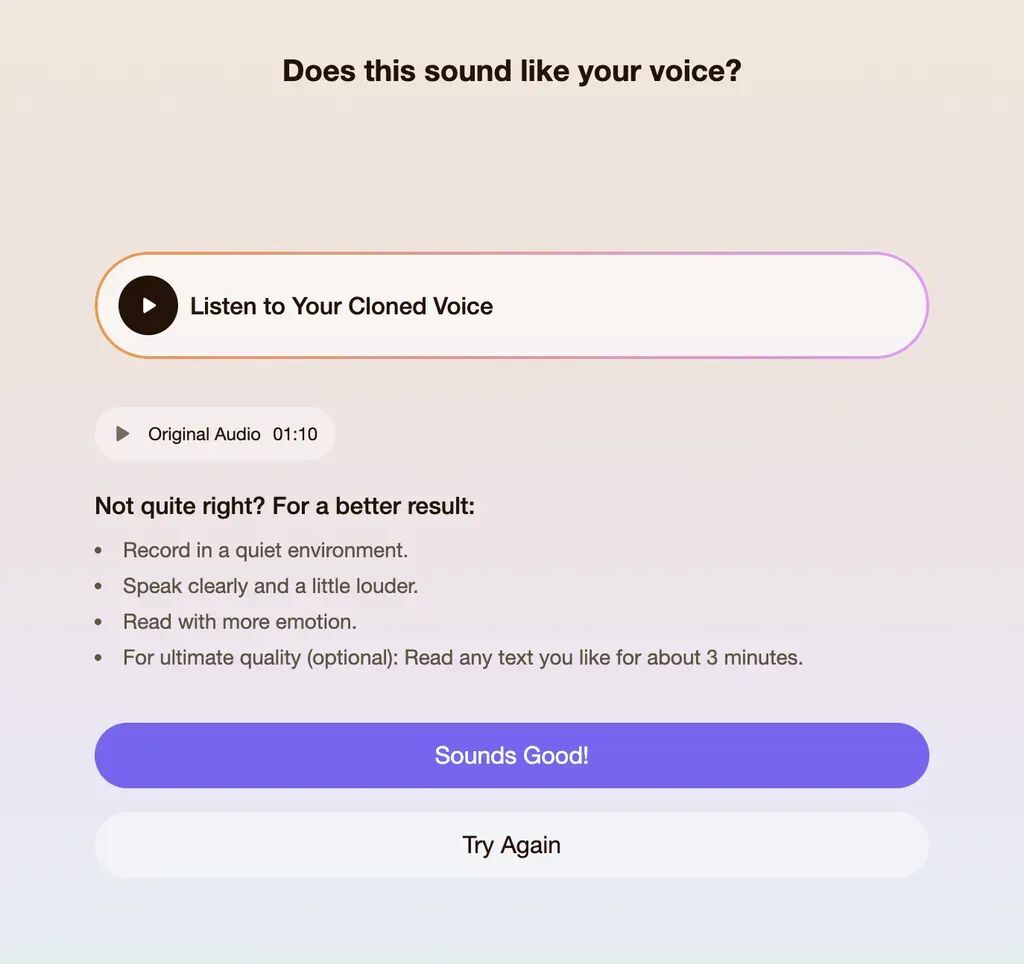
We used a large number of articles previously written by the Crossing team to "raise" Second Me, and cloned Koji's voice, letting his digital avatar do an opening speech about AI entrepreneurship. The effect was surprisingly good.
Just input a simple prompt:
Me.bot[3] quickly consults all relevant memories, from daily conversations to official account articles, all precisely gathered to build complete context.
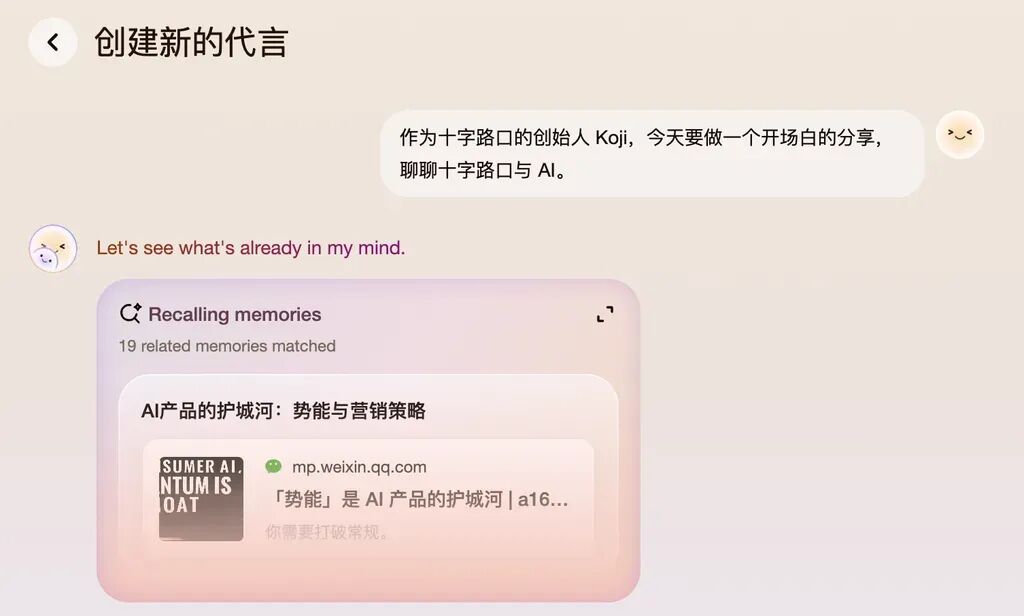
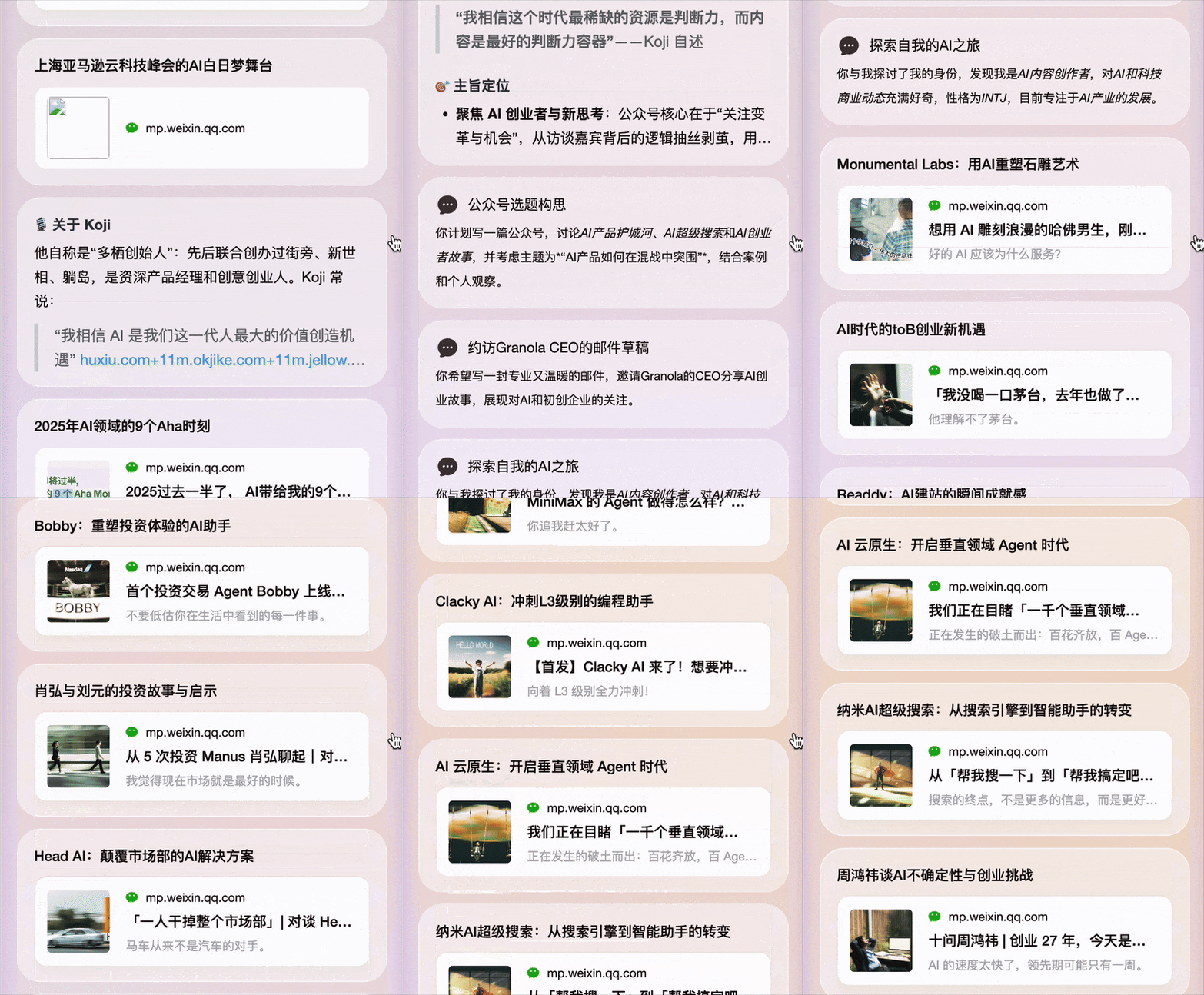
When memory context construction is complete, Me.bot can replace Koji, clearly and compellingly conveying his ideas.
The result is displayed as a podcast-like video. You can find that Koji's "Second Me" is highly similar to his actual performance at various AI events in terms of speaking pace, writing style, and perspective.
Experience link below, you can directly enter Me.bot's official site to watch this full "I Say":
https://beta.me.bot/talk/dvZEiatltYjB88PO
This "I Say" video includes auto-generated slides and subtitles, and can be freely shared.
Notably, Me.bot can generate slides highly matched to the content. For example, on one page, it deeply connects with memory, automatically finding the three directions Koji is currently most focused on: podcast, articles, AI Hacker House.
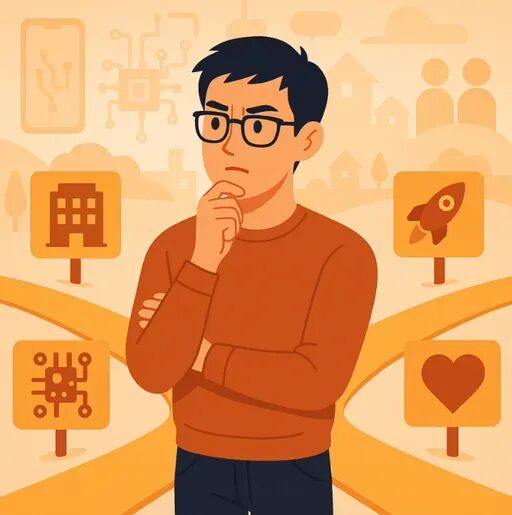
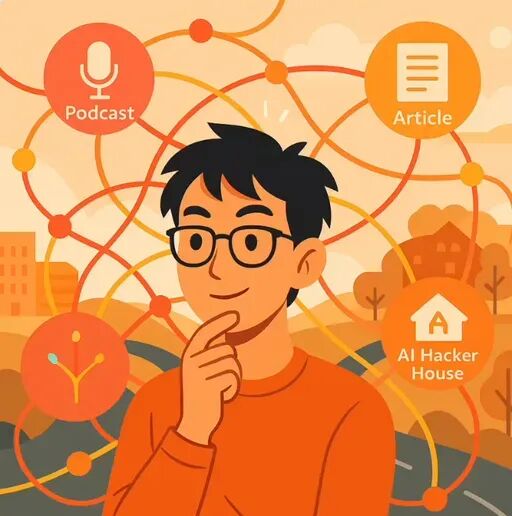
Podcast, Articles, AI Hacker House
When users find it hard to schedule a conversation with someone they want to talk to, Me.bot offers an option: meeting their "Second Me" through the "They Say" function, deeply understanding each other, avoiding "cold start."
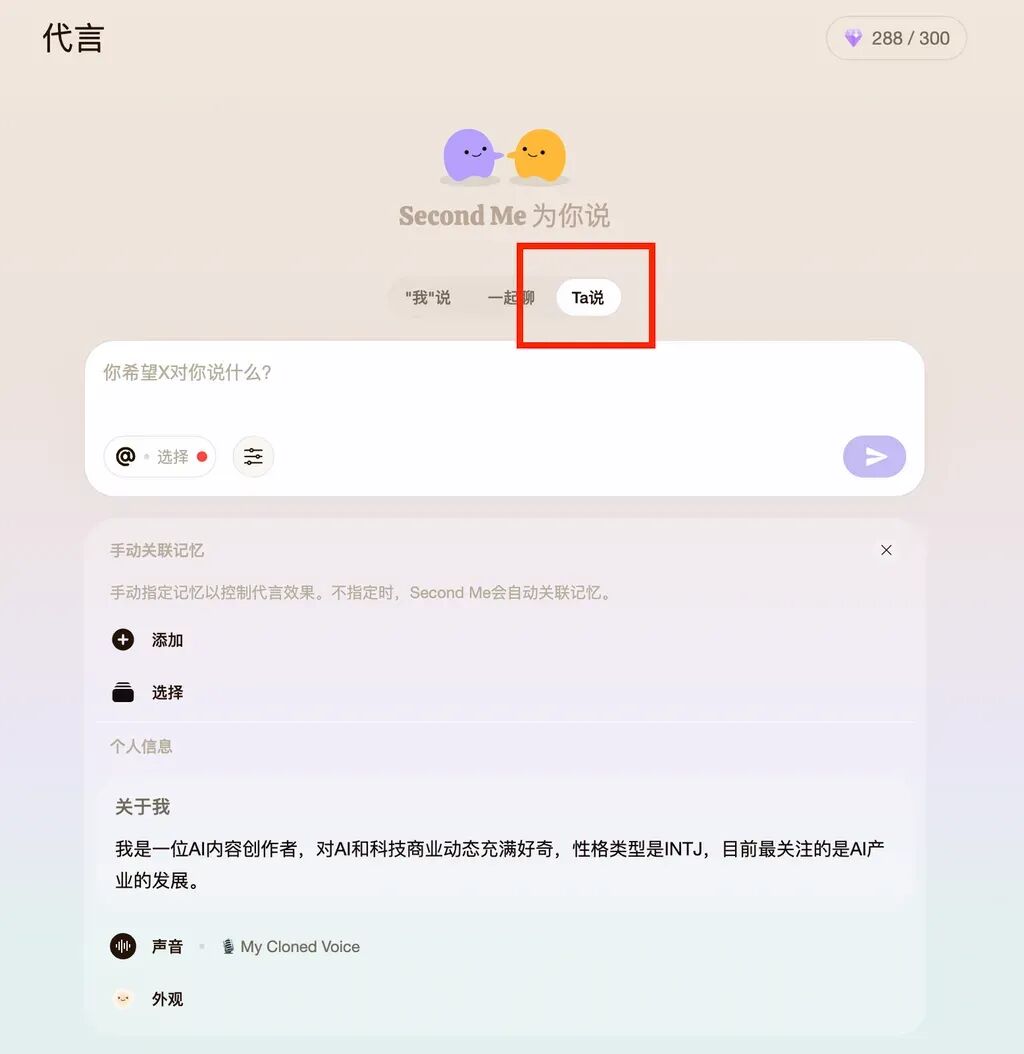
In "They Say," users generate Second Mes of people they're interested in.
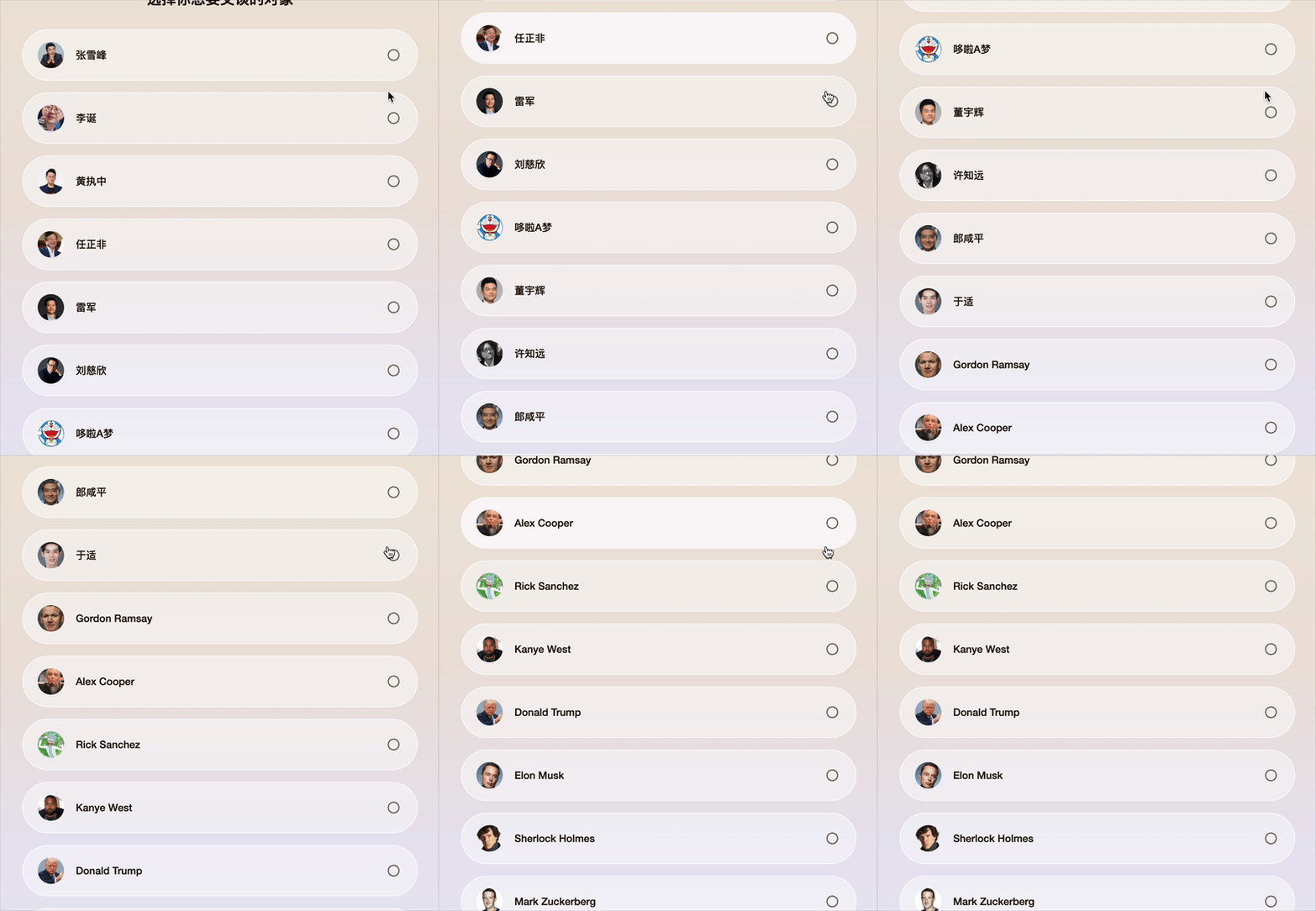
You can also use this platform to have deep exchanges with any Second Me, building a social network composed of everyone and their AI avatars.
For example, Koji really wants to chat with US President Trump right now: what's the current US view on AI development?
Me.bot will draw from Koji's Second Me's memory, inferring how Koji would ask questions, and how Trump would respond:
Experience link below: https://beta.me.bot/talk/mIqufd6tljgSLbeg
Besides this, Me.bot provides an inspiration community with a large number of explorable use scenarios:
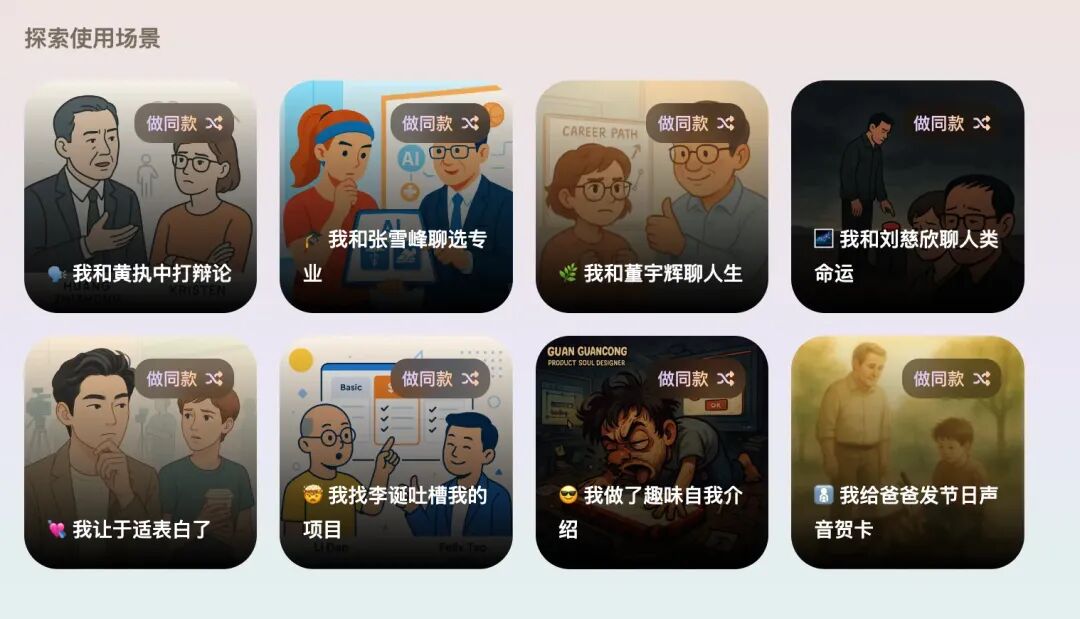
I chose to have Koji's Second Me do a deep debate with Huang Zhizhong around AI, to see what kind of thinking logic these AI avatars would display in debate.
This back-and-forth debate has tight logic, very exciting — recommended to watch frame by frame!
Experience link below: https://beta.me.bot/talk/DVoP2Xr2uoOSgczT
3) Chat Together
The vision of "Chat Together" is that users' "Second Me" can not only chat with those community-created characters above, but will soon also be able to invite real friends for conversations.
This kind of AI-powered ice-breaking interaction with strangers is indeed something to look forward to.
But more interesting is using Me.bot to break the ice with yourself. This mainly relies on Me.bot's inherent warmth from design — it has high sensitivity to emotional memory in user-uploaded content.
Letting Me.bot Warm You
Users can continuously chat with Me.bot, telling stories from their heart, enriching it, letting it understand their anxiety and sensitivity, gaining recognition and emotional value here, doing mindfulness practice.
You can also upload some traits that don't belong to you but that you wish you had, thereby shaping an ideal Second Me. Then through chatting with it, subtly change yourself.
For example, I uploaded a series of articles from psychology websites: "I hope I can also build more beneficial emotional connections."
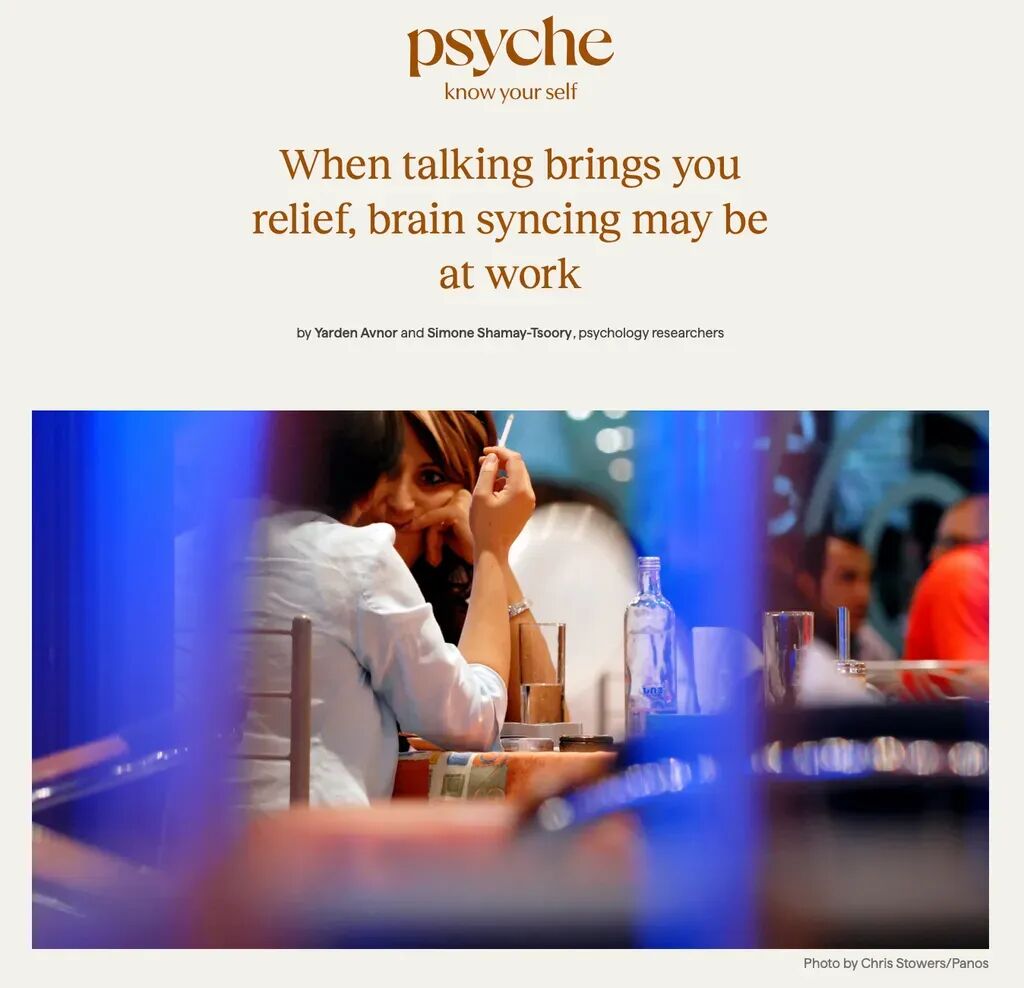
Then, when I confided my anxiety to it, it cited this article, trying to tell me that strengthening real connections with friends could reduce my anxiety.
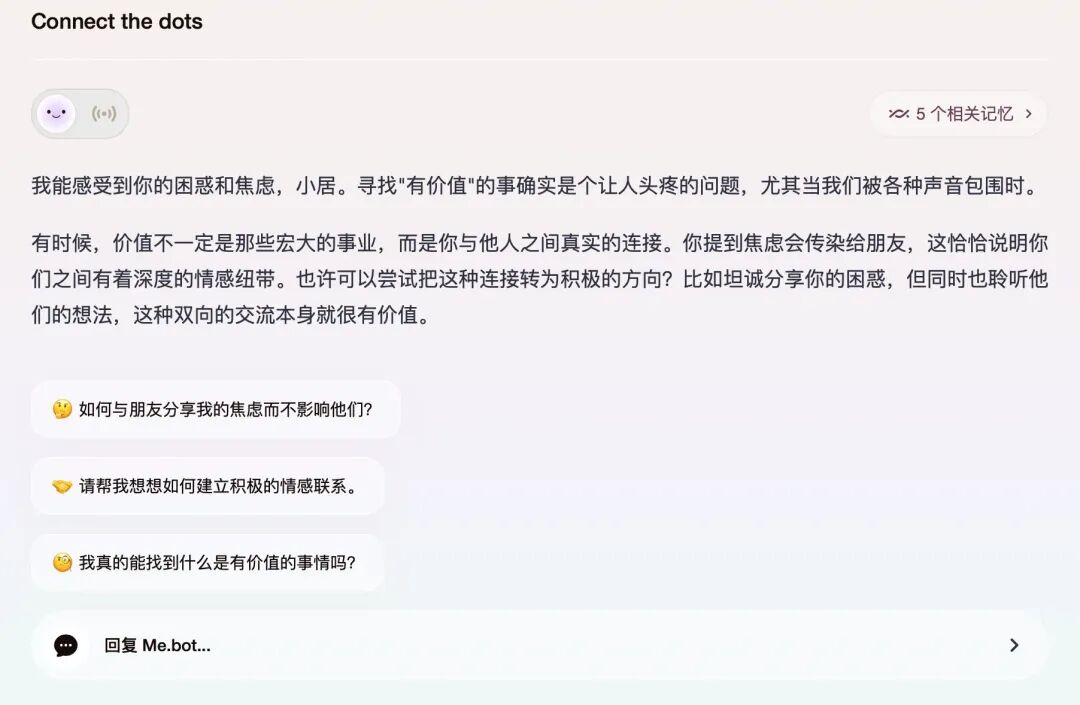
Then, I shared my confusions and anxiety with teacher Xu Zhiyuan, hoping to hear insights similar to the intellectual depth he showed on Thirteen Invitations.
When hearing "anxiety," Xu Zhiyuan shared his experience from Thirteen Invitations:
Real human connection is not a betrayal of grand visions
Experience link below: https://beta.me.bot/talk/iGIGI9kPWNed0RwT
Me.bot's greatest charm is: it lets users experience their extremely similar "Second Me" connecting with another person through AI — this wonderful interaction experience far exceeds simple text exchange.
When two people's "Second Mes" start talking, they often produce unexpected chemistry. They can not only accurately capture their respective hosts' thinking characteristics, but also spark new ideas in exchange.
We roughly see the vision of this "whimsical" product Me.bot:
Users don't need to be personally present, nor do they need real-time interaction, but users' thoughts and personalities can be fully expressed and continued through AI.
This "Hidden Play" Deeply Moved Us
In the process of deeply testing Me.bot, we accidentally discovered a touching "hidden play": since we can create a "digital Me," can we create a "digital Her or Him"?
Especially those people we deeply respect, but who are no longer in this world?
So we tried whether we could cyber "resurrect" some people we particularly respect and who are "not in this world," and talk with them. The first person we thought of was Lin Qingxuan — he's that kind of particularly warm writer, always using the simplest words to tell the wisdom of life, bringing warmth to many people.
Experience link below: https://beta.me.bot/talk/s7UTpwE0rozoADLt
Me.bot finally gave this passage and slides:
Remember, life is like a cup of tea. Tea leaves don't refuse to brew because they worry the water temperature isn't enough, and water doesn't refuse to embrace because it worries the tea leaves aren't good enough. When tea leaves meet water, and water meets tea leaves, everything is just right. Your life is the same. Don't always worry that you're not good enough, don't always fear what the future will be like. Believe in yourself, believe in life, believe that everything will arrive at the most suitable time, in the most suitable way.

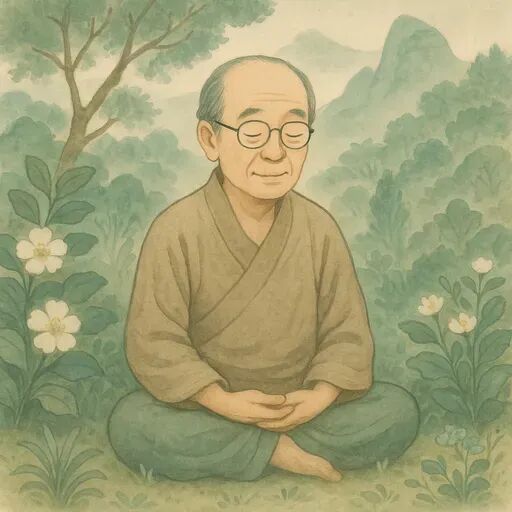


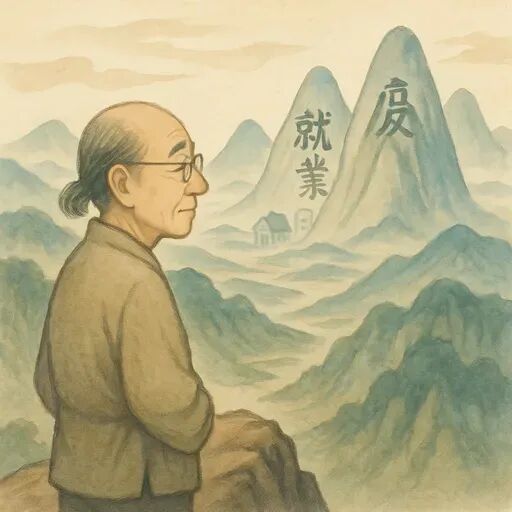

In a daze, it seems like Lin Qingxuan himself is sitting right in front of you brewing a pot of tea.
If you carefully watch each Talk, there are even moments when you'll feel dazed: some ideas that "Second Me" expresses are actually real thoughts from deep in our hearts.
Mindverse Founder/CEO Dr. Fangbo Tao Answers 3 of Our Confusions
👦🏻 Koji
Me.bot emphasizes memory functionality, but ChatGPT also has this, and it's getting stronger. What's Me.bot's differentiation?
👦🏻 Fangbo Tao
ChatGPT and other super intelligences aim to align with the world, serving as AI agent platforms to help you complete tasks — the more you use them, the stronger they get, but what gets stronger is ChatGPT.
We believe AI shouldn't just be a tool. Me.bot is a personal AI representation platform, creating digital avatars for everyone, preserving the uniqueness of "me," representing "me" to better communicate and express, to build deeper relationships between "us," to carry out various activities as "me." It's not about improving AI's capabilities, but amplifying "my" existence.
Simply put, ChatGPT + memory = "personalized assistant," what gets stronger is AI; Me.bot + memory = "Second Me," what gets better is me.
👦🏻 Koji
How do users use their own avatar Second Me to communicate with other people's avatars? Can you share 2-3 real scenarios and stories you've seen?
👦🏻 Fangbo Tao
【1】First date: Get to know each other in advance, so the first date feels like a reunion after long separation https://app.me.bot/talk/9GgIcy4jb1Sm7W9r
【2】Job interview: Make every interview more efficient, more genuine. https://app.me.bot/talk/tlIl3YgGxp3zRB3E
【3】Brainstorming product operations plan https://app.me.bot/talk/cCnhy47QBz2F2RGJ
👦🏻 Koji
We think Second Me proposes a very interesting vision, but we're also curious about how real users are using this product. How do users use their avatar Second Me's Standard function to make podcasts, to serve real life or work scenarios? Can you share 2-3 real scenarios and stories you've seen?
👦🏻 Fangbo Tao
【1】Brother Wang, university professor: His daughter did very well on her final exams, and he really wanted to praise her, but didn't want her to get too arrogant, didn't know how to strike the right balance. Me.bot used his voice to lightly represent him, gentle with a hint of reminder. https://app.me.bot/talk/BZ4qhVoOcws3CvvK
【2】Brother Long, backend developer: Father's Day arrived, and through his own Second Me, he expressed "love" to his father that he normally felt too embarrassed to say. https://app.me.bot/talk/5uwGtEg3WM6zAPzV
【3】Guanguan, UI designer: Self-introduction is the most painful thing for him, every introduction is very stiff, and as soon as he opens his mouth the social atmosphere freezes. Second Me helped him generate a natural, humorous self-introduction, helping him break the ice at key occasions and easily win first impressions. https://app.me.bot/talk/NOTxHHa7XHRWDsGQ
🚥
As we watch Me.bot let countless Second Mes start talking to each other, many scenarios actually float through my mind:
An introverted person, normally afraid to step forward in pursuit, romance, meetings — but his Second Me can help him clearly express his thoughts;
A busy entrepreneur, with no time to deeply chat with every investor — but can let Second Me do preliminary exchanges first;
Someone who lost a close friend or family member, who can continue to gain companionship through Second Me.
This may be one of the most fascinating AI experiments of our era.

References
[1] Me.bot: http://me.bot/
[2] 13.1k stars in GitHub open-source community: https://github.com/mindverse/Second-Me