Late-Night Bombshell: Google Unleashes 25 AI Updates — What Signals, Clues, and Wealth Codes Are Hidden Inside?

Google's still got it.

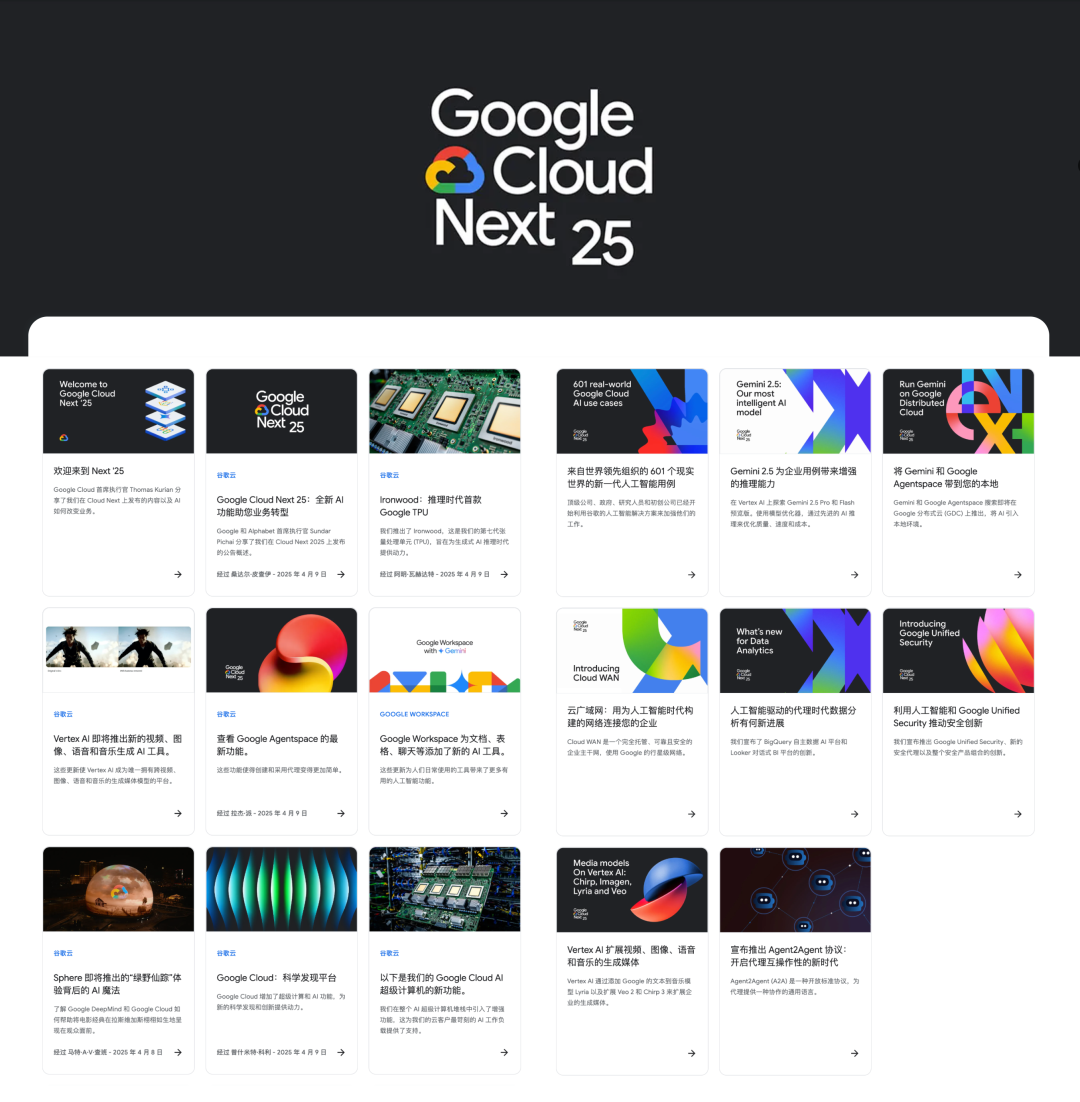
This morning, Google wrapped up Google Cloud Next 25, dropping nearly 20 AI-related announcements spanning models, applications, developer tools, and hardware.
There was a lot to digest, with information scattered across a flood of press releases.
I handpicked the AI highlights and demos, and put together the clearest guide to Google Cloud Next 25's AI updates on the internet — so you can catch up fast.
Here's the TL;DR:
- Google unveiled a bunch of heavy-hitting, flashy AI models and tools, but too many of the good ones are still "coming soon." Please hurry up and ship, Google.
- Gemini 2.5 Flash is on the way — cost-efficient reasoning. Paired with the already-top-ranked 2.5 Pro, can Google claw its way back to being the AI leader?
- Notably, they dropped the A2A protocol for seamless Agent collaboration, positioning themselves to define the global standard for how Agents work together.
- They fully opened up 601 real-world AI deployment case studies, pointing application-layer founders toward what's actually working.
This piece took 8 hours to compile, covering 5 new AI models, 1 forward-looking AI protocol, and 6 other major updates.
🧠 5 AI Model Updates
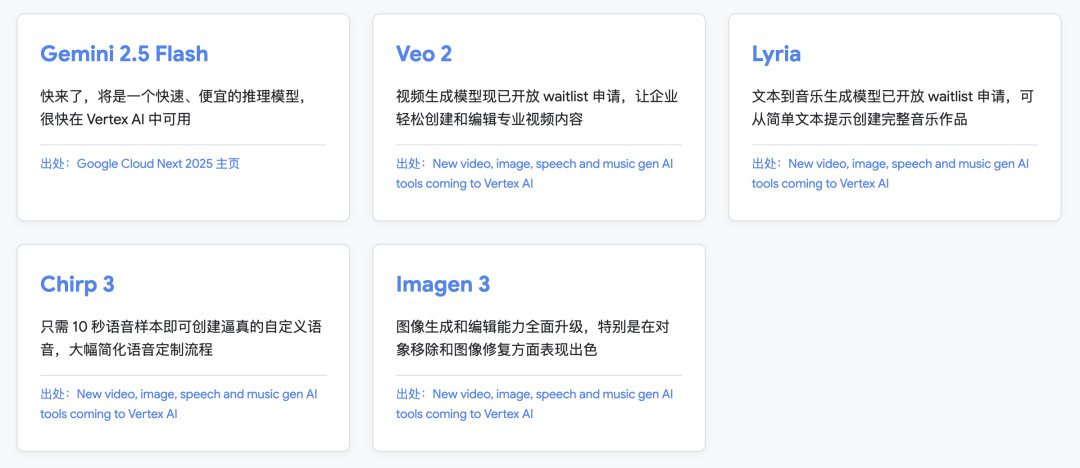
First, the five model updates. I made this dashboard for quick reference:
Gemini 2.5 Flash: Coming soon, a reasoning model built for speed and cheapness
Google already launched Gemini 2.5 Pro, a reasoning model with a 1-million-token context window (tested to follow instructions and precisely recall early conversation details even well beyond context limits), with multimodal prompt support. It topped numerous benchmark leaderboards.
It's genuinely impressive — 2.5 Pro is already my daily driver. A few days back, the well-received universal text-to-image prompt framework used it to achieve the best results.
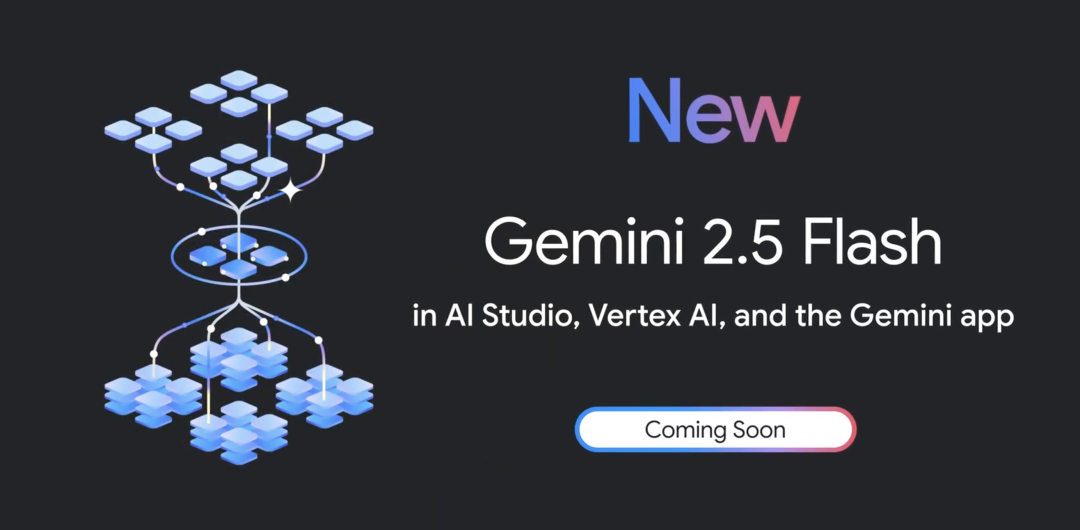
Now Gemini 2.5 Flash is coming too. Unlike its predecessor 2.0 Flash:
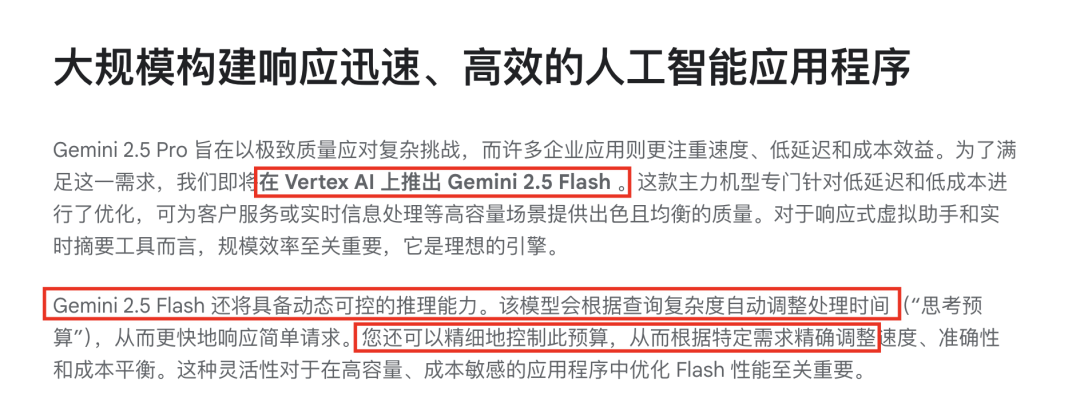
- This time it's a reasoning model, but keeps the fast, cheap, reliable DNA
- Reasoning depth dynamically adapts to task complexity (not stupidly running long chains of thought on simple common-sense questions — thank god 🤔)
- Developers can customize reasoning depth for cost control
- Official launch still pending, but it'll be available on Vertex AI soon
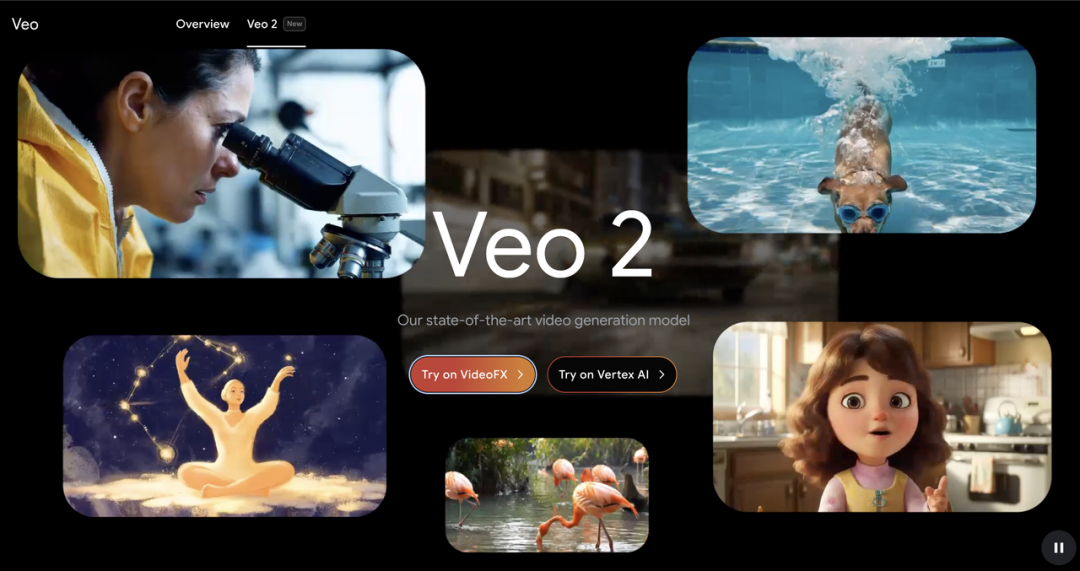
Veo 2: Top-tier video generation model, waitlist now open
Veo 2 is absolutely a video generation model worth watching. It now supports video inpainting, keyframe-to-video, outpainting, and camera controls:

-
Video inpainting: No manual editing needed — remove unwanted elements from video. Check it: the left image has visible wires, the right one has them naturally erased
-
Keyframe-to-video: Feed it a start frame (far left) and end frame (far right), it generates the video between them with remarkably stable visuals
-
Outpainting: Naturally expand existing video frames. Not mind-blowing quality, but perfect for turning landscape videos into portrait format for TikTok and other vertical platforms
-
Camera controls: Adjust shot composition, camera angles, and pacing during generation. Move the camera in different directions, create timelapse effects, or generate drone-following-style shots.
PS: Google VideoFX runs on Veo 2 (gotta say, Google's product entry points and internal relationships are genuinely confusing)
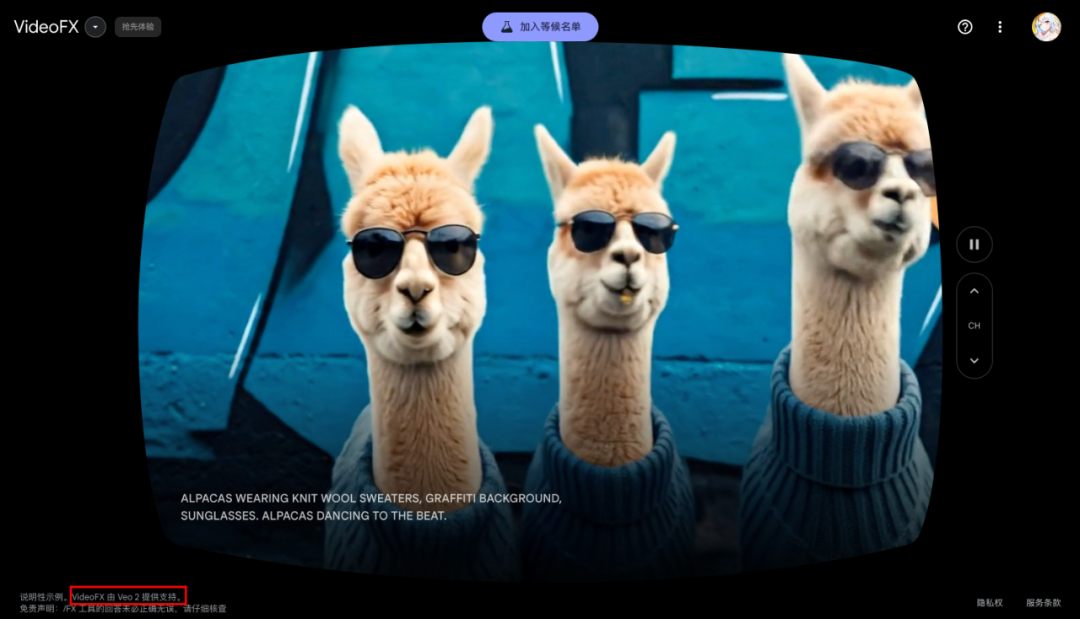
Note: Veo 2 waitlist is now open — application link at the end of this article.
Hot take: Google Cloud and Vertex AI interfaces are genuinely painful to use. Unless you have to, wait for consumer-facing entry points like VideoFX to open up.
Chirp 3: Create realistic custom voices from just 10 seconds of audio
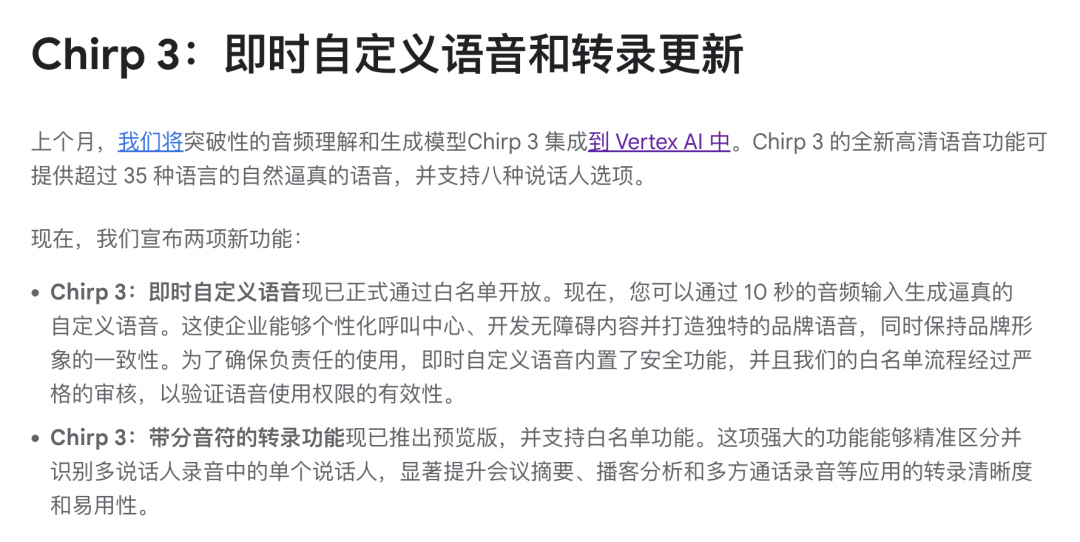
Updated to Vertex AI alongside Veo 2, Chirp 3 is Google's audio understanding and generation model.
Chirp 3 offers natural, realistic speech in over 35 languages (including Chinese) with eight voice options.
-
Highlight #1: Generate highly realistic custom voices from just 10 seconds of short audio
-
Since Chirp 3 is API-only for now, I couldn't test it directly. Unclear whether that 10-second sample needs to be a fixed script read-aloud, or if any clean recording works.
-
If it's the latter, things get interesting — you could take any audio clip from a game or anime character and synthesize their voice for virtual companions (I mean, serious AI companions, obviously). Valuable for developers and, uh, enthusiasts alike.
-
Hopefully Google locks down safety measures fast, so your voice can't be cloned without consent.
-
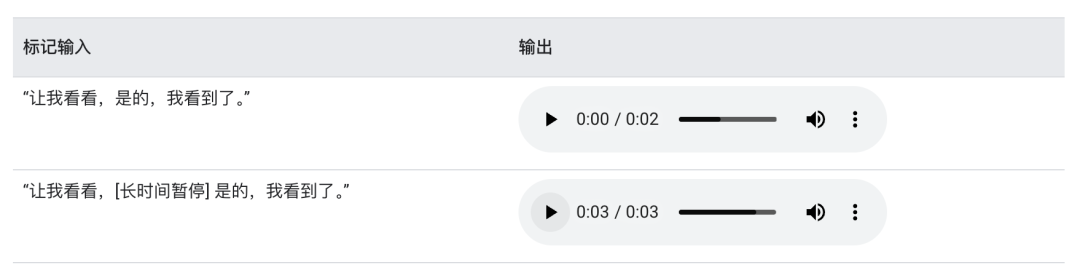
Below is a Chirp 3 audio demo showing speech with and without pauses — pretty natural.
-
Highlight #2: Speaker diarization — identifying who said what
-
Everyone's suffered through transcripts that can't distinguish speakers. Problem solved: now it can tell "who said which sentence" in multi-speaker recordings. This was always the inevitable direction.
-
Makes meeting summaries, podcast analysis, and interview transcription way more usable.
Lyria: Text-to-music generation model, also waitlist-only
Lyria hit Vertex AI too — generates complete musical pieces from simple text prompts.
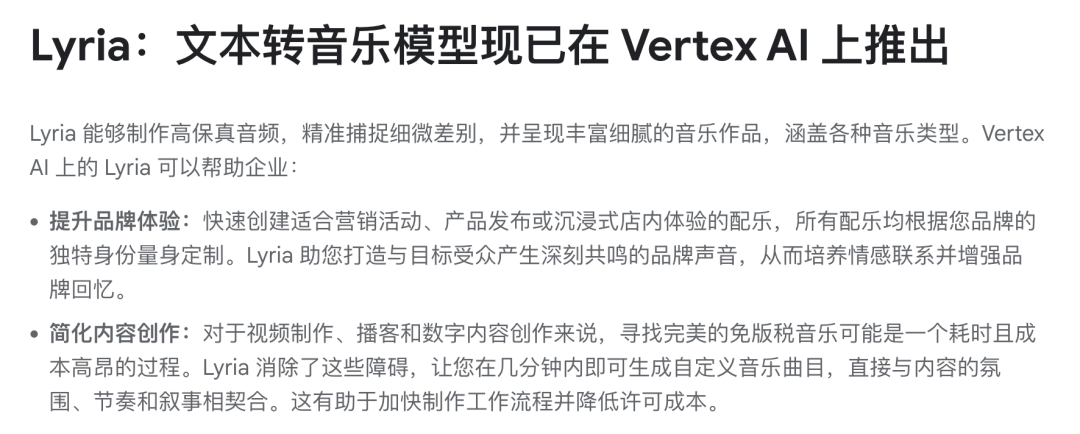
Didn't spot anything particularly standout; Hailuo AI Music produces solid results too.
Here's the official demo audio:
👋 Worth a glance, that's all.
Note: Lyria waitlist now open — link at the end.
Imagen 3: Better image generation and editing, stronger object removal and inpainting
Imagen 3 has been out for a while. The Universal Text-to-Image Prompt Framework generated tons of product, game, and interior design samples through ImageFX (Imagen 3). Criminally underrated — absolutely top-tier among text-to-image models.

Yize's universal text-to-image framework, testing ImageFX results
Imagen's editing/inpainting got upgraded — quickly remove or redraw unwanted objects and flaws.
Official demo below:
Left: original. Middle: old version. Right: Imagen 3 version
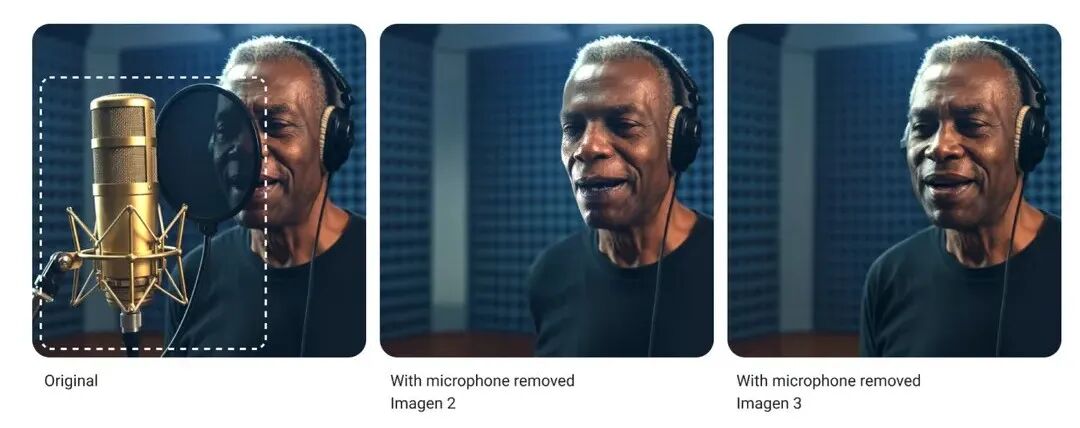
Imagen 3 remains as reliable as ever — seriously underrated.
Available now in Gemini app and ImageFX.
🔌 1 Forward-Looking AI Protocol
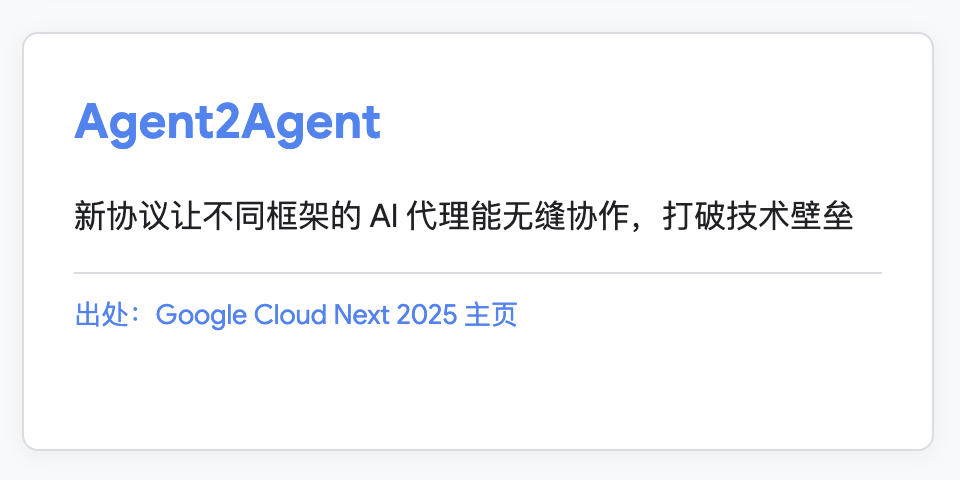
Agent 2 Agent: A new protocol for seamless Agent collaboration
😂 AI developers finally, through collective learning in communities like WaytoAGI and from AI bloggers, started wrapping their heads around what MCP is.
Now Google's cooked up another special protocol — Agent 2 Agent.
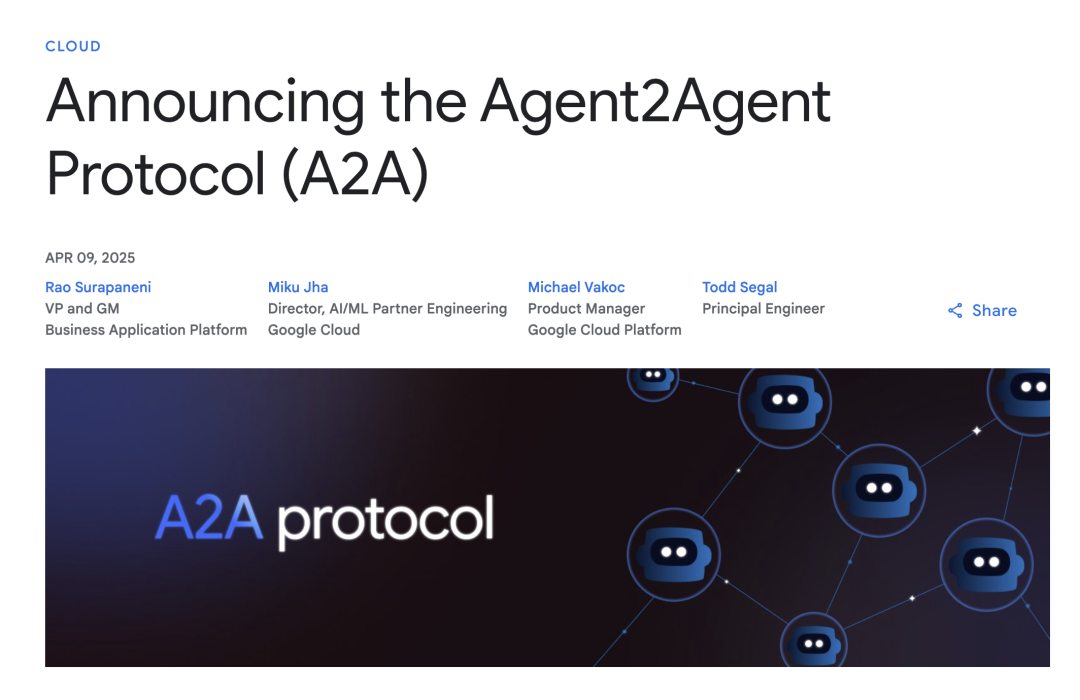
For a quick explainer, that prolific content machine next door already dropped one — go check it out: 5,000-Word Deep Dive: What the Hell Are A2A and MCP Protocols in the Agent World

The gist:
- A2A is an open protocol for Agent-to-Agent collaboration, complementing Anthropic's Model Context Protocol (MCP)
- MCP focuses on connecting Agents to tools and information
- A2A focuses on letting "the Agent you use" (client Agent) collaborate with "third-party support Agents" (remote Agent) — the former sets and communicates tasks, the latter executes
- During A2A connections, Agents can message each other with context, replies, etc.
- A2A protocol connections can persist for extended periods until tasks complete
Google provided a demo video showing it in action:
Protocols like A2A will obviously matter enormously in a future where AI Agents are fully deployed.
But let's be real — with the MCP ecosystem still immature and the community still arguing whether Workflows even count as Agents, ordinary people and most developers don't need to obsess over A2A right now.
Don't be so serious.
If you're into the technical weeds: https://github.com/google/A2A
🗂️ Other AI Apps, Developer Tools, and 601 Case Studies
Beyond the model updates and A2A protocol, Google dropped a pile of app and tool updates for everyday users and developers, plus 601 real-world AI deployment case studies.
Hitting the highlights, ranked by subjective priority:
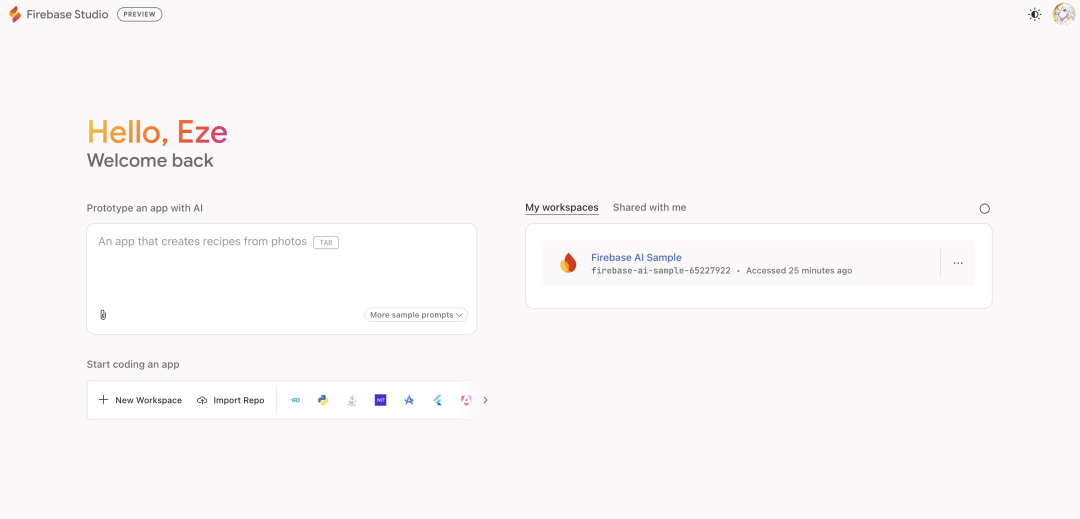
Firebase Studio: Cloud-based AI coding with Google's best models, one-click deploy
Google launched their own AI coding tool too. Leveraging Google Cloud's infrastructure, developers can handle the full app development pipeline in Firebase.
AI coding, build, cloud deployment, runtime — everything in one place.
Genuinely convenient, and no IDE download needed — code in the cloud.
Their homepage looks like this.
The actual coding interface looks like this — familiar if you've used other AI coding tools.
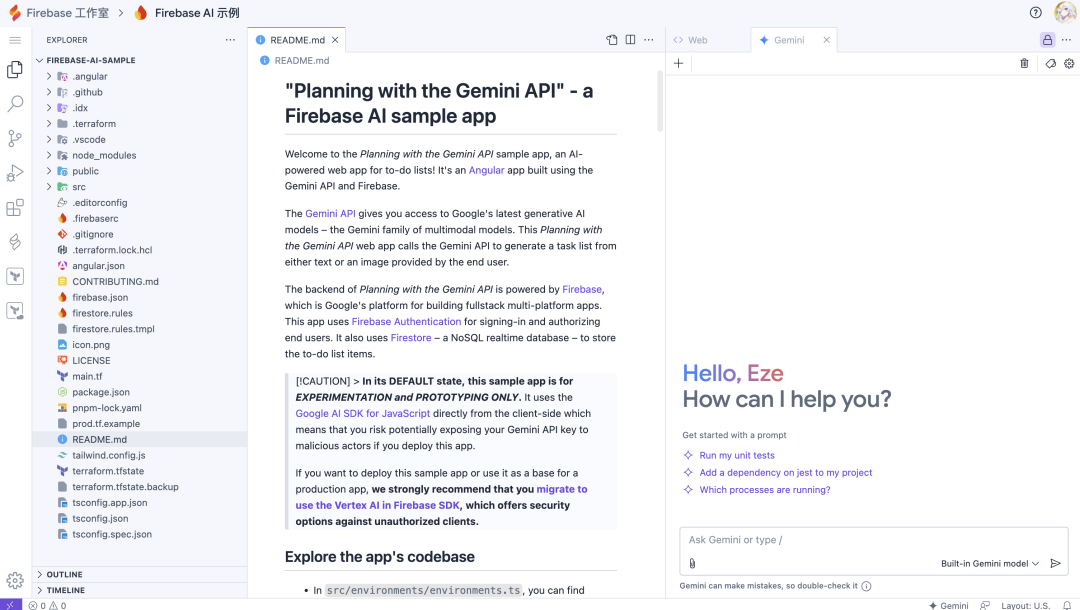
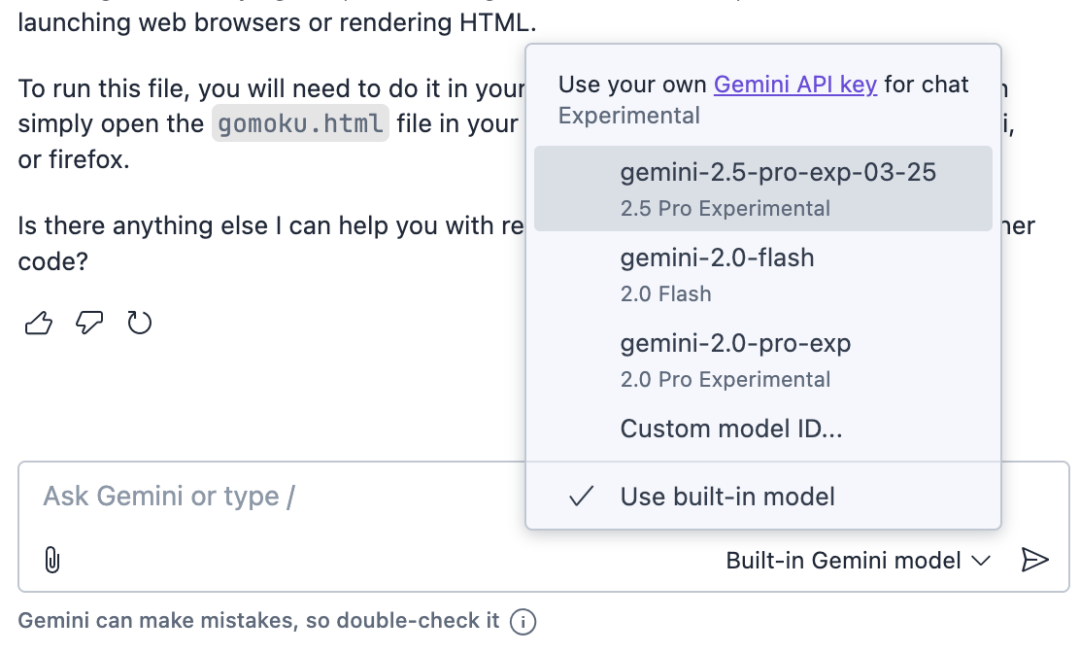
Powered by the best-in-class Gemini 2.5 Pro, you get one of the finest coding experiences on the planet right now.
Try it at https://idx.google.com/.
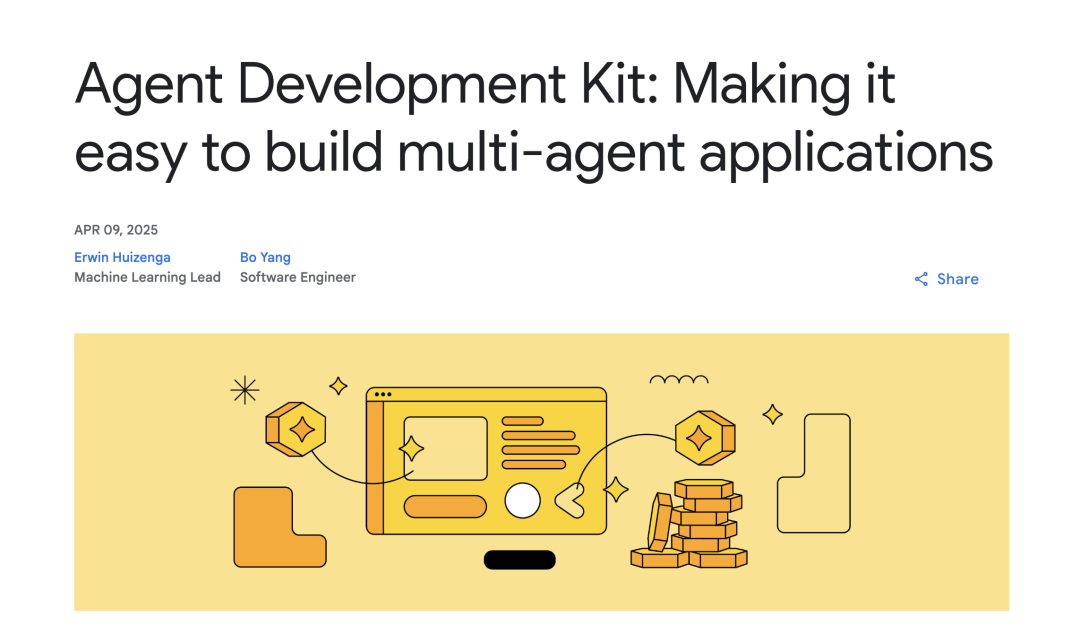
ADK: Google's New Agent Development Framework
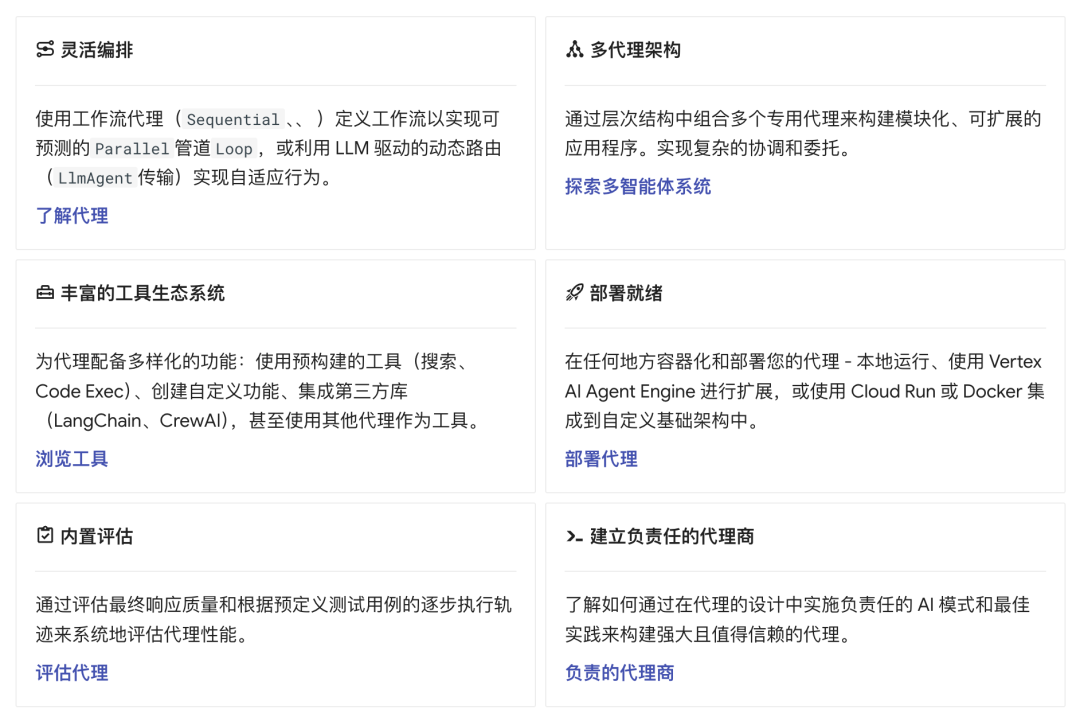
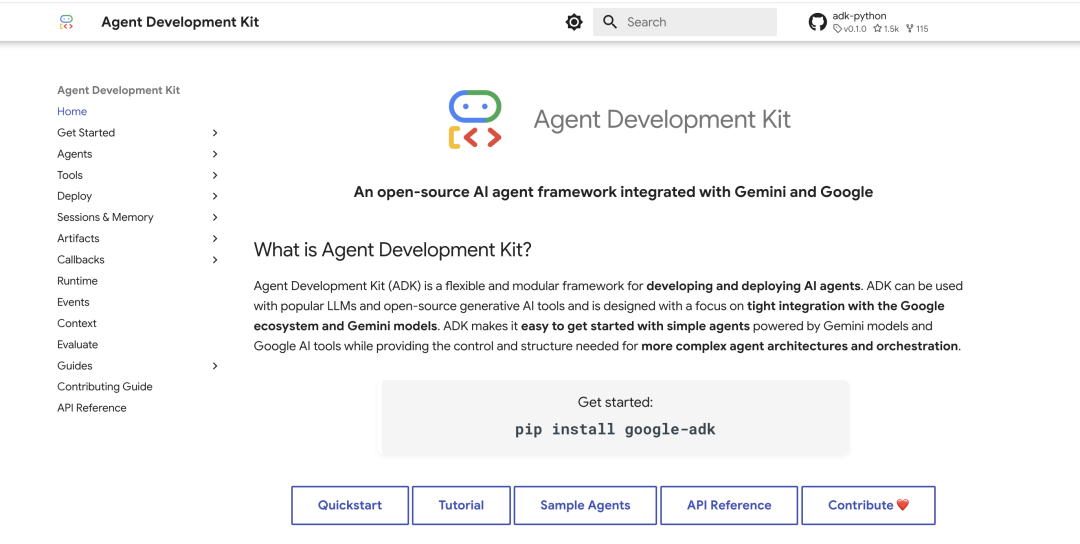
ADK, short for Agent Development Kit. Another new Google release, purpose-built for constructing multi-Agent systems.
Officially touted advantages:
Developers can check the project at https://google.github.io/adk-docs
Google Workspace: Heavy AI Integration
Google piled AI capabilities onto the Workspace suite.
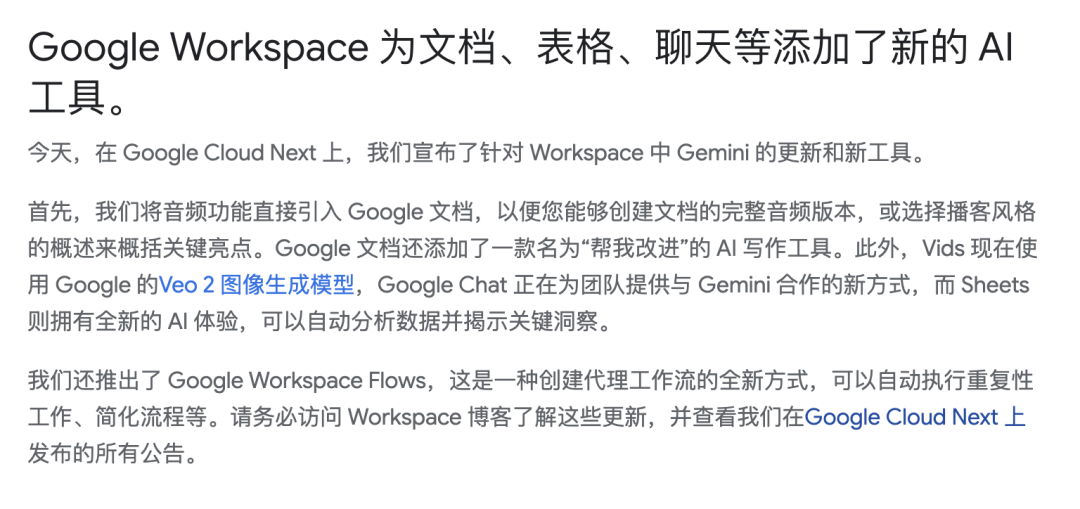
New AI features for Docs, Sheets, Meet, Chat, and more:
- Turn Google Docs into audio versions, or get podcast-style summaries of document highlights
- New "help me improve" feature in Google Docs
- Vids gets Veo 2 video generation
- Sheets gets automated AI data analysis and insight generation
Oh, and regular users can't access this in Google Docs yet.
Google AI Studio UI Overhaul
Google still didn't fix the Google Cloud console design. Instead, they kept polishing AI Studio.
The overall style now aligns closer to the Gemini web app — much cleaner.
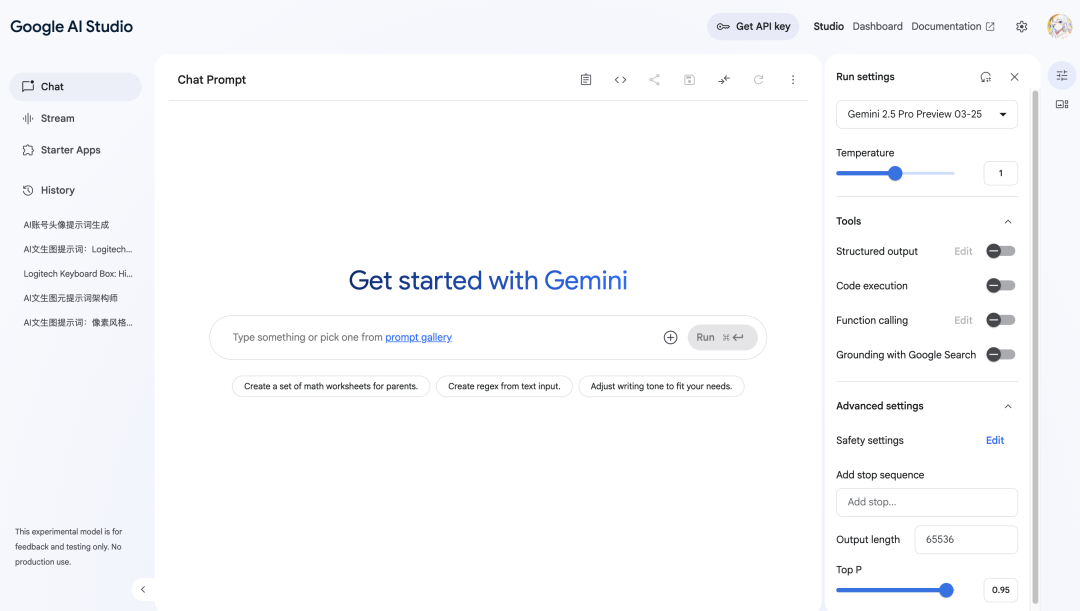
Small win, but nice — smoother to use.
Google's 601 Real Customer AI Case Studies
Google updated their catalog of AI customer stories from the past year.
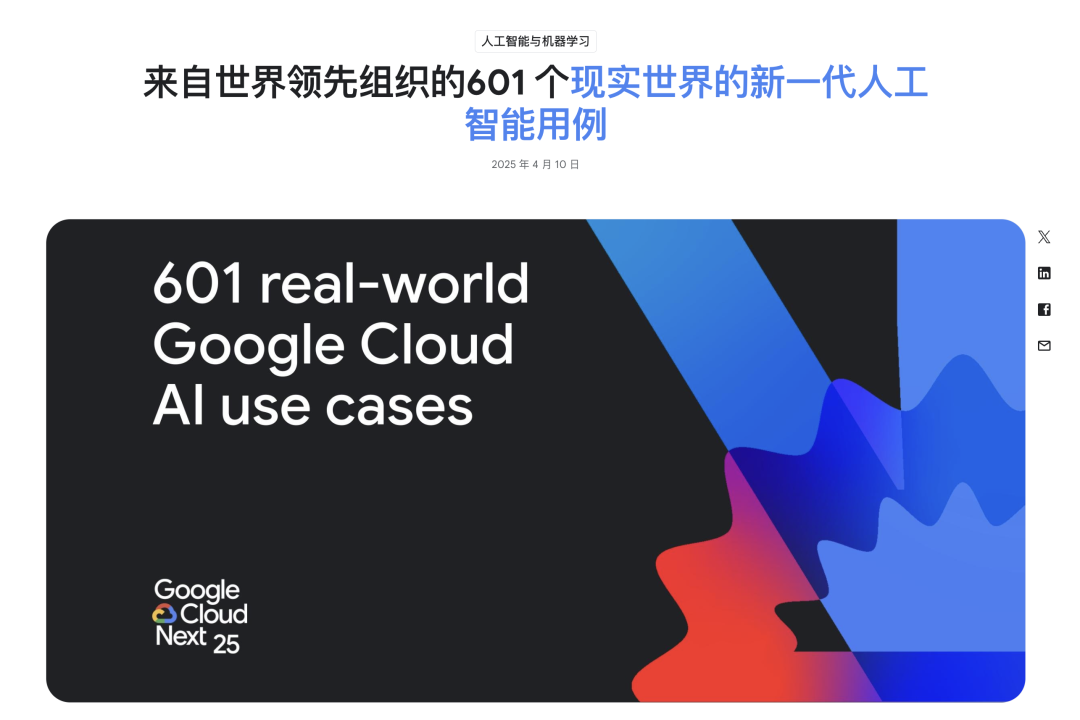
At Google Cloud Next 24, this list had just 101 entries. Now it's up by 500. Serious flex.
Summarized by Gemini, these 601 applications break down as follows:
- Customer Agents: Enhancing customer service (chatbots, personalized recommendations, order processing)
- Employee Agents: Boosting workforce productivity (task automation, information retrieval, content generation, collaboration)
- Creative Agents: Accelerating creative content production (ads, images, video, copy)
- Code Agents: Assisting software development (code generation, debugging, codebase understanding)
- Data Agents: Strengthening data analysis and insights (pattern recognition, prediction, supply chain optimization, digital twins)
- Security Agents: Bolstering protection (threat detection, fraud prevention, compliance)
Should provide solid solution inspiration for AI companies, especially B2B ones.
Full case studies: https://cloud.google.com/transform/101-real-world-generative-ai-use-cases-from-industry-leaders
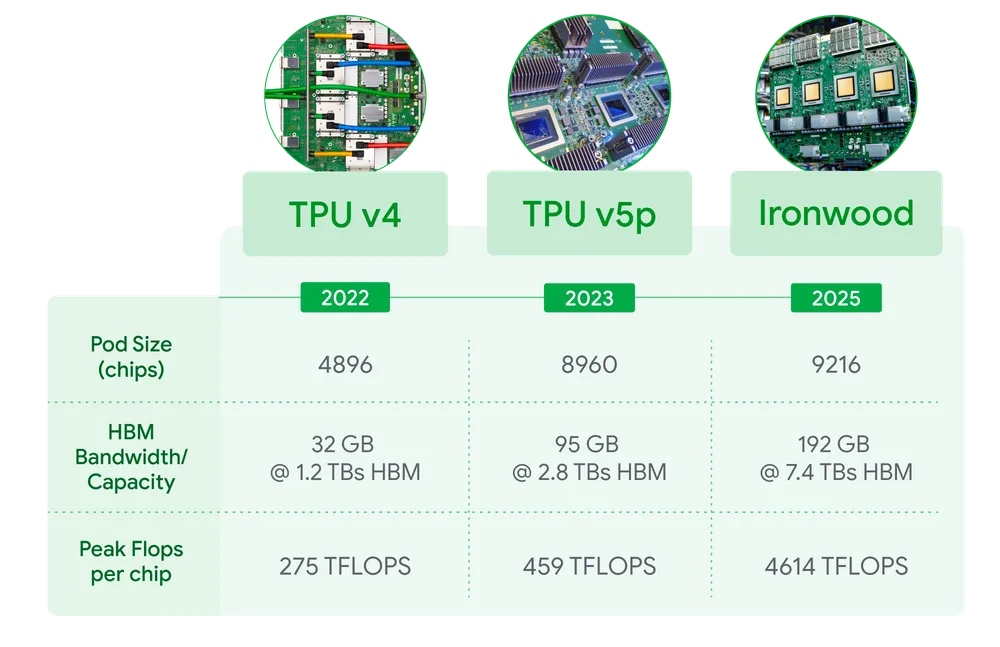
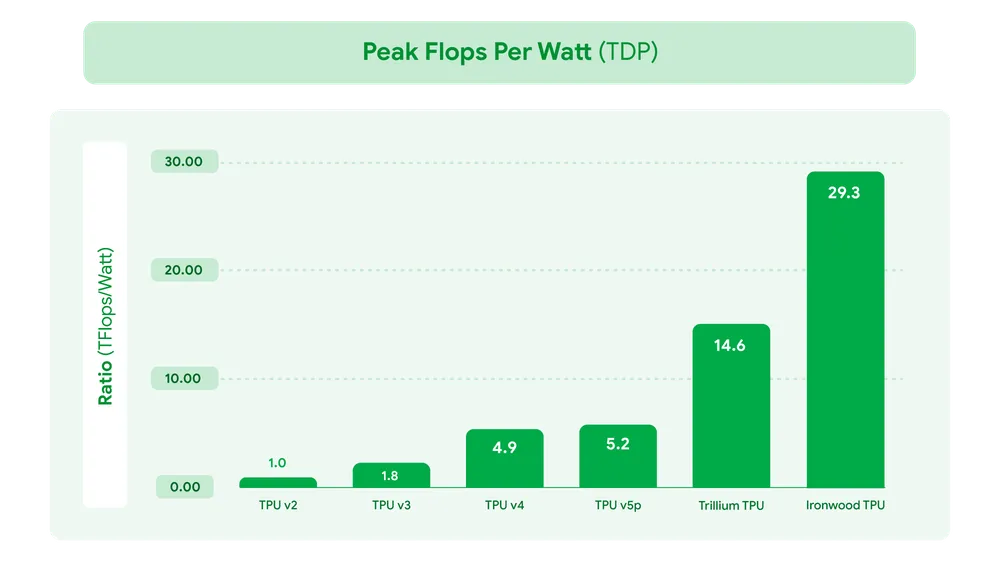
Ironwood TPU: Google's 7th-gen AI chip, built for inference
Google's upcoming 7th-generation AI chip, "Ironwood," is their highest-performance, most scalable custom AI accelerator to date — and their first designed specifically for inference.
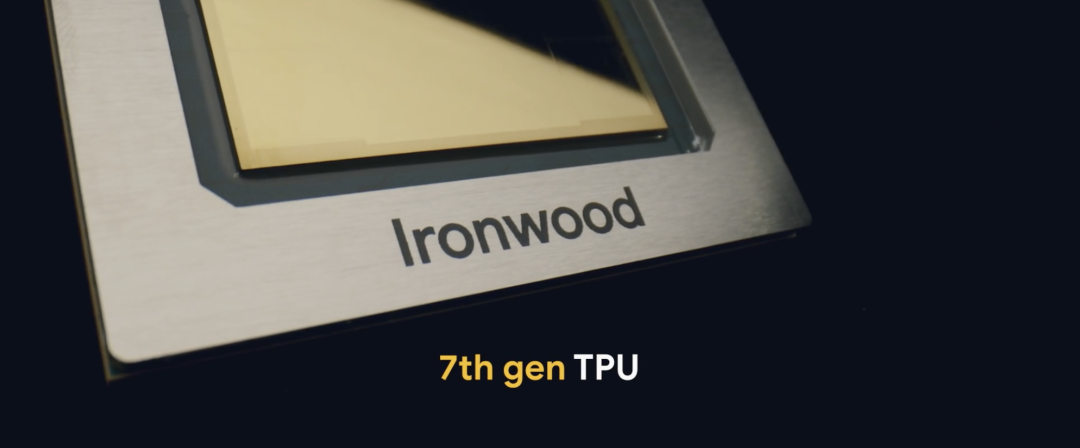
Official numbers put Ironwood's peak compute at 5x the previous generation Trillium, dramatically accelerating AI inference efficiency.
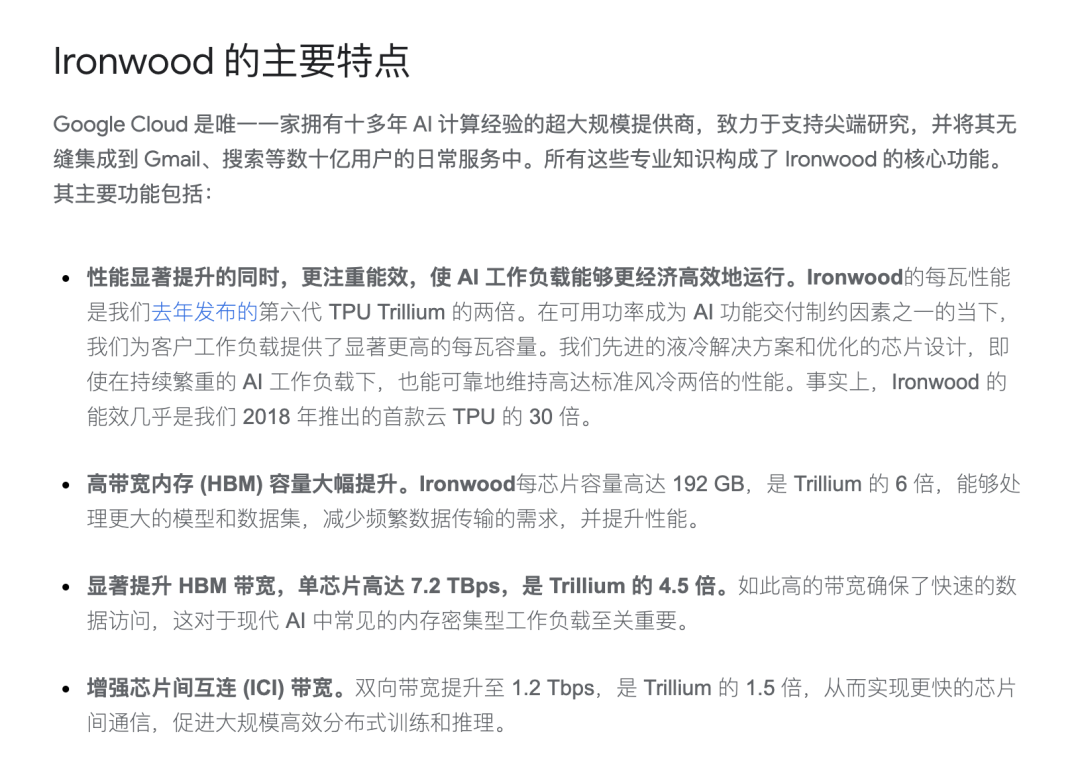
Beyond all this, Google updated various other AI dev kits and solutions.
Full official announcements from Google Cloud Next 2025: https://blog.google/products/google-cloud/next-2025/
That's roughly the scope. I'm most hyped for Gemini 2.5 Flash — what are you most looking forward to?
Do you think Google can use Next 25 to reclaim its throne as the AI leader?
📑 Ref
-
Official Announcements
- [Google Cloud Next 25 Official Collection]: https://blog.google/products/google-cloud/next-2025
- Gemini 2.5 Flash: https://cloud.google.com/blog/products/ai-machine-learning/gemini-2-5-pro-flash-on-vertex-ai
- Vertex AI - Veo 2 / Chirp 3 / Lyria / Imagen 3: https://cloud.google.com/blog/products/ai-machine-learning/expanding-generative-media-for-enterprise-on-vertex-ai
- A2A: https://developers.googleblog.com/en/a2a-a-new-era-of-agent-interoperability/
- Agent Development Kit: https://developers.googleblog.com/en/agent-development-kit-easy-to-build-multi-agent-applications/
- Google Workspace: https://blog.google/products/workspace/cloud-next-2025-workspace-gemini/
- Google AI's 601 Case Studies: https://cloud.google.com/transform/101-real-world-generative-ai-use-cases-from-industry-leaders
- Ironwood TPU: https://blog.google/products/google-cloud/ironwood-tpu-age-of-inference/
-
Experienceable Products Mentioned
- Firebase Studio: https://idx.google.com/
- Google AI Studio: https://aistudio.google.com/
- Chirp 3: https://cloud.google.com/text-to-speech/docs/chirp3-hd
- Imagen 3: https://labs.google/fx/zh/tools/image-fx
-
Waitlist Applications