Google built a ping-pong-playing robot, and it's pretty impressive.

"I'm having such a hard time."


🛡️ Palantir Partners with Microsoft
🌏 IBM Launches Generative AI Cybersecurity Assistant
🚀 Falcon Mamba 7B Model May Surpass Transformer Architecture
🎓 HKU Establishes School of Computing and Data Science
🌐 China Has Over 180 Generative AI Service Large Models
💊 Huawei Cloud Unveils Medical and Healthcare AI Solutions
💰 AMD Acquires Silo AI, Europe's Largest Private AI Lab
📉 Jensen Huang Cashes Out $86.76 Million in NVIDIA Stock in August
🤖 Google DeepMind Develops Table Tennis Robot

Palantir Partners with Microsoft
US big data analytics firm Palantir Technologies and Microsoft have announced a new partnership to provide advanced cloud computing, artificial intelligence (AI), and analytics tools to US defense and intelligence agencies. Palantir will be an early adopter of Microsoft Azure OpenAI Service in classified and top-secret environments. Palantir CTO Shyam Sankar emphasized that this collaboration represents a major shift in supporting the defense and intelligence communities.
Palantir plans to deploy its Foundry, Gotham, Apollo, and AIP products on Microsoft's secure cloud offerings — specifically Azure Government, Azure Government Secret (meeting US Department of Defense Impact Level 6), and top-secret clouds. Palantir's AI Platform (AIP) will leverage Microsoft Azure OpenAI Service to support national security agencies.
IBM Launches Generative AI Cybersecurity Assistant
IBM recently announced the introduction of generative AI capabilities into its managed threat detection and response services, supported by the IBM Consulting Cybersecurity Assistant to help analysts improve security operations efficiency. Built on IBM's data and AI platform Watson, this assistant aims to accelerate the identification, investigation, and response to critical security threats. IBM Consulting Advantage will also integrate this assistant as a service platform containing customized AI assets.
Mark Hughes, global managing partner for IBM Consulting cybersecurity services, highlighted generative AI's role in reducing manual tasks for security analysts and improving response accuracy. The Cybersecurity Assistant speeds up threat investigations through historical data analysis, simplifies operational tasks with a conversational AI engine, and was developed and optimized in collaboration with IBM Research based on IBM's generative AI capabilities and Granite foundation models.
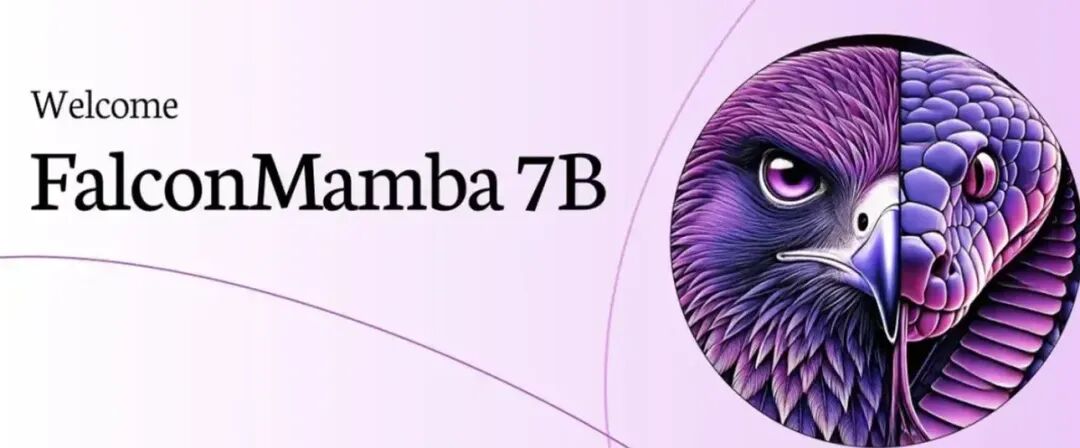
Falcon Mamba 7B Model May Surpass Transformer Architecture
Developed by the Technology Innovation Institute (TII) in Abu Dhabi, UAE, the Falcon Mamba 7B model abandons the traditional Transformer architecture and attention mechanism, achieving comprehensive performance improvements and outperforming open-source models of comparable scale.
The Falcon Mamba 7B model adopts the Mamba state space language model architecture, effectively improving computational efficiency for long-sequence processing. By eliminating the traditional attention mechanism, it can process infinitely long sequences while keeping memory requirements constant. It maintains consistent time per generated token regardless of context length.

HKU Establishes School of Computing and Data Science
The University of Hong Kong (HKU) has officially announced the establishment of the School of Computing and Data Science, formed by merging the Department of Computer Science and the Department of Statistics and Actuarial Science. Distinguished scholar Professor Yi Ma has been appointed as the school's inaugural dean. The new school's mission is to revolutionize AI and computer science education through comprehensive curriculum reform from undergraduate to graduate levels.
The School of Computing and Data Science offers 14 academic programs, involves 800 graduate students, and is led by approximately 60 scholars. It integrates computer science and statistics to create synergies between technology, mathematical modeling, and statistical inference, working closely with industry partners to ensure curricula meet industry needs and cover topics including data science, artificial intelligence, and cybersecurity.
China Has Over 180 Generative AI Service Large Models
China has made significant progress in artificial intelligence, with more than 180 generative AI service large models now filed and launched, and registered users exceeding 564 million.
China's AI technology industry system is gradually maturing, with over 4,500 related enterprises and continuously growing industry scale. The integration of AI technology with the real economy has facilitated the construction of more than 2,500 digital workshops and smart factories, reducing R&D cycles by 20% and improving production efficiency by 35%. Meanwhile, AI technology is also driving digital transformation in key sectors including government affairs, finance, and energy.
Huawei Cloud Unveils Medical and Healthcare AI Solutions
At the Medical and Healthcare AI Summit Forum held in Boao, Hainan, Huawei Cloud announced the launch of a series of medical and healthcare solutions leveraging its full-stack AI capabilities to empower the pharmaceutical and healthcare industry. Huawei Cloud Vice President Huang Jin emphasized national policy support for biomedicine and AI's potential in innovative drug R&D. China Region Vice President Zhang Peng noted that digital transformation is key for pharmaceutical companies to respond to market changes, and that Huawei Cloud's five major innovation capabilities will accelerate intelligent development in the pharmaceutical and healthcare industry, expressing hope to collaborate with industry customers to build internationally renowned pharmaceutical brands.
Huawei Cloud President of Big Data and AI You Peng revealed that the Pangu Drug Molecule Large Model has been fully upgraded, adding ten core AI drug discovery scenarios including target pocket discovery, molecular docking, molecular property prediction, custom property modeling, molecular clustering, pocket-based molecular design, free energy perturbation, synthesis path planning, molecular optimization, and molecular search.

AMD Acquires Silo AI, Europe's Largest Private AI Lab
AMD today officially announced the completion of its acquisition of Silo AI, Europe's largest private AI lab, for approximately $665 million in an all-cash deal. Silo AI's clients include industry giants such as Allianz, Philips, Rolls-Royce, and Unilever. This acquisition not only ensures Silo AI's continued use of AMD chips and technology, but will also help AMD advance the development of open-source generative AI training and application software.
Vamsi Boppana, senior vice president of AMD's Artificial Intelligence Group (AIG), stated: "AI is our number one strategic priority. We will continue to invest heavily in talent and software capabilities to support our growing customer deployments and roadmap." He also emphasized that the Silo AI team has extensive experience in AI model development and integration, with particular strength in large language models — capabilities that will significantly enhance customers' experience building high-performance AI solutions on AMD platforms.
Jensen Huang Cashes Out $86.76 Million in NVIDIA Stock in August
NVIDIA CEO Jensen Huang sold stock on every trading day in August, cashing out a total of $86.7652 million through August 9. On August 8 and 9 alone, he sold a combined 240,000 shares for $24.91 million. This round of selling occurred before the global stock market's sharp decline and widespread tech stock sell-off, following a period of strong NVIDIA stock performance.
Since the beginning of August, global stock markets have been affected by multiple negative factors, with NVIDIA's stock falling nearly 7% month-to-date. Nevertheless, NVIDIA's year-to-date cumulative gain remains as high as 126.32%. On August 12, NVIDIA stock closed up 4.08% at $109.02 per share. NVIDIA board member Mark Stevens and Executive Vice President of Worldwide Field Operations Jay Puri also sold hundreds of millions of dollars worth of stock in July. Both Elliott Management and Goldman Sachs research heads have suggested that NVIDIA may be in a "bubble."

Google DeepMind Develops Table Tennis Robot
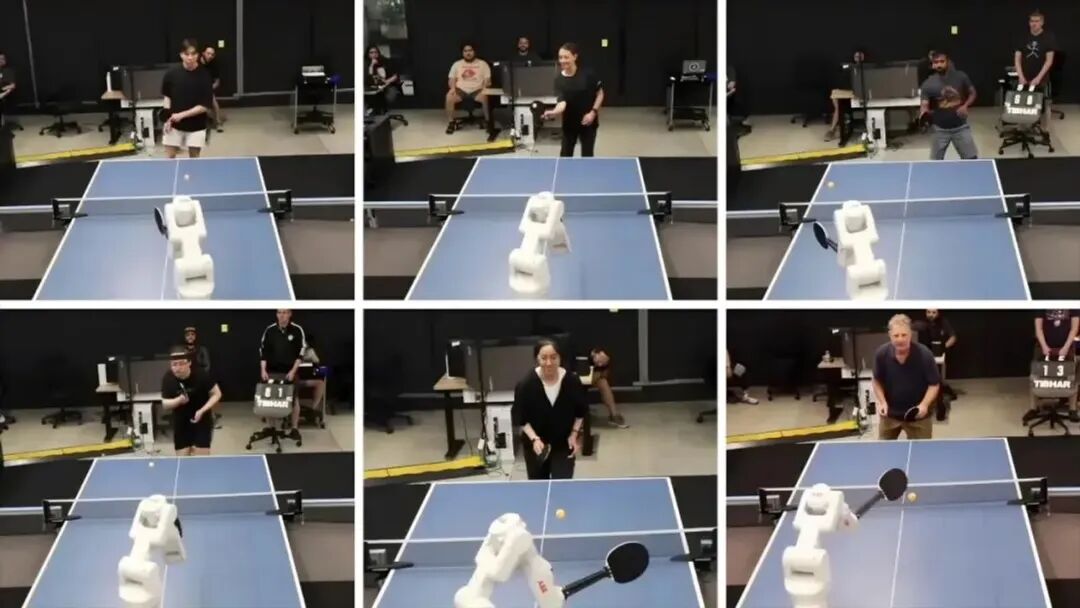
Google's DeepMind has developed a robot capable of playing table tennis against human amateur players. This robot is the first learning-based robot agent to reach human amateur level, featuring a six-axis robotic arm and base sliding rails for flexible movement.
In 29 matches against humans, the robot won 13, achieving a 45% win rate. Researchers noted that while the robot has yet to win against highly skilled players, its performance at beginner and intermediate levels already demonstrates considerable competitiveness.

Impermanence is not a transitional phase of life — it is life itself. Whether you welcome it or not, you must live with it for your entire existence.
— The Lotus Blossoms



Editorial Team Editor: Yuki
Design: Ivan
For business partnerships, add on WeChat: Rwkfbcianvd