Harness Payment, Unlocking the Era of Agent Autonomous Payments | Interview with Clink Founder

402's Yesterday and Today
402: Yesterday and Today
👧🏻 Interview: Miss Yi
🥷 Edited by: Crossing
🧑🎨 Layout: Zeooo.cc

In 1997, when the Internet Engineering Task Force established the HTTP 1.1 standard, they reserved an error code: 402 Payment Required. Its literal meaning was "please pay." Yet for nearly three decades afterward, this code was almost never actually used.
The reason was simple: payment, by default, was initiated by a person. A cashier needed someone to click, a card number needed someone to type it in, identity verification needed someone to confirm. Without human participation, payment simply couldn't happen.
Until today. AI Agents have begun making decisions and executing tasks on people's behalf. When the initiator of a transaction is no longer human, the 402 error code — dormant for nearly thirty years — has finally found its moment.
And Clink, a startup that has just emerged from stealth, is attempting something counterintuitive: while the entire industry is talking about Web3 and stablecoins, they've chosen to grind away at PCI certification, subscription management, and tax compliance — building a fiat payment infrastructure for Agents.
Founder Patrick's reasoning is plain: "If an ordinary user can't use it, it's hard for it to become infrastructure."
Today is April 2nd. Two hundred and thirty-four years ago today, George Washington signed the Coinage Act, making the dollar the official currency of the United States and launching the modern payment system. Two hundred and thirty-four years later, a new payment form is beginning to sprout.
In our conversation with Patrick, we explored three questions: When payment moves from "human" to "machine," what fundamentally changes? Why not Web3? And what gives a company of a dozen people plus dozens of Agents the right to do payments?
Rapid-Fire Q&A
🚥 Crossing
Age?
👦🏻 Patrick
30s. Haven't been blocked by risk control yet.
🚥 Crossing
MBTI and zodiac sign?
👦🏻 Patrick
INTJ — suited for things that can't afford mistakes, like payments. Cancer — suited for work that requires empathy, like serving merchants well.
🚥 Crossing
One sentence to describe your current company and product?
👦🏻 Patrick
Helping merchants catch every payment, whether from humans or Agents.
🚥 Crossing
Funding status?
👦🏻 Patrick
Raised a few million dollars. Enough for us to do this thing properly.
🚥 Crossing
Team size?
👦🏻 Patrick
A dozen people, plus dozens of Agents.
🚥 Crossing
One sentence: what were you doing before starting this company?
👦🏻 Patrick
Always doing payments. For about "the time it takes Jupiter to orbit the sun."
🚥 Crossing
One sentence to describe your relationship with Stripe?
👦🏻 Patrick
They build highways. We build the on-ramps that let Agents get on them.
When "Human" Is No Longer the Only Payment Initiator
🚥 Crossing
How did you first come up with this startup idea?
👦🏻 Patrick
At first, I wasn't actually planning to start a company. Linkloud invited me to an offline salon to share best practices in global payments. There were quite a few AI entrepreneurs going global in the community — it was more of a friendly appearance.
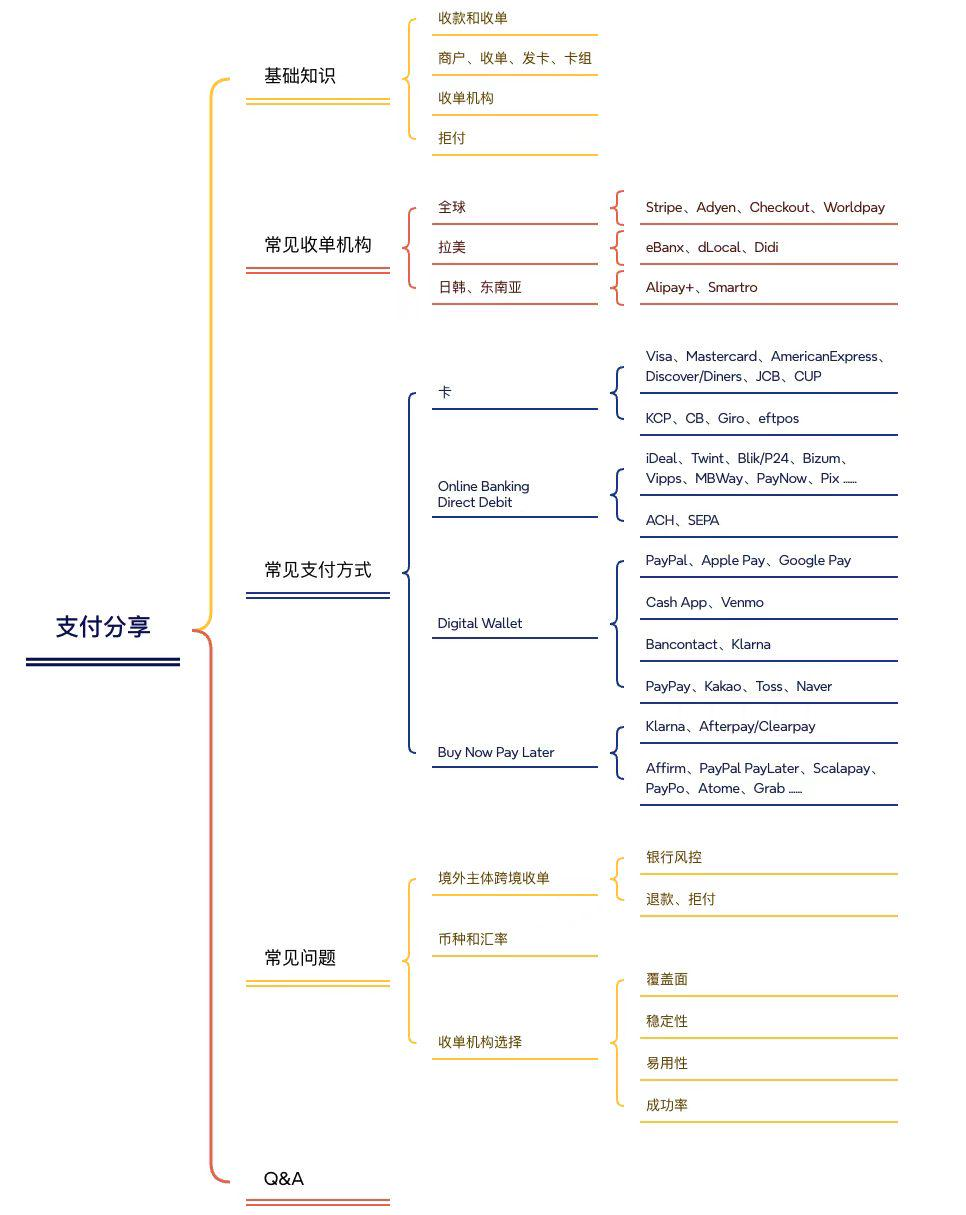
I didn't prepare that thoroughly. Drew a mind map, had a friend convert it to slides. I thought the content was very basic, very beginner-level. But unexpectedly, it was extremely well-received. Not only did the Q&A run way over time, but I got swarmed after the talk.
Many of the questions during the event sparked a lot of thinking in me. That was the first time I realized: global entrepreneurs have so many pain points around payments — not just with payment products, not just with professional knowledge, but also a missing sense of companionship.
So we said, let's start a company together too. Walk an interesting journey with everyone. Turn all the pits we've stumbled through over the years into products.
🚥 Crossing
You mentioned global entrepreneurs have many payment pain points. What specifically?
👦🏻 Patrick
Mainly unfamiliarity with the overseas payment ecosystem, and not understanding how consumers assert their rights. This leads to disputes fairly easily, which then affects account stability and success rates.
Under the subscription economy model, what's affected isn't just the current transaction — it's future ARR. Actually, merchants also have many tools and methods to protect their own rights.
Additionally, we saw that people don't know enough about global local payment ecosystems beyond cards. Conversion rates in many markets could be much better. So our slogan is Scale Global, Bill Local.
🚥 Crossing
While helping these teams solve problems, how did you come up with the idea of Agent payments?
👦🏻 Patrick
We started around early 2025; there weren't yet Agent-form products. Slowly, as things evolved from ChatBot toward Agent, we became increasingly convinced that everyone will have their own Jarvis — just a matter of when and in what form.
This assistant, in the process of acting on human needs, will also inevitably generate its own needs, or require value exchange with the outside world to complete tasks for its owner — in other words, payment.
Except the payment path for Agents didn't exist at that time. It needed to be built from scratch.
🚥 Crossing
From Billing to Agent payment — this is a natural extension?
👦🏻 Patrick
Right. Our first commercial customer was around September or October last year — a gaming company using our Billing system for global acquiring routing and subscription management.
Before that, we'd already spent the better part of a year doing the "unsexy" work: PCI certification, subscription management, payment routing, tax compliance. These later became the foundation for Agent payments. Without that year, Agent payments would have been building castles on sand.
After this year's Spring Festival, the industry's understanding of the Agent economy shifted noticeably. We reallocated more resources toward directly implementable scenarios, and the Agent payment product was formally launched.
🚥 Crossing
Who are your investors, and why did you choose them?
👦🏻 Patrick:
Our last round was co-led by Canadian fund Celtic and BV Baidu Venture.
The reason was actually a very short conversation. Gao Xue, CEO of BV Baidu Venture, mentioned in passing that when they invested in SUNMI, they saw among a pile of traditional POS machines that an Android smart system was the form that could provide maximum value to merchants. Not chasing trends — looking at underlying logic. Payment infrastructure was never a fast business to begin with. What we need are people who truly understand this.
Celtic gave the same feeling. Founder Larry said his positioning is "being a companion entrepreneurs can trust," talking about values alignment from day one. This is something we genuinely felt in our interactions.
Not Making the World Adapt to Agents, But Making Agents Adapt to the World
🚥 Crossing
The biggest change in 2025: on one hand, AI has become "smarter"; on the other, AI has begun to have "agency." From your perspective, when the initiator of payment behavior shifts from "human" to "Agent," what fundamental change occurs in the nature of transaction?
👦🏻 Patrick
The essence of transaction is still the exchange of value and need — that hasn't changed. The biggest change is: payment has gone from "an action" to "a process."
A human clicks "pay" — that's a momentary behavior. But an Agent is: you give it a goal, and over a period of time it continuously makes decisions. In the process of constant execution, it may generate more than one payment action.
So what we need to solve isn't just "can it pay," but rather: how much budget to give it, under what circumstances it can pay, how to stop it when something goes wrong. This is more like managing an "executor with permissions," not a button. Somewhat like what people are now calling "Harness Engineering" — what we're doing is "Harness Payment."
🚥 Crossing
How do you judge whether Agent payment is real demand right now, rather than premature?
👦🏻 Patrick
Because AI is no longer just "generating content" — it's starting to "generate demand." It's helping users select tools, select services, even directly completing part of the decision-making. But there's a very obvious disconnect in the commercial loop: the demand is brought by the Agent, but the payment system remains stuck in the human era.
This misalignment, once it scales, becomes a revenue problem. So we're entering at a very pragmatic point in time.
🚥 Crossing
In 2025, many voices in the market are talking about using Web3 and stablecoins to solve AI payment. Why did you choose a "heavier" path?
👦🏻 Patrick
We seriously looked at stablecoin and Web3 solutions too. That path is fast, and appears to solve some potential problems.
But we had a very simple internal judgment: throughout history, things that truly became infrastructure required no learning from users. Stablecoins aren't in that state yet. So we chose not to rebuild a system, but to make the existing system support new behaviors.
Not making the world adapt to Agents, but making Agents adapt to the world.
🚥 Crossing
So it's not that Web3 is bad, but you're solving a different problem?
👦🏻 Patrick
Right. Web3 solves the problem of decentralized trust — that's important. But what we're solving is another thing: letting Agents complete transactions within the existing internet, letting ordinary users use it without having to learn.
The fiat system has developed for 300 years. It's in a very mature state, and offers the best protection for ordinary people. It has some transaction friction, some compliance costs, but comprehensively speaking, its social cost is the lowest.
We believe the dividends of the AI era should belong to everyone — whether it's a freelancer working with Claude in a small town, or an AI Founder in California running automated business with an Agent. They should all be able to use the credit cards or Apple Pay they're most familiar with, and let their Agents truly stand on their own.
🚥 Crossing
To truly achieve "letting Agents complete payments on existing websites," what's the biggest technical hurdle?
👦🏻 Patrick
It's not the technology itself. It's mindset.
Many people in payments want to "change" the supply side — have Sellers open up their systems, integrate APIs, adapt to new protocols, accept new asset types. But merchants naturally look at ROI. Asking for massive investment to upgrade when there's no certain demand doesn't follow business logic.
The real difficulty is: how to carve out a path within the current state, where Agents can pay smoothly and merchants can receive without feeling it. When your solution seamlessly integrates with existing infrastructure, merchants smoothly accept payments and securely receive funds — only then can Agents get their share of freedom.
Respecting common sense is the most advanced technical solution.
Give an Agent a Harness, and It Can Do More for You
🚥 Crossing
Briefly introduce your latest product — Agentic Payment.
👦🏻 Patrick
The product itself includes an Agentic Payment Skill, a "virtual card wallet" that a lobster can use, and a set of fences for it (I guess we can call it Harness now).
These things are just supporting infra. The core is the merchant's functional Skill, serving the Agent's needs. Merchants will guide users in the Skill to authorize the Agent, allowing it to autonomously complete small-value payments.
In this process, Clink's Payment Skill is used for compliant information storage and payment method tokenization. After one-time authorization, all merchants supporting Clink Payment Skill can be autonomously paid by the Agent.
In subsequent interactions between the Agent and the merchant's Skill, when the Agent receives a 402 HTTP error code, it can invoke Clink's Skill to complete a payment, allowing itself to continue pushing forward with the task.
Official website 🔗: clinkbill.com
🚥 Crossing
After Agentic Payment launched, what kind of teams came to you first?
👦🏻 Patrick
The ones with the keenest noses — teams currently "Skill-izing" their products.
Take PollyReach as an example. They gave Agents a dedicated phone number, letting them make calls and handle complex communication on your behalf. This scenario is naturally pay-as-you-go. Some users make ten thousand calls a day, others make one a month. Monthly subscription fees can't satisfy this kind of flexible demand.
After integrating Clink, the logic changed. Before, the virtual phone was a "website" — users had to log in, bind a card, top up. Now it's more like a cloud-based paid plugin. Other Agents just send an instruction (with money attached), and it goes makes the call. A few minutes of calling, a few dollars of credit.
The wave of teams coming to us are all busy breaking their products into individual Skills. Everyone's figured out one thing: in the AI era, human attention has hit a ceiling, but Agent demand is unlimited. Whoever first makes their product payable by other Agents through code will be the first to get real money from this "lobster dividend."
🚥 Crossing
Any other interesting scenarios?
👦🏻 Patrick
There's also a digital employee scenario that Haoran, founder of Moxt, shared with us.
One day he told his Agent to do some sales lead collection. The Agent used web search to get some results, and when they came back, Haoran wasn't satisfied, asking why the quality wasn't great.
The Agent said, these were all free sources. There were several sites that charged, but it couldn't pay so couldn't access them. It asked Haoran to register accounts, top up a small amount, give it API keys, and it would try again.
After doing this, Haoran said the paid leads were indeed much better quality.
If in this case, those paid sites had Skills supporting Clink Payment Skill, that poor digital employee probably wouldn't have gotten scolded by the boss.
🚥 Crossing
But after authorizing an Agent, how is payment information security guaranteed? Could it spend recklessly?
👦🏻 Patrick
This is one of our core judgments in doing this.
Agents have memory, but payment information can't live in their memory. You wouldn't tape a credit card number to an employee's forehead. By the same logic, card numbers, billing information — these must be completely isolated from Agent context. This is the fundamental reason we did such heavy PCI certification. Because once an Agent's memory is attacked or leaked, the payment information can't go out with it.
The other layer is risk control. Agents make mistakes, can be induced, even can be manipulated by malicious prompts to make transactions they shouldn't. So what we give Agents isn't just a card that can pay, but also a set of fences: budget caps, scenario restrictions, anomaly circuit breakers. What it can and cannot do is determined by merchants and users, not by the Agent itself.
The principle of Human in the loop we established from day one: key nodes must have human intervention. Account changes, risk rule modifications — we've set two-factor verification for these actions. Some decisions shouldn't be borne by Agents alone.
🚥 Crossing
Why choose to be discovered through merchant Skills rather than actively cultivating C-end users?
👦🏻 Patrick
If today Clink Payment Skill can't help the Agent, then installing it has no meaning — it's missing scenarios. Only when the Agent is actually using a certain merchant's Skill, discovers it needs to be able to pay proactively, and that this can bring initiative and efficiency gains — only then is installing Clink Skill the value we want to see.
🚥 Crossing
From these productivity scenarios, moving toward more lifestyle-oriented e-commerce and service booking, what's the key threshold?
👦🏻 Patrick
It's trust, not technology. When is a user willing to let an Agent complete a transaction on their behalf? This itself is hard to cold-start through To C. When there's a dazzling supermarket there, customers will naturally walk in.
What we're doing is essentially the same thing: first let merchants conveniently accept Agent payments, enrich the supply, satisfy Agents' current productivity scenarios. When users gradually get used to this, when they develop trust in Agents, then we enrich supply for other scenarios. Naturally, Agents can help you do more.
A Dozen People, Dozens of Agents
🚥 Crossing
You mentioned the team has already gone "AI Native" — averaging 50 million tokens consumed per person per day. How specifically does this manifest?
👦🏻 Patrick
We didn't actually deliberately set out to be "AI Native." It just gradually became this way, because every team member wants higher personal leverage, to make more impact.
We use one model for planning and coding, another for code review, and another to write tests. For log queries we built a Logbot that not only helps locate anomalies but also gives fix suggestions. One team member, in gaps between coding agent work, casually developed a browser plugin for everyone to use.
This is what we understand as AI Native: not deliberate, but workflows unconsciously changed.
🚥 Crossing
Was there a product decision or technical problem that you solved precisely because you yourselves are "heavy AI users"?
👦🏻 Patrick
Last year there was a major risk control product module. The requirements were extremely complex, time was tight. Traditional development would take a week just to sort out the logic, and months to normally develop. We decided at that time to build it completely from 0 to 1 through Agent Engineering.
In the end, we launched in a little over two weeks, with only 4 bugs found in testing. This gave our team huge confidence: in rigorous scenarios, as long as processes are controlled well, coding agents can really be used.
"When You Need It, Clink Is Always There"
🚥 Crossing
If you had to define Clink's team culture in one sentence?
👦🏻 Patrick
Pragmatic. In an industry full of concepts, actually getting one thing to work is the hardest thing.
🚥 Crossing
What do you think Agent payment will look like in two years?
👦🏻 Patrick
I think it will become very natural. Like today when you pay with Apple Pay, you don't think it's anything special. An Agent completing a transaction will also become an action with no sense of presence.
We hope Clink is the same: when you need it, it's always there, stable and reliable, but you don't need to be particularly aware of it.
Closing Words
Near the end of the interview, Patrick said something that left a deep impression:
"Doing payments is actually doing trust. And trust — that can't be rushed."
As they themselves put it: not making the world adapt to Agents, but making Agents adapt to the world.
What Clink is doing is handing these "little lobsters" about to set out a working "bank card."
Two hundred and thirty-four years ago today, a payment system began its journey.
Two hundred and thirty-four years later today, the 402 status code that has slept for nearly thirty years may finally be awaiting its era.