Hello, the Great Age of AI Entrepreneurship — Pony Ma, Yiming Zhang, and the Day 0 Moment of 21 People
The era rewards those who bravely take half a step forward through the fog of Day 0.
**
The times reward those brave enough to take half a step forward in the fog of Day 0.

🧑🏻🎨 Author: Crossing Editorial Team

The Year of the Horse.
When Zhipu AI and MiniMax each surpassed 30 billion HKD in valuation. When products with tens of millions of monthly active users iterate on a weekly cadence. When robots backflip on the Spring Festival Gala stage... All this boiling excitement traces back to one quietest moment — we call it Day 0.
Day 0 is just the spark where a story begins.
Everything at the beginning. No valuation. No PR. No "closed business loop." Maybe just an idea that might not work at all. In that moment, no one knows what the future holds. But for years to come, they'll keep coming back to it.
This Spring Festival holiday, Crossing pored over the origin stories of entrepreneurs who are now household names, and invited a new generation of AI founders to document their Day 0s as they happen.
In these photos: someone got a 100,000 yuan interest-free loan in their dorm room. Someone delayed graduation by half a year for a robot project. Someone found their first "natives" with a hand-drawn unicorn...
Rough. Naive. But that's the first leaf of every towering tree. That's where every story starts.
The future rolls in from where you least expect.
➤ Tencent | Pony Ma
First bucket of gold — lost 450,000 yuan!

1993, Shenzhen. Amid the heat wave of reform and opening up, Pony Ma was just an ordinary senior at Shenzhen University's computer science department.
During his internship, he walked into a company called Shenzhen Dawn Computer Network and quietly built a graphical stock analysis system, throwing in a trend prediction feature for good measure.
The software stood out from the crowd. The company sent someone to find him: "Name your price. We want to buy it."
The young Pony Ma had no concept of valuation. After much hesitation, he nervously named a "high price" — 50,000 yuan.
They agreed on the spot. Later estimates suggested the software could have fetched 500,000 yuan. But in 1993, 50,000 yuan was three years' salary for a college graduate, enough to buy an apartment in many cities.
That was Pony Ma's first bucket of gold. He just didn't realize at the time that it was only the opening of a much longer story.
➤ ByteDance | Yiming Zhang
The fifth time, he折腾ed his way to becoming China's richest man
2012, a four-bedroom apartment in Jinqiu Jiayuan on Zhongguancun's Zhichun Road, Beijing.
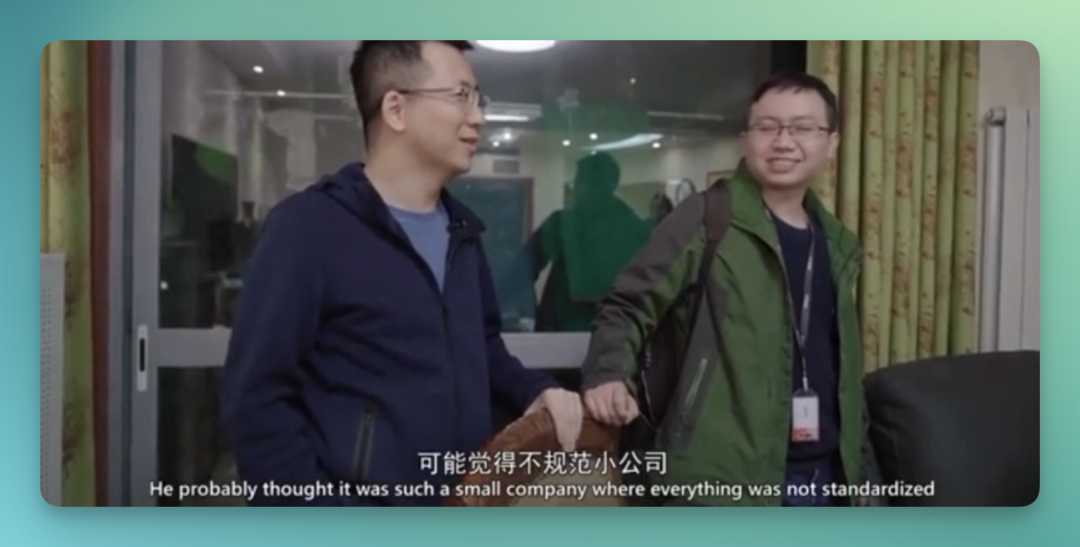
Yiming Zhang and Liang Rubo and others squeezed in there, living and working side by side. This was his fifth startup. Before that: graduated from Nankai, tried collaborative office software, failed; rose to technical committee chair at Kuxun, left; spent half a year at Microsoft, too boring; joined Fanfou, watched a company shut down; built 99fang, reached #1 in real estate apps, quit again...
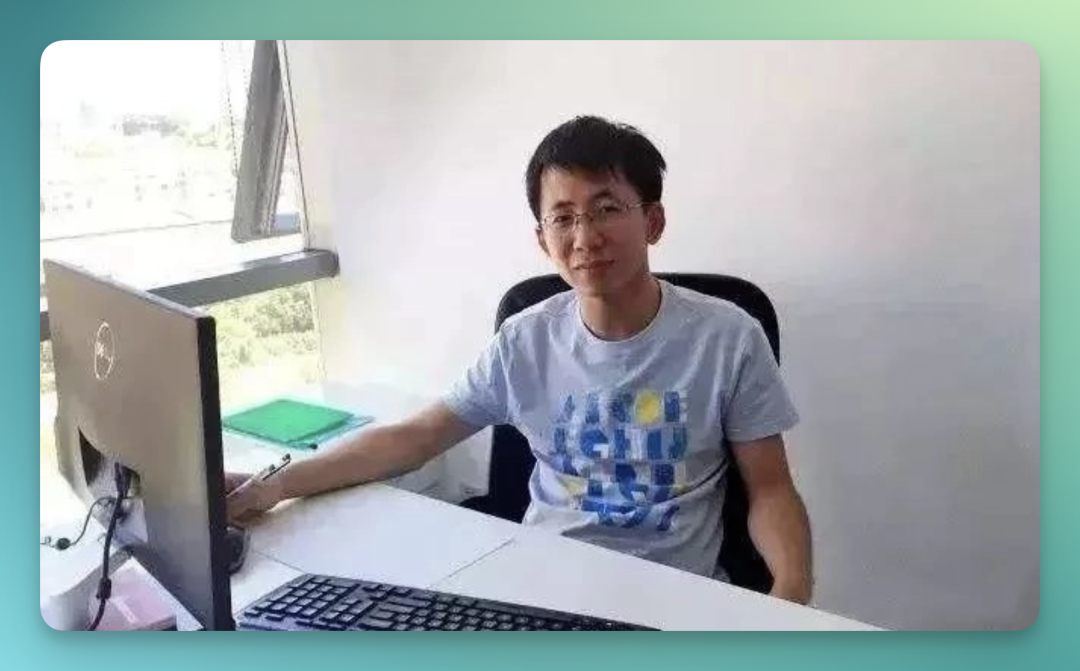
Someone asked why he kept折腾ing? He said, he just wanted to do something challenging.
That year, smartphones were spreading fast, but people still found interesting content through search. He started thinking: what if we flipped the script? Let machines read users, find what interests them?

The first product born from this idea — Toutiao.

Later, Douyin and TikTok went global, changing how billions consume information. In 2025, Yiming Zhang became China's first self-made richest man born in the 1980s.
➤ Xiaomi | Lei Jun
A 40-year-old's "second startup"
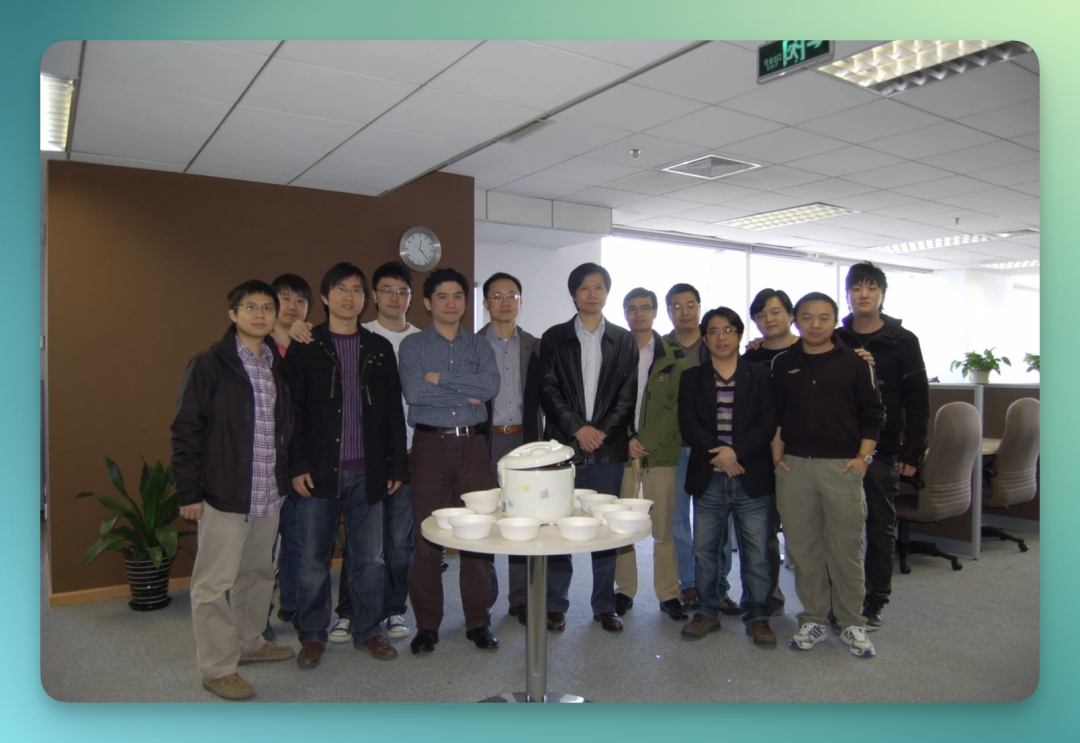
Lei Jun gathered old friends he'd recruited from Google, Microsoft, and Motorola. And so, 14 "passionate middle-aged" founders raised a bowl of millet porridge — Xiaomi was officially open for business. The name "Xiaomi" wasn't carefully planned; it came from a co-founder's father cooking everyone millet porridge.
Lei Jun was terrified of failure. For the first year and a half, he wouldn't let anyone say publicly that he'd founded it. Lei Jun said, "This is my last startup. If it works, I'll settle down. If not, I'll retire from the game."
In his junior year, Lei Jun had co-founded Sanse Company with others, making Chinese character cards. At their poorest, they survived by winning meal tickets from the cafeteria master at mahjong. Six months later the partnership dissolved; his only takeaway was a 286 computer...
And 23 years before that, 1987. An 18-year-old Lei Jun found a book about Steve Jobs's startup journey at Wuhan University's library — The Silicon Valley Fire, priced at 1.2 yuan. After finishing it, Lei Jun walked around the track all night: "I'm going to build a great company."
"MI" is Xiaomi's logo. Literally Mobile Internet, also Mission Impossible.
August 16, 2010: MIUI's first version launched. Beta testers: fewer than 100. One year later: over 300,000 users.
➤ Meituan | Xing Wang
Nine defeats, one victory
Christmas 2003. The 24-year-old Xing Wang flew back to Beijing from the United States. PhD half-done, he dropped out.
No direction, no resources, just one conviction: the internet would change the world. Back home, he roped in college roommate Huiwen Wang and high school classmate Binqiang Lai, rented a 130-square-meter apartment near Tsinghua in Haifeng Yuan, and got to work.
2004–2005, they flailed like headless flies. Built "Duoduoyou," went nowhere; built "Youzitu," helping overseas Chinese print photos, didn't take off; swapped through more than a dozen projects, worked until 2 or 3 a.m. daily, didn't even brush their teeth before starting again the next morning...
Fall 2005, they spotted Facebook in the US and decided to build a campus SNS. December 8: Xiaonei launched. Three months, 30,000 users; one year, over a million. But more users meant more worry: servers cost money, bandwidth cost money, funding nowhere in sight... In the end, he sold it.
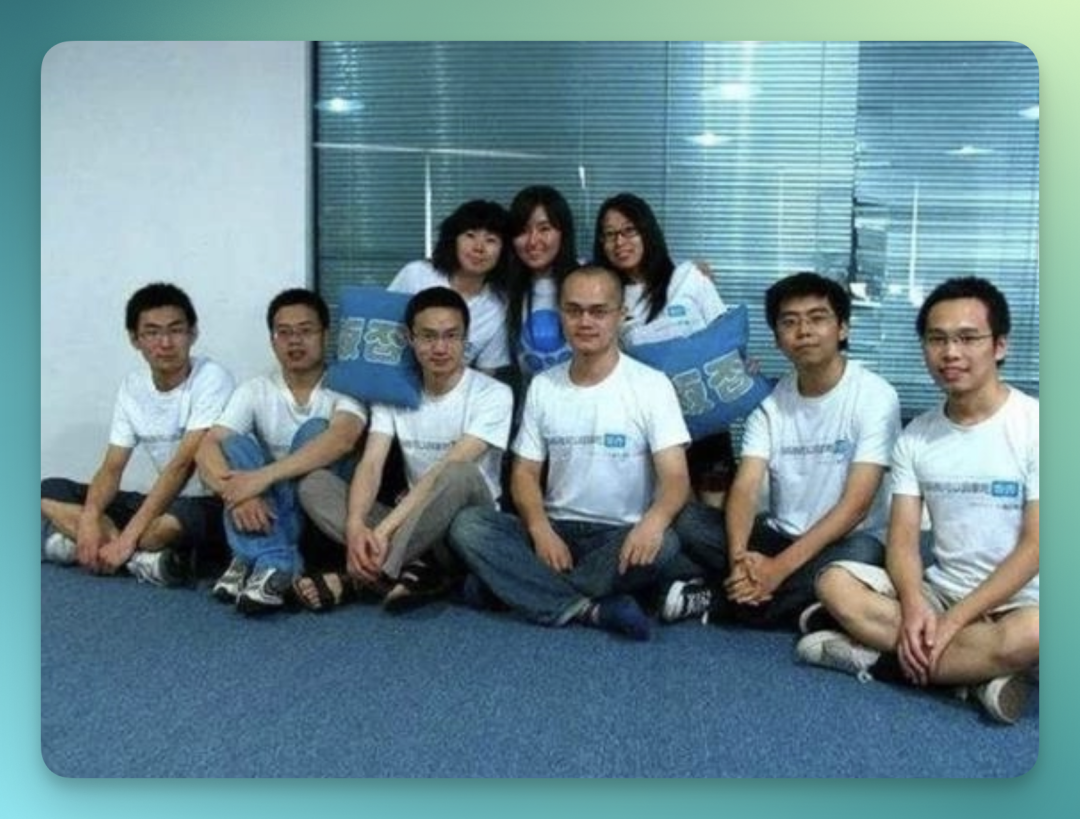
May 2007: Fanfou launched, billed as China's Twitter, hit a million users in two years. Then, the evening of July 7, 2009: servers shut down... The team photo above shows everyone wearing commemorative T-shirts reading "Mom, can I come home for dinner?" — from HelloTee, a custom T-shirt site co-founded by Koji and Yusen Dai, then a ZhenFund managing partner, specially designed for Fanfou's takedown.
Finally, March 4, 2010: Xing Wang copied the Groupon model and launched Meituan. This time he landed $10 million from HSG. During the thousand-group war, while others burned cash on ads, he kept his wallet tight, eventually growing this little group-buying site into one of China's largest lifestyle e-commerce platforms.
Later, someone asked what entrepreneurship felt like? He said: "Entrepreneurship is like love at first sight. You don't one day decide 'I'm going to fall in love.' Things just happen naturally."
Looking back now at Christmas 2003, that young man who dropped out from America had no idea that nine defeats and one victory awaited him.
➤ Kuaishou | Hua Su
Let ordinary people be extraordinary.
Summer 2013. A dark little room in Wudaokou. Hua Su met Yixiao Cheng. A meeting later called the "Long March rendezvous."
Hua Su, from Yongshun County in Xiangxi, could talk at 7 months, recite The Ballad of Mulan at 3 — a child prodigy known for miles around. At 18, he got into Tsinghua University, but dropped out of his PhD because he figured he couldn't afford a Beijing apartment even with the degree... After leaving, he bounced between jobs and startups, tried more than 30 projects, all failed.

In 2011, Yixiao Cheng built a GIF-making tool in Tiantongyuan with four people — GIF Kuaishou, the earliest version of what would become Kuaishou. It eventually reached 900,000 users, but retention was dismal. Through an investor introduction, he met Hua Su.
They hit it off immediately, talking from afternoon until 2 a.m. — one excelled at search and recommendation algorithms, the other understood client-side development and product. Soon, Su came on as a technical co-founder. Cheng generously gave up 40% of his equity and stepped aside as CEO. A year later, Kuaishou's daily active users broke 1 million; six months after that, 10 million.
On its Hong Kong listing day, Kuaishou priced at HK$115 per share, was oversubscribed 1,204 times — a Hong Kong record — opened up 194%, and hit a market cap of HK$1.39 trillion. Su declared: "Those who were once the silent majority no longer need to be silent. Those who were once ordinary no longer need to be ordinary."
But in 2013, no one had figured out short video yet; no one could have predicted just how un-ordinary Kuaishou's ordinary people would become.
➤ Pinduoduo | Zheng Huang
He had a hunch this one could be big.
Most Chinese e-commerce origin stories start in a rented room with scraped-together seed money.
Huang's path was different. At 12, he entered Hangzhou Foreign Languages School, got a guaranteed admission to Zhejiang University, earned his master's in Wisconsin, joined Google, and achieved financial freedom at 27. His entrepreneurial record read like a textbook — three startups, three successes: e-commerce, agency services, gaming. Whatever he touched worked.
But in 2013, he got sick. A middle ear infection kept him home for nine months.
During that time, scrolling on his phone, he noticed something: people spent 40% of their mobile time on WeChat, yet social-driven e-commerce transactions accounted for less than 1% of total GMV.
There was a gap there.
In April 2015, Pinhaohuo launched. Selling fruit, group-buy style. The model was simple: take the offline scene of haggling and pooling orders at the vegetable market, and move it online — letting people interested in the same product form a group through their screens.
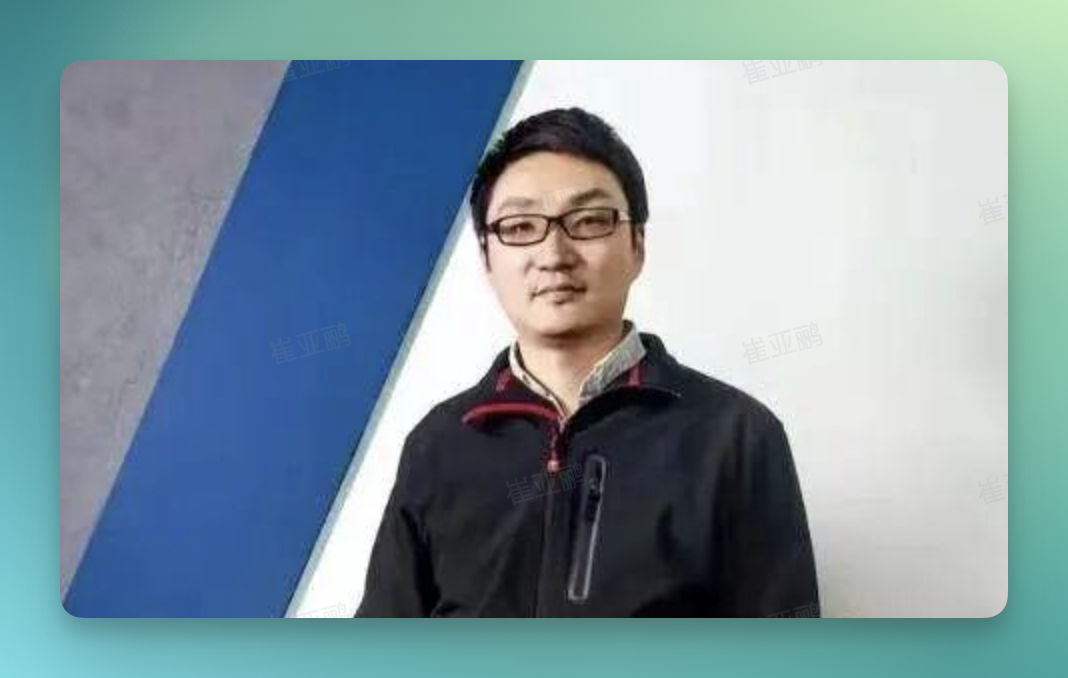
No promotion, no marketing. Two months later, lychee season hit. Orders exploded from tens of thousands per day to hundreds of thousands. They couldn't ship, couldn't process refunds... Huang and his team spent a month building nearly 20 warehouses nationwide, brute-forcing their shipping capacity from 20,000–30,000 orders to 700,000–800,000 orders.
He was 35 that year. His fourth startup. Three years from IPO.
Later, when asked why he kept at it, he said he still had unfulfilled ambition — a hunch this could be something with real impact. "Consumption upgrade isn't about letting Shanghai people live like Parisians," he said. "It's about letting people in Anqing, Anhui have kitchen paper to use and good fruit to eat."
He wrote that in 2015. Nobody understood it then.
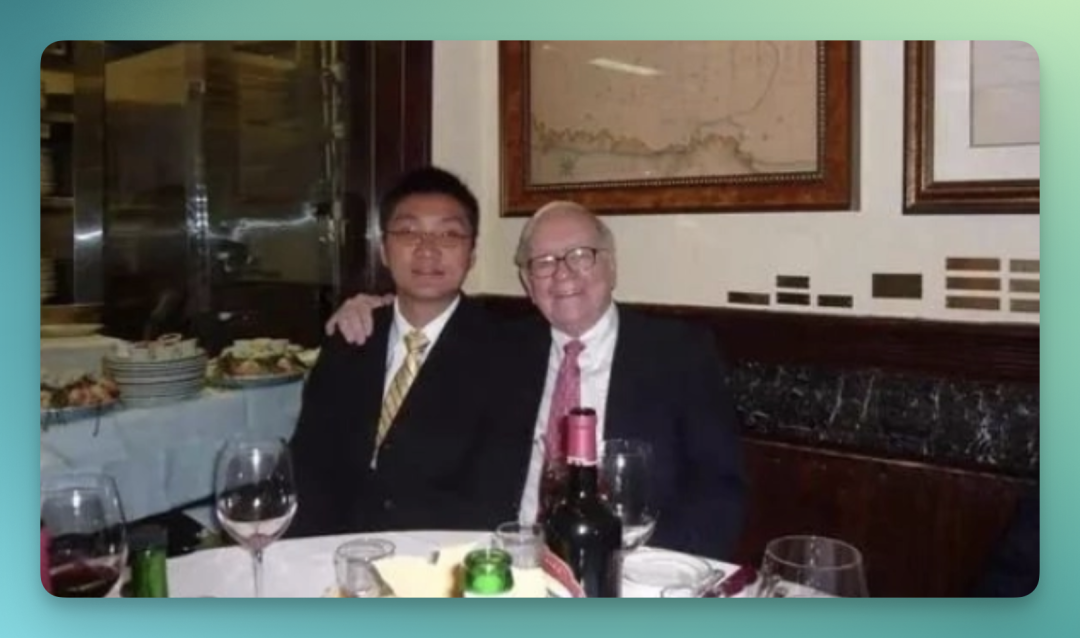
➤ miHoYo | Wei Liu
A year as "Customer Service Girl" "Brother Wei."
In 2011, in a dorm room at Shanghai Jiao Tong University's Minhang campus, Wei Liu squeezed in with Haoyu Cai and Yuhao Luo.
They called themselves "tech otakus," with the slogan "Tech otakus save the world." At 24, still graduate students, they secured a 100,000-yuan interest-free loan from the Shanghai Technology Entrepreneurship Center and six months of free office space — 50 square meters.
Not much, but enough.
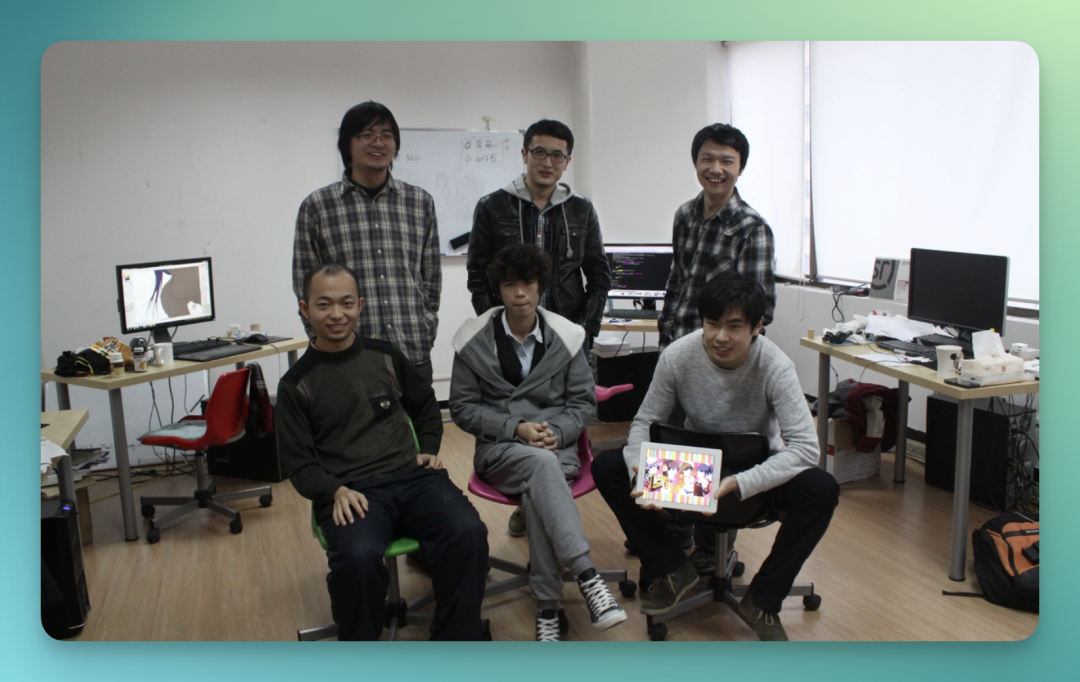
Back then, ACGN culture was still niche. When they pitched to investors about moe美少女 and virtual idols, snickers rippled through the room... One investor asked point-blank: your user numbers are too small. You need at least 1,000 daily downloads to prove the product works.
In 2012, Houkai Gakuen launched to mediocre reception. Some investors were willing to put in money — on the condition they switch projects. Liu refused outright: "If we can't make what we want to make, and it's just about making money... we're pretty uncompromising about that."
During the hardest stretch, he wore every hat, did everything — even playing "customer service girl," chatting with players in the community, listening to complaints, for a full year. Players never knew it was the founder on the other end. They just remembered some guy called "Brother Wei" who replied fast.
It wasn't until 2014 that Houkai Gakuen 2 launched, hitting #1 on the paid charts that same day. Then came Honkai Impact 3rd. Then Genshin Impact.
Later, when asked how he survived those three years, he said: "You don't keep going because you see hope. You see hope because you keep going."
➤ Pop Mart | Ning Wang
"If I ever become Jay Chou, you'll be Jacky Wu."
May 2008: 21-year-old Wang, in his junior year, opened a grid shop across from Sias International College in a shopping mall. The name was bluntly literal: "Box Street" — 格子街. He probably didn't imagine that within a few years, he and the company he created would be written into business history.
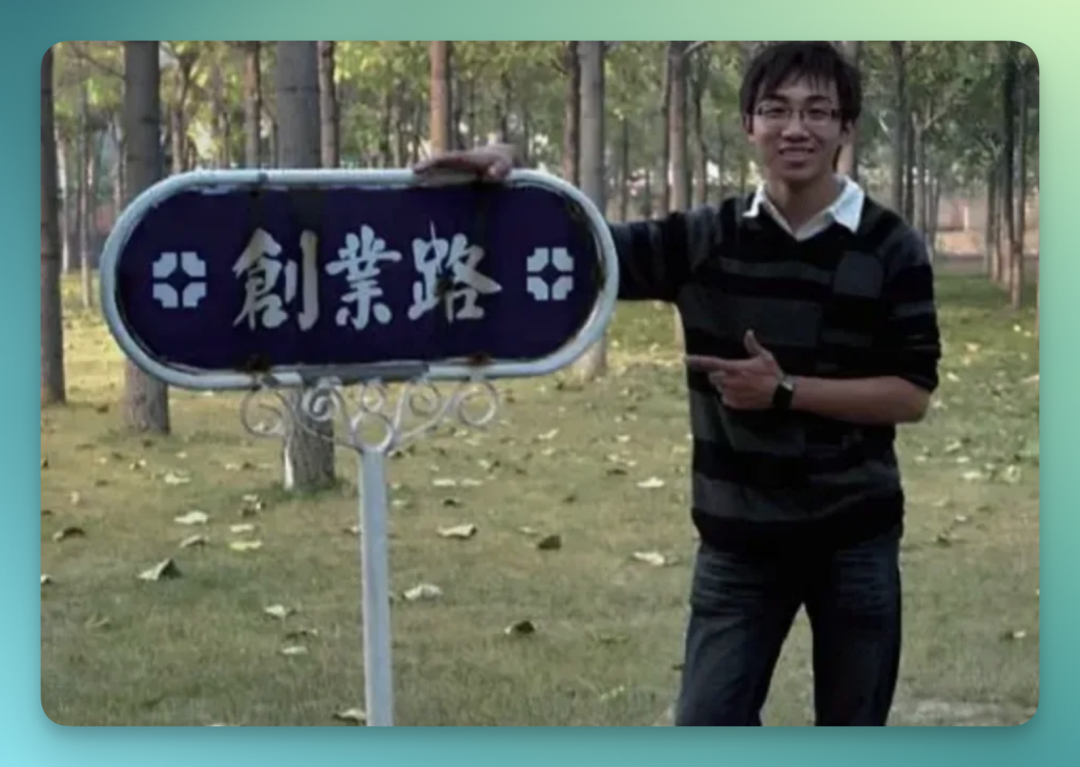
May 2012: trying to raise money for his e-commerce sourcing site, he sent an email to an angel investor named Gang Mai — a serious pitch covering the project, operations, and future. The email sank without a trace. Mai only found it three months later, buried in his inbox.
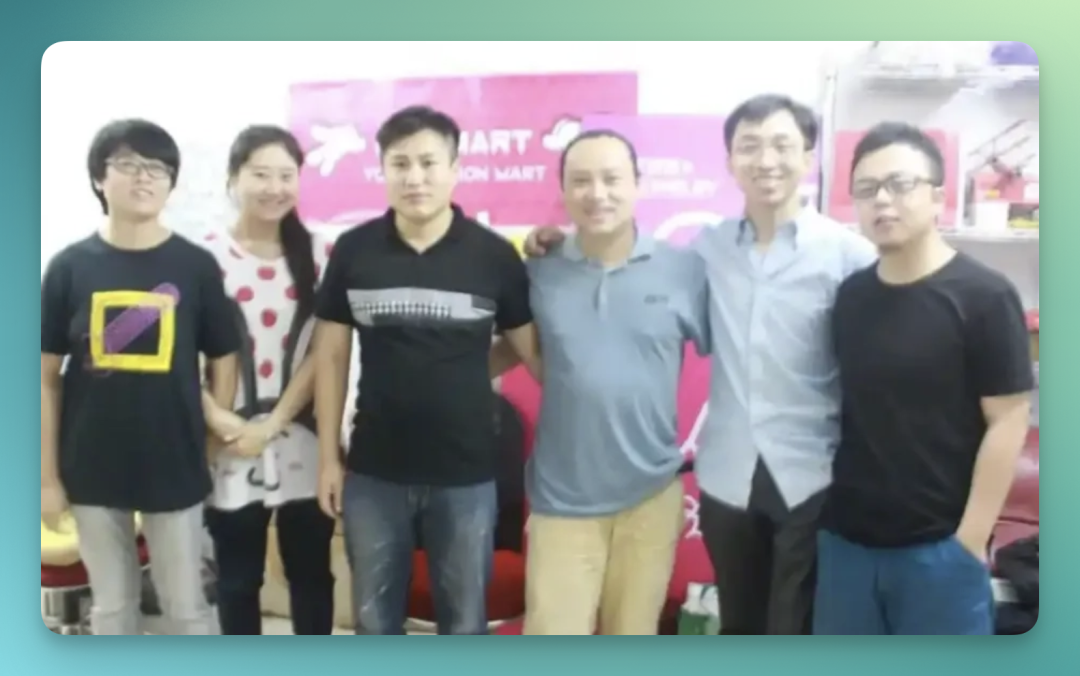
The interesting part is what happened when they actually met. Mai came back the day after their first chat. On the third day, they signed. Pop Mart had one store at the time. Mai's offer: 5 million valuation, 1 million for 20%.
Wang thought about it and said: 1 million isn't enough, we can't even open a few more stores. "You need to put in at least 2 million."
How to value it? There was no model to speak of: Wang roughly calculated, gave colleagues some equity, put a price on his own share, and the valuation was reverse-engineered from there.
The day the money closed, Wang said to Mai, half-joking, half-serious: "Mr. Mai, if I ever become Jay Chou, you'll be Jacky Wu."
➤ DeepSeek | Wenfeng Liang
"The mysterious force from the East."
Wenfeng Liang, from Zhanjiang, Guangdong. At 17, he scored top marks on the gaokao and entered Zhejiang University to study electronic engineering.
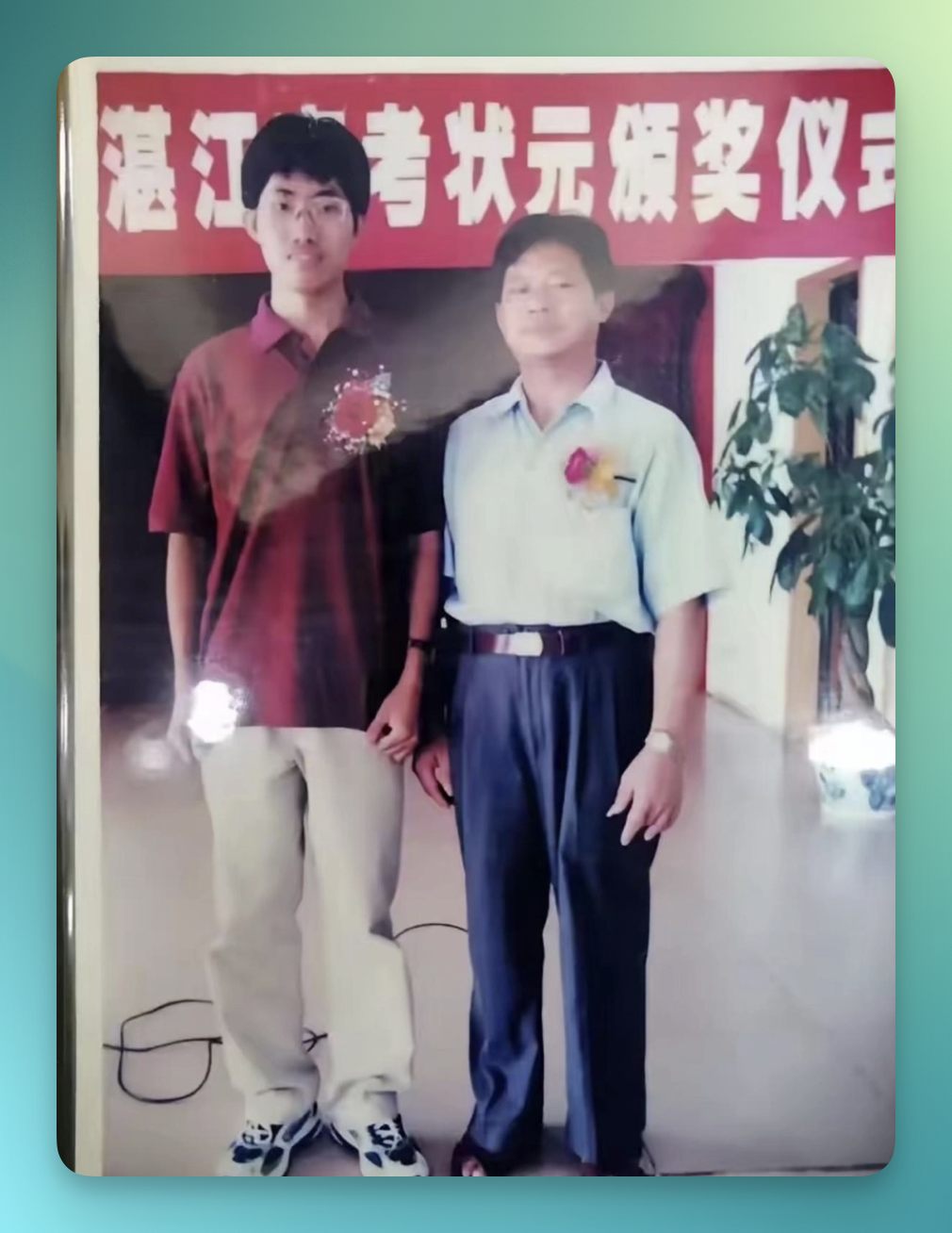
In 2005, he won first prize in the National Electronic Design Contest. Later he worked with his advisor on machine vision, published papers, earned his degree — the standard path... but he always wanted to do something different.
- Financial crisis. Freshly graduated with his master's from Zhejiang University, Liang didn't join a big company. Instead, he moved into a cheap apartment in Chengdu, trying to apply AI across various fields. Mostly, he failed.
In 2015, he and his Zhejiang University classmates founded High-Flyer Quant, using machine learning for quantitative trading. Some said he got lucky, rode a wave. He disagreed: "What people saw started in 2015, but we'd been at it for a long time — since 2008."
In May 2023, with High-Flyer crossing 100 billion in scale, he decided to build general artificial intelligence. When asked why, he said the gap between Chinese AI and the United States wasn't one or two years — it was the gap between original innovation and imitation. If that didn't change, China would always be a follower.
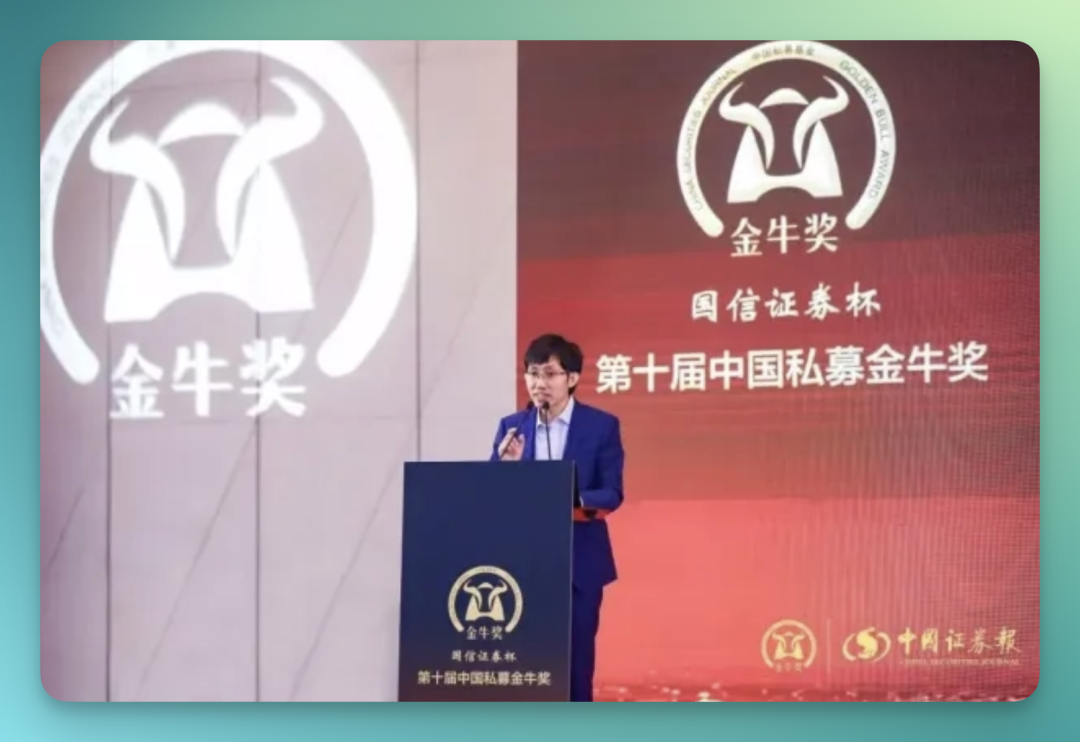
That year, DeepSeek was born. In May 2024, DeepSeek-V2 launched, with API pricing at just 1% of GPT-4 Turbo's. Silicon Valley peers gasped at "the mysterious force from the East."
In January 2025, DeepSeek-R1 launched. Around the Spring Festival, that blue dolphin icon found its way onto nearly every ordinary person's phone, almost overnight.
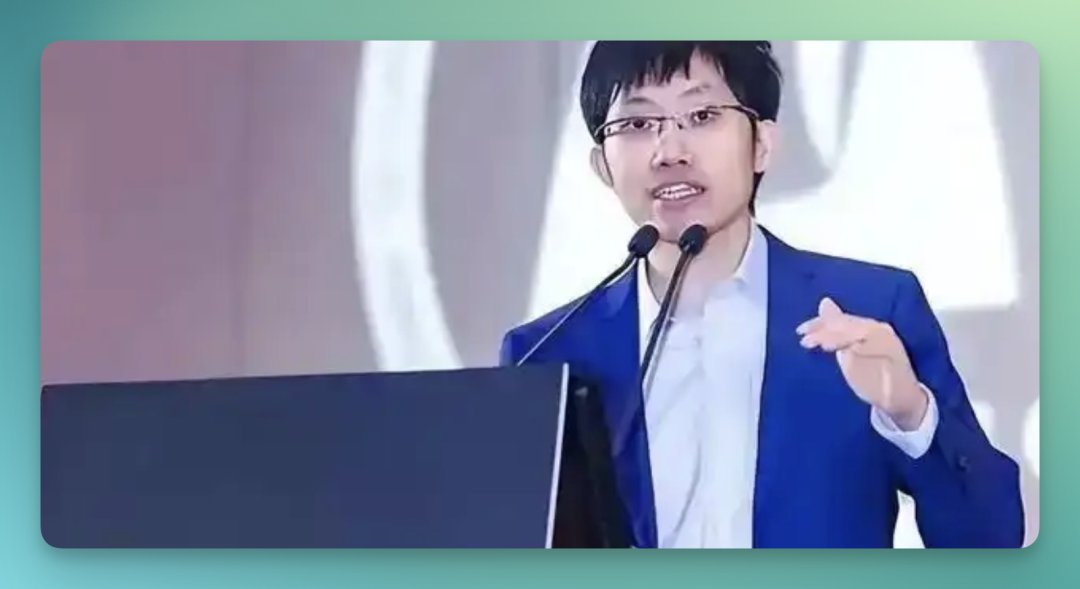
➤ Unitree | Xingxing Wang
Delaying graduation six months for a half-finished project.
In 2013, Xingxing Wang — whose English scores had cost him a spot at Zhejiang University — arrived at Shanghai University for graduate school.
Robotics was still a fringe field then. Boston Dynamics' BigDog was his holy grail, but he chose a different path — no expensive hydraulics, motor direct-drive instead.
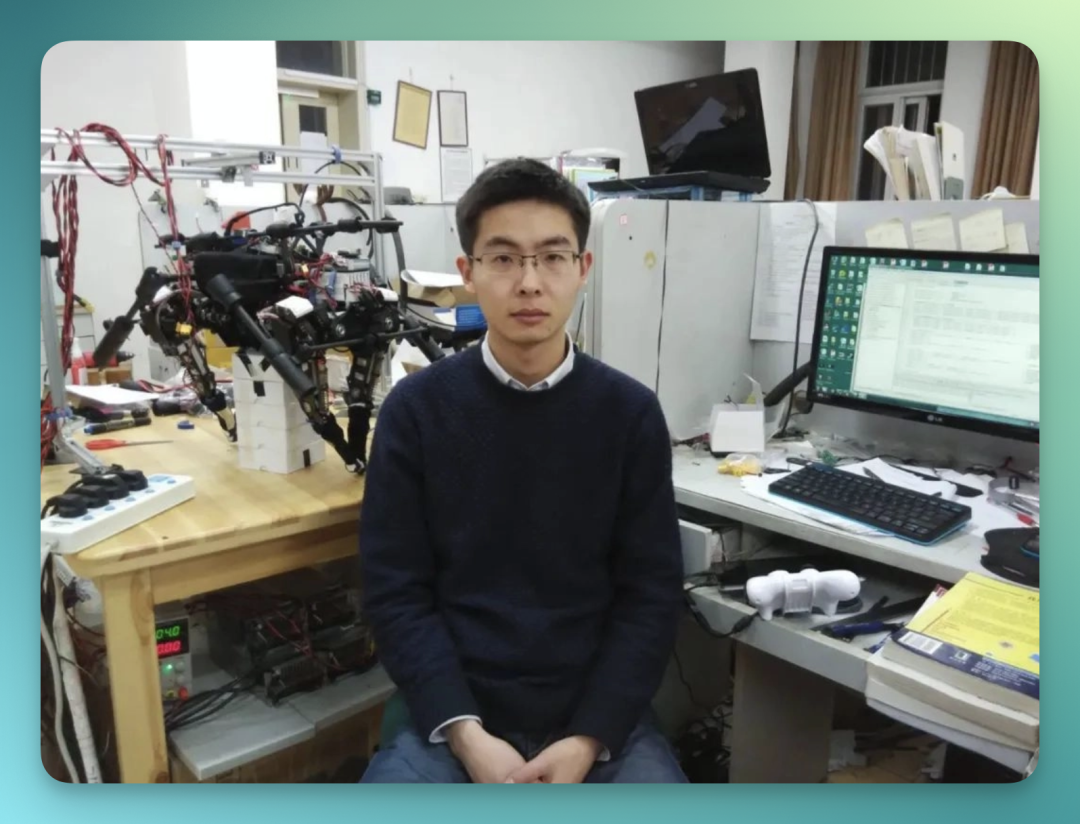
For this thesis project, called XDog, he delayed his originally scheduled mid-2015 graduation by more than half a year.
"A half-finished project has no value," Wang said. While classmates took jobs, he stayed in the lab building a pure electric quadruped robot. In 2015, he entered the Shanghai International "Star Maker" competition alone with XDog, took second prize, won 80,000 yuan — and the build cost less than 20,000.
That was his first real money — and it convinced him: this path could work.
In June 2016, he finished his master's degree and joined DJI. But before his probation period even ended, XDog's test videos were going viral overseas. People wanted to buy it. People wanted to invest.
He quit almost immediately. On August 26, he registered Unitree in a 50-square-meter office in Hangzhou's Binjiang District — Unitree, the Tree of the Universe, rooted in technological innovation. That same year, he raised 2 million yuan in angel funding.
Today, Unitree's quadruped robots have found their way into labs, factories, and shopping malls across the world. But the version of Xingxing Wang he probably misses most is the one who delayed graduation by half a year for an unfinished project.
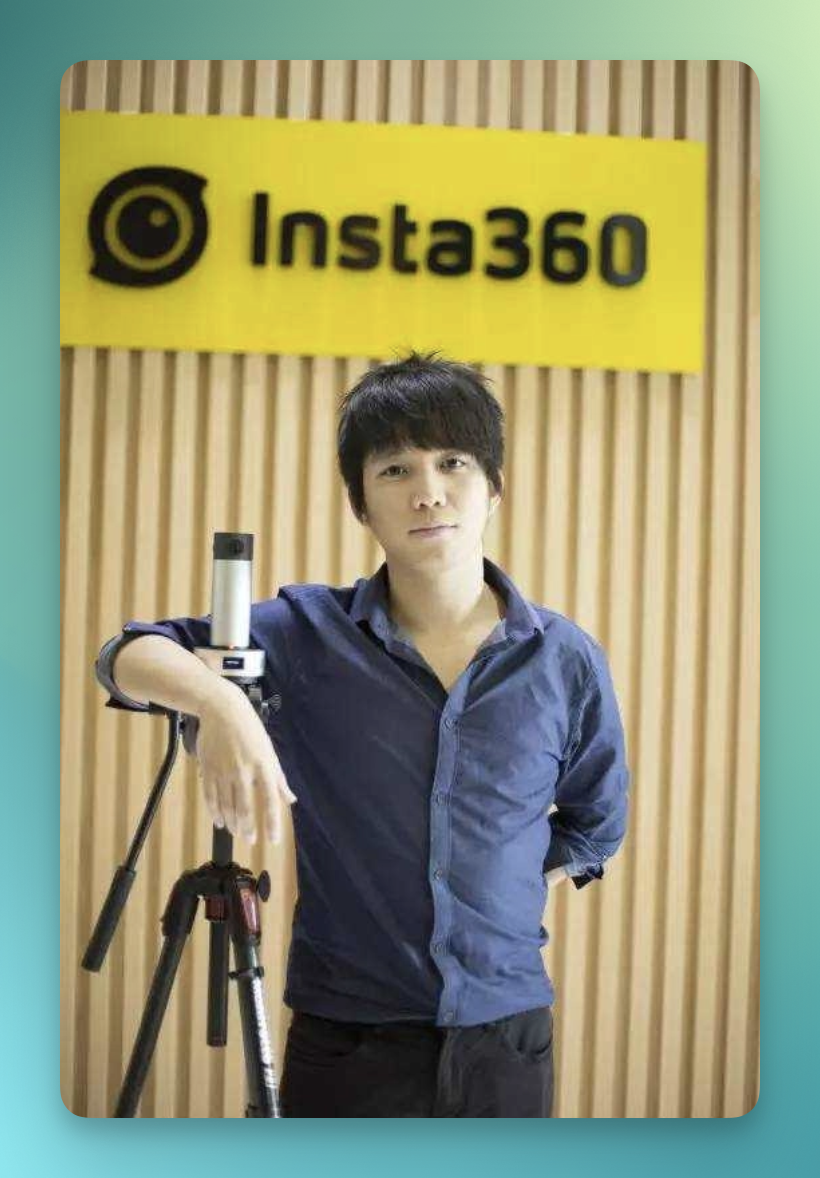
➤ Insta360 | JK
A restless young man.
- Shenzhen.
Because Shenzhen had the supply chain, 24-year-old JK moved his team from Nanjing, rented an office, and started building panoramic cameras.
Before that, they'd spent two years tinkering in their dorm rooms at Nanjing University — building a campus livestreaming app, streaming the school's top singer competition, realizing traditional lenses couldn't capture the whole scene. That's how they landed on panoramic.
In college, he'd already done plenty of "restless" things:
On Renren.com, under the pseudonym "Liu Huahua," he posted "I Stole 7,000+ Student Photos and Calculated an 'Average Face' for Every Department." It went viral instantly. He became known as "Standard Bro." He once recorded the keypad tones from a journalist's interview with Zhou Hongyi and cracked Zhou's phone number...
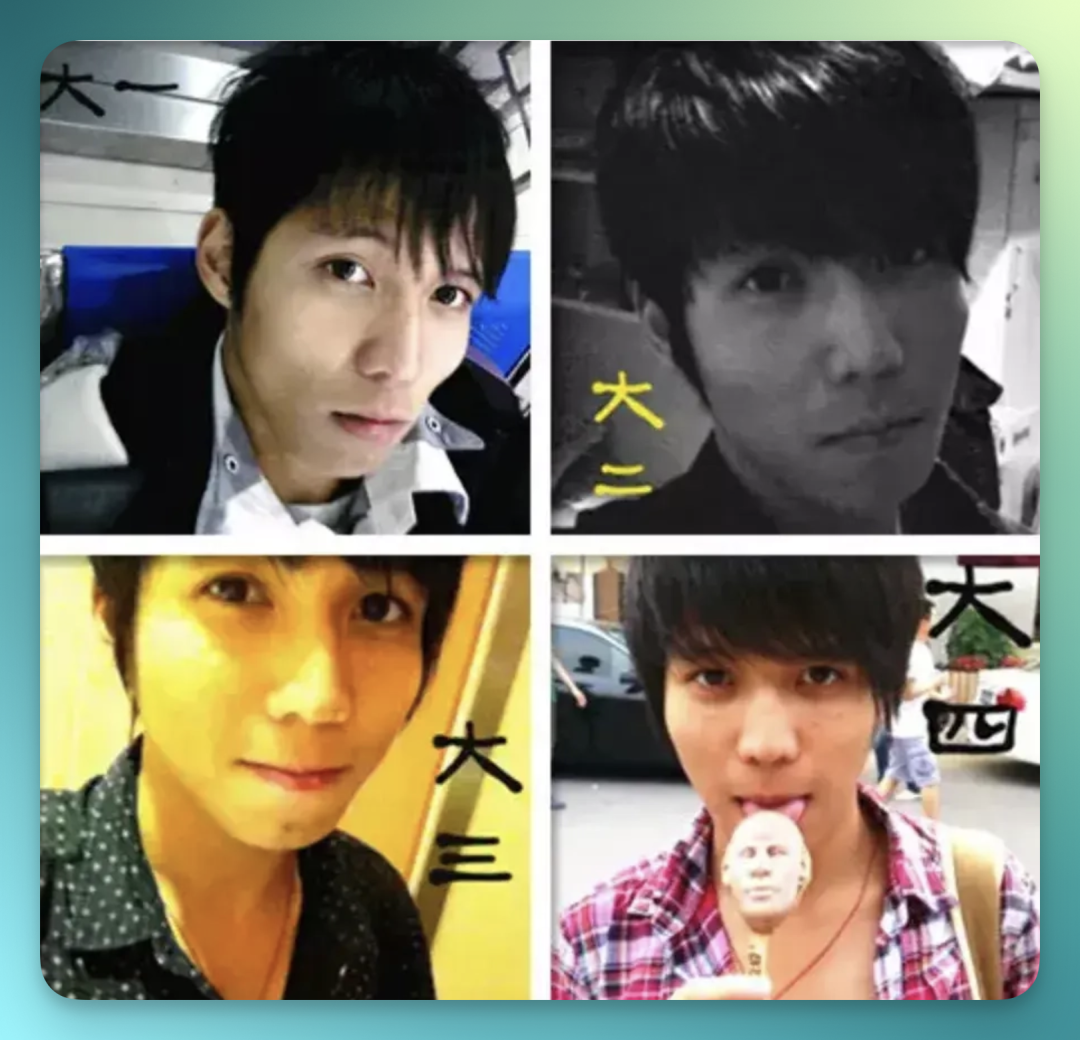
In late 2011, as a sophomore, JK wrote a piece of software called "xAd" that could embed ads in videos. He went to Hong Kong to pitch it at a startup roadshow — alone, no team, no funding. He tried selling it to Youku, couldn't get through, and ended up selling it to an ad agency for a technology transfer fee.
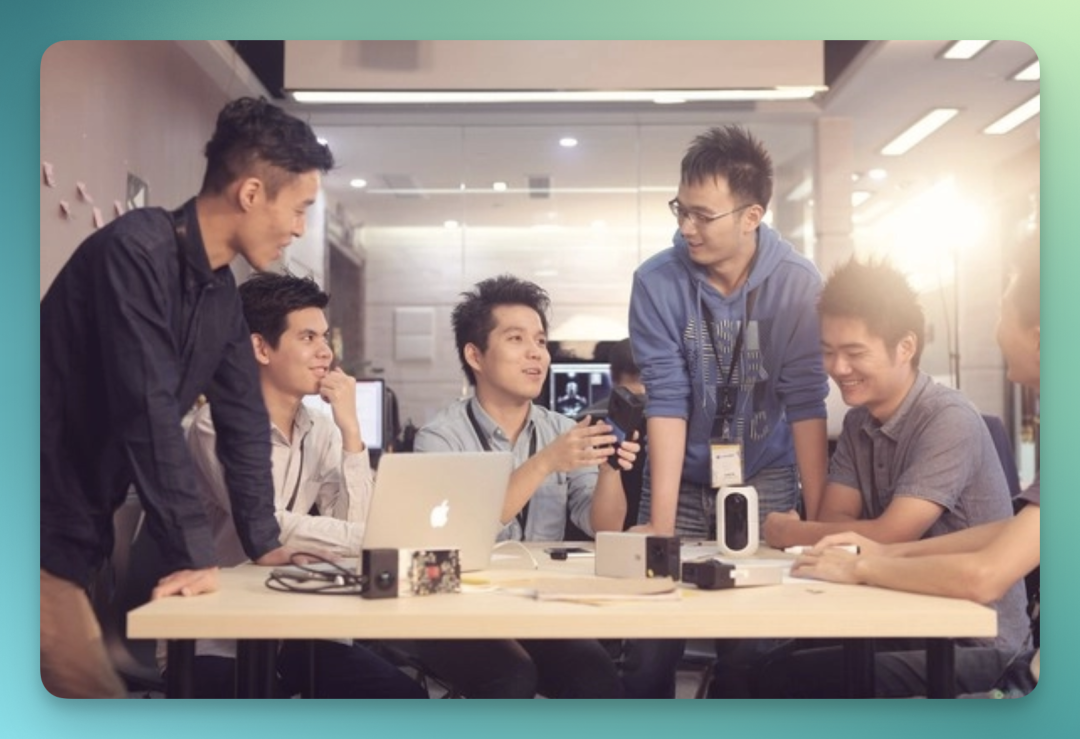
But real entrepreneurship turned out far harder than imagined: sleeping three hours a day in the early days, personally going to factories to tighten screws and polish equipment. In July 2016, Insta360 released its first consumer panoramic camera, the Nano — plug it straight into an iPhone, shoot, share with one tap.
In June 2025, Insta360 listed on the STAR Market with a market cap exceeding 70 billion yuan. JK became the first post-90s founder to take a company public on the STAR Market.
Looking back at that decision ten years ago, it was simply a young man, leading a group of young people, moving from a dorm to Shenzhen, betting on an unproven direction.
➤ MiniMax | Junjie Yan
His grandfather wanted to write a memoir.
Spring Festival 2019. Junjie Yan was back in his hometown in Henan, visiting his grandfather.
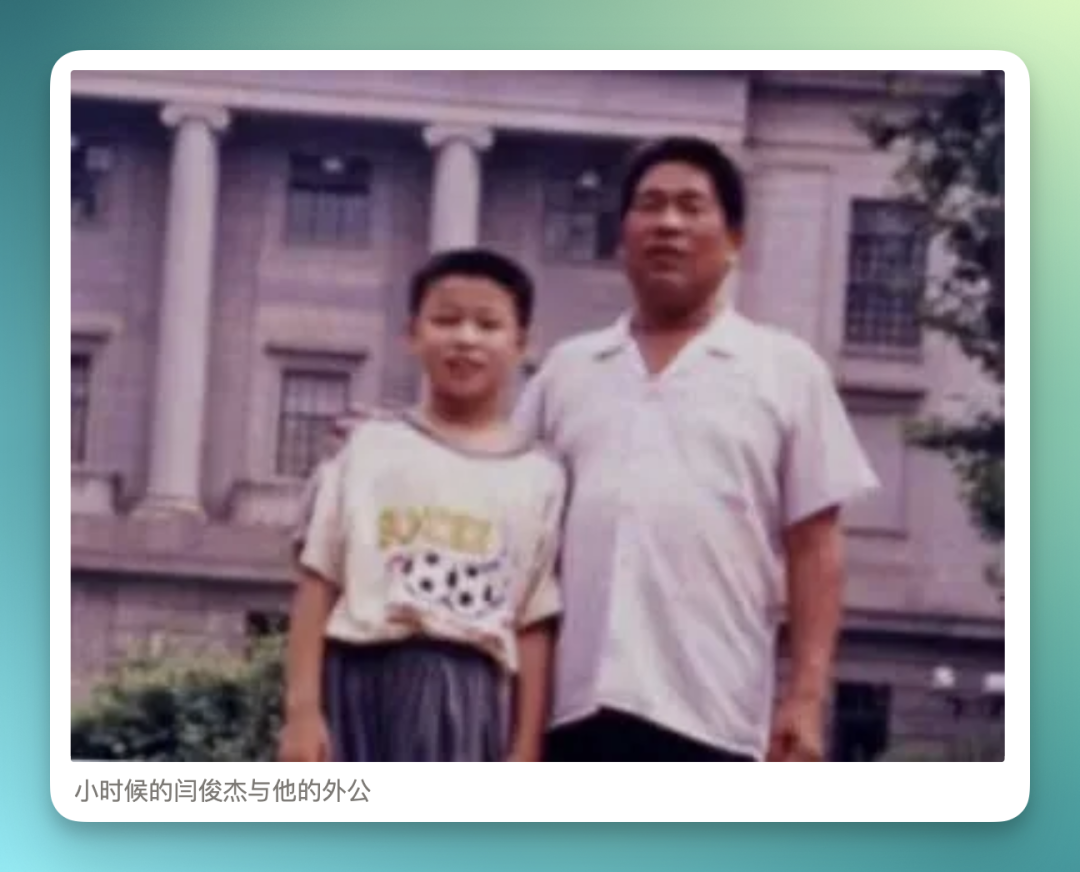
The old man said he wanted to write a memoir — 80 years of life — but was stuck, unable to type, unable to organize his thoughts. Yan felt the regret deeply. This was theoretically perfect for AI, but AI at the time couldn't do it.
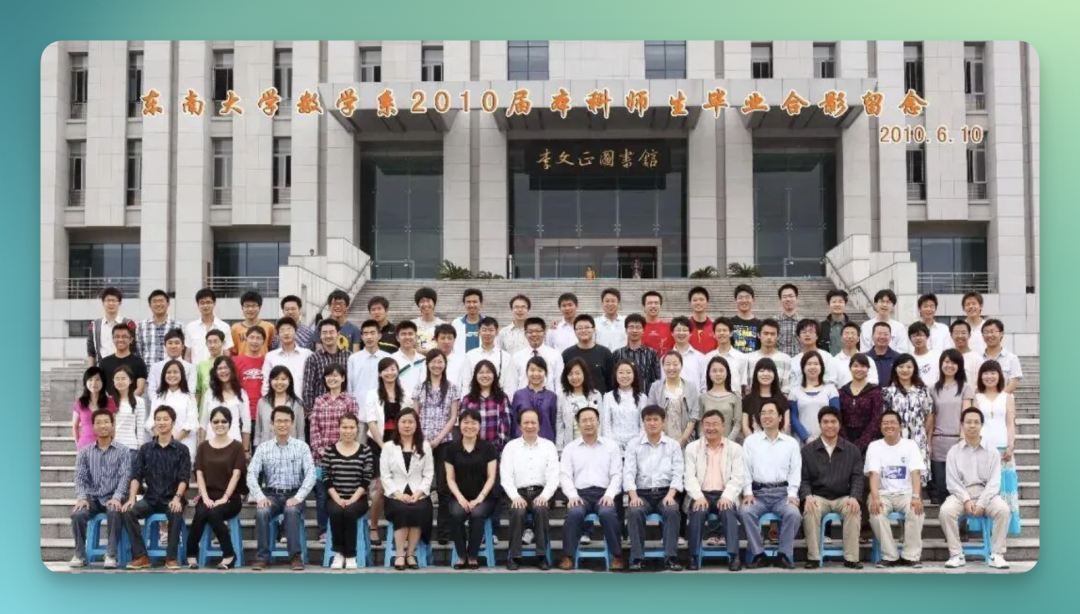
That same year, something major happened in gaming: OpenAI's AI team defeated human world champions at DOTA 2. A devoted DOTA 2 player, Yan immediately devoured the paper. He realized: if someone could develop a general-purpose model, no specialized training needed each time, that could serve every ordinary person. How good would that be?
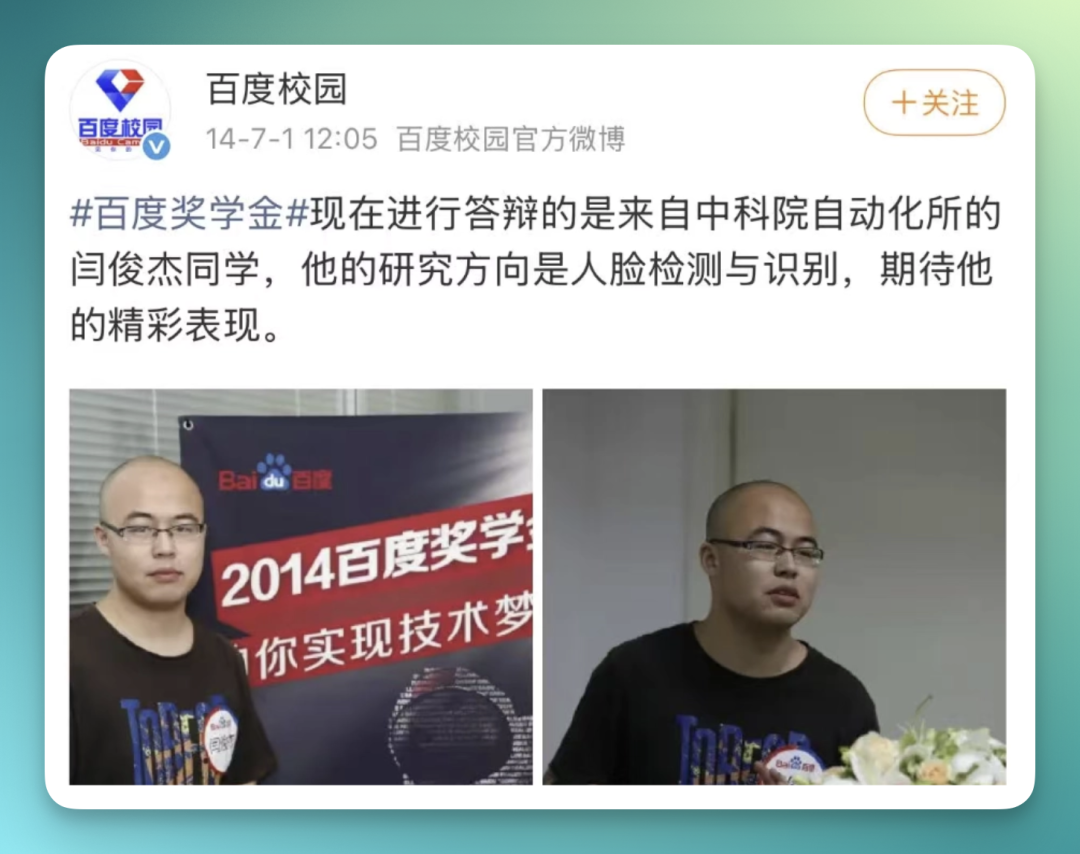
But he didn't act immediately. Not until late 2021, on the eve of SenseTime's IPO, did this young PhD — who had risen from intern to Group VP and Research Institute Deputy Director — choose to leave. He'd even prepared himself to become a teacher. But that idea of a general-purpose model wouldn't let go.
Early 2022. Shanghai. A room under 100 square meters.
Yan threw himself into entrepreneurship, writing down MiniMax's founding vision: "Intelligence with Everyone." The company name came from the minimax algorithm proposed by John von Neumann, father of the modern computer — finding the optimal solution under the worst conditions.
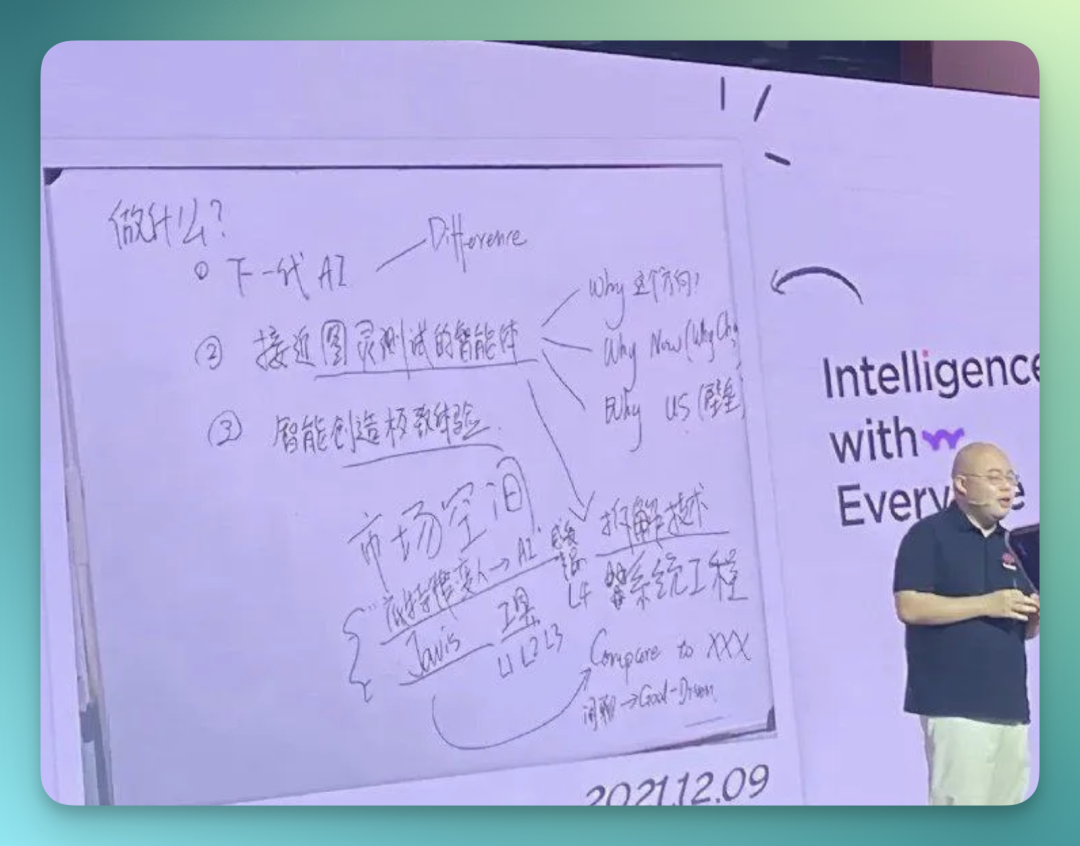
Back then, everything was still unknown. ChatGPT hadn't yet detonated the global wave.
➤ Moonshot AI | Zhilin Yang
What's on the dark side of the moon?
A programmer character in a Haruki Murakami novel filled Tsinghua University student Zhilin Yang with longing for the romance of "coding late into the night." In his eyes, "changing the world with code, like a knight-errant — that was cool."
On Tsinghua's campus, Yang was bathed in光环: top of his class, perfect scores in 10 courses, above 90 in every single course; first-author papers in top international journals and conferences; first place in the DREAM9 global cancer prediction competition, with algorithms adopted by Tencent and Huawei...
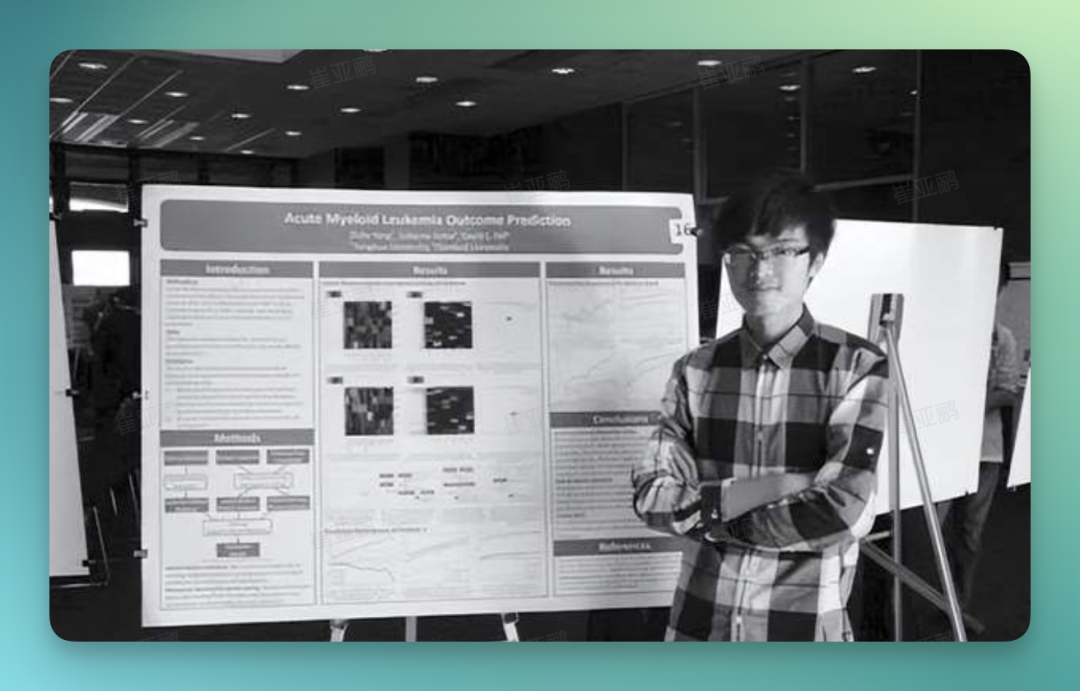
No one then could have predicted that this young man would found Moonshot AI in 2023 and build Kimi, valued at 24 billion yuan.
The turning point came in late 2022. ChatGPT erupted, overnight. He'd been waiting for this moment for a long time.
Yang was still in the United States then, talking to anyone he could find. His assessment: the window was one month. He needed to quickly raise $100 million.
Soon after, in April 2023, Moonshot AI was founded. The name came from a favorite rock album — The Dark Side of the Moon.
The meaning: The dark side of the moon can never be seen, but humanity still must explore it — just like the uncharted territory of AGI.
The above is them, in the spotlight.
Below, Crossing invited a new generation of AI entrepreneurs to share their Day Zero moments. A group of young people still on the road, whose stories are still unfolding.
Some are first-person accounts; some were compiled by Crossing.
➤ Zero Zero Robotics, HOVER | Mengqiu Wang
The little black hero at GMIC.
At 22, Mengqiu Wang watched a documentary. The protagonist dragged a cart and hauled a camera through the desert for 120 days. To capture a third-person shot, he had to climb back and forth between two mountains.
That made no sense. There should be something that could automatically film people, he thought. But he probably forgot the thought himself.
Until it resurfaced, many years later.
By then, he'd already traveled far — dropping out of Beihang University, washing dishes and studying in New Zealand, moving through Carnegie Mellon and Stanford to earn his PhD, working as a data scientist at Facebook and Twitter...
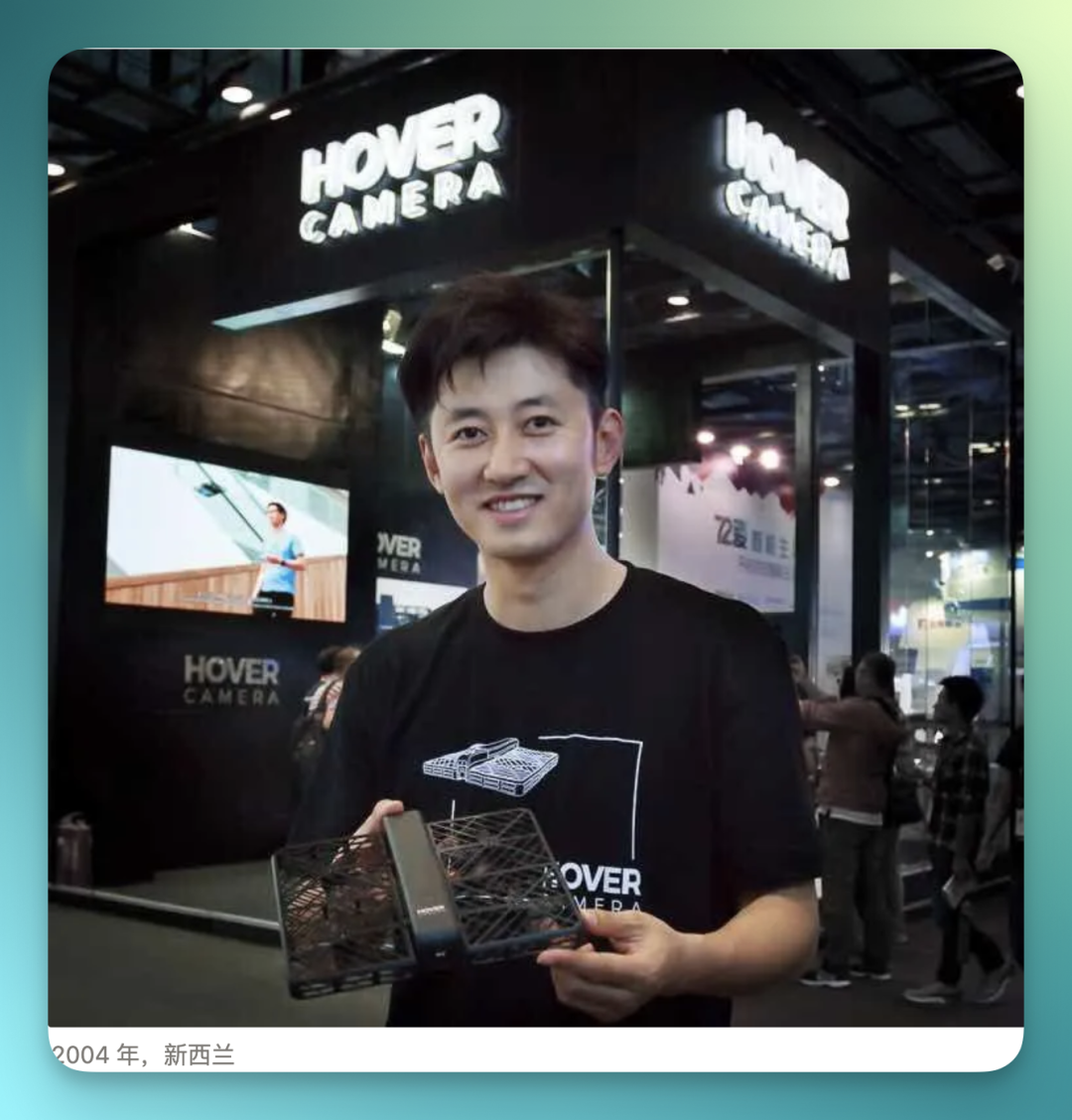
But that voice saying "that makes no sense" never left. In 2014, he and a Stanford classmate returned to China and founded Zero Zero Robotics. Two zeros connected make ∞, infinity — "infinite possibilities."
On October 17, 2016, at GMIC, HOVER CAMERA Passport — the little black hero — officially launched.
It was a foldable drone the size of a passport, 242 grams, that could take off and land from your palm without a remote control. It entered Apple retail stores in over 30 countries worldwide. Even Obama was "love at first sight" with it.
But entrepreneurship is never smooth sailing. In the years that followed, the company lost 60 to 70 million yuan annually. When COVID hit in early 2020, the market froze, cash flow hit zero. Pay cuts, layoffs, 30% of employees gone. For a period, the company survived on overseas technical service contracts...
Someone asked him how he endured. He had the look of someone "with empty pockets and an empire in his mind."
In 2022, HOVER X1 was released. 125 grams, lighter than a phone, palm takeoff in 3 seconds.
In 2024, X1 PRO | PROMAX hit crowdfunding, reaching $1 million in two hours.
Now, hundreds of thousands worldwide use HOVER to record their lives. What surprises him: many "old fans" are aunties and uncles from rural villages.
Looking back at that thought in New Zealand in 2004, it took him twenty years to turn "that makes no sense" into "everyone can."
➤ Mindverse / Second Me | Fangbo Tao
Watching Her in a GELou.
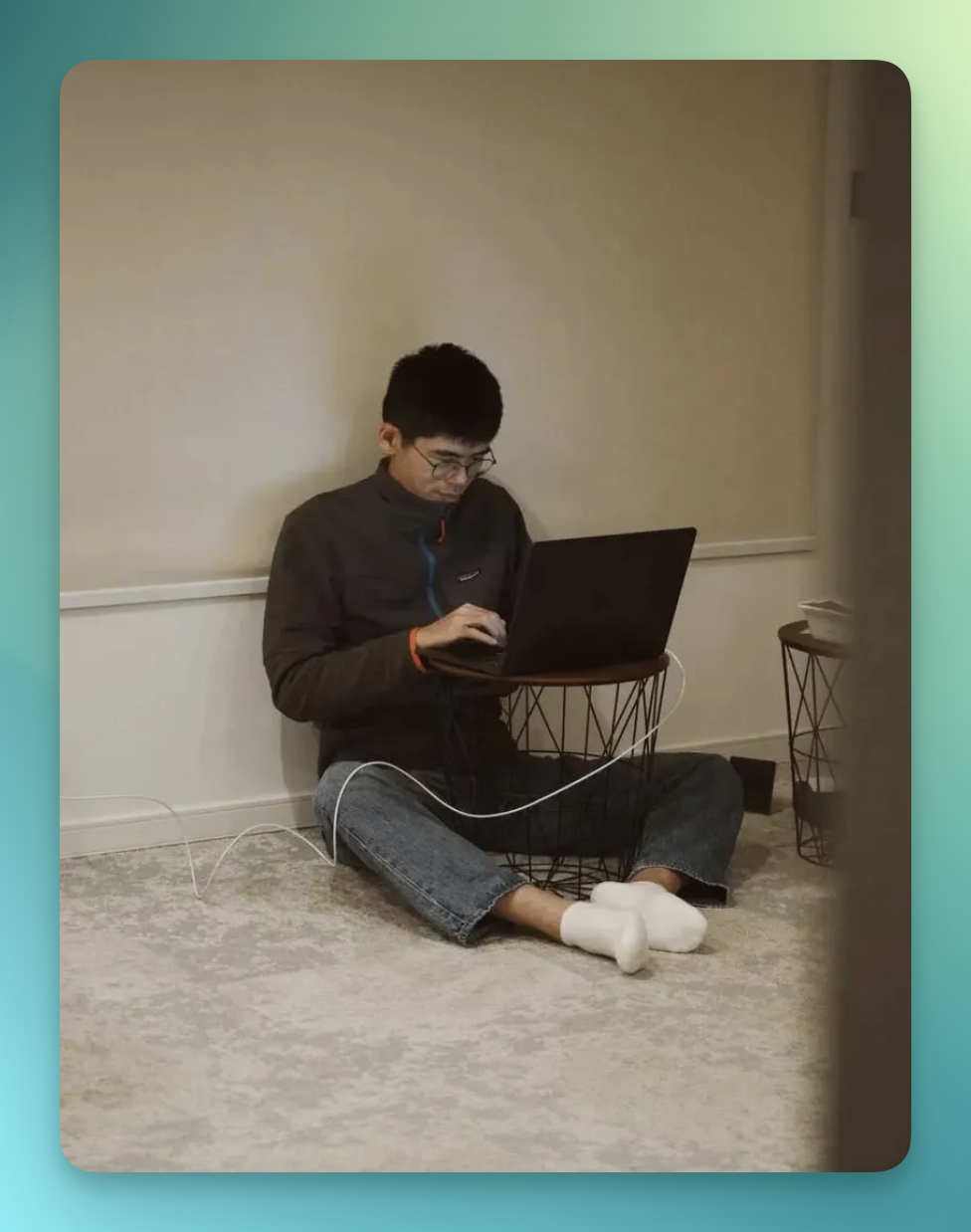
The company's first office was in a GELou.
Every Friday, we'd sit on the floor (no couch), watch Her, meditate together, and talk about the future of AGI.
Oh right — that was the summer of 2022. ChatGPT didn't exist yet. Back then we were already dreaming about building an AI network. It wasn't until today's Second Me that we actually got somewhere close.
Most of the people from that time have long since left the company. But those Friday floor conversations remain the most cherished startup moment for everyone who left and everyone who stayed.
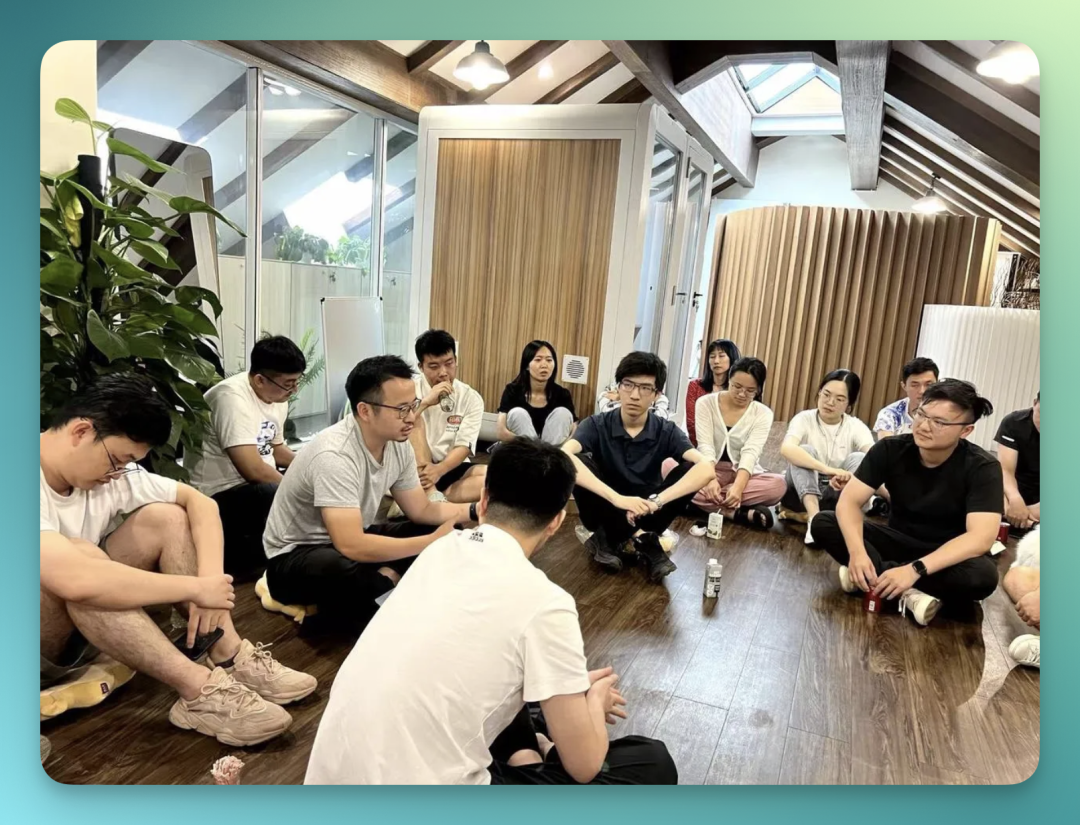
Four years later, our office has a couch now. But I really miss those days without one.
Finally, I hope everyone stays happy. Building a company matters, but happiness is where it all begins.
— By Fangbo Tao
➤ YouWare | Leon Ming
The midnight demo launch
One night in early March 2025, Leon Ming was browsing X (Twitter) when he noticed users sharing small games they'd built with Grok 3 — but only through screen recordings.
He suddenly saw a massive gap: In the new era of AI coding, what creators produce is fundamentally incompatible with traditional social media platforms. Screen recording was a lose-lose for both creators and consumers — no interactivity, no way to fully convey the creativity and impact of coding projects.
A new medium was inevitable.
At 10 p.m. that night, he and a few teammates hacked together a demo using Cursor. By 1 or 2 a.m., it was live. He never even officially claimed it as his own product on X — just said, "Used something today, feels pretty good."
The next day, the backend engineer told him: 1,000 new projects on the server. Within 48 hours, user visits jumped from 1,000 to 1 million.
That was the first version of YouWare. "AI's arrival shouldn't diminish human creativity," Leon Ming said. "Creativity still belongs in human hands. We want to make coding as accessible as smartphone photography."
Before that night, he'd led Noisee AI and Kimi plugins at Moonshot AI, worked on CapCut at ByteDance, and built smartphone imaging at OnePlus... This Hubei kid, raised by his grandmother, had spent two years sleeping in a lab at Wuhan University to make his smart car more efficient for an autonomous vehicle competition.
➤ Manifold Tech | Aaron Qin
The company registered in Dorm 709
2017, Virginia Tech. Aaron Qin led his team to the RoboMaster finals — one of only two North American teams to make it. That competition was the first time he realized: whether a robot has perception determines whether it's a toy or something that can change the world.
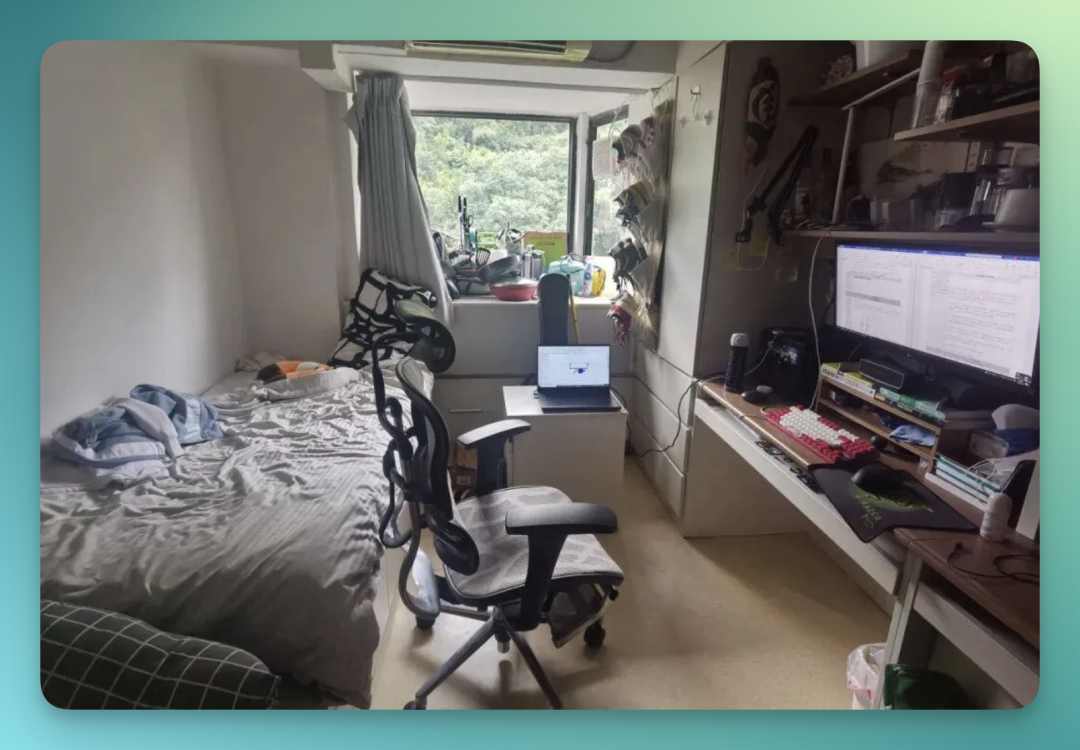
Later he went to The University of Hong Kong for his PhD, joining MaRS Lab. His assigned workspace was a boiler room that had sat unused for decades — he had to survey it himself, haul out the massive iron furnace, and rearrange the furniture.
On October 27, 2021, unable to afford outside office space, Aaron Qin and his labmates registered Manifold Tech in Room 709, Lee Hysan Hall, The University of Hong Kong.
What they do is essentially buy insurance for civilization. The Tai Pak Floating Restaurant — that boat from Stephen Chow's The God of Cookery — once came to them wanting to digitally preserve this piece of Hong Kong memory. At the time, Manifold Tech's first-generation product completed precise 3D modeling of the entire ship's exterior in just 10 minutes.

In June 2022, they launched their first handheld device, the "Manifold Machine" — like a phonograph preserves sound, it preserves form. In 2024, they released the Odin1 spatial memory module, priced under 7,000 RMB, now used by essentially every humanoid robot and robot dog company in China. This memory module is essentially building a hippocampus for robots — letting them not just see the world, but remember it, understand it.
Looking back now, that decades-idle boiler room at HKU, that Room 709 in Lee Hysan Hall — that's where the dream began.
➤ RockFlow | Vakee
Unicorns drawn with black ballpoint pens
Summer 2021. We drew many unicorns with a black ballpoint pen. Each one unique.
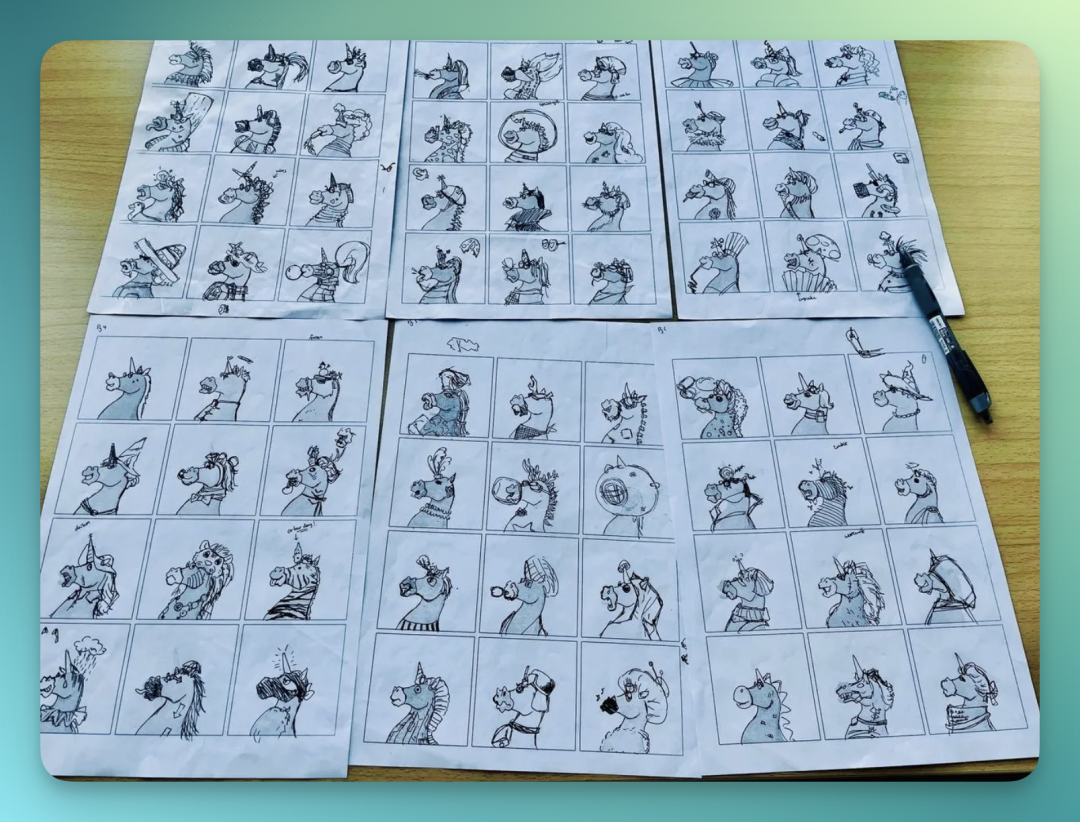
Because RockFlow always believed: Everyone has their own way of investing, and everyone can become a shining unicorn.
Later, these hand-drawn unicorns became the genesis NFT avatars of Planet RockFlow, bringing us our first planet natives from around the world.
"Columbus only needed one star to dare cross the Atlantic."
— By Vakee
➤ Raphael AI | Xiaopai Liu
Back-to-back hackathon champion
- My former employer held an internal hackathon. I built my first AI product ever and won. On the left in the photo is my boss and mentor Sheng Fu presenting the award. The two people next to me are my current partners — we've been working together ever since.
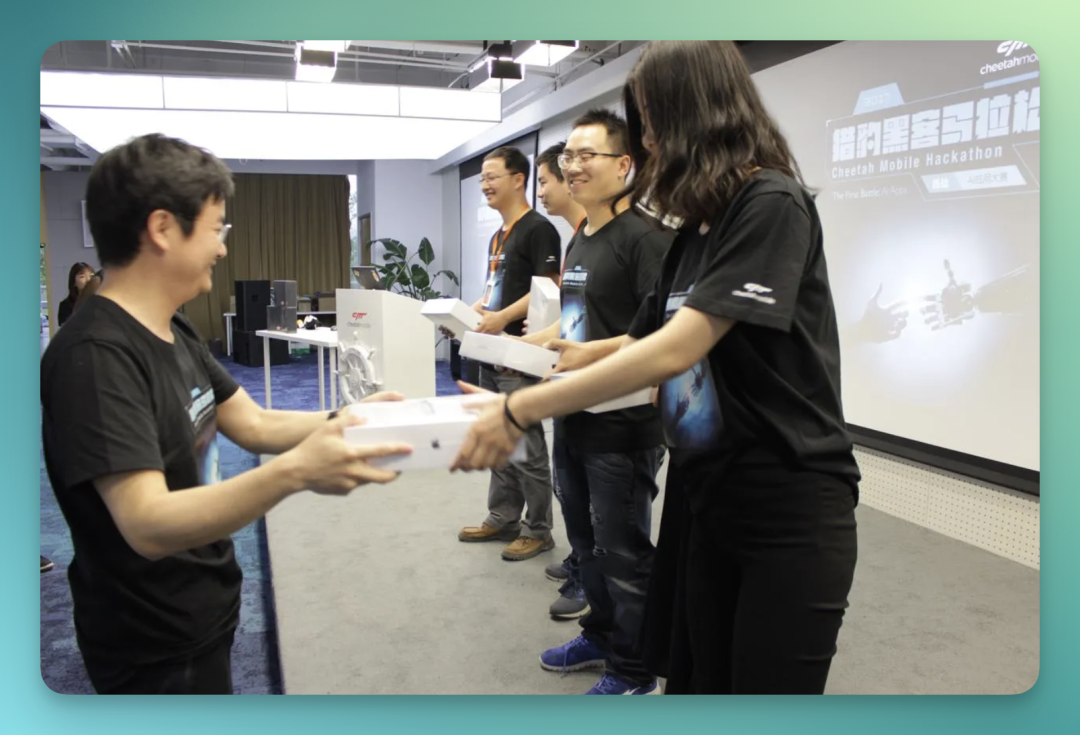
Not long after, the company held a second one. I built my second AI product ever. Won again.
And then, there was no third.
But we didn't stop. Since then, we've built more and more AI products. Nine years later, AI has advanced, and so have we, step by step to where we are today.
Your story is just beginning now.
— By Xiaopai Liu
➤ Vbot | Zhelun Banzhang
Big-head BoBo, day 83
June 26, 2025. Our self-developed VLA and motion control algorithms ran on first-generation self-developed hardware, completing the first full-interaction, autonomous-movement product walkthrough — the prototype of Big-head BoBo was established.
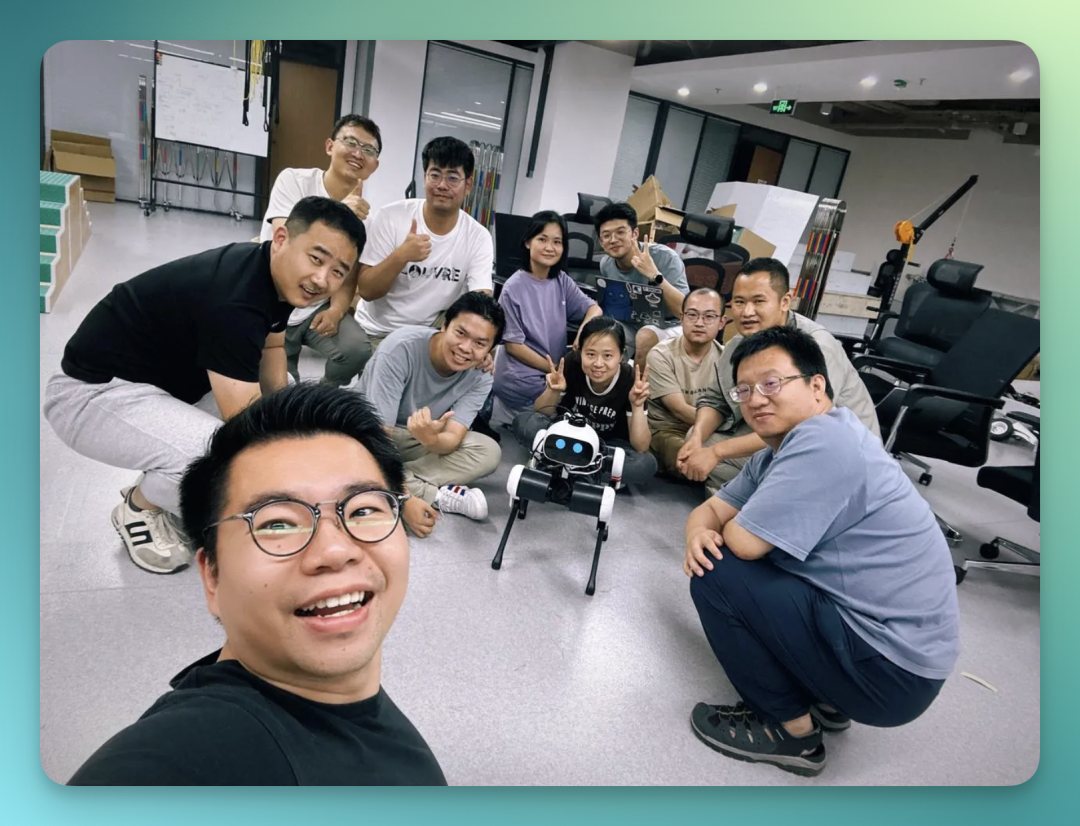
That moment was just 83 days after product review approval.
We've essentially built the organizational capability for integrated hardware-software, with confidence to create robots for users' living spaces.
Taming AI like an adorable flood monster — we see because we believe, we create because we're resolute.
— By Zhelun Banzhang
➤ ListenHub | Juzi
Two desks in month one
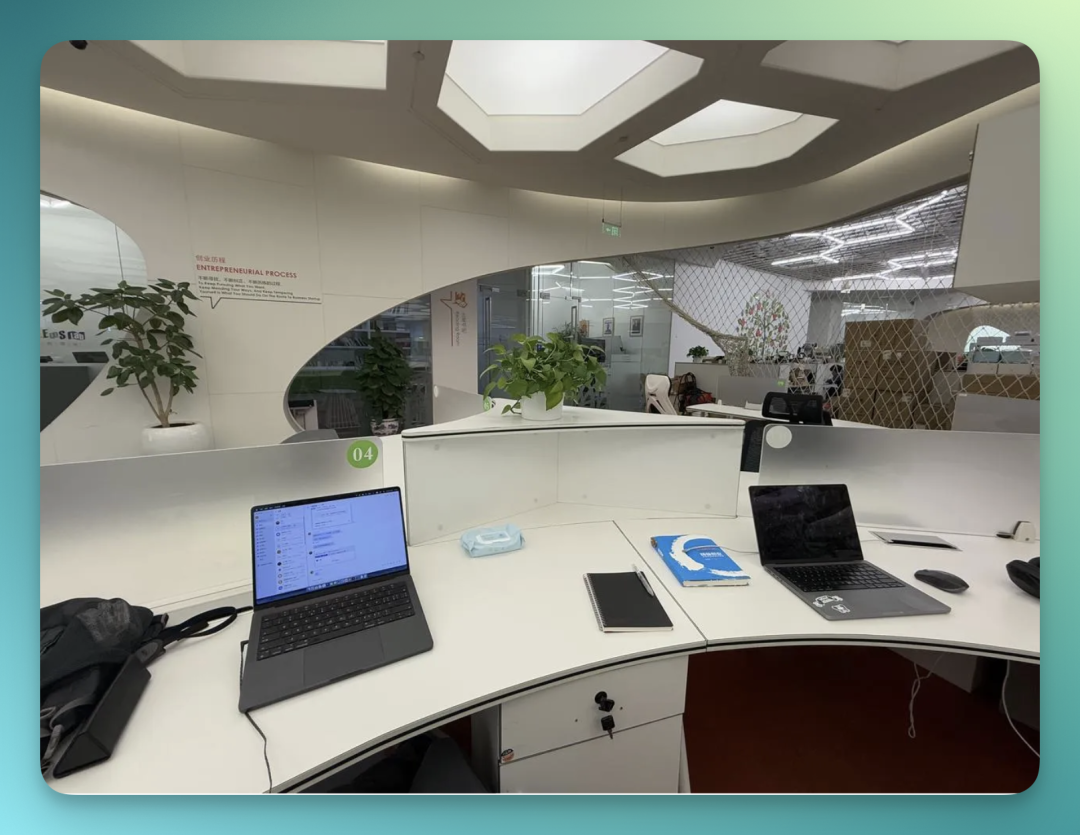
Everything is hard at the start, but the hardest part of starting up is the first month.
One month is enough to shatter every fantasy and preliminary plan you had about entrepreneurship.
One month after official company registration, we finally got an office — two desks in a shared workspace at a business park.
We ended up staying in that park for a full year.
The first step of entrepreneurship is defining an entity: its mission, its temperament, its operating mechanism, where it should be born. The moment you have desks is the moment the decision-makers behind that entity have finally made their first important decision.
— By Juzi
➤ StressWatch · PeakWatch | Patrick
Bad ideas on Post-it notes

In 2023, we wanted to build something but weren't sure what. So we wrote dozens of ideas we thought were bad on Post-it notes.
We called ourselves 100 Bad Ideas.
No funding. Lucky to have survived until now. Failed at most of them, but StressWatch and PeakWatch made it — tens of millions of users combined. Team grew from two people to a dozen-plus.
So often we wait for a good idea before acting. But entrepreneurship itself is more like riding a broken bike where everything rattles except the bell — nothing is ready. What matters is hitting the road without assumptions, letting real-world feedback correct your thinking, helping you find your way.
Do not wait for a good idea. Take a bad one and make it work.
— By Patrick
➤ Crossing | Koji
2008: Taking the Subway from Wudaokou to Guomao

Summer 2008. I was studying at Beihang University.
My classmates were busy applying to big tech companies and grad schools in America. I hopped on my bike and rode to Huaqing Jiayuan in Wudaokou.
There was a company there called Fanfou — sixteen people. Xing Wang was the boss, Yiming Zhang was writing code. I joined them. Our desks were crammed into a living room converted from a residential unit. Outside the window: the traffic and voices of Wudaokou.
That summer, Xing Wang led everyone from Wudaokou on the subway "into the city" to Guomao for a team outing. A crowd of us packed into the subway car. Long forgotten what we talked about. No one could have imagined what would happen three years later.

That moment — rough, green, the future rolling in unimaginable.
🚥 Closing Words
Finishing up these photos and stories, it's already New Year's Eve.
Pony Ma's 50,000 yuan. Yiming Zhang's four-room apartment. Lei Jun's millet porridge. Ning Wang's offhand joke. Patrick's sticky notes. Fangbo Tao's tiny attic... Every photo is rough, green, but in every photo something flickers — hard to name.
Maybe it's belief.
Maybe it's obsession.
Maybe it's the fixation that "a half-finished project has no value."
Maybe it's the idealism of "sitting on the floor on a Friday watching Her and talking about AGI."
Or maybe simply — in that moment, you felt this thing was worth doing.
Later, someone became the richest person in the country. Someone changed the way billions live. Someone made the world take notice in AI. Someone is still on the road...
But looking back at Day 0, these people share something similar.
Nothing more than:
A young person who believed in the future.
A humble starting point.
An idea with no guarantee of working.
Now, the great era of AI entrepreneurship begins anew. The table is reset. Yiming Zhang, Pony Ma — they're just like us, searching again for that idea that might not work. Everyone's back at the same starting line.
That's what we want to say: Day 0 belongs to everyone willing to start fresh and create.
May you find your moment too — rough, green, but with an unimaginable future rolling in.
The era rewards those who dare to take half a step forward through the haze of Day 0.