Here we go: JD.com is rebuilding e-commerce from scratch with AI.

The Future of AI E-Commerce: Maybe No More "Browsing"?
In the Future, AI-Powered E-Commerce Might Not Need "Browsing"?

👦🏻 Author: Jingshan
🥷 Editor: Koji
🧑🎨 Layout: NCon

Over the past two years, AI has become more than a fixture in Chinese e-commerce giants' earnings reports — it's begun deeply embedding itself into operations, emerging as the decisive factor that will determine winners and losers over the next decade.
Among all the players, JD.com has been particularly active.
Just as everyone was waiting to see how JD.com would apply AI, the Crossing team noticed that an app called "JD AI Go" quietly launched last month.
The design of this app is fundamentally different from the traditional JD.com app. When you open it, you won't see a screen full of promotional ads or get overwhelmed by complex pages. Compared to the "shelf-style shopping" experience of JD.com's main platform, JD AI Go makes a clear reduction — stripping away complicated content and trying to answer one question through simplicity:
With AI's help, can the shopping experience be made better, simpler, and more comfortable?
We spent time testing it thoroughly. Here's our detailed hands-on review:
How Does AI Do "Subtraction" in an E-Commerce App?
The homepage logic of JD AI Go is actually quite interesting — it's essentially a chatbot-style interface. Every search action you take inside gets systematically archived in a history function, like a chat log.
Compared to JD.com's traditional "shelf-style" layout, this app's interface has indeed been radically simplified, with much less visual burden.
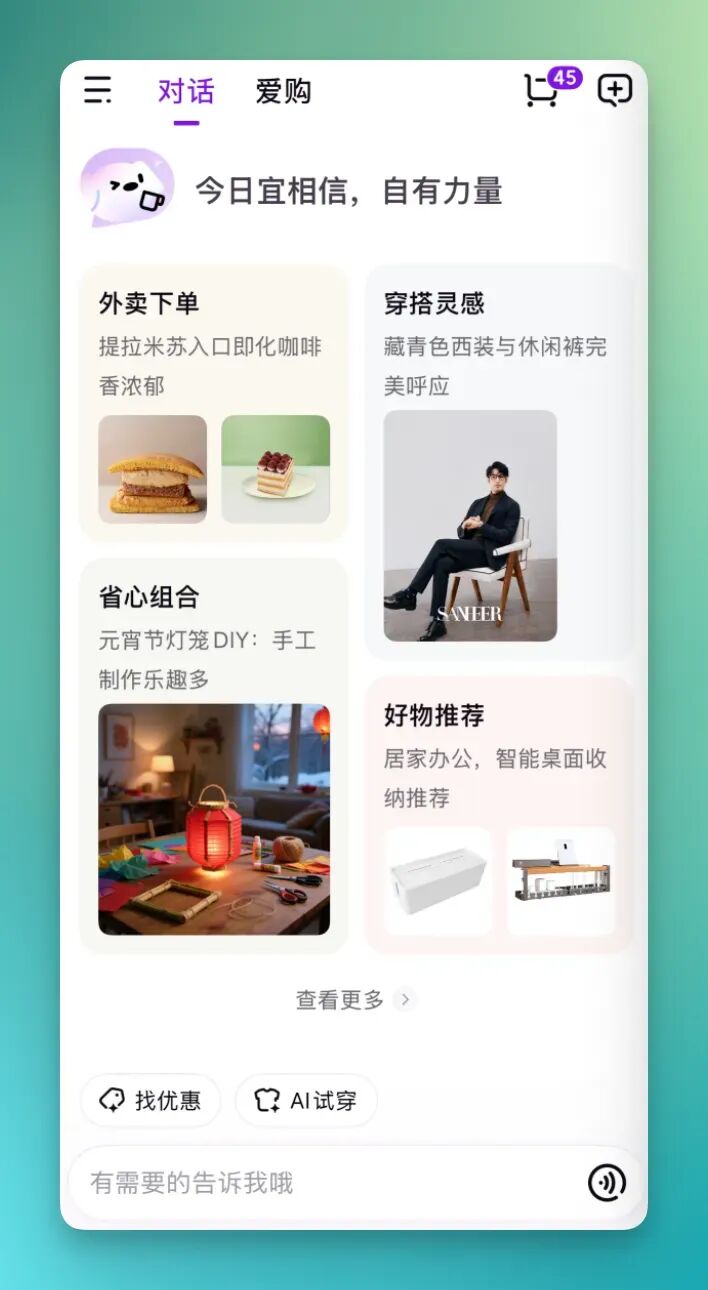
AI Shopping
Searching for products in JD AI Go — this "intent-driven" flow does feel noticeably smoother.
For example:
I want a small coffee machine suitable for a rental apartment, something trending on Xiaohongshu right now
You'll find a clear workflow running behind the scenes.
The most critical step is its "research" capability: it analyzes trending topics on Xiaohongshu in real time, captures currently popular aesthetics and models, then matches them against JD.com's product pool.
This conversion from social platform buzz to e-commerce inventory makes the recommendations feel more persuasive, not just rigid keyword matching.

One impressive point: JD AI Go's product display interaction logic differs significantly from conventional e-commerce search.
It completely restructures presentation around products in a tiered, organized way. When I searched for coffee machines, for instance, it responded extremely fast with notably restrained results.
It distills the most critical advantage dimensions for each product — whether it's price accessibility, pump pressure specs, size, operation workflow, even positive review counts — all integrated into the comparison logic.
Ultimately, this information appears as cards, and you'll notice it typically shows no more than 5 product cards at a time:
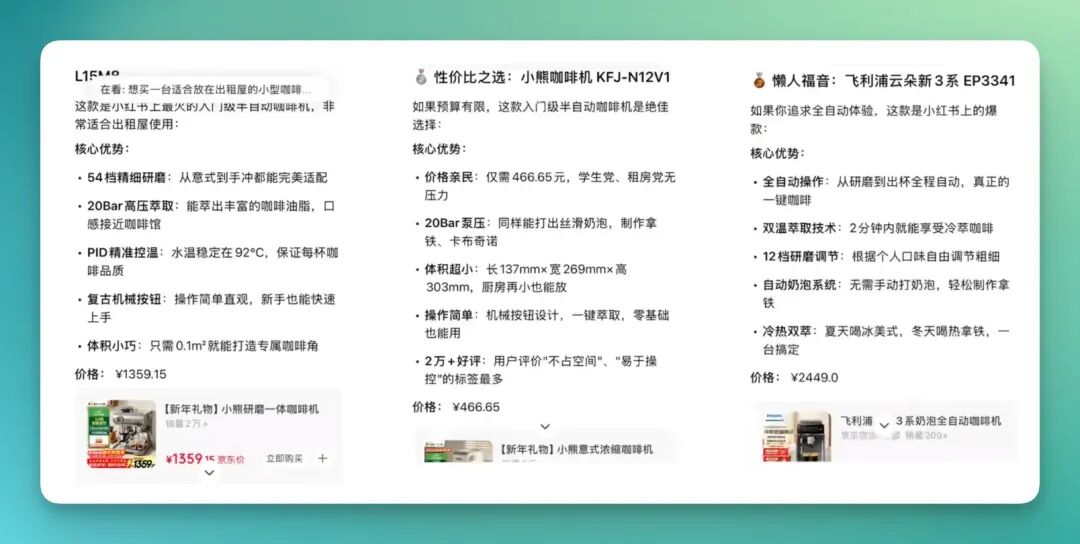
Beneath each recommendation card sits a tap button to enter the "Ai Gou" function. Clicking it jumps to the app's second high-priority tab.
On this page, it returns to the familiar waterfall-style shelf layout. Once you tap into a specific product, what appears is JD.com's native product detail page.
Notably, it has deeply integrated AI capabilities even on the detail page.
A persistent AI chat box sits at the bottom, where users can directly ask more granular questions about the product:
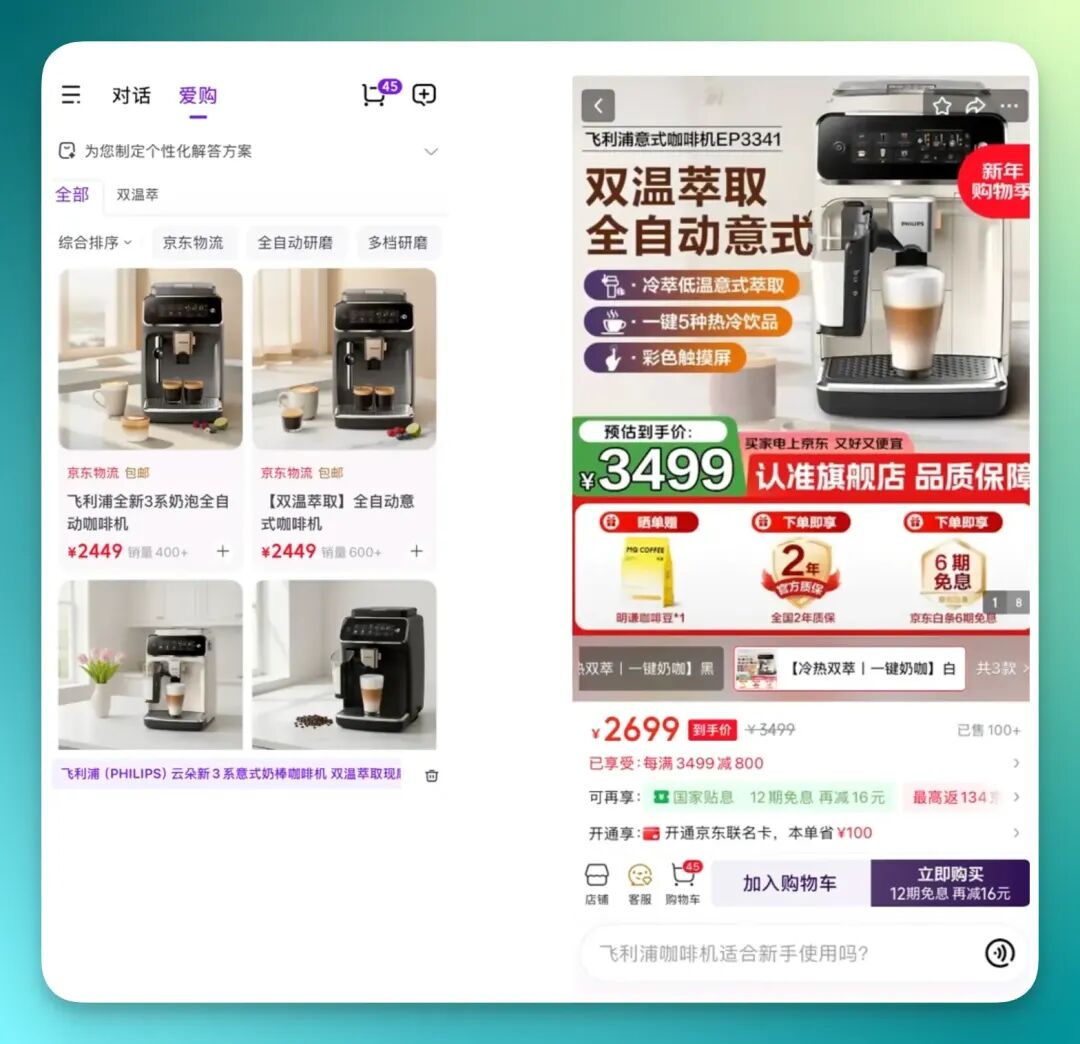
Take my actual questions, for example — whether this Philips coffee machine supports "hot and cold dual extraction," how the automatic milk frothing system works, or exactly how many grind settings it has. It leverages AI to quickly deconstruct and summarize the product's information points.
Honestly, once you get used to this flow, you'll find it much faster than scrolling through detail pages, examining long images, or hunting for specs:

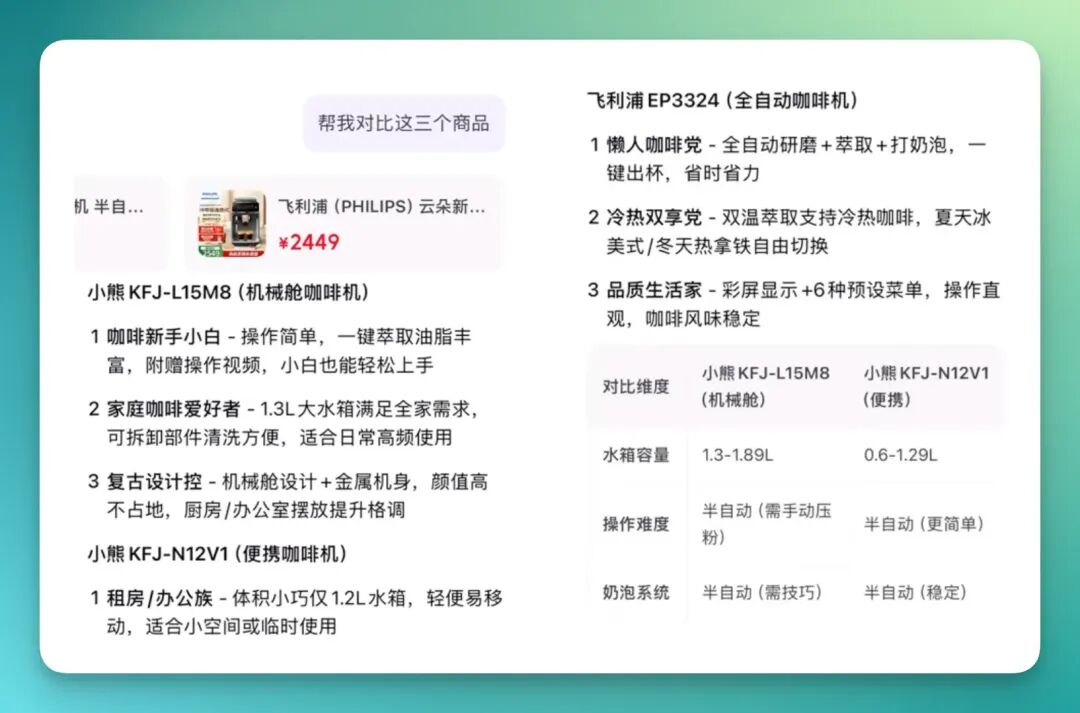
After presenting several recommended products, it directly generates a "product comparison" PK module below.
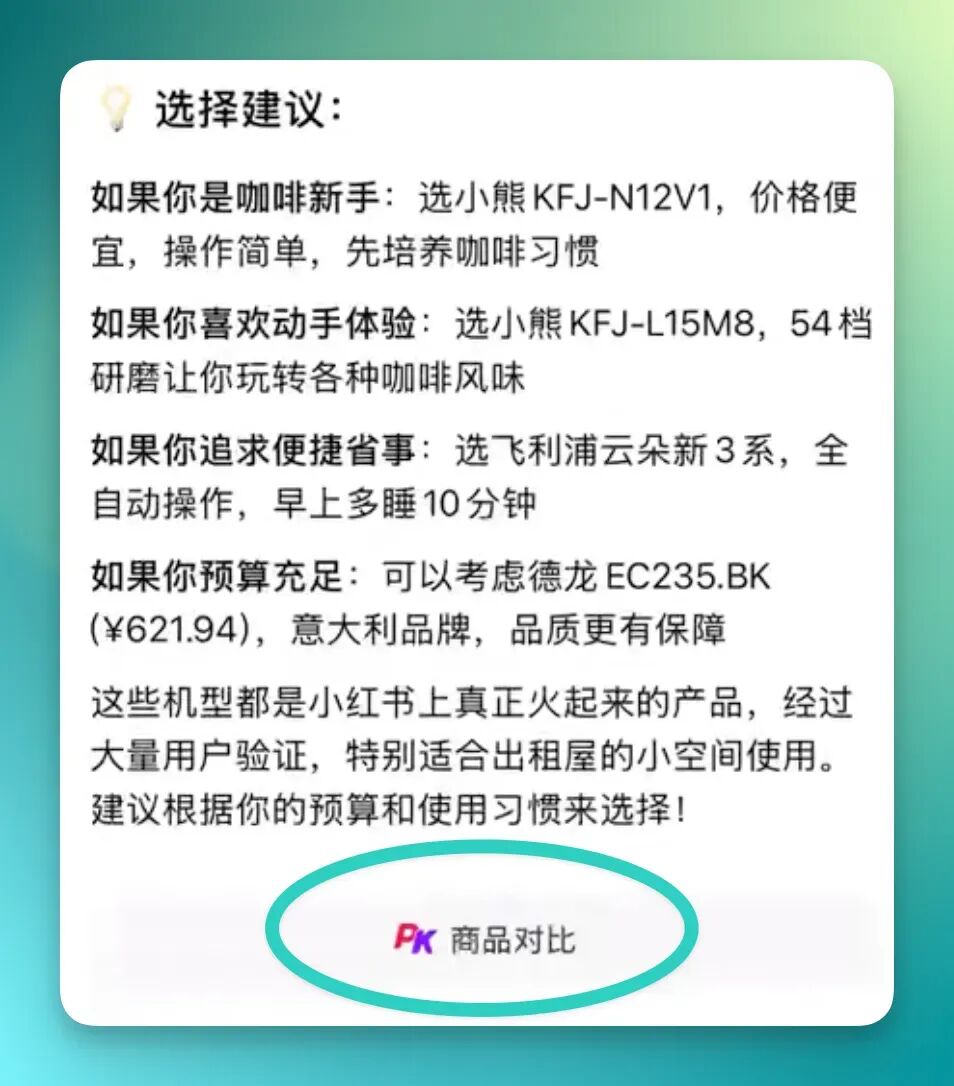
Clicking into this "product comparison" automatically breaks down the products you're considering.
What's interesting to me: it doesn't just pile up data.
When you're still hesitating, it gives a very clear positioning analysis: which one suits daily family use better, which is more beginner-friendly, or what subtle differences exist in their design language.
Finally, it generates a fairly detailed comparison table. Core dimensions like water tank capacity, operation difficulty, and milk frothing system are all laid out clearly:
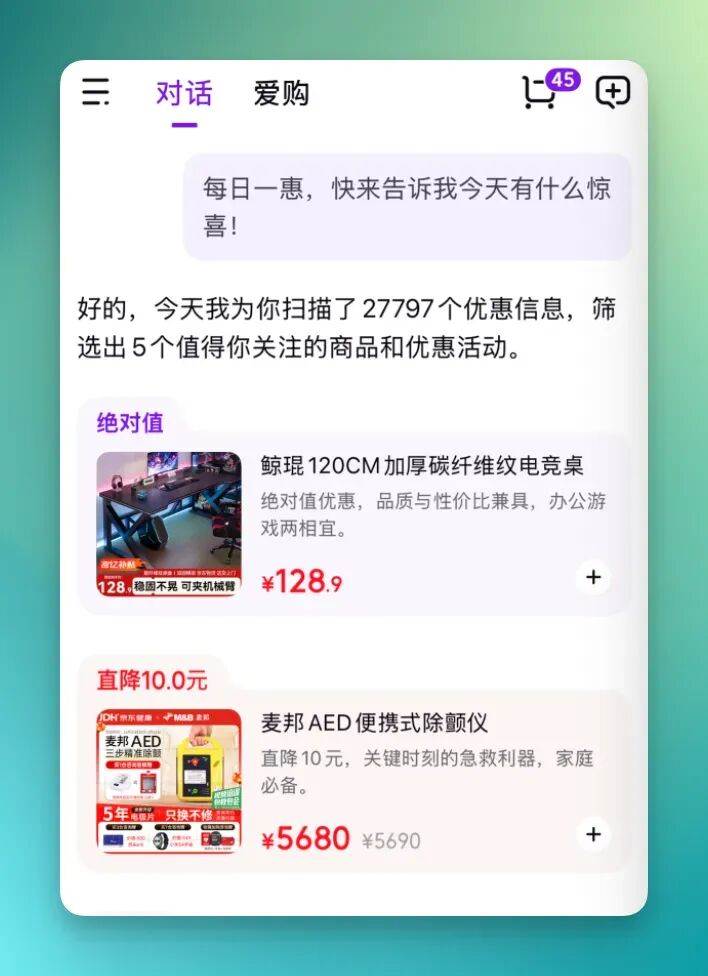
For the shopping scenario, it also designed a "Daily Deal" feature.
Simply put, when you tap into this section, it tells you the AI is scanning massive product discounts across the entire network. Its logic works more like a "filter":
The "Flights, Hotels, Food" Closed Loop
Although the product is called "JD AI Go," deeper usage reveals that it's not actually the pure shopping e-commerce app people typically imagine.
The "Go" here carries meaning significantly broader than traditional shopping.
I've observed it already covers closed-loop services like flights and hotels, extending this "intent-driven" logic to broader consumption scenarios.
For example:
Next Tuesday a friend is flying from Shanghai to Beijing to visit me, book her a flight
When I asked it to find Shanghai-Beijing flights for next Tuesday, it not only quickly filtered for low-priced tickets but also organized key information like departure and arrival times for early flights.
It also provides specific "selection recommendations" based on my needs:
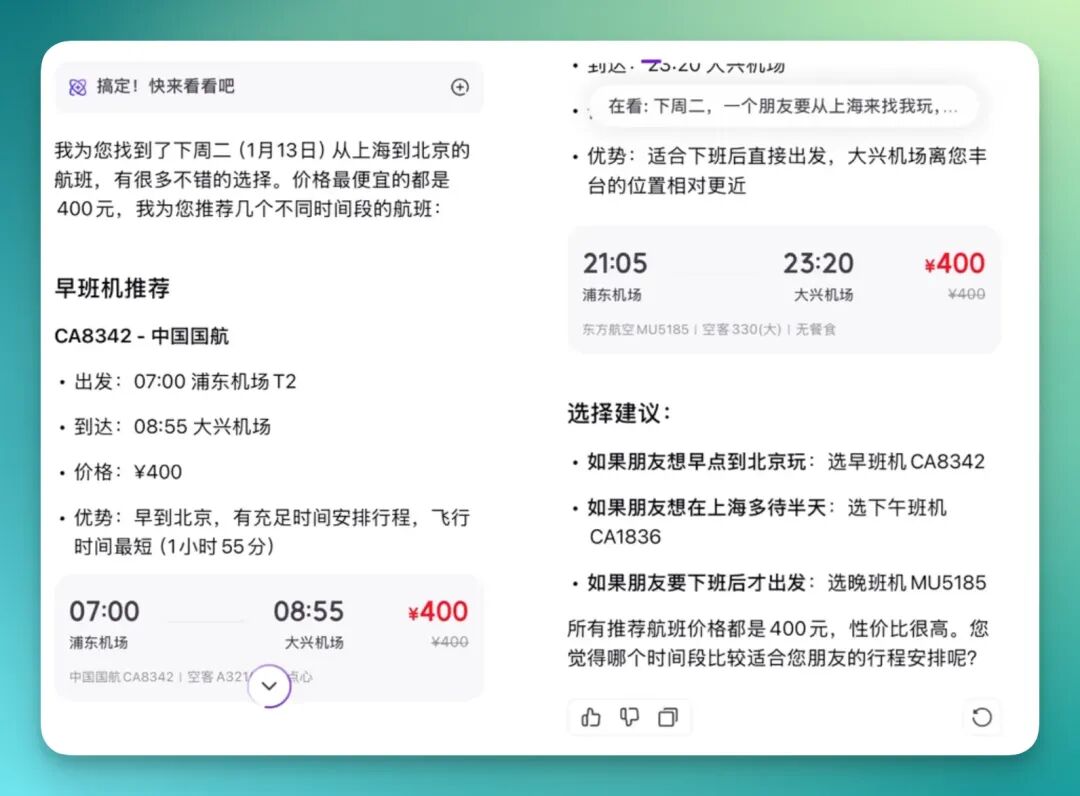
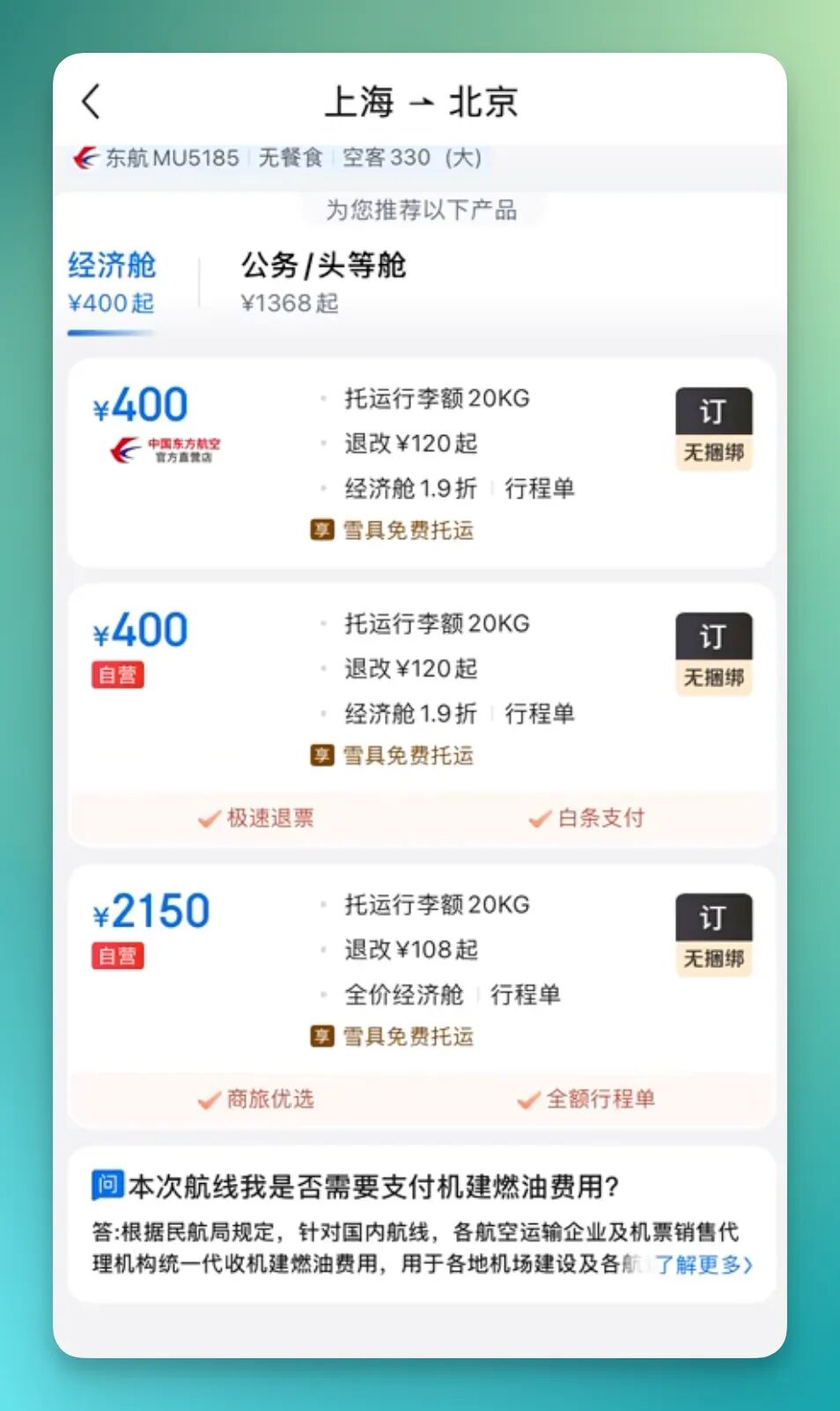
When you tap each flight card of interest, it directly jumps to the familiar flight booking page we all know. At this point, it displays real flight information and purchase entry points.
After she lands, if we want to find good food, I can also directly ask JD AI Go to recommend.
Help me find a good Sichuan restaurant nearby, I want to take her there
For example, when I ask it to search for nearby restaurants, it pushes out highly-rated or distinctive places based on location.
Then JD AI Go recommends Sichuan restaurants, detailing distance, ratings, positive review rates, and signature dishes, finally attaching merchant cards.
But I noticed something interesting: the entire chain isn't actually guiding you to dine in-store — it emphasizes the "food delivery" scenario:
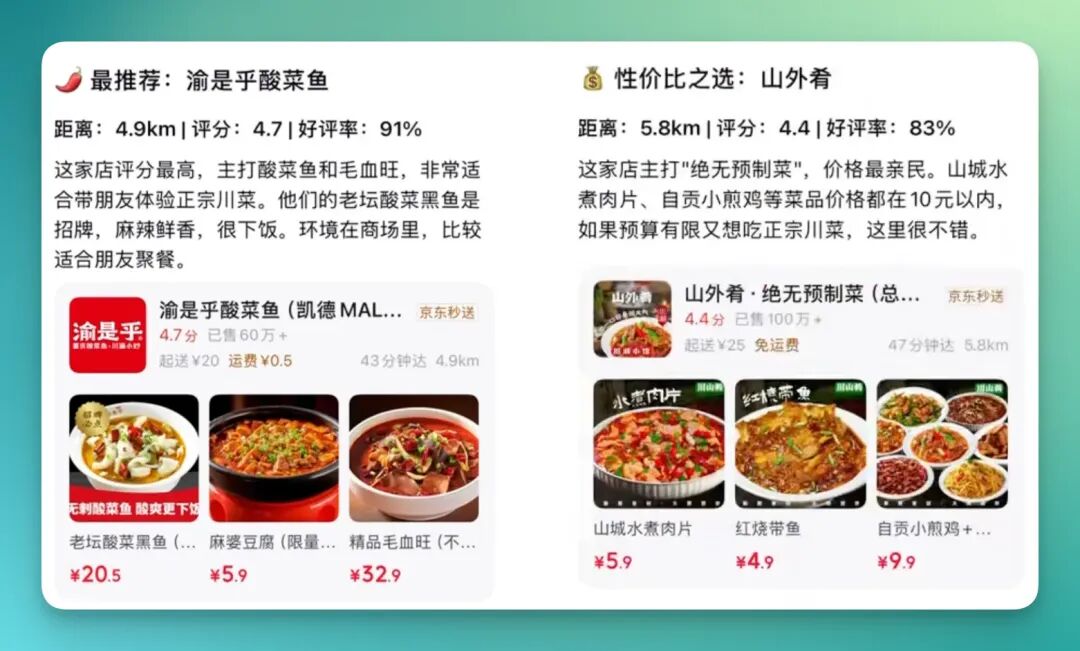
After eating, if we want to book a hotel, JD AI Go can take over directly.
Then book her a mid-to-high-end hotel
The advantage of this conversational interaction is that it can handle relatively vague intents. I just gave a simple prompt, and it automatically sorts out the logic.
Because it knows I want "mid-to-high-end," it won't only push one price tier — instead it creates gradients, finding one mid-range and one high-end option to recommend, helping me make this cross-tier choice:

Even when we want to arrange a dinner, JD AI Go's "shopping combination" capability shines remarkably.
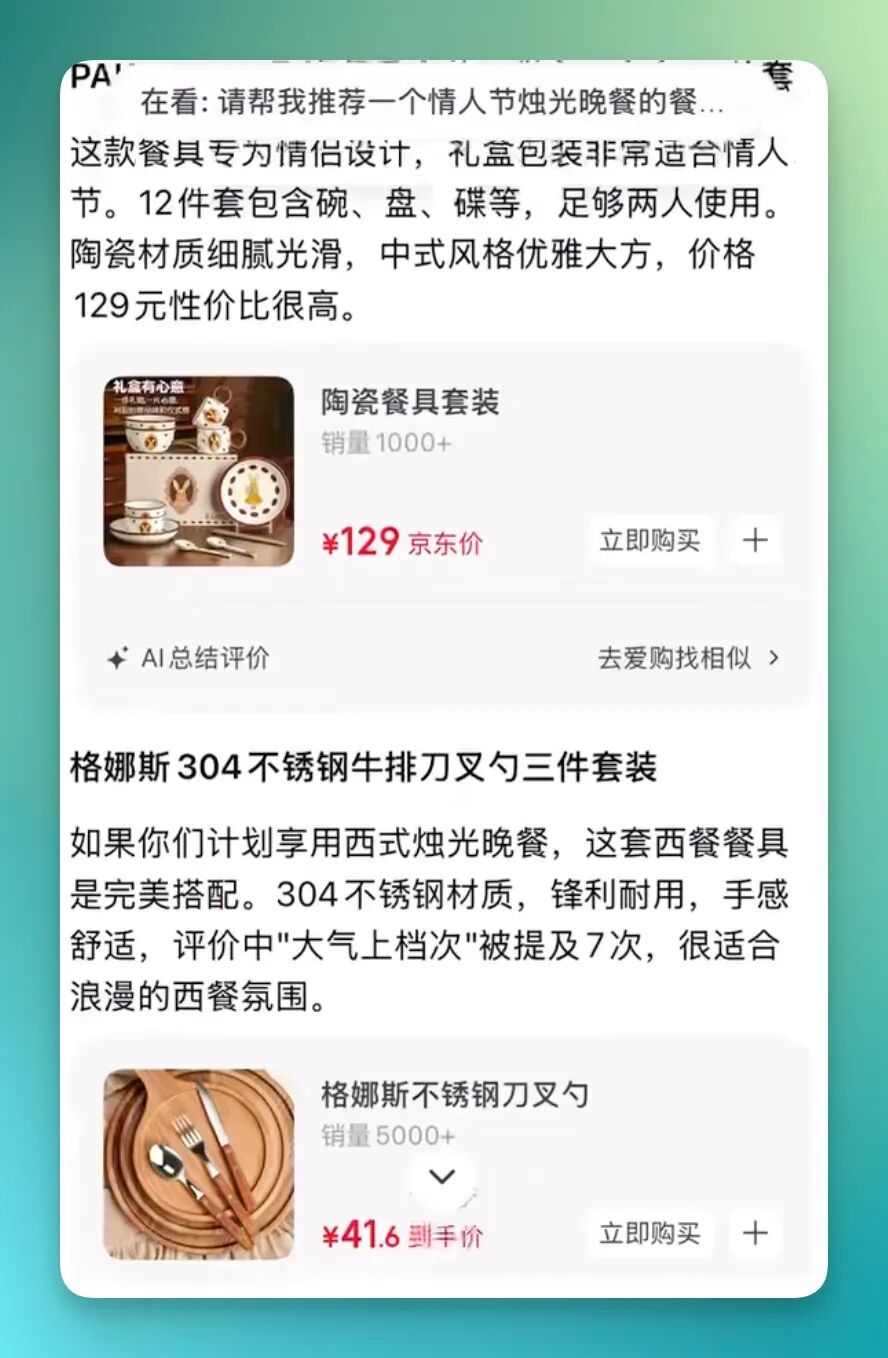
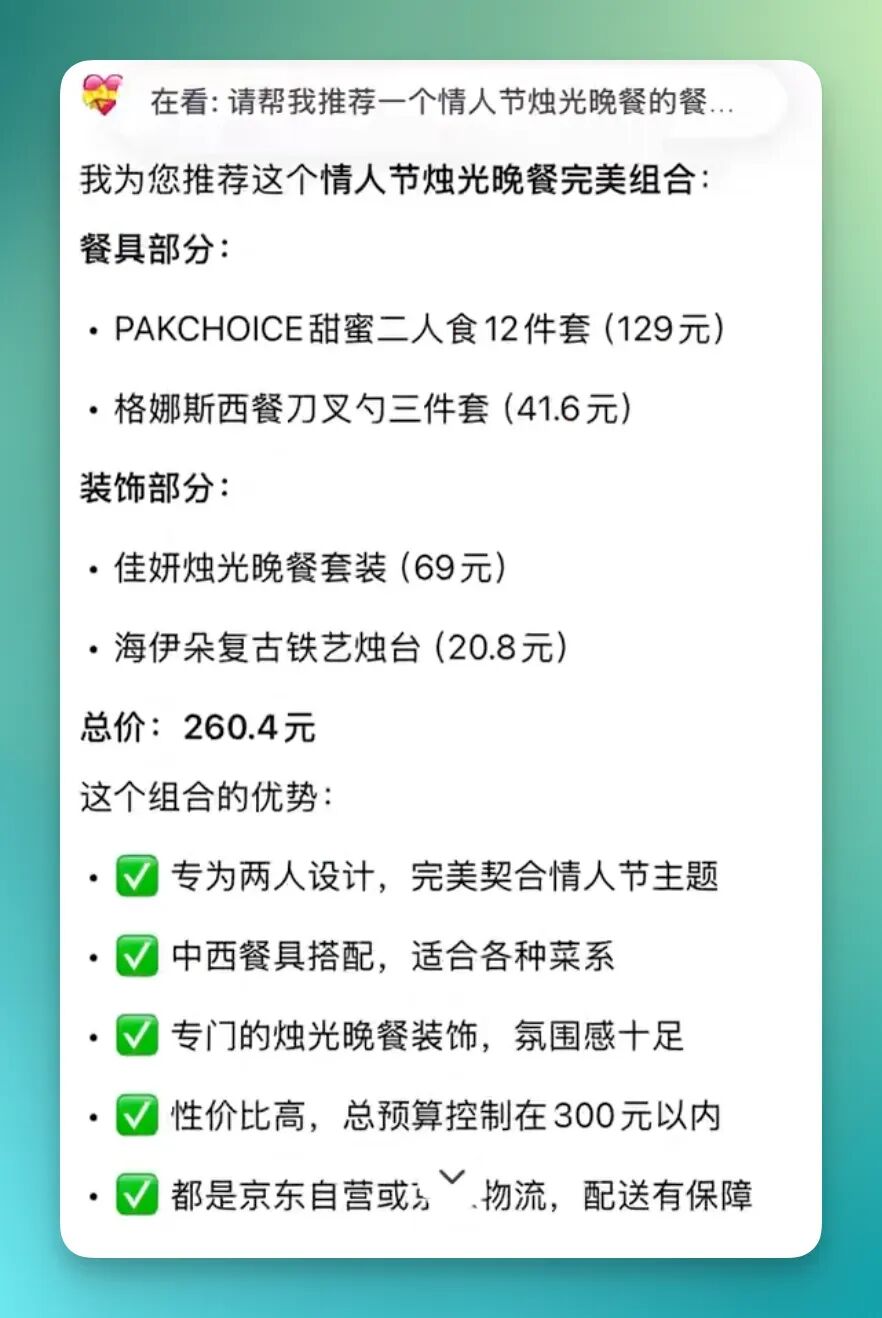
For example, when I ask it to recommend a "Valentine's Day candlelight dinner tableware and decoration set," it automatically assembles several tiers of differently styled packages.
Here the advantage of AI shopping becomes obvious — you completely don't need to separately search for candles, tableware, and tablecloths like in traditional e-commerce apps. It directly pushes out an entire solution:

I casually took some screenshots — you can see its recommendations cover tableware sets, stainless steel cutlery, and dedicated dinner-themed sets.
More finely, it automatically calculates the total price for each complete set and analyzes what specific advantages each combination offers:
AI Try-On
Let's talk about "AI try-on." The biggest friction in online shopping has always been "return costs," and I found that "JD AI Go" gives the AI try-on feature very high weight in this version.
Recommend a few outfits that would suit me
For example, when I tell it "recommend a few outfits that would suit me," it directly throws out complete combination-style outfit plans. Every individual piece, whether tops or pants, gets broken down into separate cards:
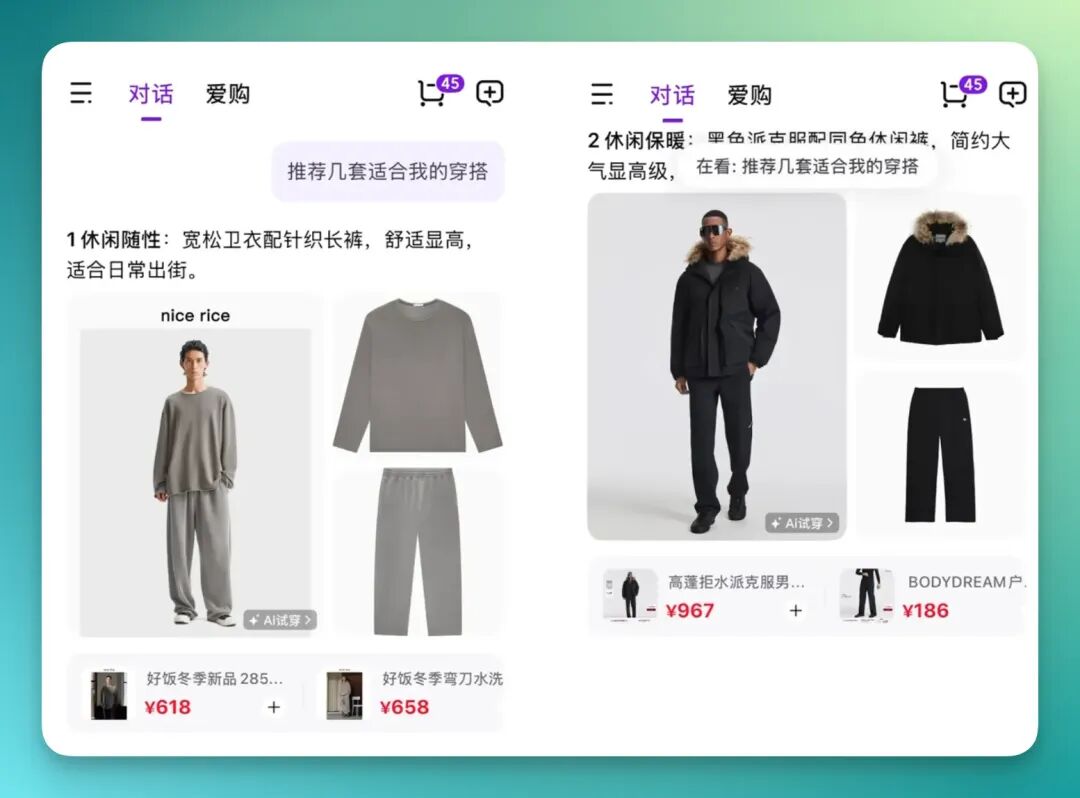
For each outfit plan, you can directly tap "AI Try-On" — this functional integration is already quite sophisticated. Beyond its actively recommended plans, the entire AI try-on section actually stores many more outfit cards, all supporting personalized try-on experiences.
When you tap into a specific set, you'll also find it provides different pairing suggestions from the same store, as well as same-store pairing options:
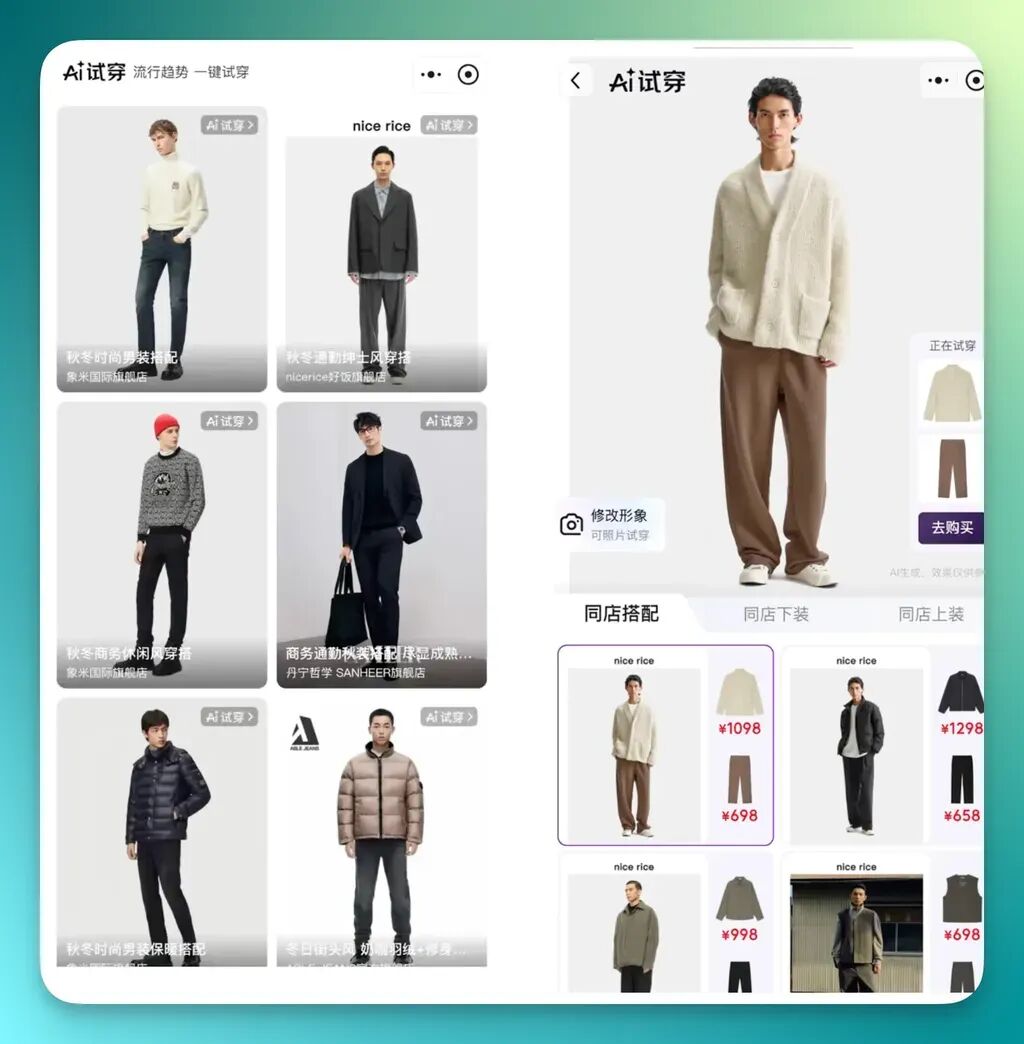
Here I continued using Koji's image for a "try-on," and I found JD AI Go's try-on workflow quite smooth — you can directly use a selfie uploaded through the product cards in the lower section to do the try-on:

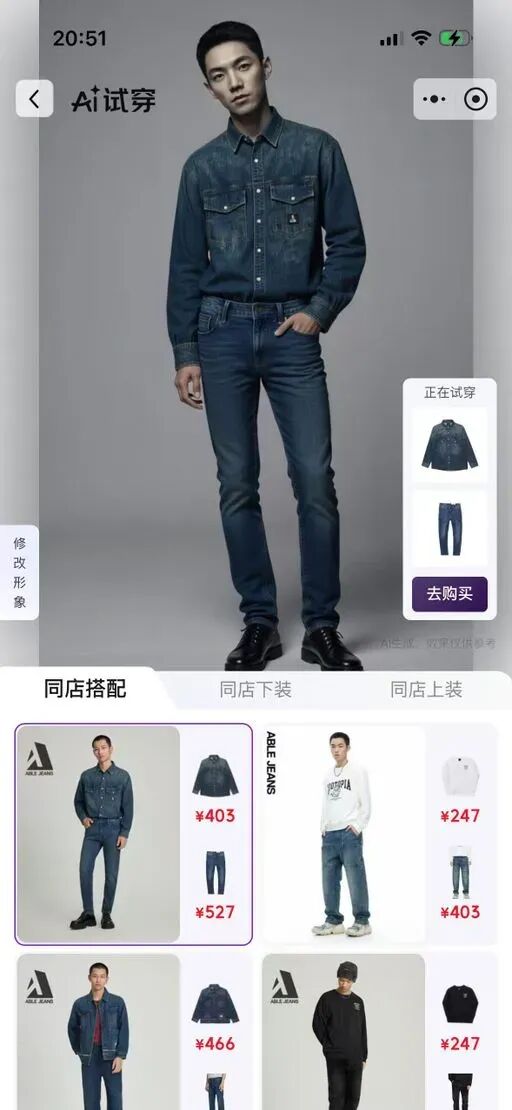
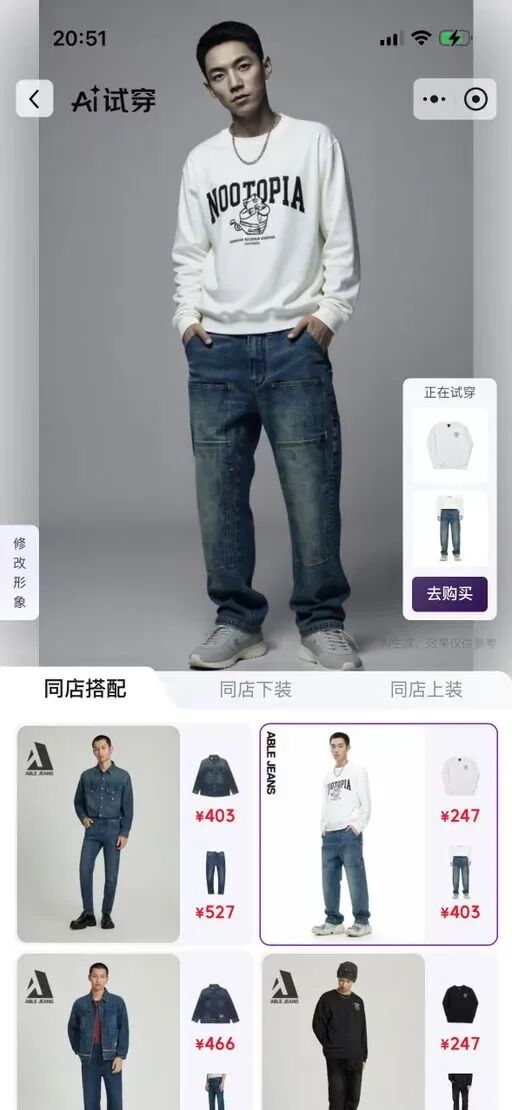
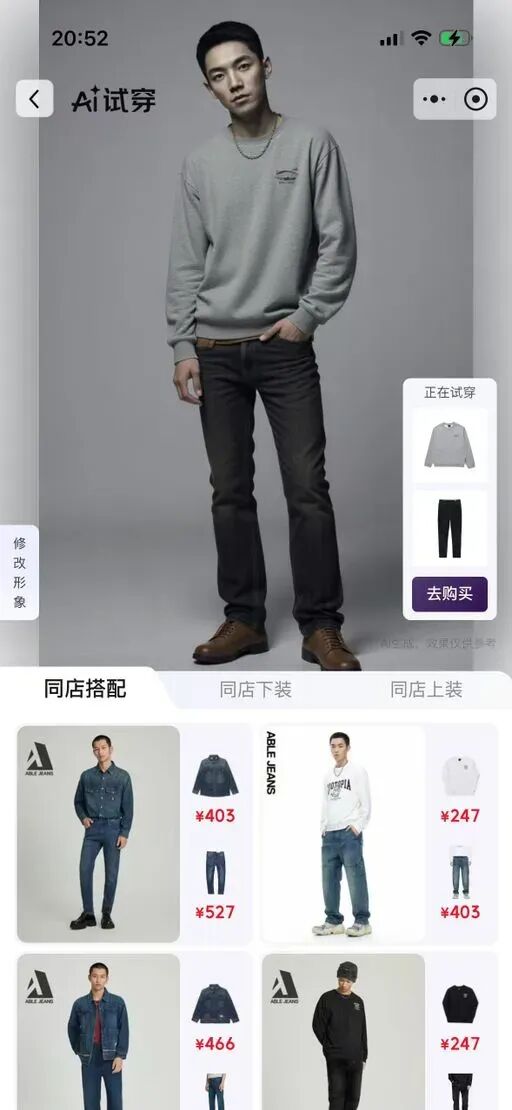
Moreover, you can keep "one specific item" while trying on "tops or bottoms sold in the same store":



After deeply testing all these features, I found that the "subtraction" JD AI Go performs isn't the kind of feature gutting for minimalism's sake.
The shelf-style e-commerce we're familiar with is essentially "person seeks product": you have to dive into massive product pools yourself, repeatedly comparing specs, reading reviews, studying details. In "JD AI Go," this logic gets reconstructed into "AI seeks product."
The traditional shopping chain is typically: search, filter, compare prices, add to cart, finally checkout. If you also want to order food delivery or book a flight, you have to exit, switch apps, and repeat this tedious process all over again.
But in "JD AI Go," the homepage nearly collapses to a single core entry point, completing interaction entirely through "intent drive."
"JD AI Go" packages all the dirty work that algorithms should handle — price comparison, filtering, jumping between apps, tracking — entirely behind the scenes. This "subtraction" is actually a concentrated manifestation of JD.com's accumulated underlying AI capabilities over the past half year.
After all, I even discovered that they published a dedicated paper on arXiv to build this AI product:

In this study titled "OxygenREC," JD.com details the logic behind this system.
Traditional recommendation systems are often rigid "matching," struggling to understand the complex intentions behind user behavior. To solve this, JD.com introduced a "Fast-Slow Thinking" architecture:
"Slow thinking" leverages large models to excavate users' vague, reasoning-required true intentions.
"Fast thinking" handles high-efficiency real-time generation, ensuring you don't feel lag during search.
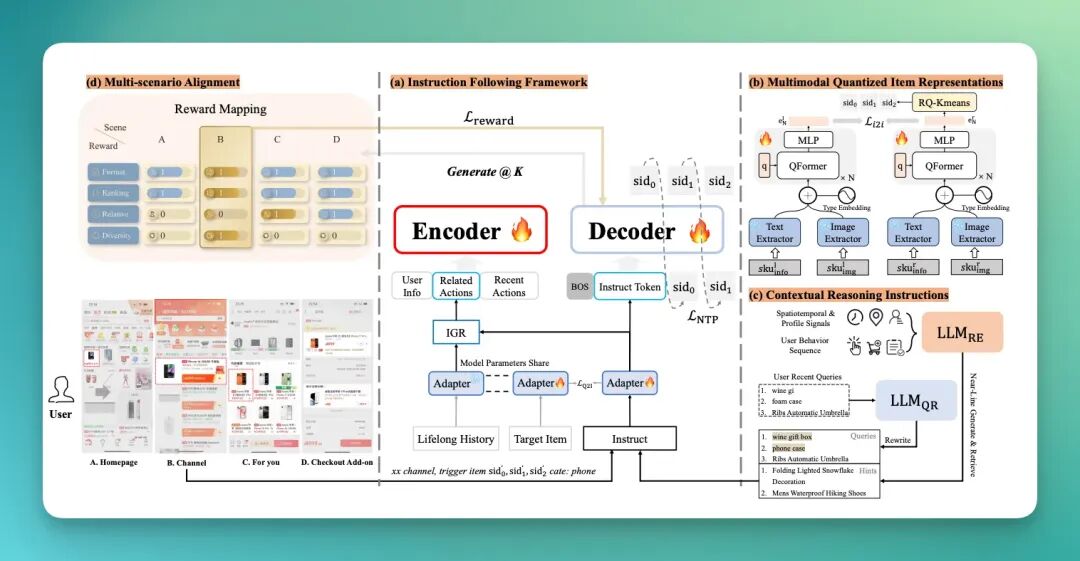
More critically, addressing the most headache-inducing "multi-scenario adaptation" problem in e-commerce.
Like how to simultaneously handle buying clothes, booking hotels, and ordering food delivery?
The paper proposes a Soft Adaptive Group Clip Policy Optimization (SA-GCPO) algorithm. Simply put, it unifies different business objectives.
For a long time, everyone has been curious: when AI truly deeply intervenes in e-commerce, what will it actually look like?
JD AI Go's answer: an "intent-based" "Go experience," unifying originally fragmented consumer behaviors within a single dialog box.
Now, the e-commerce industry faces a real question:
Will this "minimalist" form become the mainstream of future e-commerce?
In terms of user experience, this "minimalist" form brought by AI does reduce cognitive burden in certain dimensions, but it's not without issues.
For example, I'm also pondering another question: Is the pleasure of "browsing" also an indispensable part of user experience?
Traditional shelf-style e-commerce apps, though cumbersome, provide a kind of randomness similar to "window shopping." When AI becomes extremely precise and only gives you results, the "discovery-style" joy of shopping actually gets largely replaced.
Whether this is exactly the form everyone most wants to see — it's perhaps still too early to conclude.
Feel free to leave your thoughts in the comments~