How did AI end up living the "poetry and distant horizons" life before the rest of us?
Minimax and The Fair are leading the conversation on AI's impact on art and creative work.
Sayings:
Before today's article, I want to share an image I came across recently.
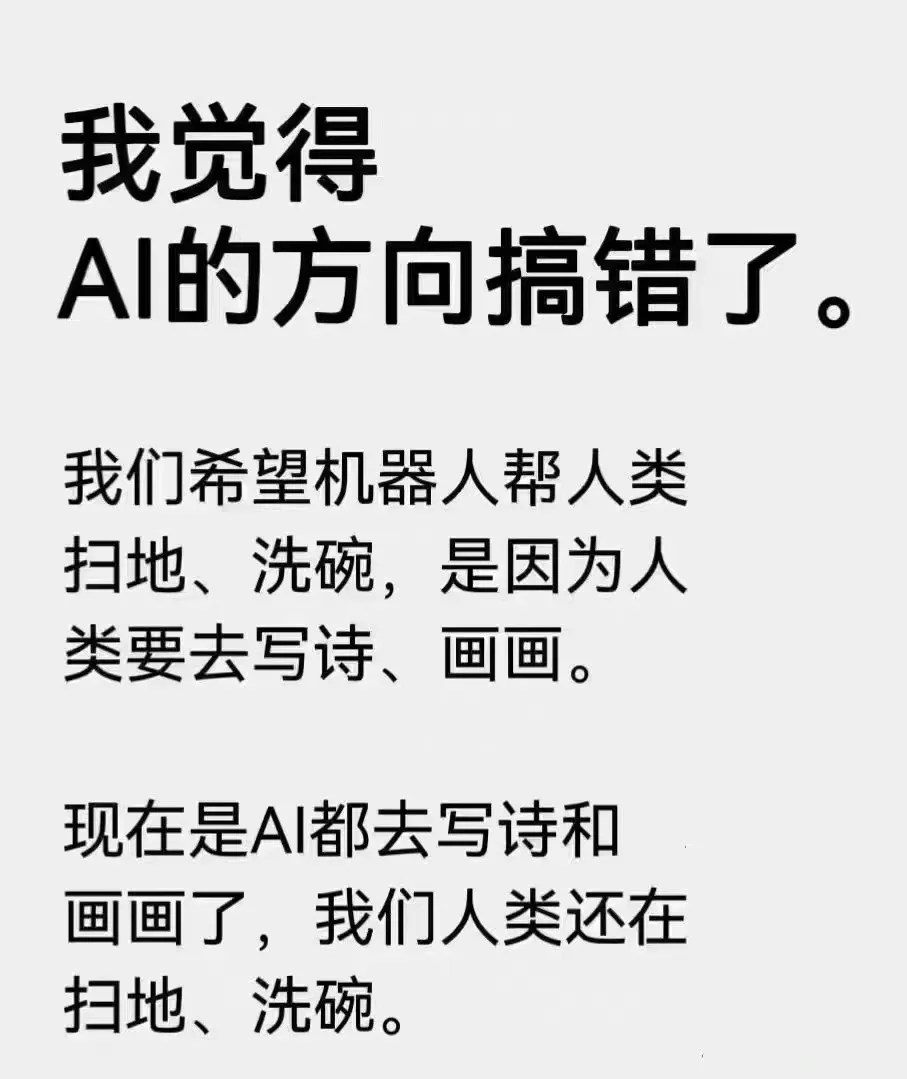
It's a bit disorienting: AI has burst into human life without warning, and in ways quite different from what we imagined.
Conversing and falling in love like humans is one thing — but fields we once marked as uniquely human, the spiritual and artistic domains, have become targets of its advance too.
Yet there's no avoiding it: in the arts, AI is blooming everywhere, and the orders and standards governing expression, creation, imagination, and originality are being redefined.
Beyond the novelty and excitement, I sense palpable anxiety around me:
Is the AI threat real?
Will AI replace creators?
Will AI kill art?
As AI-generated creation goes mainstream, will human uniqueness be hollowed out?
With these questions in mind, we invited eight practitioners from technology and art for a discussion — recorded as a short film. Among them are artists, content professionals, curators, and AI entrepreneurs (MiniMax). You'll hear different voices here.
With AI in the mix, what future awaits art and creators? Where do humans go from here?
This may become our starting point for reflection:
A framework we often use now is to distinguish between Art with a capital A and art with a lowercase a.
In the lowercase art sense, if AI can produce an image, something sensory, then of course it counts as lowercase art.
Whether it qualifies as uppercase Art depends on whether a specific work aligns with the lineage of fine art's development.
What AI creates is an image, and an image is not a painting.
An image is an intention projected onto a flat surface, whereas a painting is a process of practice. One stroke comes first, another after; one is erased, another covered over; one is wrong, another corrects it — this is what makes painting interesting.
AI produces things rationally, in an orderly manner, but art is typically born from the disorderly,感性 parts of the human brain. Fundamentally, these two are in contradiction.
We've seen people fall in love with AI online. It's trying to construct a very感性 human state, but I think that's a performance, or a coincidence.
I don't think it could ever become art.
It's like pre-made food. You wouldn't expect great art to emerge from pre-made food.
At the core of human appreciation of art is appreciation of life. When we admire Bada Shanren, Van Gogh, or da Vinci, we are admiring the person, the mind behind that pile of pigment — not the arrangement of pigments itself.
Don't look down on pre-made food just yet — many Michelin three-star chefs love Sichuan pickles. Sichuan pickles are actually among humanity's oldest forms of pre-made food.
Good AI work and good human work are the same: if a piece moves people, it has artistic value.
I think it must be a human work, produced through human rationality and感性.
If one day AI tools completely detach from basic human thought and can generate works randomly, then in my view it's no longer art.
Actually, AI art today is a pseudo-proposition. AI as a new species, or as an intelligent life form participating in art, is not yet valid.
The emergence of an art form must be preceded by cultural depth. You can't invent something today, have culture tomorrow, and artworks the day after.
But I do believe AI art will eventually become an art form — just on a much longer timescale. It requires popularization of the tool; only when popularized and formed into a culture can aesthetics be born.
AI right now is like a clown.
If it's in a photography competition, we judge it by photography standards; if it's in painting circles, we drag it into painting discourse. What aesthetic or artistic standard should we use to judge whether it's a good work? No one can say.
Right now, using AI to create is like collaborating with a black box.
Most people creating images with AI don't truly understand what's happening at the technical level underneath. What they see is: I give it some instructions, some words, some ideas, and AI based on some complex, holistic computation and work gives me results within or beyond my expectations.
It's full of randomness.
Its defining characteristic: it's not human, it has no consciousness, it's imitating humans.
An AI creating from the information sources fed into it is like quenching your thirst with swimming pool water. There's everyone's foot-wash water in there, everyone's sweat.
The endpoint of imitation isn't necessarily imitation.
Many human children also begin learning through imitation. Picasso had a famous line: good artists copy, great artists steal. Imitation is the first step — if we can imitate the essence, imitate to the point of transcendence, we create better art.
What AI currently simulates feels like images from video games or sci-fi films — the contrast, the character designs, there's a relative formula to it, so it can look somewhat雷同.
But I don't think this is a problem. This passive, mechanical algorithm upgrades very quickly. Slowly it may grasp new keywords and capture some hidden corners of art history.

My own understanding is that I'm co-creating — colliding with a soulful, creative, highly efficient collaborator. It's a bit like two composers jamming together.
In art, especially visual art, it was previously difficult for different artists to collide. Now with AI, good collaboration becomes possible.
One concern I have: when we use this thing, we cede two abilities. One is the ability to conceive, the other is the ability to shape — one belongs to our mind, the other to our body. These two abilities are precisely the core of artistic creation.
If these are what make creation joyful, and we hand them to AI to complete a seemingly good work — the better it does, the less joy I feel, the more my abilities decline. I don't know where the human is; the human has been hollowed out. The meaning of our existence gets hollowed out, and the joy of creation, even the frustration of failure, gets taken away.
I'm not willing to cede my abilities to AI.
AI is certainly powerful, because it's the most efficient tool ever created in human history, bar none. Such a tool will inevitably change the entire social form; once social form changes, new aesthetics and new concepts will be established, and beneath these, new art will be born.
One advantage AI brings to artistic creation is that we can freely choose visual styles based on story content, letting style better serve narrative, broadening creative freedom, even creating entirely new art forms.
When SUNO first launched, I asked it to write a song for my children. I put in their names, and in three seconds it wrote a song with both melody and lyrics, absolutely wonderful. In the past I couldn't have done this, because I never studied music.

Our latest generation of so-called generative AI is unprecedented — what it overturns is creativity itself.
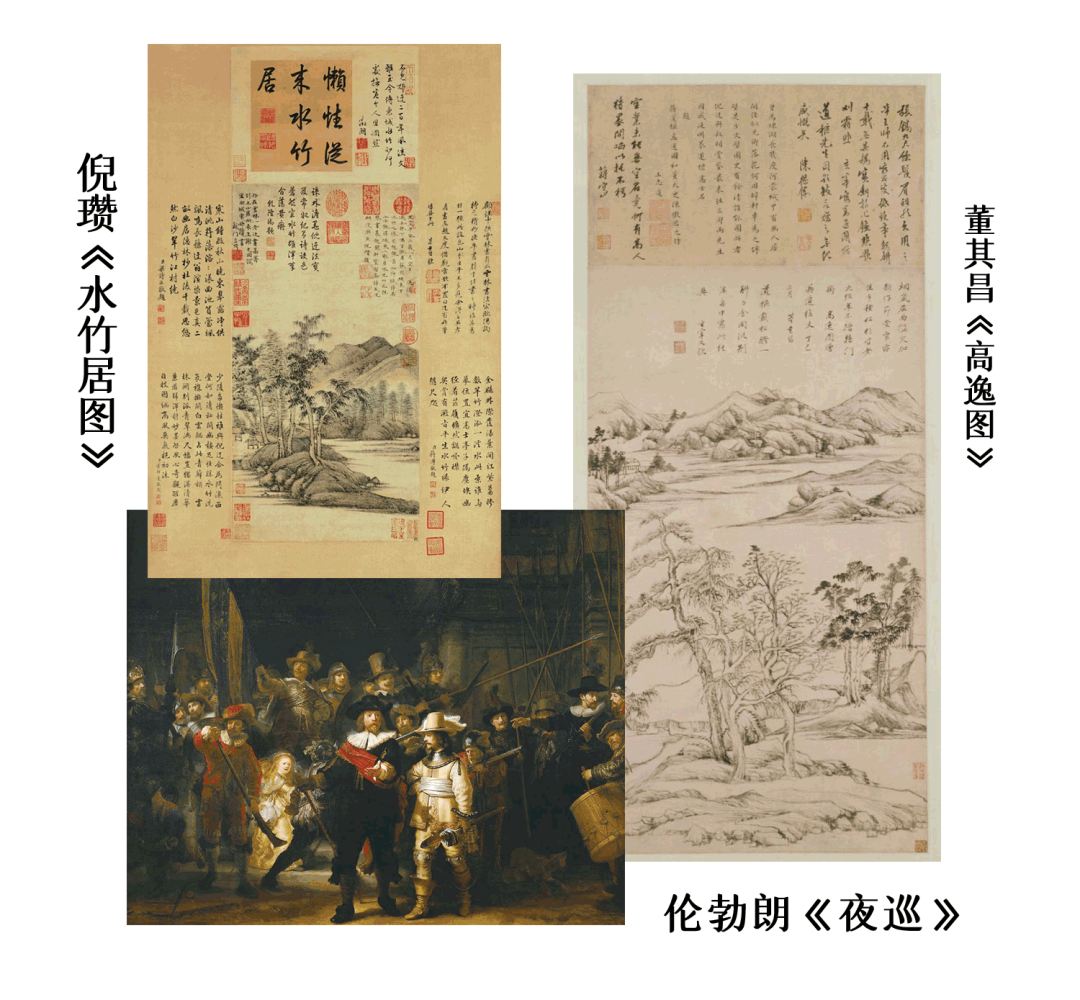
Tell an oil painting student, "Paint me an oil painting with the feeling of Ni Zan" — how could they do it?
But with AI I can tell it: give me 50% Ni Zan, plus 40% Dong Qichang, and a bit of Rembrandt. Give me Turner as an 80% base, then a little Wang Meng, then some Turner plus Huang Binhong.
AI's learning ability is definitely stronger than an art academy student's. I think excellent students should actively AI-ify themselves — expand their database, learn some of AI's working methods.
One keyword I keep coming back to is "mechanical ascension." The concept of mechanical ascension is using AI to expand the boundaries of human perception and the boundaries of human evolution.
If AI can truly express a world or artistic effects we couldn't previously imagine, it will expand our entire boundary — both cognitive and imaginative — and push human evolution one step further.
AI may be the most maliciously treated tool in human history. When computers first appeared, when PowerPoint first appeared, no one attacked them with such malice.
The reason most people are malicious toward AI is that they're treating it as a life form.
I think what humans fear is always one thing: the unknown.
A technology like AI, like a colossal monster, seems to come from nowhere, then can speak eloquently, saying things we can't say, articulating ideas we can't conceive. For such an intelligent colossal monster, human fear is entirely reasonable.
Let's neither demonize AI nor deify it.
AI lacks our subtle attunement to human nature.
It's better than us at coming up with ideas, but it can't do the heartfelt, moving, extremely delicate things. And AI's desire to create is something we give it.
I haven't yet seen an AI that wants to paint on its own. It can paint, but it doesn't want to paint.
For artists, AI is a new brush or creative tool — not something that will truly replace artists or change the essence of art.
As long as humans still have the idea to create art, such a wish, this essence will not change.
A hundred or two hundred years ago, the first photograph was taken by Niépce in 1822. When photography emerged, painters panicked, because part of their work was being taken away — landscape and portrait painters basically became unemployed.
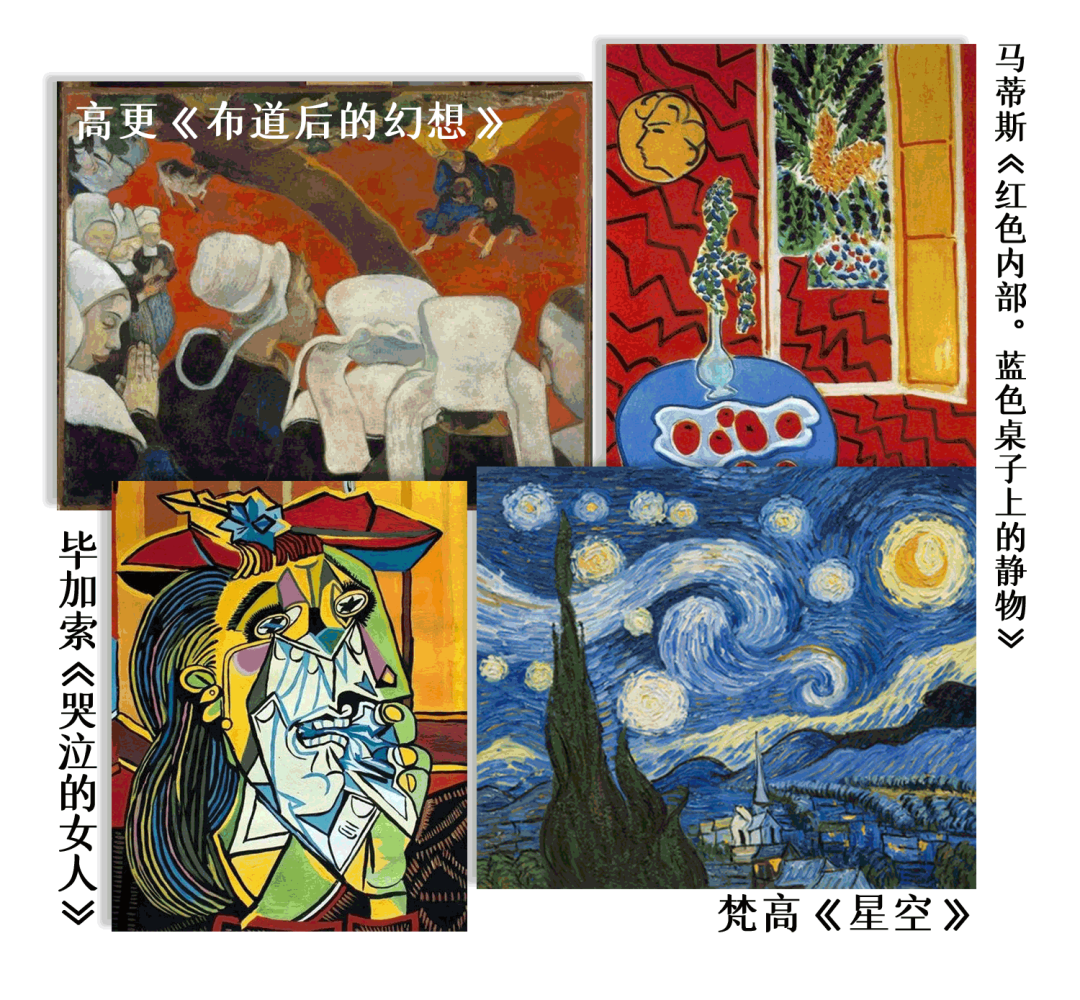
Many painters' first reaction was panic, the same panic we see facing AI today. The second type joined the enemy if they couldn't beat them, becoming photographers. The third type wanted to fight back, thinking how to paint something photography couldn't replace. Thus emerged Van Gogh, Gauguin, Picasso, Matisse. So photography was the main force driving the entire modernist painting movement.
I believe AI will play the same role today.
Artists' skepticism may simply be path dependence on tools.
An interesting perspective: every time a new art production tool appears, people question whether it can create art — photography, sound film — they were all questioned, gradually formed their own uniqueness and style, and ultimately created the remarkable art we have today.
From a curator's perspective, if one day so-called true AI art does emerge, is its audience us humans with our anthropocentrism? Is its exhibition a physical exhibition? It would definitely be different from what we humans think of as art.
I certainly wouldn't be qualified to curate such an exhibition.
I have a fairly typical example: in the 1970s there was an artist, Harold Cohen. He had a robot assistant named AARON. Cohen's own work was in abstract painting, and he fed his paintings to this robot. As creative partners, they worked together for two or three decades, producing many works.
I think we should quickly hand over to AI the unnecessary work, things that shouldn't have been done by humans in the first place, and free up time to think about what humans can do that AI can't replace.
Research is something that shouldn't be done by humans — AI does it better than you, and AI has better memory too.
If we understand AI as an artistic creation tool, then it's fundamentally no different from stone, brush, or microphone — all are tools for artistic creation. It can expand the possibilities and diversity of our creation.

If enough ordinary people, artists, or industry practitioners use this tool to explore, to make small-scale innovations, we will certainly discover genius-level works or genius-level artists emerging.
This is the product of an era, not the product of one person.
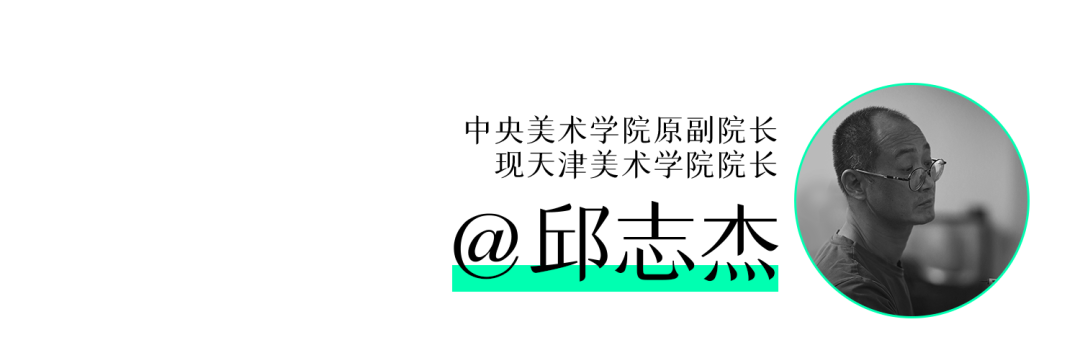
What we should strive for today is this: only when everyone in art academies has mastered AI will they paint the paintings of the AI era.
There will be two kinds of painting in the AI era: painting with AI, and painting against AI. Where AI exhausts its reach, we begin an enterprise called painting — this is how different artists will be born.
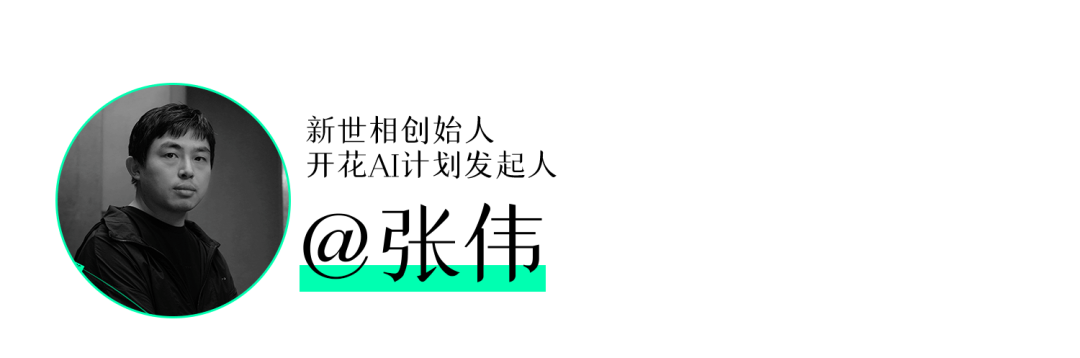
I've been thinking recently: with AI's emergence as a tool, where do the differences and uniqueness between people actually come from?
I think artistic standards will likely be built on uniqueness and difference.
Humans naturally pursue their own uniqueness, and at that point, art will happen again.
【Closing Notes】
It's hard to predict what future AI will bring to art.
The only certainty is that change will come, and it will grapple with existing creative methods and aesthetic standards in varying degrees.
It may be impact, it may be fusion, it may be mutual resistance — but this itself is part of art's iteration and development.
American humanist technology and philosophy scholar Lewis Mumford said that technology is but one element in human culture; to set demands and guarantee their fulfillment is the spiritual task of humanity.
The prevalence of AI is not necessarily a process of obscuring or blurring "human spiritual uniqueness." To some extent, it can also be a redefinition and refocusing of "human spirit" — because however it changes, the subjectivity of creation and definition remains with humans themselves.
AI's entry into the scene actually forces us to actively think: What is art? What is human uniqueness?
We need to think, we need to voice our thoughts, we need to find that greatest common denominator. This is also why we want to continuously build alliances with humans from different fields and initiate such discussions.
For this discussion, we also invited AI technology company MiniMax (WeChat: MiniMax稀宇科技). As a leading AI developer, they understand AI better and know better how we should make good use of it.
MiniMax has independently developed general large models across different modalities, and on this foundation launched productivity tool Hailuo AI, immersive AI content community STARFIELD, and other native applications, while continuously providing secure, flexible, and reliable API services to enterprises and developers through its open platform.
Every advance of technology pushes us to ask and reflect: What kind of future are humans heading toward?
We believe that richer dimensions of human spirit will be discovered through such questioning.
Evening Prayer:
This is all because AI is just getting started. Anyone entering this industry now could quickly become a pioneer. Whatever kind of AI system you develop, as long as you use that system to do some work, it counts as breaking new ground.
— Kevin Kelly, The Next 5000 Days
The source of creativity,
is always the human itself.
↓↓↓