"If you bloom, butterflies will come" — How Hillhouse and ZhenFund Partners See New AI Startup Opportunities

If you bloom, butterflies will come.
🚦This article is based on a panel discussion from Crossing's March AI Hacker House salon, featuring Koji, Betty Wang (Partner at GL Ventures), and Yuan Liu (Partner at ZhenFund).
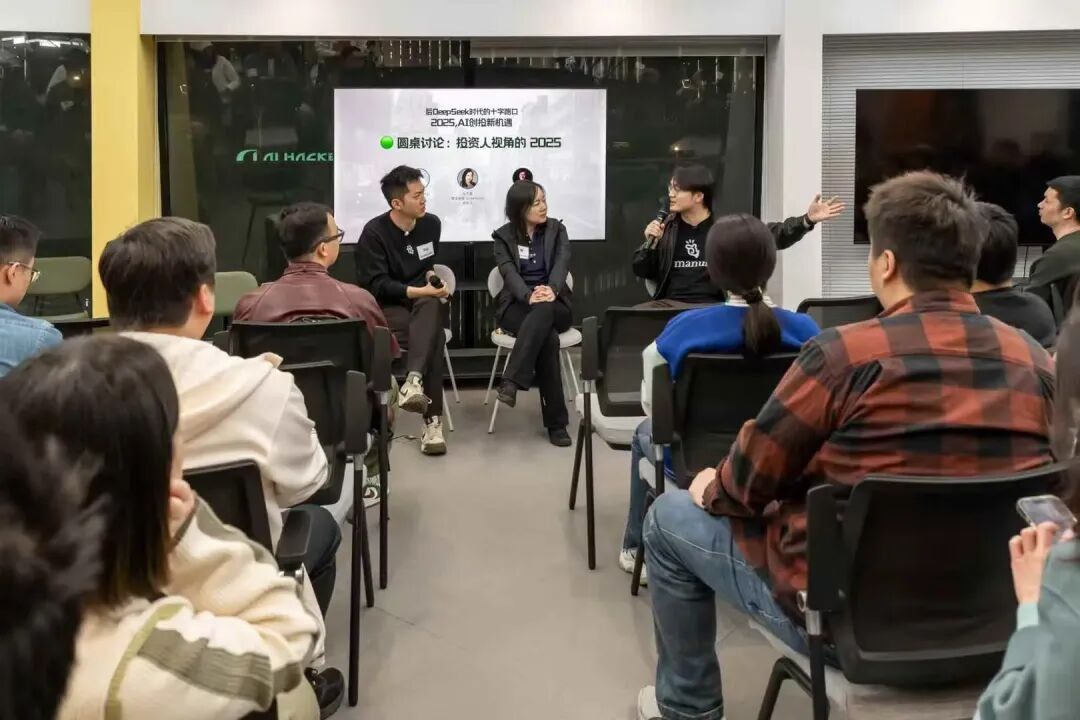
From left to right: Koji, Betty Wang (Partner at GL Ventures), and Yuan Liu (Partner at ZhenFund)
🚥 Koji:
To start, I'd like to ask you both a lighthearted question. Over the past year, what's the most out-there project you've come across?
👩🏻 Betty:
In June last year, we invested in an overseas project called Whatsgood[1].
Something the founder said really stuck with me: "Should AI social be about real people chatting with virtual characters, or should it make conversations between real people more interesting?" He also said, "If someone is reduced to chatting with a virtual character, how sad must their real life be? There are so many real people around us every day — can't they make our lives better?"
The question of "how should we think about AI social" is fascinating.
👦🏻 Yuan Liu:
If we're talking about sheer imagination and creativity, two projects come to mind — one we invested in, and one we didn't.
The first is Flaneur, a project from a Jike hackathon. Wherever you're running, it generates an audio scene based on your current location, weaving in surrounding scenery and historical stories — similar to the interaction concept behind Touring Soul[2].
It's a deeply romantic idea. "It's like, even though you're grinding away at work, the sounds coming through your headphones give you this sense of presence, beauty, and healing." This kind of idea is rare.
As an investor, it's hard to come across a project that only one person could have dreamed up, right? It might not be technically difficult to build, but it's so fresh and so romantic — that's what's hard.
The second is Ark Infinite[3], a robotics company.
This was built by undergraduates from Harbin Institute of Technology and other universities — no outside funding. They built a robotic arm that the world's most elite people are now using. For example, Physical Intelligence[4], which is backed by OpenAI.
There's a pretty funny story: when I asked him what he was building, he said "Robots are just the beginning. In the future, we're going to build spaceships." I took it as a joke, so I laughed.
But when I laughed, I noticed he wasn't laughing. Then it got a little awkward. The founder genuinely believed this was just the beginning.
In my career, I haven't heard many companies say they're going to build spaceships in the future.
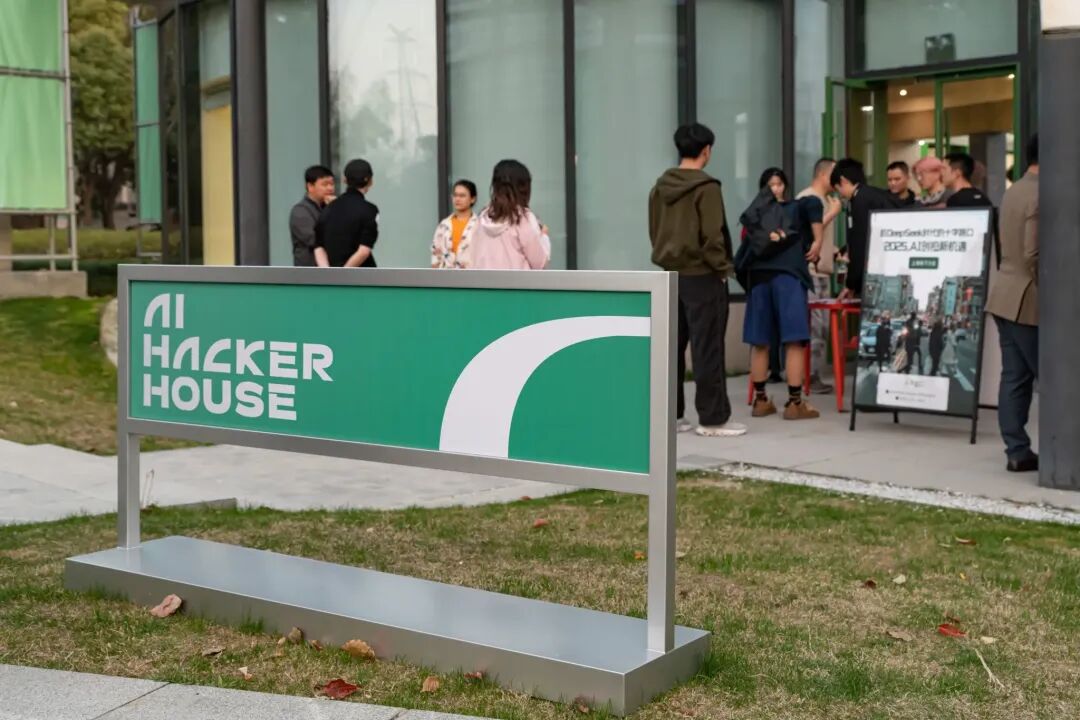
Crossing's March salon at AI Hacker House, located in Shanghai's Caohejing Development Zone
🚥 Koji:
You mentioned Touring Soul just now. I remember they had another wildly creative product called Madaha Translate[5]. In its AI-assisted translation design, it deliberately leaves some English words untranslated, letting you read in a mixed Chinese-English style that creates a more suitable context for language learners. I found it incredibly creative.
👦🏻 Yuan Liu:
As an investor, thinking of a project as "something nobody has ever done before" is actually an extremely limited standard. I don't know how many Betty can think of, but when I say "nobody has done this," I mean "I've only seen this one person have this idea — not in terms of engineering implementation, but the product idea itself could only have come from them."
👩🏻 Betty:
I remember one founder told me, "I'm going to build something that if I don't do it, no one else in this world will ever build in my lifetime."
The example he gave was Snap[6].
🚥 Koji:
True. I remember going to IKEA with my parents and telling them, "Don't look down on IKEA." If IKEA's founder hadn't existed, we'd have no IKEA to shop at. But if MINISO didn't exist, we could still go to KKV.
🚥 Koji:
Back to business. After DeepSeek's release, some people said AI's second half has begun. What changes are you seeing on the front lines?
👩🏻 Betty:
After DeepSeek came out, everything changed. Entrepreneurs had a spark in their eyes. Internally, we debated: is it "believe so you can see," or "see so you can believe"?
I think DeepSeek enabled us to move from "seeing" to "believing."
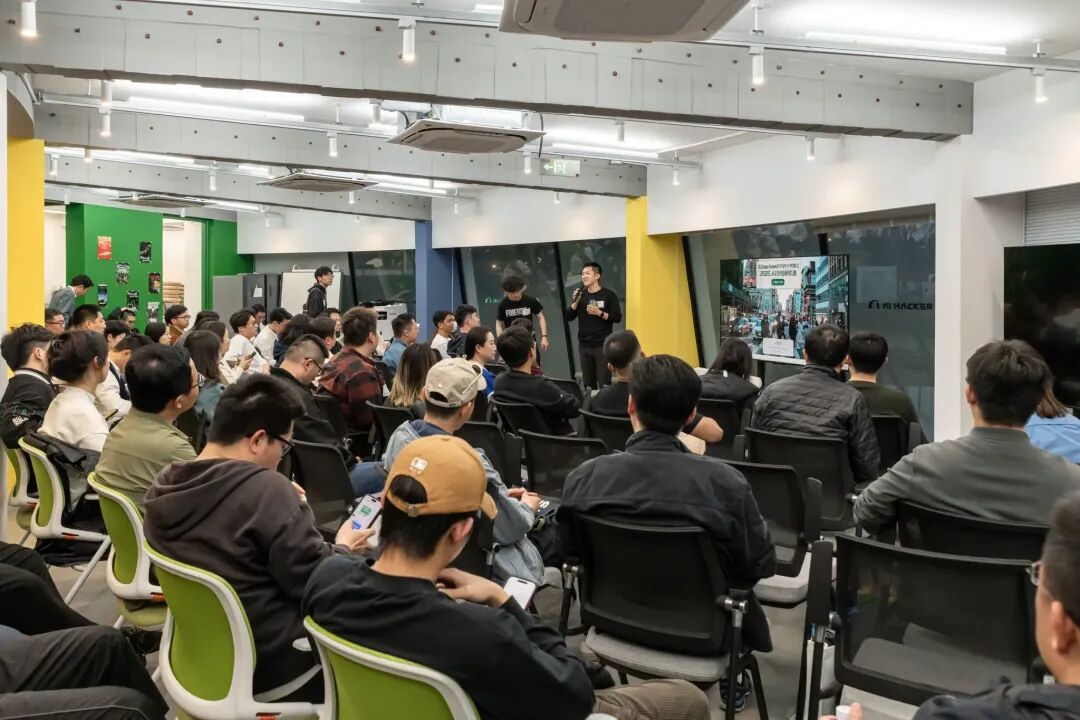
Crossing's March salon at AI Hacker House, located in Shanghai's Caohejing Development Zone
👦🏻 Yuan Liu:
DeepSeek, for us — even though it had no outside investors — was a pleasant surprise that delivered a massive shock to the industry. DeepSeek's emergence brought new thinking to model architecture at a fundamental level. Large models aren't new; we've invested in many related companies, like Moonshot AI. But in such a competitive industry, to pour such enormous resources into something so pure — that was eye-opening.
DeepSeek's emergence brought new thinking to model architecture.
Someone this wealthy, doing something this selfless with no regard for returns — that's rare in the Chinese startup history I've witnessed.
Their internal organization is flat, and their task allocation methods are novel. From the surprising process to the surprising outcome, DeepSeek dramatically boosted our confidence in Chinese AI. We didn't expect a Chinese company could shake Silicon Valley through open source.
🚥 Koji:
After DeepSeek's release, have your investment directions changed this year? If so, what's the new direction?
👦🏻 Yuan Liu:
We've never been a top-down, blueprint-driven firm that defines sectors. By the time a trend forms, it's too late to invest.
Great entrepreneurs aren't first in a sector — they create the sector.
For example, after Zhaogang[8] went public, people started researching B2B vertical e-commerce.
Of ZhenFund's investments last year, only a minority were pure AI application companies. Several were in robotics, and there was even a consumer goods company making hardshell jackets — so we invest in everything.
This year, we invested in a project by several undergraduates from Huazhong University of Science and Technology, similar to when Red Xiao started his company in 2016. Their office is tiny, right across from Butterfly Effect[10]. The current product definitely doesn't work yet; they'll probably need to pivot. But we chose to invest anyway.
At the end of last year, we also invested in an AI novel-generation product, encouraging the team to explore boldly and not fear future pivots.
👩🏻 Betty:
At Hillhouse, we're also looking at very early-stage projects. Over the past two years, we've made many seed-stage investments. We share a consensus with ZhenFund: bet on young, exceptional entrepreneurs. This year, we've found that founder quality and velocity have improved five to tenfold compared to before — that's been wonderful. We'll increase the weight we give to "the human factor," especially those who "understand technology's development and boundaries, and can deeply grasp how technology and product couple."
From an industry development perspective, foundation models are maturing. We need to think: do we invest in sectors where "the stronger the model, the stronger I get," or where "the stronger the model, the less relevant I become"? Behind this lies the fundamental question of how product and technology actually couple.
As we often say internally: be careful not to "plant flowers on the road where trucks have already run over." Work with founders to figure out where flowers should actually grow.
🚥 Koji:
Today, some entrepreneurs take a "bootstrap" approach, not planning to accept venture capital from day one. For example, one person here built an app independently, making nearly $1 million a month, and explicitly said they won't raise funding. How do you view this new type of entrepreneur? Starting a company without fundraising no longer seems like the default choice, as it was a few years ago. When it comes to raising or not raising, what advice do you have on capitalization?
👩🏻 Betty:
With AI developing so rapidly this year, the "one-person unicorn" is rising, team sizes are shrinking, and thanks to improved infrastructure, people no longer need to burn crazy amounts of money on user acquisition.
Generally, an investor's role is "selling money," but if entrepreneurs can create wealth themselves, our value lies in providing connections. In the future, funds won't just invest money — they'll need to create value through human connection, offering founders brainstorming and inspiration, leveraging our global asset allocation (for example, we've recently been exploring the Japanese market and found many "dimension-reduction strike" opportunities) to open new perspectives, industries, and audiences they didn't know about.
👦🏻 Yuan Liu:
Not raising funding is also a perfectly fine choice. First, everyone has different value coordinates. Taking VC money means your exit options are basically IPO or acquisition — and those are the good exits.
VC funding has always been the most expensive kind of financing. The expense doesn't show when the company is struggling, but it does when the company is thriving. It's symmetrical: when things are bad, you don't have to pay it back, but when things are good, those millions or tens of millions are actually quite costly. But not every entrepreneur wants to build a public company. Many companies, even at modest scale, can bring founders happiness.
Commerce is an ancient institution; VC is relatively new. A healthy business model should be self-sustaining and meet customer needs. And we already like to invest in people with sharp instincts for observing and satisfying user needs. So VC money is just an accelerator — it's buying time. If a founder doesn't think they need funding, they can be quite happy. A few people splitting some money, or traveling the world — that's great.
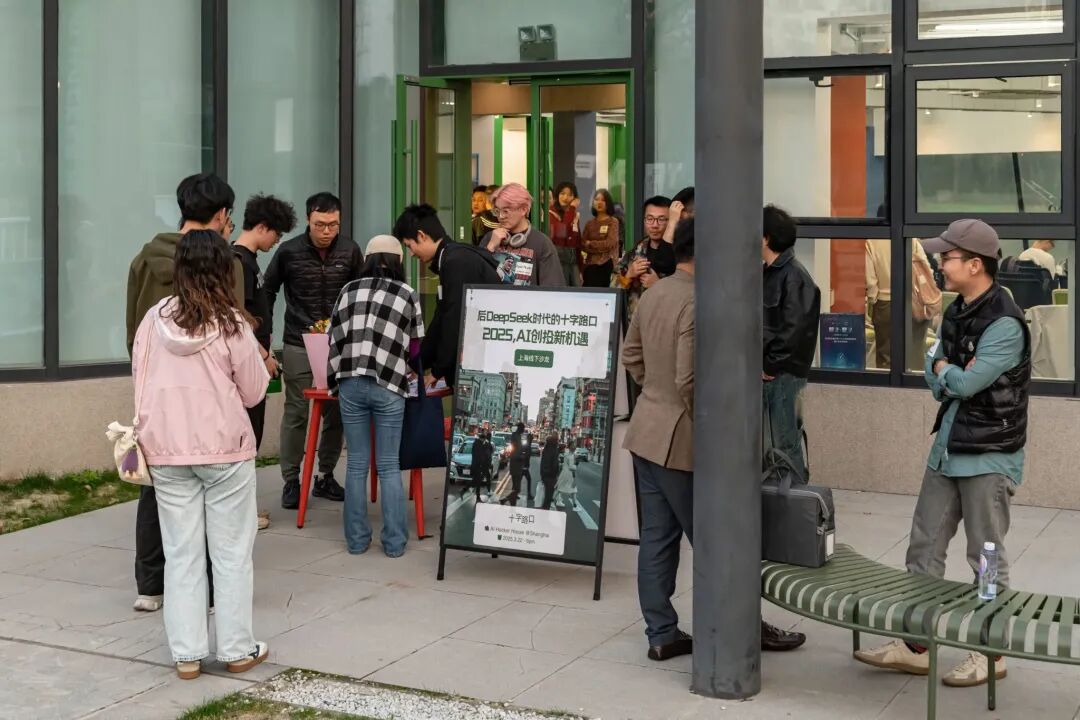
Crossing's March salon at AI Hacker House, located in Shanghai's Caohejing Development Zone
🚥 Koji:
It seems you two share quite a bit of common ground. Betty, could you expand on these "dimension-reduction strike" opportunities in Japan?
👩🏻 Betty:
Japan is a hard-to-attack, easy-to-defend market. The barrier to entry is high — culturally and linguistically — but competition isn't actually that fierce. We have an e-commerce company that sells small appliances on Amazon Japan and has been #1 for years.
🚥 Koji:
I'd like to ask a question that entrepreneurs here are very concerned about: after DeepSeek's release, what new entrepreneurial opportunities has it unlocked?
👩🏻 Betty:
Everyone's talking about AI agents. DeepSeek proved that infrastructure-level model capabilities will keep improving. The next step is converting that capability into general-purpose abilities in specific applications, meeting vertical and diverse needs. This requires a role that understands, breaks down, and delegates tasks, then solves them in a distributed way.
We believe that regardless of whether Manus exists or not, AI agents' massive potential in vertical domains is being positively released. This year and for the next two to three years, whether it's big tech, mid-sized companies, or startups, there'll be much to look forward to in various vertical agent applications.
👦🏻 Yuan Liu:
Models are powerful, but someone still needs to unleash that model intelligence for the masses — that's the meaning of product.
🚥 Koji:
OK, Yuan, please continue — everyone is still very interested in the Manus story.
👦🏻 Yuan Liu:
Red Xiao, Manus's founder — we first met at a hackathon in 2016.
We've invested in his entrepreneurial projects four times. His team has been fighting together for nine years. We're now investing in those young HUST teams working on the fishing app for the same reason: we believe starting a company very early is extremely important. Going through the process — positive and negative feedback, assembling a team, setting direction, making trade-offs, fundraising — even a senior position at a big tech company can't give you this kind of entrepreneurial experience.
His first startup, we invested 1 million yuan. Red Xiao said on a podcast, "At the time, he felt 1 million yuan was more money than he could ever spend in his lifetime — an enormous sum." To this day, we still choose to invest in very young entrepreneurs, with the same logic: we believe starting to build companies early is crucial. The entrepreneurial process lets you rapidly accumulate experience through positive and negative feedback: assembling a team, setting direction, making trade-offs, fundraising, and so on. People in senior positions at big companies can rarely gain this kind of experience.
After Red Xiao's first company was sold, we started persuading him to start again in 2021. In 2022, we invested in his Benchling-inspired gene editing company — actually an idea we gave him. When the product was nearly finished, he saw GPT-3 and, less than 20 days before ChatGPT's launch, started building Monica[11]. He secretly posted on Fanfou that this was the biggest AGI opportunity in history. So they decided not to release the Benchling-inspired product, even though it was nearly complete. At the time, we all thought not releasing it was a brave and wise decision.
When Monica reached about 3,000 users, the Chrome extension ChatGPT for Google that they had acquired was also growing rapidly, so we invested a second time in his second startup — this was our third investment in him.
Then, as Monica grew from 3,000 to several million users, they went through a very bumpy fundraising process, but we still chose to put in more money — our fourth investment in him.
Each time, his state was very different.
I feel like I witnessed a boy become a man. Manus had a very long prelude before launch — it's quite moving.
👩🏻 Betty:
Following up on that, let me talk about how our industry communicates with entrepreneurs. Everyone thinks investors love asking "soul-searching" questions, but I think one of the happiest things about our industry is that investors can freely "gossip."
🚥 Koji:
What's your favorite "gossip" question?
👩🏻 Betty:
My favorite is: "How did you and your partner get married? Why did you choose your partner?"
I ask founders about their relationship history to understand the values behind their choice of life partner, because this likely mirrors the values behind their business decisions. I also ask what unconventional things they've done, what "improper" things they've tried. Even running small businesses in college, being a arbitrageur — it proves you've tested yourself in the business world. From these experiences, you can find founders with wild imagination, willingness to try, unique thinking, and courage.
🚥 Koji:
Final question — there are many global-market-oriented entrepreneurs here today. How do you advise them to plan their fundraising path?
👩🏻 Betty:
In our actual conversations with entrepreneurs today, we feel "the world is flat" — we don't pay much attention to whether a project is domestic or overseas. Because we firmly believe technology is the primary productive force, and what matters is whether the product works.
In fundraising, efficiency and speed matter. We often care about "trading time for space" strategies, and the window for trading time for space is always limited. For your first fundraise, finding people who trust you most and support you unconditionally is most important. Whether it's users, team members, or investors, their support is crucial for solving the "time for space" problem.
👦🏻 Yuan Liu:
Like Betty said, we think going global is perfectly normal, a natural progression.
Expanding into global markets is a natural process. Just as Israeli entrepreneurs look at global markets from day one because their country is small. China's market is large, which is why we even have the distinction between domestic and overseas markets.
Chinese teams have produced pioneers like Shein and Temu in the extremely challenging fast-fashion space, with capabilities that competitors struggle to match. TikTok's global dominance in short video further proves that Chinese teams have unlimited possibilities in overseas markets.
On fundraising: if your product is good enough, with strong product-market fit, you can attract mainstream VC firms, whether Chinese or American.
For entrepreneurs, first build a great product, make money, then think about fundraising. As web novels would put it: "If you bloom, butterflies will come."

🙌
Finally, thank you all for your enthusiastic participation in this salon!
We attracted 300 registrations from AI practitioners. Due to limited venue capacity, we could only accommodate some of those who signed up.
Good news: we're already planning our next event!
Also at Shanghai AI Hacker House, scheduled for Sunday evening, April 20.
Confirmed guests include:
- Tianfan Wang, Partner at BAI Capital
- Can Zhang, Managing Director at Linear Capital
- Tianle, Founder/CEO of Aiyu AI (successful serial entrepreneur, with 3 startups and 2 acquisitions in the past, firmly believes AI will change the world)
- (More guests to be announced...)
The event is free. Please scan the QR code on the poster below to register in advance.
As AI Hacker House can accommodate a maximum of 100 participants, we will prioritize AI entrepreneurs and founding team members, but warmly welcome everyone who is eager to start their own entrepreneurial journey.



References
[1] Whatsgood: https://www.whatsgood.im/
[2] Touring Soul: https://www.touringsoul.com/app
[3] Ark Infinite: https://www.arx-x.com/?product/
[4] Physical Intelligence: https://www.physicalintelligence.company/
[5] Madaha Translate: https://madaha-translate.com/
[6] Snap: https://www.snap.com/?lang=zh-Hans
[7] MiniMax: https://api.minimax.chat/
[8] Zhaogang: https://home.zhaogang.com/
[9] Butterfly Effect: https://monica.cn/
[10] Butterfly Effect: https://monica.cn/
[11] Monica: https://microsoftedge.microsoft.com/addons/detail/monica-chatgpt4-deepse/fhimbbbmdjiifimnepkibjfjbppnjble