What Should We Actually Learn in the Age of AI? | A Conversation with Yu Hong: Three Timeless Abilities
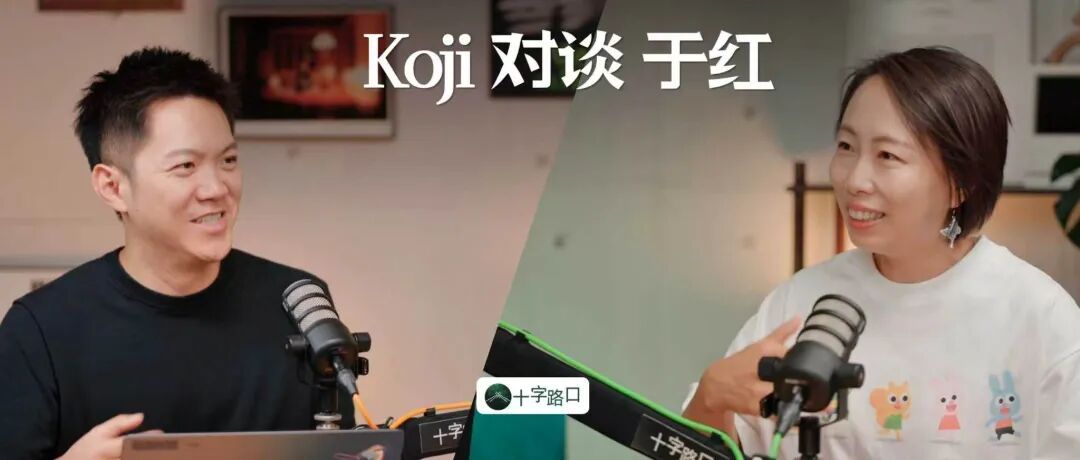
👦🏻 Podcast Interview: Koji
🥷 Edited by: Crossing
🧑🎨 Layout: Zeoooo

🚥 Two years ago, I had planned to record a podcast with Yu Hong about AI investing. At the time, she was a partner at Meituan Longzhu, leading her team to go all in on AI.
Two years later, this conversation finally happened. But she had already left the VC industry she'd spent 15 years in, founded "Tudongdong," and thrown herself into children's SEL education (Social and Emotional Learning).
Behind this pivot lies a question that extends far beyond parents: When AI makes knowledge effortlessly accessible, what exactly do we still need to cultivate? When facing career, relationships, and life choices, how do we understand ourselves, empathize with others, and take positive action amid uncertainty?
I think this is something everyone continually grapples with. On one hand, we all want freedom, joy, and space to explore ourselves; on the other, we worry: if we don't do more today, will we lose even more options in the future?
In this episode, Yu Hong and I talk from education to investing, from children's growth to adult choices, trying to answer anew: in the age of AI, what are the truly timeless abilities?
Listen on WeChat:
Listen on Xiaoyuzhou:

🎬 The video podcast is also available on @Koji's WeChat Channels, Xiaohongshu, Bilibili, YouTube, and other platforms
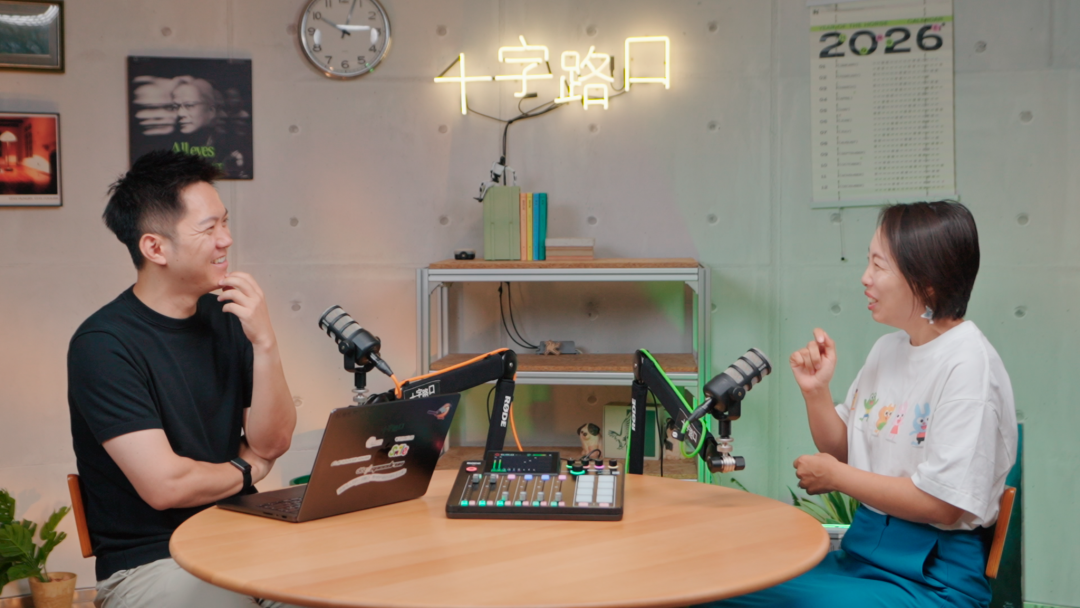
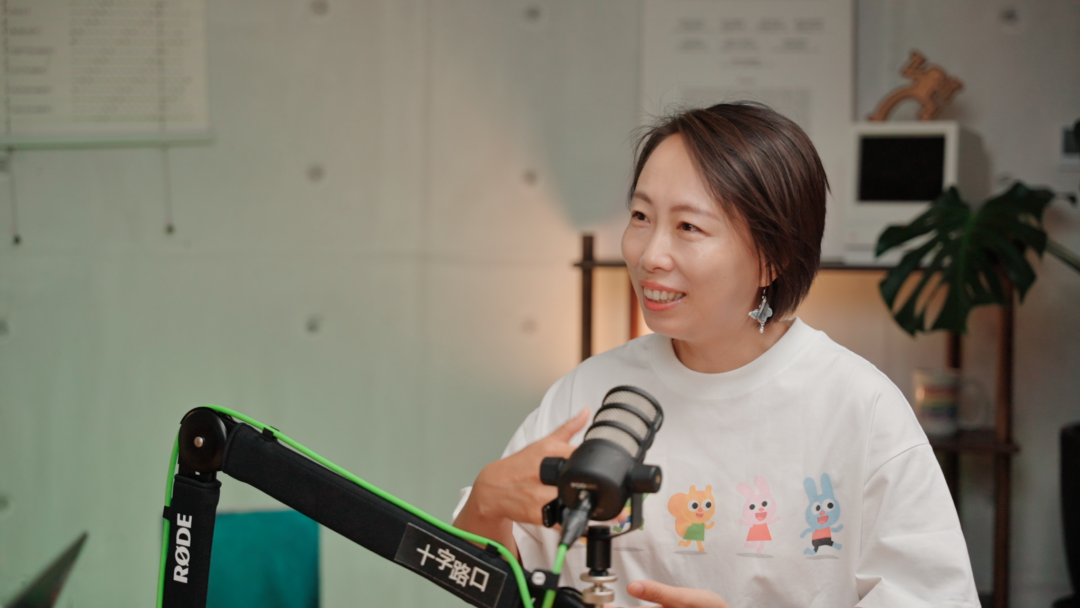
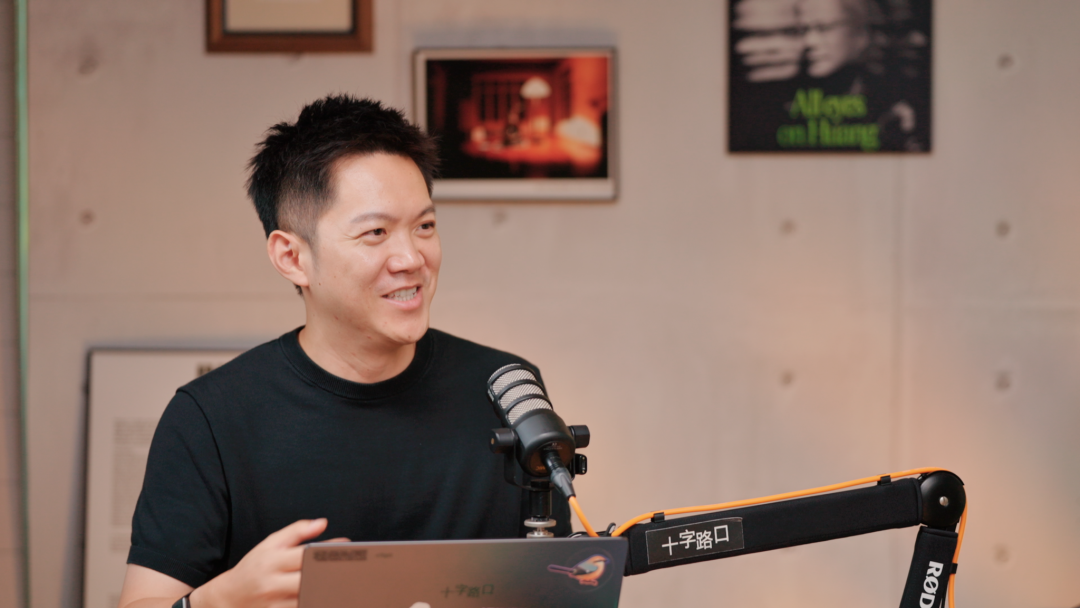
Rapid-Fire Q&A
👦🏻 Koji
Let's start with the traditional rapid-fire round to help everyone get to know you. How old are you?
👩🏻 Yu Hong
👦🏻 Koji
Educational background?
👩🏻 Yu Hong
Computer Science at Zhejiang University.
👦🏻 Koji
Your MBTI and zodiac sign?
👩🏻 Yu Hong
ENTJ, with J and P relatively balanced. Aries. I'm also from Northeast China — a Northeastern Aries.
👦🏻 Koji
I can definitely feel that overflowing energy. In one sentence, introduce your current company and product.
👩🏻 Yu Hong
Our product is called Tudongdong SEL — China's first online SEL education product. SEL stands for Social Emotional Learning.
It mainly teaches children how to understand themselves, how to socialize with others, and how to adapt to society. The United Nations has done statistics on non-academic abilities, and SEL accounts for as much as two-thirds. Abroad, SEL has nearly 30 years of teaching history — a very scientific academic system with visible growth results.
👦🏻 Koji
We can dive deeper into this later. My child is actually learning SEL with Tudongdong right now — pretty interesting stuff. Current team size?
👩🏻 Yu Hong
12 people total.
👦🏻 Koji
Quick rundown of your pre-entrepreneurship experience?
👩🏻 Yu Hong
From graduation in 2010 to 2025 — a full 15 years in investing. My last stint was as managing partner at Meituan Longzhu; before that, I was at GGV Capital and China Renaissance.
👦🏻 Koji
You mentioned our two-year promise. When we agreed to record this podcast two years ago, you were still all in on AI, and I thought we'd chat about AI applications. Two years later, we finally sit down to record, and you've completely left VC and AI. What happened in between?
👩🏻 Yu Hong
This wasn't an impulsive decision. In college, I established my life's mission — education. Shaped by personal experience, I've always believed education is the most important thing in the world, bar none.
Coincidentally, around 2007, alumnus Yongping Duan gave an interview at Zhejiang University, and I happened to be in the audience and got my question recorded. I expressed my passion for philanthropy and education even then, but I chose to build my career and influence first.
At Meituan Longzhu, my boss once asked about my career plans, and I was frank: investing was my mid-term plan, but my long-term mission was education. For a long time, though, I'd lie awake at night wondering when this mission would materialize — whether I'd ever get the chance.
Then the AI wave arrived. I saw tremendous opportunity and disruption, and decided to lead my team all in on AI, dropping new energy and SaaS. But through deep engagement with AI, my calling toward education only grew stronger. I genuinely felt that AI would transform education beyond recognition.
One day in 2023, I met an elder who asked about my life's mission. I answered "education." After saying it, I burst into tears — no exaggeration — and said through my crying: "I'm not even feeling emotional inside, why can't I stop crying?" The elder told me: perhaps the time has come.
I went home and told my husband I was going into education. His heart was heavy — after over a decade together, he knew this dream of mine. He thought and said: "It's time. You should strive for yourself too, not just for this family."
By 2024, I felt I had to make the move. After figuring out the direction, I assembled my current two-person partnership team and formally entered education.
What Should Children Learn in the AI Era?
👦🏻 Koji
Seeing ChatGPT, everyone asks: what should kids learn in the future? AI seems so omniscient and omnipotent — I'm sure you've thought deeply about this. So my first very direct question today: what exactly should children learn in the AI era? And how?
👩🏻 Yu Hong
There's a concept called the "Lindy effect": the longer something has already existed, the longer it's likely to continue existing. Education often says "respond to change with constancy." Facing the massive shifts of the AI era, what we need to learn are precisely those constant abilities.
What exactly is constant? Through the Lindy effect lens, looking at Chinese, math, English, and programming — Chinese has existed the longest, followed by English as a language, then math, with programming being the most recent.
From today's vantage point, many people easily reach a conclusion: programming probably doesn't need to be learned, followed by math, English, and Chinese. But what I'd rather share isn't the conclusion, but the thinking method: when judging how much time and energy to invest in a skill, we need more fundamental logic.
From this perspective, Chinese is extremely important — it's not just knowledge, but a capability that determines how you think and how you perceive the world. Going further, even writing prompts and interacting with AI in the future will critically depend on Chinese language ability.
Modern schooling as we know it has only existed for 200 years. What were people learning 200 years ago? Spending huge amounts of time learning how to be human. In today's terms, learning social skills — so skills, knowledge, and even life attitudes related to interpersonal interaction will become increasingly important in the AI era.
Here's another mental framework — "ordinal positioning." "Order" refers to structure; "position" refers to where you stand within it. Many people precisely neglect their own position when thinking through problems.
I just made a bold claim that programming might not need to be learned. But if a child is exceptionally gifted, with an IQ above 150, destined to research rockets and contribute to the nation — of course they need to spend massive time on math and programming fundamentals. This isn't an absolute formula. For ordinary children, whether certain domains merit such heavy investment deserves a question mark. The proportion of energy allocation matters far more than a simplistic "should I learn this or not."
👦🏻 Koji
So it's still about teaching to the individual?
👩🏻 Yu Hong
Yes, personalized education on one hand, but also returning to fundamental logic — don't overlook those truly crucial capabilities.
Do We Still Need to Painstakingly Study English?
👦🏻 Koji
Another direct question: in the AI era, do children still need to learn English?
👩🏻 Yu Hong
I've thought about this for a long time. Fundamentally, it's still a question of how much time to spend. Our post-80s generation invested enormous time in English, but in the new era, that definitely won't be necessary — perhaps just relatively little time to reach a 60- or 80-point level for daily use is enough.
Going further, marginal returns diminish sharply. Advanced language needs can be entirely handed to AI. But at the foundational level — reading ordinary articles, basic daily communication — English as a simple communication tool still merits appropriate investment.
👦🏻 Koji
You mentioned Chinese has been important since ancient times and will remain so. But in the AI era, will learning methods differ?
👩🏻 Yu Hong
Whenever new tools emerge, learning methods are bound to change dramatically.
For example, my daughter is learning to recognize characters, and I felt her school's Chinese curriculum wasn't intensive enough, so I used Vibe Coding to build her a character-learning app myself. The incentive mechanism is a dress-up game featuring a little girl she loves — she earns points for recognizing characters that can be exchanged for clothes and hairstyles.
Methods and tools have indeed changed. How exactly to implement them depends partly on what educational resources society provides, and partly on the child's own interests.
👦🏻 Koji
Interesting. So this app gives her points for learning each character, and she uses those points to change outfits and skins for the doll?
👩🏻 Yu Hong
Right. Since she doesn't attend public school, her learning patience is relatively limited, so I set each session to five minutes. All of this is personalized learning tailored to my observations of her.
For instance, English has mature leveled reading systems, but leveled reading materials and frameworks for Chinese are actually quite scarce. In the AI era, we might easily be able to provide painless, leveled Chinese reading for children — there's enormous future demand here, because making the learning process painless and joyful is absolutely critical.
👦🏻 Koji
Tutudong currently focuses on SEL. How did you arrive at this choice? Since Chinese is so important, and math remains important for many kids too, why did your team ultimately choose SEL?
👩🏻 Yu Hong
Traditional subjects like Chinese, math, and physics have already been studied by countless brilliant minds. I used to invest in online education — companies like Zuoyebang, Yuanfudao, and Huohua Siwei employ thousands or even tens of thousands of people who spend every day figuring out how to teach traditional subjects better. The market simply doesn't need our small team to do this too.
But what we saw was that the lack of social-emotional competence in China today has become a very serious societal problem. This is the real pain point our team wants to solve — it's extremely important, yet no one is addressing it.
How Do We Learn to Become Happy People?
👦🏻 Koji
When people hear "social-emotional learning," their first reaction is often teaching kids to be emotionally stable — not getting angry or anxious all the time. What exactly does SEL teach? Surely it's not just emotional stability?
👩🏻 Yu Hong
SEL is actually a very complete system. First is the relationship with oneself: self-awareness and emotional competence. The emotional stability you mentioned is just a small part of emotional competence — maybe 20%.
The second major module is relationships with others: how to socialize, how to resolve conflicts. The third module is relationship with the world: how to make responsible decisions, how to maintain a positive mindset, and how to learn. In Tutudong's curriculum framework, we've organized this into six dimensions and twelve competencies. These are precisely the foundational literacies most needed in the AI era.
Returning to emotional competence: many people think "emotional stability" or even "never showing joy or anger" is a compliment, but true emotional competence isn't like this. In parenting circles, people often talk about "highly sensitive children" — kids with intense emotional fluctuations and sharper perception of their surroundings. These children especially need to develop emotional competence.
What is good emotional competence? The core is acceptance. People habitually divide emotions into positive and negative, thinking negative emotions should be avoided. But emotions are simply signals — mechanisms evolved over hundreds of thousands of years to protect us. If you treat emotions not as signals but as toxic tumors to be eliminated, highly sensitive children fall into internal conflict: "Why do I have so many negative emotions? Is something wrong with me?" This leads to self-attack.
So the first and most important step in good emotional competence is accepting emotions; only then comes recognizing emotions; finally, regulating emotions. Without acceptance as the foundation, emotional regulation is a castle in the air — this is the fundamental reason why many emotional regulation methods on the market ultimately fail.
👦🏻 Koji
For children who've taken Tutudong's SEL emotional courses, what specific changes can parents observe?
👩🏻 Yu Hong
The changes are very clear: First, the duration of tantrums shortens. Don't ever expect children to stop having tantrums entirely — that would indicate a psychological problem. They still have emotions, but they become aware of them and regulate them faster. Second, the frequency of tantrums decreases. Most importantly, their ability to identify and understand emotions improves dramatically.
There's a fascinating case: one mother反馈说,孩子在课上学了"先暂停,再呼吸"的技巧,我们教了一个手势叫"小手放肚皮"。结果在家里,孩子一旦察觉到父母要生气,就会把手放在大人的肚皮上说:"小手放肚皮"。这位妈妈说,自从有了这个互动,爸爸在家里发脾气的时间大幅减少了。
👦🏻 Koji
You mentioned earlier that emotional processing has several stages, with acceptance as the first step. This word sounds both familiar and strange — what exactly does it mean to accept your own emotions? Many people probably can't even tell whether they've truly accepted them or not.
👩🏻 Yu Hong
From our perspective, emotional acceptance first requires establishing this understanding: emotions are physiological responses evolved over hundreds of thousands of years for human survival. Just as you don't question "why am I hungry, I shouldn't be hungry" when your stomach growls, emotions are simply bodily signals.
Why are emotions evolved? In ancient times, when you went out hunting and encountered a large beast, you'd feel fear. That fear triggered fight, freeze, or flight instincts that saved your life.
Happiness is equally significant. People often think happiness merely feels good, but it's actually releasing a "you want to approach" signal. When you're happy with someone, you want to spend more time with them; when you're happy doing something, you want to do it repeatedly. Discovering a child's talents isn't just about what they're good at — many smart people can do anything well. But what truly constitutes meaning in life is definitely what brings them joy.
Fear warns of danger ahead. Anger signals that boundaries have been violated or injustice encountered. Sadness means something important — a person, event, or emotional connection — has been impacted. Whether good or bad, emotions are telling you: something happened, and this is your genuine response to it.
Recently I took my child camping, and an adult companion and his child were both afraid of bugs. He told me he'd been afraid of bugs since childhood, but adults always scolded him: "What is there to be afraid of?" This prevented him from accepting his fear. Every time he felt afraid, he couldn't control it and also felt ashamed, which eventually bred humiliation.
Later he studied psychology and understood that some people are simply born afraid of bugs, with intensely strong emotional responses. When he truly accepted this fear, he learned to coexist with it instead. He said: "I still get scared when I see bugs while camping, but I'm proud of myself for still coming camping with everyone despite being so afraid."
The situation itself didn't change. The emotion didn't change. But because of his attitude of acceptance, his entire state of living became different.
For children, the world is full of unknowns, and there are many kinds of emotions. For example, young children are afraid of thunder and lightning because they don't know it's a natural phenomenon. When a child is frightened, if you tell them "it's okay, being scared is perfectly normal," through consistent guidance they can gradually learn to accept their own emotions.
Accepting emotions is the most critical step in self-acceptance. Self-acceptance isn't just about forgiving yourself for mistakes — it's about accepting your genuine emotional responses and engaging in deep reflection from there.
In our parent courses, there's a component called "debriefing." When a child has an emotional episode, the parent first accepts it, accompanies them through calming down, and finally debriefs: "Why did this happen? What does it mean for you?" Children aged four to six can't do this themselves yet — they need adult guidance.
In the short term, emotional acceptance gives children security, letting them know having emotions doesn't mean they've "turned bad." In the long term, this helps them build powerful self-acceptance capability.
People with stable inner cores aren't easily anxious, nor do they easily fall into negative emotions through social comparison. Ultimately, their emotional foundation becomes increasingly solid.
👦🏻 Koji
You mentioned in an earlier conversation that SEL is more like learning piano — you can't master it by listening once; it requires extensive training. Could you specifically explain how Tutudong's product is designed?
👩🏻 Yu Hong
Bloom's Taxonomy of educational objectives categorizes knowledge into three types:
First is Knowledge — information-level knowledge, like 1+1=2;
Second is Skills, such as hands-on operations or sports;
Third is Attitude — attitudes, values, and behavioral tendencies.
Parents in China's traditional education system tend to believe that knowledge is something you "get immediately upon hearing," but this only stays at the information level. Why do I use piano and sports as analogies? Because skills and attitudes must be acquired through extensive scenario-based practice.
When developing SEL online courses, we went through repeated推演 and innovation. One of my advisor friends would regularly visit our company for exchanges, and after a year he asked in surprise: "Why is it that every time I come this year, you're all working on Lesson One?"
That entire year, we were repeatedly testing with users: what approach could truly integrate knowledge, skills, and attitude, so that children could genuinely learn and apply what they learned?
Eventually the curriculum was divided into three lesson types:
The first appears to be cartoons, but animation is merely an attention-grabbing vehicle — the core is storytelling. For hundreds of thousands of years, humans have transmitted values through stories. Only good stories can truly "reach the heart."
The second lesson type is scenario-based practice. Each day sets four to five specific scenarios where children repeatedly practice the knowledge and skills they've learned.
The third lesson type is real-world application. Characters in the cartoons encounter various thorny problems, and children need to mobilize what they've learned to help solve them. When children see problems resolved before their eyes, their skill memory deepens further, and their attitude acceptance strengthens.
👦🏻 Koji
Can you give a concrete example? What kinds of problems do you set up?
👩🏻 Yu Hong
For example, teaching children "deep breathing." Day One's story: at kindergarten, children are lining up and someone cuts in line. The child who was cut in front of gets very angry and pushes the other child. At this point, Teacher Dashan appears and guides everyone to "pause first, then take a deep breath" to calm their immediate emotions.
Day Two, we set up more extended scenarios around breathing. By Day Three, the curriculum team spent two days constructing an extreme scenario: "a town plunged into chaos by a power outage," where every person in town faces different anxieties, and the child needs to teach them deep breathing to resolve the crisis.
We even designed a concrete "breathing kit" — smell the flowers, blow out the candles, using a flower and candle prop to assist practice. This kind of concrete memory is extremely important for young children, ensuring they truly internalize the skill.
👦🏻 Koji
You mentioned earlier that sometimes children love learning, but the friction in implementation actually comes from parents. Why is that?
👩🏻 Yu Hong
This is a billion-dollar question. Because Chinese parents are extremely unfamiliar with these three letters "SEL" and these six characters "社会情感学习."
What exactly do "self-awareness" and "emotional competence" mean? Even broken down into "accepting emotions" and "regulating emotions," for most parents this is a completely blind spot missing from their own experiences of the past twenty to thirty years. Faced with the unknown, parents' first reaction tends to be: what exactly is this learning? My child's time is so precious, forget it — better to go do a couple more math or English problems.
That is indeed the biggest challenge right now. But we remain deeply committed to promoting these foundational skills that are most essential in the AI era. This is a long-term battle that will take at least five to ten years to bear fruit.
At this stage, SEL still skews niche, mostly embraced by parents in high-awareness circles. Our strategy is to serve this group well first, then let them influence broader audiences.
👦🏻 Koji
If you had to sum it up in one sentence, why is learning SEL so important for children in the AI era?
👩🏻 Yu Hong
That's too hard to summarize. Our understanding is this: SEL teaches children the ability to learn how to achieve happiness, and "happiness" is the core keyword.
Under this ultimate goal of happiness, we've broken it down into six dimensions and twelve competency areas. We hope that after completing the program, children will have clarity about what they want to do, and find meaning and purpose in life while they're still young; that they'll build robust social networks; that they'll know how to keep themselves in good spirits and refuse to waste energy on internal friction.
In eight characters: inner abundance, active engagement.
👦🏻 Koji
This philosophy sounds a lot like Moonshot Academy?
👩🏻 Yu Hong
Yes, I chose to enroll my child at Moonshot long before the AI explosion. We're highly aligned in values and educational approach.
Raising a Child, Raising Yourself Again
👦🏻 Koji
People often say that raising a child is like raising yourself all over again. In the process of working on SEL, have you felt this is also a process of self-reinvention?
👩🏻 Yu Hong
Absolutely. I'm learning and growing every day. The single concept that "emotions are signals" untangled a knot that had plagued my career for years.
I used to be extremely resistant to people lying — it was my trigger. Whether it had anything to do with me or not, especially in the workplace, I had zero tolerance for any dishonesty. Once that line was crossed, I would become furious and react intensely. When I gave others feedback, they often felt I was targeting them personally. I tried to suppress my emotions, but internally I'd struggle morally: if I compromised and accepted someone's lie, wouldn't that mean betraying my own values?
This constantly troubled me, because in any organization, one person's emotional overflow inevitably affects others. When I truly understood that emotions are merely signals, I began trying to accept and deconstruct what signal lay beneath my anger.
Anger typically communicates several signals: one is territorial boundaries being triggered, like a cat with its fur standing on end — clearly not my situation; another is encountering unfairness.
I interrogated myself: was it because I upheld honesty, and seeing others fake things made me feel that honest people lost out, that it was unfair? Following this angle, I suddenly saw clearly — if it was merely feeling unfair, I was still trapped in the "small self," obsessing over "why should I do it when you didn't," and I had always been working to break free of the "small self."
I immediately stepped outside the emotion and realized the standard of judgment shouldn't be moral, but whether it was beneficial or harmful to the organization. Whether he lied, whether he whitewashed the situation, whether he only reported good news and hid bad — this is all too common in the investment world.
Before, I would fixate: how could information be concealed? Now, shifting perspective: your core task is to judge whether to invest in this project. As long as undisclosed information doesn't constitute a fatal flaw, it's fine. The screenwriting teacher on our team once said: "Don't judge people's hearts, judge their actions." Just look at the results their behavior produces.
Once I understood this, I immediately knew how to handle the situation gracefully and to mutual benefit. Communicate with goodwill: if the project's fundamentals are solid, state directly that "despite certain flaws, the overall picture remains positive"; if the project truly won't work, have a private conversation, share your perspective, even advise them to step back.
This way, I neither compromised my own values nor damaged collegial relationships, and it was the optimal solution for the organization. This professional demon that had haunted me for over a decade was completely dissolved by a single sentence from SEL.
How to Learn Critical Thinking?
👦🏻 Koji
Quite fascinating — this kind of reflection and transformation runs very deep.
👩🏻 Yu Hong
Emotional management is just the tip of the SEL iceberg, accounting for only about 20% of the curriculum for younger ages. Beyond that there's self-awareness, self-control, learning ability, and critical thinking.
How exactly do you teach critical thinking? We can demonstrate right now. Suppose an acquaintance walks toward you but doesn't greet you — what's your first reaction?
👦🏻 Koji
I'd probably worry whether I somehow offended them somewhere, so they're deliberately ignoring me.
👩🏻 Yu Hong
Good. The core first step of critical thinking is deconstruction: what did you objectively observe, and what did you subjectively think? In this situation, what is the fact that you saw?
👦🏻 Koji
What I saw: they ignored me. What I thought: I might have secretly offended them.
👩🏻 Yu Hong
Right — "offending them" is something you came up with, and thoughts need evidence to support them. Digging deeper, what was your emotional reaction in that moment?
👦🏻 Koji
I'd probably feel quite low. The next hour spent suspicious and anxious, debating whether to send a WeChat message to test the waters, but in the end probably not sending it.
👩🏻 Yu Hong
So what you saw, what you thought, and the emotion that arose — these are three completely different levels. The storyline we fill in isn't necessarily true, nor necessarily false; it needs objective clues to verify.
The most important step in critical thinking is downgrading "what I believe" to "one possibility." Since it's only one possibility, that means other possibilities exist. What other explanations can you think of?
👦🏻 Koji
For example, they normally wear contact lenses, but happened not to be wearing them that day, their vision was blurry, and they genuinely didn't see me.
👩🏻 Yu Hong
Generating countless explanations around the same phenomenon — this is critical thinking.
Step one: separate fact from imagination. Step two: acknowledge that your own thought is just one of infinite possibilities. The most crucial step three: when you capture new evidence, you can "update your thinking" at any time.
In reality, the reason many people are extremely stubborn is that they get stuck at step three.
👦🏻 Koji
What should you do when you encounter stubbornly held opinions? Many people clearly see ironclad evidence yet still refuse to accept it — where does the problem lie?
👩🏻 Yu Hong
This needs to be integrated into daily, high-frequency practice. I started deliberately training my daughter when she was very young.
Once, a friend in her imoo watch got accidentally deleted, and she immediately fell into negative emotion: "He's not my good friend anymore, he deleted me." My response at the time was: "That is indeed one possibility. But do you think there might be other possibilities?" This was essentially training her, when negative associations arise, to force herself to think divergently.
After extensive repetition, she gradually developed muscle memory: the moment a negative storyline pops into her head, she immediately stops and considers whether there are other possibilities. Later she asked that child and discovered her first guess was completely wrong. Slowly, she began accepting a fact: the first thought that springs to mind, no matter how intense or negative, isn't necessarily correct.
When a person's mental container is large enough to accommodate diametrically opposed ideas, they naturally won't become偏执 [obsessive/fixated]. Stubborn people are often welded shut on that first thought. They've already invested too much in that assumption, gathered massive evidence to make it self-consistent — by then it's too late to feed them other possibilities. The ability to "update your thinking" at any time is itself a behavioral tendency that requires extensive practice.
👦🏻 Koji
So stubbornness in adulthood often stems from lacking this kind of thinking training in childhood?
👩🏻 Yu Hong
It can't be completely attributed to education. Behavioral traits are influenced by both genes and environment. Some people are naturally more flexible and open; others have a baseline tendency toward closed conservatism.
But it's undeniable that education and acquired training can still play an enormously corrective and expansive role. We need to view the relationship between these two factors objectively and comprehensively.
👦🏻 Koji
I have two children, both in first or second grade. Last time we talked about whether to push them hard or not, I still feel somewhat torn. Sometimes I think happiness and freedom matter more, but other times I wonder if I should push them a bit.
What's your view? To push or not to push?
👩🏻 Yu Hong
Pushing or not pushing is actually a matter of degree. I still believe happiness is important, learning is important, but happy learning is the most important. Studying hard doesn't equal pushing, nor does it mean complete laissez-faire and freedom.
It was in 2022 or 2023 when I first visited Moonshot for a campus tour. After hearing the principal explain their philosophy, I immediately paid the tuition, a full year in advance.
👦🏻 Koji
What convinced you?
👩🏻 Yu Hong
The future direction it represents is what I idealize education to be. Things like inner abundance, active engagement — working backward from what the world of the future will need to what education should look like today. The school doesn't particularly emphasize how many so-called standardized excellent students it has produced.
The principal even mentioned one criterion for measuring Moonshot's success: it's not about how many so-called Ivy League students Moonshot has cultivated, but rather if in the future a student receives an Ivy League offer and turns it down — that would represent Moonshot's success.
Why would turning it down represent success? Because Moonshot cultivates people with high self-awareness, who clearly know what they want to do, and the Ivy League is absolutely not the endpoint of that. It's not that at 18 you go to college and life is complete, finished — far from it.
Learning remains important, but how to learn happily matters more. Last time we discussed how to tell if a school is pushy or not, I mentioned one method: the time children actually spend at school is just eight hours, and it's the time outside those eight hours that parents most need to care about.
If the parents at a school are all giving their children extracurricular tutoring, this isn't the kind of school I advocate for and choose in the AI era. Because it means the child is placed in a time-space where they still have to expend enormous energy after school learning language, math, and foreign language knowledge, with no time to develop additional competencies.
👦🏻 Koji
Then in your view, what states outside of school would indicate a good school?
👩🏻 Yu Hong
First, the child should be happy; they should enjoy going to school. If we ask children at any school whether they like going to school, though there will certainly be proportional differences, what if most children say they don't? This is the most important indicator.
Looking further, after school does the child have sufficient time to play? Free play is extremely important, and not playing alone — playing with peers. Can they find peers to play with? If all the children at a school go to various cram schools after class, naturally there can't be time for peer free play.
Going deeper, after free play, does the child have more time to explore things and develop their personal interests? Like sports, music, art, and SEL, social practice. Social practice is actually very important — do they have time to explore these?
👦🏻 Koji
If there were a school right now that was quite pushy, but meant the child would have more choices for advancement later; versus another school that was very relaxed, the child very happy, but might not get into a good university in the end. How would you choose?
👩🏻 Yu Hong
From my perspective, my choice of Moonshot already answers that. Moonshot's high school actually does quite well, but may indeed not yet have Ivy League placements. When my friends choose schools, their eyes seem to see only the Ivy League, but to me this doesn't matter. I don't want to send my child to a high school that seems to suggest only going to the Ivy League counts as the best.
Many people treat university as the endpoint when cultivating their children, but it really isn't — the horizon needs to be pulled much longer. When cultivating a child, their life state at 30 is my educational goal.
👦🏻 Koji
What specifically is this distinction?
👩🏻 Yu Hong
The difference is huge, of course. Getting into university depends on scores and standardized tests. In that system, nobody cares about your mental state or whether you've found meaning in life — everyone can still get into a good university.
But from the perspective of a 30-year-old: Have they found something worth fighting for? Do they have life goals? Do they have healthy psychology? Stable social relationships? These are the things that matter more. No one thinks these are unimportant, but how many people actually incorporate these dimensions when raising and educating children today?
When choosing schools today, how many parents consider whether their child will be mentally healthy, whether they'll build good social relationships at school, whether they'll find meaning in life? The reason I love Daybreak Academy is that it emphasizes everyone being their authentic self, finding their inner core — every child has their own developmental rhythm, and these are what matter most.
In the school search process, the ratio of in-class to out-of-class activities gives parents the most direct, actionable metric. If you reverse-engineer from their state at 30, the operational difficulty does look enormous. But this is the most important thing in choosing a school — whether the school can support the child's inner development.
A child is what they are: if they're a melon, they're a melon; if they're a bean, they're a bean; if they're a towering tree, they can become a towering tree. If they're just a blade of grass, why can't they be a happy blade of grass?
But in an involutionary environment, if not everyone has access to university, you get the theater effect — everyone scrambling to compete for scarce university spots. This is indeed a problem the world faces, but I believe it's a problem of the past.
Everyone says education is about the education of the human soul. This has probably been said for thousands of years, but it's hard to achieve. After universities came along, it became even harder. But in the AI era, opportunities for university or education might not be limited to universities anymore. If that endpoint is dismantled, the space for choices in between becomes much larger.
The knowledge monopoly, education monopoly, and human-ranking monopoly that universities represent — as these gradually dissolve in the future, can pre-university education then allow everyone to become a better version of themselves?
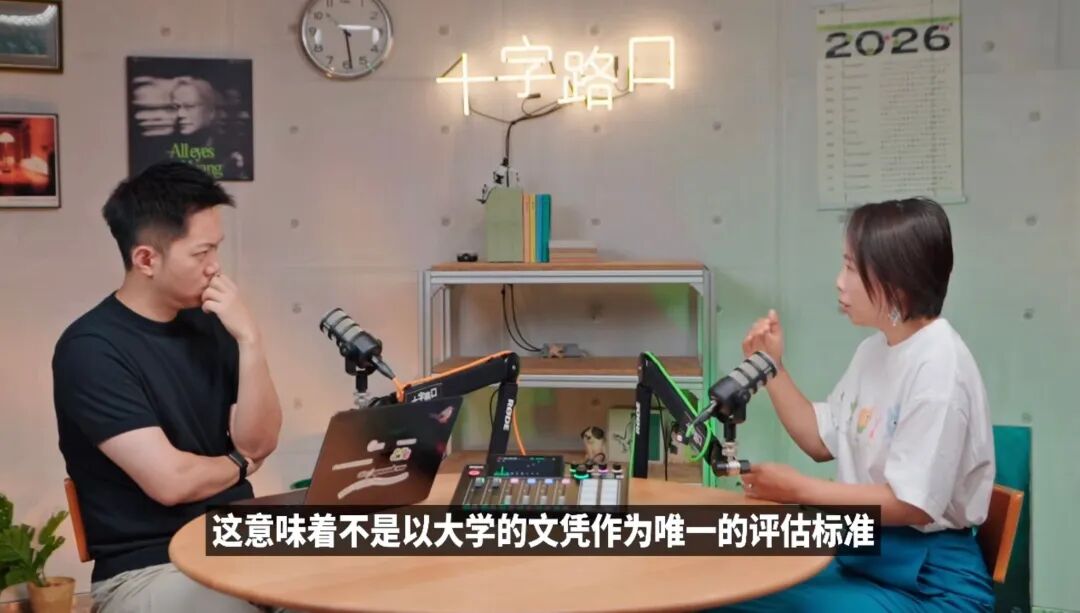
For example, Tencent has already started recruiting from high schools. Overseas it's even more aggressive — several companies recruit directly from high school, skipping university entirely. This means university diplomas are no longer the sole evaluation standard, and everyone can find something more suitable for themselves.
👦🏻 Koji
But what if that future doesn't arrive? Maybe in 15 years, when the child goes to university, this monopoly system still exists. And if the child ends up at a very bad school, then what?
👩🏻 Yu Hong
That depends on how much inner strength you have to bear the consequences of your choices.
For me personally, back then my thinking was: First, I absolutely refuse to repeat a year. Even if I had to go to a vocational college, I had to say goodbye to that kind of study lifestyle from high school. Because deep down, I always felt: I am myself — external things cannot define me.
If more and more people can think this way, and are willing to take responsibility for their own decisions, there is actually opportunity.
A few days ago I saw something: this year's stand-up comedy champion is actually a vocational high school graduate. Stand-up used to be a niche art form, with performers being graduate students or even returnees from overseas study. This year it's a vocational high school graduate — not even a junior college graduate. But he still made it.
Even if that future doesn't arrive in a sweeping, destructive way, social diversification is definitely the trend. Going to a less prestigious university doesn't mean you can't live a good life. You can see large numbers of so-called Ivy League graduates or people with excellent grades who remain in a state of chronic anxiety. Success and happiness are not linearly correlated metrics.
When it comes to cultivating children, I still hold the same view: rather than cultivating their so-called success index, it's better to cultivate their wisdom, to cultivate how they conduct themselves as people and how they understand the world. When these abilities are well-developed, their rate of self-actualization is actually higher. People with higher happiness indices tend to have stronger self-actualization abilities.
How Many More Doors Can Elite Schools Open?
👦🏻 Koji
Today, isn't it because of relatively elite school backgrounds that people have more opportunities to open doors to self-actualization?
👩🏻 Yu Hong
If there are better opportunities, there are indeed many so-called doors to self-actualization. But the more important thing is the choices behind them.
When I finished graduate school, I could choose the primary market or the secondary market — the secondary market was widely recognized as the most lucrative path. But I didn't choose the secondary market; I very firmly chose to do primary market. Within the primary market, every job change and choice I made was the same.
In 2021, when the market was extremely hot, I left GGV to join Meituan Longzhu. At the time, I expected four companies in my portfolio to go public that year. From a rational choice perspective, I should have stayed at my previous firm to enjoy the IPO windfall. But I ultimately chose to join Longzhu, a startup institution.
Every choice is highly correlated with personal will. It's precisely because of these choices that I became who I am today — not simply because I graduated from Zhejiang University and studied computer science, and therefore could do these things.
👦🏻 Koji
But if you hadn't graduated from Zhejiang University, maybe in 2010, say if you'd graduated from some vocational technical college, you might not even have been able to distinguish between the primary and secondary markets at the time, and your choices would have been much more limited?
👩🏻 Yu Hong
What about Jack Ma? What about Pony Ma? There are actually large numbers of people like this who didn't come from the most elite schools. And even today, if you enter ByteDance or Tencent as an employee, does that necessarily mean your life state and mental state are better? That's questionable.
Regarding happiness, many scientists have actually done research on what determines it. There's a formula: about 50% is determined by genetics, which is unavoidable. Of the remaining 50%, only 10% is determined by your circumstances, while 40% is determined autonomously.
Circumstances mean your current identity, status, surrounding environment — including the environment after entering university. That 40% is how you view your circumstances, your mindset, and what you actively choose to do.
So under this theory, there's strong skepticism toward the so-called theory of original family determinism. Because the original family only belongs to that 10%; the remaining 40% is all about autonomous choice.
👦🏻 Koji
But I thought that 40% is also cultivated or created by the original family?
👩🏻 Yu Hong
Even if the original family can cultivate or create these things, as an adult, you always have the opportunity to relearn and to raise yourself all over again.
Our company is a social enterprise, and our culture advocates that all partners should be happy. Every Tuesday everyone gathers for dinner, and partners share their life stories. One teacher shared his experience and the entire room was in tears — his original family caused him tremendous harm, but he eventually became an excellent SEL teacher and, through his own efforts, raised himself anew.
Our art and design teacher is also excellent. He graduated from a junior college, but he feels so happy that he sometimes feels like a prince from an alien planet.
So adults can still continue to educate themselves. Childhood education is mostly determined by family, but adulthood is completely open to self-education. A considerable portion of our curriculum involves neuroscience and brain science. From the principle of neuroplasticity, the brain's neural pathways are always plastic — it's just easier when you're young.
👦🏻 Koji
If it turns out that because of the educational system initially chosen, the child didn't fully develop all their test-taking potential and ended up at a very poor school — say a junior college or worse — would they feel happy?
👩🏻 Yu Hong
I'm starting to understand why everyone is so obsessed with elite schools, and why I don't care so much about this. It's because it's highly correlated with my personal growth experience.
The high school I attended wasn't even a key high school. I was the first person from my school to get into Zhejiang University. My English was almost entirely self-taught. Back then, my high school English teacher would even say in class: "What's the answer to this question? Yu Hong, explain it." I even had to prepare lessons for the teacher. As for my elementary and middle schools, they've both closed down now.
From my experience, the halo that schools bring isn't that important. What really matters is that I had access to this knowledge.
Everyone here lives in first-tier cities, where key high schools seem to have high advancement rates, but this isn't causal at all. Everyone knows Hengshui High School — its Tsinghua/Peking University admission rate is extremely high.
👦🏻 Koji
Our next podcast guest is from Hengshui High School. She got into Tsinghua.
👩🏻 Yu Hong
But this year, Hengshui High School's Tsinghua/Peking University admissions dropped 70%. Why? Because policies no longer allow them to cherry-pick the best students.
So when evaluating a school's teaching quality, you absolutely cannot separate it from how many top students it recruited in the first place. Is it the teaching method that works, or are these children already excellent to begin with? There are even many international high schools that bring in excellent students in their second year, get good rankings in their third year, then offer scholarships — leading parents to mistakenly believe the school's education transformed the child into talent.
I've seen overseas research: in the United States and other countries, if you control for student quality — two children both ranked in the top 20%, one entering a so-called good school and one entering an ordinary school — tracking their percentile performance after graduation, the impact of good schools on academic progress might even be negative.
Beijing's Shangdi Elementary is also an interesting example. It was probably just an ordinary elementary school, but because it's located in Xierqi, large numbers of high-IQ programmers send their children there. The student body changed, and the advancement rate naturally went up.
Parents really need to view these metrics with critical thinking. What school a child attends doesn't represent how much the school actually contributes in terms of knowledge. The current marketing narrative is often: if you don't get into a good kindergarten, you won't get into a good elementary school; if you don't get into a good elementary school, you won't get into a good middle school, good high school. Life is absolutely not this kind of linear planning. Education is an extremely complex matter.
I really like Daybreak Academy, but I also give them all kinds of critical feedback. Though every time I give feedback, I'm very clear: I only raise problems, I don't offer solutions. I trust the school with solutions because they're more professional than me. Although I work in education myself, I'm only clearer about the SEL domain.
We should at least break one myth: it's not that so-called good schools can necessarily cultivate good people — a large part of the reason is that they recruit good students to begin with.
👦🏻 Koji
There's a theory that everyone's level is determined by the average level of the five or six people they're most closely connected to. Sending a child to a better school, with excellent enough peers, they'll be influenced and affected. Sometimes this is the value that key schools bring. What do you think?
👩🏻 Yu Hong
A good friend mentioned this theory to me before. I went back and thought about it carefully, and found it rather laughable.
At its core, that theory exploits our human tendency to compare, using comparison to manufacture anxiety, then converting that anxiety into drive, only to push us toward even greater anxiety. But whether we're talking about society or the individual, the ultimate goal is to live as yourself.
In college, my motto was "Follow your own path, and let others talk." From high school through a decade after graduation, I completely abandoned it. It no longer mattered to me, because I had already achieved self-actualization — and self-actualization has nothing to do with anyone else.
For example, I used to be an investor. If you asked what's the most important ability for an investor, I'd say it's the ability to make choices.
When I interviewed young candidates in the past, I would generally ask one question: What's the most difficult choice you've ever made in your life? The results surprised me enormously — a substantial proportion of people had never actually made any important choices in their lives.
Why hadn't they made choices? Because they only looked at the people around them, and whatever everyone thought was best, they'd choose that. For example, there's always a hierarchy for post-graduation destinations: first investment banking, then consulting, after a few years it becomes investing, and now maybe it's AI. As if climbing up this hierarchy is the only right path. This is entirely a product of exam-oriented education, a very one-dimensional form of comparison.
I once interviewed a PhD graduate from Tsinghua University and asked him why he pursued a doctorate. His answer was: "Back then, only people with good enough grades could get into PhD programs. I couldn't waste my test scores, so I went for it." Sitting across the table from him, my heart went cold.
Why Give Up Eight-Figure Carry?
👦🏻 Koji
Actually, you've made many decisive choices yourself. When you left GGV, you had four projects about to IPO. How much carry would those four projects have generated?
👩🏻 Yu Hong
I didn't calculate it carefully at the time. When I was preparing to leave, a partner specifically called to ask me: "Have you calculated how much money you'd lose by leaving?" I said I really hadn't.
👦🏻 Koji
Did he tell you later?
👩🏻 Yu Hong
He did the math for me — definitely in the tens of millions.
👦🏻 Koji
But you didn't even do the calculation before deciding to join Meituan Longzhu?
👩🏻 Yu Hong
This isn't about projecting some image of ruthless decisiveness. It was still a complex decision. But at the moment of making a choice, what matters most?
I believe "begin with the end in mind" matters most. This is a principle from The 7 Habits of Highly Effective People. When I encountered it, it was like a revelation — it became crucial to me.
I've always had a strong interest in education. Why? Because I'm deeply passionate about leading teams. Just a few months after starting at China Renaissance, I began responsible for training others. Colleagues called me the "Model Queen" because I particularly loved building financial models. Partly because I learned quickly; partly because once I learned, I thoroughly enjoyed figuring out the clearest, most understandable way to teach it to others.
Seeing others grow brought me immense joy, so I value teams enormously and love building organizations. Combining these traits, I very much wanted to join a startup-style investment firm.
This was a very smooth, end-in-mind line of reasoning. GGV was already very established — at the time, it had six top partners ranked in Forbes' Midas List top 100 globally, with Hans even breaking into the global top five in recent years. The platform was extremely mature, and the incremental value I could add was actually limited.
But what I truly wanted for my future was to join a startup-style institution, which meant I had to give up what I currently had. Does money matter? Of course it matters. My family background was extremely poor. Though internally I felt relatively abundant, I inevitably needed money in reality.
But examining it from an end-in-mind perspective, one must make difficult choices. Only at the nodes of difficult choices do you truly interrogate your inner self, see clearly what matters most to you, and move toward self-actualization. Not because you're in a privileged environment and accept all 100 opportunities it throws at you — among those 100 opportunities, 99 might be temptations, and even 10% could be disasters.
The core of making choices is to begin with the end in mind.
👦🏻 Koji
Was giving up eight-figure carry to leave GGV the most difficult choice you've made? Or has there been something harder?
👩🏻 Yu Hong
That's a great question. I've carefully reviewed this — honestly, none of my career choices count as the most difficult. Speaking from the heart, the most difficult is always choosing a life partner.
There are thousands of job opportunities in the world, but choosing a partner is incredibly hard. Occasionally friends now say that my husband and I seem to have an especially good relationship. In reality, we went through many years of arguments and磨合 before reaching this seemingly "divine couple" state. I'm deeply grateful for the entire process.
But at the height of intense arguments, do you give up? Whether to break up, whether to divorce — the choices involved here are far more difficult than changing jobs.
👦🏻 Koji
Is the logic behind this also beginning with the end in mind? Or are there other methodologies?
👩🏻 Yu Hong
When facing choices, I have two core principles: First, begin with the end in mind; second, never make major decisions when you're in an emotional low point.
Emotional state is extremely important. When in a positive emotional state, the prefrontal cortex is more active and open; if trapped in negative emotions like tension, fear, or anxiety, much of our behavior is merely stress response — we can't make comprehensive, rational judgments or mobilize our full intelligence.
When making major choices, absolutely don't decide when you're in a bad emotional state. Wait until your emotions are stable and your state is positive before choosing.
A good friend once told me he wanted a divorce. I didn't ask for specific reasons because I was very clear about his life situation, so I asked him: "Besides the marriage itself, how are other things in your life going?" He said he had just moved, changed houses, and also just changed to a new job — a pile of trivial matters had put him in an extremely bad emotional state. When a person examines one thing while in a state of chaos, their perspective is naturally not objective.
Even for something as major as divorce, it's not that you can't do it — but you must decide when you're in a good state with an open mind. The same applies to changing jobs. Every time I've resigned, my boss has usually been surprised because it was typically when I was at my best. I discipline myself: never make major decisions when I'm in a bad state.
Another principle is to seek broad counsel. For example, when intimate relationships have problems, talking to female friends is mostly venting and complaining — they'll naturally take your side and validate you. But I deliberately seek out male friends to understand how men view similar issues, to calibrate for perspective bias.
Of course, beginning with the end in mind remains the foundational support.
This sounds light, but it's hard to execute. The difficulty lies in self-knowledge. Self-knowledge isn't just understanding your strengths, weaknesses, and interests — those only represent past and present. The core of self-knowledge is seeing the future: Where do I truly want to go? What is the destination?
This absolutely cannot be achieved by sitting in a room and daydreaming. It must rely on extensive experimentation and practice. Only through enough practical collisions does direction gradually become clear. Once you've identified your main channel, other directions naturally appear as temptations, and you'll no longer be easily shaken.
👦🏻 Koji
So you believe the ability to make choices can be cultivated, rather than only being passively learned through repeated failures?
👩🏻 Yu Hong
This ability can absolutely be cultivated. The key is sensitivity to your own emotions. One must learn to capture their emotional signals to make choices that truly align with oneself.
For example, when doing something, do you feel joy? Can you enter flow? These states must be deliberately noted. The reason I'm certain about my interest in education is partly through deduction, but also through extensive practice: every time I teach something to a team and see others' breakthroughs and growth, my inner joy is extremely intense. Using this emotion as an anchor point, you can identify the direction truly worth investing in for the future.
When filling out college applications back then, I excluded any major that directly corresponded to a specific profession. For example, law corresponds to lawyer, medicine to doctor, plus military personnel, teachers, and so on — I eliminated all such overly directed professions.
👦🏻 Koji
What was the reason?
👩🏻 Yu Hong
Because I felt those paths were too determined.
👦🏻 Koji
So you were choosing a path with more future possibilities?
👩🏻 Yu Hong
Yes, I was choosing a path with broader future possibilities, hoping through continuous exploration to stumble upon what I truly wanted to do.
Making choices isn't committing to one path to the end — it becomes clearer through trial and error. Knowing what you don't want is often more important than knowing what you want. Knowing you dislike certain things,果断放弃, don't waste time on them, and save your energy for more valuable exploration. Every exploration is essentially helping life do subtraction.
When I jumped from China Renaissance to GGV, I spent a full two years job-hunting in between. Right after joining China Renaissance, I was very certain I wanted to do VC. But within a year, five or six colleagues around me left one after another. It was during a capital market boom, with domestic RMB funds rapidly rising, and most people went to RMB funds. But my internal judgment was that I had to join a top-tier USD fund.
After systematic research, you become very clear about what soil suits you. During those two years of job-hunting, I interviewed with many people and gradually drew boundaries. For example, I once talked to an excellent early-stage firm, and they asked me: "How much time do you want to spend on Deal Sourcing versus research?" I said 50-50, because I must thoroughly understand the how behind everything I do. They frankly said that early-stage primarily focuses on Deal Sourcing.
I thought that was fantastic — this showed I wasn't suited for early-stage investing. Facing this result, I felt no frustration at all, but rather excitement: I could finally cross another target off my options list.
Later when interviewing at GGV, partner Jenny asked me: "What kind of firm do you want to join?" Interviewers usually hope candidates are extremely clear in their thinking, and I was indeed very clear at the time. I said I wanted to join a top-tier firm focused on Series B and C. Jenny laughed and said my pitch sounded rather formulaic.
👦🏻 Koji
You were basically describing GGV exactly?
👩🏻 Yu Hong
Yes, I said this really wasn't deliberate pandering. Because I had deeply talked with early-stage, Series A firms — they spend massive time on Deal Sourcing; I had also talked with late-stage funds — they spend most of their time on tedious paperwork. Neither state appealed to me. With these two bottom lines in place, the most natural match was GGV.
Later, when considering my next move from GGV, I set three hard criteria for myself:
First, the team must have world-class partners. Because I've worked with top partners and deeply understand how much cognitive leap that vision can bring;
Second, it must have sustained fundraising capability;
Third, it must be a startup-style organization.
Applying these three criteria, basically only two or three firms remained in all of China. Doesn't the choice become much clearer then? But the refinement of these standards came from long-term active exploration — they were precipitated out through the continuous process of crossing options off my list.
Should You Stop a Child From Making the Wrong Choice?
👦🏻 Koji
Turning to children's education — how should parents teach kids to make choices? If you see your child making an obviously wrong decision, do you step in to talk them out of it, or let them learn from the mistake?
👩🏻 Yu Hong
This is essentially about helping your child avoid pitfalls, and the key is distinguishing between big ones and small ones.
If it's a big pit — irreversible consequences, threats to physical health or safety — parents absolutely have a responsibility to intervene and guide.
But if it's a small pit, you have to let them experience it, even let them learn to climb out on their own. Only after they've stumbled will they develop two capabilities next time they encounter a similar trap: first, recognizing it is a trap; second, knowing how to save themselves even if they fall in. For these small setbacks, parents should let children bear the consequences, then review together afterward.
Of course, real-world education is far more complex than any abstract principle. Daily interactions with your child are bound to be full of push and pull, back and forth.
What Matters Most in Investing?
👦🏻 Koji
From GGV to Meituan Longzhu, you've always been on the front lines, observing up close and backing many excellent companies. What do you think is the most important thing in investing?
👩🏻 Yu Hong
Do you mean what's most important about investing itself, or what's most important for an investor?
👦🏻 Koji
Let's talk about what's most important in investing — both angles work.
👩🏻 Yu Hong
Let me start with what's most important for an investor.
I've thought about this repeatedly: for primary market investors, or for the investment system as a whole, the core is reflection and review — truly completing cognitive evolution through every mistake.
But to do review well in the primary market, there's an even more important prerequisite: Intellectual Honesty — radical self-honesty.
Primary and secondary markets differ fundamentally. The secondary market speaks entirely through net asset value. Whether you're honest verbally or not, your performance is laid bare, and review has extremely objective data anchors. But the primary market's feedback cycle is so long that people incredibly easily fall into self-anesthesia.
A project takes years from investment to IPO. For example, we invested in Manycore Tech in 2014, and it didn't complete its listing until 2026. So using investment outcomes as a basis for reflection in the primary market — the cycle is too long for human learning. It's not a process where someone can quickly learn and grow alone, so you need to find a good mentor.
That's why primary market investors must ground their reflection in every daily judgment, every small decision.
I once evaluated a very well-known children's English training institution. I looked at it at Series A and decided not to invest. Later its valuation soared to $3 billion or higher, but ultimately the company failed.
If I weren't honest, I could easily play Monday morning quarterback: "See how accurate I was back then? This company was never going to work, and years later, facts proved my prediction right." With this kind of self-deceptive mindset, an investor can never grow.
Back when it was raising Series B, even a year later, I had to rigorously review my Series A logic. My reasons for not investing were threefold: first, the business model didn't work; second, the product's unit price was too expensive; third, I felt the market space was limited.
Later facts proved the latter two judgments were completely wrong. That company eventually reached over a million paying users, proving that millions of Chinese families were willing to spend 10,000 to 20,000 yuan annually on children's English training. This showed the demand capacity among China's middle class for quality education was enormous — my original judgment about the market ceiling was wrong.
This was something I genuinely learned. It was precisely based on this correction in understanding that I later decisively invested in Huohua Siwei. Huohua Siwei similarly used small-class models to teach math, with annual unit prices also in the thousands to over 10,000 yuan.
If I had been intoxicated with self-satisfaction, clinging to the illusion that "that company's failure proved I was right," I couldn't have completed this iteration, nor could I have caught the later opportunity.
So for primary market investors, even if just quarterly, you must conduct brutally honest reviews of your previous predictions and judgments: what did you get right, what did you get wrong? Which underlying mental models need to be torn down and rebuilt?
I'm accustomed to thinking in models and frameworks. Only through continuous iteration can you further optimize your decision-making methods and pathways.
So I believe for primary market investors, first achieve self-honesty, then achieve reflection, and continuously learn from mistakes.
👦🏻 Koji
You just said finding a senior, finding a mentor in the primary market is extremely important because figuring things out alone takes too long. Can you talk about what your mentors' greatest help was? Who were they?
👩🏻 Yu Hong
I'm deeply grateful I made the right choice back then to join the top-tier dollar fund GGV.
At the time GGV had three partners, and I was fortunate to have 1-on-1 deep collaboration and learning opportunities with each of them. I learned so much from them — my entire investment framework and theory was enormously influenced by them.
Why must the primary market have an excellent mentor? Because its feedback cycle is too long. Every time you present at an investment committee meeting, even discussing projects with your boss, every comment from them is an excellent learning opportunity.
I often tell my team: how do you learn and work in the primary market? Very simple — it's called shadowing.
How to shadow? Every time you go with a partner or superior to meet a team, to communicate and ask questions — can you ask yourself every question the boss asks, in your own mind first?
The boss asks this question, and you think to yourself: had I thought of this question before? If not, write it down immediately.
The answer actually isn't the most important thing. Two people facing a founder together, asking the same question — based on their response, the conclusions you draw are often largely similar. Because people in investing are high-IQ, judgments about answers don't differ much. The key lies in the question itself. You must continuously exercise your ability to ask questions, to shadow your boss's questions.
Until one day, you find you've mastered all the questions your boss asks, and can even ask better ones — then you know you've learned the first several steps.
Further along comes judgment about projects. This judgment is very much like aesthetic taste. It's a taste. That's why in the primary market, you must follow a good master.
For example, evaluating an entrepreneur — what kind of person is more likely to succeed? Someone might feel that although a product is copied, it's copied brilliantly, with a mature prototype abroad — this is one dimension of judgment. Another person might say this person has no innovative thinking, and you don't see much original thinking in the product design.
As a newcomer, which of these views is right or wrong? You simply can't judge. Take Meituan — its early group-buying business model was indeed copied too. But does innovation matter? Of course it does.
When actually making investment decisions, which view dominates your taste? Which decision factor carries more weight? This is extremely crucial. Follow the wrong person, and your taste may get skewed — only after 7 or 8 years do you discover the projects you've backed are all underwhelming.
If you use an 8-year cycle to verify whether you've learned correctly, the cost is simply too high. So I even feel the primary market isn't a very suitable place for conventional talent development. Even if you join a startup investment institution, I'd still recommend following world-class partners. Because taste can't be quickly developed and verified in the short term — only by following mature, top-tier partners is your growth most valuable.
👦🏻 Koji
At Meituan Longzhu you must have worked with Xing Wang for a long time, and you probably had many investment discussions. What's his investment style like?
👩️ Yu Hong
Xing Wang's investing has three most notable characteristics.
First, extremely pure long-termism. When we normally talk long-term, we say looking 5 years, 10 years. Xing Wang would say 5 years, 10 years — that's not long-term. Thirty years is long-term. This extreme long-termism is truly admirable.
Second, slow thinking. The human brain has two thinking systems — fast thinking and slow thinking. Xing Wang extremely emphasizes slow thinking, doing extraordinarily thorough analysis of many things.
When he meets an entrepreneur, it's typically two hours minimum. Many primary market investors, for efficiency's sake, would prefer to make quick judgments in half an hour. He's not like that. He relentlessly explores the underlying logic and long-term trends of things, starting from first principles, continuously deducing various definitions and business models.
Third, strict investment discipline. He basically requires being the largest external shareholder in every project. Facts have proven that even if certain projects are mediocre, as long as you hit several core cases, because your ownership stake is large enough, the ultimate investment return becomes extremely high.
For example, later AI and frontier tech companies like Zhipu AI and Unitree — when Meituan Longzhu invested, it always tried to secure the largest external shareholder position. Here "largest" doesn't represent vanity about being number one, not to satisfy some ego, but purely investment strategy: since you're conviction-driven, invest as much as possible, so that a single project's ultimate absolute return can be maximized.
👦🏻 Koji
Does this mean that to invest in a company, you must have absolute conviction in it, bet heavily rather than hesitating and wavering — absolutely not with a "might as well put in a little to see" mentality? To invest requires extremely strong commitment, and with that commitment, invest as much as possible?
👩🏻 Yu Hong
Yes. It's both a style and an extremely effective investment strategy. This strategy isn't commonly seen in many traditional VC firms, so investment taste truly requires personal transmission — following different masters, the approaches you develop are completely different.
👦🏻 Koji
Earlier in emotional education you mentioned accepting emotions, and being keenly aware of happy emotions and embracing them. So in your investment career, what has made you happiest?
👩🏻 Yu Hong
What makes me happiest in investing is validating my own judgment.
Back before the double reduction policy, Zuoyebang's valuation had already reached $10 billion; after Full Truck Alliance's IPO, its market cap was also in the $10 billions. At that time, across all of China's internet sector, how many companies do you guess had actually gone public or at a certain stage reached a $10 billion valuation?
👦🏻 Koji
You mean reaching $10 billion scale at IPO or some stage?
👩🏻 Yu Hong
Right, having reached $10 billion at some point in time. Feel it out.
👦🏻 Koji
The way you're asking suggests very few. There might be hundreds of unicorns at $1 billion valuation, but $10 billion ones maybe only 20 or 30?
👩🏻 Yu Hong
We reviewed and calculated at the time — actually only 14.
The probability of backing a $10 billion company is incredibly small. Someone once asked me: watching these companies grow to today's scale, do you feel surprised?
I said not at all — because they aligned with my original judgment from the very beginning.
It's not an act — it's the most genuine feeling I have. Watching things unfold exactly as I predicted is what excites me most. Whether the company eventually rings the bell or how much carry I personally pocket, honestly, I don't care much. Money has never been a strong internal motivator for me.
You have to know yourself deeply. Whether I make a fortune on an investment or lose a chunk, my emotional state barely fluctuates.
Here's something hilarious. My husband has his own stock account. During the bull market a few years back, he'd occasionally trade. Every time he'd come to me, thrilled: "Look how much I made in this account." And every single time I'd ask: "How much principal did you have in there to begin with?" Same question, same answer, repeated five or six times within a year.
Later he joked: "I get enormous psychological satisfaction from you, because every time I show you my account, you ask with genuine curiosity how much was originally in there."
I studied computer science in college. I'm actually quite sensitive to numbers. But paper gains and losses simply don't register emotionally for me.
Many peers probably think the happiest moment in investing is receiving carry or witnessing an IPO bell-ringing. For me, the greatest joy has always been validating my own judgment. It's also why I feel so fulfilled doing child development research and education now.
If there's a fundamental commonality between primary market investing and education, it's that both are anchored in the future. Venture capital looks at changes over the next ten years; education spans even longer — it's building a model that influences a child's next twenty or thirty years.
What I research daily now is precisely how to use scientific models to profoundly shape a child's growth across decades. That gives me tremendous sense of achievement. And parents can fully trust us, because we have genuinely professional people applying rigorous scientific research attitudes to make predictions and design products.
What's the most unhappy thing in investing?
👦🏻 Koji
Then in your past investment work, what was the most painful, most unhappy thing?
👩🏻 Yu Hong
The worst was FOMO — fear of missing out.
This is the most universal psychological state among primary market investors: terrified of letting any potential opportunity slip through, desperately forcing yourself to cover every new track and every deal. But I'm not wired this way. I like to subtract, to eliminate distractions first, pick out directions truly worth deep exploration, then spend extremely long periods focusing intensively before reaching my own conclusions.
When I looked at Mobile Internet, I focused on online education; I deeply researched logistics and backed Full Truck Alliance. When I looked at going global, I invested in Musical.ly, which later became TikTok. Some peers were astonished — how could I span such completely different industries and still deliver strong projects in each?
Actually the logic is exactly the opposite. It's not that I covered broadly; it's that I was sufficiently focused. When studying education, I spent two full years immersed in research, even as all kinds of market fads swirled around. When studying logistics, I devoted another full year to focused research.
👦🏻 Koji
At the time, which consensus tracks that everyone was chasing did you completely ignore?
👩🏻 Yu Hong
Some I can't even remember anymore, because things outside my scope don't get stored in my brain at all.
👦🏻 Koji
For example, O2O back then, SaaS, or later Crypto?
👩🏻 Yu Hong
I never looked at Crypto. Early P2P internet finance, and the O2O frenzy everywhere — I basically spent no energy on them.
Of course this also involved internal division of labor at the firm; other colleagues covered those directions. I can't pretend I was inherently above those fads — that would be fake.
But take cross-border e-commerce at the time. For a period, independent cross-border apps like Ymatou rose rapidly and attracted heavy capital. But my judgment was: cross-border e-commerce is fundamentally still e-commerce. While it caught a consumption trend, it didn't fundamentally change user purchasing habits or underlying commercial logic.
The only difference was product categories. My conclusion: these independent platforms would most likely eventually be eroded by super-platforms with more comprehensive categories — Tmall, Taobao, JD.com. Subsequent market evolution confirmed this.
So focus — maintaining extreme focus — is incredibly important. I also once intensively researched B2B trading platforms, when the entire VC circle was betting heavily. I spent about half a year on deep due diligence, then decisively passed, because I concluded: this track doesn't suit venture capital institutions.
My rhythm is: periodically focus deeply on one domain, thoroughly master it, then move on to the next industry. I absolutely never blindly spread myself across many things simultaneously.
This is also why I adapted so well to Meituan Longzhu later. Xing Wang demands extremely granular industry research. Though my research depth may not have fully matched his standards when I first joined, I'm naturally drawn to thoroughly figuring out business fundamentals — mastering one industry, then deconstructing the next.
If you're constantly pushed by FOMO, feeling you missed this and didn't see that, you sink into extreme anxiety and internal depletion. Yet primary markets heavily emphasize capturing shifting fads, and most market noise and so-called changes are things I neither like nor endorse.
This is also why transitioning to education feels so grounding now. Because underlying human patterns haven't dramatically mutated over centuries. There won't be some genetic mutation tomorrow forcing you to immediately overturn your cognition to chase a fad.
Take SEL — the psychological and social-emotional skills involved. Many theoretical frameworks have been thoroughly validated through empirical science over the past century. Go back thousands of years, and much philosophical and religious wisdom already articulated the underlying logic of how humans achieve lasting happiness. We just need to extract the essence and discard the dross.
It doesn't require you to live on edge, terrified you missed a new theory today or a new model tomorrow.
👦🏻 Koji
That's good — completely escaped the FOMO quagmire.
You've encountered numerous outstanding entrepreneurs. What qualities do you think are indispensable in founders yet completely absent from school education? Can family and society compensate through your children's education or SEL framework?
👩🏻 Yu Hong
There are so many. In my view, over 90% of core capabilities in entrepreneurs are never taught in traditional schools.
I once mapped out a founder assessment model: when evaluating a startup, the core elements boil down to two things — business model, and the founder themselves.
Setting aside pure business dimensions, looking solely at founder traits, I believe three dimensions are crucial:
First is visionary — vision and foresight; second is leadership; third is openness.
Visionary means whether someone can see three steps ahead while taking one, possessing holistic perspective and endgame prediction ability. This depends heavily on profound self-awareness and rigorous critical thinking.
Self-awareness includes not just exploring your present self, but also planning and judging your future self. The process of finding yourself necessarily accompanies deep understanding of the external world, because true self-actualization is never闭门造车 [working in isolation] — you must place yourself in complex social networks to interact and collide.
Meanwhile critical thinking is extremely crucial. It requires you to deconstruct something with objective calm, rather than being bound by your own wishful biases.
Second is leadership. Leadership is fundamentally a social ability, and a very important component is conflict resolution. Many people aren't subjectively afraid of conflict, but often lack more advanced, constructive communication strategies to resolve it.
Third is openness — this cannot be overstated. The vast majority of entrepreneurs I've met are intellectually brilliant, but smart people often have a fatal blind spot: extreme stubbornness, lack of openness. Because they've been so accustomed to coming in first their whole lives, accustomed to being the most correct person in the room.
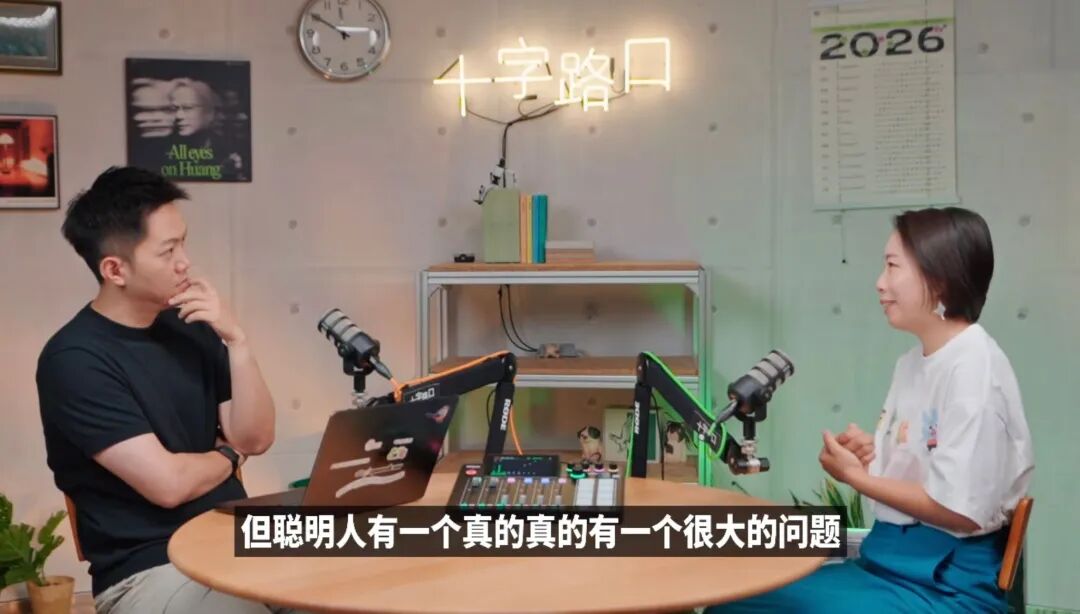
But they often confuse one thing: are you pursuing proving you're the most correct person, or pursuing getting the most correct thing done? The gap between these two is enormous.
This is also why I deeply admire Xing Wang. He has an extremely rare trait: the ability to listen to all different voices with extreme inclusiveness and openness.
👦🏻 Koji
Openness actually carries such high weight in your assessment framework?
👩🏻 Yu Hong
In my view, openness isn't just crucial for entrepreneurs — it's the ultimate standard for measuring whether anyone can sustain excellence.
A person's learning ability depends mainly on two core dimensions: one is intelligence, the other is openness.
Intelligence determines the ceiling of self-driven learning — your ability to improve through reading and absorbing materials. Openness determines your bandwidth and efficiency in learning from the outside world and from others.
The smarter someone is, the more they need to deliberately polish their openness. When a person's cognition is sufficiently open, they'll have an epiphany: whether they're always right doesn't matter at all; whether things move in the right direction matters.
Once you drop that massive ego, your fragility in facing setbacks plummets. When you put forward a view, you'll naturally recognize it as merely a provisional hypothesis.
When I led investment teams, to thoroughly break people's mental models, I'd even deliberately reshape the team's daily language. I mandated: say less of "I have an idea," change it to "I have a hypothesis."
When you say "I have an idea," subconsciously you're defending it, feeling it must be right;
But when you define it as a hypothesis, your mindset instantly becomes open and objective. Everyone can calmly explore based on facts, and even if the hypothesis is falsified, you won't feel that沮丧与挫败感 [frustration and defeat] of "how did I make another mistake."
Many people refuse to update their cognition because they're desperately guarding face, afraid to admit they're wrong.
In the children's educational content we produce, the little protagonist Tu Dongdong often conveys one idea: we're gathered here to thoroughly figure things out together — there's no right or wrong in this at all.
👦🏻 Koji
If you were to give a child one core underlying ability that's future-facing and never goes out of style, what would it be?
👩🏻 Yu Hong
I would unhesitatingly choose positive mindset. This is also the concluding key module in our entire SEL framework.
If a child truly possesses a stable positive mindset, they'll already be able to independently process the vast majority of challenges when they enter society. Positive psychology itself is an extremely rigorous independent discipline, but it often sounds a bit鸡汤 [chicken soup], somewhat vague.
Broken down to fundamentals, positive mindset is first and foremost a lens for interpreting the world. How to systematically cultivate positive psychology? The core lies in learning to敏锐地品味 [sensitively savor] tiny moments of joy in the present.
For example, when eating half an orange, when having an ordinary lunch — can you fully immerse yourself and capture that subtle pleasure in that moment? The more positive joyful memories stored in a person's brain, the more profound the positive reshaping of neural pathways.
The second skill is learning to actively recall happiness. After a joyful moment has passed, consciously retrieve it in your mind and savor it in detail. Even doing this micro-practice just a few times a day, for only a dozen or so seconds each time, can produce tangible neuroplastic changes in the brain's neural circuitry over the long term.
From an evolutionary biology perspective, humans are naturally more prone to retaining vivid impressions of negative emotions and dangerous memories. In ancient times, foraging in the wild, failing to pick fruit merely meant going hungry for a meal — but encountering a predator meant death.
Thus, through natural selection, the human brain has been genetically shaped to be more sensitive to and form more durable memories of negative stimuli like fear and anxiety.
Precisely because of this, we must deliberately practice perceiving positive experiences:
First, increase positive experiences;
Second, frequently and actively recall past positive experiences;
Third, always maintain a sense of gratitude for everything around you. Learning to sustain continuous gratitude will continuously reinforce an individual's positive experiences, profoundly reshape brain structure at the biological level, and ultimately transform a person's entire life.
👦🏻 Koji
At this point I realized that even in the current AI era, the underlying logic of human nature remains unchanged. Inner abundance, positive action, positive mindset — these qualities don't seem to be directly disrupted by AI technology?
👩🏻 Yu Hong
Their true connection to the AI era lies in the cliff-like drop in the barrier to knowledge acquisition.
In the past without AI, for a person to master core skills, they first had to cram massive amounts of prerequisite professional knowledge into their brains. This knowledge accumulation cycle kept getting longer and longer — this is the root cause of increasingly severe educational involution across society.
But in the future, knowledge has become effortlessly obtainable. As long as you learn to collaborate efficiently with AI, it can take on more and more tasks for you, and the time we spend learning knowledge is greatly compressed.
This forces education to pivot: the cultivation of self-awareness and positive mindset has become unprecedentedly important at early childhood stages.
👦🏻 Koji
Because children now have more time to explore themselves?
👩🏻 Yu Hong
Yes, children have more space to explore themselves and perceive the world. They don't need to mechanically memorize all knowledge in their brains before daring to take the first step into practice.
For example, if I want to understand rocket building, with no materials I'd need to start learning from scratch. But now with AI tools, I can learn about it extremely quickly, with efficiency greatly improved.
And the part about exploring what kind of person I truly want to become — this can and should now begin with systematic training from a young age. The earlier the intervention, the more profound and far-reaching the positive impact on a person's entire life.
👦🏻 Koji
Thank you so much to Yu Hong for today's deep sharing. I also hope that in the AI era, everyone can together with children become people with inner abundance, positive action, and daily happiness.
👩🏻 Yu Hong
Thank you, Koji.
Join the membership group