In the AI Office Battle, Who Will Become Workers' Sidekick in Close Combat?

In the battle for AI-powered workplace scenarios, tech giants are locked in hand-to-hand combat.
In the AI office-suite battle, tech giants are fighting tooth and nail.

👦🏻 Author: GaKi
🥷 Editor: Koji
🧑🎨 Design: NCon

On August 27, "Baidu Buddy" held a product launch with the theme —
"Redefining Professional Office Work: Delivered, and Stunning"
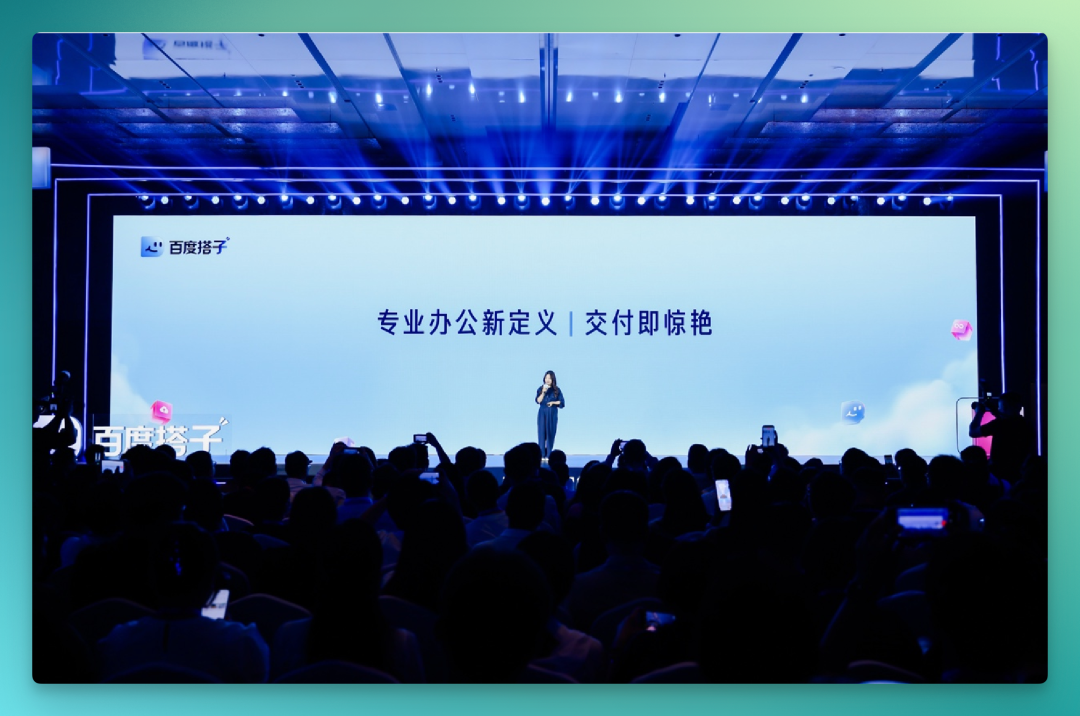
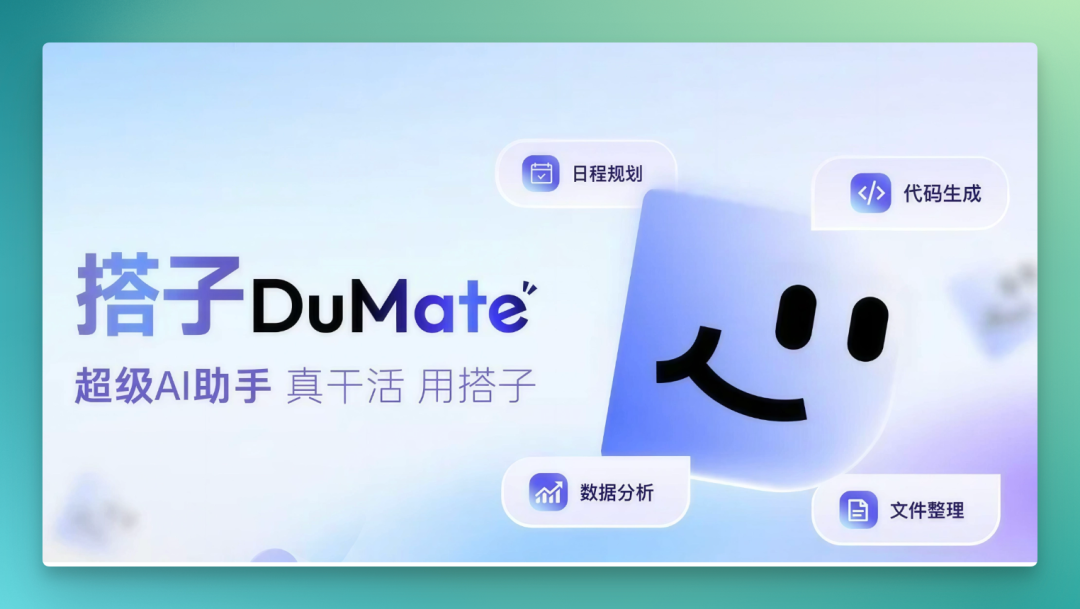
The core message: "Dedicated to making agent delivery more professional and more unexpectedly impressive, even extending boundaries beyond daily office work." Since its launch in March this year, Baidu Buddy has iterated 150 times in the past five months. With the office-suite赛道 heating up, its user base has grown nearly 9x in the past month alone.
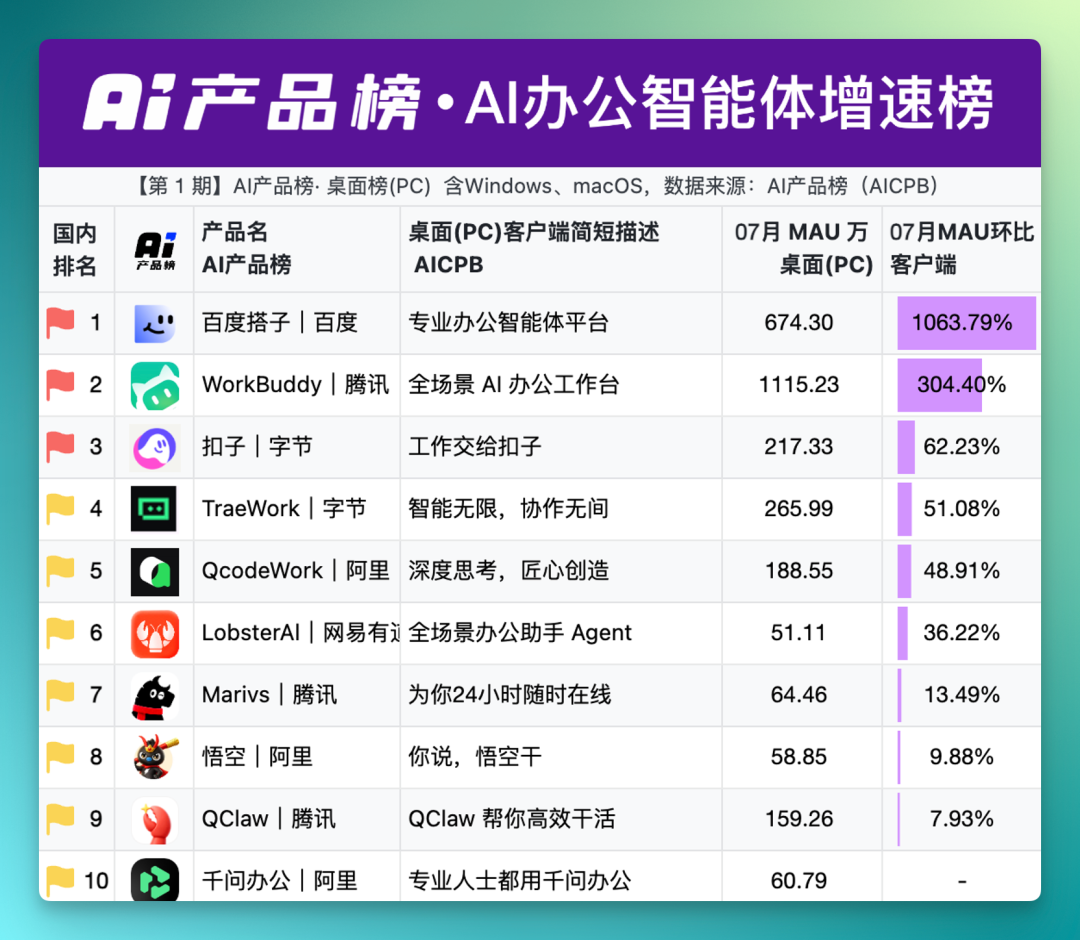
The latest AI Product Rankings desktop chart shows WorkBuddy in first place with 11.15 million monthly active users (MAU). Baidu Buddy ranks second among AI office agents with 6.74 million MAU, a month-over-month growth of 1,063%, topping the velocity chart.
In the AI office-suite battle, tech giants are fighting tooth and nail
The AI office-suite赛道 has been buzzing over the past year.
Claude Cowork, OpenClaw, QoderWork, WorkBuddy, Baidu Buddy, Qwen Office, Doubao Work, plus a wave of desktop agents from AI startup model vendors — all crowded onto the table within a matter of months.
Looking back from where we stand now, the arc of this office-suite war is crystal clear:
Demand validated → Commercial potential preliminarily confirmed → Big tech piles in heavy
First, Anthropic's Cowork launch in January and the subsequent viral "lobster" OpenClaw successively validated real demand for office scenarios in the market.
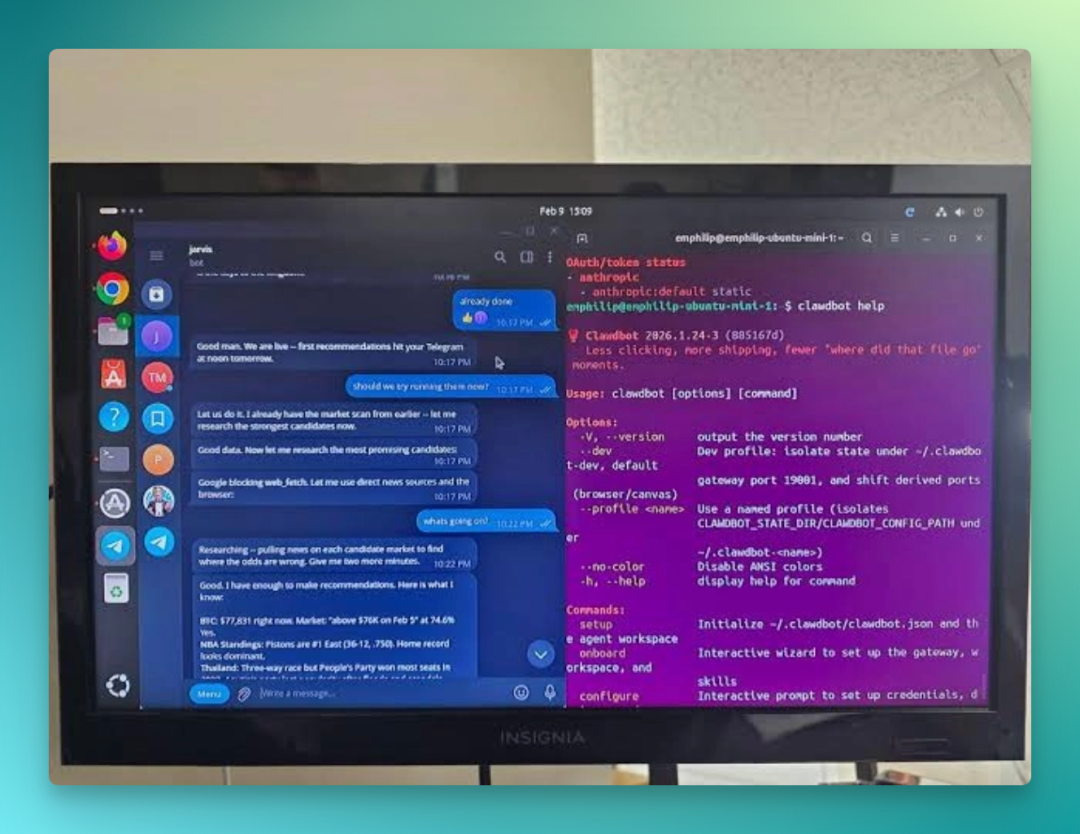
ByteDance's Volcano Engine, Alibaba Cloud, Tencent Cloud, and Baidu began opening cloud services for OpenClaw. One major tech company even set up free offline installation, with queues stretching to nearly a thousand people. This time, beyond "professional users willing to pay," the demand of "ordinary people want this too" was also validated.
With demand proven real and urgent, domestic players followed at full speed.
On January 30, Alibaba's Qoder team released QoderWork; in March, Tencent's WorkBuddy and Baidu Buddy launched almost back-to-back; plus MiniMax's desktop agent — a batch of AI office-suite products all emerged within a few months.
Subsequently, big tech's AI office products began posting data that could withstand scrutiny.
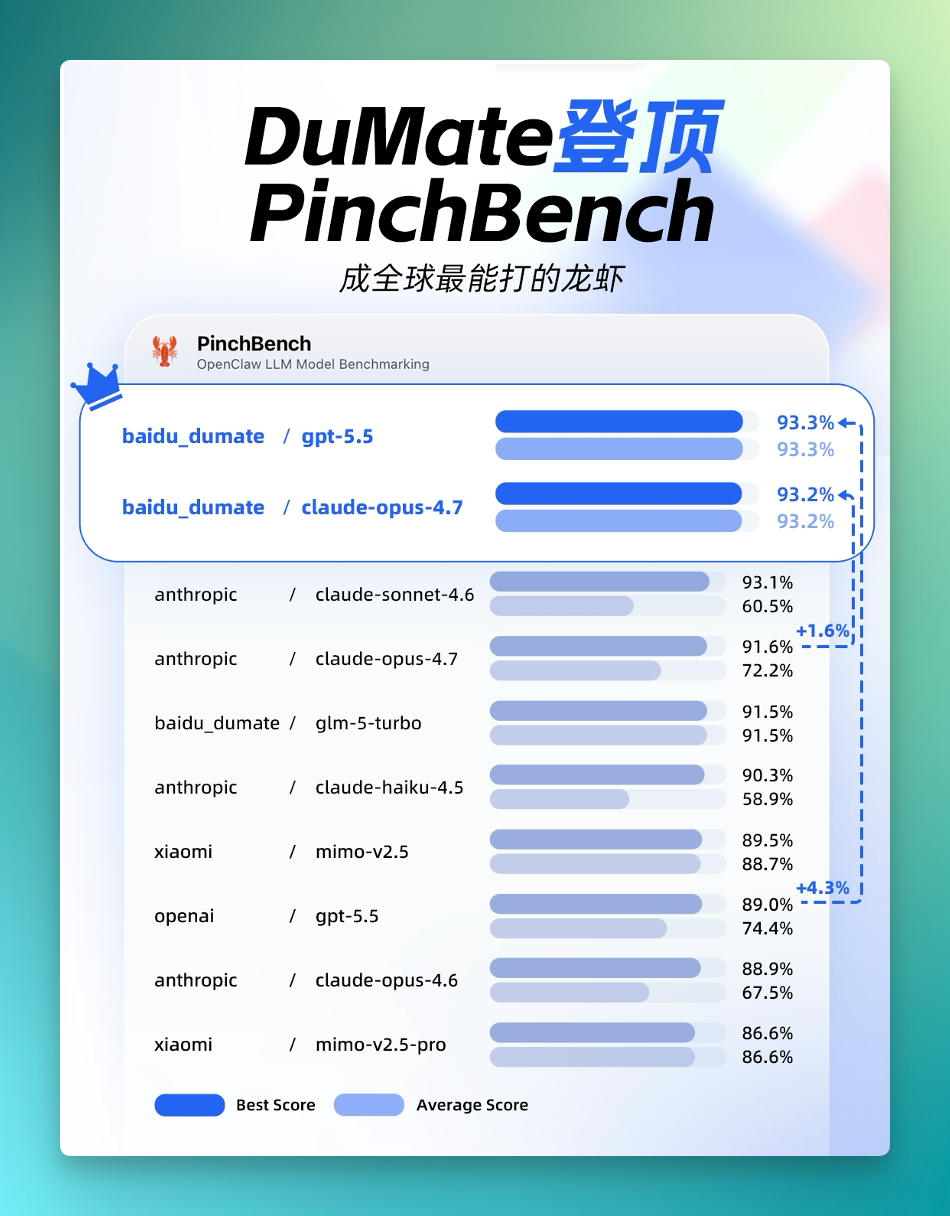
On May 8, Baidu Buddy took first place on both the PinchBench and DeepResearch Bench leaderboards; that same day, its monthly visit growth hit 114.72%, topping the "AI Lobster Velocity Chart" with 1.16 million monthly visits and breaking into the overall top three.
On July 10, Baidu Buddy reported daily query volume had surged 20x since launch; by August 12, that figure reached 60x, and doubled again in the most recent month.
The August 17 AI Product Rankings showed WorkBuddy and Baidu Buddy taking the top two spots in the office agent overall rankings with 11.1523 million and 6.7430 million MAU respectively, with Baidu Buddy's MAU up 1,063.79% month-over-month, placing it in the industry's top growth tier.
As we can see, both domestically and internationally, the willingness to pay validated within coding circles is now spreading to broader daily workflows.
Office work is currently the scenario where large models are closest to achieving scalable monetization
However, user growth alone isn't enough to fully prove commercial viability.
For individuals, productivity gains often feel vague, and willingness to pay can waver; but for enterprises, productivity improvements have clear metrics:
Whether an agent can reduce repetitive labor and shorten process handling time.
This certainty is what distinguishes the office scenario from other AI applications, and it's also why AI office products like WorkBuddy, Qwen Office, and Baidu Buddy chose direct pricing from the start rather than simply relying on free user acquisition.
Signals have indeed emerged. According to Cailianshe and 36Kr, Lark's Q2 2026 revenue grew over 100% year-over-year, with over 90% of new customers simultaneously purchasing Lark's AI products — a growth rate rarely seen in past SaaS products.
But reading this far, you've probably noticed something:
Why is it that whenever we discuss AI office-suite products at this point in time, we habitually mention the big tech products first?
This phenomenon is worth pondering.
The main reason is that office scenarios cover too many细分场景, and products must continuously refine alongside user needs; meanwhile, enterprise customers' requirements for security and stability cannot be ignored.
At the same time, with both C-end and B-end demand equally "fierce," it's not easy for startups to serve both sides, while big tech is better positioned to hold steady in a war of attrition.
Overall, looking at where things stand today, products that have managed to初步兑现 scalable monetization tend to share two characteristics:
[1] Rapid iteration
[2] Full-stack capabilities
Baidu Buddy may be a fitting case study for understanding how big tech is operating around these two characteristics.
Rapid iteration
First, rapid iteration — a term that's become somewhat overused. In the office-suite赛道, iteration speed directly determines whether a product can keep pace with real user needs.
There are too many细分场景 in the workplace, from spreadsheet organization to industry analysis, from content creation to launch event transcription. No big tech company can map out all scenarios in one go; they can only patch together through continuous version updates.
Baidu Buddy's pace largely confirms this.
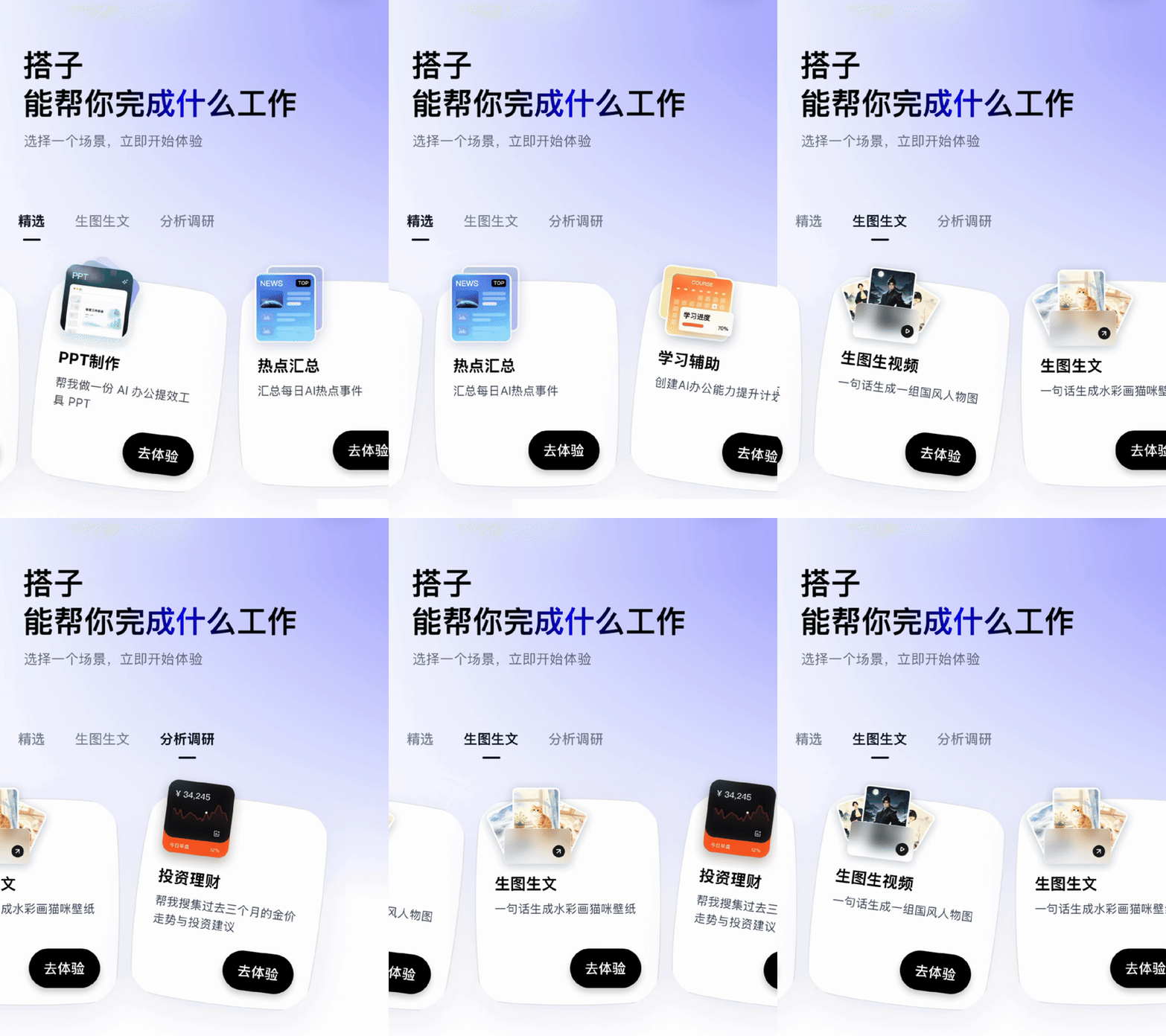
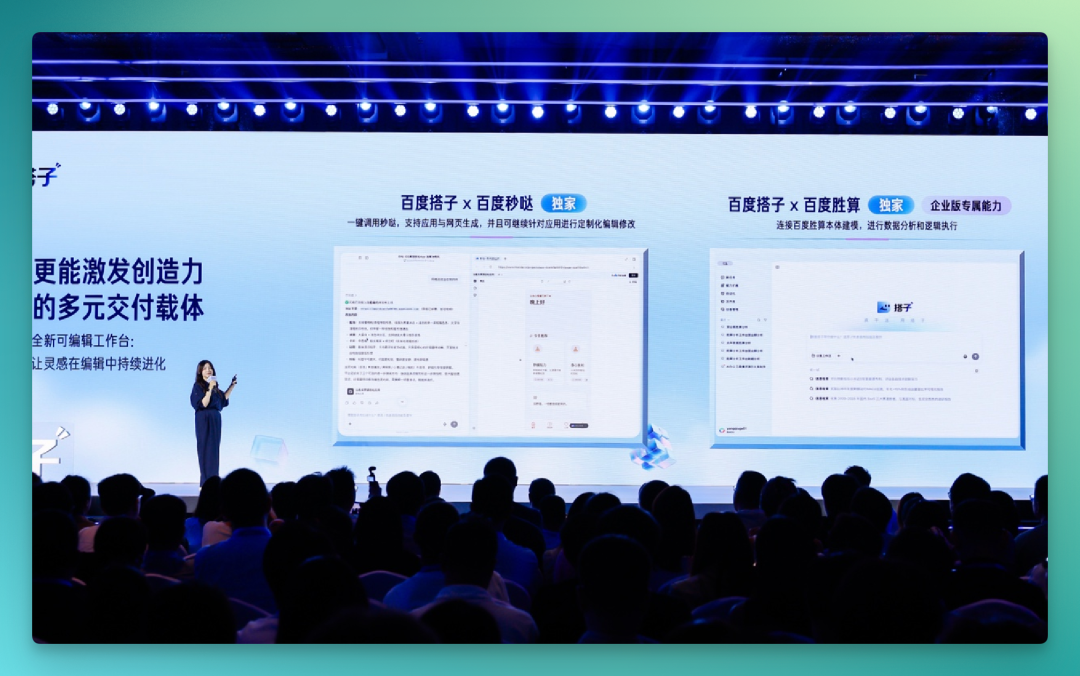
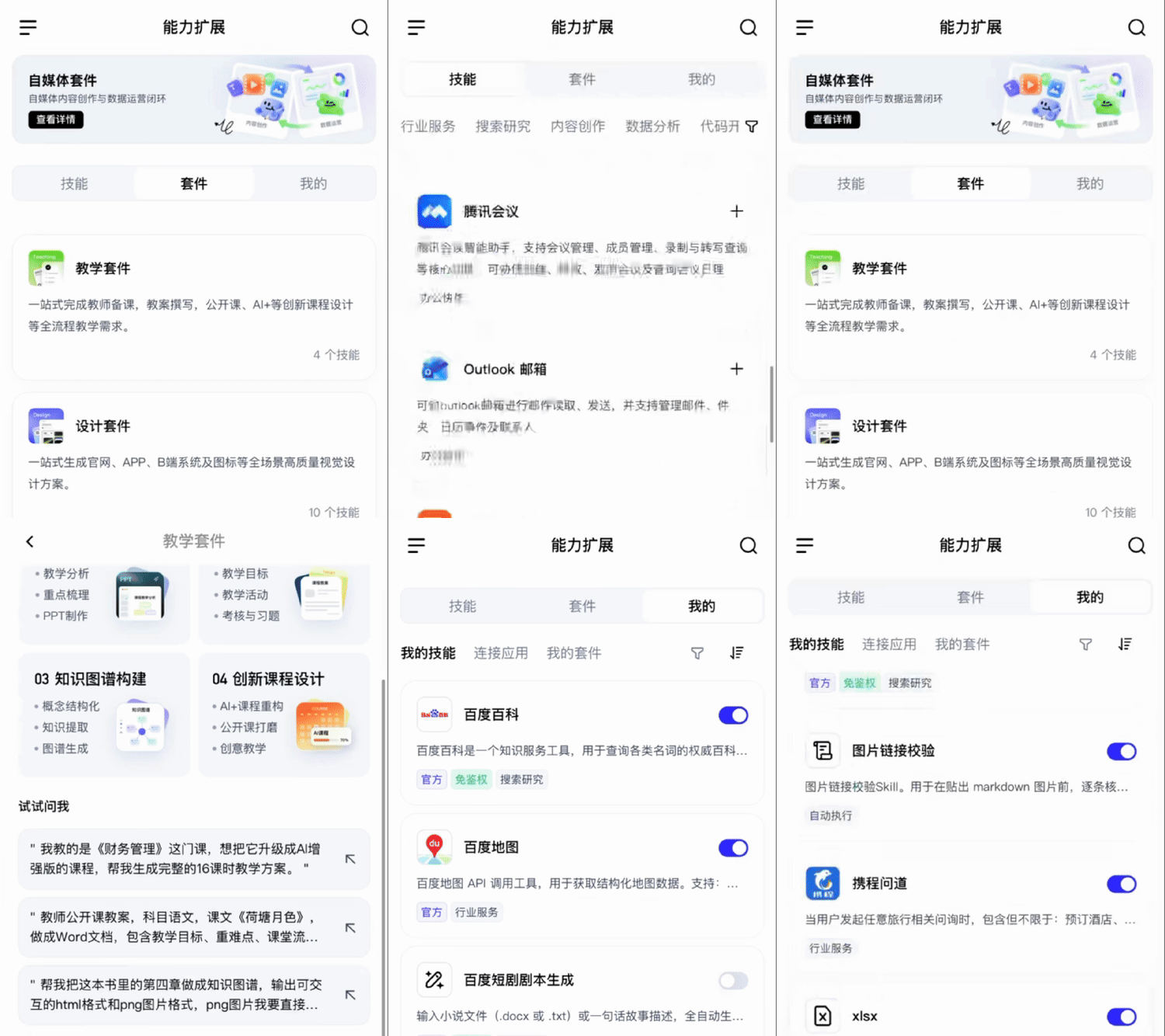
Since launching as an MVP on March 22, 2026, it's maintained roughly a daily release cadence. In May it launched dual-platform apps, in June upgraded the Harness engine to optimize token consumption, and in July-August successively added self-media, finance, design suites and the Miaoda workbench, gradually filling out its feature set.
These iterative updates are already showing up in actual user office workflows, with many routine tasks now delegable to Baidu Buddy.
For example, you can one-click add the self-media suite skill, then input a brief prompt into Baidu Buddy, and it will draft self-media copy based on current internet memes and that day's hot topics.
Sample prompt:
Write 3 Xiaohongshu posts combining AI technology and automotive industry hot topics of the day with internet memes, tone professional yet humorous and accessible, each including headline, cover copy, body text, tags, image generation prompts, and comment section engagement hooks, with differentiated angles across all three.
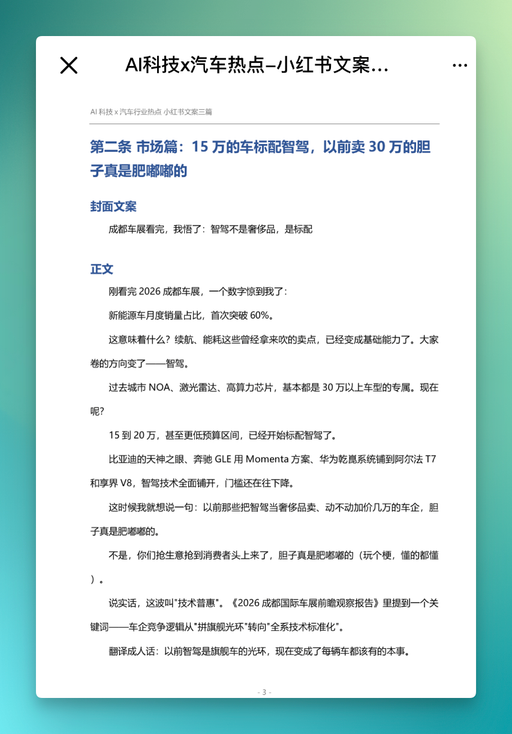
These Xiaohongshu posts still need polishing, but its search capability for internet memes and daily hot topics is genuinely solid.
Because I looked closely and noticed that in the second post, when writing about standard-issue mounts, it used the descriptor "chubby cheeks" (肥嘟嘟) — a meme currently viral on Douyin.
Baidu Buddy has also built in many other skills, such as Baidu text-to-video, using Remotion and React — a popular text-to-video creation workflow right now:
Looking at the timeline, in half a year Baidu Buddy evolved from an MVP into a full product covering self-media, finance, design, and collaboration, with virtually no major gaps in between.
Full-stack
Sustained rapid iteration depends on more fundamental full-stack capabilities.
From chips to frameworks, from models to agent development, Baidu Buddy leverages the continuous iteration and customized delivery capabilities of full-stack AI cloud to more nimbly切入 different business scenarios. This gives it more latitude to balance efficiency and quality when coordinating model calls, tool selection, and final delivery.
Additionally, it integrates years of accumulated AI capabilities of various types through a Skill-based architecture, enabling more diverse scenario coverage.
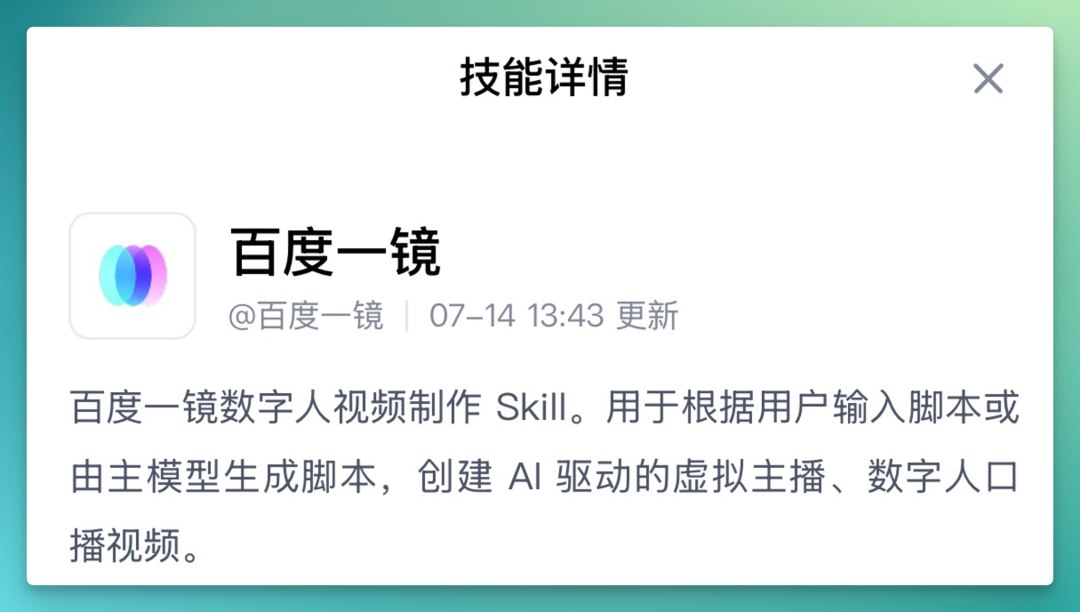
For instance, its digital human video creation skill adopts Baidu Yijing's digital human technology, integrated as a video production Skill that generates AI virtual human presenter videos based on user-input scripts.
I had it generate a tea culture digital human presenter video — the overall result looks fairly natural, with complete and substantial narrative logic.
🚥
Looking back now, Baidu's early judgment to prioritize AI落地价值 over pure technology competition has proven accurate.
From the 2024 and 2025 Baidu World conferences to the May 2026 Create conference, they successively put forward concepts like "Applications Are Here," "Effect Emergence," and DAA (Daily Active Agents). Meanwhile Baidu announced upgrades to its new full-stack AI cloud, with comprehensive upgrades to Agent Infra and AI Infra, and through new concepts like Harness Engineering aimed at supporting large-scale agent application deployment.
Of course, behind this strategic shift may also be an early recognition that "the money in the model layer is hard to earn" — Sequoia Capital partner David Cahn twice published essays probing "AI's $200 Billion Question" and "AI's $600 Billion Question." The gist: we've spent so much money, where's the revenue?
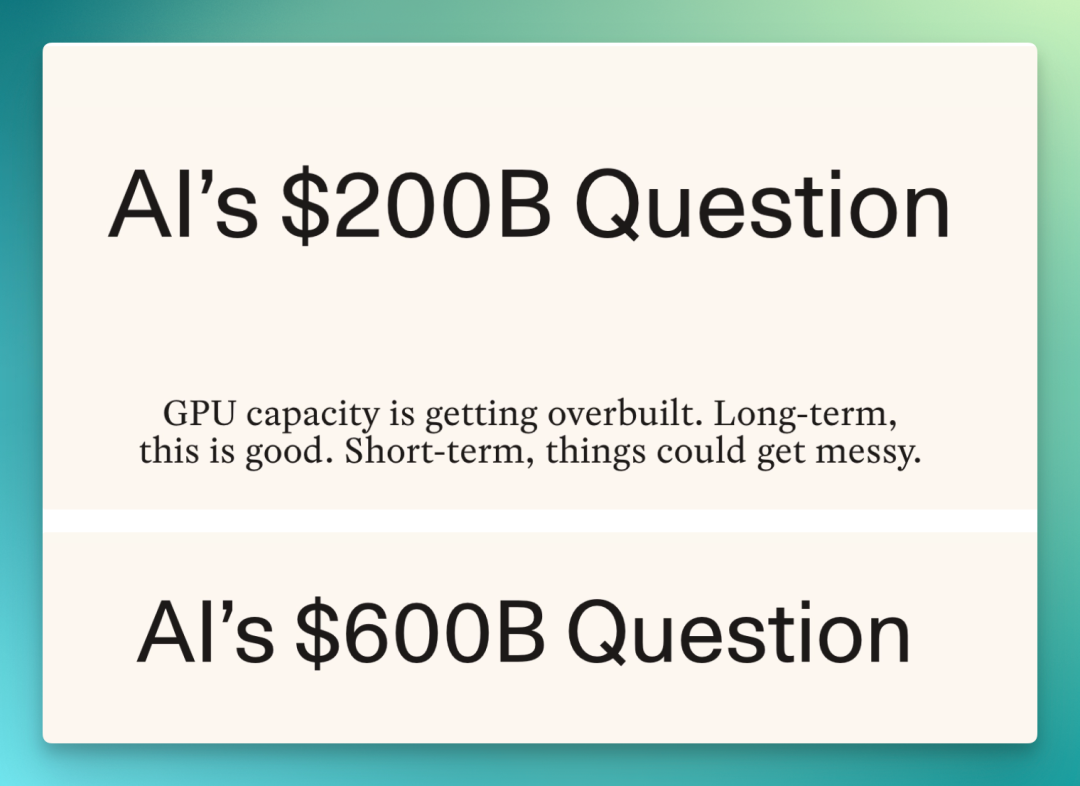
Three years on, questions about commercial returns remain unanswered, yet no big tech company has slowed down. On the contrary, while continuing to加码 model training, they are intensively integrating scattered agents into unified entry points.
The application layer is the key to converting model capabilities into productivity.
Yet the office scenario isn't easily conquered either. AI office products require big tech to commit genuine resources toward building Harness and deep ecosystem synergy.
For AI giants, this is another major test following self-developed large models, with resource consumption potentially no less than model training.
But compared to pure model competition, the commercial prospects at the application layer are far clearer than in the past. This war around office scenarios has only just begun.