At Crossing, cloud computing legend Jeff Barr sat down with us for three "conversations," answering 100 questions.
On AI, evangelism, personal growth, and why he insists on "getting his hands dirty" — day in, day out, for two decades.
On AI, evangelism, personal growth, and why he still insists on "getting his hands dirty" after two decades.

👦🏻 Author: Jingshan
🥷 Editor: Koji
🧑🎨 Layout: NCon

You might find it hard to imagine: a founding member of Amazon Web Services' core team, a tech giant's global VP who's spent over 20 years at Amazon and written more than 3,000 blog posts, sitting across from you like an old friend answering all kinds of wild questions from the community.
But that's exactly what happened in Shanghai last week.
The protagonist was AWS legend Jeff Barr, and the people who "made it happen" were us at Crossing.
When we heard Jeff was coming to Shanghai, we had only one thought: we had to do something different. And so, two whirlwind days with three events: a high-level panel, a no-holds-barred Ask Me Anything, plus a video podcast recorded at our AI Hacker House — over 100 questions answered in total.
We wanted to prove that the best conversations always happen between questions, not between a podium and rows of seats.
We spent two days with Jeff Barr in Shanghai, co-organizing three events with Amazon Web Services:

Cross-Language Developer Dialogue: Jeff Barr x Crossing Panel
The first event was a roundtable at QCon, organized by Crossing. In a conversation between Crossing founder Koji and Jeff Barr, they were joined by Xu Fan, founder of Shali Cloud Technology, and Git Yuanbao, founder of Jingyuan AI, for a technical collision that crossed languages and cultures.


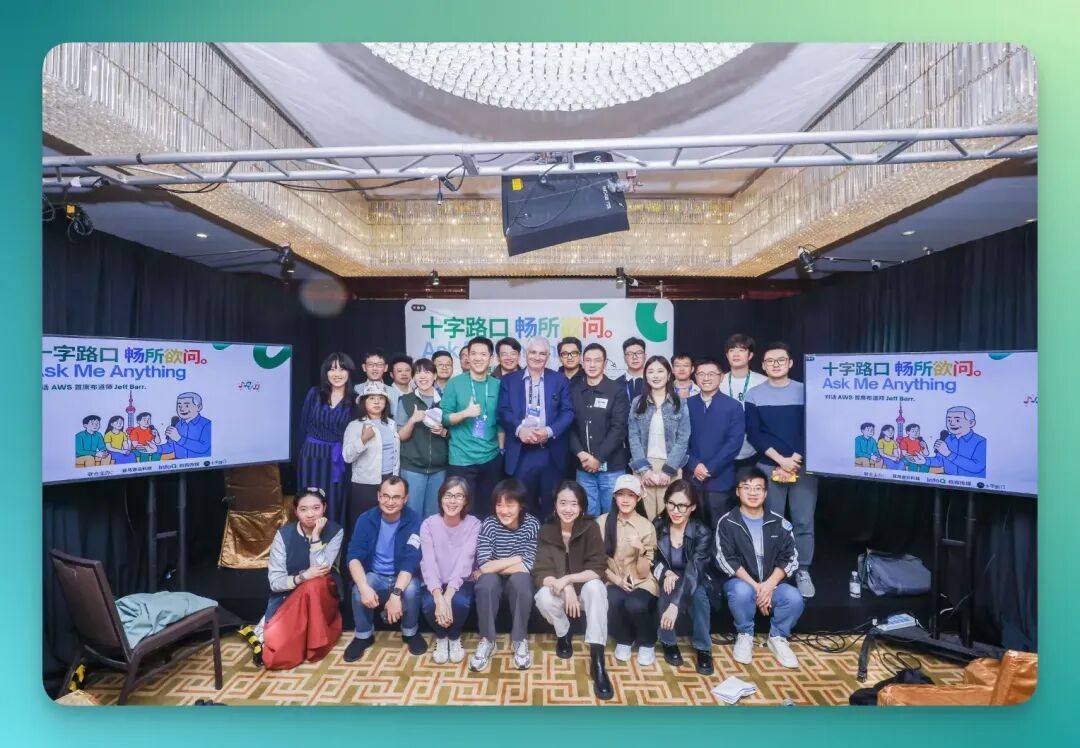
Bringing Conversation Back to Real Dialogue: "Ask Me Anything"
For the second event, Crossing adopted the Ask Me Anything (AMA) format, hugely popular in developer communities, moderated by co-founder Ronghui. We collected over a hundred questions from developers in the Crossing community, transforming the exchange from a one-way "presentation" into genuine two-way dialogue. The energy on site was electric.

Deep Intellectual Exchange: AI Hacker House Video Podcast
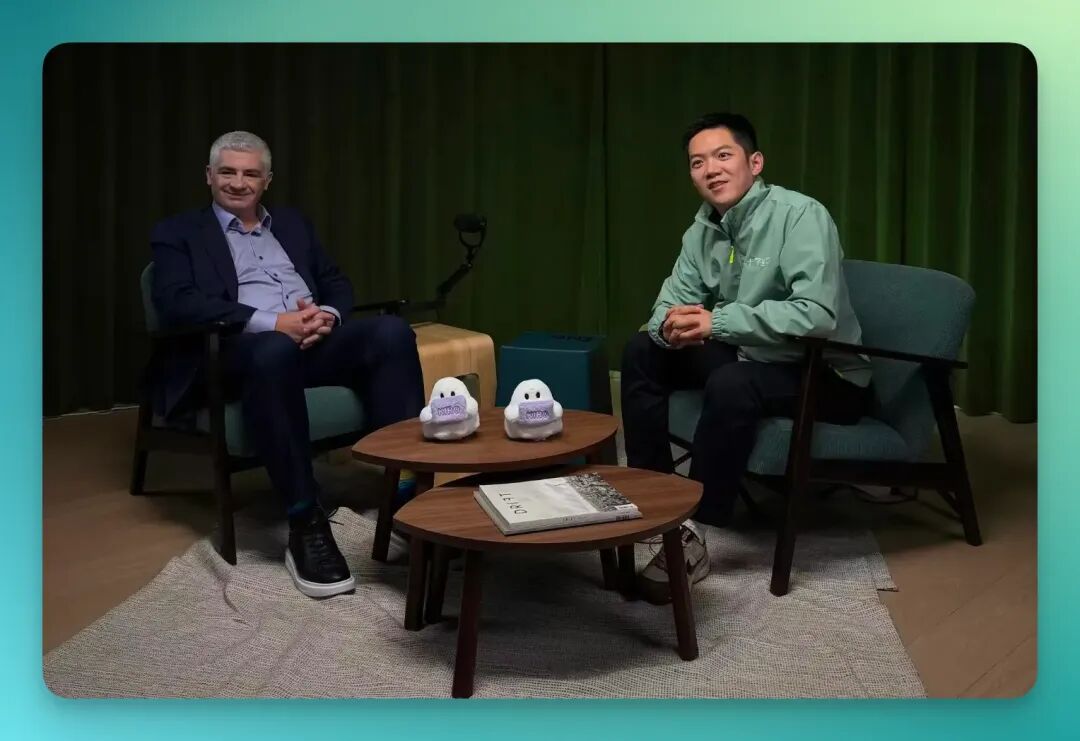
Finally, we invited Jeff to the AI Hacker House that Crossing launched in Shanghai to record a one-on-one video podcast. Koji and Jeff had an in-depth conversation covering the evolution of AWS, technology cycles, and the future of AI.
This video podcast will be released this week across Koji's Xiaohongshu, WeChat Channels, Bilibili, YouTube, and other platforms.
So, across these three conversations, what did developers actually ask? And what answers did Jeff give?
We've compiled content from the Panel, the AMA, and the AI Hacker House podcast into 10 selected questions, organized into 3 major sections, with a final Part introducing Jeff's "Million-Prize Pool" initiative:
Part 1 | How to Evolve in the AI Era
Part 2 | The Evangelist
Part 3 | Where AI Goes Next
Part 4 | The Million-Prize Pool Plan
Part 1 | How to Evolve in the AI Era
1. How Not to Get Left Behind?
👦🏻 Bilibili creator Git Yuanbao:
I'd been working in content, and gradually started paying attention to AI hardware — it seems like a genuinely promising direction, and the market has already validated it. But when I actually tried to build something myself, I discovered the gap between model and product was way bigger than I imagined. The technology updates so fast, there's something new almost every month. As developers, we all feel some anxiety about this.
What I want to ask is: facing this kind of change, how should we young people build our own technical moats and not get left too far behind?
👨🏻💼 Jeff Barr:
Yeah, I think keeping up with AI technology right now is genuinely challenging.
But I always tell people: make sure you carve out time in your weekly schedule, even just a little, specifically for learning and trying new things — especially anything AI-related.
Because with AI tools and services, getting your hands dirty really matters. If you're just watching others talk about it, watching tutorial videos, it's actually hard to truly grasp how it works.
Only when you input prompts yourself, experiment, adjust, and see how it responds — only then do you feel that "rhythm" and that sense of feedback.
That "oh, so that's how it works" moment — you only get that by doing it yourself.
2. Drop Out and Start a Company? Or Not?
👦🏻 AMA audience question:
A lot of tech company founders dropped out of school to start companies, while others started after graduating. So if I want to try something, do I absolutely have to finish my degree? Or is starting early actually fine too? What's your take?
👨🏻💼 Jeff Barr:
While I definitely wouldn't tell you to drop out, I do think the role of university education is genuinely changing now. When I first started as a developer, if you didn't have a computer science degree, people wouldn't even consider you a real developer.
But it's completely different for my kids' generation. My youngest daughter is 32 now, and so many of them grew up entirely through self-study.
There are so many resources online now — incredibly detailed documentation, tutorial videos, how-to guides, blogs, courses...
As long as you have the drive to dig in, to understand, to build, what you can learn is beyond imagination.
You just need a computer, open a search engine, and you can start learning, start building, even start a company.
You don't need a lot of money, and you don't necessarily need a degree.
Of course, I'm not saying you should drop out to do this. What I mean is: alongside your normal studies, if you have an idea, want to solve a problem, or want to build something, you actually have the ability to do it yourself.
3. Do You Still Need a Team in the AI Era?
👦🏻 AMA audience question:
If we actually want to build something, do we absolutely need to assemble a team? Like, someone who understands tech, someone who understands business, a designer, that kind of thing?
Or can I actually just do it myself, learning everything I need through various channels?
👨🏻💼 Jeff Barr:
The traditional model used to be that you needed a team, had to find all kinds of specialists: someone for tech, someone for business, someone for design, everyone dividing the work.
But in recent years there's been a completely new trend: an individual armed with AI tools can be far more powerful than before.
You can imagine that someone who masters enough skills could potentially build a product, or even a company, entirely on their own.
So my advice is: push as far as you can by yourself first. Only when you get to the point of: okay, I don't know how to do this, or I don't want to do it, and I can't be bothered to learn — only then consider building a team.
Today's technology gives one person the chance to become a "solo founder." By yourself, you can solve problems that previously only large companies could tackle.
That was completely impossible in my generation's eyes.
4. No Technical Background — How to Participate in AI?
👦🏻 AMA audience question:
Do non-technical people actually have a chance to really use these AI development tools? Will there come a day when we don't have to mess with virtual environments, runtime configurations, and all that hassle — when we can just use natural language to turn our ideas into reality and build a real product?
👨🏻💼 Jeff Barr:
I think this is a really great question. To me, the best thing about these AI tools is that they're opening a door for more people. Giving more people the chance to create, to build, to solve problems.
Whatever you call yourself — creator, developer, problem-solver.
Of course, technical education helps you understand these tools better. But what actually makes you valuable are two things: first, you can understand business problems; second, you can clearly express your ideas to the tool.
And neither of these requires a computer science background.
I believe we'll soon see examples of people saying: I never studied computers, I can't write code, but I understood this problem, so I built a product.
Maybe then some traditional developers will say: that's not real development.
But those people will smile and reply: doesn't matter, I solved the customer's problem and turned it into a business.
That's the point: solving problems, creating value, unleashing creativity.
Technology matters, of course, but for many people it's just a means, not the end.
The future belongs to those with insight and creativity, and they will absolutely be part of this transformation.
And actually, there are already many low-cost or even free tools that let developers, or anyone, get started very easily. To me, what matters most is that hands-on experience — chatting with the model, expressing your ideas, seeing what it comes back with.
In this process, you'll gradually learn how to organize your language, how to ask questions, how to describe what you need. You'll slowly understand how this back-and-forth "human-computer interaction" actually works.
I think this experience is truly worth having for everyone, regardless of background. It lets those who genuinely understand the business and clearly know what problem they want to solve, even without deep technical skills, create, realize, and generate value in entirely new ways.
5. Explain It to Yourself — Always Get Your Hands Dirty
👦🏻 Koji:
How do you make complex technology so clear and readable in your writing? Especially since I heard your middle school teacher once said you weren't great at writing — how did you get there?
👨🏻💼 Jeff Barr:
Really just massive amounts of practice.
For me, there's a simple principle: when you truly understand something, explaining it becomes really easy.
Sometimes you read an article full of fancy words, and that usually means the author hasn't fully figured it out themselves.
So they go around in circles, making it sound complicated without getting to the point. But if you really understand, what you write ends up simple and direct.
I've always treated blogging as "explaining to myself." If I haven't figured it out, I definitely can't explain it clearly to others.
Most importantly, you must always get your hands dirty.
I've found there's a huge temptation in your career. When you first start working, you want to do everything yourself. But as your position rises higher and higher, you gradually drift further from actually "doing."
I've been deliberately resisting this temptation.
Sometimes people say to me: you could keep being a tech evangelist, but also be more business-oriented, spend more time talking with executives, CIOs, CTOs.
That's totally fine, that's a very normal career path.
But the problem is, once you go down that road, you find yourself using corporate vocabulary and business jargon all day, instead of talking about the deep technology I know best and love most.
I'd rather sit with a bunch of twenty-something developers talking code and ideas than spend all day in meetings with fifty-something CIOs.
Not that there's anything wrong with that — it's just that I prefer that direct, hands-on, code-touching kind of exchange.
That's the state I truly want to be in.
Part 2 | The Evangelist
6. Why Does Everyone Want to Be an Evangelist Now?
👦🏻 AMA questioner:
It feels like everyone wants to be a "tech evangelist" these days.
Like people say, a founder needs to do product, write code, and do marketing — doesn't that sound exactly like what you do every day?
So I'm curious: what do you think of this phenomenon where "everyone wants to become you"?
👨🏻💼 Jeff Barr:
That does sound pretty nice, honestly. It means people see what I do and think: wow, I want to do that too.
Honestly, it really is a great job, because it fuses several different worlds together. You get to work with technology, always at the cutting edge, touching new things every day. But I've also found that if you only do tech all the time, life can get a little too quiet, too lonely. After all, a lot of the time you're just alone at a keyboard typing code.
What's powerful about this job is that beyond the tech side, there's a human side. You go to events, AMAs like today, meet people, chat, share stories, become more outgoing and open. You discover that when you share these interesting things, you can genuinely influence people, help people, in some way — and that feels really good.
So for me, this is genuinely a very enjoyable way of life, and a career I love.
And you'll find: the more skills you have, the lower your communication costs actually are. Because your team can be smaller, and you can spend more time "actually doing things" instead of spending huge amounts of time every day in meetings, syncing information, explaining work.
7. What Makes a True Tech Evangelist?
👦🏻 Koji:
Now with AI tools and social media, it feels like "anyone can be an evangelist."
So what do you think becoming a "true tech evangelist" actually means?
👨🏻💼 Jeff Barr:
I think first, the "tech" part is really important.
You have to genuinely understand what you're talking about — that's super critical. Then, choose the expression method you're best at and most comfortable with. Could be writing, speaking, video, or TikTok shorts.
Whatever format you prefer, you can use it to share, to create content.
As developers, we're constantly learning new things. And in your learning process, whether writing code or taking notes, you can casually turn that process into content.
For me, this is a little "secret weapon": one effort, two returns. You spend time learning, and simultaneously create content. With the same time, you improve yourself, let people discover you through sharing, and build your social influence along the way.
What's interesting about the "evangelist" role is that everyone can add their own "personal flavor" to it. There's no standard process, no fixed job description. Some people lean more marketing, some focus more on business.
When I started, I thought: I have a computer science background, I've written code for many years, so I'll bring my technical foundation in. This lets me understand technology very deeply — if I want, I can drill all the way down to the bottom of the stack.
But what I truly love isn't just understanding and building — it's chatting with developers, sharing, explaining things. I've always seen this as "lighting a fire" — igniting that flame in developers' minds, telling them: there's something new here, it's genuinely cool. This is what it can do, and I think you'll find it interesting and useful — maybe you can build something amazing with it.
It turns out that "understanding" and "explaining" — these two seemingly simple actions — are enough to sustain an entire career.
Part 3 | Where AI Goes Next
8. The Future of Code
👦🏻 Koji:
AI can already help many beginners write code. But I've noticed something pretty common: a lot of people get AI-generated code and have no idea how to actually run it.
Meaning, if you don't have a technical background, you genuinely don't know what to do next.
So I've been wondering: will there come a day when we can just speak our ideas in natural language, and AI not only writes the code for us but actually runs the results — we don't even look at the code, we just see the final product?
👨🏻💼 Jeff Barr:
I really believe we are heading in that direction. I'm not sure if it's one year or five years out, but one thing I'm very certain about: in the future, questions like "where does code run, how does it run" will all be handled automatically by tools.
Those tools will configure everything for you, host it in the cloud, auto-scale, securely and reliably. Actually, with the right prompts, there are already tools that can do this today.
They can not only generate deployment packages but automatically deploy code to the cloud.
But I think the deeper question is: how do we help people with business insight but no technical background genuinely turn their ideas into reality?
Because from "I have a good idea" to "this idea actually runs," there's a huge "blank zone" in between. So what do we do? Have them learn underlying technology themselves? Or tell them: you need to find a developer to partner with?
Or could we simply build entirely new tools that let them cross that gap themselves? I think there are so many interesting opportunities here, and it's a massive space for entrepreneurship.
In the future, we'll definitely get to the point where a non-technical person can be a creator too. They can not only build products but make them actually run, used by people worldwide in a low-cost, scalable way.
Of course, I think we still have some walking to do before we get there.
9. The Evolution of Cloud Computing
👦🏻 Koji:
I've always felt your personal history is basically a history of cloud computing itself. Over these past two decades, how have the core problems developers faced changed? If you had to divide it, what eras would cloud computing have? How do you make complex systems "simple and usable" for users?
👨🏻💼 Jeff Barr:
I think the biggest change over these years is that developers have more and more "choices." In the early days, everything was very simple. When we first launched EC2, there was just one Region globally,
and only one instance type, called M1.small — fixed memory, storage, compute. You didn't have to choose, there was nothing to choose.
Now it's completely different. We have over thirty regions globally, hundreds of instance types, different processors, different memory specs, different storage configurations. So today's developers face a world of choice explosion.
The key is we need developers to understand: in most cases, you don't need to understand everything from the start. To be an effective developer, you need to learn to focus on the most important thing right in front of you.
Sometimes you need to put on "blinders" and tell yourself: "I'm only looking at this part right here. I know there's lots of great stuff beside me, and piles of interesting features over there too, but right now, I need to pretend they don't exist."
Because we have so many interesting and powerful services now, developers are always easily tempted.
They think: "I want to use this, and that, and this too... I want to use all of these to build a super cool app!"
I usually say: that's certainly a great goal, and you can absolutely work toward it. But please start simple, get the first feature running, then add one service, stabilize it, then add the next.
At every step, confirm that you're genuinely creating value for customers, not just wanting to use everything because you think these services are fun.
These two mindsets — doing it for customers vs. playing with it for yourself — look similar, but the difference is actually huge.
10. Kiro
👦🏻 Koji:
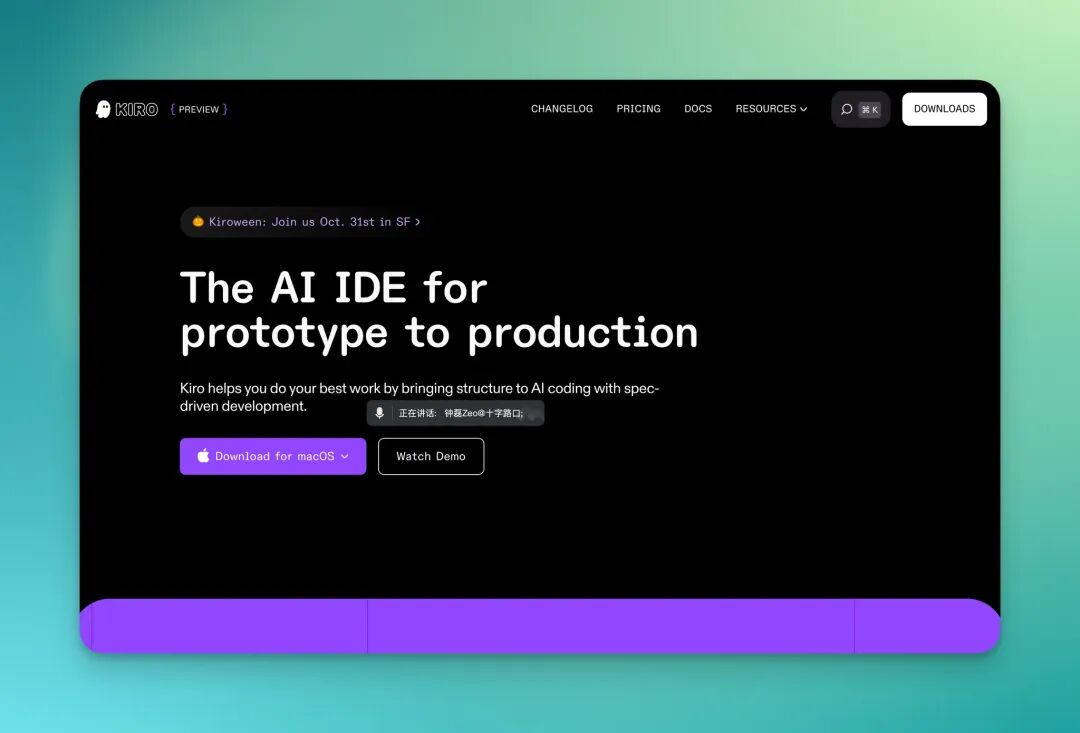
AWS recently launched a new product called Kiro. Can you tell us what it does?
👨🏻💼 Jeff Barr:
Kiro is an AI-powered development tool, and its core philosophy is what we call "Spec-Driven Development."
"Spec" is short for "Specification."
Normally when we do projects, we write code first and iterate as we go. With Kiro, the first step isn't to start coding — it's to define the application's spec together with it, things like features, structure, interfaces, these key parts.
So we call it "Spec first" — establish the rules first, then start building.
Kiro works more like a technically savvy partner. You share ideas, it helps organize requirements; you set conditions, it fills in details. This back-and-forth discussion process is essentially transforming the vision in your head into an actionable development plan.
Once the spec is set, Kiro automatically breaks the goal into a series of tasks: set up file structure first, then generate modules, then write tests.
You can step-by-step "activate" these tasks, watch it execute, check results. You maintain control of the pace throughout.
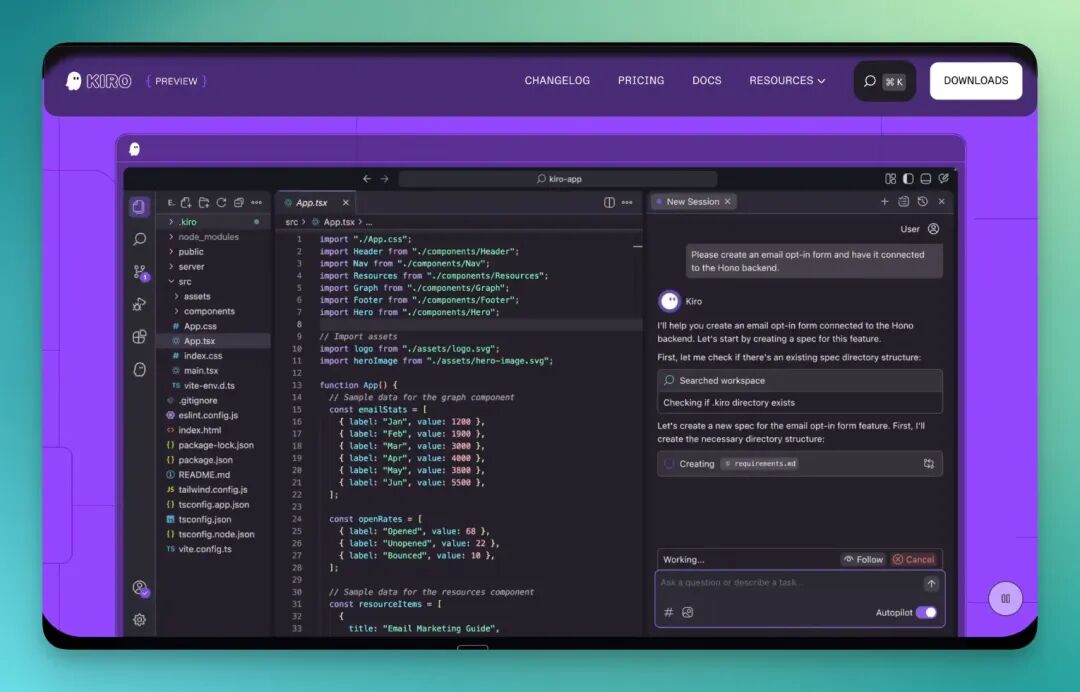
This approach is more systematic and stable than what we call "vibe coding." Vibe coding is great too — fast and intuitive for small-to-medium projects; but once projects get complex, you need a clearer process to drive them forward, and that's exactly where "spec-driven development" shines.
In building Kiro, we also talked with many teams. They generally felt AI writing code was genuinely helpful, but wanted a tool that works regardless of project size.
So we later added a feature called "Steering Documents." If a team already has development specs or coding standards, they can write these rules into steering documents.
This way, whoever uses Kiro will automatically work under the same set of rules.
The system integrates these specs directly into generated code, essentially giving AI "organizational context" — it not only knows what you want to do, but how you want it done.
Part 4 | The Million-Prize Pool Plan
Worth noting: to incentivize developers to use the AI programming tool Kiro, it recently launched the "Million-Prize Pool Plan" in parallel.
The rules are simple: any Chinese developer who uses Kiro to develop and wins a prize in any technical competition with over 100 participants (not officially hosted by AWS), Kiro will match the cash reward 1:1.
For example, if you win 50,000 RMB in a competition, Kiro will award you another 50,000 RMB. The entire plan has a total prize pool of up to 1 million RMB, with a maximum matching reward of 200,000 RMB per competition.
Of course, this plan isn't just about "giving away money." All participants receive an exclusive "Kiro Challenger" digital identity, and winners will be featured on the officially created "Kiro Honor Roll."

Beyond these 10 Q&As, Jeff Barr shared many more ideas on site.
This "Ask Me Anything" is exactly what Crossing wants to do: let entrepreneurs and developers meet on the same timeline, turn ideas into action, turn questions into paths. Technology changes, paradigms change, but connecting people and letting curiosity happen — that's what we always want to hold onto.
One AMA, one video podcast, also let us see that cross-cycle power in Jeff Barr.
Over twenty years ago, he wrote the first line of code for AWS; over twenty years later, he's still chatting with young developers about "how to get your hands dirty."
The times change; he hasn't.
He still believes: the best way to understand something is to do it yourself; the best way to explain something is to say it yourself.
Maybe that's the power of crossing cycles: not having all the answers, but always asking questions, always on the road.
Crossing was honored to be one stop on his journey, witnessing legend and sparking new thinking.
You should always get your hands dirty.