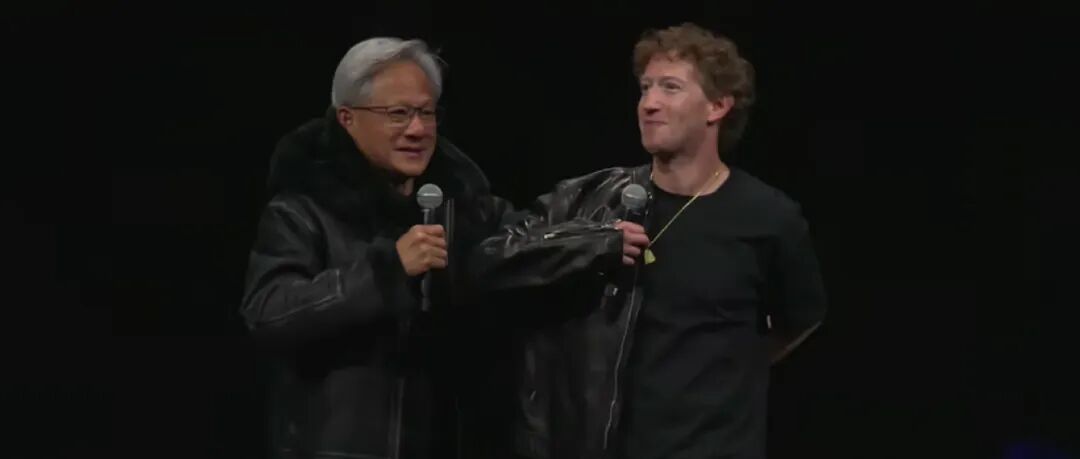
Jensen Huang: "Here, Zuck, let me get you a leather jacket."

*Let Me Keep You Warm*

⭐️ Apple Rolls Out Apple Intelligence
🎨 Canva Acquires Leonardo AI
🎬 Meta Releases SAM 2
🌟 Jensen Huang and Mark Zuckerberg's Fireside Chat
🤖 Tsinghua Team Builds Powerful Short-Video Understanding AI
🤖 TorchV AI Launches Two Sleek, Powerful AI Apps
🏙️ Shanghai Prioritizes AI Drug Discovery
👴🏻 Sensi Raises Over $53 Million
💰 WhaleBot Closes 7th Funding Round Exceeding 100 Million Yuan
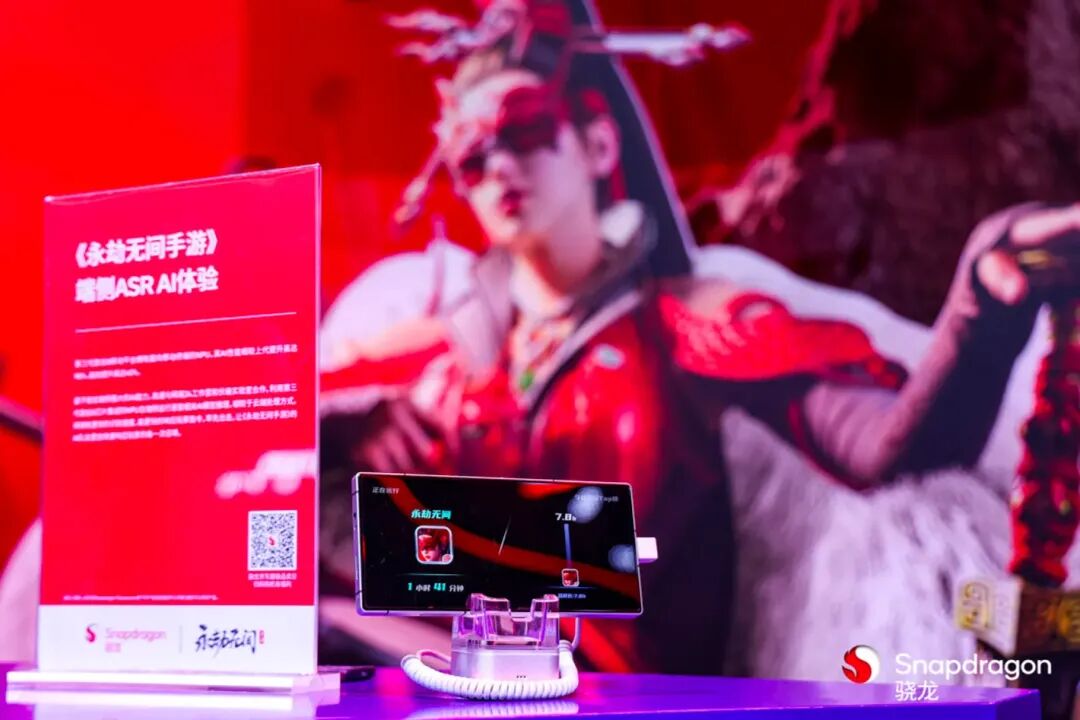
🎮 ChinaJoy 2024: AI Quietly Reshaping the Gaming Industry

Apple Rolls Out Apple Intelligence
Apple has introduced Apple Intelligence features in the iOS 18.1 and macOS Sequoia 15.1 betas, including AI-powered text rewriting and message summarization. To safeguard user privacy, Apple employs Private Cloud Compute (PCC) for end-to-end encrypted processing, with data permanently deleted after handling.
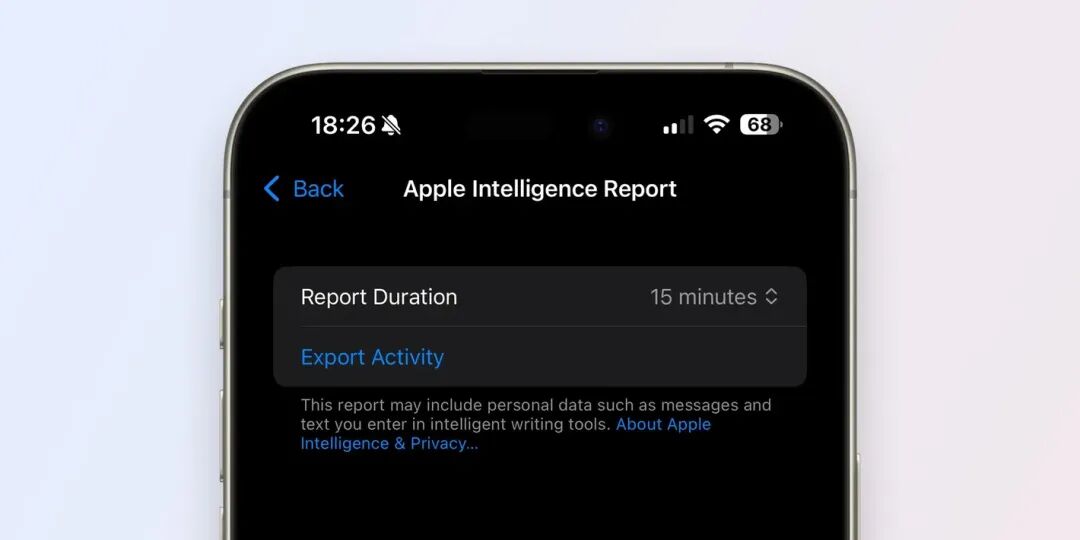
Users can view Apple Intelligence reports in privacy settings to understand how AI processes their data. These reports detail how requests are handled — whether processed on-device or via encrypted PCC cloud processing. Because reports may contain sensitive information, users must authenticate with Face ID or Touch ID to access them.
Apple's AI models come in on-device and cloud variants. To ensure privacy, Apple developed dedicated chips to serve as PCCs, encrypting online requests throughout the entire process. By default, reports are retained on-device for 15 minutes, though users can extend this to 7 days or disable the feature entirely. This approach reflects Apple's strong commitment to user privacy even as it advances AI technology.
Canva Acquires Leonardo AI
Canva has announced the acquisition of Australian startup Leonardo AI[1], a move set to transform visual communication. Since its 2022 launch, Leonardo AI has rapidly attracted over 19 million global users who have generated more than one billion images on the platform. The innovative tool has won widespread acclaim across creative industries including advertising, design, film, and fashion.
The acquisition will seamlessly integrate Leonardo AI's cutting-edge technology with Canva's Magic Studio, which has surpassed 7 billion uses since its 2023 debut. Leonardo AI will continue operating independently while its technology gets woven into Canva's product suite, giving users more powerful creation tools.
As Canva's eighth major acquisition, this partnership strengthens the company's R&D capabilities and unlocks richer visual creation possibilities for users worldwide. By incorporating Leonardo AI's team of 120 top-tier researchers, engineers, and designers, Canva will continue leading innovation in visual communication, delivering more advanced and intuitive creative experiences.
Meta Releases SAM 2
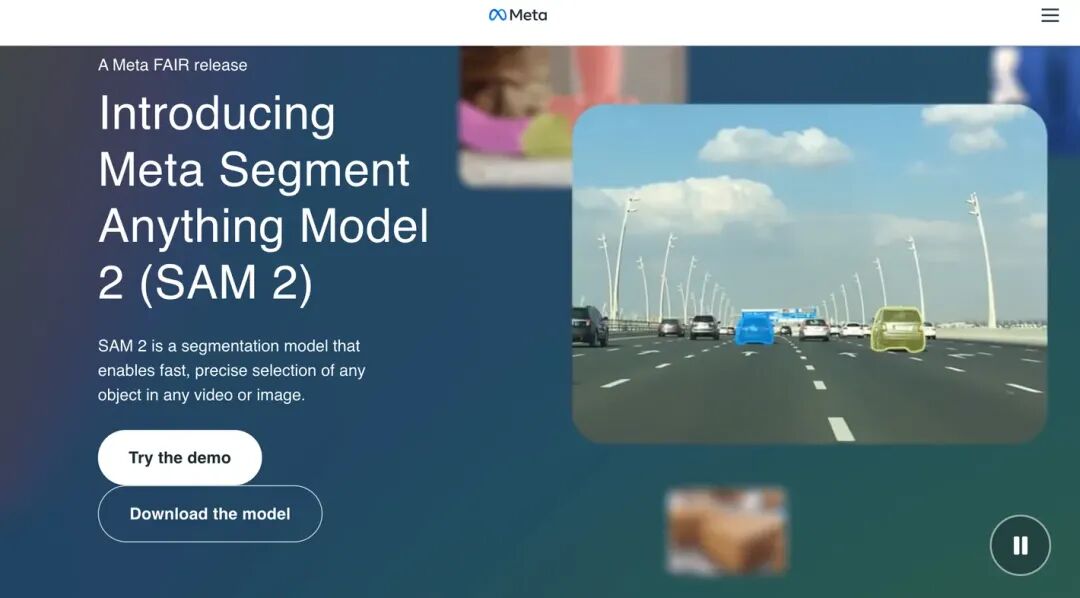
Meta has announced Segment Anything Model 2 (SAM 2)[2], the first unified model for real-time, promptable object segmentation in both images and video. SAM 2 surpasses its predecessor in image segmentation accuracy and delivers significantly better video segmentation performance, requiring only one-third the interaction time.
SAM 2 features an innovative streaming memory design that processes video frames sequentially, making it ideal for real-time applications. Meta also released SA-V, a large annotated dataset containing roughly 51,000 real-world videos and over 600,000 masklets. SAM 2 will be open-sourced and free to use, with hosting available on platforms including Amazon SageMaker.
While SAM 2 excels at segmenting images and short videos, it still faces challenges with long videos, dramatic viewpoint changes, and crowded scenes. Future research will focus on improving model efficiency, enhancing temporal smoothness, and further automating data annotation.
Jensen Huang and Mark Zuckerberg's Fireside Chat
At the SIGGRAPH graphics conference in Denver, NVIDIA CEO Jensen Huang and Meta CEO Mark Zuckerberg each took part in fireside conversations envisioning AI's future.
Huang predicts that the next wave of AI will be physical AI — robots. He introduced NVIDIA's new products for accelerating humanoid robot development, including NIM microservices and the OSMO orchestration service. Zuckerberg is optimistic about AI's future, believing there's a five-year runway for product innovation based on current AI model technology. He revealed that Meta is developing the Llama 4.0 large model and has launched AI Studio in the United States. Meta is also actively positioning itself for next-generation computing platforms, including AR glasses and MR headsets. However, Zuckerberg warned of a potential "nightmare" scenario: future social media platforms could be flooded with AI-generated personalized content that users might never stop scrolling through.
The two tech leaders revived last year's tradition by exchanging jackets at the end of their conversation. Huang received a black shearling coat, while Zuckerberg got a signature leather jacket.


Tsinghua Team Builds Powerful Short-Video Understanding AI
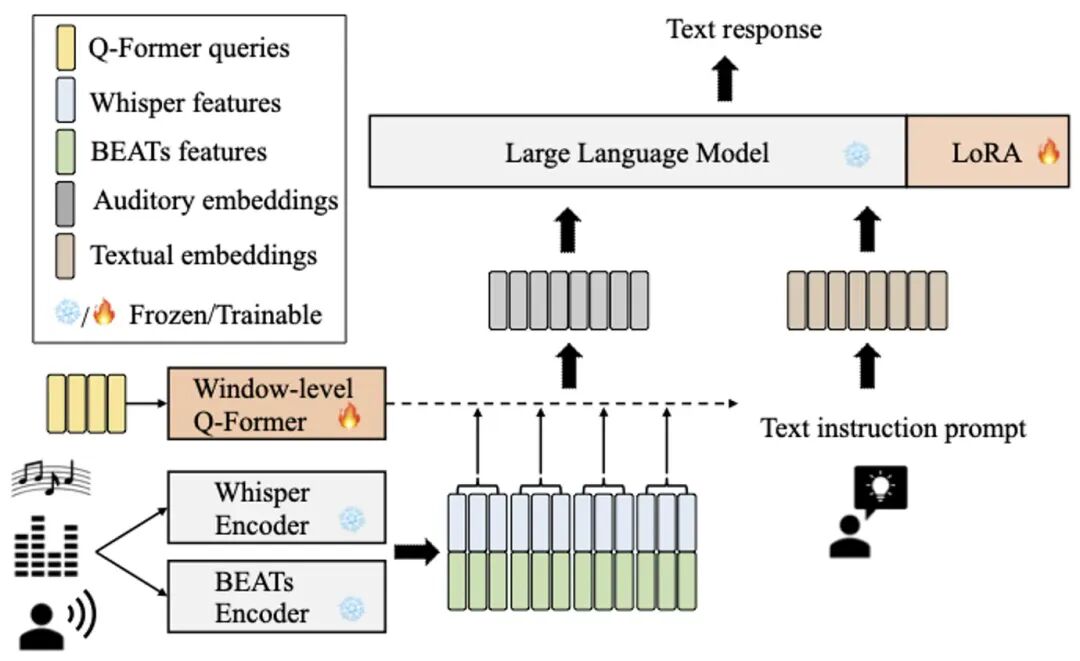
A research team at Tsinghua University has developed video-SALMONN[3], a novel AI model that comprehensively understands short-video content much like humans do. The model doesn't just process visual frames — it comprehends speech and music, and can even read text within videos.
video-SALMONN delivers outstanding performance across various tests, outperforming other AI models whether tasked with understanding images, audio, or simultaneous video-audio processing. It can even handle tasks it wasn't explicitly trained for, such as determining whether video and audio are synchronized.
This technological breakthrough could enable more intelligent video analysis tools, allowing AI to better understand and process short-form video content and opening new possibilities for future applications.
TorchV AI Launches Two Sleek, Powerful AI Apps
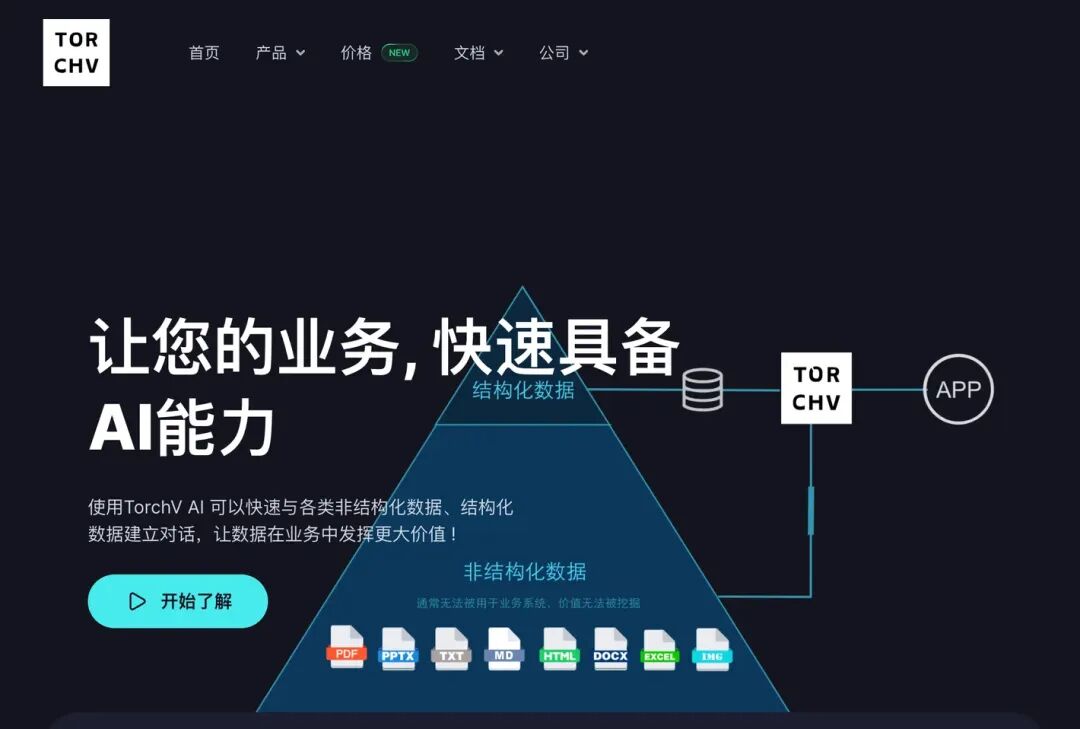
TorchV AI[4] recently introduced two products embodying its "simple but powerful" philosophy: TorchV Bot and TorchV Assistant. Both are designed to solve specific problems with efficient user experiences.
TorchV Bot is a knowledge-base and large language model-powered conversational bot. It addresses limitations in traditional NLP technology around recognition capability and knowledge maintenance. Through RAG and LLM technology, TorchV Bot achieves more accurate question recognition and automated knowledge processing. Users can deploy customer service bots quickly, improving service efficiency.
TorchV Assistant focuses on boosting report creation productivity. It leverages RAG and LLM technology to help users rapidly extract information from large volumes of business materials, with support for content refinement and data visualization. This product highlights the growing importance of unstructured data in the AI era, with the potential to push knowledge-base applications past traditional data platforms within the next decade.
Shanghai Prioritizes AI Drug Discovery
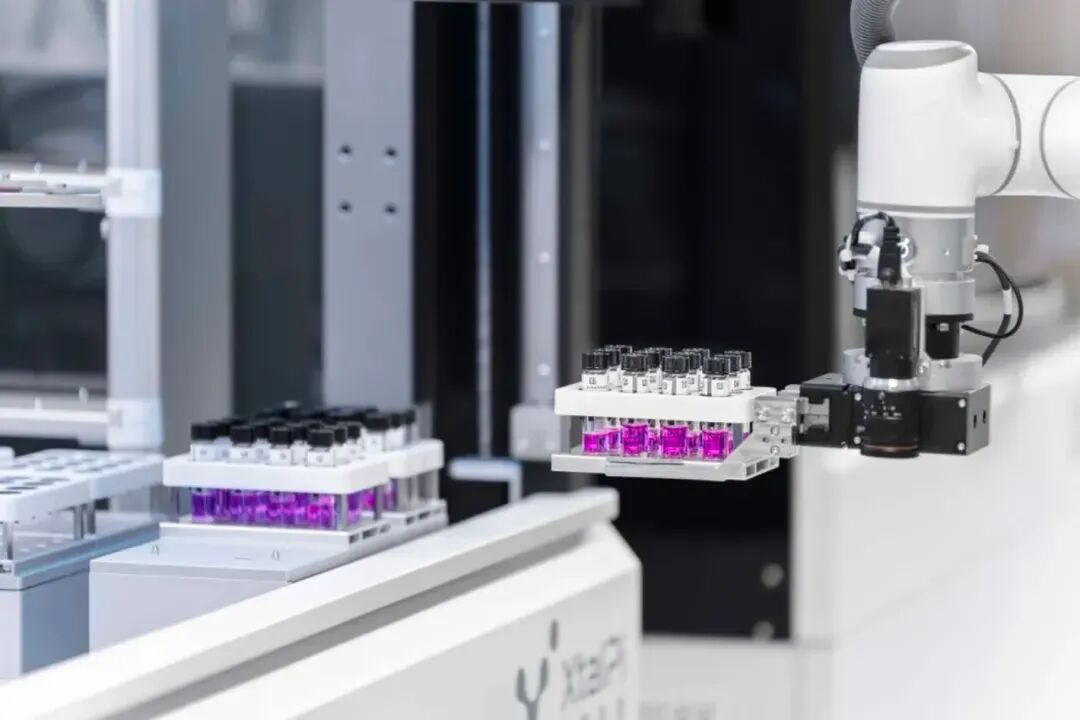
The Shanghai municipal government released "Several Opinions on Supporting the Full-Chain Innovative Development of the Biomedical Industry," outlining 37 measures to support the sector's growth. The policy specifically emphasizes AI applications in drug R&D and medical services.
The opinions call for supporting AI-empowered drug discovery, including novel target identification and drug design. They also encourage establishing data-sharing mechanisms, building high-quality corpora and industry datasets, and supporting the training of medical large models. Additionally, the policy will improve mechanisms for collaborative use of healthcare and medical insurance data resources, promoting data applications in scenarios such as innovative drug R&D.
Shanghai holds advantages in AI drug discovery, with over 30 AI pharma companies already established. By 2025, the Zhangjiang Pharma Valley is expected to cluster 300 active institutions. AI applications across the full drug R&D pipeline are projected to substantially reduce development costs and accelerate industry growth. Beyond drug discovery, AI can be applied to disease diagnosis, clinical decision-making, and other medical domains.

Sensi Raises Over $53 Million
Sensi recently secured $31 million in Series B funding, bringing its total raised to $53 million. The company provides AI-powered virtual care services through its Sensi.AI[5] platform, enabling 24/7 monitoring of elderly daily life and health status. Sensi has tripled in scale annually over its five-year history, and over 80% of large home care networks in the United States now use its platform.
The Sensi.AI platform collects user data through smart devices for real-time monitoring and analysis. The system can identify abnormal indicators, assess health risks, provide diagnostic reports and care recommendations, and promptly contact medical teams. This AI-assisted eldercare model helps improve service quality, meet refined needs, and reduce labor costs.
WhaleBot Closes 7th Funding Round Exceeding 100 Million Yuan
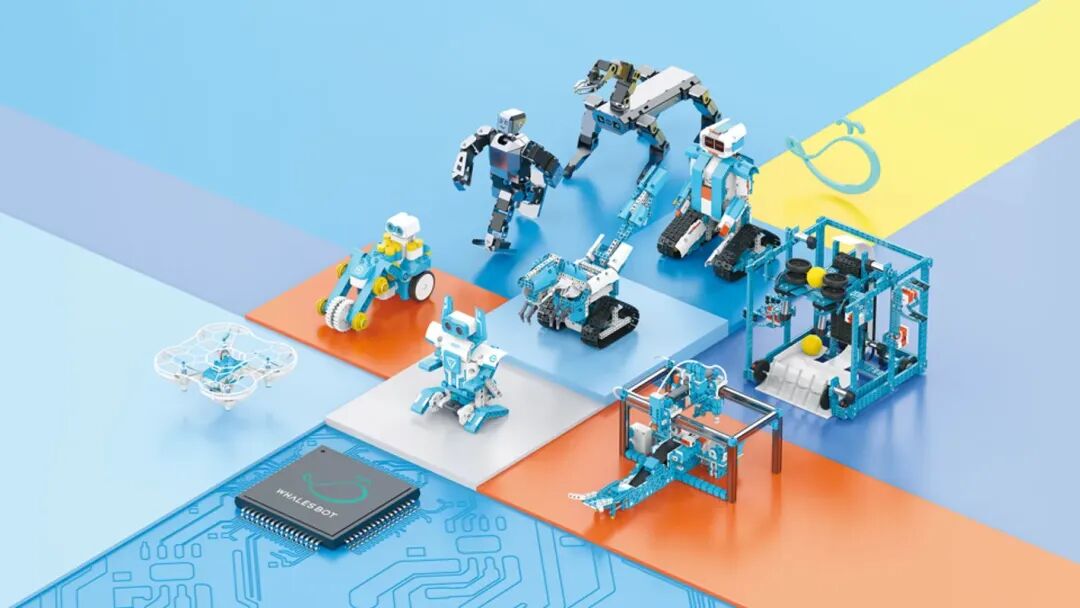
WhaleBot announced the completion of its 7th funding round, raising over 100 million yuan. This round included participation from the Shanghai Sports Industry Fund, encompassing multiple state-owned capital platforms such as Shanghai Jiushi Group and Lujiazui Group. The funding will advance the globalization and brand development of ENJOY AI, a worldwide youth AI literacy program, as well as R&D upgrades across WhaleBot's full educational robot product line.
WhaleBot has become a global leader in educational robotics, possessing full-stack technical capabilities and an integrated four-in-one industrial ecosystem. The ENJOY AI competition now spans 24 countries, attracting over 500,000 youth participants annually. The company's products are exported across five continents to 30 countries and regions, with annual shipments exceeding 500,000 units. Going forward, WhaleBot will continue focusing on technological innovation to drive comprehensive adoption of educational robots for ages 3–22 among young people.

ChinaJoy 2024: AI Quietly Reshaping the Gaming Industry
The 2024 ChinaJoy exhibition revealed how AI technology is influencing the gaming industry on multiple fronts. AI image generation has become an indispensable tool in game development, dramatically improving production efficiency. Developers are looking forward to further maturation of AI video generation and 3D model generation technologies.
AI-driven gameplay innovation has mainly appeared in conversational games so far, with indie titles like 1001 Nights and Word Spirit Project showcasing interesting AI interactive mechanics. Several major studios have introduced AI companion features, bringing fresh experiences to players.
While AI branding wasn't prominently displayed across exhibition booths, the technology is quietly transforming gaming-related industries. From targeted advertising and player behavior monitoring to graphics rendering, AI applications are everywhere. Though AI has yet to deliver disruptive changes to core gameplay, it is already profoundly reshaping the industry behind the scenes.

Life belongs to each person's own feelings, not to anyone else's opinions.
— Yu Hua



Editorial Team Editor: Ziwen
Design: Ivan
For business partnerships, add on WeChat: Rwkfbcianvd
References [1] Leonardo AI: https://leonardo.ai/
[2] Segment Anything Model 2 (SAM 2): https://ai.meta.com/sam2/
[3] video-SALMONN: https://openreview.net/pdf?id=nYsh5GFIqX
[4] TorchV AI: https://www.torchv.com/
[5] Sensi.AI: http://sensi.ai/