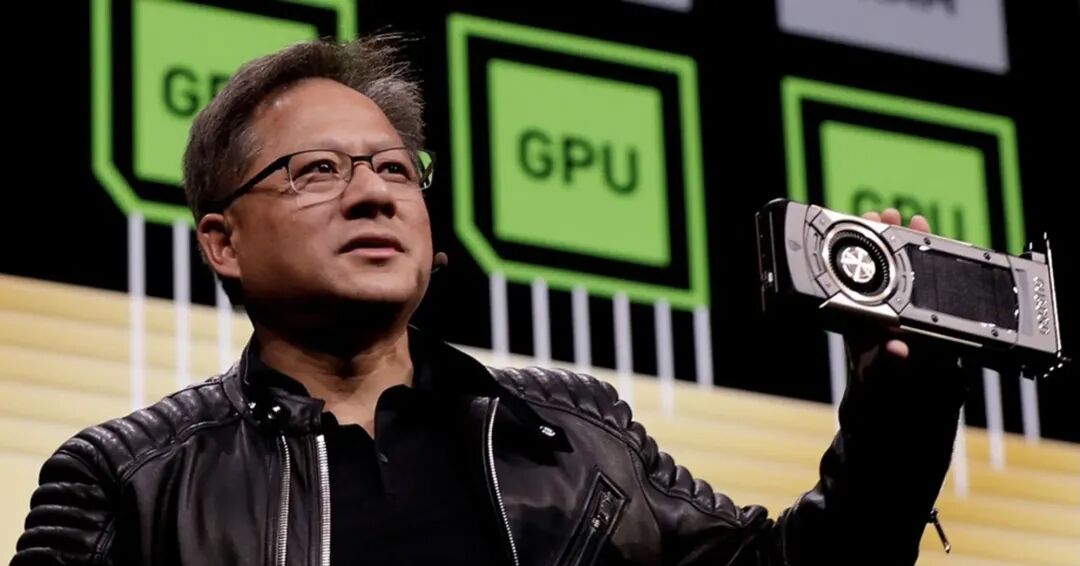
Jensen Huang: I Really Can't Do Without China

NVIDIA's projected total sales in China this year: $12 billion
🖥️ NVIDIA May Launch New China-Specific "B20" Chip
🌐 ElevenLabs Unveils Turbo 2.5 Model
🏅 Google Gemini Debuts at Paris Olympics
🤖 Shanghai AI Lab Proposes "Embodied Intelligence Town" GRUtopia
🧠 USTC and Huawei Noah's Ark Lab Propose Entropy Law
🌟 AI Cooking Robot Firm Xianglu Tech Secures Nearly 200 Million Yuan Investment from JD.com
💰 Hubei Launches 10 Billion Yuan Green Low-Carbon Development Fund of Funds
🎬 Kuaishou's First AI Short Film "Pibo Zhanlang" Surpasses 50 Million Views

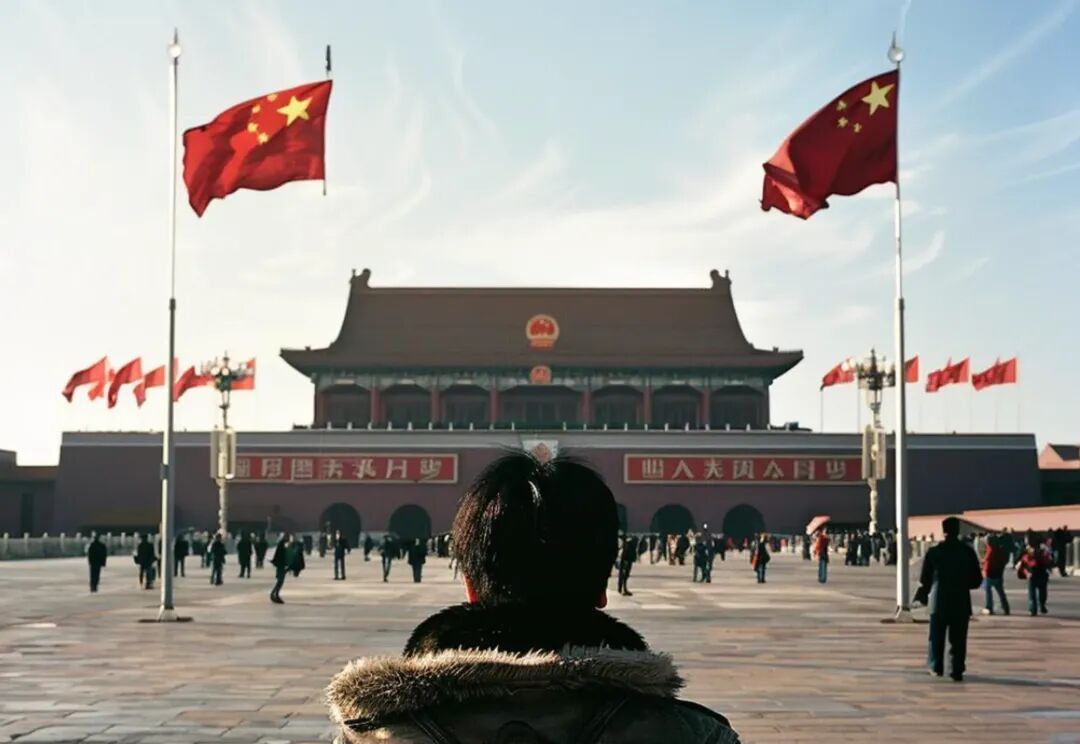
NVIDIA May Launch New China-Specific "B20" Chip
NVIDIA is developing a new AI chip called B20 for the Chinese market, built on its Blackwell architecture and designed to comply with U.S. export controls. Despite intensifying U.S. semiconductor restrictions on China, NVIDIA continues to prioritize the market. In March, the company unveiled its next-generation AI GPU based on the Blackwell architecture; its most powerful chip, the GB200, is fabricated on TSMC's 4nm process and contains 208 billion transistors.
Due to new rules from the Ministry of Commerce of the People's Republic of China, NVIDIA's data center revenue from China dropped from 19% of its total in fiscal 2023 to roughly 5% in fiscal 2024. Nevertheless, CEO Jensen Huang has pledged to continue serving Chinese customers.
Huang emphasized that the newly developed special-edition AI chips will comply with U.S. export controls on China while maximizing NVIDIA's business in the country.
Reports indicate that NVIDIA will deliver over 1 million customized H20 chips to China this year, priced at approximately $12,000 to $13,000 per unit, with total sales expected to reach $12 billion.
ElevenLabs Unveils Turbo 2.5 Model
ElevenLabs[1] has released its new Turbo 2.5 model, supporting 32 languages including Chinese, with a 3x speed improvement and latency reduced to 300 milliseconds. The model introduces text-to-speech support for Vietnamese, Hungarian, and Norwegian for the first time, and delivers 25% faster English text-to-speech compared to Turbo v2.
Key features of Turbo 2.5 include high performance, rapid generation, and easy integration, making it suitable for conversational AI, education and training, entertainment, and content creation. Designed for enterprise applications, the model meets SOC2 and GDPR data security standards.
ElevenLabs offers Professional, Scale, and Enterprise plans to meet varying user needs, with character limits ranging from 500,000 per month to custom tiers, all at 128 and 192 kbps audio quality with 44.1 kHz sampling rate.
Google Gemini Debuts at Paris Olympics
Google will partner with NBCUniversal to showcase Gemini AI technology at the Paris Olympics, enhancing the viewing experience and serving as the "Official AI Sponsor of Team United States."
NBCUniversal will introduce AI-generated personalized daily event recaps narrated by an "AI version" of sports commentator Al Michaels. Viewers can customize highlights through the Peacock app, while Google Search provides information on competition rules and athletes. Comedian Leslie Jones will interact with Gemini AI to bring a lighthearted, entertaining experience to audiences.
Google will also leverage 3D mapping technology to offer immersive virtual tours of Paris Olympic venues, aiming to attract younger viewers and enhance the Games' watchability and interactivity.

Shanghai AI Lab Proposes "Embodied Intelligence Town"
The Shanghai AI Lab has launched GRUtopia[2] (Chinese name: Taoyuan), a simulated interactive 3D world. This virtual town contains up to 100,000 finely annotated interactive scenes spanning 89 categories including supermarkets, offices, and homes. GRUtopia supports various robots in behavioral simulation within virtual environments, reducing the difficulty and cost of real-world data collection.
GRUtopia comprises three components: GRScenes (a large-scale scene dataset), GRResidents (an NPC system), and GRBench (an embodied intelligence evaluation benchmark). GRScenes expands the range of robotic activities; GRResidents, powered by large language models, can engage in dialogue with robots; and GRBench provides evaluation benchmarks of progressively increasing difficulty.
Led by the Shanghai AI Lab's OpenRobot Lab, the project is planned for open-source release, with demo installation guides already available on GitHub. This platform will support research toward embodied general artificial intelligence and advance the development and application of robotics technology.
USTC and Huawei Noah's Ark Lab Propose Entropy Law
A team led by Enhong Chen at the University of Science and Technology of China, in collaboration with Huawei Noah's Ark Lab, has proposed Entropy Law, revealing the relationship between large language model (LLM) performance, data compression rate, and training loss. The study found that model performance is negatively correlated with the compression rate of training data, which typically leads to lower training loss.
Based on Entropy Law, the research team proposed an efficient data selection method called ZIP, which prioritizes data subsets with low compression rates. ZIP employs multi-stage greedy selection to obtain data subsets with good diversity. Experiments demonstrate ZIP's advantages across different LLMs and alignment stages.
The research validates the practical utility of Entropy Law: by analyzing changes in compression rates across data versions, potential risks to model performance can be predicted, providing guidance for LLM training. This holds significant implications for reducing LLM training costs.

AI Cooking Robot Firm Secures Nearly 200 Million Yuan Investment
Xianglu Tech[3] has announced a strategic investment of nearly 200 million yuan from JD.com, along with a partnership to advance the "Robotics+" industry. The two parties will leverage AI technology and industrial advantages to promote high-quality sector development.
Xianglu Tech plans to expand its AI cooking robot factory, upgrading production line and inspection automation, and establish a second production base north of the Yangtze River to improve response times for customers in northern China and the Yangtze River Delta region, meeting growing shipment demand. The company will focus on applying vision and sensor inspection technologies to cooking robots, with plans to launch a next-generation AI cooking robot in 2025.
Xianglu Tech will strengthen after-sales and maintenance coverage in key cities nationwide, pre-deploying engineers, spare parts warehouses, and backup units in advance to meet the cross-regional expansion needs of chain restaurant clients, improving product quality and service capabilities. Previously, Xianglu Tech (formerly known as Xianglu Technology) had received tens of millions of yuan in funding from JD.com for product R&D, production line upgrades, and new market development. Xianglu Tech serves over 100 leading restaurant enterprises domestically and internationally, covering more than ten countries and regions.
Hubei Launches 10 Billion Yuan Green Low-Carbon Development Fund of Funds
Hubei Province has announced the establishment of a 10 billion yuan green low-carbon development fund of funds, the province's first fund dedicated to green industries. Initiated by Hubei Hongtai Group, in partnership with China Chengtong Group, the Hubei Provincial Government Investment Guidance Fund, and the Huangpi District Government of Wuhan, the fund has initial capital contributions of 2 billion yuan.
The fund will invest in green low-carbon industries including clean energy, green transportation, green infrastructure, and energy conservation and environmental protection, as well as advanced manufacturing and artificial intelligence. Hubei Hongtai Group plans to leverage its "Jülüpen" platform through its subsidiaries China Carbon Emissions Registration and Hubei Carbon Emissions Rights Exchange Center to innovate investment and financing models.
The Hubei Provincial Department of Finance stated that the fund will promote coordination and linkage among government guidance funds, state-owned capital funds, and market-based funds. The goal is to form a "one master, multiple sub-funds" ecosystem exceeding 20 billion yuan within two to three years, leveraging 100 billion yuan in capital investment into green low-carbon industries, supporting Hubei's green transformation and development.

Kuaishou's First AI Short Film "Pibo Zhanlang"
Kuaishou's first AI original short film "Shanhai Qijing: Pibo Zhanlang" has surpassed 50 million views. Directed by Kun Chen, the production utilizes AI technology to generate visuals, with a team of just over 10 people completing work that traditionally would have required 100.
The plot is straightforward and accessible, incorporating elements from Classic of Mountains and Seas and choosing a fantasy genre to lower the barrier to entry while sidestepping AI's current weaknesses. AI technology shortens production cycles and costs, achieving 70-80% of the effects possible through conventional means. Chen candidly acknowledges that AI still faces bottlenecks, but holds tremendous potential.
The director believes that scriptwriting, editing, and voice acting still require human involvement, with AI primarily replacing on-location filming. He views AI as a revolution in visual media, maintaining a ten-year perspective on the industry's development. The success of this short film marks a significant breakthrough for AI in film and television production.


I resonate with this world in my tottering gait and life.
—— Xiuhua Yu



Editorial Team
Editor: Ziwen
Design: Ivan
For business partnerships, add on WeChat: Rwkfbcianvd
References
[1] ElevenLabs: https://elevenlabs.io/
[2] GRUtopia: https://github.com/OpenRobotLab/GRUtopia
[3] Xianglu Tech: http://123.57.181.114/