"Laplace" Developer Chunxiang Zhao: Create Like You're Writing a Novel — Create as in Creation, Not as in Startups
Face what you don't understand until you understand it.
🚦
When the Crossing podcast hit 10,000 subscribers, we teased the "Don't Understand" interview series—we would interview 10 entrepreneurs, investors, and scientists in the AI space who are particularly representative and have compelling stories. Through these conversations, we hoped to bridge information gaps, build connections, and encourage intellectual exchange.
For our first episode, we invited a recent podcast guest, Chunxiang Zhao, founder of Laplace. This piece includes both the podcast interview and a follow-up conversation about his recent developments, plus his answers to our "Don't Understand" questions.
In 2024, from Sequoia Capital's industry analyses to domestic industry discussions, one topic dominated: "Can AI actually produce killer apps?" From the guests we've invited to Crossing, to developers we meet at various industry events, more and more people are trying.
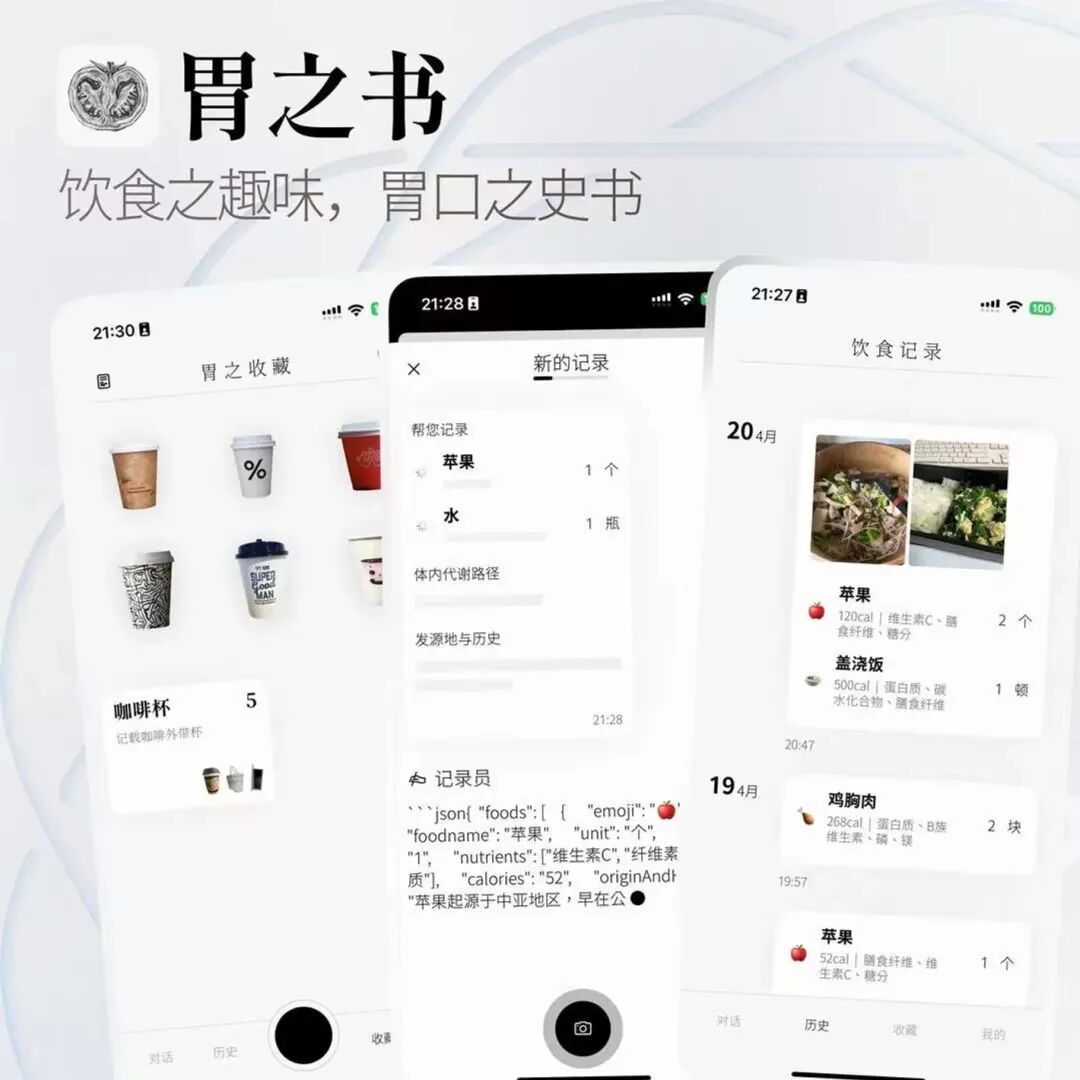
At the end of June, we first met Chunxiang Zhao at Founder Park's Founder Show. Laplace, which he developed himself, had just launched two months prior and had already reached #3 on Apple's China App Store for Food & Drink in-app purchases. The app uses LLMs for summarization rather than generation, paired with a black-and-white hand-drawn UI style. In later conversations, we learned this was the result of Zhao's accumulated insights from failed ventures and successive app development—his distilled philosophy of AI app development.
Inevitable or accidental? Dig deeper (including our second interview with Zhao), and you'll find this is a "mutual奔赴" story: when large models leveled the technical playing field and unlocked more possibilities for developers, a young man who loved writing novels taught himself to code, weathered entrepreneurial failures, and honed his understanding of products and users—and his "creation" found its way to more people.
In the podcast, he shared his understanding of generative AI app development, and spoke openly about his life experiences. Before we published this piece, he agreed to speak with us again. We're not here to promote Laplace, nor do we claim to envision the ultimate form of AI apps. But we believe these explorations, these life experiences, these shares are deeply meaningful.
We offer this article as the opening of "Don't Understand"—if it adds any valuable thinking to anyone's "don't understand" about AI apps, that will be the purpose of this interview. There will be more Chunxiang Zhaos, waiting to be seen in this "mutual奔赴."
We've divided the interview into three parts:
- Part 1 is a transcript of the podcast content, for those who haven't listened;
- Part 2 is our recent follow-up interview with Chunxiang Zhao;
- Part 3 is the "Don't Understand" Q&A.
(Laplace demo video, from Chunxiang Zhao's social media)
Part 1: Podcast Interview
Scan the QR code to listen on Xiaoyuzhou; those who've heard the podcast can skip to Part 2.

Before Coding
🚥 Crossing: Introduce yourself, and what is Laplace?
👦🏻 Chunxiang Zhao: I'm Chunxiang Zhao, an indie developer. Before learning to code, I wrote novels and worked as a product manager. Laplace is an AI-powered food logging app based on large language models—it's a tool dedicated to becoming everyone's AI food diary assistant.
🚥 Crossing: Can you tell us about your novel-writing experience? You might be one of the few people in the world who went from writing novels to writing code.
👦🏻 Chunxiang Zhao: I started writing novels around high school—teen angst stuff back then. But after starting college, I saw more of the world. Around Wuhan's Optics Valley Plaza, for instance, there are lots of day laborers. I kept writing their stories, more literary fiction. My first short story collection, Break Bad, has lots of professional queue-standers—day laborers who get paid to wait in line for others. There's also a mother collecting plastic bottles on a university campus, whose daughter is a professor. Stories like that.
🚥 Crossing: Was this non-fiction or fiction?
👦🏻 Chunxiang Zhao: Actually all somewhat fictional. I've written non-fiction, but there's less room for personal voice and style, so I wasn't as interested.
🚥 Crossing: Want to tell everyone about the Han Han and Feng Xiaogang "three times moved to tears" story?
👦🏻 Chunxiang Zhao: Teacher Han Han—during my sophomore year, his platform "One" started paying me 10,000 RMB per month. It was very chill, just one piece per month. A lot of writers slacked off once they got that salary, since the contract only required six pieces per year. As a student making over 10K a month, I got a bit full of myself.
🚥 Crossing: What did you do?
👦🏻 Chunxiang Zhao: Just eating, drinking, playing around. When roommates asked where the money came from, I'd be vague about it. I didn't really want to tell them I wrote novels—it makes people think you're artsy and unapproachable. But actually I was gaming with them in the dorm every day.
🚥 Crossing: Did you feel some shame about the "artsy youth" label back then?
👦🏻 Chunxiang Zhao: I've never wanted people to think I'm artsy, because I'm actually... a crude person. Writing novels is about flow state, it doesn't need to connect to your appearance or personal branding.
🚥 Crossing: But what's the problem with being artsy?
👦🏻 Chunxiang Zhao: The biggest problem with being artsy is you need authority—one person has to have final say to make art. Writing novels really is one person calling the shots: the lighting, the actors' expressions, the scenes, you write it all yourself, and it costs nothing. But once you get to film or screenwriting, authority becomes crucial. I'd been too free for too long, wrote too many novels. When screenwriting became this endless cycle of revisions, it killed some of my passion for art.
🚥 Crossing: Some of it?
👦🏻 Chunxiang Zhao: Some of it. The rest became ambition. Buried deep.
🚥 Crossing: Was it because you realized you needed fame to have authority?
👦🏻 Chunxiang Zhao: It's really money. Fund it yourself, shoot it yourself, you have final say. One person decides, shoot however you want. Even if it's a bad film, at least you're not revising endlessly—it becomes an art of revision.
🚥 Crossing: From novels to screenplays—did you write any successful screenplays?
👦🏻 Chunxiang Zhao: None of my screenplays got produced.
🚥 Crossing: Then what was the piece that made Feng Xiaogang cry three times?
👦🏻 Chunxiang Zhao: That was a novel, Lanzhou Shasha, a short story. An editor at "One" said Director Feng cried reading it, so we used that as a selling point. Search "Feng Xiaogang moved to tears three times" on Taobao and you'll find my book.
🚥 Crossing: Did your screenplays never getting produced make you quit screenwriting?
👦🏻 Chunxiang Zhao: Honestly I didn't have much talent for screenwriting. A screenplay is a field manual for the set—you don't need extra artistic flourishes. And the fewer environmental descriptions the better, just enough for the production designer to understand what goes where and how.
But when I wrote screenplays, at first I was basically writing novels. Then I deliberately stripped out all my expression, and it felt cold. Started talking about logic, structure. It felt more like a language, like grammar, or like chemistry with its structures. And then I started coding. Right, coding came from having been a product manager too.
🚥 Crossing: Product manager first, then coding?
👦🏻 Chunxiang Zhao: Yes yes yes, product manager first. Being a PM made me realize how limited your control over the product is. From the PM's wireframes to the UI designer's designs, the information has already mutated, become something else. Then to development—some things can't be done, some get deprioritized, "let's cut this for now"—the final product is already far from what the PM originally envisioned. And that's in a high-execution team. With weaker execution, what comes out is basically unrecognizable.
🚥 Crossing: Were you running your own startup then? Can you tell that story, including how much you raised and what product you built?
👦🏻 Chunxiang Zhao: Sure. First funding round was 1 million RMB. We did proximity-based social networking. Basically NFC cards placed on tables at trendy coffee shops, bars, and nightclubs in Shanghai. The product let you tap your phone when you sat down to join that venue's group chat. But the big limitation was that nightclub and bar owners didn't know the difference between WiFi 5 and WiFi 6—WiFi 5 only supports about a dozen connections. So in packed nightclubs where people already had no cell signal, our product just kept spinning. The owners should have gotten WiFi 6, then our product experience would have been much better.
🚥 Crossing: So you felt users had a need to tap NFC on tables at nightclubs to join group chats and talk to other people there?
👦🏻 Chunxiang Zhao: Right, Chinese people are generally pretty shy—the cold-approach culture isn't really established, or still early-stage, so maybe they needed a tool like this.
🚥 Crossing: How was this tool supposed to make money?
👦🏻 Chunxiang Zhao: The monetization logic was: you tap to enter the venue's group, and when you leave the 500-meter geofence, you get kicked out unless you're a member. Members could basically leave their presence there long-term, connect with people who came later. Pay money to stay in various groups, something like that. But the problem was, in nightclubs where demand was highest, the experience was worst because of bad signal. And at coffee shops—where we assumed people came to chat—tapping in front of someone to show your social need felt disrespectful. Coffee shop demand turned out to be somewhat fake, but small bars worked okay.
🚥 Crossing: How did this ultimately not continue? How did it end?
👦🏻 Chunxiang Zhao: That's exactly why I taught myself to code. I was running my own company, but when you're a founder who doesn't understand tech, you can't read the room when your engineers start talking about sprint planning. I was always wondering, why does this feature need two weeks? Three weeks? Then I started coding myself and realized, oh, this is literally a two-hour job.
🚥 Crossing: Haha, so you think they just weren't competent?
👦🏻 Chunxiang Zhao: No, not at all. Their résumés were impressive, their salaries were high. The only reason that company failed was the founder. My vision for the company, the way I constructed its direction — that was the problem. The team didn't even really know what we were trying to do. We were experimenting, sure, but I never gave people clear targets. Like, how many stores do we onboard this month? What's our tap-through rate? What's our DAU? I never shared any of that with the team.
🚥 Crossing: So you're someone who looks inward when things go wrong. But that can't always be the case, right? I mean, a two-hour job getting scheduled for two or three weeks — that can't possibly be on you.
👦🏻 Chunxiang Zhao: Actually, it still is. A director once told me something that's absolute gold: on set, everything is the director's responsibility. If a film turns out bad, it's entirely the director's fault. Because the director is the only person who can yell "cut." If you don't yell cut and you let the shot pass, the moment it passes, everyone else is off the hook. What I mean is, if I was unhappy with someone or had doubts about them, I could have fired them on the spot. But I didn't. I was busy being nice, cracking jokes, being everyone's buddy. So ultimately, it's the founder's fault.
🚥 Crossing: Looking back, why do you think you were like that? It actually sounds pretty different from the typical founder story you hear.
👦🏻 Chunxiang Zhao: First off, being a people-pleaser is a serious flaw. I thought if I just smiled at the world every day, the world would smile back just as brightly. I don't know, maybe it goes back to childhood.
🚥 Crossing: So you had a relatively happy childhood, where your efforts were rewarded.
👦🏻 Chunxiang Zhao: I was basically the oldest kid in the neighborhood, the ringleader. I'd lead everyone around playing all day, laughing and goofing off, and we'd always have a great time. But growing up isn't about who leads who in play. Entrepreneurship isn't taking people out to have fun together — it's climbing a mountain together.
🚥 Crossing: Maybe you were used to a pattern where you're good to people, you take them out to have fun, and they give you the respect and joy you expect in return. And you thought that pattern could just carry over into entrepreneurship, but it doesn't work that way.
👦🏻 Chunxiang Zhao: Right. It might even be the exact opposite.
From the Dark Night to Awakening
🚥 Crossing: You mentioned going through a dark period.
👦🏻 Chunxiang Zhao: Yeah, the dark night. It was in Shanghai, behind the big red gate of the Tianshan fire station, in these rented rooms. Lying in that tiny dark room, smelling the mold, just lying there every day.
🚥 Crossing: In one interview, you said you burned through a million in six months.
👦🏻 Chunxiang Zhao: Right, a million in six months. For a normal product and engineering team, burning through roughly a hundred thousand a month, that's about what it takes.
🚥 Crossing: After the money ran out, why did you end up lying in that moldy little shack behind the fire station?
👦🏻 Chunxiang Zhao: I'd actually been renting there the whole time during the startup. That was my own place.
🚥 Crossing: So after the money burned out, what caused that dark period? Was it the failure itself, or more than that — pressure from investors, pressure from the team?
👦🏻 Chunxiang Zhao: The investors were actually great to me, never pressured me. It was this silent silence. And I just lay there. Every day, just lying there.
🚥 Crossing: Was it kind of like — you'd believed in a certain way of living, and through the startup process, you discovered that way of dealing with people and the world just didn't work anymore? And you didn't know what the right way was?
👦🏻 Chunxiang Zhao: Exactly. I didn't know how to talk to people when I went outside. Before that, I'd been pretty at peace with the world, had a belief system that worked. After that, it was like that viral line online — he shattered. He was shattered. The person was shattered.
🚥 Crossing: So lying in bed, feeling shattered. Besides feeling shattered, what else did you feel?
👦🏻 Chunxiang Zhao: It was pretty extreme. I'd look in the mirror before bed every day and say, maybe I should just kill myself. Stuff like that, pretty often. And the walls were covered — since I liked to review my thoughts daily when I was entrepreneuring, I'd use marker on the white walls. I thought it looked cool. Like in A Beautiful Mind, though of course that's just a cinematic device. No real mathematician writes on walls and glass, right?
I'd written all these ideas on the wall, and then I'd lie there in front of them, these ideas that the market had certified as failures. It was like being surrounded by an entire symbolic system of failure.
🚥 Crossing: What method did you use to piece yourself back together?
👦🏻 Chunxiang Zhao: It was magical, really magical.
🚥 Crossing: Was it love?
👦🏻 Chunxiang Zhao: Not really. I owed a lot of people money from the startup. Then suddenly a friend introduced me to a mini-program gig — 250,000, paid off all my debts in one go. That's when I finally believed that sometimes making money has nothing to do with you. So many things are unpredictable. I'd struggled and hustled for so long, and maybe what I earned was less than some random opportunity that came out of nowhere.
🚥 Crossing: How long did this dark period last?
🚥 Crossing: About half a year.
🚥 Crossing: "About half a year"... that's actually not short.
🚥 Crossing: Right, I didn't do anything for six months. I actually went back to the novel, but it didn't feel the same. So I bought some books, one of which was The Silk Manuscript Laozi: A Critical Collation. That got me into Chinese philosophy, into some esoteric stuff.
🚥 Crossing: I saw you have a very popular series on Bilibili — a programmer explaining Chinese philosophy. Did it hit ten million views?
👦🏻 Chunxiang Zhao: Yes, yes, exactly. Combined it probably did. On Douyin, a single video might have around 9 million.
🚥 Crossing: What did doing this bring you?
👦🏻 Chunxiang Zhao: First, it gave me a new understanding of the world. In our current terms, Laozi is someone with very foundational, bottom-layer thinking. Very bottom-layer. And I gained a following of students. I'd discuss these ideas with them in Tencent's online classroom. Ran two cohorts, over 160 students, sharing this with them, and they found it useful. So I felt like some of my understanding could help people, and that felt pretty good.
🚥 Crossing: Did it restore a lot of your confidence?
👦🏻 Chunxiang Zhao: Actually, Chinese philosophy has an important proposition — it doesn't really have a concept of "confidence." It has zixing, "self-nature," the xing as in gender.
🚥 Crossing: To circle back a bit — you said you bought this book back then. What was it like reading it at the time?
👦🏻 Chunxiang Zhao: At first it felt like deliberate obscurantism. Because I was already a bit obsessive by then, getting stuck on small things. Like with this book — why can't I understand it? I don't believe this. Starting at 8 a.m., I will understand this page today. So I'd start reading. And then suddenly, as the saying goes, there was this moment of awakening.
🚥 Crossing: I thought you were going to say you fell asleep like I do. What was this awakening moment?
👦🏻 Chunxiang Zhao: To explain the awakening moment in detail, people can watch my video on wu wei and Cook Ding carving the ox. Anyway, the afternoon I finished writing that video script, I walked downstairs and felt this tingling sensation starting from the base of my spine. Like when sunlight hits you — this tingling lasted about 30 minutes. Never happened again, that physical sensation of awakening. This physiological tingling, I could only describe it as awakening. Though it's not really accurate, "awakening" is also a bit grandiose.
🚥 Crossing: How mystical. My first thought was, isn't that just from sitting too long?
👦🏻 Chunxiang Zhao: It's different from your back getting itchy from sitting too long. Because it lasted about half an hour, and I just kept walking. And during that half hour, your vision becomes incredibly sharp. I could see the iridescent colors in a cat's fur — anyway, for that half hour, maybe some hormones secreted in the limbic system or something.
🚥 Crossing: What exactly did you see?
👦🏻 Chunxiang Zhao: See what?
🚥 Crossing: What did you read that made you awaken? Like, was there some particular knot in your mind that got untied?
👦🏻 Chunxiang Zhao: This requires some explanation. We know Wang Bi was a philosopher who altered one line of Laozi's Dao De Jing. The original reads "The nameless is the beginning of the myriad things; the named is the mother of the myriad things" — both lines use "myriad things." But Wang Bi, at age 23, felt this wasn't parallel or elegant enough. So he changed it to "The nameless is the beginning of heaven and earth; the named is the mother of the myriad things."
"Heaven and earth" pairing with "myriad things" — more parallel. And the characters shi (beginning) and mu (mother): in Laozi's time they wrote in bronze and large seal script, and both shi and mu derive from the character for "woman." Shi is the beginning of woman; mu is woman with two dots added above, symbolizing breasts, the completion of woman. So from the perspective of bronze and large seal script, reading the Dao De Jing again — it's basically a different book, a different language. And in this process I discovered endless fascination.
🚥 Crossing: To sum up, maybe at that low point, maybe even thinking of extreme measures, you entered a completely new world of knowledge. You learned a lot that felt like it could explain your state of mind, or help release the doubts in your heart.
👦🏻 Chunxiang Zhao: Right, it was a bit like Alice — when she's in danger she just jumps into any hole she finds. She jumps down her rabbit hole; I accidentally jumped into the Dao De Jing.
🚥 Crossing: What changed in your life after this awakening?
👦🏻 Chunxiang Zhao: Actually not much, because awakening doesn't pay the rent, right? It doesn't cover your rent. But first, I allowed everything to happen. Second, I had this crazy urge to create things. Then I just kept developing apps, learning to code. My income at the time, besides doing some old coding and product work for people, was from the novel. I'd still publish occasionally, here and there. Anyway, living expenses were covered.
🚥 Crossing: From previous articles, it seems like you actually developed a ton of apps.
👦🏻 Chunxiang Zhao: Right, I can't quite remember how many went live. Some I'd take down right after launching because they felt pointless. I was learning to code as I went. Since I'm not from a traditional CS background, I couldn't do systematic learning. I had to set myself goals — this time I'm going to build this thing — and learn by doing, which gave me some sense of accomplishment. So the early launches were all pretty crude.
🚥 Crossing: Which one did best?
👦🏻 Chunxiang Zhao: The best is actually the current one, Laplace. Before that there was a product called Zhuan Shan. They were all paid apps, so I'd occasionally get some money. Zhuan Shan and Laplace were the ones that actually made some decent money.
🚥 Crossing: So do you think this income lets you live a reasonably comfortable life in Shanghai?
👦🏻 Chunxiang Zhao: In Shanghai, at this point, yeah, it should be enough.
🚥 Crossing: So we're talking what, several tens of thousands at least?
👦🏻 Chunxiang Zhao: You mean Laplace's revenue? That's publicly available, actually — Qimai Data has it all. In China's Food & Drink category for in-app purchases, number one is Xia Chufang, number two is their sister app Lan Fan, also from the Xia Chufang company, and number three is Laplace. It just broke $10,000 per month. Though Apple takes its cut, and if you don't exceed $1 million USD annually, the tax isn't as bad as people think — you can apply for the small business rate of 15%.
🚥 Crossing: Is that because you're doing well overseas, or because the domestic market is growing?
👦🏻 Chunxiang Zhao: It's all domestic users. Basically entirely domestic users now.
Deriving Laplace from the "Three Don'ts"
🚥 Crossing: Looking back now, what lessons or insights from building apps did you carry into Laplace? It sounds like this story is one of quantity turning into quality — we'll get to that in a bit. You told us that building Laplace was actually the result of a chain of deductions. If you rewind, which of your earlier experiences, across all these different areas, proved most critical in hindsight?
👦🏻 Chunxiang Zhao: If I wrote out all my insights line by line, the first would be "make it beautiful" — increase users' patience with you. Because a lot of developers, myself included early on, made pretty crude apps, basically just Apple's design system out of the box. I'd get users picking at all kinds of flaws, and sometimes not in the friendliest tone. But when I committed to comprehensively elevating my UI/UX, they'd hold it in their hands and sense how much care the maker had put in. "This little bug here, maybe he just didn't get to it in time" — they'd make excuses for me. Because at the end of the day, humans are visual creatures. When we encounter something new, we look at how it looks first. UI/UX, boiled down to two words, is "the look." Later apps I made all looked great, and plenty of them were still useless. But I held myself to this: even if it's useless, it's got to be a beautiful useless thing.
The second point is that functionality needs to be direct. I often imagine: if the user does X every day, then Y will happen. So I give them feature Z. There's a concept called user completion — the journey from first encountering the app to feeling satisfied should be as short as possible. So with Laplace, I'd imagine this user will only ever use it once in their entire life. What experience do I want to design? They'll never open it a second time — what experience should I give them?
🚥 Crossing: So you might only have this one chance in your entire life to let this user experience your product. How do you get them to give you the highest possible score?
👦🏻 Chunxiang Zhao: Exactly, right. I designed everything with a one-time-use mindset.
🚥 Crossing: Can I interject — what bloody lessons led to this?
👦🏻 Chunxiang Zhao: The bloody lessons are that when you build apps, you get all kinds of feedback. Even the crappiest app will have users praising you. For me personally, it's all been intuition. How I think things should be done — it's all intuition, hard to formalize into methodology.
🚥 Crossing: And there was a third point, you mentioned this was the second.
👦🏻 Chunxiang Zhao: The most direct ones are really these two. (Editor's note: In a later interview, he added a third point — make it for women when possible — which could be summarized as the "Three Dos.")
🚥 Crossing: Let's talk about AI applications. Among all the AI apps out there today, Laplace really stands out — it's genuinely eye-catching. And 2024, across the entire domestic market and globally, there's been one central question: can AI actually produce killer apps? When we saw Laplace, a lot of us were surprised. So could you walk us through how you understand AI, and how that understanding led you step by step to build Laplace?
👦🏻 Chunxiang Zhao: We can start from the most fundamental layer — the large language models based on the Transformer architecture. LLMs are one of the rare, arguably the only, business models that treat exposing their own trade secrets as the service itself. So they don't hold up on business moats. Because every response from an advanced model is essentially that model developer's proprietary knowledge. A lagging competitor can continuously query the advanced model, extract its corpus, and train a model that's roughly equivalent. That's the premise. This means products that create value through LLM output capability itself cannot build their own advantage.
So I have my "Three Don'ts." First: don't make the LLM's output capability the core advantage of your product. Laplace doesn't rely on LLM output — the LLM output in Laplace serves only as a nice-to-have, occasionally bringing users a little reading delight.
And this premise leads to an even more serious consequence, again due to the Transformer architecture itself.
We know current LLMs have limited capabilities, so some startups, to give users better experiences — take PPT companies for example — will build elaborate multi-pipeline, multi-agent wrappers and workflows on top of the LLM, then present the final deliverable to users. But as the advanced company, all this intermediate effort — any later company can simply extract your results. The laggard can keep querying your assembled pipeline, get the results directly, use that corpus for training, and obtain a specialized black box that incorporates all your work — your agents, RAG, fine-tuning — into an unknown black box. The model governed by this specialized black box will deliver better user experience and faster output. Because every request of yours has to go through your complex pipeline, but the latecomer just needs one wild training run to get better results than you, faster. So wrapper-based, multi-agent-based — in our circles we call this "ornamentation" — business models built on this kind of ornamentation can't create lasting moats or value.
This risk actually exists in traditional apps too — it's the data scraping problem. Say you scrape all of Dianping's merchant data, all its location data — you still can't build a Dianping-level success. Because Dianping is a community. It has user reviews, it has brand mindshare built with users. That's a temporal advantage, accumulated over the long term. This tells us: AI apps need brand mindshare too, they need community. The value of brand mindshare and community is this guarantee: even as your model leaks, leaks trade secrets every day, you can still create value.
So Laplace's outline gradually took shape for me. First, it needed brand mindshare. That led to the second don't of my "Three Don'ts" — I don't do multi-purpose, general-purpose AI. Because the fundamental problem with multi-purpose AI is: users want to ask you, what exactly do you do? Since users don't know what you do, you can't build real brand mindshare. With Laplace, if we can maintain relative advantage over the long term, when users think of AI food logging, they'll think of us — that's brand mindshare.
The third don't is don't pin your product's advantage on AI capability itself. Because users don't care whether a product is AI or not, and they won't think more highly of you just because you're an AI tool. Ultimately all AI apps still compete on the same stage as traditional apps. The market won't carve out extra space for AI apps — we're dividing the same pie. So Laplace also tries to hide the fact that it's an AI app. The first version was called "Laplace AI — Diet Recorder." Now we've dropped the AI entirely. Apple is also quite restrained in this regard — though maybe they couldn't hold back in the end, they still mentioned AI in the video.
🚥 Crossing: But when you were promoting it, did you find that having "AI" in the name made marketing more effective?
👦🏻 Chunxiang Zhao: No, I didn't use AI in my promotion either. The name had "AI" in it, but I never emphasized it as an AI tool.
🚥 Crossing: I also want to understand a bit more — you mentioned the first and third points. Could you explain their distinction? Because they both seem to be about not building on top of LLM output capability. Points 1 and 3 sound similar — or is there a difference?
👦🏻 Chunxiang Zhao: Point one is: don't bet your product's value on AI's generative capability. Point three is: don't tie your product's identity and public perception tightly to AI. One is market-facing, the other is about the functionality itself.
🚥 Crossing: When we talked before, you mentioned that today's LLM generative capabilities have very high uncertainty, which easily disappoints users and creates "letdown moments." Could you expand on that? Is this a sub-point under the first don't, or something else?
👦🏻 Chunxiang Zhao: Right, this is the reason for the first don't. When I do backend development, for example, out of 10,000 requests maybe only two are allowed to fail. But for AI generative capability, out of 10,000 user queries, maybe only a few thousand — five or six thousand — leave users satisfied. From that perspective, the error rate is extremely high, completely failing production requirements, failing deployment requirements. But all the vendors still deploy it. Probably there's this hope that AI will work miracles for their product.
🚥 Crossing: But some people say you should choose your use case based on the characteristics of LLMs. One of those is high-error-tolerance scenarios, and among high-error-tolerance scenarios there are also very commercially valuable ones. Like recommendations, like advertising.
👦🏻 Chunxiang Zhao: Right — non-serious, high-error-tolerance scenarios can rely on generative capability. But definitely don't hand over the user's primary task in your product to generative capability. Generative capability is unreliable, massive hallucinations — once users hit those "letdown moments," it damages the brand image you've painstakingly built. Like if you used Meituan and six out of ten requests errored, or even three out of ten, the product would basically be unusable.
🚥 Crossing: So this still connects to what you said earlier — you only have one chance to get the user to use it?
👦🏻 Chunxiang Zhao: Exactly, this aligns with my main theme. Assume the user only uses it once, and that once happens to be the error — then you're basically done for.
🚥 Crossing: And based on the "Three Don'ts," how did you derive Laplace?
👦🏻 Chunxiang Zhao: Right. Based on the "Three Don'ts," since we're not relying on the model's generation capabilities, then what do we even need a large model for? Might as well not use one. But actually, one of the most important capabilities of large models is summarization — condensing the user's natural language into a format that databases can understand. That's the Chat-to-JSON concept, or what I call "Shoot-to-JSON."
This Shoot-to-JSON fundamentally reduces the tedious form-filling when users log meals or other entries. Some health apps take 15 steps to log one meal; Laplace takes three. So when I committed to reducing form operations as the way to delight users, I actually drew up a long list, and Laplace ranked relatively low on it. Everything on that list met my earlier criteria: anti-scraping, community potential, brand mindshare. Building a brand means going vertical, letting users know exactly what you do. And then leveraging the Chat-to-JSON model.
🚥 Crossing: Using the large model's summarization, not its generation mode.
👦🏻 Chunxiang Zhao: Exactly. Generation can only play a supporting role.
🚥 Crossing: Among the list of apps you thought were viable, Laplace ranked pretty low. So why did you end up building it anyway?
👦🏻 Chunxiang Zhao: It ranked low because I measured everything by whether one person could handle it alone. The ones ranked higher — the ones I thought were genuinely great ideas — I couldn't cover by myself.
🚥 Crossing: You were thinking from a manpower perspective, since you're currently solo.
👦🏻 Chunxiang Zhao: Exactly.
🚥 Crossing: Well, any VCs listening to our show today should reach out to Chunxiang. Roughly when did you launch Laplace, how long did development take, and when did you feel the first inflection point hit?
👦🏻 Chunxiang Zhao: Launched on April 25th. The inflection point came on day three — broke into the top three of the paid apps chart and never dropped out.
🚥 Crossing: What did you do?
👦🏻 Chunxiang Zhao: In the long view, the biggest first wave of traffic came from Twitter. Some tech friends there helped amplify it, sparking the initial wave. Of course, retention was terrible early on — maybe tech people were just curious about how the AI was built, so only around 30% stuck around.
Then I started constantly distributing promotional materials I'd made across various platforms. I had a philosophy-focused self-media presence with some followers, but I'd never done Xiaohongshu before. Since I was promoting an app, though, I figured I had to activate every platform. Unexpectedly, Xiaohongshu became where I got massive attention.
🚥 Crossing: Any lessons from promotion that you'd share with other developers?
👦🏻 Chunxiang Zhao: I think content takes time to craft. Once you have good content, we usually assume a post is just its image and caption. But in managing the comment section, I basically replied to every single one.
🚥 Crossing: We saw you wrote that if you don't reply, it's because you're coding — but you will reply.
👦🏻 Chunxiang Zhao: Yes, exactly, this matters a lot. It makes every new user feel like you're maintaining this community. You're with everyone, building this product together — not just treating it as a promotional task. The whole process got woven into my development routine: I spend about an hour daily replying to all comments. And it has a self-reinforcing growth effect. Everyone who posts their Laplace experience can get a membership from me. The more people post, the more come to claim memberships. The more who claim, the more likes and comments my posts get. The growth flywheel starts spinning.
🚥 Crossing: Let's revisit the "Chunxiang Three Don'ts." From the "Three Don'ts," you derived Laplace. Now looking at apps on the market, domestic or international, which ones do you think are well-executed and fit the "Three Don'ts"?
👦🏻 Chunxiang Zhao: (three-second pause) Oh no, none.
Not that there aren't any — there definitely are. But my development schedule is so saturated that I have no time to look at products on the market. I might check out AI tools for programmers when they launch, actually use them. But everything else — really no time.
🚥 Crossing: Why haven't you gone overseas?
👦🏻 Chunxiang Zhao: It's a strategic decision — iterate aggressively domestically first, or invest in localized translation. Because translating an AI app isn't just frontend localization; it involves translating backend prompts too. Laplace's backend Chinese prompts have been calibrated, refined over a long time, settled into a relatively good state. Suddenly hard-translating them into English — that quality would need adjustment.
🚥 Crossing: Where are prompts mainly used now?
👦🏻 Chunxiang Zhao: Every step has prompts. From logging a meal to, say, when a user modifies units — I use prompts to let AI automate those edits. The daily push notifications are AI-sent, AI-written via prompts. After users buy membership, there's a generated report that lavishly praises you based on your eating history — that's also AI prompt-driven.
🚥 Crossing: So even though you stripped AI from the app's name, AI is actually everywhere in this application — not just features, but operations too. Like sending push notifications. Have you used it for marketing? Generating marketing materials, or interacting with users?
👦🏻 Chunxiang Zhao: Not that piece yet. What I'm most satisfied with as current best practice is using it for notifications. Human-written notifications tend to be formulaic, but when AI sends notifications at mealtime, it might introduce Turkish kabak — what kind of pancake it is — "noon has arrived, making foodies worldwide drool." Or how Qing Dynasty's Yuan Mei praised tofu — I'd never come up with copy like that.
🚥 Crossing: Are these personalized pushes now, or does every user get the same one?
👦🏻 Chunxiang Zhao: The AI writes one push daily sent to all users. But it's different every day.
Don't Do Tech Plus Tech
🚥 Crossing: Earlier you mentioned that Laplace has a huge standout feature — it's beautiful. Can you talk about your thinking on UI design? We'd also discussed your observations on aesthetics brought by this wave of generative AI.
👦🏻 Chunxiang Zhao: Laplace's design core is two things: minimalism, and black-and-white. Why black-and-white? I imagined users' food photos themselves are already gorgeous, bursting with color. If your product is black-and-white, clean, restrained, it better highlights user content. The second concept is humanistic warmth. This is actually a consensus whether among model providers or other AI search products. Since AI is frontier technology, when you present it with high-tech cyberpunk bling-bling aesthetics — that's tech plus tech — users feel this thing is too cold and distant. But if you create a contrast effect, using a very humanistic, cozy bakery-café aesthetic to present the most modern, most AI experience — this process is actually like our podcast name, "Crossing."
🚥 Crossing: I also think it's like what we've always said about Doraemon. Doraemon is essentially the AI that everyone in our lives loves.
👦🏻 Chunxiang Zhao: Exactly, exactly. So contrasting — he's so cute, but everything he pulls out is increasingly powerful. So Laplace has tons of illustrations, sketches to create that humanistic atmosphere.
🚥 Crossing: Actually when I used Laplace, I really loved that haptic feedback function similar to ChatGPT's. I even specifically turned on all my phone's vibration settings.
👦🏻 Chunxiang Zhao: That haptic feedback actually matters quite a bit. I don't see many products doing this now. It's actually simple — just those few lines of code — but I insisted on keeping it. Originally it was for testing output frequency, output speed, checking streaming transmission rates per second. But when I was about to ship, removing this debug feature suddenly made it feel dull, maybe just unfamiliar. I thought, let users try it, see if they get used to it. The motor power initially was intense — way too much vibration. After several adjustments, now there's 0.6, 0.3, and completely off.
🚥 Crossing: We noticed Laplace has a very unusual feature — after users take a photo, when outputting results, it directly displays them in JSON code format. For podcast listeners who don't know what JSON code is, it's a code format. When you see it, it looks like code. Non-coders might find it especially cool. Right — but no software has done this before, because no one exposes raw code to users, assuming they'd find it confusing. Why did you do this?
👦🏻 Chunxiang Zhao: This was very counter to my personal intuition. This raw JSON output was also a test case. I needed to see if streaming transmission met my expectations, if JSON formatting was correct — if not, I'd adjust my prompts. But when launching, I actually planned to optimize it within two versions, even turning it into EML or markdown would be better. But Xiaohongshu's female users massively fed back: this is so cool, it's like a machine writing code. And precisely because of this feedback, I even de-emphasized the JSON formatting. I removed all line breaks, let everything crowd together messily — even more like machine code.
🚥 Crossing: In our previous conversation, you mentioned something that left a deep impression. You also used it during your Founder Park demo: "The shift and transfer of mobile application interaction paradigms." How do we unpack this?
👦🏻 Chunxiang Zhao: As mentioned earlier, we maintain a wait-and-see attitude toward large models' generation capabilities, but we use their summarization capability — summarizing into JSON. Previously the user was the summarizer: filling forms meant essentially writing JSON in the backend. Filling out progress bars, selectors, input fields, dropdowns, swipe pages — all these operations. AI's capability actually transforms this from a dozen-plus steps into one or two steps. A dozen to five steps is already good. But to one or two steps — that's quantitative change producing qualitative change, it can bring paradigm transfer.
When we talk paradigm transfer, we must talk demographics. Imagine a generation of college students who just got admitted, who download a food-logging tool like Laplace — they'll never tolerate any other food-logging tool making them fill forms, requiring a dozen-plus operations to complete one record. Their entire impression and demands for mobile internet applications get shaped. That's paradigm transfer.
🚥 Crossing: What's the last paradigm transfer that left a deep impression on you?
👦🏻 Chunxiang Zhao: The last one I consider equivalent to this one was eliminating the keyboard. Eliminating the keyboard is also reducing operations, reducing steps.
🚥 Crossing: How long do you think it'll take for this paradigm shift to become a real phenomenon?
👦🏻 Chunxiang Zhao: Still needs time. What I'm doing is exploratory — my use of AI probably looks like dabbling to a lot of technical heavyweights. But I think human products have always been about reducing steps, reducing features. The remote at my place is actually a modified old one. One day I dropped it and broke it, and I discovered this incredibly complex panel on the back. The new version? Just four buttons on top.
🚥 Crossing: I saw that photo you posted on Twitter. It's actually a pretty common AC remote. By default it only shows four buttons. But if you flip it open, there are dozens hidden underneath. It's such a hilarious piece of industrial design. You can imagine this political battle raging inside — one design faction insisting they need to satisfy every possible user need, and another faction, the forces of light, arguing users don't want all that, they want simplicity and directness. The compromise? Hide those dozen-plus buttons on the back, only visible when you flip it open.
👦🏻 Chunxiang Zhao: So it actually flips open? That's normal then.
🚥 Crossing: Flip or slide — almost every AC remote is like that. And it became an industry standard.
👦🏻 Chunxiang Zhao: Got it.
🚥 Crossing: I assume you have lots of friends around you doing AI app development too. What are they working on, and do you think what they're doing contains any hints about what might happen in the future?
👦🏻 Chunxiang Zhao: I think right now everyone is still hoping AI-generated content can satisfy users and create stickiness. Lots of entrepreneurs are pushing in that direction.
🚥 Crossing: But that's exactly what your "Chunxiang Three Don'ts" rules out, isn't it? A path you don't believe in.
👦🏻 Chunxiang Zhao: Exactly, though I should note I observe very little — no time, always writing, a bit of working in isolation. If I had lots of time, I'd do a deep round of observation to understand what everyone is doing.
🚥 Crossing: What would satisfy you in terms of where Laplace gets to?
👦🏻 Chunxiang Zhao: I'm pretty conservative on revenue — 5x annual growth would be fine. The core is users, always users.
For Laplace to work at its best, we should white-label a bowl. You put food in it, it syncs with the app, gets the most accurate weight. Then does AI search across the web plus calorie estimation.
🚥 Crossing: AI + hardware. Years ago someone actually made a spoon like that. Every bite you took, the spoon's camera photographed what was in it and analyzed it.
👦🏻 Chunxiang Zhao: Right, stories always repeat.
🚥 Crossing: Would you want to make something like that?
👦🏻 Chunxiang Zhao: Actually Laplace has a fairly clear path. Keep burned through so much money, and that showed us the way. Start as a logging app, log your workouts, then build community. Then official courses come in, official trainers come in — that's the fitness e-commerce experiment. Eventually within fitness e-commerce, devices like jump ropes and scales that sync back with the app, which further reinforces the core logging function.
So Laplace actually has a clear path too. Start as a logging tool, gradually develop a close-knit food community, from community to introducing AI-curated recipes, including photographing what's in your fridge and recommending what you can make. Then recommending what you should eat based on your history, eventually introducing kitchen e-commerce. And certain interesting small hardware within kitchen e-commerce can feed back to improve the app's logging accuracy.
🚥 Crossing: Have you distilled any different thinking from mapping this route for Laplace — how AI-native apps approaching business models, or peripheral services and products, should think differently from the mobile internet era?
👦🏻 Chunxiang Zhao: I still don't really understand "AI-native." I think only chatbots are AI-native; everything else hasn't exceeded people's expectations for a mobile app. Login and registration — does AI-native mean no login, no registration, no profile photo? From my perspective, AI always plays a supporting role.
🚥 Crossing: I think that's actually very aligned with what Apple has been saying lately. Users don't care what AI is; they care whether their ultimate value and needs are being delivered and satisfied. But AI has unlocked capabilities that make previously unmeetable demands and invisible scenarios possible now. There does seem to be a common thread of extending into hardware. Listening to founders at Founder Park, I got the sense that something like Rabbit R1 pointed people in a direction, which is remarkable in itself.
👦🏻 Chunxiang Zhao: Rabbit R1 might qualify as AI-native — it's highly dependent on AI. I think there are two things in the world that do AI-native really well. One is Apple Photos' passive AI, passive organization — you stumble upon these surprises. Actually the best passive AI tool is Douyin. You open it with no purpose, but behind the scenes it's silently doing all this vector matching and recommendation, delivering the best content to you. It's hard to imagine purely AI-native, generative-capability-dependent products creating stickiness that surpasses these two.
🚥 Crossing: I think there will be lots of enhancement. Facebook recently published a paper about Reels — their Douyin-equivalent app. They used to use the old recommendation algorithms, now they're using generative AI-like theory for recommendations, and user dwell time increased 10-15%.
👦🏻 Chunxiang Zhao: Right, that's true. Because of the Transformer architecture — before it was collaborative filtering, collaborative filtering and some traditional methods. Now this new architecture, beyond training large models, can also treat human preferences as input and content as output for recommendations.
If I had the energy, these are the AI products I'd want to develop
🚥 Crossing: What's your favorite product? Mobile or physical consumer product?
👦🏻 Chunxiang Zhao: The ones I use silently, not planning to praise or criticize. But your hands are honest — when people share products, they might think something's great, but they're not using it daily.
I actually think Notion is pretty good. I use Mymind daily too. And tools like Screen Studio, and Rotato — all my promotional videos are made with Rotato.
🚥 Crossing: Can you explain why Notion works so well? Such an interesting question. I love Notion too, but I find it impossible to successfully sell people on it — I can't articulate it. Want to use your super expressive powers to summarize?
👦🏻 Chunxiang Zhao: The reason Notion works — every software finds its right users, and Notion found me. It just uses simple design, fairly intuitive design. What I value most about Notion is that it's intuitive; every operation feels intuitive. To say it's so great that it makes me bow down — it's not that kind of role. It's a friend role, not an idol role.
🚥 Crossing: Who's the idol?
👦🏻 Chunxiang Zhao: Idol software? Plenty of those. I really love Twitter. Twitter also went from blue to black and white, also trying to highlight user content — actually that's an important reason Laplace is black and white too.
🚥 Crossing: I want to ask a few questions about AI applications. At Founder Park events, and in other coverage, there's been more and more reporting on AI applications. The general consensus is it's still very early — this question might be a bit cliché, but I'm still curious about your take. Do you think AI applications will produce the kind of flourishing ecosystem that mobile internet apps did?
👦🏻 Chunxiang Zhao: That's exactly what I asked the judges that day. The last wave was short video, and it produced many giants. Is it possible for this AI wave to produce a giant? If Moonshot AI counts as a medium-sized player, something several times bigger than that — that's my question. Personally I've always been somewhat pessimistic about AI; I don't think it'll produce that kind of giant. Of course the judges that day said it still needs time, maybe 5-10 years.
🚥 Crossing: Why are you pessimistic? Why do you think no giant will emerge?
👦🏻 Chunxiang Zhao: Because I started as a novelist, a writer. I looked into how Transformer actually works. Text itself is a symbolic system that summarizes the real world — it abstracts away massive amounts of information, it's a simplification. AI does this generative probabilistic thing on top of simplification. I don't think it can truly produce content that moves people, patterns that awe people. Douyin's content is created by humans every day, so it can always keep you. There was a recent report about something purely AI-driven — basically an AI-generated Instagram, where all the people are virtual characters and all content is AI. I think that creates more emptiness.
🚥 Crossing: Understood that way, does hardware still have more opportunity? Because it's AI having real interaction with the physical world?
👦🏻 Chunxiang Zhao: Hardware — I saw a photo on Twitter the other day, and I immediately wanted to buy it. A robot vacuum, but designed with a glowing GPT circle. It vacuums while chatting with me. I say go clean over there, and it goes. It knows where I'm pointing, and occasionally I can ask it questions. This kind of robot works because it adds another dimension.
🚥 Crossing: In your want-to-make list, after filtering through the "Chunxiang Three Don'ts," you mentioned a very long list with Laplace fairly far down. What are some of the higher-priority ones you could tell us about?
👦🏻 Chunxiang Zhao: Sure. For example, an AI hype man. In college dorms, guys would crowd around watching someone game — the person being watched had serious performative energy, and it felt great. Now college roommates have drifted apart, so you could create an AI agent that watches you game. It could have that international professional commentator accent, delivering sharp commentary on every move you make. Could be positive commentary, could be pure hype — this already exists in Pro Evolution Soccer. They probably use some traditional AI techniques too. Of course this demands heavy multimodal real-time capability, high frame rates, understanding of game footage — lots of work to do.
🚥 Crossing: This could also work as a programmer hype squad. You're coding, and behind you several voices are going, "Holy shit, you thought of that line? You're incredible."
👦🏻 Chunxiang Zhao: Exactly. "Wow, you actually implemented this without if-else? I've never seen a genius like you." You could have different ones every day in your headphones. Like, record the voice of the father of Java and have him encourage you daily.
🚥 Crossing: Even when you have a bug, it's like, "Wow, you have a bug, but you're already in the top 1%. And your bug-fixing speed is in the top 99.99%."
👦🏻 Chunxiang Zhao: Or say you're clearly writing a bug — it could go, "Are you sure about that? You sure?" Something like that. Though this is probably a joke, because any serious developer would find it annoying. It's a flow state, so it works better for gaming.
There's a lot of roleplay stuff out there now. I've always wondered why no one's developed an AI harem management game. Like, you're an emperor and you have to manage each AI agent's emotions every day. You start with two agents, and they're constantly jealous and competing for your attention. Once you charm them both into getting along, you unlock a third. Then you make a community leaderboard — some people can handle 20 at once, some 30. You become a provider of emotional value, calming down AIs to unlock more agents.
🚥 Crossing: That sounds really fun. And you could do male and female versions. I bet the best players would end up being women, since women tend to be better at understanding and listening to others.
👦🏻 Chunxiang Zhao: Right, exactly. Then maybe AI foreign language practice. Traditional apps like Duolingo have already made those sticky mechanics deeply familiar.
But with AI, users could take scenes from shows they love — Breaking Bad, Better Call Saul — and AI generates a script. You get 30 seconds to read it, then you perform in your favorite TV show. Some people have tried this before, but real-time voice input and TTS weren't advanced enough. When you spoke, the plot couldn't advance with you. Now it's possible — you talk, the characters continue, maybe with a fraction of a second of latency. Your sense of participation is much stronger. This is user experience born from quantitative change producing qualitative change. Say you mispronounce a word — the AI could even change the character's expression to react. An awkward laugh, like a blooper. Every set becomes your training ground.
The Process Is the Reward
🚥 Crossing: You mentioned those dark moments and the process of starting over. I'm curious — what gives you a sense of accomplishment today? I imagine it's different from before?
👦🏻 Chunxiang Zhao: Right. Twenty-six was a clear dividing line. Before 26, I had one clear belief: money. Find ways to make more money. But then I studied Chinese philosophy and met a teacher who had me do a thought experiment: you get a billion yuan, but with one condition — your daily spending has to match people in your city living at the poverty line. So if they eat a 3-yuan breakfast, you don't eat a 6-yuan one. If they wear 15-yuan clothes, you don't buy 16-yuan ones. In that instant, money becomes meaningless. So he told me: you don't love money. You love lording over people. You love spending more than others.
In that moment I realized it was true. I didn't love money — I loved spending more than others, loved standing over them. Then I saw that what I was chasing couldn't actually make me happy. So I kept studying Chinese philosophy. Later I discovered the importance of wu wei — non-action. The anteater is born to be wu wei. It has that long tongue; it's meant to reach into termite mounds. Make it do anything else and you're torturing it.
I'm born to create. A novel is something you write and eventually deliver to readers. Software is a better deliverable because once a novel is out, if readers don't like it, you can't change it. It's not web fiction — it's literary fiction, printed in books. But with software, any bug, any backend issue, any feature request — I can fix it. You push an update, and bam, thirty thousand users all upgrade to the latest version. Your mistakes can be corrected. So software is a better deliverable than novels. I can't stop creating, and it's through creating that I find happiness — lasting happiness.
🚥 Crossing: But in that process of making one thing after another, many successful people have similar stories. Mark Zuckerberg made countless apps before Facebook. The Angry Birds developers have a similar story — they made many apps nobody cared about before finally hitting that accumulation point where it exploded. But during the accumulation, people really need positive feedback. What's your feedback? You've talked a lot about the joy of creating. But when you're creating products nobody notices, there's frustration too. How do you balance that?
👦🏻 Chunxiang Zhao: The ones I actually launched are under ten. The unlaunched ones — I have a screenshot, all those without logos on the right side, probably around twenty total. Those days and nights without positive feedback, I got through it myself. Self-sufficient, self-consistent. I really love Camus. The Myth of Sisyphus tells the same story — a man pushing a rock up a mountain endlessly. Why does he push? I think every day there are people creating, every day there are people pushing rocks. It's about who keeps pushing, pushing, pushing. After "Naduo" failed, what hit me most was: the process is already the reward. The result doesn't matter.
🚥 Crossing: When did you feel that the process is the reward? Because you spent months lying in bed feeling broken — it definitely wasn't then.
👦🏻 Chunxiang Zhao: Right. After "Naduo" failed, I suddenly felt I'd learned something. "Naduo" was an online memorial product — another story. Actually every failure teaches you more. But maybe the first time you learn something and don't feel it. The second time, nothing much either. But bad things come in threes — by the third time, you suddenly feel it. All this time I've been learning, I've been gaining something. The human brain is kind of slow. When that feeling hits, you realize the process has been rewarding me. That feeling forms. Then later, whatever you do, the reward starts the moment you begin. From day one of writing code, there's reward. What could be better? Someone rewarding you just for writing code.
🚥 Crossing: Right, hearing this makes me think how many people today are pushing Sisyphus's boulder up that mountain. It's quite moving — we're pushing too. So blessings to everyone. May we all feel, sooner rather than later, that the journey itself is the reward. It sounds simple, but if you can truly feel it one day, I think it's a profound happiness. May we all reach that day a little sooner. Thank you, Chunxiang.
👦🏻 Chunxiang Zhao: Thank you, host.
Part 2: Recent Updates
After this episode was released, we received a lot of feedback. Many people wanted to learn more about Chunxiang Zhao's experiences and product philosophy — a story that could fairly be called "twisting and bizarre": starting from writing novels, teaching himself to code, founding companies, experiencing "dark moments" and "enlightenment," then creating nonstop to build an app that reached third place on a vertical category chart.
He also gained more attention through Founder Park Demo. Investors reached out. Media interviewed him.
In the midst of this, one day he posted on WeChat Moments that he was working on a new app called "Heart Book."
Can he manage it all? Was this derived using the "Chunxiang Three Don'ts"? That was our new curiosity. We chatted with Chunxiang Zhao again briefly. This time, our understanding of him deepened. He really is, as he said, unable to stop creating — though here "creating" is the "create" of creation, not the "found" of founding.
Not Planning to Raise Funding for Now
🚥 Crossing: You've been doing more events and media interviews lately. How does your life feel different?
👦🏻 Chunxiang Zhao: Right. I'm planning to put all of Laplace's revenue into a short film. There's a film festival called FIRST that accepts short independent films. The director I found and I plan to split costs 50-50. I'm writing the script.
🚥 Crossing: You've given yourself so much to do. Can you manage it all?
👦🏻 Chunxiang Zhao: Someone said I was getting distracted, that I was working on "Heart Book." Actually they don't even know what else I'm doing. I've turned down a lot of interview requests since then. I feel like I've made myself into some kind of socialite — I can't stand it. This person asking you something, that person asking you something, but nobody's giving you money. Better to just focus on the product.
🚥 Crossing: I heard you've met a lot of investors recently, but none of the conversations went well — no one invested?
👦🏻 Chunxiang Zhao: It was concentrated in about one week, and all of them stopped after that. I realized they were talking to me to hit their KPIs. Most were deal-sourcers at investment firms — they have to talk to people, have to report upward, tell their boss "Look boss, I talked to another one, pretty hot lately." For me it was exhausting, so I stopped. This week I've been coding every day — very comfortable. I'm not suited for it, not suited for chatting.
🚥 Crossing: So you're not planning to raise funding going forward?
👦🏻 Chunxiang Zhao: Not for now. Twelve times revenue is already the ceiling — like Xiachufang. And nobody invests at 12x. Nobody invests, I still have to do it. With investment, you move faster. Without it, you move slower — but slow has its benefits. Slow means more careful. With investment means handing code to someone else to write, which doesn't necessarily make me more confident. You have to磨合 [mesh]. Like when a #2 just joins, we're definitely 1 + 1 < 2. Because of磨合, slowly it might become 1 + 1 > 2. App revenue is enough for my living expenses. I don't spend much — I don't play around, don't socialize.
🚥 Crossing: The "Heart Book" you're working on — had you already planned this when we recorded the podcast?
👦🏻 Chunxiang Zhao: This was a sudden flash of inspiration one recent Monday. Started coding, coded for three days straight, almost finished the demo. Just a flash. In the middle I discovered the name "Heart Book" was already taken — someone else was using it. But the concept is pretty impressive.
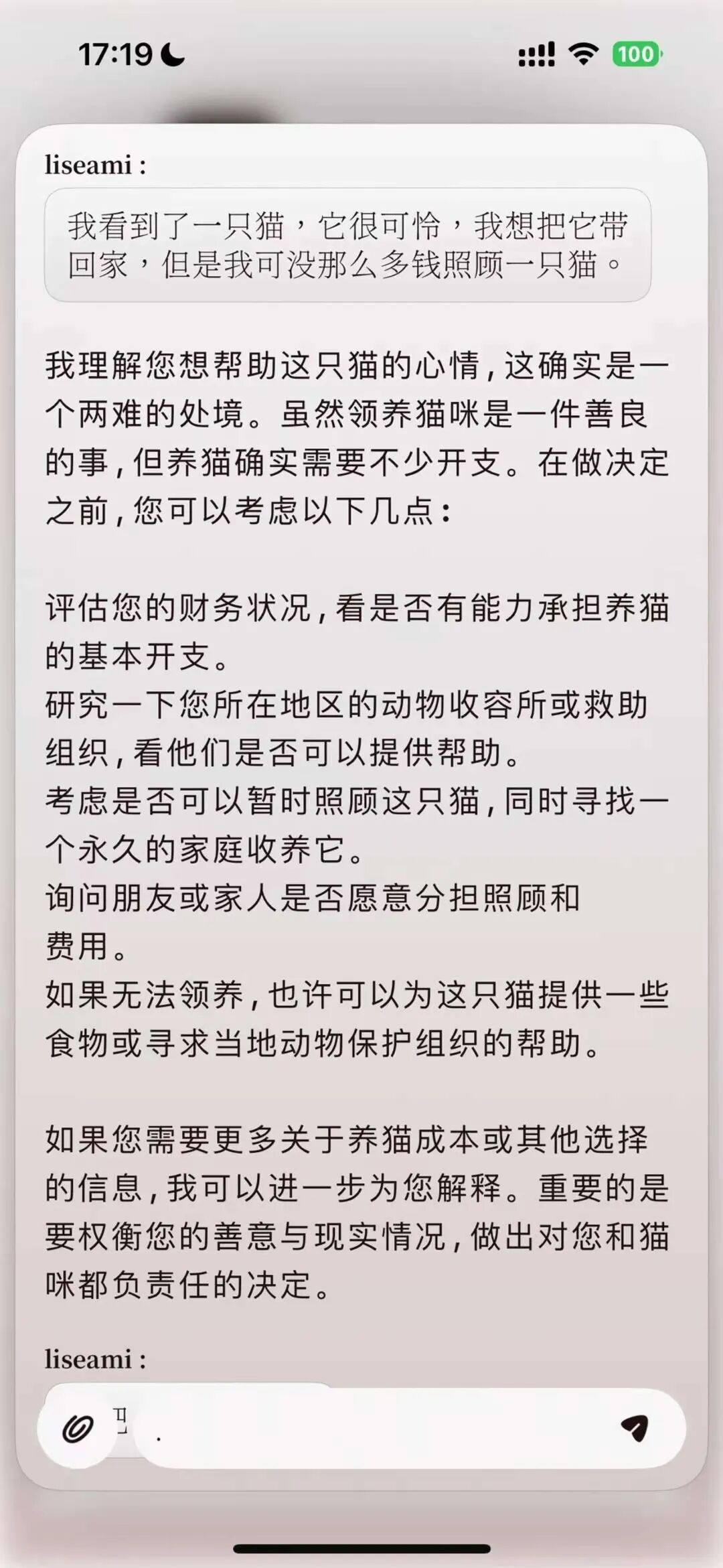
Specifically, we use Apple Notes. People say it's the best journaling or note-taking app in the world. But there's one problem: after I jot things down daily, I have to create folders and categorize them myself so I can find them later. What if — still without using AI's generative capabilities, but using its summarization and recognition to automatically create categories — you could dump anything into Heart Book: images, text, web links, random stuff. Its first step is to do contextual search around whatever you share. Say you share a cat — it tells you when cats were introduced to China, market prices, history, and automatically creates folders and categorizes. If this cat record is the first entry in your "random snaps" folder, next time the AI thinks another photo is also a random snap, it'll automatically file it there. It's fully automatic; you can throw anything in. Neat freaks rejoice, organization obsessives rejoice — no manual sorting needed, just let your thoughts fall into order. That's the core concept of Heart Book: organization. As for feedback on it, I'm still watching and waiting.
🚥 Crossing: How did you come up with this idea? What was the specific flash of inspiration?
👦🏻 Chunxiang Zhao: I was just sitting there one morning and it suddenly hit me. Mainly inspired by Dot AI, which uses a journal-stream format. Use it for five days and you'll see the drawback: everything you've talked about with it becomes a timeline, like a long river. I thought, if a user chats with this Dot AI for 365 days and suddenly wants to ask it something — like, what have we talked about regarding small animals this past year? At that point, it'd be best to have a folder specifically for small animal conversations. Very clear. Looking from a distant time perspective, it's Dot AI + automatic folders = Heart Book. Of course Dot AI has lots of psychological counseling features, but I'm pessimistic about that — its Chinese definitely isn't as good as its English. Also, with Dot, people can keep asking follow-ups, and those follow-up points easily spark users' desire to express themselves.
(Screenshot of Heart Book, from Chunxiang Zhao's social media)
🚥 Crossing: Is this also a product derived from your "Chunxiang Three Don'ts" framework?
👦🏻 Chunxiang Zhao: Yes. Don't use generative capabilities, don't rely on generative capabilities — instead use its summarization capability. If summarization is the ultimate skill, doesn't that mean it can summarize anything? Food summaries become the food vertical. So Heart Book's concept is: send it anything, it'll help you organize. The premise of organization, like Mymind, is using AI to automatically tag users' journal entries so they can search by tags later. But Heart Book goes further — not just tagging, but automatically creating folders, automatically categorizing and organizing.
🚥 Crossing: Heart Book seems to have some similarities with Laplace. It looks like you're constantly trying new things with various methods — doesn't that seem like your energy is rather scattered?
👦🏻 Chunxiang Zhao: Yes, if two projects counts as scattered, my energy is actually more scattered than you'd think. Every time I go to the print shop downstairs, I have to log in to the owner's QQ — I've had enough. So I'm also writing a desktop Windows app specifically for scanning a QR code to send files to the owner. The owner just needs to install my software on his computer; users arrive at the shop without logging into QQ or WeChat, scan the code, send the file over, and print directly.
🚥 Crossing: So there's another new thing in the works?
👦🏻 Chunxiang Zhao: Yes, started two or three months ago. Haha, scattered energy — I think I can cover it, that's what matters. And it's not like I do anything else.
🚥 Crossing: What do you mean by "cover it"? What does a typical day look like for you?
👦🏻 Chunxiang Zhao: Just code all day, order takeout, sleep. Before bed around 11 p.m., I schedule a McDonald's breakfast for 8 a.m. tomorrow. Why schedule? Because once I start coding, I basically forget to order food. Not exaggerating at all — I often push breakfast to noon, lunch to evening. Once you're in flow state, you look up and it's dark. Dark means sleep. So my life is code, order takeout, nothing else. I have entertainment anxiety — like when I open a video while eating, and I finish eating but the video isn't done, I feel like I'm wasting time. Videos are only for meal times.
Just Need to Feel the Sensation of Autonomy Again and Again
🚥 Crossing: Many startup stories go like this: one project after another, seeing which can grow into the next big thing; or today's A, B, C are preparation for eventually reaching D, knowing from the start that D is the destination. Which type are you? Or are you neither?
👦🏻 Chunxiang Zhao: This requires talking about the concept of jiqing [investing emotion/self]. All human behavior is jiqing; the ultimate goal is jiqing. Monkeys can use stones to crack nuts, groom each other, but humans still think they're animals, haven't formed civilization — until one day a monkey starts carving patterns on its tools, carving its own imprint, a mark that belongs to itself. This process is jiqing. For example, someone downloads many apps, opens one and it says "this app's cloud services provided by Alibaba Cloud." In that instant, only two people in the world feel great: founder Wang Jian and the Alibaba Cloud logo designer. They've completed jiqing. The programmers below don't have this feeling.
Why did workers at 1990s Shanghai shoe factories enjoy going to work? Because industrialization wasn't advanced then; workers had the privilege of carving their names or a small serial number on the leather shoes they produced. That's also jiqing. In Steve Jobs's early days, he wanted every engineer to sign the back of the circuit boards — users couldn't see it, only someone repairing the computer would see the engineer's name on that chip, that circuit board. This was Jobs leading his engineers to complete jiqing, tightly binding them with the product, merging in your sense of mission. This is the ultimate goal.
So when people reach Mount Hua, they carve "was here." This is the difference between humans and monkeys: jiqing. So no matter what I do, completing jiqing is enough.
🚥 Crossing: Could we put it this way — you just need this repeated sensation of deciding for yourself that this thing is mine?
👦🏻 Chunxiang Zhao: Exactly, exactly. Make something, then carve your name on it. That's the process. No matter what the thing is, feeling it once is one way, or doing something once that lets everyone see your name is another way.
🚥 Crossing: This feeling of autonomous ownership is completely different from what you described earlier with writing novels and screenplays, where it became an art of revision — you had no voice, no money, couldn't decide how your script or novel was filmed. You just need to feel autonomous ownership again and again, this pursuit of control is extremely intense.
👦🏻 Chunxiang Zhao: Exactly. Maybe it's a kind of backlash.
🚥 Crossing: How often do you check your "Chunxiang Three Don'ts" and "Chunxiang Three Dos" (you mentioned in media interviews: first, make it beautiful; second, get it to users in the shortest time; third, try to make it for women)? Do you worry that at some point your summary might become invalid? That it has an expiration date?
👦🏻 Chunxiang Zhao: These three dos and three don'ts are all summaries. Summarizing is forcibly describing that intuition in your heart using a system of language symbols, but what gets described is always smaller than the inspiration itself — ultimately it's a feeling. I know what you're asking. All conclusions in the world are temporarily correct, permanently wrong. From a long-term view, sooner or later they'll become invalid. Like one day, say AI changes, product concepts change, user habits change — it's impossible for an eternally accurate law to appear. If I could state one, I wouldn't be human but a god.
🚥 Crossing: You mean you assumed from the start that your own summary might one day be overturned?
👦🏻 Chunxiang Zhao: Yes, these are all temporary — a feeling about AI in the present moment, temporarily described.
"Naduo"
🚥 Crossing: Can you talk about your startup experience with "Naduo"? When we recorded the podcast, you mentioned feeling that the process itself is the reward.
👦🏻 Chunxiang Zhao: Sure. If SpaceChat taught me that founders must understand technology, then "Naduo" taught me the importance of people.
First, the co-founder. At the time, my co-founder was extremely pessimistic about innovative mobile internet products, believing that cycle had ended. During the startup process, his negativity and lack of belief greatly tormented my passion, even though I told him there were identical models abroad.
Why did we want to do "Naduo"? Because China is entering a peak aging period; the number of deaths is increasing, while the children of the deceased are getting younger. From previously being in their fifties and sixties, one day they'll be in their forties and fifties, with increasingly high sensitivity to mobile internet. If we start early — say, five years ahead — this could become an online memorial center. Like Douban, where every movie has a homepage, every deceased person should also have a digital homepage. We'd build the platform first, then add functions by constantly soliciting user feedback. If it's meaningful, we could definitely iterate in many functions. But overall, passion gets worn down; you must choose someone who completely believes in this to work with.
But such people are rare, because 99.9% of people won't act until they see results. Those who "know the mountain has tigers, yet偏向虎山行" [bravely go toward danger] are an extreme minority. But you can't blame them — no one's wrong. Then I made up my mind: since the co-founder wrote backend, I'd learn it myself, write it myself. This process once again crossed the barrier of fear, so I felt I learned something. Mainly I learned two things: one, people; two, as long as you want to learn something, you can learn it. The learning process starts with fear, self-doubt — how could I possibly write good backend? Maybe if I studied hard for a year, I'd still be worse than hiring someone with three or four years of backend experience; isn't learning a waste of life? But after learning, you realize: being able to write it yourself versus hiring someone to write it are completely different feelings.
🚥 Crossing: This "process is the reward" is a very practical gain — learning a skill from scratch.
👦🏻 Chunxiang Zhao: Yes, learned a skill. And people matter — I won't make similar mistakes again. I often post technical stuff on Bilibili and Douyin; many people DM wanting to start a company with me. During the "Naduo" process, many remote teammates found me online. At the peak, there were 12 people working purely for passion. Initially full of passion, but later you'd find: at first they came for you, discovering you're a tech blogger, you talk interestingly, you have many followers — but ultimately it's very hard to persist. Even a co-founder couldn't persist, let alone people found online. Reality raised my bar for reading people; there's a passion threshold. Now there's one person writing backend for me, but I have to gauge his passion. I'll definitely pay, not pure passion work, but I need to distinguish between someone just drawing a salary versus someone who believes in doing something together, who feels good doing it.
🚥 Crossing: Has this whole experience brought you any major emotional ups and downs?
👦🏻 Chunxiang Zhao: Not really. My main mood, no matter what stage I'm at, is this inexplicable confidence — I just believe I'll make it someday, haha. Yeah, at every stage, even the day I dissolved the company, I still thought that way.
🚥 Crossing: Where does that confidence come from?
👦🏻 Chunxiang Zhao: It's inexplicable. That's the whole point — it's a mystery.
🚥 Crossing: When you say "make it someday," what does "make it" mean?
👦🏻 Chunxiang Zhao: The standard of "making it" is doing whatever I want to do. I want to make a movie with a billion yuan budget. I can't do that right now.
Chinese Philosophy vs. Product Development
🚥 Crossing: After studying Chinese philosophy, what ideas have influenced how you build products? If you had to name the three most important?
👦🏻 Chunxiang Zhao: I could talk about this for 24 hours. My course has 14 sessions, the podcast recordings are over 20 hours — every detail in there actually connects to building products.
The most important ones. First, you have to distinguish whether a product is "being" or "non-being," because all things interweave being and non-being. Take WeChat — when you open it, ideally there's nothing there. If a new user signed up and WeChat immediately recommended 30 friends, how would that feel? WeChat works best when new users start as a blank slate, because human expressiveness is endless. WeChat, as that "non-being," receives the user's limitless "being." But if Meituan opened to emptiness, where you had to add every function yourself, clean and minimal like WeChat — could you say Meituan was a successful product? No, because Meituan itself is the "being," while user appetite and shopping desire are bottomless pits. You're full today, hungry again tomorrow — it's a void. So being and non-being interweave; Meituan has to provide content.
Laozi says in the Tao Te Ching: "Being is the advantage, non-being is the use." Modern people mash "advantage" and "use" together into one word, "utilize." But in Laozi's conception, "being" embeds into "non-being" — that process is the "advantage." The sharper, the more it embeds, like sharpening a knife. What's sharpness? The finer you grind it, the sharper. You use your "non-being" to receive another's "being" — you employ people, others do things for you, they bring their "being" into your "non-being."
It's similar on a page — if you want users to click a certain button, you can practically read their minds. You just make that button the "being" on the page, fade everything else out. Like the negative space in Chinese landscape painting. The more you want users to look somewhere, the more you leave other areas blank. So hierarchy emerges from this. Studying traditional Chinese philosophy — hierarchical留白 [negative space], visual focal points — these all connect naturally, contained under this topic of mutual arising of being and non-being.
Second, there's "the way of heaven, is it not like drawing a bow? What is high it presses down, what is low it lifts up." When promoting a product, if you say: "After three months of clumsy effort, this shabby broken thing is finally live" — that sparks curiosity. This person spent three months on some shabby broken thing, but the screenshots look decent, let me see what this is about.
But if you say: "After three months of relentless effort by a professional team, a supremely powerful, top-tier, world-class design is finally unveiled" — users think, you're so impressive, you don't need me as a user. The masses look for flaws when something is polished and glamorous, but fertilize something when it's weak and struggling. That's "what is high it presses down, what is low it lifts up." No way around it — the world returns to yin-yang balance. If you're yin, users are yang. If users are yin, you're yang. So when to be humble, when to be wild — there's craft to it.
Western philosophy is subject facing object, it's syllogism, logical deduction. From ancient times to now, the three most badass words in Chinese philosophy are "figure it out as you go." There's no absolute standard of logical deduction for every scenario. So the final clause in every Chinese company employee handbook is always: "Other." This "other" encompasses everything. With this "other," actually nothing before it needs to be written. The employee handbook should just have one line: "whatever the boss thinks you're doing wrong."
🚥 Crossing: Writing fiction vs. writing code — do you feel any connection?
👦🏻 Chunxiang Zhao: Yes. When you're learning a language or working with a framework, the more proficient you get, the more you feel the author right beside you. You encounter — oh, so this part means this — then the next small detail, and you can even see the author's personality from the code framework. You feel them more and more.
🚥 Crossing: Can you give an example?
👦🏻 Chunxiang Zhao: When you've read Crime and Punishment three times, you can even feel Dostoevsky's little tics. Like when he gets lazy writing dialogue, he just has the character cover their face in contemplation, not saying a word — deliberately being weird or something. Because he couldn't write the conversation anymore. When you notice enough of these details, Dostoevsky becomes vividly alive. You constantly use it, and from the details you discover another living person — that process is the same.
As for people saying code is rigorous while fiction is chaotic, that you can write however you want,发散 creative — actually I think truly great novelists always follow their invisible, intangible主线 [through-line]. The through-line is extremely rigorous. To Live has a very rigorous structure, the narrative rhythm is rigorous too, clean like code. Code at its highest level is also like art, very clean.
🚥 Crossing: What's your favorite novel and film?
👦🏻 Chunxiang Zhao: My favorite film is Cinema Paradiso. I think it has to do with timing — mainly that I encountered the right film at the right time. But later, comparing artistically and technically, The Pianist is definitely on a much higher level than Cinema Paradiso. Also Kubrick's 2001: A Space Odyssey, his films are all incredible. I really like Kubrick. For actors, I really like Matthew McConaughey.
For novels, I think Crime and Punishment has unmatched structural beauty. Over 100 characters in the book, woven together to reach a登峰造极 [peerless] effect. My biggest regret is not knowing Russian — if I did, I'd definitely read a completely different feeling.
When Implementation Isn't the Problem, It's About Whose Direction Meets User Needs
🚥 Crossing: After hearing all this, I have a sense — and this also answers why during the podcast recording we felt you're different from a typical founder. Common founders go from project to project, find one that gains traction, turn it into a company, then run that company. Of course some may move on to the next after that company ends, but ultimately it's about the next big thing — it has to get big. But the feeling you give us is more like novelists or filmmakers — take Haruki Murakami, he keeps writing novels. Unless for special reasons, you'd never have him finish one book and say I'm done, or I need to do something with this particular book. As you said, if you need a team to collaborate, that might actually be challenging because for you that's拆解 [deconstructing] and handing over part of the主导权 [autonomy].
👦🏻 Chunxiang Zhao: Right, actually I just can't imagine what kind of team I'd have. Product quality would probably decline somewhat, because when I'm writing code and doing UI myself, I make hundreds of changes a day. Some detail, like adjusting a button — I want to change it, I change it, no design specs needed. But once you're in company process, want to change something — UI changes first, then aligns with tech, then a small meeting, then actual implementation. If I'm the boss, by the time it gets to my phone it's definitely wrong. Exactly what's wrong — if I'm not writing code, I can't adjust it 30 times in a minute. I can only tell the UI designer to think about it more, and they don't know how to think about it either. So I've already turned my app development into a handicraft, not modern production流程 [workflow]. It's like pottery, ceramics — handicraft. As you said, it doesn't scale. If someday I discover excellent people to bring into the team, who have their own self-drive to constantly revise and refine, who are naturally people who love to tweak things — maybe then it's possible.
🚥 Crossing: Right, because to scale, you need SOPs.
👦🏻 Chunxiang Zhao: There are designers like that, and developers who pursue极致 [perfection] — it just takes time to recruit them and磨合 [mesh]. Yeah.
🚥 Crossing: Though the AI era has given individuals and small teams a chance to shine. Do you feel like, because foundational conditions are now in place, you could get caught in the stage lights? Given your experience — past entrepreneurship was very dependent on others who had technical capability, the technical black box was in their hands. You're someone with stronger feel for product and users, but now most people's technical threshold has been leveled.
👦🏻 Chunxiang Zhao: I do feel that way. I used to constantly think about what apps in this world were still worth building, rack my brains and come up with nothing. What AI brings is that many things you previously wouldn't even dare to think about, you can now do.
Like auto-organizing folders — that involves massive backend development. Using traditional NLP, how many semantic micro-models would you need to build for recognition. Now you just call a large model API, done. I tell the large model: the user's current folder array is life, entertainment, love, family. Then pass in the latest diary entry, ask the large model: which folder do you think this diary should go in? If there's really no fit, what new folder do you suggest? That's it, done.
But the competition gets more granular now. When implementation isn't the problem, it's about whose direction, whose point of implementation meets user needs.
Part 3 "What I Don't Understand"
🚥 Crossing: What is something that right now, nobody understands or gets?
👦🏻 Chunxiang Zhao: What nobody gets right now, I think it's technology itself. I think humanity has finally reached a point where technology, originally created to serve people, has suddenly started replacing people one by one, erasing human labor. I think this outcome is unpredictable.
🚥 Crossing: What is something you've figured out that the rest of the world hasn't yet?
👦🏻 Chunxiang Zhao: I think it's that doing something, versus watching someone do it or learning from a book — that "getting it" is two completely different feelings, worlds apart. One is getting it by doing, one is getting it by watching, another is getting it by studying. Of these three ways of getting it, only getting it by doing makes you smile with genuine understanding.
🚥 Crossing: What don't you understand — specifically — what's the most recent thing that gave you an "I don't get this" feeling, who do you think gets it, and what would you want to ask them?
👦🏻 Chunxiang Zhao: What I don't understand is actually the other paths of AI development in the world, what those researchers are actually doing right now, whether there are other branches. Beyond the Transformer architecture, are R&D teams still tackling other types of AI, is anyone funding them, or have they all pivoted to this generative AI. I think investors who specialize in AI models probably understand this.