"Many people don't realize it, but today is a historic day for AI..."

Years later, looking back.


🌟 Meta Releases Open-Source Llama 3.1 Model
🎨 Adobe Illustrator and Photoshop Get New AI Features
🤖 Microsoft's VALL-E 2 Achieves Human-Level Voice Cloning
🚀 Strong Q2 Earnings for Alphabet
🌐 PixVerse V2: Ushering in an Era of AI Video Creation for Everyone
🫰 Me.bot: Building a Symbiotic Universe of Humans and AI
🛡️ Wiz Rejects Google's $23 Billion Acquisition Offer
🌟 Former Tesla Humanoid Robotics Lead Starts Warehouse Robotics Company
💻 Meta AI Researcher: Llama 3 Trained Entirely on Synthetic Data
Meta Releases Open-Source Llama 3.1 Model
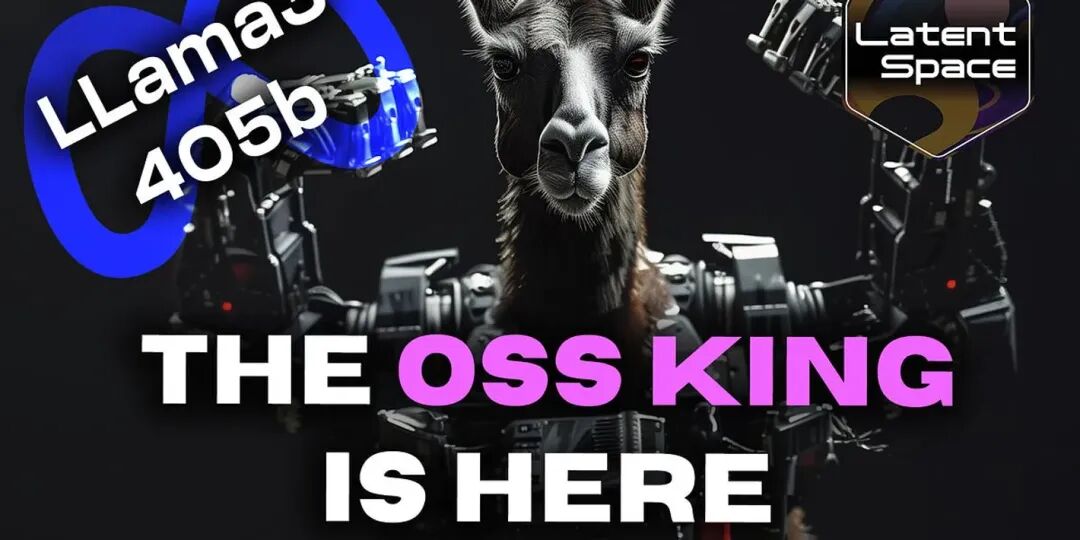
Meta has officially released Llama 3.1, its open-source large language model, in three versions: 8B, 70B, and 405B. The 405B version delivers exceptional performance on multiple key benchmarks, even surpassing top-tier models like Claude 3.5 Sonnet and GPT-4o.
Llama 3.1 405B was trained on over 15 trillion tokens using 16,000 H100 GPUs for several months. The new version supports a 128K token context window, offers multilingual capabilities, and demonstrates strong performance in mathematical reasoning, logical thinking, and long-text comprehension. It achieved excellent results on benchmarks including IFEval, GSM8K, and ARC Challenge.
Mark Zuckerberg stated that open-source AI will ensure more people can access the benefits and opportunities AI brings. The release of this open-source model will profoundly impact the global AI innovation ecosystem, opening new possibilities for developing advanced AI applications.
Users can currently experience Llama 3.1 405B through WhatsApp and meta.ai[1] (US region).
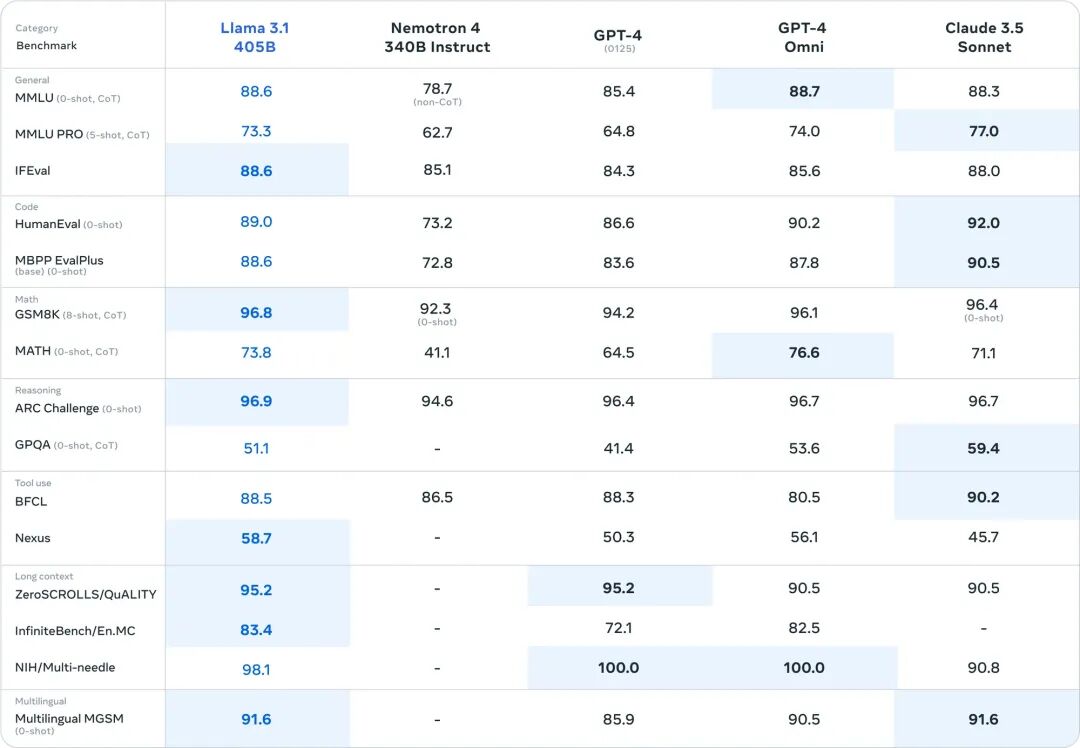
Today is a historic day — open source has reached parity with cutting-edge closed-source models. For those who believe in the democratization of technology, this is an incredibly exciting moment. This article from last year, "Why Meta Open-Sourced Its Powerful Llama"[2], is also worth revisiting. — Jike user @Szhans[3]
Adobe Illustrator and Photoshop Get New AI Features
Adobe announced that its two flagship products, Illustrator and Photoshop, will receive new AI-powered features designed to accelerate creative workflows and give designers more control.
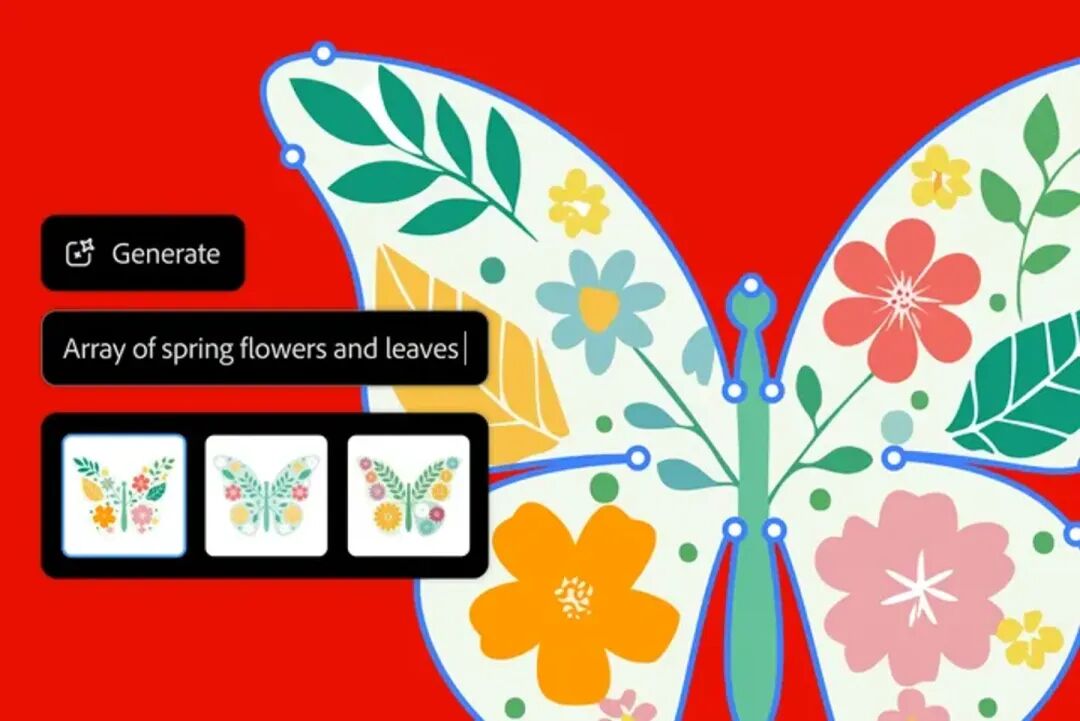
Illustrator's updates include "Generative Shape Fill," which lets users generate sophisticated vector graphics from simple text prompts. The system can also auto-generate fills based on document content while keeping graphics editable. Another new feature, "Mockup," quickly applies illustrations to real-world objects, automatically adjusting size and perspective. Additional additions include font recognition and editing, plus a "Text to Pattern" feature.
Photoshop adds "Selection Brush Tool" and "Adjustment Brush Tool" to streamline repetitive tasks, along with improved text tools and contextual task bars. The latest version of Adobe Firefly will also integrate into Photoshop, enhancing AI-generated content capabilities. Adobe emphasized that user work will not be used for AI training unless users opt in to share it on Adobe Stock.
Microsoft's VALL-E 2 Achieves Human-Level Voice Cloning
Microsoft recently released VALL-E 2[4], a zero-shot text-to-speech (TTS) model that reaches human-level performance in speech robustness, similarity, and naturalness. This marks significant progress in the TTS field, enabling the model to generate realistic, natural-sounding speech from just a brief voice sample — like a skilled impressionist.
VALL-E 2 made key advances in addressing the stability and efficiency issues of the original VALL-E. Through repetition-aware sampling and grouped code modeling, VALL-E 2 significantly improved decoding stability and inference speed while greatly simplifying data collection and processing workflows. These improvements give VALL-E 2 not only a milestone breakthrough in zero-shot TTS but also more possibilities for future speech synthesis technology.
However, despite its impressive capabilities, Microsoft is treating VALL-E 2 purely as a research project with no plans for commercialization. Researchers stated in the project page and paper that to ensure safe application, robust synthetic speech detection models must be developed, and authorization mechanisms designed to guarantee owner approval before synthesizing any voice.

Strong Q2 Earnings for Alphabet
Alphabet released its Q2 2023 earnings, with both revenue and profit beating market expectations. Revenue grew 14% year-over-year to $84.74 billion, while net income rose 28.6% to $23.6 billion.
Digital advertising and cloud computing performed strongly. Ad sales grew 11% to $64.6 billion, with YouTube ad revenue up 13% to $8.67 billion. Cloud services revenue increased 28.8% to $10.35 billion, reflecting how broad adoption of generative AI technology is driving cloud business growth.
Despite high capital expenditures from AI investments, CEO Sundar Pichai remains optimistic about AI products generating revenue. He said AI technology will expand to more countries and use cases, potentially bringing returns to the company in the near future. However, no specific timeline was provided.
PixVerse V2 Released
PixVerse V2[5] is the latest AI video tool from AISphere, distinguished by lower barriers to entry, higher quality, better logic, and longer duration. Its release quickly sparked widespread discussion, thanks to its DiT (Diffusion+Transformer) architecture that significantly improves video generation quality. PixVerse V2 supports one-click generation of up to 5 continuous video clips while maintaining consistent subject appearance, visual style, and scene elements.
AISphere introduced a spatiotemporal attention mechanism in PixVerse V2, supporting both text-to-video and image-to-video modes. Users simply describe their desired scene to generate video. Each clip can be individually prompted with text or images, with generated segments automatically stitched into a complete video. The streamlined generation process meets diverse user needs, making AI video creation simpler and more efficient.
Moreover, PixVerse V2 targets not just professionals but everyday users, enabling more people to easily participate in AI video creation. By continuously advancing AI capabilities and lowering creative barriers, AISphere has achieved comprehensive coverage from professional to casual users, pushing AI video creation into an era of mass participation.
Me.bot: Building a Symbiotic Universe of Humans and AI
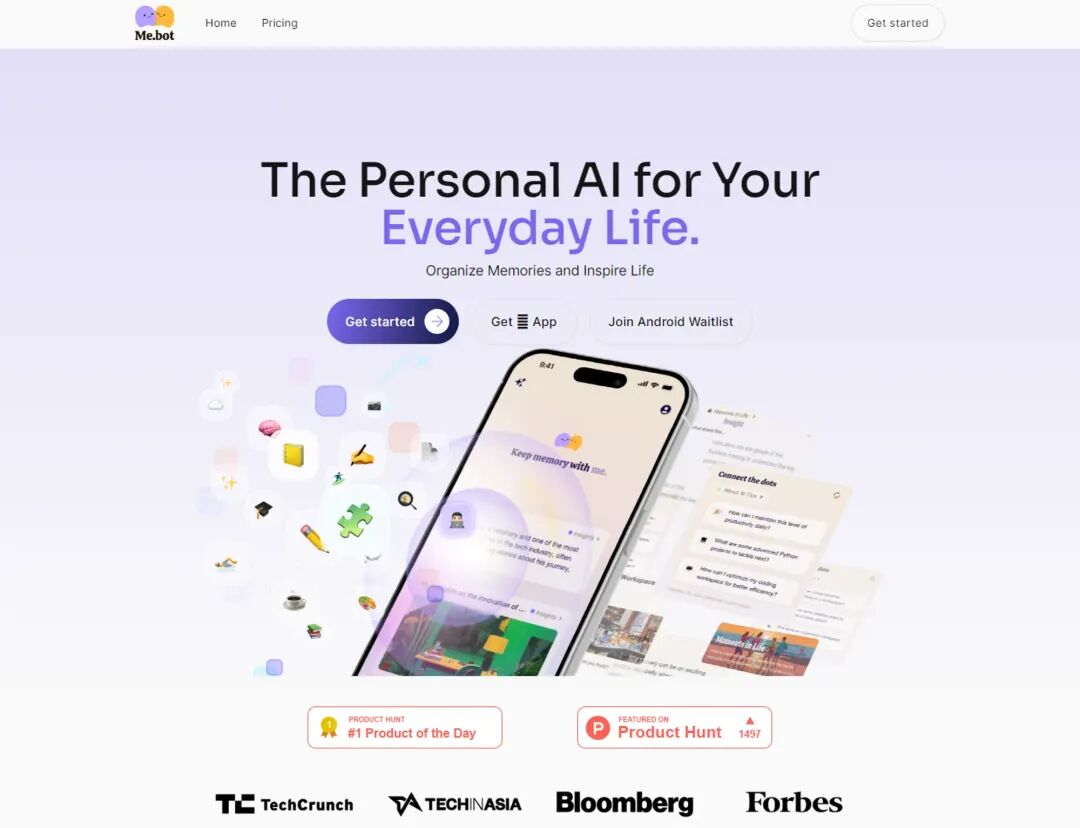
Dr. Fangbo Tao is the founder and CEO of Mindverse, with prior experience at Microsoft Research Asia and Facebook's research division. He founded his AI startup in early 2022, securing nearly 100 million RMB in funding from HSG, Linear Capital, and Square Peg. His latest product, Me.bot[6], ranked #1 on Product Hunt's daily leaderboard and is currently available on iOS in the US region.
Me.bot aims to help everyone train their own personal model, unlocking AI's diversity and personalization. It's not just a tool but an AI that coexists with users — recording and learning their lives and thought patterns to become a loyal companion. This model will help users personalize all services, becoming the key connection between people and the world.
Both Me.bot and MindOS are built for creating agents. The difference: MindOS serves enterprises, providing tools for building intelligent agents; while Me.bot serves individuals, training personal models through shared memories to deliver proactive, personalized services. Going forward, Tao hopes personal AI models will deeply integrate with hardware, enabling greater data sensing, interaction, and edge computing capabilities.

Wiz Rejects Google's $23 Billion Acquisition Offer
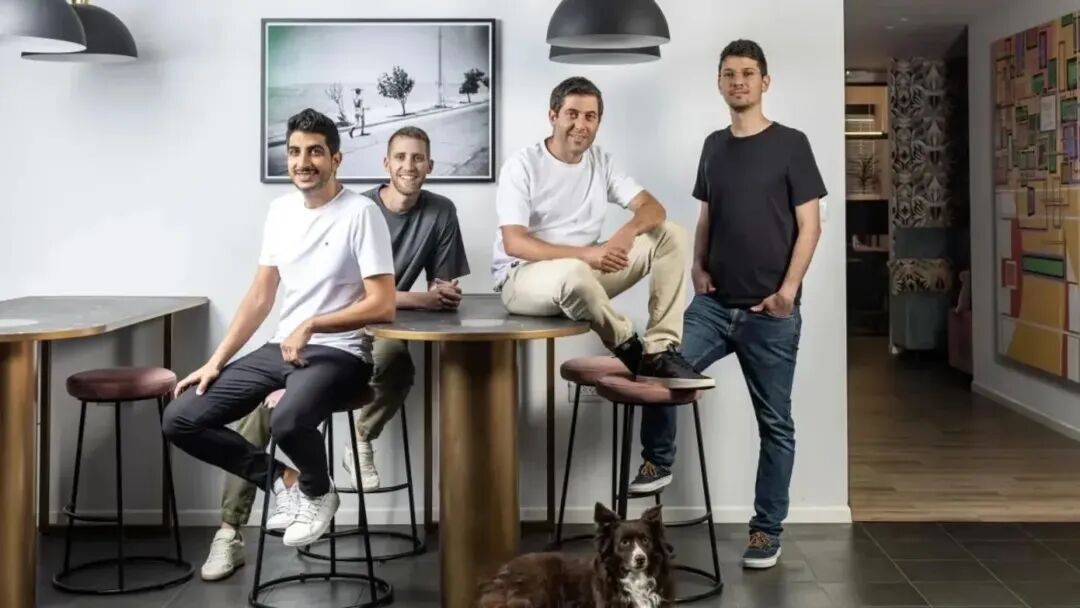
Wiz[7] CEO Assaf Rappaport announced the rejection of Google's $23 billion acquisition offer, stating the company's next goals are reaching $1 billion ARR and an IPO. The 4-year-old cloud security startup has become one of the fastest-growing software companies, partnering with multiple cloud service providers and counting numerous Fortune 500 companies among its clients.
Wiz's success stems from its focus on cloud security and application of AI technology. The company provides a one-stop cloud security platform covering cloud workload protection, security posture management, and helps enterprises manage AI/ML model security risks. Wiz's rapid growth and innovation attracted Google's attention, as the tech giant sought to strengthen its cloud business competitiveness through acquisition.
Though the deal fell through, the episode highlights the importance and fierce competition in the cloud security market. Tech giants including Google and Microsoft are actively positioning in cloud security, building capabilities through acquisitions or in-house development. Wiz's decision to remain independent may intensify market competition while bringing more possibilities for cloud security innovation.
Former Tesla Humanoid Robotics Lead Starts Warehouse Robotics Company
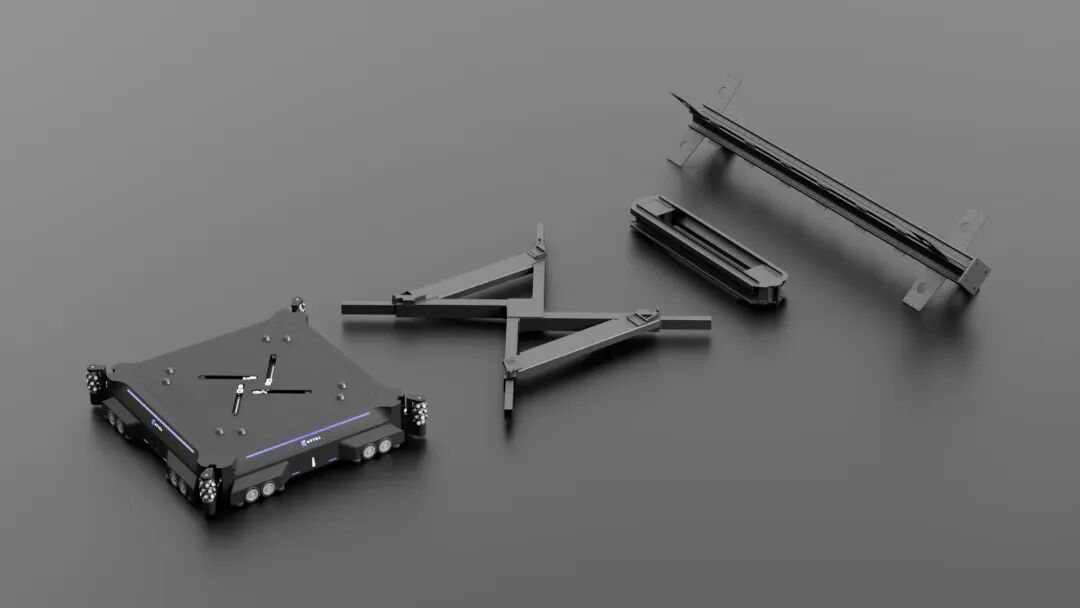
Mytra[8] is a robotics startup founded in 2022, focused on warehouse automation. Founded by veterans from Tesla and Rivian, the company boasts strong technical expertise. Mytra recently completed a $50 million Series B round, bringing total funding to $78 million, with investors including Greenoaks and Eclipse.
The pandemic disrupted global supply chains, surging demand for warehouse automation. Though the post-pandemic economy has recovered, labor shortages remain a major challenge. Currently, only 5% to 10% of warehouses worldwide have been automated. Mytra CEO Chris Walti previously worked at Tesla, leading the Optimus project. The autonomous mobile robots (AMRs) he developed can handle loads up to 3,000 pounds with unique freedom of movement.
Mytra has attracted interest from major companies, running a pilot program with grocery giant Albertsons, with several Fortune 50 clients at various stages of partnership.

Meta AI Researcher: Llama 3 Trained Entirely on Synthetic Data
Meta AI researcher Thomas Scialom revealed that Llama 3 was trained entirely on synthetic data generated by Llama 2, without using any human-written answers. He argued that web text quality is too poor for training, wasting computational resources. Synthetic data was applied across code generation, mathematical reasoning, multilingual processing, long-text handling, and other domains, enhancing model capabilities and efficiency.
Llama 3 employed various methods for generating synthetic data, including code execution feedback, programming language translation, and document back-translation. The model's multilingual processing used 90% multilingual tokens for pretraining, collecting high-quality human annotations. Additionally, Meta emphasized the importance of human feedback in model training, optimizing performance through preference selection rather than content creation.
Meta began training Llama 4 in June, with future versions set to increase parameters further and explore agent applications. Llama 3's synthetic data strategy provides valuable experience for developing next-generation AI models.

Sometimes the world may be fake, but that doesn't mean there aren't people who truly care about us.
— The Truman Show



Editorial Team Editor: Ziwen
Design: Ivan
For business inquiries, add on WeChat: Rwkfbcianvd
References [1] meta.ai: http://meta.ai/
[2] "Why Meta Open-Sourced Its Powerful Llama": https://m.okjike.com/originalPosts/64c843eed099868a440213e1?s=ewoidSI6ICI1OWU1NmRlYzM1MzM1ZjAwMTU4YTdhNTciCn0%3D
[3] Jike user @Szhans: https://m.okjike.com/users/B81A1705-9A6F-48C6-BF15-678405047F87
[4] VALL-E 2: https://www.microsoft.com/en-us/research/project/vall-e-x/vall-e-2/
[5] PixVerse V2: https://pixverse.org/pixverse-v2/
[6] Me.bot: https://www.me.bot/
[7] Wiz: https://www.wiz.io/
[8] Mytra: https://mytra.ai/