Midjourney Enters Hardware | Google Launches First AI Game Engine GameNGen

Flip through the evening digest before bed, stay on top of all the AI news.


🎨 Freepik Mystic AI Image Generator Launched
💡 Midjourney Expands into Hardware
📲 ChatGPT for Android/MacOS Adds "@" Mentions Feature
🚀 China's First Physics-Based 3D Motion Generation Model
🌇 LandMark 3.0 Real-World 3D Large Model
🚀 Kunlun — China's First Energy & Chemical Industry Large Model
📈 OpenAI Valuation Exceeds $100 Billion
🤝 XtalPi Signs 5-Year Strategic Agreement with GCL Group
🎮 Google Releases Breakthrough AI Game Engine GameNGen

Freepik Mystic AI Image Generator Launched
Freepik Mystic[1], an AI image generator jointly launched by Magnific AI and Freepik, claims to be the most advanced image generation technology on the market. Currently available through Freepik Premium subscriptions, it will also be offered on the Magnific AI platform in the future.
Unlike base models, Mystic combines the Flux foundation model with fine-tuning and high-resolution image generation techniques to produce high-quality images across multiple categories, including realistic portraits, animals, landscapes, and fantasy scenes. Images are curated by top photographers, digital artists, VFX specialists, and designers, then fine-tuned by in-house experts to generate AI images at resolutions up to 1,664 x 2,432 while adhering to given prompts.
Midjourney Expands into Hardware
The well-known AI image generation company announced on social media platform X that it would expand its business scope and invited talent to join its newly established hardware division. Midjourney has not yet disclosed what type of hardware devices it will develop, but stated that multiple projects are underway and hinted at "more form factor possibilities."
Midjourney founder David Holz, former CTO of Leap Motion, brings extensive hardware experience. Recently, Holz recruited former Leap Motion colleague Ahmad Abbas to lead the hardware division. Abbas spent five years at Apple, where he contributed to the development of the Vision Pro headset. Midjourney joins the growing list of companies exploring AI-driven hardware, and its new products are highly anticipated by the industry.
ChatGPT for Android/MacOS Adds "@" Mentions Feature
The Android and macOS versions of ChatGPT have added a Mentions feature, allowing users to invoke different custom GPT models using the "@" character. After typing "@", users see a popup window listing available GPT models to choose from, enabling seamless switching between different GPT models while maintaining chat context.
The iOS version of ChatGPT has not yet received this update. Mentions is an important tool in ChatGPT that allows users to interact with multiple specialized AI models in a single conversation, each offering unique capabilities that enrich dialogue content and user experience.

China's First Physics-Based 3D Motion Generation Model
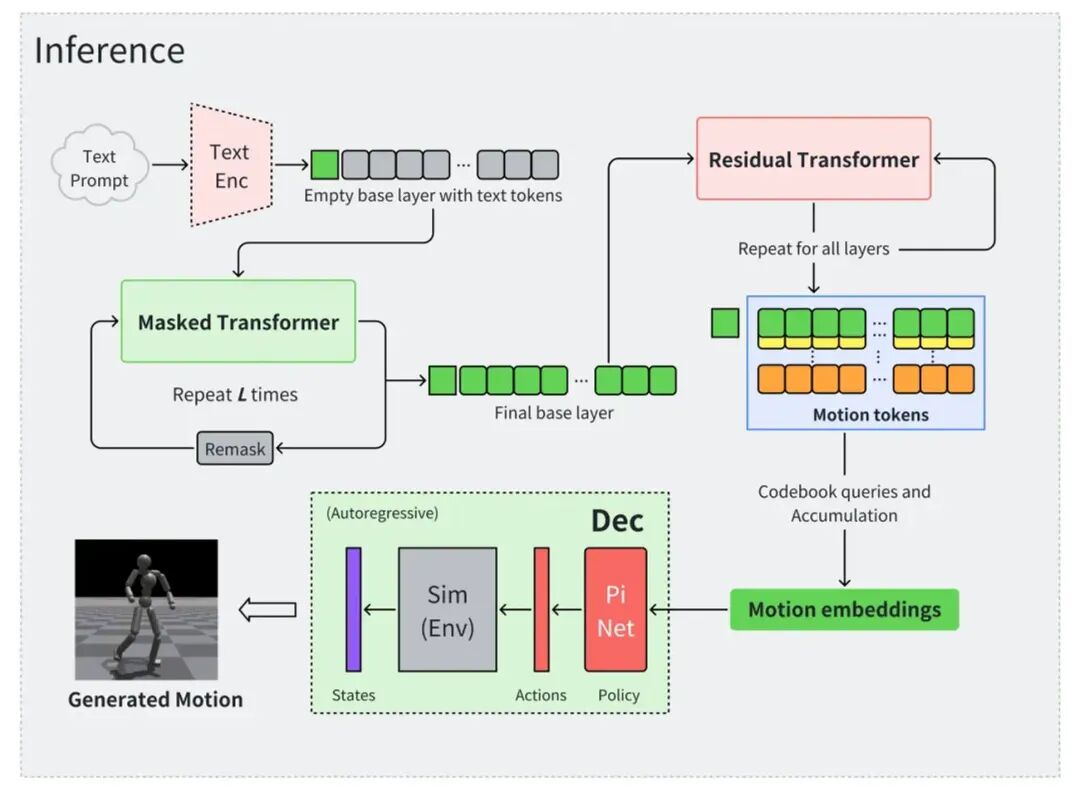
XVERSE has launched MotionGen, China's first physics-based 3D motion generation model, which innovatively integrates cutting-edge algorithms including large models, physics simulation, and reinforcement learning. Users can quickly generate realistic, fluid, and complex 3D motions through simple text commands.
MotionGen is based on XVERSE's self-developed MotionGenGPT algorithm. Without manual parameter setting or adjustment, it combines reinforcement learning with physics simulation to generate natural, lifelike motions. It uses VQ-VAE to extract and reuse features, providing effective and compact motion representations, while a Transformer architecture establishes complex and precise connections between text and motion representations. MotionGen brings tremendous creative freedom to the animation, gaming, film, and virtual reality industries — even creators with zero experience can easily produce high-quality animations.
LandMark 3.0 Real-World 3D Large Model
The LandMark[2] real-world 3D large model, jointly released by Shanghai Artificial Intelligence Laboratory and multiple institutions, has received a major upgrade, achieving nearly 6x faster rendering speeds and VR device support for an immersive blended virtual-real experience.
LandMark 3.0 delivers more comprehensive and immersive interactive experiences through comprehensive algorithm evolution and innovative training system support. It introduces the Octree-GS algorithm, combining octree spatial structures with 3D Gaussian splatting for efficient rendering. The LandMark training and rendering system is compatible with multiple algorithms and hardware resources, supporting diverse high-quality real-world 3D reconstruction. LandMark 3.0's algorithms and systems have been open-sourced and made available for free commercial use, advancing applications of real-world 3D technology in urban planning, smart cultural tourism, game development, and film production.
Kunlun — China's First Energy & Chemical Industry Large Model
China National Petroleum Corporation (CNPC) has released the Kunlun large model with 33 billion parameters, the first large model in China's energy and chemical industry to receive regulatory approval. The Kunlun model was jointly developed by CNPC, China Mobile, Huawei, and iFlytek. The four parties signed a cooperation agreement in May this year, following a "Five Ones" action plan to train 8 large models and develop 18 application scenarios.
The Kunlun model release includes 8 large models of different levels, types, and sizes to meet diverse business scenario needs. These include 13-billion-parameter and 33-billion-parameter language models, and a 300-million-parameter vision model, enhancing professional capabilities in industry knowledge Q&A and conceptual understanding. Specialized models include a 5-billion-parameter seismic interpretation model and a 100-million-parameter well logging processing and interpretation model, significantly improving intelligent application effectiveness. Additionally, a 13-billion-parameter intelligent data query model, a 300-million-parameter equipment recognition model, and a 16-billion-parameter customer marketing scenario model support intelligent operations and image-text generation business needs.

OpenAI Valuation Exceeds $100 Billion
OpenAI is nearing another major milestone in its history. The company is reportedly in negotiations for a new funding round that would value OpenAI at over $100 billion (approximately 712.45 billion RMB), with Thrive Capital leading the round and expected to invest $1 billion (approximately 7.124 billion RMB).
OpenAI's valuation had already exceeded $80 billion (approximately 569.96 billion RMB) earlier this year, a significant increase from the previous year's $29 billion. Microsoft, OpenAI's largest backer, is also participating in this round, though specific details have not been disclosed.
XtalPi Signs 5-Year Strategic Agreement with GCL Group
XtalPi and GCL Group formally signed a 5-year strategic cooperation agreement at the GCL Energy Center in Suzhou. GCL Group will pay XtalPi an estimated $135 million in R&D fees to support its research in new energy materials including perovskites, supramolecular materials, and lithium-ion batteries. XtalPi will leverage its technological advantages in AI and robotic automation to provide customized R&D services for GCL.
XtalPi will build an AI + automated intelligent innovation system for GCL to enable rapid new material design, development of highly customized functional materials, and efficient process application. The two parties plan to establish a new materials research institute in the Shenzhen Hetao cooperation zone to strengthen AI application incubation in the energy sector. They will jointly develop differentiated new materials with industry competitiveness to promote green, low-carbon, and high-quality development of the new energy industry.

Google Releases Breakthrough AI Game Engine GameNGen
Google's research team has introduced GameNGen[3], the world's first game engine entirely powered by neural models. GameNGen can generate playable games in real time at 20 frames per second on a single TPU, using diffusion models to predict each frame and achieving visual quality comparable to the original Doom game.
Through AI models, GameNGen can automatically simulate complex game environments without the manual programming required by traditional game engines. Compared to conventional game development, this technology promises to significantly reduce development time and costs. While GameNGen currently focuses on Doom, the research team hopes to expand to more games and interactive software systems in the future. GameNGen's technology applies not only to the gaming industry but also holds potential to advance virtual reality, autonomous vehicles, smart cities, and other sectors.

In case I don't see you... good afternoon, good evening, and good night.
— The Truman Show



Editorial Team
Editor: Yuki
Design: Ivan
For business cooperation, add WeChat: Rwkfbcianvd
References
[1] Freepik Mystic: https://www.freepik.com/free-photos-vectors/mystic
[2] LandMark: https://github.com/InternLandMark
[3] GameNGen: https://arxiv.org/abs/2408.14837