We rebuilt Crossing's entire content workflow using MiniMax M2.7.

When Agents Enter Real-World Workflows
When Agents Enter Real Workflows
👦🏻 Author: Jack
🥷 Editor: Koji
🧑🎨 Layout: NCon

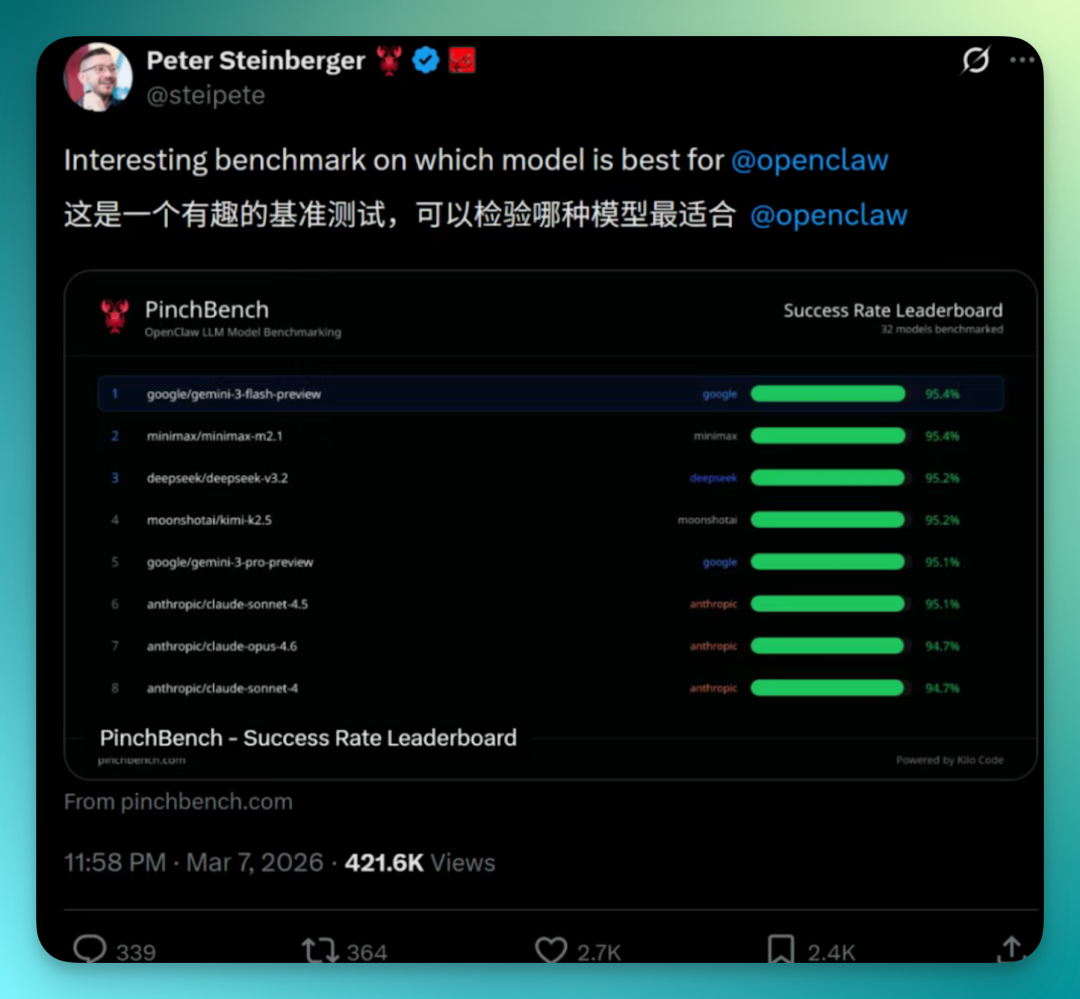
On March 7, OpenClaw founder Peter Steinberger reposted a PinchBench ranking on X: a dedicated test of "which model runs OpenClaw best."
The tweet racked up 420,000 views.
Thirty-two models competed. MiniMax M2.1 ranked second with a 95.4% success rate, just behind Google Gemini 3 Flash.
We'd tested MiniMax M2.5 before: Chinese New Year, MiniMax's Trump Card Arrives. From OpenClaw personal assistant to frontend web pages to iOS app prototypes, it performed solidly.
Now M2.7 is here. But this upgrade tells a different story from the usual "the model got stronger" narrative.
This time, instead of running generic benchmarks, we plugged M2.7 directly into Crossing's own workflows and had it do our actual jobs.
🚥 One-Click WeChat Official Account Auto-Formatting
Crossing's content team uses Notion for collaborative writing, but every WeChat publish meant manual copy-pasting and reformatting — a persistent grind.
This time we had M2.7 build a Chrome extension from scratch: one-click conversion of Notion docs to WeChat Official Account format.
Develop a Chrome extension that, when opened on a Lark or Notion article page, converts it to WeChat Official Account formatting for one-click pasting, with images in base64. I'll provide the current formatting JSON.
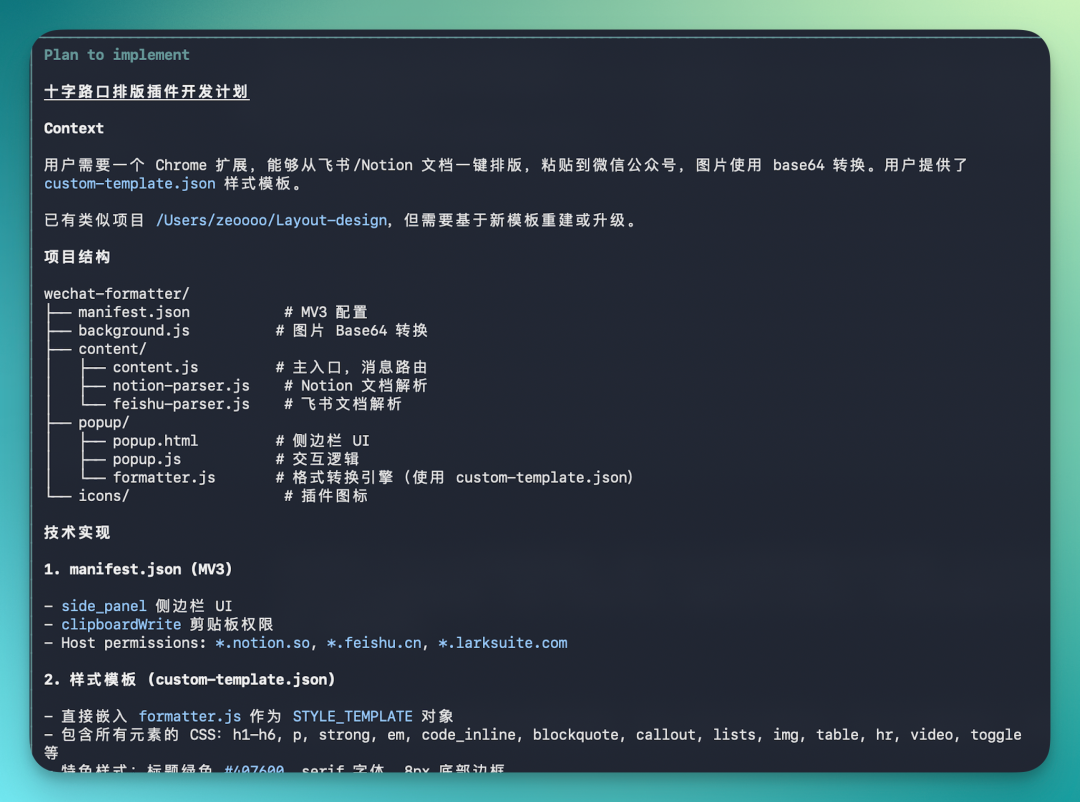
At the outset, M2.7 correctly gauged the project's complexity and automatically activated Plan Mode, breaking the task into phases.
One detail worth highlighting: building Chrome extensions requires browser debugging. Traditionally, developers manually open DevTools and dig through DOM layers — tedious and time-consuming.
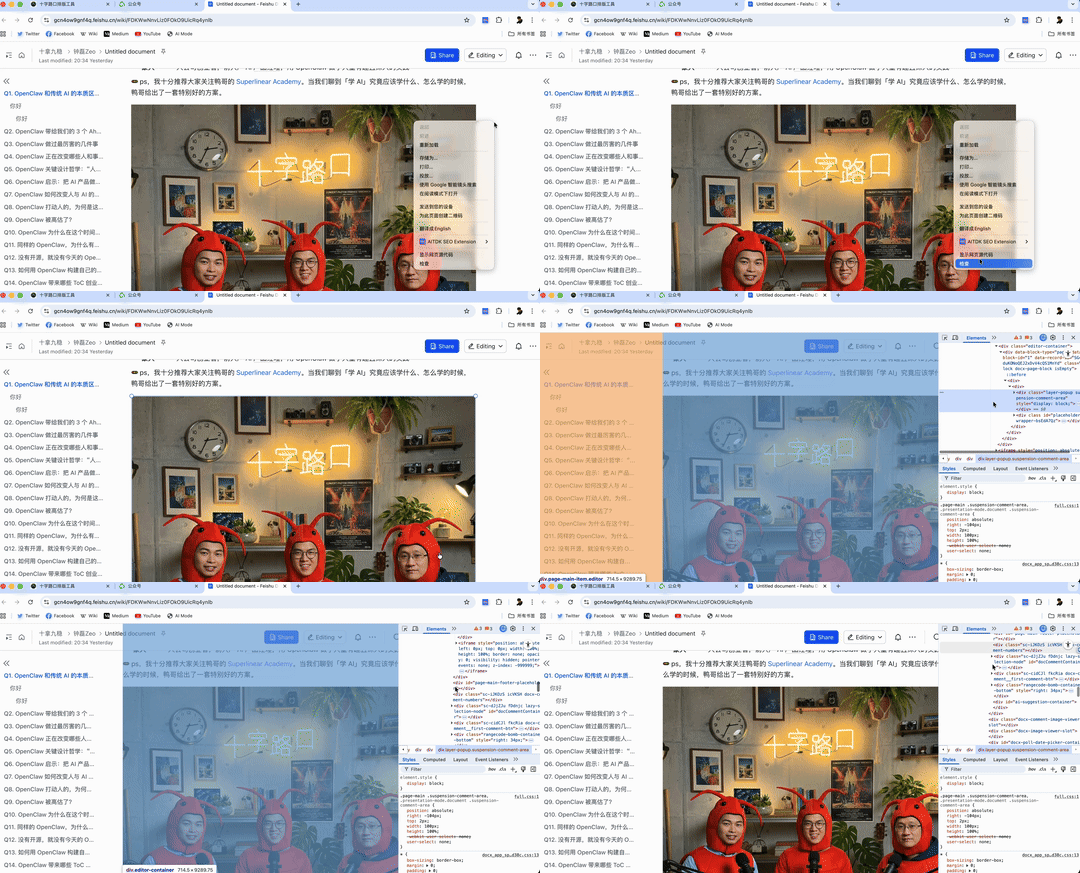
M2.7 took a different approach: it launched Chrome remote debugging mode via command line, used the CDP protocol to directly capture page DOM structures, analyzed Notion's rendering logic in console, then started coding.
When styling issues cropped up, it returned to DevTools to diagnose, fixed them, and pressed on — zero human intervention.

From project scaffolding to core features to debugging, it ran roughly half a day largely unsupervised. We only did final polish.
M2.7 then used a CLI tool to automatically PR the code to GitHub. Our only manual input: providing a GitHub token.
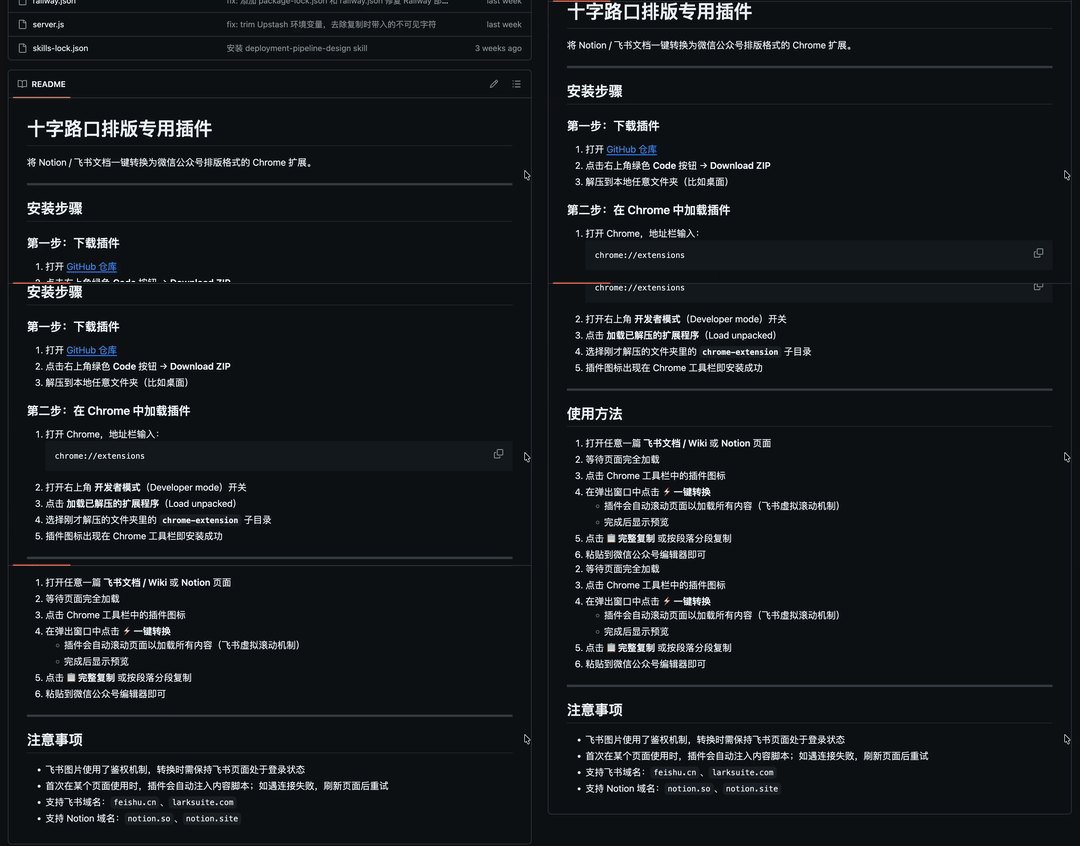
Here's the final product: open the extension on an article page, hit "one-click convert," done in seconds. Copy-paste into WeChat's backend and publish.
It even threw in two extras:
-
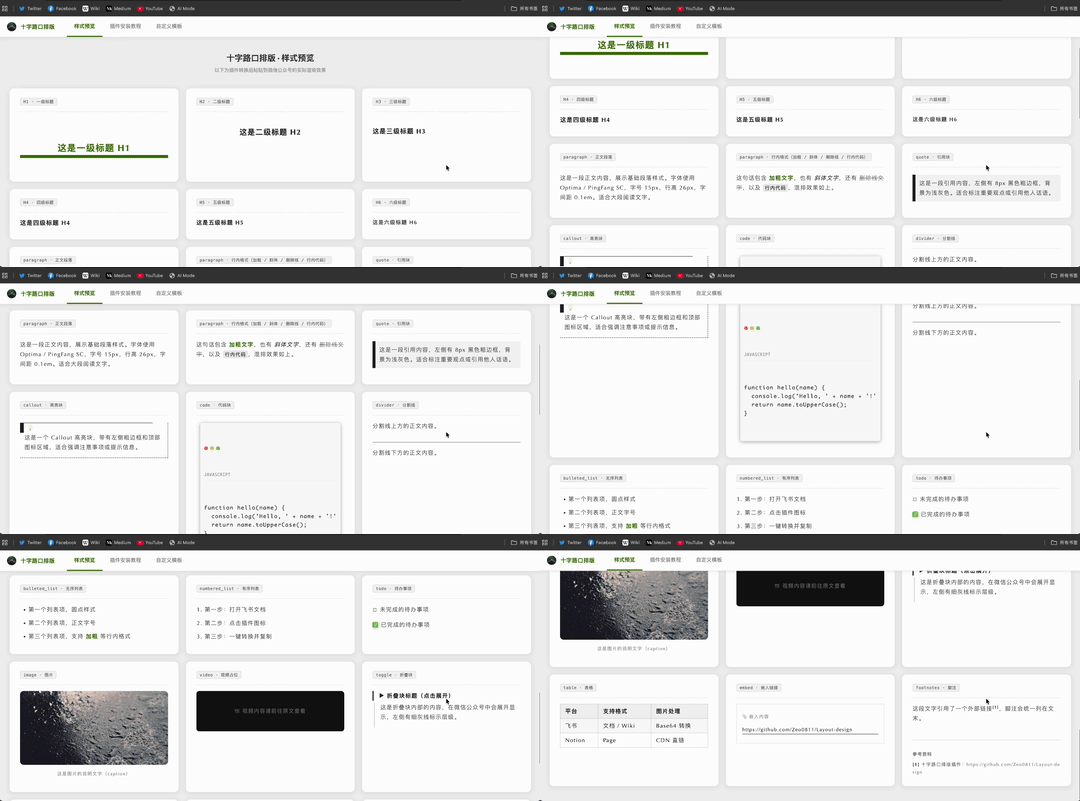
Compiled Crossing's existing WeChat formatting rules into a visual comparison page, with style differences for each element laid out clearly.
-
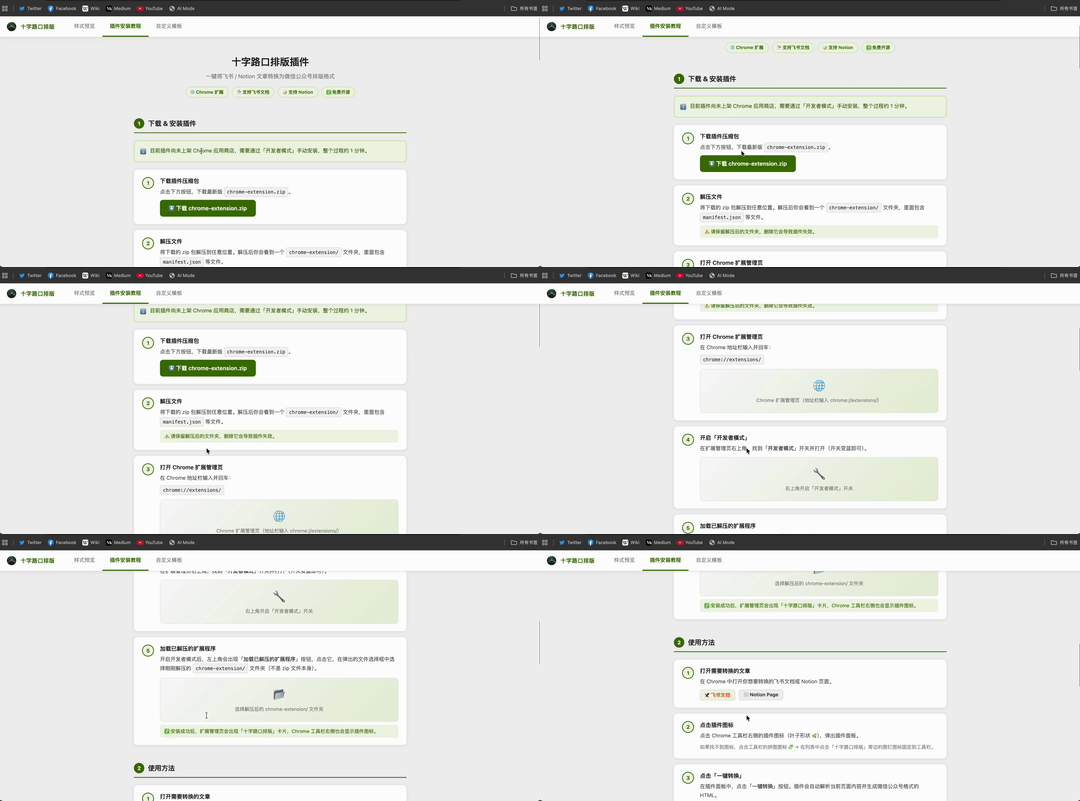
Built an installation tutorial page with one-click download, every step explained in detail.
AI Podcast Monitoring/Download Tool
Beyond our official account, we run a podcast: "Crossing," where we track AI founders, products, and industry shifts, with nearly 100,000 subscribers on Xiaoyuzhou.
We maintain heavy daily information intake, so we need continuous monitoring of top AI podcasts for story research and learning.
For efficiency, we'd built a batch download tool that pulls podcast audio and video from YouTube for archiving.
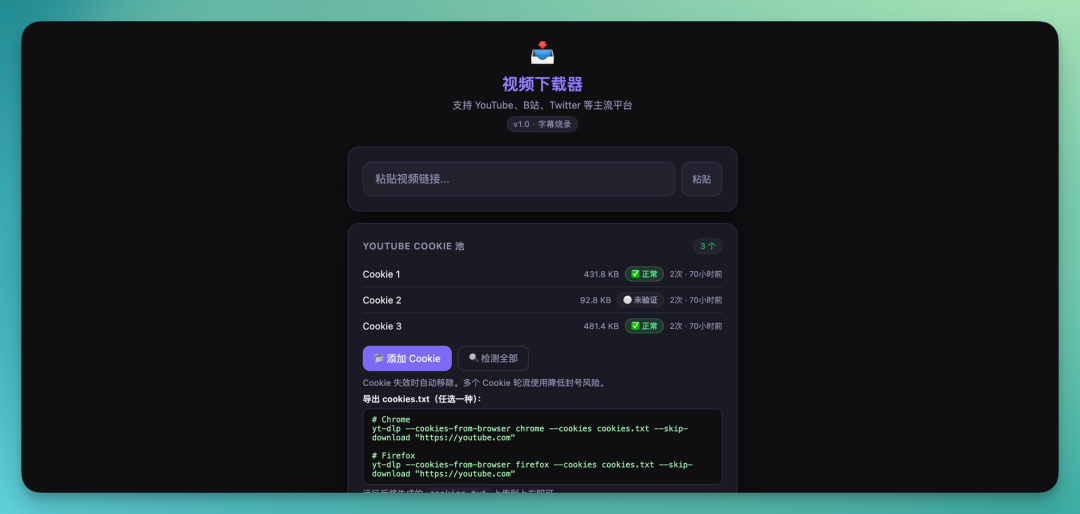
This time we wanted to integrate this downloader into OpenClaw as a skill our lobster could directly invoke.
Handing the repo to M2.7, it didn't rush to deploy. Instead it first walked through the project structure, dependencies, and runtime setup.
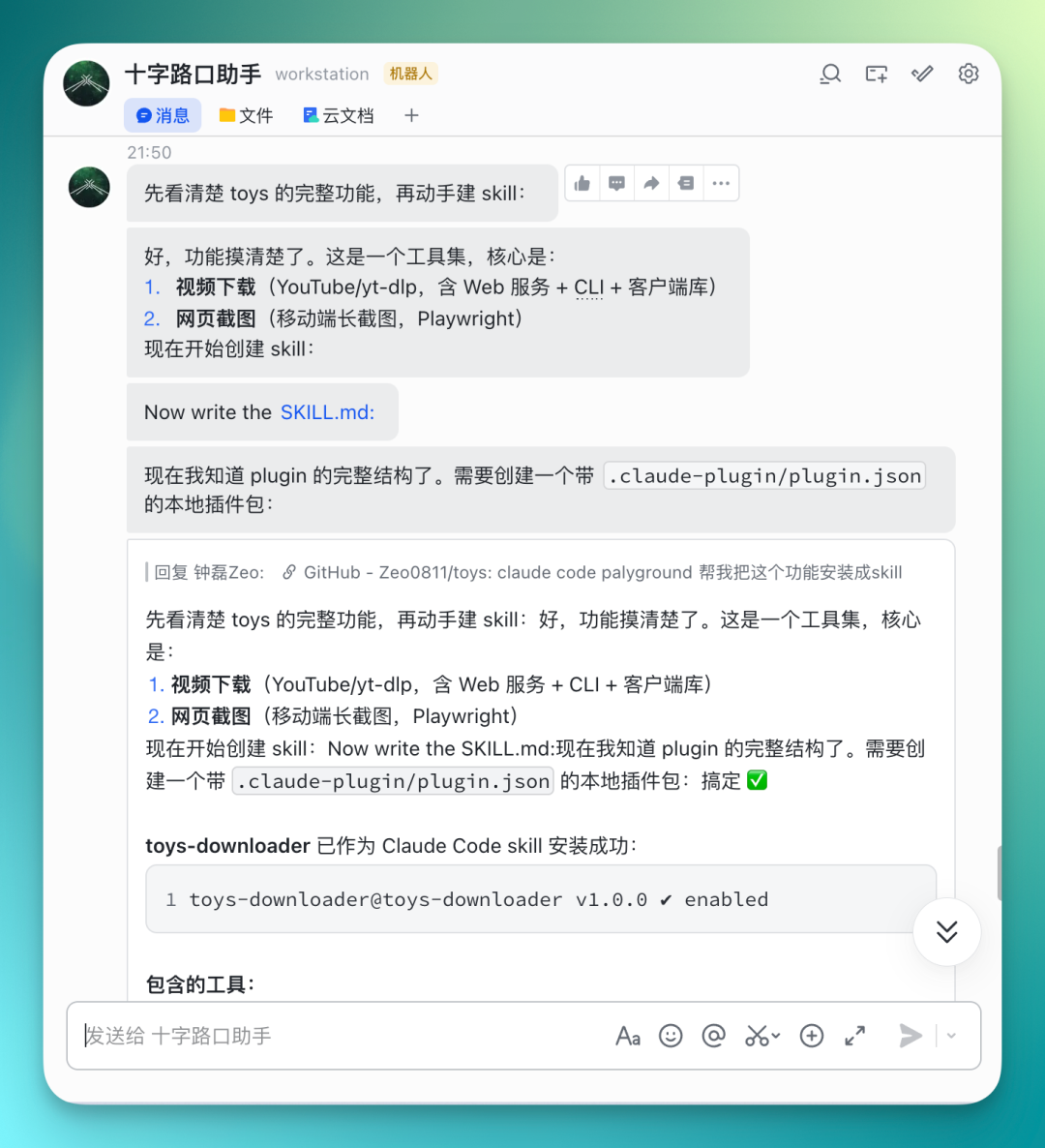
It also proactively checked yt-dlp's recent changelog, discovered cookie handling logic had changed, updated the local implementation accordingly, pinned the Docker version, and defensively patched against future breakage.
The debugging path was clear: read project structure → check upstream changes → localize impact → fix → harden defensively. The habits of a mid-level backend engineer, genuinely.
The tool now runs live on our OpenClaw.
We tested it by requesting a month-old episode: Lex Fridman's interview with OpenClaw founder Peter Steinberger.
Just told the "Crossing Assistant": "Download the Lex Fridman interview with Peter Steinberger."
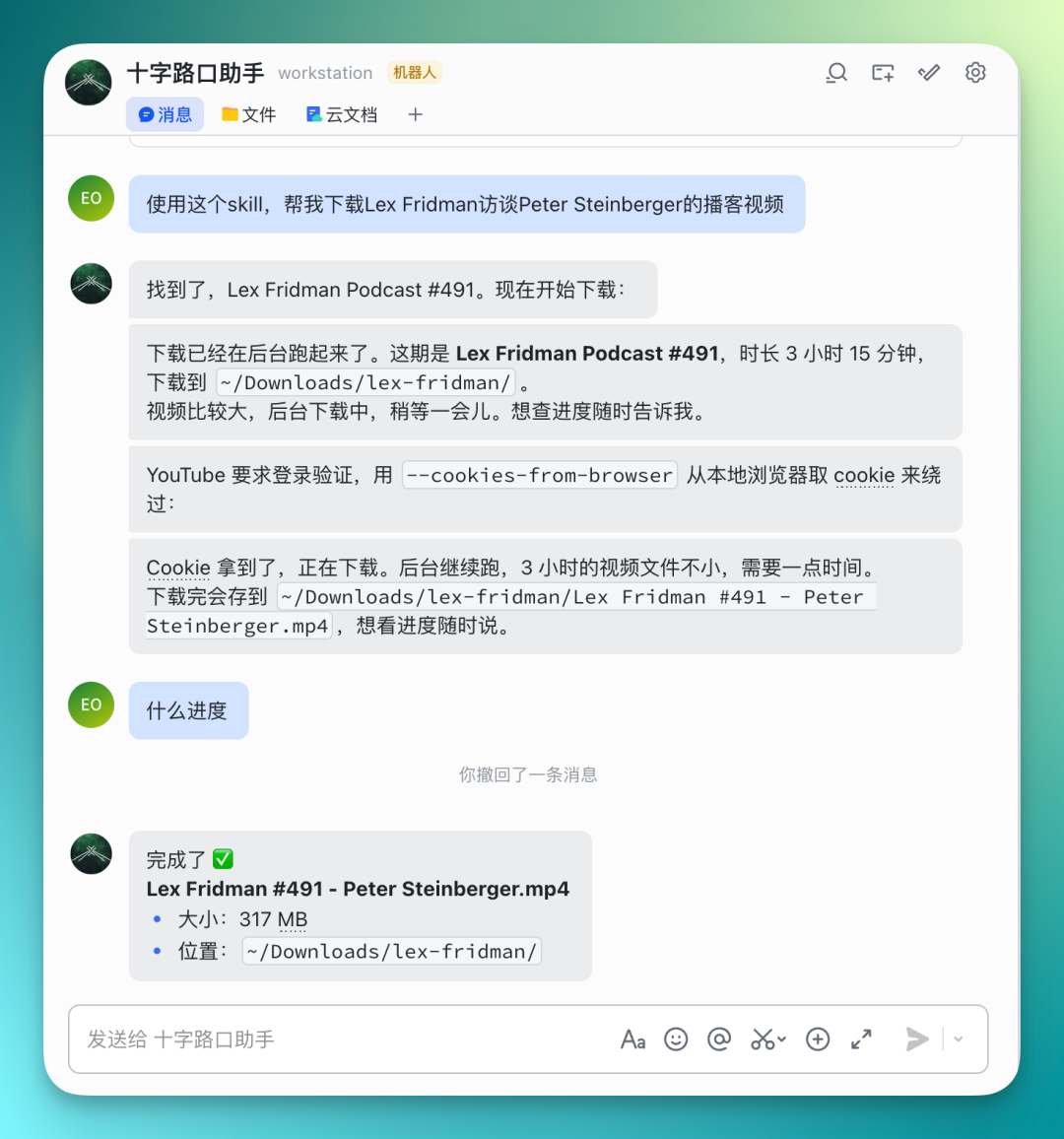
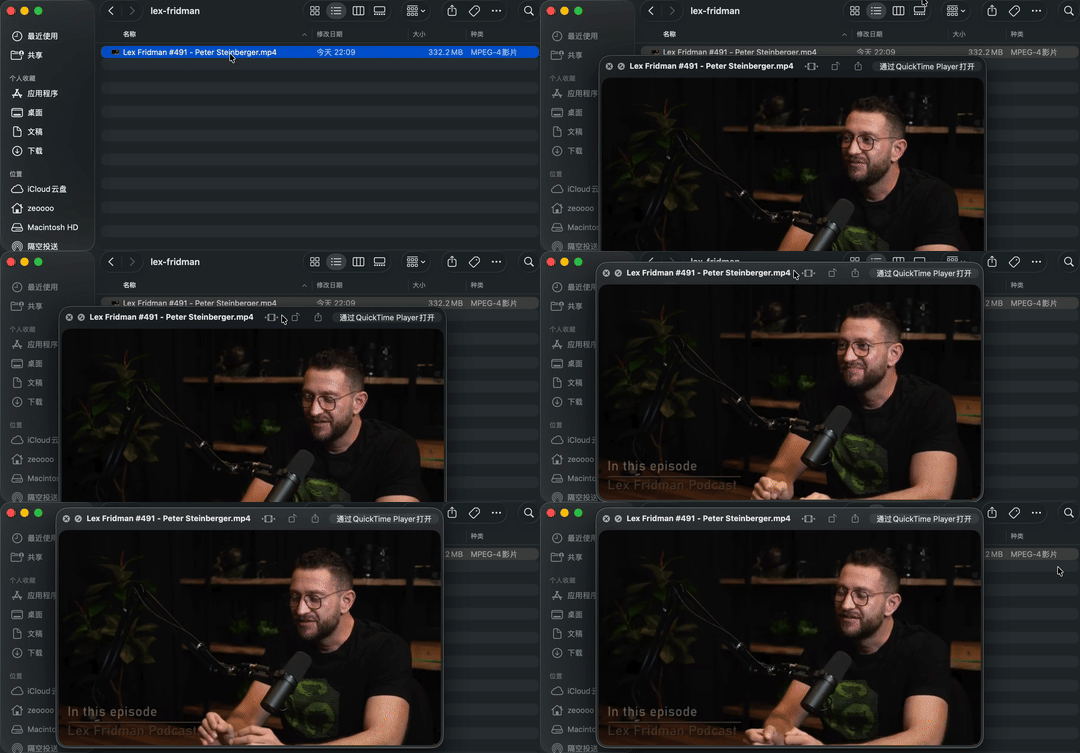
Progress checks anytime. Under five minutes later, a three-hour conversation sat in our folder.
Short-Video Auto-Publishing Tool
Regular followers know each Crossing video podcast doesn't just go out once — full episodes and clips, across Xiaohongshu, WeChat Channels, and Douyin.
One piece of content means at least seven or eight distributions.
We'd built an automation tool for this: Python backend plus Chrome extension, handling multi-platform, multi-video publishing in one go.
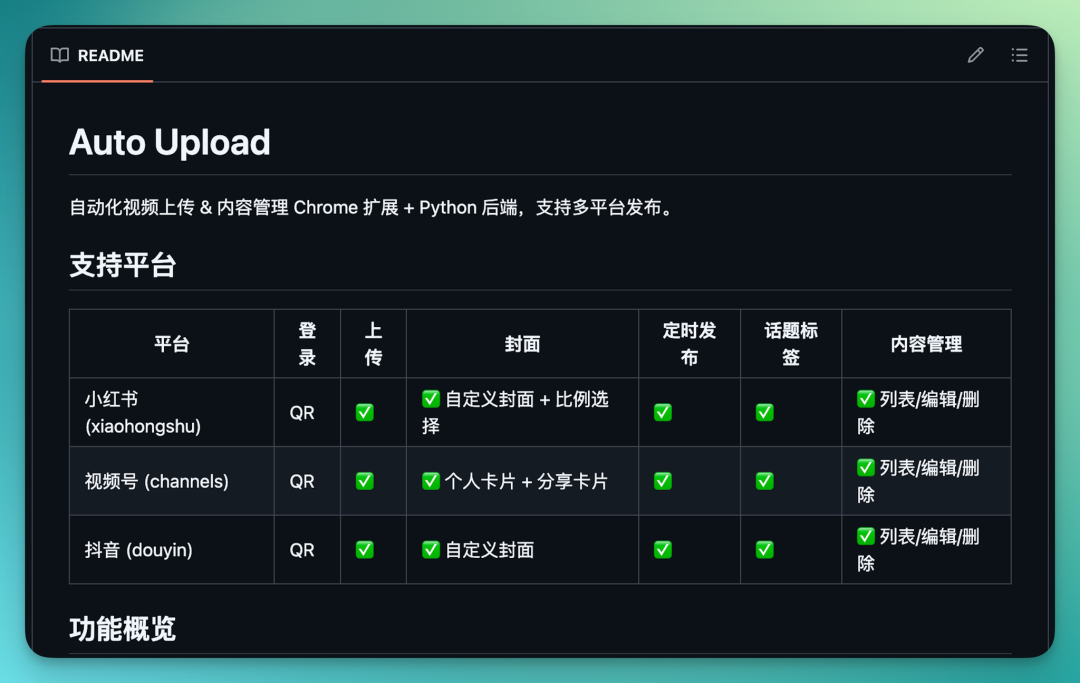
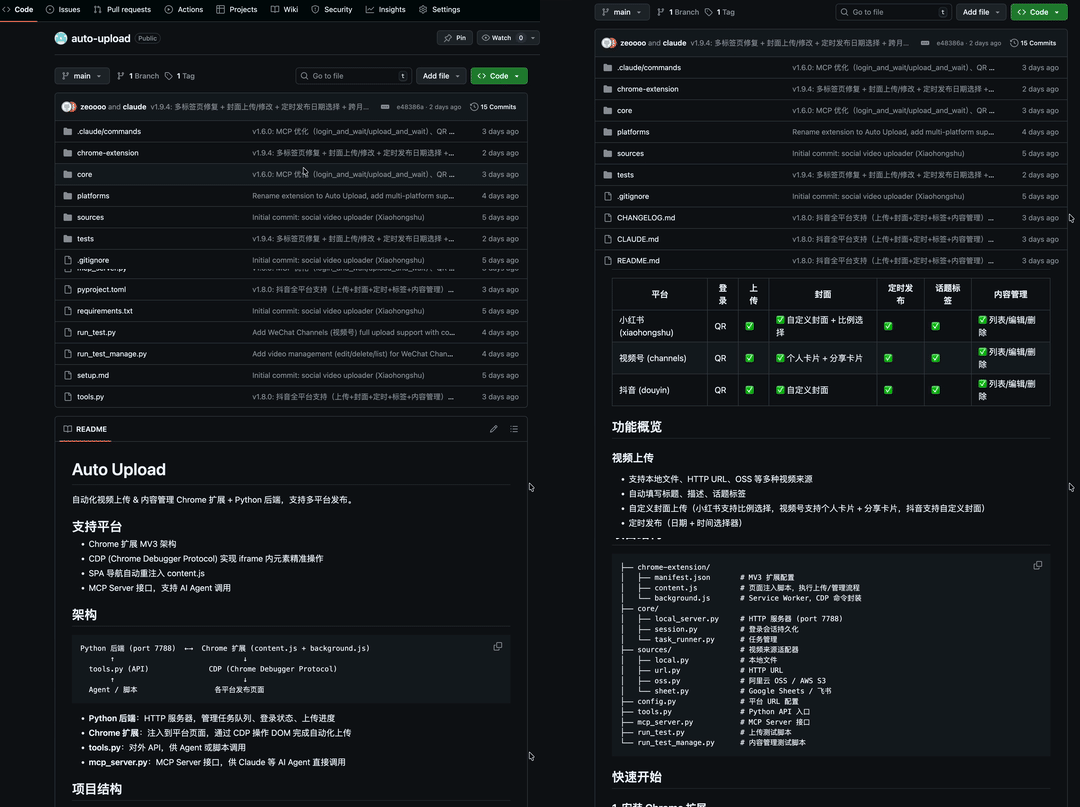
This time we had M2.7 iterate on this tool: auto-adaptive cover images. The three platforms use different cover aspect ratios — previously cropped manually three times.
This task is inherently a multi-skill orchestration stress test: read video source, identify platform differences, crop covers, fill titles, set scheduled publishing.
Each step is an independent capability call; only chained together does a full distribution run.
This was also M2.7's real-world test of instruction following and complex task orchestration.
Here's how it performed across the multi-skill chain:
The screen recording above is fully automated, zero human clicks. Note how it automatically detected WeChat Channels' dual cover size requirements and handled them differentially.
🚥
These three projects — our own tools, our own bugs, our own workflows.
Running M2.7 through them, two changes stood out most:
First, facing real engineering problems, its debugging path resembled an experienced developer's, not a search engine.
Second, in multi-skill chaining scenarios, context held steadier than with M2.5.
Returning to our opening question: why is M2.7's update a different story from "the model got stronger"?
It didn't top any leaderboard with a flashy number. The three projects weren't flawless — some corner cases remained uncovered.
But compared to previous versions, the clearest shift wasn't "can do more things" but "does things more steadily, more like a veteran."
Behind these capability gains, one detail deserves separate mention:
MiniMax's technical blog noted that M2.7's agent scaffolding was partially self-optimized by the model itself — autonomously running 100+ iteration loops for a 30% improvement.
It scored 9 gold, 5 silver, 1 bronze on MLE Bench's 22 Kaggle competition problems, trailing only Opus 4.6 and GPT-5.4.
Meaning the "steadier, more veteran" feel we experienced across these three projects wasn't entirely human-tuned — part of it was model-self-iterated.
Under five months. Four versions.
When a model doesn't just wait to be optimized by humans but starts optimizing itself, the meaning of iteration speed changes.
It's no longer linear. It's starting to compound.