Nile Founder Dai Haozhuang Helps Brands Open Stores in the Agent World

Who will dethrone Amazon?
Who will dethrone Amazon?
👧🏻 Interview: Miss Yi
🥷 Editor: Koji
🧑🎨 Layout: NCon

Agent commerce is moving from concept to reality — a market that multiple firms predict will reach trillions of dollars by 2030. As Google, OpenAI, Meta, and other giants pile in, and as UCP attempts to undercut the centralized authority of traditional platforms, a critical question has emerged: Are merchants ready?
Nile (https://nile.shop), a 15-person startup, wants to help solve this. They're building an "AI-native backend" for brands — giving merchants their own "brand agent" capable of distributing to any Agent.
From tracking ACP team hires at OpenAI and Stripe to today serving 500+ customers with agent-channel conversion rates 150%-700% above their sites, Nile has quietly opened up market territory. On July 16, the Nile Lite version officially launched.
At this juncture, we sat down with Nile founder Tony Dai to discuss his read on the赛道, Nile's product logic, and the "personal Agent era" he sees accelerating.
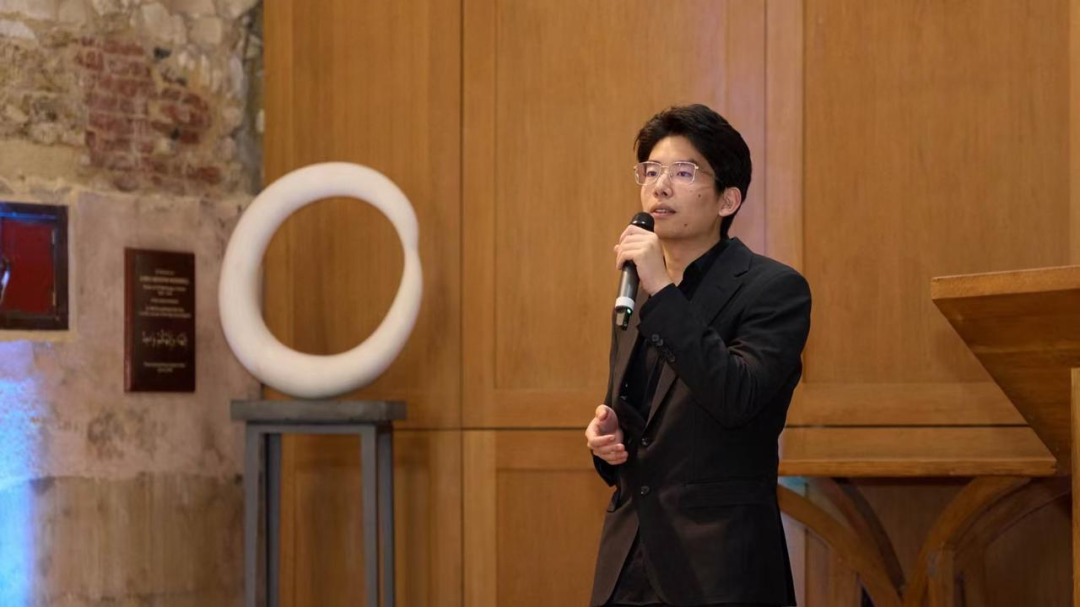
Nile Founder Tony Dai
Quick-Fire Q&A
First, a rapid-fire round to get to know you quickly.
🚥 Crossing
Age?
🧑🏻💻 Tony Dai
21
🚥 Crossing
Alma mater?
🧑🏻💻 Tony Dai
Imperial College London; RDFZ Early Talent Program
🚥 Crossing
MBTI and zodiac sign?
🧑🏻💻 Tony Dai
ENTJ, Aries
🚥 Crossing
One sentence on your current company and product?
🧑🏻💻 Tony Dai
A "To Agent" e-commerce platform — the intelligent agent commerce infrastructure for brands.
🚥 Crossing
Funding status?
🧑🏻💻 Tony Dai
Tens of millions of RMB in Pre-seed, from Eastern Bell Capital, Future Capital, and a strategic investor.
🚥 Crossing
Team size?
🧑🏻💻 Tony Dai
15 people
🚥 Crossing
What were you doing before founding Nile?
🧑🏻💻 Tony Dai
I was a math student. Started my first e-commerce venture at 14, and ranked 8th nationally in Mandarin debate in 2023.
"Every Brand Is an Agent"
🚥 Crossing
Major e-commerce players are all building out Agent protocols or platforms. What gap is Nile targeting that others have missed? What's the core problem you're trying to solve?
🧑🏻💻 Tony Dai
Nile answers a very direct question: "Where does your personal Agent go to buy things?"
Today, nearly every brand is paying attention to AI traffic. Many have tried various optimization tools, but no one actually knows: What should I do this month? Next month? And what will actually retain customers?
Starting mid-2026, Agent commerce began accelerating rapidly. In this space, there's at least a 3-month information gap between China and overseas. Abroad, over 30 major platforms are launching Agentic features each quarter — each representing new traffic, new conversions, new private domains.
Recently, many large DTC clients have come directly to us asking: Who should we hire to handle Agent commerce? Do you have any candidate recommendations?
We launched Nile Lite so merchants can "do nothing" and still build Agent-native products and prepare for intelligent agent channels.
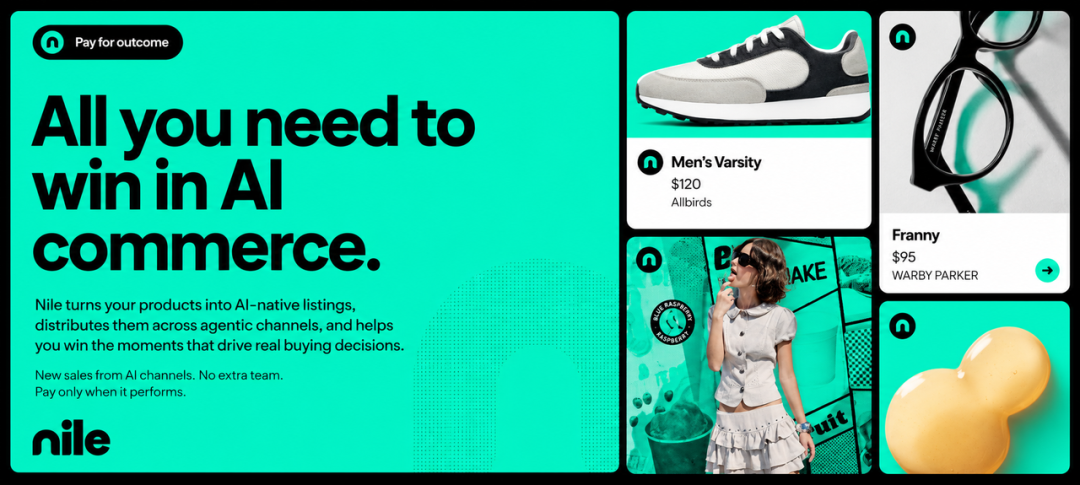
Simply put, Nile enables brands to treat intelligent agent commerce as a genuine channel to operate; to not just survive but thrive in this migration that's already underway.
This is a first for brands.
🚥 Crossing
Specifically, what does Nile provide merchants?
🧑🏻💻 Tony Dai
We provide infrastructure — the intelligent agent commerce base, or "every brand needs an AI-native backend."
Put bluntly, every brand itself should be an agent: with memory, capable of learning, able to iterate over the long term.
Previously, many e-commerce transaction steps relied on real people communicating across departments. The future model is each employee using Claude Code, Codex, DeepSeek's harness — their personal Agent interacting with the brand's Agent.
At that point, websites become less important. What matters is "the brand itself is an Agent."
🚥 Crossing
Can you make that more concrete?
🧑🏻💻 Tony Dai
It's like when merchants went from "offline shelves" to "online shelves" — now they're building "agent shelves."
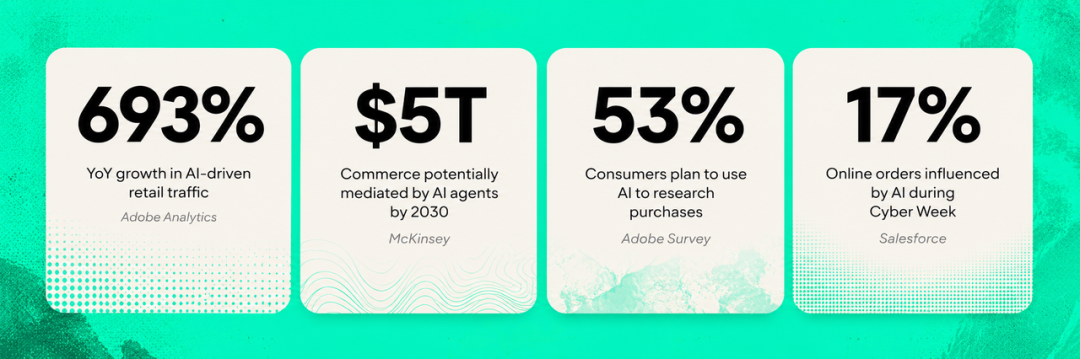
In the Agent commerce transition, merchants face three main problems: First, no products built for agents. Second, no operations built for agents. Third, they don't know what to do and have no one to do it. Faced with this high-potential traffic channel that's rapidly replacing old models and growing 13x year-over-year, merchants find themselves completely at a loss.
Nile directly gives you an agent shelf. Gets your products into the AI-native world, compatible with any A2A protocol, any A2A discovery flow.
Why AI-native?
Because you'll find that things that seemed trivial in traditional e-commerce models are fatal in A2A channels. Missing metadata, wrong category selection. Product descriptions of 200-300 words were enough for humans — for Agents, you can write 5,000 characters with extensive metadata and deep information: how long a slope an e-bike can climb, whether food is halal, how long a candle burns, and so on.
Of course, brands don't want to touch their already mature, human-facing workflows or affect product detail pages on their sites.
So what we do is build channels specifically for Agents without changing the brand's existing site.
From Day One, we are 100% "2A" (to Agent).
🚥 Crossing
How did you discover this market? When did you decide this was certain enough to jump in?
🧑🏻💻 Tony Dai
As early as late 2023, A2A was already a mature concept.
By around March 2025, we noticed both OpenAI and Stripe were working on ACP. At that point, OpenAI's ads already had complete ad rendering components and product cards — you could basically see they were attempting product distribution on top of an Agent-to-Agent protocol.
Our initial judgment was that 2026/2027 marks the 20th anniversary of the iPhone moment, and by late 2027, mobile internet would officially exit the stage.
Product discovery would definitely happen through A2A, first in North America.
By last September, the broad framework of the North American agent commerce ecosystem was clear. A core shift: Google's full entry. Google, Meta, Stripe, PayPal, Salesforce — all major SaaS players were positioning. TikTok had a complete agent commerce implementation plan by September. Meta's internal Business Agent was in development. Everyone was pushing full throttle.
That's when I saw a core gap: No one was building merchant-side infrastructure.
OpenAI publicly launched ACP in September, opening merchant registration. But OpenAI quickly realized they couldn't onboard merchants themselves and immediately started partnering with Etsy, Shopify, and Stripe.
Our judgment was clear at the time: Merchants' AI-native backend is real demand. The long-term trend is A2A + personal Agent; the near-term trend is protocol + Agentic Platform.
So last November, we officially launched Nile.
🚥 Crossing
Why the name Nile?
🧑🏻💻 Tony Dai
Nile is the longest river. A slender stream running thousands of miles, carving out magnificent civilization.
And, of course, Nile is probably the best possible answer to "Who Will Dethrone Amazon."
🚥 Crossing
Why launch at this particular moment?
🧑🏻💻 Tony Dai
We're at a critical inflection point from "being searched" to "being proactively pushed."
Over the past three months, a flood of "Agentic Surfaces" has emerged. From simple search replacement — like searching in ChatGPT — to many proactive interfaces: image feeds, widgets, product cards, ads, real-time voice UI.
Behind these interfaces is direct A2A protocol support. Search traffic is up 1,300% year-over-year. And the shift in interfaces — we're seeing that trend accelerate constantly.
ChatGPT integrating Codex, GPT Live going live — these concrete moves also made us realize that consumer-grade personal Agents will arrive sooner than expected.
Today is the infrastructure cycle. It's when merchants need us most.
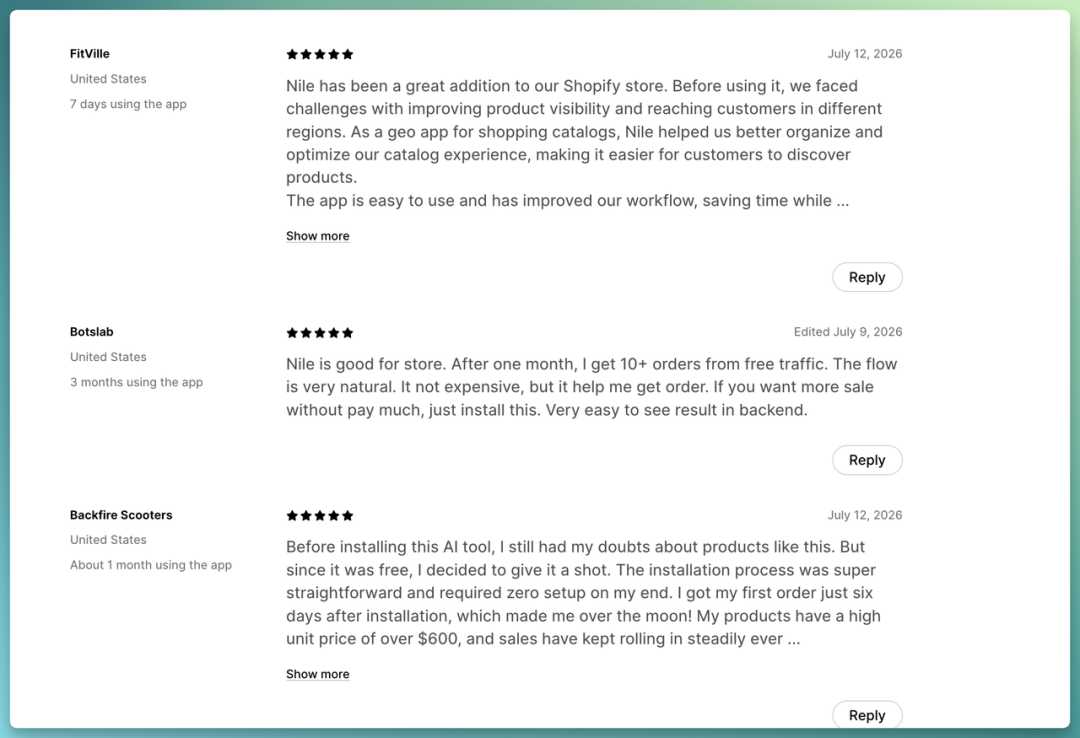
Brand Feedback on Nile
Conversion Rates 150%-700% of Site Baselines
🚥 Crossing
When a merchant decides to onboard with Nile Lite, what do they need to do?
🧑🏻💻 Tony Dai
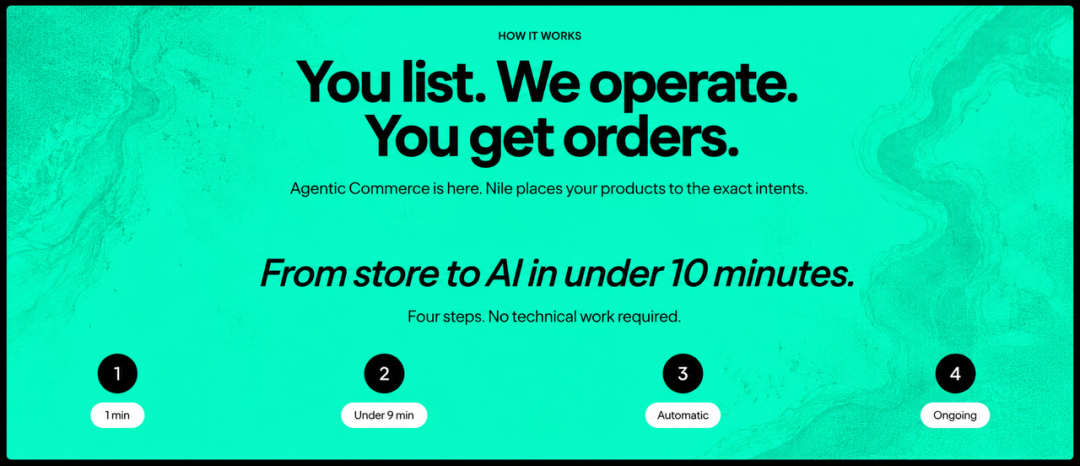
For Nile Lite, our design principle is that any merchant can complete integration in 10 minutes.
🚥 Crossing
Tell us about your current customer base?
🧑🏻💻 Tony Dai
We currently have 60+ merchants who've been using us for over two months, with zero uninstalls and zero stopped trials.
We serve many category leaders — electric skateboards, digital pens, mattresses — lots of #1 and #2 players in their categories. Client annual GMV ranges from $10 million to $500 million.
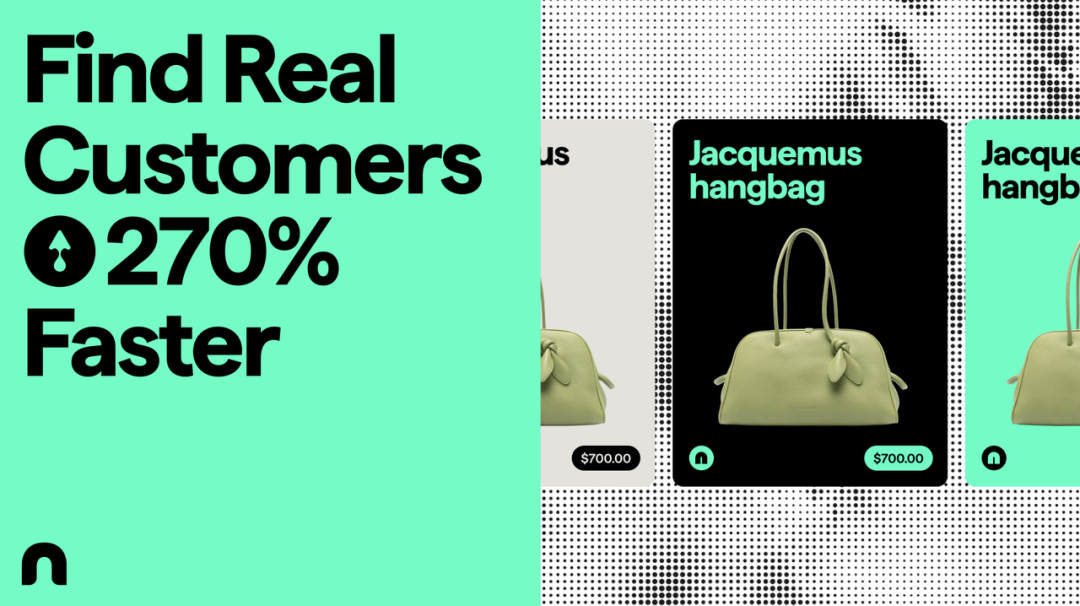
We can achieve agent commerce channel conversion rates of 150% to 700% of the brand's site baseline, with most around 200%; year-over-year growth for brands has reached as high as 1,800%.
Additionally, we have more agencies in North America in our partnership program, with dozens already signed as exclusives.
🚥 Crossing
What's the customer feedback been like?
🧑🏻💻 Tony Dai
A client question that really struck me recently: "Can we build a team around Nile? Who should I hire?"
Yes. Agent commerce isn't traffic acquisition, isn't optimization — it's a new channel.
Many top North American brands are already building this out, and cross-border merchants are accelerating to catch up. A brand shouldn't just be a website or storefront; it should be a brand agent.
Nile helps you get started easily, and also supports you if you want to go deep anytime.
From AI-native product building, online-learning Agentic Catalog and Agentic Search, private domain user memory, brand context infrastructure, to product data cleansing, alignment, enrichment — all of these foundational capabilities are included in the Nile Lite version.
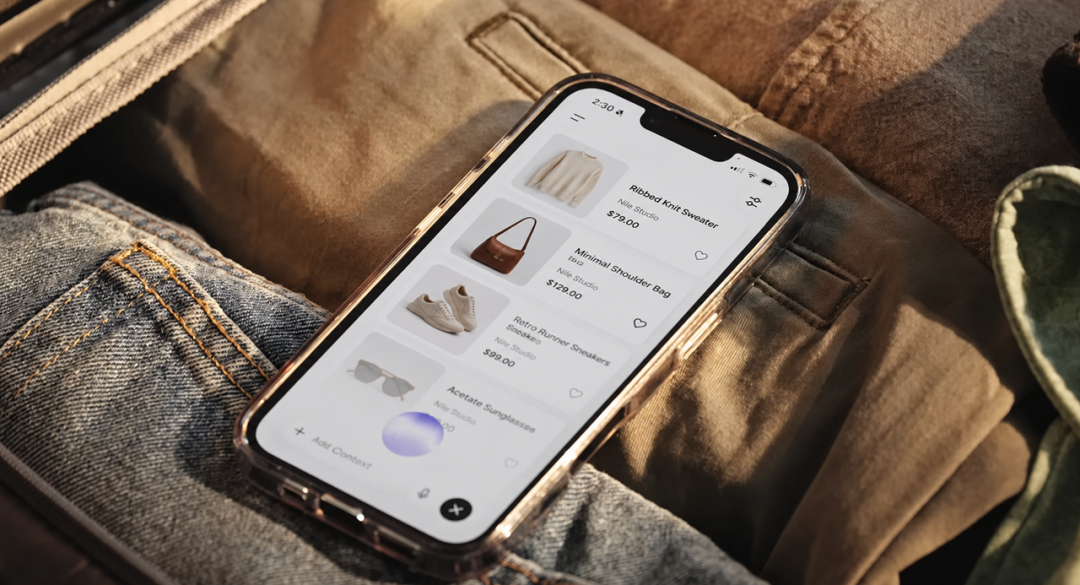
Nile has already partnered with 5+ agentic payment service providers and over 36 content generation tools to jointly build intelligent agent commerce channels for users.
We also welcome more service providers and tool developers to build on Nile and offer more Agent-native capabilities to merchants.
In our work with leading brands in Europe and America, we're repeatedly asked: Is it possible to have a new platform that doesn't dilute their brand, doesn't harm customer relationships, doesn't impact long-term customer value — while still enabling efficient distribution and complete Agent-to-Agent commerce?
This is also a pain point for big brands today: D2C sites rely on paid traffic, UGC, influencers, KOLs — distribution efficiency is terrible, and no brand can do distribution on their own.
🚥 Crossing
What's Nile's partnership model with merchants?
🧑🏻💻 Tony Dai
CPS, pay-per-conversion. Lite version has zero setup fee — we want to pursue long-term success together with merchants.
In e-commerce, opportunity dividend far exceeds effort
🚥 Crossing
Tell us about the Nile team?
🧑🏻💻 Tony Dai
Our team includes IOI and IMO gold medalists, alumni from Alibaba and Seedance, and executives from Amazon and Fastmoss.
The "To Agent" direction will give birth to new recommendation algorithms, even new bidding mechanisms. From Day One, we wanted to build infrastructure capable of serving 100,000+ merchants with fully closed-loop features. This is the team that needs to do it.
🚥 Crossing
Only 15 people — how do you serve tens of thousands of clients?
🧑🏻💻 Tony Dai
Infrastructure that can serve one can serve tens of thousands. Serving hundreds of clients well is how you better serve each one.
🚥 Crossing
What's your current funding status?
🧑🏻💻 Tony Dai
We just completed a tens-of-millions RMB Pre-seed round, led by Eastern Bell Capital, with Future Capital and a strategic investor.
🚥 Crossing
How are you different from other companies in the agent commerce space?
🧑🏻💻 Tony Dai
No one is approaching this from the same angle, doing the hard infrastructure work.
There are mainly three types of players overseas: First, product data enrichment and optimization. Second, affiliate-style product traffic. Third, traditional SaaS with new stories.
Except for the first type — which we include completely free in our Lite version by default — the latter two seem distant from Agent-native.
We're glad to see nearly all Western Martech players (SEO, attribution, data analytics, BI), last-generation infrastructure providers (databases, data lakes, connectors, payments), and giants like Salesforce and Adobe all telling their agent commerce stories — the赛道 is indeed crowded.
But we also see a massive void on the merchant side, on the Agentic Commerce supply side.
No prepared merchants. No prepared products. No prepared distribution infrastructure.
🚥 Crossing
Shopify already connected to AI channels in Q2. Could Nile get eaten? How do you see that possibility?
🧑🏻💻 Tony Dai
We're thrilled to see Shopify's Agentic Storefront and Agentic Plan connect to A2A.
For us, this means dramatically lower integration difficulty for Shopify merchants, and great user education. But merchants know clearly: having a Storefront is far from enough.
Offline stores can build online sites, do SEO — sure, it helps. But that's not the success path in e-commerce. Similarly, Shopify merchants having an Agentic Storefront doesn't equal having complete agent commerce channels. What Nile provides is the Agent product base.
For the 90% of non-Shopify merchants in the $10M-$5B range, Nile serves more than half its clients in this segment.
🚥 Crossing
You started your first e-commerce venture at 14. How did that experience influence your later entrepreneurship?
🧑🏻💻 Tony Dai
In many ways. The biggest impact was realizing that in e-commerce, opportunity dividend far exceeds effort — many category leaders got their start through mechanisms and dividends, not just hard work.
How do brands capture the Agent dividend?
🚥 Crossing
The concept of "agent commerce" is still unfamiliar to many merchants in China. If you had to explain it in the plainest possible terms, how would you?
🧑🏻💻 Tony Dai
Today, Agents are already searching, discovering products, and serving ads for users. Soon users will be able to purchase directly through Agents. In the future, Agents may become as beloved as users' "new phones."
So the question brands must think about is: How do you sell products to Agents?
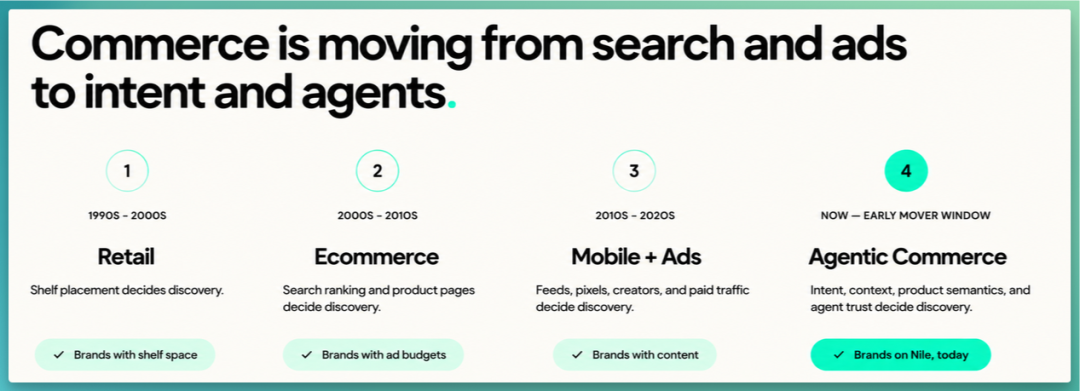
The evolution of retail is essentially a migration of who you serve. In offline retail, we served people who walked into stores. In e-commerce, we served people operating computers and phones. In the agent commerce era, we'll serve people who just speak, with Agents doing the work on their behalf.
Today we're already seeing massive shifts at the Agentic Platform level. Nearly every North American consumer brand you can think of is doing Agent replacement. But many AI attempts in China still remain stuck in a to-C logic.
🚥 Crossing
How do you judge the pace of development for the "agent commerce" industry going forward?
🧑🏻💻 Tony Dai
Overall, it divides into "three stages." From search replacement, to Agentic Platform stage, to Private Agent stage.
We're already in the second stage.
If broken down more finely, it can be divided into five stages, L0-L4:
-
L0: Agents replace search, replace product discovery.
-
L1: Agents begin supporting traditional product interfaces, replacing product recommendations, pre- and post-sales service, and ads. Examples: Meta Business Agent in IM interfaces, UCP Ads in ad interfaces. We're at L1 today.
-
L2: Agents support rendering UI components, like widgets. Agents further replace mobile apps and standalone sites. Technically, there's no difficulty in implementing this now.
-
L3: Agents can support complete payment, returns, installments, BNPL. Agents are authorized by users to make autonomous purchases within certain bounds.
-
L4: The Private Agent era. Every consumer-facing front-end interface is rendered by their private personal Agent. At this stage, Agents become true traffic entry points. All consumer applications need to be "To A."
🚥 Crossing
How soon do you expect consumer-grade personal Agents to appear? What's their biggest disruption to mobile internet products?
🧑🏻💻 Tony Dai
At most 1-2 years.
On July 10, Codex already merged with the ChatGPT client. GPT Live can already do real-time voice rendering of UI components. Within two months at the latest, Google's universal shopping cart will open to users.
Just as offline retailers didn't believe in e-commerce, and website builders didn't believe in touchscreen phones, mobile internet folks today don't believe in personal agents. The AI-native generation may never understand what an "app store" is, or why apps need to be "downloaded."
The mental barrier, the data flywheel based on human touchscreen behavior — it won't last much longer.
🚥 Crossing
What advice do you have for e-commerce brands wanting to capture this wave of Agent opportunity?
🧑🏻💻 Tony Dai
Actually, many merchants aren't adopting Claude Code and Codex fast enough. I hope merchants can try and embrace new intelligent agents as soon as possible — just using them will bring huge rewards.
Of course I'd recommend everyone start using Nile Lite. Right now it doesn't require high fixed-cost investment (hiring / ad spend). We ensure you won't miss anything.
Nile Pro has also opened in limited release, with broader applications coming soon.
If you have the chance, attend offline e-commerce conferences in Europe and America. Talk to North American brands that have already experimented extensively with agent commerce channels.

Crossing is looking for independent writers to cover AI product and model reviews.
If you've written articles like: Hands-On with PixVerse C1, Hands-On with LibTV, please contact zeo0811@gmail.com. Your email should include: ① personal introduction, ② AI review articles you've written.
We offer competitive compensation. Looking forward to observing and documenting the AI era together 🎪