OpenAI: "Tremble, cheating children — I will catch you!"

Tremble!

💡 NVIDIA Delays New AI Chip Due to Design Flaw
🤖 Figure Teases Second-Generation Robot
🔒 OpenAI Helps Teachers Catch Cheating Students
🎬 Alibaba Unveils AI Video Generation Framework Tora
🥇 Tencent's Hunyuan Tops Chinese Multimodal Understanding Rankings
📱 Xiaomi 15 Series Gets Full AI System Upgrade
📢 Google Absorbs Character.AI
💰 Samsung Leads Protect AI's New Funding Round
🧠 Neuralink Implants Brain Chip in Second Human
NVIDIA Delays New AI Chip Due to Design Flaw
According to The Information, two people familiar with the production of NVIDIA's new AI chips and server hardware revealed that the release of the company's latest AI chips will be delayed by three months or more due to a "design flaw."
This defect could impact a range of major customers including Meta, Google, and Microsoft, all of which have placed orders worth tens of billions of dollars for the chips. Additionally, a Microsoft employee and another source disclosed that NVIDIA notified Microsoft and another major cloud provider this week that the most advanced AI chips in its new Blackwell line would be delayed.
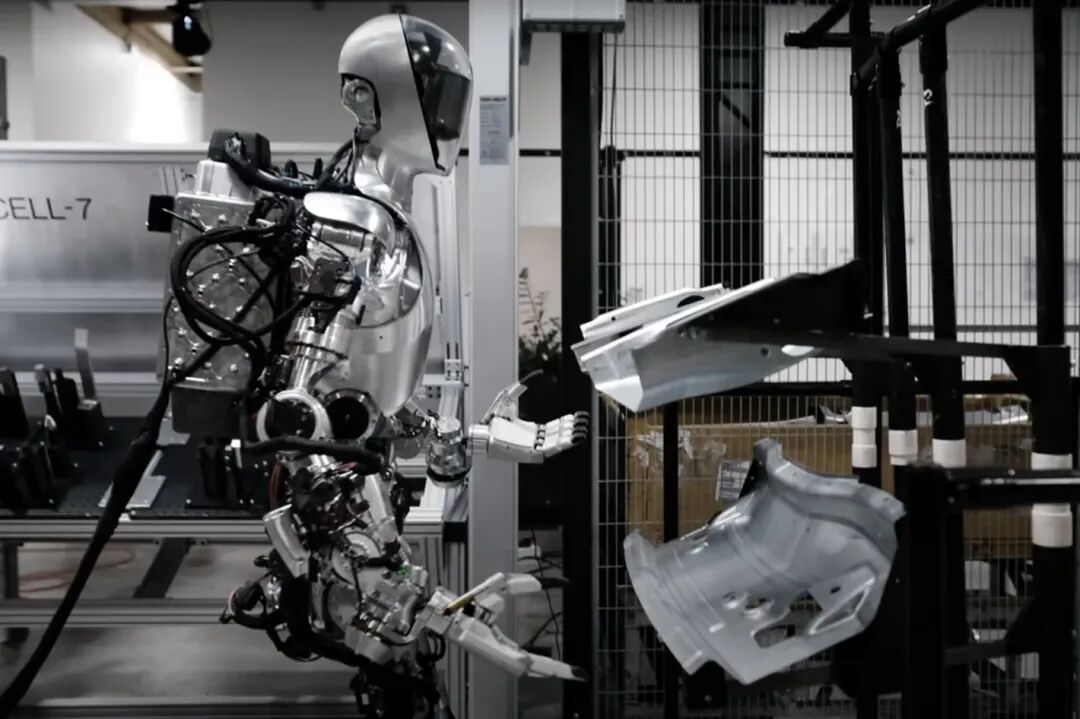
Figure Teases Second-Generation Robot
Figure, the humanoid robotics startup that just finished "training" at a BMW factory, is introducing a more powerful next-generation product — Figure 02. On August 2 local time, Figure released a teaser trailer for Figure 02 and announced that the product will officially launch on August 7 Beijing time. This reveal focuses on hardware, with significant improvements in hardware capabilities expected.
Figure is building a more consumer-friendly, humanized image to expand into the C-end market. Meanwhile, the new humanoid robot features major upgrades to its joints, actuators, anthropomorphic feet, and dexterous hands, with increased degrees of freedom in both the head and full body. Despite not yet being profitable, Figure has already attracted attention from a host of Silicon Valley giants and star venture capital firms.
OpenAI Helps Teachers Catch Cheating Students
OpenAI is developing a text watermarking technology that can identify AI-generated text with up to 99.9% accuracy, helping educators catch students using AI tools like ChatGPT to cheat.
The technology works by embedding invisible watermarks into AI-generated text — undetectable to the human eye but discoverable through specific detection techniques.
Discussions about the watermarking tool began even before ChatGPT's launch, with executives deliberating repeatedly over whether to release the technology. OpenAI needs to shape public opinion around AI transparency and potential new regulations, or risk losing its credibility as a responsible company.

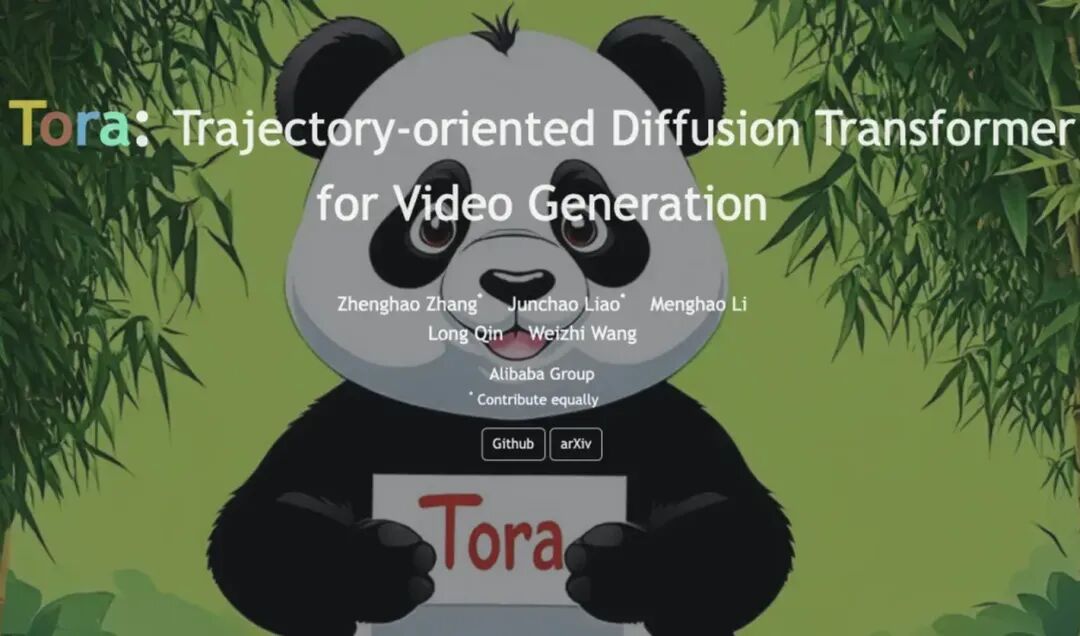
Alibaba Unveils AI Video Generation Framework Tora[1]
Tora is an advanced AI video generation framework developed by Alibaba that leverages trajectory-oriented Diffusion Transformer (DiT) technology, integrating text, visual, and trajectory conditions to create high-quality video content that conforms to the dynamic laws of the physical world.
Alibaba's Tora AI video generation framework fuses text, visual, and trajectory conditions based on advanced Diffusion Transformer (DiT) technology to generate high-quality video content aligned with real-world physics. Tora consists of three core components: a trajectory extractor, a spatiotemporal DiT, and a motion-guidance fuser. It supports video production of up to 204 frames at 720p resolution, representing a breakthrough in the video generation field.
Tencent's Hunyuan Tops Chinese Multimodal Understanding Rankings
The August rankings for the Chinese multimodal large model benchmark SuperCLUE-V have been released, with Tencent's Hunyuan large model standing out among 12 globally representative models to claim first place domestically with an impressive score of 71.95, establishing its leadership position in multimodal understanding.
Tencent's Hunyuan large model's outstanding performance in multimodal foundational and application capabilities ranked second only to GPT-4o, surpassing overseas models including Claude 3.5-Sonnet and Gemini-1.5-Pro.
Xiaomi 15 Series Gets Full AI System Upgrade
Xiaomi will release the Xiaomi 15 series in October, featuring HyperOS 2.0, which will be fully upgraded to an AI system. The new system will enable full-scenario intelligence and seamless cross-platform connectivity. HyperOS 2.0 will further optimize device interconnection, providing users with a more convenient and seamless experience.
HyperOS 2.0 reconstructs core kernel modules to ensure more efficient and stable system operation. It introduces eight new subsystems, enhancing dynamic networking capabilities and collaborative efficiency between devices.

Google Absorbs Character.AI
Google officially announced an agreement with chatbot maker Character.AI[2], under which it will pay model licensing fees and absorb the company's team. Previously, Character AI faced fundraising challenges and sought acquisition opportunities with major tech companies including Meta.
Character's management revealed that investors' shares would be acquired at approximately $88 per share, 2.5 times the company's valuation during its 2023 Series A funding round. Character AI's co-founders Noam Shazeer and Daniel De Freitas will return to Google, joining the DeepMind research team. About 30 Character AI employees working on model training and voice AI will join Google to support the Gemini AI project. Character AI will shift to using open-source models such as Meta Platforms' Llama 3.1, replacing its internal models.
Samsung Leads Protect AI's New Funding Round
Security and AI startup Protect AI Inc. announced it has completed a $60 million funding round led by Evolution Equity Partners, bringing the company's valuation to $400 million. Following this round, Protect AI's total valuation has risen to $460 million. In addition to Evolution Equity Partners, new investors include 01 Advisors, Samsung Electronics Co., and Salesforce Ventures.

Neuralink Implants Brain Chip in Second Human
Elon Musk revealed on a recent podcast that his brain-computer startup Neuralink has successfully implanted its device in a second patient.
This implantation is part of Neuralink's PRIME study. The study aims to conduct clinical trials of implantation technology in patients with quadriplegia caused by spinal cord injuries or amyotrophic lateral sclerosis (ALS). The goal of the implant is to help patients control external devices using only their thoughts, such as a computer mouse.
Following the first patient's implantation, the device enabled that patient to move a cursor on a laptop, allowing them to play video games, browse the internet, and post on social media. Musk did not disclose details about the second recipient, only stating that this participant's spinal cord injury was similar to the first patient's.

You have to remember one key point: the answer is something that only we ourselves can decide. That's why many people choose solitude in their search for answers.
—— The Why Café



Editorial Team
Editor: Yuki
Design: Ivan
For business partnerships, add on WeChat: Rwkfbcianvd
References
[1] Tora: https://ali-videoai.github.io/tora_video/
[2] Character.AI: http://character.ai/