What Is Rockset, the Company OpenAI Bought for $500 Million?

 🕶️ First GPT-4o-Integrated Glasses Released
🔧 Runway Gen-3 Enters Beta
🎥 Google Vids Launches Testing
🚀 Elon Musk: Grok-2 Coming Next Month
📞 Character.AI Introduces New Calling Feature
🔊 Fastest-Responding Voice Robot Arrives
🧠 New Neuron Model Could Lead to More Powerful AI
📈 ERNIE Bot Reaches 300 Million Cumulative Users
👩⚕️ First "AI Companion Diagnostician" Goes Live
📚 Zhihu Launches Zhida AI Product
🌈 ArcSoft PS AI Announces Douyin Shop Entry
💰 Hebbia Raises Nearly $100 Million
🏢 SK Group Sets $75 Billion Investment Plan
💼 OpenAI Acquires Rockset for $500 Million
🏦 Shanghai Pudong Prepares 10 Billion AI Industry Fund
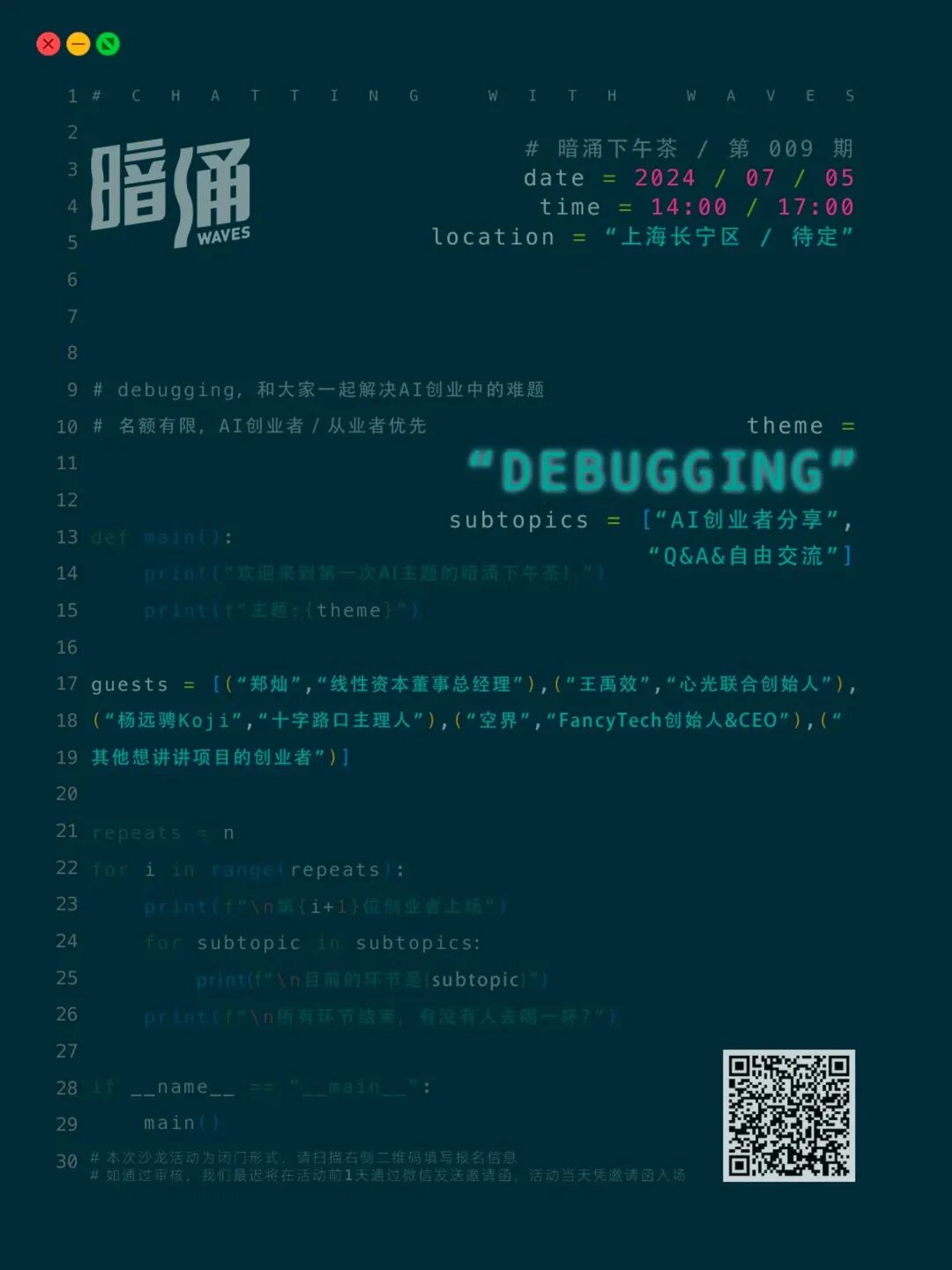
🍵 Come Hang at "Waves Afternoon Tea"

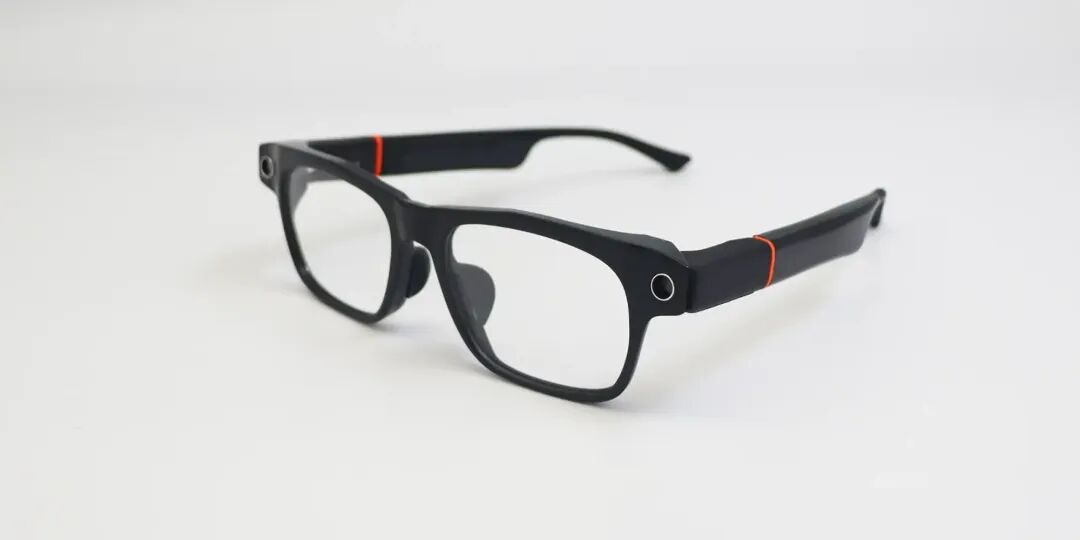
First GPT-4o-Integrated Glasses Released
Solos[1] has launched its new AirGo Vision smart glasses, billed as the world's first smart glasses with a built-in camera and GPT-4o support. Users can leverage the GPT-4o AI model to identify objects captured by the glasses' camera and get answers to questions about them. The glasses also feature LED notification lights and plan to integrate Google Gemini and Anthropic's Claude AI models. The official price for AirGo Vision has not yet been announced. For reference, the camera-less Solos AirGo 3[2] audio glasses retail for $249, so expect the AirGo Vision to cost at least that much.
 Worth noting: Meta CEO Mark Zuckerberg recently discussed the future of smart glasses in depth during a tech conversation. He believes smart glasses will gradually replace smartphones as the primary personal hardware device. Zuckerberg outlined three types of future smart glasses: a basic version without a display, a mid-tier version with a heads-up display, and a premium version with holographic displays.
Runway Gen-3 Enters Beta
Runway Gen-3[3] is an AI video creation tool crafted by a cross-disciplinary team, distinguished by its exceptional generalization capabilities and innovative potential across realistic, sci-fi, and animation styles. Compared to its predecessor Gen-2, Gen-3 represents a qualitative leap in image fidelity, consistency, and motion capture. Its refined temporal control and keyframe techniques enable smoother, more natural scene transitions and element rendering. Particularly noteworthy is Gen-3's breakthrough in generating expressive human characters — whether in movement, posture, or emotion, the results reach a convincing level of realism.
Runway Gen-3 is not merely a technological leap, but a significant enhancement to artists' capabilities, opening up boundless possibilities for the future of creativity and art.
Google Vids Launches Testing
Google's latest AI video editing app, Google Vids, has gone live on Google Workspace Labs for testing. The app integrates the Gemini large model, offering slide creation, video script writing, and access to Shutterstock assets, while supporting video editing and MP4 export.
Google Vids is embedded within Google Docs; users can describe a video topic or effect, and the AI generates a video using files from Google Drive. Though the beta currently lacks AI voiceover functionality, its user-friendly philosophy — "if you can make a slide deck, you can make a video" — signals a dramatic lowering of barriers to video production.
Elon Musk: Grok-2 Coming Next Month
A user posted a video on X claiming: "Training models on each other's models is like a human centipede effect." Musk replied: "Sadly, this is true. Cleaning LLM-generated data from internet training sets takes enormous work." At the same time, Musk stated that Grok-2, launching in August, would be a massive improvement on this front. He also noted in a reply that Grok-3, after training on 100,000 H100s, should be "quite special" by year-end.
Character.AI Introduces New Calling Feature
Character.AI has rolled out a new feature allowing users to make phone calls with AI characters. The feature supports multiple languages including English, Spanish, Portuguese, Russian, Korean, Japanese, and Chinese. Users can customize their AI character's voice by selecting different voices, tones, accents, and personalities. Calls and text messages can be seamlessly switched between, and users can interrupt the AI at any time via a "tap to interrupt" option.
The company reports that since launch, the new calling feature has attracted over 20 million calls from more than 3 million users.
Fastest-Responding Voice Robot Arrives
A voice AI robot developed by Daily in partnership with Cerebrium[4] achieves response times of 500 milliseconds, approaching the natural pace of human conversation and making interactions with voice AI robots feel more natural and fluid. To achieve such low latency, the development team optimized network architecture, AI model performance, and voice processing logic. Audio is sent using WebRTC networks, with Deepgram's fast transcription and voice generation models deployed, and all AI models self-hosted in Cerebrium containers to reduce latency. The robot runs on the Llama 3 model, powered by NVIDIA H100 hardware, using the vLLM inference engine to generate the first token within 80 milliseconds.
New Neuron Model Could Lead to More Powerful AI
The Center for Computational Neuroscience (CCN) at the Simons Foundation's Flatiron Institute in the United States has developed a new computational model of neurons[5]. This major discovery could bring revolutionary change to the field of artificial intelligence. While traditional neural networks are based on models from the 1960s, CCN's new model reveals the far more complex computational capabilities of real neurons, potentially pushing artificial neural networks toward more efficient and powerful development.
Team leader Dmitri Chklovskii notes that the new model treats neurons as "controllers" that actively control their environment, more closely approximating how the human brain works. Published in the Proceedings of the National Academy of Sciences, this research signals that future AI's potential for information processing and decision-making will be substantially enhanced.

ERNIE Bot Reaches 300 Million Cumulative Users
Baidu's ERNIE Bot has reached 300 million cumulative users, with over 500 million daily API calls. Baidu CTO Wang Haifeng announced these latest figures at WAVE SUMMIT 2024, alongside the release of ERNIE 4.0 Turbo and PaddlePaddle framework 3.0.
Baidu's full-stack layout, particularly the joint optimization between ERNIE and the PaddlePaddle deep learning platform, has provided strong momentum for user growth. The PaddlePaddle 3.0 release, with core technologies including unified dynamic-static automatic parallelism and compiler auto-optimization, delivers superior performance and results for large models. To date, the PaddlePaddle-ERNIE ecosystem has gathered 14.65 million developers, served 370,000 enterprises and institutions, and created 950,000 models.
First "AI Companion Diagnostician" Goes Live
Shanghai General Hospital recently launched "Gongji Xiaoyi," an AI companion diagnostician now live on Alipay. This innovative service is built on large language models and uses a digital virtual human as its interaction interface, providing services including precise appointment scheduling and intelligent pre-consultation.
Additionally, Shanghai General Hospital uses large models to assist doctors in generating electronic medical records, dramatically reducing documentation time from 10 minutes to 15 seconds. This technological innovation marks a first for the healthcare industry nationwide.
Zhihu Launches Zhida AI Product
At the 10th Salt Club New Knowledge Youth Conference, Zhihu founder, chairman, and CEO Zhou Yuan delivered a speech unveiling Zhihu's latest AI product, "Zhida[6]" — a productivity tool for users and creators through large model application innovation, exploring new forms of questioning to help everyone "discover the world through inquiry."
"Zhida" draws on Zhihu creators' authentic Q&A data, offering users "brief" and "in-depth" answer generation options as needed, while supporting "find content" and "find people" functions to further bridge the gap between content needs and quality answers, amplifying the distribution of community creators and their content. Going forward, "Zhida" will progressively advance app development and multimodal capabilities, deepening integration with the Zhihu community while actively exploring external partnerships.
ArcSoft PS AI Announces Douyin Shop Entry
ArcSoft PhotoStudio® AI (PS AI) has recently entered the Douyin Shop service marketplace, providing e-commerce merchants with AI image generation and product photo optimization services to help improve product sales and brand promotion.
Merchants can complete product photo creation and management through PS AI's one-stop operation, significantly improving efficiency and substantially reducing commercial photography costs. Additionally, ArcSoft's AIGC video generation feature has already launched on Alibaba's 1688 platform.

Hebbia Raises Nearly $100 Million
 Hebbia, a startup using generative AI technology to search large documents and provide precise answers, recently announced the completion of a nearly $100 million Series B round. Led by Andreessen Horowitz, this round values Hebbia at $700–800 million.
Hebbia's AI product can process billions of documents, including PDFs, PowerPoints, spreadsheets, and more, serving financial services firms, hedge funds, investment banks, and law firms. Hebbia previously raised $30 million in a September 2022 Series A led by Index Ventures. The success of this Series B further validates market recognition of Hebbia's technology and market potential.
SK Group's $75 Billion Semiconductor Investment Plan
SK Hynix, the semiconductor subsidiary of SK Group[7], recently announced an ambitious investment plan to invest 103 trillion won (approximately $74.8 billion) in the semiconductor industry by 2028, with 80% of funds focused on R&D and production of high-bandwidth memory (HBM) chips. This strategic move reflects SK Group's firm confidence in AI technology and its semiconductor applications. SK Hynix's HBM chips are specifically optimized to work with NVIDIA AI accelerators, aiming to drive further AI advancement.
Beyond HBM investment, SK Telecom and SK Broadband will invest 3.4 trillion won in data center operations, further solidifying SK Group's leadership position in the AI race. This investment plan follows SK Group's annual strategy meeting, demonstrating the group's clear direction and commitment to AI business development.
OpenAI Acquires Rockset for $500 Million
OpenAI is spending $500 million to acquire Rockset, strengthening its AI data retrieval capabilities and setting a new acquisition record for OpenAI.
Founded in 2016, Rockset specializes in developing a "real-time analytics database," with core search technology capable of rapidly providing real-time data updates. Rockset's team numbers between 51–200 people, meaning this acquisition values the company at roughly $45 million per capita. The acquisition will significantly enhance OpenAI's data retrieval and analysis capabilities, further cementing its leading position in AI.
Shanghai Pudong Prepares 10 Billion AI Industry Fund
Shanghai's Pudong New Area announced plans to establish a 10 billion yuan industry fund to accelerate humanoid robot and embodied intelligence technology development. The fund aims to support leading enterprises in the industrial chain, drive high-end industrial leadership, and enhance core industrial competitiveness.
Pudong will prioritize advancing "brain" technology development based on AI large models, improving environmental perception and human-computer interaction capabilities. At the same time, it will strengthen R&D of key "cerebellum" and "limb" technologies to achieve enhanced full-body coordinated movement capabilities.
Furthermore, Pudong will accelerate construction of the National Humanoid Robot Innovation Center. By 2027, the training center is expected to accommodate 1,000 humanoid robots training simultaneously, driving real-world scenario application deployment. This initiative marks Pudong's comprehensive layout in the humanoid robot industry, injecting new momentum into industrial development.

Come Hang at "Waves Afternoon Tea"
36Kr's "Waves Afternoon Tea" is hosting a gathering in Shanghai this Friday specifically for AI explorers and practitioners. The theme is "Debugging" — an opportunity to discuss how to uncover hidden treasures in the AI entrepreneurship journey, namely solving those headache-inducing problems.
Every AI founder and practitioner has a chance to take the spotlight and share their unique insights and experiences. Koji, founder of Crossing, will also be sharing live — don't miss the chance to hang with Crossing while you're visiting the World AI Conference.

We can only see a short distance ahead, but we can see plenty there that needs to be done.
— Alan Turing, father of artificial intelligence


Editor: Yuki Design: Ivan
For business partnerships, add on WeChat: Rwkfbcianvd

References
[1] Solos: https://solosglasses.com/
[2] Solos AirGo 3: https://solosglasses.com/collections/argon-collection
[3] Runway Gen3: https://runwayml.com/blog/introducing-gen-3-alpha/
[4] Voice AI robot developed by Daily in partnership with Cerebrium: https://fastvoiceagent.cerebrium.ai/?continueFlag=34612167169c183d5c4be110f99e38b1
[5] A new computational model of neurons: https://www.pnas.org/doi/10.1073/pnas.2311893121#executive-summary-abstract
[6] Zhida: https://zhida.zhihu.com/
[7] SK Group: https://www.sk.com.cn/