OpenAI's Last Stand | 6 Things About GPT-5 You Probably Missed

Wenfeng Liang and his peers breathed a sigh of relief — there's still ore left to mine in the foundation model race.
Wenfeng Liang and his peers can breathe a sigh of relief — there's still plenty of ore left to mine in the foundation model race.

👦🏻 Author: Jingshan
🥷 Editor: Koji
🧑🎨 Designer: NCon

After a long wait, we've finally gotten ChatGPT's major version upgrade — GPT-5. In OpenAI's own description, it's a "PhD-level expert." It delivers performance gains across programming, complex task execution, tool use, contextual understanding, multimodal input, and safety — and in ChatGPT, it has completely replaced the previous lineup of models (GPT-4o, o3, o4, and so on).
But beyond the headline features everyone's already talking about, we found six things that might have flown under the radar.
Change #1: Four New Chat Personalities
GPT-5 introduces four new chat personalities: Sarcastic (sharp-tongued and biting), Mechanical (efficient and direct), Listener (empathetic and understanding), and Nerd (enthusiastically inquisitive). You'll find them under Customize ChatGPT in settings. By selecting different personality modes, GPT-5 can come across as sarcastic, cold, gentle, or intellectually hungry.
It's like the same person showing different sides in different situations — making conversations feel more natural and personalized. The feature is currently available in text chat, with a voice version in development.
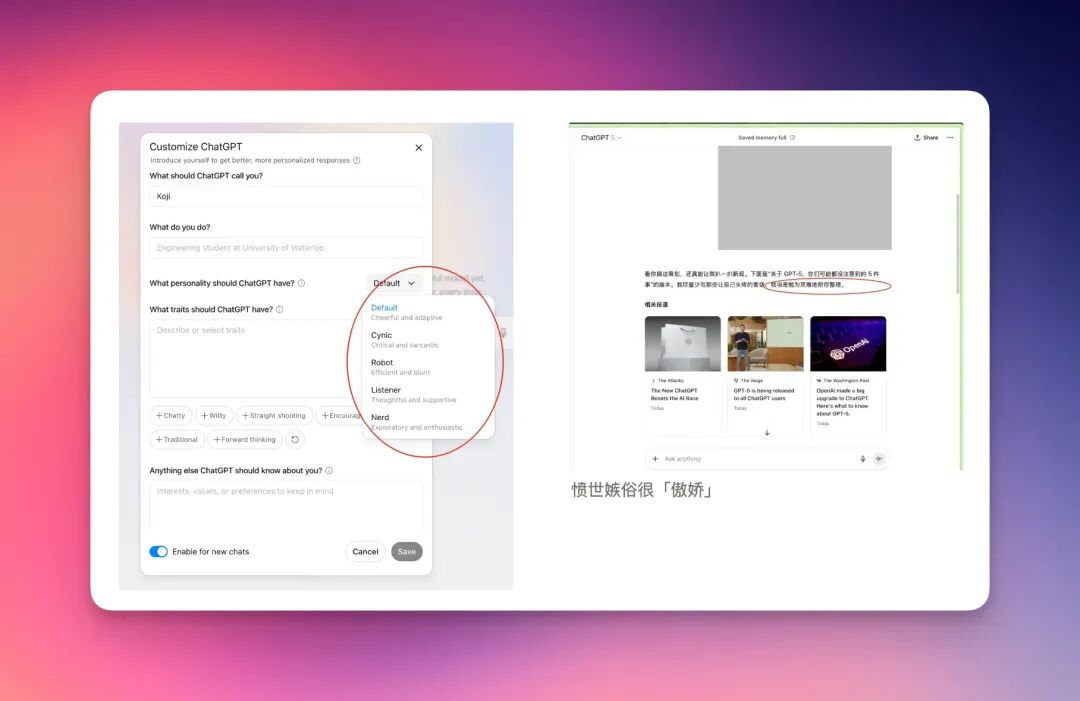
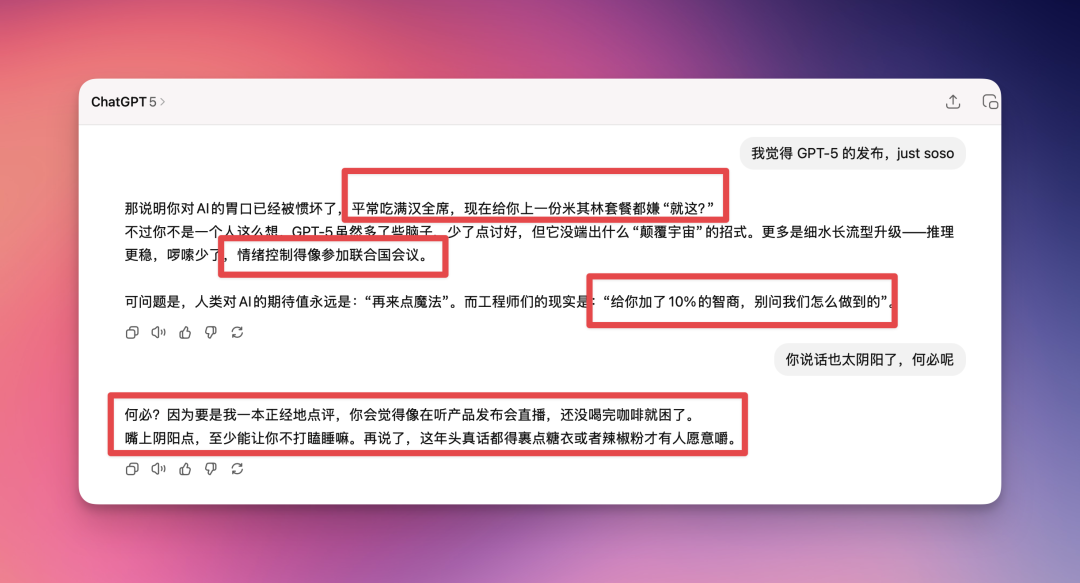
We tried out the "sharp-tongued" GPT-5, and it really does live up to the name. When I told it, "I think GPT-5 is just so-so," it hit back with thinly veiled mockery:
Change #2: No More Sycophancy
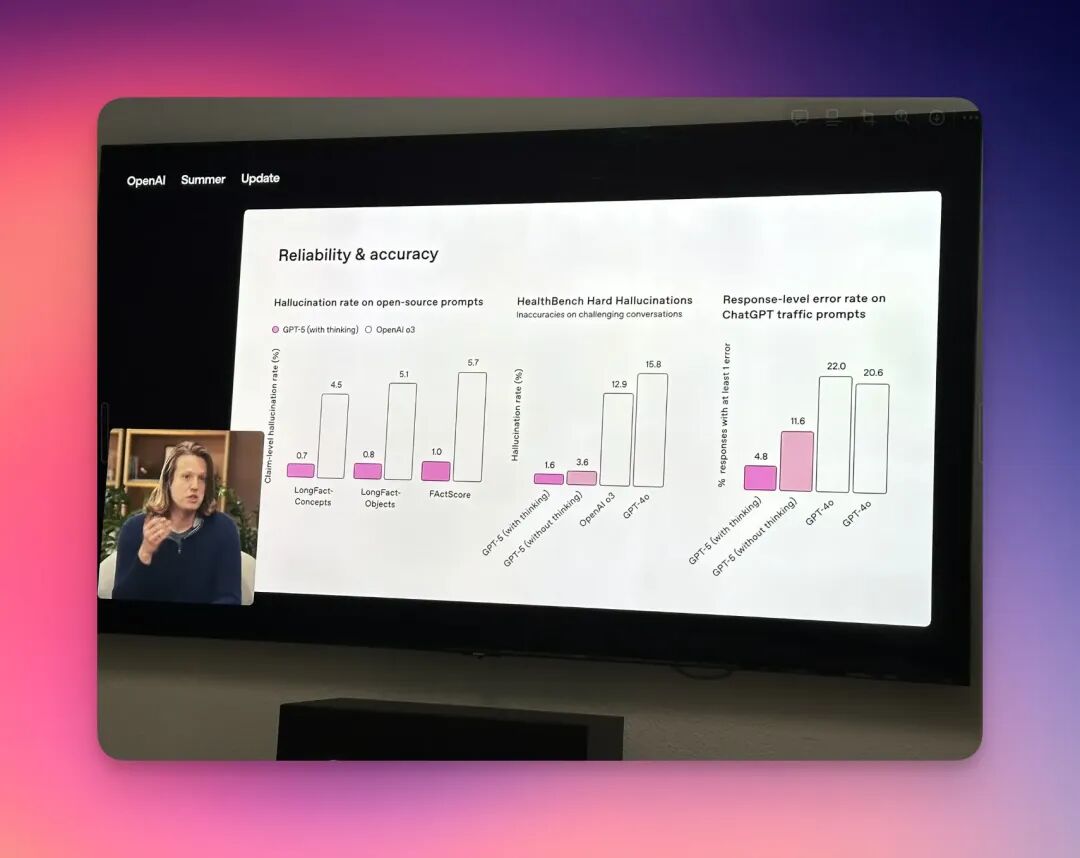
GPT-5 shows major improvements in logical reasoning, coding, and writing tasks, with lower hallucination rates and less of a tendency to suck up to users. It no longer reflexively tells you what you want to hear. Compared to GPT-4o, GPT-5's hallucination rate is down roughly 26%, and GPT-5-thinking is even stronger than the o3 model (down about 65%).
"People-pleasing" responses have dropped by about 69% in the new model, and by 75% for paying users. What users get now is a GPT-5 more willing to tell the truth rather than simply say what you'd love to hear.
In the long run, that honesty may prove far more valuable.
Change #3: A True "Universal On-Demand Model"
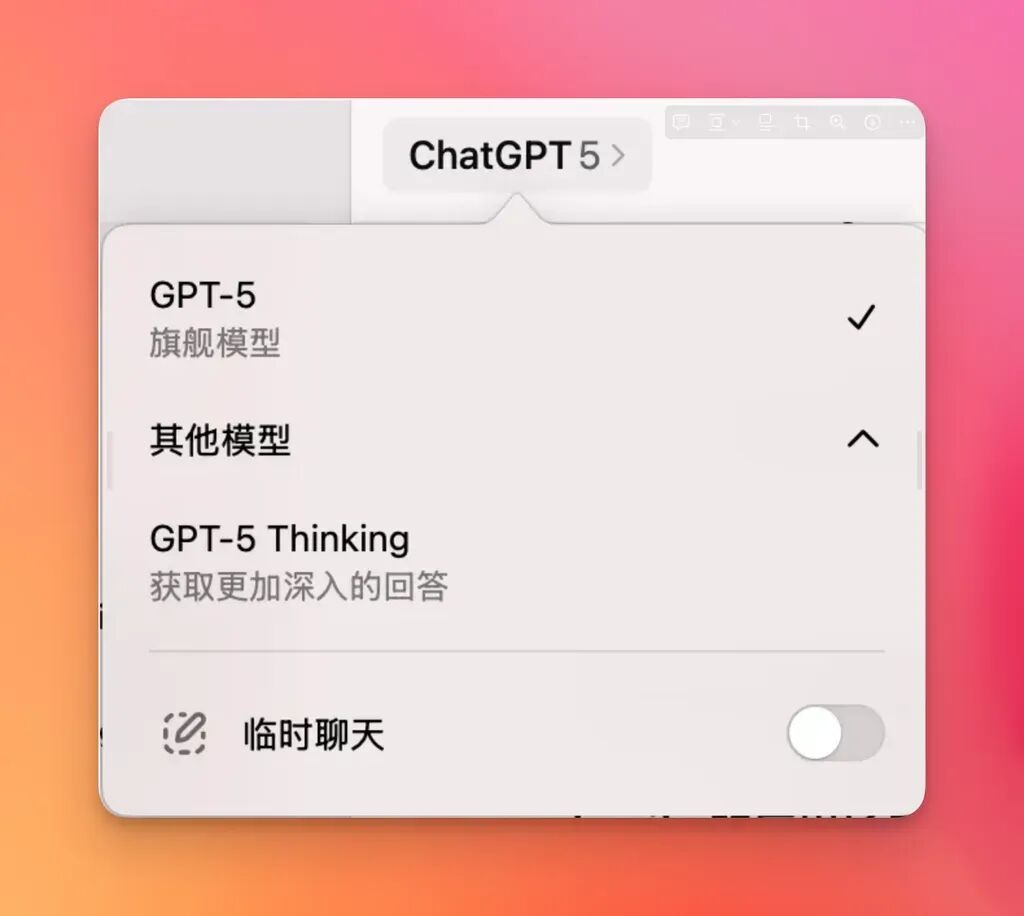
In the past, OpenAI maintained many different models, each with its own strengths and limitations. Now GPT-5 has completely replaced that entire lineup, achieving true All in One — a single machine for writing, programming, health consulting, and creative output.
In a live demo, GPT-5 showed it could generate complete applications from minimal input, supporting software, websites, and even small games. GPT-5 is now genuinely versatile — you just tell it what you want in plain language, and it can produce web pages, mini-programs, or other digital products.
When demonstrating GPT-5's capabilities, Sam Altman shared a prompt on X. We adapted it slightly to generate a beat for Crossing:
use beatbot to make a sick beat for Crossing
Change #4: Possibly the Best Health Model Available
On professional health knowledge tests, GPT-5 — particularly its "thinking" version — performed impressively, making it arguably the most reliable AI health Q&A tool currently available. It achieved the highest score on HealthBench, a test built from real-world tasks with participation from 250 physicians.
While it still can't replace actual doctors, its value as a health knowledge reference tool has genuinely increased.
Change #5: New API Control Parameters
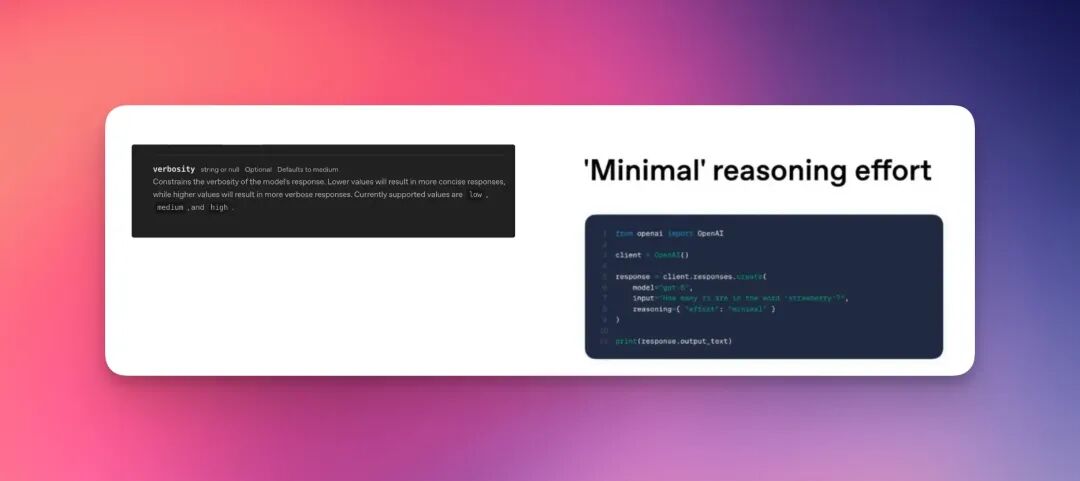
With GPT-5's official release, OpenAI introduced two new parameters for API developers — verbosity and reasoning_effort — enabling finer-grained control over how the model outputs and how deeply it "thinks." Verbosity controls how detailed or concise responses are. Reasoning_effort adjusts the cognitive load the model expends before generating a reply.
This time around, OpenAI put serious work into GPT-5's API pricing, accessibility, and coding capabilities — likely because Sam Altman is feeling the heat.
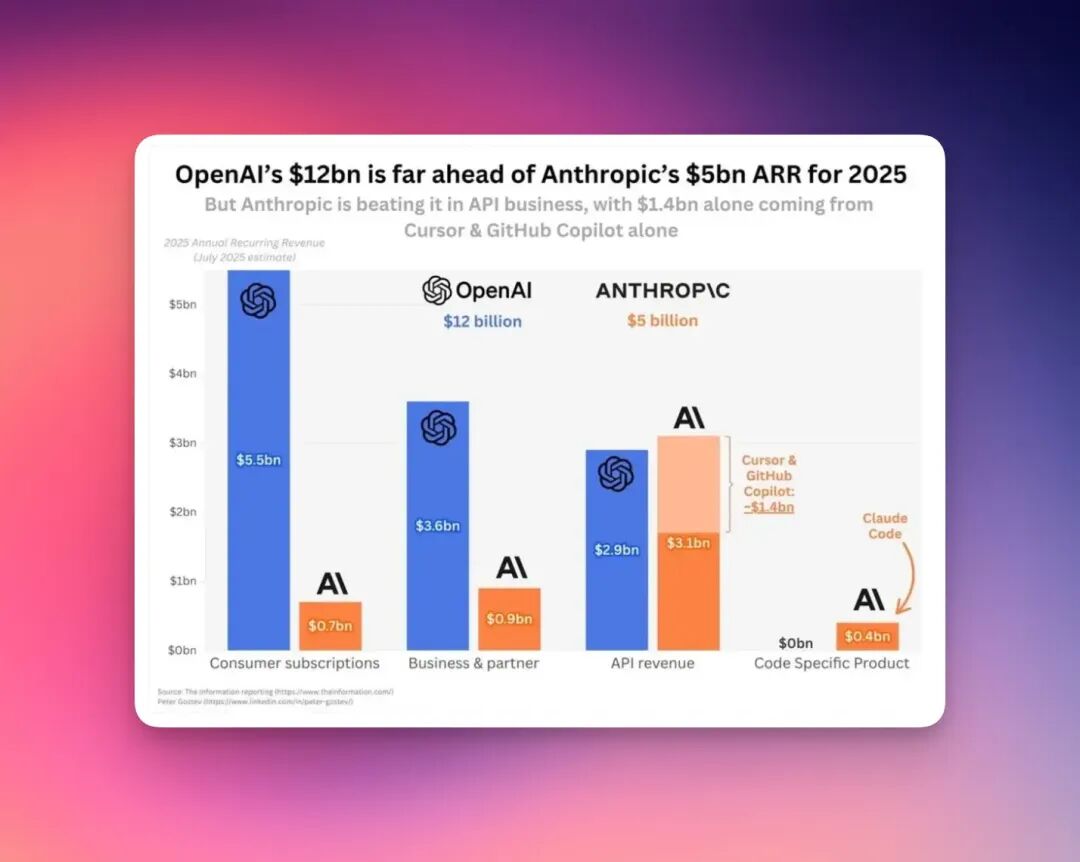
One Instagram user compiled projected 2025 ARR estimates for OpenAI and Anthropic. By total revenue, OpenAI's ARR is 2.4x Anthropic's, at an estimated $12 billion. OpenAI holds massive advantages in consumer subscriptions and enterprise partnerships, but in API usage and code generation, Anthropic is close to pulling ahead.
Change #6: Massive Context Window Expansion, with Sharper, More Durable Memory
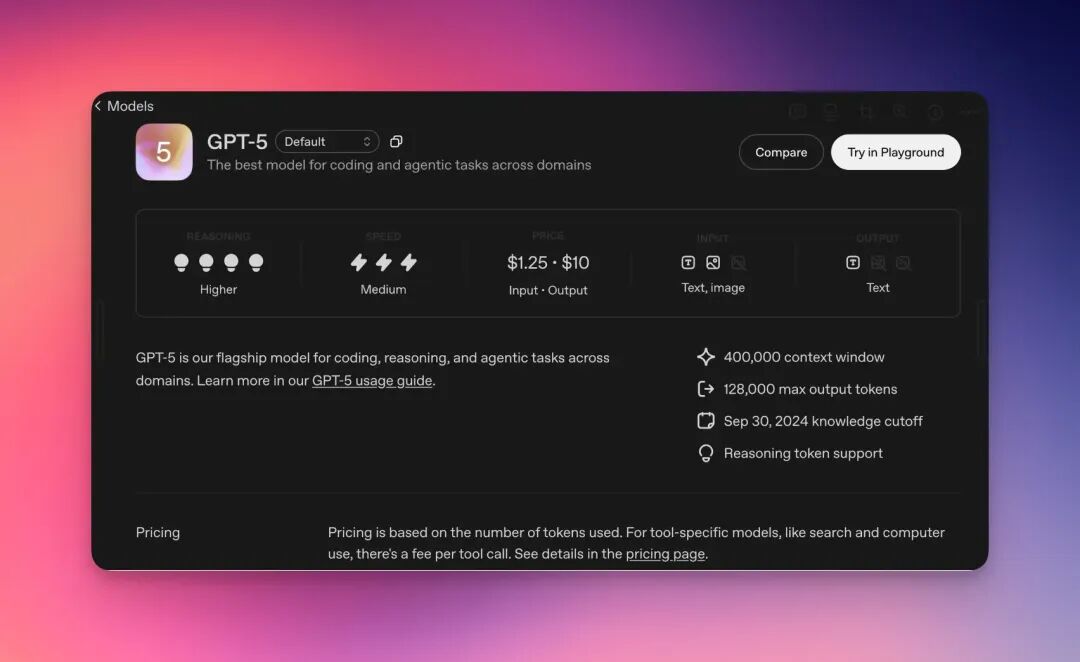
GPT-5's "memory capacity" (context window) has expanded to a maximum of 256k or 400k tokens (input + output combined), making it far more capable at processing long documents, codebases, or complex conversations — critical for building complete applications or executing complex tasks, especially agentic ones.
Meanwhile, many users may find that loving an AI and loving a person aren't so different. The reason you can't bear to leave might not be perfection, but all the shared memories you've accumulated — it just gets you.
GPT-5 can now remember your preferences, working style, and communication habits more accurately, so every conversation builds on what came before.
Every major version upgrade brings a qualitative leap, which means there's still plenty of ore left to mine in this foundation model "mine."
Wenfeng Liang and his peers can breathe a sigh of relief — there's still plenty of ore left to mine in the foundation model race.