"Who's even using OpenAI anymore? Everyone's on Claude Sonnet now!"

What goes around comes around.


🔥 Elon Musk Builds World's Most Powerful AI Supercomputer Cluster
🤖 The Walt Disney Company Reveals BD-X Bipedal Robot Design Details
💫 AdventureX: China's First Hackathon for Young People
🌟 Kuaishou's Keling AI Open-Sources LivePortrait, Goes Viral
🏙️ Hangzhou Expands "Compute Vouchers" to Boost AI Industry
🛢️ Saudi Aramco Invests in Korean Chipmaker to Advance AI
🤖 Large Model Commercialization: Government Procurement Market Shows Early Scale
💰 Cohere Closes $500M Series D at $5.5B Valuation
🚀 Claude Artifacts Helps Programming Beginners Build Apps Fast

Elon Musk Builds World's Most Powerful AI Supercomputer Cluster
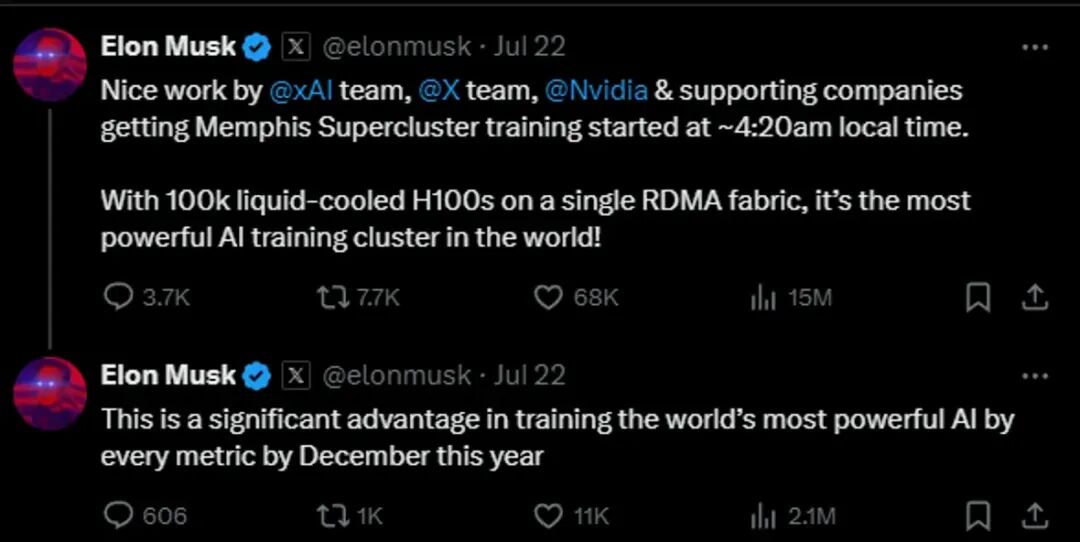
Elon Musk announced that the Memphis supercomputing cluster, built in collaboration with xAI, X, and NVIDIA, has begun training. Comprising 100,000 H100 GPUs, it is the world's most powerful AI training cluster, surpassing the current top supercomputer Frontier. The build-out was remarkably fast — installing 100,000 GPUs took just 19 days. Currently 32,000 GPUs are online, with full deployment expected by Q4, enabling training at GPT-5 scale.
The cluster faces massive power demands. It currently has 8 megawatts of electricity, with 50 megawatts expected by August. The cluster is estimated to be worth roughly $4 billion. Musk says this gives xAI a major advantage in training the world's most powerful model this year, and revealed plans for an even larger cluster of 300,000 B200 GPUs in the future.
The Walt Disney Company Reveals BD-X Bipedal Robot Design Details
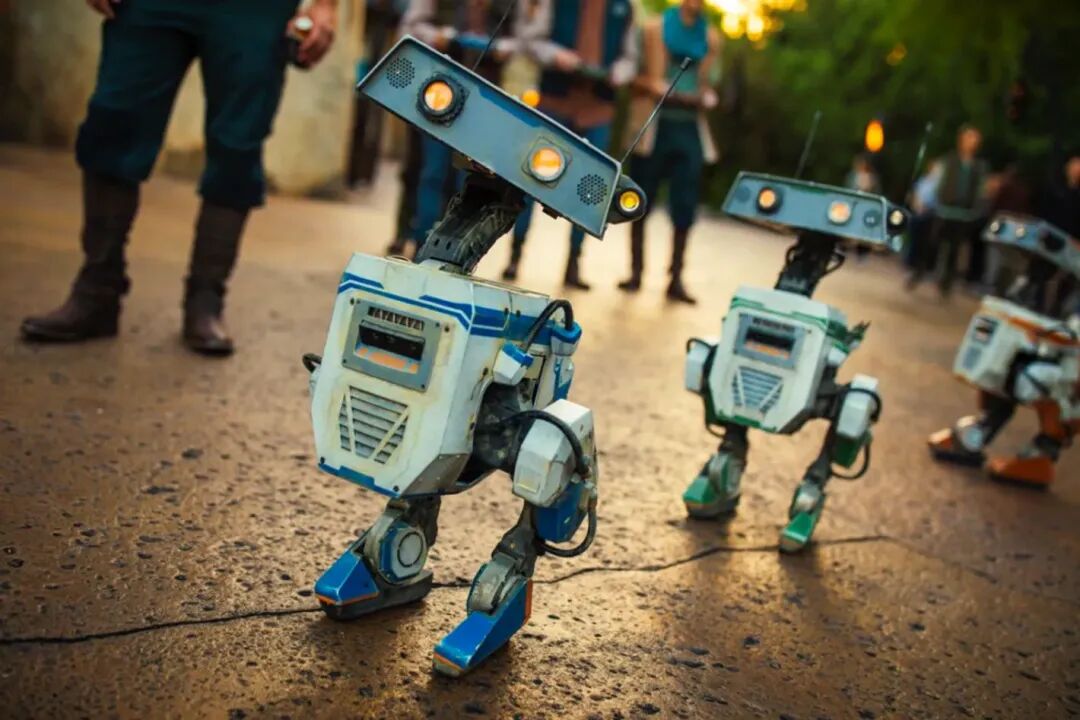
Disney has unveiled the BD-X[1], a new bipedal robot designed for entertainment performances, capable of navigating complex terrain and executing realistic artistic movements. Its design process combines animation tools with mechanical engineering for iterative optimization, uses reinforcement learning to train multiple control policies, features a real-time animation engine for generating control commands, and provides an intuitive control interface.
BD-X's mechanical structure includes 5 degrees of freedom per leg for extensive range of motion, 4 degrees of freedom in the head and neck for independent movement, and uses 3D-printed components for connections. Its control system has built-in microcontroller-driven communication boards, dual wireless communication via WiFi and LoRa, and swappable batteries supporting over one hour of operation.
For expressive capabilities, BD-X has movable antennae, glowing eyes, and headlights to enhance performance, plus a stereo speaker system for sound effects. The control architecture uses reinforcement learning policies to handle different movement types, an animation engine to generate and blend user input with predefined animations, and a real-time control system supporting intuitive operation and smooth motion transitions.

AdventureX: China's First Hackathon for Young People
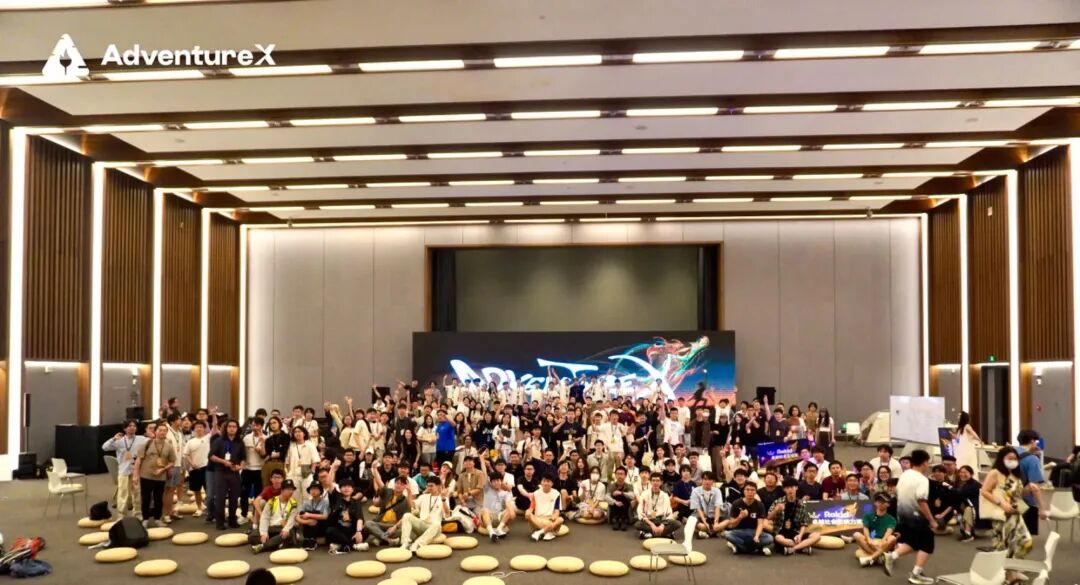
AdventureX is a hackathon for young people. From July 15–19, over 200 participants aged 16–26 gathered at Hangzhou Lakeside Innovation and Research Center to build products from zero to one in 72 hours.
With 1,200+ applicants, 80+ partners, and billed as the "purest, most passionate" hackathon, the event was founded by a 17-year-old high school student.
Crossing served as a special partner and judge, getting an up-close look at the hackathon journey of these AI hippies under 26. The young maker community brought explosive energy, unleashing a fierce storm of youth.
For more on AdventureX, check out the Crossing podcast — we'll soon be releasing interviews with the AdventureX founding team and 10 outstanding projects.
Here are the winning projects across 5 official tracks:
- Decentralized Advertising Alliance: A blockchain-based ad placement and management system.
- AI Tweet: A browser plugin that lets AI celebrities accompany you while browsing Twitter.
- EscapeToaster: A robot made from a modified toaster, combining modern robotics with VR control for an immersive robot-operating experience.
- Brainy AI: An automated personal knowledge management assistant with smart notes, knowledge base management, tagging and categorization, full-text search, collaboration features, and cross-platform sync.
- Coding Frontends with Guii AI: An AI pair programming tool full of love, using natural language instructions to customize and optimize code for existing frontend projects.
Click the official Lark link for AdventureX | Escape Plan[2] to see the full list of winners across all official and sponsor tracks.
Kuaishou's Keling AI Open-Sources LivePortrait, Goes Viral
The Kuaishou Keling AI team launched its latest open-source project — the controllable portrait video generation framework LivePortrait[3] — which quickly hit 7.5K stars on GitHub. It also attracted a hands-on demo from HuggingFace Chief Strategy Officer Thomas Wolf, becoming the most popular app on HuggingFace.
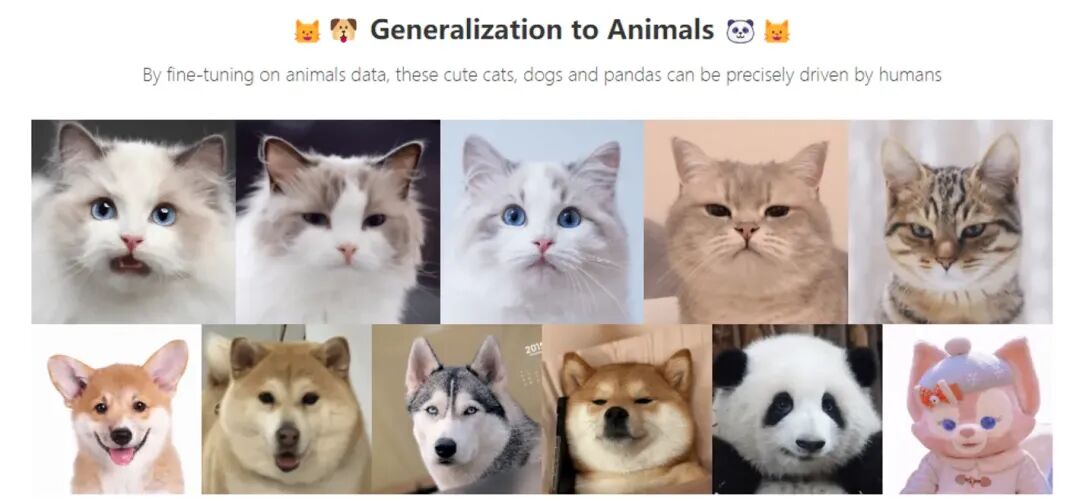
LivePortrait generates dynamic video from just a single source image, achieving effects like blinking, smiling, or head turns, and can copy expressions and motion onto other portraits, supporting multiple styles and sizes.
It works not just for humans but also lets pets act cute, with users able to precisely control subtle expression changes.
Unlike diffusion model-based approaches, LivePortrait uses an implicit keypoint framework with two-stage training, improving generalization, expressiveness, and texture quality. Research shows LivePortrait outperforms existing methods in generation quality and driving precision for both same-identity and cross-identity scenarios, with significantly higher inference efficiency. On an RTX 4090 GPU, generation speed reaches 12.8 milliseconds per frame, far exceeding existing methods.
Hangzhou Expands "Compute Vouchers" to Boost AI Development
The Hangzhou municipal government released new measures to support the full AI industry chain, with the most eye-catching being the expansion of its "compute voucher" policy. The annual pool increases to 250 million yuan. Companies using generative multimodal foundation models or domestic computing facilities can receive subsidies of up to 30%, while other computing facilities qualify for up to 20%. The annual cap per company is 8 million yuan, with relaxed limits for foundation model companies.
Hangzhou also introduced supporting measures including funding for compute technology R&D and financing interest subsidies, encouraging open-source model community building with rewards for outstanding contributors, supporting public innovation platforms and new industrialization application demonstrations, building specialized industrial clusters, cultivating high-performance chips and AI algorithms, strengthening talent recruitment and training, and establishing dedicated talent programs.
These policies aim to make Hangzhou a national hub for AI industry development and drive high-quality growth across its AI industry chain. The measures take effect August 19, 2024, and remain valid through December 31, 2027.

Saudi Aramco Invests in Korean Chipmaker
Saudi Arabia is actively developing its AI industry. State energy giant Saudi Aramco, through its venture capital arm Wa'ed Ventures, invested $15 million in Korean chipmaker Rebellions. This marks Wa'ed Ventures' first investment in Korea and its second chip industry investment within a week.
Rebellions is collaborating with Samsung Electronics to develop chips for the generative AI market, plans to go public in Korea, and will merge with SK Telecom's Sapeon Korea Inc. to focus on neural processing unit (NPU) development, competing with NVIDIA and Qualcomm.
Rebellions plans to use the funding to establish a subsidiary and operate in Saudi Arabia, reflecting the kingdom's strategy to diversify its economy and attract global tech startups. In the first half of 2024, Saudi Arabia reached $412 million in venture capital financing, ranking first in the Middle East and North Africa region.
Large Model Commercialization: Government Procurement Market Shows Early Scale
In the first half of 2024, large model-related government procurement projects reached 498 bids, with total value exceeding 1.34 billion yuan — surpassing the full-year 2023 total. Procurement demand concentrated in Beijing, Guangdong, and Shanghai, spanning finance, education, energy, and other sectors.
Among suppliers, Zhipu AI, Baidu, iFlytek, and Huawei stood out. Zhipu AI won 18 projects this year, Baidu 17, and iFlytek 15. These projects covered a wide range from infrastructure to specific application development. Notably, innovative projects like rice technology large models and regional weather forecasting large models are also emerging.
However, among the "four dragons" of large models — MiniMax, Moonshot AI, and Baichuan — few have appeared in public procurement bids. This may relate to their greater focus on consumer markets or challenges with customization demands. While government procurement offers large model companies a fast path to monetization, it also brings issues like limited profit margins and difficulty achieving economies of scale.
Cohere Closes $500M Series D at $5.5B Valuation
Canadian AI startup Cohere[4] joins the ranks of the world's most valuable AI companies with its latest funding round.
The round was led by PSP Investments, with new investors including Cisco, Fujitsu, and AMD Ventures. Founded in 2019, Cohere focuses on developing customized large language models for enterprise clients. Cofounder Aidan Gomez previously worked at Google and co-authored Attention Is All You Need.
This round jumps Cohere's valuation from $2.2 billion last year to $5.5 billion, with total cash reserves rising to roughly $970 million. The company's products have attracted hundreds of clients including Notion Labs and Oracle. Cohere's competitors include OpenAI, Anthropic, Mistral, and Google. Its Command R+ model launched this spring demonstrated the company's determination to compete head-to-head.
Cohere says the new funding will expand the team and advance enterprise AI technology to improve global business productivity and efficiency. As AI technology continues advancing, the market will watch how these companies drive industry development through innovation and partnerships.

Claude Artifacts Helps Programming Beginners Build Apps Fast
Netizens exclaim: "Who's still using OpenAI 4o? Everyone's on Claude Sonnet now!"
Riley Brown, with zero programming background, built a complex note-taking app in 4.5 hours, sparking widespread attention. As a complete beginner, he used Claude Artifacts to go from concept to launch — the full process video[5] documents everything.
Riley found a reference software screenshot, interacted with Claude Artifacts through the screenshot, and through continuous coding and debugging, eventually deployed on Replit and integrated with Firebase to publish. While the app's complexity may not be high for experienced developers, it represents a new paradigm of creation.
Since Artifacts launched a month ago, it has produced many impressive cases. This development model offers new possibilities for young people and programming beginners, showing how to collaborate with AI to realize creative ideas.


Let's not allow ourselves to be upset by trifles when we ought to be occupied with that which is beyond them — the greater issues of life.
— How to Stop Worrying and Start Living



Editorial Team Editor: Ziwen
Design: Ivan
For business partnerships, add on WeChat: Rwkfbcianvd
References [1] BD-X: https://la.disneyresearch.com/publication/design-and-control-of-a-bipedal-robotic-character/
[2] AdventureX | Escape Plan: https://adventurex.feishu.cn/wiki/VWUKwN2BEiu9JgkowescuTQOnSf
[3] LivePortrait: https://liveportrait.github.io/
[4] Cohere: https://cohere.com/
[5] Full process video: https://x.com/rileybrown_ai/status/1814062312472694992