Peking University Talk: AI Lets You Become Yourself

I'm not a programmer. To this day, I haven't written a single line of code. But over the past few months, I've built five websites — and I update them every day.
I'm not a programmer, and to this day I haven't written a single line of code. But over the past few months, I've built five websites — and I update them every day.

Editor's note from Crossing (Koji)
It's Sunday, so I'd like to recommend a recent talk from our friend Bangbi.
Anyone who knows me knows I love the phrase "Get your hands dirty." Bangbi is exactly the kind of person who's willing to roll up his sleeves and get his hands dirty.
Reading this piece, I was infected by his energy on one hand, and on the other it set off a lot of thinking: once AI expands the boundaries of my abilities, who do I actually want to become?


On September 6, at the invitation of Peking University's School of Innovation and Entrepreneurship and Zhihu, I gave a ten-minute talk at Peking University titled AI Lets You Become Yourself. Here's what I said that day.
Hello everyone, I'm Bangbi Kuaipao. I graduated from PKU's School of Mathematical Sciences, so I'm very happy to be back home for this event.
I work in investment banking now. But what I want to talk about today isn't what I do at my job — it's the websites I've been building after work.
I'm not a programmer, and to this day I haven't written a single line of code.
But over the past few months, I've built five websites, and I update them every day.
I go to work during the day as usual. All of this was made after hours.
Before I talk about these websites, I want to take you back to 1776. That year, Adam Smith visited a pin factory and wrote about it on the very first page of The Wealth of Nations. A pin looks simple, but making one takes eighteen steps — drawing the wire, straightening it, cutting it, sharpening the point, attaching the head, one step after another. Smith said that if one person did it all from start to finish, they couldn't make even a single pin a day. Yet this factory had only ten workers, each manning one step, and together they turned out forty-eight thousand pins a day.
That's the division of labor. It worked so well that two hundred and fifty years later, every company today still runs on it.
But the division of labor comes at a cost. The cost is that between you and the person you ultimately serve, there are too many steps in between. That report you wrote, that line of code you fixed — what did it finally become, who did it actually help? You can't really see it. It becomes hard to feel where exactly your personal value shows up.
What I want to tell you today is that this is changing.
Now, any job that can be done on a computer — all eighteen of those steps can be handed to AI. You no longer have to wait for an entire production line to finish, and you don't have to convince anyone. Between your idea and your work, for the first time, there's nobody else.
You can face your audience directly and get the most immediate feedback. That feeling of "my work, my call" — that sense of ownership — is back.
So your value once again depends on your ideas. You can go build something bigger than yourself — not because someone assigned it to you, but simply because you feel this thing ought to exist in the world.
The three websites below are three small experiments of my own.
Number one: a knowledge base of Warren Buffett's shareholder letters — learnbuffett.com — 98 shareholder letters, 49 investing concepts. The first one is a knowledge base of Buffett's letters to shareholders.
Buffett wrote shareholder letters from 1956 to 2025 — 98 letters spanning seventy years. These letters are recognized classics, and Chinese translations are easy to find online. But actually reading your way into them is tricky. Take "intrinsic value," the cornerstone of his entire investment system. He never explained it fully in any single letter — he'd say one thing this year, add a bit more a few years later, with pieces scattered across 51 letters. If you want to understand what it really means, you have to plow through seventy years of letters, one by one.
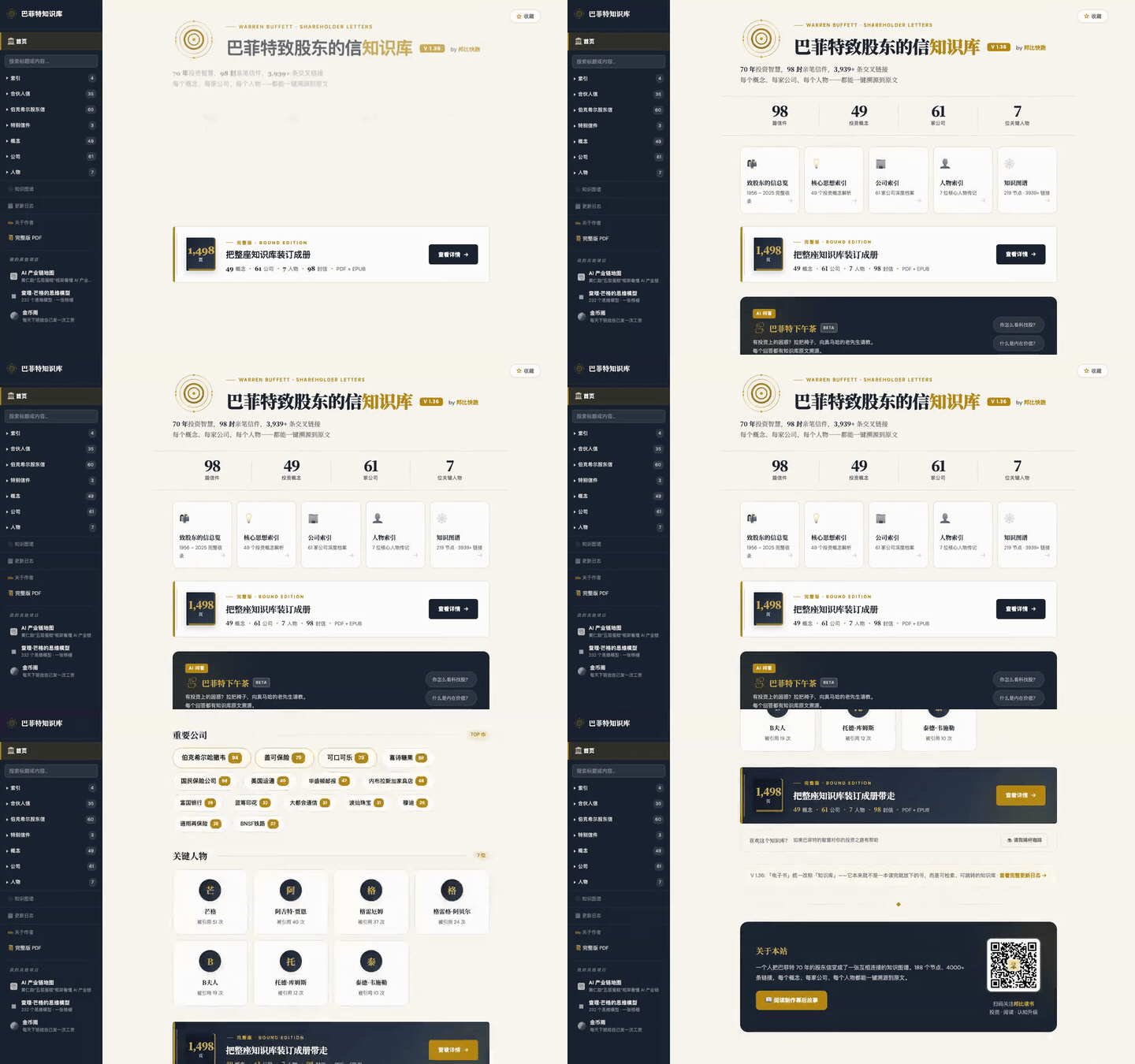
So what I did wasn't just translation. I had AI read all 98 letters, one by one, and pull out every passage where he discussed "intrinsic value," arrange them chronologically, and organize them into one complete introduction.
You can see how he talked about it early on, how he added to it over time, and what the concept grew into by his later years. Every sentence is annotated with its source — one click takes you back to the original letter from that year.
The 49 investing concepts, 61 companies, and over 3,000 links were all made this way.

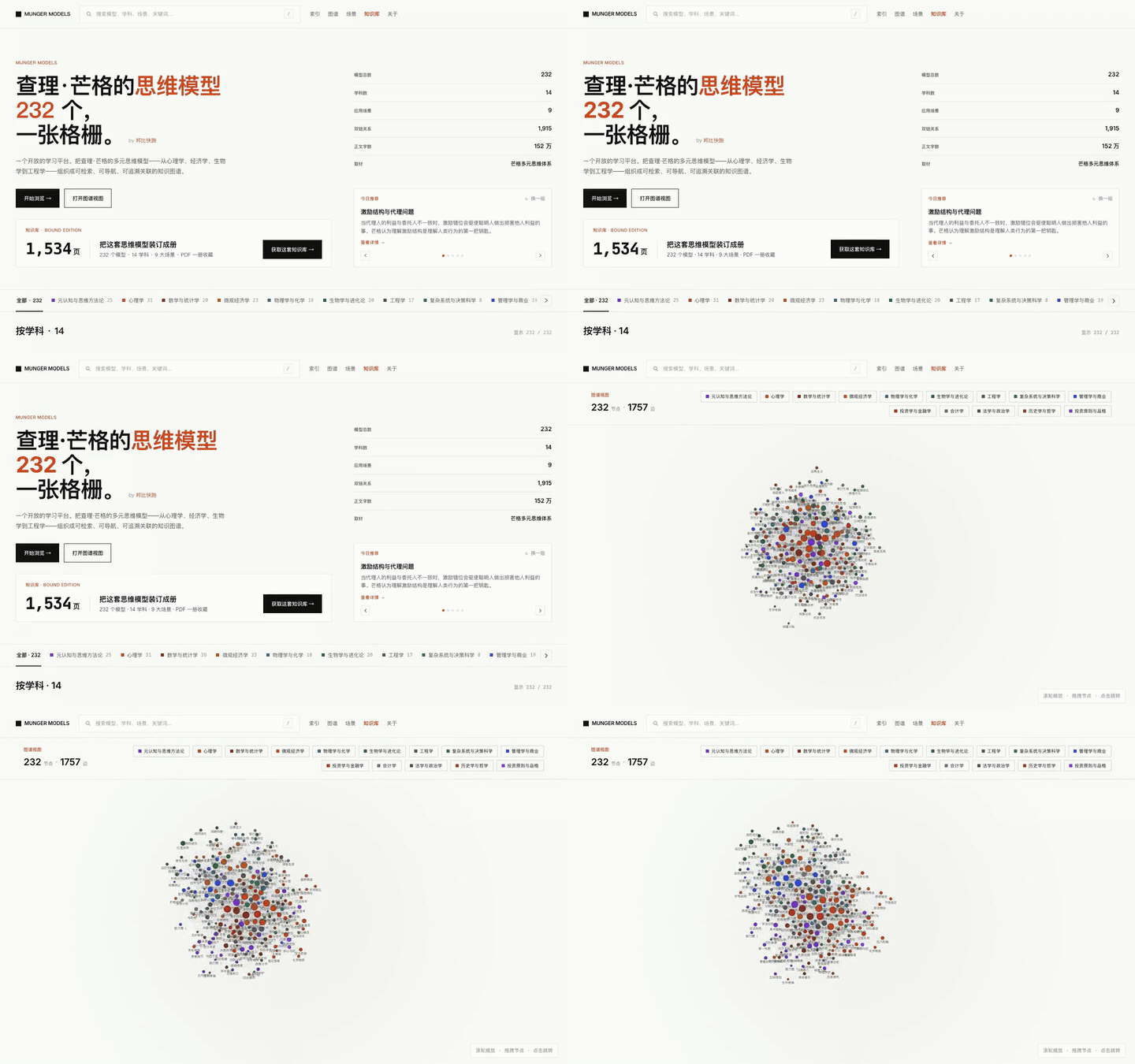
Number two: Charlie Munger's mental models — mungermodels.com — 232 models, 14 disciplines, 1.52 million characters. The second is Charlie Munger's mental models.
In 1994 at the University of Southern California, Munger said that roughly eighty or ninety models are enough to make you a person of worldly wisdom. The problem is, he never laid out a complete list of which eighty or ninety models those are, or how to actually use each one.
Search online for "Charlie Munger's 100 mental models" and you'll find plenty of lists. But those lists give you just a sentence or two per model. You feel like you get it while reading, and the moment you close the page, you've forgotten it.
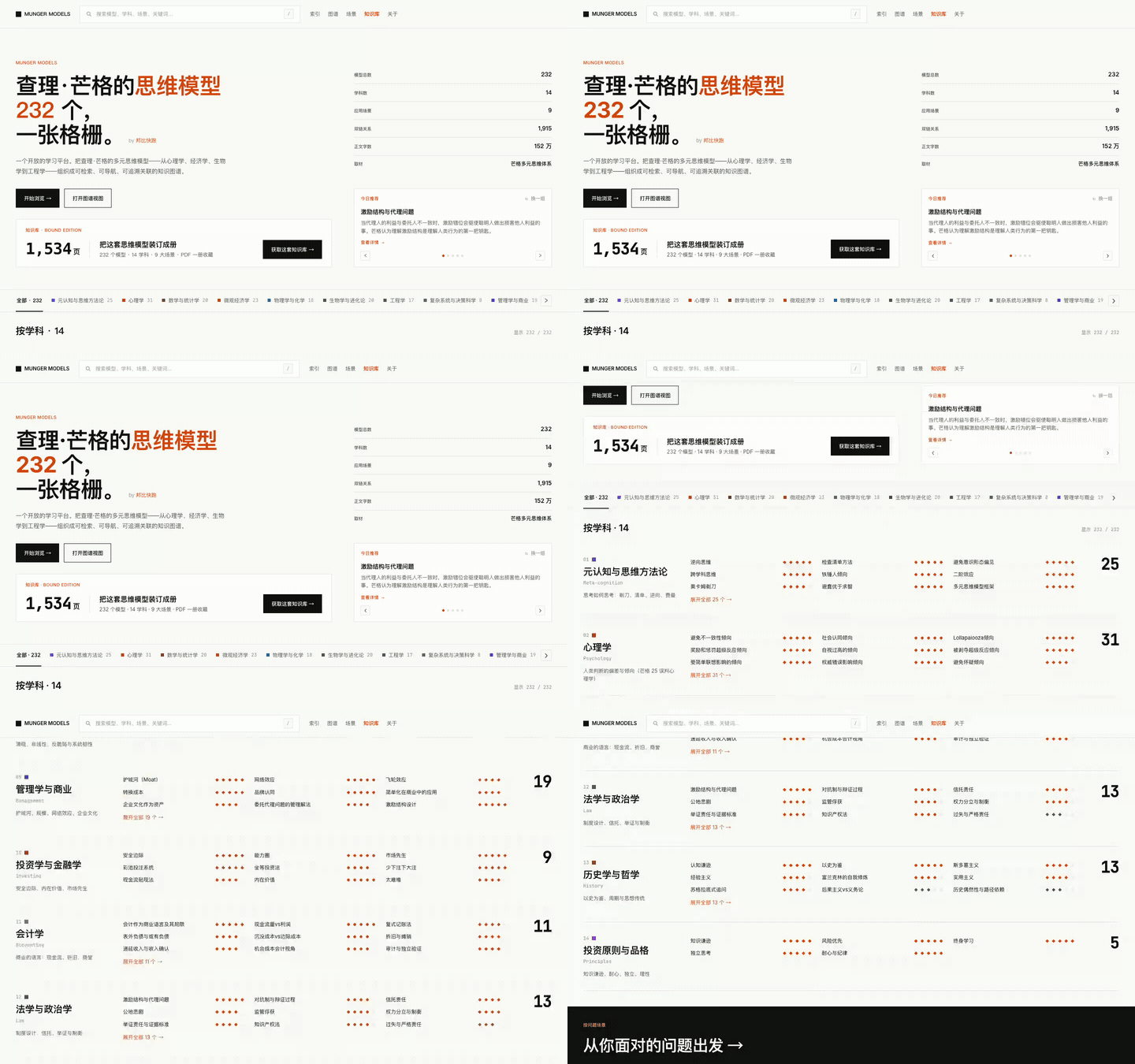
On my site, each model is a long-form essay of several thousand characters — definition, case studies, how to apply it, a checklist — enough to genuinely understand what the model means. 232 models, spanning 14 disciplines, totaling 1.52 million characters.
And what I actually wrote myself was only the first piece. I set its structure and style, divided up the 14 disciplines. The other two hundred-plus pieces were all completed by AI on its own.
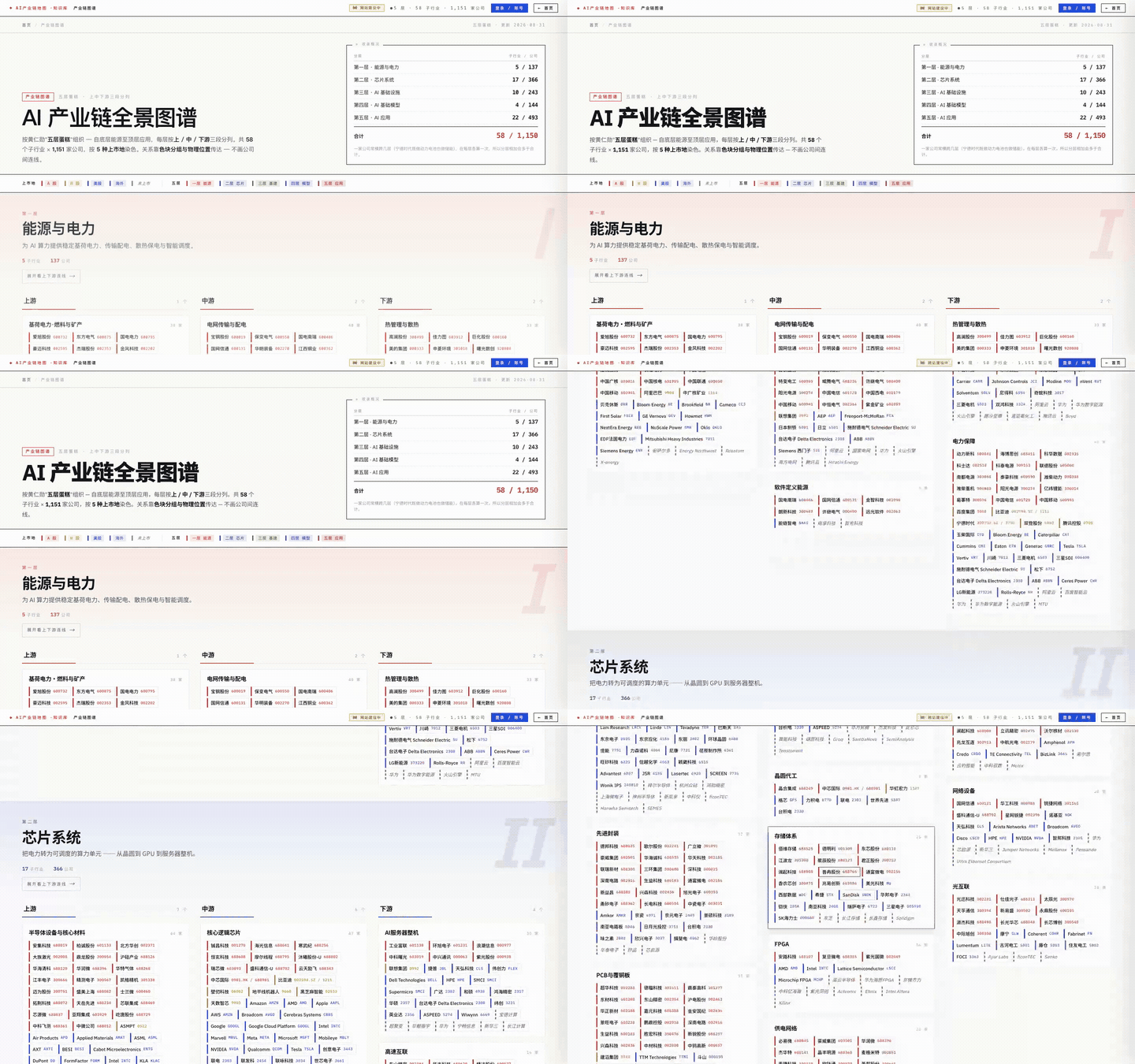
Number three: a map of the AI supply chain — aichainmap.com — 1,151 companies, 58 sub-sectors. The third is a map of the AI industry chain.
In the AI era, everyone in finance has to answer one question: in this AI wave, where does the money come from, and where does it ultimately flow?
From electricity, to chips, to data centers, to models, and up to the applications on top. Within each layer there are dozens of niche sectors and thousands of companies. Without an index, it's easy to get lost. So I used AI to organize the entire upstream and downstream, following Jensen Huang's five-layer cake, and turned the whole AI supply chain into a map.
This map now holds 1,151 companies and 58 sub-sectors, with over 60,000 cross-references between them. Click into any company and you can follow the chain to everything upstream and downstream of it.
Of course I didn't draw this map by hand. I fed tens of thousands of research reports into an AI pipeline and let it extract entities, assign hierarchy levels, and connect the upstream and downstream links. My only job was setting the rules.
Two years ago, this would have been months of work for an industry research team.
It grows on its own, every day. There's one more thing I really want to talk about. Building a website is easy; updating and maintaining it is hard. This AI supply chain map especially — new information comes in every day, and there's no way I could keep it current on my own.
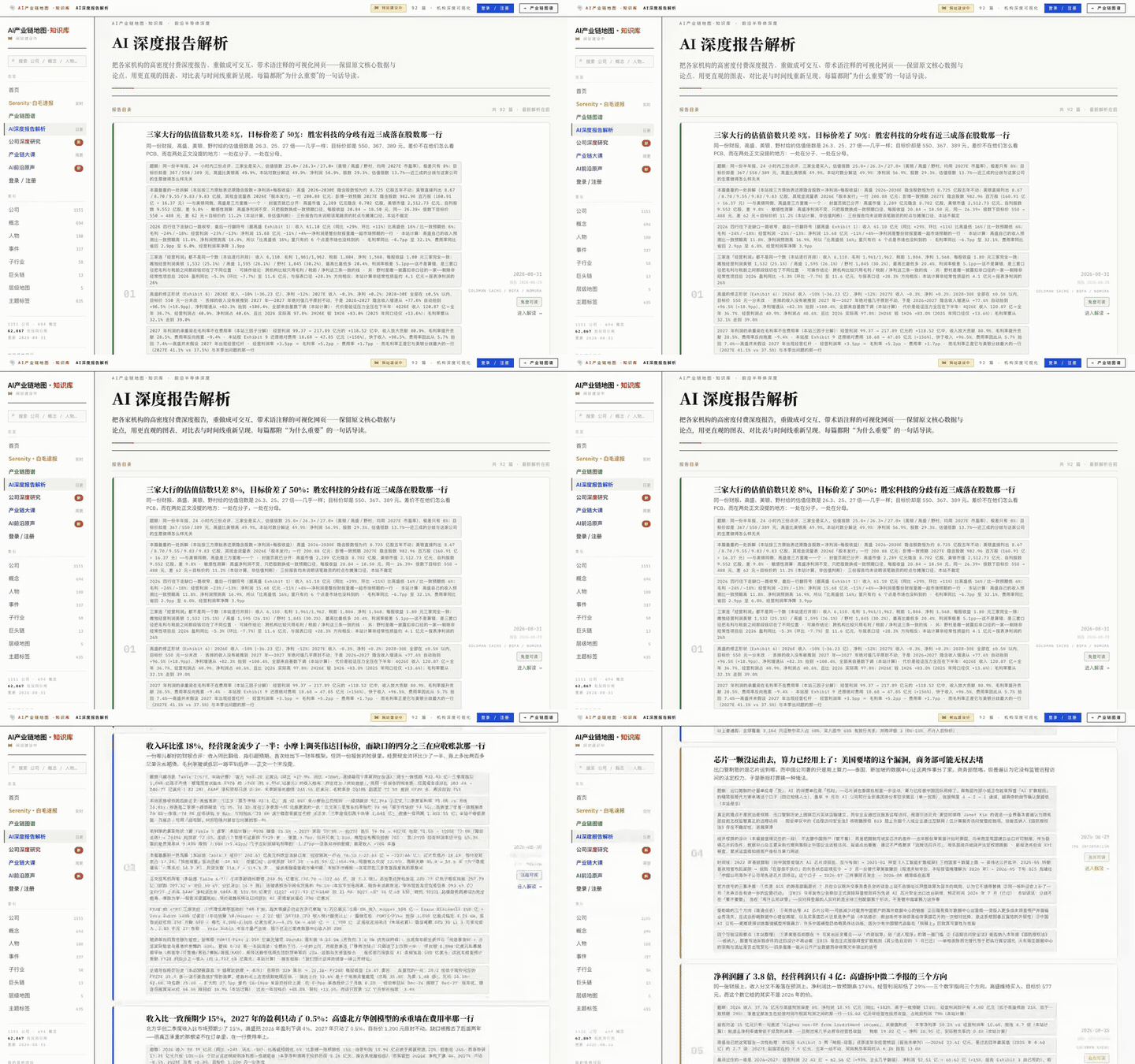
So I wrote a batch of scheduled tasks that run on their own on the server every day: scraping first-hand intelligence, parsing the day's research reports, turning new companies into lessons, translating overseas interviews into Chinese. While I sleep, it keeps updating.
This is how I understand the difference between a "work" and an "asset" — a work stops where it is once it's done; an asset gets thicker every single day.
Three final thoughts. Having walked you through these three websites, I want to leave you with three sentences.
First: output can be outsourced; taste cannot. AI makes it easier to finish a piece of work, but what sets you apart from everyone else is what your taste looks like — what you believe matters more.
Second: AI won't make you faster; it will make you dare to attempt bigger things. Most of the ideas you've abandoned weren't abandoned because they lacked value — you just didn't have the time to finish them. AI erases the time difference between finishing something big and something small. You can choose, more often, to do the big thing.
Third: you don't have to be one step in someone else's production line. You can face your own customers directly, earlier, and build products you're genuinely proud of. You're all more than ten years younger than me — this day will come even sooner for you.
That's why this talk is called "AI Lets You Become Yourself."
The addresses of the three websites I showed today are all here.
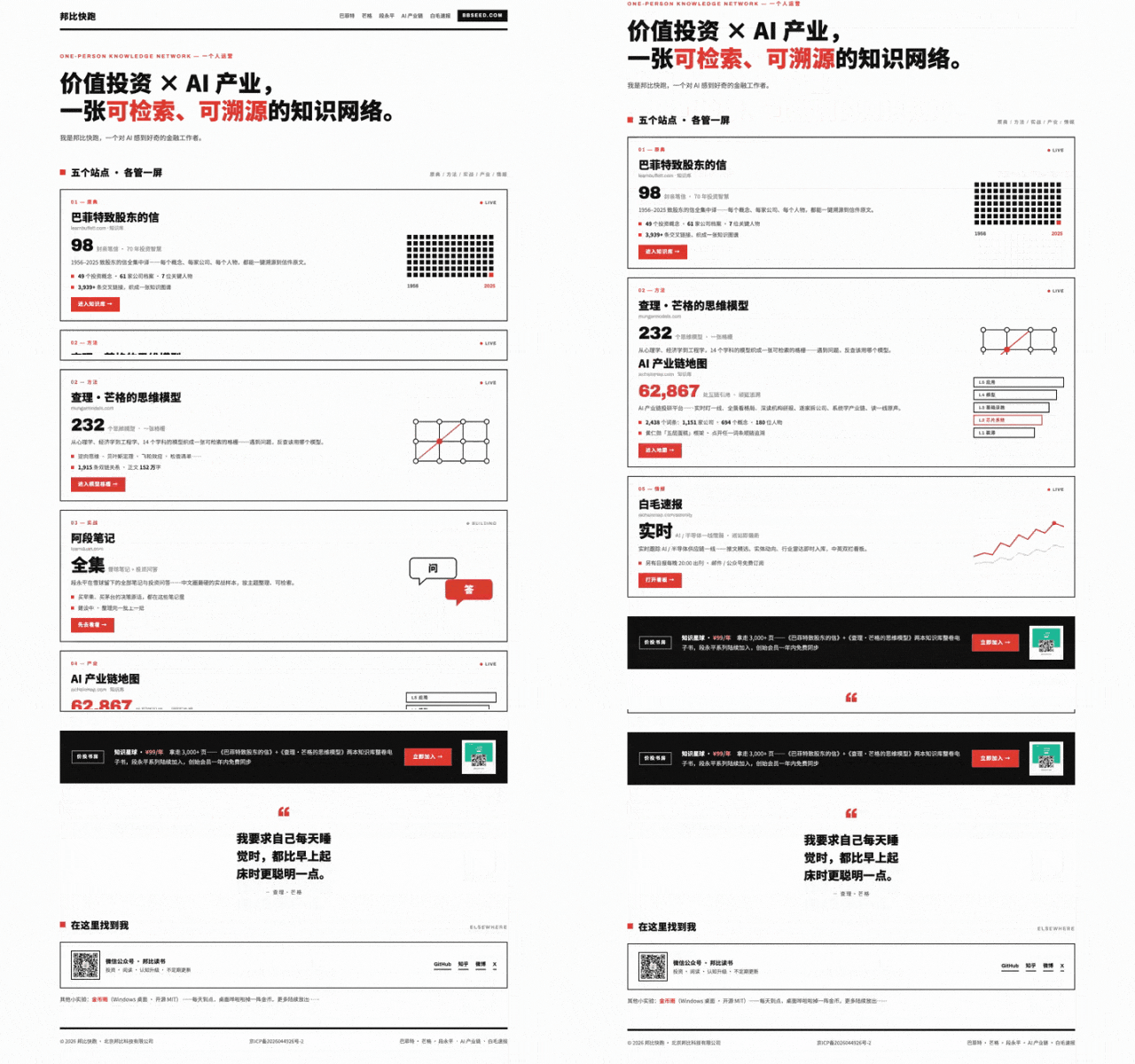
If you only remember one, remember bbseed.com — that's my personal homepage, and all five sites are in there.
Thank you, everyone. I hope that in the AI era, each of you builds work of your own and becomes who you truly are.
Finally, thanks to the students of Peking University's Student Innovation Society and the staff at Zhihu — the event was thoughtfully organized from venue to logistics. Great work.
Recommended reading