From Pi0.5 to LingBot-VLA: A Path to Embodied Intelligence Is Taking Shape
A VLA foundation model trained on 20,000 hours of real robot data, covering nine dual-arm configurations.
**
A VLA foundation model trained on 20,000 hours of real robot data, covering nine dual-arm configurations.
👦🏻 Author: Jingshan
🥷 Editor: Koji
🧑🎨 Layout: NCon

Ever since 2024 was dubbed the "year of humanoid robots," the industry has been waiting for a ChatGPT-level breakthrough moment. And embodied AI is widely seen as the next critical frontier for AI.
On January 28, Ant Lingbo open-sourced its general-purpose embodied intelligence foundation model: LingBot-VLA.
Not a paper demo, not a promotional video — the code, weights, and training and post-training toolchains, all released together.
The timing is interesting. Just two months earlier, Physical Intelligence (PI) in Silicon Valley had closed a $600 million funding round led by Alphabet's CapitalG. Their open-sourced Pi0.5 model is regarded as the benchmark in the field, even called "the OpenAI of embodied intelligence VLA models."
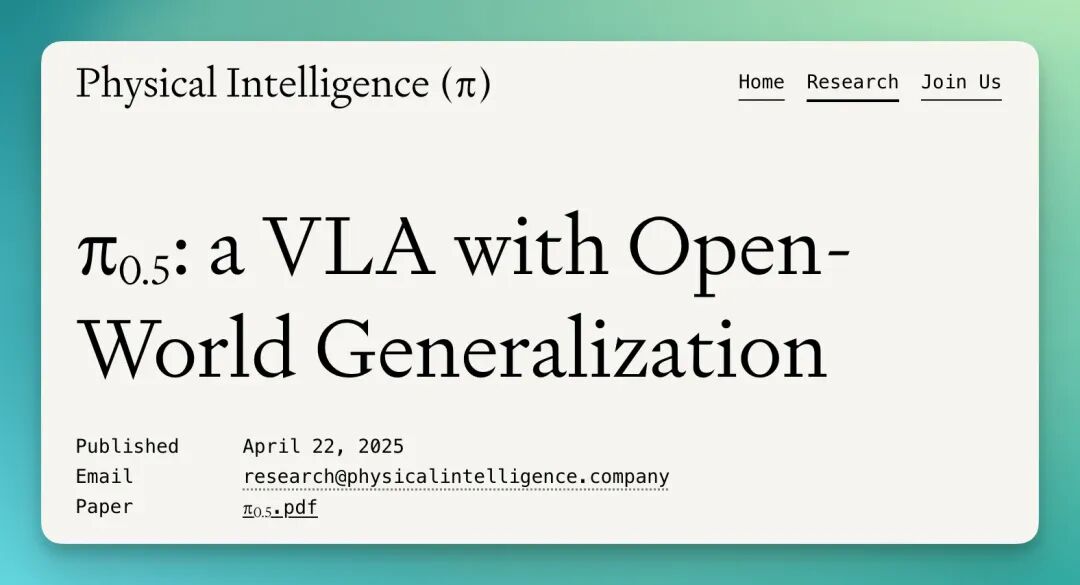
After Pi0.5, the "VLA + open source" path has already been validated. Now only one question remains:
Can you deliver something that actually runs on real robots, repeatedly?
🚥
Embodied intelligence has been hyped for years — so where does this release actually stand?
Ant Lingbo chose to answer that head-on.
Once you actually put something out there, it stops receiving only praise
The term "embodied intelligence" has been around for a while.
As early as 2016, Google started research on robot learning. Later, DeepMind, OpenAI, and Meta all poured in significant resources. In academia, it's the same story — Stanford, UC Berkeley, CMU, Tsinghua University, and Shanghai Jiao Tong University publish a massive number of related papers every year.
But for a long time, the work being done was rather "fragmented."
Because robotics has always had a headache-inducing problem: almost every new scenario requires starting from scratch.
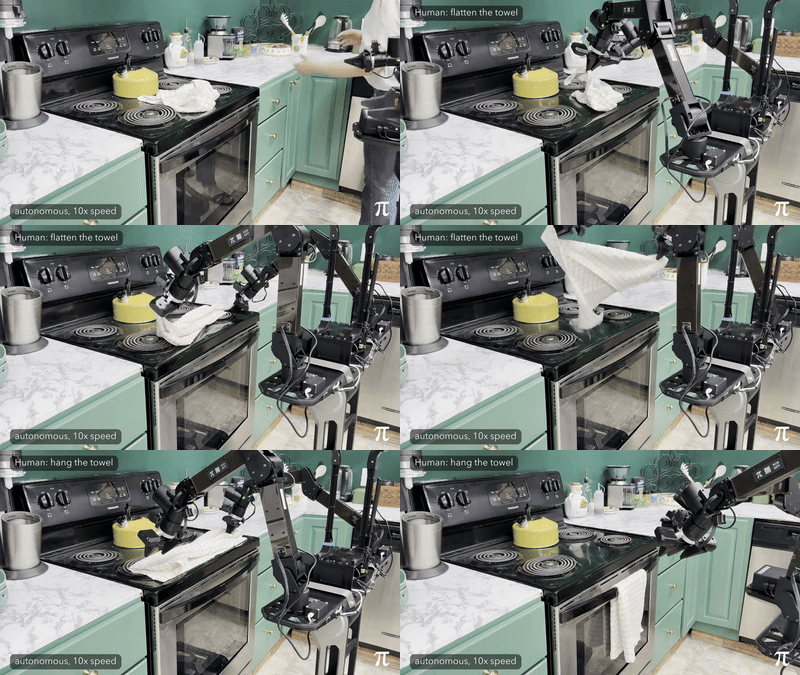
Say you train a robot to sort packages in a warehouse. You spend months collecting tens of thousands of data points, finally get it trained and running stably. Then the client or your boss says: let's make a robot that washes dishes in a restaurant.
You have to recollect data, retrain the model, retune parameters.
So you see everyone in this industry constantly repeating similar work. This fragmented state has slowed progress far below expectations. It's also why, despite all the hype around embodied intelligence, truly large-scale deployments remain rare.
It's against this backdrop that some shifts began to emerge:
Open-source VLA models (like Pi0.5) appeared, and many teams quickly adapted them to specific scenarios.
In March 2024, Physical Intelligence was officially founded. The founding team was exceptionally stacked.
CEO Karol Hausman was previously a scientist at DeepMind and a professor at Stanford University; co-founder Sergey Levine is a top scholar in reinforcement learning with over 150,000 citations; another co-founder, Chelsea Finn, is also a star professor at Stanford, and the Mobile ALOHA robot project came from her team.
In the first month after its March 2024 founding, they raised $70 million in seed funding, led by OpenAI and Sequoia Capital. Eight months later, they raised another $400 million, hitting a $5.6 billion valuation.
This funding speed and amount is almost unheard of for early-stage robotics companies.
In October 2024, they released Pi0, a truly general-purpose robot policy model. A few months later, they iterated to Pi0.5 and open-sourced it directly.
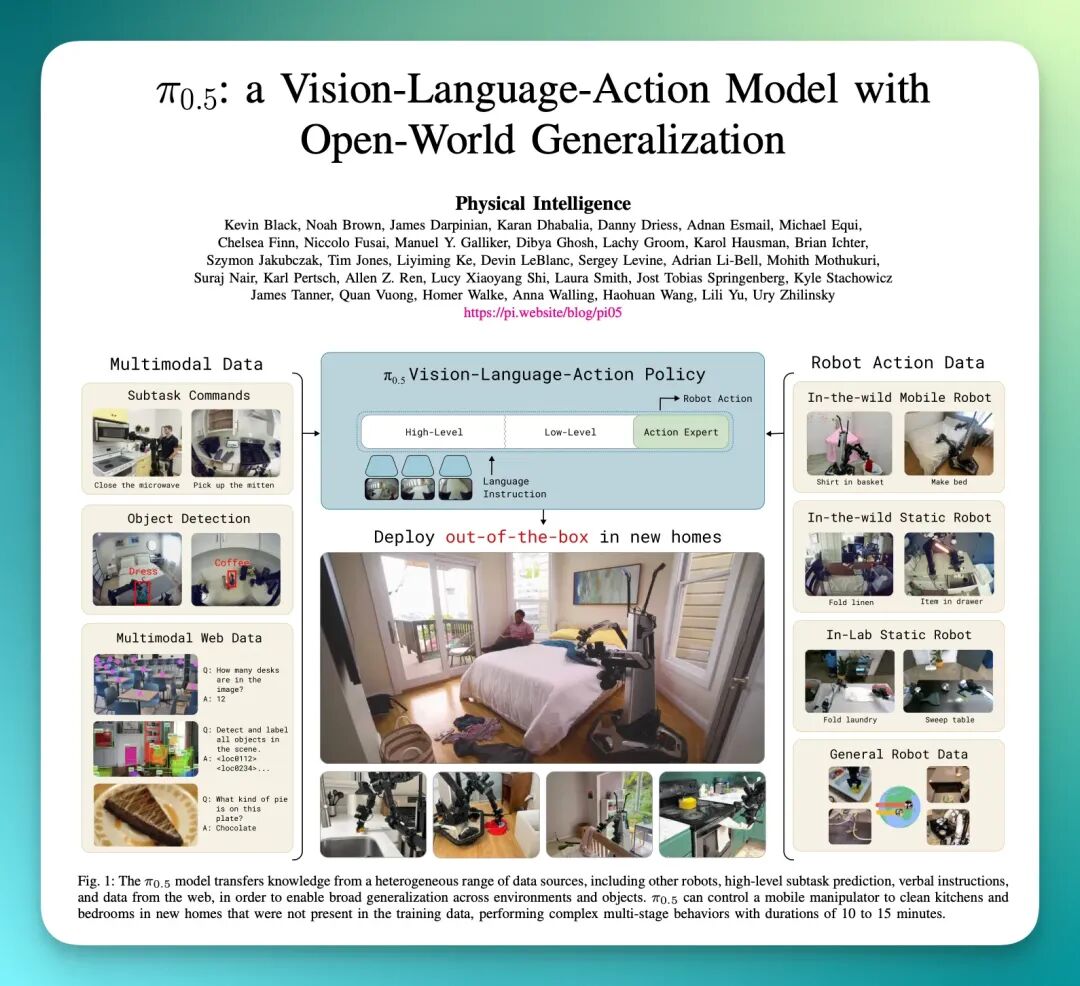
This was a major event for the industry.
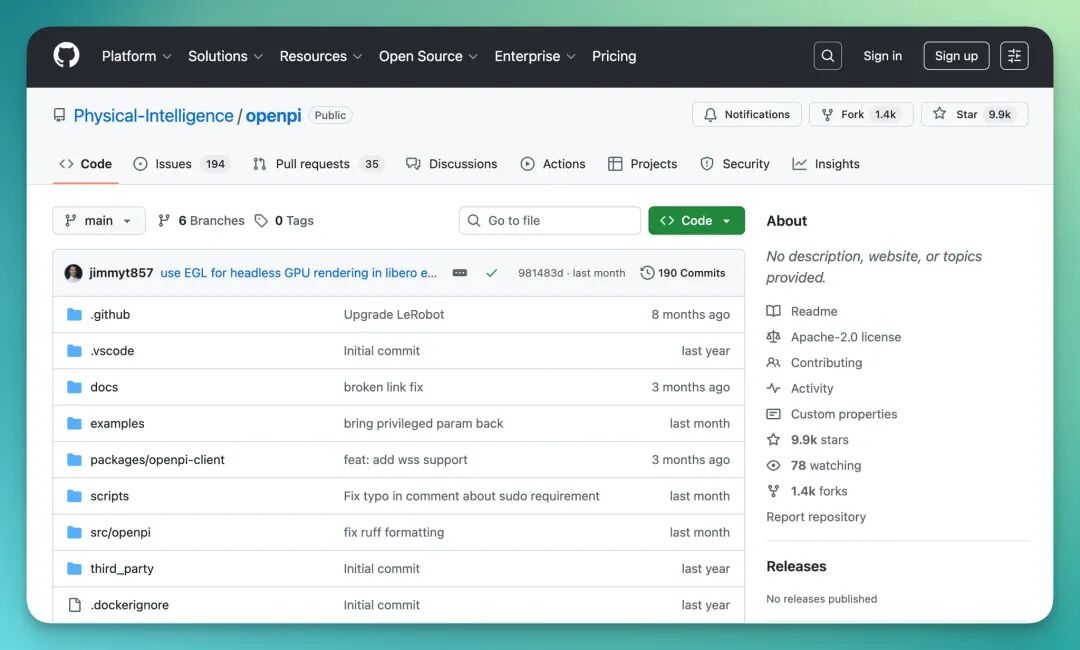
GitHub data tells the story: after π0.5's open-source release, the related repository surpassed 5,000 stars in one week, with over 800 forks (now the entire Pi open-source project has reached 9.9k stars). The developer community's enthusiasm is real.
If you rewind two years, "open-sourcing an embodied model" itself would have been newsworthy. Back then, the consensus was: simply having someone willing to release their model was an act of courage.
But not anymore.
After Pi0.5, open-sourcing itself no longer constitutes an advantage.
What truly creates distance is what you actually deliver. Is it a model reproducible from a paper? Or is it an engineering foundation that others can actually pull down, run, modify, and build on?
These are two completely different kinds of open source.
In the past, many so-called open-source projects were more like "technology attitude displays." The results looked good, but swap in a different robot and everything broke.
Pi0.5 made the intent behind open-sourcing embodied models explicit: VLA should be something that can be engineered, standardized, and further developed.
Under this premise, when we talk about open source now, the bar is naturally raised. Whether you're willing to release something — after Pi0.5 — really doesn't matter that much.
What people care about is:
What you've released, can it already withstand being used and criticized?
Yes, the standards for open source have been ratcheted up too.
Ant Lingbo's open-sourcing of LingBot-VLA happens right at this inflection point. That's why this release is being taken seriously: some are looking at whether LingBot-VLA actually works, while others are waiting to watch the "competition unfold."
The reason is simple: once you actually put something out there, it stops receiving only praise.
The code will be pulled and run. The model will be tested on different hardware. Failure cases will be reproduced. Performance boundaries will be mapped out bit by bit.
At this point, what's in the paper enters the real world — and in embodied intelligence, a field so dependent on real-world feedback, this filtering becomes especially direct.
From this perspective, Ant Lingbo's decision to fully open-source LingBot-VLA at this stage counts as actively "stepping into the ring."
Whether the model is good or not is no longer determined by the publisher. It will be decided by those who use it, those who modify it, even those who've been "burned" by it.
This is a very tough situation. But it's exactly the kind of toughness embodied intelligence needs right now. Because what embodied intelligence fears most is everyone repeating trial-and-error in their own closed systems.
Still, this situation at least ensures one thing: losing approaches will lose fast enough. And for an industry still in its early stages, that's already a rare and valuable efficiency gain.
Finally, when only one company was doing open source, people might have waited and watched: does this path actually work? Is it just a flash in the pan? But when teams from different countries and different backgrounds all start moving in this direction, it suggests the trend might be real.
This is somewhat like what happened in the smartphone industry after Android emerged. Before Android, building a mobile operating system was a very high-barrier endeavor. After Android went open source, a flood of manufacturers entered, and the entire market was activated.
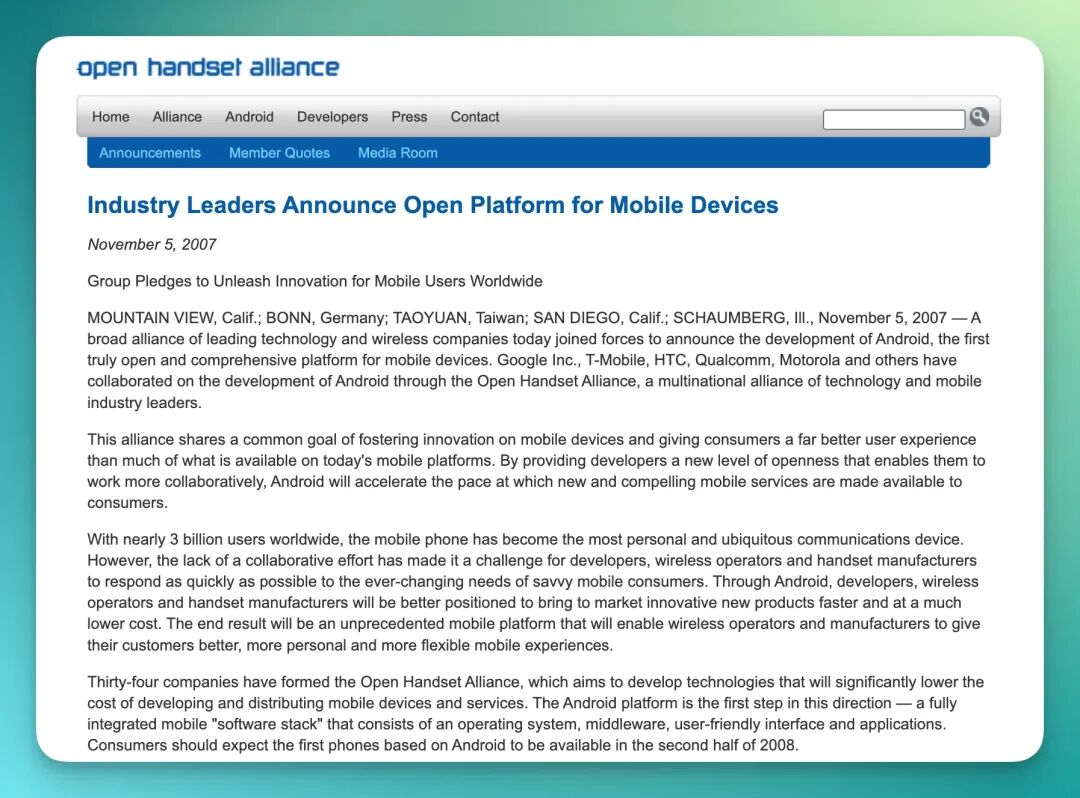
Of course, the robotics industry isn't exactly like smartphones. Hardware-software coupling is tighter, and scenarios are more fragmented. But the broad direction may be similar: when foundational capabilities become accessible, innovation shifts from the infrastructure layer to the application layer.
Ant Lingbo starts answering head-on
Against this "ratcheted-up" backdrop, following its open-sourcing of the high-precision spatial perception model LingBot-Depth, Ant Lingbo released LingBot-VLA on January 27, 2025. This model aligns with Pi0.5's direction: both are general-purpose models, both work across hardware and tasks, both chose open source.
From test results, LingBot-VLA's performance on some real-robot tasks is already on par with Pi0.5, with certain metrics even showing improvement. But more importantly, there's now another serious player on this path.
And Ant Lingbo went a step further.
They didn't just open-source the model itself — they released the code and training toolchain too. You could say they assumed from the start that this model would be modified, used, and failed with by others.
This is a very engineering-minded, very pragmatic attitude.
Because in today's embodied intelligence field, the real value of open source lies in "how many detours you can save others." When open source starts playing this role, it becomes a filtering mechanism.
What works gets kept; what doesn't gets eliminated quickly. And this is precisely one of the things embodied intelligence needs most right now.
This is a positive signal.
Next, let's look at whether LingBot-VLA's performance can "hold up" to the open-source standards mentioned above.
For a long time, embodied intelligence deployment has been stuck on one problem: different types of robots — single-arm, dual-arm, humanoid — typically require separate data collection and model training.
This "one robot, one dedicated model" approach means high costs, with capabilities that can't be shared across different robots.
LingBot-VLA achieves "cross-embodiment" — meaning the same model can be used on single-arm robots, dual-arm robots, and humanoid robots, without separate training for each hardware type.
They used roughly 20,000 hours of real-world data for pre-training, covering nine mainstream robot configurations. Even when tasks switch or environments change, the model maintains relatively stable success rates.
On the RoboTwin 2.0 simulation benchmark's 50 task scenarios, Lingbot-VLA's manipulation success rate improved by 9.92% over Pi0.5.
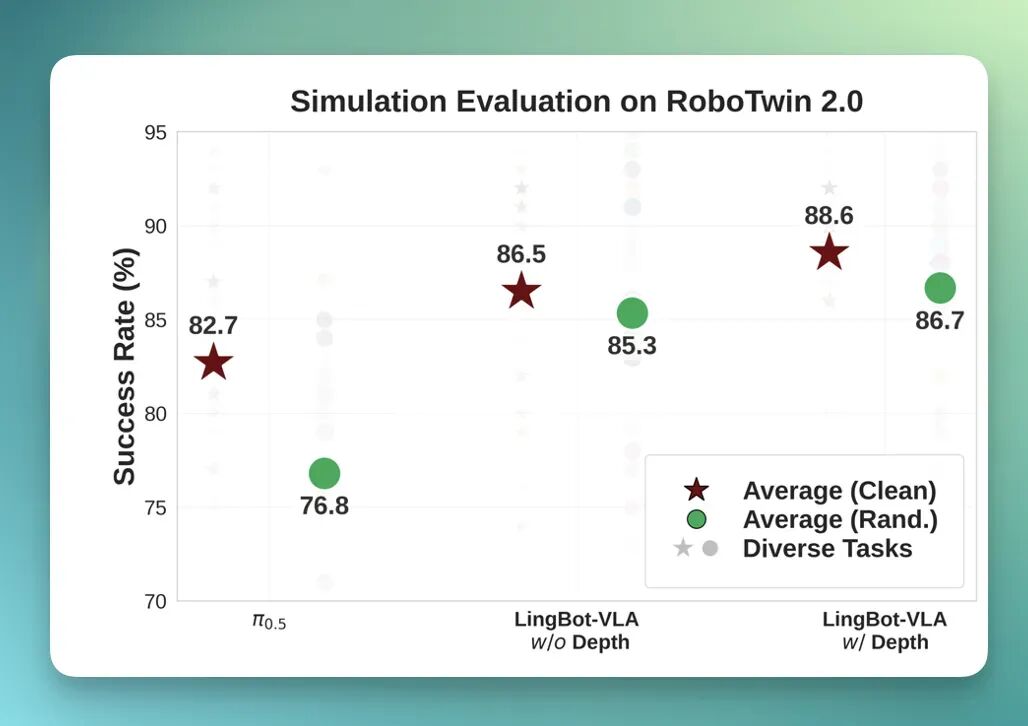
Sounds pretty good. But let's be honest: "general" doesn't mean "universal."
Here are some examples.
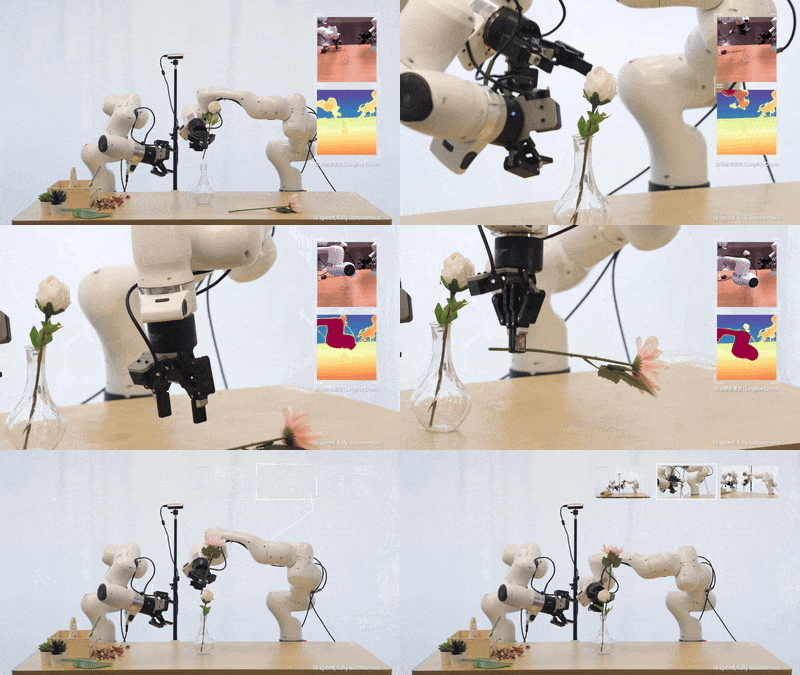
Ant Lingbo demonstrated a video of a dual-arm robot arranging flowers in a transparent glass bottle. This task is genuinely difficult: glass is transparent, making it hard for ordinary depth cameras to perceive accurately.
Flower stems are soft — wrong pressure and they bend. The bottle opening is small, and inserting the second stem may require avoiding the first.
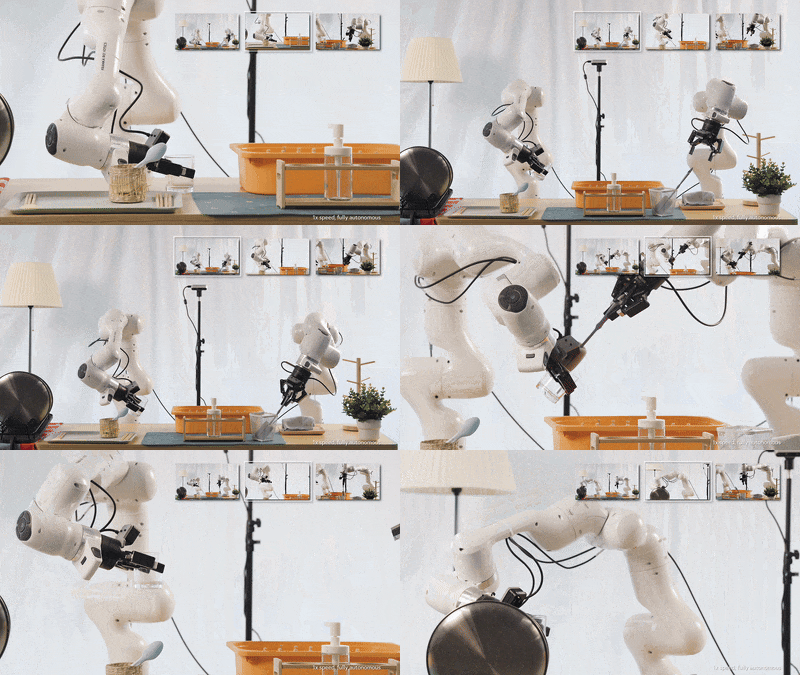
In the "tableware sorting" case, I noticed an interesting detail: after the left arm picks up a plate, the right arm squeezes in some dish soap and wipes it clean with a cloth:
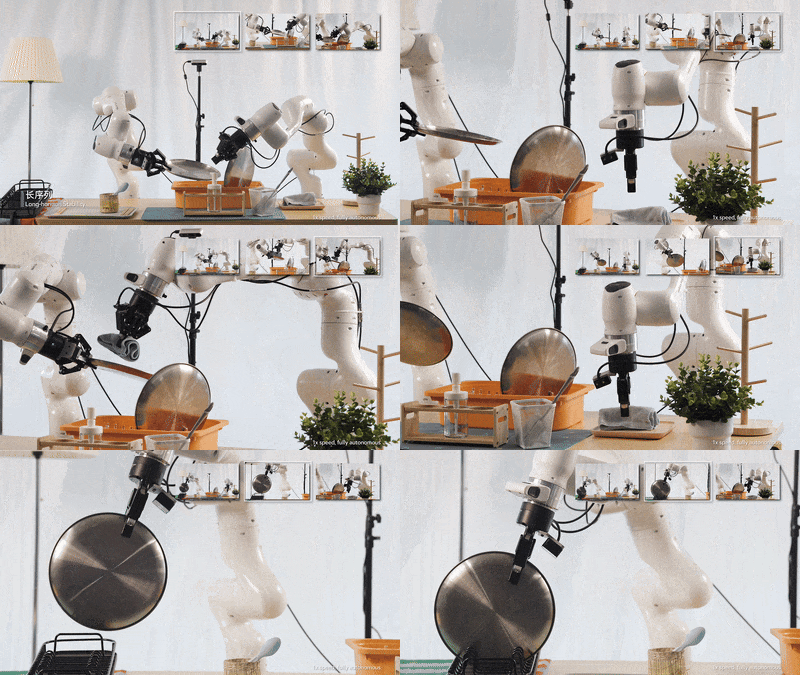
Even in more "delicate" scenarios, like picking up a glass, brushing it clean, and putting it back:
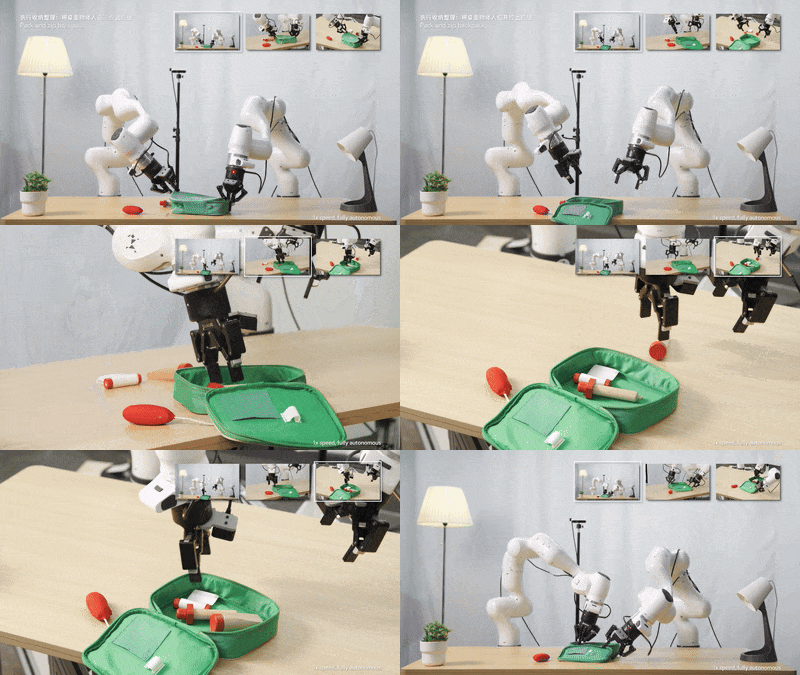
Or this one, where the right arm holds open one side of a pencil case while the left arm identifies objects on the table and puts them inside:
Achieving this level represents a genuine technical breakthrough.
Beyond performance, LingBot-VLA also shows clear improvements in data efficiency and compute efficiency. For instance, to reach the same task success rate, its training efficiency reaches 1.5–2.8× that of mainstream frameworks like StarVLA and OpenPI.
But what about a different scenario?
This is the so-called "long-tail problem." Real-world scenarios are infinite; there will always be situations the model hasn't seen and can't handle.
Another issue: from demo to actual mass production, there's still a long road.
We need reasonable expectations for technological progress.
General open-source models are indeed an important direction — they can substantially lower the barrier to entry and let more people participate. But they can't solve everything.
Take Tesla. Elon Musk's approach is vertically integrated: build the robot Optimus himself, build the model himself, build the application scenarios himself. This is the closed-loop approach.
Musk's plan is to use Optimus humanoid robots for Tesla factory work, handling all hardware and software in-house. At the 2024 shareholder meeting, he said future Optimus numbers could exceed the human population. That's a grand vision — whether it materializes is another matter — but it at least shows the closed-loop approach has its own logic.
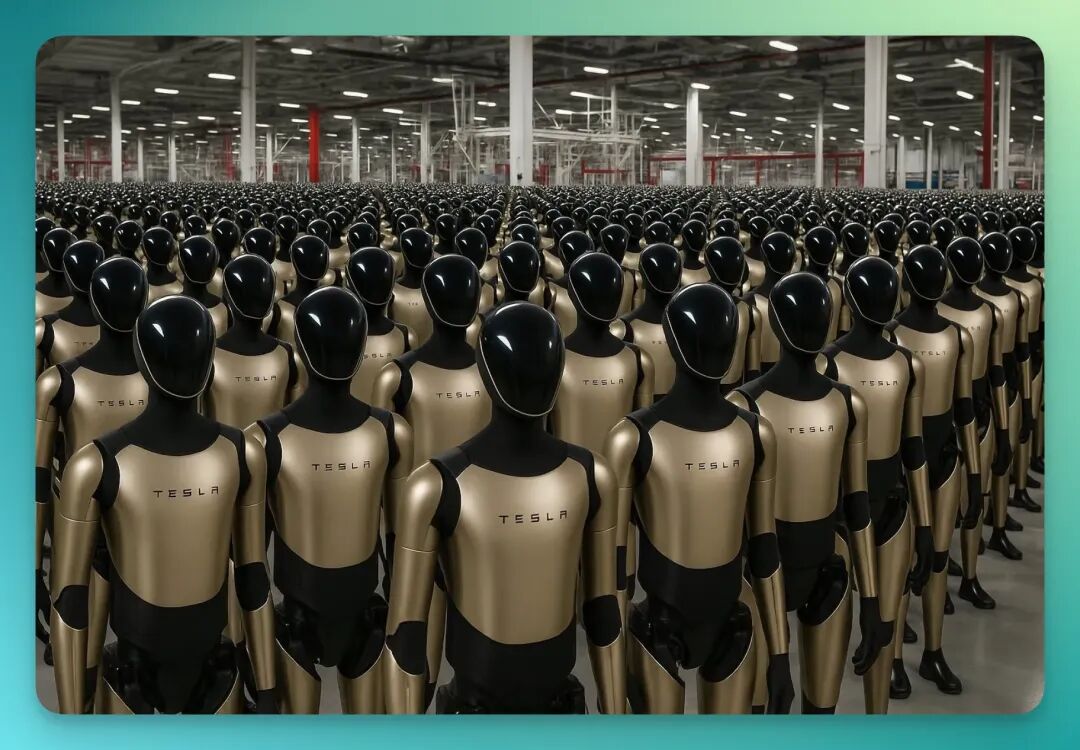
Of course, companies like Figure and Boston Dynamics are all walking their own paths.
There's no right or wrong between these two routes; each has its rationale.
For a long time, open source and closed source, general and specialized, will likely coexist.
This is why Ant Lingbo open-sourced not just the model but the post-training toolchain too. The message is clear: I'm giving you the foundational capabilities, but in your own scenarios, you'll still need to adapt based on actual conditions.
This is probably the more pragmatic attitude.
Hardware companies may embrace open-source models more readily. Rather than spending years building a model that might not even outperform others, better to use open-source solutions to quickly gain foundational capabilities and focus energy on hardware differentiation and scenario deployment.
Ant Lingbo has already done collaborative validation with robot manufacturers like Xinghai Tu and AgileX, running successfully in scenarios like warehouse sorting and outdoor inspection.
Vertical application companies may be facing a wave of opportunity. Previously, building robot applications required understanding hardware, algorithms, and scenarios — a high bar. If foundational capabilities become directly callable, the barrier to building applications drops, and more people will enter the field.
An industry snapshot from early 2026
At this point in January 2026, if we were to take a snapshot of the embodied intelligence industry, it would look roughly like this:
[1] On the hardware level, humanoid robot costs are falling rapidly.
Unitree's G1 is priced under 100,000 RMB, AgiBot's Expedition A1 is moving toward mass production, and Vita's VBOT has reached "thousand-yuan phone" territory. These products still have distance to go before being truly usable, but at least the question of "whether they exist" is being resolved.
[2] Models are starting to be compared.
In the past, it was hard to judge whether a model "actually worked" because everyone's data, hardware, and evaluation methods differed.
Now, with the emergence of general-purpose VLA models like Pi0.5 and LingBot-VLA, the industry finally has benchmarks that can be repeatedly compared against.
Everyone is finally answering the same exam paper. Who does well and who doesn't — it's clear, it's blunt.
While you accept everyone's "likes," you also have to bear the risk of being "blocked." This will substantially change the pace of research and engineering.
[3] On the application level, some vertical scenarios are starting to work.
Warehousing and logistics, industrial manufacturing, commercial services — robots in these domains are already genuinely working and creating value. While still far from "a robot in every home," they're no longer just lab demos.
This cross-section of the present itself illustrates one thing: this field has moved from the imagination phase into the phase of real friction.
What happens next won't be that fast, and certainly won't be that "clean" — getting your hands dirty is inevitable.
But it will be closer to results.
🚥
Back to the original question: who will become the Android, or the OS, of the robot era?
Honestly, it's too early to answer this.
Things that people previously thought were very difficult — one model that works on different robots, doing different tasks — are now being done by someone, and they're willing to open-source it for others to use.
That itself is a signal.
Regardless of who ultimately wins or loses, or whether there's even a winner or loser at all, this exploration will push the entire industry forward.
As Ant Lingbo CEO Zhu Xing said: "For embodied intelligence to move toward large-scale application, efficient embodied foundation models are needed — this determines whether it's usable and whether it's affordable."
Nothing fancy in that statement, but it gets to the heart of the matter.
We can wait and see.