ByteDance's Pippit Quietly Tops Product Hunt | AI Marketing Startups' "Bloodbath" Begins

The tech giants' reach keeps getting longer.
ByteDance, ever the master of integration, has pulled off another major move.
👦🏻 Author: Jingshan
🥷 Editor: Koji
🧑🎨 Design: NCon

When I saw that ByteDance's new AI product — Pippit AI[1] — had quietly climbed to #1 on Product Hunt's[2] weekly rankings, one line came to mind, from Crossing's year-end recap Revisiting a Year of Fierce AI Foundation Model Battles:
The elephant can dance, and ByteDance keeps on dancing.
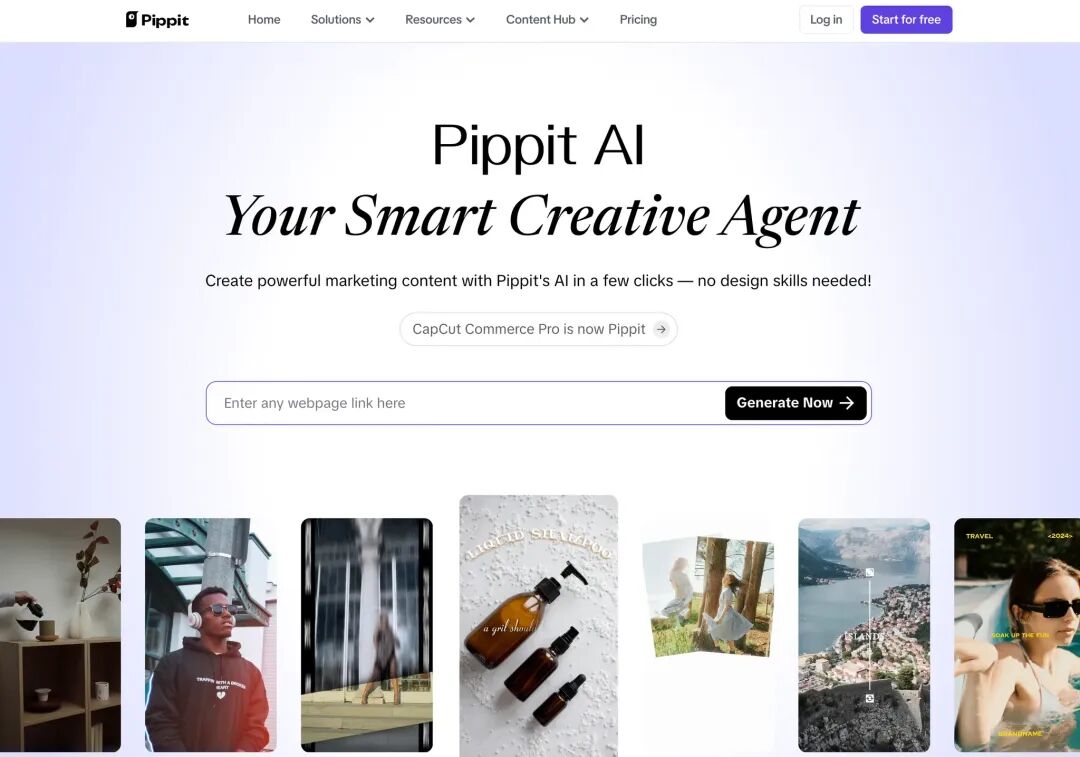
Pippit integrates a rich array of functional modules. I believe every founder building AI marketing products felt a chill — the features they pride themselves on are merely subsets of Pippit, facing the prospect of being replaced by users.
Historically, "do-it-all" products and "small but beautiful" vertical solutions have always coexisted, each with their own strengths. But there's no denying that a "do-it-all" product like Pippit — with its silky-smooth user experience plus ByteDance's growth engine — tends to eat away at the living space of vertical entrepreneurs.
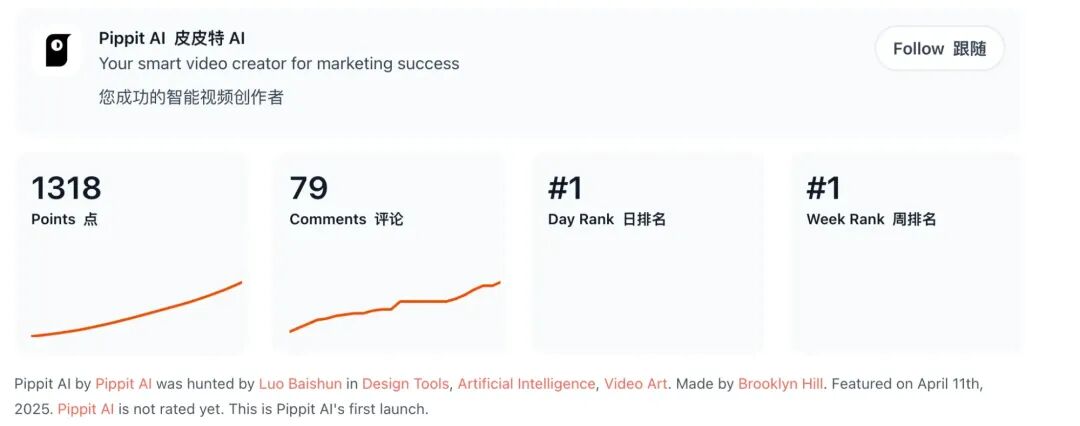
What does Pippit hitting #1 on Product Hunt's weekly rankings actually mean?
While gaming Product Hunt rankings through growth hacks and coordinated upvoting has become fashionable, Product Hunt remains the most credible new product leaderboard to date, and a bellwether for innovation trends.
So Pippit's ascent to the top carries real weight.
Pippit has deep roots. Its predecessor was Commerce Pro by CapCut, ByteDance's CapCut team-built product specifically for cross-border merchants, and that predecessor was positioned as a content creation product serving marketing needs in the e-commerce space.
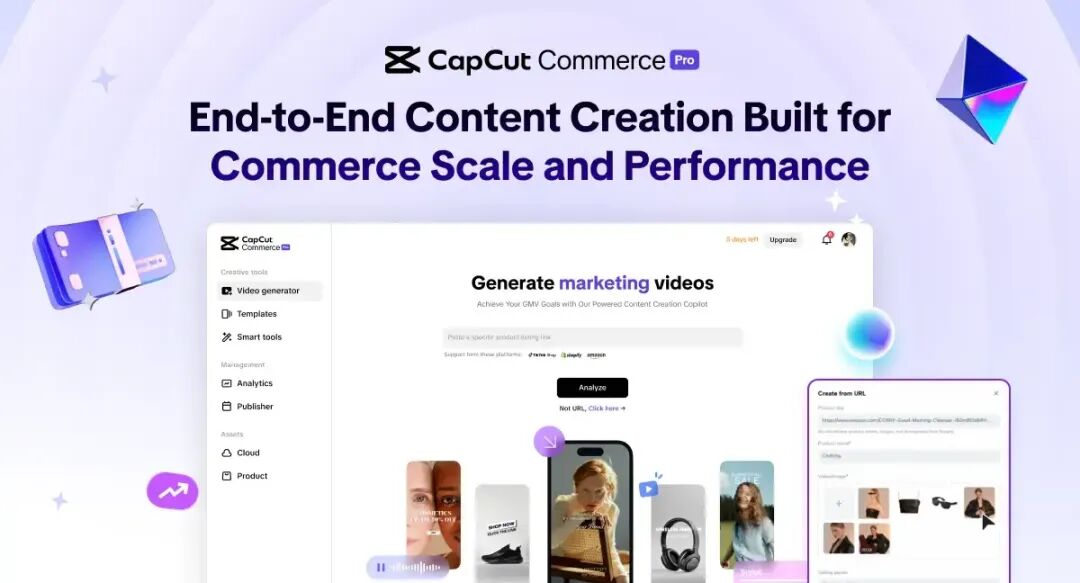
So it's not some isolated product that appeared out of nowhere, but rather another move by ByteDance's CapCut ecosystem to deepen its AI content creation strategy.
As for why it was rebranded and relaunched, perhaps it's because Pippit carries ByteDance's ambitions in the AI race.
CapCut was once described by an a16z partner as already one of the world's largest AI products, but in users' minds, CapCut and AI are related — just "not that related."
This time, ByteDance spun it out as a standalone product, aiming to build a more independently branded AI product identity.
🚥
Crossing took Pippit for a hands-on spin, and we found it essentially fuses the signature features of top-tier products across nearly every AI marketing domain: an upgraded Link to Video, AI avatars, a product image studio, and more. It has become an AI-powered ultimate marketing tool frankenstein.
Moreover, we found its positioning sharper and more precise than its predecessor: a purebred AI product squarely aimed at the marketing content creation market.
Pippit AI Is Already Disrupting Marketing Content Creation
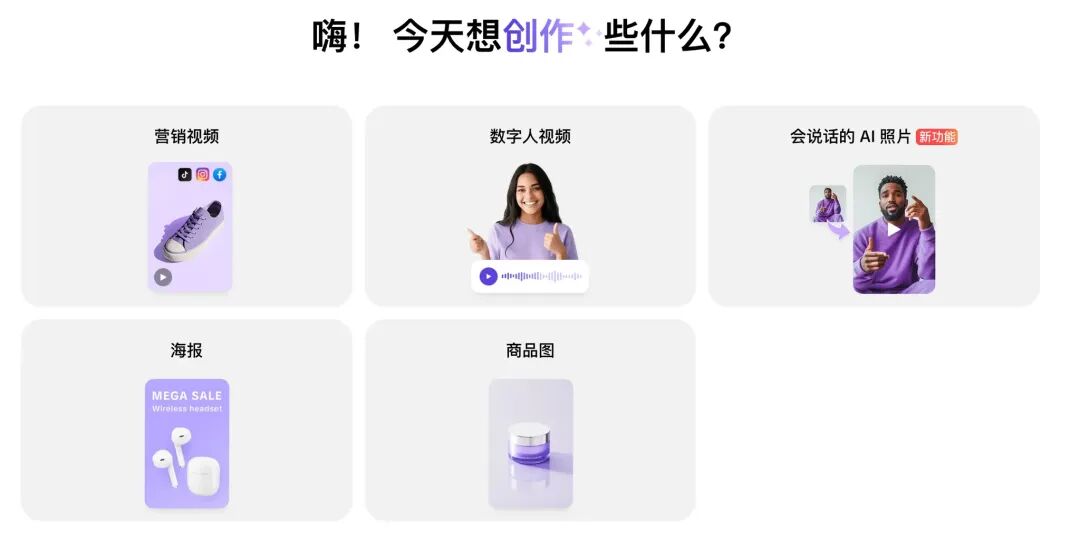
1) The Ultimate Frankenstein
After hands-on testing, my first impression was:
Pippit = VidAU / Creatify + HeyGen + LinkFox + Pipiads / Echotik?
ByteDance, ever the master of integration, has used Pippit AI to rapidly catch up with AI marketing tools scattered across various domains, building a complete AI marketing workflow based on its predecessor product.
Here's Crossing's first-hand experience:
Link to Video: One-Click AI Marketing Videos
Link to Video refers to "input an e-commerce product link, automatically generate a promotional video" — during which the platform typically provides AI templates and virtual presenters to showcase the product.
This is also one of Pippit's biggest selling points to users: it can parse product information from links on "almost any website."

Truth is, plenty of vendors have been doing Link to Video for a while. In this functional niche, VidAU[3] and Creatify[4] — two one-click video marketing tools — are Pippit's direct competitors.


However, most TikTok-facing marketing content tools on the market can only recognize product links from a handful of major e-commerce platforms.
Pippit AI's predecessor Commerce Pro by CapCut was the same, but after the product iteration, its supported products became far more generalized.
So we devised an "unconventional" test: we treated the OpenAI website itself as a product, fed www.openai.com into each product, and saw whether they could one-click convert it into a product marketing video?
Unfortunately, basically every platform failed to recognize it — only Pippit could handle it:
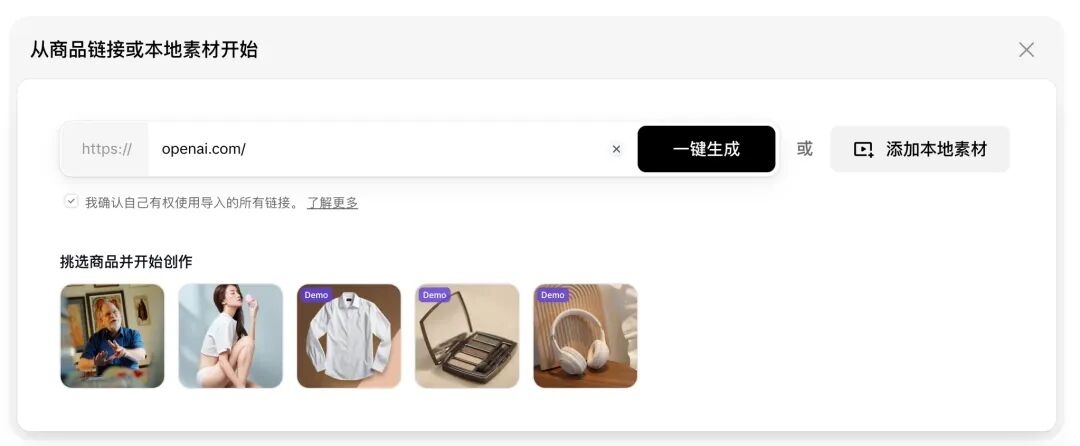
Once Pippit finished parsing the product link and we clicked "one-click generate," a marketing video customization panel loaded with elements popped up. And it bluntly displayed the materials Pippit had parsed from within the OpenAI website, plus its understanding of OpenAI's products — quite accurate.
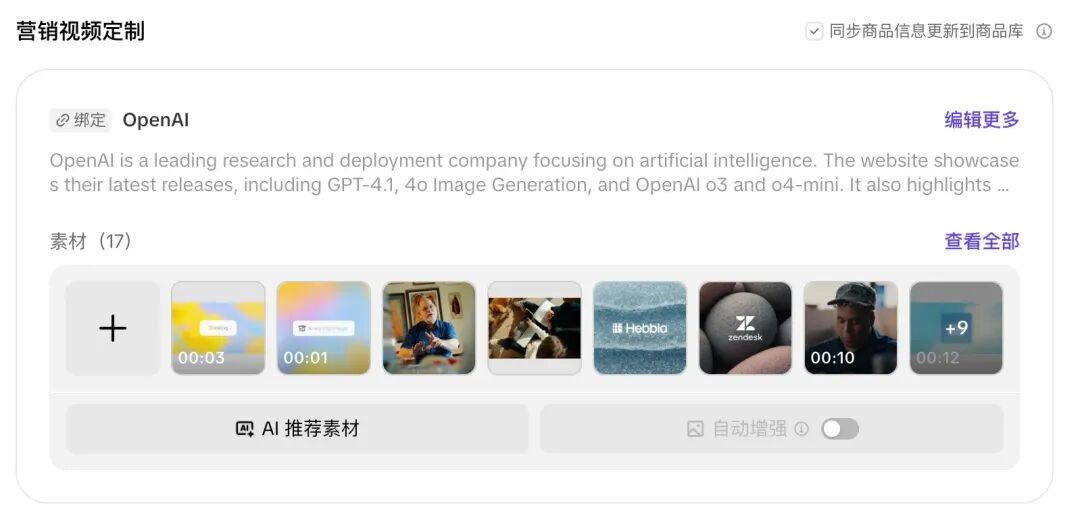
Beyond the basic AI marketing video generated directly, we could also manually edit more items: key selling points, holiday marketing, discounts, target audience, video type, plus avatar modules and voice modules in video settings.
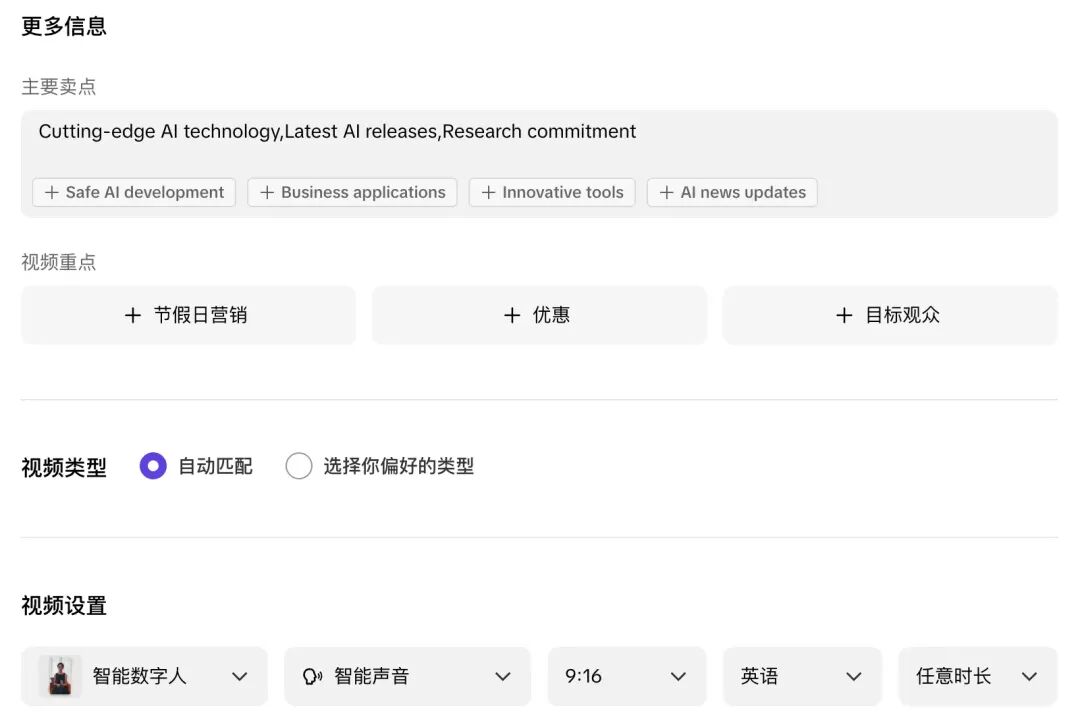
After configuring all the content modules you want to change, click generate, and in under a minute, 10+ styles of TikTok-style short video ads are ready.
Covering several of TikTok's currently hottest formats: selling point explainers, TikTok trending, conversation style, conversation reversal, text overlay — all one-click generatable.
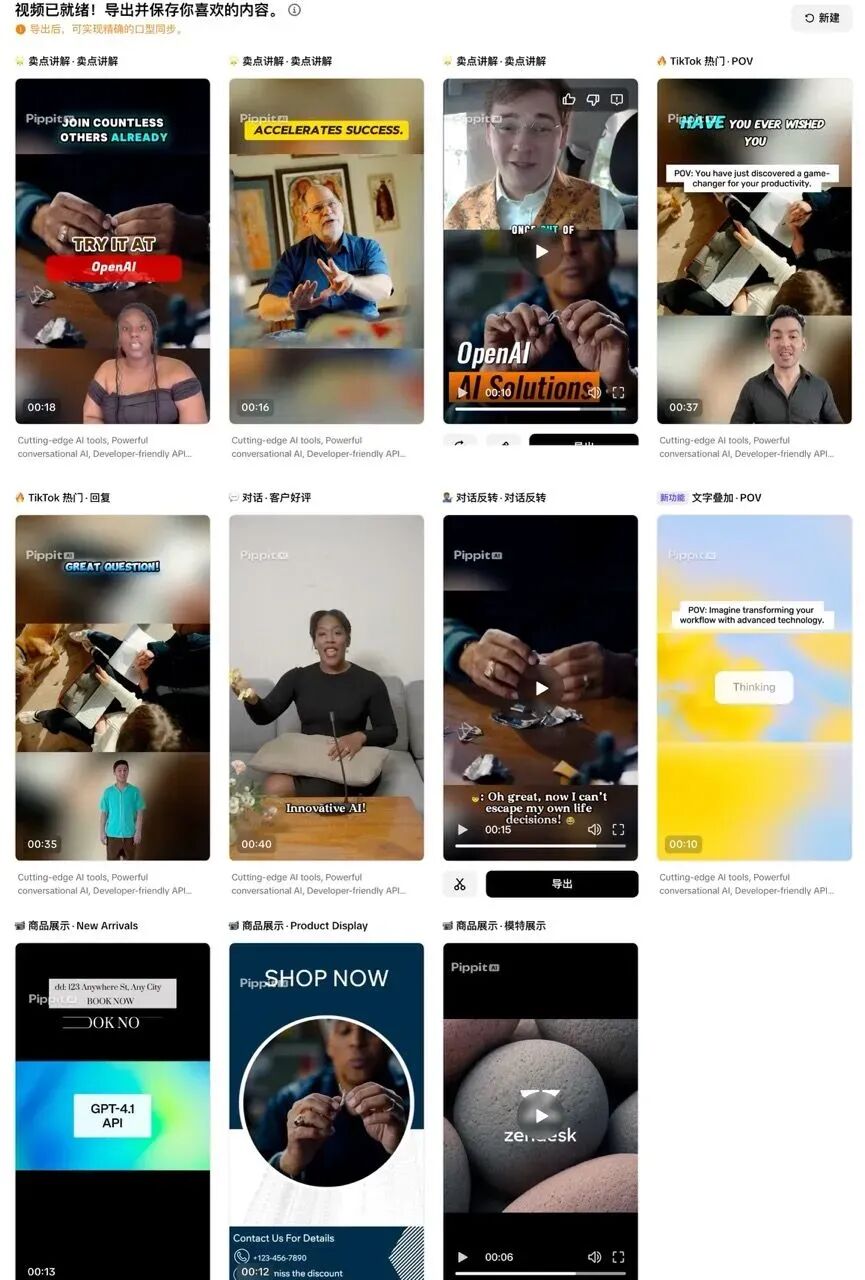
It's fair to say that by this step in Pippit's one-stop AI marketing workflow, the basic marketing video functionality is essentially complete, and the time consumed is typically only about 10 minutes.
Beneath each generated video sits a one-click quick video edit function, and from this entry point, users enter CapCut's home turf.

From this point on, things start feeling familiar.
Deeply integrated into Pippit, CapCut offers users rich re-customization options: nearly a hundred subtitle styles, dozens of avatars, voices, materials, text, and more.
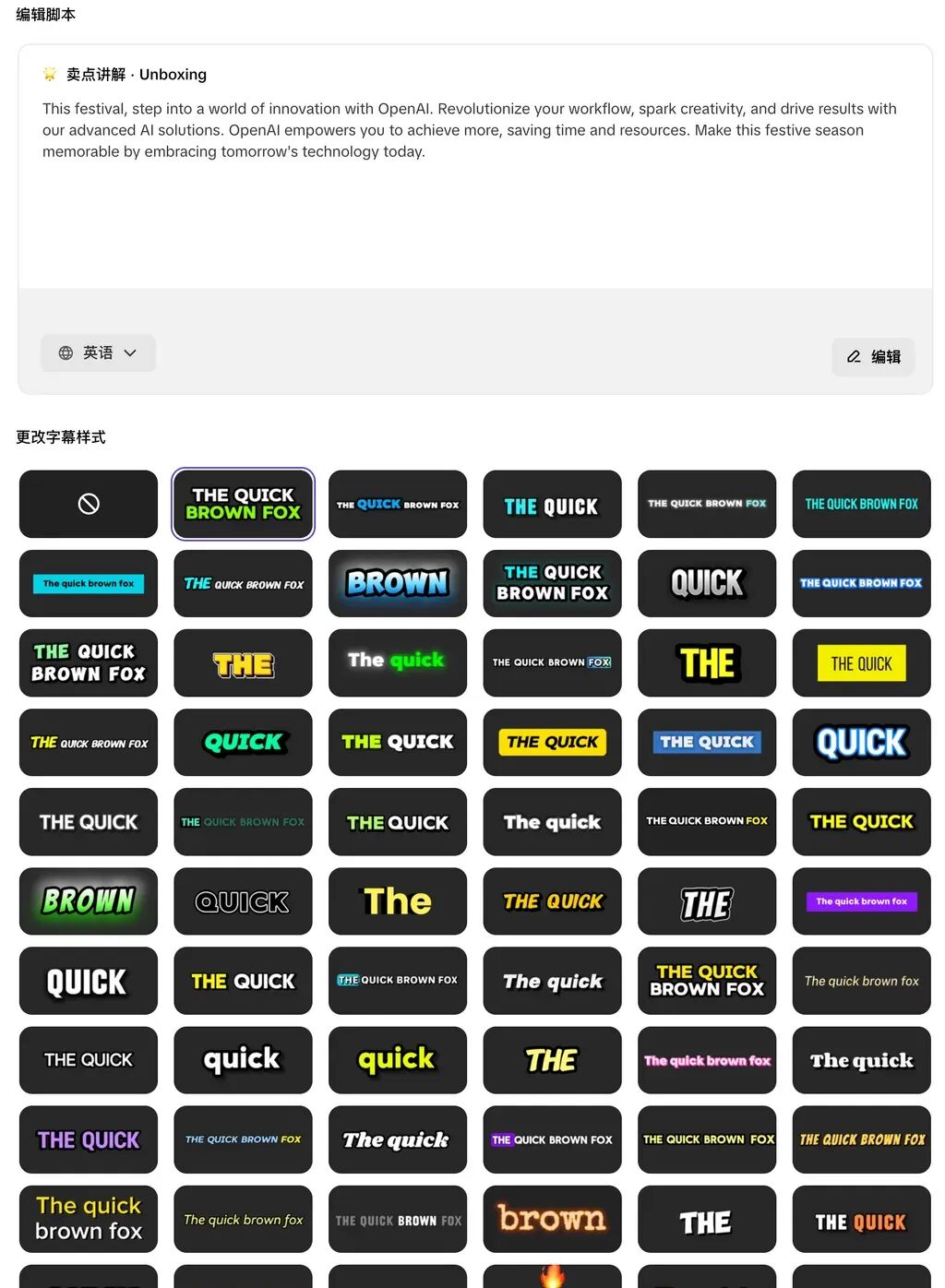
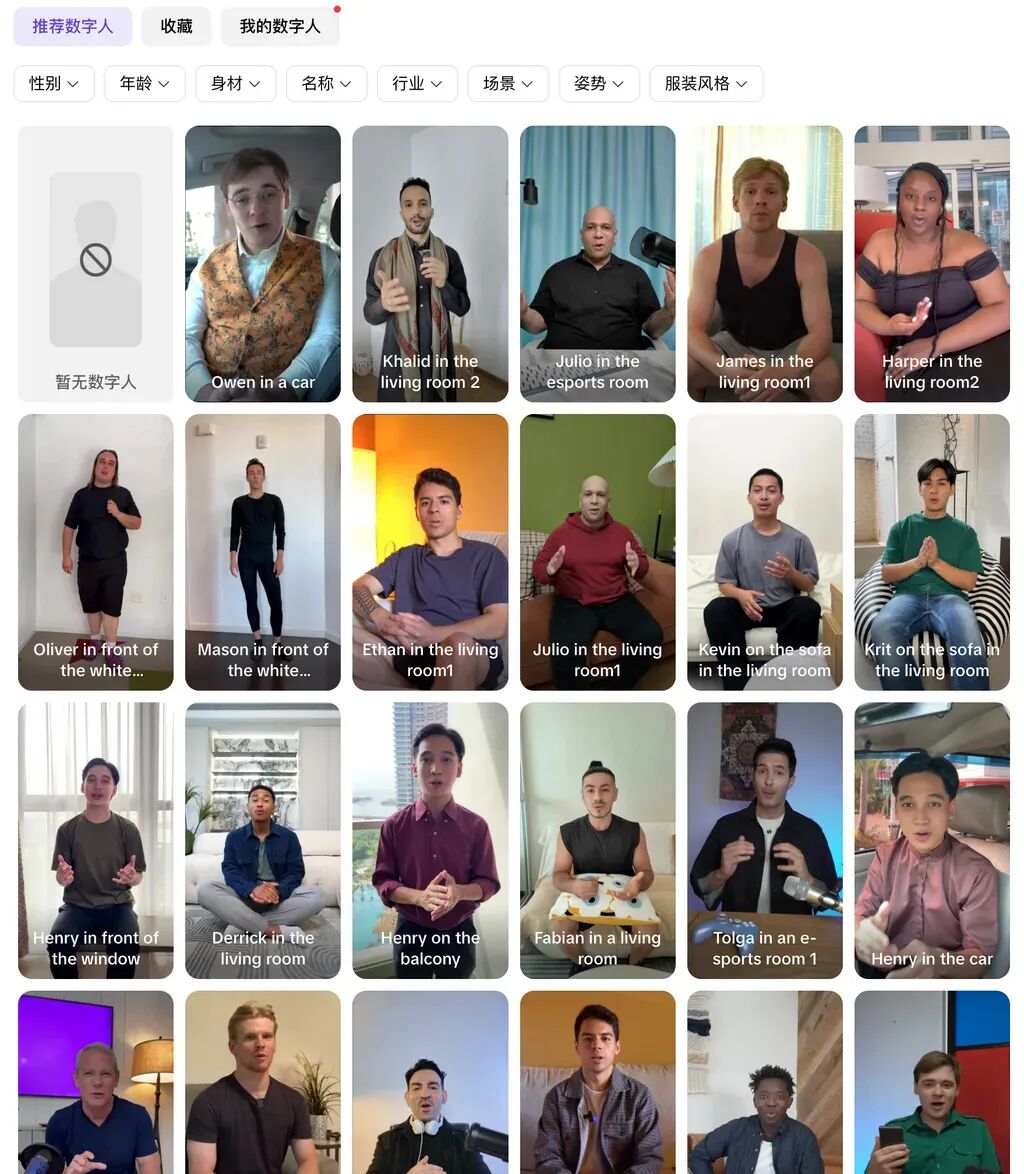
If the quick edit function doesn't offer enough depth, the "Edit More" button in the top-right of the operation bar connects to CapCut's professional precision editing, for further video refinement and adding more marketing materials.
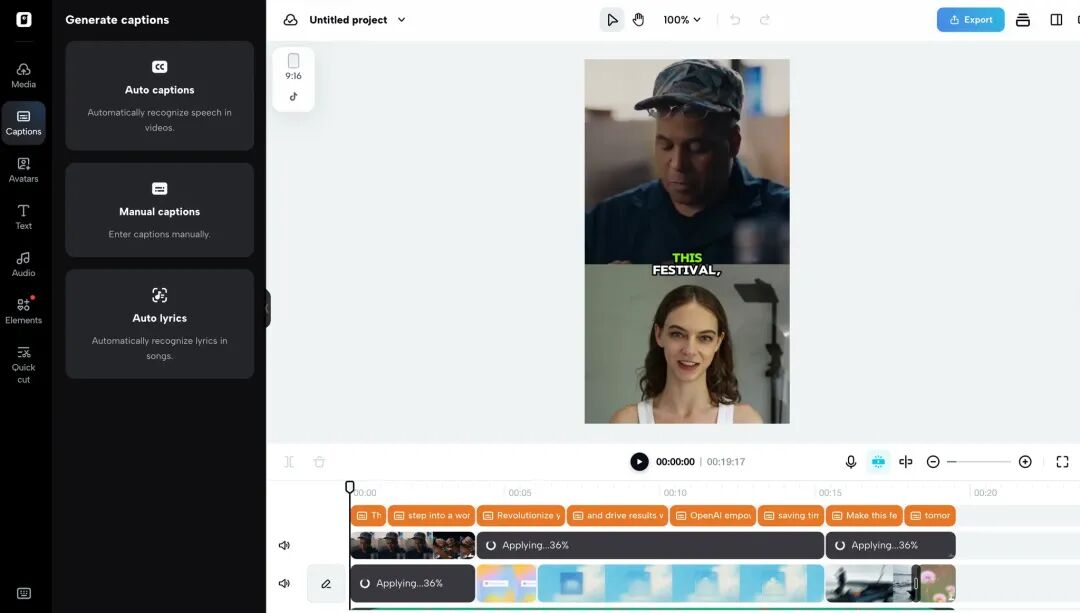
At this point, the basic Pippit AI video marketing workflow starting from Link to Video is essentially complete.
AI Product Image Studio
E-commerce has massive demand for AI-generated content, with AI image generation and customized product photos standing out in particular.
Various AI startups are exploring this space too, but market differentiation is minimal and moats are virtually nonexistent.
So ByteDance naturally welcomed this "classic functional module" with open arms.
In this domain, LinkFox[5] is a relatively well-executed cross-border AI product image workstation, bundling model photos, product photos, commercial design, scene variation, and numerous other functions to help sellers rapidly produce main images, detail images, and title descriptions.
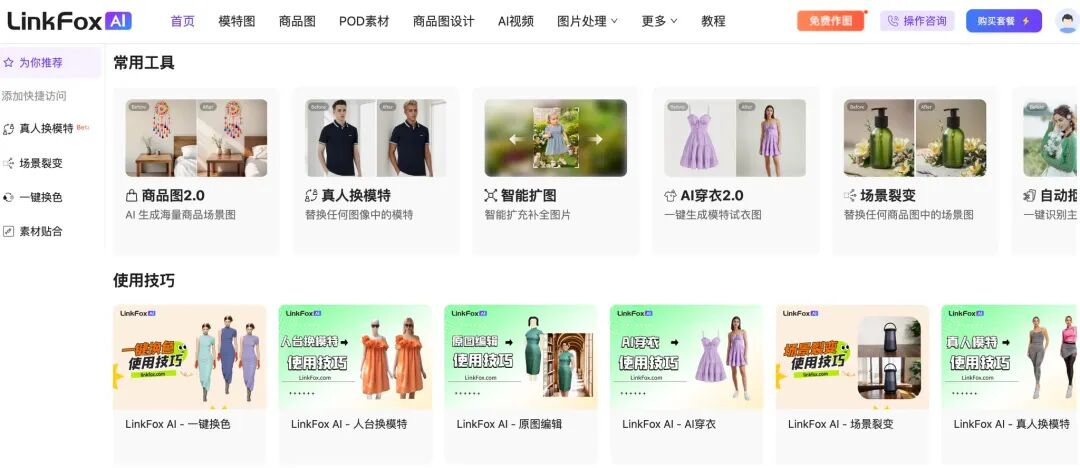
LinkFox has already accumulated tens of thousands of paying seller users, proving the value of AI product image workstations in cross-border e-commerce — a persistent demand that is both ordinary and inevitable in the AI era.
As a latecomer, Pippit naturally chose to rapidly follow suit, integrating the AI product image studio module from its previous version.
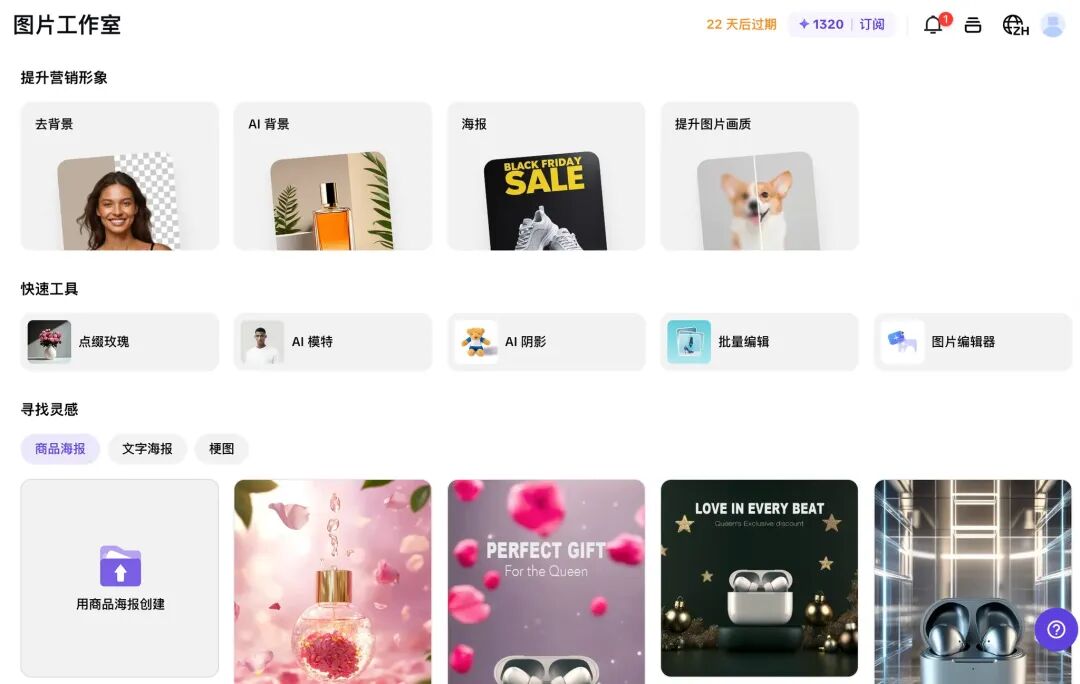
In the image studio, Pippit provides various product image design functions from basic editing to advanced design, quick tools, and abundant inspiration templates, so cross-border small merchants can rapidly produce images.
AI Avatars
Over the past two years, the hottest and most stable AI video generation platform in the avatar business has been HeyGen[6].
It allows users to input text and one-click generate videos featuring AI virtual presenters, used for product introductions and training courses.
Cross-border e-commerce merchants doing AI avatars probably know it all too well. Even now, short video platforms are everywhere selling HeyGen courses.
HeyGen's strengths lie in realistic human likenesses and voices, offering 100+ avatar templates and 175+ different voices and speech styles.
By comparison, Pippit also integrates avatars and multilingual capabilities.
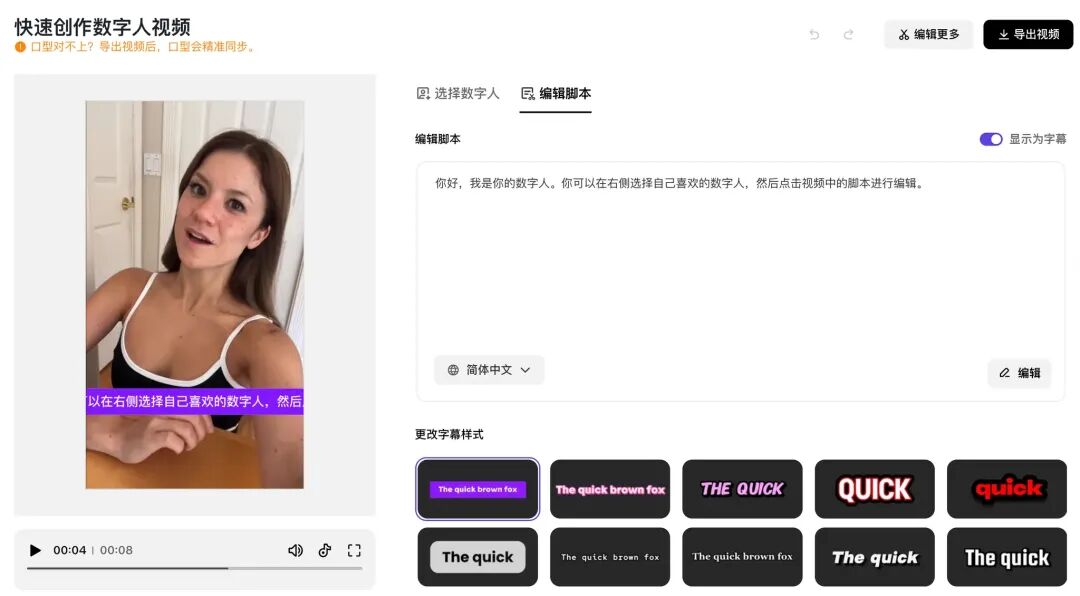
But its pre-set figures and voices are currently somewhat fewer than HeyGen's, and the human-likeness effect may lag slightly.
However, HeyGen has its limitations: it lacks e-commerce DNA.
For instance, it mainly outputs talking-head videos, lacking complex visual editing and layout. Users wanting to add other materials or design layouts to videos typically need post-production editing.
Moreover, in the "short, snappy" marketing videos e-commerce platforms demand, AI avatars don't actually need ultra-high fidelity — poses and visual effects that match short video platform user habits are often the fastest way to grab eyeballs.
And Pippit, backed by the formidable CapCut, seamlessly connects to TikTok. For example: it offers more comprehensive editing capabilities; can automatically add product shots, subtitle animations, and marketing elements; can preview directly on TikTok; and its avatar templates are basically ready to use out of the box.
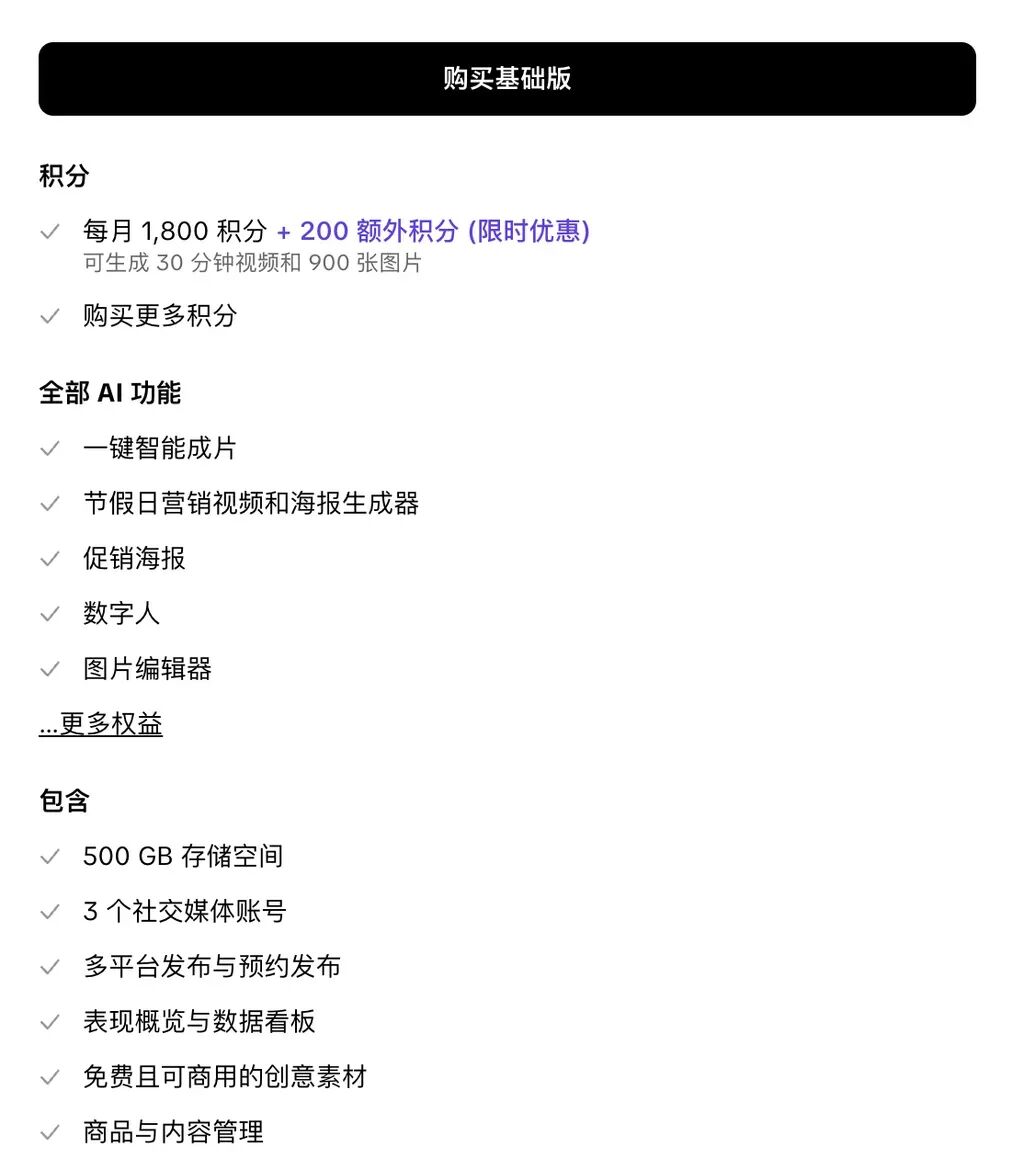
Most crucially: it's cheap. Pippit's subscription plan covers all AI features for around $25, while HeyGen — just one of its functional subsets — costs at least $29 monthly for the basic tier.
Inspiration Templates / Trending Product Following
As must-have product selection tools for cross-border merchants following trending bestsellers, Pipiads[7] / Echotik[8] are practically mandatory.
They provide a complete online product selection workflow, including: searching hot-selling products, analyzing TikTok ads, advertiser analysis, precision filtering, hot product information delivery, and more.
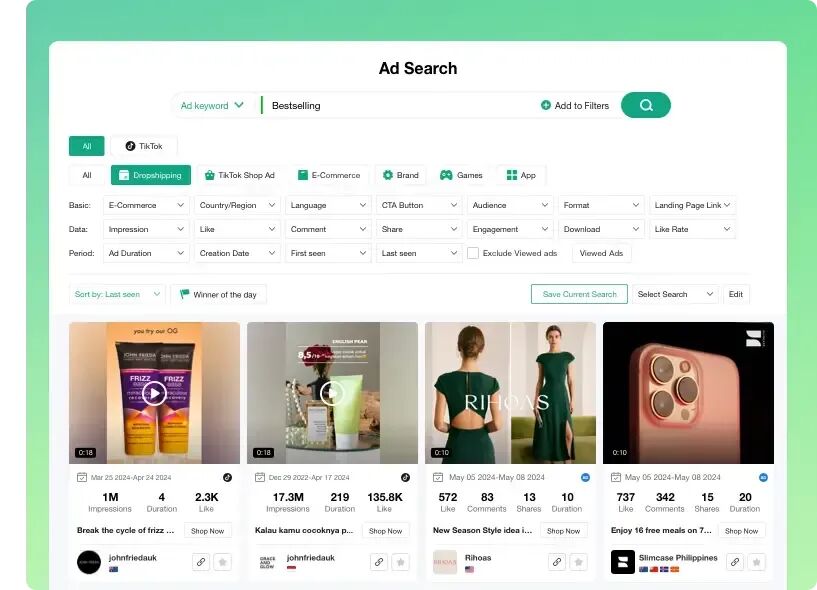
While Pipiads / Echotik are intelligence tools, focused on market research and competitive analysis, not directly generating content, whereas Pippit is a creation tool, focused on content production and publishing — Pippit's inspiration module clearly has a bit of a "borrowing from the veterans" flavor.
In the Inspiration Storm and Inspiration Hub modules, merchants can automatically receive the latest finished marketing content from other users daily, with templates provided for rapidly producing promotional materials.
However, Pippit's inspiration module is still in embryonic form. Ad exposure volume, days running, heat scores and other product selection data haven't been incorporated yet; it currently remains at the template functionality stage. (Of course, it's also possible ByteDance officially finds it "inconvenient" to directly provide this data, leaving third parties to scrape and re-interpret it.)

Beyond these AI video marketing creation segments, Pippit also features a data analytics platform: data dashboard and social media publishing functions.
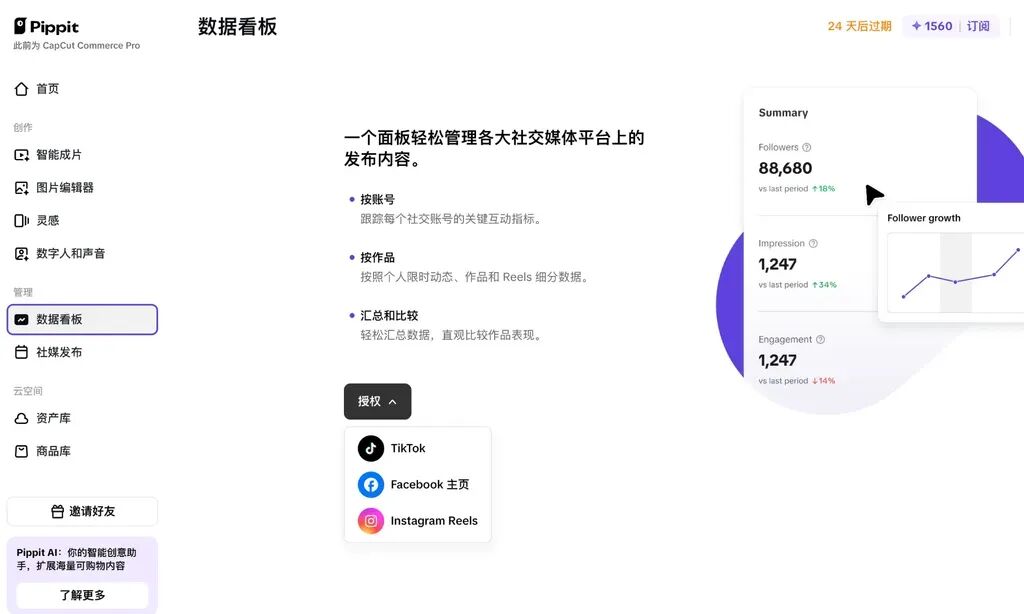
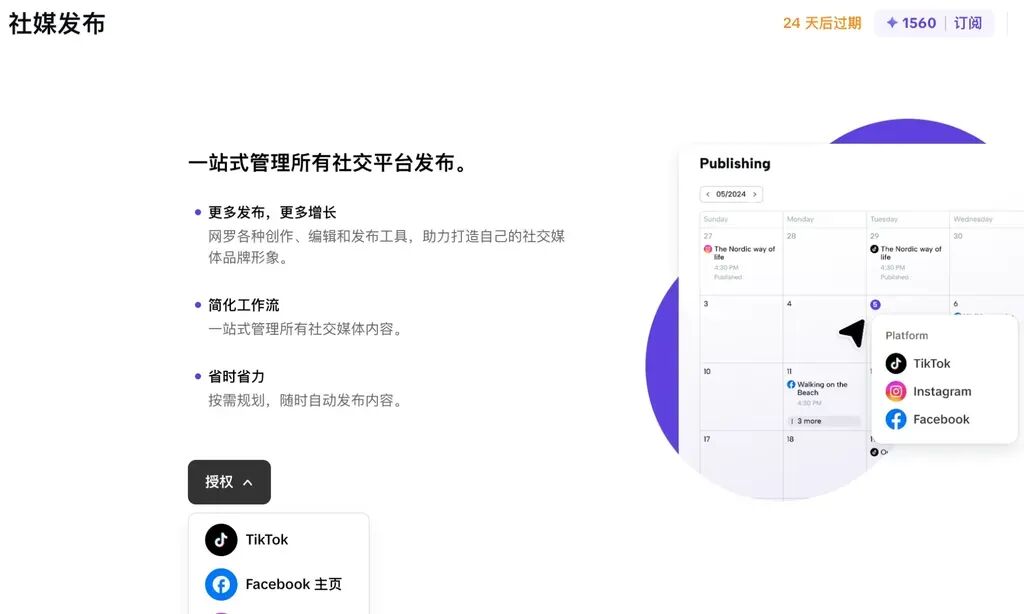
The current data dashboard and social media publishing are roughly akin to a "super-sized WeChat Channels backend", offering brief data analytics around content creation and publishing.
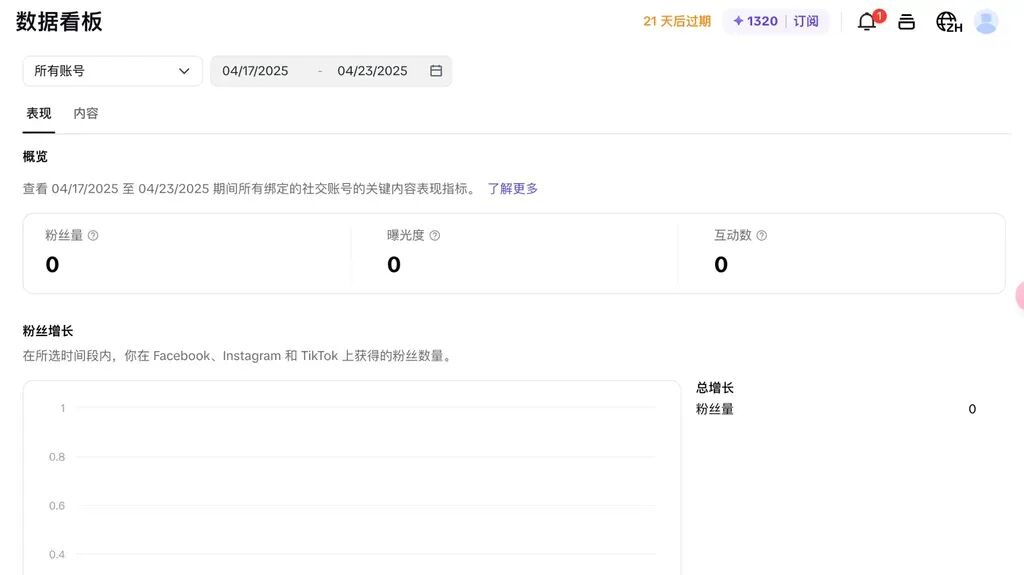

It's fair to say that by integrating video creation and data analytics as two core functions, Pippit aims to offer users a data-driven AI marketing agent, a true "creative partner."
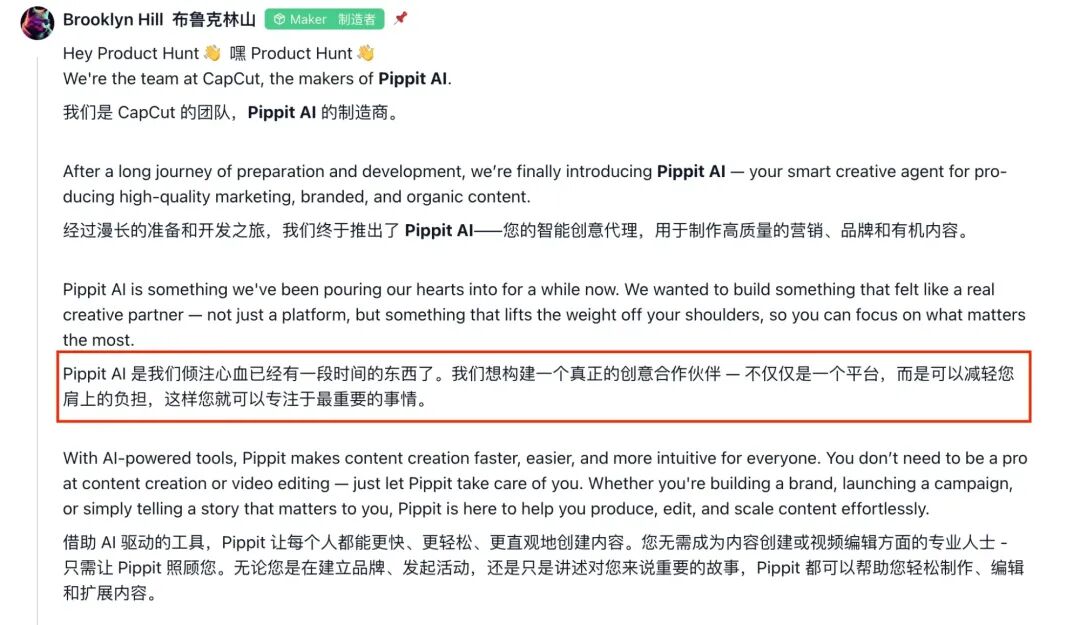
For teams hoping to long-term focus on cross-border business, stably, controllably, and scalably operating content has always been a core pain point, and Pippit covers nearly all the functions small merchants need, sparing them the awkward scenario of "constantly switching between platforms, constantly renewing memberships."
"Basic classic must-have features + simple and usable + affordable subscription = Pippit" — this is the mandatory bundle ByteDance offers cross-border small merchants.
2) Dual Blessing of Technology and Ecosystem
Beneath the Product Hunt #1 announcement tweet, Pippit's marketing lead revealed one detail: they use a mix of leading third-party models and internal models (i.e., Doubao, Dreamina, and other models).

Overall, Pippit AI's technical path can be summarized as: using ByteDance's self-developed foundation models and SOTA market models as the base, fusing CapCut's professional video modules, and seamlessly connecting to TikTok's resource library, thereby completing an ultimate integrated workflow.
What this reflects is ByteDance's years of accumulation in multimodal content creation: both CapCut's audio-video processing capabilities, and Doubao and Dreamina's generative creation capabilities.
Pippit packages these capabilities into an easy-to-use product interface, making users prone to create and skilled at creating.
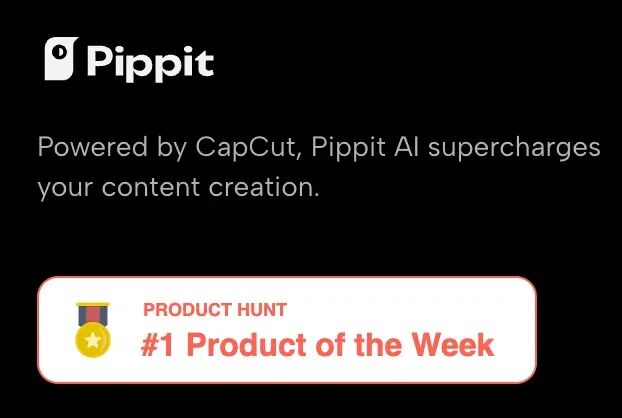
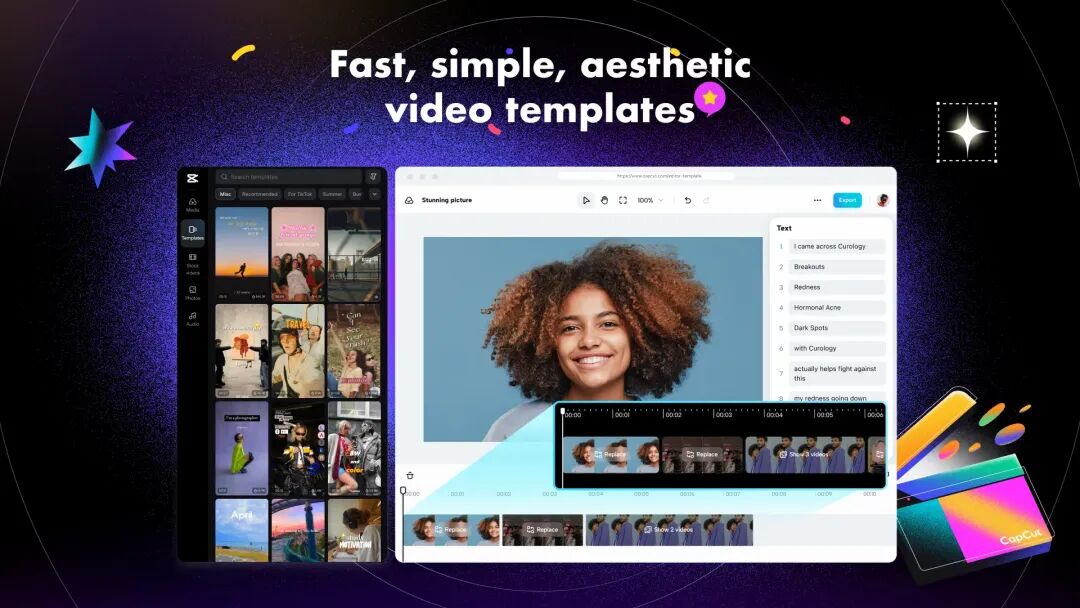
As the official description states: "Powered by CapCut, Pippit AI supercharges your content creation."
For small and medium merchants lacking professional staff yet needing massive content output, using Pippit is like hiring a 24/7 standby "AI marketing team" — finding inspiration, writing copy, designing, editing video, posting on social, reviewing data.
Additionally, one point worth noting: within ByteDance's overseas ecosystem, most ad content generated on the Pippit AI platform already carries commercial licenses from TikTok and CapCut, placing a massive commercial resource library right before users' eyes.

Cross-border operators lack money, people, and time.
Pippit stands at ByteDance's "westernmost" ecological position, under the umbrella of CapCut, this top-tier product. It can provide everything.
3. CapCut: One Step Further
CapCut's binding with ByteDance's core products Douyin / TikTok runs deep, generating strong synergy: the content distribution end and production end form a closed loop.
Both Dreamina and Pippit belong to this CapCut ecosystem.
In February 2024, former Douyin Group CEO Kelly Zhang was reassigned to the CapCut division to oversee CapCut-related business. Zhang, highly sensitive to product design, believes:
AI technology will have a disruptive impact on content creation
From Zhang's reassignment, in just three short months, CapCut launched a core native AI product — Dreamina. She led the team in releasing Dreamina's subsequent series of updates. It's fair to say that from birth, Dreamina shouldered ByteDance's vision for a complete AI product matrix.
A few months ago, Dapeng Cao, former head of 01.AI's overseas productivity product PopAI[9], also joined Zhang's team to lend support.
When talent density, technology iteration, and organizational strategic focus all begin moving centripetally, Pippit is one of the works born from ByteDance's internal AI technology integration.

🚥
With Pippit's ascent on Product Hunt, we can also see that the bugle for a new round of fierce battle (even bloody battle) in the AI marketing industry is sounding.
Pippit is not ByteDance's first salvo, but it certainly won't be the last.
References
[1] Pippit: https://pippit.capcut.com/home
[2] Product Hunt: https://www.producthunt.com/
[3] VidAU: https://www.vidau.ai/
[4] Creatify: https://creatify.ai/
[5] LinkFox: https://www.linkfox.com/
[6] HeyGen: https://www.heygen.com/
[7] Pipiads: https://www.pipiads.com/
[8] Echotik: https://echotik.live/en
[9] PopAI: https://www.popai.pro/