"Quasi-National Team" Raises Another 200 Million, Open-Source Ecosystem Just Getting Started
Secured another 200 million yuan follow-on investment from Beijing.
A couple of days ago, I opened up all my usual channels — Jike, WeChat groups, Xiaohongshu — and found the entire AI venture capital circle buzzing about one thing: Zhipu AI is preparing to go public.
I couldn't help but feel a little emotional. While every LLM company is locked in a brutal fight to commercialize, trying to burn money with purpose, Zhipu — one of China's "AI Six Little Dragons" — is about to become the "first major LLM stock."
That said, Zhipu has been making a lot of news and moves lately.
Today, Zhipu has another headline: another 200 million yuan follow-on investment from Beijing.
Two takeaways:
- Its status as a national-team player is now cemented;
- The entire press release keeps hammering on one word: open source, open source, open source, open source.
Put those two together, and the message is basically this: the national team needs to do open source.
This is closely tied to DeepSeek's successful launch earlier this year. The open-source strategy enabled China to "overtake on the curve" in the US-China tech competition, rapidly securing a favorable competitive position. So open source will remain a critical lever for Chinese model vendors in the next phase of competition.
Which raises the question: Why Zhipu?
Hangzhou, Zhuhai, Chengdu, Beijing
Zhipu has once again received a 200 million yuan follow-on investment from the Beijing Artificial Intelligence Industry Investment Fund.
Zhipu was the fund's first-ever investment in an AI large model company, and this marks its first follow-on investment in an AI large model company.
How many times has the "national team" endorsed them now? I tallied up the recent support from various local governments and was a bit stunned:
From Hangzhou, Zhuhai, Chengdu, to Beijing…
- Hangzhou state capital, including Hangzhou City Investment Industry Fund and Shangcheng Capital, participated in a strategic investment in Zhipu AI exceeding 1 billion yuan.
- Zhuhai Huafa Group invested 500 million yuan in Zhipu AI's technology innovation and ecosystem development. Zhuhai High-Tech Zone and Huafa Group also announced a joint effort to build the first city-level GLM large model space — "Zhipu + Zhuhai Huafa Space"
- Chengdu High-Tech Zone invested 300 million yuan in Zhipu to build the "Zhipu Zhuge Large Model," with plans to empower 1,000 enterprises and incubate over 20 ecosystem companies within five years.
- And today, Beijing's additional 200 million yuan.
The continuous ratcheting up of official funding has effectively granted Zhipu "de facto national team" status.
In its press release, the Beijing Artificial Intelligence Industry Investment Fund stated: "We hope this investment will further promote Zhipu's capabilities in open-source models and algorithmic innovation."
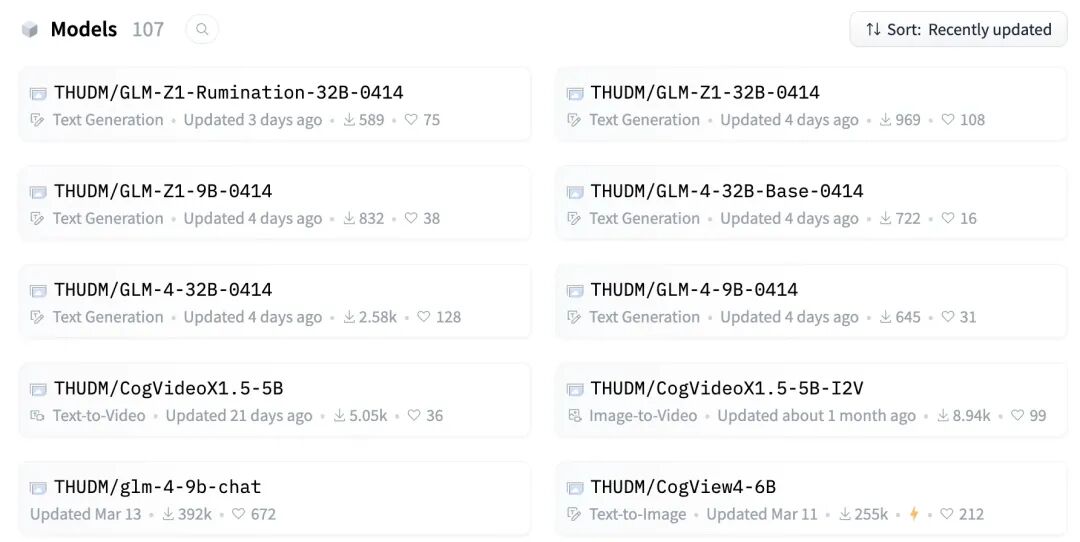 Zhipu's open-source models on HuggingFace
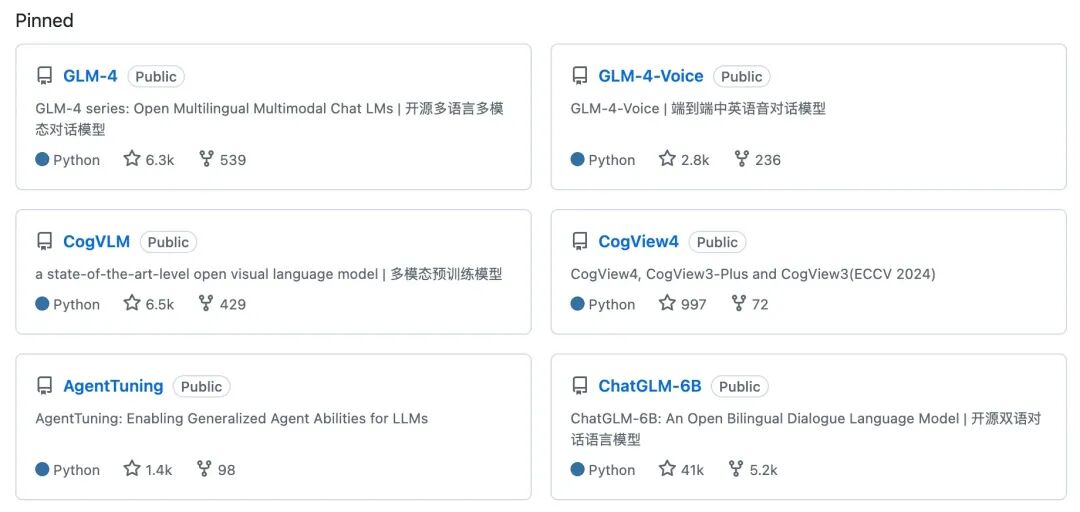 Zhipu's open-source models on GitHub
Global Open-Source Capital
There's another line in this news: contributing Zhipu's strength to building Beijing into a "global open-source capital" for AI.
Glo-bal Open-Source Cap-i-tal.
— Let that sink in.
Honestly, not every company can tie its fate to a city's AI ambitions. That requires a three-way resonance of policy, capital, and enterprise.
Fully Open-Source Models, Everything That Should Be Zai Is Zai
To get open source right, Zhipu has been making lots of technical moves lately, but also putting serious effort into marketing.
Recently, friends in several Crossing member groups have been forwarding the poster below. The ad copy is pretty interesting: "Fully open-source models. Everything that should be Zai, is Zai."
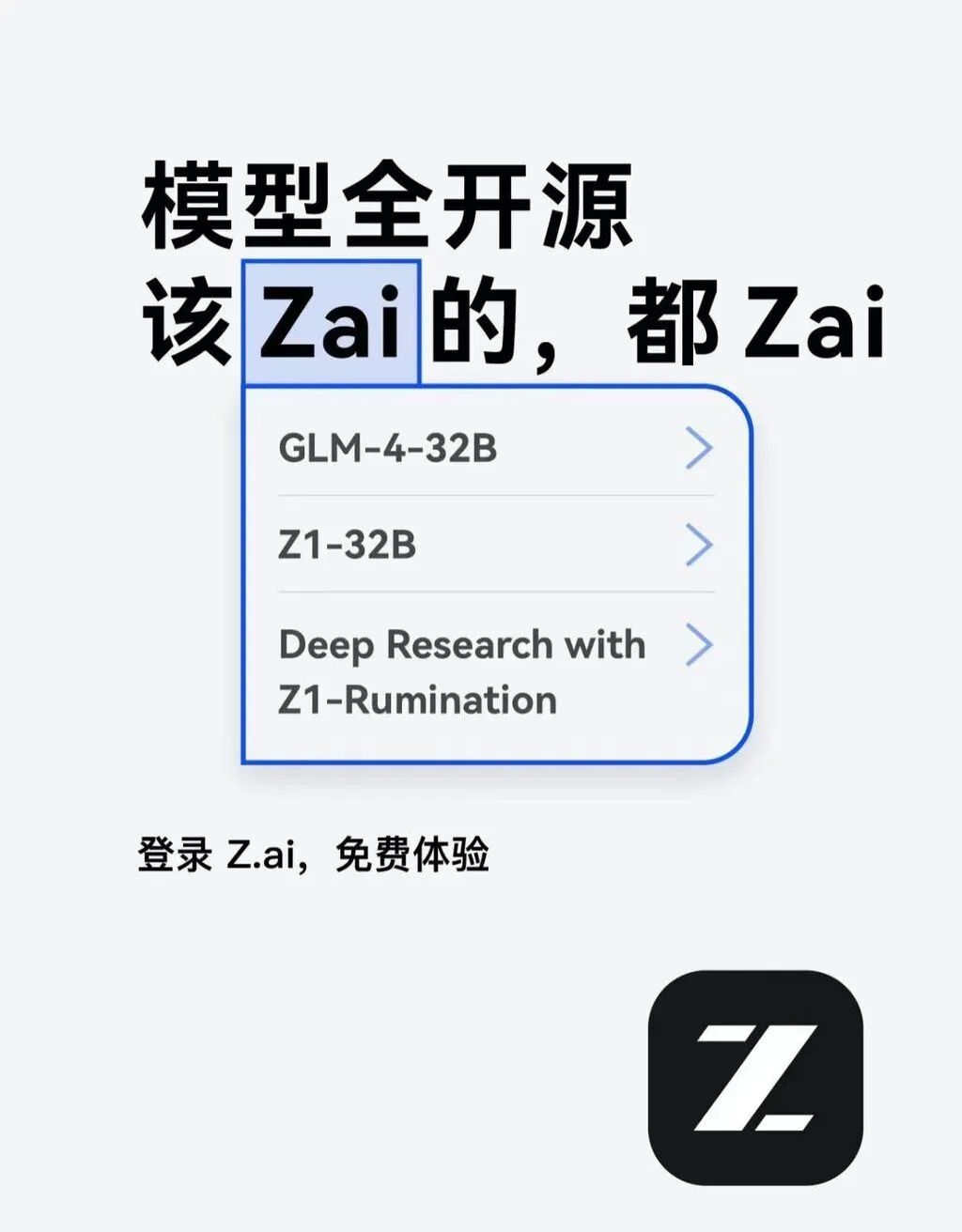
Worth noting too: Zhipu made a bold move by acquiring the top-tier domain Z.ai, directly对标 (positioning against) Elon Musk's X.ai.
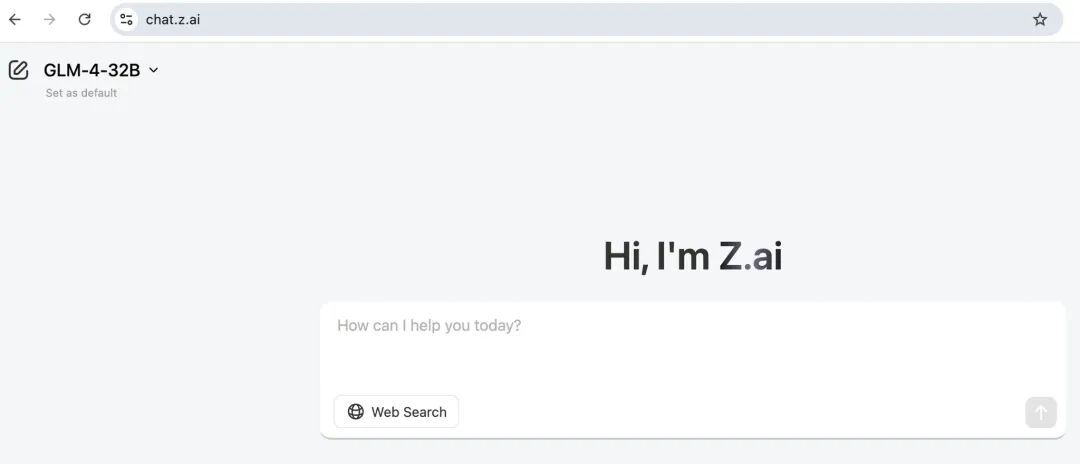
The domain purchase involves some strategic considerations:
- Brand reinforcement: A clean, highly recognizable domain simplifies user experience and boosts brand recall.
- Market competition: In the battle against domestic and international rivals, a premium domain helps capture user mindshare.
- Investment value: Acquiring a top-tier domain signals whether Zhipu takes long-term brand assets seriously enough.
2025: Zhipu's Open-Source Year
Zhipu started building its open-source ecosystem remarkably early — which is why they can confidently say that "our practical efforts to advance the open-source ecosystem have gained increasing recognition."
In March 2023, Zhipu open-sourced China's first ChatGPT-like large model — ChatGLM-6B (a bilingual Chinese-English dialogue model with 6 billion parameters).
What shocked everyone wasn't just how early Zhipu open-sourced, but that ChatGLM-6B's performance approached that of mainstream closed-source dialogue models at the time.
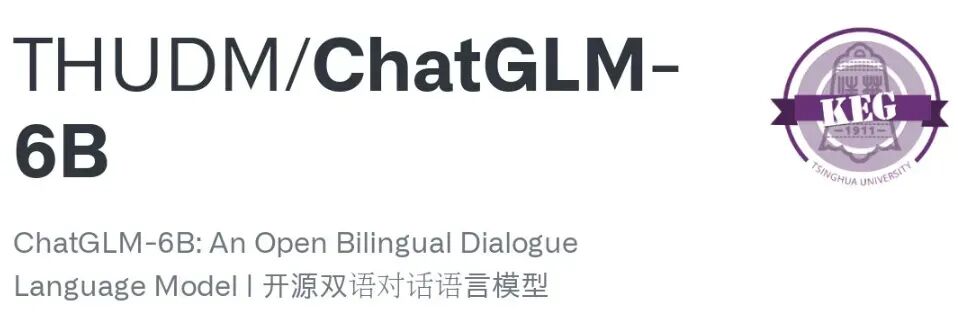
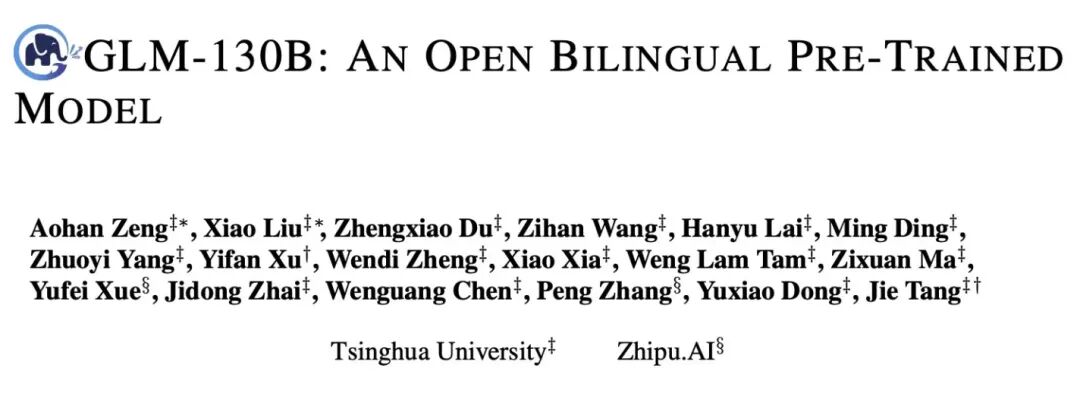
Hot on its heels came the 130-billion-parameter general language model GLM-130B, also open-sourced.
Keep in mind, there were very few open-source models of comparable scale internationally at that time. GLM-130B's release won enormous overseas credibility for China's open-source large model efforts.
And it didn't stop there. Zhipu previously declared 2025 as its "Open-Source Year."
First, it open-sourced CogView4, the first open-source text-to-image model capable of generating Chinese characters.
 Image generated by CogView4
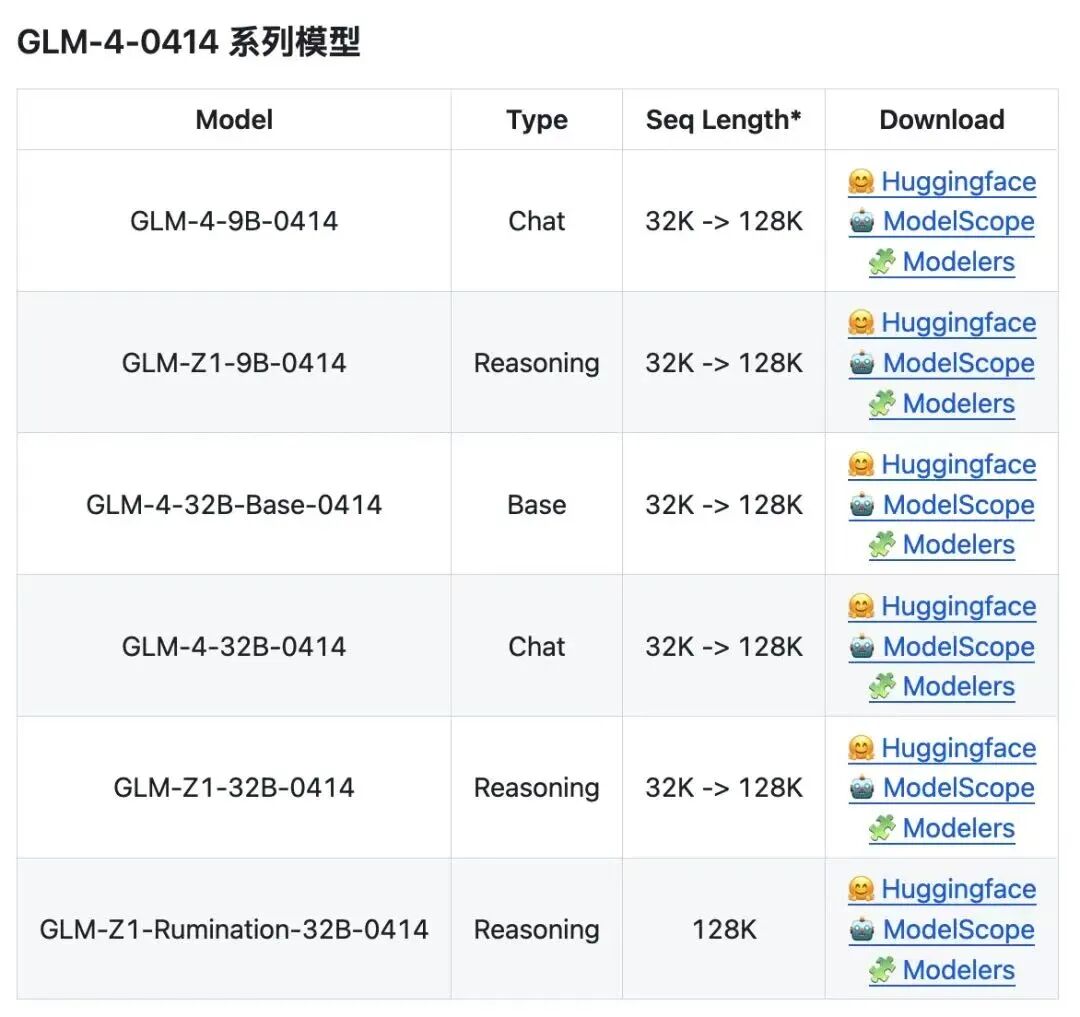
A few days ago, Zhipu also open-sourced its 32B/9B GLM model series, including base, reasoning, and contemplation models, all released under the MIT License.
Not everyone may be familiar with the MIT License. Simply put: this permissive license means any individual or enterprise can freely use, modify, and commercially deploy the models without paying.
Let me repeat that: commercial deployment without any fees.
There are countless more open-source large models I won't bother listing.
Since becoming an open-source pioneer in 2023, Zhipu's LLMs have accumulated nearly 40 million downloads in international open-source communities. That speaks for itself.
Alongside today's announcement of the 200 million Beijing investment, Zhipu also mentioned that its "Z Fund" will commit 300 million yuan to support AI open-source community development globally.
I rubbed my eyes. Same press release: one paragraph says they just raised 200 million, the next says they're giving out 300 million.
I think this can only mean one thing: conviction! A sense of mission!
More notably, the 300 million isn't even limited to startups using Zhipu's own open-source models. Projects based on any open-source model — whether DeepSeek, Qwen, Llama, or even Mistral — can apply.
And it's global (note: global) in scope.
True · open · source · spirit!
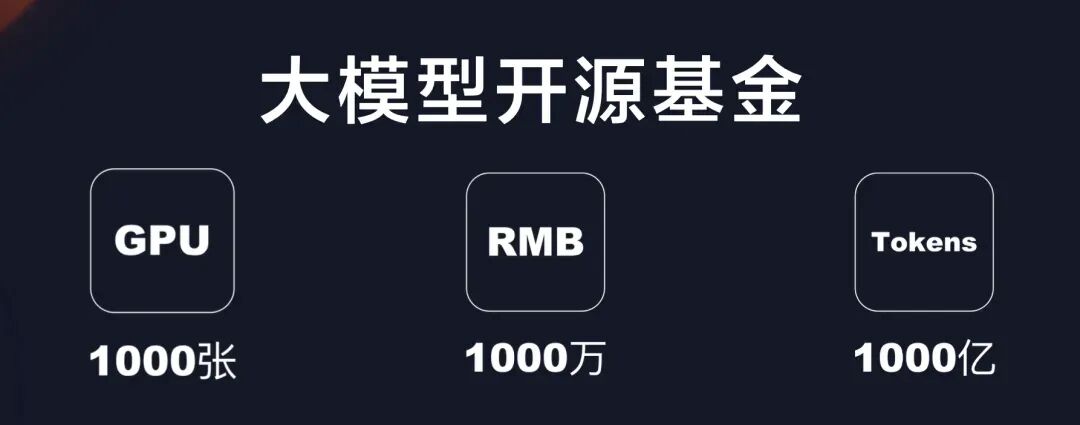
I recall that back in early 2024, Zhipu launched its "Three Thousand" initiative. To summarize:
- First "thousand": 1,000 GPUs, provided to the large model open-source community to support open-source development.
- Second "thousand": 10 million yuan in cash to support large model-related open-source projects.
- Third "thousand": 100 billion free API tokens for outstanding open-source developers.
From that point on, Zhipu has consistently used the Z Fund to signal its strong embrace of the AI open-source community. No empty talk — making real friends with real money.
Currently, the Z Fund manages 1.5 billion yuan. Beyond Zhipu AI's own contribution, it has brought in co-investors including Shijingshan Modern Innovation Industry Development Fund, Aofei Data, Yanbei Capital, and Fuzhuo Investment.
The Z Fund primarily targets upstream and downstream technology and application innovation in the large model赛道 (track), with a particular preference for early-stage projects.
Companies like SiliconFlow, Infinigence AI, Muyan Zhiyu, Caizhi Technology, Dongyi Technology, and Qujing Technology — covering nearly every key link in the large model industry chain — have all received Z Fund investments, in some cases outperforming many traditional VC firms.
In short, with Zhipu and the Z Fund at the table in the primary market, it's a huge boost for AI entrepreneurs, developers, and the entire open-source community.

By open-sourcing its models and embracing the community, Zhipu has dramatically lowered the barrier for global developers to access advanced AI technology, and in some ways is reshaping the paradigm of technical diffusion and innovation in AI: Zhipu's open-source architecture eliminates massive "technical debt," triggering structural entrepreneurial opportunities.
I really like this analysis from MIT Technology Review:
Chinese tech companies' enthusiasm for open source stems partly from seeking faster commercialization, and partly from winning global technical influence.
In 2025, regions across China are making major pushes for AI industry development, and "open source" has become a top-down consensus. This massive AI open-source ecosystem network carries the rising ambitions of China's AI industry.
In this wave of AI open source, Zhipu will undoubtedly play a key driving role.
Author: Jingshan
Editor: Koji
🚥