Google and ByteDance are battling like gods, so why is a tool called Reve quietly going viral?
AI image generation finally hits "point and shoot" accuracy!
AI image generation finally hits "point and shoot" precision!
👦🏻 Author: Jingshan
🥷 Editor: Koji
🧑🎨 Layout: NCon

Lately, the AI image generation and editing space has been an absolute battleground.
On the main front, Google's Nano Banana and the up-and-coming Chinese contender Doubao Seedream 4.0 are going head-to-head, with everyone's eyes locked on the showdown. The competition is all about raw model power — who can generate and edit the most stunning images. But one mysterious player has entered the fray from an unexpected angle.
Its name is Reve. Right from launch, it started blowing up on X, sparking all kinds of discussion in creator communities.
It seems to have no interest in joining the pixel-level spec war. Instead, it poses an interesting question:
When everyone can generate "good images," where does the real bottleneck in creation actually lie?
Reve's answer: interaction.
Compared to the current SOTA models like Nano-Banana, ByteDance's Seedream 4.0, and Hunyuan Image 3.0, Reve's self-developed model isn't particularly "performance standout" on its own. But it offers a completely new interactive editing experience.
After deep hands-on testing, we believe calling Reve an "AI image generation model" no longer does it justice. It's more like a visual agent — one that understands image structure, follows precise instructions, and lets you "get your hands dirty" and create like a designer.
Next, we'll dive into our detailed review, focusing on its 3 most standout highlights:
[1] A "model-as-product" built by a 10-person team
[2] Interaction-based fine-grained editing
[3] Aesthetic capabilities
Who is Reve?
Reve AI is a California-based AI startup founded in December 2023. They launched their first image generation model, Reve Image 1.0 (internal codename "Halfmoon"), in March 2025. Six months later, they upgraded it into an "image editing model."
Despite being young, the company moves aggressively. Upon launch, Reve Image 1.0 immediately beat out Google's Imagen 3, Flux 1, and other SOTA models on the Artificial Analysis Image Arena benchmark (as of March 26), shooting straight to the top of the leaderboard.
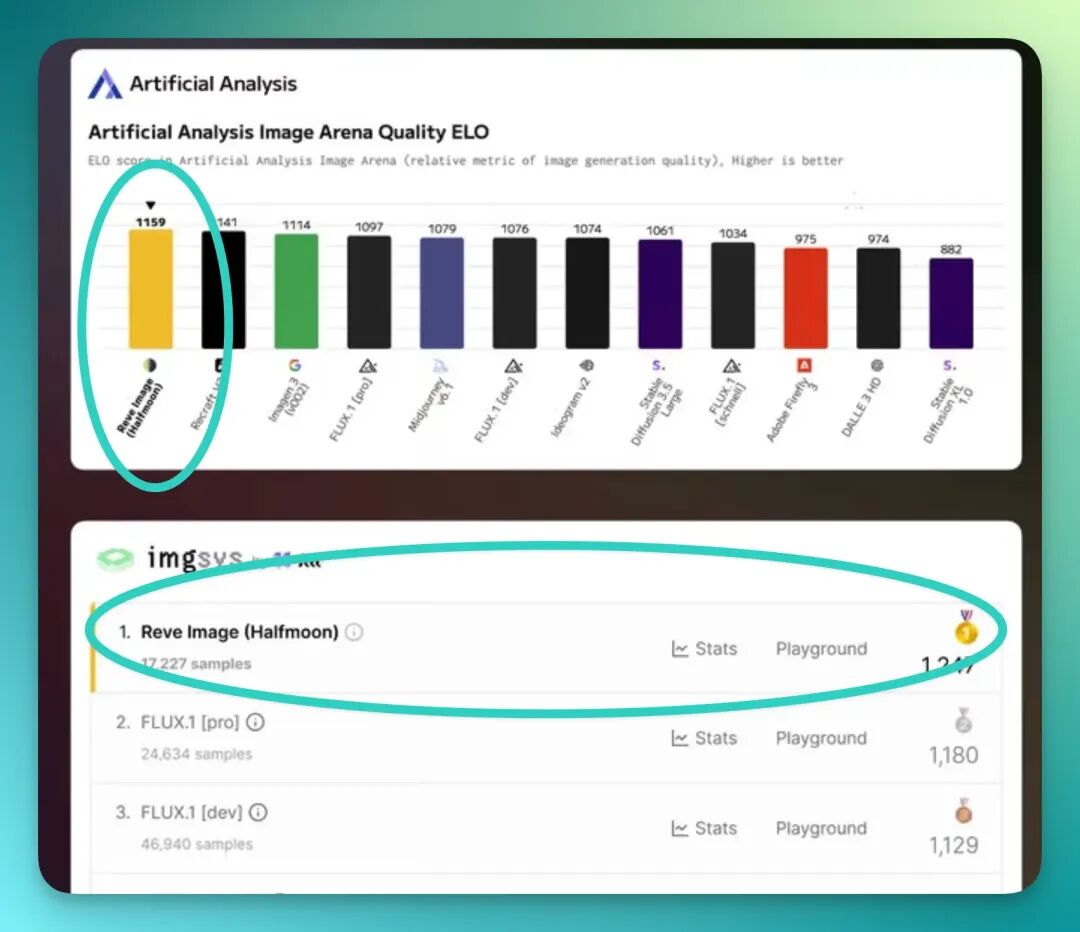
But what's even more interesting is how little Reve has gloated about it. They barely do marketing, and they don't talk about traffic, funding, or revenue figures — so low-key it makes you curious. The media often describes Reve as a company that "lets its product do the talking."
In public records, you can hardly find any information about their funding amounts, team size, or long-term plans.
For instance, a Nugg.ad report noted: "The California startup has almost no public information about its size, funding, or long-term goals."
This style is actually quite rare in Silicon Valley, where most startups want to be as loud as possible to attract investor attention. As exposure grew, Reve's founder came into the spotlight. His name is Michaël Gharbi, a former veteran of Adobe Research.

In interviews, he mentioned that Reve's core goal is to build a "semantic intermediate representation."
Simply put, the idea is to get machines to understand not just "what you want to draw," but "what you're trying to express" — enabling better collaboration between humans and AI at the level of creative intent.
Reve's team describes themselves this way:
"We are a small team of researchers, engineers, designers, and storytellers."
What's surprising is that Reve went from research preview to ranking near the top of LMArena and Artificial Analysis — in less than six months.
The team is just 10 people.
On their website, they keep emphasizing their "product" positioning:
"We are not just a model company, we are a product company. Our goal is to create the best creative intelligence tools, including our one-of-a-kind editor."
In other words, Reve isn't a pure-play model company. It's a "product company" working to make AI a genuine tool in the hands of creators.
Interaction-Based Fine-Grained Editing
Reve's interface is extremely clean. On the left is the familiar chat box, which at first glance looks no different from other tools:
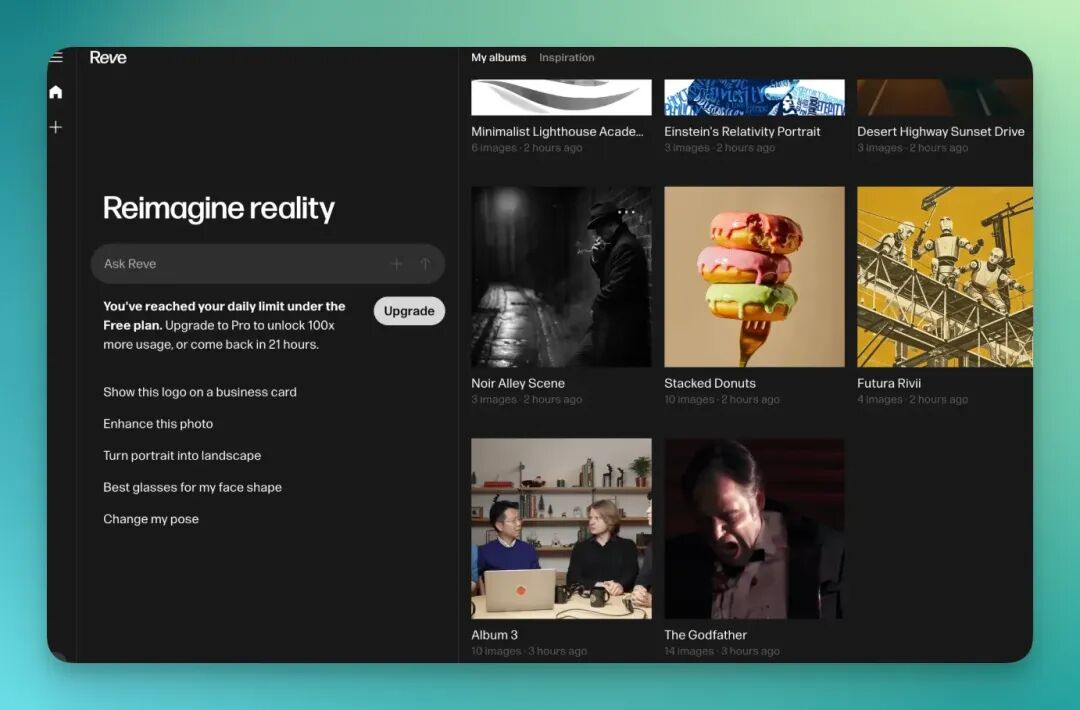
But the truly interesting part hides inside the "Edit" button in the top-right corner after you generate an image. This is the core feature that creates an "experience gap" with all competing products.
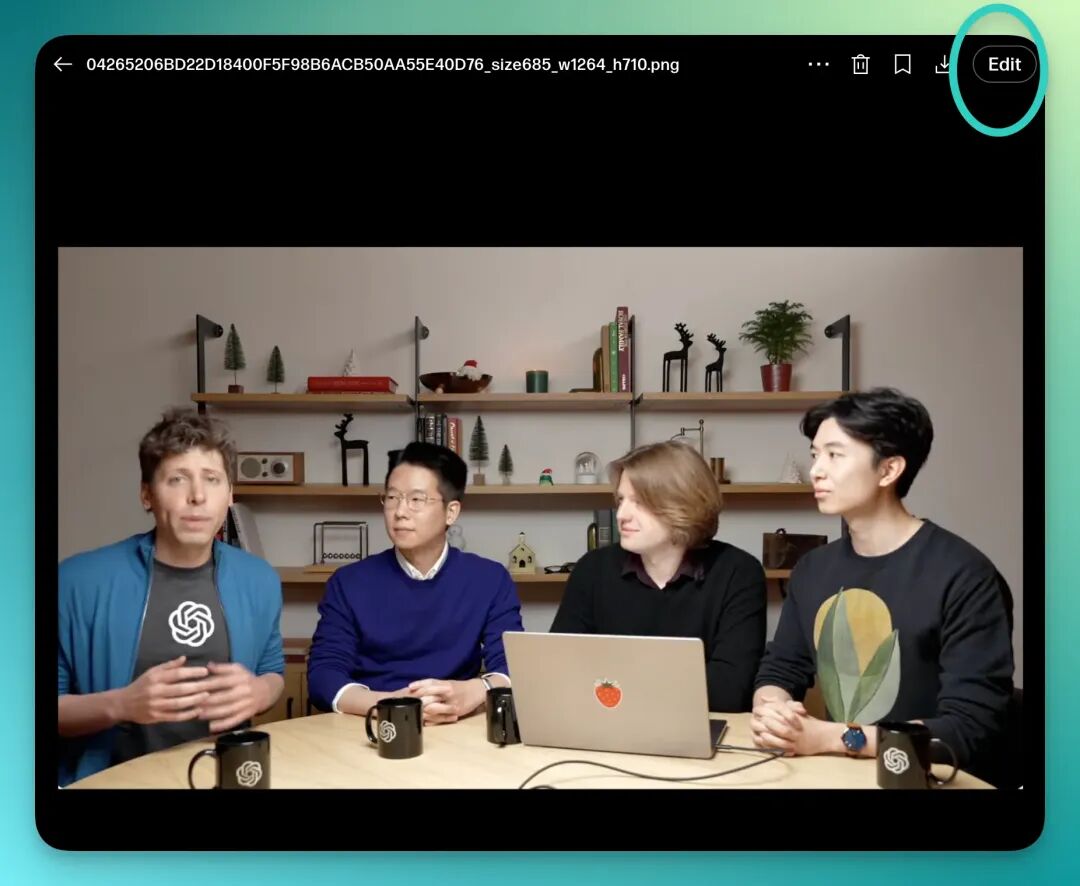
1) Multi-Element Position Swapping (OpenAI Launch Event)
Where Reve's new interactive experience truly shines is in image editing when multiple subjects and elements exist in a scene.
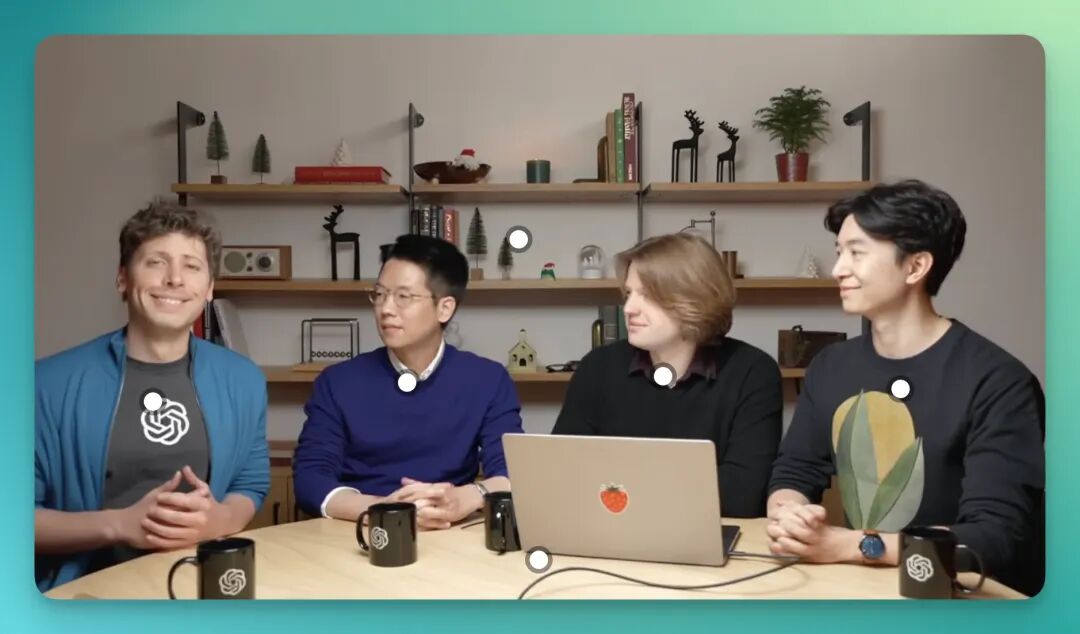
Take the image below — it's from a launch event featuring Sam Altman and three of his researchers. We can see four people as the main subjects, with cups and laptops beside them.
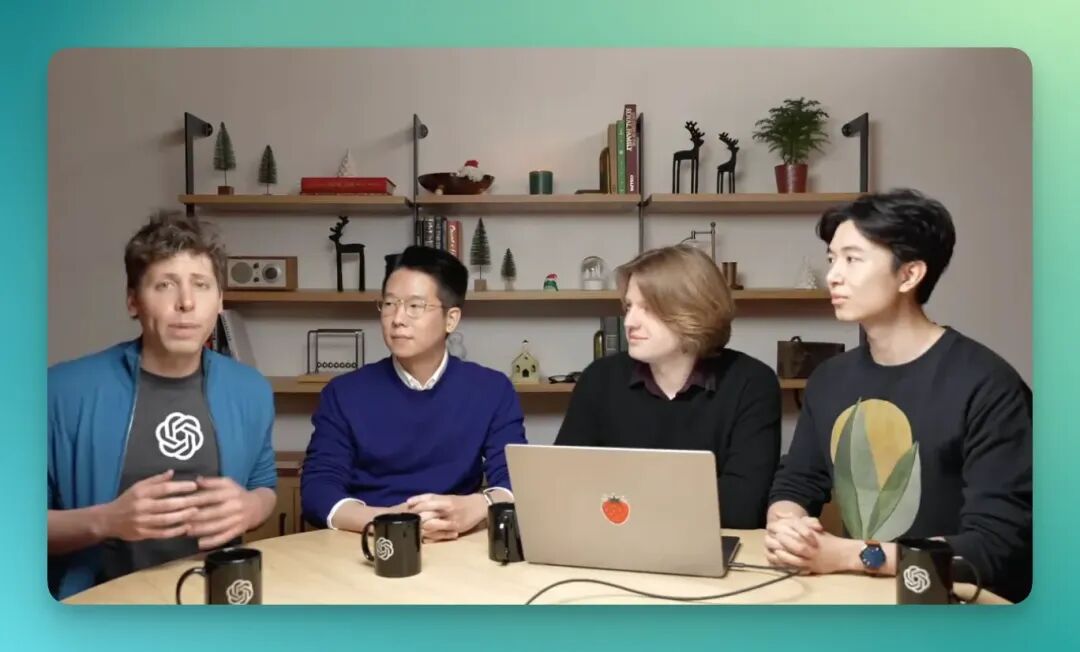
Now let's see how finely Reve can recognize and parse the scene:
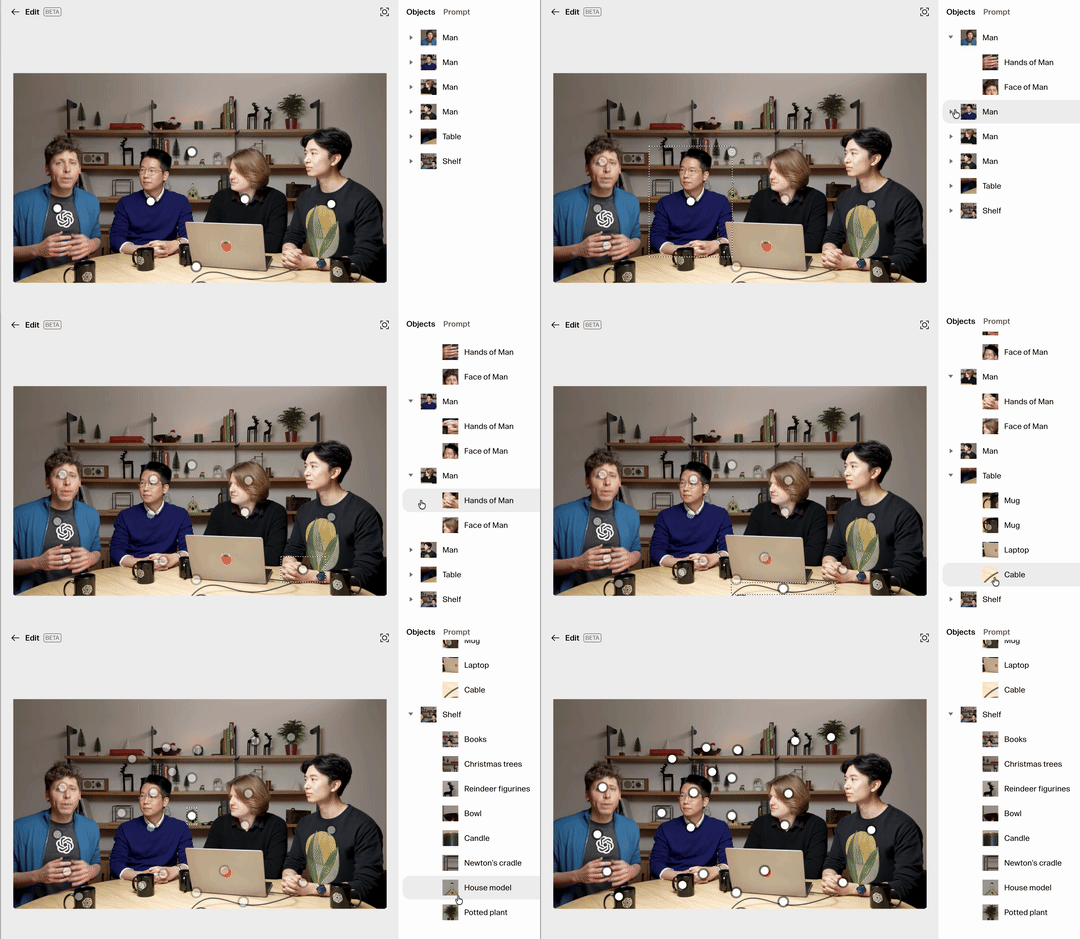
In the past, the biggest pain point in AI image editing — beyond model capability itself — was the limitation of interaction methods. The traditional workflow typically relied on "talking to it" to make changes. While more convenient than earlier approaches, this still lacked precision for detail control.
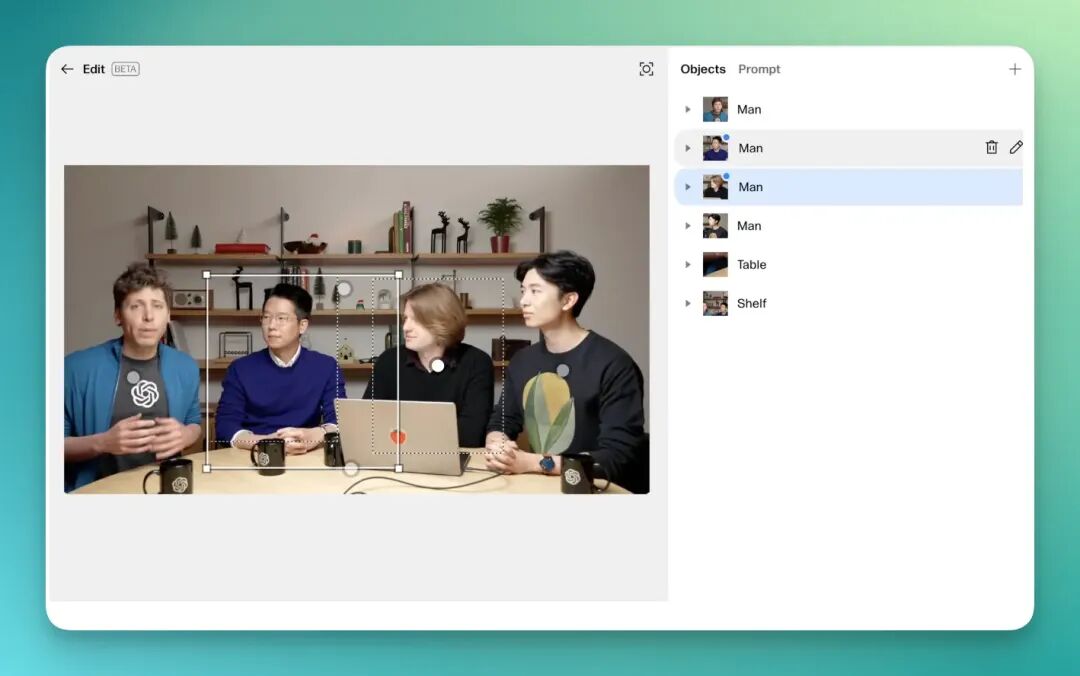
Now, Reve lets you directly drag recognized elements in the image, enabling remarkably simple editing across multiple subjects.
In the example below, I dragged the bounding boxes for the second man from the left and the second man from the right to perform a highly precise swap:
Here's Reve's output. You can see the two-person swap is quite accurate, though the posture of the man now in position two from the left isn't entirely natural — there are still some flaws:
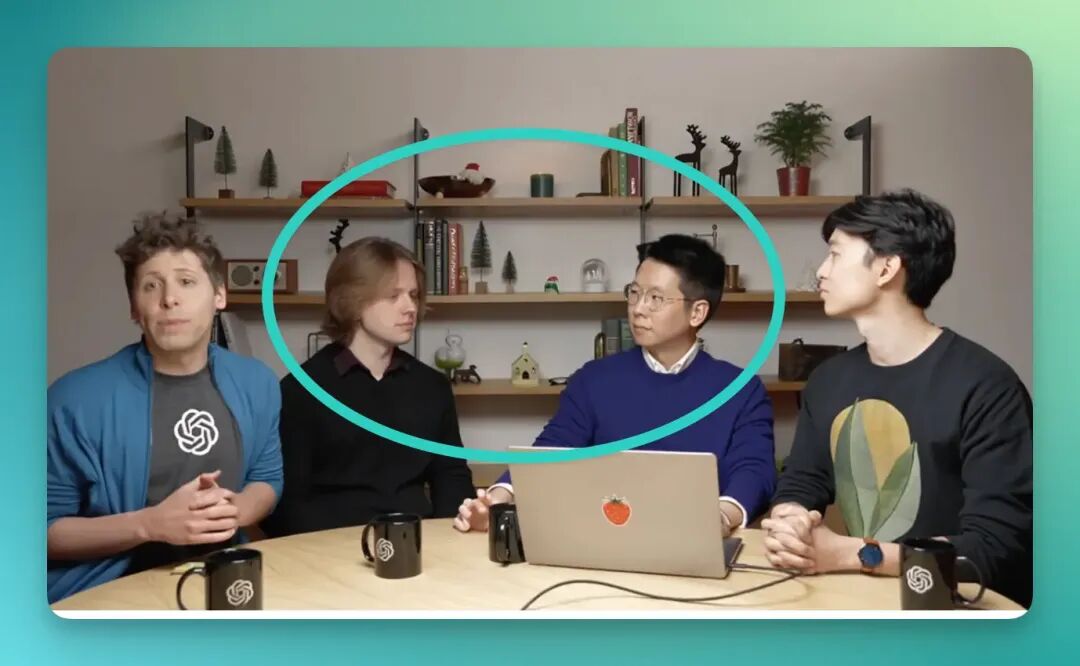
To be honest, getting this ideal result took several attempts (quite a few re-rolls). Current model capabilities still have their limits, and occasional "hallucinations" do happen.
That said, the overall interaction experience still feels pretty stunning.
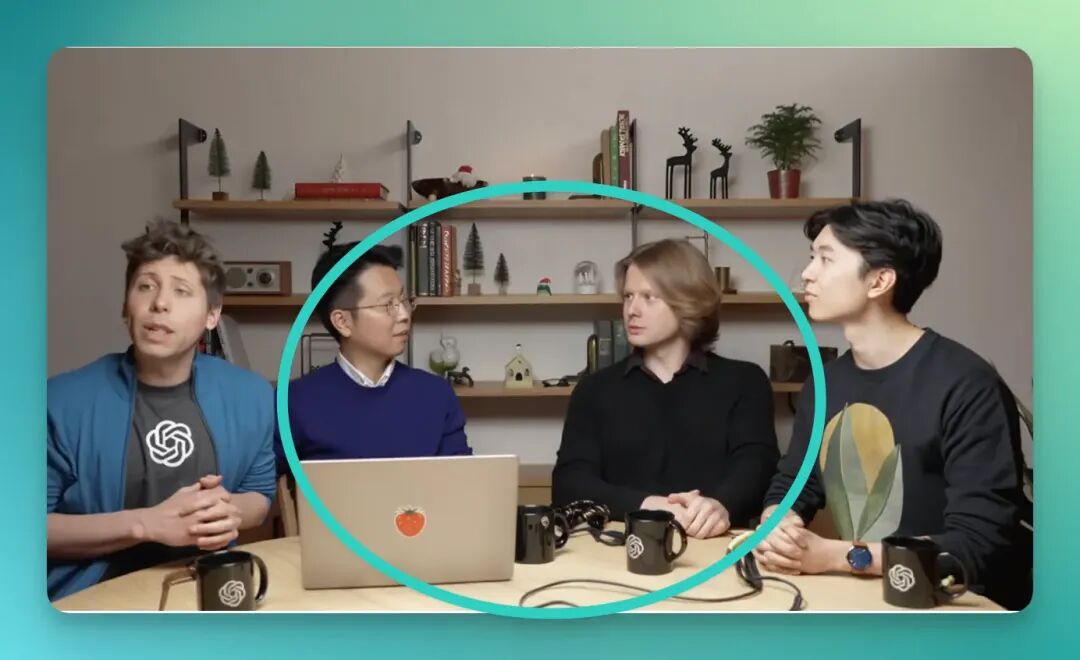
Here's another example. I swapped the two main subjects, the water cups in front of them, and the laptops, with results below.
You'll find the overall effect remains fairly natural and realistic:
There's one more thing we think specifically deserves mention.
In many traditional AI image editing tools, when you upload an image, the system will indeed analyze the scene content for you. However, they often don't actually support "editing."
Reve is different. It generates a readable prompt for every layer, and more importantly, you can directly edit that prompt to redefine the image content.
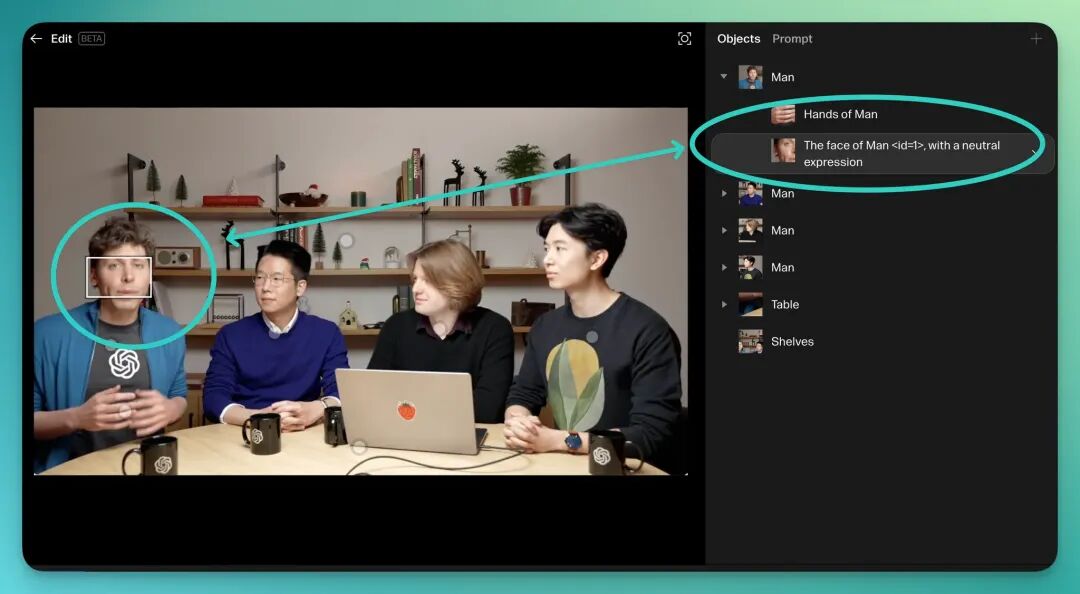
For instance, I can simply change the original prompt in the text box to "a smiling expression," hit edit, and Sam Altman suddenly sports a rather charming grin:
2) Precision single-element editing
As shown below, Reve accurately identified three donuts and a fork. Each element became a clickable, draggable white bounding box.
With a simple click, we selected the fork and dragged it directly above the donuts.
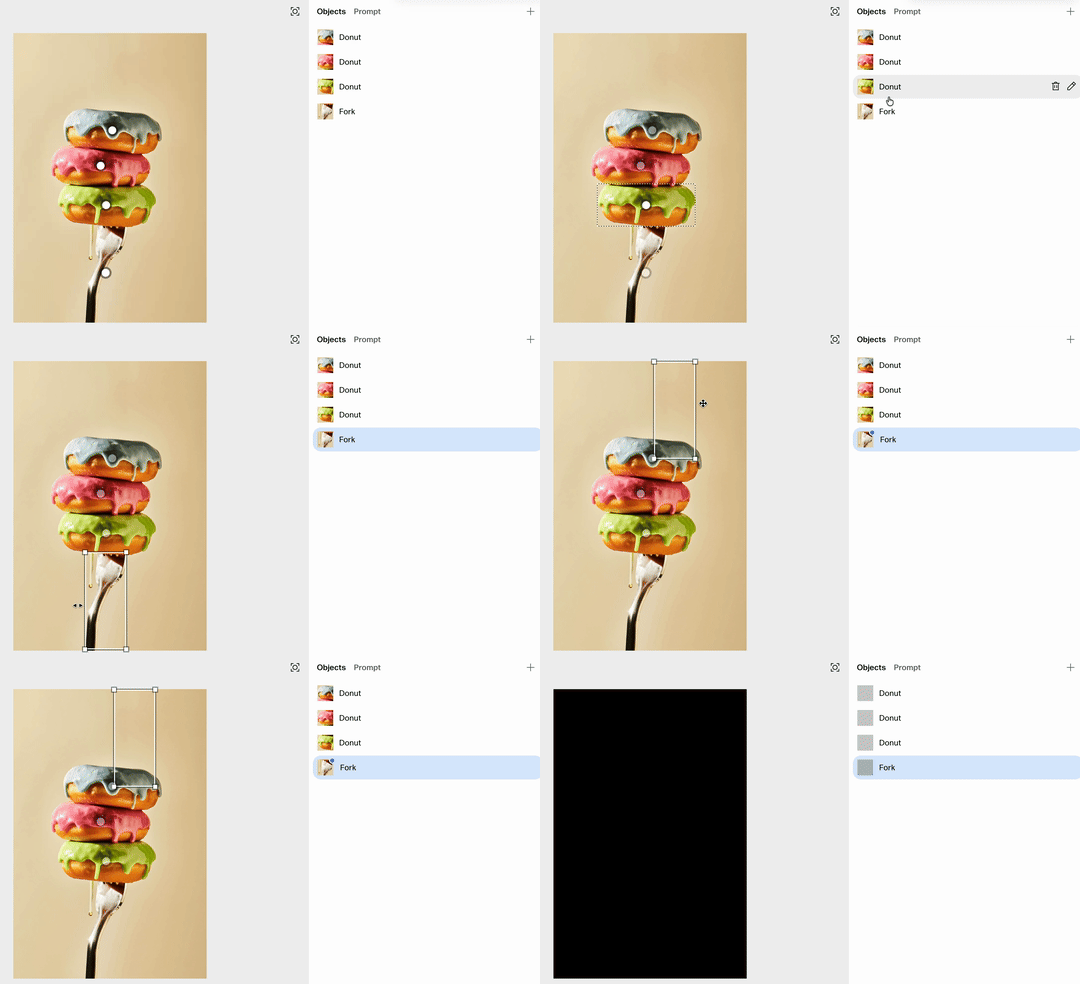
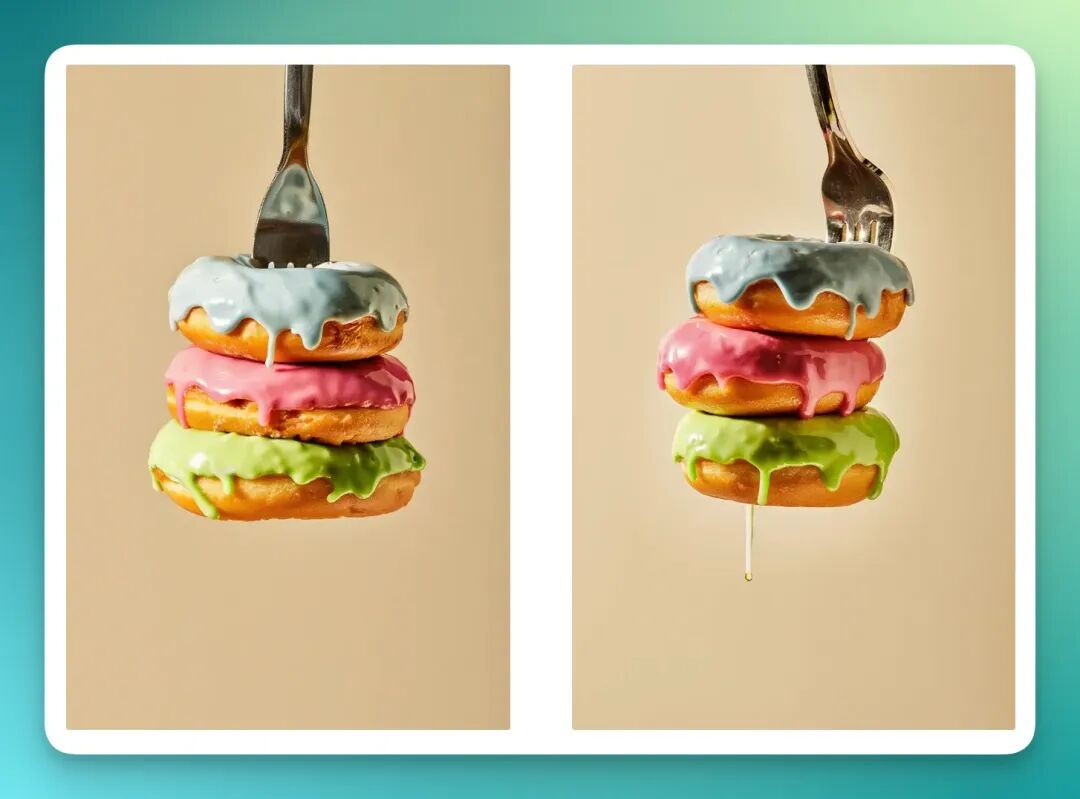
The moment you release, Reve re-renders the scene.
The final result is solid — not only does the overall style and lighting remain highly consistent, but the fork and donuts also exhibit natural physical interaction.
Similarly, Reve doesn't just visually separate layers; it also auto-generates corresponding prompts for the entire image and every identified "layer" element.
This means two pathways for editing: direct dragging, or precise local prompt modification.
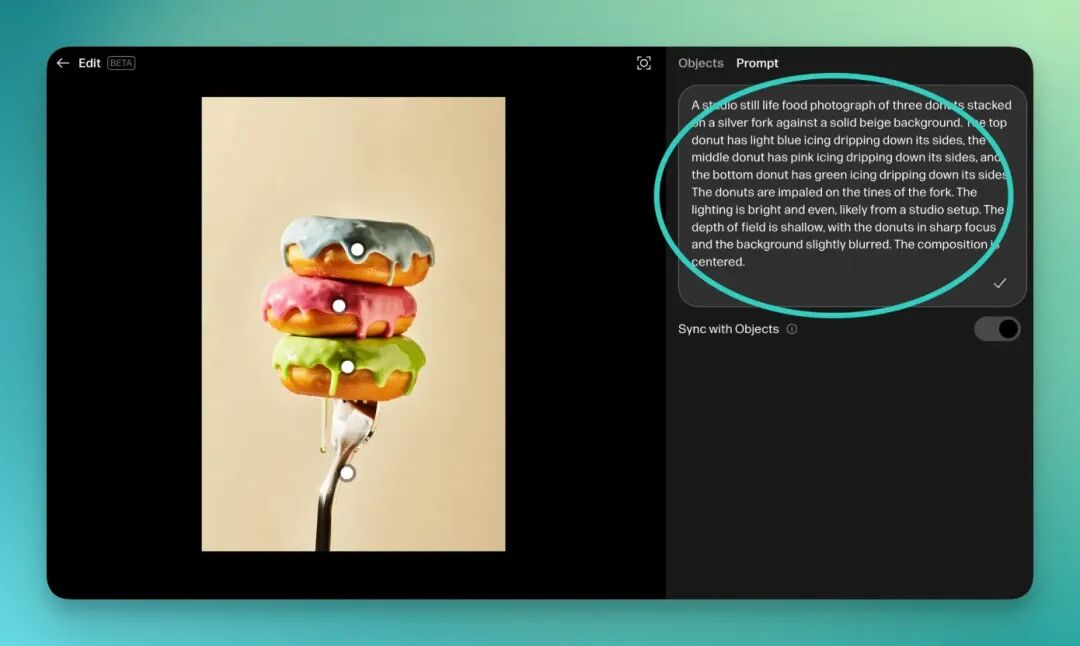
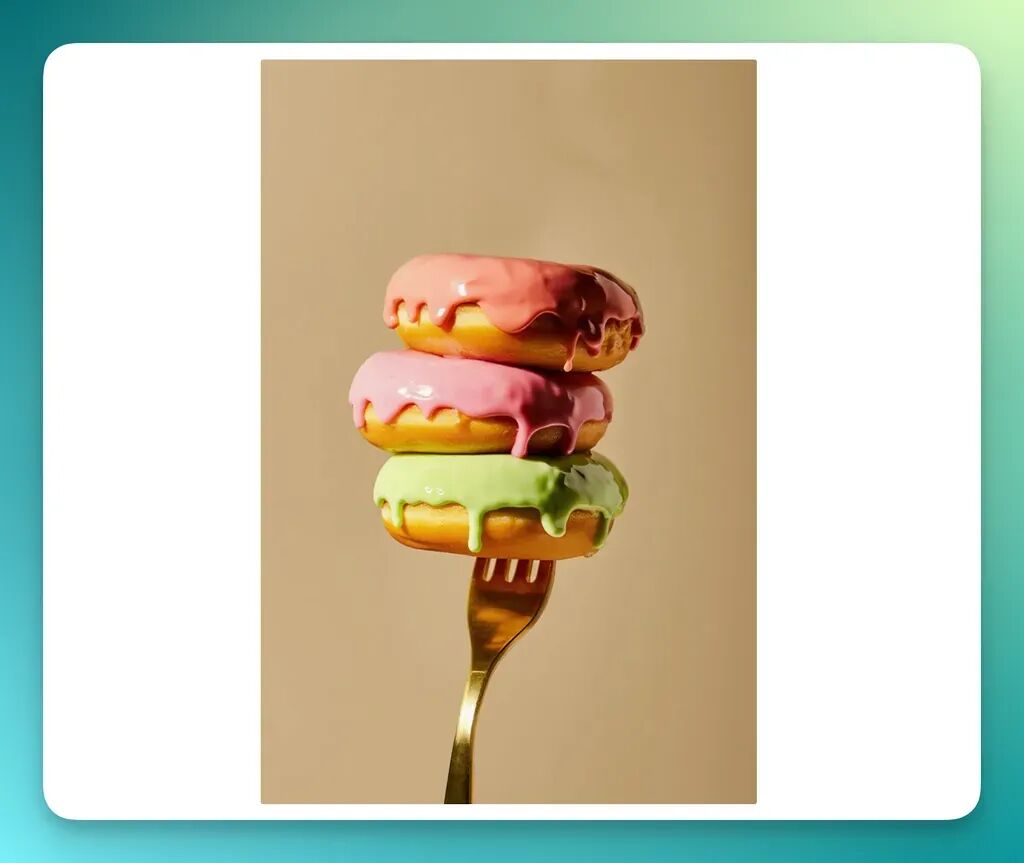
For example, we made some small tweaks to this prompt:
Make the top frosting swirl red. Change the lighting direction to come from the upper left toward the lower right. And change the fork's color from silver to gold.
Reve also auto-groups objects — it categorizes all three donut varieties simply as "donut."
When you expand "donut," you can independently modify the prompt for each individual element:
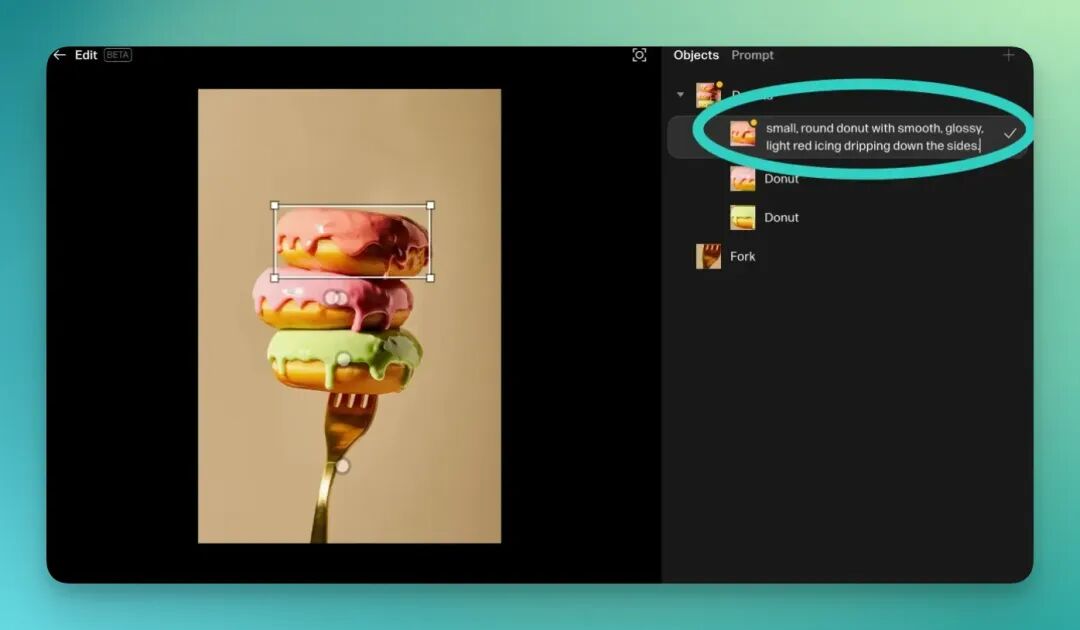
I entered a prompt:
Make the top donut look like it's been bitten, with a crack in it.
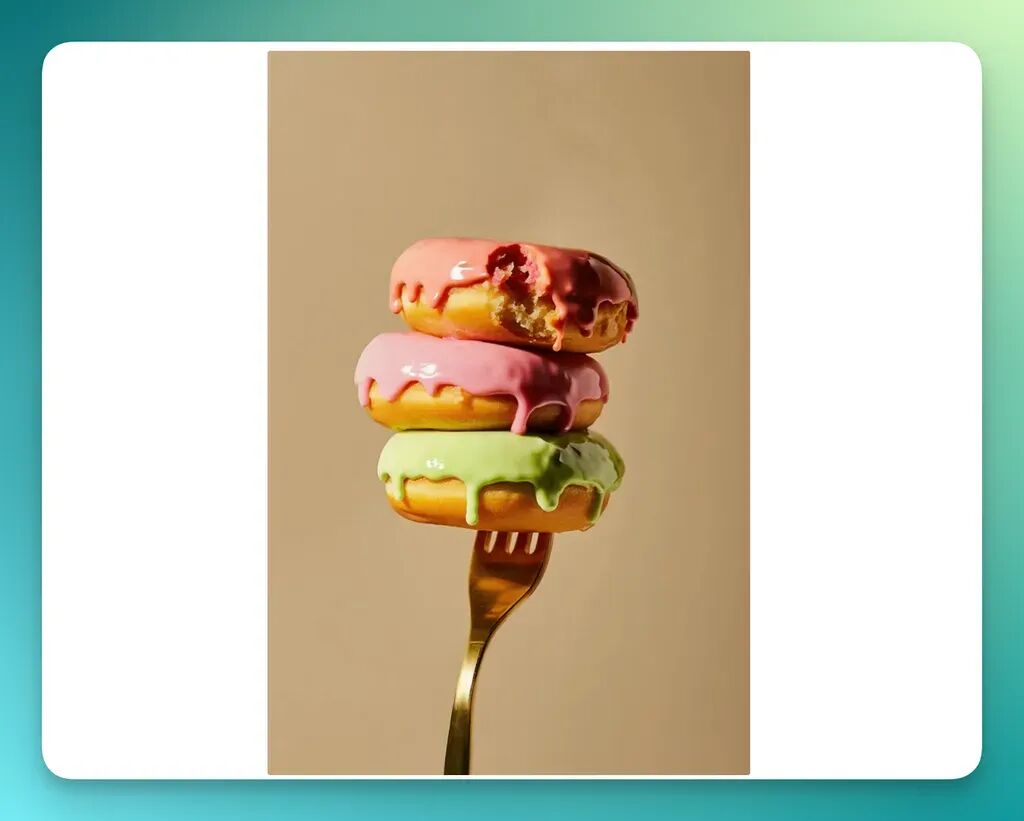
As you can see, when Reve performs fine interactive editing through dragging, the overall consistency holds up well.
I also uploaded a train photo taken in Tokyo, with two trains in the frame: a red train in the lower left and a yellow train on the tracks in the upper right.

We tried directly modifying the red train in the lower left:
Change the lower-left red train into two white trains of different designs.
Reve completed the task precisely, blending well with the surrounding environment:
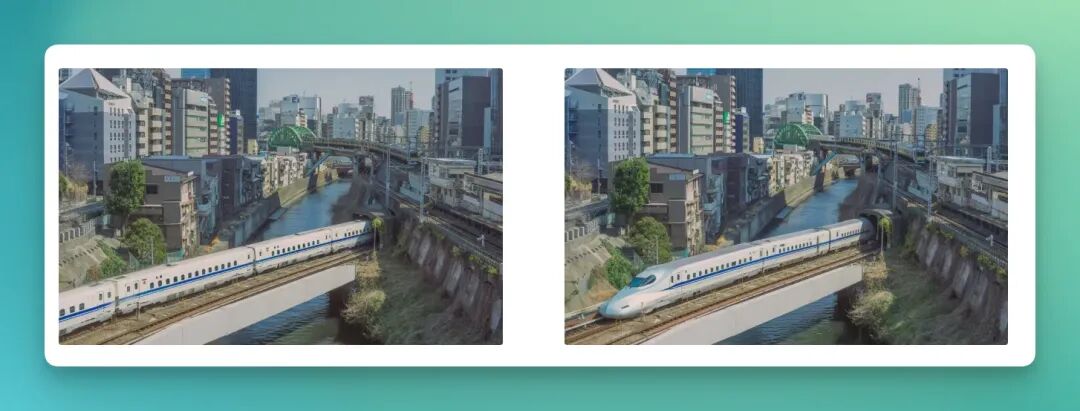
I could even directly drag the yellow train in the upper right with my mouse, "pulling" it out of the tunnel and placing it next to where the red train originally stood.
Reve not only cleanly extracted the train element while preserving environmental consistency, it even accurately reproduced the yellow train's original "half-in-tunnel" state, creating a natural relative motion pose between the two vehicles.
What this demonstrates is a physical understanding of space, occlusion relationships, and lighting:
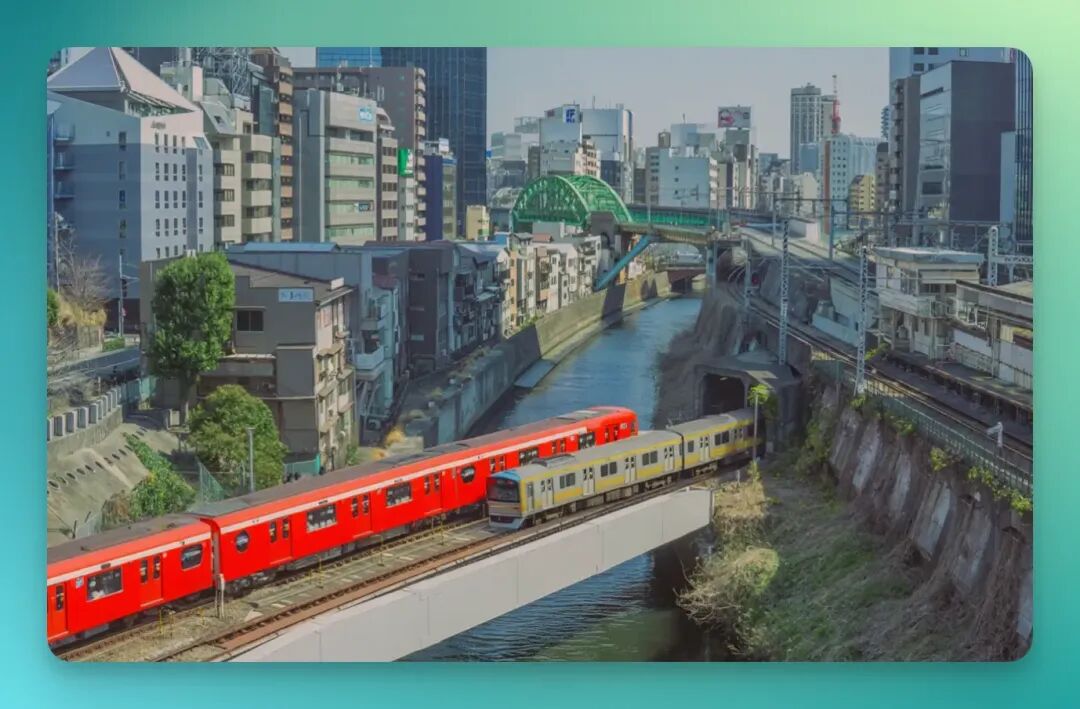
That said, due to model limitations, getting quality results like this still requires several attempts.
3) Reasoning and associative capabilities
Beyond editing existing images, we also tested Reve's creative generation capabilities, probing whether it truly understands the "scene" and "logic" behind an image.
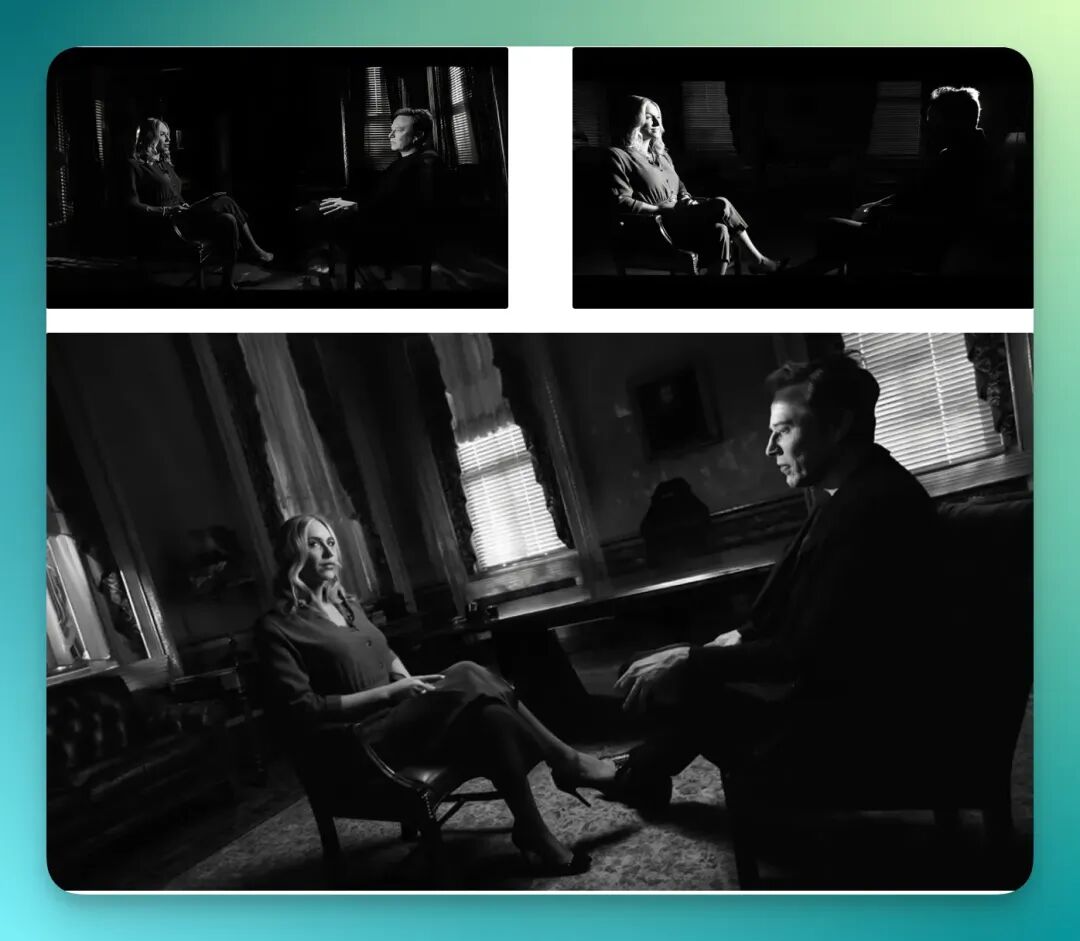
I uploaded an interview photo of Elon Musk with a female host:
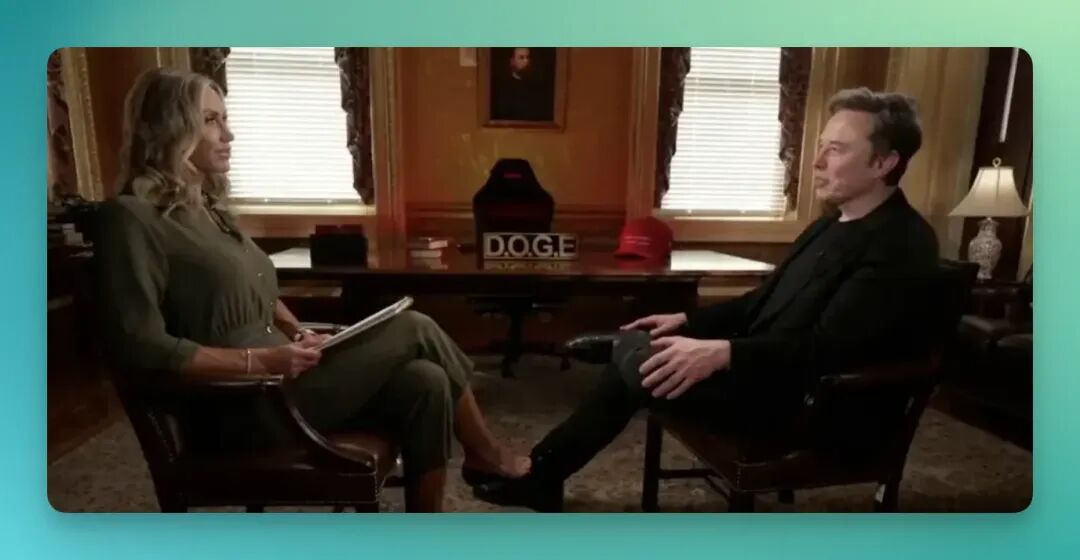
First, I asked Reve to imagine multiple angles and environments, generating various results:
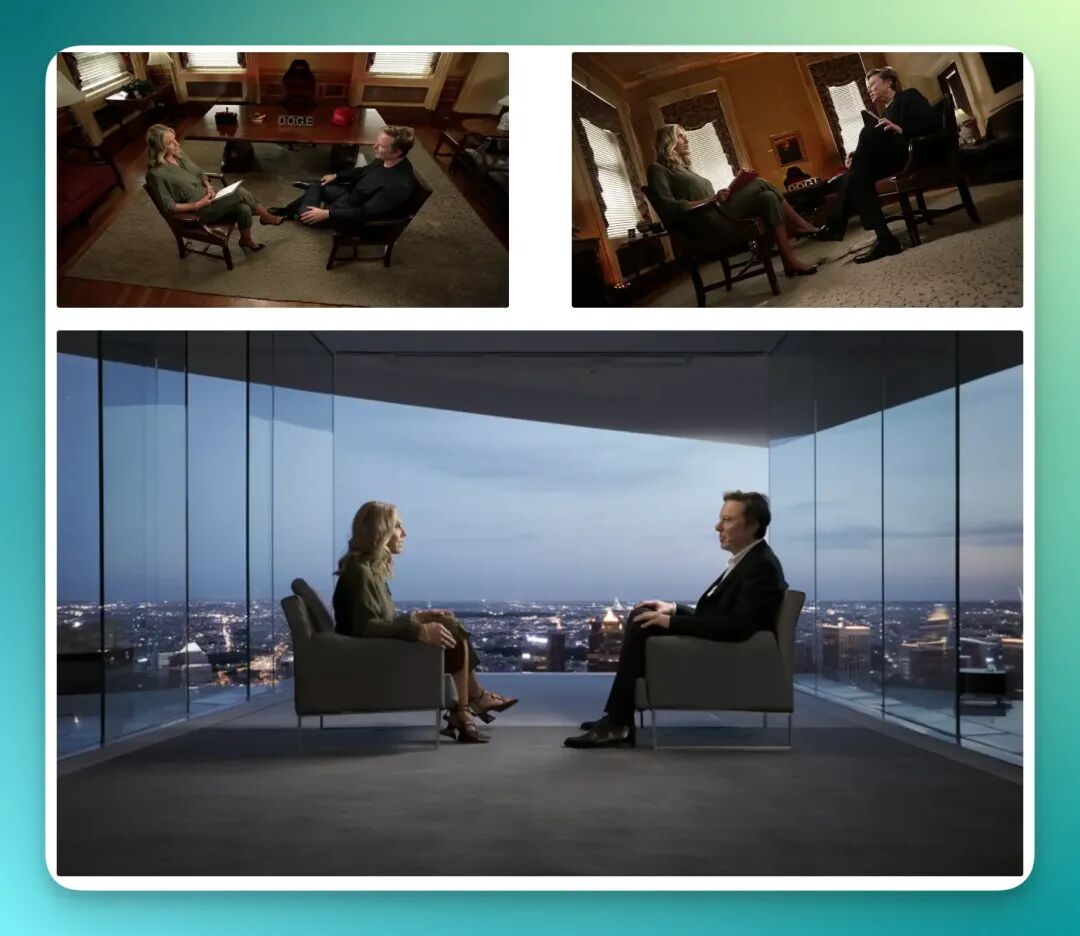
The output demonstrated considerable photographic language diversity. It could simulate different camera positions — close-ups, medium shots — and switch between different set designs and lighting setups.
During testing, I also found Reve remarkably adept at environmental context, lighting, and shadow work.
For instance, I applied some stylized photographic effects to the overall image to make it look more tense and oppressive.
You'll notice the shadow and lighting effects are quite realistic:
To test its potential in commercial design workflows, we introduced the recently buzzworthy "iPhone 17 and Xiaomi 17" as source material.
First, starting from a single product shot, we had Reve quickly iterate product concepts — generating multiple colorways, swapping the back panel secondary display effects, and so on:
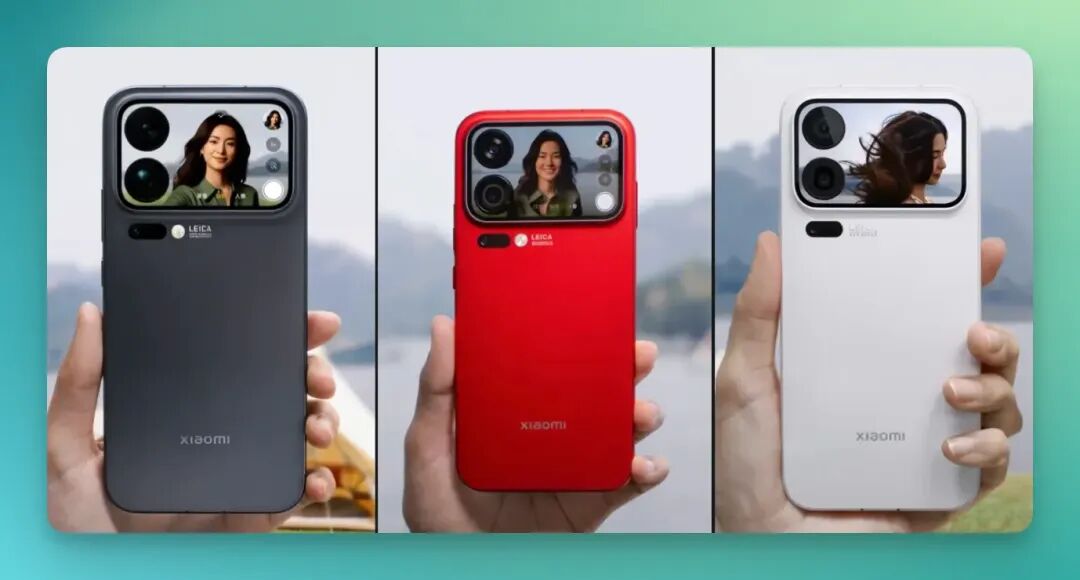
At this stage, it proved quite efficient, offering designers a wealth of visual references.
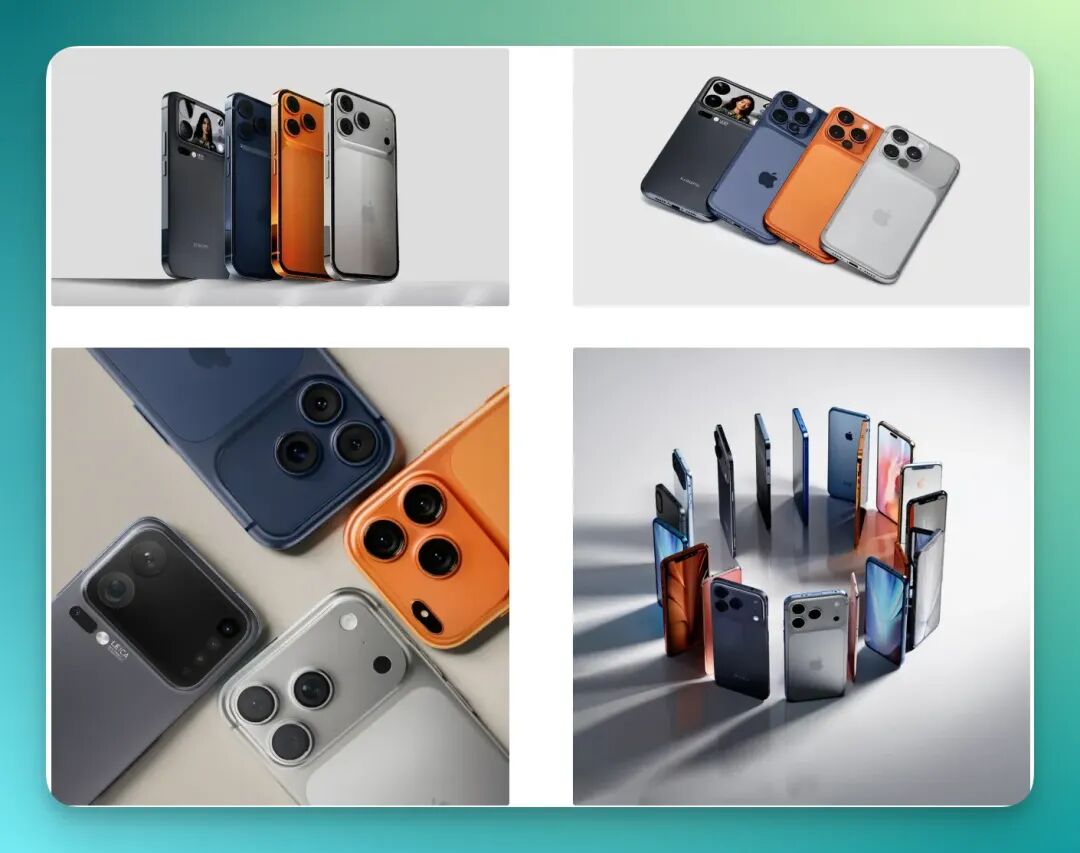
We then raised the difficulty, asking it to merge two phones from different brands into a single frame and create professional-grade product marketing imagery.
The final result is below. You'll find that in terms of multi-object arrangement, simulated commercial photography lighting, composition, and material reflections, it demonstrates genuine proficiency — with a quality approaching that of a professional studio.
Finally, I had it create a poster with both phones together.
The tagline: "I have a 17 Pro Max, and you have a 17 Pro Max too."
The final result is below — witty, well-executed, and harmoniously blended:
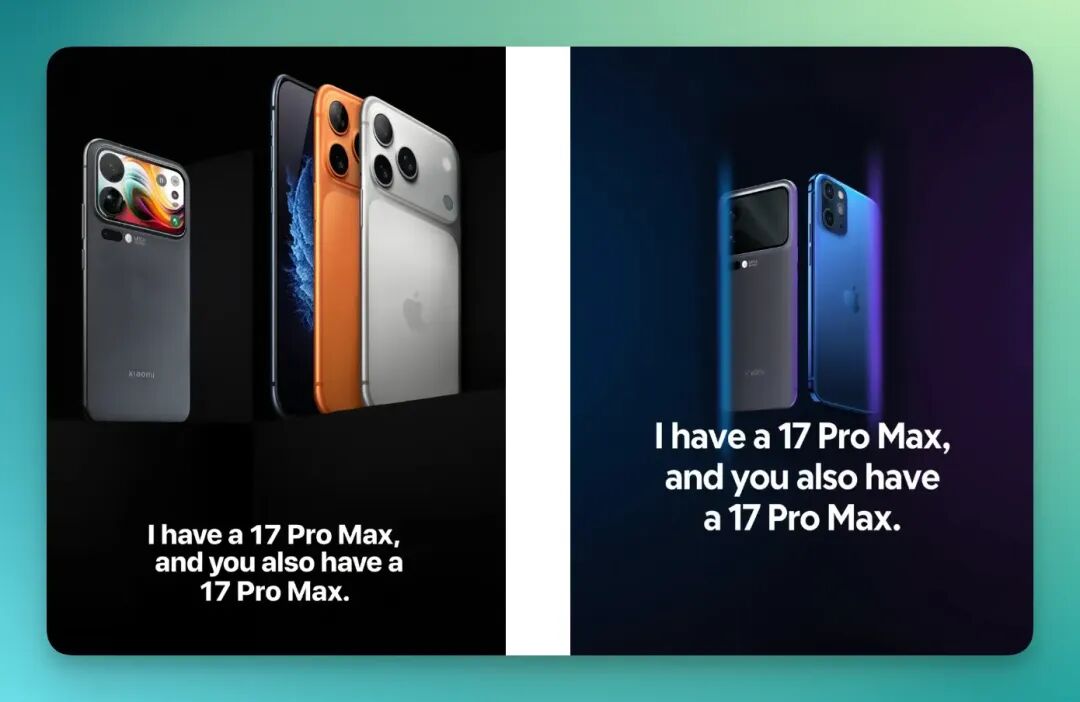
There are some minor hallucination flaws, but overall the effect of these commercial product shots is quite impressive.
Finally, I had it disassemble all the iPhone 17 components. Below are three "exploded view" diagrams it produced:
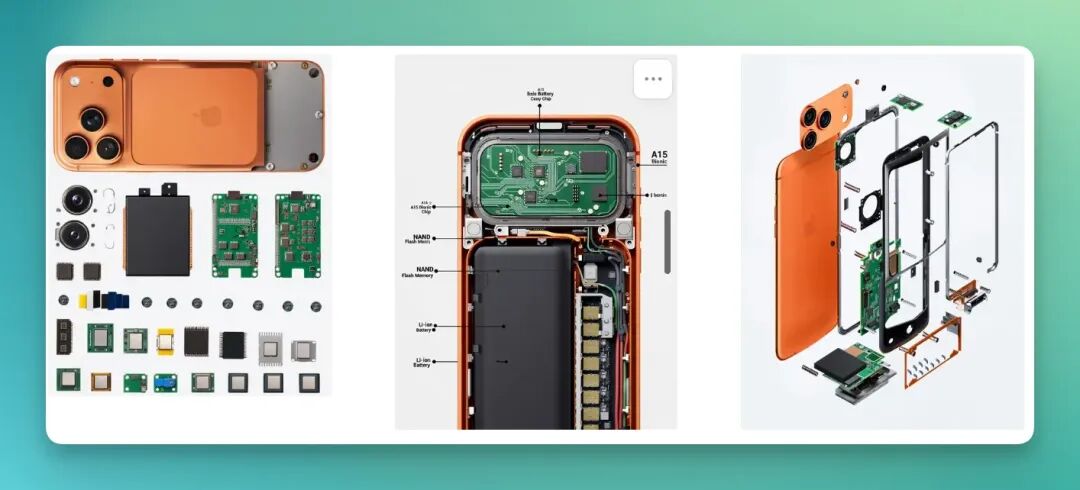
This actually demonstrates that REVE already possesses preliminary visual reasoning capabilities.
Aesthetics
This Reve Image 1.0 image generation model is not simply a fine-tuned or distilled version of an existing model, but a "trained from scratch" new model that strongly emphasizes diverse stylistic outputs. Reve's latest version also delivers more precise control over perspective, content, and detail.
1) Outfit Changes and Poses
When AI image generation handles human subjects, the most common complaints are stiff poses and vacant expressions — the so-called "AI look."
To test Reve's performance in this area, we tried virtual try-on.
I provided a model photo as the subject, supplemented with an image containing multiple clothing styles as an "inspiration source," and let Reve freely mix and match while striking professional commercial poses:
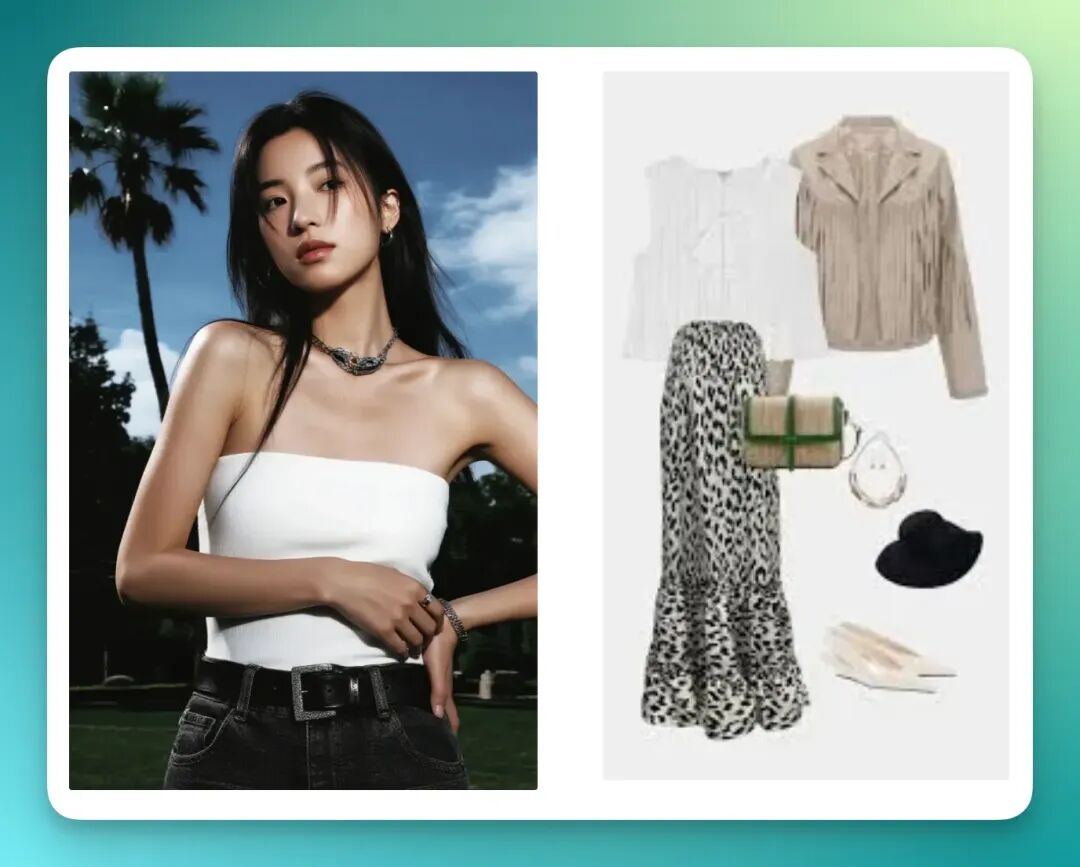
Here are the results from Reve — the overall effect is very realistic and aesthetically pleasing:
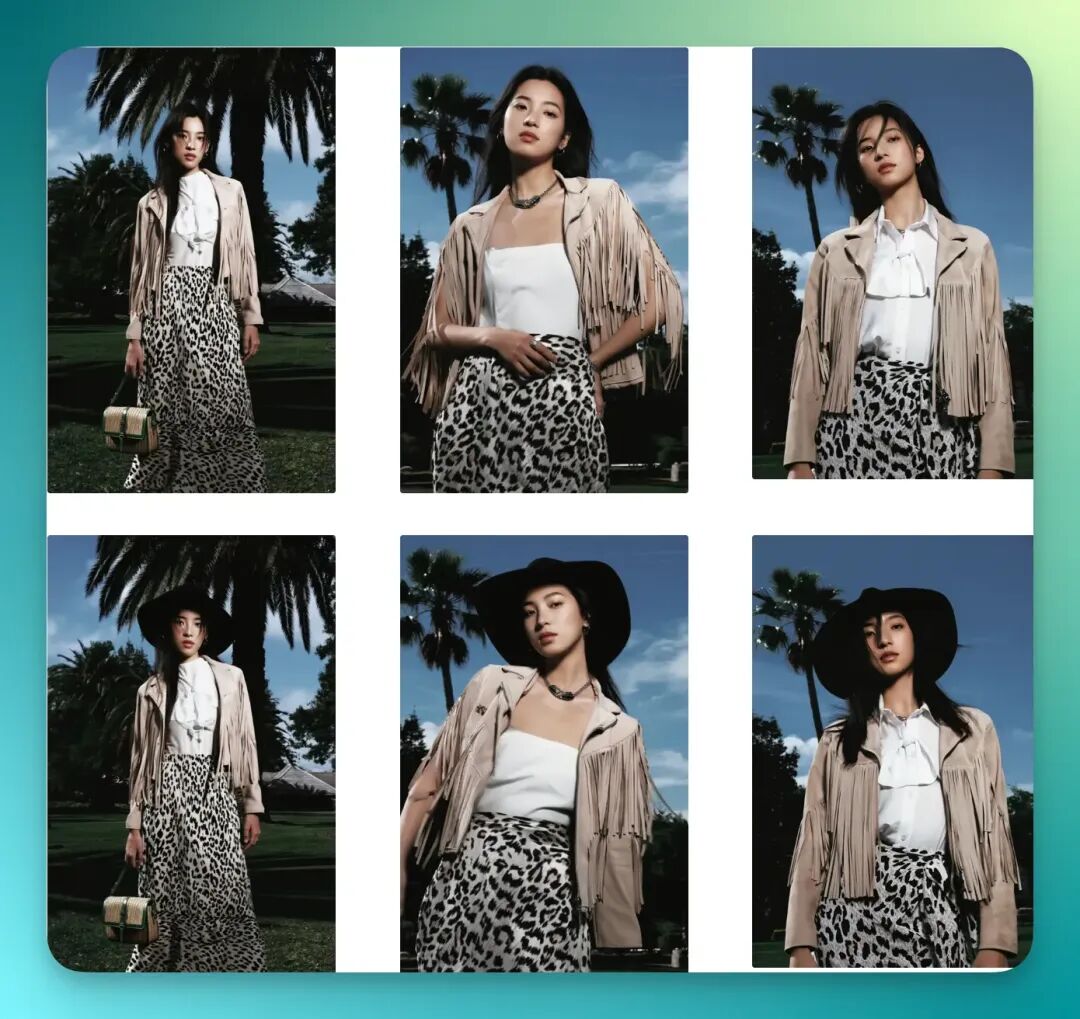
You'll notice that Reve-generated figures don't simply "Photoshop" clothes onto bodies. Compared to many traditional models, its pose, expressiveness, and scene integration appear far more natural, with greater variation in facial expressions and angles.
2) Cinematic Frames
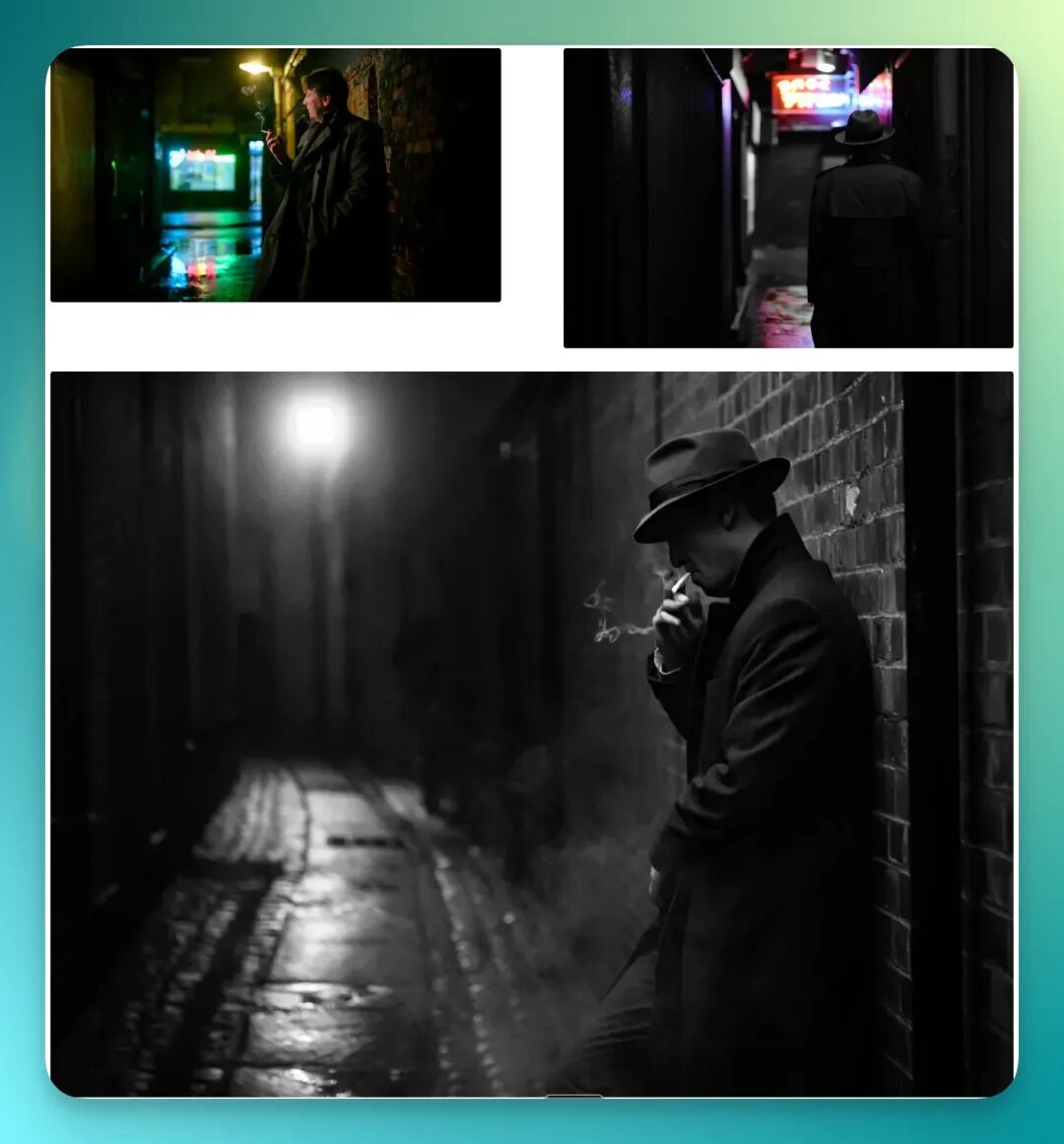
Finally, let's examine the realism of Reve's directly generated cinematic frames.
The prompt:
Cinematic freeze-frame: a dim alley in noir style, wet pavement shimmering with neon reflections, a man in a trench coat smoking under a flickering streetlamp, deep shadows with strong chiaroscuro contrast, 35mm film grain texture.
Another example in suspense style.
The prompt:
Slow tracking shot moving through an abandoned hospital corridor, flickering fluorescent lights, peeling paint on walls, a blurry figure faintly visible at the corridor's end, creating a cinematic sense of suspense and unsettling silence.
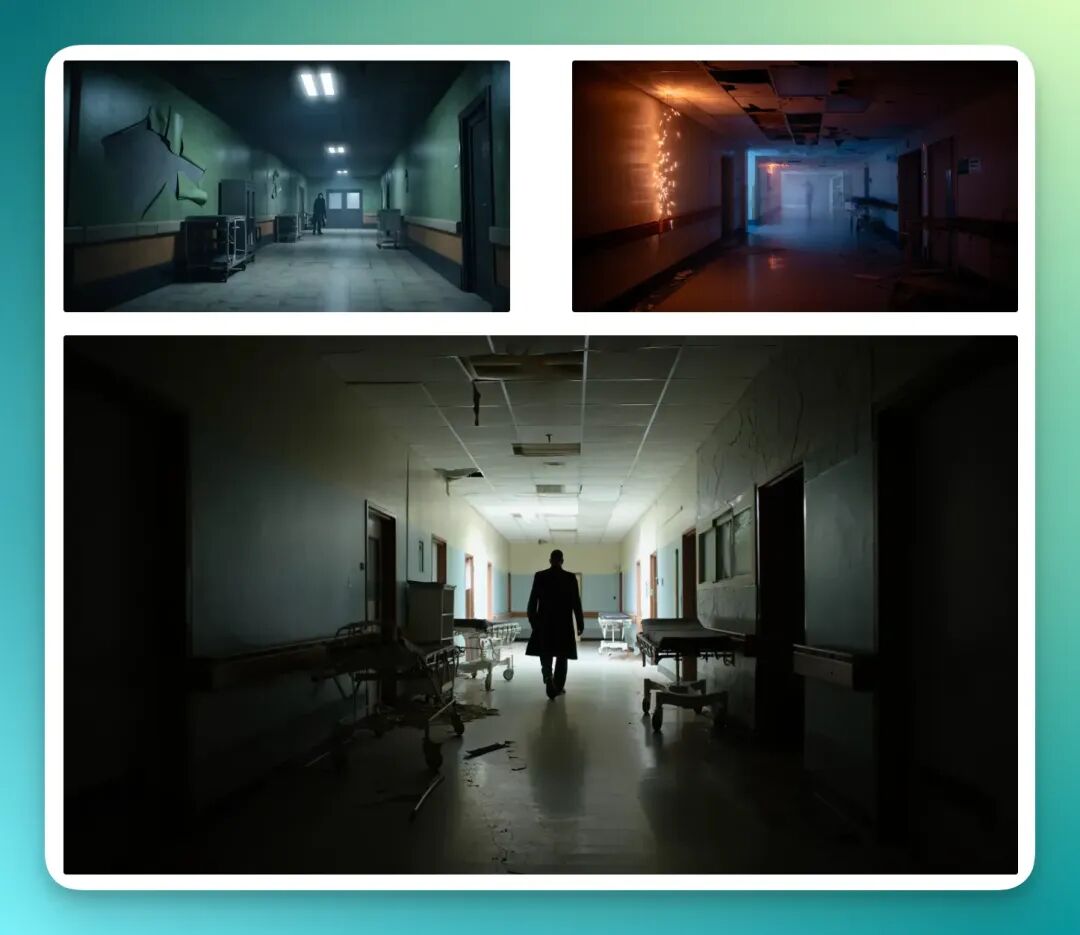
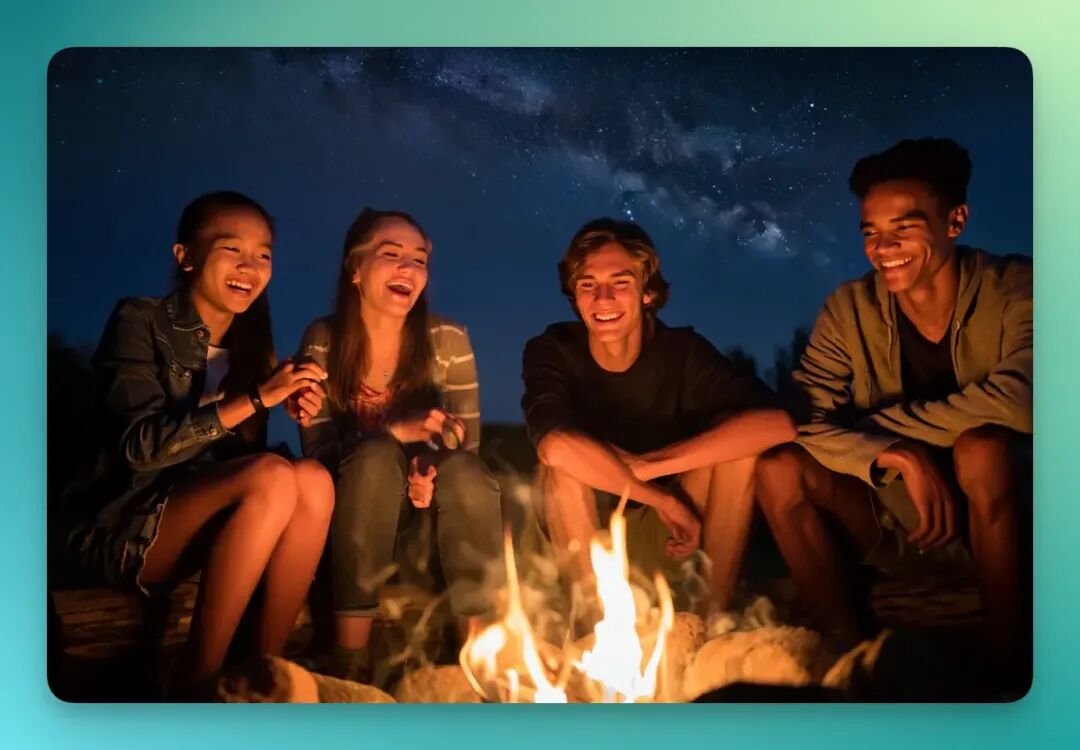
It must be said that the sense of realism Reve produces in multi-subject, multi-figure images genuinely feels like a significant improvement over traditional AI image generation models:
3) Posters
In terms of poster generation comprehension, Reve's output is relatively solid and competent — capable of producing visually harmonious, well-focused work, such as these lighthouse and traditional Chinese architecture posters in English:
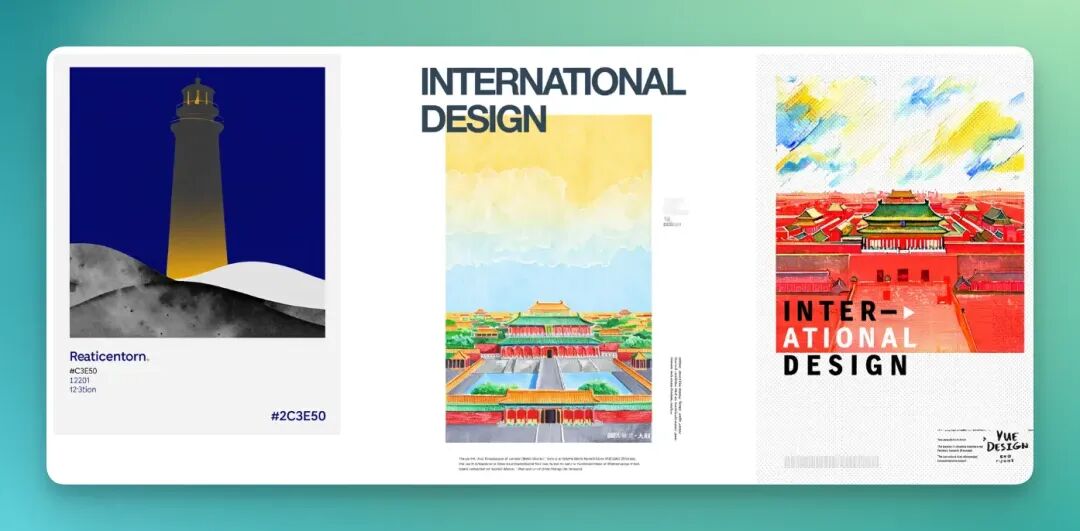
Reve's handling of diverse artistic styles is decent.
Take this retro punk music poster below, which involves many complex elements and image arrangements — Reve's result is passable.
The prompt:
Retro punk music poster: deep black aged noise background, overlaid with halftone dots and screen-print texture, maximalist layered typography. Large dark green deconstructed type "NOMERCY" at top, smaller text below reading "CRAFTEDBYHAND/1979" "ARCHIVERECORD". Two green-tinted images at center: vintage subway speeding and surreal close-up of an eye. Text info: left side "ITSABBYDESIGN/7/42 POSTERS /2025", middle section poem: "Is there any light for a shadow?..."
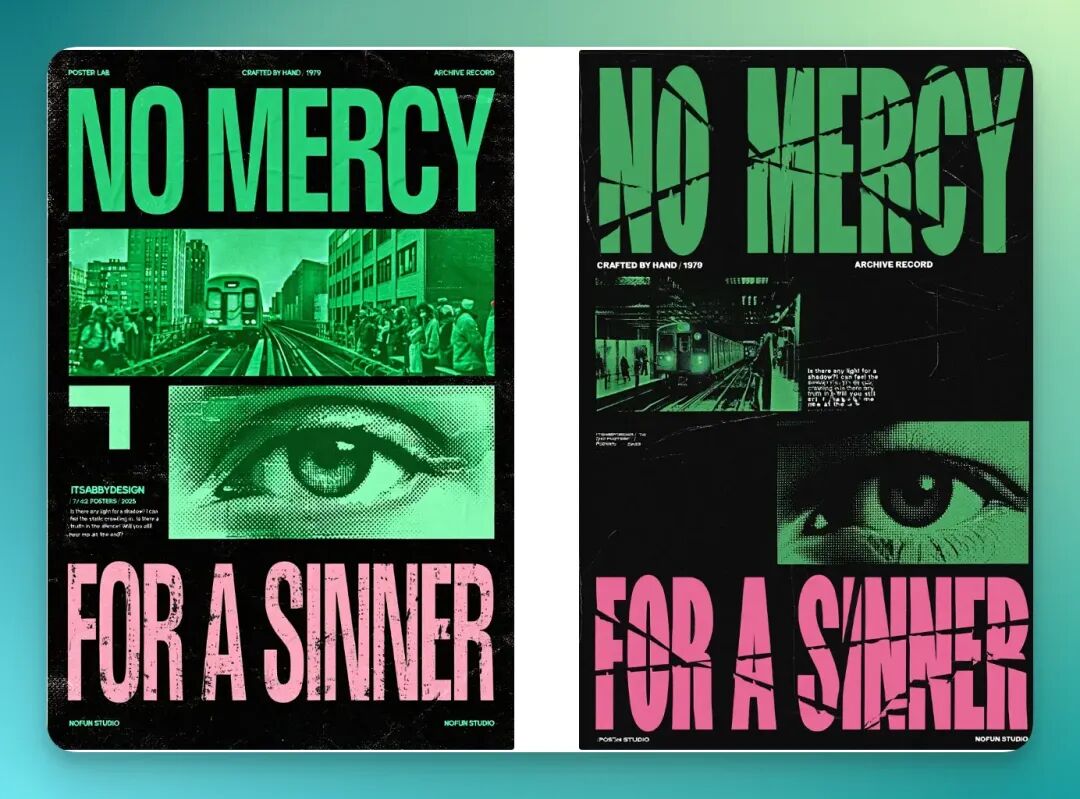
While details could still use refinement, it successfully fused the core elements of retro, punk, layered typography, and font design — the overall result is quite good.
Finally, I discovered that Reve is already a fairly competent AI image generation Agent.
When I asked it to generate a poster in Frank Frazetta's painting style, it automatically conducted research on the relevant artistic style first.
It searched Facebook, Amazon, and another site called Illustration on its own, supplementing its knowledge before generating images based on the acquired style.
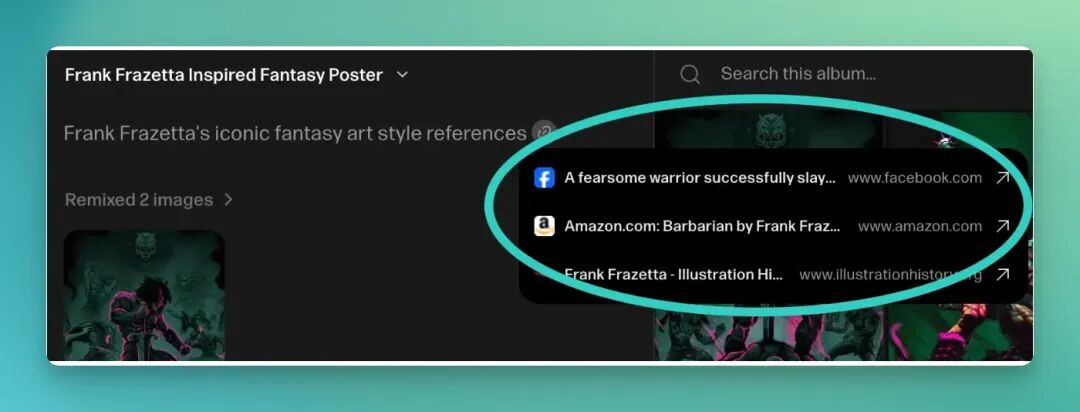
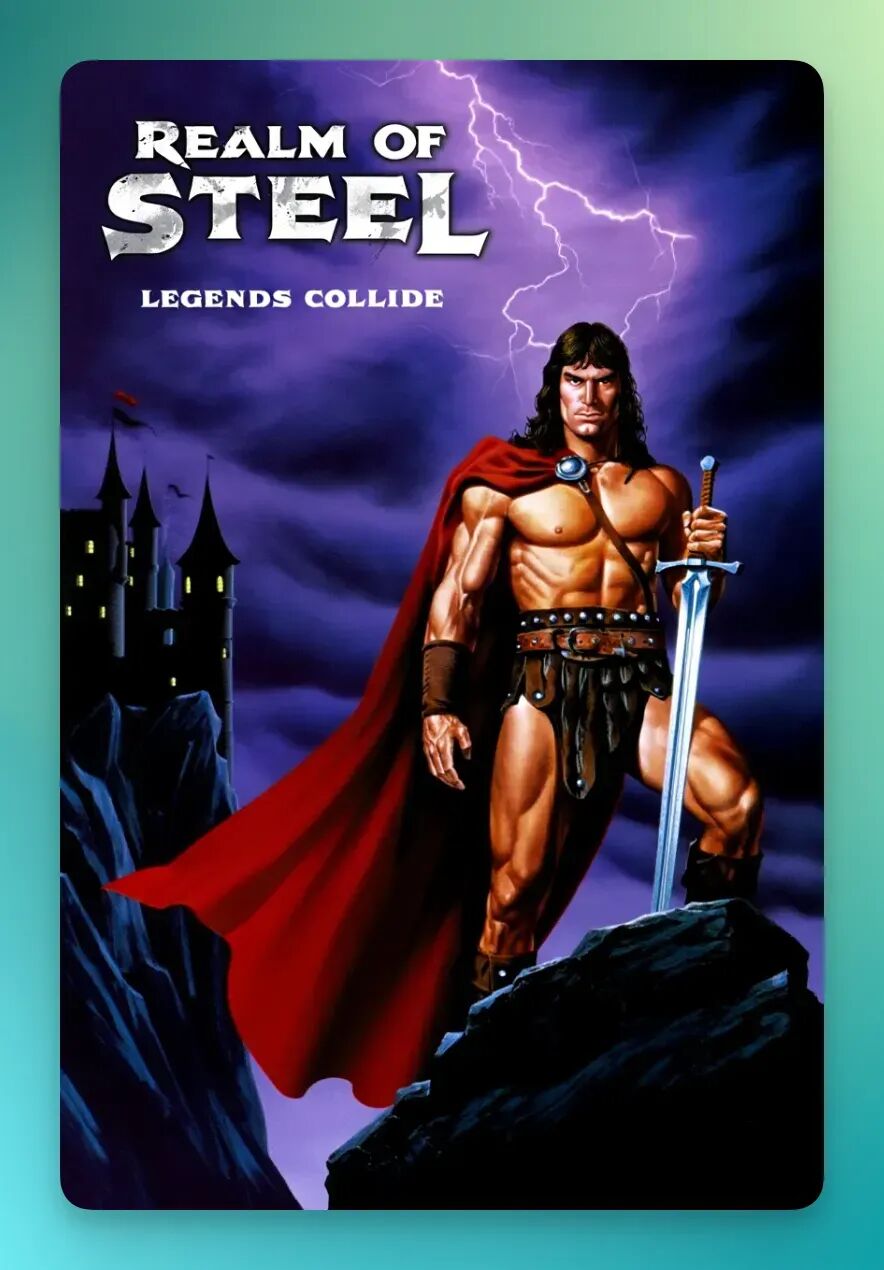
The prompt:
Frank Frazetta painting style, fantasy film poster
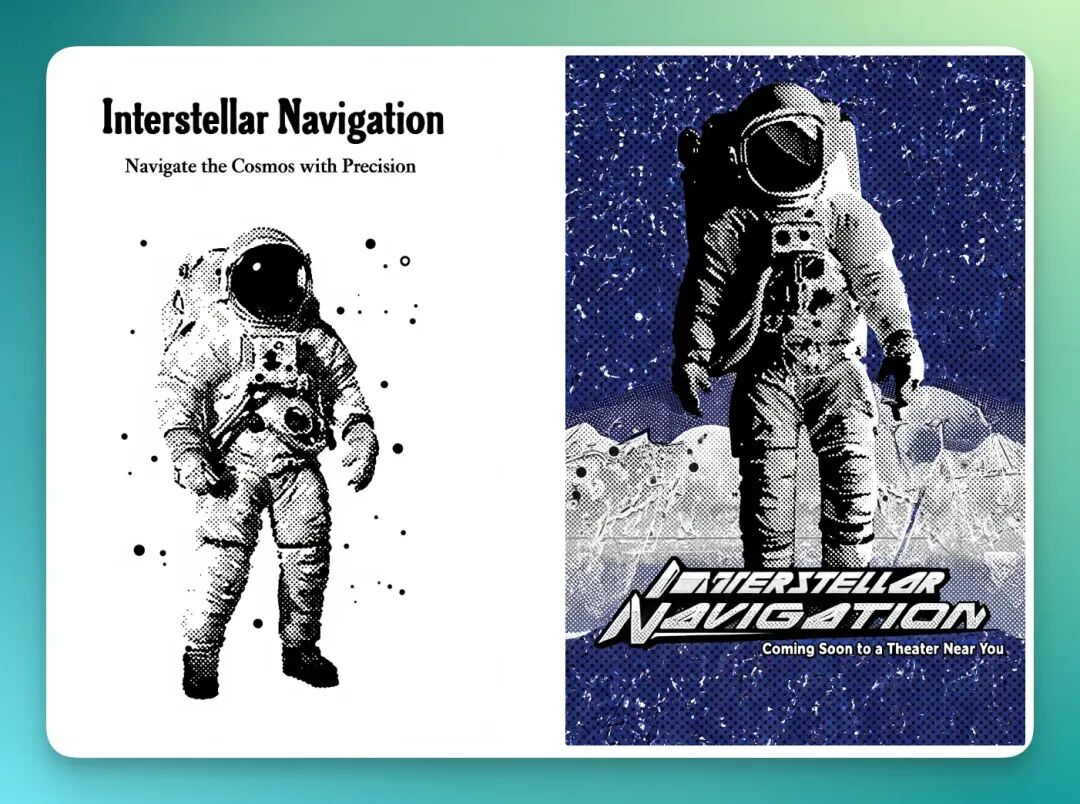
Reve also demonstrates decent support for various styles of stipple art.
Here are two stipple art sci-fi movie posters:
Using stipple art halftone technique, dense small black dots shaping the image, sci-fi movie promotional poster Interstellar navigation
In summary, Reve delivered solid results on two core fronts: first, the interaction method for image editing; second, the aesthetic quality of the final output.
Its editing capabilities, particularly that layer-like, directly draggable modification mode, are genuinely a highlight. Compared to relying entirely on iterative prompt adjustments, this intuitive operation method is more efficient in many scenarios and makes it easier to achieve fine-tuned modifications.
On the aesthetics front, whether in figure poses, scene atmosphere, or imitation of specific design styles, Reve's performance is fairly solid.
Taken together, whether as a productivity tool or a canvas for creative exploration, Reve demonstrates its standing as a top-tier AI image model.
One final note: during testing, after generating roughly 200 images, the system notified me that my daily free quota had been exhausted. This allowance should be sufficient for casual exploration.
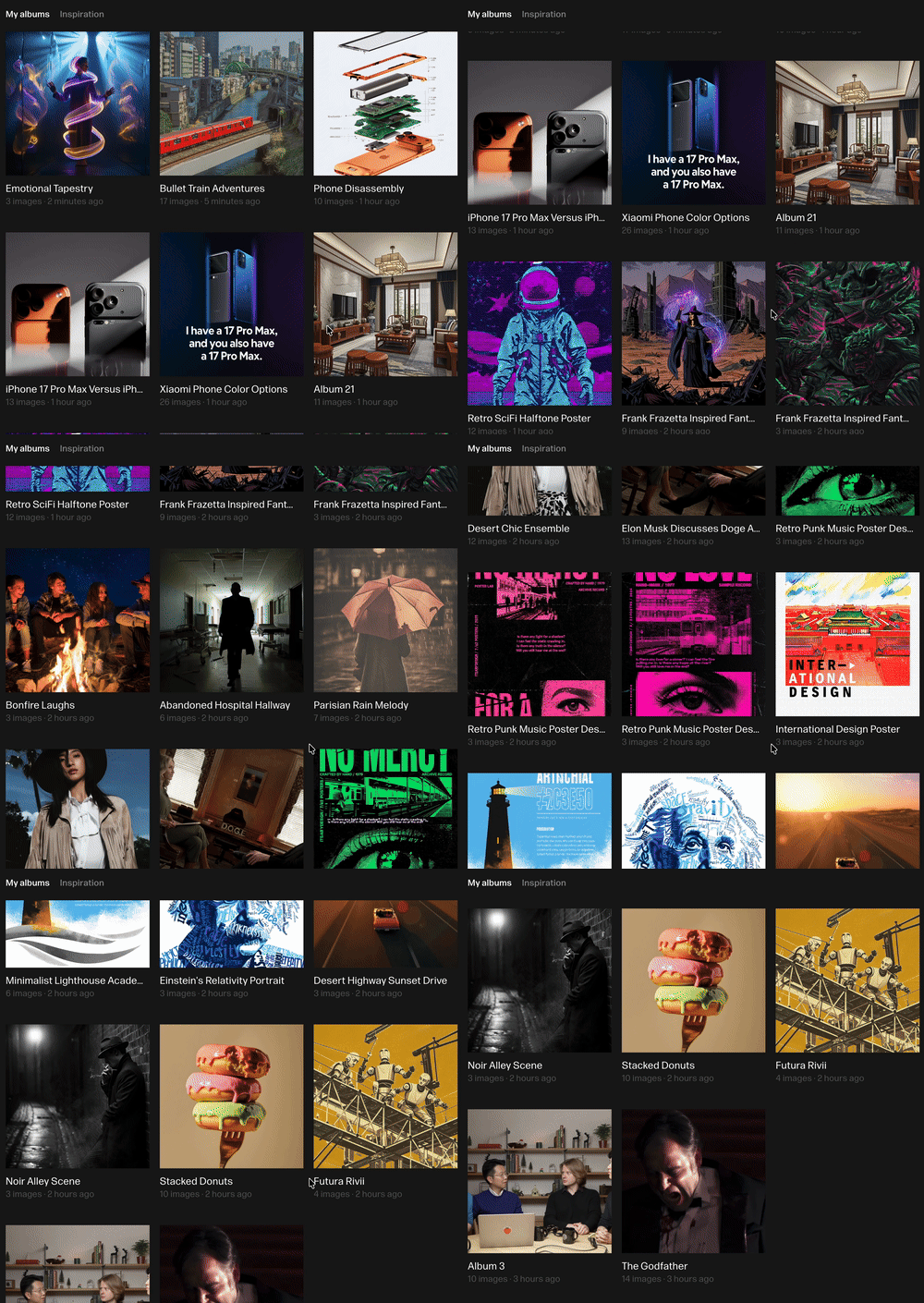
Review Summary: Worth Watching, But Keep Calm
After comprehensive testing, we can draw the following conclusions:
[1] Interaction method is the core highlight.
Reve's "layer-style" interactive editing is undoubtedly its biggest innovation, moving from "language interaction" toward more intuitive "visual interaction."
[2] The underlying model is the main bottleneck.
Despite the novel interaction experience, final image quality and success rates remain constrained by the capabilities of its underlying image generation model. When handling complex scenes, especially fine editing with multiple figures, its performance is somewhat unstable.
[3] Positioned as "creative assistant" rather than "creator."
For now, Reve is better suited as an inspiration catalyst. It can surface countless possibilities for you, but turning those possibilities into finished work still demands significant time and effort on your part — sifting, refining, and re-creating.
The first half of the AI race was a contest of force: bigger models, stronger compute, more photorealistic pixels. That was undeniably necessary and important — it laid the groundwork for everything we see today.
But now that technology has sprinted this far, now that anyone can generate a "pretty decent" image with AI, the bottleneck has shifted from technology to experience. The emergence of products like Lovart and Reve marks exactly this inflection point.
The second half of the AI race is no longer just about "model power" — it's about "interaction experience."
The focus is no longer on how much the model can do, but on how low the barrier to entry is, how much creative freedom it offers, and how genuinely it serves creators.
After all, great interaction exists to dissolve that sense of "distance" between humans and AI — to let everyone have more fun just playing around!