Runway AI Removes Open-Source Models, Sparking Concern | ChatGPT Weekly Active Users Surpass 200 Million | Alibaba Open-Sources Multimodal Model Qwen2-VL

Flip through the digest, get all the AI news you need

💥 Runway AI Removes Open-Source Models, Drawing Industry Attention
🥂 ChatGPT Weekly Active Users Surpass 200 Million
💭 Character.AI Undergoes 5% Layoffs
💫 Zhipu AI Releases New Generation Foundation Model
🌏 Alibaba Open-Sources Multimodal Model Qwen2-VL
👁️ Tongyi Web Version Launches PPT Creation Feature
🦿 EngineAI Robotics Closes Angel Round Led by SenseTime
✍️ Codeium Raises $150 Million in Series C
👀 Google Gemini Unveils 5 New "Study Smarter" Features
Runway AI Removes Open-Source Models, Drawing Industry Attention
AI video startup Runway suddenly deleted its open-source models from both Hugging Face and GitHub without prior notice, sparking widespread concern across the industry. The removal included Stable Diffusion v1.5, a model jointly developed by Runway, Stability AI, and Ludwig Maximilian University of Munich. So far, Runway has made no public statement about the deletion, and its social media channels remain active as if nothing happened.
Industry observers have floated two main theories for the move: either a financial dispute with Stability AI, or legal concerns — with Runway potentially destroying evidence. Tensions between Runway and Stability AI over the open-source release of Stable Diffusion models have been public and contentious, with both sides telling conflicting stories. Additionally, Runway, Stability AI, and several other AI companies are facing a class-action lawsuit over using artists' works to train their models. A U.S. district court recently denied the companies' appeal, allowing plaintiffs to proceed to the evidence-discovery phase. The Stable Diffusion models may be central evidence in this case.
ChatGPT Weekly Active Users Surpass 200 Million
OpenAI's AI chatbot now has more than 200 million weekly active users, doubling in just one year. OpenAI also reported that 92% of Fortune 500 companies are using its products, and automated API usage has doubled since the July release of GPT-4o mini.
CEO Sam Altman said in a statement to the publication:
People are using our tools and integrating them into their daily lives, making a real difference in areas like healthcare and education — whether it's helping with everyday tasks, solving hard problems, or unlocking creativity.
Character.AI Undergoes 5% Layoffs
According to The Information, AI startup Character.AI laid off at least 5% of its staff shortly after closing a major deal with Google, with cuts focused on marketing and recruiting roles. The company had roughly 120 employees before the layoffs.
Character.AI is now being led on an interim basis by general counsel Dom Perella. The remaining leadership faces the challenge of convincing roughly 100 rank-and-file employees to stay committed to new leadership and a new mission — while their former CEO and numerous colleagues who joined Google have already made their fortunes. This buy-in is essential if Character.AI hopes to attract new venture funding.
The company had long championed its closed-loop strategy: training proprietary large models, deploying them in chatbots, and feeding user interaction data back into training. Now, Character.AI will begin using open-source models developed by others and shift its focus to post-training.
Zhipu AI Releases New Generation Foundation Model
At KDD 2024, Zhipu AI unveiled its new generation of foundation models, including the language model GLM-4-Plus, the text-to-image model CogView-3-Plus, the image/video understanding model GLM-4V-Plus, and the video generation model CogVideoX — all achieving top-tier international performance in their respective domains. Zhipu AI also launched a video calling feature on its Qingyan app and made the GLM-4-Flash API freely available on its MaaS platform.
Alibaba Open-Sources Multimodal Model Qwen2-VL
Alibaba open-sourced its latest vision-language multimodal model Qwen2-VL[1]. Benchmark results show that its 72B variant outperforms leading closed-source models including OpenAI's GPT-4o and Anthropic's Claude 3.5 Sonnet on most metrics, making it one of the strongest multimodal models currently available. Qwen2-VL supports Chinese, English, Japanese, Korean, and numerous other languages, and is available for commercial use under the Apache 2.0 license. Alibaba also released the Qwen2-VL-72B API to help developers build and enhance generative AI applications with multimodal capabilities.
Tongyi Web Version Launches PPT Creation Feature
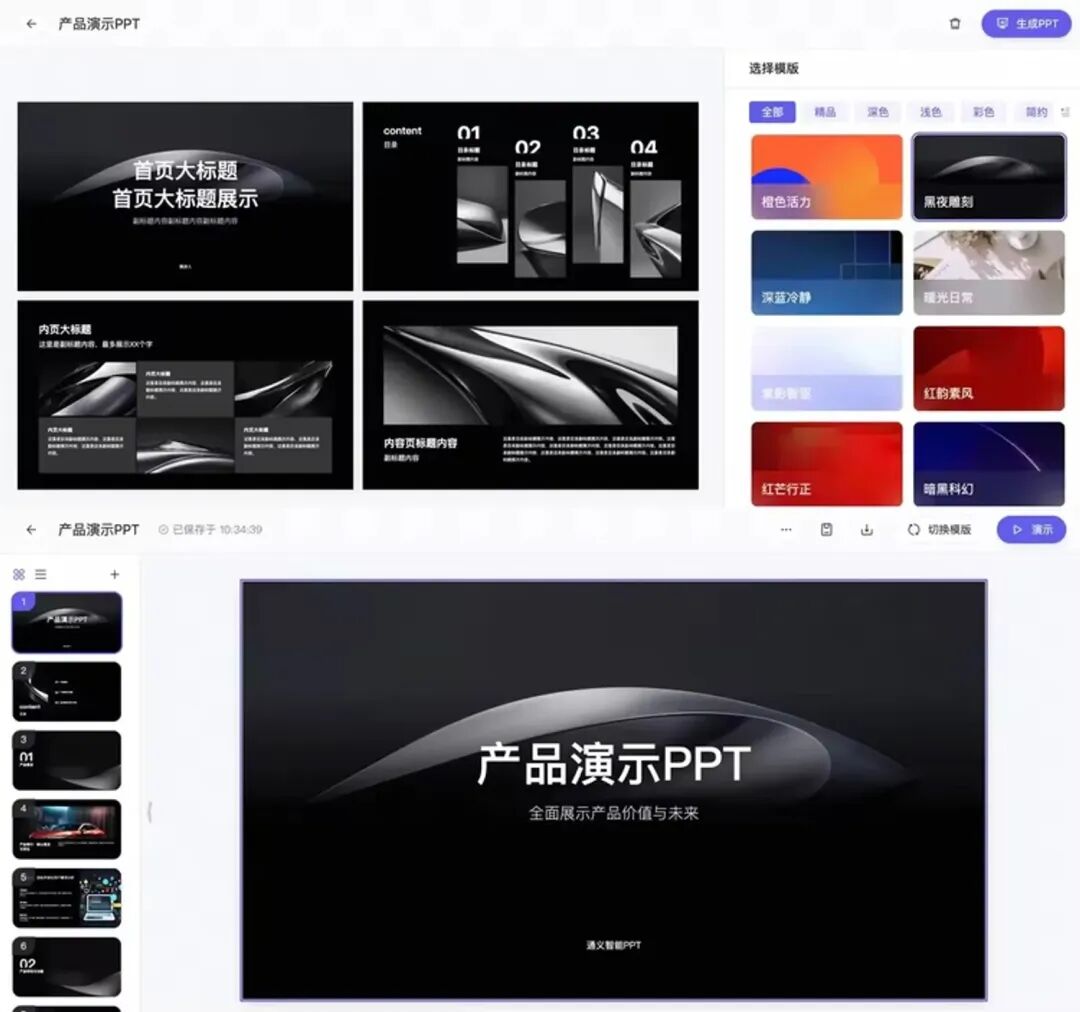
The Tongyi web platform launched a "PPT Creation" feature with three core strengths: substantive content, polished design, and intelligent layout. The feature is completely free and built on Tongyi's large language model. On the web platform, the audio/video transcription tool "Tongyi Tingwu" has been upgraded to "Real-time Notes," and the long-document reading assistant "Tongyi Zhiwen" has been rebranded as "Reading Assistant." Together with PPT Creation, these tools now form "Tongyi Efficiency," covering the full workflow from information gathering and organization to comprehension and content creation.

EngineAI Robotics Closes Angel Round Led by SenseTime
Shenzhen-based embodied intelligence general-purpose robotics developer EngineAI Robotics completed angel and angel+ rounds totaling nearly RMB 100 million. The two rounds were led by SenseTime Guoxiang and HLC respectively, with additional participation from Hefei Binhu Financial Investment, Xunshang Capital, and others.
Looking ahead, EngineAI plans to launch multiple full-size humanoid robots in Q4 of this year, internally designated the "SE series" and "PM series," with heights ranging from 1.65m to 1.80m. These robots will target industrial and household applications, with particular focus on high-risk operations, manufacturing, and intelligent assembly across industries including automotive, battery production, and semiconductors.
Codeium Raises $150 Million in Series C
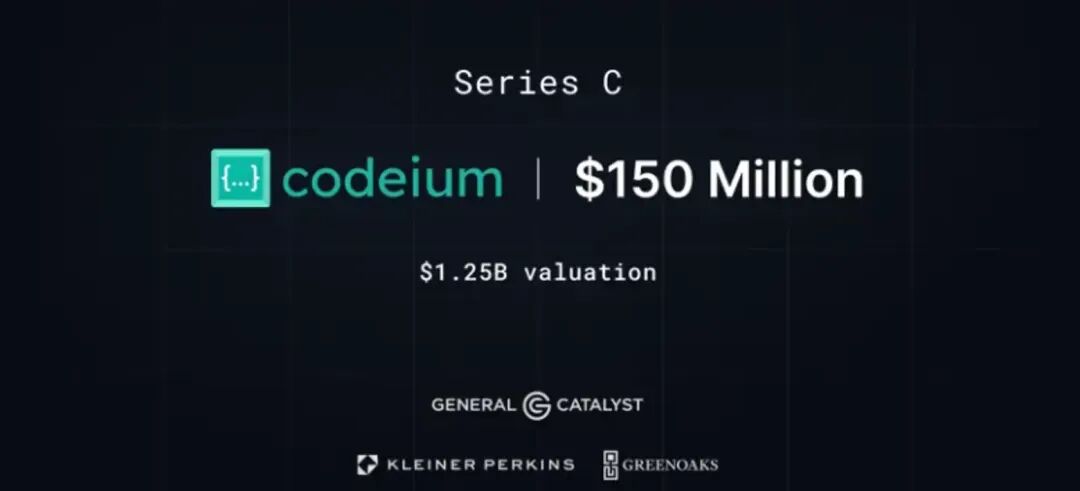
U.S. AI coding startup Codeium announced it has raised $150 million in Series C funding led by General Catalyst. The round values the company at $1.25 billion, officially earning it unicorn status.
Codeium was founded in 2021 by Mohan and his childhood friend and MIT alumnus Douglas Chen. The platform runs on generative AI models trained on public code repositories, supports approximately 70 programming languages, and integrates with numerous popular development environments including Microsoft Visual Studio and various IDEs. The company currently has 80 employees and plans to hire 40 more by 2025 to compete more aggressively in an increasingly crowded market.

Google Gemini Unveils 5 New "Study Smarter" Features
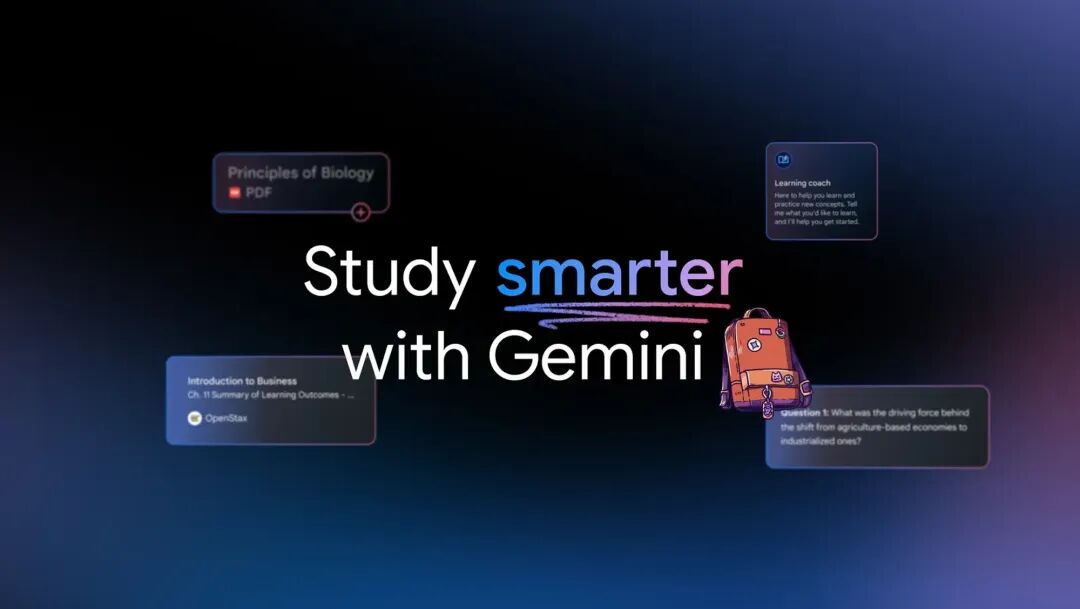
With the new academic year underway, Google rolled out a suite of features designed to help students learn more effectively through its AI assistant Gemini. Whether you're a freshman just starting college or a returning student ready for new challenges, Gemini is positioned to help you study more efficiently. The five features include:
Knowledge extraction from authoritative textbooks: Gemini can pull information from academic textbooks provided by OpenStax, Rice University's educational nonprofit initiative.
Interactive quizzes to test your knowledge: Gemini guides you through questions one by one, offering feedback and hints if you get stuck along the way.
Support for uploading study materials for professional-grade analysis: With Gemini Advanced, you can upload up to 10 documents at once — such as syllabi or your own notes — and ask Gemini to explain content or create customized study guides. Gemini will dive deep into your materials, break down key concepts, and generate practice questions based on your course content.
Personalized learning guidance through the Study Coach Gem: Gemini Advanced subscribers can access Gems, customizable AI experts on any topic. The pre-built Study Coach Gem helps create learning plans, including progress checks to keep you on track.
Multimedia explanations for any topic: Gemini can break down information in accessible ways, from videos to images to real-life examples tailored to what you're studying.
All things are ready, if our mind be so.
— William Shakespeare



Editorial Team
Editor: Yuki
Design: Ivan
For business inquiries, contact us on WeChat: Rwkfbcianvd
References
[1] Qwen2-VL: https://qwenlm.github.io/zh/blog/qwen2-vl/