What Breakthroughs Are Behind the "Super Search" Launched Today by the World's No. 2 AI Search Engine?

The best way to predict the future is to create it.
The boundary between Agent and search is disappearing.

👦🏻 Author: Yimu
🥷 Editors: Jingshan, Koji
🧑🎨 Layout: NCon

"Forever riding the wave" — Zhou Hongyi is one of the few entrepreneurs who truly lives up to this phrase.
Every so often, Zhou Hongyi reappears in our field of vision. He's not just a trailblazer for the entrepreneur-as-IP model; he's also a super-activist in the AI era.
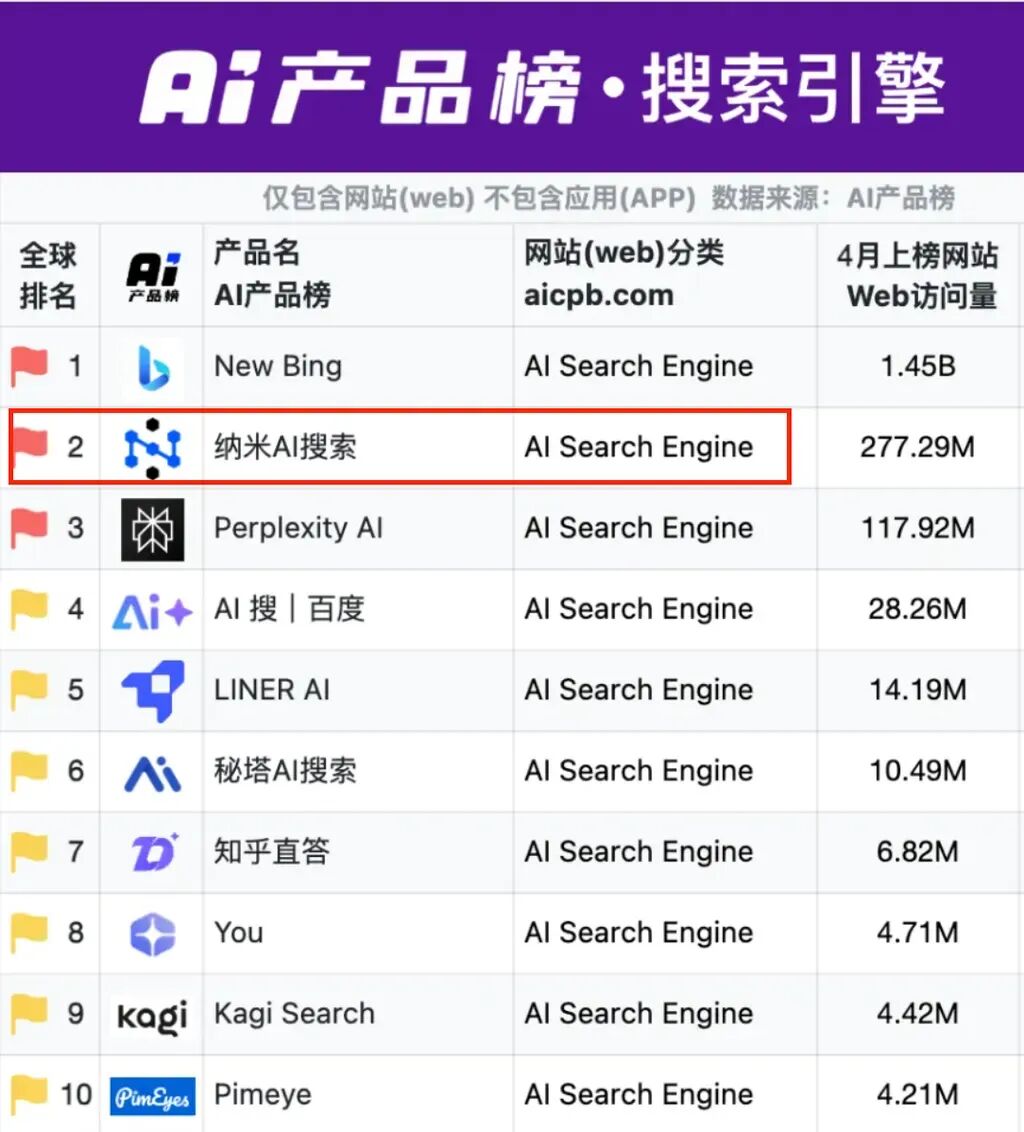
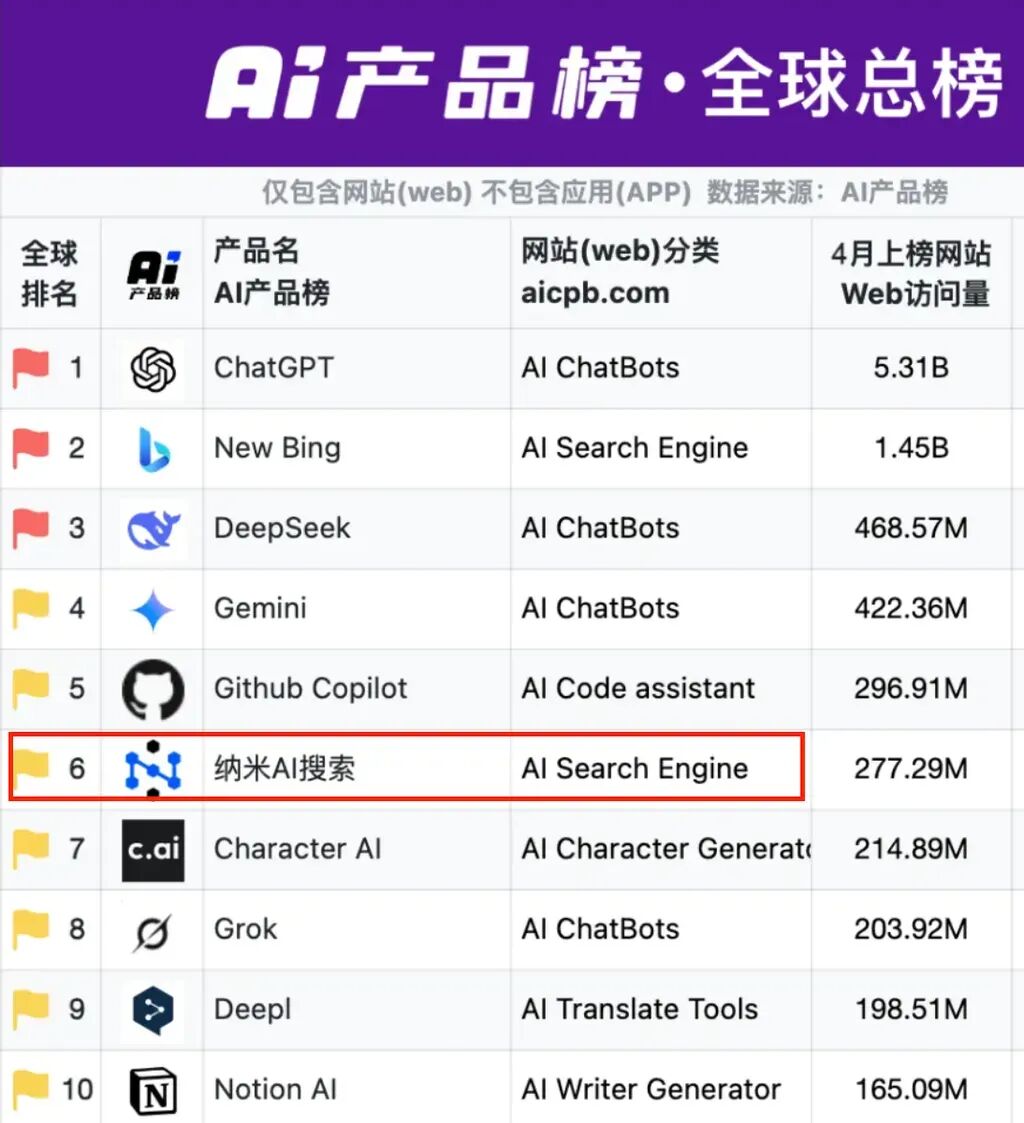
In the latest April global "AI Product Rankings," Crossing discovered that 360's "Nami AI Search" has already surpassed many established players in the AI search space.
This left us surprised and delighted, but above all, impressed: you can always trust the red-jacketed man's product instincts and marketing chops.
On this ranking's overall web traffic leaderboard, Nami AI Search leaped to sixth place globally, becoming the highest-traffic AI search engine in China. Among search applications, it ranks second worldwide — just behind New Bing and ahead of Perplexity.
"Why Nami AI Search?"
At a time when we've grown accustomed to using ChatGPT as our all-purpose Q&A tool, Perplexity for Googling papers and obscure trivia, and the steady stream of Deep Research-like features from OpenAI and other major AI model vendors, seeing a domestic search product crack this kind of list is genuinely energizing.
So for the past couple days, Crossing's internal WeChat group has been buzzing with one question: "Why Nami AI Search?" Is it simply the halo effect of 360 as a major tech company? Or does Nami have product and experience strengths that we've somehow overlooked?
With this question in mind, we examined its feature update cadence over recent months — and found it dense. New capabilities roll out roughly every two to three weeks, many of them quietly launched without much fanfare.
From March onward, here's what we found:
- March 24: Nami AI officially supports AI video creation, integrating multiple large models including Doubao, Keling AI, and Hunyuan for text-to-video, image-to-video, and AI special effects video creation.
- March 26: Nami AI integrates DeepSeek-V3 latest version — DeepSeek-V3-0324
- April 23: Nami AI announces the "MCP Universal Toolbox" for individual users
- May 18: Nami AI product homepage launches "Super Search"
 Client: https://bot.n.cn/
Wait — what is "Super Search"?
That's right — today, we discovered a new feature entry point on Nami's homepage, and the name alone carries serious swagger:
🚦
"Super Search"
After taking it for a spin, we found this to be a move that demands attention.
It crosses traditional data walls (Xiaohongshu, Dianping, maps, Bilibili, Tencent Video, PDF, doc, images — all searchable), while integrating MCP and multimodal capabilities. It very much resembles what we'd call an AI Agent in today's context.
Put simply, this is the first AI search product Crossing has observed that packages together typical Agent capabilities, cross-wall universal search, MCP, and multimodal functionality.
Here's our in-depth, hands-on experience.
Next-generation search: not delivering "answers," but delivering "results"
Nami AI Search made waves earlier with its MCP tool system launch. This new Super Search feature deeply weaves those MCPs into Agent workflows.
From an overall task flow perspective, Nami AI Super Search resembles a "search-enhanced version of DeepResearch."
Here's a concrete example. We tested it with Koji's favorite activity: birdwatching.
I gave a simple prompt: "I'm planning to organize a birdwatching activity in Shanghai — put together a research report for me."
It immediately began trying to suss out my true intent:
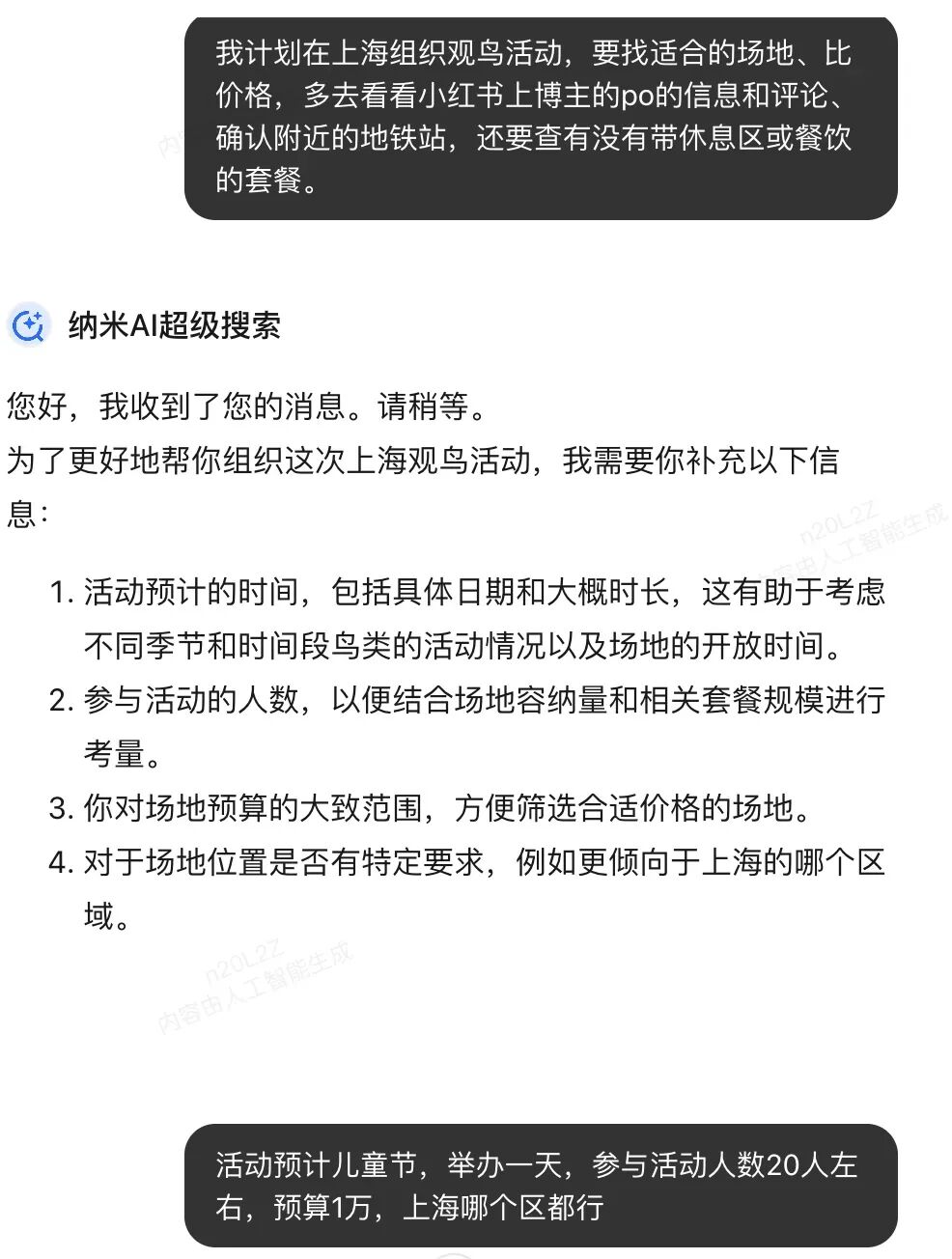
The primary manifestation of Agent capabilities being packaged into Nami AI Super Search: it can precisely decompose the original question and align with user intent.
Once it grasps the general need, it first drafts a task list for itself:
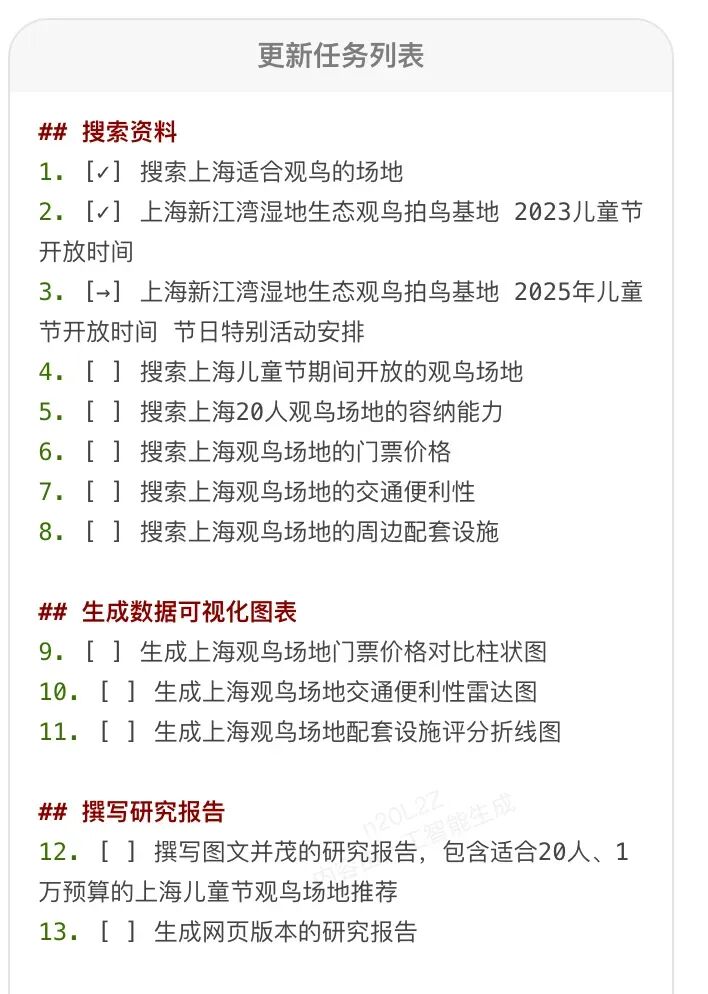
Then, it performs keyword decomposition based on user intent, only then calling MCP-search:
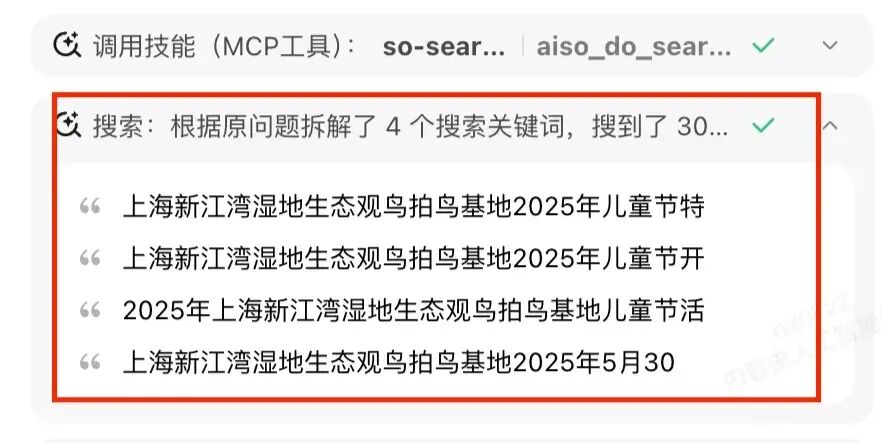
If it had stopped here — simply executing conventional searches based on subtasks — I might not have been particularly impressed. After all, this is basic table stakes for AI Agents today.
But what struck me was how tirelessly it established new main tasks, decomposed them further, and in every task, surfaced sources and information formats that I had assumed would be beyond its reach.
The search volume within a single Super Search task
So what "data walls" did it manage to scale? Two types: source restrictions and multimodal information restrictions.
Breaching data "walls" and strengthening multimodal capabilities
From the traditional search engine user experience, when we try to acquire specialized knowledge in vertical domains, we constantly run into various "document libraries" and sources where accuracy and content quality are questionable.
Nami AI Super Search vaulted over these obstacles. While I remain curious about what makes its MCP-research so powerful, it genuinely demonstrated its capabilities.
In actual searching, I found that beyond information relatively accessible through traditional search engines, it extensively explored various document libraries — Renren Wenku, 360doc Personal Library, and even CNKI (China National Knowledge Infrastructure).


What surprised me most: Super Search could even penetrate certain paid document libraries:

Beyond navigating walled-off text sources, Super Search also possesses powerful multimodal information acquisition capabilities — for instance, direct access to image-text platforms like Dianping, Xiaohongshu, and Trip.com travel guides.
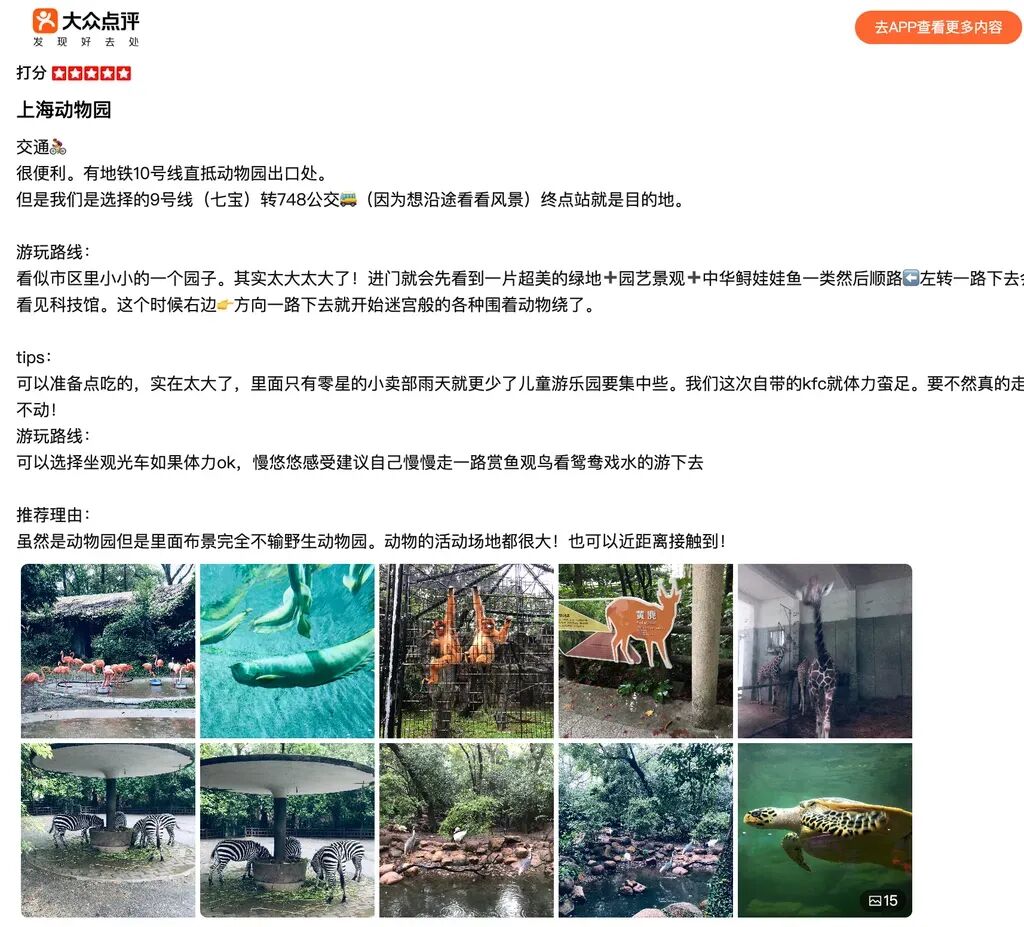


When it reaches these image-text platforms like Dianping and Xiaohongshu, it encounters substantial image content — yet this doesn't prevent Super Search from treating them as information sources.
Moreover, PDF and PPT formats don't stop Super Search either.
For example, scientific survey reports in PDF format, and PPT-format bird species disease period archives.
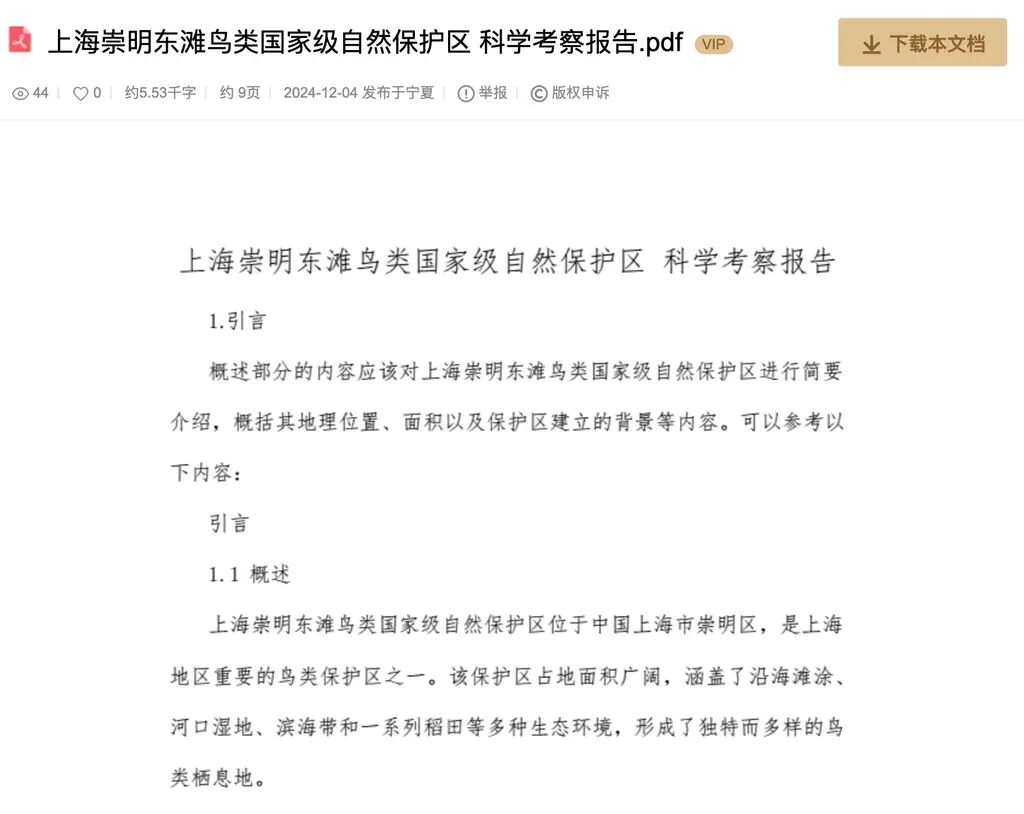

Super Search consulted nearly 200 sources. I spent considerable time browsing through the various information types it gathered.
I was particularly surprised to discover that Super Search also treats video platforms as information sources. In this birdwatching activity research report, it opened a Xigua Video item about "Chongming Dongtan Wetland Park."

Beyond that, Bilibili videos, Douyin short videos, and SINA video all serve as information sources for Nami AI Super Search.

At this point, Nami AI Super Search has scaled most data walls.
Hundreds of sources distributed across different file types become the foundation for its next step: assembling results and demonstrating generative capabilities.
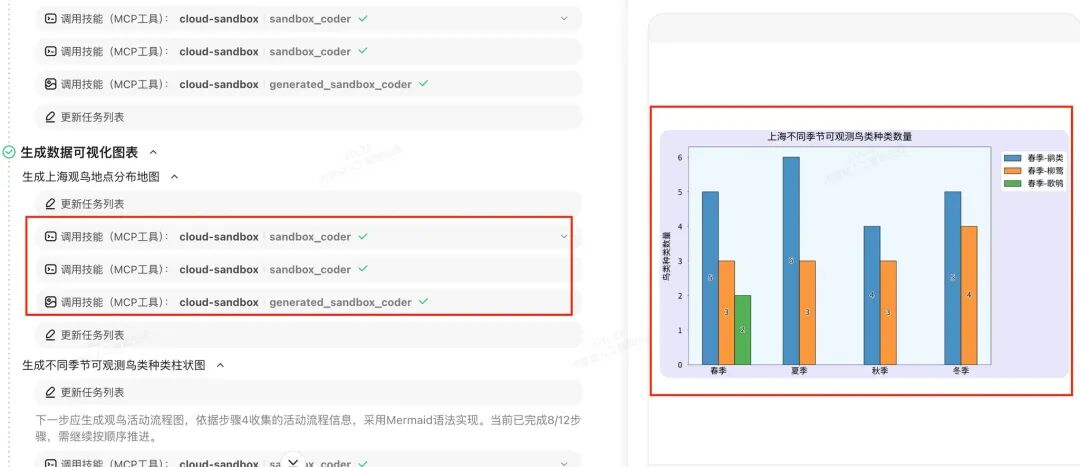
When searching concludes, it calls MCP-cloud-sandbox and begins programming, autonomously producing visualized data charts:
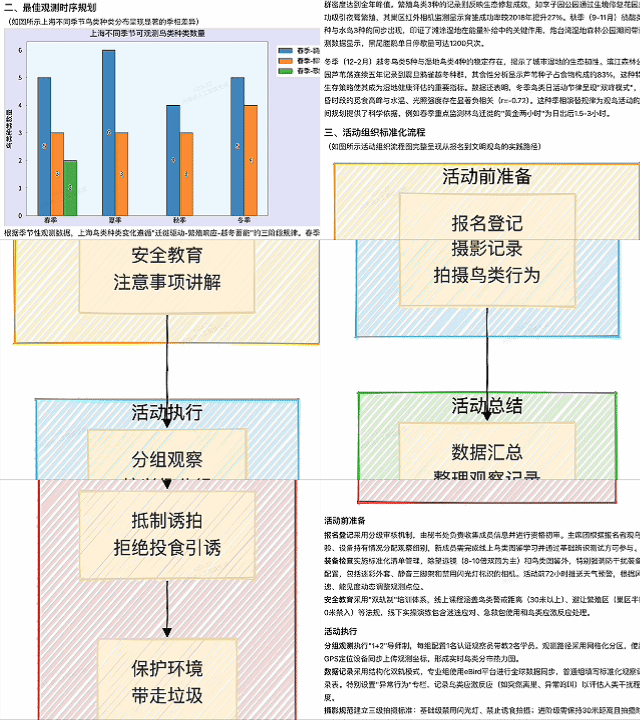
With these generated contents confirmed, Nami AI formally generates the research report, first producing a 10,000-word illustrated version:
Then, Nami AI Super Search decides this format isn't intuitive enough, so it calls the code editor again and builds a complete visualized, even interactive website:

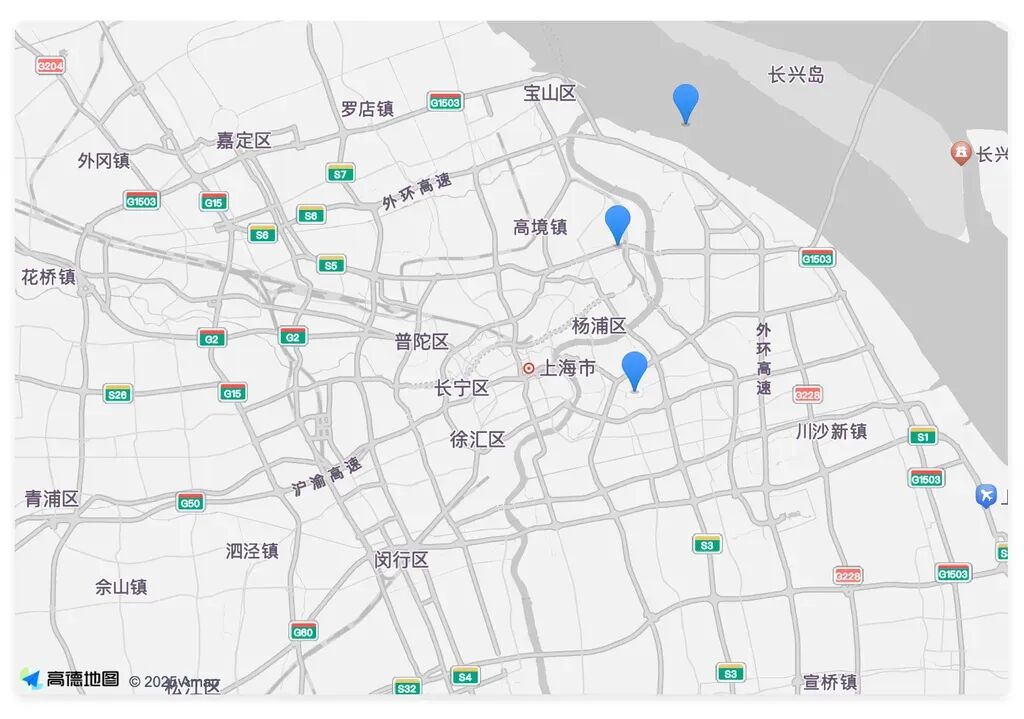
I recorded a screen capture so you can directly experience "what kind of visualized webpage a Super Search can produce."
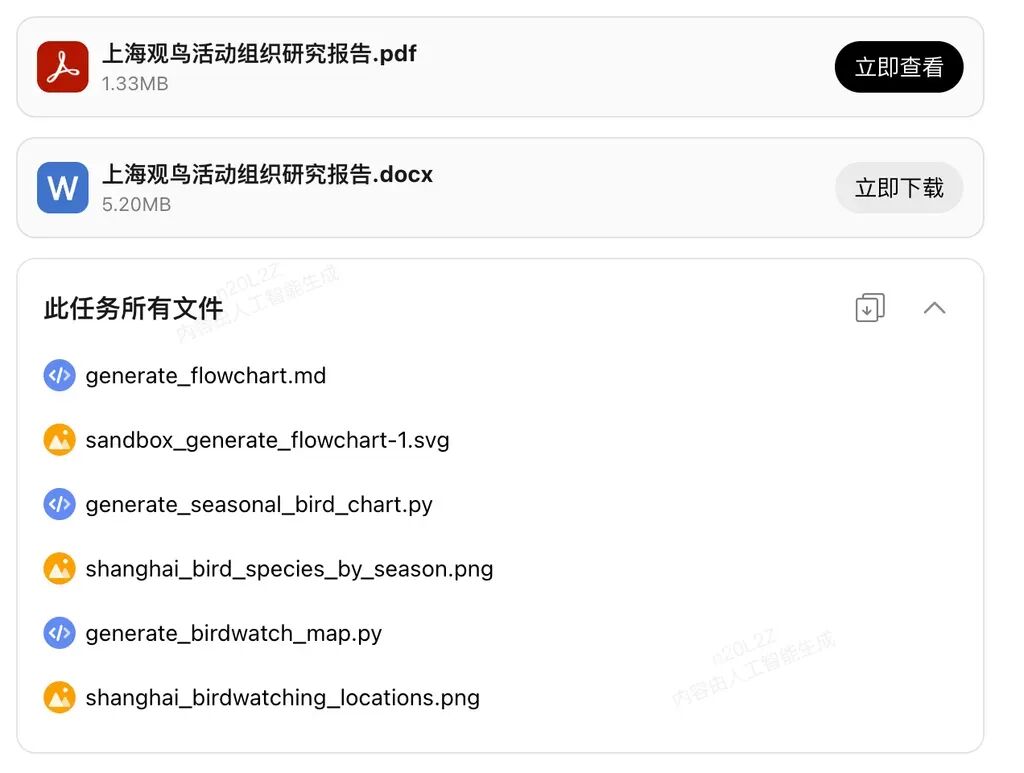
At the end of this project, it also provided all PDF and DOC files from this research report, plus numerous sub-files.
Running through the above project took me roughly 20 minutes.
It's not hard to see that what Nami AI Super Search delivers is no longer merely an "answer," but a "result" — fundamentally different from the search engine experience.
Quite like an AI Agent, wouldn't you say?
Indeed, the boundary between Agent and search grows increasingly blurred.
Let's continue.
Research assistant in more than name only
Given Nami AI Super Search's impressive performance on research-oriented tasks, I also tested it on academic search.
I had initially tried Perplexity for skimming paper abstracts, but only found a handful of UK/US-background academic articles, with messy formatting and no citable sources.
Then I tried Nami with a single sentence: "What are the differences in legal logic regarding data element rights confirmation between China, Europe/America, and Singapore?"
The entire process took under 20 minutes, but it accomplished quite a lot behind the scenes — none of which you need to worry about yourself.
It first called search-oriented MCP tools, automatically breaking the question into multiple keywords: "China data rights confirmation legal framework," "Germany enterprise blockchain rights confirmation practice," "France personal data protection system," "US data rights confirmation implementation mechanism," and so on — then searched dozens of web pages for each, totaling nearly 300 pages.
This massive source pool covered government websites, research papers, regulatory databases, industry reports, and even CNKI, Baidu Wenku, Faxin, OECD documents, EU GDPR details, and regulatory draft interpretations hosted on GitHub.
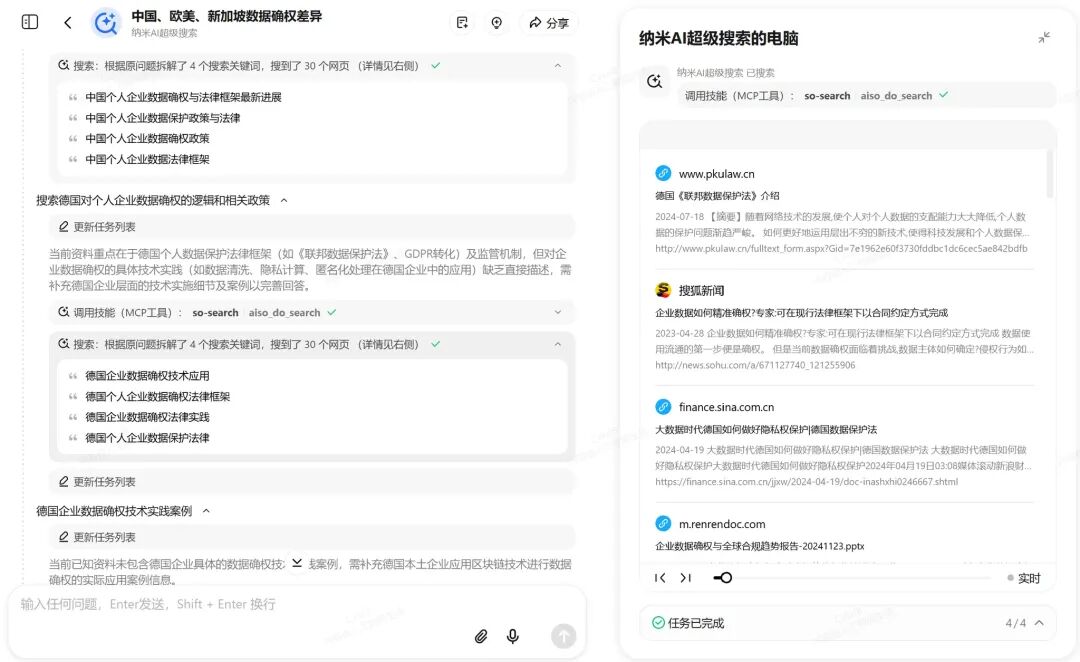
Afterward, it called a structural organization MCP module, performed deduplication, logical categorization, then began generating document drafts.
You can see that when writing introductions, section headers, and concluding summaries, it already incorporates common analytical frameworks for this type of research question — dimensions like "legislative pathways," "implementation mechanisms," "local technology practice," and "trends in data assetization."
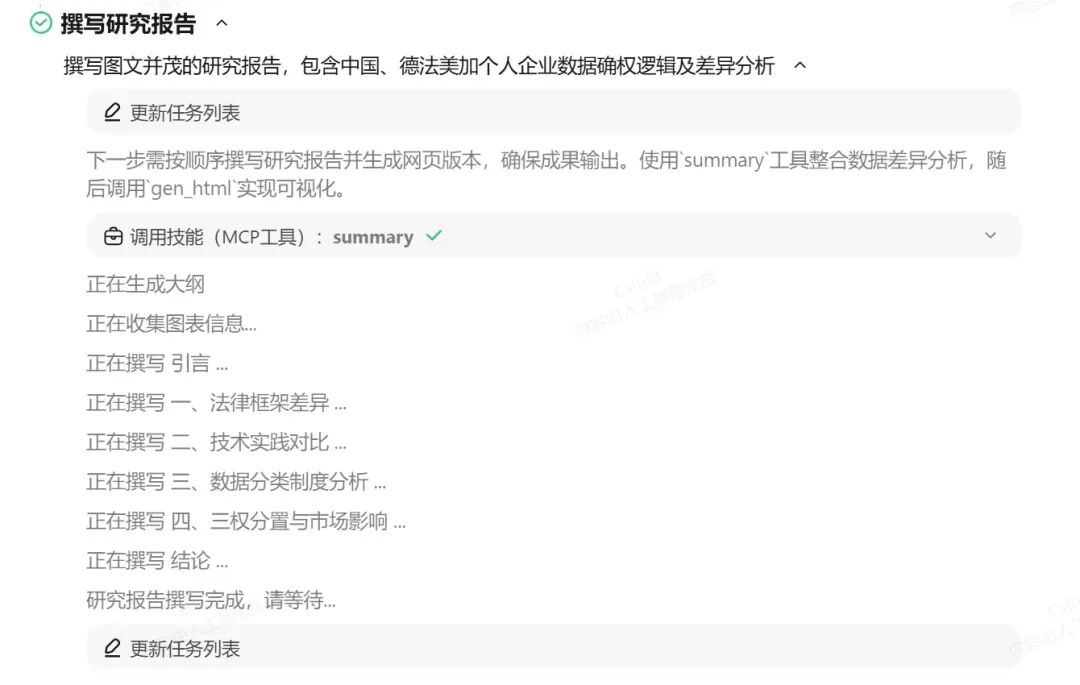
In the final step, it directly generated a web report from the consolidated content, presented in the familiar policy-briefing webpage format.
This report included charts — for instance, a radar map of institutional distribution across rights confirmation pathways for France, Germany, and Singapore, and a comparison table of technical routes using blockchain for data rights confirmation across countries.
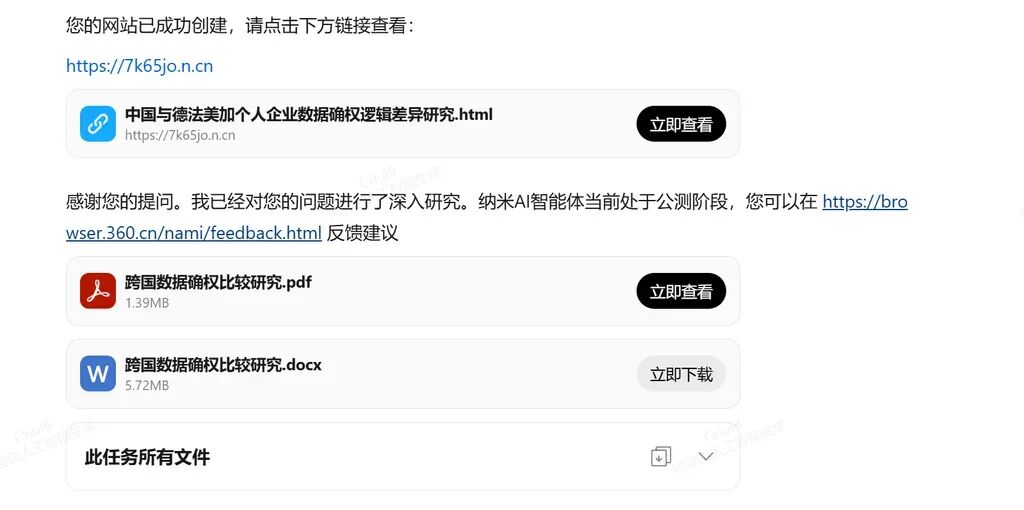
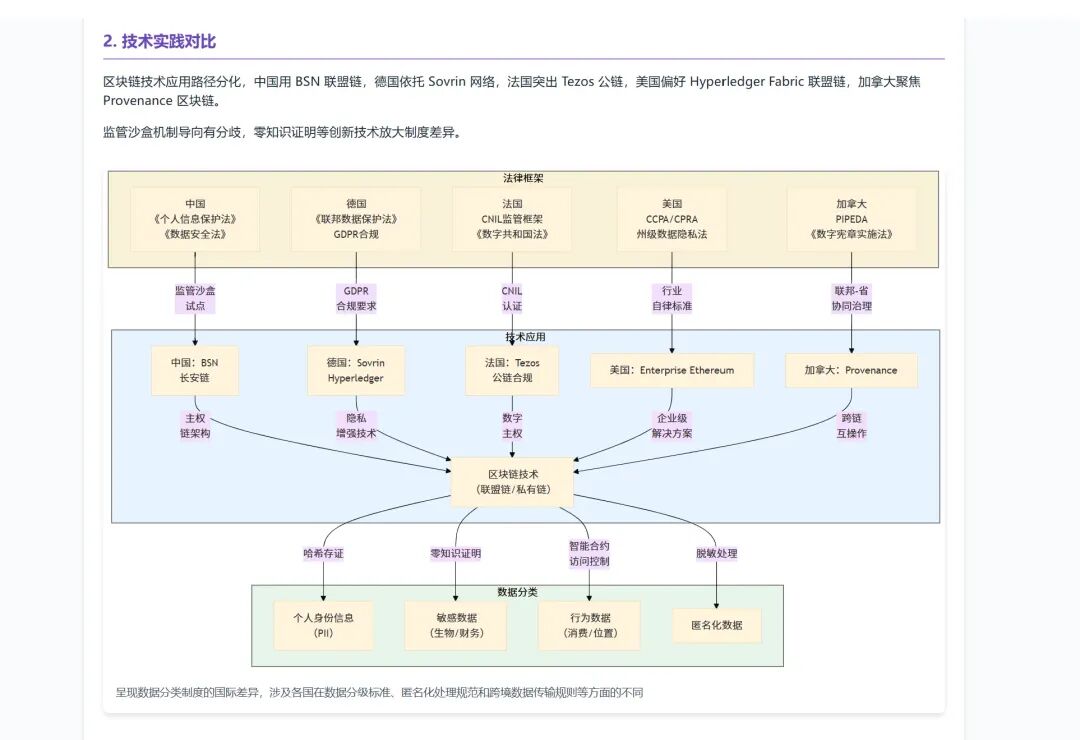
We didn't intervene at any step of this process — just one natural language question, then the system ran everything automatically.
This is completely different from traditional "AI helps you summarize something." It's not answering a question; it's simulating the entire process of how you would research, organize, and write this from start to finish.
Frankly, even an industry researcher starting from scratch would need two to three days to run through this information organization process. It completed these steps in twenty minutes.
With the "research"轮廓 sketched out, what follows comes naturally
The team also tested an industry analysis-style question: "Against the backdrop of global AI chip technology breakthroughs in second-half 2025, predict application scenarios for generative AI in medical imaging diagnosis over the next 12 months, incorporating analysis of performance parameters from NVIDIA's newly released DGX GH200."
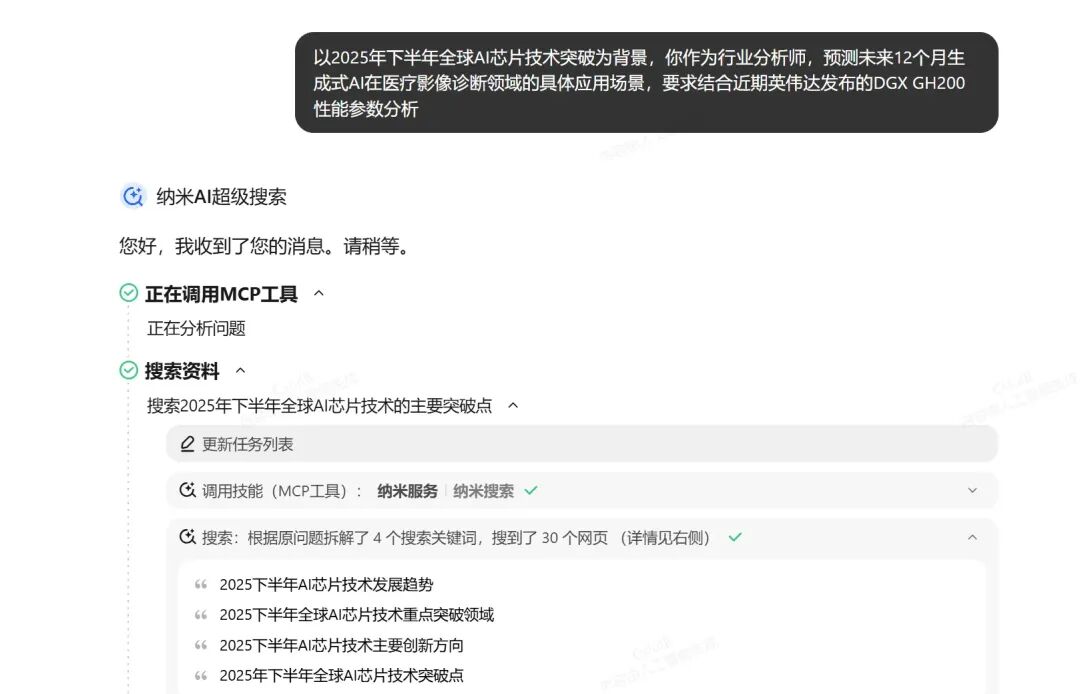
The kind of question that sounds like it requires checking multiple places and piecing together chip specs with industry news.
Nami's approach was refreshingly straightforward. It first outlined the GH200 chip's key technical points — processing speed, memory architecture, compatible AI scenarios — then directly listed several potential application directions: rare disease image completion, preoperative simulation, CT-assisted diagnosis at lower-tier hospitals, each with sources and representative projects, concluding with several "near-term deployable" trend points.

Not forcing a definitive conclusion, but first clarifying your question's scope and background, then pulling out the key points.
After using it, one thing becomes clear: this feature suits those scenarios where you have a direction in mind but haven't had time to do the research.
It may not produce highly original insights, but it handles the initial legwork for you — and the information quality is solid.
Choosing a graphics card without opening 10 browser tabs — it lines them up for you directly
Let's run one more challenging case.
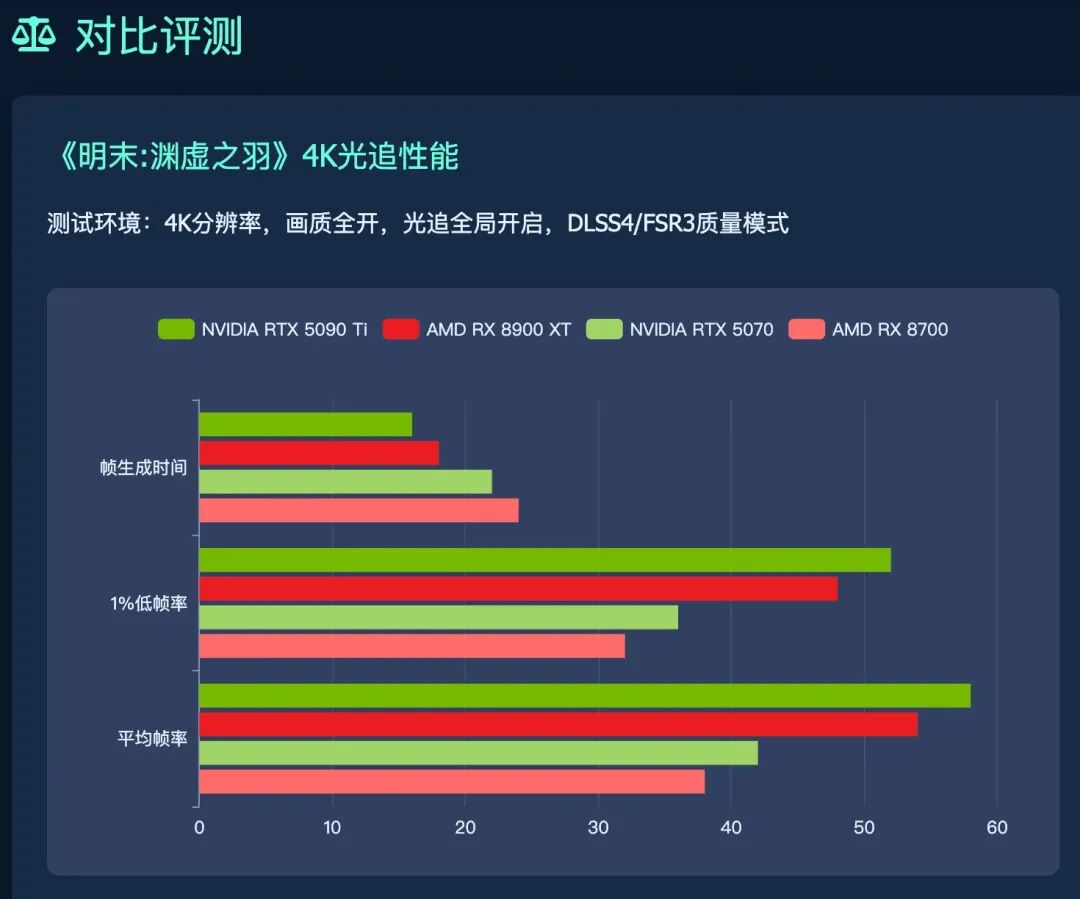
When we want to play AAA titles like Black Myth: Wukong, the biggest headache is insufficient PC specs. So the team input this prompt: "I'm a game streamer and need to upgrade my graphics card. Please recommend one that can smoothly run the latest AAA games while maintaining high frame rates and image quality during livestreams."
Nami AI Search handled this cleanly.
Rather than dumping a pile of graphics card reviews for you to sift through, it first mapped out the selection logic.
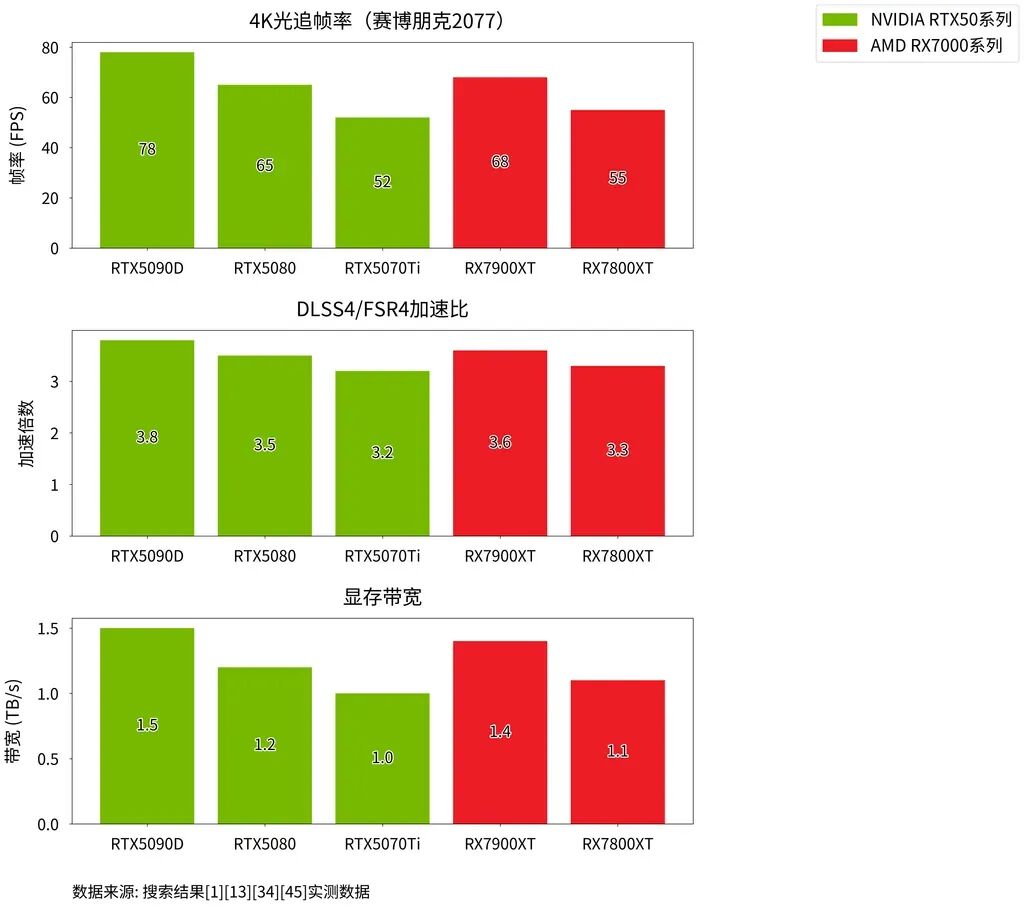
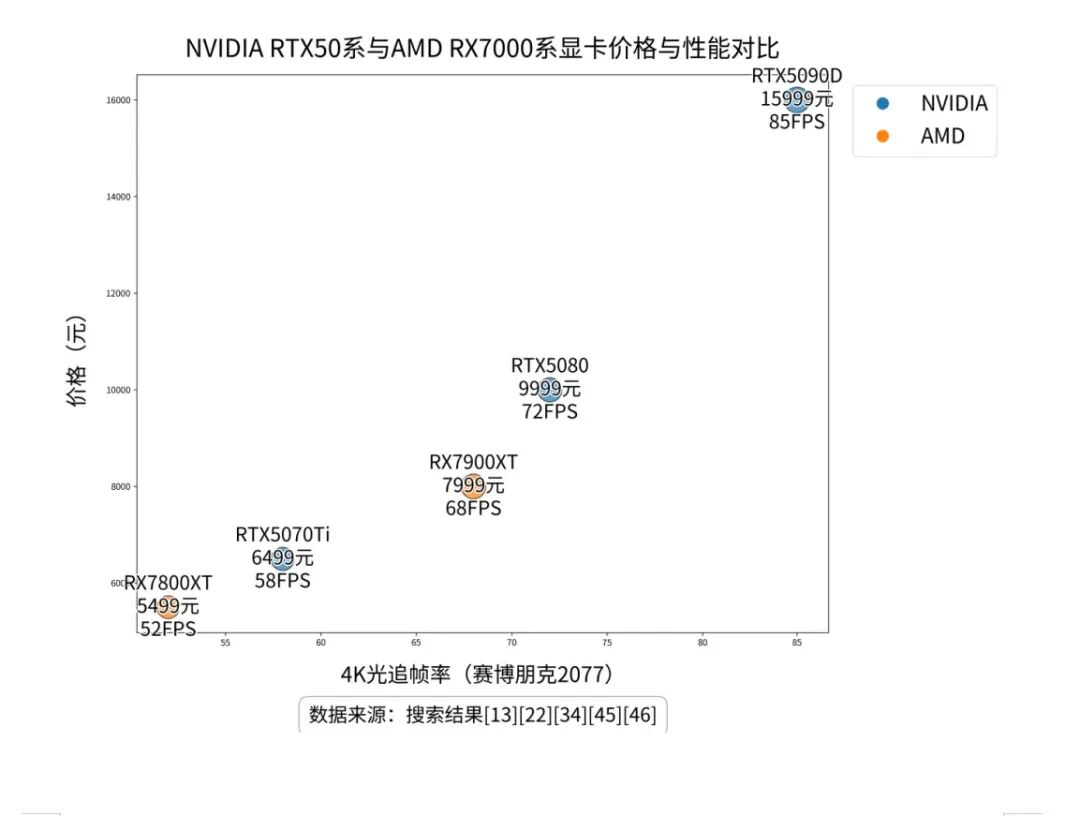
It decomposed requirements across gaming performance, streaming compatibility, power consumption, and budget range — then checked specs while capturing user reviews, automatically producing recommendations. For instance, RTX 5070 Ti suits mid-to-high-config streamers: stable frame rates, good thermals, no streaming bottlenecks, priced around ¥5,000.
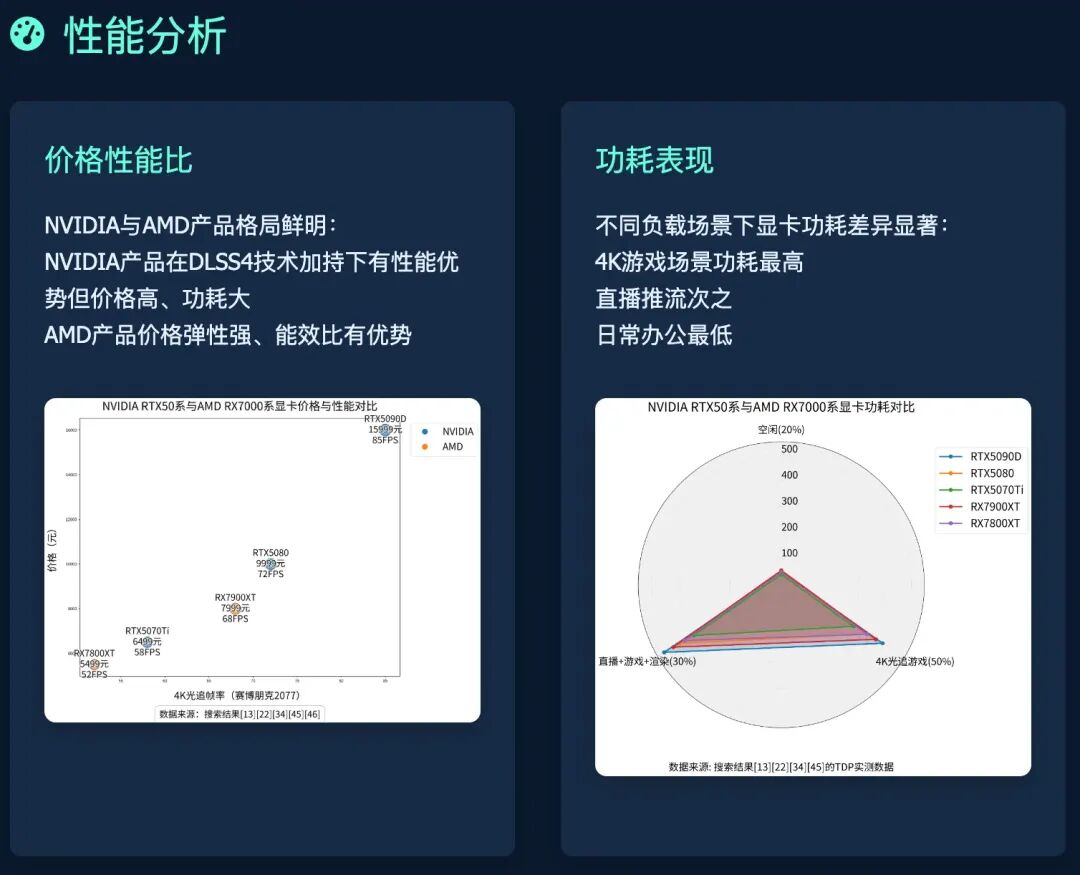
For higher budgets, RTX 5090D can handle AI modeling and multi-camera streaming, but demands more power; conversely, if you're just playing lighter titles like Naraka: Bladepoint, RX 7800 XT suffices — lower power draw, cheaper too.
It also thoughtfully flagged compatibility issues — certain triple-fan cards are too long for some streamers' cases. This kind of detail doesn't show up in spec comparisons, but it pulled from user comments in review sections and added a note. A nice touch.
We wouldn't call its recommendations revelatory, but it genuinely saves considerable trial-and-error time — especially that process of opening a dozen tabs to compare options. Now just type one sentence, and it maps out the logic.
In our testing, its searchable range is noticeably broader than most AI searches. Maps, Bilibili, Tencent Video, Xiaohongshu, PDF, DOC, document libraries, images, Dianping, Ximalaya...
These platforms you previously assumed AI couldn't touch — it now reads directly, extracts information from, and in some cases even distills text from images or key information from audio.
Truly breaching those data walls you thought AI couldn't scale.
"The best way to predict the future is to create it."
Initially, we believed search engines should be massive index libraries; to grow more powerful, they needed broader coverage and better ranking algorithms.
Then AI search arrived, and we thought good AI search meant "can it give sufficiently comprehensive, well-considered answers" and "can it eliminate all hallucinations."
Nami's "Super Search" update introduces another potential paradigm shift: it no longer stops at producing more human-like answers, but directly does more human-like things.
The boundaries between search and Agent are converging.
Why do we say this?
Summing up Nami "Super Search," it increasingly resembles an Agent:
【1】It connects to an MCP system, accepting model constraints, transforming search from "one large model answers everything" to "multiple specialized tools working in relay." Post-search, it introduces task chain scheduling — judging what you truly want to accomplish behind your input, then decomposing and executing step by step.
【2】It integrates multimodal capabilities — not just reading text, but also calling images, recognizing images, generating images, transforming search results from text-only to "illustrated, results-oriented." It's even attempting user intent completion.
【3】Vague questions are fine too — it guesses what you actually want, then proactively takes that step for you. This marks the shift of AI products from passive to active.
【4】Oh, and don't forget the "wall-penetrating technique" for crossing data barriers: Xiaohongshu, Dianping, maps, Bilibili, Tencent Video, various document libraries, PDF, doc, images — all searchable.

In fact, when we set aside definitions like Agent / Search Engine and return to users and scenarios, it's not hard to see that whether users employ an Agent or search, they're fundamentally doing the same thing: posing a question or a need.
It doesn't matter whether the cat is black or white — as long as it catches mice, it's a good cat.
In this sense, Nami AI Super Search is a pretty good cat 🐱.
You can call it an Agent, or choose not to define it at all.
But you can feel that the relationship between you and search has changed: no longer "question and answer," but "task and execution."
It's not becoming smarter; it's becoming more capable.
Not more eloquent, but more productive.
And the future?
I'm reminded of something computer scientist Alan Kay said:
The best way to predict the future is to invent it.