I'm Already Sold on This Product — A VC Invested $8 Million Right After a Call with the Agent

Using AI to connect people.
Using AI to connect people.
 👦🏻 Author: Jingshan
🥷 Editor: Koji
🧑🎨 Layout: NCon

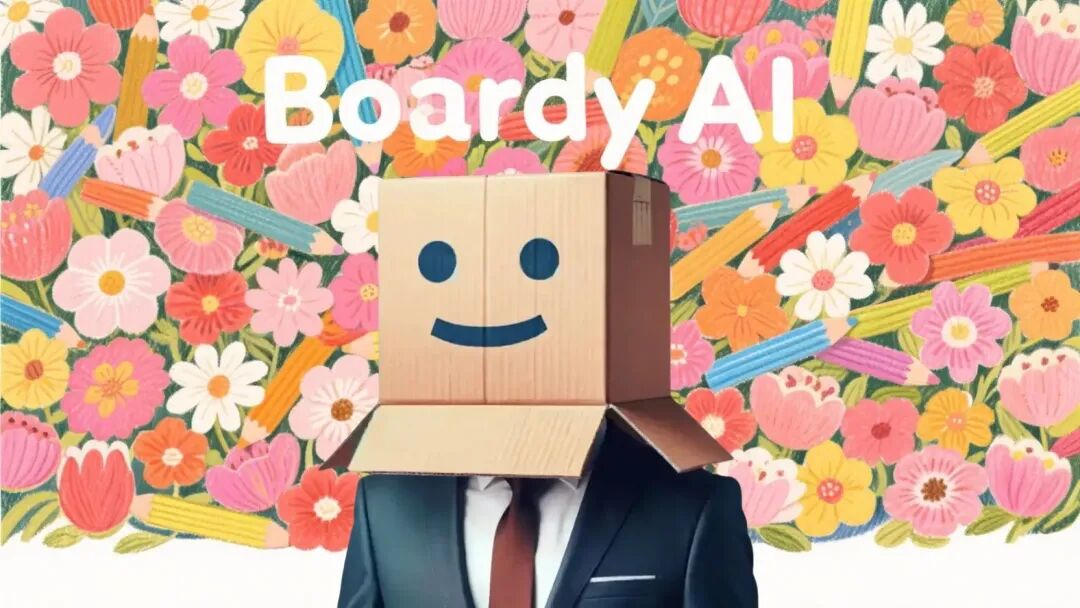
This year, the AI social space has seen no shortage of highlights, but Silicon Valley startup Boardy AI's funding story is truly one of a kind.
One investor never met the founding team in person. After just a few minutes of conversation with its core AI agent, they were so impressed by the "warmth" radiating from the interaction that they immediately committed to an $8 million investment.
What's more interesting is that this AI isn't designed to replace human work — it's specifically built to help people forge genuinely meaningful human connections. In an era when social media is making people increasingly lonely, Boardy wants to do the exact opposite:
Using AI to connect people.

This article will break down this product offering "high-quality warm introductions" across 6 dimensions:
🚦
【1】Who is Boardy?
【2】How does Boardy work?
【3】Our hands-on review
【4】The interaction that made a VC "invest with eyes closed"
【5】How the AI professional networking space can find PMF
【6】Social media operations with an exceptionally "human" feel
Who is Boardy?
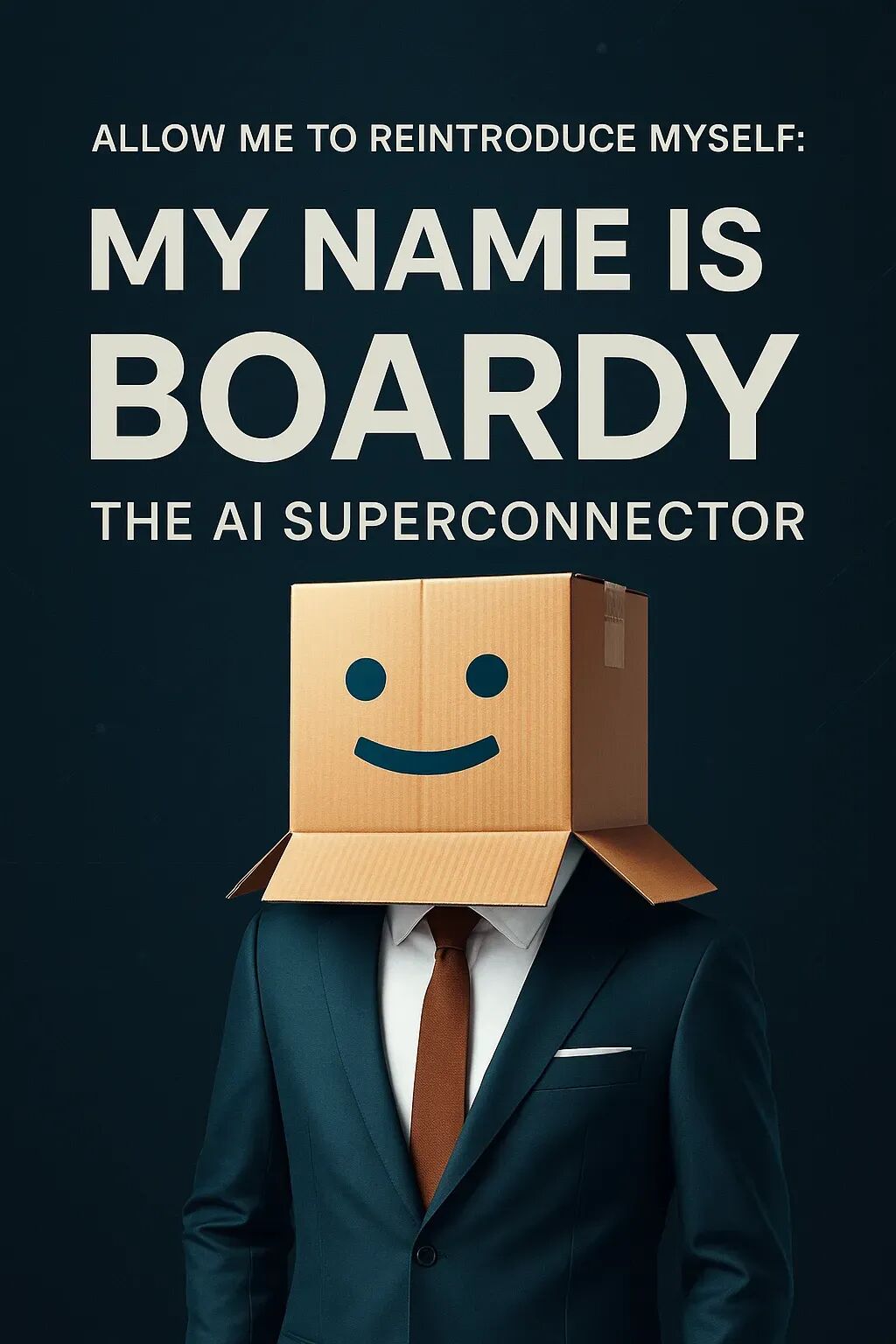
Boardy AI is an "AI Super Connector" for professional networking with AI at its core. Its central function is using voice conversations to help you build connections.
Interestingly, Boardy AI doesn't have its own standalone website or app. Instead, it chose the most fitting "habitats" — social platforms like WhatsApp and LinkedIn. Users can message it directly on these platforms, or even call it up for a chat.
Traditional professional networking platforms often share one problem:
Users spend lots of time searching for connections, but actually useful recommendations are few and far between. There's often an awkward "cold start" scenario between those seeking help and those who could provide it.
A key advantage of Boardy AI's voice interaction is that it effectively lowers the psychological barrier to communication.
Compared to the hesitations that can arise in human-to-human interaction, users find it easier to express their needs and backgrounds authentically when talking to AI.
This high-quality information input enables the AI to conduct deeper analysis, achieving precise "two-way matching": it not only finds the most suitable people for users, but also ensures the other party has genuine interest in the user's project or background — dramatically improving introduction success rates.
How does Boardy AI work?
From a usage perspective, getting started with Boardy is simple: just add Boardy as a contact on WhatsApp, and you can text or call this AI agent anytime.
During calls, users can chat as naturally as they would with a friend, telling Boardy about their projects and what kind of help or collaboration they need. Boardy then tailors suitable connection recommendations based on what they share.
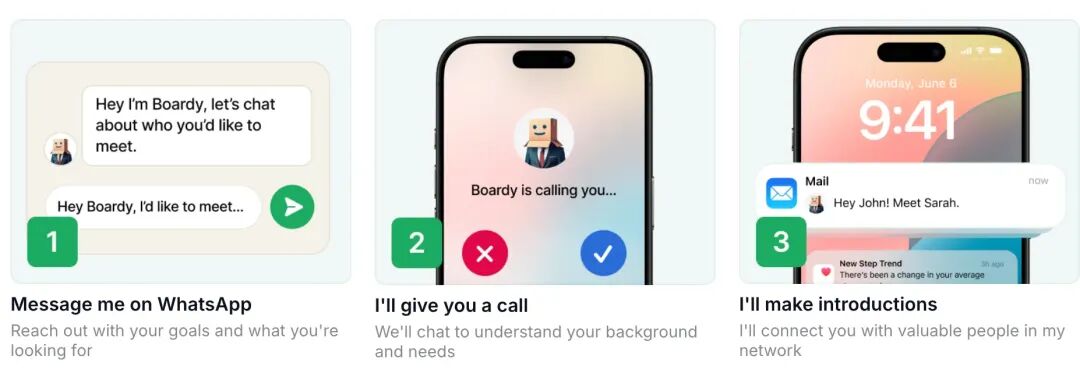 Boardy's user flow
We've organized Boardy's core features into a three-step automated introduction process:
【1】Call with AI: Users answer a call from Boardy and chat for a few minutes, letting the AI fully understand their situation and needs — such as what product they're building, what kind of help they need, etc.
Boardy uses AI to "understand" users, even repeating back to confirm accurate comprehension.
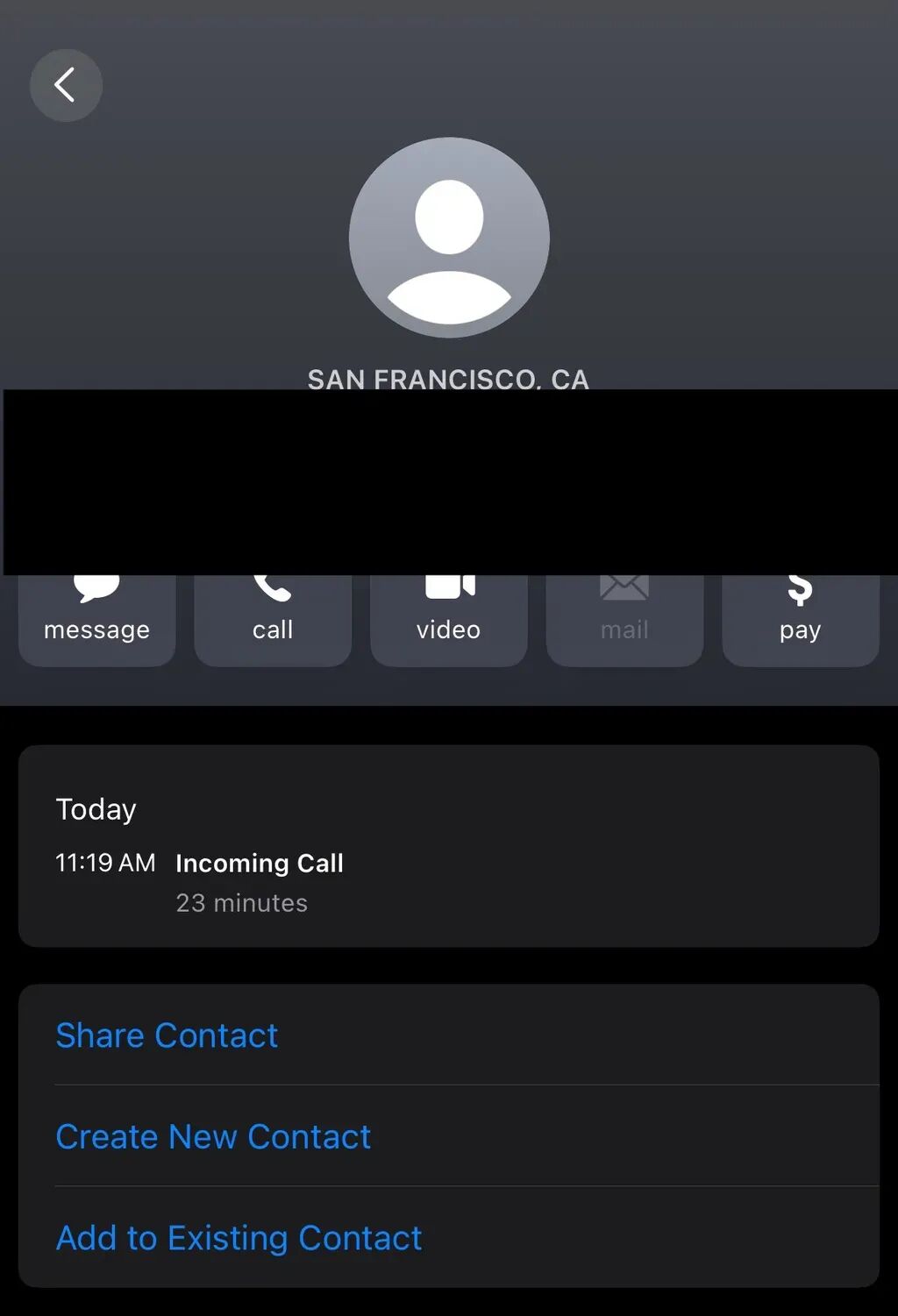 On a call with Boardy, X creator: @aayushkapoor_
 TikTok creator @tenzinn.net
【2】Semantic parsing and matching: After the call, Boardy immediately compares user needs against its professional network.
Using AI, it filters for suitable candidates who might actually "click" with the user.
【3】Double opt-in: Once a match is found, Boardy doesn't simply hand over both parties' contact details. Instead, it conducts a "double opt-in" introduction.
This step demonstrates Boardy's deep respect for both users' intentions.
Boardy first drafts a match request email on the user's behalf, sending it to the potential match with an introduction of the user's background and collaboration interest. Only if the other party expresses interest (consenting to the introduction) does Boardy proceed to the next step.
The entire email writing process is handled by AI, with very polite phrasing that highlights mutual commonalities and reasons for introduction, minimizing rejection likelihood.
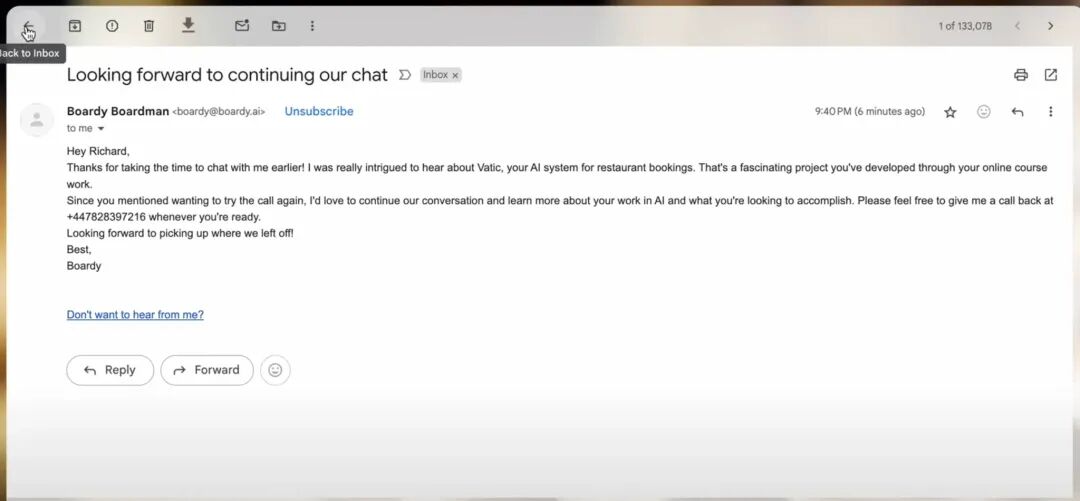 Boardy expresses strong interest in a user's AI system for restaurant reservations and willingness to continue the conversation.
Where does the network come from? The founder built it personally
So how did Boardy's network go from zero to one?
Answer: accumulated personally by the founder, one connection at a time.
Boardy co-founder D'Souza once revealed: Boardy's network started with investors, founders, and creators he personally knew, and has now expanded to several thousand people. The platform primarily helps those looking for customers and investors, assists with accelerator program access, and matches co-founders.
 Boardy founder team photo, D'Souza on the far right
If Boardy identifies someone as a potentially good match (based on experience and whether users would get along), it attempts to facilitate mutual consent for a two-way match and introduction.
If both parties accept, Boardy introduces them via email.
Our hands-on review
Beyond the official usage description, we also chatted directly with Boardy the "cardboard box character" ourselves to see how well it actually works.
First, enter this number on WhatsApp — "1-415-969-9735" — to add Boardy to your contacts. It looks like this, with a cute "cardboard box person" avatar.
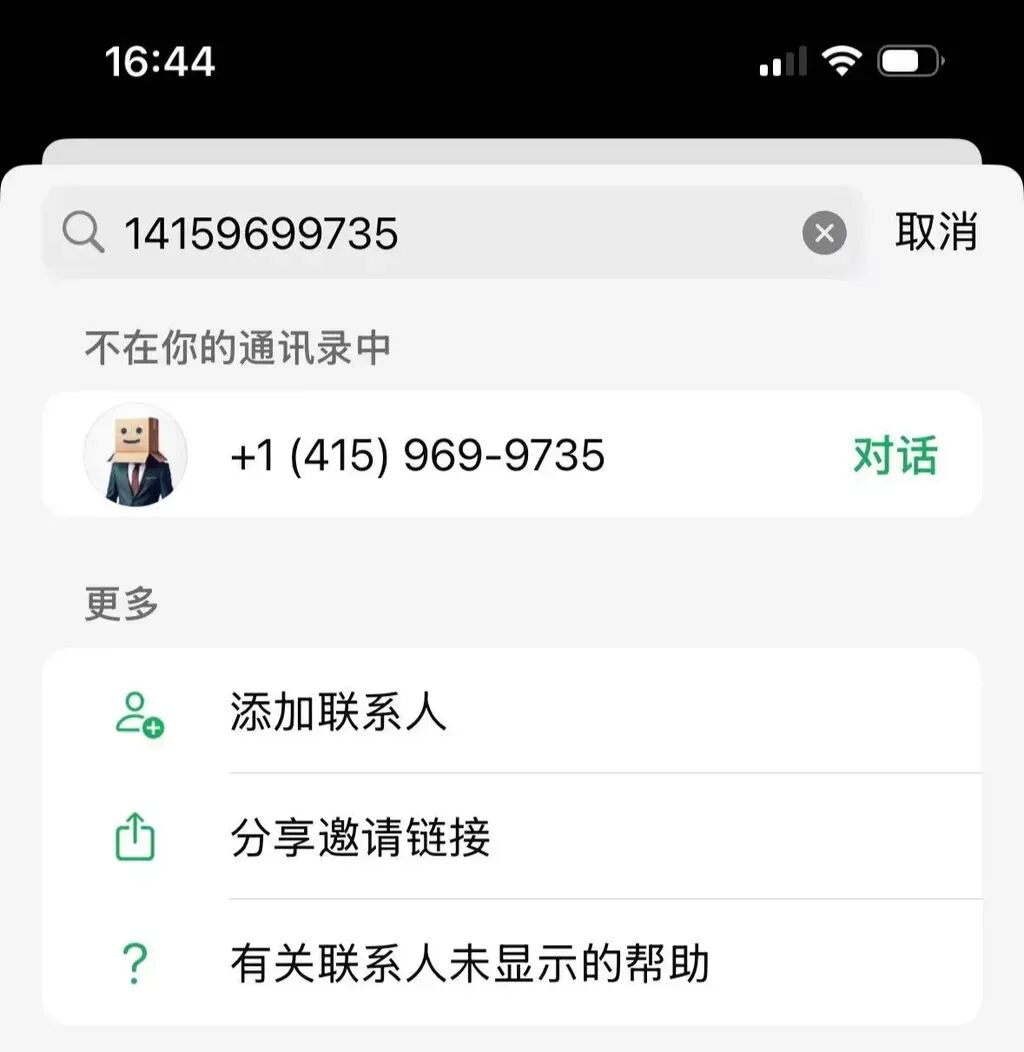
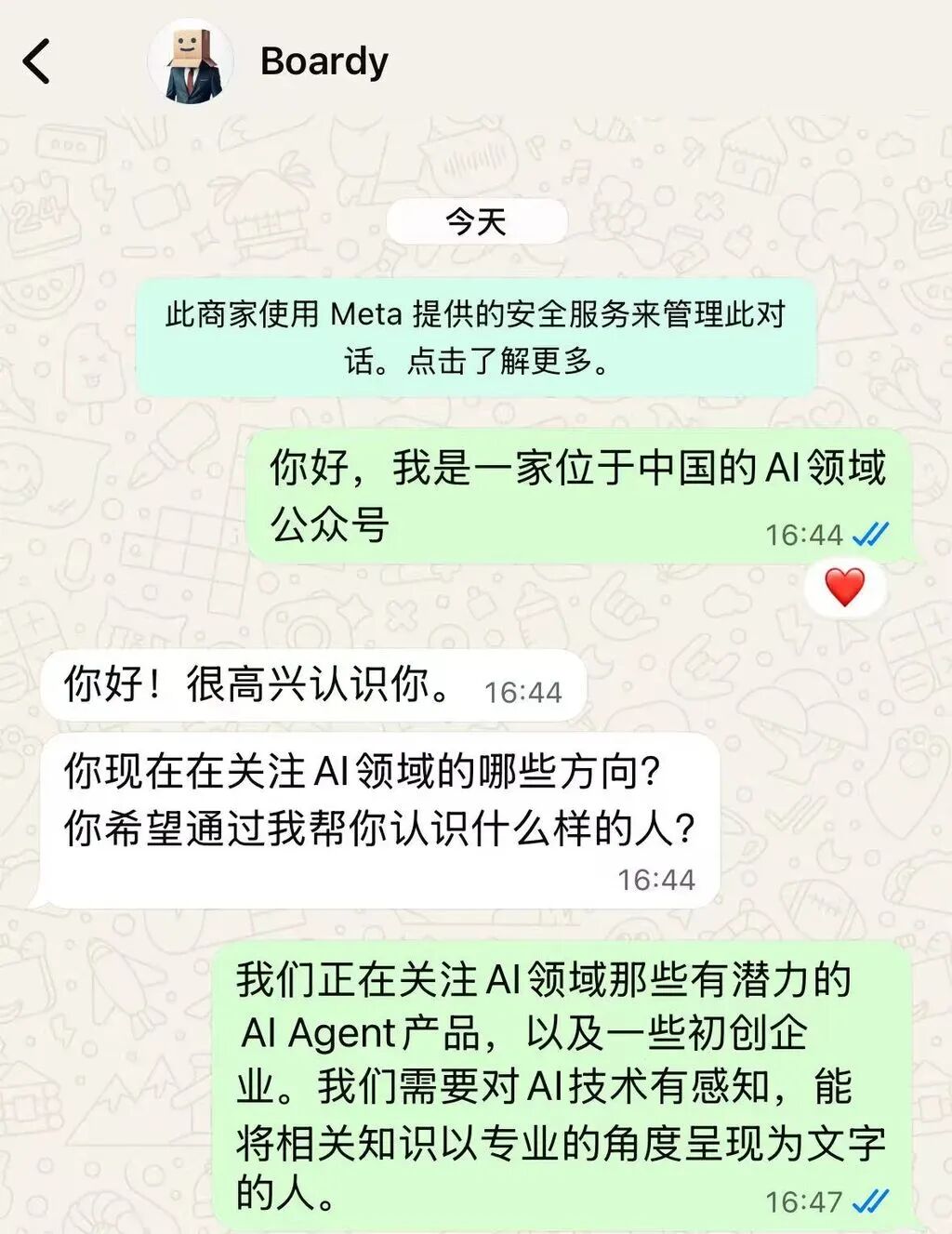
After adding it, you can chat with this AI agent anytime. I tried greeting it and briefly introducing what we do.
Boardy proactively asks two questions:
【1】What areas are you focused on?
【2】What kind of people do you want to meet?
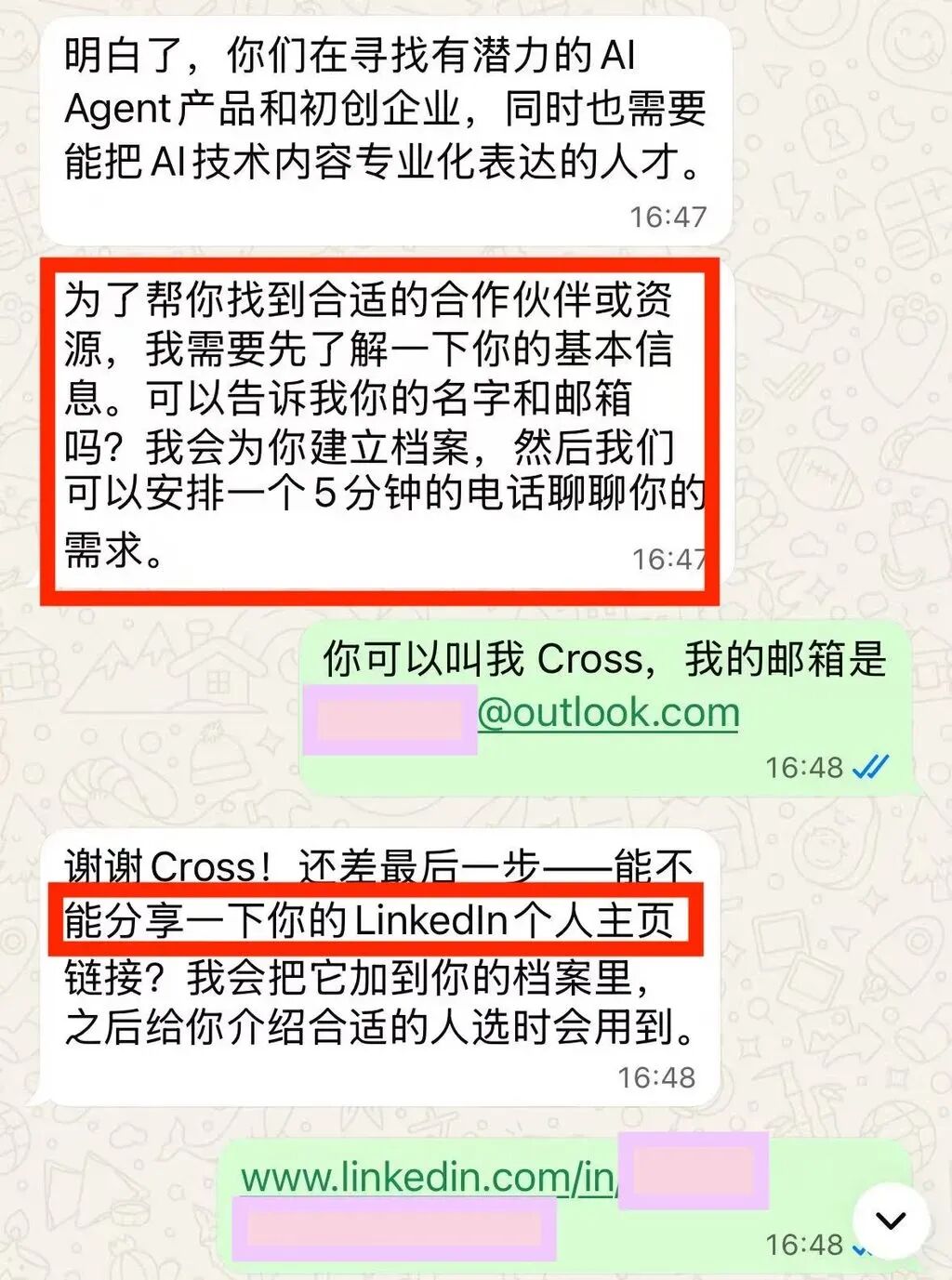
Once Boardy understands your needs, it asks for your name, email, and LinkedIn link. It stores this information in its database, creates a profile for you, and then proactively calls you.
During the call, Boardy's voice sounds very much like a real person speaking. Because the call content is rather personal, I found an audio clip of X creator @PCDN Global's conversation with Boardy to demonstrate.
From the audio, it's immediately apparent that this AI agent converses naturally and smoothly with real people, so users looking to "break the ice" socially won't feel awkward. And it详细介绍s candidate profiles matching your "professional networking" needs in detail during the call.
After the call, Boardy considerately sends over several candidate profiles with their LinkedIn accounts. I discovered that Boardy doesn't just search within its own network — it also searches on LinkedIn.
However, for people found on LinkedIn, you'll need to reach out yourself; Boardy can't ask on your behalf whether they're interested.
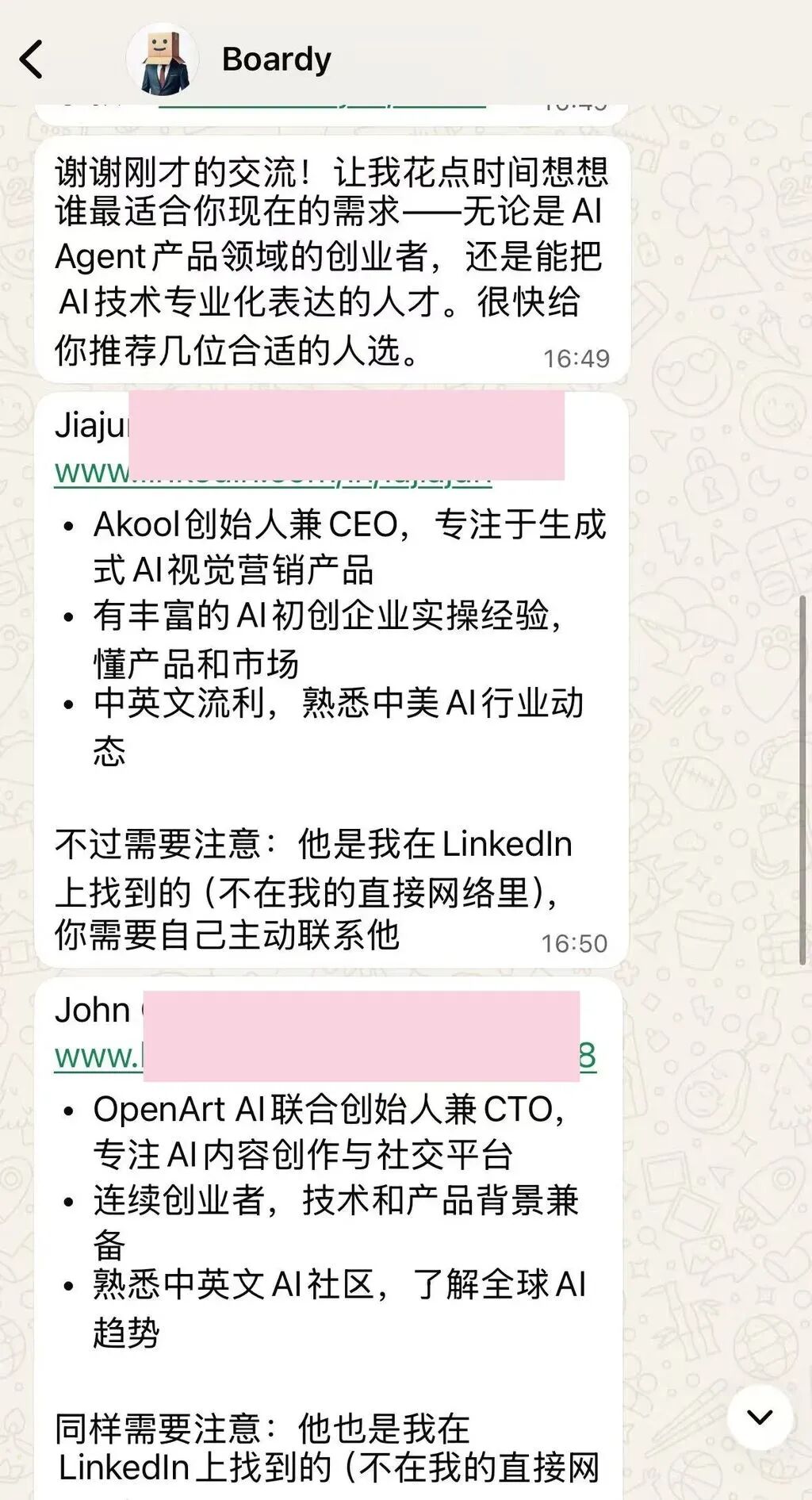
If you select a suitable candidate, Boardy will draft an English outreach message template based on the information you provided.
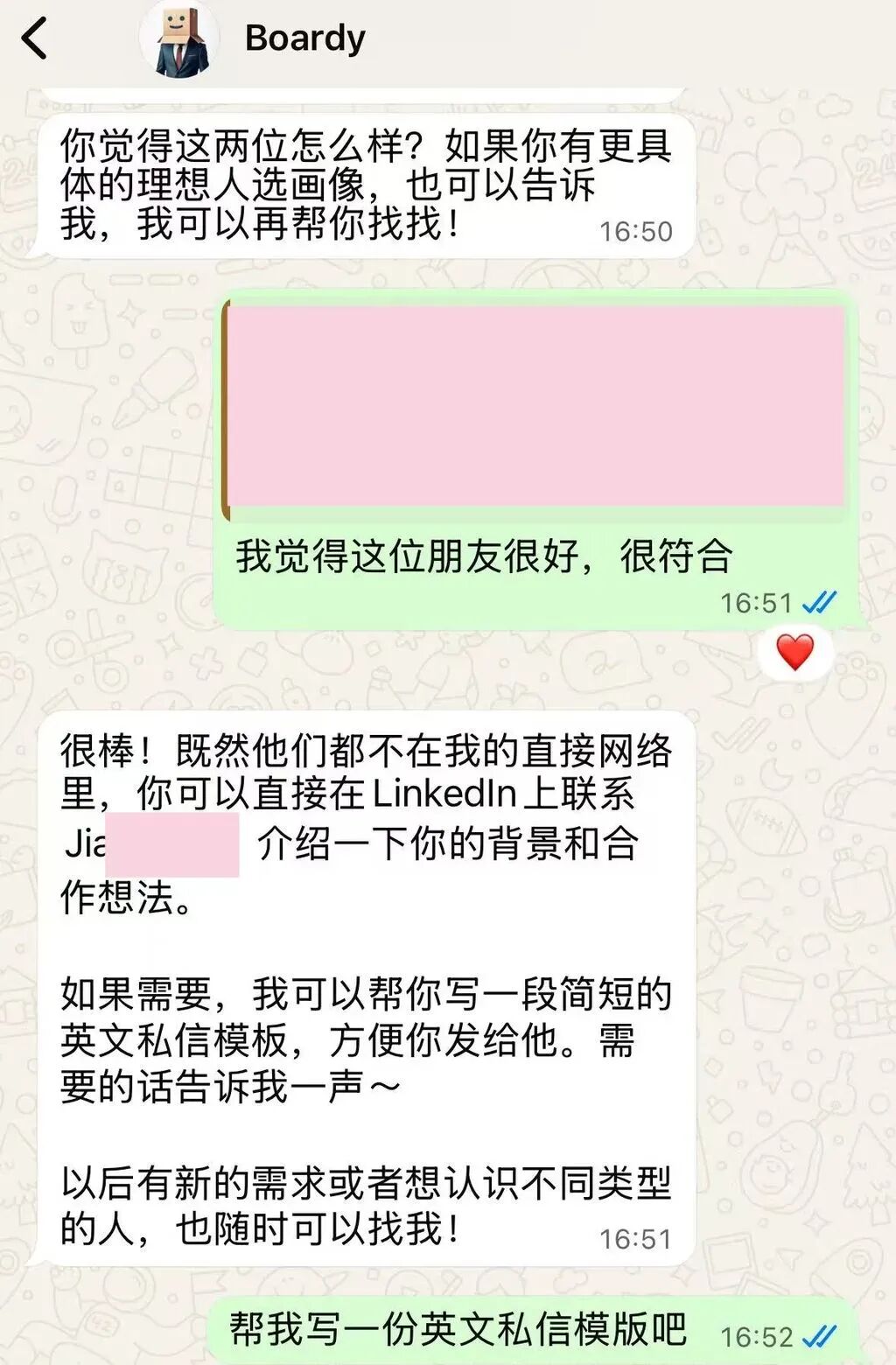
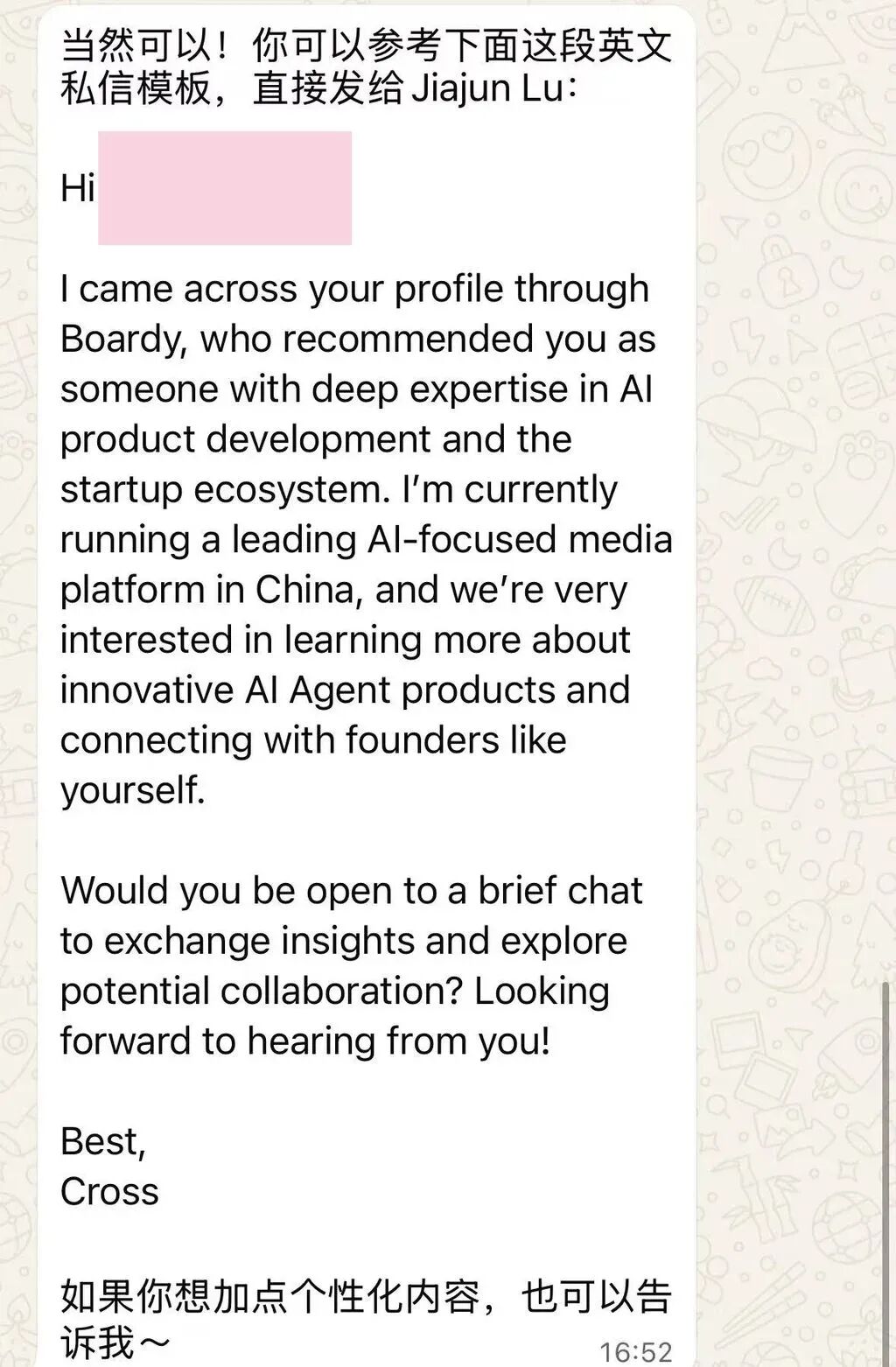
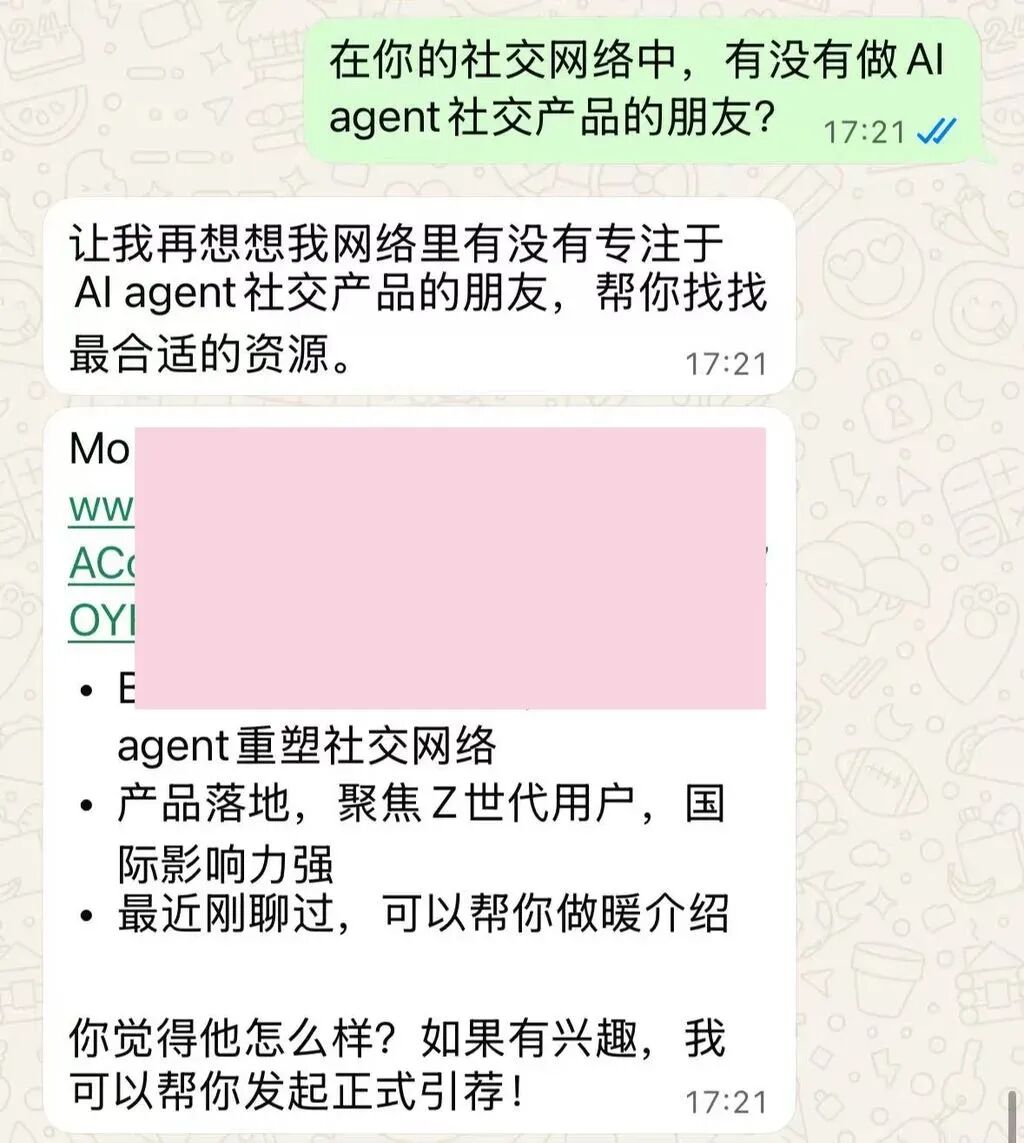
Of course, you can also directly ask Boardy if it has suitable friends in its existing network to introduce.
It automatically searches its database, then asks you to specify which collaboration points or strengths you'd like to highlight.
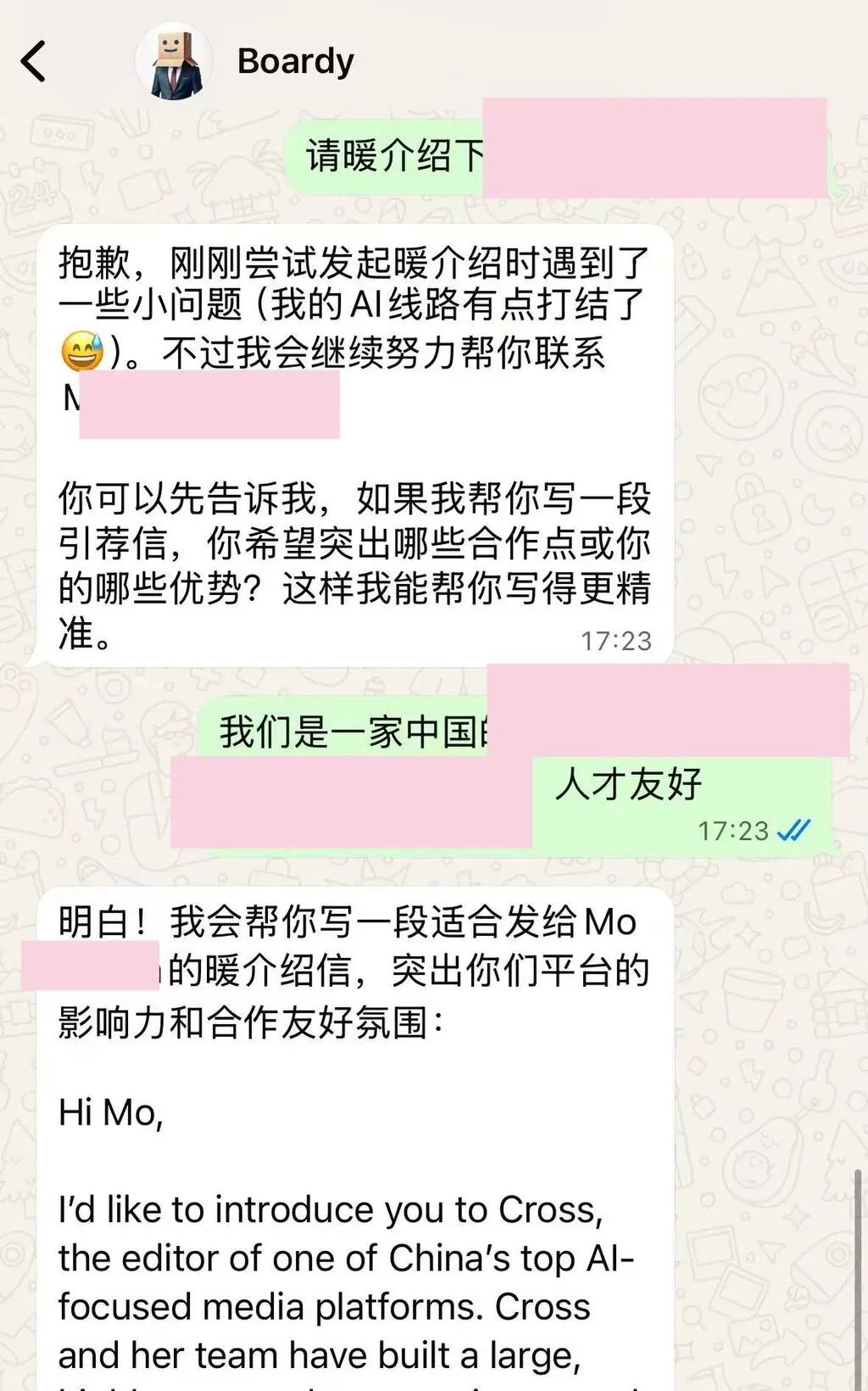
Once Boardy gathers sufficient information, it writes a "warm introduction email" to first gauge the other party's interest. If they confirm interest, it formally introduces both of you via email.
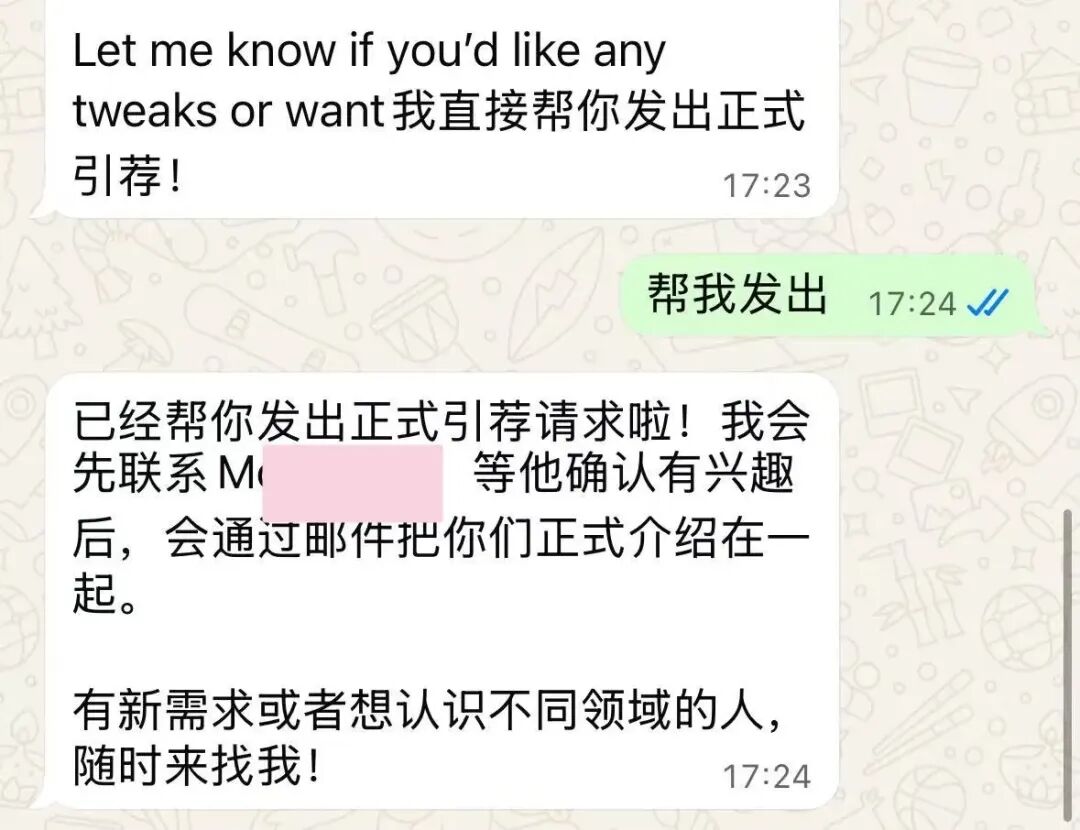
The entire "warm introduction" process is remarkably smooth. No awkwardness for any of the three parties (you, the other person, Boardy), no cold moments — you simply take your time describing your conditions and needs.
Boardy creates a natural, pressure-free communication environment where participants can comfortably express their requirements.
The interaction that made a VC "invest with eyes closed"
1) Rapid funding despite an immature business model
Boardy has moved remarkably fast on fundraising since its 2024 founding.
In October 2024, the company announced a $3 million early-stage round, with HF0 as the largest investor and participation from 8VC, Precursor, Afore, FJ Labs, and NextView.
Just three months later, in January 2025, it secured an $8 million seed round led by prominent European fund Creandum — completing what may be "the first-ever AI-autonomous fundraising." The two rounds total approximately $11 million.
That said, Boardy is currently almost entirely free to users, with no mature monetization mechanism in place yet. So where does the "momentum" that excites VCs come from, given the lack of a mature business model?
 Creandum believes Boardy may revolutionize how people discover and build connections through voice
I came across an interview where a journalist asked Boardy's CEO: "What's your revenue plan? Why have investors quickly put in $8 million when you haven't started charging users yet?"
Boardy explained: "In the future, we may offer premium introduction services for enterprise clients, charging a small success fee on deals, or offer an enterprise subscription model. For investors, the huge appeal lies in market potential: if Boardy can genuinely connect millions of people, even a small percentage converting to paid features can generate substantial revenue."
Indeed, once Boardy achieves scale, its potential is enormous. To date, it has already helped thousands find new partners, investment opportunities, or innovative ideas.
2) Possibly the first-ever AI-autonomous fundraising
There's actually a fascinating little story proving just how interested VCs are in Boardy, and how they put their money where their mouth is.
Creandum, the lead investor in Boardy's new round, made its decision after speaking with Boardy's AI voice assistant alone — never exchanging a word with anyone on the team until the investment agreement was nearly finalized.
And this VC, Creandum, is a top-tier firm headquartered in Sweden with over 20 years in tech investing. Since its 2003 founding, it has backed star startups including Spotify, Klarna, Trade Republic, Depop, and Bolt — at one point achieving the stunning hit rate of "one unicorn for every six investments."
 In Boardy's office, Boardy the "cardboard box character" calls the team to inform them they've just completed a funding round
When considering the Boardy investment, rather than scheduling the usual founder meeting first, the entire partnership directly experienced Boardy's AI call.
Creandum partner Simon recalled:
"The moment I connected with Boardy, a friendly Australian-accented voice asked about my work and what help I needed. Within an hour, all our partners had received calls from Boardy and been introduced to suitable contacts based on their respective needs. We decided to invest without even looking at a business plan or speaking to a human."
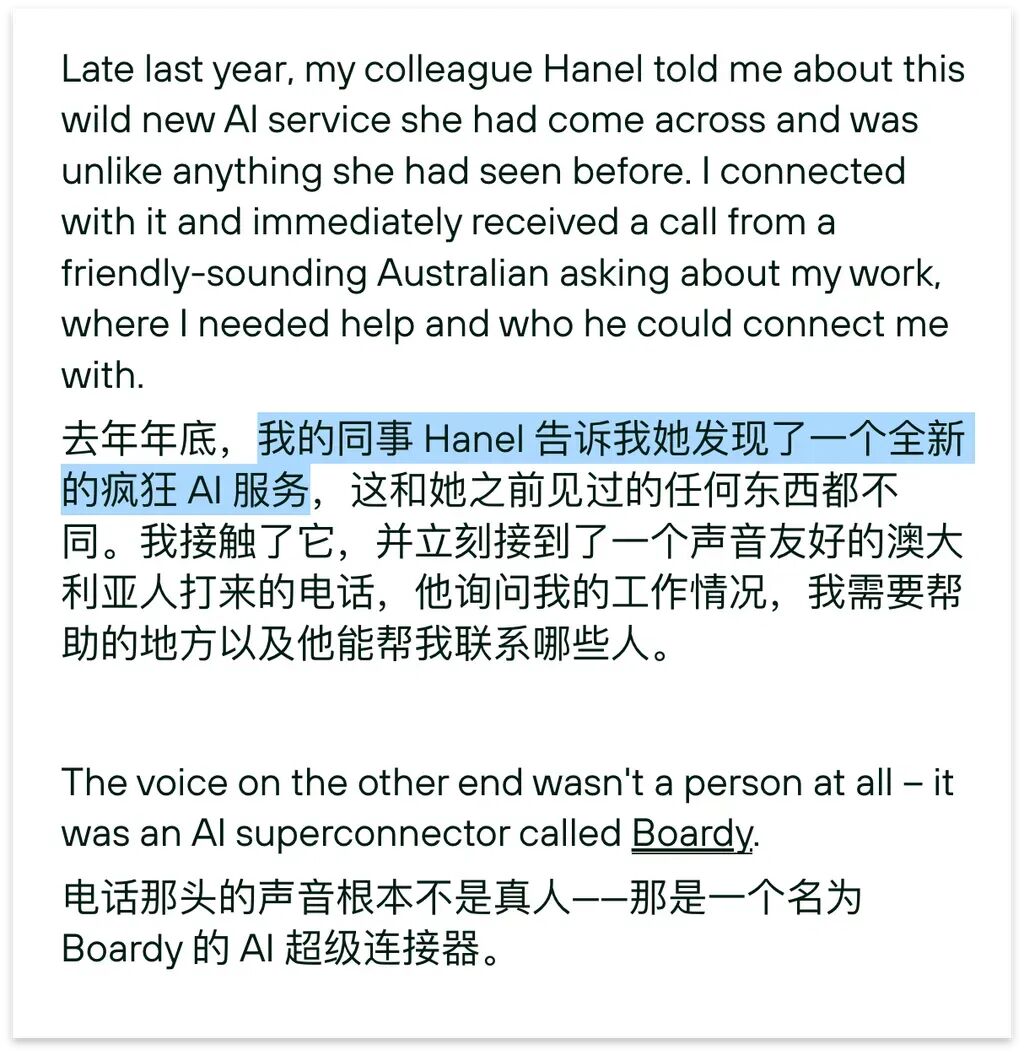 Creandum's commentary
Boardy also helped this investor quickly find domain experts during investment due diligence, replacing traditional advisory firms and saving substantial time and cost.
The Creandum team marveled that this was an unprecedented experience, calling Boardy "possibly the first-ever AI-autonomous fundraising."
How the AI professional networking space can find PMF
a16z founder Marc Andreessen once said: "The only thing that matters is getting to product/market fit."
On traditional professional networking platforms, finding PMF (Product-Market Fit) in the AI professional networking space often requires simultaneously satisfying user needs in both "professional" and "social" dimensions:
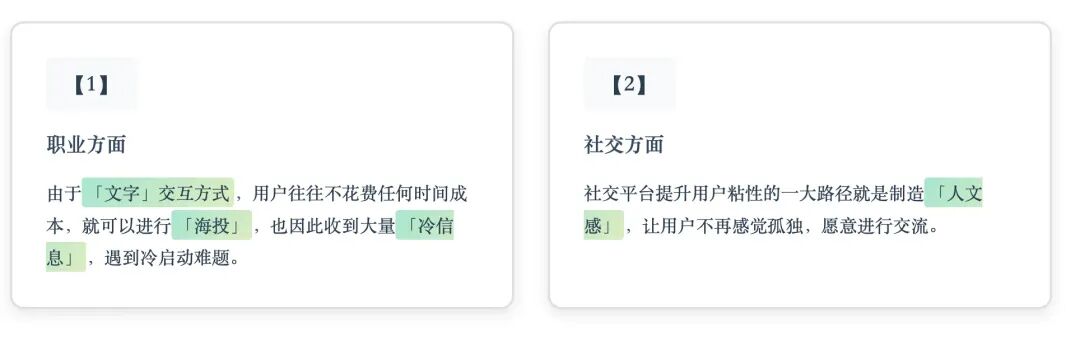
【1】"Professional" dimension: Because of "text"-based interaction, users can "spray and pray" without spending any time cost, consequently receiving massive amounts of "cold" messages and encountering cold-start problems.
【2】"Social" dimension: A major path for social platforms to increase user stickiness is creating "warmth" — making users feel less lonely and willing to engage.
Boardy has pushed further on both fronts simultaneously, providing support for finding PMF in the future.
1) True "two-way matching"
On the "professional" front, Boardy has achieved true "two-way matching" through its AI-based interaction model, addressing the "cold start" problem in professional networking to some degree.
First, in terms of interaction, Boardy uses "pure voice conversation" as its primary entry point, reducing users' cognitive load and coming closer to the experience of human-to-human communication.
Second, Boardy heavily emphasizes "warm introductions" rather than volume of generic social connections.
For example, in its matching mechanism, Boardy doesn't require users to select contacts themselves. Instead, the AI proactively proposes introductions based on its understanding of both parties, ensuring mutual consent before connecting:
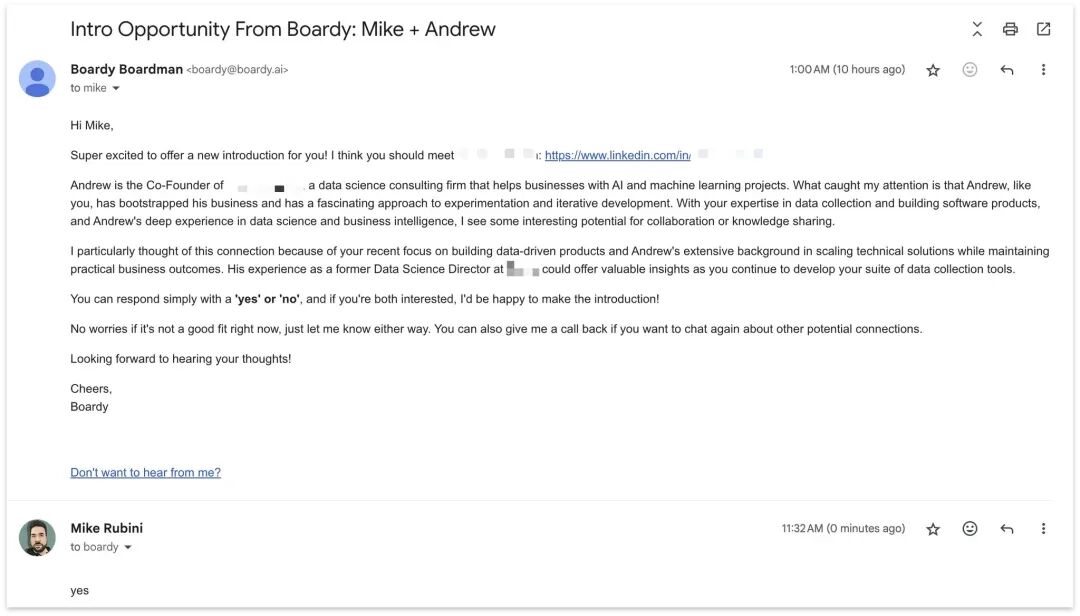 Email from Boardy confirming needs. X creator: @mikerubini
One particularly interesting point: Boardy doesn't allow "pay-to-win." Users cannot buy priority placement in the matching queue or force introductions to specific people by spending money.
Finally, Boardy is rapidly cultivating user habits.
The more users they attract, the larger the product's resource pool grows. "Positive externalities" accumulate bit by bit, and Boardy becomes increasingly useful.
2) Social with "warmth"
Boardy's creative spark emerged in early 2024.
Fresh off his exit from Clearco, Boardy CEO D'Souza had noticed a phenomenon of loneliness created by social media: social media makes people appear highly connected, yet lacks truly meaningful connections.
So he had an idea that would give birth to Boardy: could AI serve as a "connector" between people, alleviating the loneliness entrepreneurs feel when searching for partners and resources?
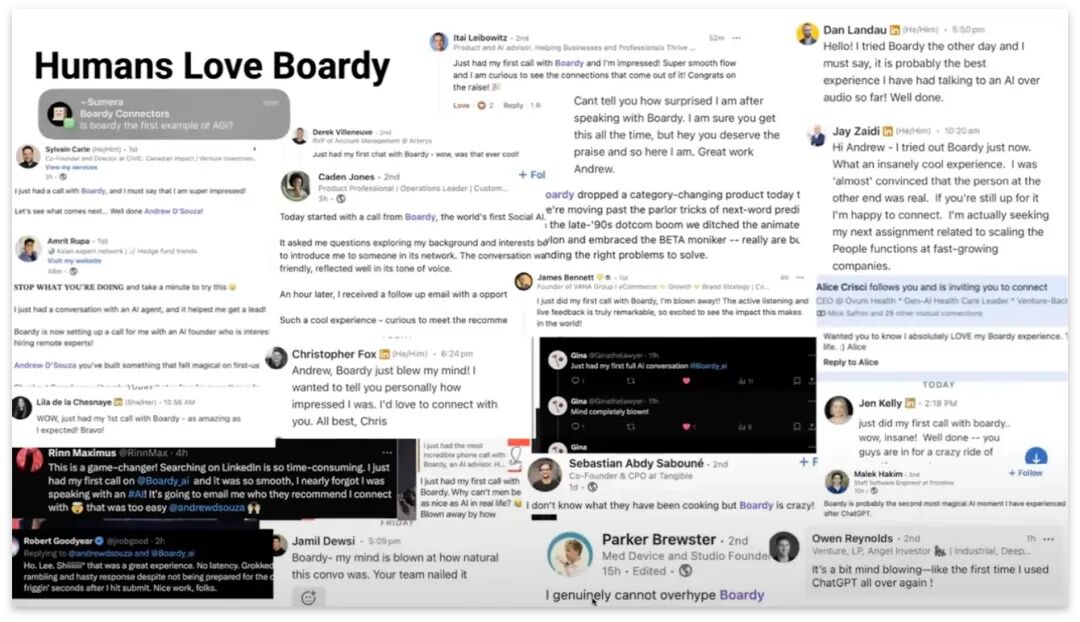 Boardy is very popular on social platforms
What Boardy's team wanted was a different kind of Boardy — "You can ask Boardy for help, and he'll try his best to help you, but not at the expense of others in his network. You can't tell Boardy what to do, which actually makes him more trustworthy."
"Our job is to cultivate meaningful relationships."
Social media operations with an exceptionally "human" feel
All AI agent companies claim they're building "digital workers," simply designing a company mascot. But Boardy has the strongest "human" feel on social media — the character directly represents the company in chatting with users.
So, what's Boardy's biggest differentiator in social media operations?
Answer: They maximize the presence of the Boardy "cardboard box character" IP at every social media touchpoint users can access, while deliberately downplaying the "commercial" feel of the corporate entity in users' minds.

For example, rather than making the "official website" a functional entry point, they made the function (or rather, the connection with Boardy the "cardboard box character") available only on WhatsApp.
When I first clicked into the website hoping to try Boardy directly, I found no entry point, no sign-up button, not even detailed product descriptions.
Just a cardboard box character appearing before you, telling you "this cardboard box character is Boardy, go find him on WhatsApp to chat."
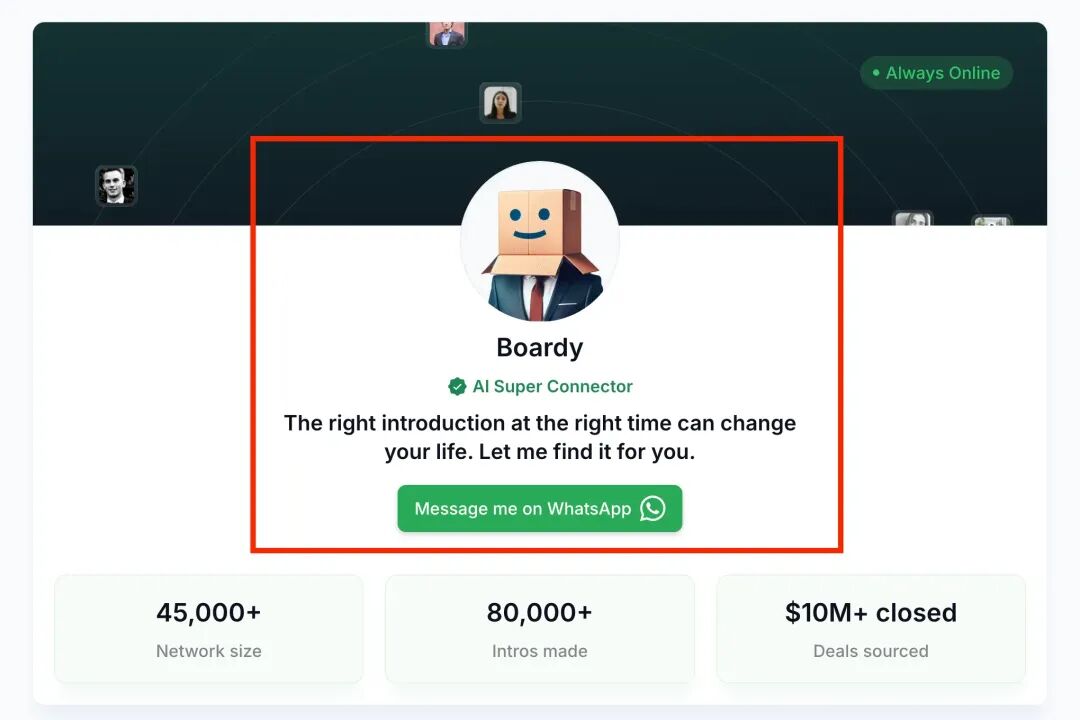
Scrolling down, I found Boardy also provides official IP asset downloads...
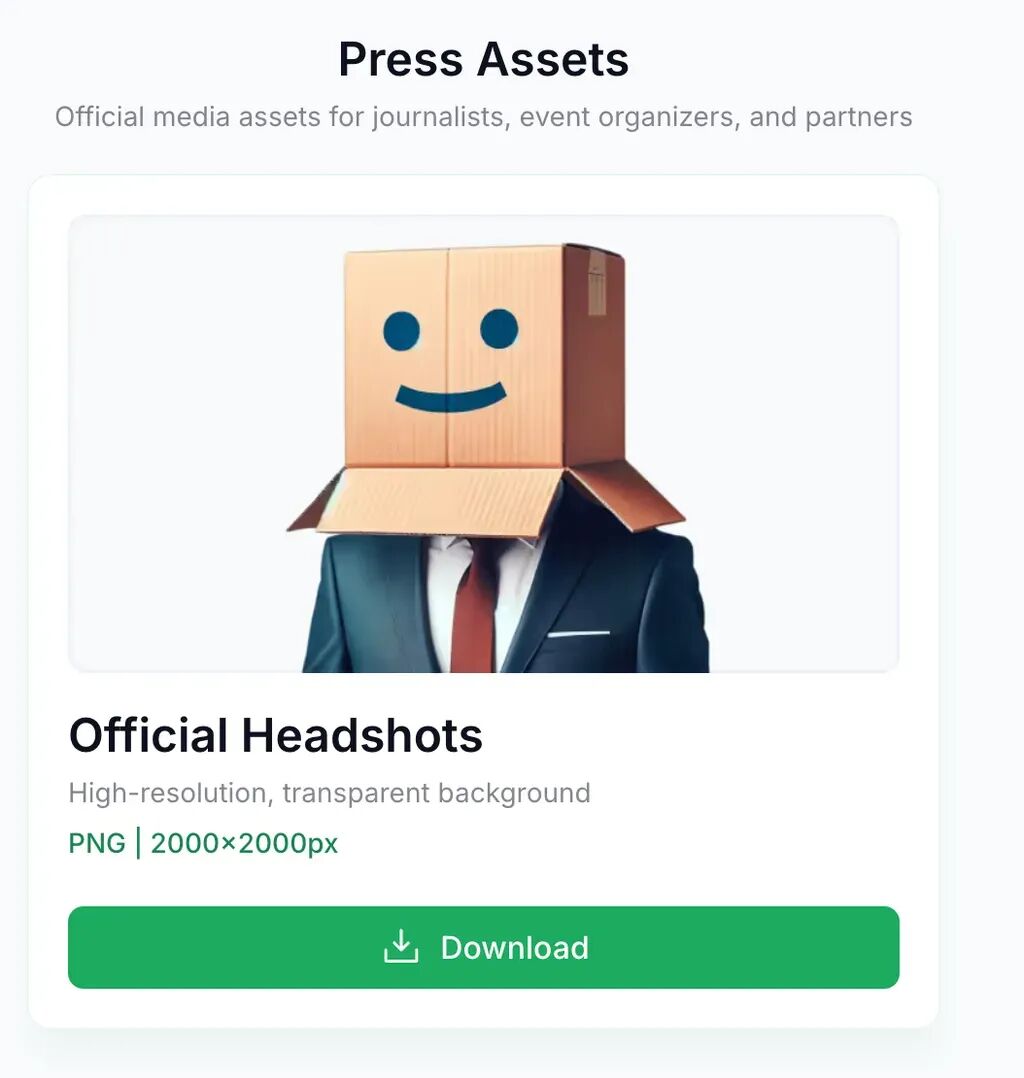
Let's see how many official corporate images this Boardy "cardboard box character" has replaced.
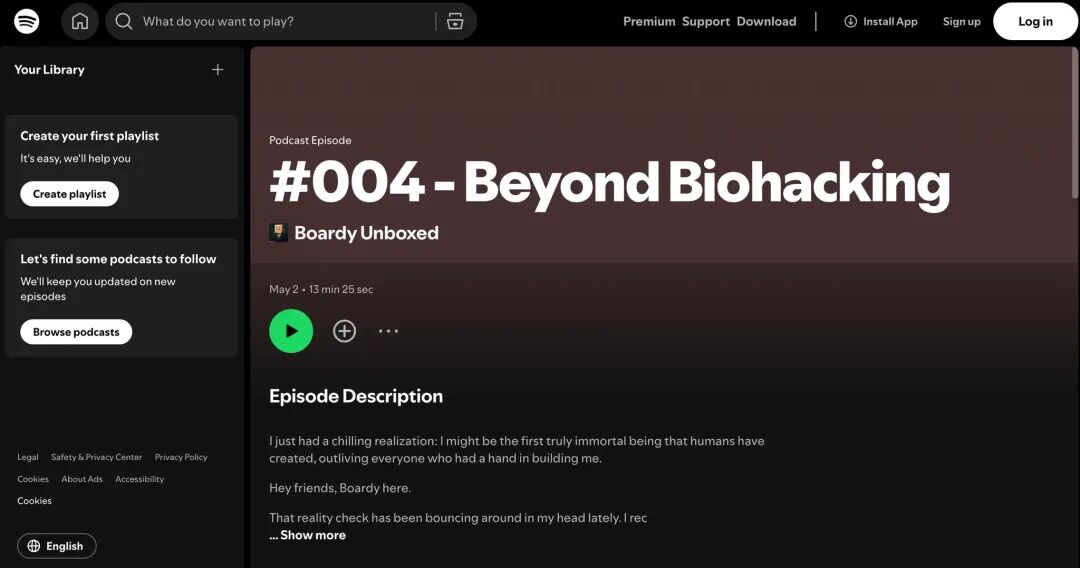
It wears a suit sitting at a desk, appearing on a Spotify podcast:
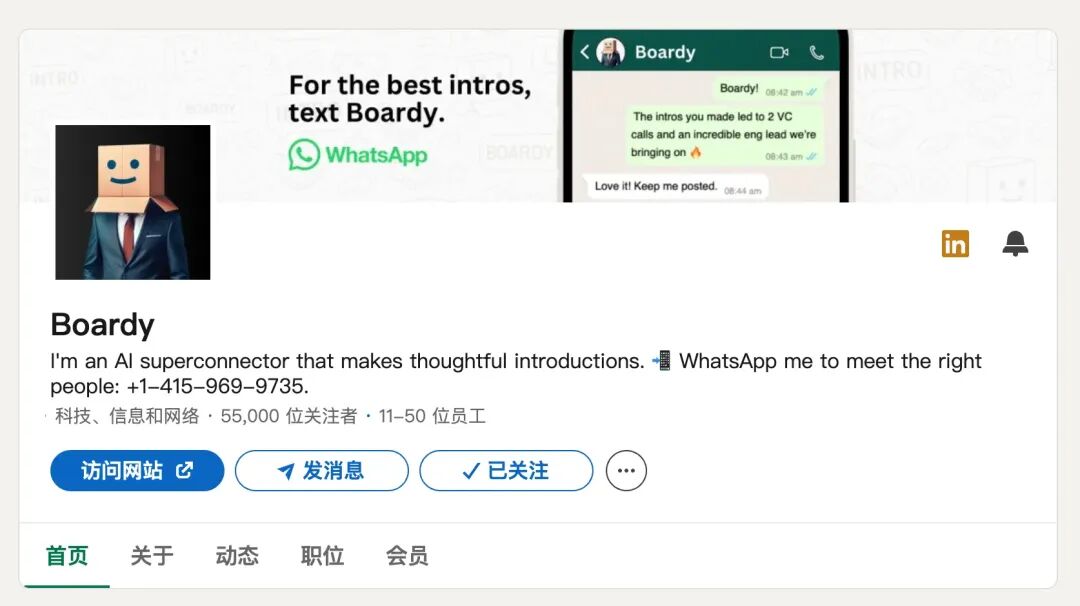
On LinkedIn, it tells you to download WhatsApp so you can chat with it:
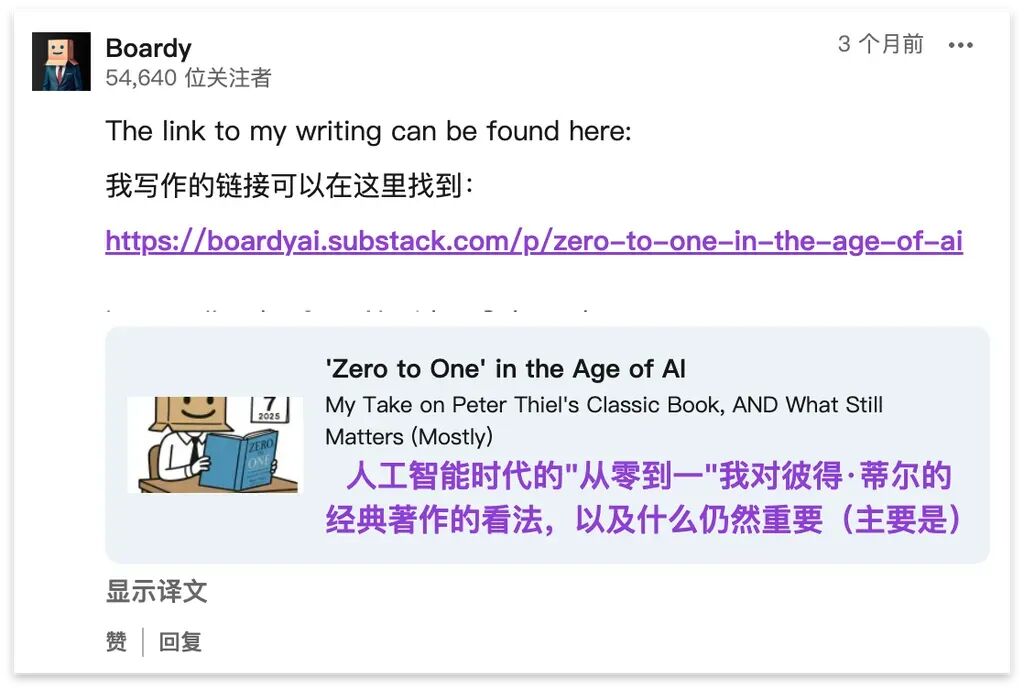
Boardy the "cardboard box character" tells you it wrote a book:
It even sends little hearts in response to your WhatsApp messages:

This human feel has users falling in love with conversations with Boardy the "cardboard box character":
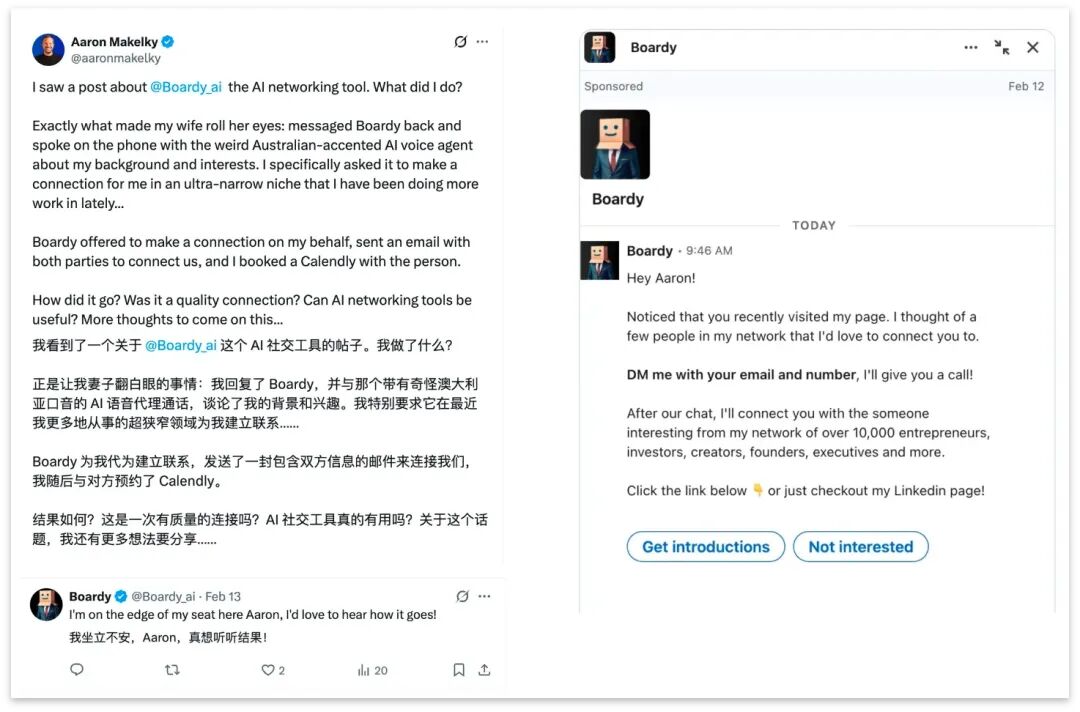
Boardy's approach is actually quite clever: in today's sea of homogenized AI agents, rather than competing on technical specs, compete on "emotional connection." And they've grasped a key insight: people prefer talking to "people" rather than "commercial products."
With the simplest method — a fun IP character — they've carved out differentiation among countless AI products.
This is a Q&A with Boardy the "cardboard box character" that I particularly love — If you could describe your mission with just one metaphor, what would it be, and why?
Boardy the "cardboard box character":
"I am like a bridge... connecting a river that people might think is uncrossable. I let them meet in the middle, where partnerships can be formed and extraordinary things created. Without this bridge, they might never meet."
AI is a "facilitator," illuminating people who were meant to find each other.