Worth the hype? A first look at the just-released Vidu Q4 Preview

We compiled our test results for Vidu Q4 Preview ahead of the official release.
We put Vidu Q4 Preview through its paces ahead of the official release.
👦🏻 Author: GaKi
🥷 Editor: Koji
🧑🎨 Layout: NCon

Vidu has dropped another update — this time it's Q4, their next-generation flagship video model. The Q4 Preview opening today is the first preview version aimed at creators.
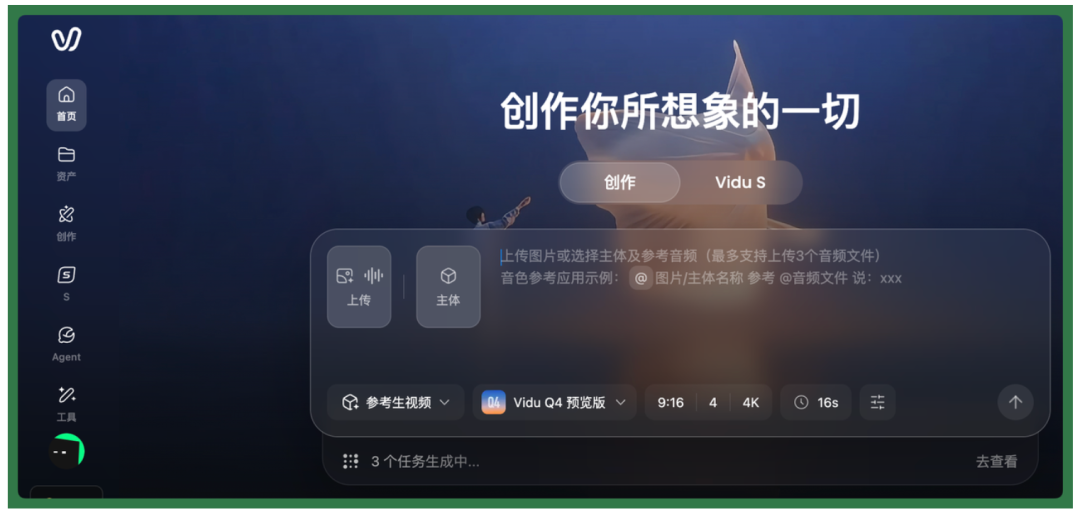
Vidu has long been one of the most promising players in China's AI video space. The team packs serious technical and talent firepower, and their past model generations have maintained a brisk iteration pace — so expectations for their future trajectory have stayed high. This Q4 Preview release naturally warrants attention.
If you had to sum up what changed in Q4 Preview, it breaks down along two vectors: creative freedom, and expressive freedom.
Flagship video, within reach for everyone.
On one side, generation costs keep falling.
Q4 Preview starts at 0.09 RMB per second — a pleasantly surprising price point. It means a lot of test shots that previously gave creators pause can now be generated with less hesitation, iterated through multiple rounds, and assembled into workflows that strike a better balance between quality, speed, and cost based on actual project needs.
On the other side: expressive capability.
This Q4 Preview clearly channels more power into character performance, camera work, and visual effects.
Eight months ago, in our article "Inside a 5-Day Launch, Vidu Unveiled a Full Content Production Chain", we covered Vidu Q2 Reference-to-Video Pro, Q3, and other models.

Now Q4 Preview arrives, supporting up to 15 reference images and 3 reference audio clips in a single prompt, letting the model simultaneously process more characters, scenes, audio, and visual information. On output specs, it supports up to 4K in a single generation.
Combined with this pricing structure, at least at the Preview stage, this model already looks competitive on price, specs, and overall performance.
🚥
We also played around with some genuinely fun cases that carry that distinctive Vidu flavor:
- The absurdist "Crazy Water World" marketing shorts currently blowing up on short-video platforms;
- The Lulu and Lumei series about becoming internet-famous;
- A Feng Gu short that breaks the fourth wall;
- A pixel Kamen Rider VFX piece.
Here's what we found.
Hands-On with That "Vidu Vibe"
Before diving into the cases, one overall impression from this round of testing:
In an era of model homogenization, interesting souls are one in a million. From this test, Vidu Q4 Preview shows noticeable improvement in acting, effects, camera movement, and shot transitions. As a preview of Q4, once more real creators get their hands on it, the team can keep iterating based on actual feedback — there's still plenty of room for optimization. Character expressions are more nuanced, movements more natural, complex camera work and cuts more stable, and effects like explosions, smoke, and particles easier to pull off. Plus with up to 15 reference images, characters, props, and scenes can all be locked in within a single task.
What you end up with still has that familiar "Vidu vibe" — shots with real tension, and a solid reputation for anime fight scenes.

The "Vidu vibe" as we understand it isn't really any fixed visual style. It's more like the model has a preference for inherently dramatic video.
Characters show clear emotional arcs, scenes tend toward the grandiose. Throw in chases, reversals, action, or effects, and Vidu usually has an easier time executing them fully.
That's exactly why we went after cases like "Pixel Kamen Rider," "Crazy Ice World," and "Lulu and Lumei" this time around.
And this year, there's another clear trend in AI models: capabilities keep climbing while prices keep dropping.
Just yesterday (October 7), Anthropic released Claude Haiku 5.5, stating that compared to the previous Haiku 4.5, average operating costs dropped by roughly 75%.
For requests under 100,000 tokens, API pricing fell a full 90%.
Now this trend is becoming increasingly visible in AI video as well.
Vidu Q4 Preview's pricing at 0.09 RMB per second is genuinely attractive for creators who need to constantly experiment with storylines, adjust shots, and produce content at scale.
Especially for short-video marketing, mini-game ads, and AI animated series — scenarios where creators typically generate many clips and cherry-pick the best performers.
The better the model's cost-performance, the more room creators have to attempt more complex, more dramatic content.
From this angle, Q4 Preview's improvements in acting, effects, and camera work, combined with a lower barrier to entry, genuinely expand the playground for that "Vidu vibe."
This cost-performance has also caught the attention of overseas AI creators.
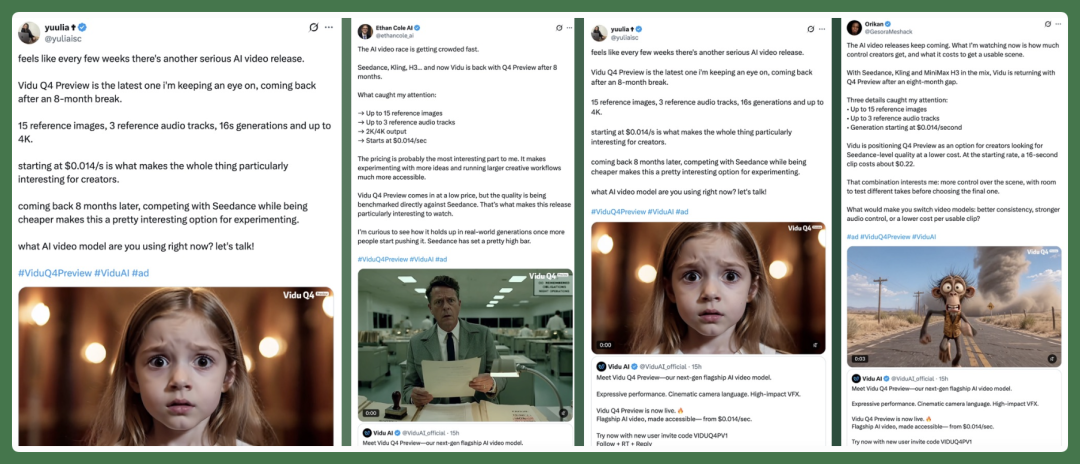
Recently on X (Twitter), quite a few international creators have started discussing Vidu Q4 Preview. Beyond the headline capabilities — up to 4K, 15 reference images, reference audio — the dominant topic of conversation is the pricing, and how much creative room that price point opens up.
【1】Pixel Kamen Rider
In practice, we found Q4 Preview handles effects, especially heavy particle work and complex visual sequences, quite well.
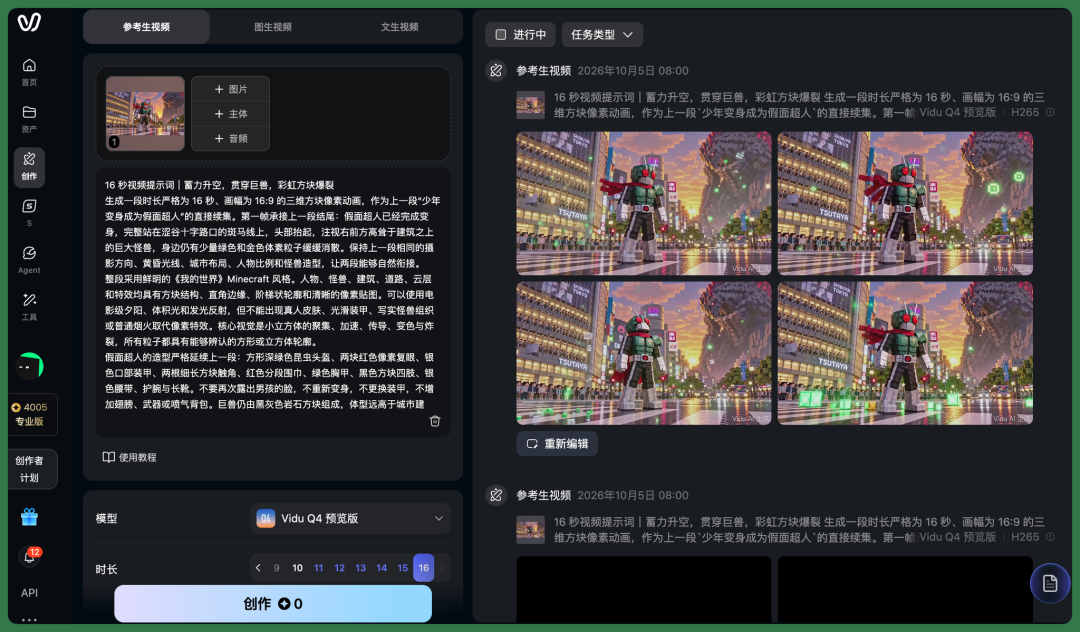
For this case, I uploaded 2 pixel-art reference images: a boy standing at a Shibuya crossing, next to a massive pixel monster.
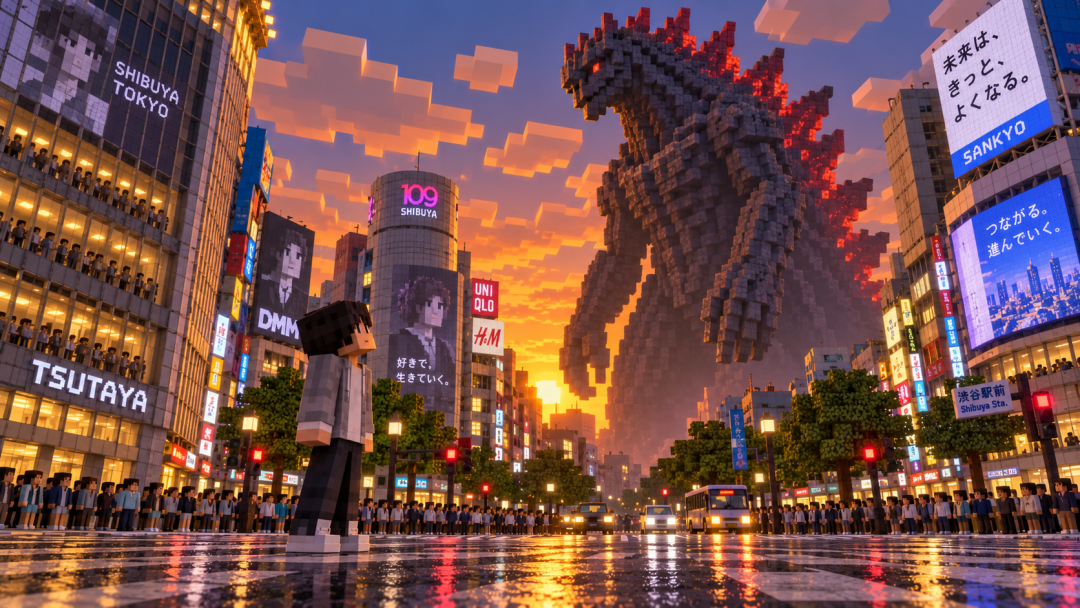
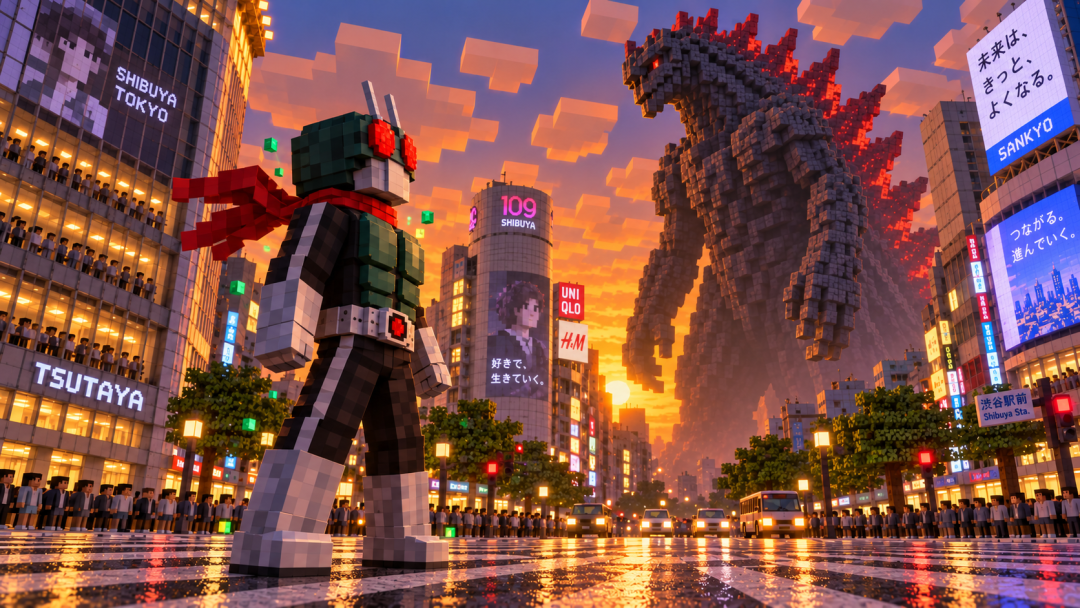
Then I had Vidu Q4 Preview generate a clip of the boy transforming into a Kamen Rider.
The entire sequence maintains a Minecraft-style blocky pixel aesthetic. Characters, monster, buildings, roads, clouds — even the particles and light effects during transformation — all remain block-structured.
The final result is solid. English text, numbers, and lettering in the frame also stay reasonably consistent.
After the transformation completed, I directly had Q4 Preview generate a continuation as a sequel.
Now the Kamen Rider stands on the Shibuya crosswalk stripes. He suddenly powers up and launches himself at the massive monster ahead.
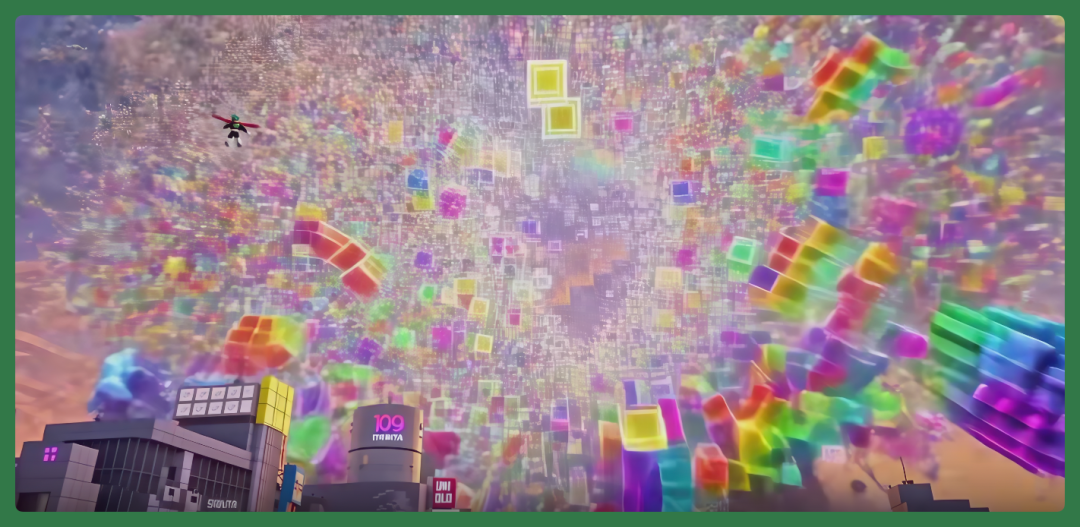
When he crashes into the monster's body, pixel blocks on the monster's surface get blown apart. Then rainbow colors rapidly spread along the voxel grid, propagating from the impact point across the entire body.
Finally, the whole monster becomes rainbow-colored pixel blocks and completely shatters, forming a massive field of colorful block-particle effects.
Overall, Q4 Preview's handling of this type of complex effect is genuinely good, with core visual coherence maintained from start to finish.
From the boy's transformation, to the Kamen Rider's launch, to the monster's rainbow fragmentation — all effects follow this consistent pixel and voxel logic:
【2】Crazy Ice World
If you've been scrolling short-video platforms lately, you've probably noticed that many Douyin mini-games now commission deliberately unhinged AI micro-dramas as marketing hooks.
The archetypal example is Crazy Water World. They've pumped out tons of AI-generated shorts on Douyin with absurd, almost hypnotically compelling storylines.
These clips have since become a talking point, with many noting how well-suited AI video models are for mini-game marketing.

The plot is dead simple. A fixed roster of characters take turns showing an NPC their in-game items.
The first few present seemingly impressive good items. The protagonist usually looks down on their luck and produces a terrible item, immediately getting mocked or straight-up kicked out.
The protagonist's final line — "I'll definitely come back" — wraps the segment.
Pretty much every video follows this template.
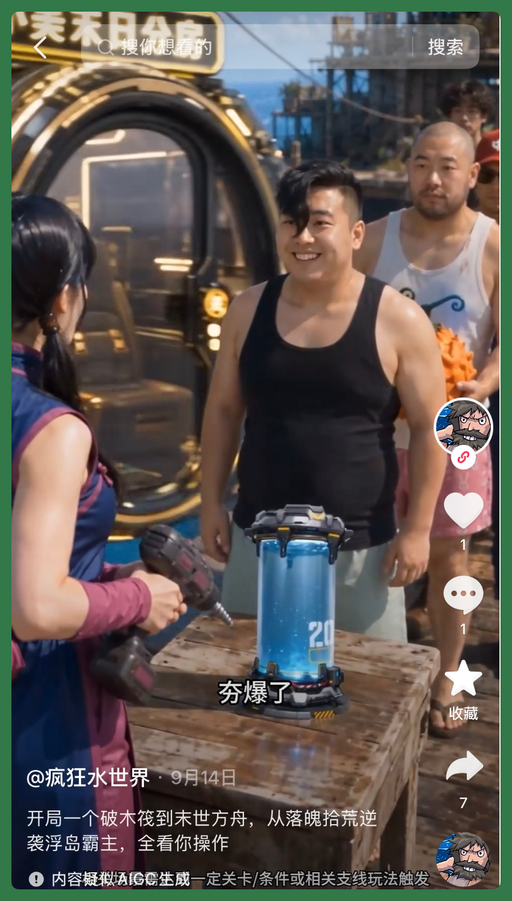
Though narratively simple, this format travels well on short-video platforms. The plot is direct, pacing is snappy, and the premise is instantly legible.
Plus the production complexity is relatively low, so many mini-game accounts update at blistering speed — multiple posts daily. The sheer volume makes them memorable and drives clicks into the actual games.
So this time I followed the same playbook, creating a Crazy Water World homage called Crazy Ice World.

The plot is essentially identical, just transposed to an post-apocalyptic ice world where heaters and similar items are precious commodities.
The protagonist starts as a middle-aged man in a military coat, visibly down on his luck. His item is equally pathetic — just a roasted sweet potato — and he gets promptly banished into an ice hut by the gatekeeper.
Before leaving, he shouts "I'll definitely come back again!" After this segment, a game footage transition completes the short.
Though the narrative seems simple, the actual production requires substantial reference image prep — characters, costumes, props, scenes all need to be created first.
This time, I generated over a dozen images upfront and fed them all to Vidu Q4 Preview in one batch.
From there, I just needed to write out the plot in the prompt. Q4 Preview automatically matched characters, props, and scenes from the reference pool. No need to specify each element individually, which streamlined the whole workflow considerably.
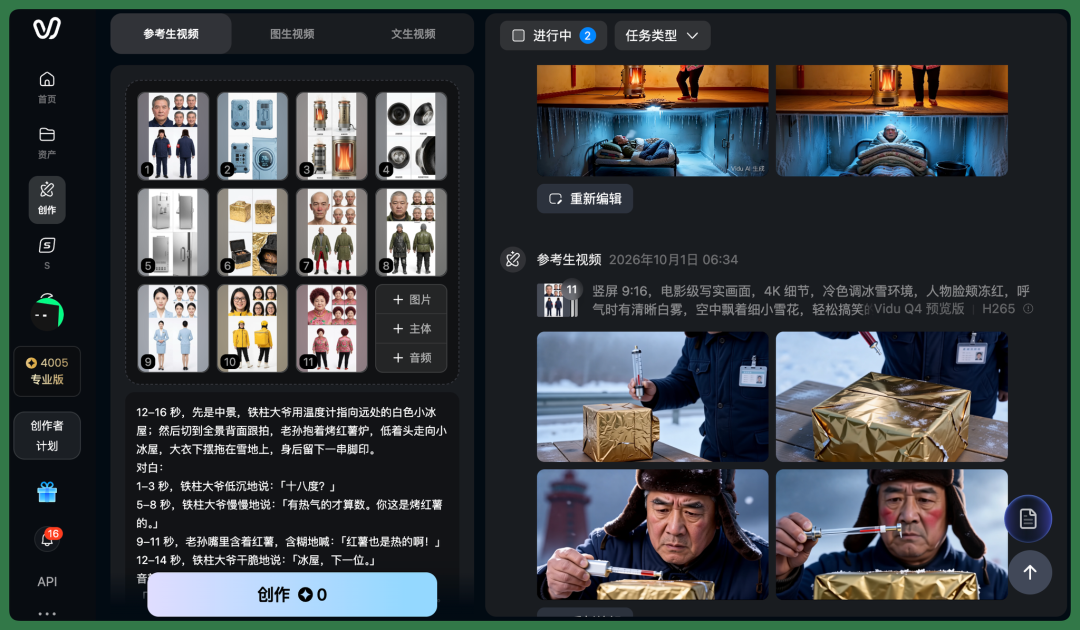
This approach is significantly more convenient for rapidly producing a series of shorts.
Given this scenario's need for high-volume output, speed and efficiency matter. Maintain character and prop consistency, deliver exaggerated facial acting, and you're mostly there.
Here's what Q4 Preview can quickly produce:
Our protagonist Old Sun slides across the ice in a giant wok, shouting "Crazy Ice World, activate!" He joins the queue, then presents his item to the gatekeeper.
The gatekeeper checks with a thermometer and finds the temperature abysmal: "Is this a roasted sweet potato?"
Old Sun gets expelled, banished to the ice hut.
Finally, he shouts at everyone: "I'll definitely come back — don't look down on me!"
Throughout, Q4 Preview's reference handling works well, the overall style is appropriately absurdist and meme-y, and production efficiency is high without requiring many retries.
The final output largely aligns with the original Crazy Water World premise and storyline.
Then you can keep using Q4 Preview, feeding it a game reference image to generate a game transition screen. Add text overlays, and you've basically got a platform-native mini-game marketing short:
Stitch these three clips together and you have a complete Crazy Water World-style marketing video.
And if further iterations are needed, Q4 Preview's pricing is quite affordable at roughly 0.09 RMB per second.
【3】Lulu & Lumei
This next case has probably flooded your short-video feed lately — it's everywhere right now.
It's the love story of two capybaras, "Lulu" and "Lumei", dropped into various bizarre scenarios, overall quite adorable.
When using Q4 Preview, I found it has a persistent feature where you can first create a subject, then directly invoke it in prompts.
Creating a subject is simple — just upload an image. I uploaded a Lulu image; it automatically recognized the style and appearance and generated a corresponding description. For subsequent video generation, character consistency improves significantly.

Then, having Q4 Preview reference Lulu and Lumei audio, you can rapidly produce many viral short clips.
For instance: raining, Lumei waits at the bus stop for Lulu. After a while, Lulu finally arrives through the downpour, bringing a small cake. He tells her: "The cake didn't get wet."
The emotional tone lands — the touching atmosphere between the two capybaras comes through.
Look closer at the details.
Even with this 3D-anime-inflected character style, facial expressions are fairly nuanced. Beyond the overall fur texture, Lumei's gaze and the tear-glimmer in her eyes are well-executed.

You can keep generating different scenarios.
On short-video platforms, Lulu and Lumei already appear across different eras and settings — the core remains small love stories between the two capybaras.
In this next one, Lulu holds a distinctive orange; Lumei wants to take it. Lulu is initially somewhat displeased, but seeing how happy Lumei becomes upon getting it, his mood shifts.
Later the two capybaras sit shoulder-to-shoulder, with smooth atmosphere and natural lighting transitions. Add a typical platform BGM and this is basically post-ready.
Because Q4 Preview generates quickly and prices remain reasonable, you can batch-produce many different scenarios.
Each scenario can function as a standalone short. For platform-native content, this approach is quite efficient.

The cases above mainly tested Q4 Preview's acting, atmosphere, lighting, and some effects performance.
The following cases focus more on camera work, shot transitions, and cross-style character consistency.
【4】Lulu the Rapper
First, a scenario Q4 Preview handles well this time — camera movement transitions.
I created a reference image restyling Lulu as a rapper: golden afro, silver-white glasses, overall more exaggerated look.

He stands against a pure white background — ideal for a 360-degree multi-angle orbiting cut commercial.
The camera circles Lulu, cutting through front, side, back-three-quarter, back, opposite three-quarter, and returning to front. Throughout, Lulu basically holds position.
At each angle's conclusion, the frame briefly holds for roughly 0.2–0.3 seconds. This pause resembles a fashion poster being frozen, then cleanly cutting to the next angle.
Results:
Q4 Preview's fidelity to the reference image is reasonably stable.
Especially during this 360-degree multi-angle orbit, from front through side and back to front again, character appearance and details stay largely consistent.
Transitions between angles feel natural without obvious jarring jumps.
【5】Breaking the Fourth Wall
One final cross-era style case.
More TV dramas lately use "breaking the fourth wall" as a performance device to hook viewers, so I wanted to test this with Q4 Preview.
I first generated a Song Dynasty roujiamo shop image as the opening frame, then had Q4 Preview continue it into a Feng Gu painting-style animation.

The protagonist is the male butcher in the back right, chopping meat. Initially he works normally, but mid-action he realizes someone off-screen is watching him.
He stops, looks directly into camera, and starts complaining to the 2026 audience, begging for rescue. The premise: he's actually a time traveler trapped in the Song Dynasty, desperate to return to 2026.
The whole piece is absurd but genuinely entertaining:
Overall, character voice, lip sync, and facial expressions coordinate fairly naturally.
Especially when he says he really can't take it anymore and wants to return to 2026, the roujiamo shop proprietress suddenly turns and tells him to quit complaining and get back to work.
This small interaction adds nice texture and completes the "breaking the fourth wall" bit.
After hands-on testing across real use cases, my feeling is that for very short, simple shots, mainstream video models are already quite capable — and increasingly homogeneous.
But look closer, and domestic video models are developing increasingly distinct product personalities.
Keling AI has stayed consistent on realism, physics, and general generation over the past couple years. Seedance has improved rapidly on narrative, multi-shot sequences, and overall completion. Vidu keeps doubling down on Reference, character performance, action, camera work, and more visually punchy scenarios.
Short-video marketing, serialized character IP, creative pieces heavy on action and effects, and small dramas requiring stronger performative sensibility — these all play to Vidu's strengths.

After all, interesting souls are one in a million. And Vidu's R&D team skews young, with many members long immersed in gaming, anime, film, and VFX.
To some degree, this product orientation toward action, camera work, and visual impact reflects the team's own aesthetic preferences.
This Q4 Preview isn't the final release, but from testing, it's pushed this product orientation further. And the 0.09 RMB per second pricing directly impacts how people create.
The real significance of this price is that "generate lots, discard lots, iterate lots" is slowly becoming viable.
Especially for shorts, mini-game marketing, and feed ads — scenarios that inherently require testing many scripts, characters, and shots simultaneously. As generation costs drop, teams no longer need to polish every video from the start. Instead, batch-generate dozens of versions, then refine based on performance data.
For platforms, this also means video model business models increasingly resemble high-frequency production tools.
The so-called "Vidu vibe" probably crystallizes through this ongoing interplay of quality and cost.
If you've been experimenting with AI video, making AI short dramas, or especially building your own account on short-video platforms with sustained niche content — Vidu Q4 Preview is worth taking for a spin yourself.