Faster! Even faster! So fast the world can generate in real time | A conversation with Shengshu Technology's Jintao Zhang on Vidu S1, inference acceleration, and real-time interactive video

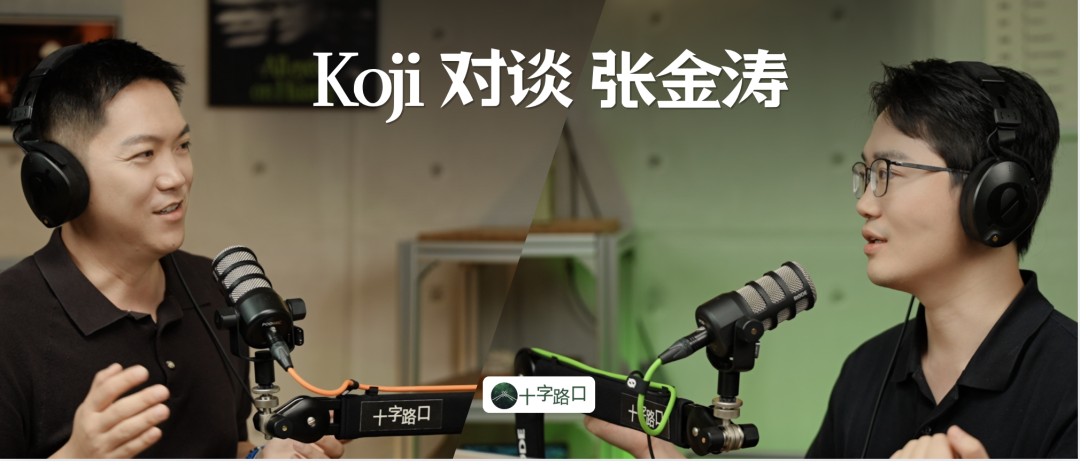
👦🏻 Podcast interview: Koji
🥷 Edited by: Crossing
🧑🎨 Layout: Zeoooo

🚥 Nobody likes waiting.
The stronger the model, the more important inference acceleration becomes. In this episode, we talk about "inference acceleration."
This week on Crossing, our guest is Jintao Zhang from Shengshu Technology. Earlier this month, he and his team released Vidu S1 — a real-time interactive video model: upload a photo, whether it's a person, an anime character, or a pet, and it becomes an AI character you can video chat with in real time.
Vidu S1 is fast — so fast that generation speed exceeds playback speed, and it supports unlimited duration. How did they pull this off?
On the podcast, Jintao shares a clear technical thread running through his recent years: from SageAttention (3.5K GitHub stars), TurboDiffusion (3.6K GitHub stars), to TurboServe — a complete system-level solution that provides the underlying infrastructure for S1's real-time interactivity.
Beyond that, Jintao also shares his observations and judgments on the broader AI "inference acceleration" landscape.
But the interesting part of this episode isn't just the tech.
Jintao is 26 years old and still a PhD student at Tsinghua University. What really drew him into "inference acceleration" was a surprisingly simple insight — when everyone assumed FlashAttention had already pushed the Attention operator to its limit, he noticed that there were clearly faster compute units on the GPU going unused. "Such obvious gains — why isn't anyone doing this?"
So you can also treat this episode as a kind of "young researcher case study": in a field as rapidly changing as AI, how do you find your direction, how do you judge what is "the most correct thing to do," and how do you carry it all the way to the cutting edge.
Listen on WeChat:
Listen on Xiaoyuzhou:

🎬 The video podcast is also available on Koji's WeChat Channels, Xiaohongshu, Bilibili, YouTube, and other platforms
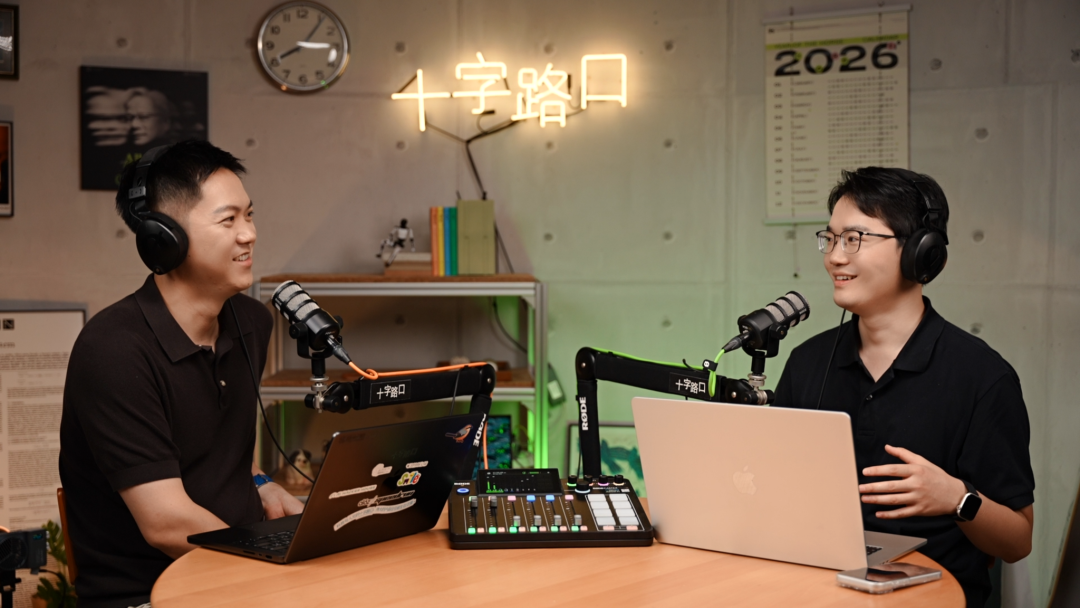

Rapid Fire
👦🏻 Koji
Your age?
👨🏻💻 Jintao Zhang
👦🏻 Koji
Where did you study?
👨🏻💻 Jintao Zhang
Currently a PhD student at Tsinghua University.
👦🏻 Koji
MBTI and zodiac sign?
👨🏻💻 Jintao Zhang
INTJ, Aquarius.
👦🏻 Koji
Describe Vidu S1 in one sentence.
👨🏻💻 Jintao Zhang
It's a real-time interactive video generation model that lets you control generated video content through voice in real time.
👦🏻 Koji
At Shengshu Technology, besides the S1 project, what else do you work on?
👨🏻💻 Jintao Zhang
I'm responsible for inference acceleration and cluster deployment for all of Shengshu's models. Actually, I lead the full-stack engineering for the entire streaming video generation pipeline — from data and training algorithms, to inference engineering, to final model evaluation.
Faster Compute Units Sitting Right There on the Hardware. "Why isn't anyone doing this? The gains were obvious."
👦🏻 Koji
What were you mainly working on before joining Shengshu?
👨🏻💻 Jintao Zhang
I was primarily doing PhD research under Professor Jun Zhu, focused on inference acceleration. Before officially joining Shengshu, I also spent half a year as a visiting researcher at UC Berkeley.
👦🏻 Koji
What got you started on inference acceleration? A lot of people in the industry first knew you through your early representative work, SageAttention.
👨🏻💻 Jintao Zhang
In my second year of master's, I converted to the PhD program and joined Professor Jun Zhu's group. Professor Zhu saw that I had done some systems-level work before, so he arranged for Professor Jianfei Chen to mentor me. Professor Chen was very direct: inference acceleration is a critically important direction for the future.
He assigned me to work on low-level acceleration for Attention. SageAttention was the first result from that. It's a plug-and-play, faster Attention operator implementation that can directly replace the Attention computation in large models.
👦🏻 Koji
Plug-and-play?
👨🏻💻 Jintao Zhang
Right. At the time, Professor Chen and I noticed that although FlashAttention was enormously influential and the industry had largely accepted that it had pushed the Attention operator to its limit, there were still faster compute units at the hardware level that hadn't been tapped.
The core computations in large models fall into two main categories: linear layer computation and Attention computation.
Those faster hardware compute units were already widely used for linear layer acceleration. But after FlashAttention came out, somehow no work had managed to invoke those faster compute units on the GPU to accelerate Attention.
We were puzzled: why isn't anyone doing this? The performance gains here were very obvious. Since no one else was doing it, we decided to do it ourselves.
👦🏻 Koji
So why wasn't anyone doing it at the time?
👨🏻💻 Jintao Zhang
Because low-bit acceleration for Attention computation presents enormous challenges.
First, traditional language models tend to be Memory Bound on Attention computation. In that scenario, simply accelerating the Attention compute units doesn't yield much end-to-end benefit, so people lacked the motivation to pursue it.
But then multimodal models and video generation models emerged. We found that their Attention paradigms are severely Compute Bound. The computation speed directly determines Attention latency, so the payoff from compute acceleration becomes very high. But before early 2024, the industry hadn't realized this yet.
Second, low-bit acceleration for Attention itself has an extremely high engineering barrier. Unlike ordinary linear layers, you can't just write a few lines of PyTorch code and call a quantization API.
Attention's computational characteristics force you to go deep into the底层 — handwriting GPU Kernel code. Before early 2024, the barrier to handwriting CUDA or low-level GPU programming was still quite high for most people.
👦🏻 Koji
You had to handwrite it?
👨🏻💻 Jintao Zhang
Yes, basically handwritten.
Third, Attention computation is extremely sensitive to precision when it comes to low-bit quantization. If you directly quantize all of Attention's computation to 8-bit and use it in language models or video generation models, the output quality becomes a complete mess.
We had to crack the latter two engineering and algorithmic challenges before we could successfully build SageAttention.
From SageAttention to Vidu S1: Three Layers of Acceleration
👦🏻 Koji
From SageAttention back then to releasing Vidu S1 now, the core driver is that inference acceleration technology has advanced to the point where it can support the fluidity of streaming generation. From SageAttention to S1, what were the key milestones in between?
👨🏻💻 Jintao Zhang
Vidu S1 has already opened its experience website and API platform to the global public.
The first point I want to emphasize is that Vidu S1 isn't a single-point operator acceleration — it's full-stack optimization of "model + cluster deployment." Inference acceleration is only one part of it.
If we break down this evolution, it did go through three stages:
Stage one was operator-level acceleration. Researching how to make linear layers, nonlinear layers, and Attention operators run faster on specific hardware, squeezing every last drop of performance from the GPU.
Stage two was model-level complexity optimization. It's not enough to make operators run fast — you also need to reduce the model's overall computation. Through "step distillation," we compressed the Diffusion model's denoising steps from 50 down to 4, dropping computational complexity by more than an order of magnitude. At the same time, we introduced sparse Attention, reducing computational complexity while maintaining model quality.
Stage three was production-grade cluster deployment. Once a single model runs on one GPU or multiple GPUs, how do you deploy it across a massive server cluster to support real-time requests from users worldwide? This involves multi-GPU parallelism, model parallelism, and request scheduling. We did extremely heavy engineering optimization here, with concurrency and scheduling at the core.
👦🏻 Koji
After SageAttention, you also released an open-source project called TurboDiffusion. What role did it play?
👨🏻💻 Zhang Jintao
TurboDiffusion corresponds exactly to stage two I just mentioned: with an extremely fast SageAttention kernel in hand, how do you make any Diffusion model fly on a single GPU or single machine?
At the model level, we not only plugged in faster linear layers and Attention kernels, but also developed a general-purpose model distillation and sparse Attention algorithm.
These algorithms differ from kernel optimization — they need to be achieved through model training and fine-tuning. For example, through fine-tuning sparse Attention or distillation training, we reduce model complexity while ensuring image quality.
On the engineering side, when running multi-GPU parallelism, how to perfectly overlap communication overhead between GPUs with computation time on each GPU.
Overall, TurboDiffusion was an optimization at the model architecture and fine-tuning level, combined with partial engineering optimization.
👦🏻 Koji
Doing this research at school, data and compute resources must have been quite limited?
👨🏻💻 Zhang Jintao
Yes. When we worked on TurboDiffusion, our compute resources were relatively constrained. However, TurboDiffusion itself doesn't require massive training resources.
We built on open-source video generation models and got it working with a very small amount of fine-tuning data.
👦🏻 Koji
How many Stars has it gotten on GitHub so far?
👨🏻💻 Zhang Jintao
Over 3,600 Stars.
👦🏻 Koji
In this field, what kind of performance is that?
👨🏻💻 Zhang Jintao
I'd say it's a pretty decent showing.
👦🏻 Koji
In the industry, which companies or models have adopted SageAttention or TurboDiffusion?
👨🏻💻 Zhang Jintao
What makes me particularly proud of SageAttention is that it has become the de facto industry standard.
Not only are NVIDIA and AMD officially using it, but domestic hardware vendors like Huawei Ascend, Moore Threads, and MetaX have all implemented their own SageAttention deployments at the GPU driver level. On the algorithm company side, nearly all major multimodal players — ByteDance, Tencent, Shengshu, even Google — are using it.
Vidu S1 Is More Than Just "Fast" "Generation speed needs to exceed playback speed for true real-time generation."
👦🏻 Koji
Coming back to Vidu S1, everyone's first reaction to streaming video generation is "fast."
Behind this "fast," what technical breakthroughs are actually involved?
👨🏻💻 Zhang Jintao
Actually, we can't simply summarize streaming video models as "fast."
Traditional video generation models are "offline": you input a prompt, package it up, send it off, wait patiently for a while, and it spits out a 5-second or 10-second video.
But the interaction paradigm of streaming, real-time video generation is completely different. You're "talking" to it in real time — every frame is computed and rendered on the spot based on your input. Its generation speed must exceed playback speed, or users will perceive lag.
So it's not simply a "speedup problem" — it reshapes the entire generation pipeline.
👦🏻 Koji
Then what's the biggest challenge in all this?
👨🏻💻 Zhang Jintao
The biggest challenge is: how to achieve ultra-long or even infinite-duration smooth generation while ensuring high image quality.
Current offline video generation models can generate at most about 30 seconds in one shot. But real-time interaction can't just last 30 seconds — we often need it to generate continuously for dozens of minutes or even hours, without visual drift or collapse. This imposes extremely demanding requirements on model stability.
👦🏻 Koji
I heard Vidu S1 can chat with users for days on end. How did you solve the problem of preventing visual drift and collapse?
👨🏻💻 Zhang Jintao
This relies on some very fundamental explorations we did in Diffusion training.
Particularly in the computational architecture design of Attention, and in noise intensity control, we developed a very advanced mechanism that successfully solves quality degradation and content drift in long video generation.
On the inference optimization side, Vidu S1 can achieve 540P resolution, which is extremely rare among current real-time generation models. At the same time, its frame rate stays stable at 25 to 42 FPS.
Most crucially, ordinary users can run this directly on consumer-grade GPUs.
👦🏻 Koji
To simultaneously push speed, image quality, and long-term consistency to the extreme, there must be some trade-offs. In this process, what did Vidu S1 sacrifice?
👨🏻💻 Zhang Jintao
There are definitely trade-offs.
Because we made "real-time interaction" the top priority, we must first ensure responsive real-timeness. Above this red line, we then do our utmost to optimize image quality and generation consistency.
👦🏻 Koji
So speed is the primary goal?
👨🏻💻 Zhang Jintao
Yes, "fast" is the absolute prerequisite.
👦🏻 Koji
In the priority ranking of image quality, cost, and consistency, which one currently ranks last?
👨🏻💻 Zhang Jintao
At this stage, if forced to rank one last, we can only choose to let image quality make slight compromises.
👦🏻 Koji
The experience platform is already open to the public. What's the commercialization and pricing model?
👨🏻💻 Zhang Jintao
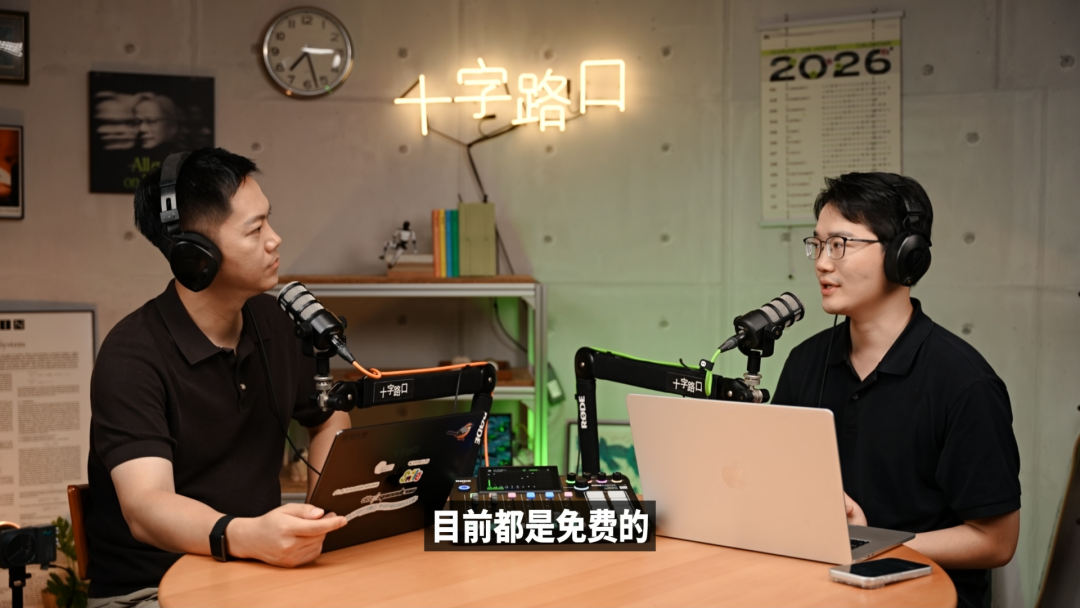
Our web and app experiences open to the general public are completely free. For the API platform, we charge by time, roughly two to three yuan per minute, with no duration limits.
"In the future, our visual entertainment signals will be flooded with AI-generated content."
👦🏻 Koji
Will streaming, real-time online interactive video become a massive trend in the future?
👨🏻💻 Zhang Jintao
Video models essentially serve human visual entertainment needs.
These needs fall into two categories:
One is offline, pre-produced video, like movies or short videos;
The other is real-time, online interaction.
For example, our conversation today is typical real-time online interaction.
👦🏻 Koji
By "online," you mean being able to receive real-time feedback from the other party?
👨🏻💻 Zhang Jintao
Yes. Whatever I say, you know immediately, and respond with corresponding actions and speech based on my state.
In dating, gaming, even almost all daily social scenarios, this kind of "real-time interaction" is humanity's largest, most instinctive visual entertainment need. Before the digital revolution, virtually all human visual entertainment was real-time online interaction.
Offline pre-produced video has a ceiling on "play count," but the magic of real-time interactive video is: everyone has a unique Session — what you see belongs only to you.
👦🏻 Koji
Everyone has their own independent Session. This is also the underlying logic of Elon Musk's compute model.
👨🏻💻 Zhang Jintao
Yes. In the future, all visual signals may be filled with AI real-time generated content.
From a technical path perspective, there are no bottlenecks or impossibilities. This real-time interactive video generation is inevitably the most core, highest-demand track in the future — the general trend.
A Dog and a Gaming Buddy
👦🏻 Koji
Since launch, have you seen users do anything interesting with Vidu S1?
👨🏻💻 Zhang Jintao
Though it's been less than a day since release, community feedback has already been insane.
Because before this, no model in the world let users control video generation through voice in real time, much less achieve unlimited-duration interaction while supporting custom characters.
I've seen many viral cases. For example, someone uploaded a photo of their puppy, then directly chatted with the AI-animated puppy in real time — the puppy would make all kinds of vivid reactions based on what they said.
Also, Vidu S1 has video understanding capability and supports video signal input. I saw a player on Bilibili who left 3/4 of his screen for the game画面, and uploaded an anime girl in the other 1/4.
👦🏻 Koji
Feeding the game画面 as a real-time video stream to the model?
👨🏻💻 Zhang Jintao
Yes. As he played the game, the anime girl on the right watched his gameplay in real time and chatted with him. The girl could understand everything happening in the game and react on the spot.
👦🏻 Koji
So theoretically, I could feed my daily coding interface as a video stream and have it play a "programmer cheerleader"?
👨🏻💻 Zhang Jintao
Of course.
👦🏻 Koji
It can see whether I'm chatting on WeChat or writing documents in Notion, and give me various voice and action feedback anytime?
👨🏻💻 Zhang Jintao
Completely. It can understand every word and画面 you write — it has extremely strong multimodal video understanding capability.
In the next two weeks, the community will definitely produce tons of creative uses. Another user uploaded blogger "Feng Ge's" photo and his spinning-dance persona, having Feng Ge deliver real-time birthday wishes and perform the spinning dance on screen — the experience is utterly mesmerizing.
Inference Acceleration Is More Than Just Kernels
👦🏻 Koji
Let's return to inference acceleration. Most of your work has been on multimodal model inference acceleration, but LLM inference acceleration is also extremely important. In the past year, we've seen many chip-level innovations, like Cerebras, Taalas, and others.
Could you introduce what important and noteworthy work or directions exist in the inference acceleration field?
👨🏻💻 Zhang Jintao
Inference acceleration, literally speaking, is making model inference faster.
If we set aside chip design, I think there are two core dimensions of work:
First, at the operator level. We need to make model computations run extremely fast on specific hardware, pushing as close as possible to the hardware's limits. But people often misunderstand inference acceleration as being only about this.
👦🏻 Koji
You mean making a model compute at the theoretical maximum on specific hardware?
👨🏻💻 Zhang Jintao
Right — making a particular operator compute faster. This is certainly very important.
But another absolutely critical aspect of inference acceleration is reducing the model's computational complexity.
We want end-to-end inference acceleration — input a request, get rapid output.
AI models are essentially black boxes, and inside these black boxes there's a massive amount of redundant computation. Can we eliminate this redundancy?
For example, through sparse attention, or optimizing model architectures (like MoE architectures), or using distillation techniques (whether distilling model size or sampling steps). This is how I think inference acceleration should be defined.
Of course, I don't know an enormous amount about chip design. If we go one level deeper, hardware iterations like what NVIDIA does — improving the hardware's raw compute speed — could also be considered inference acceleration in a broader sense.
Currently, some of the better inference acceleration work in the industry, such as on Diffusion models or multimodal models, includes the open-source project vLLM, which touches on several of the optimization layers I mentioned, though it focuses more on scheduling and management.
Our previous work, SageAttention, and later SLA (Sparse Linear Attention) combined with engineering optimizations, mainly explored operator-level optimization and reducing model complexity.
On Diffusion models, traditional offline generation is relatively simple because there's only one user request — no need for batching or KV cache scheduling.
But recently, due to increased demand for streaming interaction, the Diffusion generation process has become something more like an auto-regressive process, which involves KV cache and complex request scheduling. Users might connect, disconnect, or interrupt midway.
So I think we'll see a lot of research on how to do cluster deployment and scheduling for Diffusion models. A paper we did at Shengshu Technology called TurboServe addresses exactly this — how to schedule and deploy streaming video generation models on clusters.
In the language model space, DeepSeek's DSA (DeepSeek Sparse Attention) is very good work.
👦🏻 Koji
UltraSpeed built on the open-source DFlash framework — things like DSpark and Xiaomi's Mimo — have all shown very significant results.
👨🏻💻 Zhang Jintao
In the multimodal and Diffusion space, our open-source Sparse Linear Attention for sparse attention acceleration has also received recognition from the multimodal leads at Tencent and ByteDance. They're both using it and consider it very good work.
Of course, this open-source version of SLA still has some minor shortcomings in its choice of linear attention mechanism. What I've mentioned is just the work I've encountered and endorse — it doesn't represent everything. There's still a tremendous amount of excellent inference acceleration research in the industry.
The future of inference acceleration belongs to the extremes "The future of inference acceleration still belongs to the lower and upper extremes."
👦🏻 Koji
Regarding the future of inference acceleration, you mentioned it will belong to two extremes: lower and upper. Could you elaborate?
👨🏻💻 Zhang Jintao
Sure.
First, how individual operators physically converge and run on hardware — this direction will gradually become standardized. Everyone has mastered very advanced coding methods and understands hardware architecture better, so pure operator optimization won't present high barriers in the future.
By "lower level," I mean directly building extremely general-purpose yet blazingly fast hardware (like what NVIDIA does), or tailoring dedicated chips for specific models (like real-time interactive video generation models).
👦🏻 Koji
Like Taalas, hardwiring a specific model into a chip?
👨🏻💻 Zhang Jintao
That's one approach, but perhaps too expensive. Once the model updates, the chip becomes obsolete.
I think a more viable lower-level approach is to maintain customization while preserving some generality in the chip.
For example, language model attention computation is typically memory-bound (limited by memory bandwidth rather than compute speed), while video generation models are mostly compute-bound. By dynamically adjusting the ratio of computation to memory transfer, memory size, the number of compute units for various precisions, etc., you achieve a balance between general-purpose and specialized. This requires very strong co-design capability between chip design and algorithms.
By "upper level," I mean optimization at the algorithm and model level, with the core being how to dramatically reduce model computational complexity. The human brain, for instance, operates on just 25 watts of power yet solves incredibly complex tasks. Theoretically, we should absolutely be able to reduce model computational complexity.
This also divides into general and specialized directions:
The general direction is reducing complexity when the model handles various tasks;
The specialized direction is enabling the model to satisfy different user requests with very simplified computation, rather than having every token, every request go through complete layers.
I believe these two directions — one up, one down — will become increasingly important in the future.
👦🏻 Koji
Wouldn't it be easier for startups to emerge at the lower level? Because at the top level, it seems hard to independently support a commercial empire.
👨🏻💻 Zhang Jintao
A truly excellent inference acceleration product fundamentally requires hardware-algorithm co-design. So from a startup perspective, you actually need capabilities on both sides.
But you have a point — if a startup focuses purely on hardware at the lower level, or takes a co-design route, both could succeed. But if you're limited to just the algorithm layer, it's genuinely hard to build moats, because pure algorithm research is difficult to validate deeply at the hardware level.
Why China's video models lead
👦🏻 Koji
Let's talk about the AI video industry as a whole. In recent months, I've noticed a divergence between China and the US. China's video models are increasingly impressive, firmly establishing themselves in the global first tier.
In your view, what's behind this advantage in domestic video models?
👨🏻💻 Zhang Jintao
The essence of AI is modeling specific problems, then learning through training data — learning the mapping relationship between input and output data.
Since Transformers emerged, "carving decorations" on modeling architectures can no longer bring fundamental breakthroughs.
So the core competitive point now is data.
This is like human learning — whether someone learns well depends first on their intelligence (equivalent to brain modeling), and second on the education they receive. Good versus bad teaching methods produce vastly different outcomes.
For example, with a complex physics principle, good explanation can bring clarity in 10 minutes. Jianlin Su's Science Space is exceptionally clear — reading it for 10 minutes yields more than three hours spent on garbage blogs or polluted data.
Since modeling has relatively converged, the key becomes: can you clean and structure data into high-quality, human-preference-aligned, highly learnable content? Like with reasoning — if you force a model to jump directly from problem A to answer Z, it won't learn. But structure the data as a chain of thought for gradual learning, and it can master it.
From my observation, US video generation companies currently lag behind domestic leading video generation companies in data volume, data quality, preference alignment, and data construction methods.
The specific reasons vary — everyone may have different thoughts, such as objective differences in data acquisition compliance policies. That's the first point.
The second point lies in cultural differences between China and the US, and different market environments. Domestically, we have enormous demand for short video, livestreaming, and e-commerce (like Douyin and Xiaohongshu), industries that have developed more rapidly.
Therefore, we not only accumulate richer video data, but also have stronger motivation to explore how video generation can satisfy users' visual entertainment needs.
👦🏻 Koji
That's very interesting.
👨🏻💻 Zhang Jintao
I think those are mainly the two points.
👦🏻 Koji
It feels like 2026 has a major trend where many university professors and PhDs are heavily throwing themselves into entrepreneurship. A few years ago, figures like Zhipu AI's Jie Tang and Shengshu Technology's Jun Zhu were excellent examples of scholar-entrepreneurs, but at that time it hadn't become the nationwide frenzy we see today.
As someone in the midst of this, what's your personal feeling?
👨🏻💻 Zhang Jintao
First, I don't believe AI is a bubble. It genuinely can solve and satisfy enormous real human needs. Whether at the hardware or model level, the broad direction is extremely certain.
So this wave of entrepreneurial fervor is very rational, and can sustain for a long time — there's not much bubble to it.
Second, because the demand is so vast, no single company can monopolize all scenarios. Many different startups will emerge.
But I've also found that entrepreneurship isn't for everyone. During my time at Shengshu Technology — frankly, or perhaps immodestly — I feel I'm quite suited to management. I can cohere a team, acutely perceive each person's needs, know how to put the right people in the right positions, and handle complex resource coordination.
By contrast, some extremely technically talented people aren't actually suited to management.
How to make everyone work both happily and with sustained high morale toward the world's most leading technology — this is actually a very deep art.
World-leading means getting every link right "Knowing what the most correct, most leading methods in the world are, and then implementing them correctly."
👦🏻 Koji
Could you share some of your management practices in this area? Specifically, how do you get everyone to work to high standards while enjoying it, and how do you motivate people to bravely pursue world-leading levels?
👨🏻💻 Zhang Jintao
I've been deeply influenced by Professor Jun Zhu in this regard.
When OpenAI first released GPT-3, Professor Zhu told us: don't think GPT-3 is out of reach. It didn't make revolutionary innovations in model architecture, data, or training methods — it simply identified the most correct, most scientific approach, and executed every link to perfection.
Seeing the right direction clearly, then executing with absolute precision while obsessing over every detail — that's the secret to world-class performance. I've applied this logic to every single line of code in our inference team.
Many projects fail not because people don't know the frontier direction, but simply because a few unspotted bugs are hiding somewhere in their codebase.
As for how to make people happy, I believe the key is "sensitivity."
A leader must be acutely perceptive in reading each individual. Some people need better compensation, some care about credit, and others are purely chasing the thrill of technical breakthroughs. You have to precisely satisfy their core motivations.
At the same time, you need to build credibility for your team. When coordinating resources across departments or navigating conflicts of interest, a leader must demonstrate strong decisiveness and communication grounded in first-principles thinking. This is also a trait that many technically brilliant academics tend to lack.
One line of code, double the speed "Video generation is pixel-for-pixel identical to before, but end-to-end inference is more than twice as fast."
👦🏻 Koji
Can you talk about your personal growth journey? How did you develop this combination of traits along the way?
👨🏻💻 Zhang Jintao
I was pretty playful as a kid, severely lopsided in my abilities — excellent at math but terrible at Chinese. But I've increasingly come to realize that communication, expression, and sensitivity to others' emotions are absolutely critical. These soft skills are actually deeply connected to "Chinese" in the broad sense.
In college, my self-learning and expressive abilities began to show. Competition wasn't that fierce back then, so with a bit of effort I could get great grades while also making room for research.
When presenting papers in the lab, I found I could extremely quickly dissect the essential core of a paper. I really enjoyed the process of sharpening the logic, text, and visuals of my slides to be razor-sharp, so the audience could instantly grasp the most fundamental essence.
I believe writing is the best tool for reflecting the depth of a person's thinking.
👦🏻 Koji
The boundary of intelligence is sometimes the boundary of language. Being able to explain complex problems in plain, simple terms is precisely proof that you've thoroughly understood them?
👨🏻💻 Zhang Jintao
Exactly. It's not hard to explain things clearly; what's hard is explaining an extremely complex system with extreme simplicity.
I deeply enjoy this process of "distillation": when writing papers, I spend enormous effort condensing my motivation, carving out the limitations, challenges, and core contributions like sculpting. Every sentence, every word must have strong logical support.
After transitioning from master's to PhD, I entered the happiest period of my research and entrepreneurial career.
When working on SageAttention, I often spent time alone in Tsinghua's Ziqiang Technology Building. The building was quiet then. I was immersed in code, discussing with Professor Chen Jianfei, reporting to Professor Zhu. Simulating thread by thread, hunting down tiny precision bugs. When the underlying C++ and CUDA code took shape line by line, that sense of fulfillment was indescribable.
In May 2024, when Shengshu established the Vidu inference team to handle global deployment, Professor Zhu directly handed me this responsibility.
I literally hand-wrote SageAttention in Vidu's production environment. This was the world's first low-bit attention acceleration work to actually run in a real business setting.
When the code replaced the original FlashAttention and the precision finally aligned, I found video generation quality was pixel-level identical, but end-to-end inference speed had directly doubled.
I was ecstatic in that moment, couldn't wait to send the video to Professor Chen and Professor Zhu. Later we open-sourced the paper, published the Sparse Linear Attention work, and explored cluster scheduling in TurboServe. This kind of joy — solving real pain points for the industry and delivering breakthrough innovations — is irreplaceable by anything.
The second happy thing is that I'm now leading a team. Professor Zhu trusts me deeply, handing me this whole operation to run, which has also let me experience the startup state ahead of time.
When I first joined the lab, I realized Professor Jun Zhu's caliber and vision in both academia and industry were extraordinarily high.
This manifests in several specific ways:
First, extremely forward-looking cognition, with very sharp judgment and intuition about frontier directions. Many of his students, such as Weng Jiayi, Lu Cheng, Pang Tianyu, Song Yang, and others, are exceptionally outstanding talents in the industry.
Second, Professor Zhu is able to secure and provide extremely abundant computing and development resources for the lab.
Third, the lab's academic atmosphere. I visited UC Berkeley for half a year. Professor Zhu, with his CMU teaching background and overseas experience, has built our lab's atmosphere to be very similar to Berkeley's. I deeply appreciate this and am extremely grateful for Professor Zhu's trust and cultivation.
👦🏻 Koji
Hearing you describe that pure joy of technical breakthrough and creativity is genuinely exhilarating.
I hope in your upcoming research and entrepreneurial journey, you'll have many more of these wonderful moments. Thank you so much for sharing today, and I look forward to having you back as a guest in the future.
👨🏻💻 Zhang Jintao
Thank you Koji, I'm also very happy to have this opportunity for such a deep exchange with everyone.
👦🏻 Koji
Alright, bye bye.
👨🏻💻 Zhang Jintao
Bye bye.