"What Makes You Love an Industry for 15 Years?" | A Conversation with Wang Tianfan: I Want to Invest in True Joy, the Purest Vision, and the Brilliance of Human Nature [Highway Podcast]

👦🏻 Podcast Interview: Koji
🥷 Edited by: Crossing
🧑🎨 Layout: Zeoooo

🚥 15 Years of Investing and Passion — What's the Driving Force? Will 2026 still be a good year to invest in AI applications and AI hardware? When everyone knows there's a bubble right now, what should you chase and what should you let go?
This week on the "Crossing" road podcast, I drove my Mazda MX-5 and talked through these questions with Wang Tianfan (Will), Senior Partner at BAI Capital — all while cruising down the highway.
This episode is packed with sharp takes: intelligence is inflating, wisdom is scarce, and the real opportunities in AI applications hide in context and interaction; facing the "Huaqiangbei can knock this off for 80 RMB" critique, what's truly scarce in AI hardware is product definition and "injecting the brilliance of humanity"; and on the bubble of 2026, he offers an answer on an entirely different scale: if 3,000 years of civilization is being compressed into 30, then everything is just getting started.
A thread running through the entire conversation: when AI makes efficiency infinitely scalable, what's truly worth betting on are the founders who've figured out why they started, and the products that inject human brilliance and actually make people happier.
If you're wavering between AI's bubble and its opportunities, or simply want to know how a 15-year veteran stays passionate, this conversation about joy and vision might give you a long-missed sense of power — and a little courage to live in the present.
Listen on WeChat:
Listen on Xiaoyuzhou:

🎬 The video podcast is also now live on Koji's WeChat Channels, Xiaohongshu, Bilibili, YouTube, and other platforms.
Rapid Fire
👦🏻 Koji
Let's start with the classic rapid fire. Will, how old are you?
👨🏻💻 Will
👦🏻 Koji
Your MBTI and zodiac sign?
👨🏻💻 Will
I tested as ENTP recently, was somewhere near INFJ for a while, and I'm a Pisces.
👦🏻 Koji
Where did you go to school?
👨🏻💻 Will
Undergrad at Shanghai International Studies University, master's at London Business School.
👦🏻 Koji
What were you doing before joining BAI?
👨🏻💻 Will
Before BAI, I was basically just in school.
👦🏻 Koji
So how many years have you been at BAI?
👨🏻💻 Will
Since my internship in 2011 — almost 15 years now.
👦🏻 Koji
Fifteen years in primary markets. Do you remember what got you in the door?
👨🏻💻 Will
It's an interesting story. I was pretty intense in college — interned in consulting, banking, and FMCG. At one point I was a marketing intern at the company that claimed to be "the world's largest." Guess which company had the highest market cap back then?
👦🏻 Koji
Highest market cap — GE?
👨🏻💻 Will
ExxonMobil. After cycling through almost every industry, I found VC the most interesting. So right after graduating in 2012, I joined BAI.
👦🏻 Koji
Fifteen years, just like that. Looking back, can you divide this into clear phases?
👨🏻💻 Will
I've always seen myself as an "apprentice."
In this industry, an investor's maturity is usually measured by how many cycles they've been through. From 2012 to now, we've probably gone through three or four cycles.
In this process, young people start out desperate for deals, eager to pull the trigger. Before you've built your own investment taste, you're basically flailing — looking at whatever's out there.
👦🏻 Koji
You've maintained this apprentice mindset for all 15 years?
👨🏻💻 Will
Yes. When I started, it was all about sourcing — DMing people on Weibo, trying to build coverage. But our understanding of "coverage" was completely different from today.
We lacked real top-down thinking. Mobile internet had just exploded, everyone and their cousin was starting a company. If 36Kr covered someone, we didn't want to miss it; if a peer said someone was good, we didn't want to miss that either. We chased everything.
But if you always take this bottom-up path, the time cost is enormous — even wasted.
👦🏻 Koji
How is your approach different now?
👨🏻💻 Will
In the AI era, the highest bar for investors is that you must form your own judgment first.
If you don't have a "preconceived" hypothesis, the deals that come to you will likely all be market deals. By the time these projects reach you, they're already semi-consensus or full consensus.
Consensus means the valuation premium is already priced in — it's hard to earn on information asymmetry or cognitive edge.
👦🏻 Koji
So what angle should you take to find real deals?
👨🏻💻 Will
This severely tests whether an investor has two hard capabilities simultaneously.
First, the ability to unpack complexity and build foundational macro-level understanding. You need high-level beliefs and firm values. In today's era, it's very hard to persist in investing without conviction.
Second, being rooted on the front lines. You have to personally use and evaluate these products and models, or you'll easily be misled by empty concepts.
When Foundation Models Converge and AI Intelligence Inflates, What Becomes Truly Scarce?
👦🏻 Koji
In recent months, a consensus has formed in the industry: nobody's investing in AI applications anymore. Do you share this view, or do you see it differently?
👨🏻💻 Will
I initially held the same view. If the core explosion in the application layer depends on models, the most rational strategy is to invest in the models themselves.
But I later realized that intelligence is inflating, while wisdom is scarce.

I started thinking: when there are 100 or even 200 labs and model companies delivering ubiquitous "intelligence," what truly becomes scarce? I posed this to three different AIs, and their answers led me to understand: don't stop at intelligence — it's only the surface layer. What's truly scarce is "wisdom."
👦🏻 Koji
What's the essential difference between the two?
👨🏻💻 Will
That's an excellent question. Moonshot AI gave me a brilliant answer: wisdom is the decision-making system that evolves when intelligence is layered with feedback, experience, and reflection.
It's about why you do something, what matters to you, and the integrated value judgment of what you choose not to do.
Pure intelligence can't provide this. Even if I ask AI to prioritize my tasks, without my context, it can never make value judgments aligned with my personal interests. So the core variable from intelligence to wisdom is the input of context.
👦🏻 Koji
So following this logic, you believe AI applications still hold massive opportunity?
👨🏻💻 Will
Absolutely. I have a personal observation and a somewhat bold take here: this will likely be defined by hardware.
When evaluating AI hardware investments, we heavily weigh whether it has the potential to become a context machine.
Can it fully record what I say, the sounds I hear, the images I see? Can it even remember the feedback, actions, and behaviors triggered by these inputs? This data and context is enormously valuable commercially, but current physical devices simply can't carry it.
👦🏻 Koji
So in the context machine direction, you invested in Looki?
👨🏻💻 Will
Yes, and not just Looki.
In the second half of this year, we'll have a pair of glasses that's completely different from anything currently on the market — core product definition built around memory. We've also seen a wearable, body-worn hardware device. Completely phone-independent, directly connected, providing memory and Agent capabilities. And there's another product extremely focused on privacy, recording only the user's own output without capturing ambient sounds from others. Plus edge computing devices for home entertainment. In the context machine physical赛道, we've already backed four or five excellent product definers.
Huaqiangbei Can Knock This Off for 80 RMB — What's Actually Hard to Copy in AI Hardware Like Looki?
👦🏻 Koji
But these context-collecting hardware devices are fundamentally doing audio and video recording. Where's the differentiated moat? Huaqiangbei could probably make a knockoff for 80 RMB pretty quickly.
👨🏻💻 Will
The real differentiation lies in interaction. Interaction design must be infused with human care, or the brilliance of humanity.
Pure audio and video recording is very superficial. The hard part is designing interactions that create dependency — wearing it prompts self-reflection, deeper self-understanding, a sense of being cared for. This depth of emotional feedback is something you can't get on PC, on your phone, or from simply chatting with a conversational AI.
I used to complain about this too — for the past two or three years, the AI industry has produced almost no product managers who truly dazzle. At this inflection point, we desperately need exceptional PMs to redefine hardware. Because a context machine is never just a side toy cranked out by a model company.
How Is AI Reshaping VC Research, Due Diligence, and Portfolio Management?
👦🏻 Koji
With AI deeply embedded in your workflow, what has actually changed about how you invest?
👨🏻💻 Will
The efficiency and depth gains across multiple workflows have been disruptive.
First, pre-meeting preparation has become extraordinarily thorough. I've built out a full suite of prompt templates tailored to different founder archetypes — academic backgrounds, product backgrounds, domestic versus overseas experience. Feed the AI public information, and it generates due diligence directions and a comprehensive set of deep questions.
Second, the depth of diligence interviews. Previously, when evaluating a company, I'd have the AI systematically unpack massive troves of interview notes and raw material to surface the underlying logic. The output gave me an entire additional layer of fundamental understanding about the business.
Finally, portfolio tracking. We manage hundreds of portfolio companies. We use AI to automate monitoring of technical iterations, user feedback, and subtle signals across the entire web. It can't make high-level ultimate decisions for you, but for a fund focused on products and applications, this sensitivity to ground-truth data is essential.
I once shared a view on Jike: In the AI era, stubbornly chasing the classic "network effect" may already be outdated. Because the growth engine for AI projects has undergone a qualitative transformation.
The most salient shift right now is the convergence of three new engines:
First, the data flywheel. In verticals like coding, once a model company cracks its unique data feedback loop, the speed of self-iteration and evolution becomes terrifying.
Second, AI for AI. Using large models to efficiently develop, fine-tune, and train new models — recursive acceleration of R&D itself.
Third, AI-native organizational architecture. These large model companies are often the world's first organizations to completely eliminate information silos. They maximize the use of massive internal context and processes, minimizing collaboration friction.
This "three-in-one" growth dynamic was unimaginable in the past. And it's not just hard tech companies — even in traditional industries like running a restaurant, if a founder can execute ruthlessly on data feedback, recursive R&D efficiency, and AI-native organization building, that company will inevitably achieve a devastating dimensional advantage in this era and break into the top 5%.
👦🏻 Koji
Does the same survival law apply to VC firms themselves?
👨🏻💻 Will
Absolutely. This industry will very likely be reshuffled by this same logic, giving rise to a new breed of investment institutions.
After 15 years in VC, do you still love this industry?
👦🏻 Koji
Fifteen years in primary markets — do you still have the same passion you started with?
👨🏻💻 Will
I love this industry deeply. I think it's a reward and a luxury for anyone.
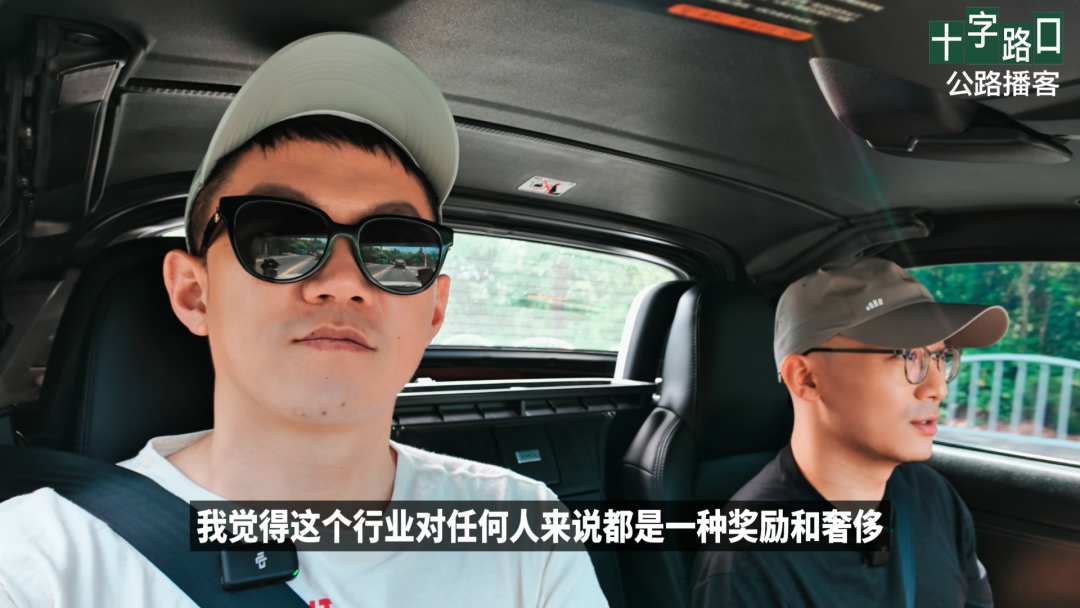
The reward is that there's almost no other industry in the world that indulges and continuously satisfies your curiosity about the unknown, about the frontier.
Second, the feedback cycle is far less protracted than outsiders assume. Many complain that VC is a long-cycle game. It really isn't.
Every board meeting, every quarterly review — it's an intensely vivid exercise. You see directly whether the company is on the right track, whether the CEO can control their own destiny, whether execution matches cognition. The moment capital is deployed, real business feedback and cognitive games begin.
👦🏻 Koji
Beyond the freedom to indulge curiosity, what else keeps you in this industry?
👨🏻💻 Will
It runs on extraordinarily high trust density.
Our fiduciary duty to LPs, the soul-level bond with founders, the collaborative consensus within the team — all are trust deliveries under highly asymmetric information.
Externally, we exploit cognition gaps about the future and information asymmetries in the industry to earn excess returns. Internally, we must maintain radical transparency — never manufacturing information asymmetry within the investment team itself.
Building this internally and externally coherent trust system is the bedrock of all venture capital.
👦🏻 Koji
But in reality, many primary market investors are leaving. They feel that in this industry, effort only determines your floor, while the ceiling is often left to ethereal "luck."
How do you confront this underlying anxiety and uncertainty?
👨🏻💻 Will
It depends on your coordinate system for viewing the world. If you're always swinging for the fences, you'll attribute too much to luck.
👦🏻 Koji
As an investor, don't you want to swing for the fences?
👨🏻💻 Will
Of course I pursue outsized opportunities, and I believe this era still holds enormously great ones. But the core logic is: you must capture them with a scientifically sound posture.
If a mega-opportunity lies completely outside your cognitive radius, then its occurrence and your missing it becomes purely a matter of luck probability. You'll blame luck for everything outside your field of vision — all those things you "don't know you don't know."
But this is actually a cognitive problem that can be engineered and systematically resolved:
As an investor, your core work is how to use extraordinarily high information input and insight to maximally shift things from your "don't know you don't know" blind spots into your "know you don't know" boundary of certainty.
What is the most important capability of an exceptional investor?
👦🏻 Koji
What kind of investor, in today's primary market, deserves the word "exceptional"?
👨🏻💻 Will
The sole criterion of excellence is the unity of knowledge and action.
At the frenzied peak of a cycle, every qualified professional investor privately knows where the bubbles are. But when a hot deal demands you invest across two valuation rounds at once, when you watch a company dilute itself massively to raise far more capital than its real business needs, when corporate governance is severely lacking and even basic PMF remains unverified yet the market is already frantically pricing it with irrational exuberance — can you, at that critical moment when calm is required, defy the herd instinct of human nature and truly choose to cool down?
That is the ultimate test of unity of knowledge and action.
At the peak bubble of 2026, what should investors take and what should they shed?
👦🏻 Koji
So, at this moment in July 2026 when we're recording this podcast — is this a time to be cool-headed?
👨🏻💻 Will
It's a time to make decisive choices, to take some things and shed others.
👦🏻 Koji
At this crossroads, what do you take and what do you shed?
👨🏻💻 Will
When market heat peaks, there are often immensely valuable projects, founders, and long-term directions that attract zero noise whatsoever. Whether you can settle down to unearth them at that moment is what separates the pack.
Last year when AI hardware hype peaked, we actually felt a rational anxiety. We weren't anxious about whether we'd won deals — we were anxious that market fever was sending the wrong feedback signals to excellent founders. This excessive capital supply and premium reward would create illusions, making them prematurely believe they'd achieved accomplishments beyond their current capabilities.
Now that this wave of AI hardware has cooled and the foam has receded, we're more willing and better able to engage in high-density, deep dialogue with founders who remain at the table, focused and persistent.
Why shouldn't AI pursue efficiency alone, but instead activate the brilliance of humanity?
👦🏻 Koji
Nice scenery up ahead. We just drove to a countryside café in Qingpu, sitting down to continue.
👨🏻💻 Will
Because we'll certainly talk about AI. In the AI era, it seems we're all focused on cyber things, rarely on physical things.
👦🏻 Koji
Right.
👨🏻💻 Will
Even focusing on ourselves is rare. But did you know WHOOP is one of OpenAI's top 20 token-consuming customers?
👦🏻 Koji
Oh, really?
👨🏻💻 Will
Check out the top 20 customer list they once shared — it's exactly at #20. Because there's so much context I've trained that gets fed to OpenAI, to ChatGPT.
Inside the WHOOP app, you can get extremely personalized answers. You can tell it you're preparing for a HYROX competition in two weeks and ask for training guidance.
I think this actually helps me enormously. We also pay close attention to offline, to human-to-human experiences. You know we've invested in offline entertainment complexes, and recently in an offline AI social product.
👦🏻 Koji
Is that Table for Six?
👨🏻💻 Will
Yes. We've been communicating this consensus frequently with our team and our LPs — we must not pile all our bullets into the most crowded AI infra and pure software layers. Many neglected offline physical assets and consumer entrepreneurship directions have core valuations that are being severely underestimated.
👦🏻 Koji
You previously proposed an interesting investment thesis: in the AI era, investing should seek projects that "live in the moment." What does that mean?
👨🏻💻 Will
This touches on a more fundamental cognitive proposition.
Even if future AGI develops flawlessly, it can never replace a living individual in exercising their own mind and brain. If a human unconditionally outsources all reading, thinking, and decision-making to AI, the cost is the degeneration of individual physiological and cognitive function.
The scientific approach is to view AI as a "personal trainer" for cognition, and the complex work and thinking environment built by AI as your "gym." You use its power within that environment to sharpen your own brain, to improve your ability to prioritize, reflect on, and act upon your personal values — this is true wisdom.
So, we firmly believe that the ultimate value of truly next-generation AI products and applications is to help users "internalize intelligence as personal wisdom."
Truly top-tier AI products must embody unique aesthetics, values, and the brilliance of humanity. Their mission is not to endlessly serve you as a numb productivity tool, but to help you reclaim control of your life.
👦🏻 Koji
Speaking of which, can you think of a specific product that meets these criteria?
👨🏻💻 Will
Looki, for example.
It collects data for Full Context through physical wearables. When it translates a user's day into output, the result isn't a lifeless textual log — it's a mirror that prompts self-reflection, allowing users to discover the subtle details, beautiful moments, and scenery around them that get missed in the rush of daily life.
👦🏻 Koji
What's the underlying reason it can achieve this?
👨🏻💻 Will
The core lies in the right to Full Context access, earned through trust.
The physical hardware form is easy to imitate. But being first to propose this paradigm, and getting users to establish absolute privacy trust with your product on a psychological and emotional level — to willingly hand over the full context of their round-the-clock lives — that's the real moat.
Giants and big tech have enough capital and supply chain muscle to rapidly copy identical hardware. But the micro-level details of product design and interaction logic can't be stolen. What that reflects is an exceptionally solid set of product values from the founding team.
👦🏻 Koji
What kind of product values do you genuinely respect?
👨🏻💻 Will
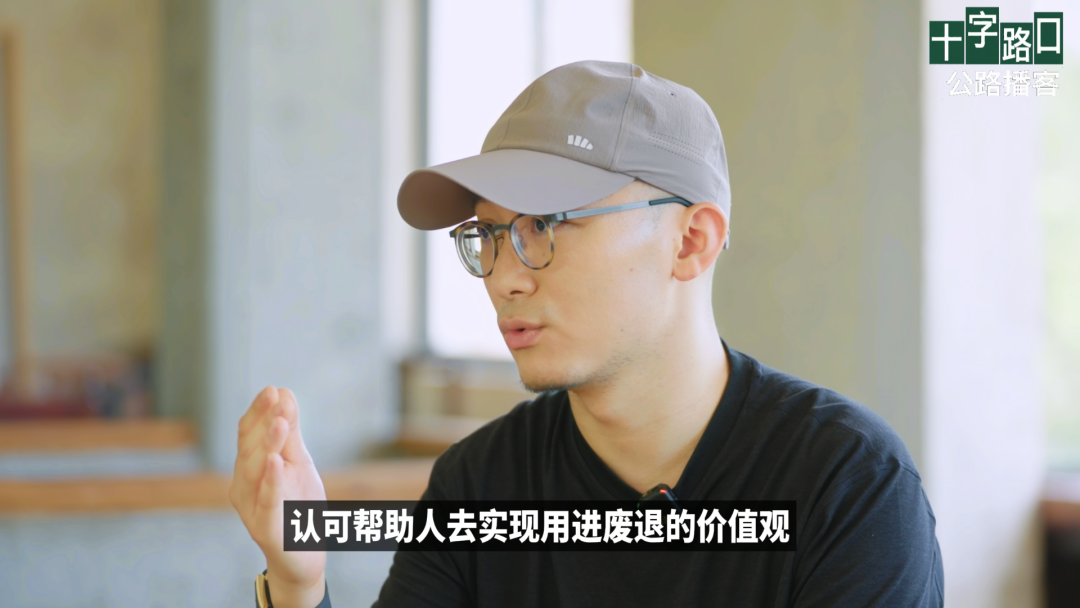
I respect values that put the human being at the center of AI applications. Values that help people achieve "use it or lose it." Values that don't just deliver productivity, but deliver care, deliver reflection, deliver feedback loops, deliver wisdom.
👦🏻 Koji
Can you give a positive example and a negative one here?
👨🏻💻 Will
For example, Table for Six, which we invested in.
Under its product design, six complete strangers can engage in three hours of high-quality, deep conversation at an offline gathering, completely immersed. AI's role here is invisible.
Before the gathering, the system collects micro-context on each user. At the offline dinner table, it tailors completely unique icebreakers and conversation triggers for these six people. This creates an extremely safe, decompressed social space that encourages everyone to put down their phones, look at each other, and rebuild connection.
This project is still early-stage, but has already expanded to six cities and has extremely high repurchase rates, especially popular among female users. In today's world of heads-down, fragmented attention-extraction economy, this is an exceptionally rare case of using AI to spark the warmth and brilliance of human interaction.
Opening your phone 97 times a day — that's not right.
👦🏻 Koji
You really want to see projects where AI sparks human brilliance, not just improves work efficiency?
👨🏻💻 Will
Yes, this is tightly connected to how we "return to the present."
Over the past decade-plus of mobile internet sweeping through everything, while bringing us convenience, it was fundamentally using pervasive "attention economy" to severely fragment and exploit individual minds. Statistics show the average person unlocks their phone 97 times a day, consuming hours in algorithm-recommended short video filter bubbles, only to be left with emptiness and anxiety after the dopamine fades.
Our physiological senses are degenerating. At live shows, people hold up phones to film while their eyes drift away from the actual experience. When going out, everyone's taking selfies with no time for the people and scenery around them. Chatting with someone while staring at phone push notifications.
I believe this alienated state is hitting the physical ceiling of the attention economy. The solution isn't escape — it's figuring out how to leverage AI's underlying productivity to liberate people and return them to reality.
That's also why when we invest in AI hardware, we don't care how portable its form factor is. We look at whether that form factor can free users from their phones and computers.
Why invest in Looki? Because if you're wearing Looki to record your day while playing on the streets of Tokyo, you don't need to pull out your phone to take photos anymore. Truly joyful products — I mean real joy, not the "cheap thrills" of the mobile internet era — must be products that let users return to the present.
Being present means: even if AI is recording your meeting, do you stop listening? On the contrary, to run the meeting better, you'll focus more on building connection, trust, and understanding in the moment.
With your child, after getting an AI camera, do you stop caring? On the contrary, you can devote your full energy to caring for your child instead of constantly holding up a camera asking them to pose.
You can spend most of your time on interactive, eye-contact-rich conversations like the one we're having right now. This is respect for life. The joy gained here far exceeds scrolling through a few more short videos. This is an entirely different experience from the attention economy.
👦🏻 Koji
You've often mentioned digital immortality to me. Have you tried anything?
👨🏻💻 Will
In the AGI era, humanity is infinitely approaching a certain degree of "immortality" in the digital world.
The most basic form of digital immortality: if your high-dimensional unique creations, experiences, and behavioral patterns throughout life can be incorporated into foundation model pre-training data, your cognitive structure and spiritual essence are permanently inherited through the digital substrate as the model continuously iterates. Because the model is being constantly invoked by all of humanity.
A consciousness upload project our venture partner in London invested in takes a harder neuroscience path. Through high-precision animal brain-computer experiments, they multimodally align microscopic neural signals in mice with macroscopic video of movement behavior, training digital neuron models capable of decoding and even mapping motor commands. The insight this gives me: in this era, doing creative, unique work is humanity's only choice for establishing its own coordinates of existence.
When general-purpose work is so easily replaced by standardized intelligence, you must create things that have never existed in this world, increasing your probability of being recorded, trained, and preserved in civilization's digital evolution. This is also the ultimate proof that an individual didn't live in vain.
👦🏻 Koji
Making your own wisdom, as a unique factor, deeply pre-trained into the model?
👨🏻💻 Will
And then pre-trained by the model.
Is AI a 30-year technological revolution, or a 3,000-year civilizational transformation?
👦🏻 Koji
Is AI a 30-year technological revolution, or a 3,000-year civilizational transformation?
👨🏻💻 Will
If we view AI transformation on a 30-year scale, it's like a mid-sized technological revolution. If we examine AI through a 300-year historical mega-cycle, it's absolutely an industrial revolution-level leap in technological engine.
But if we step back further, dial the scale to a 3,000-year macro-civilizational perspective — AI is fundamentally a civilization-level ultimate iteration. And what makes this evolution so chilling is that it compresses what originally required centuries or even millennia of civilizational change into just a few decades within our living memory.
What's a civilization-level revolution? The species competition between Homo sapiens and Neanderthals. The qualitative leap from agricultural civilization to industrial capitalism. In the near future, based on silicon-based life and superintelligence, "new species" that overturn traditional organizational forms will inevitably emerge.
What kind of new species? What kind of people can cross over?
I often deeply analyze myself and entrepreneurs around me. My conclusion is brutal: only that extremely small minority (perhaps just 1% or even 5%) with extremely high cognition, extremely strong self-revolution initiative, and the ability to first reconstruct "AI Native Organizations" — still a minority. I think most people in the world won't cross this threshold. The 1% or 5% who do, and those who don't, will likely diverge in the future.
Why might only 1% of people cross the threshold of the AI era?
👦🏻 Koji
For those who don't cross over, or those who might but haven't figured out how yet — if you could give them one piece of advice, what accelerating advice would it be?
👨🏻💻 Will
If the boiling frog process lasted a thousand years, we'd have no need to worry — everyone could live out their lives in the warm water just fine. But when this technology compresses into 20 to 30 years, within our generation's lifetime, we'll witness the explosion, reconstruction, and even elimination of species and organizations.
The only advice I can offer is the first behavioral principle from The 7 Habits of Highly Effective People: Proactivity.
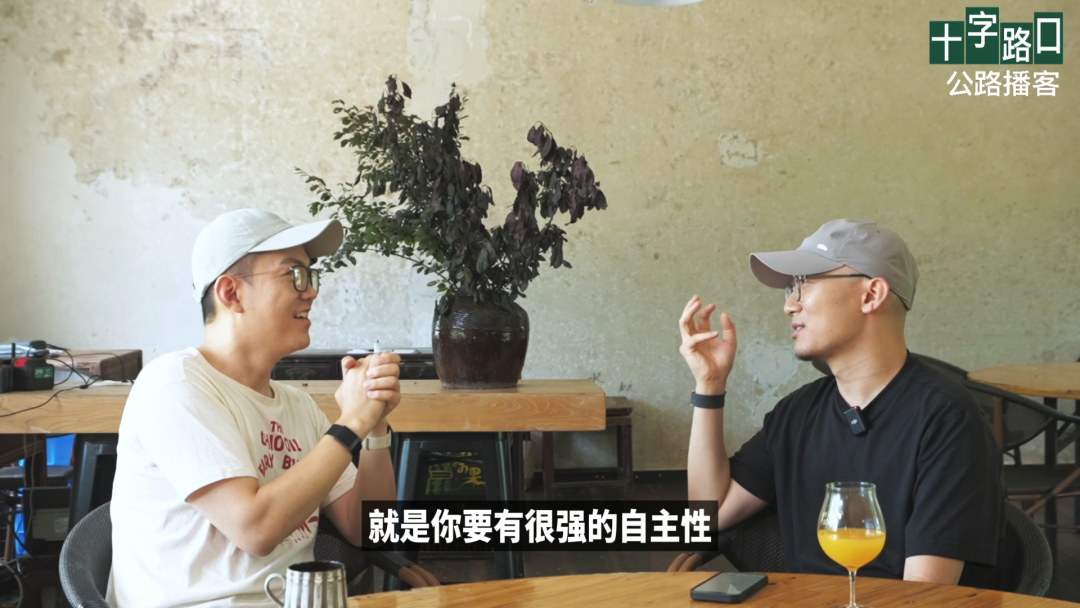
Don't treat AI merely as an efficiency outsourcing tool. Treat AI as an intensive "gym" for extreme self-training. Use it or lose it is nature's only truth. If you over-rely on machines to do all your basic cognitive work, it may seem like you're improving immediate efficiency, but in essence you're surrendering and outsourcing your sovereignty of thought, gradually degenerating and being exploited by machines.
You must spar with AI persistently, like building muscle and improving cardiovascular function to prepare for an endurance race (HYROX). The intensity and frequency of your current interaction and sparring with AI determines the quality of your mind in the future.
Once your thinking muscles atrophy, your competitiveness and your organization's survival in the market will be dimensionally crushed by those super-species engaged in high-intensity training.
But I firmly believe this isn't a dark path toward cold, efficiency-obsessed nihilism. On the flip side of efficiency is warm creativity and the "altruism" of great wisdom in human nature.
Foundation models have no altruistic instinct. But truly high-dimensional human wisdom naturally carries emotional resonance and the warmth of advanced collaboration. Therefore, please maximally amplify your proactive creativity, and amplify your genuine care for the world around you and the people beside you.
That's why in my daily work, I execute this kind of high-intensity self mental training with near-rigorous discipline. In my phone's WeChat keyboard, I keep more than a dozen extremely long prompt templates distilling my personal investment theses and methodologies.
For example, when I evaluate and review a deep industry podcast, I'll invoke this prompt:
"Listen deeply to the XXX podcast several times. Please listen to the original audio for precise understanding; don't just look at mediocre transcripts and summaries. Especially for its three most recent core episodes, help me map out each episode's most exquisite underlying logic, supplemented with extremely detailed, solid data support (the more, the better), non-consensus views and highly thought-provoking perspectives demonstrated in the industry, behind-the-scenes business gossip worth digging into, and items worth my attention as a VC investor — so that as someone who hasn't listened to these episodes, I can make the most precise judgment on whether to listen to the originals myself."
Another example: before I meet with an important product or consumer hardware company, I'll have AI run this high-density workflow for me:
"Help me deconstruct the commercial performance of [XXX] product across multiple dimensions. Thoroughly dig through its user community, app store ratings across major platforms, organic traffic on Xiaohongshu and Weibo, and real social media word-of-mouth — with emphasis on extracting firsthand user feedback: the most moving details and the most complained-about pain points, plus which competitors users spontaneously compare it against. Multi-dimensionally assess product lifecycle, repurchase probability, and NPS. Apply classic marketing positioning frameworks to deeply profile the target customer base, dissect core pain points, and analyze pricing acceptance, sales channels and distribution, promotional activities and their effectiveness. Finally, from a neutral investor perspective, judge its true business growth potential, reasonable valuation range, and funding history. If the founder has published statements, academic and technical articles, or personal blogs, simultaneously map out the evolution of their thinking and cognitive development."
👦🏻 Koji
Wow, that feels like an extremely refined prompt.
👨🏻💻 Will
Right. It basically generates roughly twenty thousand words of extraordinarily detailed reporting for me. So how to push your own prompts to this level requires tremendous proactivity — I think that's incredibly important.
Why should prompts be as long as possible?
👦🏻 Koji
If you were to give one piece of advice to someone just entering the industry, or someone who just decided to pursue primary market investing, what would it be?
👨🏻💻 Will
This isn't advice purely for peers, but for everyone: stretch your prompt to the maximum possible length.
The point of stretching is that you need to explicitly tell it what you worry about, what you fear, what you want. And you shouldn't feel like your prompt has some hierarchy of sophistication — in that prompt I just mentioned, I wrote things as straightforward as "points people like and dislike, positive and negative reviews."
I recently had another prompt along these lines:
"Help me thoroughly dig through everyone in the latest cohort of Tsinghua University — not a single person missing, the more comprehensive the better. Collect all the work they're doing, how cutting-edge and forward-looking it is, all their published works and papers. Filter out those who have already started companies, or joined major tech companies, labs, or show entrepreneurial inclination. Find their contact information, including Xiaohongshu and Twitter. Final output should be ranked as much as possible by their capability level."
This one too I wrote in very plain, most straightforward language.
👦🏻 Koji
In the classic VC era of the past, this kind of labor-intensive information gathering and talent database building was all done by armies of interns, analysts, and frontline investment managers.
👨🏻💻 Will
Right. I painstakingly write what I want in the most straightforward way into the prompt, and the results it gives me are often the best. To input such a long string of prompt requires a person to have this kind of willpower.
👦🏻 Koji
So you're now deliberately self-disciplining, forcing yourself to achieve a certain cognitive thickness in every deep Q&A and input session with AI?
👨🏻💻 Will
Yes. Because the more full-bodied, sincere, and grand in logical dimensions your prompt input is, the exponentially the analysis depth, filtering precision, and quality of trade-offs AI gives you will climb.
👦🏻 Koji
In just the past week, two of your portfolio companies have been putting out funding PR. One is Looki, one is Meshy. Could you talk about the story of investing in each of them at the beginning, and your thinking at the time?
👨🏻💻 Will
Looki is a very classic "non-consensus" investment case.
About a year and a half ago, the entire primary market was swept up in an investment frenzy around AI hardware glasses.
Everyone looked at Ray-Ban Meta's sales figures and decided glasses were a deterministic paradigm, and many domestic founders jumped in. But when I looked at it, I felt people were misunderstanding the elements of its success.
First, many users bought Ray-Ban Meta simply because they thought the glasses looked cool — they were consuming it as a stylish pair of sunglasses. Second, the underlying supply chain was fundamentally immature — SoC chip power efficiency, RF communication, especially the tiny battery capacity within the glasses frame, were all far from reaching the threshold for long-term, normalized, imperceptible wear.
The result was that the vast majority of first-generation glasses products became "wear and stop" devices, ultimately relegated to dust-gathering marginal toys.
Last year the market was all chasing AI glasses. Why didn't Will invest?
👦🏻 Koji
But you guys did end up investing in glasses, right?
👨🏻💻 Will
That's a different battlefield and evolutionary path. We invested in an AR glasses company that was doing "subtraction" — serving gamers' viewing needs, called VITURE. That was a different era; when we invested, people hadn't yet gone feverish over AI glasses. Later, one company deeply inspired me: Limitless. They made a Pendant that hangs on your body. When I saw it, I thought: if a device hanging on your body can record everything you say and every meeting you attend, then if you add a camera to it, couldn't it also more conveniently record everything you see?
Inspired by this, we felt this form factor might have opportunity, because very few people were doing it, and its context capacity was enormous. People wearing AI glasses actually can't record continuously, because the battery isn't sufficient. But if you make a Pendant, even without a camera, just recording audio, it can record a full day — the battery is definitely sufficient.
We did research in this direction and started broadcasting this top-down demand to the market: we wanted to invest in a Pendant company, not a glasses company.
It happened that I had a friend at another fund whose investment committee had rejected this project, but he personally loved it and felt it matched the paradigm I wanted to invest in, so he introduced it to me. So this wasn't a market deal, not a project everyone was fighting over.
When I talked with the founder Sun Yang (Looki's founder), we hit it off immediately because we were thinking exactly the same thing. I didn't need him to convince me why people needed something hanging around their neck. I only needed to discuss with him how to plan the first and second generation products, how to make it smaller and smaller, less and less requiring user intervention, making people less and less worried about privacy.
The first generation product would most likely first move users who have children, have pets, hope to record life without frequently pulling out their phones, and also like AI comics as a content presentation format. But this is only the earliest validated scenario; it will certainly move toward more general populations in the future.
When we decided to invest, it wasn't solely because of the Pendant or glasses form factor. More importantly, I discovered that an autonomous driving-background team (two founders from Pony.ai and Momenta teams) doing something highly relevant to their experience, requiring hardware-software integration, was actually being overlooked by the market, not given the genuine attention they deserved.
We felt this was very much worth supporting.
Early-stage companies are still attacking. Why is "moat" the wrong question?
👦🏻 Koji
But at the time, how did you argue that this kind of context-gathering hardware they were making could very likely be easily replicated by Huaqiangbei as a cheap alternative?
👨🏻💻 Will
Because if you've used Looki, you'll discover that while hardware can help you gather data, the most important thing remains the software component.
The first factor that made it break through was its AI comics feature. This was the first time anyone could take what happened in your day and present it as a comic. With Looki, this is something that happens passively, without requiring active user intervention. This kind of interaction design and content output design comes from the team's deep understanding of this matter.
Major tech companies can copy its form factor, but the scarce user empathy and product aesthetic within the product foundation — that's forever uncopyable.
Looking around at this wave of AI hardware that emerged over the past two years, besides hollowly helping people with so-called meeting summaries, improving so-called labor efficiency, has any single one genuinely brought people joy and warmth at a spiritual level? Almost none.
So this remains a scarce capability. Many early-stage investors frequently ask founding teams: what's your moat?
The classic definition of moat is fourfold: economies of scale, network effects, intangible assets, and switching costs.
When you ask a founder about moat, what you're actually asking is their defensive strategy: when my scale reaches a certain level, my costs are lower than others'; when user accumulation reaches a certain level, new users find more value in the network; intangible assets have been generated, there's reputation, there's IP; users face extremely high switching costs with my product, making it hard to switch elsewhere — these are all outcomes, defensive strategies.
Asking an early-stage startup a defensive question is quite ridiculous. I suggest people pay more attention to team competitiveness.
One day I was listening to a podcast where the founder of Xinghai Tu, an embodied intelligence company, was being pressed by the host about moats, and he could only helplessly answer: "Our current moat is iteration speed." Iteration speed fundamentally isn't a "moat," it's "competitiveness."
Early-stage startups are all attacking, using new technology to attack new markets. What they need to do is evade giants — they don't even need to evade them. Because according to The Innovator's Dilemma theory, in new markets and with new technologies, this track or quadrant is something giants naturally overlook.
Coming back to the point: what kind of companies do we hope to invest in that can truly bring us good returns? What's relatively important is the "Three Non-Theory."
Why should the perfect investment satisfy the Three Non-Theory?
👦🏻 Koji
What is the "Three Non-Theory"?
👨🏻💻 Will
First is non-consensus. The benefit non-consensus brings investors is that it's still cheap enough, there's still room in pricing.
Second is non-continuous. Existing major companies and players cannot easily enter this track, this market, this quadrant. Whether they are unwilling, unable, or dare not — they simply don't enter.
Third is non-linear. Because any venture capital fund faces a 7-to-10-year investment exit horizon. You must achieve explosive, non-linear exponential growth within a limited cycle.
The underlying principle of non-linearity is that multiple growth drivers produce multiplier effects: for example, coding models, because they possess data flywheels, R&D recursive acceleration (AI for AI), plus an extremely flat AI Native Organization structure — these three multipliers combined, supplemented by global digital distribution channels, will produce a terrifying, skyrocketing revenue explosion curve.
So you see them grow extremely fast — for example, Anthropic and OpenAI's revenue takeoff is very rapid.
So if non-consensus, non-continuous, and non-linear are all satisfied, this allows an early-stage startup to enjoy a relatively long safety period, and you invested cheaply, and finally it rises fast.
Put simply: "invested cheap, rises fast, no competition." No competition means less dilution and lower death risk. This is the perfect standard. But in this AI era, these three standards are frequently challenged.
Why should we invest not just in AI products that improve efficiency, but in founders with ambition and vision?
👦🏻 Koji
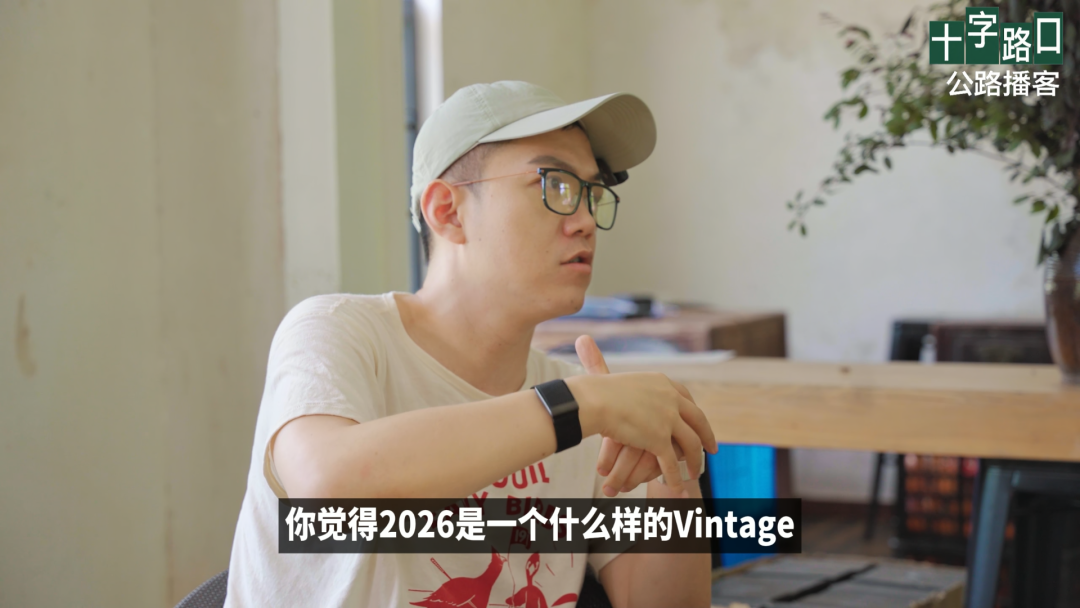
People often say years in the primary market are like wine — they have their vintage. What kind of vintage do you think 2026 will be?
👨🏻💻 Will
Definitely not the best vintage.
👦🏻 Koji
So is it relatively good, or relatively bad?
👨🏻💻 Will
A company like OpenAI was also born 10 years ago. The investors who backed it then are now harvesting the fruit.
There's a matter of scale here. When you think of this as a 10-year thing, and you feel it's already time to pick the fruit, your core assumption is that the scale is short — you'll feel the market is full of bubbles. But if you stretch that scale and see it as 3,000 years of civilization compressed into 30, with everything accelerated 100x, you might well think this is still a good year. This is precisely why many investors at this moment are giving extremely high valuations to upstream model companies that haven't yet been proven or disproven.
I think it's very difficult for investors right now. But some analyses from the capital flow perspective suggest that major internet companies' AI CapEx may see marginal declines in the coming years, upstream output will consequently become oversupplied, market expectations for the upstream will drop, and those stocks may come under pressure.
Additionally, now that many model companies have gone public, shareholders will take profit, leading to post-lockup price pressure. When secondary market benchmarks come down, the primary market gets transmitted that downward pressure too. So there will certainly be some medium-term capital flow volatility — market fluctuations driven by investors taking profit post-lockup, marginal declines in CapEx, and so on.
If you only look at these factors, you might think late this year to early next year is already getting dangerous, the bubble's about to burst. Or you might think CapEx will keep flowing until end of 2028, and the bubble will burst then. But if you pull back to that 3,000-year compressed scale, you feel this is all just beginning.
If everything is just beginning, our usual matter-of-fact analysis becomes trivial. Because there will be so many changes in between — what exactly are you investing in? Are you investing in something that will change, or in someone who can adapt to change?
So at this point we're forced to go back to judging the person, the team, their original intent and vision. But as I said earlier, this is no longer a purely efficiency-driven era.
AI can accelerate everything; efficiency isn't what matters most. The starting point matters, values matter, why you're doing this matters, whether your ambition is big enough matters.
If my ambition is huge — I'm not an AI person, but I'm enormously ambitious in another field, and I can wield AI as a tool — then isn't it quite reliable that I can get this done?
Take AI for Science. If I want to create a new material, and my ambition is huge — I want to make a drug that lets people live forever — and I hope to accelerate this through AI, then AI is just a tool here. My values and vision are grand. Maybe 10 years ago the pace of achieving this was truly slow; now it may genuinely have sped up. So should you invest in AI, or in his vision? Actually the vision matters more.
In this era, the authentic assessment of a founder's ambition, vision, and entrepreneurial drive far exceeds merely measuring AI itself on data.
👦🏻 Koji
Have you met anyone like that recently?
👨🏻💻 Will
Yes. For example, Ethan Yuanming Hu, founder of Meshy, whom I mentioned earlier.
Yuanming is a technical genius with a very strong non-consensus streak. He didn't jump into entrepreneurship just because this is the hot moment. We supported him early on.
At that time he returned to China to create the Taichi language and Taichi Graphics engine, achieving extraordinarily outstanding results in academia and the open-source community. In that year when domestic substitution and scientists returning to China to start businesses received intense attention and support, the capital market gave them extremely high valuation premiums.
But Yuanming spent five years, going from pure lab research to productizing it and coupling it with AI, serving users he was deeply familiar with from his graphics background — including game developers and 3D printing users — truly facing users, becoming a company that connects model to user completely end-to-end. Five years in the making.
Seeing Yuanming's stage of success, we invited him to our last fund annual meeting to share the stage and exchange with other classmates now running labs and building world models. Because I feel many young lab entrepreneurs will go through what Yuanming went through — from pure lab to a truly user-facing, useful model and workflow product.
But his vision is simple. What he's always talked about is: AI for fun. He believes AI can't be just a pure productivity existence. If AI can't make people have more fun, more joy, then what if AGI arrives in 300 days and everything's been solved by efficiency — what are people supposed to do then? Would people be happier or less happy?
He recently published a blog post about how to truly achieve AI for fun, and it's very well written. So his vision is AI for fun, not simply AI 3D.
If AI is only about efficiency, do people become happier?
👦🏻 Koji
So has AI made you happier?
👨🏻💻 Will
I frequently engage in high-intensity "flow conversations" with large language models. When sparks of my thinking are ignited, calibrated, even challenged through collision with superintelligence, that cognitive pleasure and joy is unparalleled.
I also habitually use Looki's auto-generated comics to record my real life and share it — this has reconstructed my gaze upon the real world and its warmth.
Though there are occasional flashes of apprehension facing silicon-based intelligence overturning human cognition, that digital anxiety dissipates instantly, because I choose to immediately return to the present moment of real life.
In fact, the current AI revolution is still far from true nationwide penetration. People around you and me, even our parents — their AI usage may still be quite shallow, chatting with Doubao, not yet truly penetrated.
👦🏻 Koji
Thank you Will for today's road conversation. I hope we can all live more lucidly, more fully in the present, as we did today. And I hope you can invest in more companies that help everyone, with AI's assistance, better live in the present and gain more happiness.
👨🏻💻 Will
Alright, thank you Koji. Thank you everyone, bye.