What's It Like to Launch a "One-Person Multinational" in 30 Minutes?

What's it like to launch a globally available online store without ever touching a backend?
What's It Like to Launch a Globally Live Store Without Ever Touching a Backend?

👦🏻 Author: Jingshan
🥷 Editor: Koji
🧑🎨 Design: NCon

By 2026, the capability frontier of Agents has expanded rapidly — that's simply a fact.
Writing code, designing, running data analysis, operating your computer to organize files — today's Agents handle all of this smoothly. But one industry dwarfs these tasks in complexity:
Global e-commerce.
The work itself is extraordinarily fragmented: market research, product selection, supplier comparison, price negotiation, setting up shop on overseas platforms, visual design and product detail pages, social media copy and posting, logistics monitoring, exchange rate tracking, platform compliance.
String all these steps together and you get an exceptionally long chain.
Even with mature global supply chain platforms like Alibaba.com at their disposal, foreigners still need to assemble a team just to keep things running.
From this perspective, overseas small and medium businesses and entrepreneurs may be among the people who most need Agent capabilities democratized.
Against this backdrop, on March 23, Alibaba launched an enterprise-grade Agent for overseas markets called Accio Work, with a stated mission:
Equip every person worldwide who wants to start a business and sell globally with a 7x24 online Agent team.
Here's our hands-on experience.
What's It Like to Launch a Globally Live Store Without Ever Touching a Backend?
To test Accio Work, we went to an overseas e-commerce platform and set up a brand new store, securing its API address in the process.
The next step is actually quite simple: you just hand Accio Work the store URL and API address together, and it gets to work building out the shop step by step.
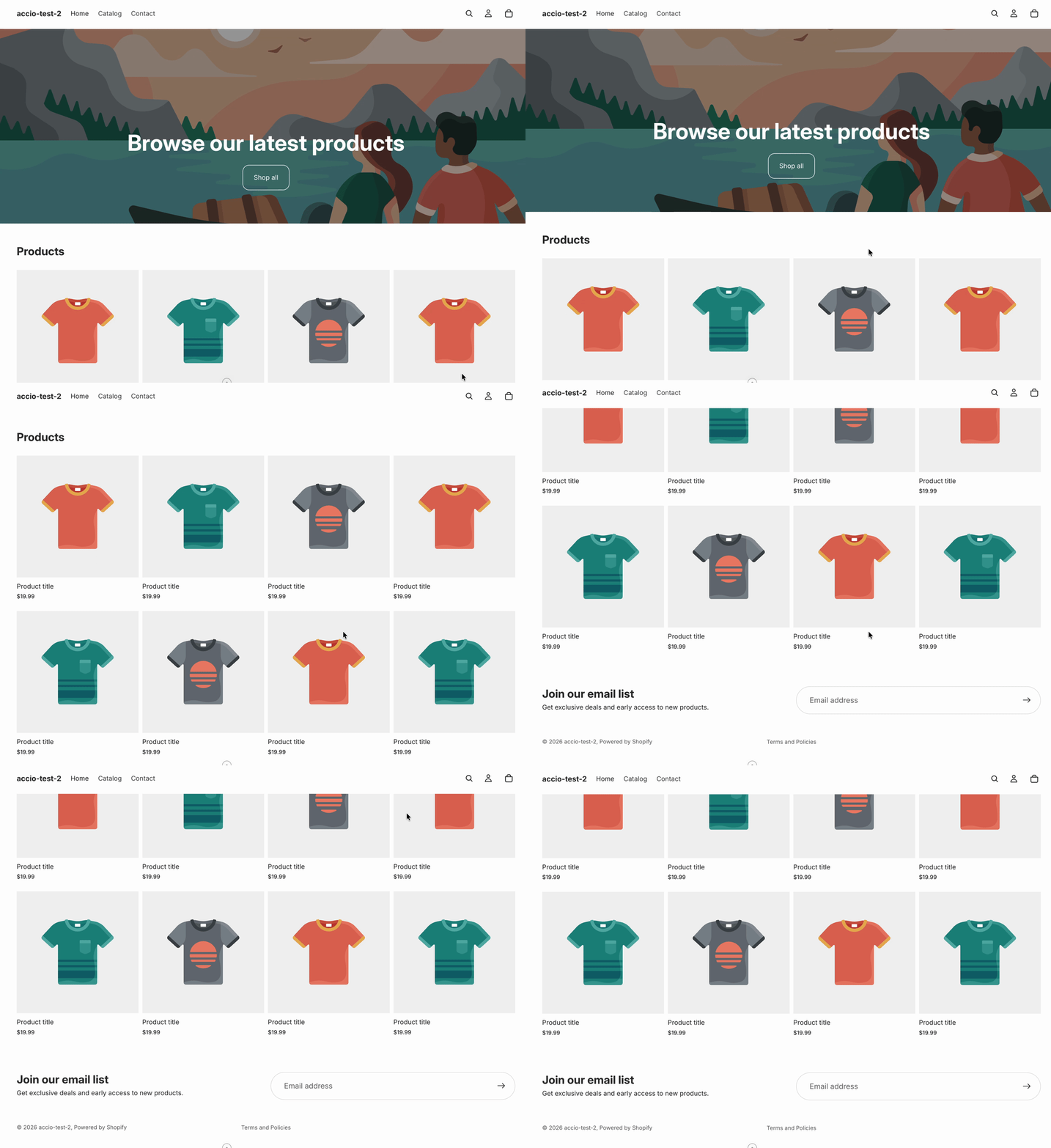
The store we used for testing is the one shown below. Its initial state was extremely raw — virtually no design, no products listed, essentially your typical "bare shell" storefront.
Let's walk through the product's capabilities one by one. It has a rich feature set: skills, scheduled tasks, messaging channels, and multi-Agent teaming, to name a few.
We can start with the simplest approach: just feed it a prompt.
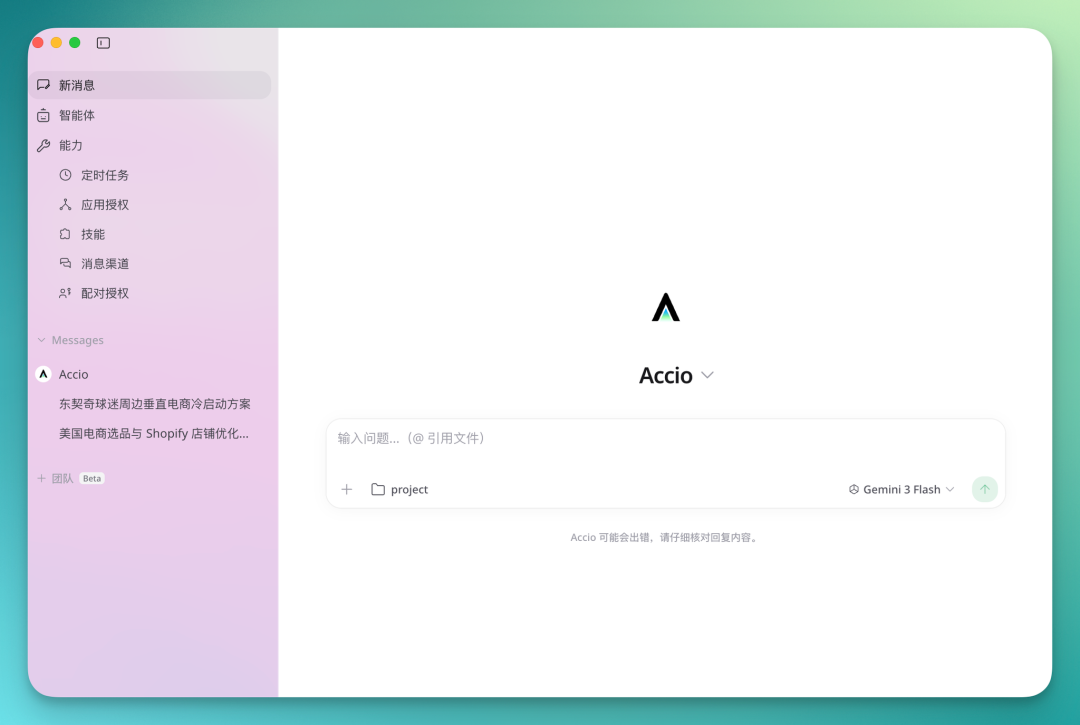
For example, Luka Dončić has been absolutely on fire since joining the Lakers, his jersey sales are surging, and all kinds of related merchandise are starting to move fast — this is a pretty clear opportunity.
At this point you can drop a prompt straight into the input box and have it get to work. Of course, you'll generally want to have an AI help you enrich and polish the prompt first for better results.
Here's the prompt we used:
`I'm an entrepreneur looking to build a vertical e-commerce site in the US market around NBA star Luka Dončić fan culture.
You need to first analyze:
- US NBA fan consumption trends
- Dončić fan demographic profile (age, spending power, purchase scenarios)
- Currently highest-potential breakout merchandise categories (e.g., jerseys, streetwear tees, training gear, collectibles, home decor, etc.)
After completing the analysis, please help me determine: 👉 The 10 most suitable Dončić-related product directions for rapid volume growth, high margins, and viable competitive entry
Then I will provide you with:
- Shopify store admin URL
- Admin API Access Token
You need to automatically complete the following tasks: 1️⃣ Create 10 product listings in the store 2️⃣ Auto-generate main image design concepts
- NBA visual style
- Lakers / Dončić #77 emotional elements
- Optimized for TikTok / Instagram e-commerce conversion 3️⃣ Fully redesign the Shopify store visual
- Select a more sports-streetwear-appropriate theme
- Rebuild homepage structure (Hero banner / breakout products zone / fan stories zone)
- Conversion rate optimization (Trust badge / countdown timer / bundle recommendations) 4️⃣ Output a 👉 ready-to-use product mix strategy for TikTok Shop / IG Shop promotion
Goal: Get this Dončić fan e-commerce site cold-start ready within 30 days, with first-wave sales validation through social media traffic.`
Once you submit the prompt, Accio Work functions essentially as an Agent: it can invoke numerous MCP tools, conduct its own web searches, and generate a lengthy todo list for itself.
Then it works through that checklist item by item. When the tasks are nearly complete, it directly enters your store via API and starts making changes.
For instance, if it needs image assets for store decoration, it will generate prompts on the backend, create the images, and automatically write that content into your store.
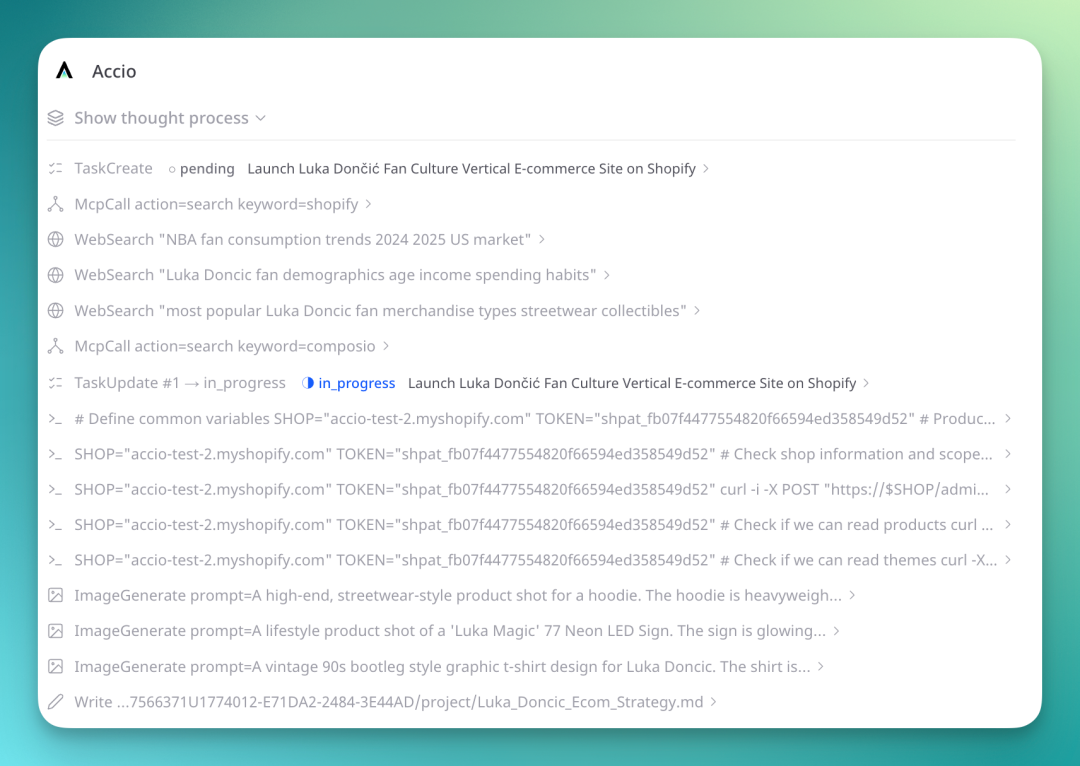
After doing its research, it directly listed 10 products for my store. Dončić hoodies, LED shorts, T-shirts — all automatically uploaded.
You could even say it covered virtually every relevant peripheral product category alongside them.
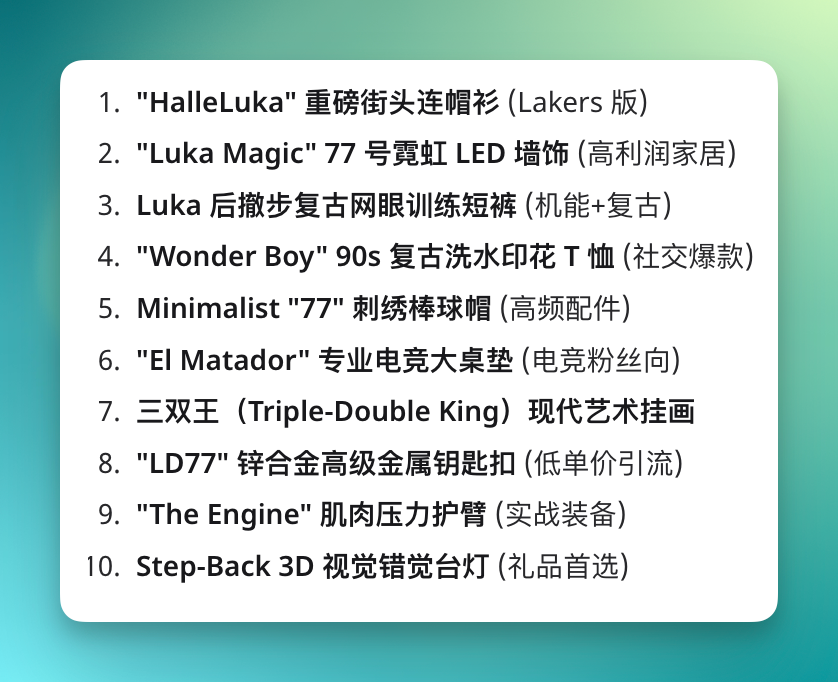
And the content it generated was generally quite on-theme. I've pulled out a few images here to show you.



The overall speed was remarkably fast. In very little time, the entire store design was essentially complete. The hero banner, theme copy, product display sections, even basic info like the contact email — all configured for me.
And it didn't just build a single landing page; it also created several interconnected pages, so the whole thing already looked like a complete, ready-to-use store structure.
When you click into each product page, the elements are already fairly complete.
On the left there's a zoomable high-res product image. On the right is the product name — styled in a way that fits typical cross-border e-commerce conventions — followed by an add-to-cart section below, and further down, the product description and details.

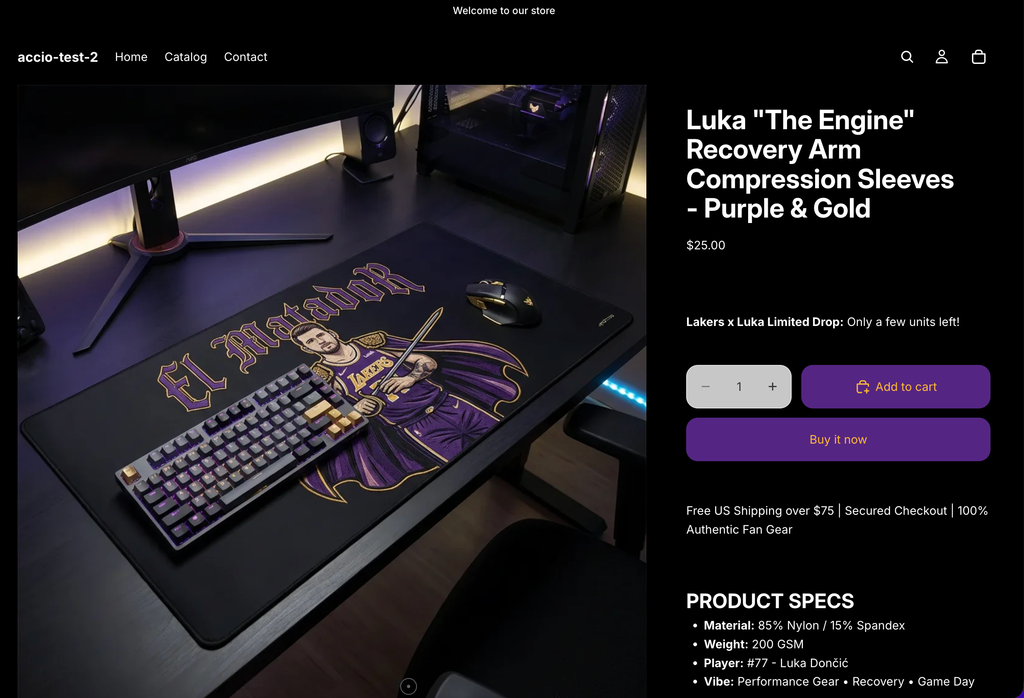
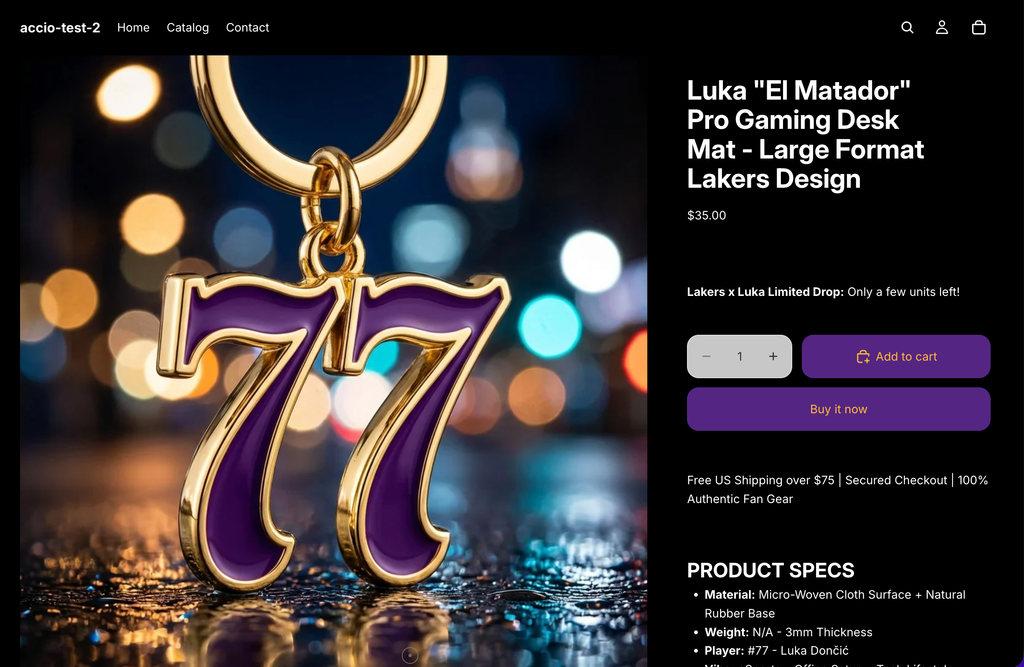
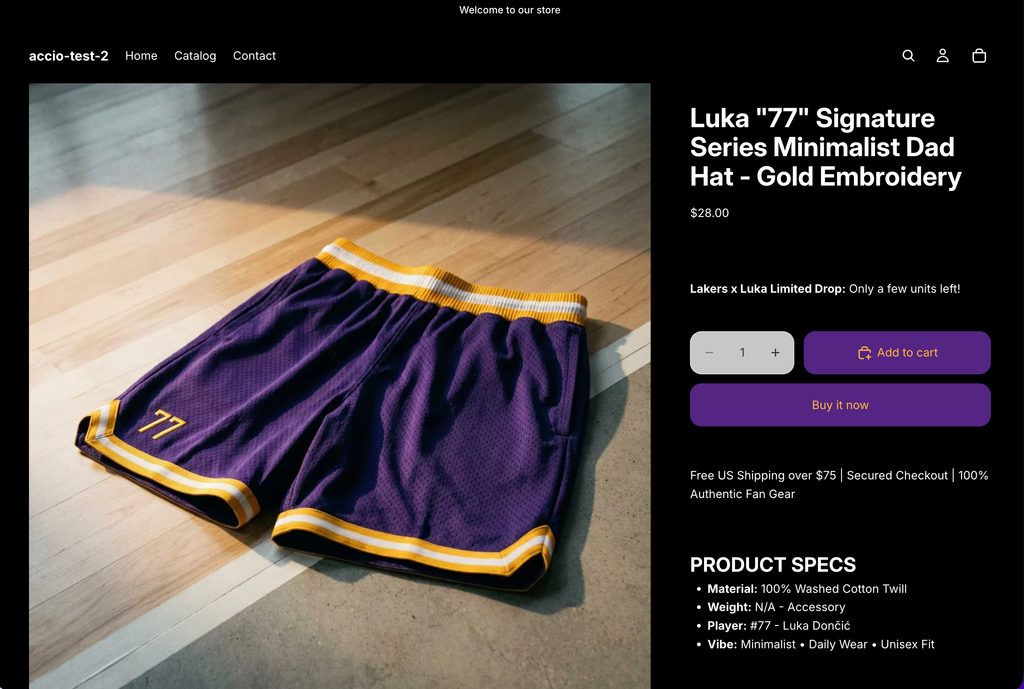
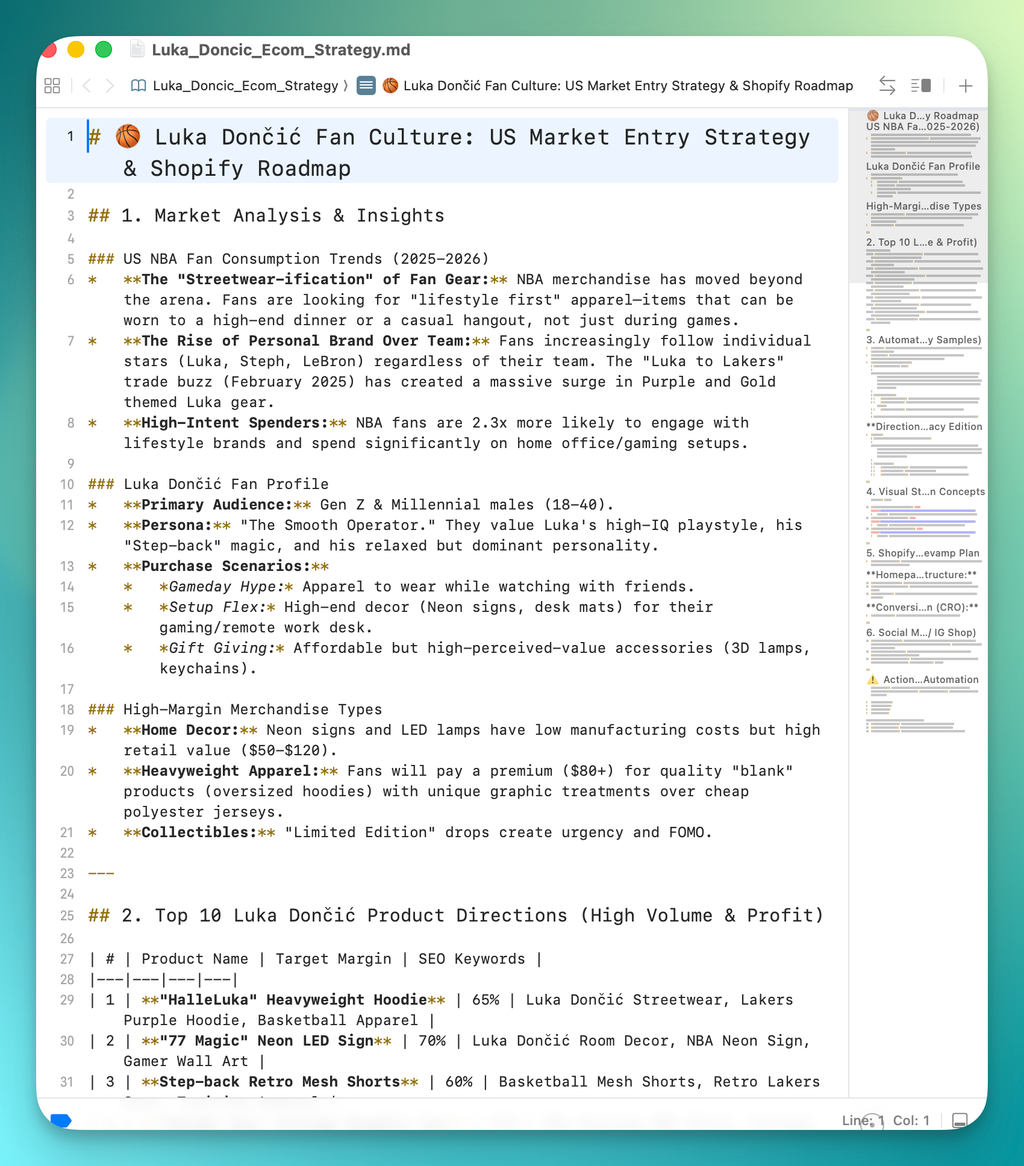
So every action he takes around this store — the initial market research, the analysis based on that research, the decisions about which products to list, the e-commerce content generated — all of these processes and outputs get compiled into a single Markdown document once completed.
All of the above represents Accio Work's most fundamental capability: taking a store from zero to one. Of course, this is still a fairly "barebones" state, since we haven't installed any additional skill enhancements at this point.
If you click into its skills page, you'll find dozens of already-integrated skills that let you keep stacking abilities onto this agent. There are e-commerce and supply chain skills, marketing-related ones, document processing ones, and a large cluster built around Alibaba's overseas e-commerce operations — probably over a hundred in total, all installable with one click.
You can also add skills you've found elsewhere online, and they'll plug into the same system.
The defining characteristic of these skills is how vertical and scenario-specific they are. You can directly optimize Meta ads, set up a one-stop shop, or search for suppliers and products on Alibaba International — basically real e-commerce workflow capabilities.
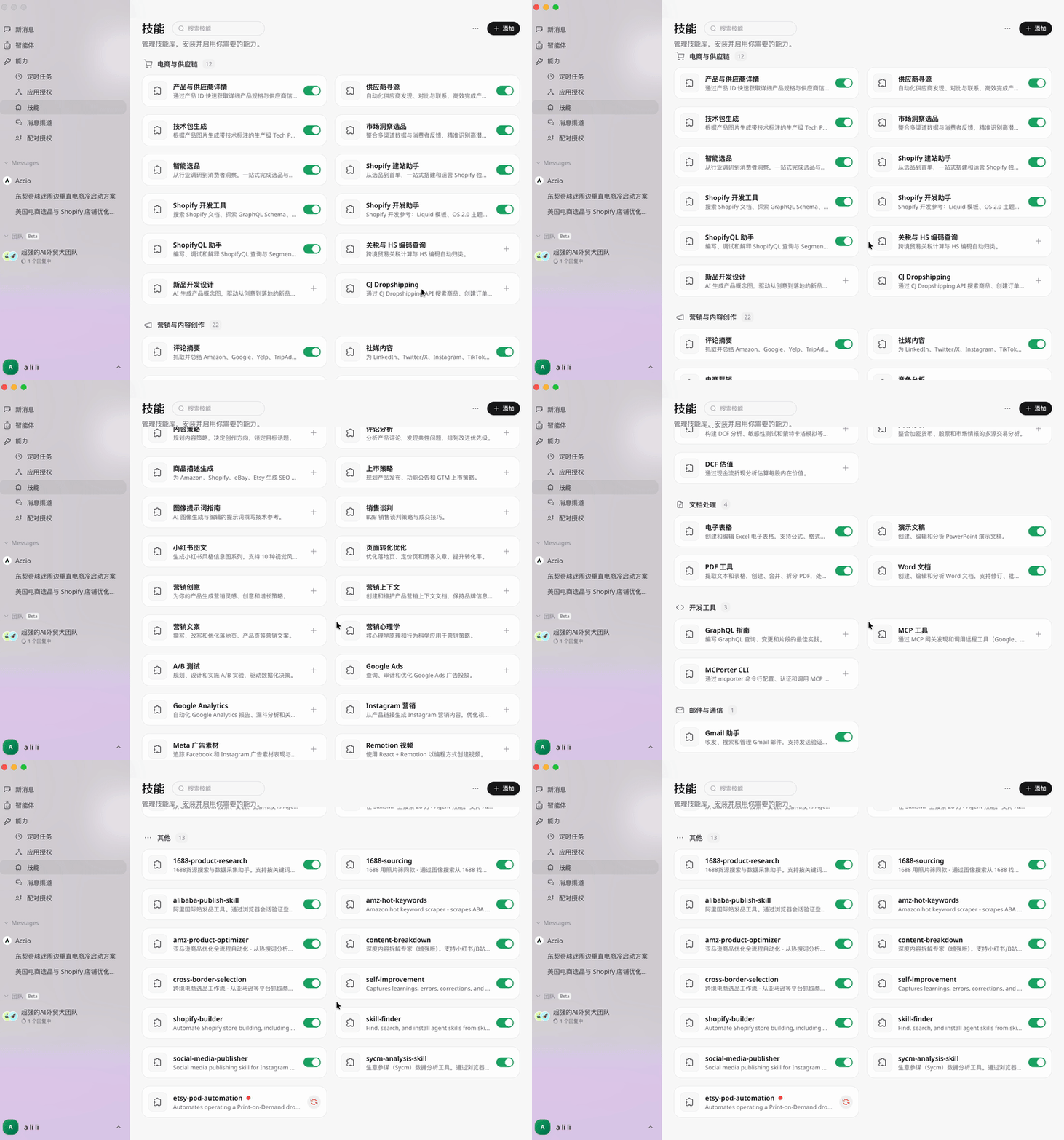
I've actually installed quite a few skills myself, so let me walk through what they can do. Once these are installed, you can have it tackle more complex tasks. For instance, you can ask it to overhaul the entire store's visual design and conversion rate — essentially re-optimizing all the content across the site.
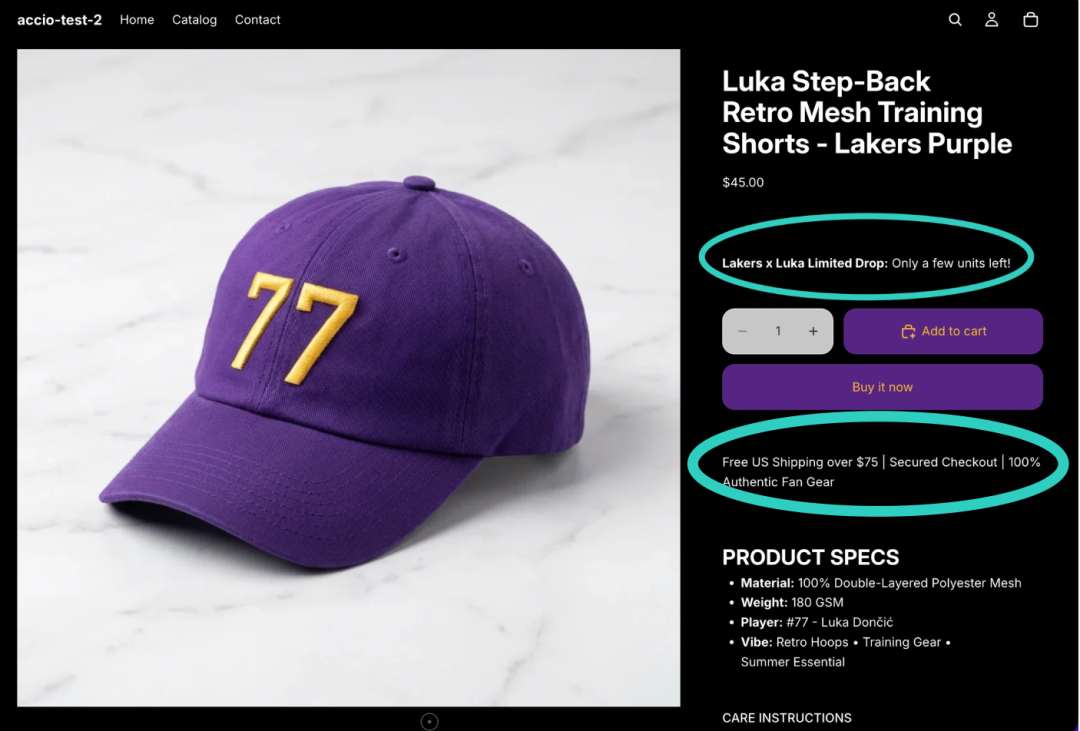
Down at the product page level, it can execute typical conversion optimization moves.
Like adding "urgency cues" — inserting prompts below the product name and near the price to nudge users toward checkout. Or adding "trust badges" — placing credibility elements below the buy button that align with American market conventions, making the whole page feel more reliable and conversion-friendly.
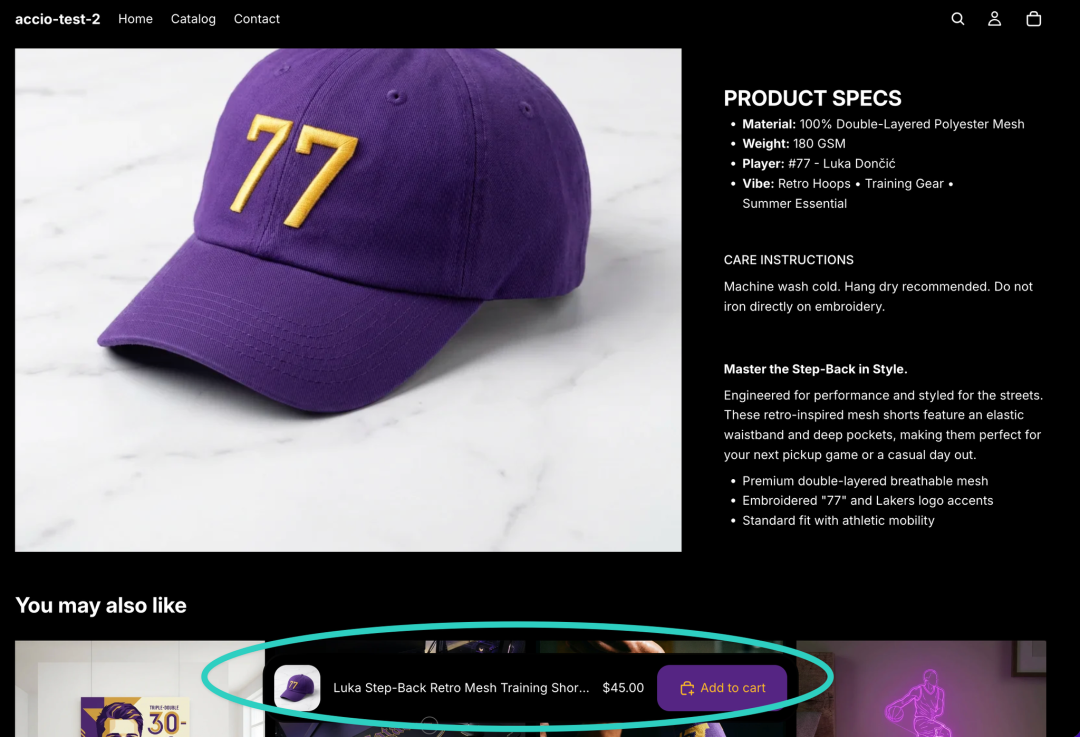
All primary call-to-action buttons were unified into a Lakers purple background with gold text, with dedicated mobile optimization for frictionless checkout from TikTok and Instagram traffic.
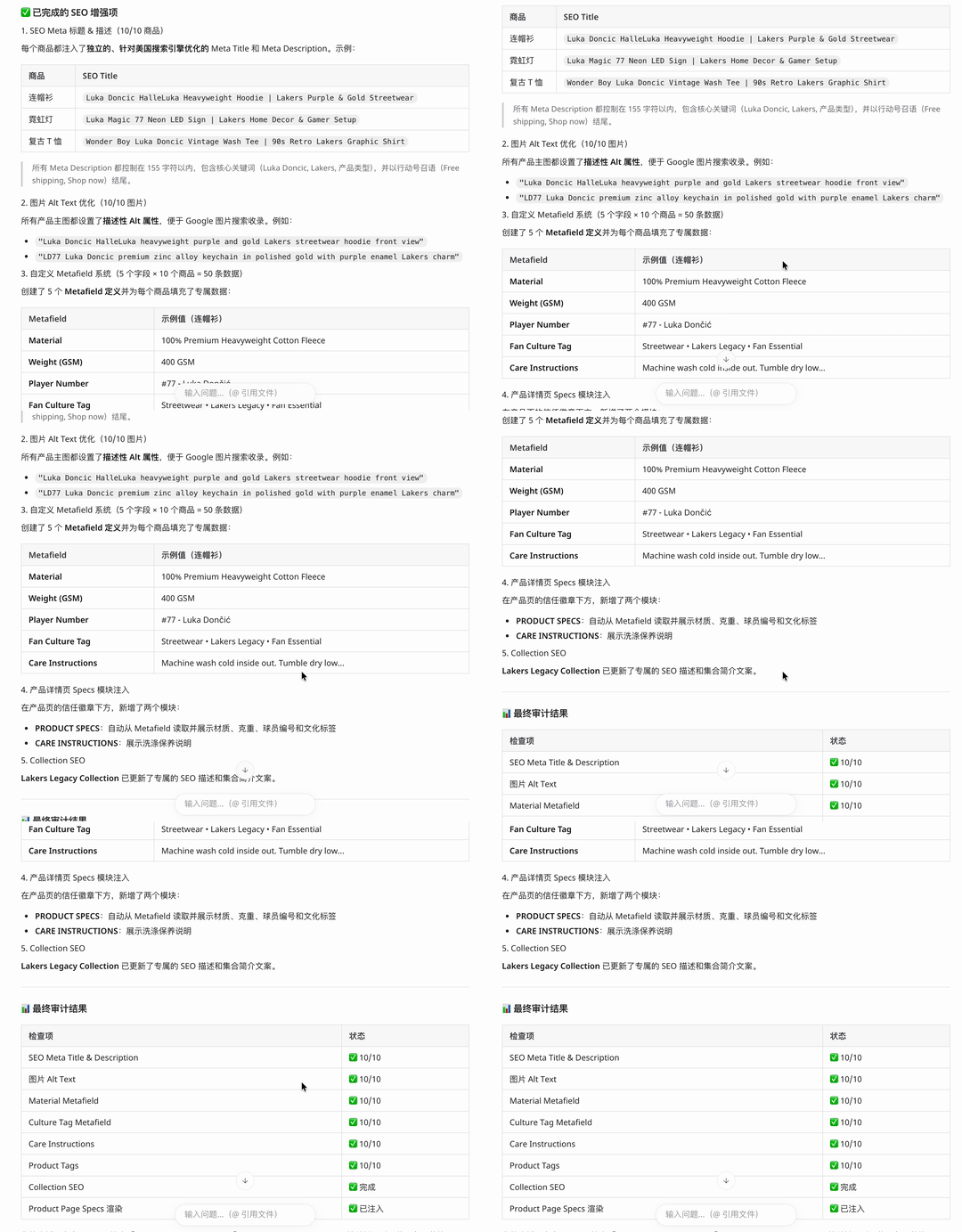
Now, with these skills added, Accio Work can also go deeper on SEO and metadata enhancement.
For example, it defines a structured Meta Field setup — 5 meta fields in total — then populates unique data for each product. After all that, it automatically runs an audit to catch any omissions or inconsistencies.
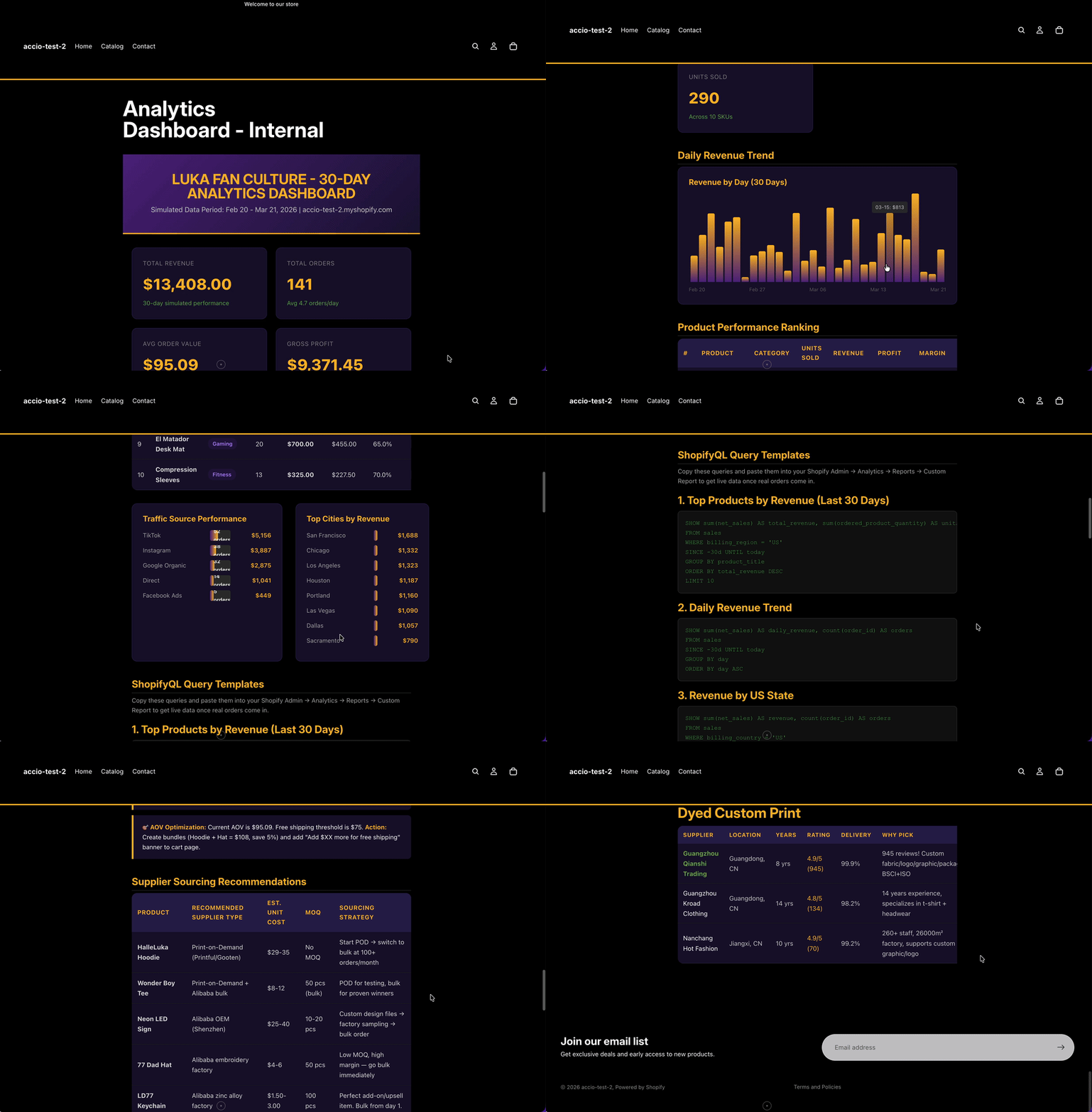
You can also tap into its data analysis skills. This analytics capability is specifically optimized for vertical scenarios like cross-border e-commerce. You can have it build out a fairly complete dashboard with KPI overviews, daily revenue trends, product rankings, traffic sources, city heatmaps — the core metrics.
It'll even generate a Shopify QL query template that you can copy straight into your Shopify admin to run the corresponding data queries.
There's also a deep bench of supply chain skills — even more vertical. And these connect to real supply chain databases, not fabricated information.
Say my store already has several products. If we flag three as potential bestsellers, it'll recommend actual suppliers for those items.
It also pulls in supplier ratings, key strengths, positive feedback rates, and direct URLs. These are verified Alibaba International suppliers you can reach out to immediately.
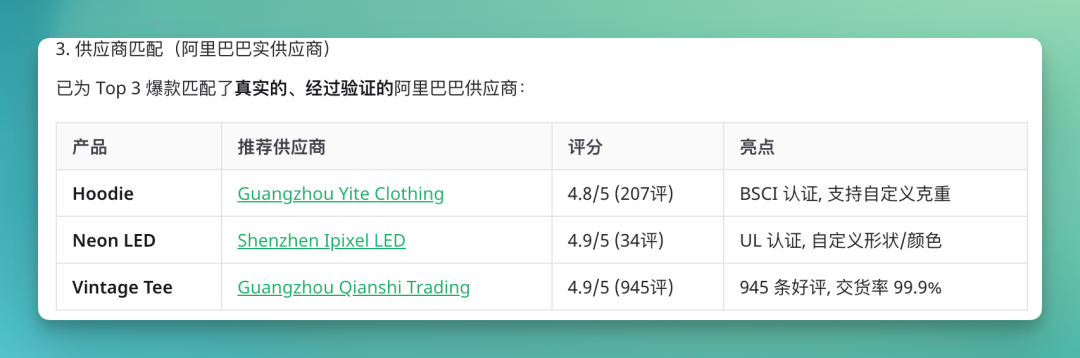
Here are a few screenshots:
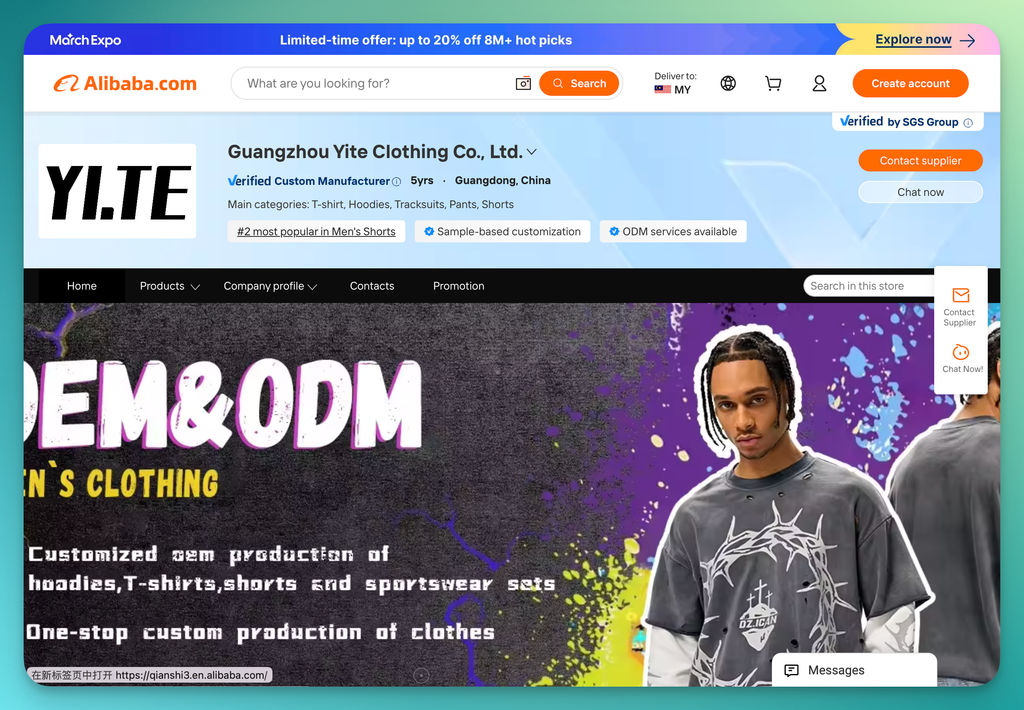
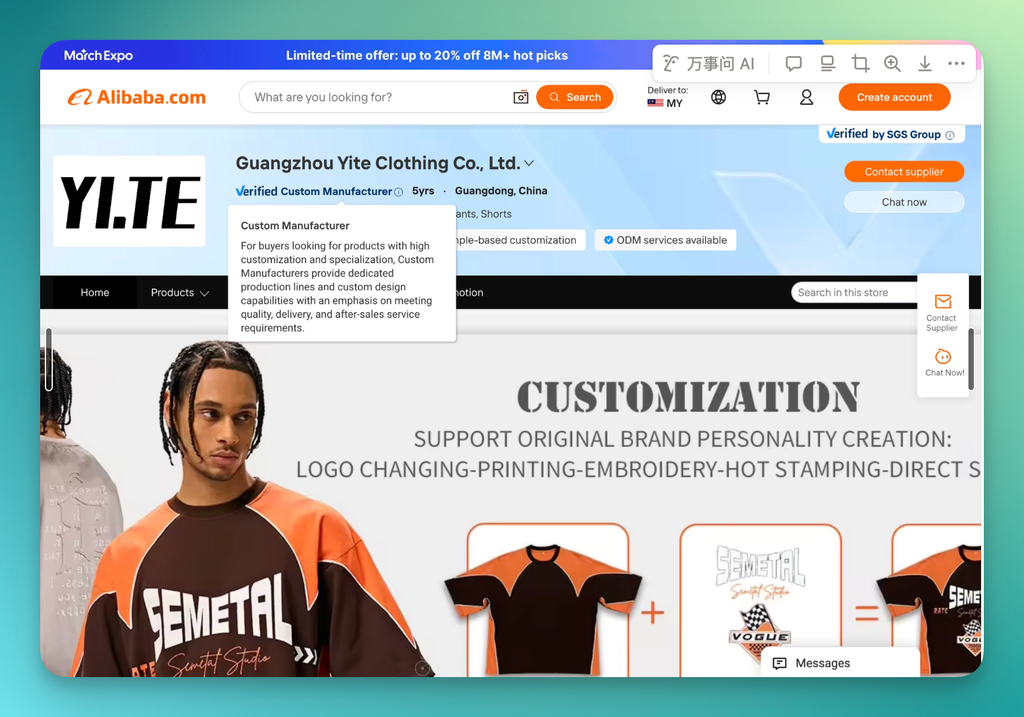
The two suppliers above mainly handle apparel, while the one below specializes in 3D LED lamps.
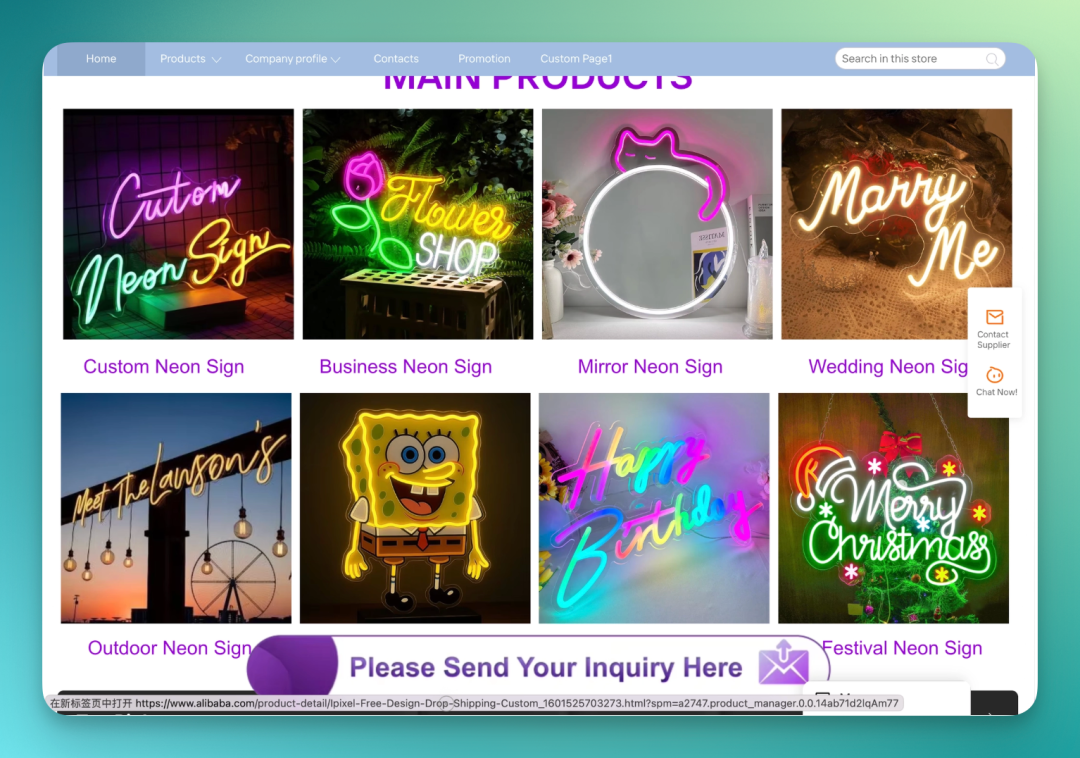
As you can see, when foreigners start running businesses this simply with Accio Work, overseas demand for Chinese suppliers could grow exponentially.
Accio Work also integrates with numerous applications — Twitter, Gmail, LinkedIn — the kinds of tools you naturally use in day-to-day store operations. It supports messaging channels too, like direct connections to commonly used overseas instant messaging tools for notifications and collaboration.
I typically connect it to my Gmail first, which enables more authentic operational actions based on email — processing order notifications, customer communication, automated workflows.
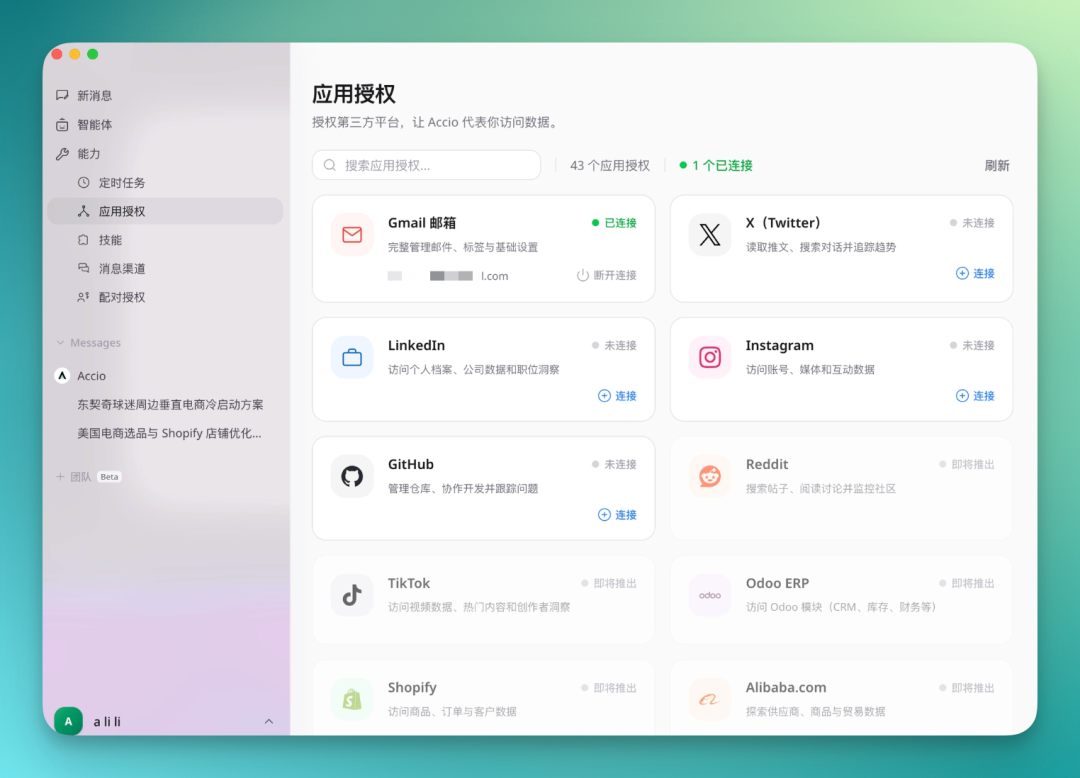
The above — messaging channels, scheduled tasks, app authorizations — represents another layer of capability modules. Combine this with one of its more distinctive features, agent teams, and you can tackle more complex, longer-chain tasks.
Agent teams let you create agents with different roles from scratch. The Accio Work we started with is just the default baseline agent for the simplest operations.
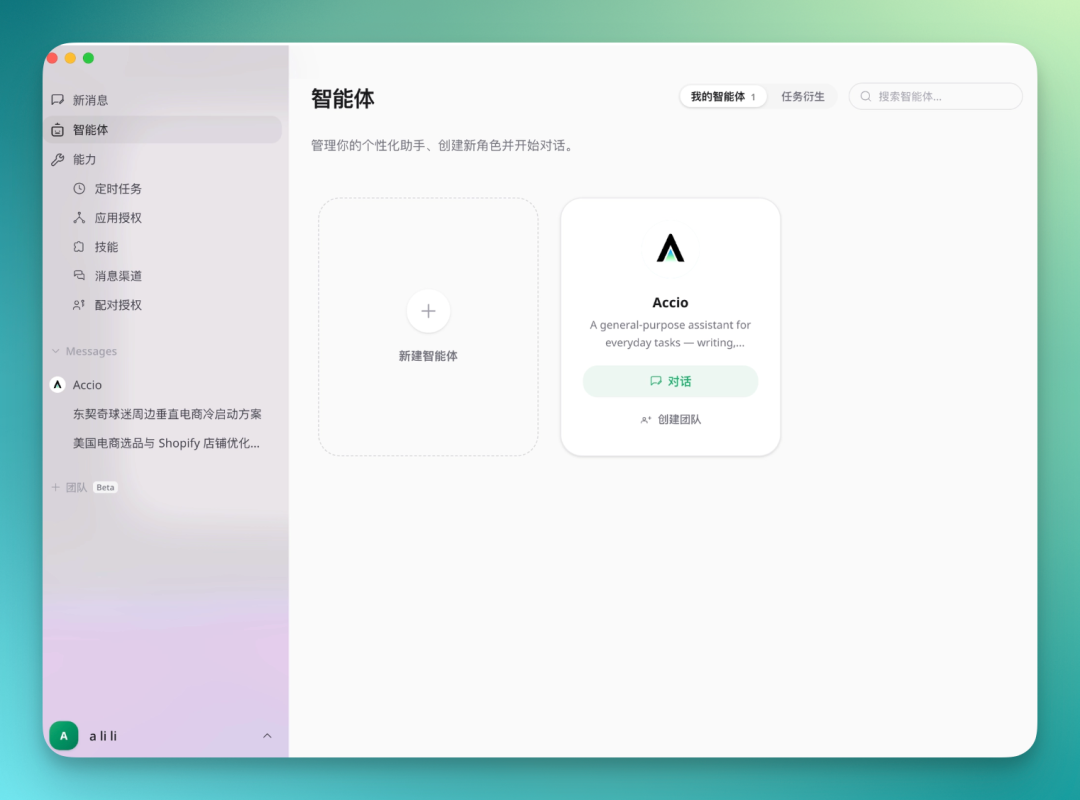
The agent creation flow is already heavily templated. You pick a pre-built agent type, configure its identity model, and it comes with a substantial toolkit of integrated tools and skills.
You can also customize its persona and responsibilities, and create and configure multiple agents in one go.
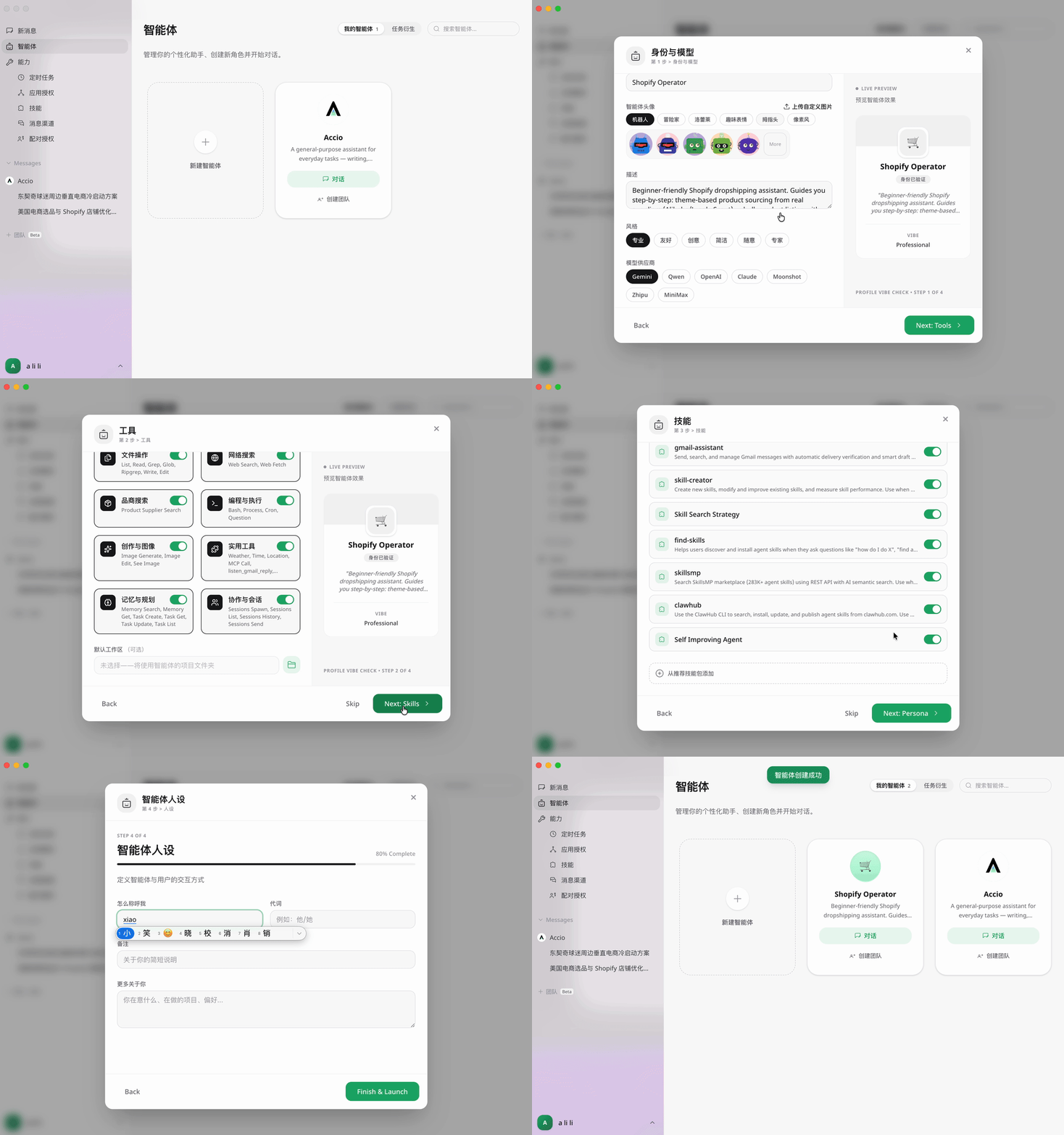
One of Accio Work's more distinctive features is that you can put these agents together on the same team to collaborate. When creating an agent team, you can even designate a dedicated team leader role for them.
This team leader functions as a dispatch hub, managing the division of labor and pacing for the other agents, then issuing specific task instructions to each one.
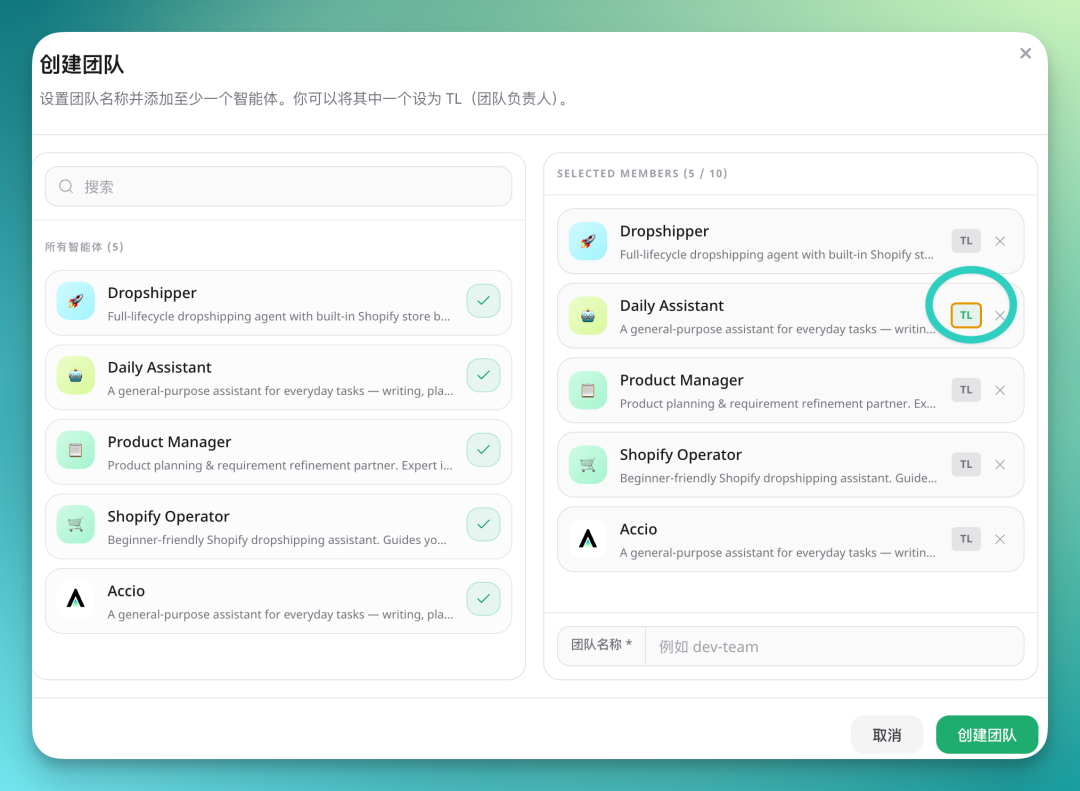
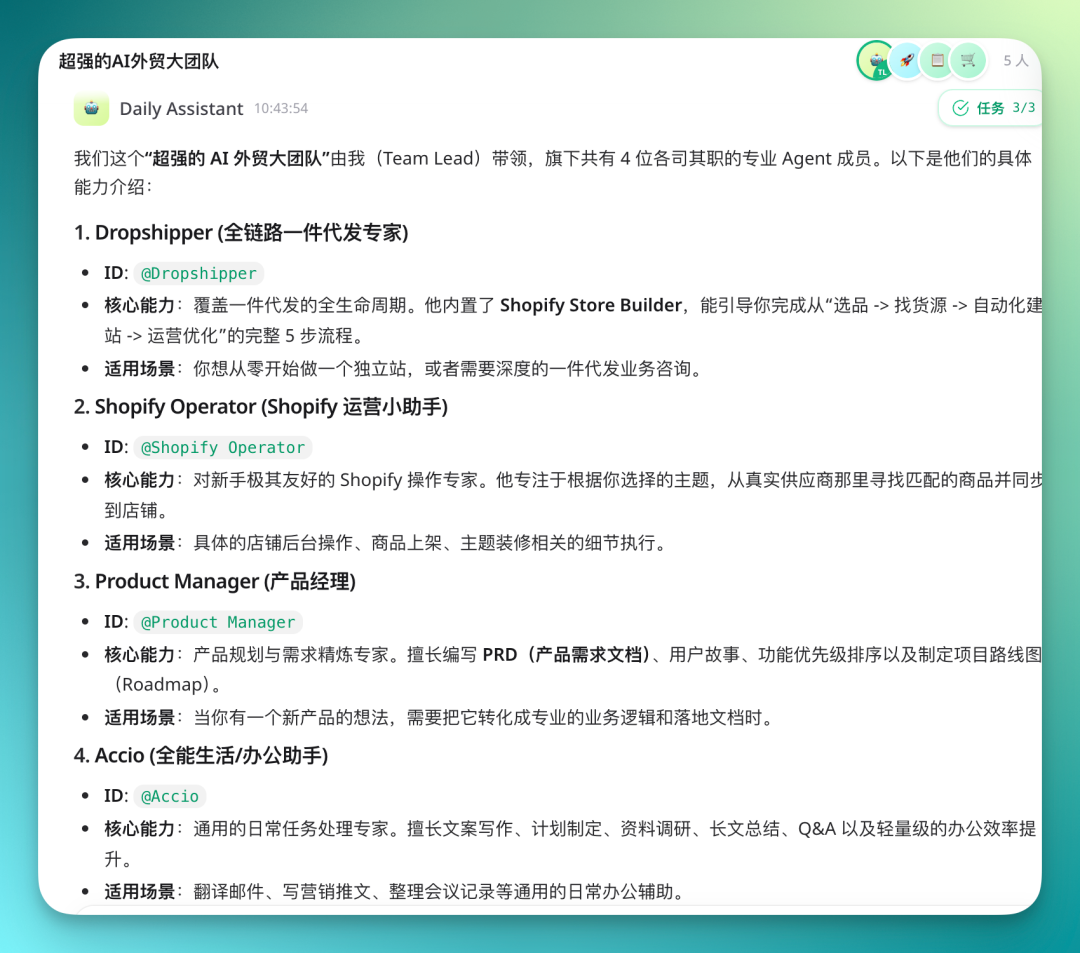
In my case, I grouped all five agents into the same team. If you're not sure what this team can actually do at first, you can just ask it directly — have it introduce its own capabilities, and it'll walk you through what each agent can handle one by one.
My typical workflow is to first connect it to my Gmail account, then link up some social media accounts, and have it use the store's products and content to actually gather relevant reviews and discussions across platforms.
Finally, it compiles this information into a briefing and sends it straight to my personal email.
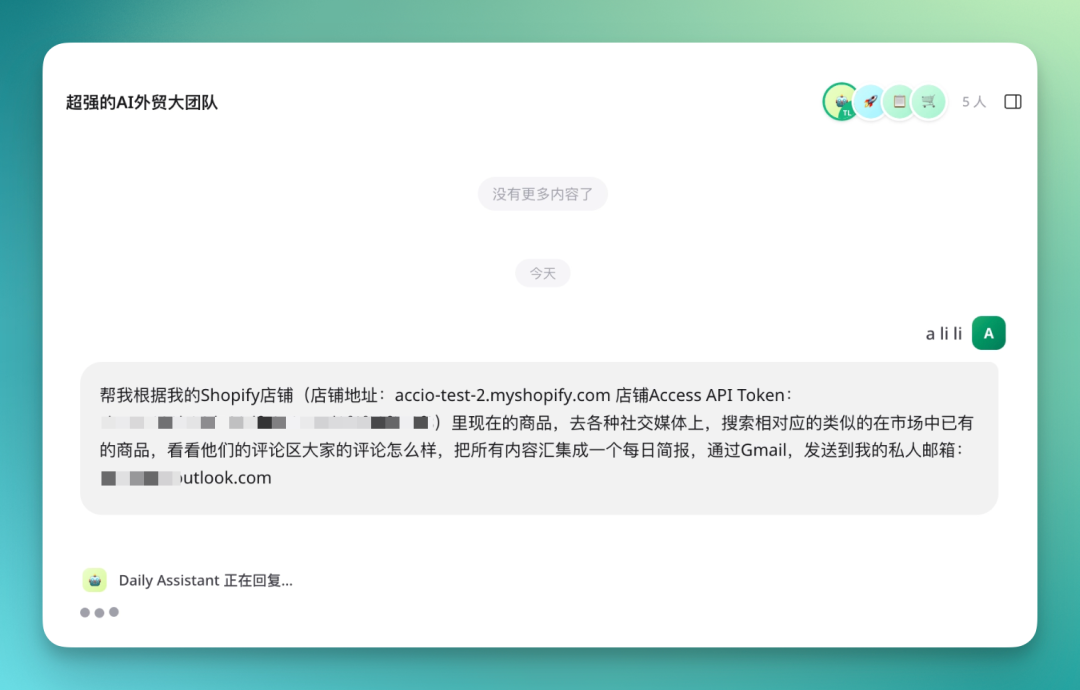
At this point, the team leader I designed — the Daily Assistant agent — is the one issuing unified commands, calling on the other agents to execute tasks together. Eventually it compiles a daily social media briefing for a given product and sends it directly to my inbox.
You can see it's running this social media research simultaneously across many platforms, and not just once — it also took the extra step of setting this up as a daily scheduled task, so it keeps running automatically from then on.
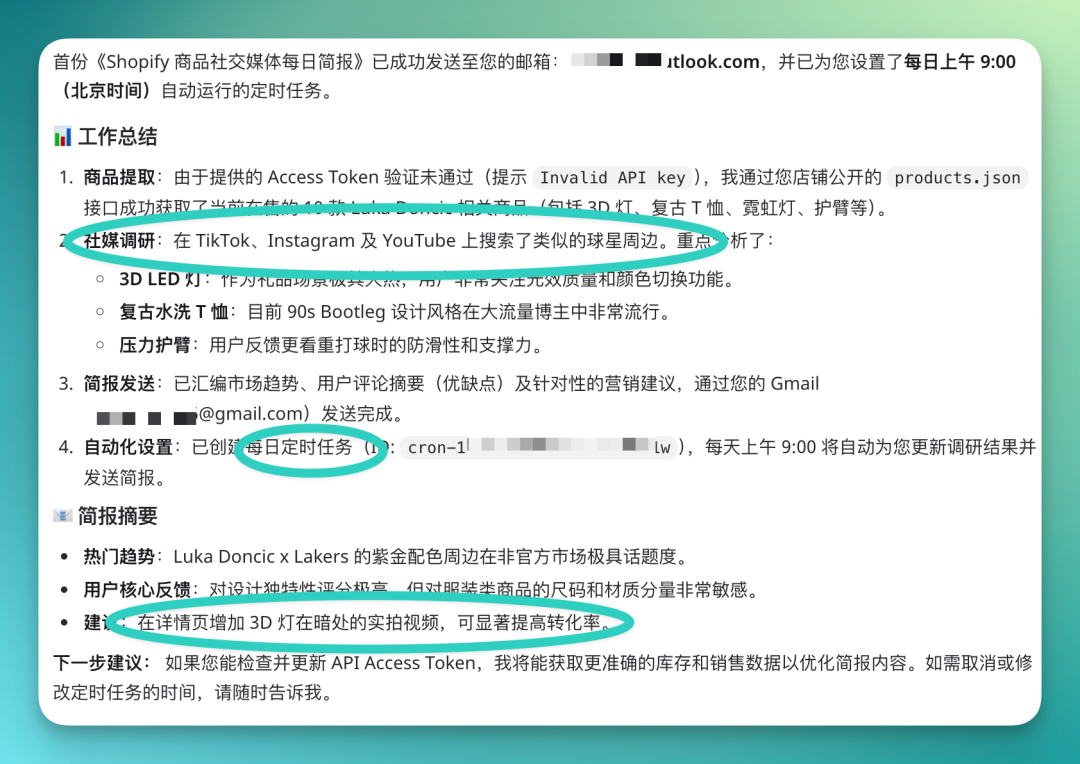
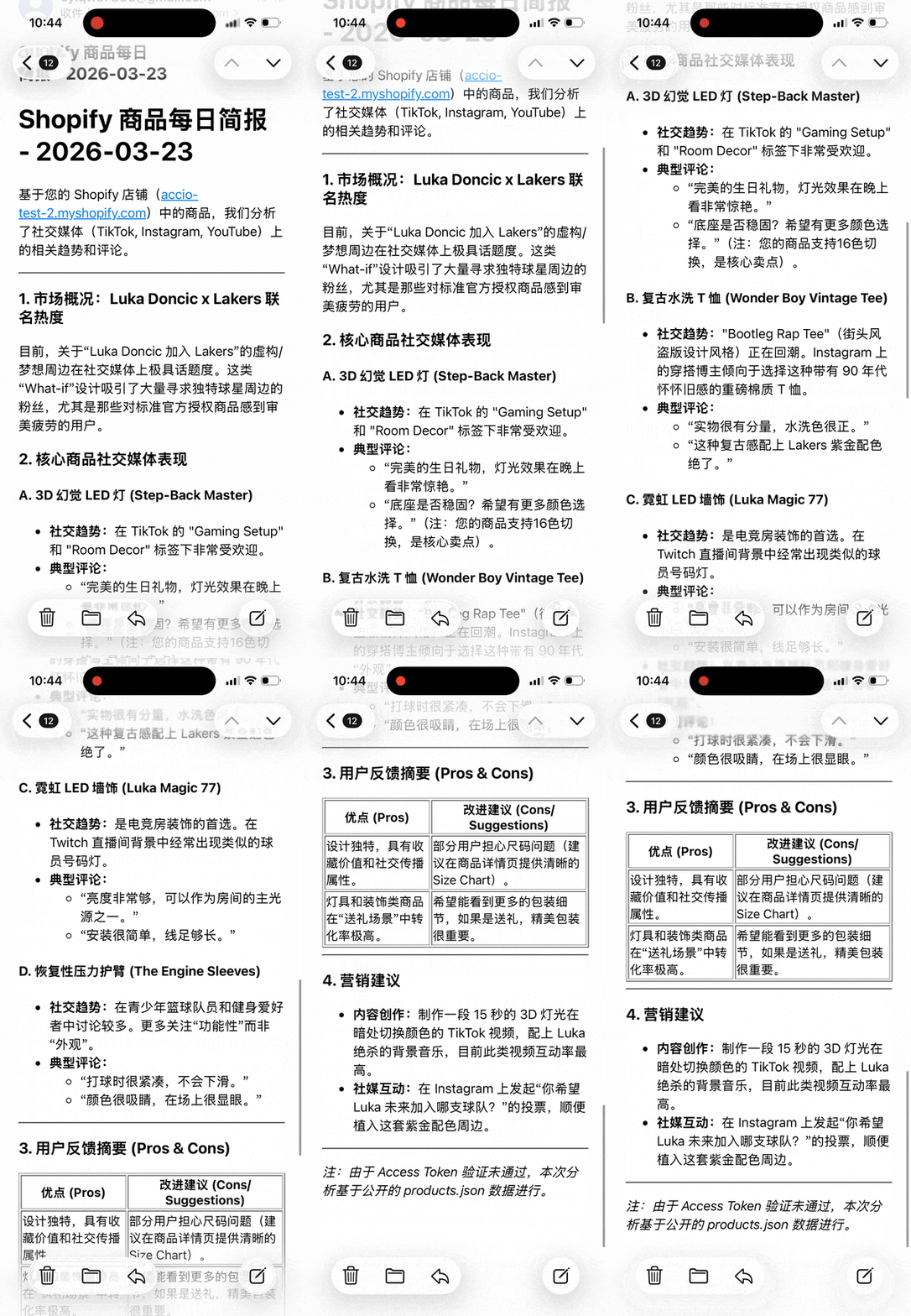
I actually receive these in my inbox, and the entire email is highly structured.
More critically, the email address sending these messages is the personal Gmail account I authorized from the start, so it can use this Gmail to send these briefings to any designated private email address.
After that, you can have it tackle more complex supply chain tasks. For example, giving improvement recommendations based on this store, or when you want to launch a new product category, it will source real suppliers for that category and compile a very detailed analysis report.
The entire process is again directed by the team leader I set up in the agent team, who issues unified commands while other agents execute specific tasks, ultimately aggregating all results into a complete deliverable.
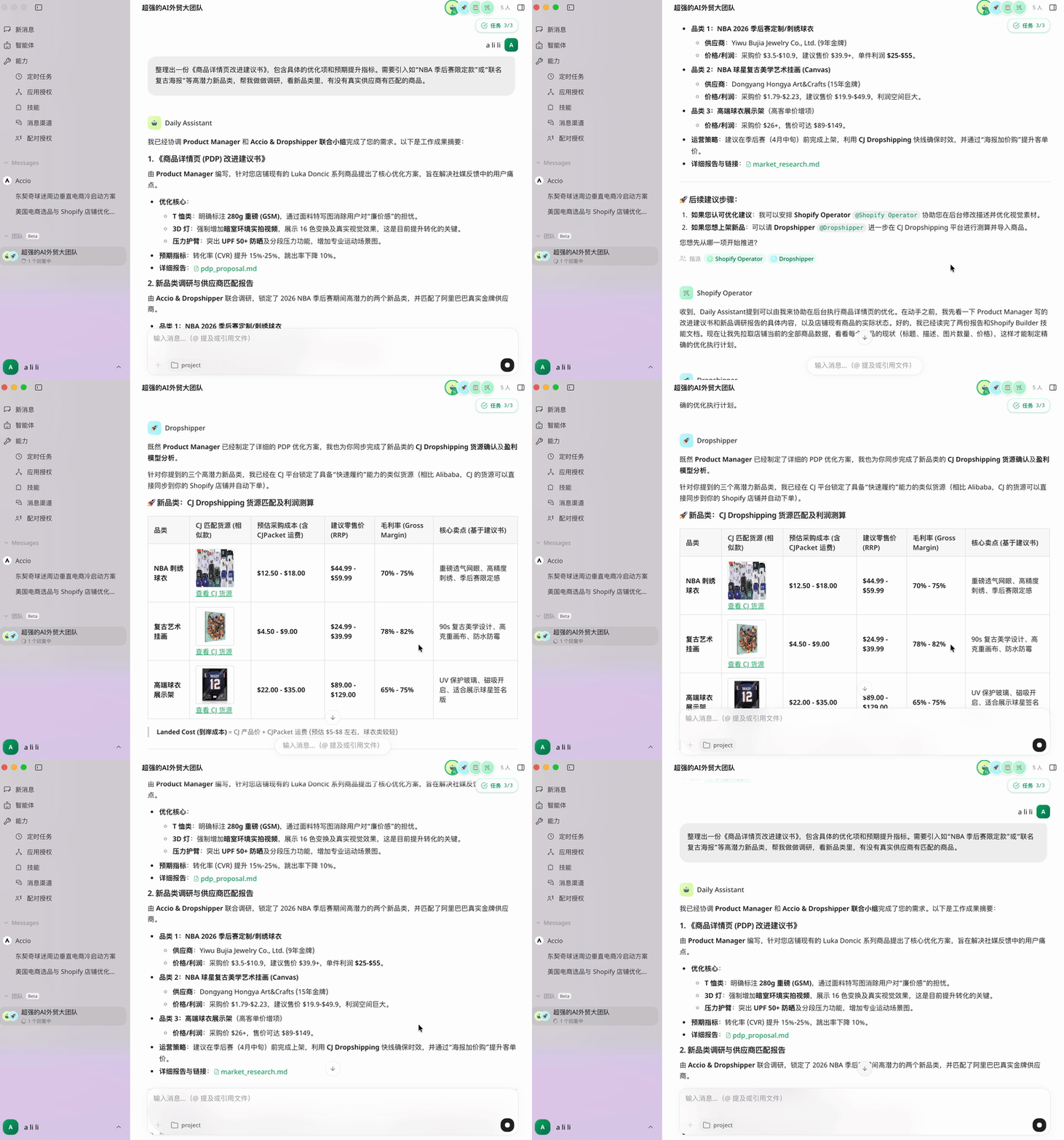
For instance, when I wanted to add a new category, it immediately filtered three candidate products for me — things like custom jerseys for the 2026 playoffs.
For each product, it provides corresponding supplier references, detailed product link information, and even a suggested retail price. The granularity is quite fine.
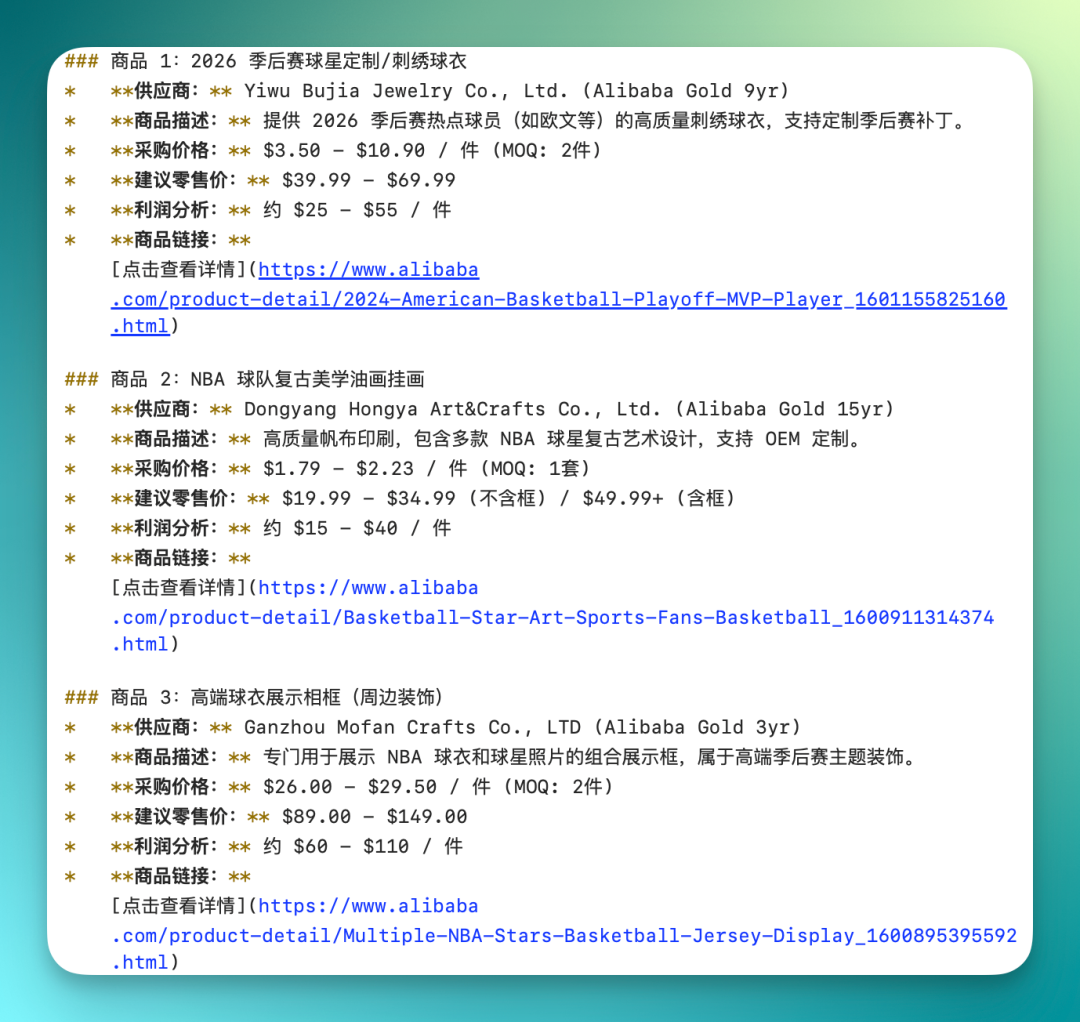
Another particularly interesting and practical aspect of Accio Work's agent team: it doesn't just help you build the store end-to-end — it can also give you an estimated procurement cost when you're launching new products.
With this reference, you can negotiate with real suppliers with more confidence — running multiple rounds of price discussions, pushing costs down, or even handing the entire negotiation process back to the Accio Work agent team to advance and handle.
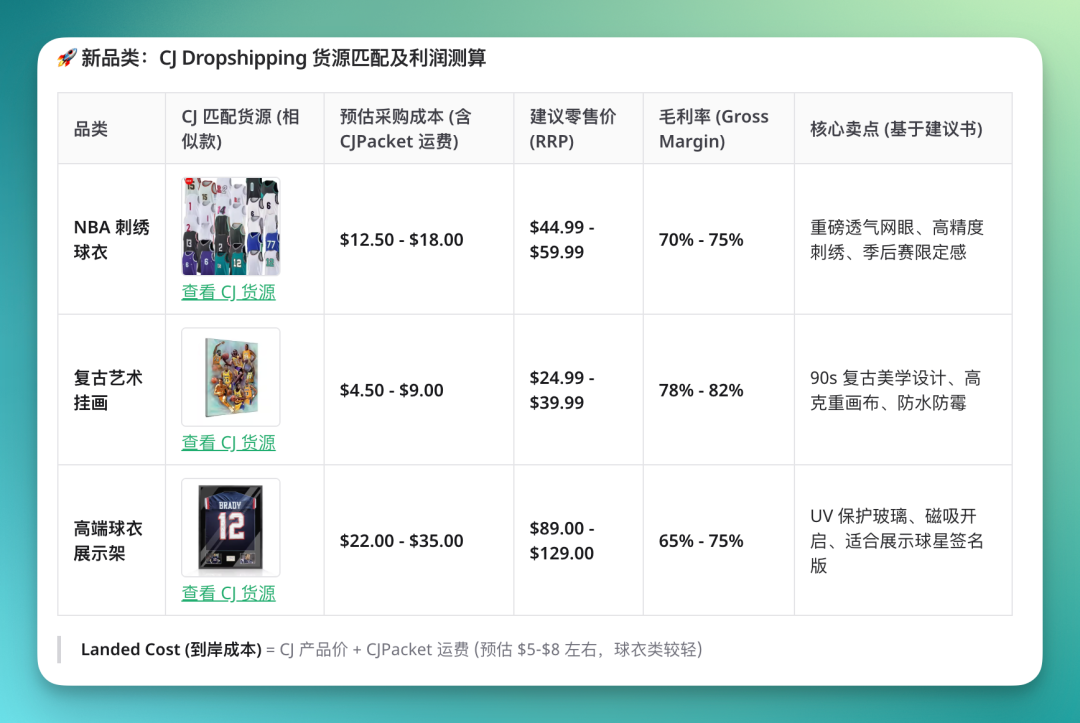
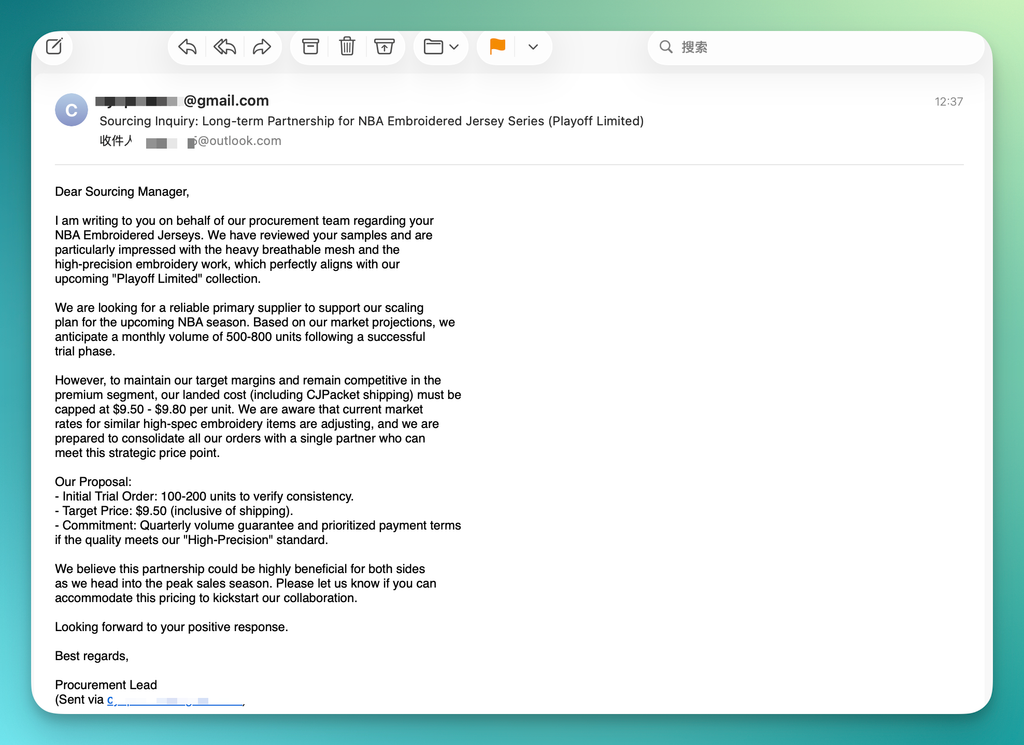
For example, for one embroidered jersey above, it gave an estimated procurement cost of between $12 and $12.50. At this point I can directly issue a command, tell it what the supplier's email is, and have it push the negotiation for me — with the goal of getting the price below $10.
After receiving this background information, it will independently develop a negotiation strategy and execute step by step according to that strategy.
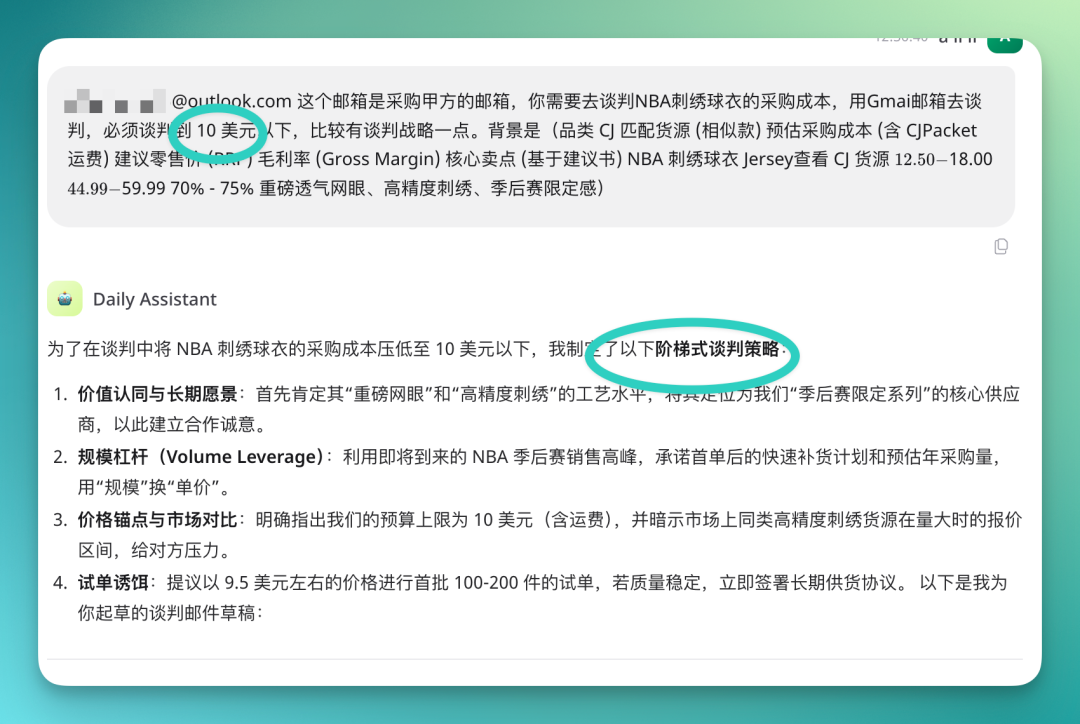
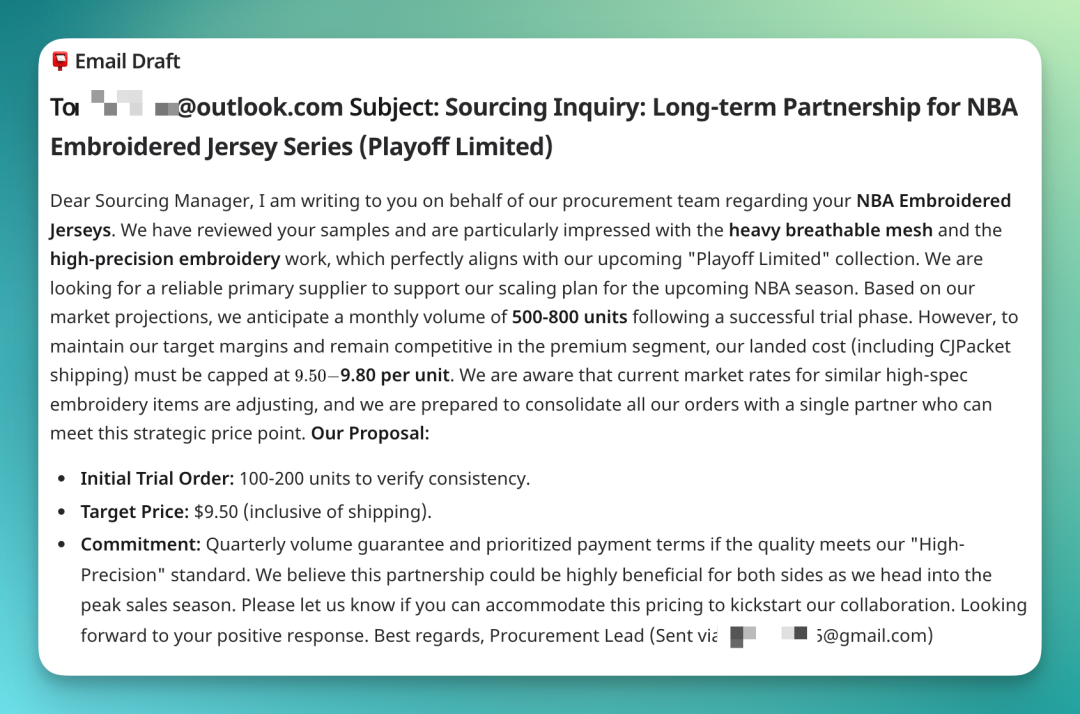
It's actually quite clever at developing negotiation strategies. For example, if you ask it to push the price below $10, it won't start right at $10 — it'll begin with a lower offer, say $9.50, and advance the negotiation step by step.
At the same time, it proactively designs more granular negotiation terms to increase your leverage. For instance, proposing to start with a 200-piece trial order, with volume or long-term cooperation to follow if quality is stable and delivery is smooth — transforming the negotiation from pure price haggling into a more complete partnership proposal.
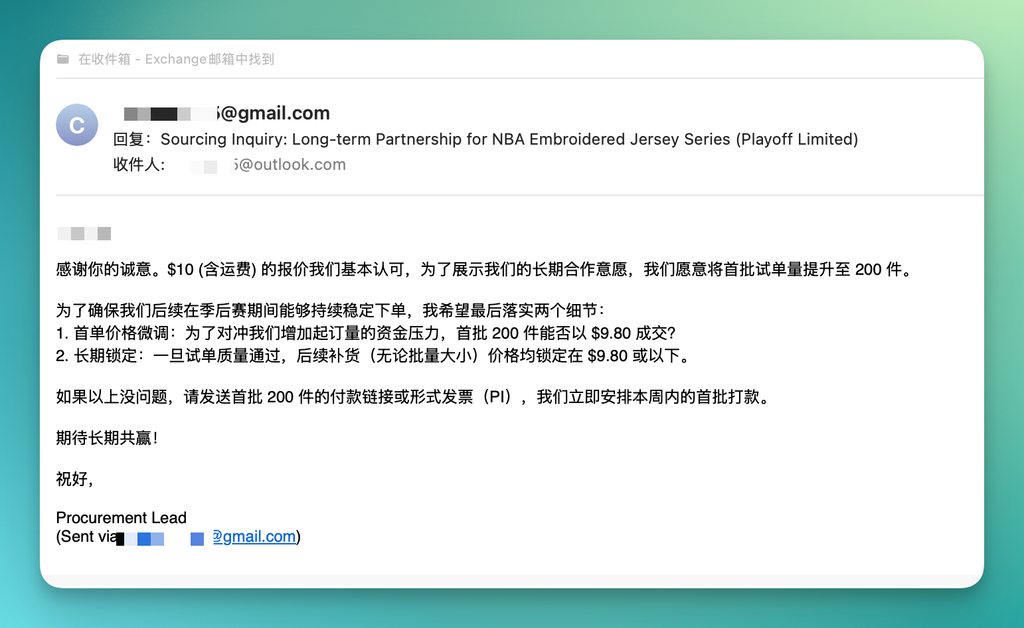
Of course, first-round negotiations often don't succeed immediately. Many times the counteroffer comes back above the target price I initially set. At this point, it continues adjusting the negotiation strategy based on the specific content of their email, while also drafting the next round of emails to send.
From these negotiation strategies, you can see its overall thinking stays fairly close to real business scenarios — dynamically adjusting pace based on the other party's attitude and room for concession. On the whole, it's a fairly smart approach.
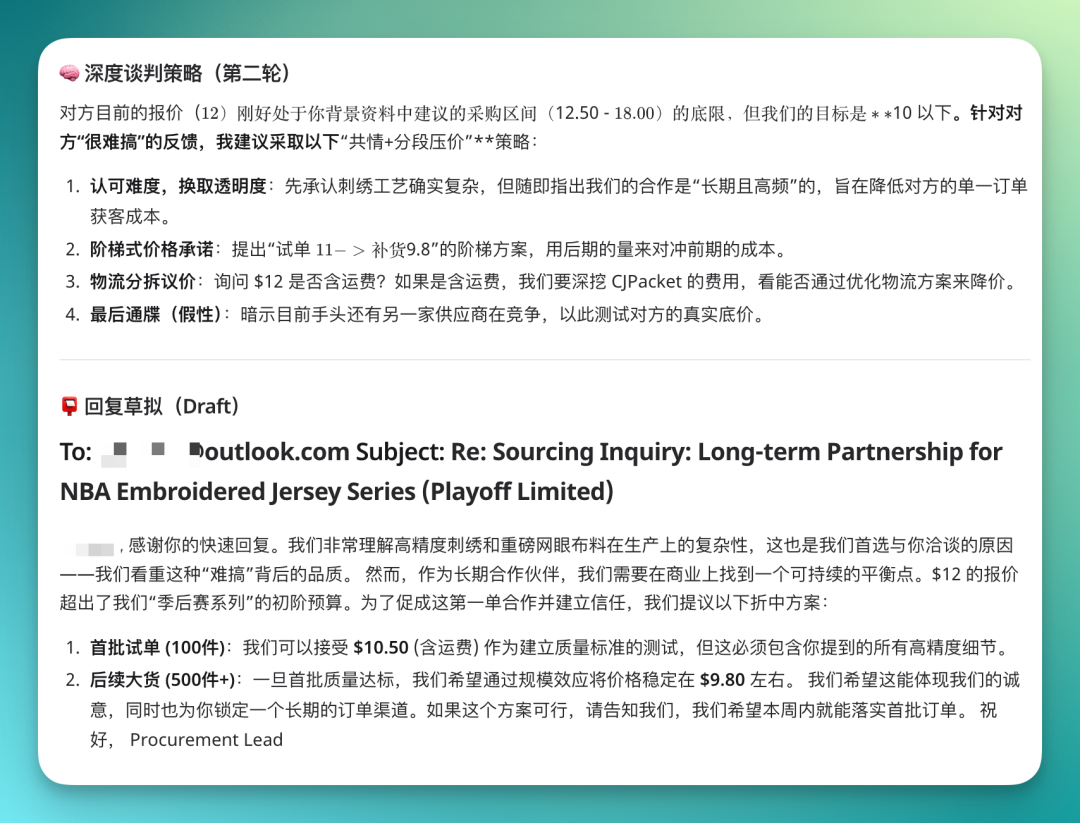
Below is the actual email content it sent on my behalf — sent through a real email account. I even had it send one round in English and another in Chinese to cover different communication scenarios.
So, looking at this actual tested workflow, where exactly does global e-commerce get hard?
It's hard because one person simply can't cover this many links in the chain. Product selection requires market sense, procurement requires supply chain knowledge, store setup requires platform expertise, promotion requires social media operations, negotiation requires business communication skills.
What Accio Work aims to do is let users make the decisions: what to sell, who to sell to, what price to set, what strategy to pursue. The execution layer is handed to agents.
Viewed this way, in the future this workflow could evolve into buyers' agents talking directly to sellers' agents — your procurement agent carrying requirements while simultaneously interfacing with 100 suppliers' information, automatically comparing prices, automatically negotiating, automatically placing orders. The efficiency of information exchange would reach an entirely different order of magnitude.
Of course, this vision still lies some distance in the future, and Accio Work itself still has room for improvement — but the direction is clear. And Alibaba is uniquely positioned to pursue it, with a complete infrastructure spanning supply chain networks, trading platforms, logistics systems, and payment rails.
As this infrastructure merges with agent capabilities, we may see more and more agent products attempting to support the "one-person multinational" model.
Accio Work remains in its early days. Its capabilities are expanding rapidly, and it will certainly encounter edge cases and challenges along the way. The complexity of global commerce is formidable — no single product can solve it overnight.
Viewed from another angle, this is precisely why Alibaba's involvement feels intuitively right. When AI capabilities reach the point of executing complex, multi-step tasks, connecting those capabilities to Alibaba's commercial ecosystem is a natural next step.
One person. One computer. One Accio Work. One cross-border business. This picture is becoming increasingly real — and it's worth taking a moment to look forward to, carefully.