When JD.com, Xiaohongshu, Kuaishou, and Pinduoduo All Stand at the "Crossing" of the AI Era
"Either play or get left behind!"
When we talk about China's AI vanguard, the first names that usually come to mind are tech titans like Alibaba, Tencent, ByteDance, and Baidu.
But over the past two years, a wave of internet giants traditionally seen as "not tech enough" have quietly stormed the AI arena — JD.com, the retail specialist; Xiaohongshu, the lifestyle community darling; Kuaishou, the "down-to-earth" short-video platform; and Pinduoduo, the pragmatic e-commerce upstart.
These companies built their reputations as deep divers into specific business scenarios.
JD.com mastered supply chains. Xiaohongshu cultivated content communities. Kuaishou connected grassroots users. Pinduoduo focused on lower-tier e-commerce markets.

They were never what you'd call AI innovators in the conventional sense, yet now they're all declaring AI strategies, assembling large-model teams, and launching AI products. This seemingly off-brand跨界 has caught the industry off guard.
Why pour massive resources into building AI business engines?
What's driving these companies out of their comfort zones and into the fiercely competitive AI arena?
And what distinct paths have each of them chosen?
"Join or Die!"
Dig into these companies' AI blueprints, and you'll find some shared motivations.
After ChatGPT ignited the global AI frenzy in 2023, generative AI capabilities underwent a qualitative leap. Industry consensus crystallized around this being an irreversible inflection point. A sense of crisis — "join or get eliminated" — spread through executive suites.
If BAT had lost their edge through sluggish responses during the mobile internet era, then companies like JD.com were determined not to repeat that mistake in the AI age.
Rival moves only intensified this urgency.
Take JD.com. Having competed with Alibaba in e-commerce for years, it could hardly sit idle when Alibaba went all-in on AI and launched products like "Taobao Wenwen." So in July 2023, JD.com rolled out its trillion-parameter Yanxi large model and "industrial ChatGPT" ChatJD, followed by the Jingyan AI shopping assistant in November. When one combatant in an arms race upgrades their weapons, the other has no choice but to match.
Xiaohongshu faced a threat in search. After Baidu launched ERNIE Bot, traditional search began evolving toward AI conversational experiences. With daily searches already approaching half of Baidu's volume, Xiaohongshu risked losing its rising momentum in lifestyle search without AI upgrades. So it assembled a large-model team, developed its proprietary "Little Sweet Potato" model, and in 2024 launched the AI search app "Dian Dian."
Kuaishou and Pinduoduo felt similar pressure to keep pace. Kuaishou, facing algorithm-driven rival ByteDance, had to fight back on AI; Pinduoduo refused to fall behind as Alibaba and JD.com rolled out AI e-commerce strategies.
Beyond competitive pressure, technology and cost inflection points lowered the barrier to entry.
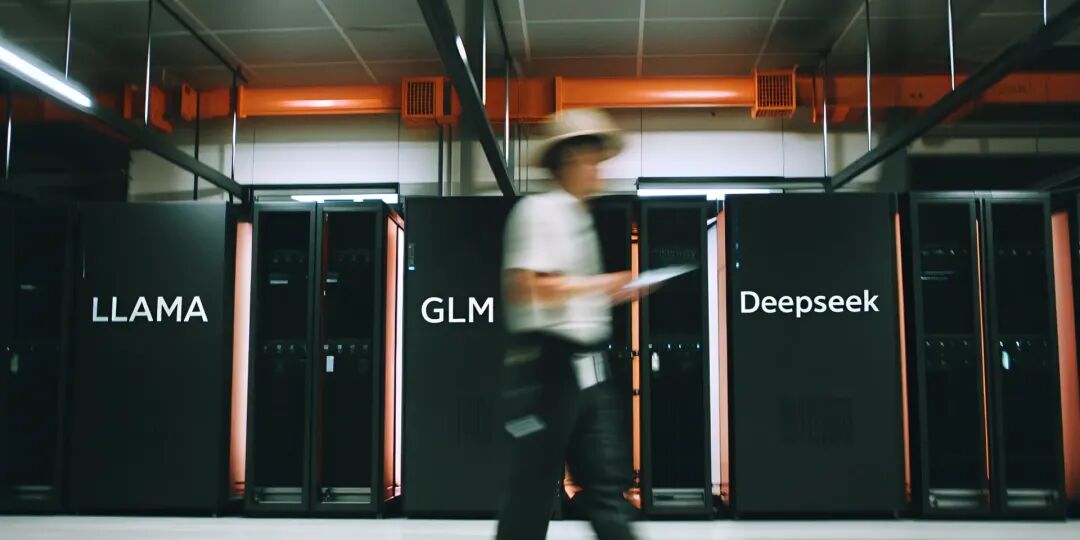
With the flourishing of open-source large models — DeepSeek, Meta's LLaMA series, Tsinghua Zhipu's GLM, among others — companies no longer needed to train AI models from scratch. The普及 of cloud computing rental services also reduced upfront investment; instead of buying expensive GPU clusters outright, firms could access computing power on demand through cloud services.
For companies like JD.com and Xiaohongshu, born outside the AI world, this democratization of technology dramatically lowered the cost of experimentation. JD.com CEO Xu Ran once shared a formula for model value: "Large model value = algorithm × computing power × data × industry depth²," suggesting that as technical barriers fall, companies can leverage their data and scenario advantages to win in AI.
China's internet has entered an era of zero-sum competition. With traffic dividends tapped out and user growth slowing, every company must find new growth engines and competitive edges. AI offers exactly such a reshuffling opportunity.
Whoever better applies AI to boost efficiency, improve experiences, and innovate business models will stand out in the next phase.
At the "Crossing": Four Companies, Four Different Choices
Though all riding the AI wave, the four companies — standing at their own "crossings" based on distinct endowments and DNA — have chosen radically different paths.
JD.com: Retail AI Driven by Industrial Value
Though founder Richard Liu has stepped down as CEO, he remains the soul of company decision-making. He has always emphasized the essence of retail — cost, efficiency, experience. This philosophy permeates JD.com's AI strategy: the company eagerly adopts any technology that reduces costs, boosts efficiency, or optimizes user experience, and AI happens to check all three boxes.
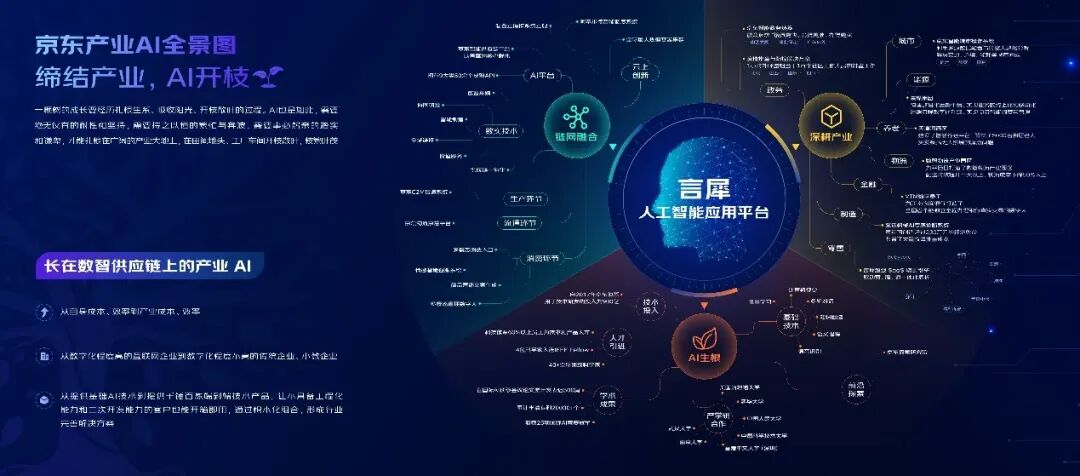
JD.com Industrial AI Panorama
In early 2023, Liu laid out JD Retail's most critical three-year strategy: low prices, with a focus on "cost, efficiency, experience" to get everyone on the same wavelength. This was essentially a company-wide directive —精打细算 and efficiency gains were the main theme.
Under this guidance, JD.com's AI applications have been pragmatic, avoiding blind pursuit of flashy general-purpose AI in favor of precise targeting of supply chain scenarios to build an "industrial ChatGPT."
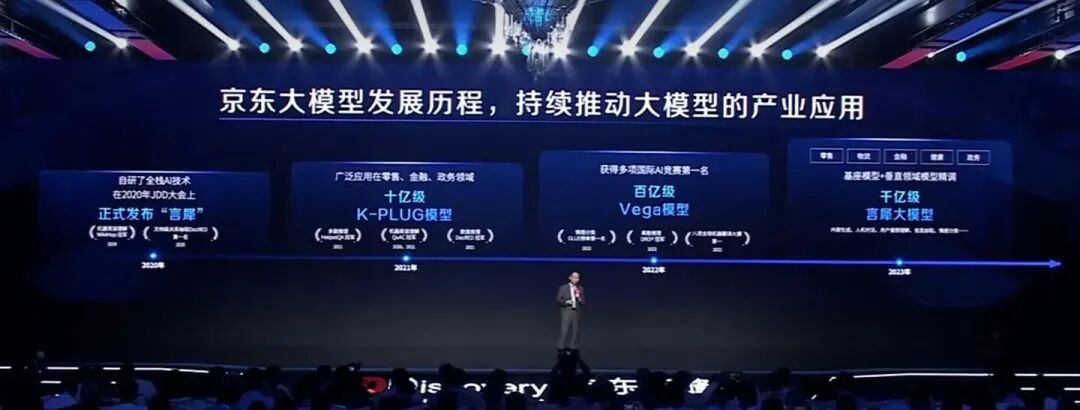
Thirty percent of Yanxi's training data comes specifically from retail, logistics, finance, and other domains where JD.com has deep roots, giving it superior performance in vertical scenarios.
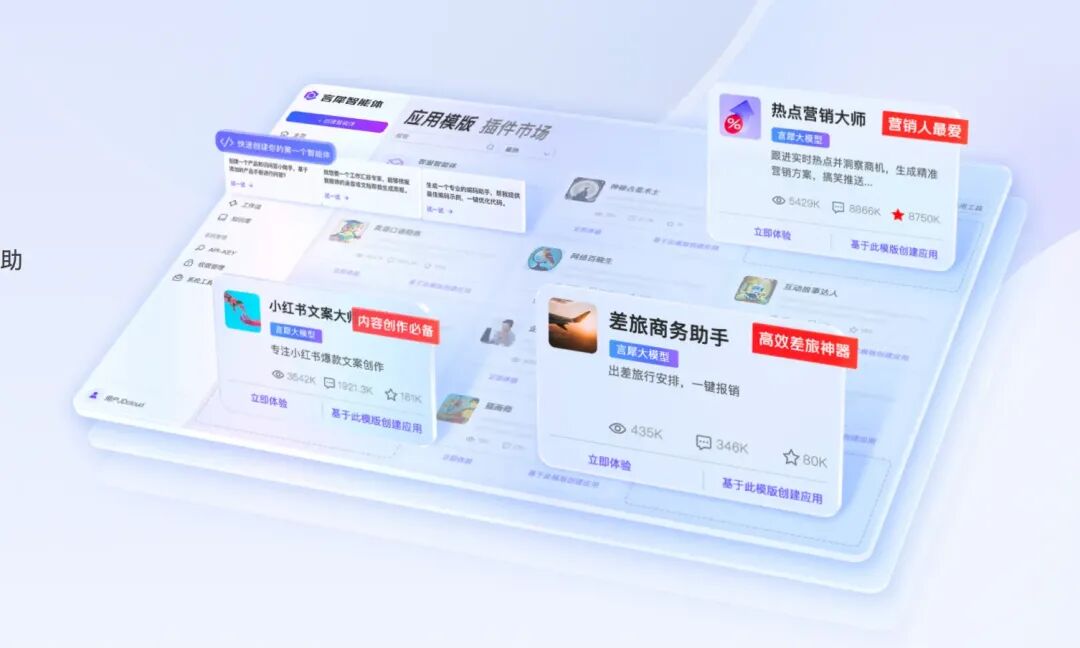
For instance, JD.com's auto-replenishment forecasting system already covers 20,000 products, achieving over 85% automation in replenishment across millions of self-operated SKUs — a level of specialized capability far beyond what general-purpose models could reach.
Thirty percent of Yanxi's training data comes specifically from retail, logistics, finance, and other domains where JD.com has deep roots, giving it superior performance in vertical scenarios. For instance, JD.com's auto-replenishment forecasting system already covers 20,000 products, achieving over 85% automation in replenishment across millions of self-operated SKUs — a level of specialized capability far beyond what general-purpose models could reach.
JD.com digital human host commercial performance. In 2024, "Procurement & Sales Brother Dong" livestreamed for the first time, drawing 40 million viewers and generating over 50 million RMB in sales, with over 100 brand executives lining up to commission their own digital humans. This AI application simultaneously boosted efficiency (24/7 operation) and experience (consistent professionalism), aligning with Liu's retail philosophy.
The defining characteristic of JD.com's AI strategy is "pragmatism." He Xiaodong has emphasized that compared to traditional chatbots, JD.com's conversational scenarios are more vertical and task-oriented, requiring precise solutions to actual e-commerce customer problems.
This pragmatic spirit also shows in JD.com's AI commercialization path: the Yanxi AI platform serves not only internal needs but also opens to external enterprise beta testing, building a "large model as a service" new business line.
In short, Richard Liu's hands-on spirit and cost-efficiency obsession have grounded JD.com's AI strategy in reality, pursuing a B2B and supply chain empowerment route. This has carved out a differentiated position in the AI race — rather than competing head-to-head with BAT on consumer-facing large models, JD.com is building advantages in its most familiar territory.
Core capabilities must penetrate deeply to the left, and expand broadly to the right.
AI is precisely JD.com's expansion to the right, extending years of accumulated retail capabilities into greater commercial value through technology.
Kuaishou: An All-In Content Creation Revolution
Kuaishou's AI path stands as the most aggressive and comprehensive among the four, tied closely to co-founder and current CEO Yixiao Cheng's technical convictions and long-term vision.
Cheng himself comes from a product and engineering background, having developed the original GIF Kuaishou app that launched the short-video era. Facing the 2023 AI wave, Cheng敏锐ly realized AI would redefine video content creation.
At an early 2025 earnings call, he put it plainly:
"Today more than ever, we clearly feel that large model technology iterations are redefining the boundaries of video creation, user experience, and commercial ecosystems."
He believes Kuaishou stands at a critical juncture where video large models will reshape industry格局. These words reveal his strong recognition of AI's transformative power — he sees the disruptive potential and is determined that Kuaishou must actively embrace it.
Compared to the other three, Kuaishou's AI布局 started earliest with the heaviest investment. As far back as 2016, Kuaishou established its Y-Lab, modeled after Google X; in 2023, it built a complete multimodal large model matrix spanning text (Kuaiyi), image (Ketu), and video (Keling). The Kuaiyi-13B model once ranked first on the CMMLU Chinese benchmark, demonstrating formidable technical strength.
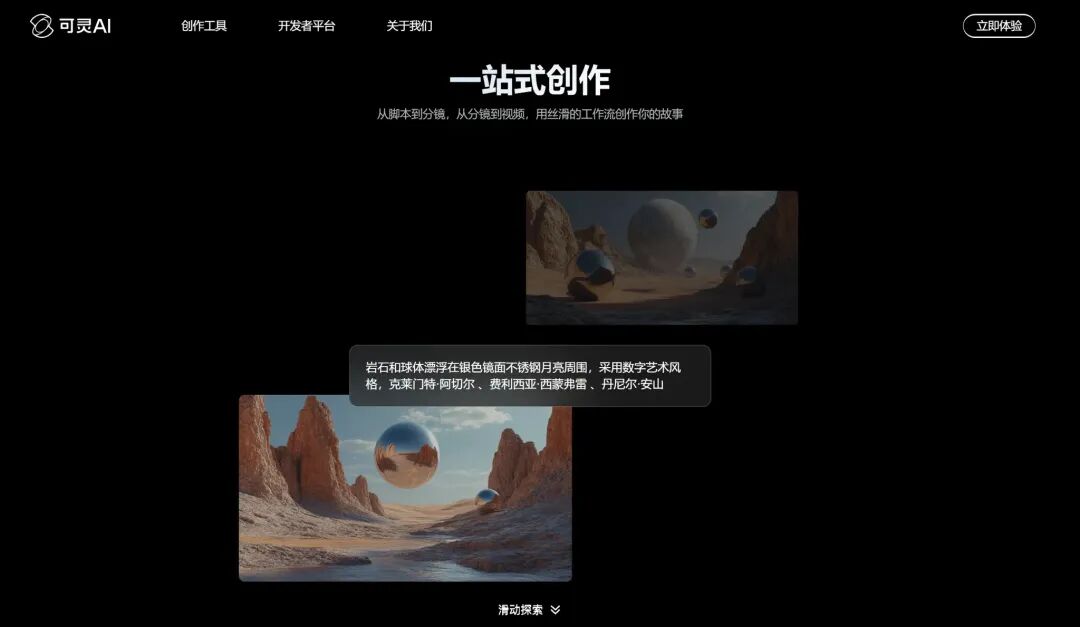
Kuaishou also pre-purchased and stockpiled massive computing resources for Keling model training. Cheng even stated willingness to sacrifice short-term profits to ensure AI investment — a rare display of long-termism in the short-video industry.
In 2024, AIGC short-video marketing materials and virtual digital human livestreaming solutions on Kuaishou's platform consumed over 30 million RMB daily, with cumulative revenue exceeding 100 million RMB within six months. Its UAX intelligent ad placement product achieved nearly 60% client penetration, with ad cold-start success rates improving 25%. Kuaishou's "Magnetic Creation" platform achieved the miracle of producing 100,000+ ad creatives within a single day, optimizing creation costs by over a thousandfold.
Cheng's AI bet stems from insight into industry fundamentals: video content creation barriers are too high, constraining short-video platform growth. The Keling model lets ordinary people "become directors with one click," supporting 1080p resolution and video generation up to 3 minutes long, truly lowering creation barriers. This serves not only existing business but opens entirely new content ecosystems — an "AIGC + UGC" dual-wheel-driven growth model.
Xiaohongshu: A Cautiously Balanced Community AI Exploration
Xiaohongshu's AI exploration best reflects founders Miranda Qu and Wenchao Mao's reverence for community ecology. Unlike bold, aggressive Kuaishou, Xiaohongshu adopted a restrained strategy of "small steps, fast runs, multi-point experiments" — constantly trying things (AI painting, auto-illustration, Q&A, voice chat) but observing community reaction at every step, never disrupting the existing ecosystem, treating AI as a tool to enhance rather than replace community.
They have consistently worked to build Xiaohongshu into a "community for marking life", emphasizing authentic, diverse content sharing and lifestyle guidance.
This vision requires Xiaohongshu to maintain advantages in content quality and user trust. However, as platform content exploded in volume, how to help users quickly find useful information became a challenge. Against this backdrop, the Xiaohongshu team realized search had become a critical community entry point (70% of monthly active users engage in search behavior), even determining user experience and commercial conversion.
To this end, they strategically upgraded search functionality. Modern AI Q&A technology presented exactly the opportunity for a qualitative leap in search experience. Xiaohongshu's AI investment, then, partly grew from community vision continuity — hoping users could more conveniently access trustworthy life experiences.
So Xiaohongshu's AI布局 concentrated in two directions: first, enhancing community content creation experiences; second, boosting lifestyle search capabilities. The April 2023 launch of Trik AI painting, July's "This Moment" auto-illustration, and September's internal testing of "Da Vinci" AI Q&A assistant all represented attempts around these two directions. Each feature was carefully designed to harmonize with the overall community experience.
Xiaohongshu has revealed that 120 million users directly ask shopping-related questions on-platform monthly, and users who enter through search convert over 30% higher than passive browsers. These figures underpinned Xiaohongshu's determination to advance toward AI search, culminating in the 2024 launch of standalone AI search app "Dian Dian."
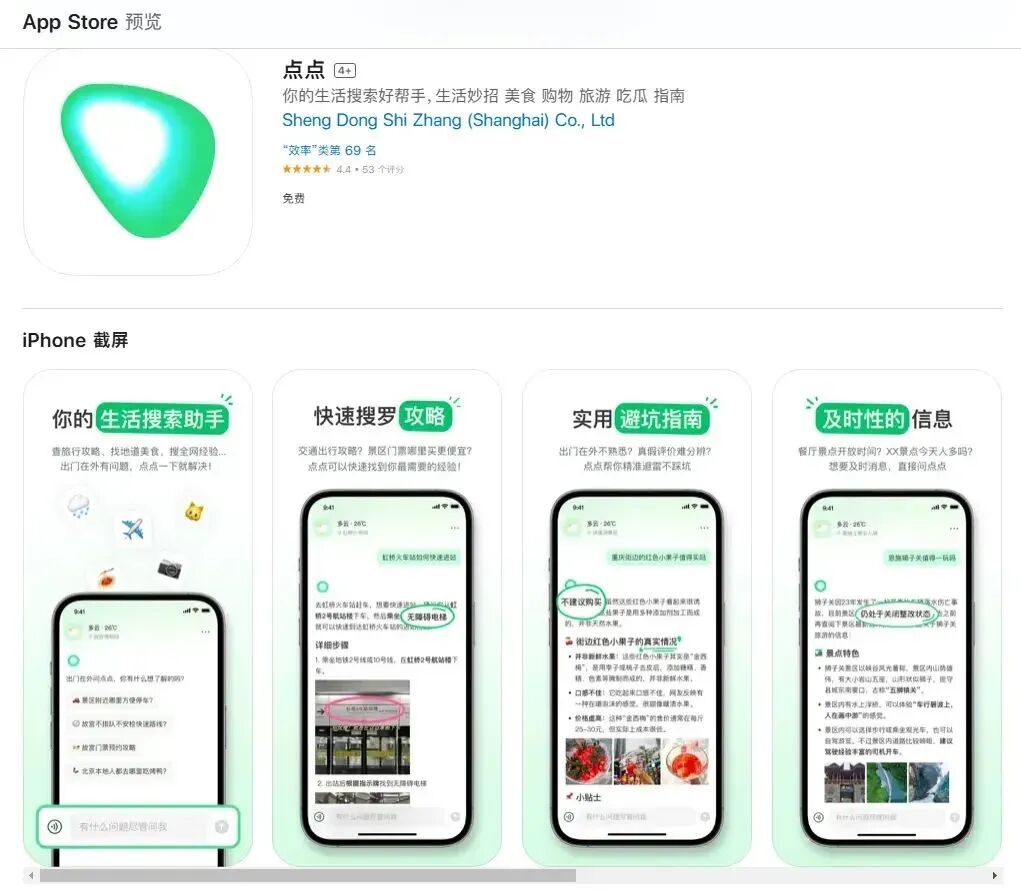
On the technical stack, Xiaohongshu's self-developed "Little Sweet Potato" large model also leans pragmatic, emphasizing Chinese language understanding and multimodal capabilities rather than pursuing parameter scale. However, in mid-2024, concentrated reports of Xiaohongshu's self-developed Little Sweet Potato model emerged, followed by an extended "gray testing" phase.
VP of Technology Zhang Debing once emphasized: "Xiaohongshu carries content in different modalities. If these modalities can dramatically lower creation barriers, letting users record and express their lives at lower cost and more quickly, that's a very interesting direction."
The model itself is not the goal; serving the community is.
Xiaohongshu also invested in Moonshot AI and MiniMax, two large-model startups, adopting an "invest + partner" strategy to complement its own capabilities — a flexible, pragmatic approach highly consistent with community platform characteristics.
Pinduoduo: Invisible Yet Deeply Pragmatic AI
Pinduoduo's AI strategy stands as perhaps the most distinctive among the four — it has almost never publicly高调 promoted any AI strategy, yet has quietly laid groundwork internally and achieved real results. This "silent and subtle" approach partly reflects founder Zheng Huang's values of本分 (staying true to one's role).
This philosophy permeates every aspect of Pinduoduo, including technology innovation. Specifically in AI, Huang demonstrated clear-eyed understanding early on. Back in 2016, he commented that then-popular rule-based AI (binary judgments) had massive limitations, encountering undecidable problems; perhaps quantum computing could change things in the future. This showed Huang recognized AI's uncertainties and limitations, refusing to deify it.
At a 2019 internal company meeting, Huang further clarified Pinduoduo's AI positioning: AI is merely a tool to improve business. He explained that Pinduoduo would use distributed AI to挖掘 user needs, letting machines replace manual product selection, achieving "goods finding people."
He also cautioned employees not to expect AI to be omnipotent, because AI's unpredictability conflicted with his advocated principle of "using common sense for rational judgment."
This theory led Pinduoduo to hold back during the early AI wave, unlike competitors who大肆 publicized large-model plans. During the 2023 "hundred-model war," Pinduoduo remained "steady as a mountain," seemingly uninterested in joining the fray. Huang doesn't chase hotspots, instead waiting for technology to mature and truly align with business before acting.
Only by late 2023 did signs emerge that Pinduoduo was accelerating AI布局 (recruiting algorithm engineers, high-salary poaching), perhaps indicating Huang judged AI application maturity and necessity had reached a actionable point. The AI lead reportedly came from Baidu's Fengchao core team.
Pinduoduo's pragmatism shows in how it measures AI effectiveness — not by model parameter scale, not by technical metrics, but by actual business indicator improvement. Pinduoduo's 2023 per-capita revenue reached 14.5 million RMB, seven times JD.com's and three times Alibaba's during the same period. This极致 efficiency has significant AI contribution behind it.
Similarly, Pinduoduo's Temu rapid overseas expansion relies on AI analyzing overseas consumer preferences and optimizing cross-border logistics paths.

Another feature of Pinduoduo's AI strategy: heavy reliance on open-source成果 with focused scenario fine-tuning, rather than self-developing foundational models. This "borrow + customize" approach aligns with Huang's pragmatic attitude toward technology.
Technology is just a tool; business is the core.
For Pinduoduo, AI is infrastructure like water, electricity, and gas — the point isn't owning it but using it well.
The Commercial Awakening of AI Strategy
These four companies' AI strategies have moved beyond concept to demonstrate actual commercial value, proving AI is transforming from a money-burning "lab project" into a value-creating engine.
JD.com's Yanxi large model has already deployed across multiple internal scenarios, improving entity attribute extraction accuracy (96%) and multi-turn dialogue generation effects. Moreover, the JD.com Yanxi platform has begun serving external clients, forming a new revenue source.
JD.com's inventory forecasting model has pushed replenishment automation above 85%, representing massive cost savings for a retailer managing millions of SKUs.
JD.com's Yanxi large model has already deployed across multiple internal scenarios, improving entity attribute extraction accuracy (96%) and multi-turn dialogue generation effects. Moreover, the JD.com Yanxi platform has begun serving external clients, forming a new revenue source. JD.com's inventory forecasting model has pushed replenishment automation above 85%, representing massive cost savings for a retailer managing millions of SKUs.
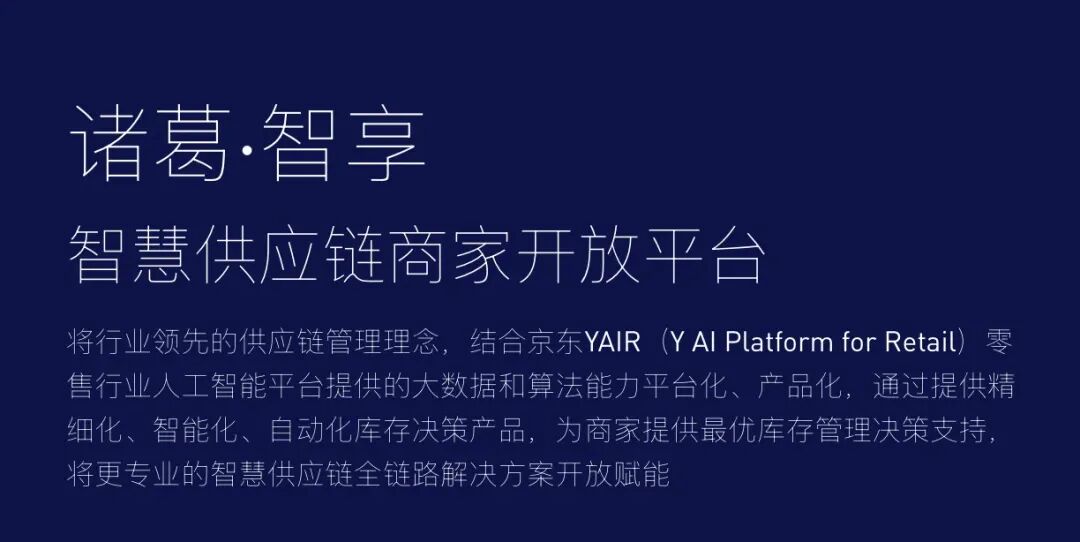
JD.com is rapidly advancing intelligent supply chains
Kuaishou's AI commercialization shows the most visible progress. Centered on its self-developed "Keling" multimodal large model, it has successfully打通 the path from technology to business. Within just one year, Keling AI grew from project incubation to become a new growth driver for Kuaishou.
Its Keling model directly spawned AIGC short-video marketing and virtual human livestreaming businesses consuming 30 million RMB daily.
As of February 2025, Keling AI-related businesses' cumulative operating revenue has exceeded 100 million RMB. It has also rapidly elevated Kuaishou's image in capital markets and the industry. In 2024, Kuaishou's stock price rose approximately 50% against the trend, with market cap approaching 250 billion HKD.
These figures directly manifested in Kuaishou's 2024 revenue growth, proving its AI technology investment has yielded substantive returns.

Source: X user
Within just one year, Keling AI grew from project incubation to become a new growth driver for Kuaishou. Its Keling model directly spawned AIGC short-video marketing and virtual human livestreaming businesses consuming 30 million RMB daily.
As of February 2025, Keling AI-related businesses' cumulative operating revenue has exceeded 100 million RMB. It has also rapidly elevated Kuaishou's image in capital markets and the industry.
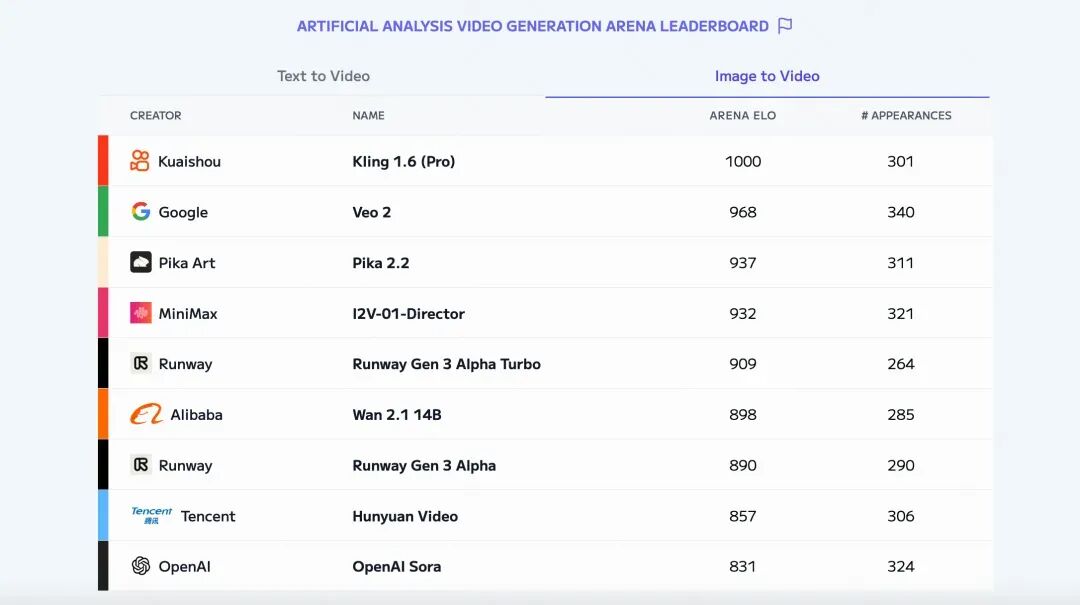
In 2024, Kuaishou's stock price rose approximately 50% against the trend, with market cap approaching 250 billion HKD. These figures directly manifested in Kuaishou's 2024 revenue growth, proving its AI technology investment has yielded substantive returns.
Xiaohongshu's AI commercialization centers more on search and community experience improvement. Data shows 600 million daily in-platform search requests; AI-enhanced search experience directly improves user stickiness and ad conversion rates. The September 2023 launch of "Search Connect" bidding ad platform represented an important attempt at AI search monetization; as the "Dian Dian" search app matures, search ad revenue有望 to grow substantially.
Though low-key, Pinduoduo's极致人效 is inseparable from AI empowerment. Pinduoduo early built distributed computing frameworks supporting real-time recommendations for massive user bases, achieving its famous "goods finding people" model. AI also helps Pinduoduo optimize logistics fulfillment paths, predicting warehouse site selection and inventory allocation based on historical order geographic distribution — providing critical support for cross-border e-commerce Temu's rapid expansion.
At the technical level, the four companies' investments also vary in emphasis.
- JD.com has built a complete technical stack including the Yanxi AI development platform and vector database, and open-sourced the distributed vector database Vearch;
- Xiaohongshu's "Little Sweet Potato" large model emphasizes Chinese understanding and multimodal capabilities, with particular strengths in content understanding;
- Pinduoduo likely leverages open-source models and external technology more heavily, focusing on business applications rather than foundational research.
These AI investments have gradually extended from front-end user experiences to back-end operational optimization. JD.com's intelligent supply chain forecasting, Kuaishou's ad placement optimization, Xiaohongshu's content审核 system, and Pinduoduo's logistics path planning are all cases where AI creates value while remaining "invisible" to users. This comprehensive AI penetration is precisely what distinguishes this wave from previous technology surges.
Conclusion
In the AI technology wave, two types of enterprises each have their strengths. One is technology-oriented firms, excelling at cutting-edge algorithm breakthroughs and foundational research; the other is business application firms, skilled at combining technology with specific scenarios to create actual value.
Traditionally, tech giants like BAT and ByteDance have excelled at technology innovation, often pioneering the most advanced research directions while pursuing aggressive product innovation. JD.com, Xiaohongshu, Kuaishou, and Pinduoduo, by contrast, focus more on commercial落地, treating technology as a tool to serve business.
These companies' successes expand the boundaries of AI value.
In the democratization of technology, the essence of competition is no longer who can invent technology, but who can better apply it.

As AI moves from labs to markets, from scarcity to普及, dominance has begun shifting from technology innovators to scenario appliers.
Today, AI is undergoing a critical inflection point from concept to落地. Those once seen as "not tech enough" quasi-first-tier giants, precisely because of their deep understanding of scenarios and users, have seized the initiative in this transition. They are proving through action that technology's true value lies not in its complexity, but in its problem-solving power.
Technology will eventually democratize; value remains forever scarce. Companies that master technology may have advantages, but those that deeply understand how to create value are the ultimate winners.