William Li: "Wake Up! NIO Will Never Build a Robotaxi in Its Lifetime"

Friendly reminder: life is long.


📱 Apple Intelligence Features Delayed
🧠 Synchron Integrates ChatGPT into Brain-Computer Interface
🕷️ Anthropic Crawler Sparks Backlash from Site Owners
🚨 AI Breakthrough Triggers Warning from Math Professor
🚗 William Li: Robotaxi Is Not a Good Business
🧸 Haivivi Launches AI Interactive Pendant Toy
💰 LiblibAI Closes Largest Funding Round in China's AI Image Sector
💁♂️ IntelePeer Raises $140 Million
🏅 Chinese AI Tech Debuts at Paris Olympics

Apple Intelligence Features Delayed
Apple's planned AI feature suite, Apple Intelligence, will arrive later than expected. According to people familiar with the matter, the features won't launch alongside the initial releases of iOS 18 and iPadOS 18, but will instead roll out as part of a software update before October.
Apple may provide developers with early access to Apple Intelligence as soon as this week through iOS 18.1 and iPadOS 18.1 betas — an unusual move that signals higher-than-normal software risk. The delay stems partly from concerns about feature stability, with Apple needing developer support to iron out issues and conduct broader testing.
The first wave of Apple Intelligence features includes priority notifications, summaries for web pages and voice notes, writing tool improvements, Siri upgrades, and ChatGPT integration. However, some major capabilities — such as Siri's ability to answer questions using device data — may arrive in later updates. Apple plans to roll out the full feature set across multiple updates from late 2024 through the first half of 2025, integrating them across iPhone, iPad, Mac, and the upcoming Vision Pro.
Synchron Integrates ChatGPT into Brain-Computer Interface
Synchron has achieved a major breakthrough in brain-computer interface (BCI) technology, becoming the first company in the world to integrate ChatGPT into a BCI system. This innovative approach requires no open-skull surgery — instead, a device called the stentrode is implanted into blood vessels near the brain's motor cortex through a minimally invasive procedure, offering paralyzed patients a more accessible way to control digital devices.
The system reads electrical brain signals and wirelessly transmits them to external devices, combining this with ChatGPT's natural language processing to dramatically improve communication efficiency. Users can select from AI-generated response options simply by thinking, eliminating the need to type word by word. Over time, the system adapts to the user's language patterns, delivering increasingly accurate and personalized responses.
Synchron's BCI is expected to cost between $50,000 and $100,000, comparable to other implantable medical devices. While it has not yet received FDA market approval, it has shown promising results in clinical trials. Participant Mark said the technology offers hope to others in similar situations and encourages more people to get involved in finding solutions.
Anthropic Crawler Sparks Backlash from Site Owners
Anthropic's ClaudeBot crawler has drawn strong complaints from multiple website owners in recent weeks. Sites including iFixit, Read the Docs, and Freelancer.com have reported frequent visits from ClaudeBot, arguing that the crawling is not only unauthorized but also consumes significant development resources. iFixit CEO Kyle Wiens said ClaudeBot hit their site nearly a million times in 24 hours, severely impacting service.
The Linux Mint forum also experienced outages due to ClaudeBot scraping activity. Many site owners have attempted to restrict crawler access by modifying their robots.txt files, but this approach doesn't fully solve the problem. Reddit has also taken action against web crawlers, noting that some AI companies violate terms of service by scraping user-generated content to train AI models.
Site owners and developers are calling on AI companies to show greater respect for their rights and maintain transparency and accountability when acquiring data. Anthropic has not yet issued a public response to these concerns.
AI Breakthrough Triggers Warning from Math Professor
Carnegie Mellon University math professor and U.S. IMO national team coach Po-Shen Loh has expressed shock at AI's breakthrough performance at the International Mathematical Olympiad. Google DeepMind's AI demonstrated near-silver-medal ability at this year's IMO, which Loh compared to the Soviet Union's launch of Sputnik in 1957.
Loh emphasized that AI is moving beyond pattern-matching on standardized tests to actually discovering problem-solving pathways. He noted that IMO problems are deliberately chosen to be non-standard, making AI's ability to solve them a significant advance. Faced with rapid AI progress, Loh is calling for humans to elevate their own intelligence and arguing that education systems must adapt to cultivate students' ability to solve novel problems.
Loh has proposed several key ideas for meeting the AI challenge. As AI capabilities advance, raising human intelligence becomes more critical, not less. Teaching methods need to change quickly to develop students' capacity to tackle problems they've never seen before. He also stresses the importance of building collaborative rather than competitive communities to preserve the essence of human civilization. Loh is promoting these ideas through various channels, including developing innovative education projects and giving public talks.


William Li: Robotaxi Is Not a Good Business
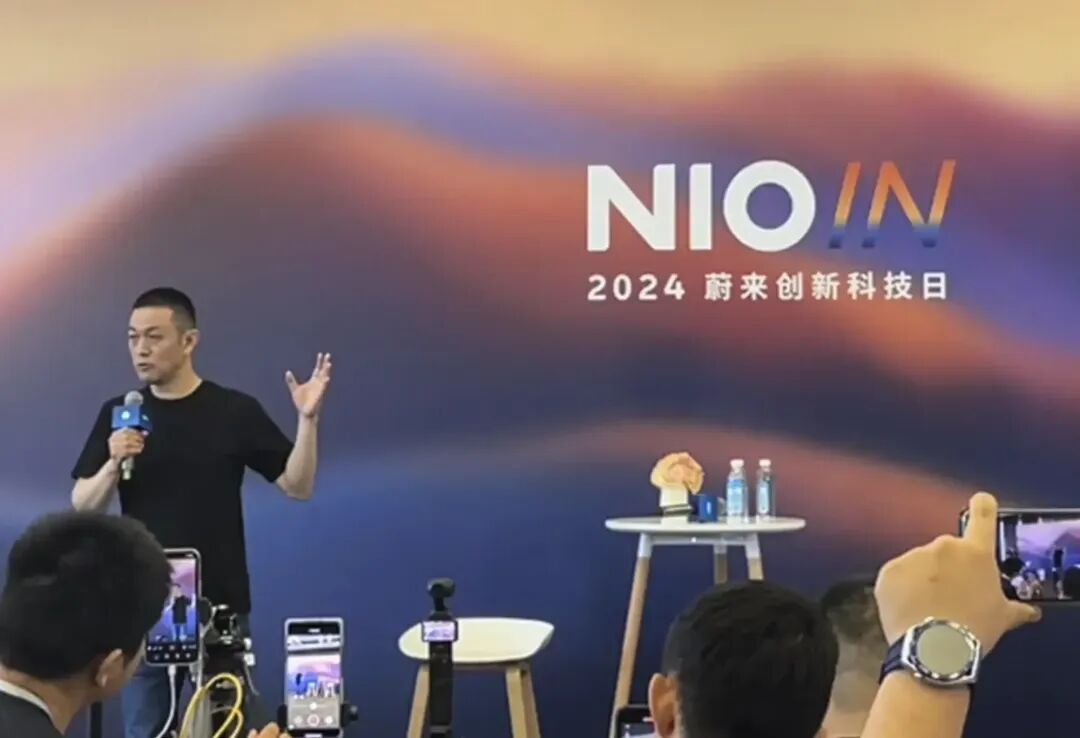
In a recent two-hour interview, NIO founder William Li made clear that the company will never enter the Robotaxi space. He argued that Robotaxi is neither inspiring nor a promising large-scale business. The real value of intelligent driving, Li said, lies in freeing people's mental energy and reducing traffic accidents — not in replacing ride-hailing drivers.
He stressed that transportation is a complex social problem that can't be solved by technology alone, and even with mature Robotaxi technology, it would struggle to become a sustainable business model because cities can only accommodate a limited number of cars.
On the intelligent driving front, NIO pursues dual technical routes using both pure vision and LiDAR. Li said reliable sensors and abundant computing power have only upsides, no downsides. The company has also launched its vehicle operating system SkyOS and self-developed chips, emphasizing that smart car companies should adopt a layered, decoupled architecture. On sales volume, NIO maintains its target of 20,000 vehicles per month but opposes publishing weekly sales rankings, arguing that this intensifies industry anxiety.
Li also discussed NIO's other strategic directions. The company launched the NIO Phone to deliver a better vehicle-phone connectivity experience. While the board had concerns about whether this would distract from the core business, Li noted that the smartphone supply chain is already mature and NIO focuses mainly on software experience. On R&D investment, Li emphasized the company's high efficiency — roughly 10 billion yuan annually — which keeps NIO competitive. He also mentioned that NIO is working to show its true colors through events like NIO IN, countering industry misconceptions and external pressure on its pace.
Haivivi Launches AI Interactive Pendant Toy
Haivivi has introduced BubblePal, an AI interactive pendant toy designed to bring plush toys to "life." The company was co-founded by Yong Li, former partner at Tmall Genie, and serial entrepreneur Gao Feng, with backing from prominent investors including Bingqiang Gao, known as the "godfather of DJI."
BubblePal is an AIGC-powered conversational toy that allows children aged 3-8 to chat freely with animated characters. The product features a simple mushroom-shaped design; interaction is triggered by squeezing. Parents can control character settings and view chat histories through an app. Strict safety guardrails are built in to ensure child-appropriate content.
Haivivi believes that children's hardware will be the first hardware category to achieve large-scale commercialization of foundation models. The company plans to eventually open a B2B platform to support other AI toy hardware developers. Gao estimates that the AI plush toy market may see explosive growth in four to five years, when multimodal large model technology will be more mature.


LiblibAI Closes Largest Funding Round in China's AI Image Sector
LiblibAI completed three funding rounds within one year, raising several hundred million yuan in total — a record for China's AI image sector. Investors include top-tier VC firms Source Code Capital, Gaorong Ventures, GSR Ventures, and Future Capital. Notably, the investors behind two leading foundation model companies, Moonshot AI and MiniMax, both made rare simultaneous bets on LiblibAI.
Founded in May 2023, LiblibAI focuses on AI content creation and sharing. In just one year, the company has amassed nearly 10 million professional AI image creators, making it China's largest AI image generation platform. The community hosts over 100,000 original models and has produced and shared more than 230 million AI-generated images. The company has passed the Cyberspace Administration of China's algorithm filing requirements for deep synthesis services and became the first AI community in China to receive approval under the Generative Artificial Intelligence Service Management Interim Measures.
The funding will primarily go toward building large-scale computing infrastructure, developing image model technologies, and supporting the developer ecosystem and original model creators. Multiple investor representatives expressed optimism about LiblibAI's prospects, seeing potential for the company to become a global leader in AI image generation and provide professional users with a more complete and usable text-to-image creation platform.

IntelePeer Raises $140 Million
IntelePeer Cloud Communications LLC announced a $140 million funding round to develop generative AI services that will reshape customer service in call centers. The round was led by Savant Growth LLC and VantagePoint Capital Partners on the equity side, with Vector Capital leading the debt portion through Vector Velocity.
Founded in 2003, IntelePeer specializes in automating customer service interactions. The company has automated over 600 million customer interactions, reducing costs by more than 10x. Its SmartAgent service helped client Secure Transportation cut wait times by 50%, reducing ride pickup time from 45 minutes to 10 minutes. IntelePeer's AI business is growing at over 100% annually and is expected to accelerate further.
IntelePeer uses generative AI to deliver more natural customer interactions. The technology understands human language and responds conversationally using company data — a significant advance over traditional phone menus or standardized chat interfaces. A Bain & Company survey found that 87% of companies have deployed or are piloting generative AI applications.


Chinese AI Tech Debuts at Paris Olympics
This year's Paris Olympics introduced multiple advanced technologies, including foundation models and applications from Alibaba's Qwen and SenseTime's SenseNova, bringing new experiences to the event.
Cloud-based broadcasting surpassed satellite broadcasting for the first time to become the primary distribution method for Olympic events. Alibaba Cloud will support distribution of approximately 11,000 hours of live event coverage to over 200 countries and regions. Fifty-four broadcasters are using cloud computing for live distribution, totaling 379 video streams and 100 audio streams — a 15% increase from the Tokyo Olympics.
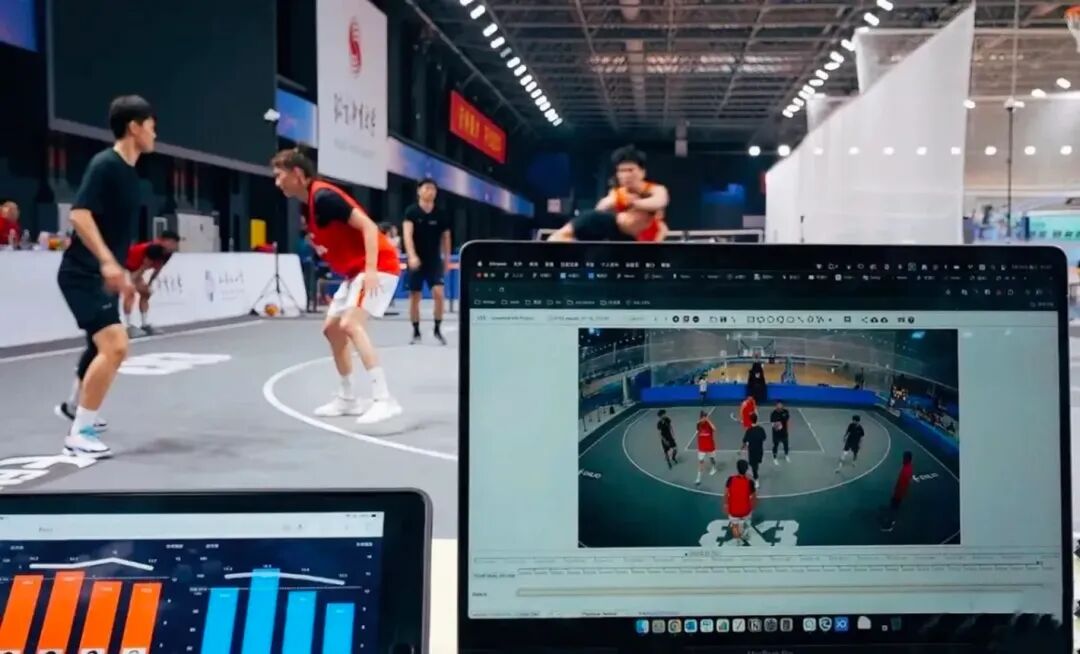
AI technology is being widely applied in areas including event commentary, 360-degree broadcasting, and visual search. Applications include: a multi-camera replay system enabling "bullet time" effects (allowing broadcast footage to achieve sci-fi-style slow motion and frozen frames, letting viewers experience immersive multi-angle enhanced slow-motion and time-stop effects of athletes); an AI sports platform supporting automatic tagging, intelligent search, and highlight video generation. Smart equipment provided by Chinese companies, such as chip-embedded footballs and intelligent exercise mats, delivers precise data support for competition judging and athlete training.

I will embrace the sun once more. The river that flowed through my body, the clouds unfurling slowly from my heart, and the white birch trees that passed me by in countless droughts.
— Shirin Neshat



Editorial Team Editor: Ziwen
Design: Ivan
For business partnerships, add on WeChat: Rwkfbcianvd
References [1] Synchron: https://synchron.com/
[2] Freelancer.com: http://freelancer.com/
[3] Po-Shen Loh: https://x.com/PoShenLoh
[4] LiblibAI: https://www.liblib.art/
[5] IntelePeer Cloud Communications LLC: https://intelepeer.ai/