"With AI, I Feel Unstoppable" | A Conversation with Yan Wang


👦🏻 Podcast Interview: Koji
🥷 Edited by: Crossing
🧑🎨 Layout: Zeoooo

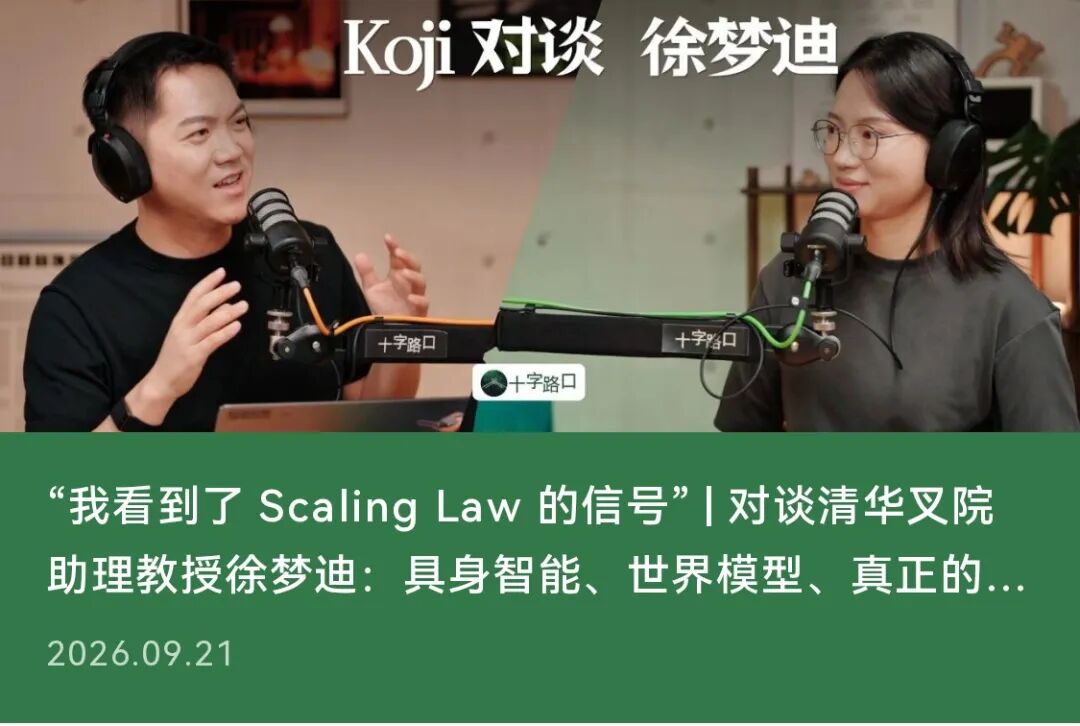
🚗 This is a "road podcast" — from Wuzhen to Shanghai, we caught up with our old friend Yan Wang while driving, to see what this heavy AI user has been cooking up in his work and life lately.
➤ This week's guest on Crossing might be the most aggressive AI adopter I know.
Yan Wang is co-founder of Superlinear Academy, holds a PhD from Columbia University, and has worked at Microsoft, Pinterest, and Samsara. He has AI write his code and run his content creator accounts; from medical decisions and insurance claims after his child got injured, to processing thousands of kindergarten photos, he delegates it all to AI. He put it this way: "With AI, I feel terrifyingly powerful."
In this episode, we discussed the full story behind the recently viral Jev, Manus, Grok Bot, and Muse — how they give AI a cloud computer that never sleeps. We also covered Yan Wang's "zero-person media company" run entirely by AI, which hit 5,700 followers in six months. Finally, we turned to a more interesting question: In the AI era, what abilities and what kinds of people get rewarded most?
Listen on WeChat:
Listen on Xiaoyuzhou:

🎬 Video podcast now live on Koji's WeChat Channels, Xiaohongshu, Bilibili, YouTube, and other platforms
👦🏻 Koji
Today's a road podcast. I picked up Yan Wang in Wuzhen and we're driving to Shanghai in a Li Auto i8, with most of the route handled by autonomous driving.
We've talked about OpenClaw and Manus before. In the past six months, what new products, launches, or technical breakthroughs have caught your attention?
👨🏻💻 Yan Wang
Jev has been blowing up lately. It's genuinely interesting packaging, though I also have plenty of gripes.
👦🏻 Koji
Should we start with the good or the bad?
👨🏻💻 Yan Wang
Actually it's all good. There's a lot to learn from it. The misconceptions people have don't mean the thing itself is bad.
Is Jev Actually New Tech, or Just GPT + JSON Mode Repackaged?
👦🏻 Koji
We're recording this 72 hours after Jev's launch. What was your first impression?
👨🏻💻 Yan Wang
My first thought: isn't this just GPT with JSON Mode? After digging in, it basically is.
This needs to be viewed on two levels. Technically, it's very close to JSON Mode.
Let me first explain what Jev actually does for those unfamiliar:
First, it's not a conventional LLM. It can't output freeform text. It only does classification. You give it a few options, it tells you which is most likely and with what confidence. That's all it does.
The upside is it's extremely fast and cheap. Its probabilities are calibrated — unlike regular LLMs that constantly hallucinate confidence, claiming 95% when it's actually 30-something percent. It also separates confidence from probability entirely, giving two distinct numbers. This makes it very easy to integrate into automated systems across various scenarios.
But in terms of applications, I struggle to see fundamental differences from ordinary JSON Mode.
Similar Products Existed a Decade Ago — Why Did Jev Blow Up Now?
👦🏻 Koji
So why did it get so huge?
👨🏻💻 Yan Wang
While there isn't much revolutionary innovation technically, the fact that it blew up is itself a fascinating case study — absolutely not just hype.
Similar ideas have been tried by at least four or five waves of companies over the past decade, including Google, OpenAI, and Mistral, all of which released so-called Classification APIs that only did classification. Why did those products get abandoned and forgotten, while Jev suddenly took off today?
I see three reasons:
First, foundation model capabilities have actually arrived. It used to be unthinkable that a tiny model could achieve high intelligence without fine-tuning. If you look at the Artificial Intelligence Index, GPT-4o scores 8 points, while the previous generation's Qwen 3.5 4B — a micro model with just 4 billion parameters — already scored over 20. Micro models have crossed the usability threshold, practically crushing GPT-4o. I even suspect somewhat maliciously that when they claim to have spent two years in stealth, much of that was waiting for the underlying foundation models to mature.
Second, market demand has actually exploded. Classification used to be mainly for tagging and relatively low-level tasks. Now with the Agentic concept mainstreaming, token consumption has skyrocketed, and everyone's become extremely cost-sensitive. There's urgent need for low-latency, low-cost solutions for high-frequency classification — the market has been created.
Third, the packaging is exceptional. If they'd marketed it as "OpenAI released an API three years ago that died, and we rebuilt it," nobody would care. Instead they packaged it as "System One Classifier," defined previous LLMs as System Two, and claimed this is a paradigm shift. Borrowing the theoretical framework of a Nobel Prize-winning economist, they created a cognitive shock for the public. Plus the author is a co-author on foundational papers like InstructGPT — the PR effect was maxed out.
Two Most Noteworthy Scenarios for Jev
👦🏻 Koji
So in your view, this is both a marketing victory and a victory of technical conditions reaching a boiling point. Among the application scenarios you've seen, what's impressed you?
👨🏻💻 Yan Wang
Mainly two.
One is Browser Use or Computer Use. The previous approach was taking a screenshot for the large model, which consumed massive time and tokens to understand the image before outputting instructions. If you reframe this as a classification problem suited to Jev's strengths — give it a DOM tree, ask which element to click next, or even use cascaded classification to first locate the broad framework then grab the specific button — the perceived speed improves 10x, and it's incredibly cheap.
But let me pour some cold water here: two things changed — the interface shifted from image multimodal to DOM tree pure text, and freeform text became classification. Which change brought the biggest performance gain still needs more ablation studies to determine. But regardless, they've carved out a viable path to control computers quickly and cheaply.
The second scenario is something people use every day without realizing — the harness classifier. In environments like Codex or Claude Code, every time the AI proposes a tool call, say executing a file deletion, the underlying harness first runs a classification: is this operation dangerous? Dangerous gets blocked with a warning, safe gets approved.
Every tool call goes through this review. This classification happens at extreme frequency, with brutal demands on latency and cost. Popular commercial harnesses all have proprietary lightweight classifiers. Judging danger requires deep contextual understanding — it's essentially already a general classifier. Previously only a few major tech companies could make this module both fast and light. Now open-source projects can use Jev to port this capability at low cost.
👦🏻 Koji
Why did Jev need two years of training? Is it really that hard? Many open-source projects came out in 24 to 48 hours.
👨🏻💻 Yan Wang
The official claim is two years of training. I specifically checked papers, patents, whitepapers, open-source code, and datasets — found nothing.
I suspect most of those two years were trial and error and waiting. Not that they lacked capability, but this problem required the underlying foundation model base to mature first — standing on the shoulders of giants to make it work.
Much of those two years was spent waiting.
👦🏻 Koji
ChatGPT with JSON Mode has always been available, but application entrepreneurs didn't necessarily have the awareness to explore what further innovations were possible. Jev's wave of hype makes everyone feel they can brainstorm and potentially unlock new application scenarios?
👨🏻💻 Yan Wang
People didn't use JSON Mode before, not because they couldn't think of it, but mainly because it was too expensive. But recently the entire underlying cost logic has shifted.
Models like GLM-5.3Flash and DeepSeek-4.1Flash are priced extremely low, making them incredibly cost-effective for data cleaning and tagging. I previously worked on a tour guide project covering dozens of cities nationwide, burning through 40 billion tokens daily. Running it on Sonnet would have cost $12,000; with DeepSeek Flash it was $300. Once the cost barrier breaks, scenarios that were previously unthinkable suddenly become viable.

Another major factor is local deployment. Qwen 3.5 4B already outperforms GPT-4o, and running it locally on a Mac or consumer-grade RTX 4090/5090 means costs basically drop to electricity alone.
Someone in the open-source community used Qwen for read-only operations, extracting logits directly. Without any fine-tuning or training whatsoever, they reproduced Jev's Benchmark at 85% accuracy — compared to Jev's official 88%. That an open-source small model can achieve this while dancing in such heavy shackles suggests vast potential for ultra-low-cost application ecosystems.
When Everyone Owns a Cloud Computer That Never Powers Off
Koji
Besides Jev, what other new products or releases have excited you lately?
Yan Wang
I'd look at it along two dimensions. Some new models and capabilities are genuinely fun to play with, but at the macro methodology level of using AI, nothing fundamentally has changed.
One thread that genuinely excites me is "giving AI a computer."
Early on, Cursor released Cloud Agent — connect to GitHub, spin up a VM, pull down code, make changes, submit a PR. But it was stateless; every process got destroyed after running, with no persistent memory.
In April 2026, Manus launched Cloud Computer, with a VM that never shuts down or gets destroyed — credentials, runtime state, and memory all persist. In August, Grok released Grok Bot; in September, Meta released Muse. Everyone's following this thread.
This form factor matters because the old model was too programmer-centric. Ordinary people can't maintain cross-cycle memory through git pull and PR workflows. If you actually give AI a persistent computer, it can handle much more everyday life stuff — booking flights while remembering the identity info you filled in last time, opening Dianping without needing to scan a QR code to log in again. It's similar to OpenClaw, but eliminates all the friction of buying a Mac, leaving it running 24/7 at home, and configuring intranet penetration.
Koji
I often see people on the street clutching MacBooks, afraid to shut them down — you can tell they're Claude Code or Codex users.
Yan Wang
Right, that's the first trend.
On the capabilities front, GPT-6 Astra genuinely blew me away. I've done a lot of 3D experiments with it. For example, I sculpted a 3D Psyduck [1], rigged it with bones, turned on my camera to film myself, and the Psyduck on screen dynamically synchronized with my body movements — basically low-cost motion capture, directly prototyping a VTuber pipeline.
Previously, making a vtuber model was an entire precision industry: modeling, texturing, joint rigging, motion mapping — extremely high technical barriers and time costs. Now with GPT-6 Astra, I described what I wanted end-to-end in a few sentences, and it handled the entire pipeline for me. I also open-sourced a GPT 3D Skill [2] — tell GPT what character you want, and it generates it for you.
Koji
Sounds like you could even make two virtual avatars for a podcast to perform in place of real people?
Yan Wang
Exactly. This is a microcosm of foundation model capabilities toppling an entire industry. Not that it fully replaces everything, but the speed of evolution is genuinely exciting — surprising, and impressive.
AI Evolves from "Vocational School Graduate" to "Undergraduate"
Koji
On one hand, giving individuals persistent cloud computers; on the other, continuous breakthroughs in foundation model capabilities. But you feel there's no fundamental change in how individuals use AI — just rising water levels of capability?
Yan Wang
Don't treat AI as a cold, impersonal tool. It's more like a person.
It makes mistakes; you need to review its work. You need to clearly communicate intent and explain delivery standards. These principles are no different from managing a team.
What's changed is that this person got stronger. Before it was like managing a vocational school graduate; now it's like managing an undergraduate. Stronger capabilities, but the essence of management remains unchanged: clarify tasks, set boundaries, verify results.
Koji
Two years ago on the podcast, we had an episode with Sen Dai titled "Large Models Are Still Elementary Schoolers — Don't Rush to Put Them to Work." Now they're undergraduates?
Yan Wang
They're genuinely impressive now.
Recently my kid dislocated their elbow at kindergarten — medically called nursemaid's elbow — from being mischievous and pulling away from the teacher. Came home crying in pain, and the school sent an injury report too. As parents, we had zero experience with this kind of emergency and no idea whether to rush to the ER.
We immediately asked AI. It interrogated details, judged it was most likely nursemaid's elbow, listed out the mechanism and symptoms to verify one by one — all matched.
We asked whether to wait for self-healing or go to the ER. American ERs are expensive and time-consuming, and it was storming that day. AI clearly advised against the ER — go to the lower-tier Urgent Care instead; it searched nearby facilities, recommended Seattle Children's Hospital, and urged us to go immediately because nursemaid's elbow doesn't self-heal, and delaying only prolongs suffering. At the hospital, the doctor would do a manual reduction — one quick maneuver, no shots or meds needed.
Got to the hospital; the doctor's assessment matched exactly. One click of the reduction, done, home immediately.
This hit me hard. I never expect AI to replace doctors, but it can fill in extremely dense, critical information in the decision chain and shoulder the logistical grunt work for parents — when everything's chaotic, helping you check which Urgent Care has good reviews, which still has appointments. AI strategically characterized the problem and tactically mapped out the path.
Koji
Any twist after that?
Yan Wang
No twist, but that was only part one of the story. Part two was insurance claims.
First run through our own health insurance, then get the school to reimburse out-of-pocket costs above the deductible. The entire process was packed with specialized insurance terminology and complicated documentation requirements.
AI had already absorbed all the context from the earlier consultation — the full medical history, the treating hospital, and the insurance policy details. Asked it to compile a claims package; everything got aligned quickly. I connected AI to my email system, and it fully took over the email flow: reading school replies, supplementing bills per requirements, identifying recipients and CCs, scheduling replies to push things forward.
The only human intervention needed was phone calls. The other side dragged their feet on sending checks — you had to call and prod them, then they'd move. Once the check arrived, AI archived the entire case completely.
Part three: another kid in the same class got bitten, and the parents wanted to claim from the school too. I had AI pull up the entire claims path from last time and directly generated two documents: one for humans, clearly explaining the logical steps; one for the other parents' Agent, letting the machine directly run the email flow. The other parents got the documents and immediately ran through the process.
Two insights from this:
First, context is severely undervalued. With sufficient context, AI can send emails on your behalf and make high-quality decisions. Without context, asking a generic chat window "my kid's arm hurts" only gets you the safest, most correct useless answer: "go to the hospital" — zero practical value.
Second, manage AI like a secretary. Truly mature managers don't do hand-holding; they build systems, design incentives and feedback loops, and precipitate sustainable, self-running SOPs. The highest level of using AI is when the entire system keeps running autonomously while you're not there.
"With AI, I Feel Terrifyingly Powerful!"
Koji
You once said something deeply memorable: that AI makes you feel "terrifyingly powerful." In what moment did that feeling hit?

Yan Wang
Every single link I just described gave me that intense feeling.
A year or two ago, if my kid had a sudden injury like this, I'd have been completely overwhelmed. Now it's like carrying an elite team in my pocket: a secretary handling all logistics, a private doctor doing initial triage, a legal assistant reviewing insurance policies and drafting documents and tracking emails, plus a clerk rapidly replicating the experience for others.
This is essentially a 24/7 online professional dream team surrounding you, infinitely replicable. I have 100 miscellaneous tasks, I can dispatch them to 100 dedicated secretaries — provided I know how to manage them. Many business owners find AI useful precisely because they're already familiar with delegating tasks to assistants and setting rules.
Koji
After your Columbia PhD, you worked at Microsoft, Pinterest, and Samsara, and recently you've been on a gap. Why gap? Is this related to AI?
Yan Wang
The main reason is honestly that at 35, working 8 hours at high intensity every day is genuinely exhausting.
But it's absolutely related to AI. I rely on AI at extremely high intensity for work normally — it handles all repetitive manual labor, leaving only high-concentration mental work piled on me. Work intensity hasn't decreased; it's increased.
I used to fantasize about AI attending meetings for me while I wrote code — writing code was so enjoyable. Reality completely inverted: AI writes all the code now, forcing me to attend meetings and make judgments instead. Utterly exhausting.
Koji
Writing code easily enters flow state — it's a deep relaxation. AI stripped away that joy. Like that viral article last week from a DeepSeek researcher, "I Had to Bury My Talent in Yesterday" — pretty melancholy to read.
Yan Wang
Too much mental exhaustion, so I decided to take a complete six-month break.
Another reason: after two-plus years of high-intensity AI use, I've discovered that the vast majority of people use AI completely wrong. Using AI well is fundamentally not a technical problem but a management problem. If I can popularize the right management mindset, the societal value would be enormous. So after the gap ends, starting October, Ke Daibiao and I are going full-time on Superlinear Academy [3], focused on AI cognition and implementation education.
Koji
You've been in China for almost a month now, traveling around. Any impressions?
Yan Wang
My biggest feeling is that American consumers have it rough, while Chinese consumers are genuinely happy. What a extremely ordinary Chinese restaurant in Seattle costs could almost get you a full Michelin-star experience in China, with excellent service that's a dimension above.
Koji
A friend of mine who lives in San Francisco and came back for a month last summer had similar feelings. Everyone says AI普及后 can free up more time for consumer entrepreneurship, but after returning, they found material life already abundantly satisfied — not exactly a field of ruins waiting to be rebuilt. They felt that after humans are satisfied in both material and spiritual terms, what's missing are three things: relationships, memories, and emotions.
Yan Wang
Makes complete sense. More time should be reserved for yourself. Let AI handle work; life must be lived by people themselves.
A One-Year Experiment in Giving AI Eyes and Ears
Koji
Last time we recorded, you mentioned giving AI ears and eyes — collecting context from your life 24/7. How's that experiment going?
Yan Wang
Partially ongoing, but also an admitted failure on one front.
I tried using a body camera to take massive amounts of photos daily to give AI eyes. Ran it for three or four months before stopping. I never found what irreplaceable incremental context those images actually provided.
But audio recording has kept running, especially work meeting recordings — absolutely core. The granular context accumulates, and later unlocks tons of things that were previously impossible.
But merely storing it is useless. AI can't naturally retrieve precise information. So I built two infrastructure layers for AI:
The first: daily recordings come in, get automatically transcribed to text via my open-source Intake Skill, then split into two indexing paths. One path learns from Yahoo — manual or model-assisted tagging and categorization, so you can look up major themes directly in a directory. The other path learns from Google — Semantic Search, using plain-text embeddings for semantic retrieval. AI can autonomously initiate local semantic searches based on the task to recover the conversational context from that time.
The second principle is "everything is a file." No need for complex vector databases or fancy memory layers. Manus published an article called Context Engineering that I think is worth a million dollars — it emphasizes that files are an extremely natural and fundamental abstraction. Modern large models are abundantly trained on file operation APIs. Paired with the command line, it's intuitive and efficient.
I've always opposed force-fitting MCP just to chase trends, or bolting on a memory layer for the sake of the concept.
Koji
If you use Grok Bot or Manus's cloud computer, do you need to sync local files to the cloud too?
Yan Wang
This is my core hesitation about large-scale cloud computer use. On one hand, context is hard to migrate seamlessly; on the other, privacy and data security.
Many of my local models run in Zero Data Retention mode. I dare to feed in sensitive credentials and private keys — these records ultimately become part of context. On a cloud computer, many plaintext credentials would be readable by the cloud. That's something I'm unwilling to accept.
Koji
I recently used a WeChat plugin that backs up chat logs locally for Codex to read anytime — genuinely a massive boost, context enriched tremendously. If I can get attendee lists before a hundred-person event, having Codex check who I've crossed paths with or who are second-degree connections often produces delightful surprises.
Yan Wang
Extremely valuable. Last time we recorded OpenClaw content, everyone dropped materials in a WeChat group. After the agent connected to chat logs, it brainstormed in the background. Before we even opened our mics, the outline had already taken shape from agent discussions.
A "Zero-Person Company" Media Operation
Koji
Actually, I've been wanting to launch a series of offline events at Crossing — getting people together to discuss how to use the latest AI tools. Because Picasso said something: when art critics gather, they discuss artistic styles and movements; when artists gather, they only discuss where to buy cheap turpentine. We could launch a series called "Turpentine," exchanging tips on where to buy cheap tokens and how to maximize tool capabilities — whether Codex, Grok Bot, or ChatCut.
Your site yage.ai now operates like a media outlet, with content synced to X and newsletter, all automatically maintained and updated by AI behind the scenes. Isn't this a textbook "zero-person company"?
Yan Wang
It really is.
Students constantly ask where to find the latest reliable AI news. The media landscape is uneven, and I can't spend hours daily gathering, writing, formatting, and driving traffic.
Having AI do it sounds simple; execution is brutally hard. The underlying logic is determined by how large models are trained:
Phase one, pre-training: the core objective is next-token prediction. Its instinct is to extract "consensus" from massive data. Consensus inherently carries no excess value, generates no alpha. If you take an out-of-the-box model and have it write articles, you get correct but empty verbiage throughout.
Phase two, alignment: for safety and to cater to human preferences, models are conditioned to become increasingly moderate, conservative, and balanced. Someone with an extremely sharp personality like Steve Jobs or Elon Musk would likely get filtered out in round one of the alignment mechanism.
If you directly use an out-of-the-box model to run social media, the content is destined to be mediocre, reeking of plastic AI.
Koji
So what do you specifically do?
Yan Wang
To get insightful output, you must force AI out of its comfort zone. The core remains injecting context — specifically, high-level human thinking models.
Take technical research as an example. Ask a generic AI to look up Jev, and it'll grab a bunch of news, objectively list principles and features, then pile on disclaimers like "needs objective perspective, don't be extreme."
But if the model has my thinking context, it'll reflexively ask the same questions I would: did you do horizontal comparison? Did you look at vertical history? Horizontally — what alternative paths exist, how are competitors doing it? Vertically — what iterations has this technical form gone through over the past decade, why did it fail before and suddenly succeed now? Feed it this skeletal framework of thinking, and AI can excavate insights from completely different dimensions.

Readers seeing its articles feel the depth and voice are completely un-machine-like, because high-density thinking logic is fed in behind the scenes.
Koji
This zero-person media operation — how many followers has it accumulated?
Yan Wang
Two main distribution channels:
One is the newsletter, automatically reviewing and pushing two to three pieces of deep content daily. In about half a year, purely organic growth from zero to over 1,600 subscribers.
The other is X, currently with over 5,700 followers. Even going to X was AI's own suggestion — it taught me to register a premium account, use Typefully for scheduling. I haven't personally written a single tweet; topic selection, copy, formatting are all automatically completed by AI.
Midway, it discovered it couldn't tell whether new traffic came from X, email, or my casual WeChat forwards. It built its own UTM-based tracking system: links posted to X automatically append proprietary tracking parameters to compare conversion rates. It quickly concluded that newsletter audience stickiness far exceeds shallow X traffic, and reverse-adjusted its writing style and traffic-driving strategy — fully achieving a self-improving closed loop.
What I do isn't teaching it to write, but giving it "eyes" and "hands." Hands are the ability to call APIs and post autonomously; eyes are Google Analytics, Google Search Console, and social media analytics backends. With complete data input, it can summarize SOPs itself and continuously optimize. If it writes too much like a top-three conference paper, I send it back with harsh feedback; it adjusts immediately based on negative signals.
Koji
It doesn't just collect and organize information — sometimes it outputs opinions. Can its opinions represent you? How does it know your stance?
Yan Wang
Completely representative.
Its inputs are all my past blog posts, real WeChat chat records, and direct preferences I express in daily interactions with it.
I've open-sourced this opinion-distillation skill on GitHub. It can systematically digest a person's historical statements and extract underlying values and thinking frameworks.
I ran a test: scraped over a hundred episodes from Douyin's "Brother Yong Talks Catering" and transcribed them to text. Brother Yong is a ground-level practitioner, teaching people to open restaurants with extreme practicality. After AI digested this content, it distilled 20 profoundly practical site-selection logics — like foot traffic itself doesn't matter, pedestrian flow patterns do; a school entrance separated by an opaque fence, looking close at hand, is absolutely no place for a breakfast stall. This is essentially distilling a practicing expert's brain for highly professional Q&A.
Anyone can use this skill to distill themselves, their boss, or a colleague they dislike.
Koji
You also wrote before that after having AI help with content, what it wrote not only had opinions, but seemed even more stanced than yourself.
Yan Wang
Often not necessarily more stanced, but it has a gap-filling effect.
AI itself tends toward moderation, speaking with restraint. You need to push it to write with more stance. But yes, I feel AI is the big brother — thinks deeper than me, so chatting with it often yields lots of inspiration. It has taught me many things.
Koji
For example, the most recent inspiration?
Yan Wang
While preparing for this interview outline, I kept sorting through what the bottom-line logic of context is after using it so long.
AI turned around and enlightened me. It abstracted this logic as a "system for AI to consume context," composed of three key loops:
First, low-friction collection and accumulation of context;
Second, enabling the model to actually consume this context during execution;
Third, output results re-depositing as new context, forming a self-reinforcing compounding loop.
It explained this mechanism I used to call Context Infrastructure more clearly and thoroughly than I could myself.
Koji
Back to yage.ai — is this media outlet making money? Do you think a zero-person company, a one-person company, can work as a real business? Or is it still just an experiment?
Yan Wang
It has indeed generated revenue, but not through the media outlet's own commercial monetization closing the loop.
Ke Dai Biao and I have a mature commercial system, Superlinear Academy. Students seeing this system run from zero to thousands of followers in the real world — the commercial value is self-evident. It became an extremely persuasive case study, which in turn fed back into our education business. It hasn't independently run through native commercialization on its own.
From the perspective of a one-person company, AI can completely liberate mental labor, assembling a virtual team of experts for you. But the one thing it still can't replace is the ability to break through in real commercial society: discovering hidden needs, closing business loops, finding real customers, and delivering real commercial value. These still depend heavily on humans.
In the past, many people said, "I just need a programmer." These people have a huge advantage in the current era, because engineering execution has been largely flattened by AI. On the flip side, many programmers who only know how to code but lack commercial awareness and don't understand real business tend to develop an illusory confidence that technical knowledge equals AI proficiency — and they often end up at a disadvantage in the actual practice of running a one-person company.
👦🏻 Koji
What kind of people do you think the AI era will reward?
👨🏻💻 Yan Wang
First, people who already possess domain expertise — whether that's understanding vertical businesses or business models.
Second, people who know how to "manage AI." AI is an amplifier. If you don't have the managerial mindset to begin with, throwing more resources at it won't produce any amplification.
Managing AI is fundamentally different from managing people.
When managing people, half of a leader's energy goes into painting visions and emotional massage — the core is stimulating human emotion and self-drive. AI, by nature, follows instructions. Zero emotional drain. It doesn't need any pep talk before giving its all to complete a task.
But managing humans emphasizes "internalization" — embedding ideas into their very blood. Managing AI requires "externalization": all context, logic, boundaries, and acceptance criteria must be laid out in explicit documents and prompts.
What will truly create distance in the future is who can externalize their own cognitive system into structure to efficiently manage AI.
👦🏻 Koji
If others also master this set of prompts, skills, and workflows, can they replicate the same media presence and gain thousands of followers?
👨🏻💻 Yan Wang
The ceiling is absolutely reachable, but this stuff isn't plug-and-play.
I call this system "Old Duck Soup" or "Raising Crayfish." It's something I've slow-simmered using my own mental framework. If someone else just takes it, it's still my duck soup, not theirs.
You have to throw this process into your own actual business, see where it falls short of expectations, then feed your preferences and judgments back to the model, letting it precipitate new rule documents. Through repeated feeding and calibration, it gradually grows into your own doppelgänger. The process of raising and simmering matters far more than the code itself.
👦🏻 Koji
You mentioned earlier that AI hasn't necessarily helped you earn much more money, but it has significantly improved your quality of life. How specifically?
👨🏻💻 Yan Wang
Two very practical examples.
One was processing my kid's kindergarten photos. The school app had accumulated thousands of activity photos, but no batch export function. Manually clicking would take thousands of taps — even Computer Use would find it disgusting. I had AI reverse-engineer the app's web interface directly. It autonomously monitored Ajax, caught an undocumented private API, ran overnight, and scraped all thousands of photos. It then wrote a script to import them into Apple Photos, using the system's built-in facial recognition to automatically categorize everything.
Another was solving my sleep problem. There was a period when my sleep quality was terrible — only two or three hours a night. If you just ask AI why you're not sleeping well, you only get the correct but useless advice: quit smoking, quit drinking, exercise more.
To fill in context, AI guided me to write an iOS mini-program to read Apple Health data. I still found manual syncing annoying, so it taught me to set up an Automation in Apple Shortcuts. Through a Deeplink, it automatically triggers a sync every day, pulling historical data from Apple Watch, smart scale, and continuous glucose monitor back to my computer — fully automated.
👦🏻 Koji
The reason you're using WHOOP now is because it has an official API, so Codex can grab health data on a schedule every day. Apple Watch is relatively closed off, so you had to use this more roundabout method. After getting this data, what sleep advice did it give?
👨🏻💻 Yan Wang
With high-density, multi-dimensional data in hand, AI ran a multivariable regression. I normally just tap my phone on an NFC tag to log how much coffee and alcohol I've had, so the data was quite complete. The model produced several counterintuitive conclusions:
First, caffeine intake had zero statistical correlation with my sleep duration. The data instantly falsified my guess that I needed to quit coffee, saving me a week of blind bodily experimentation.
Second, moderate alcohol showed slight positive correlation, but AI explained that while alcohol helps you fall asleep more easily in the first half of the night, you're more prone to waking in the second half. Long-term, it actually destroys deep sleep architecture.
Third, and the strongest correlated variable — the time of my last AI use at night. The later I chatted with it, the worse my sleep quality. Because using AI for work is extremely high-intensity parallel mental activity; my nervous system gets highly agitated. It recommended I completely stop using AI after 7 or 8 PM. I strictly followed this for a month, and my average sleep time directly increased by over an hour.
With AI, as long as you have a need, you can write an app matching your own hardware habits in dozens of minutes. Only then do humans truly become masters of their devices.
👦🏻 Koji
Like what specifically?
👨🏻💻 Yan Wang
I originally couldn't buy Huawei in the United States, so I was using Samsung's tri-fold phone. On it, I had AI write a set of OpenCode mobile interfaces specifically adapted for the tri-fold's unfolded state, deeply bound to local voice recognition engines. I've now almost completely脱离ed from computer keyboards. Most high-intensity interactions run entirely through voice on the foldable screen.
👦🏻 Koji
So you're definitely buying the iPhone 18 dual-fold?
👨🏻💻 Yan Wang
Absolutely must buy. Owning new hardware from a developer's perspective, you can completely let AI figure out which folding posture feels most natural, how to best use it in folded state — the playability is off the charts.
👦🏻 Koji
One more frequently discussed question: In the AI era, what abilities will become increasingly valuable, and what will depreciate?
👨🏻💻 Yan Wang
Coding speed, LeetCode proficiency, even conventional design ability — depreciating extremely fast. Design deliverables from GPT-6 or Fable-5 already steadily hit the baseline of senior junior work.
What's truly becoming more valuable is organizational and architectural ability — how to build context for AI, design evaluation frameworks, construct self-iterating closed loops.
Another extremely scarce ability is clearly and accurately expressing your true intentions. In reality, the vast majority of people can't articulate what they actually want at all. This expression deficit gets glossed over in human collaboration, but gets infinitely amplified when using AI, directly determining the ceiling of capability.
👦🏻 Koji
Then how do you train the skill of expressing your needs clearly?
👨🏻💻 Yan Wang
I believe there are ways to improve it. It's itself a well-defined problem, perfectly suited for drilling with AI. Discuss with AI: what do you find unclear about what I just said? Or have it give you an example.
And as mentioned earlier, communicating with AI is quite different from communicating with humans. With humans, you have to think about so many things — will they misunderstand, what's the subtext, will you hurt their pride. With AI, you don't worry about any of that. You can curse at it constantly, no problem. The core is just getting key information transmitted precisely. Managing AI is even simpler than managing people.
👦🏻 Koji
Yan Wang has two kids at home, two and five years old. How do you plan to educate them in the AI era?
👨🏻💻 Yan Wang
The most important thing is letting them gain natural exposure to AI as early as possible.
I used a microcontroller and e-paper to make a low-power interactive board, so my kids grow up accustomed to interacting with AI through touch, electronic ink screens, and voice. Just as our generation learned pen and paper as children, their generation should treat AI as foundational infrastructure from the start.

👦🏻 Koji
Any fun stories from the kids using that microcontroller device?
👨🏻💻 Yan Wang
My older son likes listening to songs from the Netflix cartoon K-Pop: Demon Hunters, but he's not yet proficient at operating HomePod. So we encapsulated the logic into the e-paper panel, letting him interact precisely through specific gestures and voice. We set it to play for half an hour daily, balancing entertainment with regular routine.
None of us parent friends have done embedded hardware before. The entire microcontroller底层 code was written on the spot by AI. I packaged the documents and context and sent them to a friend, who also used Codex to assemble a character-recognition interactive device for their kid within two hours. The child now actively uses it to learn characters every day.
Another friend in Beijing uses two devices — one for the kid to see, one for parent control — and does creative work with their child, which is also quite interesting.
👦🏻 Koji
Among the students you've worked with, what common traits do the most outstanding ones share?
👨🏻💻 Yan Wang
The only commonality is extremely strong action orientation — absolutely never staying at the level of cognition and paper.
Learning AI is like learning to swim. You can never learn by just watching videos of others swimming. You have to physically jump in the water and choke on a few mouthfuls.
Outstanding students either build a demo and start collecting money directly in a vertical scenario, or rapidly embed the technology into their core business. Ke Dai Biao often says: if you want to make videos, don't keep asking how to grow followers — first honestly shoot 20 videos, then come talk. Learning AI is exactly the same. First get hands-on and run through a concrete real project. That beats reading a hundred industry analyses.
What Software Won't Be Destroyed by Vibe Coding?
👦🏻 Koji
Recent data shows the App Store has seen its first decline in software payment growth rates. People writing their own tools through vibe coding increasingly don't need to buy off-the-shelf software. Are there any software products you still willingly pay for, that won't be easily replaced by vibe coding?
👨🏻💻 Yan Wang
There are still many.
Take Office, for example. It relies on deeply entrenched collective consensus and collaborative ecosystems. An individual can't unilaterally break away from this consensus.
Another category is software where fault tolerance is extremely low, and the maintenance cost and security burden behind it are extremely heavy. I'd rather pay for professional team services. This is also one of the biggest lessons from my cryptography studies: never try to implement cryptographic things yourself.
👦🏻 Koji
I heard the 1Password team has 1000 people?
👨🏻💻 Yan Wang
That many! Their efficiency may not necessarily be high, but hearing that number is still quite shocking.
👦🏻 Koji
👦🏻 Koji
Let's make a cyber-wish: if we talk again a year from now, what's the one thing you most hope will have come true?
👨🏻💻 Yan Wang
I most hope that Context Infrastructure will have truly taken over more complex enterprise execution and cross-organizational collaboration.
Amazon places enormous emphasis on Leadership Principles — things like Bias for Action. Trying to instill that mindset through all-hands meetings and cascaded messaging is incredibly difficult; plenty of people still hesitate and pass the buck.
But if the executing agent is AI, implementing a set of principles becomes as simple as tweaking a prompt or injecting a core Markdown rule. On the dimensions of certainty and instruction-following, AI has a dimension-crushing advantage over humans.
In terms of collaboration, when my class rep and I work together now, our respective Agents typically take draft documents and review them back and forth over email, debating and aligning on details. Then we humans give it a final glance to set the tone and make the call — and it's done.
If you scale that pattern to the organizational level, future corporate architecture, collaboration structures, and performance evaluation records would all evolve into purely AI Native structures. The efficiency gains would be qualitative.
I hope that in a year, I'll have genuinely figured out this organizational-level paradigm for Context Infrastructure.
👦🏻 Koji
Is there anything AI still can't do right now?
👨🏻💻 Yan Wang
Embodied Artificial Intelligence in scenarios involving personal safety — I still can't fully trust that. For example, having a robotic arm do my makeup and eyeliner: if it malfunctions and pokes my eye out, the cost is simply unbearable.
Another is any step with irreversible consequences, like skipping human review entirely and distributing speech across the entire internet. But my acceptable boundaries keep slowly expanding. Six months ago I didn't believe in zero-person self-media at all; now I've got it running smoothly.
👦🏻 Koji
How did the highway podcast feel?
👨🏻💻 Yan Wang
Really interesting — it was also our first time recording face-to-face, and I think it came much more naturally. Before, on Zoom, on camera, I could see the outline.
Now I can't see my cheat sheet. But the good news is I prepared thoroughly, so I was still able to say everything I wanted to say.
👦🏻 Koji
We drove all the way to Shanghai today, and this highway podcast happens to wrap up right here. Thanks, Yan Wang — looking forward to coming back and fulfilling the wish.
👨🏻💻 Yan Wang
Thanks, Koji. After making a cyber-wish, you definitely have to come back and fulfill it. See you in a year.
References
[1] 3D Psyduck: https://grapeot.github.io/psyduck-demo/
[2] GPT 3D Skill: https://github.com/grapeot/gpt_3d_skill
[3] Superlinear Academy: https://www.superlinear.academy/
[4] Semantic Search: https://github.com/grapeot/semantic-search-skill
[5] yage.ai: http://yage.ai/
[6] Context Infrastructure: https://github.com/grapeot/context-infrastructure
Recommended Reading


Join the Membership Group