"You've got a shovel that can dig up gold — you're definitely not lending it out first" | A Conversation with Kaiwuji's Lu Ziheng: Using AI to Invent New Materials

As long as you're still stirring things up, there's still hope.
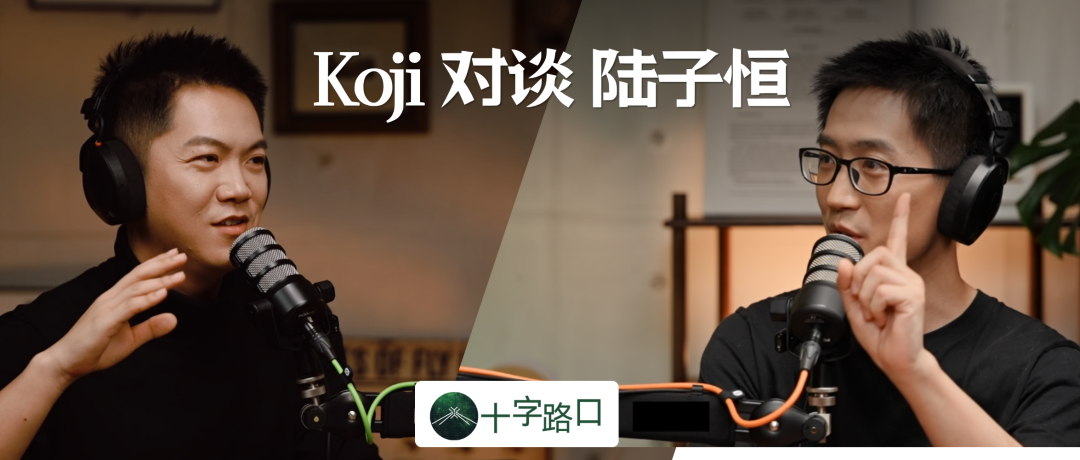
👦🏻 Podcast interview: Koji
🥷 Edited by: Crossing
🧑🎨 Layout: Zeoooo

🚥 This week, Crossing's guest is Lu Ziheng, founder of Kaiwuji.
Fresh out of the gate, they've already raised a nine-figure RMB seed round from an impressive lineup of investors: Monolith led the round, with Luminous Ventures and JAFCO Asia participating, while returning shareholders Hillhouse, IDG, BlueRun Ventures, Baidu Venture, and L2F LightSource Capital all doubled down.
Kaiwuji's mission is to use AI to discover and validate new materials that can "change the course of human destiny," then shepherd them from the lab to scalable production and commercial use.
Ziheng will walk us through: when we talk about AI inventing materials, what exactly is the AI "inventing," where are the bottlenecks, and how does commercialization actually unfold?
Ziheng also advises PhD students at Zhongguancun Academy, so we got into AI-era learning and talent: in a time when tools and paradigms shift rapidly, how should one learn? Is a PhD still worth it? And how do you know whether you're cut out for academia versus the front lines of industry?
Finally, though this episode centers on AI for materials, it offers lessons for anyone trying to apply AI to a vertical industry: from how to define the problem and accumulate high-quality data, to how to embed large AI models into business workflows and build sustainable delivery and commercial loops — these methods transfer across sectors.
More fundamentally, nearly every AI + vertical industry faces the same dilemma: when you've finally built a "shovel" capable of digging up gold (the model and capabilities), do you hand it to others, or pick it up and start digging yourself?
Listen on WeChat:
Listen on Xiaoyuzhou:
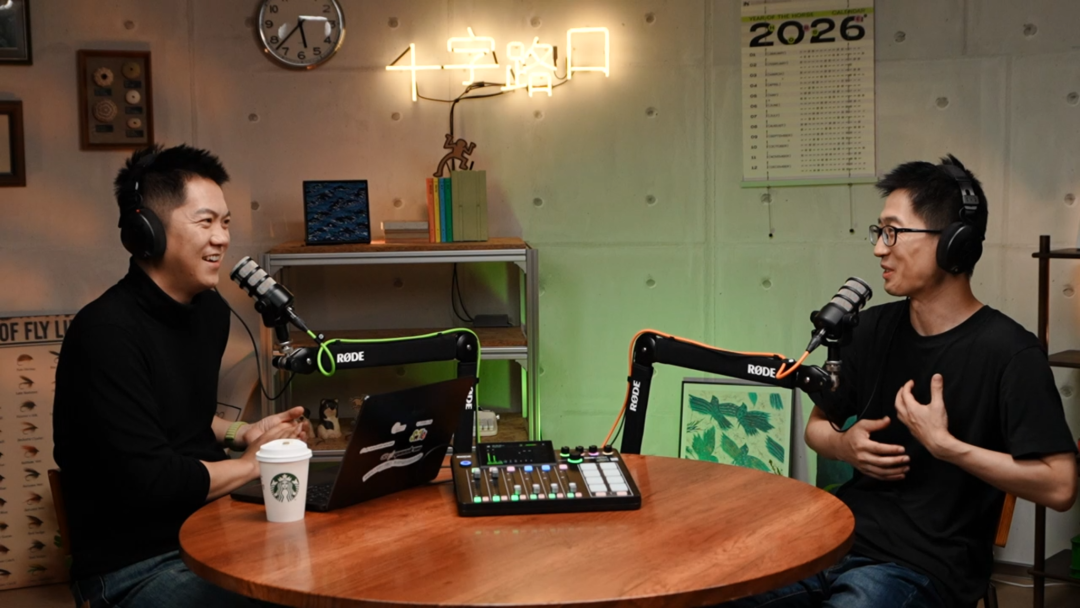
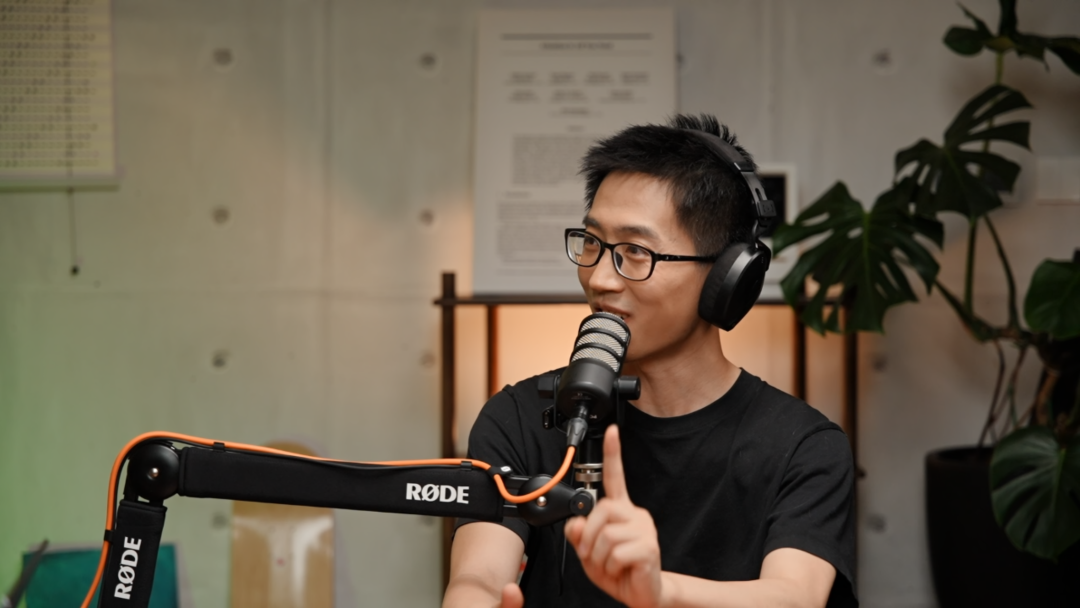
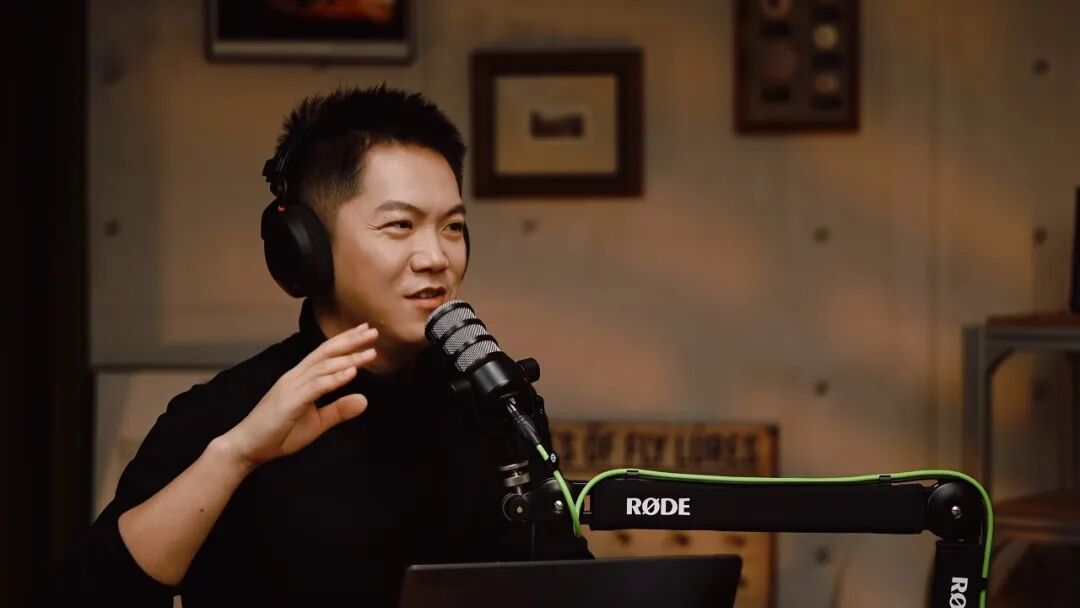
🎬 The video podcast is also live on Koji's WeChat Channels, Xiaohongshu, Bilibili, YouTube, and other platforms
Rapid Fire
👦🏻 Koji
Let's start with our old tradition — rapid fire — to help everyone get to know you faster. How old are you?
👨🏻💻 Ziheng
👦🏻 Koji
Where did you go to school?
👨🏻💻 Ziheng
Undergrad at Nanjing University of Science and Technology, PhD at HKUST.
👦🏻 Koji
MBTI and zodiac sign?
👨🏻💻 Ziheng
I know I'm an E on MBTI. Capricorn.
👦🏻 Koji
One sentence on Kaiwuji and what you're building.
👨🏻💻 Ziheng
Kaiwuji wants to use AI to discover new materials that can change the course of human destiny. We scale AI models for material discovery, mass production, and commercialization.
👦🏻 Koji
Any revenue or profit yet?
👨🏻💻 Ziheng
No, zero.
👦🏻 Koji
Team size?
👨🏻💻 Ziheng
About ten people.
👦🏻 Koji
How long since you registered the company?
👨🏻💻 Ziheng
Last September.
👦🏻 Koji
What were you doing before this?
👨🏻💻 Ziheng
Before starting up, I was at Microsoft Research, working on AI for Science. Meanwhile, China had established several national AI academies, and I was deeply involved — particularly in building out the materials track at Beijing Zhongguancun Academy.
I still hold a role there — chief materials scientist and head of the materials direction at Beijing Zhongguancun Academy.
👦🏻 Koji
Impressive, and you're still advising students. Ziheng, your funding round is unusually large — when the news broke, a lot of people were like "wow, incredible." What do you think people are actually betting on when they invest in you?
👨🏻💻 Ziheng
That's a great question. People investing in this space are largely seeing that a tipping point has arrived: over the past few years, model capabilities have advanced so dramatically that in the coming years, we might actually see materials emerge that change human civilization — that's our ideal.
More plausibly, we'll discover materials that push an entire industry or sector forward by a major leap. That's probably the underlying logic for many investors. Of course, some say they're betting on the team, and I'll take that too.
What Is a Material Worth?
👦🏻 Koji
Could you expand a bit on what we actually mean when we say "using AI to invent materials"? Especially for people with zero background in this field.
👨🏻💻 Ziheng
Another excellent question. What is a material? Back to first principles: it's just a bunch of atoms.
What we do, at its most fundamental level, is place atoms on a blank sheet of paper. Once placed, that's a material.
But the bar is high: first, the resulting structure can't be too high in energy — it has to be synthesizable, or it's just fiction;
second, it needs to possess the properties I require, and ultimately be manufacturable and commercially viable.
Fundamentally, it's a game of placing atoms.
👦🏻 Koji
Once you create this material, it becomes a kind of materials IP, right? Can you talk about the most lucrative materials IP in history? Was it something the general public would know?
👨🏻💻 Ziheng
A few examples. Going back a bit — single-crystal silicon. All of AI, all of computing, really traces back to that one crystalline material.
What's that material worth? The wafers themselves are extremely valuable.
👦🏻 Koji
Even Silicon Valley took its name from "silicon."
👨🏻💻 Ziheng
Silicon Valley, exactly. More recently, in 2011, a few Japanese scientists discovered a material made of lithium, germanium, phosphorus, and sulfur. This material has a particularly unique property: it's a powder, but when compressed into a pellet, its texture is somewhat like this table — fairly hard.
Yet it's hard to imagine that lithium ions shuttle through it at roughly the same speed they move through water. What does that mean? Passing through a solid wall is difficult, but swimming through water is easy. This one unique property essentially launched the entire solid-state battery industry.
👦🏻 Koji
In that process, how much commercial value can it capture?
👨🏻💻 Ziheng
Another great question. Solid-state batteries themselves aren't fully commercialized yet, but in the BOM (bill of materials), this component likely still accounts for a significant share. As of around this time last year, it sold for roughly 700,000 to 800,000 RMB per ton — fairly expensive.
👦🏻 Koji
So how do the scientists who invented this material participate in the value capture? What does that business model look like?
👨🏻💻 Ziheng
This is something we care deeply about. At that point in time, those scientists were at Tokyo Tech, and they were essentially "kept" by Toyota. Toyota funded them from the earliest stages, so at minimum their research was free, and I imagine they achieved personal financial freedom as well.
👦🏻 Koji
So now we're using AI to search for similar new materials. Historically, people found these through other methods. To date, are there any proven cases of AI-discovered new materials?
👨🏻💻 Ziheng
AI-discovered materials do exist. During our years doing fundamental research at Microsoft, we found some ourselves. A few have been validated by others — certain crystalline materials in thermal management, for instance. Some we've validated ourselves.
However, looking at AI-discovered materials so far, they tend to carry significant scientific weight but may not yet have reached the commercial value needed to transform an industry.
At our company, two things are interesting. First, we're doing very frontier large-scale AI research alongside fundamental materials science research.
Second, this business model hasn't really been done before, so we're also figuring it out — searching for that category of original IP capable of generating massive commercial value.
👦🏻 Koji
I'm actually surprised by this — the people discovering new materials are mostly in research institutions? There's no dedicated commercial organization whose sole mission is discovering new materials?
👨🏻💻 Ziheng
To my knowledge, if that's the pure mission, I'm not that aware of one. You see, materials R&D actually splits into two phases.
Phase one is discovering the original compound, or original IP.
Phase two is scaling the process for that substance, and after that it's just selling.
You'll notice that historically, most commercial companies have been extremely strong in phase two. They do phase one too — companies like Dow and BASF work on some organic materials — but companies fully focused on this kind of cutting-edge original IP seem rare. The vast majority happens in universities and research institutes.
And here's a particularly interesting phenomenon: these blockbuster IPs tend to come from a tiny handful of people — one person can produce several, while others can't produce any. Take Goodenough: there aren't that many main materials in lithium batteries, but he personally created four or five, and all of them were quite different.
I don't know why he was so smart. This is also what we're trying to change: I'm not that smart, but I want to make AI that smart.
👦🏻 Koji
Grooming a bunch of AI-powered Goodenoughs?
👨🏻💻 Ziheng
That would be presumptuous.
👦🏻 Koji
After starting Kaiwuji, did you settle on a primary focus? Like, have you placed any bets on which direction the most life-changing material over the next decade might come from? Batteries, thermal management, PCBs, or something else?
👨🏻💻 Ziheng
That's an excellent question, and it actually touches on two domains. One is commercial viability — what can make money, what can actually get adopted, what people are willing to pay for. That's not purely a scientific question.
The second is that some materials might not be profitable in the near term, but could transform human civilization. Both categories are our targets. Put simply: one is "I want to get rich," the other is "I want to show muscle" — prove to the world that we can do this, that the world is about to change.
I'll be a bit vague about the first category — the things that can really make money, we definitely can't disclose. But the directions we're looking at include energy, first and foremost. Look at AI — its fundamental driver is energy, and ultimately what it comes down to is energy. There have to be opportunities there.
Those idealistic, dream-like materials — superconductors, for instance — are connected to this. So are first-wall materials for nuclear fusion. These kinds of materials have both commercial value and represent the pinnacle of human civilization. We're looking at all of them.
The second direction: around the Suzhou-Wuxi-Changzhou region, there are many chemical companies. Take adhesives, for example. Those giant spherical tanks on cargo ships that transport methane and natural gas — under extreme low temperatures and extreme high pressure, they need to be coated with a layer of adhesive. That stuff has incredibly high value-added and is a "chokepoint" technology. I'm just giving one example.
This category of high-value-added products with technical bottlenecks — that's also something we pay attention to.
👦🏻 Koji
Historically, have companies making these kinds of high-value materials become cross-category platforms, or do they stay focused on single products — like only doing adhesives, or only a certain energy material?
👨🏻💻 Ziheng
If you trace back every major materials company, whether current giants or newer profitable ones, they basically all started with a single product. Take polyimide — that was DuPont and a few others. Or nylon 66 — they all built their business on one category first, then leveraged their capital advantage to gradually evolve into multiple categories.
👦🏻 Koji
I used to work in consumer brands, and when I researched mattresses and pillows, I discovered that what adults used to call "dacron" when I was a kid was actually a DuPont material called Dacron, a type of polyester. That material also made DuPont a lot of money.
👨🏻💻 Ziheng
Exactly, that's the type — back then it was one big hit product that suddenly exploded. That's the kind of single product we want to build, hopefully.
The Flagship Pioneering of Materials
👦🏻 Koji
What would you compare your company to? A pharmaceutical company in the materials world? TSMC? AWS? ByteDance?
👨🏻💻 Ziheng
When we started out, we thought one fund was particularly fascinating: Flagship Pioneering. They mainly incubate drug pipelines, taking them from the very first lead compound all the way through clinical trials to commercial sale.
Most of their pipelines end up dying. But the ones that succeed don't just become a drug — they become towering, standalone companies. Everyone knows Moderna, for instance.
If Flagship could pull this off in pharmaceuticals, could we do something similar in materials? Incubate a few towering companies.
Of course that's the ideal. But only something at that scale could live up to the high expectations people have for this industry. It's difficult, but worth doing.
👦🏻 Koji
To become that kind of company, what do you ultimately deliver? Material patents? A full R&D pipeline? Do you have some vision for this already, or are you figuring it out as you go?
👨🏻💻 Ziheng
"Figuring it out as we go" describes our state better. Our current thinking is that we'd like to walk the full path ourselves, at least complete one full journey. Building tools, building models — it's like having a shovel that can dig for gold. If I can actually dig up gold, I'm definitely not going to hand the shovel to someone else first. I need to dig for myself.
Also, this industry desperately needs an example of someone going from start to finish, punching all the way through, so that people recognize this stuff actually works. Only then can you talk about becoming a platform company.
So on this point, our current preference is probably that at some point, either I or part of our team needs to become the factory manager, needs to go sell materials.
👦🏻 Koji
When you spotted this entrepreneurial opportunity, what signals did you see?
👨🏻💻 Ziheng
For the past two to three years, we've spent most of our time developing models. Along the way, we also tried using models to do some materials design. Personally, I don't believe in doing only virtual screening — I have to actually get my hands on the physical stuff to believe it.
We had two or three materials that we actually got to a state where we could hold them in our hands. These were the things that triggered us, that made us feel the model capabilities were improving, that something big was happening.
👦🏻 Koji
How many people worldwide are doing similar things?
👨🏻💻 Ziheng
It's started picking up in recent months. Overseas there's Periodic Labs, Bezos's Project Prometheus, Max Welling's CuspAI, and Orbital Materials. Domestically there's Deep Principle, and earlier on, DeepWise.
That Day, Everyone Casually Tested It After Dinner
👦🏻 Koji
You mentioned seeing a certain possibility in the models. What specifically?
👨🏻💻 Ziheng
There was a really interesting trigger. We had a colleague who works in condensed matter physics, whom I deeply respect. We had a model called MatterSim, aiming to be a universal model that could take any material's atomic structure and zero-shot infer its basic physicochemical properties — thermodynamic properties, for instance.
This was kind of like predicting everything. At the time, that colleague said: "Forget predicting everything. Just take the simplest physical property — phonons, which are the vibrational modes of atoms in a crystal — and predict those accurately." In high school physics terms, this corresponds to specific heat capacity. He said, if you can use your model to accurately predict the specific heat capacity of any material, he wouldn't believe it.
Actually, I was nervous myself, because this requires extremely strong generalization from the model. Initially none of us believed it. We just kept our heads down and worked, even accusing each other along the way — does this thing even work? Spending so much effort scaling the model. But one day, we just casually tested it, over the course of a meal. After the test, the vibe was different.
👦🏻 Koji
What year was this?
👨🏻💻 Ziheng
Probably around 2023 or 2024. Looking back, it was different. Its capabilities at the time genuinely exceeded all models specifically trained for that domain.
We hadn't trained for that specific property, nor for any particular class of material systems. But somehow, one day, the capability suddenly crossed a threshold.
That was a major trigger for us. GPT-3.5 gave us the hint that through scaling, you really can achieve excellent model generalization.
So in materials, could we achieve similar generalization through analogous methods? We were wrestling with that question at the time. At that moment, no one said it explicitly, but internally, everyone was pretty shaken.
👦🏻 Koji
Why didn't anyone say it explicitly?
👨🏻💻 Ziheng
We're all very decent, somewhat introverted scientists.
👦🏻 Koji
You published a Nature paper last year — was that about applying Scaling Laws to materials models?
👨🏻💻 Ziheng
That might be a bit of a misperception. That paper was actually about our relatively early use of generative models for materials and chemical substance generation. Substance generation isn't new — people have been doing it for years. But earlier models mostly used older, non-scalable architectures like VAEs, and the results weren't that great.
Around a year or two ago, when DALL-E 2 and DALL-E 3 came out, the hint for us was that diffusion models are scalable, they can consume massive amounts of data. The distinctive feature of that paper was that by using diffusion models and scaling them up, we got much better results — capabilities far exceeding previous models.
The paper didn't explicitly write about scaling, but that was the underlying driver.
Differentiation? We're Not at the Competition Stage Yet
👦🏻 Koji
We rely heavily on base model intelligence. So theoretically, we could use base models to develop new materials, and other teams could too. If everyone relies on base models, where does our differentiation and advantage lie?
👨🏻💻 Ziheng
That's an excellent question. One prerequisite is that today, nobody should treat "using AI to make good materials" as a competition. We're not there yet. What the industry desperately needs right now is for anyone, using any model, to verify and commercialize a breakthrough material. If that happens, everyone in the entire industry will be much better off. We're still in the phase of collectively creating the pie.
Beyond that — yes, you can do it and I can do it too. Then it comes down to whether you believe in the shovel you've built. For us, we believe that scaling models — whether through synthetic data or creating scalable experimental environments — ultimately means building truly excellent base models. On this point, different players have different convictions.
👦🏻 Koji
How do these differences in conviction ultimately manifest as differences or advantages?
👨🏻💻 Ziheng
Conviction operates on two levels.
The first is at the model level — different views on "what kind of model can truly drive the materials industry and discover that extremely expensive, extremely valuable, truly transformative material."
The other level is cognition of model capability boundaries. For instance, I build a model — what commercial value can it generate in each domain? Can you find that thing? This can even become a moat.
It depends on team composition: are the materials scientists and AI researchers sitting together every day, with crystal-clear clarity on both sides' boundaries? Or are you relying on two separate teams to communicate back and forth? This creates fundamentally different cultures and cognitive capabilities — and directly determines whether you can actually find that material.
So at least in my view, the model builders, the statistical physics simulation people, and the lab veterans have to be in the same room, every single day.
Gram Scale, Kilogram Scale, Then What
👦🏻 Koji
Let's get concrete — help everyone understand what you're actually doing. Could you walk through a materials task you're currently running, from start to finish? What would the process look like if it succeeds?
👨🏻💻 Ziheng
I'll use a hypothetical case. Say I'm looking for a new anode material for lithium batteries — one with higher capacity, higher power density, and lower voltage. From a commercial perspective, I recognize there's market demand for this, driven by large-scale energy storage and other industries.
First, I'd use the model to generate or screen what it identifies as fundamental IP — the compounds that meet my criteria. But the next step isn't over-optimizing these IPs with AI. Instead, we sit down with our own veteran scientists and go through a list of several hundred candidates one by one, picking out the ones we can actually put in the lab tomorrow. Then we do it, and feedback comes fast.
Say I get to gram scale, put it in a battery, and the feedback looks good. Next step: scale to kilogram scale in our own lab. Once we're at kilogram scale, the customers who would actually use this material can take it for trial runs on their production lines.
They'll give feedback during that process. Once we get good feedback, that means either us or them can ramp up volume — and then this thing has a shot. That's the flow.
👦🏻 Koji
Where does AI play the most critical role in this?
👨🏻💻 Ziheng
What we've come to understand is that it delivers maximum impact at the very front end — that step of discovering the disruptive, blockbuster IP.
👦🏻 Koji
Can you unpack this "discovery" piece more?
👨🏻💻 Ziheng
I'm not trying to search the entire space. I just need one thing that makes money. So the ideal scenario is hitting it on the first try. But right now, that's hard.
So what we actually do is run generation models and database searches in parallel. The generation model keeps producing candidates, while I also pull out all human-known materials databases and evaluate them with our prediction models.
This creates a queue that we rapidly work through — fast ones take dozens of seconds, slow ones dozens of minutes, all on a single GPU.
👦🏻 Koji
Is your generation model based on Transformer architecture?
👨🏻💻 Ziheng
Currently we use more of a Diffusion process, and it's graph-based — unlike text, which is sequence. You could do sequence too, but there's probably not enough relevant data to train a foundation model.
👦🏻 Koji
What data are you using?
👨🏻💻 Ziheng
All human-synthesized materials we can collect, plus material structures that we believe are potentially synthesizable. Ultimately, what the model needs to learn is: in this high-dimensional space, find the manifold where synthesizable materials live, and sample from within it.
👦🏻 Koji
Sounds pretty brute-force aesthetic — "brute force miracles"?
👨🏻💻 Ziheng
It is brute force miracles. To this day, in every field where AI has driven transformative change, it's basically been brute force miracles — from AlphaFold to Large Language Models, to embodied intelligence now.
👦🏻 Koji
When do you expect your first milestone?
👨🏻💻 Ziheng
Milestones probably fall into two categories.
First: fundamental, tool-class advances that drive human materials science as a whole.
We hope that in the next year or two, we can crack "free energy of matter." Once we do that, we can accurately infer for any material whether it's thermodynamically synthesizable — replacing a huge chunk of experimentation. That would be a major leap forward for science overall.
Second: pipeline milestones — when we actually produce a world-changing, even business-ecosystem-changing material.
Honestly, we're not too sure about this one ourselves.
👦🏻 Koji
Feels like: do the right things with the right methodology, then gradually trust that good things will emerge?
👨🏻💻 Ziheng
Exactly — that's been our experience these past few years. The broad direction feels right. But since everyone here is a very decent researcher, we're all extremely skeptical. Yet every time the model makes a big leap, it triggers something: "Huh, this seems a bit right... a bit more right." That's the feeling.
👦🏻 Koji
You were at Microsoft Research Asia before — a relatively low commercial-pressure environment. Now you're founding your own company, still research-driven but with commercial targets. How do you view a research-driven company with commercial goals bearing down on it? What kind of culture does it need?
👨🏻💻 Ziheng
We're still figuring this out. But you'll find that doing the world's best research is extremely interesting. At the same time, figuring out a new business model is also extremely exciting.
Can these two things be organically combined? Truly using fundamental technical breakthroughs to drive commerce — that's the most worth pursuing.
Of course, we also have considerable humility. Management stuff definitely needs to happen. Because ultimately, once you get commercial feedback, it actually drives the technology better. Look at the technical revolutions of recent years — they've all been driven by commerce in reverse.
DeepSeek, embodied intelligence, plus nuclear fusion and superconductivity now — it's because there's strong commercial demand that capital concentrates, that people have heavier stakes, and technical iteration really accelerates. That's a good thing, but the pressure is also intense.
Three Offers Signed, Hands Shaking
👦🏻 Koji
You've raised so much money. Where does money get "expensive"? How are you planning to spend it?
👨🏻💻 Ziheng
There are two things that are most expensive. At this point in time: compute and AI talent. This year I signed three offers — it's almost embarrassing to say, my hands were shaking when I signed them. On compute, we're burning tens of millions a year.
By contrast, a materials pipeline lab isn't that much — a few million, and getting to kilogram scale isn't terribly expensive. Before kilogram scale, AI and people dominate costs. But once you need to scale production, backend investment gets extremely expensive — potentially hundreds of millions.
👦🏻 Koji
So right now it's compute and people that are expensive?
👨🏻💻 Ziheng
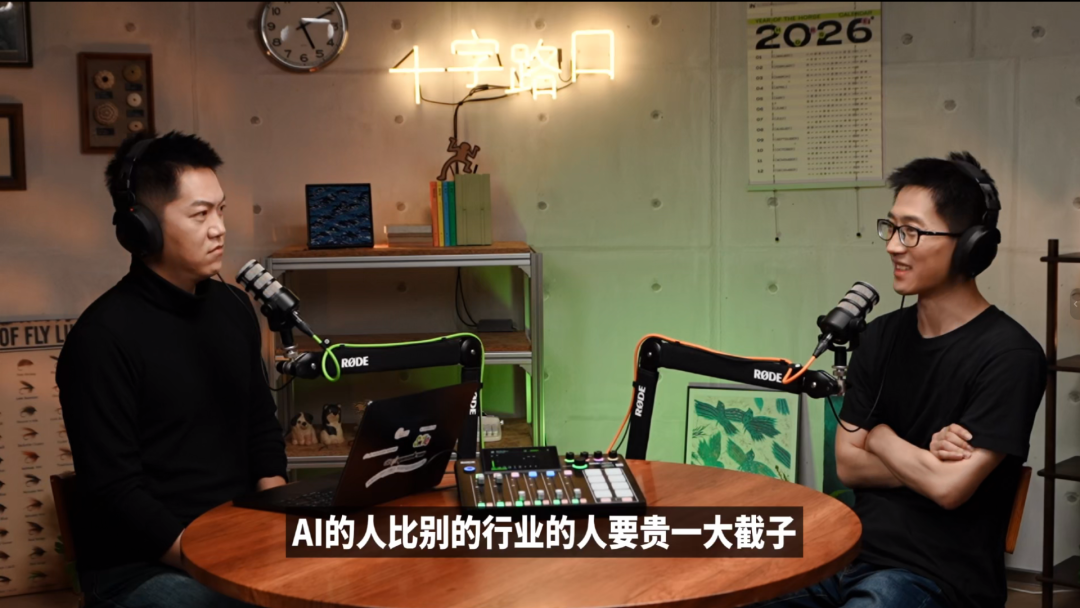
AI talent is very expensive — a big premium over other industries.
👦🏻 Koji
Is compute expensive because you need to use SOTA models? Or do you have to train your own?
👨🏻💻 Ziheng
We're burning compute not for "using" models, but for "training" them. Our models haven't reached the inflection point we believe they need to on certain capabilities.
We haven't hit that tool-level milestone yet, so we need to keep iterating the models — that's very expensive. Inference is actually fine. If we ever get to the point of only doing inference, costs drop immediately.
👦🏻 Koji
So how much needs to be spent upfront is currently unknown?
👨🏻💻 Ziheng
We have a rough number, but it's still pretty expensive.
👦🏻 Koji
You mentioned AI people are expensive. A commercialized research-driven company needs to blend many excellent roles from different fields. What kind of culture do you want the company to have?
👨🏻💻 Ziheng
I think more than anything, people need shared belief that we should do something truly great together. This "greatness" is partly about technology, partly about driving massive commercial value through technology.
To this day, most people in the company have底层技术信仰 — fundamental faith in the technology — feeling that something big will change in the next few years.
Take our chemistry veterans. One of them always had this ideal: guessing experimental results pretty accurately without doing the experiment. In his mind, this was more or less impossible. But after talking with us, he believes that in the next year or two, maybe even now with certain techniques, this is already achievable.
For him, that's a turning point in his entire technical career. People like this will gather and move toward the next technical anchor point. That's how we attract people.
👦🏻 Koji
You need a lot of cross-disciplinary talent. Are there many such people on the market? Or do you have to grow them yourself?
👨🏻💻 Ziheng
The people we want aren't those who know a little about every field. They're people who are extremely硬核 — ultra-specialized in one domain, but with very broad vision.
👦🏻 Koji
Specialists in one field, but with broad knowledge?
👨🏻💻 Ziheng
Yes, I'd say "硬核" — we particularly value that word.
During Interviews Now, I Don't Know What to Ask
👦🏻 Koji
These past two years, many new AI talent cultivation organizations have emerged in China — like Beijing Zhongguancun Academy, which you were deeply involved in. Do you think the talent you need can come out of institutions like this?
👨🏻💻 Ziheng
Very possibly. I'm also involved in training students at Zhongguancun Academy. I see PhD students entering projects from day one, growing through doing — very much like a startup. AI is a very special tool, and the way of learning has changed.
When I first started working on generative models, I hadn't read a single paper. I just kept asking GPT and DeepSeek, following the thread, and built up my mathematical and physical framework that way.
👦🏻 Koji
Today models possess massive knowledge. Learning methods and goals are shifting. We used to say "master math, physics, and chemistry, and you can go anywhere" — as if knowledge equaled capability. But today knowledge and capability are decoupling. So what should people learn, and how?
👨🏻💻 Ziheng
I really don't have an answer — I'm genuinely confused. We keep thinking during interviews: what should I actually test for? Ask knowledge questions? GPT can answer all of them, and with broader knowledge than me — does that matter? Or should we interview for ability to solve novel problems?
We're not entirely clear ourselves. But to this day, we still ask those extremely硬核 domain knowledge questions. Why? Because at least in recent years, if someone can answer them, it shows they can still learn — that's a capability in itself.
But in the future, this boundary will feel very different. I don't know what you think. Since AI is so knowledge-intensive, does everyone need to learn to be a product manager?
👦🏻 Koji
First, initiative matters. When knowledge is at your fingertips, do you actually reach for it? Libraries and Google have always existed, but not everyone made the most of them.
Second, for founders, entrepreneurial spirit matters — resilience, leadership, vision, the ability to inspire. And then there's what everyone keeps talking about: taste, which is essentially aesthetics.
👨🏻💻 Ziheng
Yes, yes, this is really important.
👦🏻 Koji
It's not just abstract beauty. Even in academia, in scientific research, there's aesthetics behind it.
👨🏻💻 Ziheng
That's a really interesting point. So taste, especially the taste for doing research, might become the most important thing.
👦🏻 Koji
Taste is a choice, and it refracts through everything.
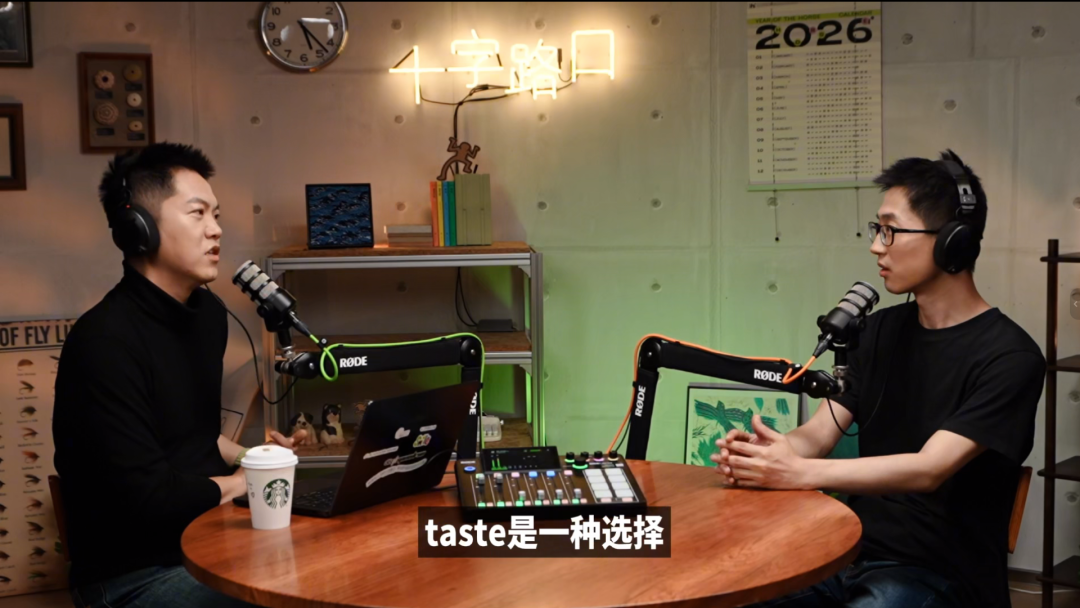
👨🏻💻 Ziheng
I used to ask everyone I interviewed the same question: Suppose you had unlimited resources — say, a billion RMB, a team of a hundred people — what would you want to do? This filters for whether someone has actually thought about it, whether they have vision.
I think this might be more important than knowledge in this era.
👦🏻 Koji
Do you already have an answer?
👨🏻💻 Ziheng
We definitely have that kind of vision. Otherwise we wouldn't have started a company — the pressure is enormous.
👦🏻 Koji
If a PhD student listened to this podcast and wanted to dive into AI for materials, what would you advise them to study?
👨🏻💻 Ziheng
Good question. At least as of today, I think breadth of perspective is essential. From day one, get involved in a major project, working on the most central, most硬核 part.
You could do model development, but go deep — really understand the details. Or you could do synthesis: give me a new material and I'll grind away for months until I make it, even if it's notoriously difficult to synthesize.
That's still true today. As for which major to choose — I think any field is fine, as long as it's硬核 enough.
👦🏻 Koji
So what you value is taking on the hardest problems, and what you accumulate in that process?
👨🏻💻 Ziheng
Exactly. It's also feedback on a person's capabilities. Not touching a little bit of everything and doing combinatorial optimization, but anchoring on one point and solving that core, irreducible problem.
👦🏻 Koji
A few final questions. If your younger brother said he wanted to apply for a PhD today, would you encourage him? Or tell him to go straight to industry?
👨🏻💻 Ziheng
I'd tell him to do a PhD. At least for personal development, it's an exceptionally good thing. It's essentially: someone gives you money, no strings attached, to explore what you find interesting. What else in the world is as good as a PhD? It's the best stage of life to explore different fields and discover what you actually want to do.
Someone once asked me, doesn't a PhD make you too old with poor job prospects? I said don't think of it that way — a PhD pays you to do what you think is impressive work. There's nothing better. Working at a big tech company, they expect returns.
To my 10-years-from-now self: Still got it in you to keep hustling?
👦🏻 Koji
Last question. It's year one of your startup, and in the blink of an eye it could be ten years. If you had the chance to say one thing to yourself ten years from now, what would it be?
👨🏻💻 Ziheng
Are you happy? Still got it in you to keep hustling? I genuinely believe that at that point, as long as I can still hustle, I'll be happy.
👦🏻 Koji
You'll definitely still have it in you.
👨🏻💻 Ziheng
Right? These past few years, what I've felt is that I'm pretty good at hustling. In undergrad, my goal was a 3,000 RMB monthly salary, get married, have a kid.
👦🏻 Koji
Where did the 3,000 come from?
👨🏻💻 Ziheng
Because in my understanding, my parents were making two or three thousand and living pretty well. That was the goal. Then near the end of my master's, I got a chance to go abroad, and everything started changing.
Near the end of my PhD, I said no, I need to become a professor — academics can contribute to the world. After finishing the PhD and becoming a professor, I thought no, I need to do industrialization, that's how you really change an industry, make it land, and earn some money.
After that was Shenzhen. That place influenced me enormously. It transformed me from a very research-oriented person into someone who started engaging with the market. Market forces are really powerful. I lived in Shenzhen from 2018 to 2020.
👦🏻 Koji
What were you doing then?
👨🏻💻 Ziheng
At the Chinese Academy of Sciences Shenzhen Institutes of Advanced Technology, leading my own research team, working on battery research and some industrialization.
👦🏻 Koji
How did Shenzhen influence you so much?
👨🏻💻 Ziheng
Shenzhen is fascinating — the whole city is full of passion, and its operating logic is built on an economic ecosystem. For example, at the institute, to do well you had to go out and secure your own funding, by whatever means — incubate companies to feed back in, or get national grants, or horizontal industry funding — but you had to be able to feed back.
That logic is excellent. The pressure is intense, but only research that satisfies this logic is truly meaningful. That had a huge impact on me. Plus, back then Shenzhen had massive numbers of people starting companies. Later, I got an opportunity to go to Cambridge in 2021, heading there against the pandemic to do research. When I came back, I had a round of faculty offers, and in the end turned them all down to go to Microsoft Research Asia.
Because it felt like AI had arrived, and you had to be at a major tech company to get things done.
You see, hustling was never wrong. And now I'm out here hustling again. As long as you're hustling, there's still hope. Including now, seeing all these big companies making chaotic moves — looking back, chaotic hustling is also a good thing.
👦🏻 Koji
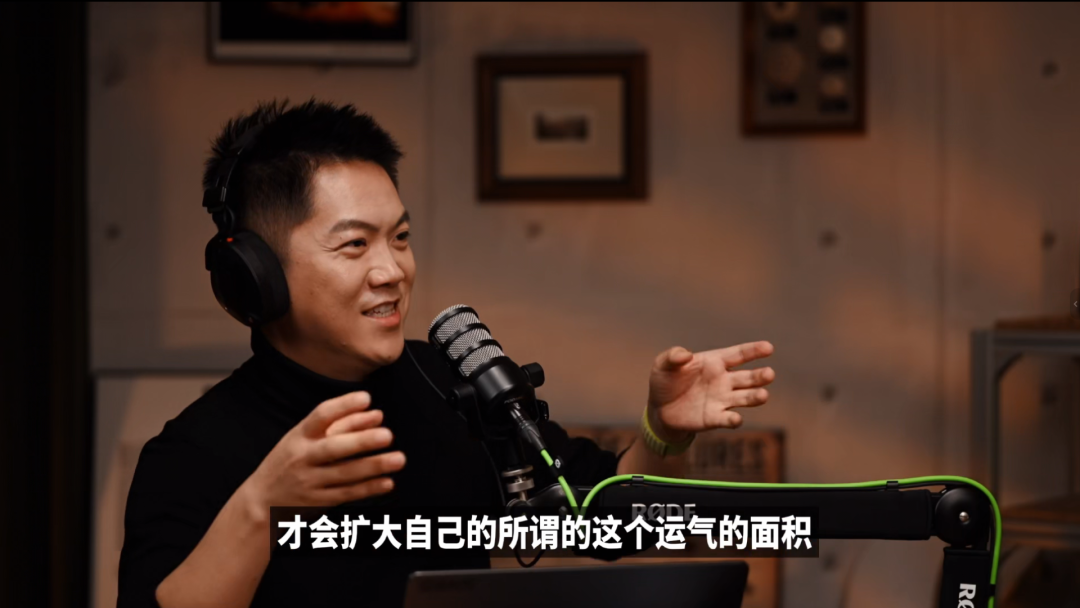
I think chaotic hustling is good because only by hustling do you expand what's called your "luck surface area."
👨🏻💻 Ziheng
Yes, yes, exactly.
👦🏻 Koji
This hustling spirit of yours — does it have a source? From education, or environment?
👨🏻💻 Ziheng
I don't really know how I ended up like this. I think partly, I'm incredibly grateful to my parents. My parents were really good to me. I had an exceptionally good family environment. They loved me so much when I was young, almost to the point of spoiling me.
To what extent? I was talking to my wife about this. She asked, "Don't you ever miss home?" I said I've been running around my whole life — UK, US, Hong Kong, Shenzhen — all these years, and I probably haven't missed home even once.
I used to wonder if something was wrong with me. Later I realized it's because I was so well protected as a child. My sense of security is extremely strong.
👦🏻 Koji
Oh, this is interesting — people with strong security don't miss home?
👨🏻💻 Ziheng
I genuinely don't miss home. Maybe for a couple of days right after starting the company, when the pressure was crushing, I felt it a little. But all those years overseas, drifting from place to place, sleeping in all kinds of strange places — never missed home.
👦🏻 Koji
So you think this actually comes from security?
👨🏻💻 Ziheng
That's my feeling. My parents are an incredibly strong support system for me.
👦🏻 Koji
What do they do?
👨🏻💻 Ziheng
University professors.
👦🏻 Koji
Great. Well, thank you Ziheng for today. And hoping Kaiwuji makes some incredible materials soon.
👨🏻💻 Ziheng
Thank you.