Astribot raises another 1 billion yuan in fourth funding round within six months, accelerating mass production of cable-driven AI robots | Dalton Venture

Recently, **Astribot — a Dalton Venture portfolio company and the world's first company to mass-produce cable-driven AI robots — has completed a new funding round of approximately one billion yuan. The company is now valued at 15 billion yuan, firmly securing its place in the top tier of China's Embodied Artificial Intelligence companies.** This round was led by Shenzhen Investment Holdings Donghai (a subsidiary of Shenzhen Investment Holdings), with participation from Hongtai APlus, Ninghai Xingtaihe Fund managed by Guanghua Yangguang, Shanheng Capital, and other key state-owned and financial investors, as well as existing shareholder Xianmu...

Background
Recently, Astribot, a Dalton Venture portfolio company and the world's first company to mass-produce cable-driven AI robots, completed a new funding round of 1 billion yuan. The company's valuation reached 15 billion yuan, securing its position in the top tier of China's embodied AI companies. This round was led by Shenzhen Capital Group Donghai (a subsidiary of Shenzhen Investment Holdings), with participation from Hongtai APlus, Ninghai Xingtaihe Fund managed by Guanghua Yangguang, Shanheng Capital, and other important state-owned and financial investors, as well as follow-on investment from existing shareholder Xianmu.
"Under the Design For AI philosophy, Astribot remains committed to using AI to define robots and intelligence to unleash human creativity, advancing long-term value through world-class talent, product capabilities, and commercialization — building a future where humans and machines coexist, co-create, and mutually thrive," said Jie Lai, founder and CEO of Astribot. "Our investors are important 'fellow travelers.' This round reflects broad recognition and market consensus around Astribot's core vision and its 'AI model-Embodied OS-cable-driven body' integrated full-stack architecture, and will provide solid momentum for accelerating product breakthroughs and commercial deployment."
The proceeds will be used for model iteration, talent expansion, commercialization, and production capacity building, with continued investment in its integrated full-stack architecture, tackling global challenges and converting technical capabilities into deliverable products and scalable deployment.
Four Funding Rounds in Six Months
Valuation Climbed from 10 Billion to 15 Billion Yuan in Three Months
This marks Astribot's fourth funding round in the past six months. Since March 2026, the company has completed Series A+, Series A++, Series B, and this latest round. In June 2026, Astribot raised over 1 billion yuan in its Series B, with its valuation surpassing 10 billion yuan for the first time. Just three months later, it announced another round at a 15 billion yuan valuation — "four rounds in six months, valuation up 5 billion in three months" is rare even in the booming embodied AI sector.
Previously, Astribot received investments from Yunqi Capital, Matrix Partners China, Jinqiu Fund, Ant Group, CASID, and Dalton Venture. Following this round, Astribot's shareholder base has evolved into a diversified, high-quality structure of "state-owned funds + industrial groups + leading financial institutions."
"From foundational AI large models and embodied OS to its unique cable-driven body design, the Astribot team has demonstrated exceptional technical闭环 capabilities and a clear path to commercialization," said Mu Chunwei, CEO of Shenzhen Capital Pengcheng Strategic Emerging Industries Fund. The investment in Astribot was driven by the fund's conviction in the scarcity of the company's "full-stack self-developed" approach in the embodied AI race — aligning not only with the fund's mandate to deploy in frontier hard tech, but also serving as a critical step in helping Shenzhen build an embodied AI industrial hub and cultivate new quality productive forces. "We look forward to Astribot accelerating the journey of AI robots from laboratories to diverse industries, achieving truly scaled commercial deployment."
"Investors are important 'fellow travelers' and 'enablers,'" said Jie Lai. With the empowerment of strategic shareholders, Astribot will continue to build higher technical and product moats, accelerating production capacity construction, scaled application, and global expansion.
Building the "AI Model + Embodied OS + Cable-Driven Body" Full-Stack Architecture
The World's First Company to Mass-Produce Cable-Driven AI Robots
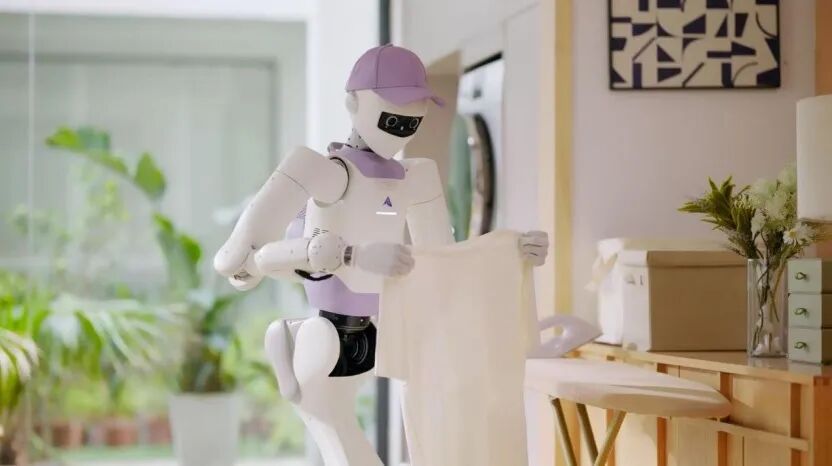
As a physical AI company oriented toward the real world, Astribot uses general-purpose humanoid robots as its product vehicle, with core capabilities spanning embodied AI models, robot operating systems, and cable-driven bodies. Its core value and scarcity lie in: continuous iteration capability across full-stack AI systems, differentiated cable-drive technology with mass-production barriers, and commercially validated growth potential through real-world scenarios.
"Design robots around AI's capabilities for physical-world exploration and learning, rather than designing a robot first and bolting AI on later," said Jie Lai.
With its "Design for AI" hardware-software integrated design philosophy, Astribot has built a model-OS-body coordinated, integrated full-stack architecture through full-stack self-development of its Lumo embodied foundation model, Astribot OS, and cable-driven body — forming a "body + data + model" technical closed loop. This architecture enables collaborative improvement of understanding, decision-making, and execution around real tasks, giving the company mechanisms to continuously accumulate data, refine models, and expand applications, while providing a foundation for software, application, and model service development.
"Cable-drive technology gives robots flexible, precise execution capabilities better suited for human-robot interaction, and provides high-quality data for model training; the Lumo model handles environmental understanding, reasoning, and action generation; Astribot OS organizes these capabilities into applications callable by users and developers. The synergy of all three enables robots to both accomplish real tasks and continuously improve using data accumulated through deployment," Jie Lai explained.
According to available information, Lumo-2, the foundation model Astribot released in July of this year, is the industry's first implicit world action model targeting home scenarios. Across more than 22 complex evaluations conducted with real robots, it ranked first among evaluated models in combined performance across temporal reasoning, physical understanding, and operational complexity.
At the body level, the company's accumulated expertise in cable-drive technology — spanning product performance, model training, engineering replication barriers, and commercial mass-production capability — has built differentiated hardware advantages and first-mover mass-production moats, making Astribot "the world's first company to achieve cable-driven AI robot mass production," with at least a generational lead over 1X, the cable-drive company backed by OpenAI.
Accelerating Global Application and Commercial Deployment
S Series Opens Thousand-Unit Orders; Combined S and T Production Capacity Reaches Ten Thousand Units
Leveraging its full-stack cable-drive accumulation, Astribot has fully run the development path from prototype validation to scaled mass production, demonstrating rare product iteration and cost control capabilities: In September 2025, the company's flagship S series opened thousand-unit orders; in June 2026, its next-generation humanoid robot T1 began shipping, becoming the first to bring high-precision manipulation robots to the 90,000 yuan price range — combined with the company's synchronized ten-thousand-unit production capacity, further widening its generational gap in technical differentiation, product adoption speed, and cost barriers.
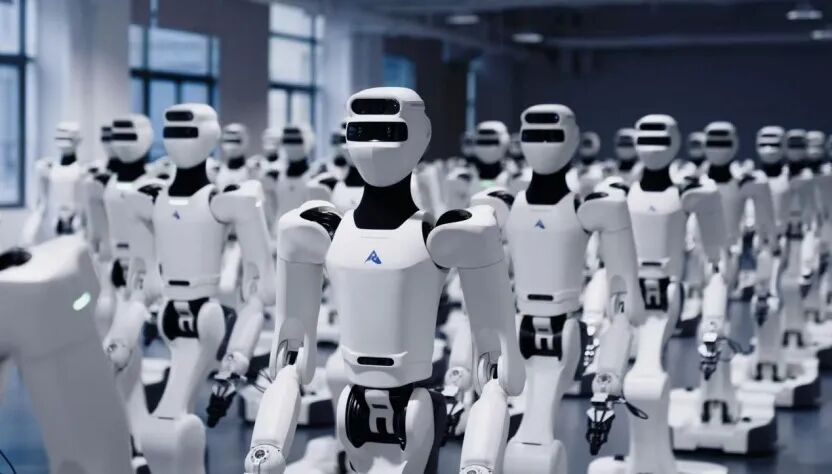
In commercial scenario deployment, Astribot's applications cover retail, cultural tourism, industry, research, and education. Clients include Jinma Amusement, ThunderSoft, Boden Intelligence, SEER Robotics, CCTV, and JD.com — including partnerships with Jinma Amusement and SEER Robotics to deploy thousands of AI robots in commercial and industrial scenarios, and with ThunderSoft to jointly drive thousand-unit scale deployment, leveraging the latter's global sales network covering North America, Europe, and Asia to accelerate overseas expansion and global layout.
Astribot's self-developed robot retail service store "Robot MART" has been batch-deployed across six cities including Beijing, Shanghai, and Guangzhou since November 2025, pushing robots from single-point demonstrations to sustained operations.
In AI developer ecosystem collaboration, Ant Lingbo Technology, Deep Transition, Shengshu Technology, Junaopanshi, and other AI companies are using Astribot's platform for model deployment and scenario development, driving iterative improvement of their own product capabilities and application ecosystem expansion.
Accelerating New Product R&D While Building Technical Talent
"Commercial Services" and "Developer Ecosystem" Powering Commercial Growth
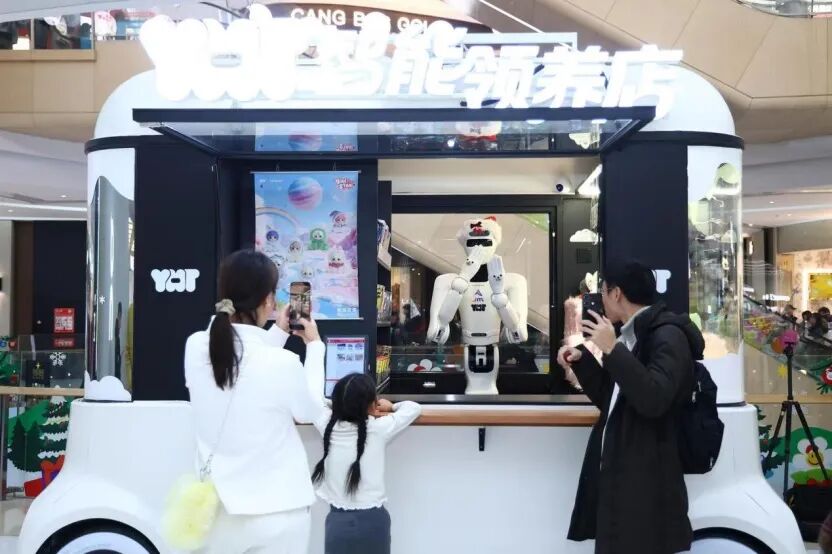
Astribot stated it will continue focusing on building capabilities across talent acquisition, technical advancement, model iteration, production capacity, and commercial deployment.
On the R&D front, Astribot's newly released online reinforcement learning framework SmoothRL enables robots to continuously optimize their behavior during task execution, reducing dependence on offline training and better handling real-world uncertainty.
Commercially, Astribot will continue advancing along dual paths of "commercial services" and "developer ecosystem" — for the commercial services market, integrating its full-stack capabilities in robot bodies, AI models, and embodied operating system AOS into scenario solutions for retail, guided tours, and artistic performance, validating product capabilities through real operations, accumulating user feedback, and沉淀 reusable interaction, manipulation, and safety control capabilities to lay groundwork for expansion into home service scenarios. For research institutions, AI developers, and industry application developers, Astribot provides standardized robot platforms, skill modules, and development tools to lower application development barriers, leveraging ecosystem partners' industry knowledge to expand product capabilities and application scenarios.
As an important direction in its long-term product roadmap, Astribot's product series targeting families and individual users is already in development. As installed base and usage frequency grow, the company plans to expand software and application services for its embodied operating system AOS, continuously exploring commercialization models for its models.
"We hope to unleash human creativity through robots plus AI," said Jie Lai. Astribot will adhere to its Physical AI full-stack approach, turning every real-world deployment into fuel for continuous model and product evolution, bringing truly usable, practical embodied intelligence products to global users.


ID: daltonventure
Long press to follow
Recommended Reading