From "Proven Technology" to "Proven Value" | Dalton Venture's Chen Yaochao Invited to 2026 Pujiang Innovation Forum
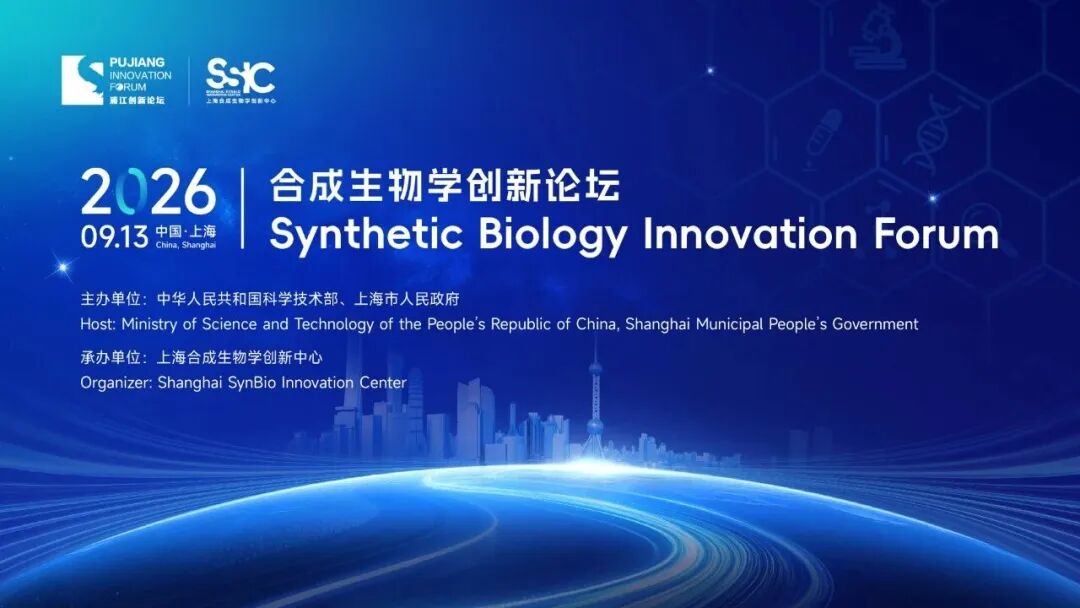
On September 13, the **Synthetic Biology Innovation Forum, part of the 2026 Pujiang Innovation Forum, was held in Shanghai, with Yaochao Chen, Managing Director of Dalton Venture and head of its Hong Kong fund, invited to attend.** The forum was hosted by the Ministry of Science and Technology of the People's Republic of China and the Shanghai Municipal People's Government, and organized by the Shanghai Synthetic Biology Innovation Center. It is one of the key thematic forums of the 2026 Pujiang Innovation Forum, bringing together participants from multiple countries including China, the United States, Denmark, Germany, and Switzerland.

Background
On September 13, the Synthetic Biology Innovation Forum of the 2026 Pujiang Innovation Forum was held in Shanghai, with Yaochao Chen, Managing Director of Dalton Venture and head of its Hong Kong fund, in attendance. Hosted by the Ministry of Science and Technology of the People's Republic of China and the Shanghai Municipal People's Government, and organized by the Shanghai Synthetic Biology Innovation Center, the forum was one of the key thematic sessions of the 2026 Pujiang Innovation Forum. It brought together academy members from China, the United States, Denmark, Germany, Switzerland, and other countries, scholars from leading global universities and research institutions, leaders from multinational pharmaceutical companies and the biotech industry, heads of investment institutions, and representatives of international startups for in-depth dialogue on frontier science, the future of health, biomanufacturing, and the commercialization of international innovation projects.
As one of the first regions in China to invest in synthetic biology, Shanghai continues to strengthen its capacity for innovation and industrial translation in this frontier field. At the forum, Dajin Luo, Director of the Shanghai Science and Technology Commission, said that Shanghai will further strengthen basic research and interdisciplinary integration, promote collaborative innovation across the upstream and downstream of the industrial chain, and continue to deepen global sci-tech cooperation, enabling the efficient allocation of innovation factors such as technology, capital, and talent.
From basic research to industrial translation, from local innovation to global collaboration, a more open and coordinated synthetic biology innovation ecosystem is rapidly taking shape in Shanghai. Against this backdrop, how to help more frontier technologies from around the world cross the "translation gap" from lab to industrialization became one of the key topics of this year's forum.
Yaochao Chen, Managing Director of Dalton Venture and head of its Hong Kong fund, attended the forum and joined the roundtable discussion on "Technology Commercialization by International Startups," where he explored with innovation institutions and industry representatives from the global synthetic biology field how international frontier technologies can enter China, complete local translation, and move toward industrialization.
From "Technological Leadership" to "Proven Value"
In the roundtable discussion on "Technology Commercialization by International Startups," Chen shared Dalton Venture's observations on the commercialization of international innovation projects from the perspective of investment and industrial practice.
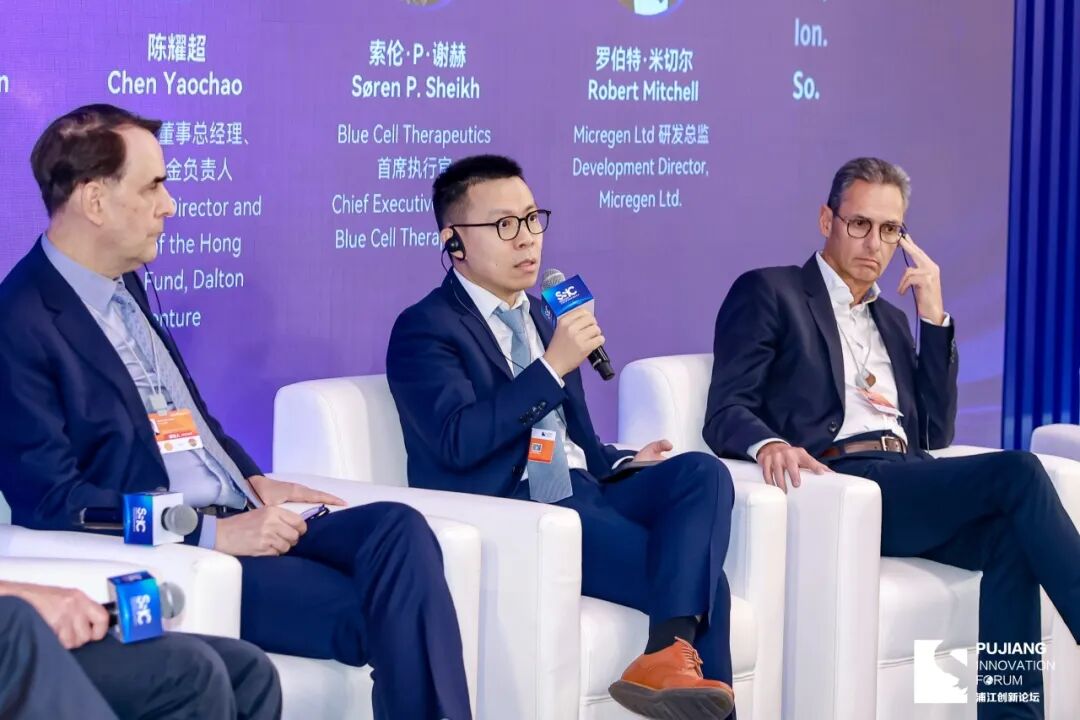
Photo: Yaochao Chen, Managing Director of Dalton Venture and head of its Hong Kong fund, speaking at the roundtable
Over the past few years, a large number of original technologies and early-stage projects have emerged in the global synthetic biology field. For investment institutions, the originality of a frontier technology is always an important starting point, but as the industry moves toward industrialization, the dimensions for evaluating a project are also changing.
Whether a technology can be turned into a product, whether that product can enter real-world application scenarios, and whether it can ultimately generate sustainable commercial value are becoming increasingly important. This means that evaluating an innovation cannot stop at papers, patents, or lab data alone — it must extend into real industrial environments: Who will use this technology? What problem does it solve? Will it remain competitive at scale? Can it truly integrate into the industrial chain?
Moving from "the technology works" to "the product works," and then to "the business works," is the critical leap that must be made in the commercialization of scientific and technological achievements.
For International Innovation to Enter China, It Needs a Round of "Local Revalidation"
China offers a unique environment for the industrialization of global innovation, with its vast industrial system, rich application scenarios, and complete manufacturing and supply chain capabilities. But as Chen also noted, a product or technology already validated in European or American markets cannot simply be replicated in China.
Different markets differ in customer needs, supply chain systems, cost structures, intellectual property regimes, and compliance environments. For international startups, truly entering the Chinese market requires more than finding capital or partners — more importantly, it means immersing themselves in the local industrial ecosystem and revalidating their products and business models in real-world scenarios.
This is also an increasingly important layer of China's value to global scientific and technological innovation — not only as a market, but as a crucial setting where frontier technologies from around the world complete engineering validation, scaling, and commercialization.
Bringing More Frontier Technologies Out of the Lab
At this year's forum, "from research to industry" was a topic of shared concern among many of the participating guests.
As AI foundation models accelerate target discovery, molecular design, and strain construction, synthetic biology is entering a new technology cycle. Yet compared with rapidly evolving computational capabilities, wet-lab work, process scale-up, manufacturing, and commercial validation still take far longer. As a result, future competition in synthetic biology will be not only about breakthroughs in individual technologies, but also increasingly about the ability to coordinate among research, industry, capital, and public translation platforms.
For early-stage innovation, validating key questions as early as possible through proof of concept, pilot-scale testing, and real application scenarios can help companies reduce trial-and-error costs on the path to industrialization — and bring technologies with genuine value to market faster.
Founded in 2015, Dalton Venture has long focused on early- and growth-stage investment and industrial M&A in the life sciences. Building on its deep roots in the field, it has continued to expand into frontier areas such as medical device hard tech, biotechnology, biomanufacturing, and brain-computer interfaces. In recent years, Dalton has further deepened its industrial footprint in biomanufacturing and, through vehicles such as industrial cooperation funds, has continued to build connections among technology, capital, and industrial resources.
We have always believed that truly vital scientific and technological innovation must ultimately leave the lab, enter industry, and continuously create real value.
Looking ahead, Dalton Venture will continue to connect global innovation resources with China's industrial ecosystem, working alongside scientists, entrepreneurs, and industrial partners to help more frontier technologies make the leap from scientific discovery to industrial value.
END


ID: daltonventure
Long-press to follow
Recommended Reading