China's first domestically made phaco-vitrectomy machine wins investor recognition as Rhino Health closes new funding round | Dalton Venture Family

Recently, **Dalton Venture portfolio company Rhino Health, a developer of high-end ophthalmic surgical equipment, has completed a nearly RMB 100 million Series B+ funding round**. The round was led by IN Capital, with Zhuhai Technology Industry Group participating. The proceeds will be used primarily for regulatory registration of Rhino Health's innovative ophthalmic products, overseas expansion of existing products, and domestic commercialization efforts.

Background
Recently, Rhino Health, a Dalton Venture portfolio company specializing in premium ophthalmic surgical equipment, completed a nearly RMB 100 million Series B+ round. The round was led by IN Capital, with Zhuhai Technology Industry Group participating as a co-investor. The proceeds will primarily fund regulatory registration of innovative products, overseas expansion of existing products, and domestic commercialization efforts.
This marks Rhino Health's second funding round this year. In late March, Yuexiu Industrial Investment Fund and Taiyu Investment jointly invested nearly RMB 100 million in the company's Series B round. Notably, both the B and B+ rounds were led by top-tier market-driven investment institutions. If B-round investors focused on product regulatory approval, B+ investors are placing greater emphasis on commercial execution for products already cleared for market.
"At this stage, investors care about commercialization capability. This round is essentially the capital market's validation of Rhino's ability to monetize," said Chi Zhang, Rhino Health's founder, in an interview with VBData.
From Clinical Necessity to Building a Premium Ophthalmic Device Portfolio
China currently has nearly 200 million cataract patients and 46 million with retinal diseases. The two conditions frequently co-occur, requiring combined surgical treatment. Phacoemulsification and vitrectomy — the core procedures for cataract and retinal diseases respectively — account for roughly 50% of total ophthalmic surgeries.
Compared with traditional standalone devices, a combined phaco-vitrectomy machine enables anterior and posterior segment treatment in a single surgery, reducing both procedure count and surgical trauma. Yet this market has long been dominated by overseas brands such as Alcon and Bausch + Lomb. High equipment procurement costs, lengthy maintenance cycles, and elevated patient treatment expenses have made quality ophthalmic care difficult to extend to grassroots medical institutions.
This landscape is shifting with the arrival of domestic alternatives. On December 15, 2025, the National Medical Products Administration approved Rhino Health's self-developed Genesis I & II phaco-vitrectomy system (registration no. 国械注准20253162583) — the first domestically approved product of its kind.
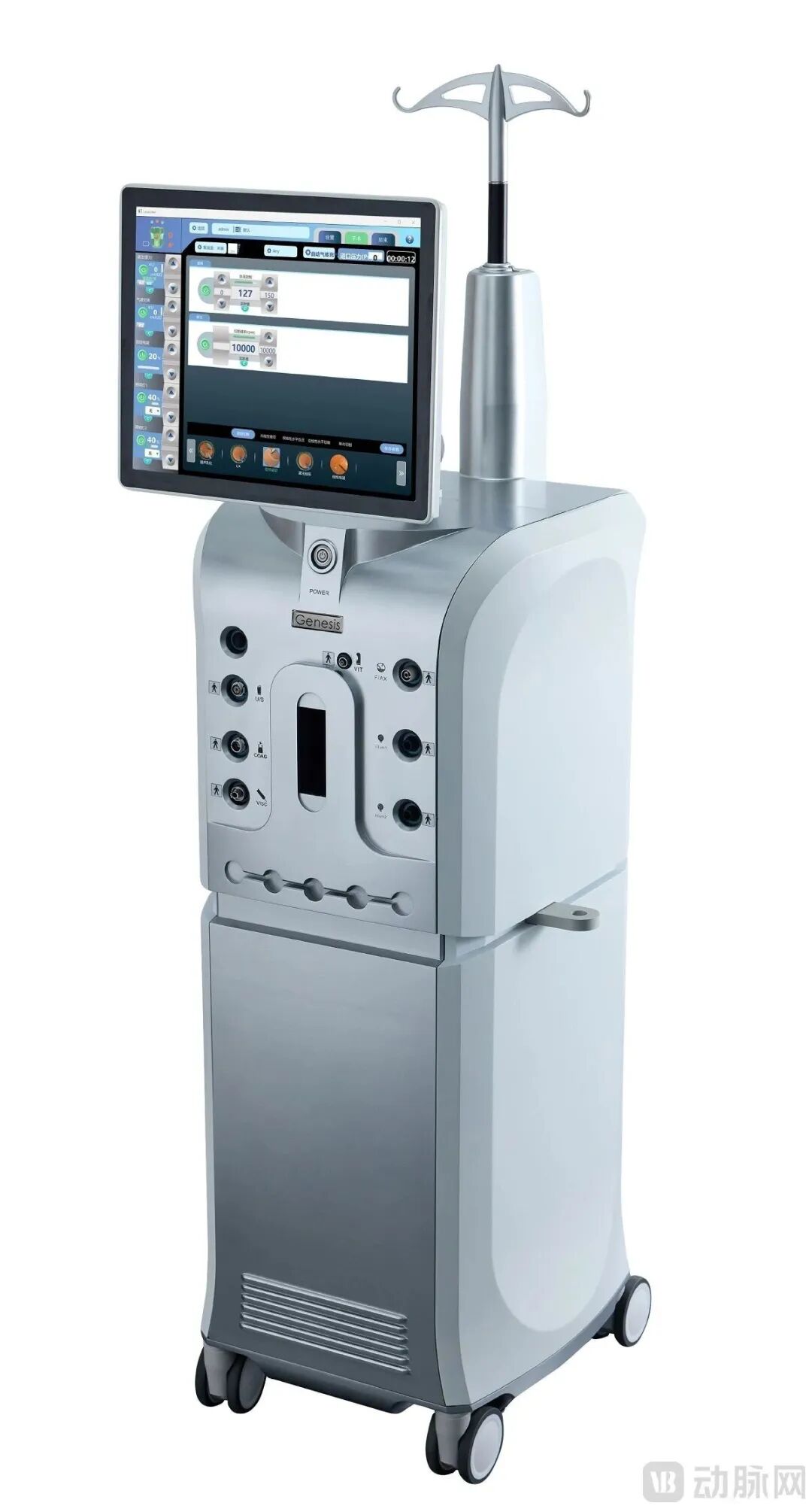
Genesis series
The Genesis series matches core specifications of the latest imported models: vitrectomy cutting speeds of 7,500 cpm and 10,000 cpm, with bidirectional capability reaching 20,000 cpm, supporting 20G to 27G vitrectomy procedures; phacoemulsification employs the world's lowest 28.5 kHz frequency with minimum 1.8 mm incision to reduce postoperative iatrogenic astigmatism and incisional thermal injury; a dual-pump system with 660 mmHg intelligent fluidics control enables real-time intraocular pressure monitoring; dual LED light sources with wavelength adjustment provide surgeons with clear visualization; and dual linear wireless Bluetooth foot pedals offer more flexible operation.
Beyond the Genesis series, Rhino Health's product portfolio continues expanding to address pressing clinical needs:
On the equipment side, Romulus — positioned as a "full-process solution for anterior and posterior segment ophthalmic surgery" — was officially unveiled at CCOS 2026. According to Chi Zhang, the product has already been accepted for review by the National Medical Products Administration and is expected to receive approval by late this year or early next. Unlike the Genesis series, Romulus was designed from the outset with a platform architecture that will integrate innovative technologies such as intraoperative OCT imaging and laser vitrectomy. Rhino Health's fiber-optic OCT has completed animal studies, which would represent the world's first attempt to integrate imaging observation with a combined phaco-vitrectomy system.
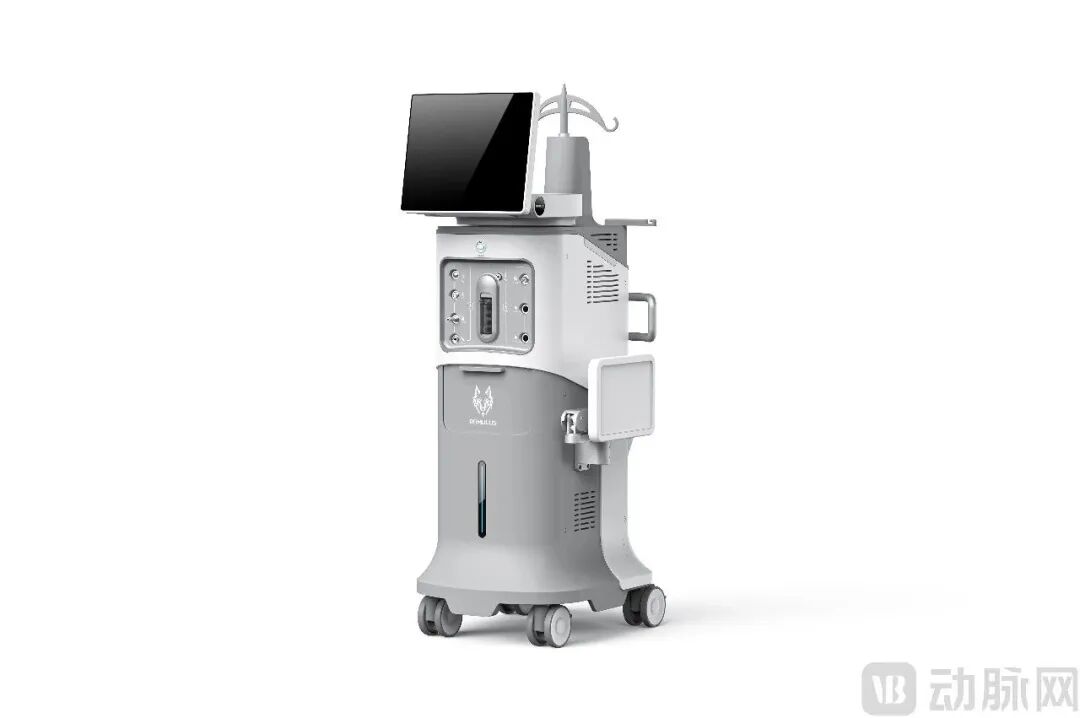
Romulus
On the consumables side, disposable phacoemulsification and vitrectomy surgical kits for the Genesis series are already scaling with device sales. Rhino Health's consumables compatible with imported equipment have also entered select tertiary hospitals and the vast majority of secondary hospitals. The company aims to further reduce clinical usage costs through localized consumables.
It's worth emphasizing that Rhino Health is building not merely hardware, but a full-chain solution encompassing "equipment + consumables + training" driven by clinical needs.
Commercialization Pace Exceeds Founder's Expectations
"Both contracted units and installed units far exceeded my expectations," said Chi Zhang.
The Genesis series officially launched commercialization in June this year. Within less than five months, Rhino Health has secured contracts for over 30 units with more than 10 installed. Chi Zhang projects annual contract volume could approach 60 units. By the company's original plan, it aimed to reach an average of 100 units annually within two to three years post-launch. Equipment contracts are progressing simultaneously at both public and private hospitals.
Behind the product contracts, beyond the inherent strengths of Rhino Health's equipment, lies growing recognition from clinical teams.
For instance, in June this year, Dr. Liming Tao's team at the Second Affiliated Hospital of Anhui Medical University completed clinical trials with Genesis, evaluating it as having "mature overall design, operation logic aligned with clinical habits, excellent intraoperative fluidics management, and outstanding operational stability." At Jinan First People's Hospital, Dr. Tongli Yu's team performed four cataract surgeries using Genesis, with all patients achieving postoperative visual acuity of 0.8 or above, some recovering to 1.0. Dr. Yu assessed that the device "delivered satisfactory performance in anterior chamber stability, surgical efficiency, and safety — with particularly notable advantages in consumables cost and maintenance responsiveness." Chi Zhang indicated that more substantial real-world study data will be published soon.
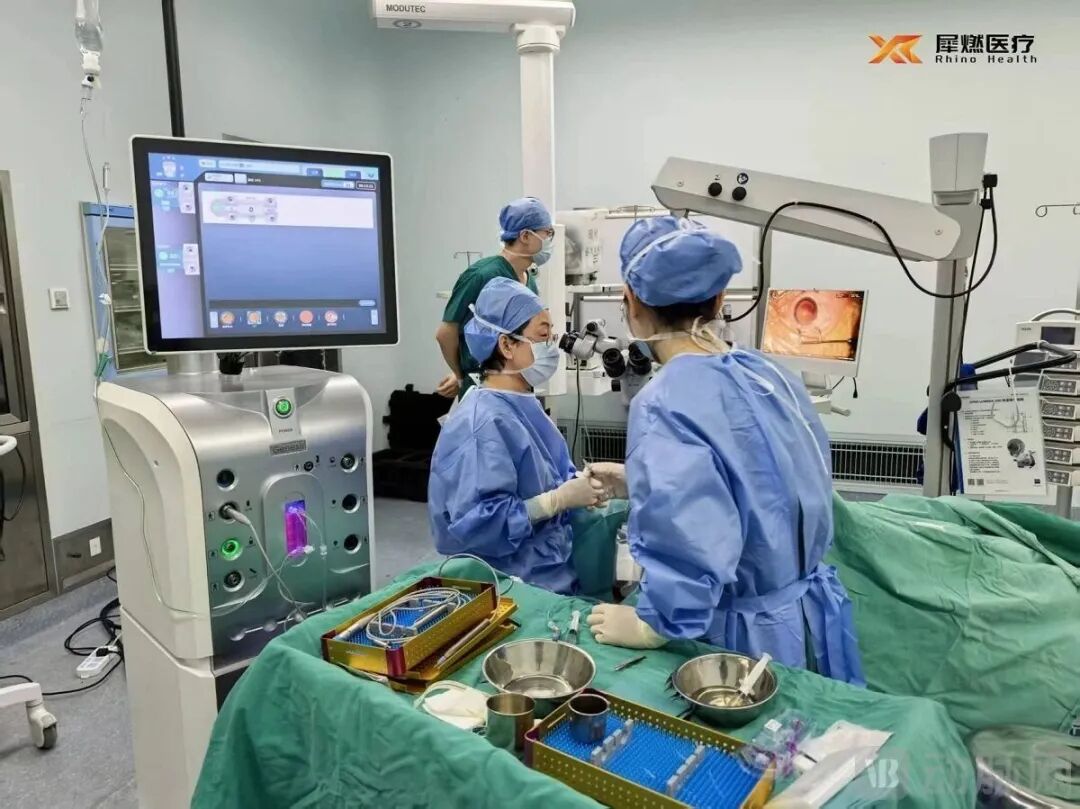
Rhino Health team at a clinical site
This clinical recognition stems partly from several of Rhino Health's initiatives —
First, the company maintains high-density participation in ophthalmology academic conferences and public welfare activities, providing product demonstrations and hands-on experience for clinicians. For example, in April this year, it partnered with Shandong Provincial Hospital to conduct charitable cataract surgeries in Aba at altitudes above 3,000 meters, completing over 100 procedures. The Genesis series became the first domestically produced phaco-vitrectomy system to operate at such altitude. In June, during academic conferences held in Shanghai, Leshan, and Kunming, Rhino Health staff were dispatched simultaneously to all three locations to support on-site equipment demonstrations. In September, at the CCOS 2026 National Ophthalmology Academic Conference, both Genesis and Romulus made a joint appearance... From highlands to coastlines, from grassroots clinics to tertiary hospitals, Rhino Health is building direct evidence of product reliability through repeated validation across diverse settings.
Second, Rhino Health is continuously advancing its training system. This connects to Chi Zhang's personal background — he came up through grassroots hospitals, and "enabling grassroots doctors to afford quality equipment and quickly master advanced surgical techniques" was among his founding motivations.
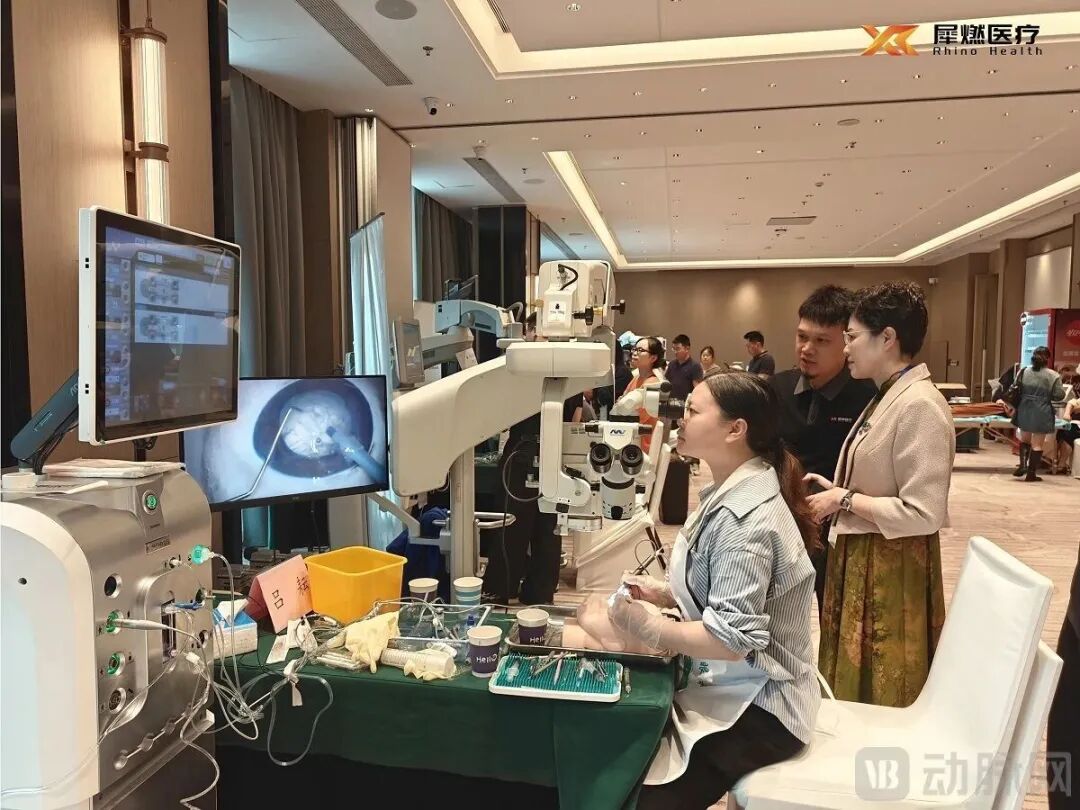
According to disclosed figures, Rhino Health has trained over 200 ophthalmologists using Wetlab (live practice on porcine/rabbit eyes) and Drylab (simulated eyes) models, providing differentiated training for physicians at varying skill levels. As the first cohort of trained doctors completes their programs, they will in turn influence their home hospitals and surrounding regions, elevating local surgical capabilities. While the industry typically ties training to commercial promotion, Chi Zhang maintains that "addressing grassroots healthcare pain points has nothing to do with commercial calculation." Objectively, however, training undoubtedly shortens the learning curve, enabling doctors to "use it and feel confident using it" — which also paves the way for Rhino Health's commercialization.
While validating its approach in the domestic market, Rhino Health has also initiated overseas expansion.
For example, at APVRS 2026 held on Australia's Gold Coast in August, Professor Mingwei Zhao of Peking University People's Hospital presented advances in Chinese retinal surgery equipment during the "World Retina Spotlight" session, with Genesis featured in the presentation. As China's first approved phaco-vitrectomy system, Genesis is steadily gaining attention from overseas markets.
Meanwhile, Rhino Health is accelerating overseas registration efforts. CE and FDA registration testing have both been completed. In Russia, annual sales are projected at 10–15 units; registration and partnership efforts are also advancing in the Middle East and ASEAN regions. Chi Zhang estimates that overseas markets could collectively achieve 50 units in sales by 2027.
"Truly going global means confronting different regulatory systems, clinical practices, distribution networks, after-sales service, and brand-building across countries and regions." Chi Zhang is clear this path won't be easier than the domestic one. "But our ophthalmic equipment has already started going out."
After the Funding
With fresh capital in place, Chi Zhang indicated that priorities will focus on three directions:
First, strengthening equipment integration, further exploring the fusion of intraoperative imaging capabilities such as OCT with surgical devices; second, advancing intelligence, collaborating with third-party partners on parameter setting, workflow assistance, and automated control; third, accelerating globalization, pushing forward overseas registration, clinical partnerships, and market expansion.
Team is key to supporting Rhino Health's longer-term journey. Chi Zhang brings clinical background plus over a decade in ophthalmic equipment marketing, registration, and training at multinational corporations; core team members hail from major international companies including Alcon, Bausch + Lomb, and GE Healthcare. This experienced technical team has also secured multiple certifications — the company currently holds 10+ invention patents, 10+ utility model patents, and over ten years of technical accumulation, with freedom-to-operate analysis showing minimal infringement risk.
This gives Rhino Health additional confidence. From the December 2025 approval of China's first phaco-vitrectomy system to formal commercialization today, the company has moved from "getting the certificate" to "monetization." The completion of two consecutive funding rounds in 2026 represents capital market validation. In the premium ophthalmic surgical equipment sector long dominated by European and American companies, Chinese enterprises have proven their ability to compete on the same stage.
Regarding current market competition, Chi Zhang sees the landscape with clarity. "As more products obtain registration and enter clinical use, evaluation criteria will shift accordingly." The coming tests: whether the company can sustain iteration, serve global customers effectively, and establish firm footing in broader markets. Sustained technology leadership and more customer-proximate service are, in his view, the keys to breaking through. Rhino Health will answer through physician training, growing installed base, and overseas market expansion.
END


ID: daltonventure
Long press to follow
Recommended Reading