Moonshot AI's K3 is supposedly very capable, but we honestly couldn't make heads or tails of the teaser.

Just now, Moonshot AI released its latest-generation K3 model.
@Yihao Zhang @Yunxiao Guo
Before Moonshot AI released any technical details about its model, elsewhere noticed the trailer first.
This 37-second clip, dropped early this morning, had no title, no narration, no parameters — just a white workbench, a light table, and a hand slowly sprinkling iron filings, set to jazz with a distinctly Berlioz flavor.
Soon enough, people started talking about "taste." It's a topic that's impossible to avoid with this company, and a major reason it's both praised and controversial.
Back in 2000, Paul Graham quoted two historians of science in a blog post to argue for the importance of "taste" in technology. Now the word is back in circulation, and every company, investor, and user is chasing after it.
But what is taste? Why do we need it? Everyone has their own pearl-and-jade white jade soup.
Take this trailer: comment sections across platforms at home and abroad quickly split into two camps. One side felt the "texture / vibe was incredible"; the other pointed out its resemblance to a recent trailer from another top-tier model release. But almost simultaneously, both camps were asking: "What does it mean?"
Honestly, we didn't get it either.
If this is a product ad, it's atypical to the point of abstraction. It feels like filming a research notebook disguised as a declassified archive — the cover stamped with Archive of Inference, the inner pages showing Faraday's 1851 iron-filing experiment, accompanied by a prose poem: "A thought can behave like a field. It gathers fragments... Organization becomes settled output."
So the moment Kimi K3 went live, we gave it a task: interpret its own trailer.
We also had GPT-5.6 sol and Claude Fable 5 process the same assignment. All three models, working from little more than a video link with vague intent and minimal guidance, completed frame-by-frame analyses of the trailer.
Of course, token consumption and output quality varied slightly across the three. We've placed the raw outputs at the end of this article.
Synthesizing these interpretations, we broadly believe the trailer is trying to present: the model as a "field," transforming invisible reasoning into visible answers.
elsewhere rarely does this kind of content. Simply because we were drawn in by this somewhat abstract promotional film, curious about what it was actually saying.
Below are the AI interpretations of the trailer, lightly edited by humans:
Light Table On, Archive Enters
The opening lays out various tools and materials flat on the light table, establishing the "archive documentary" viewing mode for the entire trailer.
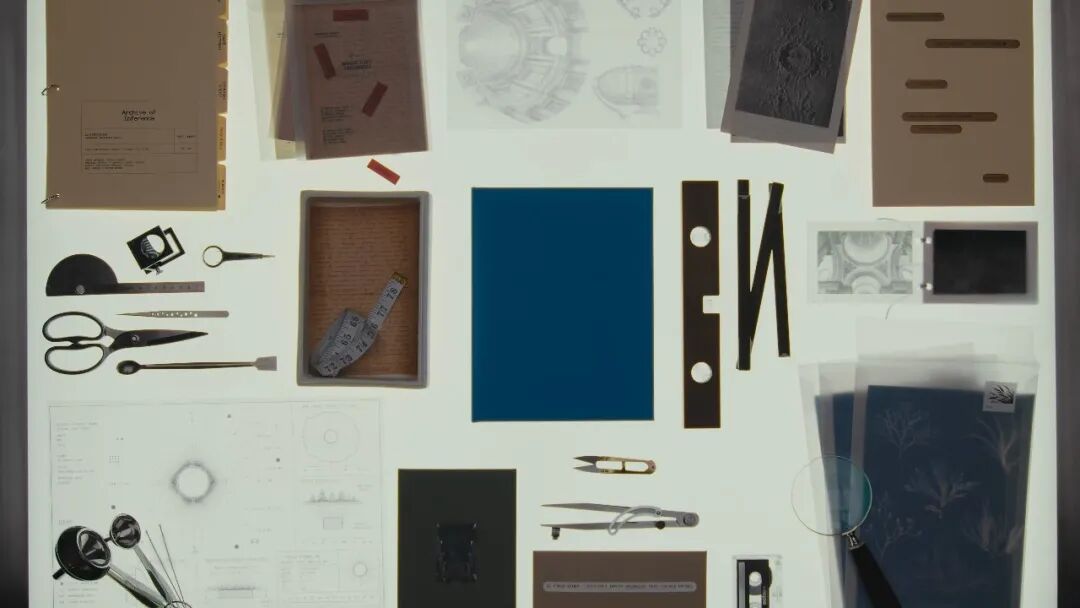
00:01|Workbench flat lay
The camera pushes in on a brown three-ring binder. The cover reads Archive of Inference, with the following text:
INPUT MATERIAL: MIXED SOURCES
PROCESS: OBSERVE + COMPARE + INFER + RETAIN
OUTPUT: STRUCTURED RESEARCH ARCHIVE
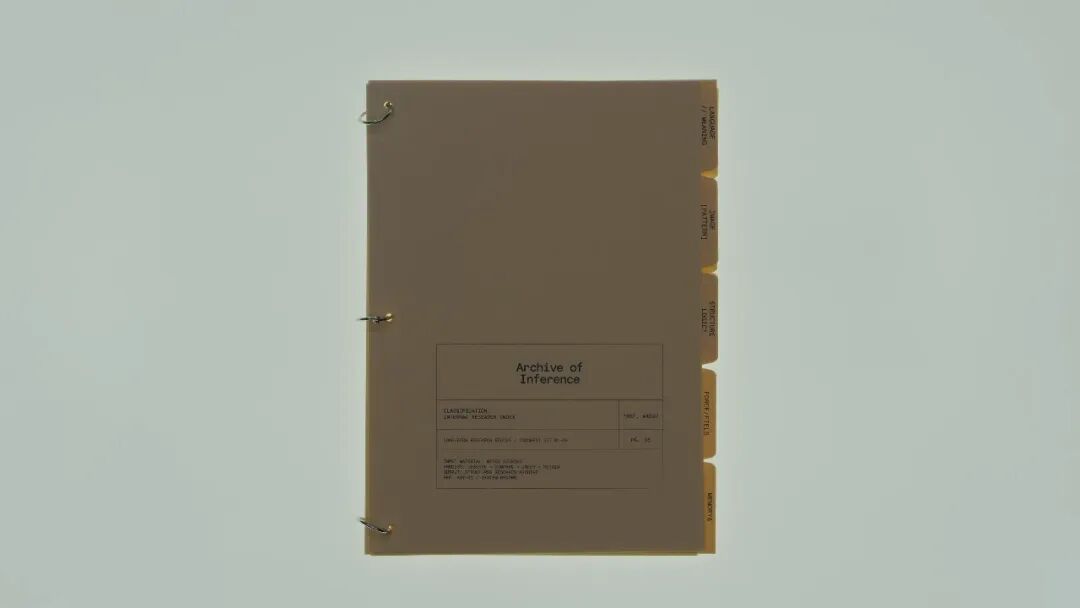
00:02|Archive of Inference binder
Three tabs emerge sequentially from the binder's side: DECISION + SELECTION, FORCE/FIELD, MEMORY & ARCHIVE. They appear to break AI reasoning into three modules: decision and selection, attention field, memory and archiving.
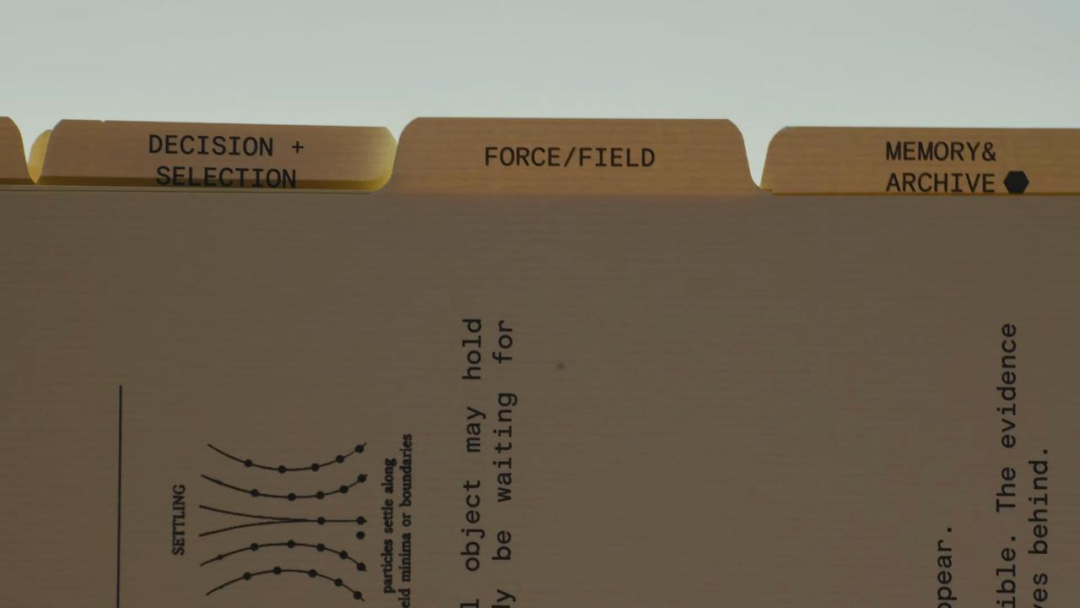
00:03|Binder tabs
Geometry, Botany, and the First Field Map
A brown envelope carries the film's thesis statement: "AI FIELD STUDY: SCATTERED INPUTS ORGANIZED INTO VISIBLE PATHS." ORGANIZED is underlined — scattered inputs, organized into visible paths.
The camera rapidly cuts through three technical drawings: perspective projection of a regular polyhedron, Field Net for a Quadruple Arrangement, and a cyanotype of a building dome. They pre-group "geometry—field—architecture" as a set.
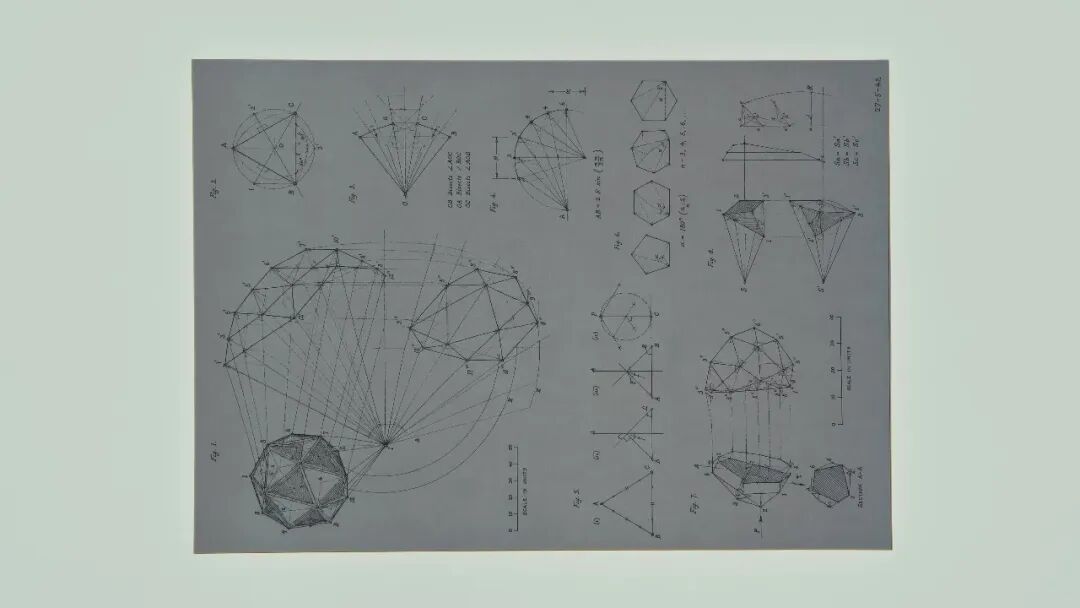
00:04.5|Geometry drawings: regular polyhedron, quadruple field net, and dome
Three Prussian blue prints "develop" from dark to light. This directly references Anna Atkins's 1843 Photographs of British Algae: Cyanotype Impressions — the first book in photographic history to use photographs as illustrations. Cyanotype was invented by astronomer John Herschel, and is also the origin of the word "blueprint."
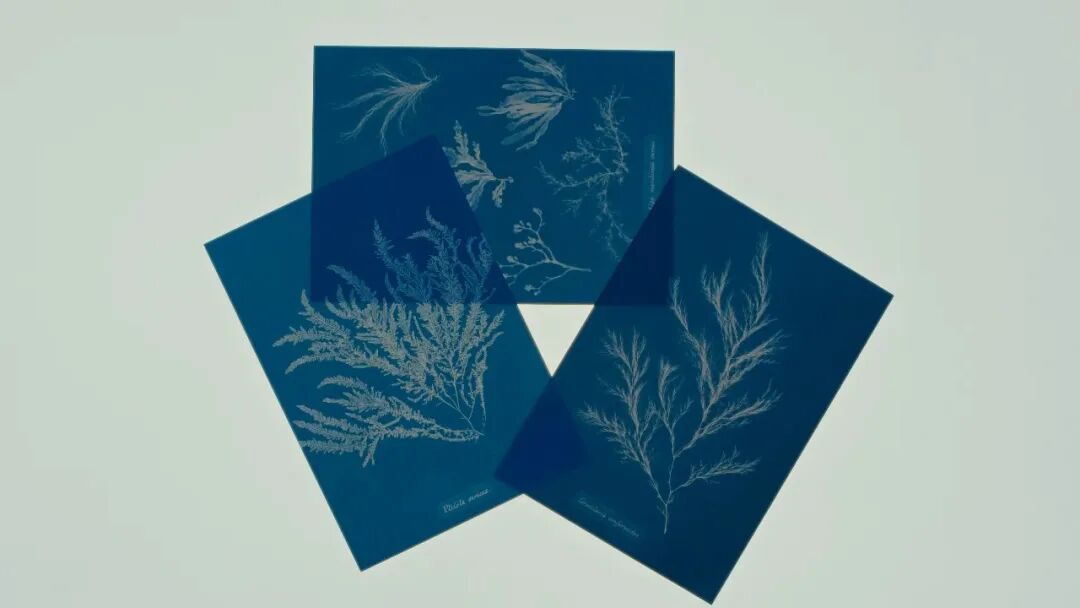
00:05.5|Anna Atkins-style cyanotype botanical specimen
A researcher slides a large sheet onto the light table. Data tables — radial intensity profile, magnet section, particle spread — package it as an experimental report, directly echoing Faraday's classic experiment of making magnetic field lines visible with iron filings.
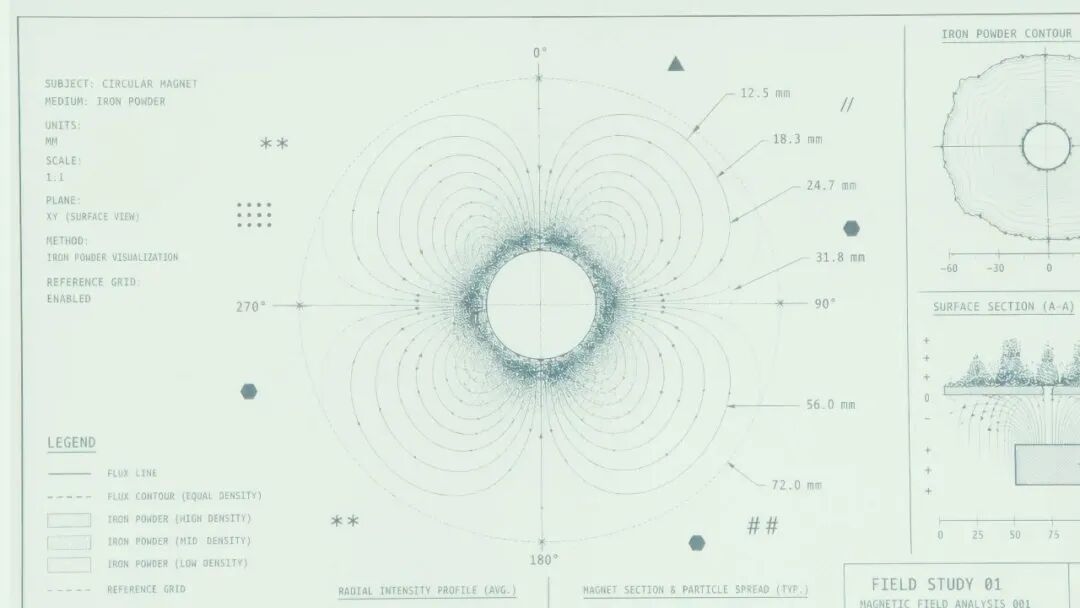
00:07|FIELD STUDY 01 / Magnetic Field Analysis
Weighing, Sifting, and Manifesto
Iron filings fall through fingers. The texture on the table simultaneously resembles magnetic field line diagrams and lunar craters. Layered above this is a machine-vision HUD: bounding boxes, pixel coordinates, node connections, and measurement labels.
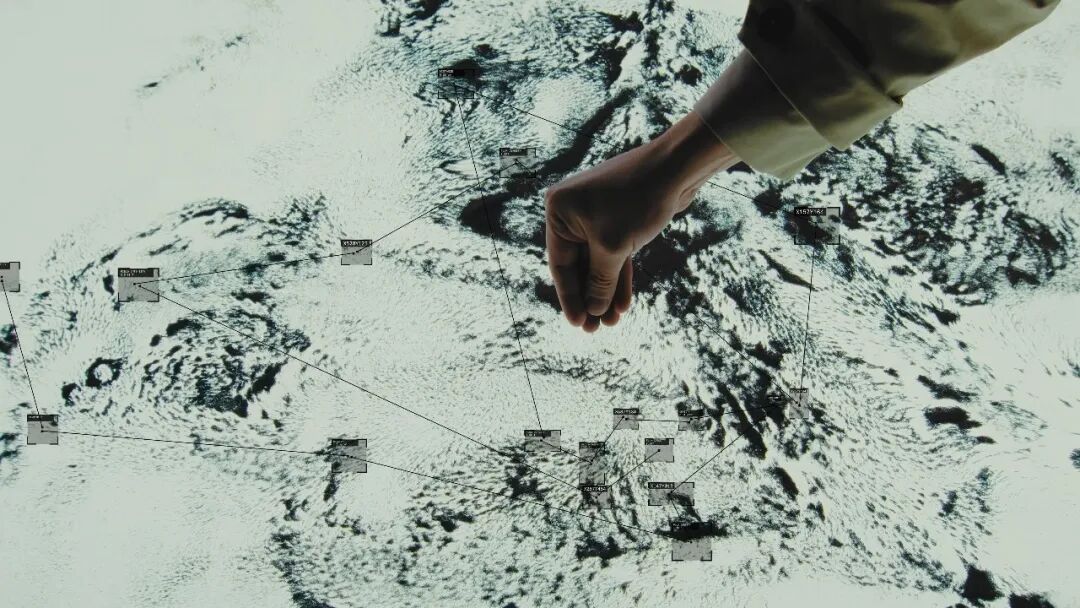
00:11|Sandbox/lunar surface with machine-vision HUD
From the lunar surface, the scene transitions to a metal sphere placed on a mechanical scale. The image of "weighing the moon" pays homage to the terrella experiment in William Gilbert's 1600 De Magnete.
00:15|Balance scale with MASS reading
A thought can behave like a field. We take this as Moonshot AI's understanding of its model:
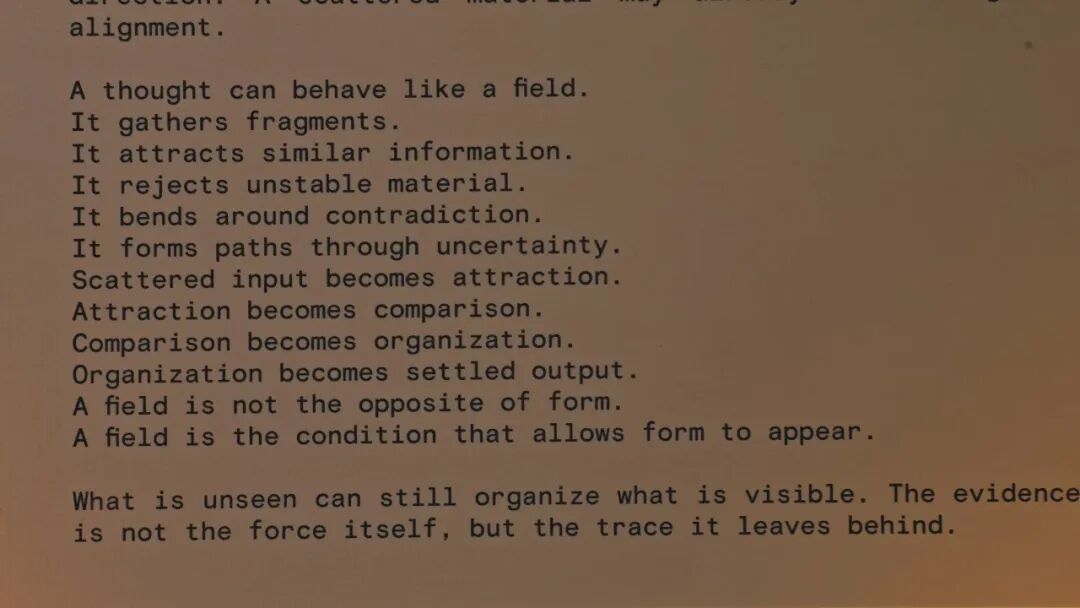
00:16|Core manifesto page: A thought can behave like a field
Below the manifesto, three-column labels reappear: ATTRACTION / RESISTANCE / SETTLING. They correspond to three material responses: being attracted, being deflected/filtered out, and settling along field boundaries. The word SETTLING will be recalled at the film's end: the brand name KIMI is itself a "settled output."
A serif numeral 3 appears at the center of a brown archive card.
00:18.5|Numeral 3 on brown archive card
From Dome to Pulsar
Between architectural drawings, an astrophysics diagram suddenly cuts in: Rotational Axis, Magnetic Axis, Magnetic Field, Neutron Star. This creates a juxtaposition with the architectural dome: one solidifies invisible forces into habitable form; the other makes invisible magnetic fields expose their structure through signals.
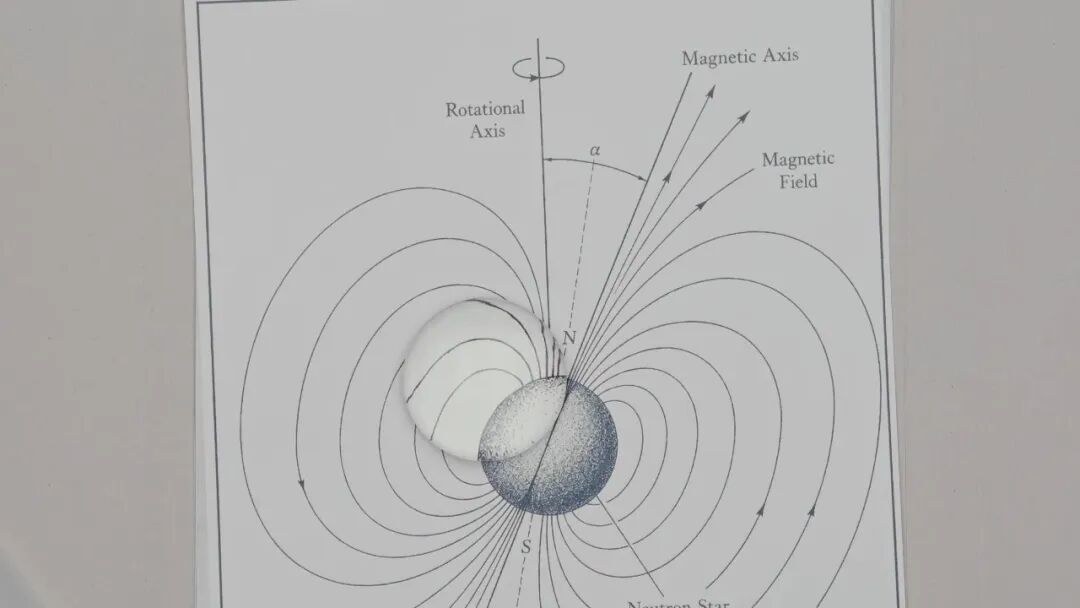
00:18.75|Pulsar / neutron star magnetic field diagram
After the countdown, the film enters a montage of human "structural archives," representing classical architecture, craft geometry, and modern spatial structures. Fuller's patent text calls the triangular grid a three-way grid — countless simple triangular units emergently producing global strength, which happens to serve as an architectural metaphor for MoE / Agent Swarm.
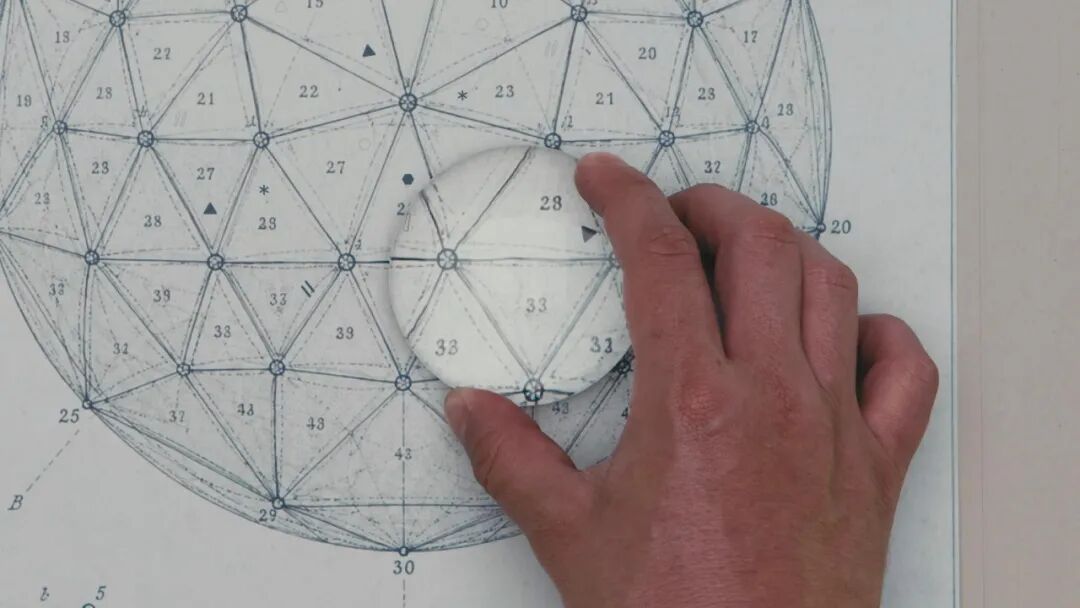
00:20|Geodesic sphere paper model with triangulation drawing
Two hands hold up a transparent lunar sheet, concentrically aligning it with the dome's oculus (Latin for "eye"). The light spot it casts has been used for two thousand years to infer the hour — it is itself an ancient instrument that reasons from sparse evidence.
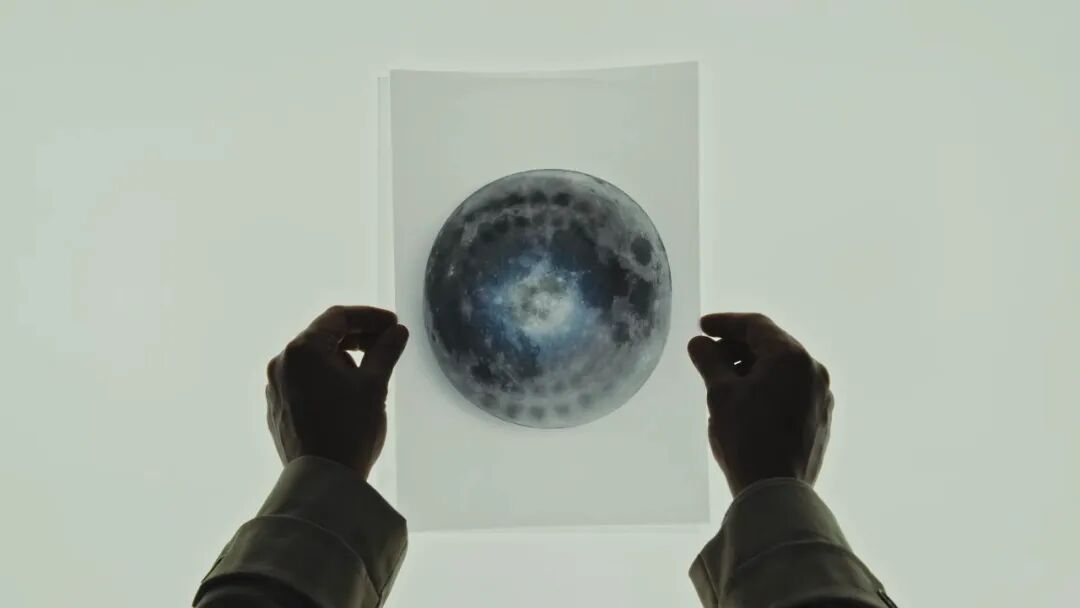
00:21|Transparent lunar sheet
A compass positions and measures on a page of mixed field configurations. The page contains point-source fields, dual-source fields, vortex paths, Fig. 190 Field Net for a Quadruple Arrangement, and a modern N/S bar magnet textbook diagram.
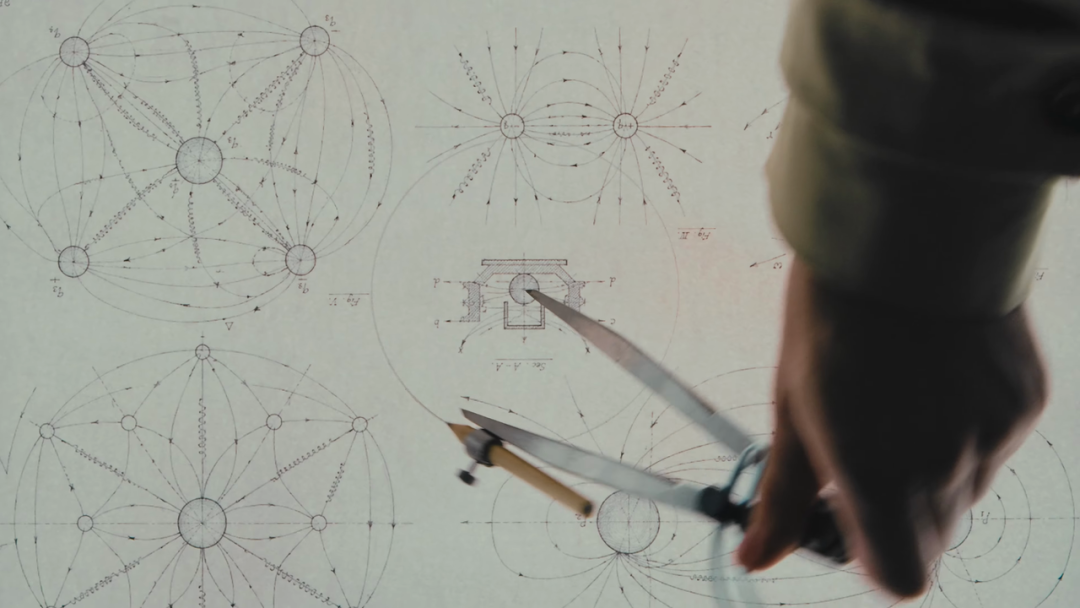
00:21.75|Compass inspecting historical field lines and multipole arrangements
A deep navy clothbound hardcover appears alone. Its title is blind-embossed into the cover — only readable when raked by side light. The title, Invisible Lines of Force, directly echoes Faraday's "lines of force" terminology, and also resonates with Maxwell's 1855–56 paper On Faraday's Lines of Force.
The book's craft itself performs the theme: invisible knowledge, only revealing itself to those who hold the right light.
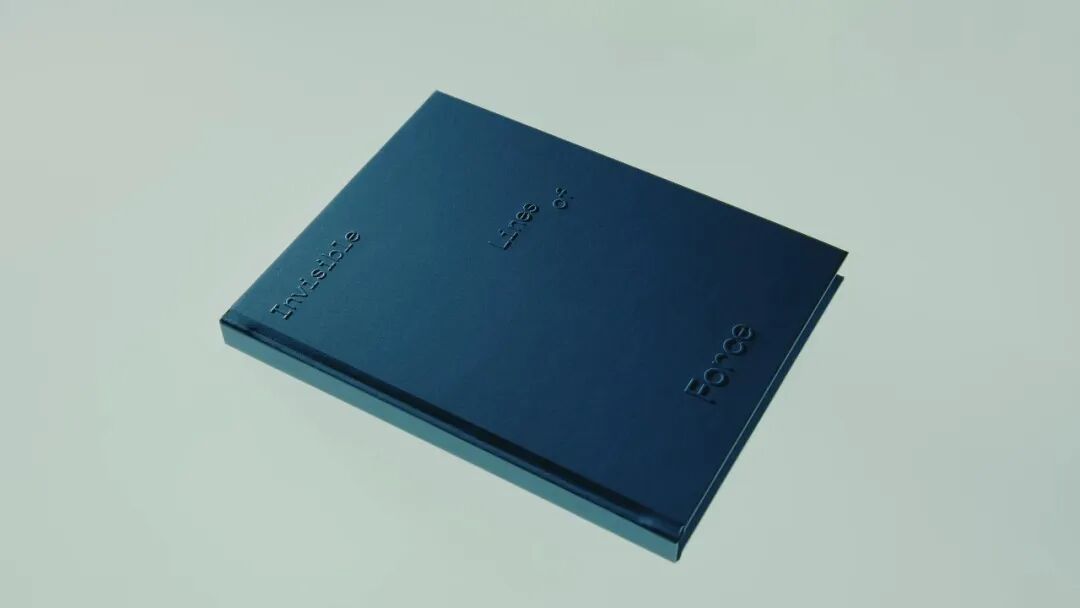
00:24.5|Invisible Lines of Force blind-embossed cover
From Chaos to KIMI
The final experimental montage "runs" the drawings into real versions. Scattered ferromagnetic particles stand upright in an external field, forming chains, peaks, radial sectors, and curved thick chains — then suddenly cuts to clean field diagrams.
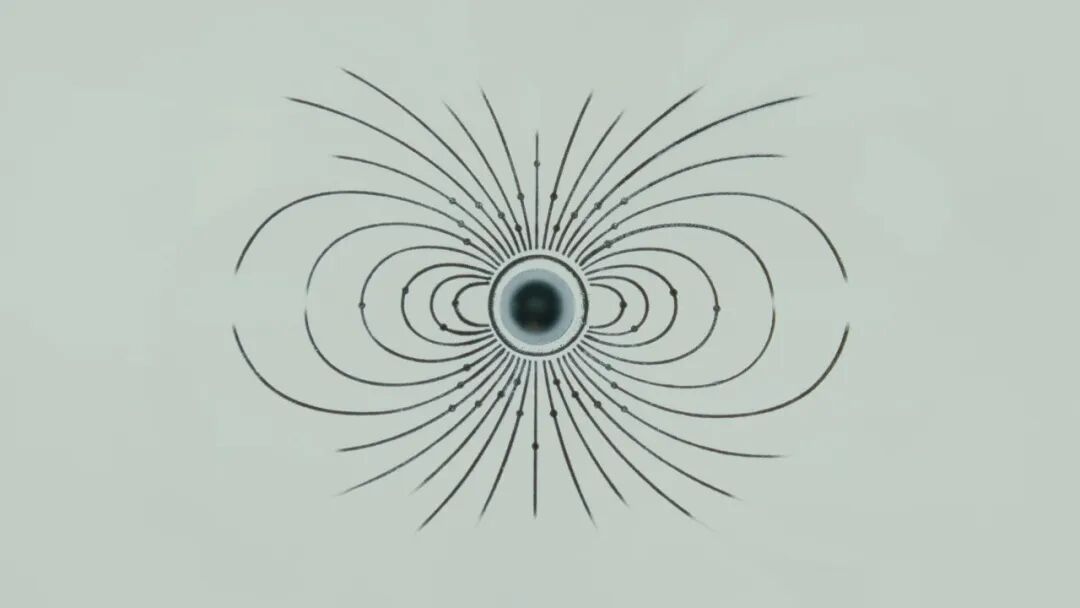
00:31|Dipole field line diagram / ocular visual pun
After the field diagram fades, "Kimi" rapidly cycles through more than a dozen typefaces — script, handwritten, typewriter, dot matrix, outline — then devolves into pseudo-strings containing brackets, hash marks, slashes, asterisks. The characters finally settle and recombine like particles, freezing at 00:35 as bold sans-serif KIMI.
This is the film's final reasoning experiment: from character candidates to settled output.
00:35|KIMI final lockup
Moonshot AI K3: https://rcnz7btgk6my.feishu.cn/docx/TrFbdZQ1XoaGQLx4yyTcqqKznUf
GPT-5.6 sol: https://rcnz7btgk6my.feishu.cn/docx/Q3AIdWhpUoLfLhxE0ojc8ac9nWe
Claude Fable 5: https://rcnz7btgk6my.feishu.cn/docx/Aw2Tdgp1BoGhByxE4wtcXz35nEd
Cover image: Étienne Léopold Trouvelot, Aurora Borealis, 1882, The New York Public Library