The True Story of Huadong Wang

"He's the Haruki Murakami of China's investment world."
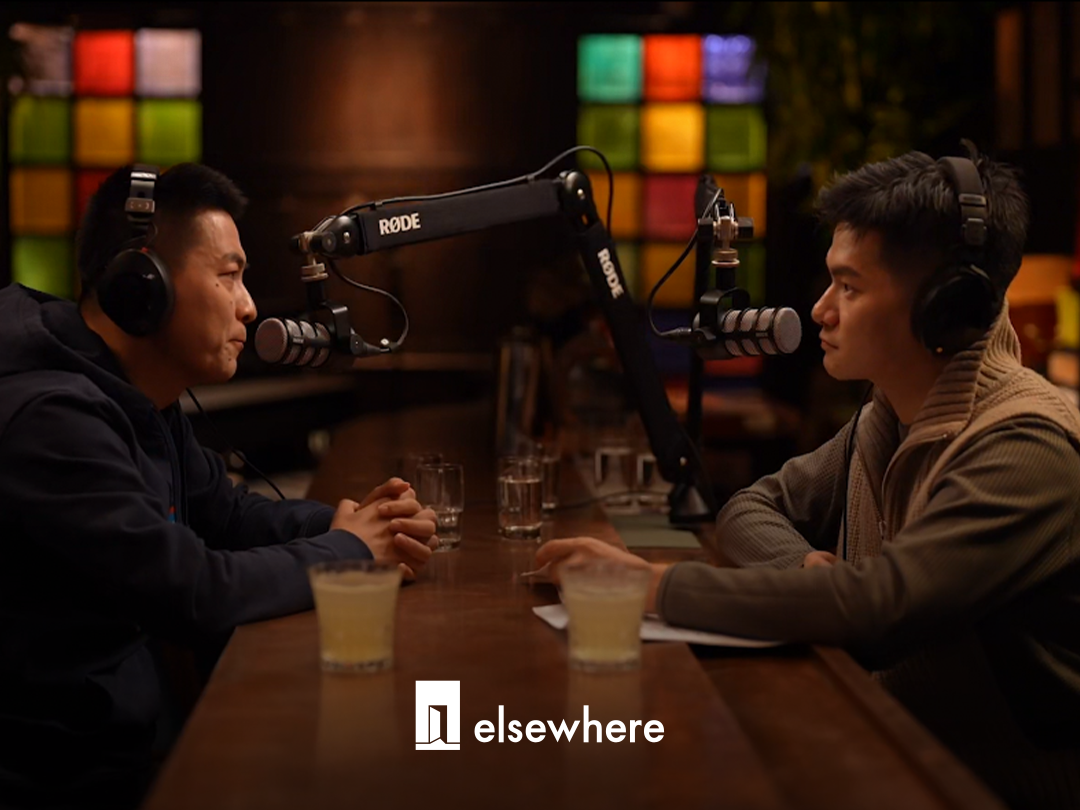
@Jing Liu
Interviewing Huadong Wang is a somewhat dry process.
He doesn't much care for storytelling, rarely expresses values, and instead loves to show his thinking, his overturning of prior assumptions, and his journey of revision. To some, this flatness probably seems mismatched with his investing track record.
In 2010, Wang, then an editor at Sohu, joined Matrix Partners, transitioning from tech media to investing. Four years later, at age 29, he scored his first IPO: Momo. It returned over $1 billion to Matrix. Wang also became the youngest partner at a domestic Chinese VC firm.
Many read this story as: a child of fortune. Including us, who interviewed him eight years ago. The final paragraph of that article read:
"Where is the next Momo?
This is the question almost everyone asks Wang when they chat. He doesn't hide that it has become a 'latent pressure' constantly at his side throughout his career. He craves it, but cannot force it."
But Wang has since repeatedly disproven that "VC is merely a product of chance." After Momo, he invested in Li Auto, Hithium, MetaX, Unitree Technology, and more. Nearly every major industrial rotation of recent years is represented.
A week ago, MetaX listed on the STAR Market. As the second-largest institutional shareholder, Matrix Partners' returns are considerable. Wang had led six consecutive rounds in MetaX.
If only one question about Wang could be kept, it would be this: from internet to manufacturing to AI and robotics, from the dollar fund era to the dual-currency fund era, what is his secret for threading through it all.
For the full content, please listen to the complete audio on Xiaoyuzhou App and the full video at the end of this article. This piece captures some substantive excerpts from the interview. But Wang's substance runs deep — before you know it, quite a lot remains.
Years ago, elsewhere learned that Wang maintains a disciplined life of reading twenty to thirty books annually and early bedtimes. In this interview, he specified his current schedule: asleep by 10 p.m., up at 4:30 a.m.
Wang also spoke seriously with elsewhere about his marathon journey over the past year. We suggest not skipping this section — it matters greatly to understanding why Wang is who he is.
Below is the full interview:
Running Marathons Revealed the Meaning of Investing
Jing Liu: Why the sudden marathon obsession?
Huadong Wang: Last March, I woke up and suddenly thought: I'll be 40 next year. Without exercise, I'll become a greasy middle-aged man. Then I instantly did a rational calculation: of all sports, the ones that don't require making appointments with others or going to specific places are only running and cycling. Another calculation: between cycling and running, the latter burns the most calories per unit of time.
Jing Liu: Two calculations for one sport — that's so investor of you...
Wang: It genuinely is the highest-ROI sport.
Jing Liu: How quickly did you improve?
Wang: Quite fast. Before I started running seriously last October, I first bought a professional sports watch, read a book about running, and made a preliminary plan. I just finished the Shanghai Marathon — 3 hours 22 minutes for the full marathon, 47 minutes faster than at the start of the year. Many friends who've been running for five or six years haven't achieved my time.
Jing Liu: How did you do it?
Wang: The most important thing is energy allocation. Before every run I check the route conditions, knowing where the uphills and downhills are. Many people crash because they start too fast, burn too much energy, and can't sustain it later.
I pay special attention to the first 5 kilometers. If the first 5K feels good, I can open up; if not, I don't chase a personal record.
Jing Liu: You've brought a fund-management feel to running — it's all about "allocation."
Wang: That's not so bad haha.
Jing Liu: Have you experienced flow states?
Wang: Yes. When I first started last year I'd wear headphones to listen to books and podcasts. But from the second half of this year, I stopped listening to anything — just focused on every single step. What truly gave me an intense flow experience was trail running. That was an extremely beautiful experience.
Jing Liu: How do you get through the wall?
Wang: During my first full marathon, at kilometer 33 I genuinely despaired. The final 9 kilometers were pure willpower. Willpower is the most important thing in marathon running.
Jing Liu: Beyond health, what else has running brought you? For instance, many people ski because the sport teaches them two things: one is catching momentum; the other is being willing to bet.
Wang: Beyond willpower, there's goal orientation. You wear a watch and see the countdown: 3 kilometers left, 2 kilometers, 300 meters... You must complete this goal.
I also increasingly understand why so many entrepreneurs love marathons. It's an extremely fair sport: you're competing against yourself, improving. Marathon runners all chase PBs (Personal Bests).
If I had to name a meaning, this is what marathons have brought me: in my work too, I care deeply about whether I'm better than before.
Jing Liu: Is there a correlation between the sports people like and their personality? When I heard you'd gotten into marathons, my first thought was: yep, that's very Huadong Wang.
Wang: I haven't thought about it from that angle... For me, it was a rational decision.
I Could Never Say "I Have Faith in AI"
Jing Liu: What was your first tech investment?
Wang: It should be Li Auto.
Jing Liu: Did you look at Li Auto from a tech investing or internet investing perspective?
Wang: This point is important. The core of intelligent EVs was that we hoped this team could do software better than traditional automakers. So we didn't invest in any founders with automotive backgrounds. If I recall correctly, for a long time WM Motor's fundraising went more smoothly than Li Auto's or XPeng's. We wanted to invest in people with internet backgrounds, because we believed future competition would be about intelligence.
Jing Liu: Li Xiang, He Xiaopeng, and Li Bin all have internet backgrounds. Why did you choose Li Xiang?
Wang: Actually, my firm conviction to invest in Li Auto came after talking with one of their mid-level managers — Fan Haoyu (now Li Auto's Senior VP).
Fan had previously worked at Banma Auto. He told me that after joining Li Auto, he saw Li Xiang spending enormous energy building a new organizational system — for instance, how to align everyone, to let each person know what the company was doing. This shocked me. Many other private automakers would poach some people from Company A, some from Company B, and these two groups fundamentally couldn't communicate with each other.
Jing Liu: You found an important corroborating witness.
Wang: Right. I often tell colleagues: don't just talk to founders. What others say may be more persuasive.
Jing Liu: This is similar to how we do peripheral reporting: interviewing ten people around an entrepreneur may be better than interviewing the entrepreneur directly.
Wang: Agreed. Many people's strengths, they themselves don't recognize. Or some issues founders consider routine, but we find important.
Jing Liu: Li Auto was your transition piece. Why did this transition happen in 2016?
Wang: The important reason I started looking at EVs was that I'd already come to very much dislike the mobile internet investment model: hot potato between funds, competing on burn rate, everyone only caring about markups, not even paying attention to actual business operations.
Also, mobile internet user penetration was already so high — it was genuinely hard to sustain high growth. In January 2017, we took a trip to Silicon Valley. When we returned, we decided to make EVs our primary investment theme.
Jing Liu: Momo went public in 2014 when you were just 29. You were someone who got massive positive feedback in the mobile era. You weren't nostalgic at all?
Wang: Perhaps precisely because my positive feedback came too quickly, I wasn't stimulated by it in subsequent years, which led me to do something new.
Jing Liu: Do you have a "favorite" industry?
Wang: Not at all. I have zero attachment to any industry itself.
Jing Liu: A peer wants to ask you: as an investor, what is your faith?
Wang: How do you define "faith"? I believe innovation has value. But still: I have no attachment to any industry. I also couldn't say something like "AI is my faith."
Jing Liu: You remind me of another investor: he described himself as a boring person, while most people are too interesting, or too desperately pursue being interesting. His famous line: when others all-in, I in-all. As long as it can generate big returns, he's willing to look at it.
Wang: I know who you mean. I think we're very similar.
Jing Liu: Have you ever tried to change because of being boring?
Wang: No. Why change?
When People Ask How I Invested in Li Auto, I Tell Them to First Read a Book About 100 Years Ago
Jing Liu: From mobile internet to manufacturing, hard tech, robotics, and now AI. How did you learn and evolve across such industry spans?
Wang: I love reading industrial history and corporate history. These books have given me enormous insight. For instance, when looking at EVs, the single most helpful book was Sloan's My Years with General Motors.
In 2020 when Li Auto IPO'd, many investors said they hadn't understood these companies back then. I asked them one question: have you read My Years with General Motors? Not a single one had.
Jing Liu: They ask how you hit a unicorn, and you tell them to read a book from 100 years ago.
Wang: It really is exactly that. "The only thing we learn from history is that we learn nothing from history."
We invested in the internet without historical precedent to follow, but the auto industry has existed for over a century. Many mistakes car companies made — they'd already been made a hundred years ago.
Jing Liu: What substantive insights did you gain?
Wang: The biggest point: if this is a massive industrial upswing, the scale you plan for will always be smaller than the final scale. We later internally called this "grand narrative."
Jing Liu: Over the past fifteen years, few investors of your generation have truly crossed cycles. Beyond reading, what's your secret?
Wang: I don't think there's any secret — just willingness to spend time persistently exploring new things.
Let me give you an example: think back to 2016 to 2020. If all your time was spent on mobile internet, from today's perspective that could largely be defined as wasted time. Because no new mobile-era giants emerged during that period.
But if during that time you were looking at new energy, batteries — for instance, investing in CATL at a 40 billion valuation, now that's a 1.7 trillion company. I'm extremely glad I chose to look at EVs in 2016.
Jing Liu: That's judgment of macro trends. Speaking only internally at Matrix, why are you the one who ultimately remained at the table?
Wang: I really think it's just this. I'm willing to keep exploring new things, and I've produced results from that exploration, so I stayed.
Jing Liu: When entering a new industry, how does the moment of epiphany arrive?
Wang: At some point, I suddenly realized autonomous driving has no commercial meaning. Because this function is too standardized — it's just moving people or things from point A to point B. This makes it genuinely hard for companies to differentiate; the only competitive edge is price.
Autonomous driving may be the worst industry of the past 15 years: tens of billions of dollars, the world's smartest talent, poured into something with such low added value.
Jing Liu: Because it's hard to differentiate, so low added value?
Wang: Yes. Recently I chatted with a female president at a tech company. She said when she buys cosmetics, any set costs thousands of yuan. But she leads several hundred engineers who painstakingly make semiconductor products that sell for just dozens of yuan each. For a moment she felt particularly lost.
Jing Liu: Why do Chinese tech companies seem more internally competitive than American ones?
Wang: The biggest problem is that China's talent supply is too abundant. Our engineers can always figure out how to make something.
In 2023, reading Elon Musk, one passage left a deep impression. It said Musk would stay in touch with several mechanical engineering professors, asking them to recommend students. Later I looked into it — turns out America's good mechanical engineering professors are just that few, and they don't have many students either. But in China, I could find you piles of people who studied mechanical engineering.
Jing Liu: You really do love reading...
Wang: About twenty to thirty books every year. For instance, I'm recently reading The Billion Dollar Molecule, because I'm studying innovative drugs.
No Comparison, No Nostalgia, No FOMO
Jing Liu: Some have called you China's number one tech investor.
Wang: That's a bit overblown. It's just that at certain moments, I made some relatively correct judgments.
Jing Liu: Most dollar funds said they would transition to tech, but for many it was just talk — AI came and many immediately pivoted back. But Matrix seems to have transitioned thoroughly.
Wang: The times have changed. The next decade in China is still the era of hard tech.
I remember in April 2023, a peer took me to dinner. They asked how I hadn't invested in a single large model company yet. I said: I'm not FOMO at all, because many TMT investors genuinely had nothing to invest in these past few years, but I could invest in batteries, in solar, in robots.
Jing Liu: Do you think they're stuck in nostalgia?
Wang: Can't really say that. America's top talent is all in AI, but China's talent is entering every industry — too many industries are experiencing innovation.
Jing Liu: Though every industry has opportunity, isn't AI still the steepest growth curve?
Wang: Let's go back to 2016. Would you have thought a battery company could be bigger than a mobile internet company?
Jing Liu: Can hard tech generate higher investment returns than the internet?
Wang: Entirely possible. As long as the market is large enough, and within market narrative, it's possible.
Jing Liu: One established view is: mobile-era investing was betting on odds; tech-era investing is betting on probability.
Wang: Broadly speaking, yes. Because tech companies are usually just one link in the industrial chain, so you need to understand what the whole industry looks like. Deep industrial research — this has become increasingly important.
Jing Liu: But some feel VC research doesn't matter much.
Wang: I particularly understand this view. Looking back now, VC research in the mobile internet era genuinely didn't matter much. For instance, if you invested in Momo, did it help you invest in Xiaohongshu or ByteDance? I think not only did it not help, it may have been negative.
Because the mobile era had no concept of industrial chains; each company was an independent judgment.
Jing Liu: Matrix missed the biggest fish of the mobile era — ByteDance. Why?
Wang: This process is quite interesting. Around 2013, Zhang Yiming came to our office while we were doing a follow-on investment in Momo. At the time ByteDance's main product was Neihan Duanzi, with 1 million DAU, valued at $80 million; Momo also had 1 million DAU, but at a $40 million pre-money valuation.
Jing Liu: With equal DAU, ByteDance's asking price was double Momo's. You thought it was expensive?
Wang: No. Our internal conclusion at the time was: social products make more money than information products. Looking back, more importantly, none of us got Zhang Yiming's ambition — we just understood it as a simple information product.
Later I often told our team: sometimes really don't make comparisons.
Jing Liu: MetaX was your 2021 investment. A batch of similar companies emerged then. What were your selection criteria?
Wang: At the time we were researching automotive intelligence. One of the best entry points was chips, so we first established the overall approach: founder must have technical background; core team members must have done core technology; team preferably has prior working-together experience. Based on these criteria, we invested in MetaX and Innogrit.
Jing Liu: Fundraising for companies then was as hot as AI is today. How did MetaX's fundraising go?
Wang: MetaX's fundraising process was much bumpier than several others. I think people didn't understand the value of their fully-formed technical team. To put it inappropriately, they didn't do too much PR haha.
Jing Liu: I feel like you're about to name names.
Wang: We spent quite a lot of time researching these companies' actual progress, especially on the client side. So at several critical fundraising junctures we made follow-on investments — six rounds total.
Jing Liu: What was the consensus among most VCs at the time?
Wang: During this process I didn't talk to a single other investor about this. To me, this matter wasn't important.
Jing Liu: If there's a company most VCs invested in but you didn't, would you feel anxious?
Wang: Honestly I rarely communicate with investors; this doesn't matter much to me either.
This year I met many old friends. We all discussed one topic: we're 40 now, we should be very clear about what kind of money we can earn. Do your own thing well, don't envy others.
Viewing Problems Through a Developmental Lens
Jing Liu: Early this year Allen Zhu gave an interview that went viral, broadly saying the robotics industry is overheated. You're among China's most prolific robotics investors. Sharp commentary?
Wang: I can't evaluate his view. I can only say: this is the first industry in Chinese history where China and America started simultaneously, and it is certain to be dominated by Chinese companies globally.
Is there a bubble in AI? My answer: not at all. I actually feel the bubbles in robotics and AI are both too small. For an industry that will scale to trillions in the future, how much should be invested?
Jing Liu: How much would be appropriate?
Wang: A few years ago I read Michael Lewis's Going Infinite about FTX. One passage left a deep impression: after FTX's founder got rich, he researched and found that each year presidential elections cost roughly several billion dollars, but once you become president, the annual budget you can handle is in the trillions.
Jing Liu: That's a pretty good VC investment.
Wang: Right. Now the most-funded company in robotics has only raised three to four billion yuan.
Jing Liu: You've not only invested in the first funding tier — Unitree, GalaxyBot, Agibot — but also Taihu Robotics, Stardust Intelligence, and others. In a large industry, several horses running together versus heavy concentration on one horse — which generates greater returns?
Wang: In the mobile internet era, we almost never invested in competitors in the same category, because most domains were winner-take-all then. But starting with autos, we simultaneously invested in Li Auto and XPeng; we simultaneously invested in MetaX and Innogrit, precisely because these domains aren't winner-take-all. Robotics is similar.
Also, the technology in this domain hasn't converged yet. I'm not certain betting on one company will ultimately be correct, so I chose multiple companies with different technical approaches.
Jing Liu: A peer has evaluated your investment style as: when you think you've figured something out, you saturate-attack and invest across the entire industry.
Wang: Not every industry is like this. But in robotics, we were indeed quite fast — basically finished deploying within a year.
Jing Liu: You've also recently rapidly deployed a batch of smart hardware, with a somewhat similar rhythm?
Wang: The business model for future AI hardware will change. That's the biggest change.
Jing Liu: Among large model companies you've only invested in MiniMax.
Wang: We did agonize for a while, because we hadn't figured out how they would establish differentiation. Large model companies doing the domestic market find it hard to monetize independently, so we invested in MiniMax which has overseas DNA — over 70% of their revenue comes from abroad.
Jing Liu: Many dollar-biased funds harbor doubts about the robotics industry. Some even feel it's too early for VC to intervene.
Wang: This depends on your perspective. Say you met OpenAI a few years ago, and they told you they wanted to build AGI. You'd think that's nonsense, AGI might take 20 years. But could you have imagined they'd first build ChatGPT?
Jing Liu: Can't just look at the endgame, must also look at the midgame?
Wang: Some people don't know what China's real landscape looks like. They don't understand manufacturing, haven't even been inside factories, don't know how many jobs in these scenarios are extremely hard to hire for and could be replaced by robots.
Jing Liu: Are you trying to say many investors have their feet off the ground?
Wang: No. I think everyone has their own way of surviving.
Excellent Founders Cannot Be Simply Categorized
Jing Liu: When did you first meet Xingxing Wang?
Wang: It was 2021. I was on a business trip to Hangzhou with an extremely packed schedule, and arranged to have breakfast with him at around 7 a.m. He came straight with a big suitcase, bringing a robot dog.
I'd actually already bought one. My immediate thought was: wow, this person is amazing. Infinitely confident in his own product.
Jing Liu: You're quite lucky. I asked one of his investors, who said Xingxing Wang rarely agrees to meals with people — he feels it's a waste of time.
Wang: Now that you mention it, that's true! Besides that breakfast, we've never eaten together.
Jing Liu: Did that funding round for Unitree go smoothly?
Wang: It went okay — just us leading. At the time many people felt this thing had no application scenarios. But I strongly agree with one of Frank Wang's philosophies: many products have no market because no one has made the product well enough.
Look now at how robot dogs are massively used for power line inspection. Do you think Xingxing Wang could have anticipated that back then?
Jing Liu: Could you have anticipated he would become a national-level founder?
Wang: I felt he was an extremely focused technical idealist. Honestly, at the time, if this company could become the world's best robot dog company, there was already no reason not to invest.
Jing Liu: Xingxing Wang's story is quite special: his lopsided academic strengths, his relatively ordinary credentials compared to most tech founders. How do you view this type of founder?
Wang: We didn't actually discuss this part when we met. I've increasingly come to like this type of founder: they're quite different from the mainstream, but have something they're infinitely passionate about, and have actually produced things through that process.
Jing Liu: What's one question you always ask when talking with a founder?
Wang: I spend more and more time discussing their experiences.
Jing Liu: Starting from childhood?
Wang: Hahaha. We all say we invest in outliers. Looking back at many top entrepreneurs, you'll find they always had moments growing up where they made choices far beyond their peers.
I've even thought: if after meeting a founder, I can immediately think of six or seven similar people, I probably shouldn't invest.
I Really Have No Secret
Jing Liu: I see your WeChat signature has become "Outlier." Do you consider yourself an outlier?
Wang: I didn't used to think so, but I suppose I am.
Jing Liu: Compared to many peers of your generation, your academic credentials aren't particularly distinguished, and your English is just okay. In this VC industry, what ultimately determines how fast and far someone can go?
Wang: Clear cognition of one's own abilities. For instance, that wave of people from the mobile internet era — why did many leave after the peak? An important reason is that many didn't think clearly about what they could do.
Let me ask you: of all the investors you've encountered, how many can continuously invest in multiple successful companies under the same business model and industry understanding?
Jing Liu: Not many.
Wang: Many people came to this industry simply because it's large enough — because of academic credentials, various reasons, they came.
Previously you could rely on FAs to invest in projects. Projects packaged well enough could reach the next round. When money became scarce and industries became harder, you might not even be able to enter an industry you wanted to.
Jing Liu: A peer said Matrix's hiring logic has changed these past two years?
Wang: I've seriously reflected on this. Previously when we looked at an industry, we'd want to hire someone who understood that industry. Later I felt we should hire based on a person's fundamental capabilities, not professional background.
For instance with AI, I had a colleague who previously looked at semiconductors start covering it, and they're doing very well.
Jing Liu: What kind of "managing partner" are you?
Wang: For every person we hire, I can accept two years with zero output. But I hope your work is active — if you genuinely feel there are no good projects, you can invest in none. But don't push projects just to show you're working. I care whether you're working systematically.
Jing Liu: As an investor, are you more talented or more hardworking? If you could only choose one.
Wang: What do you think?
Jing Liu: I'd probably say the latter. You got enormous positive feedback at a very young age, but your strength is turning that accident into inevitability.
Wang: If it's just diligence, you might be diligent in the wrong direction.
Jing Liu: Doing hard but wrong things?
Wang: I very much dislike that phrase. Many correct things shouldn't be hard.
Jing Liu: You started at a tech portal, broadly connected with the earliest wave of mobile-era entrepreneurs, then joined VC. Was this planned?
Wang: Not at all. Back then Haibo Ru approached me, and half a year passed before I joined. My ultimate reason for joining was feeling media's ceiling was too low.
Jing Liu: Then why enter media initially?
Wang: I liked the internet. Or perhaps because I enjoyed writing during that period, just not well enough haha.
Many things are quite interesting. A few years ago a high school classmate posted some photos in our group chat — our graduation yearbook, where I'd written: in the future I want to enter the IT industry. That was 2003.
Jing Liu: Many equally outstanding peers of your generation started their own funds. Have you ever been tempted?
Wang: No. What meaning would this have for me?
Jing Liu: Something of your own?
Wang: Everyone's needs differ. This isn't my need.
Jing Liu: Talking with you, you seem to believe everything has traceable causes and can be attributed. In VC, what is unknowable?
Wang: I often reflect on the past, so my conclusions about the past at different times may sometimes conflict. But I am indeed trying to build my own reinforcement model, hoping to make things as knowable as possible.
Jing Liu: The question I've most wanted to ask in this interview: if you had to name your biggest secret, what is it?
Wang: There really is no secret — still continuous learning.
Jing Liu: That simple?
Wang: That simple. Just like we discussed at the beginning: the greatest benefit of marathons is that it's competition against yourself. For me, I hope every day I'm better than the day before.
Jing Liu: Still asleep by 10, up by 6?
Wang: Up at 4:30.
Jing Liu: You now have three children. Will there be more?
Wang: ........Probably not.
Jing Liu: What's remarkable is: you haven't missed many things, yet you seem quite free — you're even among the top three fastest investors to reply to my messages.
Wang: I've left most group chats. I have no ineffective socializing.
Full Audio and Video Version

Cover image: Photograph