Wenfeng Liang: Four-Hour Investor Meeting Transcript

"What's up ahead might all be sesame seeds — there are still watermelons further down the road."
@elsewhere
Last month, *elsewhere* reported on DeepSeek's fundraising story. The most discussed part was undoubtedly the legendary four-hour investor meeting.
In the month since, Wenfeng Liang's various quotes have circulated widely, and we've gathered some of their contents from multiple sources.
Throughout, Liang said "no" many times: not a genius, not chasing unreasonable profits, not pursuing user numbers, not closed-source, not doing 3D / video generation / world models, not building the next super app. Restraint, he said, is a strategy — traded for a higher probability of achieving AGI.
From the limited material we've seen, the high-frequency words include: model, cost, AGI, time, open source.
Most of the time, Liang's tone was measured, his language plain and unadorned. Only on a few matters he cared deeply about did a certain sharpness emerge: "As long as I can maintain team stability, I will definitely achieve AGI. It's that simple."
Below are the 52 quotes we've collected. Some phrasing may differ slightly from the original while preserving the meaning.
DeepSeek Has Only One Main Thread
1. Now is not the time for product-driven profit maximization. The path to AGI requires passing through product as a stepping stone, but we don't need to pour too much energy into C-end or B-end products. When you're positioned at a higher technical level and work on relatively lower-level technology, it's dimensional reduction. Products are byproducts on the road to AGI.
2. Many things aren't on our main thread — 3D, video generation; world models too, which don't have much to do with the upper limits of intelligence.
3. Multimodality matters a lot for products and for C-end users. But it's just a component, not the main thread or intelligence itself.
4. Of course there are ways to solve LLM hallucination, but it's a long-term proposition. Internally, we classify hallucination as a product problem — we'll address it, but it's not the priority.
5. At this stage, Coding Agent is what matters most. Looking at the domestic situation, the most sensible approach is to go all-in on general-purpose Agents; finance, healthcare, and other vertical Agents are lower priority.
6. If the AI era produces many trillion-dollar companies, it would be great if DeepSeek is one of them.
Continuous Learning First, Then AI Self-Iteration, Ending at Embodied Intelligence
7. What AI lacks right now isn't taste or intuition — it's the ability to learn continuously.
8. Humans can learn continuously, but for the same task, you have to give AI all the context. That's nearly impossible, so AI can't replace employees. Therefore, the next-generation model must have continuous learning capability to qualify as next-generation.
9. We hope the next-generation model can help with our own development. Put simply, the first goal of our models isn't that everyone finds them easy to use — it's that we find them easy to use. That's the fastest path to AGI.
10. No one in the world has found a good method yet, because "learning" is composed of many things.
11. DeepSeek's long-term vision is AGI. If you picture the path as climbing stairs, last year's step was CoT (Chain-of-Thought), this year's step is Agent. After Agent, the problem to solve is continuous learning.
12. After achieving continuous learning, we may reach a gradual singularity: models can do everything humans can, including developing more advanced AI models themselves — AI accelerating AI research. Only after this step comes embodied intelligence.
13. The endpoint of intelligence may all be embodied. Because for a normal person, what they need isn't a computer — it's human labor.
Still Far From a Full Pivot to Commercialization
14. We only take reasonable profit, not profit-maximizing pricing.
15. For one of our models, we initially worried about too much demand and set the price high, then cut it to one-quarter — many people in the company group chat cheered. Because this is exactly why we worked so hard to make the model good: so everyone can use it fully.
16. Low cost is an outcome — our models have been architecturally moving toward lower costs all along. We also want costs to be affordable, especially against a backdrop of compute scarcity.
Another reason: the lower the cost, the larger the model you can afford. When compute is limited, higher computational efficiency lets you train bigger models. Big companies can solve problems by adding resources; we prioritize cost efficiency.
17. From the outside, it may look like we chose a very hard model. But actually we're doing it very easily. A price cut is definitely not good news for our competitors — they're certainly not cheering. I don't find selling APIs that attractive. I just need a few people to maintain the API, no customer service needed, no sales, users come on their own.
18. We've been commercializing all along, just not with commercialization as the goal. The point where DeepSeek fully pivots to commercialization should be quite far away.
19. I don't even need to think about securing a position in it then. As long as there's that much commercial opportunity, there will be a way. DeepSeek is a product of its era, a reflection of real conditions — not an imitation.
Open Source Is the Sweet Spot for a Company at Our Scale
20. Restraint is a strategy: give up some things, gain others. Open source is giving ground: internally, employees feel accomplishment, the company has cohesion; externally it benefits society, peers and ordinary people alike are happy.
I have no doubt AGI will have enormous commercial value. On that basis, what I prioritize isn't grabbing more share, but increasing the probability of success.
21. To make AI work commercially, open source has benefits. This sounds counterintuitive. Historically, a software company might have a market of just a few billion dollars a year — open source it and it's gone. But AI is big enough that it may eventually capture ten percent of global GDP. If we try to monopolize that benefit, we'll definitely be discarded by history. This is an objective law, a historical view.
22. The open-source models we release are identical to what we deploy ourselves. We won't open-source a worse model while using a better one internally.
23. I'm not worried about others deploying our models to compete with us. Not every company has the will and capability to reach this goal. Startups that are too small don't have the strength; big companies are hard to organize. This is a sweet spot for a company at our scale.
24. Open source has no impact on our business model, on the premise of "only taking certain profit." If you want to make a hundred times the profit, open source would indeed affect you.
25. We're unwilling to be opponents with any internet giant or smaller company. On that premise, we're very willing to assist and help anyone, including Alibaba, Zhipu AI, and Moonshot AI, to do better.
The Gap Isn't in Talent
26. Going forward we want to rewrite the AI narrative: using a fraction of the compute, closing the gap shorter — to six months, three months.
27. We believe in Scaling — bigger scale definitely means better results. We train such large models not because I think this size is sufficient, but because these are the only resources we have.
28. There's almost no gap in talent — it's the same people. Domestic talent isn't lacking. Talent shortage is phase-specific; historically there's never been a long-term shortage of any particular type of person.
In Model Competition, Cost Comes First
29. Anthropic surpassing OpenAI now isn't long-term, it's phase-specific. OpenAI and Google will likely alternate in leading going forward.
30. There are too many model-building companies domestically, each doing the same thing, with scattered resources. It will definitely converge, but it takes time. If each only takes reasonable profit, you don't need so many people doing large models: maybe two big companies and two small ones would suffice.
31. I absolutely don't believe large model companies can take most of the profit in the AI industry.
32. In large model competition, the ultimate gaps will show in three aspects: cost, time, and user experience.
Cost comes first — for the same quality of service, at what cost can you provide it. Second is time, a few months earlier or later makes a difference. User experience has some stickiness and moat, but it's not fundamental.
No Intention of Becoming the Next Super App
33. We don't want to become the next super app. Become the next ByteDance? The next Tencent? Absolutely no such thoughts.
34. The reason we don't compete for this is because there are watermelons ahead, and these may just be sesame seeds. Though maybe these sesame seeds are relatively big, I don't think any of them are that big.
35. Last year everyone was fighting for Chatbots, fighting for C-end traffic; this year it's fighting for To B revenue. But we don't think it matters — what the company truly cares about internally is the AGI roadmap, how to make the next technical breakthrough. Strange, the thing you want most you can't get; what you care less about comes more easily.
36. Going viral last Spring Festival wasn't in our script.
Maintaining Team Stability Is Core
37. There's only one thing that can't be compromised: we must maintain team stability. This is also a very big risk we face. Though this risk has been largely mitigated by this round of funding.
38. Much of what we do is for team stability. We're unwilling to be opponents with any internet giant or smaller company; we want to empower them, help them. We don't want to make enemies. That way our own environment is better too.
39. Some people think our organization is top-down, some think it's bottom-up — I think both are right. Top-down is "doing proper work," and generally you hope "proper work" doesn't take up more than half of employees' time. They still have half their time that's bottom-up, unassigned, researching whatever they want, exploring what they think matters, with no preset requirements.
40. We generally don't work much overtime either. First, research needs a relatively relaxed environment. Second, we're very focused. Many products are incomplete, but we don't rush to fix them — that's also part of a culture of restraint.
41. Organizations are dynamic, not static. As the company grows, there may be some adjustments. It won't become completely traditional hierarchy, but some necessary structure may emerge. Vision-driven culture won't change.
With Great Goodwill Toward the World
42. When we started this company, the original intention wasn't to make a lot of money or go public in the capital markets. The first few dozen people never thought this way. If they had, they wouldn't have come. We approached this with great goodwill toward the world, believing it's useful for humanity.
43. "Achieve XX KPI" isn't our way — we're a vision-driven organization. This has advantages and disadvantages. Going forward we'll try to maximize strengths and minimize weaknesses, but this is our characteristic.
44. The vision isn't even written down; it's in how we do things, in our attitude toward the world. Maybe everyone in our company understands this vision differently, but we're aligned on the broad direction.
45. About twenty years ago, the manager I most admired was Jack Welch (former CEO of GE). Looking back now, much of what he said may no longer apply, but he got one thing right: the most important thing for a company is vision.
Vision isn't a slogan on the wall — it's not what you say, it's what you do.
Restraint Makes Us More Likely to Achieve AGI
46. AGI has the greatest payoff. Other things, if we have energy we'll do them; if not, we won't. Restraint is part of our vision.
47. AI is too big, the stakes are too high. As long as you can make it happen, any slice of the benefit is enormous. And the more restrained you are, the more likely you are to make it happen.
48. I think this is intuitive — at least it's intuitive to me. Beyond vision, we don't have many other advantages.
49. When we founded this company two years ago, there wasn't much money, many GPUs, much name recognition, or much pull. We're just a group of very ordinary people. The narrative I like is "ordinary people doing extraordinary things," not "geniuses doing extraordinary things."
50. Open source is also part of restraint. On pricing, we definitely don't start from maximizing company revenue or profit. In the short term, higher prices mean more revenue; in the long term, it's hard to say. For me, restraint is a strategy.
51. Open source and low pricing make employees feel accomplished, give the organization cohesion, benefit society, and make peers and ordinary people happy. So this restraint, from a long-term perspective, increases our probability of achieving AGI.
52. If your vision is to take the most, you've already lost — you may face even greater difficulties. That's just how the world works.
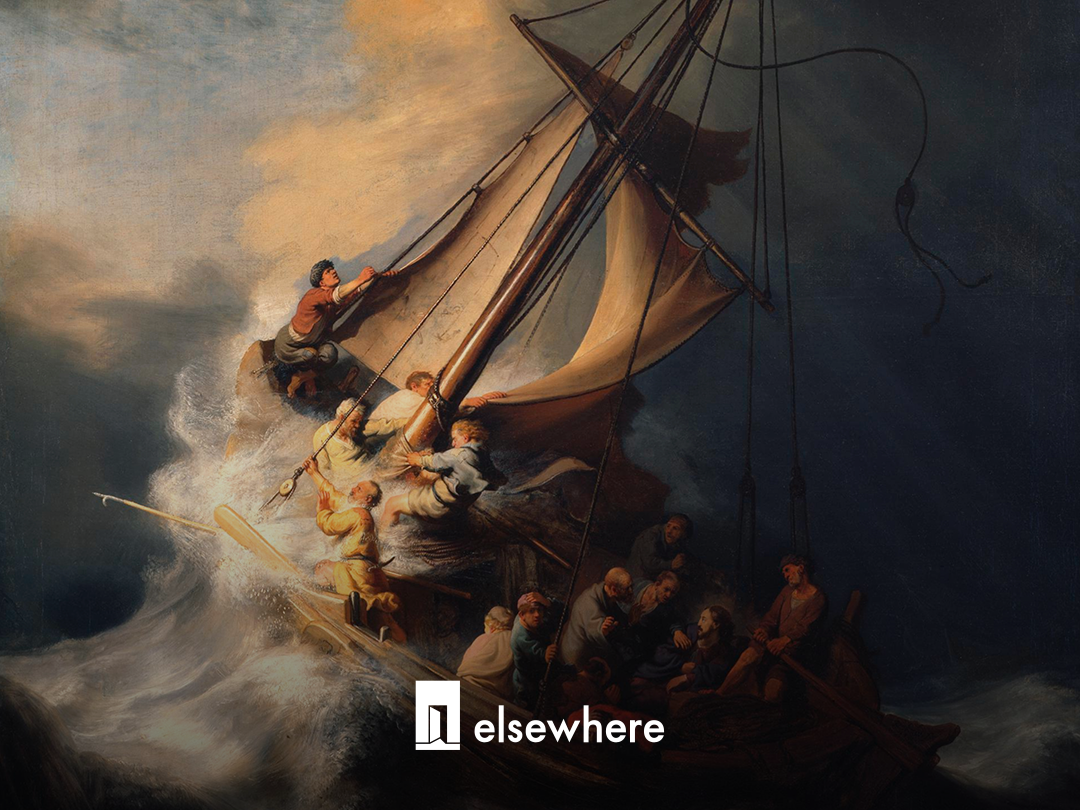
Cover image: Rembrandt van Rijn, *$2*, 1633, Isabella Stewart Gardner Museum