United States Tightens Chip Controls: What Changes Lie Ahead for China’s Semiconductor Industry? | FreeS Fund Chip Series

The current landscape isn't the final showdown — there will be plenty of opportunities to leapfrog ahead in the future.

The chip industry's neck is being squeezed tighter and tighter. In October 2022, the United States introduced regulations restricting exports of high-performance computing chips to mainland China. A year later, on October 17, 2023, the Bureau of Industry and Security (BIS) issued another announcement expanding the scope of advanced chip export controls, directly affecting "customized" chips produced by American manufacturers like NVIDIA from being sold to China and more than 40 other countries. At the same time, the United States updated its long-arm jurisdiction regulations related to semiconductor equipment and technology, expanding the range of lithography machine models that Dutch company ASML cannot export to China, with restrictions also affecting more than 20 countries beyond China.
Under the impact of round after round of restrictive policies, what changes will occur in China's semiconductor industry? From strategic and tactical perspectives, how should Chinese chip companies respond? And what impact will the AI industry face?
Yongcheng Yang, partner at FreeS Fund, recently shared his thoughts on hot topics in chips on Baidu's exclusive program Business Revelations. We've compiled and updated portions of the conversation, hoping to offer a different angle for consideration. We look forward to exchanging ideas with you — feel free to reach out to Yongcheng Yang at yangyongcheng@freesvc.com.
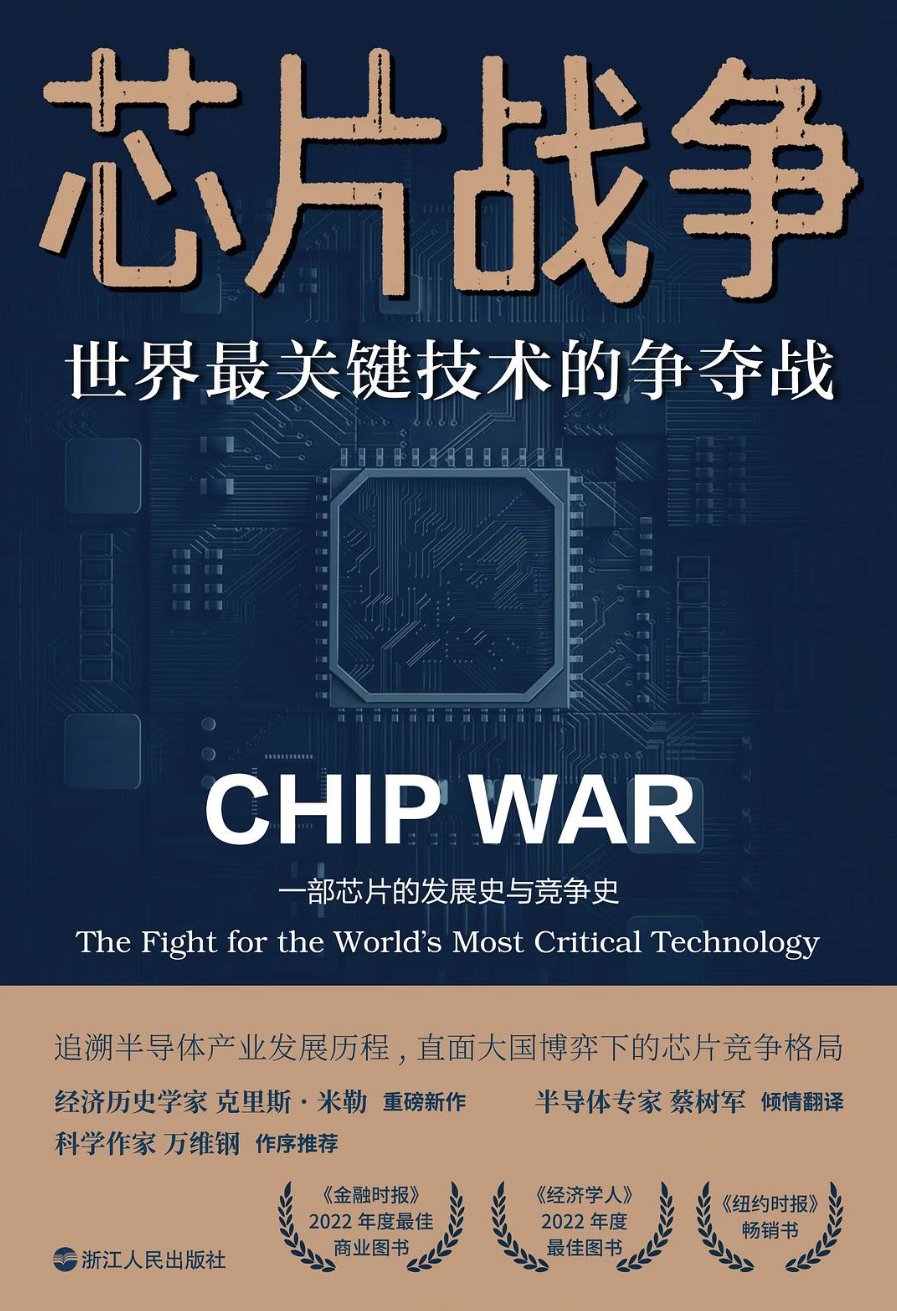
Reader Giveaway What do you think about China's chip market? How will U.S. chip restrictions affect China's AI industry? Share your thoughts in the comments.
By 17:00 on December 6, the 5 most thoughtful commenters will receive Chip War by economic historian Chris Miller. The book describes the decades-long struggle among nations to control chip technology, and explains the critical role semiconductors play in modern life.

/ 01 / Self-Reliance Is the Only Way
Q: What are BIS's policy objectives, and what is the legal basis for U.S. long-arm jurisdiction? Is there any way to prevent these policies from continuing to roll out?
Yongcheng Yang: Judging from their public rhetoric, the U.S. export controls on chips, like many historical control measures, are framed as protecting American national and industrial security. Whatever interpretation the U.S. side offers, the essential purpose of these policies is to restrict the development of China's high-tech capabilities. If we focus specifically on this round of restrictions targeting high-end computing chips, the U.S. is likely aiming at China's AI industry.
AI technology is a new technology with profound and far-reaching impact on future technological development and industrial competition. Currently, on a global scale, whether measured by capital investment, human resources, technological development level, or market implementation, the top players in AI are concentrated in two countries: the United States and China. The U.S. ranks first in comprehensive strength, China second.
Yet the development model of AI technology differs significantly from previous technological paradigms.
Most earlier technologies could be divided into stages: small-scale prototype testing, mass production, and process promotion. In the small-scale prototype stage, most technical feasibility could be verified, and the achieved performance metrics were close to those of mass production.
In AI model training, however, results from small data and small-scale training differ dramatically from those of large models and large-scale training. This is why training large models requires substantial computing power from the very beginning. We can also understand why BIS keeps issuing round after round of restrictions on high-computing-power chips.
As for BIS's legal basis, it may not necessarily rest on WTO-related laws or intellectual property protection laws, but rather more on domestic U.S. legislation. Still, there's no need to get entangled in the rationality or legality of these policies — understanding their essential purpose suffices. What matters most is doing our own work well, developing our semiconductor industry, and producing self-developed high-computing-power chips as soon as possible.
From a strategic perspective, China and the U.S. are at least in a competitive state in the high-tech development domain. This state was not our choice, nor can we unilaterally avoid it. For the foreseeable future, we cannot rule out the possibility of the U.S. introducing follow-up or even more stringent control measures — we should not harbor too many illusions about this.
In the long run, self-reliance is the only way. China will need to invest tremendous effort in building its own semiconductor industry chain for a considerable period ahead. Only when this independent chain nears completion, and our high-computing-power chips approach world-class levels, will the likelihood of being restricted by other countries in chip purchases largely disappear. At that point, someone might actually come urging you to purchase large quantities of NVIDIA chips, enumerating the myriad benefits of maintaining a unified high-computing-power chip ecosystem.
/ 02 / "Traffic Ahead, But You're Still on the Best Route"
Q: BIS's new policies not only affect the development and technological progress of China's AI industry, but also impact global interests, including those of major American semiconductor companies. Will these large Chinese and foreign companies find ways to circumvent or bypass the restrictions? What effective approaches do you think there might be?
Yongcheng Yang: First, at the strategic level, the various U.S. restrictions on China's semiconductor industry essentially represent America's choice of zero-sum games in great power competition — we should not be overly optimistic about this.
In the process of economic globalization, China and the U.S. were the main drivers and also the primary beneficiaries. Artificial severing and restricting trade not only affects China's AI industry, but also impacts partner countries throughout the supply chain, including the interests of some American tech giants. So, in terms of specific operations, there is still room for maneuver in responding to export controls.
But overall, we must rely on ourselves. Beyond our massive domestic market, we also possess the most complete industrial chain, such as in consumer electronics. Along this chain, brands like Huawei, Xiaomi, Vivo, and Lenovo have emerged. These end-product electronics companies serve as crucial ecological safeguards for China's semiconductor industry development, and represent one of the trump cards for China's chip sector. In other words, as important customer groups for chips, if companies like Huawei, Xiaomi, Vivo, and Lenovo can maintain their market share, the domestic semiconductor industry can develop on this foundation. Our "neck" won't be completely strangled.
Second, at the tactical level, chip suppliers — whether American or from other countries — may also exercise some initiative in implementing policies, and think of ways to circumvent them.
But ultimately, designing and producing our own high-quality, high-performance chips is the fundamental solution. Though difficult, the path of self-strengthening, self-reliance, and independence cannot be wrong. Here I'd like to quote a navigation app to encourage every AI and chip practitioner: "Traffic ahead, but you're still on the best route." Unremitting effort is the hardest truth.
/ 03 / When Will the Stranglehold Be Broken?
Q: FreeS Fund has invested in many semiconductor-related startups. Based on your understanding of the industry, what is the current development trajectory of China's semiconductor sector? We have quite a few semiconductor companies, so why still can't we break the "stranglehold" curse?
Yongcheng Yang: This is a good question. Let me start with the conclusion: China's semiconductor industry as a whole has made considerable progress in recent years. Particularly after the U.S. imposed numerous restrictions on China's chip industry, talent from both domestic and international sources has joined China's chip sector in large numbers. Startups have emerged in endless streams, received substantial investment, and gradually developed.
It can be said that China has achieved rapid, even "swift" development in most chip sub-sectors, especially in chip design and application. Currently, the industry's weak points lie mainly in critical chip production equipment, such as high-resolution lithography machines. However, the localization progress for most semiconductor equipment remains quite fast, and we've also made very significant advances in semiconductor materials.
Of course, these advances may not fully alleviate everyone's anxieties. The semiconductor industry has a long development history and an extremely complex technical system. Replicating the achievements of global semiconductor development over decades with the strength of one nation is a monumental task. Additionally, from official reports, we still tend to "hide our capabilities and bide our time," doing more work quietly than talking about it.
When comparing technological levels, we tend to use the top one or two products as benchmarks — which is understandable. But we should also recognize that the chip industry is vast; it's not just about the most powerful AI accelerator chips, but also includes power devices, communication chips, IoT chips, 5G base station chips, and more. Overall, we've already completed a solid industrial layout and made certain progress.
From another perspective, in the chip and semiconductor industry, the United States is actually quite anxious too — perhaps even more anxious than we are. The U.S. sees our industrial layout and progress. Why did the U.S. restrict chip manufacturing for Huawei's HiSilicon? Because HiSilicon's chip design capabilities had already reached world-class levels; they could only cause trouble at the production stage. Sometimes the person who knows you best really might be your opponent.
Let me use another analogy. Imagine a neighbor spent a century building a hundred-story skyscraper, with a super-luxury observation deck at the very top that fills you with envy, and you want to reach that level too. You have to eat your meals one bite at a time; every day we're adding bricks and tiles, making progress.
An interesting phenomenon emerges at this point. Looking up from the ground, we always feel the floors are rising so slowly, so far from the dream observation deck at the top. But the people standing on the hundredth floor — those industry giants and leaders — see the surrounding buildings constantly growing taller, constantly catching up. The people on the high platform grow increasingly anxious, so today they throw a stone, tomorrow they knock off a brick, trying to limit the speed of construction below. This is perhaps the general pattern and mentality of industry competition.
Overall, the foundation of China's chip industry has been laid. From raw materials for the semiconductor industry, manufacturing equipment, production, to design, we've made excellent arrangements. From a long-term perspective, our chip industry will ultimately reach international advanced levels — we should have sufficient confidence.
/ 04 / After Solving Three Major Challenges, China Will Become the Country with the Most Complete Global Semiconductor Supply Chain and Highest Output
Q: Thank you for sharing these perspectives. We all hope China's semiconductor industry can soon reach world peak levels and bid farewell to the days of being strangled.
Yongcheng Yang: That day will certainly come. China's semiconductor industry is not just catching up, but also innovating and creating. For example, we mentioned lithography machines as a weak point in China's chip industry. In terms of structure, a lithography machine is a precision, complex, or rather ultra-complex optical instrument. But actually, in the technical path for patterning semiconductor chips, beyond ASML's DUV (deep ultraviolet) and EUV (extreme ultraviolet) lithography machines, there are other approaches, such as nanoimprint lithography technology.
The basic principle of nanoimprint technology is like developing a photograph: first, pattern transfer is completed through contact imprinting, equivalent to the exposure and development processes in optical lithography technology. Then, using etching transfer processes, the structure is transferred to any other material. Nanoimprint is like stamping: a circuit with gate lengths of just a few nanometers is carved onto a stamp, then stamped onto putty to obtain the inverse pattern of the stamp; after demolding, a chip is obtained.
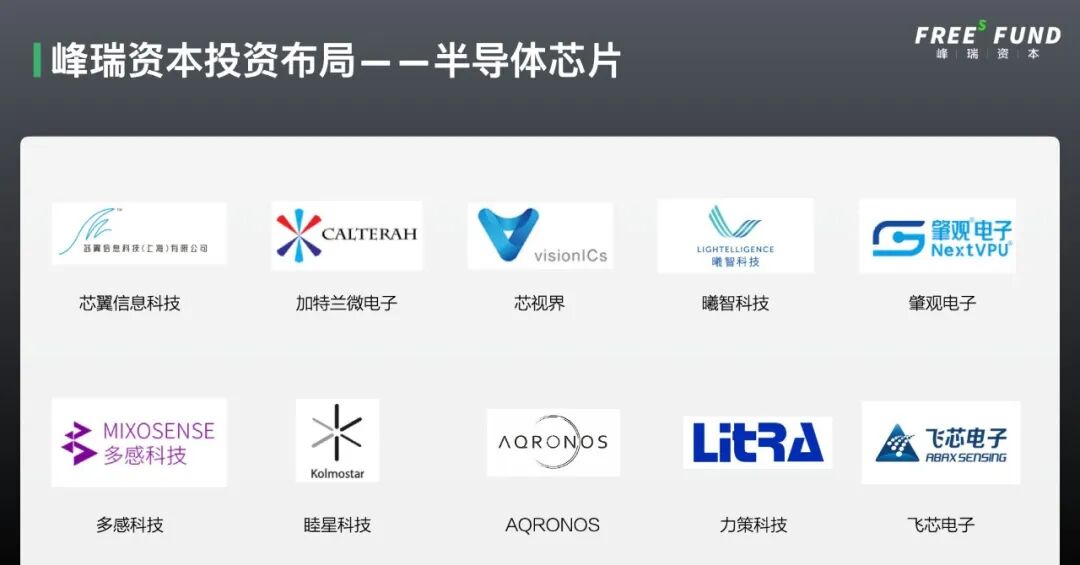
Both optical lithography and nanoimprint technology can achieve chip patterning. Many domestic teams are making unremitting efforts in optical lithography technology. China's nanoimprint technology is developing rapidly, with a very small gap from world-class levels. This represents an attempt at "curve overtaking" or "lane changing" to surpass. In the nanoimprint field, FreeS has invested in Pulin Technology.
For AI high-computing-power chips, beyond NVIDIA's electrically-based technical architecture, the technical path of photonic computing is also developing. In the photonic computing chip field, FreeS has invested in Lightelligence and LightStandard.
In the optical communication optical chip field, thin-film lithium niobate optical chips have emerged in the past decade, with communication rates faster than previous silicon photonics or III-V materials (III-V materials generally refer to alloy compounds formed by group III and group V elements from the periodic table, with many types such as gallium arsenide (GaAs), indium phosphide (InP), gallium nitride (GaN), etc.). And in the thin-film lithium niobate optical chip field, Chinese startups are also in the global first tier. FreeS Fund has invested in Anpai Xinyan in this direction.
Looking ahead, if China's semiconductor industry enters the world first tier, it may drive the global semiconductor industry to new heights, particularly in market applications. Chinese semiconductor companies can further develop niche markets, just as we once did in the consumer electronics industry.
/ 05 / AI Competition Is a Relay Race — Even a Temporary Lag Offers Chances to Overtake
Q: Will restrictions on high-end AI chips cause us to fall increasingly behind the U.S. in this round of large model competition? Could it even bring "catastrophic" impact to China's AI industry?
Yongcheng Yang: First, we must acknowledge that U.S. restriction measures will create certain obstacles for China's AI industry development. When the other side targets you with precision in their advantage areas, you can't emerge completely unscathed.
In terms of responses, the AI industry can on one hand diversify chip procurement channels to reduce the impact of U.S. chip export restrictions. On the other hand, although chip restrictions will increase AI training costs and reduce efficiency, if China's AI industry can increase investment in model innovation, algorithm innovation, and foundational AI theory — areas where we currently lag behind the U.S. — that would undoubtedly be a good thing. Once we emerge from this muddy patch of chip controls, China's AI industry has prospects for rapid development, even taking the lead.
So, will China's AI industry suffer catastrophic destruction because of chip controls?
There's no need to be so pessimistic. The ultimate prospects of AI are upward; it will simply experience a tortuous development process. In the future, AI models will likely possess intelligence equal to or even exceeding that of humans. And as long as AI has human-equivalent intelligence, it will exert unprecedented influence on human life and even the entire world.
Because AI essentially possesses several super advantages that humans lack:
First, AI is inherently internet-native, equivalent to sharing and integrating the brainpower, computing power, and all information of all humanity. Even though we humans designed and possess the internet, information between people still cannot be completely communicated, nor can everyone's computing power be placed in a unified computing platform for coordinated scheduling. But AI can achieve this, and more efficiently.
Second, AI computers are immortal, with unlimited lifespan, and can fully inherit historically accumulated data. Humans are not; human life is finite. Even if Albert Einstein discovered the theory of relativity, his wisdom existed only in his own brain. Much of human scientific and intellectual capability is non-transferable, advancing in discontinuous steps.
So I don't doubt the future technological development level of AI. My only slight concern is whether high-intelligence AI might one day no longer be content with human direction, beginning to disdain and look down upon human intelligence and worldview. But let's not expand on that question here — we'll leave it to philosophers, sociologists, and science fiction writers to explore.
What I want to say is that current large model-based AI technology is likely not the ultimate AI technology or level.
For example, if we observe the current capability output of AI, we'll find that AI currently demonstrates more capabilities in images, text, language, and other humanities aspects. Of course, AI has made some other advances, such as predicting protein secondary structures and other biological applications, but overall, AI still performs more like a "liberal arts student." In mathematics, physics, and other foundational disciplines crucial to modern technological development — the "science student" direction — AI still has much room for development and a long road ahead.
I don't mean to challenge AI technology, but I feel that although current large model technology has made tremendous progress, the present landscape is not the final battle; there will be many more opportunities to surpass in the future.
The AI competition is not a 100-meter dash, not decided within 10 seconds. The AI industry competition is more like a relay race — even if you fall behind in one leg, as long as you have resilience, strength, and perseverance, there are still opportunities to overtake from behind. And this relay may not be a 4×100 relay, but perhaps an N×100 relay; it has to run very, very far, with many baton exchanges. As long as you keep striving, anything is possible.
Reader Giveaway What do you think about China's chip market? How will U.S. chip restrictions affect China's AI industry? Share your thoughts in the comments.
By 17:00 on December 6, the 5 most thoughtful commenters will receive Chip War by economic historian Chris Miller. The book describes the decades-long struggle among nations to control chip technology, and explains the critical role semiconductors play in modern life.

▲ Long Read: Deconstructing Changes and Opportunities in NEV Sales and After-Sales Services | FreeS Report 35
▲ "Standing High, Seeing Far": The Origins and Future of the Satellite Communications Space Race | FreeS Report 34
▲ Amid the GPT Frenzy, Anxiety and Breakthroughs in China's Chip Market | FreeS Research Institute
▲ Under the Pattern of Great Power Rivalry, "Involution" in the Chip Industry Is Hard to Avoid | FreeS Research Institute · Chip Series
▲ What Happens When the Hottest Different Tech Tracks Intersect? | FreeS Chip Series
▲ Was Elon Musk Right? Will LiDAR Make It into Cars? | FreeS Chip Series
▲Unearthing New Opportunities: 4 Interdisciplinary Innovation Companies Announce Hundreds of Millions in Funding | FreeS Family Funding News Vol. 17
Star the FreeS Fund WeChat Official Account — timely business insights delivered to you