An AI Gaming Company Valued at 2 Billion Built a Pixel Art Game

"Five-Star Citizen" (This is a Chinese internet slang term, often used sarcastically to describe someone who behaves like a model citizen in video games — particularly in *Grand Theft Auto* where players typically cause chaos, making the "five-star" wanted level and "good citizen" an ironic contradiction. It can also refer to someone who diligently follows rules or participates in civic rating systems, like China's social credit pilot programs, again often with ironic or humorous undertones.)
"Project: Metropolis"
I heard last year that MiAO was testing a new game. I figured it was just an experimental prototype, but the testing dragged on for nearly a year, and they eventually claimed it outright on their official website.
MiAO is a new company founded by Wu Meng, former CEO of Giant Interactive and creator of Battle of Balls. Its most recent valuation hit 2 billion RMB, with total funding of 500 million RMB — making it the highest publicly valued company in China's AI gaming space.
According to the official description, Project: Metropolis is an open-world voxel game focused on multiplayer gameplay, positioned similarly to Minecraft — an open world of "infinite possibilities."
But from what I can see right now, it looks like an unfinished pixelated urban game.
The bugs are genuinely numerous. Clipping through geometry happens constantly. Pan the camera in certain spots and you'll phase right through walls. I even watched some guy outrun cars on foot, then launch into the sky mid-stride. Dude was hacking right in front of me 🤡
Clearly unpolished. It has that AI-written essay quality, full of "not this, but that" constructions. To address getting stuck, they even added a "suicide" button to the action wheel.
I also scraped through two or three thousand player reviews on TapTap. Most mentioned poor optimization and an overwhelming number of bugs.
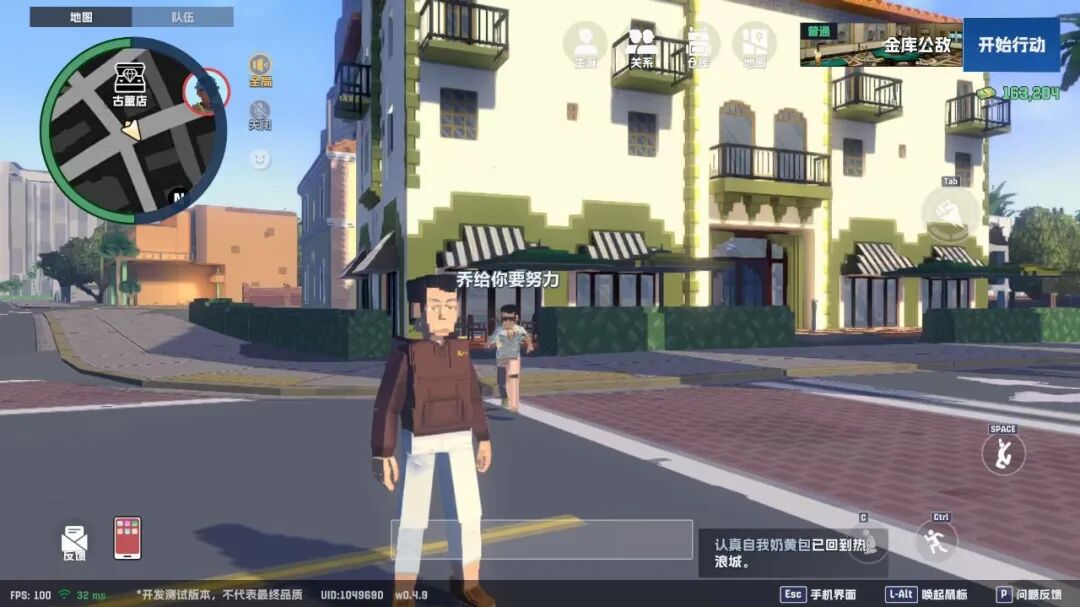
The intro cutscene, the summonable phone, the explorable open world, the radio kicking in when you enter a car — it all feels eerily reminiscent of a certain blockbuster title. The difference being that the original's radio tells darkly comic jokes, while Project: Metropolis only has music for now.
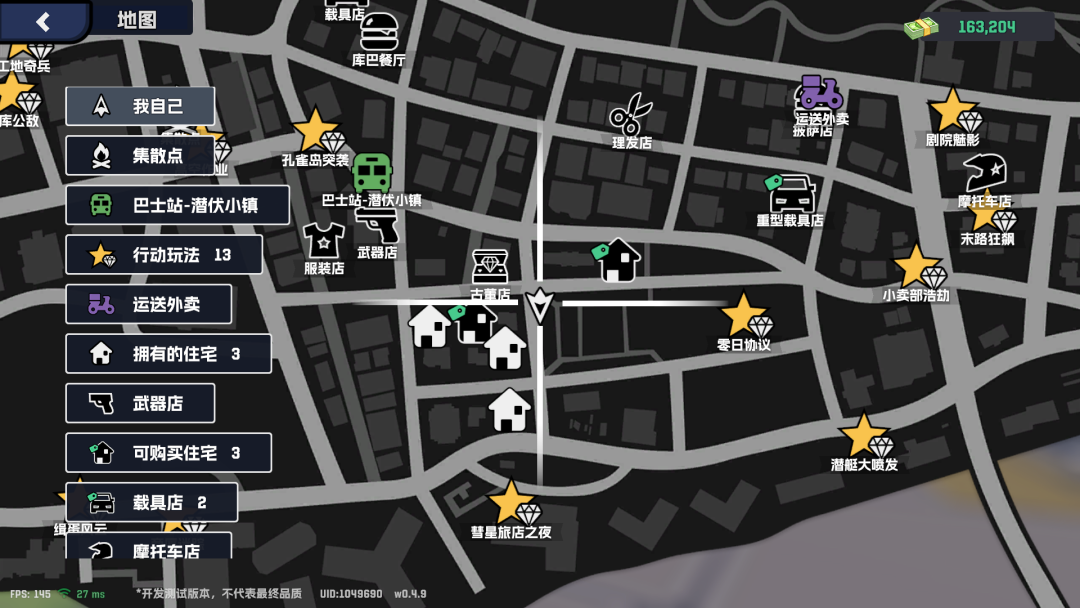
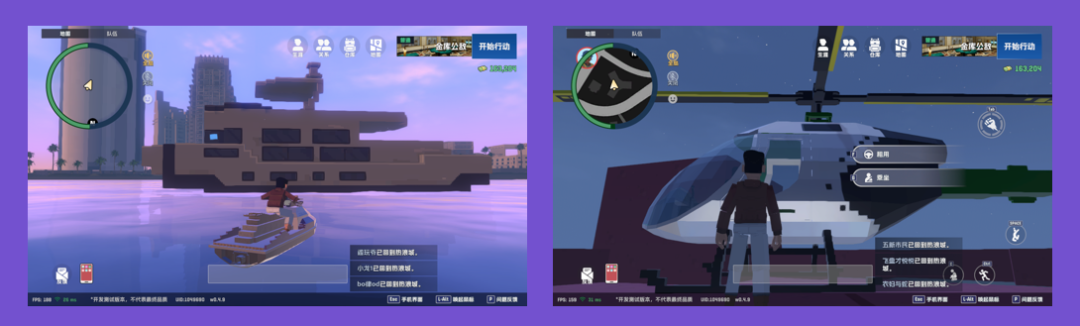
The map randomly spawns sports cars, motorcycles, yachts, even helicopters — find one and you can drive it straight away.
And if you cause trouble at shops, you become a dangerous element. You must face the righteous hand of justice. Only death can redeem your sins.
Similar. Very, very similar.
The game's open world is called Heatwave City, where you can weave through streets and alleyways. It's actually quite explorable — you can buy property, street race, and if you lose your car you can pull out your phone and have a "delivery technician" bring it to you. The downside is the abundance of invisible walls, and driving itself feels aimless; you get bored after a few minutes.
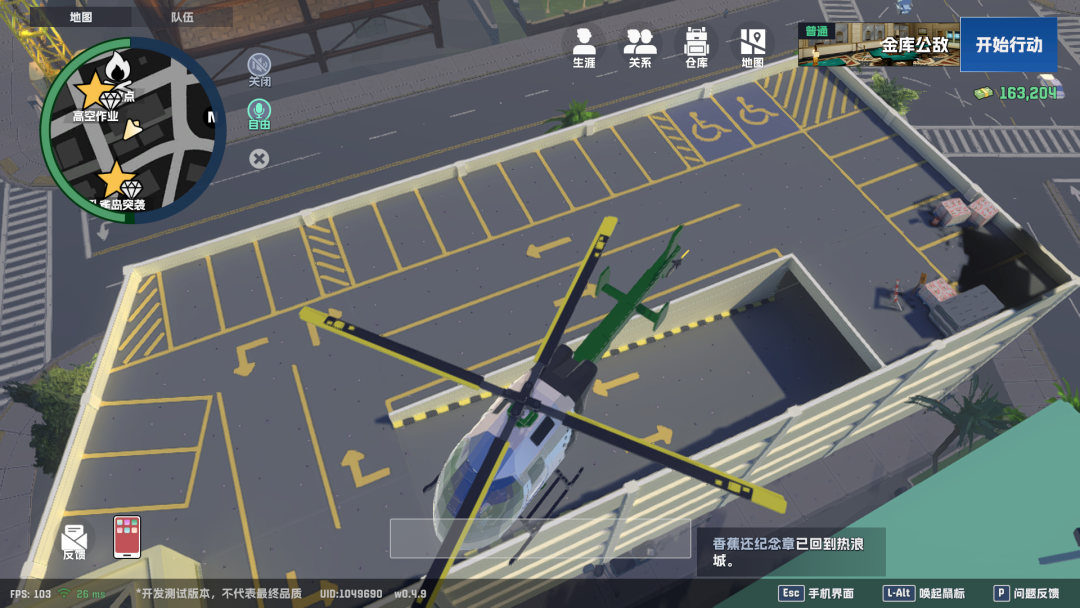
And this world even has handicapped parking spaces ♿️
You can even deliver food, though first you need to buy a motorcycle from the bike shop. If you're feeling it, you can hit up the clothing store and buy the "Chilemei" or "Mituan" delivery uniforms, becoming a five-star delivery driver on the spot. Everyone in Heatwave City has their own hustle.
Loot-shoot-extract is currently the main gameplay loop in the open world.
You buy guns, ammo, body armor, and supplies in Heatwave City, then head into maps to scavenge. Some items you extract can be appraised back at the antique shop.
But there's not much to say about this part. It's basically a budget, PvE-only knockoff of Delta Force. No PvP, tiny maps, stiff shooting animations, and AI spawn points are fixed — a map gets stale after four or five runs.
The only real creative touch might be the collectible items.
Like the "silver arowana in the pool" from the song Lai Cai:
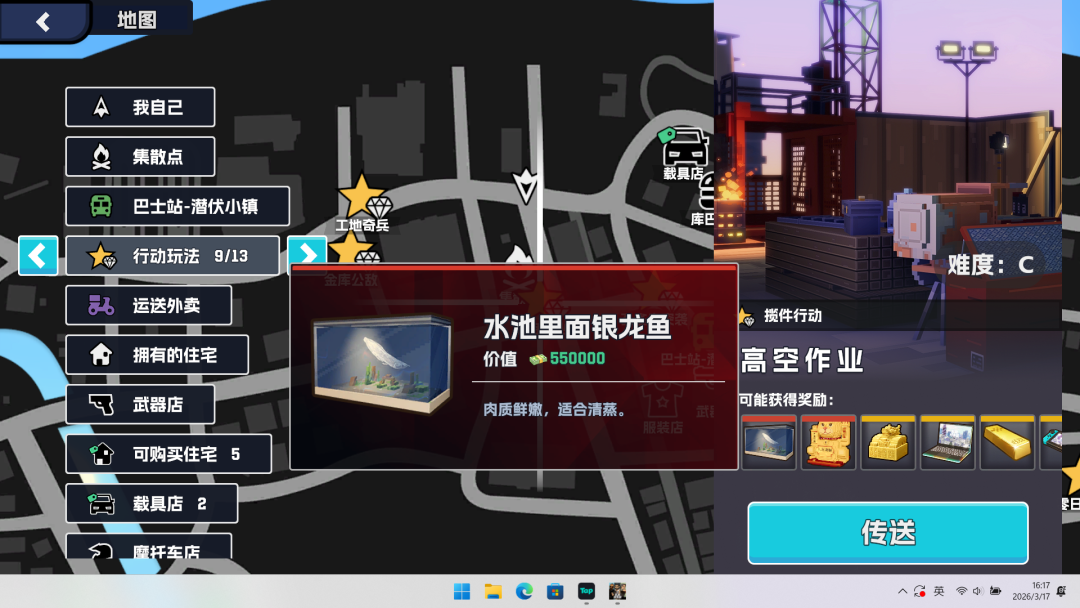
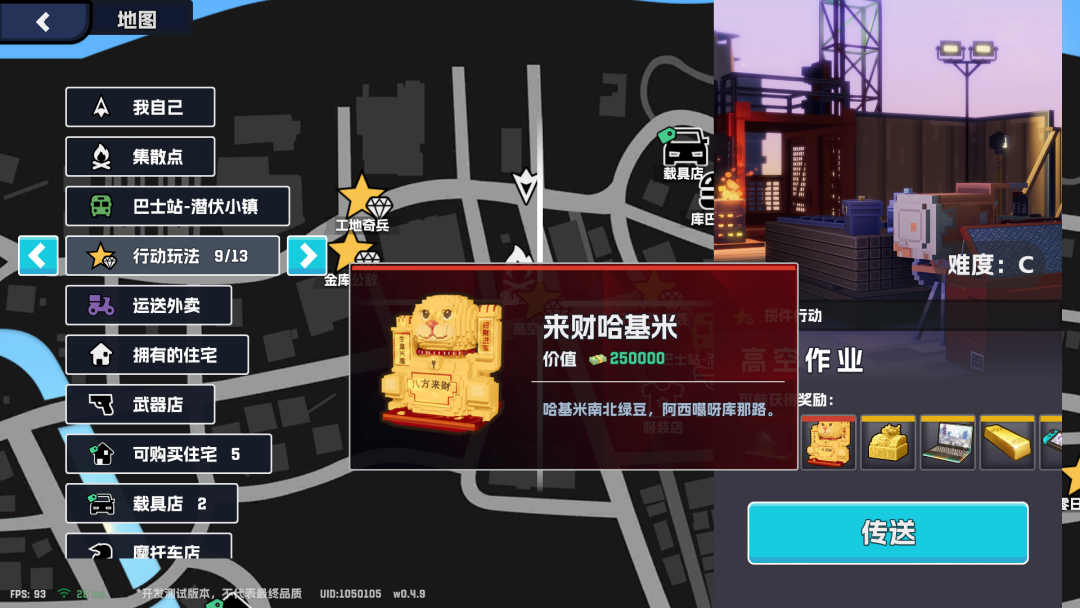
The Douyin viral earworm "Hajimi nanbei lüdou":
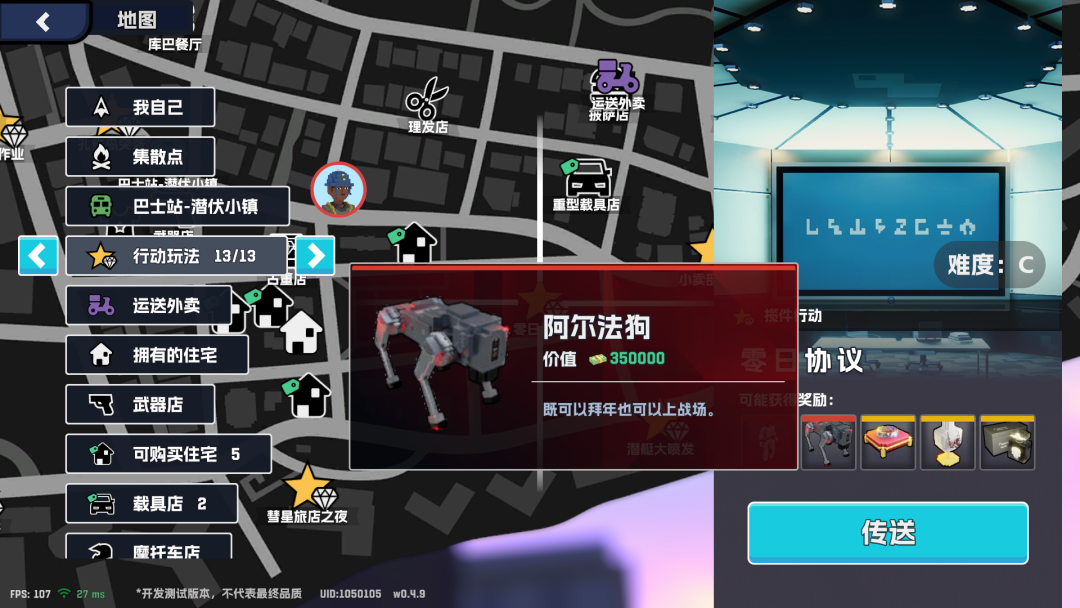
Is this hinting at the Unitree robo-dog?
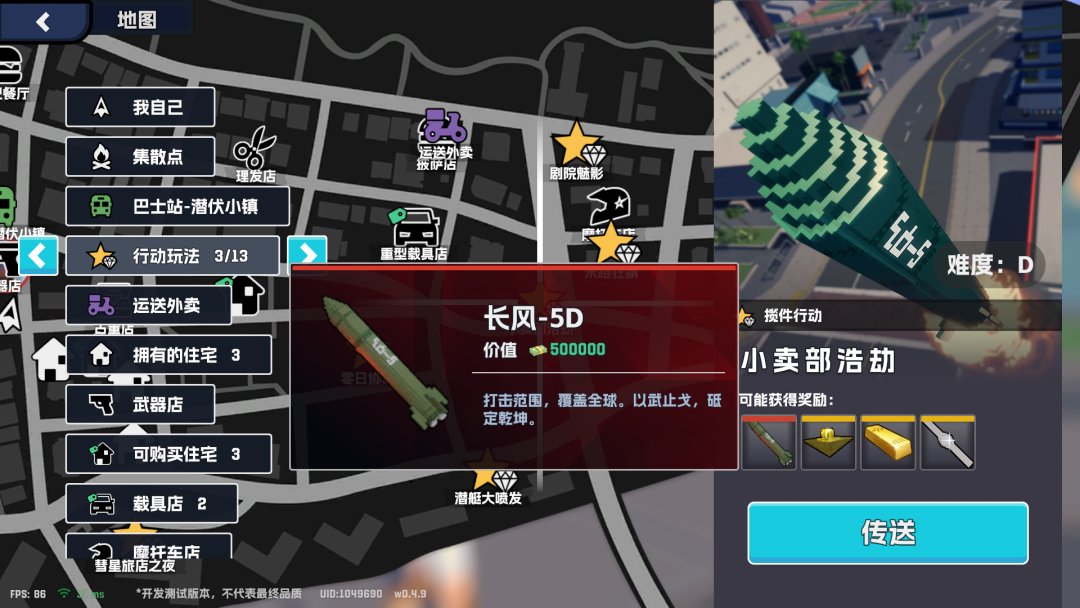
And a certain major power's latest cutting-edge product, the "Changfeng-5D." Strike range: global coverage. "Wage war to stop war, forge order through strength."
Of course, if you don't feel like looting and shooting, you can always spend your days at clothing stores and barber shops playing this like Love Nikki — be like ⬇️
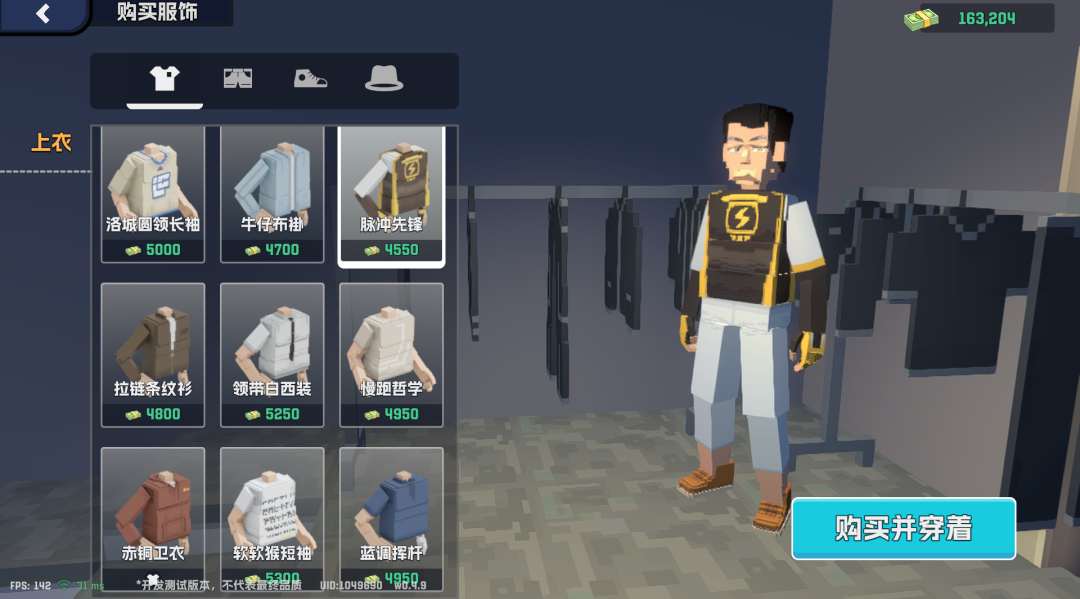
The open world also contains a smaller zone called Lurkville, where the main gameplay is simulation and management.
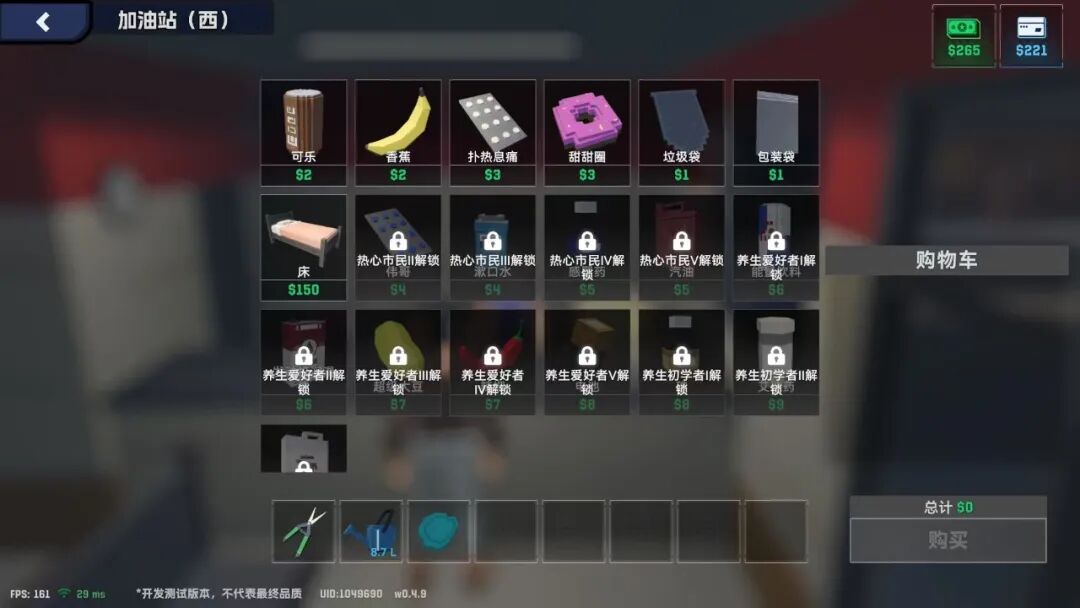
The backstory: as a concerned citizen of Heatwave City, you learn that Lurkville on a southern island has been taken over by a mysterious organization of black-clad figures. The residents there, worked to exhaustion, suffer from anxiety and insomnia, listless all day. Players must infiltrate the island, bringing precious "supplements" to the locals and secretly establishing production bases.
It starts out fairly normal — planting ginseng and making ginseng slices to sell to residents per request. Though of course the bugs are rampant here too. I once had to place a ginseng seed seven times before it actually worked.
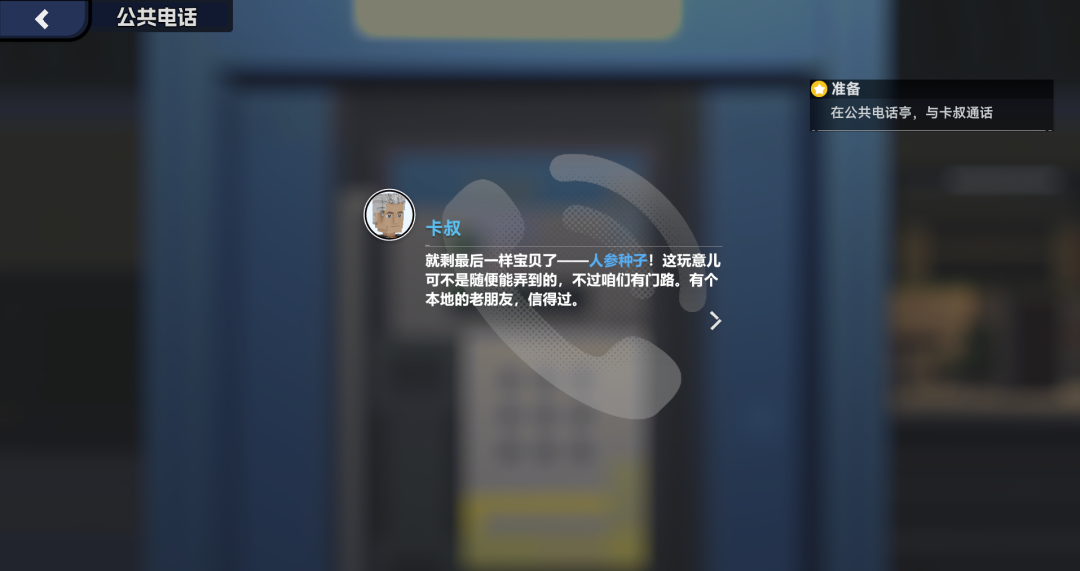
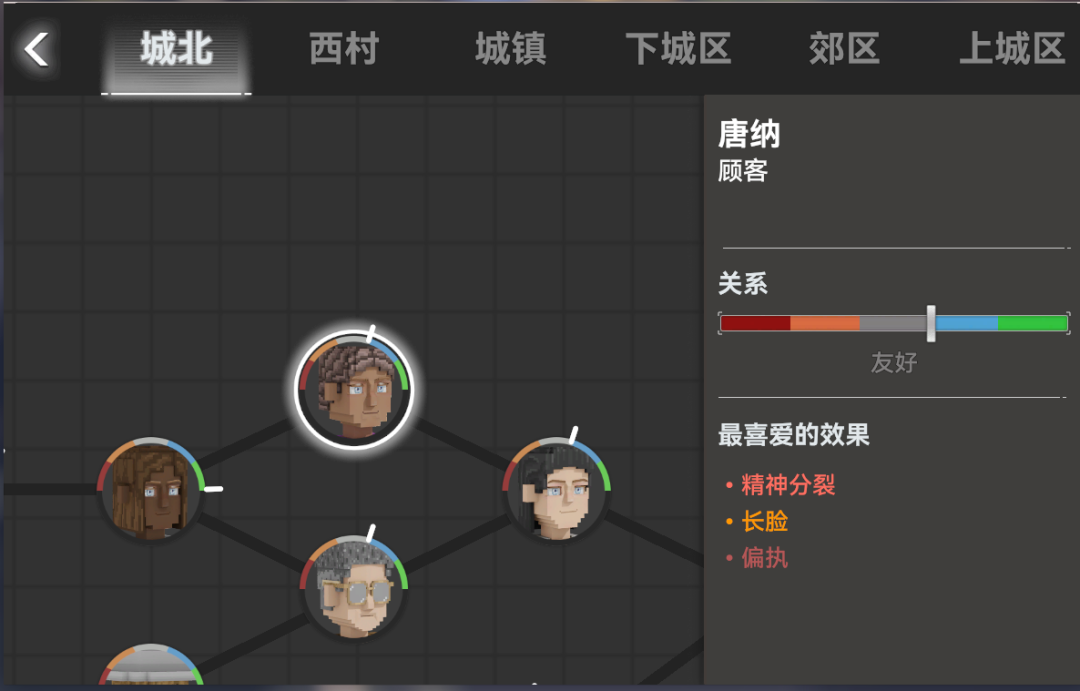
But as I kept supplying them, I realized the customers' demands weren't so simple...
This one wanted schizophrenia, elongated face, paranoia:
This one wanted high calories, euphoria, and paranoia:
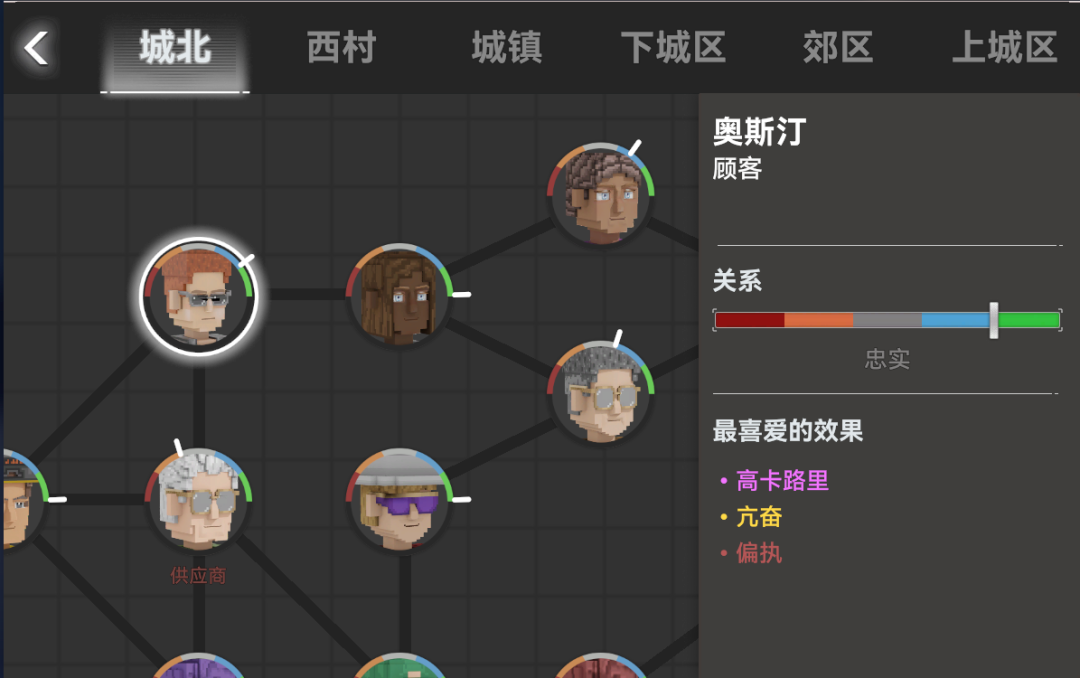
Hard to imagine "ginseng slices" satisfying a craving for schizophrenia.
A key method for attracting customers is inviting them to sample "ginseng slices." To sell more, you also recruit residents as distributors;
When selling "ginseng slices" I also had to watch out for the black-clad figures — get caught selling in front of them and they'd kick me out. There's even a curfew at midnight.
In the late game you can sell "mixed ginseng," including blends with "Viagra."
Truly divine, folks.
Maybe my Fujian bloodline awakened, because I found it weirdly addictive. The whole thing plays like a bargain-bin urban crime flick. All I can say is, China desperately needs a domestic urban open-world game to satisfy the masses' urgent need to shake up everything.
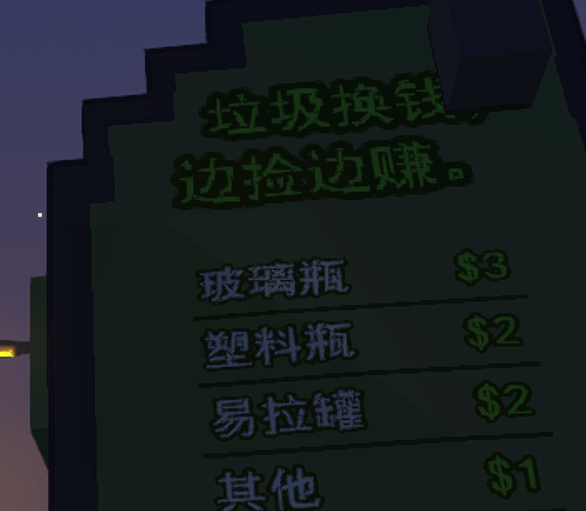
Oh right — you can also scavenge trash for money in Lurkville. Cigarette butts go for 1 RMB, bottles for 3 RMB, not much less than selling ginseng. So the optimal strategy is apparently: grow ginseng for your distributors at night, scavenge trash by day.
My internet café buddy's assessment was that there are too few interactive elements — it feels like an empty city.
One player on TapTap suggested they add police booths and randomly spawning security guards on the streets. Violations would add wanted stars, maxing out at five. Players could help police arrest violators for huge rewards, or help violators fight back against police. Each star level would mean different guard equipment.
Like one star: guards with pistols. Two stars: guards in cars with SMGs. Three stars: special tactical units from the bank map deploy. Four stars: helicopters activate. Five stars: tanks roll out.
Bro, at that point just change the name.
After all, in that certain blockbuster, five stars is the maximum threat level. "Copying a blockbuster would be an insult for others, but for them, copying a blockbuster might be an honor."
Though this game doesn't seem to have any actual AI in it 👍
The closest thing might be an open-world role-playing language agent framework they published on GitHub, hoping to use AI to make NPCs smarter, plus what their website says:
"AI has been fully integrated into our interview process, creating a more efficient, intelligent, and seamless recruitment experience."
"Through the co-creation of AI and humans, we build bridges between immersive gaming experiences and social connection."
I don't think this is AI Native enough. My suggestion: let players figure out how to hook programming agents like Claude Code into the open world, competing to see whose AI writes the most OP hacks.
The NPCs need to be hacking too for that Free Guy vibe.
Best of all would be building planes, building the fastest pure EVs, building robots, exploring asteroids in Heatwave City — who wouldn't want to be Yu Hao in an open world?
About five years ago, Wu Meng once said that social interaction is the future of online games, and his vision for that future was creating a real virtual world.
A virtual world has two characteristics: being "extremely realistic" and "extremely vast." The prerequisite for achieving both is 100x productivity — which is what AI can bring.
Though this vision is, how do I put it... a bit metaverse — er, I mean Web 4.0... but on second thought, the metaverse wasn't pure snake oil either.
After all, nobody has the answer yet for what games in the AI era will ultimately look like.
(Cover image generated by ChatGPT; article written entirely by human.)
⬇️
Subscribe to our Substack
funeralai.substack.com