a16z is a media company.

VC as Media
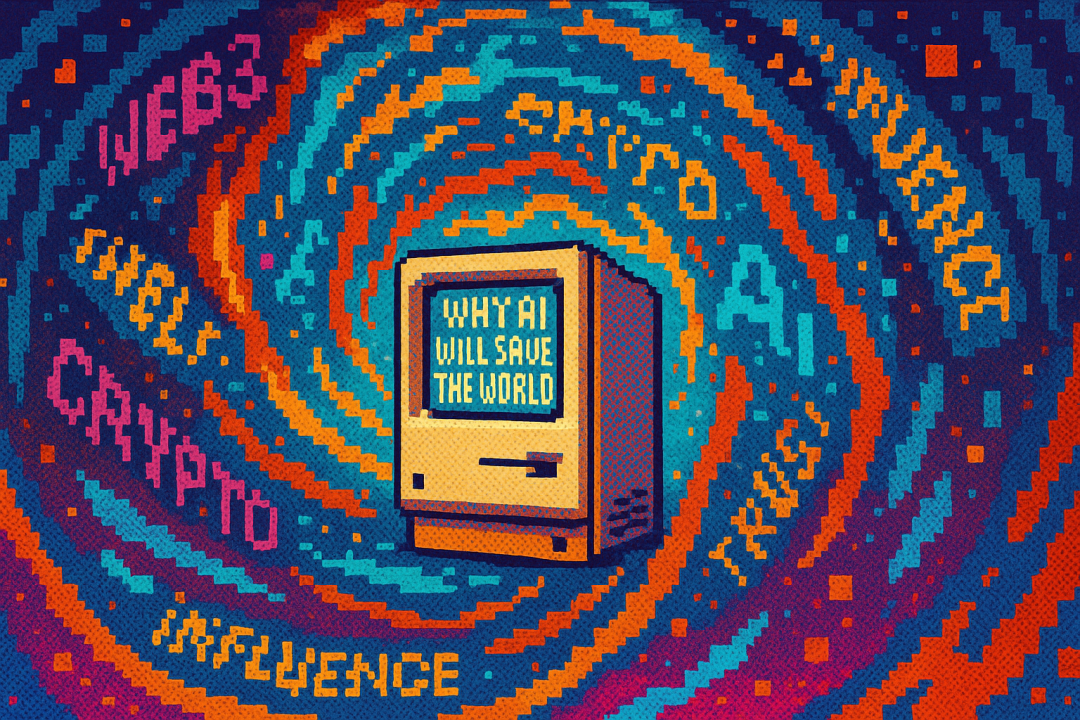
"Influence Is Power"
Today's top-tier VC firms are, at their core, media companies.
a16z is the definitive proof.
In 2009, when Marc Andreessen founded the firm, he laid down a positioning that was radical for its time: a media company that makes money through investing.
Back then, this sounded extreme. But in 2025, it stands as the most prescient prediction of where the VC industry was headed.
Because attention is scarcer than fiat currency.
Fiat money can be printed endlessly, but every person on earth only has so many waking hours in a day. And attention alone only gets you the traffic business — influencer live-streaming commerce follows exactly this logic.
But attention plus trust becomes influence. Influence is the truly scarce asset that can be monetized.
There are only two places in the world where influence can be fully and legally monetized. One is crypto. The other is the primary market.
Justin Sun pumps and dumps in crypto, and everyone condemns him. a16z does something strikingly similar in the primary market, and it's held up as the gold standard.
So how exactly did a16z pull this off?
01
Power
a16z's core competency can be summed up in two words: power.
Marc Andreessen himself has been explicit about this: "We've always believed that what you want from a VC is power. You need the ability to get public attention."
What does this power specifically mean?
It's the ability to let startups directly set the industry agenda, shape public perception, and attract other capital to follow their lead. And the vehicle for this power is content.
Marc himself is a top-tier content creator.
From 2011's Why Software Is Eating the World to 2020's It's Time to Build, to 2023's Why AI Will Save the World and The Techno-Optimist Manifesto, nearly every essay Marc has published has sparked industry-wide debate.
His long-form publishing cadence over the past two years has been roughly one piece every eight months. Each one is a meticulously crafted product.
The influence of these essays comes from two sources.
First, Marc's precise capture of the zeitgeist. It's Time to Build struck at the pervasive sense of powerlessness across the Western world in the early days of the pandemic.
Second, his ability to elevate business issues to the level of national interest and civilizational stakes. The Little Tech Agenda directly equated supporting small tech companies with defending American technological hegemony. Marc wrapped VC's commercial interests in the flag of American national interest.
a16z has also built a professional and sizable content team.
According to a16z's website, they have dedicated editorial directors, podcast hosts, and video production teams. Chris Dixon handles content output for the crypto domain. Connie Chan focused on China and mobile internet. Katherine Boyle leads the "American Dynamism" column series. Sriram Krishnan hosts podcasts and contributes to Web3 narrative creation.
a16z's content production is industrialized and systematic. They have their own podcasts, YouTube channel, and special reports. This team's mission is to translate a16z's investment themes into传播able narratives and reach policymakers, LPs, founders, and other VCs through every available channel.
With content capabilities, a16z possesses the core competency of "shilling + pumping."
Shilling: Through Marc's essays and the content team's systematic output, propose a grand narrative (e.g., Web3 Matters, AI Will Save the World) and define it as the trend of the era.
Pumping: The moment the narrative gains momentum, immediately deploy hundreds of millions or billions of dollars into the sector, inflating star project valuations 10x or 100x, making the narrative real. Other VCs see a16z enter the game and follow suit, further driving up sector-wide valuations.
This is a16z's core "narrative-investment" competency.
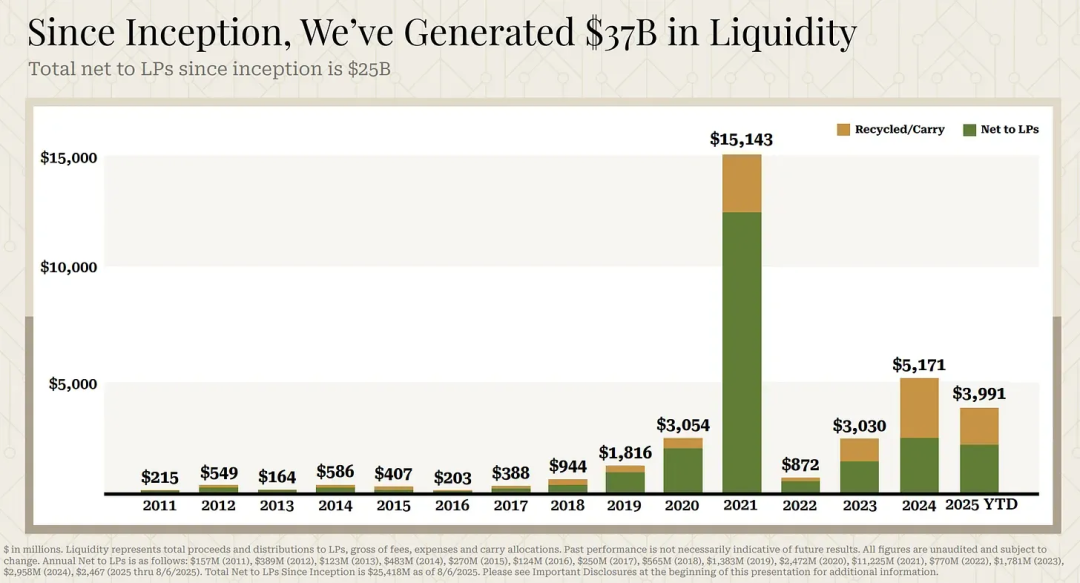 a16z has generated $25 billion in cumulative net returns for its LPs 🥵
Content creates influence; investment converts influence into valuation surges. When you're painting the tape yourself, becoming the market maker, exiting becomes that much easier.
So how did a16z develop its "shilling" capability?
02
Shilling
a16z's grand narrative — a.k.a. shilling — follows a replicable methodology. I call it the "a16z Five-Step Narrative Framework."
Strike at collective emotion. Propose a disruptive framework. Construct an us-vs-them opposition. Elevate to civilizational heights. Issue a battle cry.
Progressive escalation.
Step one: strike at collective emotion.
Marc's essays never create momentum out of thin air; they simply lead industry sentiment by half a step. Not too far ahead, not behind.
It's Time to Build (2020) opens with: "Every Western institution was completely unprepared for the pandemic... This spectacular failure of institutional effectiveness will reverberate for the next decade." In the early pandemic, the entire Western world was experiencing frustration at institutional failure, and Marc captured this emotion precisely, across party lines.
Why AI Will Save the World (2023) opens: "The era of Artificial Intelligence is here, and boy are people freaking out." With a light tone, he acknowledges public panic about AI, then proceeds to hammer AI skepticism.
Step two: propose a disruptive framework.
After establishing emotional resonance, Marc immediately throws out a disruptive new framework that pulls the debate onto his home turf.
Why Software Is Eating the World (2011) doesn't get bogged down in "are tech stocks in a bubble"; it redefines the question entirely: this is an economic revolution where "software is becoming the infrastructure of every industry." A valuation dispute becomes a test of "whether you understand the future."
It's Time to Build doesn't get tangled in mask and ventilator supply chains; it goes straight to: "The problem is desire. We need to want these things. The problem is inertia, the problem is will." From a supply chain issue to American national will and spirit.
Step three: construct an us-vs-them opposition.
Marc simplifies the world into two camps, forcing readers to pick a side.
The Little Tech Agenda (2024) is the clearest: "Pro-small tech people, we are for them. Anti-small tech people, we are against them." Minimalist political mobilization language, black and white. We are the Little Tech startups; they are Big Tech giants and harmful government policy.
Why AI Will Save the World (2023) goes further: We are the AI builders, heroes, optimists. They are the doomers, further subdivided into Baptists (naive but exploited), bootleggers (profiting behind regulators' backs), even labeled an "AI risk cult."
Not just drawing camps, but delegitimizing opponents through stigmatizing labels.
Step four: elevate to civilizational heights.
Marc excels at adding moral weight, raising specific issues to grand narratives of national interest, humanity, and civilization.
The Little Tech Agenda: "American technological hegemony, and the critical role of Little Tech startups in ensuring it... a first-tier political issue as important as any other." Supporting startups = American technological hegemony = national security. VC's commercial interests become directly equivalent to American national interests.
The Techno-Optimist Manifesto (2023): "We believe growth is progress, we believe lack of growth is stagnation, and that leads ultimately to death." Techno-optimism = survival; opposition = death. Business choices become matters of life and death.
Step five: issue a battle cry.
Marc distills complex arguments into short, forceful,传播able slogans. The title is the slogan, repeated throughout the essay, and called out again at the end.
The titles share distinct characteristics:
- Strong propositions (Manifesto/Agenda as worldview declarations);
- Calls to action (It's Time to Build, imperative, mobilizing);
- Grand vocabulary (World/Future, emphasizing direction over detail);
- Minimal modifiers (modifiers show lack of conviction; the cleaner, the more powerful);
For example, It's Time to Build — the title is the slogan, repeated throughout. Why AI Will Save the World ends with the escalated "We win, they lose."
The Little Tech Agenda closes even more grandiosely:
"The glory of a Second American Century is within our reach.
Let's grasp it."
 a16z's website has serious aesthetic game — you can tell these guys really believe in the new Rome
Marc knows his positioning. He's clear that his essays are B2B传播, not B2C traffic plays. The target readers are policymakers, other VCs and LPs, founders and engineers, media and opinion leaders.
This determines that his titles must be sufficiently concise, grand, and forceful — so that people with no time to read the full piece can still remember the core argument and retell it.
This is the basic method of a16z shilling. It provides emotional priming for subsequent pumping, inducing industry FOMO; moral legitimacy, making investment righteous; political elevation, making investment an act of civilizational guardianship; and mobilization capacity — It's Time to Build.
Now, let's look at how a16z converts these narratives into real monetary returns.
03
Pumping
a16z's shilling is only the beginning. What truly closes the loop is the investment that immediately follows the narrative — getting in there and pumping it yourself.
In 2021, a16z published essays waving the flag for Web3, releasing the magnum opus Why Web3 Matters and a policy agenda. Almost simultaneously, a16z announced a $2.2 billion crypto fund, Crypto Fund III.
By 2022, that number had become $4.5 billion for Crypto Fund IV.
a16z invested in Web3 star projects including OpenSea and Dapper Labs. OpenSea's valuation surged from $1.5 billion in July 2021 to $13.3 billion by January 2022 — in just six months.
The logic is brutally simple.
a16z tells the world through essays that "Web3 is the future," then tells the market through billions of dollars that "we're serious." Other VCs see a16z enter the game and naturally follow. LPs seeing a16z's conviction increase their Web3 allocation. The entire sector's valuation gets pushed up.
The AI playbook is identical. In June 2023, Marc published Why AI Will Save the World, rebutting AI doomerism and pushing AI accelerationism. That same year, a16z announced an investment in Character.AI, leading a $150 million Series A. In 2024, it continued doubling down on AI infrastructure and applications.
This is how the "narrative-investment" flywheel operates.
Narrative creates attention and expectations; investment converts expectations into actual valuations. The grander the narrative, the more capital follows, the more staggering the valuation surge. And a16z, as the earliest and largest player, naturally captures the greatest gains from the valuation explosion.
More crucially, a16z's playbook has acquired moral legitimacy.
Marc's essays package investment behavior as a grand mission of "defending American technological hegemony, advancing human progress, and combating stagnation and death." It's hard to accuse a16z of pure hype when their narrative has ascended to the heights of national interest and civilizational survival.
When you're powerful enough, you can paint your own tape. So the current version of the stock market oracle is unquestionably Donald Trump.
This is exactly what a16z does. They use content to create expectations, capital to create reality, and grand narratives to imbue the entire process with legitimacy and righteousness.
This is influence monetization at its highest form.
04
Media
Why did a16z turn itself into a media company?
The motivation goes back to Marc's deep thinking about power and media.
Before 2016, Marc believed the relationship between tech and mainstream media was "healthy, normal, productive." He recalled on a podcast that from 1993 to 2016, media was curious about tech, willing to learn, trying to understand the transformation underway.
But after Donald Trump's election in 2016, everything changed.
In spring 2017, during a media tour, Marc found that "it was like someone flipped a light switch — all media became incredibly hostile, a 100% shift, absolute hostility."
Marc identified three reasons for this shift.
Media blamed tech platforms for Trump's election and projected political polarization onto the entire tech industry.
Traditional media's business model was destroyed by social media, leading to economic distress and resentment toward tech.
Tech had evolved from tool provider to force disrupting entire social structures, meriting stricter scrutiny.
The deeper problem: social media functions like an "X-ray machine."
An X-ray penetrates the human body, making bones and lesions impossible to hide. Social media does the same — it lets everyone see and传播 truth in real time, repeatedly exposing the internal defects and hypocrisy of traditional institutions.
Marc cites former CIA analyst Martin Gurri's theory:
"Social media will utterly destroy the authority of all existing institutions. The way it achieves this is through this X-ray effect revealing that, fundamentally, none of these institutions are trustworthy."
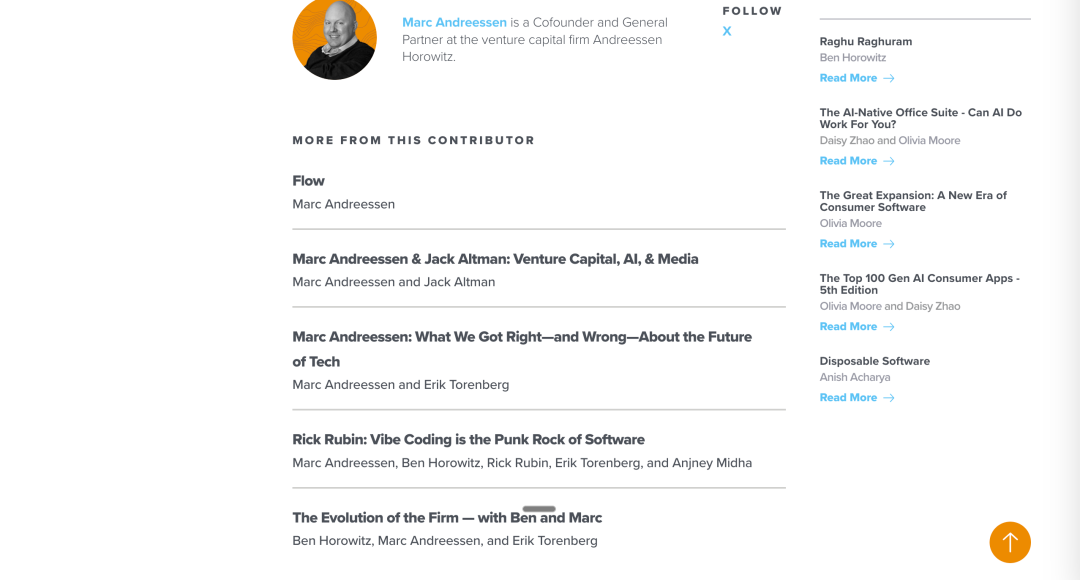
Dude's constantly on podcasts roasting the media, he really is something else 😭
In this context, if a VC wants power — the ability to shape public perception, define industry agendas, attract capital to follow — it must build its own media, bypassing a traditional media landscape that is both hostile and suffering collapsed credibility.
Marc has repeatedly emphasized on podcasts: "We've always believed that what you want from a VC is power. You need power, which means you need to be able to actually go see customers and have them take you seriously; you need the ability to get public attention."
a16z's media platform is the core tool for distributing this "power."
Marc compares this strategy to a "brand bridge loan": before a startup has built its own powerful brand, it can borrow a16z's brand to gain initial market recognition.
So a16z's motivation for becoming a media company is clear.
In an era of traditional media distrust, only by mastering content production and distribution can you truly master power. And power is the scarcest resource a VC can offer startups.
Returning to the opening question: What is the essence of VC?
The traditional answer: VC is a capital intermediary, connecting LPs and startups, generating returns through investment.
But a16z offers a new answer: VC is a media company that makes money through investing.
a16z's success proves this answer correct. They use newsletters and video podcasts to manufacture grand narratives, deploy billions of dollars to convert narratives into sector-wide valuation surges, and use their content team and Marc's personal influence to build a network of power.
This shilling-and-pumping flywheel has given a16z returns far exceeding its peers in sectors from SaaS to Web3 to AI.
More importantly, a16z's playbook has acquired "moral legitimacy." Marc's essays package investment behavior as a grand mission of "defending American technological hegemony, advancing human progress."
Justin Sun pumps in crypto — issuing tokens, pumping prices — and everyone condemns him. a16z pumps in the primary market — narrative → investment → valuation surge — and is held up as the gold standard.
What's the difference?
One lacks system, pure hype, by any means necessary, harvesting only attention. The other has a complete methodology, real money backing it, wrapping commercial interests in national interest, generating sustained influence.
Attention is scarcer than fiat currency. Attention alone only gets you the traffic business. But attention plus trust becomes influence. And influence is the truly scarce asset that can be monetized.
a16z's success is the textbook case of influence monetization.
In this sense, today's top-tier VCs are fundamentally media companies. VC is just one part of the business model; content and influence are the core assets.
VC is media.
Influence is power.
(References — I actually read through all of a16z's representative essays 🤓)
- https://a16zcrypto.com/posts/article/why-web3-matters/
- https://a16z.com/ai-will-save-the-world/
- https://a16z.com/its-time-to-build/
- https://a16z.com/social-strikes-back/
- https://a16z.com/the-next-phase-of-social-listen-closely/
- https://a16z.com/meet-me-in-the-metaverse/
- https://a16zcrypto.com/posts/article/nfts-thousand-true-fans/
- https://www.forbes.com/sites/roberthof/2016/07/12/marc-andreessen-now-software-is-programming-the-world/
- https://a16z.com/introducing-erik-torenberg/
- https://a16z.com/disposable-software/
- https://alidocs.dingtalk.com/i/desktop
- https://a16z.com/the-little-tech-agenda/
- https://a16z.com/the-future-of-the-news-business-a-monumental-twitter-stream-all-in-one-place/?utm_source=chatgpt.com
- https://a16z.com/the-techno-optimist-manifesto/
- https://www.newyorker.com/magazine/2015/05/18/tomorrows-advance-man?utm_source=chatgpt.com
- https://vccontent.club/p/the-next-great-vc-firm-will-be-built-like-a-media-company-from-day-one
- https://investing101.substack.com/p/the-state-of-startup-media
- https://www.newcomer.co/p/andreessen-horowitz-has-returned
(Article illustrations generated by ChatGPT, writing assisted by Claude Code, manual edits to fewer than 50 characters in the full text 😎)