AI apps scamming money, oh wait, fundraising guide

Strategically, learn from Macaron; tactically, learn from LibTV.
"Strategically Macaron"
If you have a good memory, you might recall Austin. Back when his product Taku released its promo video, still in invite-only mode, he declared that Taku was "not an AgentOS, just an OS."
The swagger was maxed out. Then — radio silence.
Even earlier, Austin was co-founder at a company called Sapient, supposedly building large models. In 2024, when nobody was investing in large models, he somehow took a post-00s prodigy and pumped the company's valuation to $200 million in three months.
Truly a god among men.
But after that funding round, I never heard another word about Sapient. No idea if the company is even still alive? Investors Vertex Ventures China and Sumitomo basically got played for suckers. Though I have zero problem with foreigners losing money.
Given his track record, I figured there was no way he'd raise for Taku this time.
Then recently the guy tells me he's still alive, actually raised money, and Taku 2.0 is about to drop. So we rushed to book him to share his "fundraising con artistry" and his take on the current AI application landscape.
Here's what Austin wrote:
Xianyu keeps asking me how I keep managing to raise money even when the market is terrible.
In 2023-2024, when everyone had given up on large models, I forced Neo Lab into existence. In 2026, when everyone thinks AI applications are dead, I still scammed some funding.
Neither was easy. Basically talked to countless firms, got countless No's, before seeing a sliver of light.
Back in 2023-2024, when we pitched reinforcement learning to investors, everyone treated us like idiots. "A perfectly good group of young people, not working on prompt engineering and workflow when they're so hot, instead running off to the Renaissance of reinforcement learning?"
When investors don't get it, you convince experts who do. Then investors see the experts and believe. You need to hustle good researchers.
The biggest variable in that fundraise was poaching several core reinforcement learning researchers from places like DeepMind. Investors looked at their citations. Straight-up "Wow, this technical approach is actually so reasonable."
Here's the counterintuitive thing. The consensus is that top AI talent is impossible to recruit, but it's actually not that hard. Lots of people at frontier labs want to start companies. They just mostly don't want to work with people who reek of "deng" — doing "deng"-heavy research, or pure distillation.
So I scammed the money: $22 million-plus, in the capital winter of 2024, with a model team story. Of course, I left later.
By late 2024, I wanted to build a good product on that foundation. Claude Code didn't exist yet, neither did Code. Internally we called it Terminal coding agent. Basically a CLI coding agent — also the starting point for what became Taku.
But the problem was the same. When fundraising for Taku, one firm straight-up challenged us: "What's a CLI? Not building a web product — isn't that regressing history?"
Xianyu roasted me too, said it was the first product he'd seen where you couldn't just toss someone a webpage to try, felt like I was selling fake booze.
The turning point came early this year. I needed to find a CTO for our team, so I pulled in several researchers I'd tried to recruit to my previous company.
They immediately got excited about Taku's form factor. Because everyone realized: this is naturally a perfect Agentic Playground/Sandbox. You can do so much agentic task training, testing, and data collection here.
As an unrestricted, flexible sandbox, it can even run synthetic data.

So I hustled good researchers again — and this time they came to me.
This brings us to Macaron. I've completed the three-step evolution: "question Macaron, understand Macaron, become Macaron."
The god of Macaron — Kaijie Chen — had an interview where he said the process of making macarons gave him new insights, so he founded Mind Lab to do research. Lots of people said this was just riding Neo Lab's coattails to pump valuation.
But after a year-plus of product grinding and thinking, I realized Macaron was right. You really do need to ride Neo Lab's coattails.
Product companies are the new Neo labs.
Back to AI applications. There's a reason AI application fundraising is so cold right now. Almost no founder is actually thinking about what humans want. Founders, as AI grind-lords themselves, are over-imagining products they want, fantasizing that everyone else is a grind-lord like them. (Or just straight-up copying hits, doing big replicas.)
But I don't think whether AI applications are dead matters. The main problem is that right now, nobody's taking risks, nobody's trying things nobody's done before. New categories mostly follow one of two paths:
First: A ByteDance senior product manager starts a company, creates a product form — maybe a Video Agent — raises money from Hillhouse or Sequoia, and immediately another group emerges: all former CapCut product leads, Douyin's first operations hire.
Everyone does the same thing, since copying homework is the easiest, safest approach. These teams can say "I'm better than xxx, I'll make a better xxx."
But here's the problem: everyone's users are the same, pain points are the same. These PMs were probably in the same group before, taught by the same master, can't break the move. You innovate, others copy fast. So naturally Malvin crushed OiiOii, Flova, and the rest with brute-force scale.
Second: Some xx company blows up in the US, and immediately a crowd of former big-company senior PMs emerges. "We'll do it more efficiently, at lower cost, going global to seize this new blue ocean." Like AI Teams.
The moment Viktor got hot, a bunch of AI Teams popped up domestically. Even many "god-tier entrepreneurs" pivoted hard, all-in on AI Teams. Who wouldn't want a army of cyber-serfs to do your dirty work, align your team needs? The pitch is delicious.
If you actually try Viktor, or any overseas viral product, you'll think: what the fuck, this product is so trash, how does it have so many users, why do foreigners actually pay?
Then naturally you think: "I could do this too, I'm ByteDance 3-2, my product sense destroys theirs." Then you fall into the trap: your product is indeed better than the overseas competitor, but still nobody uses it.
Something nobody wants to admit: Chinese teams are startup dalits. Can't break into that product-led growth brahmin circle at all. Compare to those Silicon Valley brahmins — raise your arm and a swarm of YC alumni, big-company compatriots, and Ivy cultists show up like a cult to pump your ARR.
Not to mention slapping "Backed by A16Z" on your website, so buyers can always cover their ass with the boss: "This was an A16Z deal, who knew it'd go wrong, A16Z's dumb." Chinese dalits can't make Commissioner Smith feel good, can't make them feel good risk-free.
Most of the time, product sense and tech don't matter. Only scale and channels matter. Malvin is genuinely ahead of the meta.
Models don't matter either.
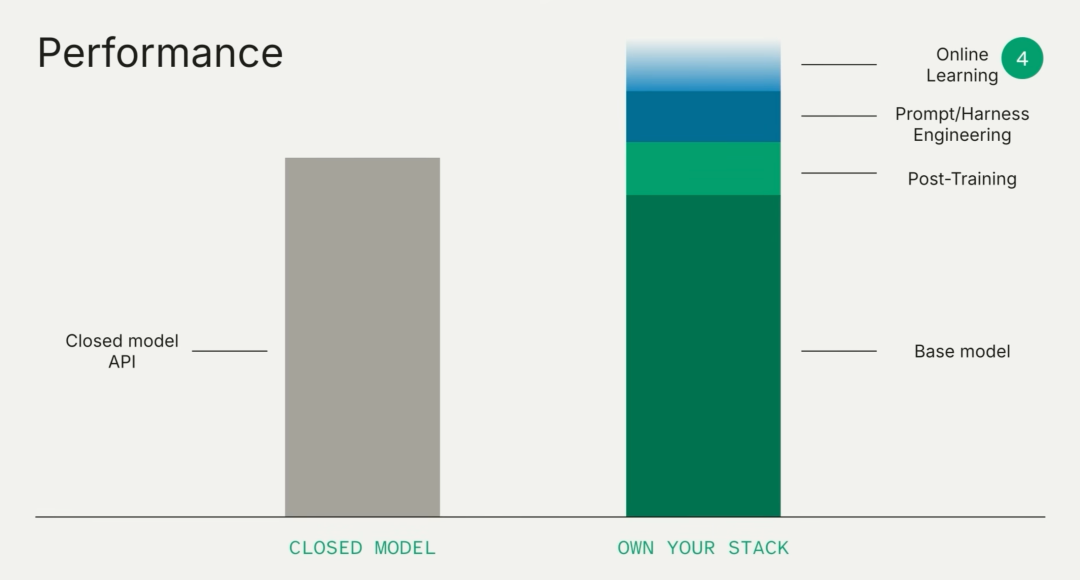
The mainstream narrative now: models will eventually swallow everything, all application capabilities will be internalized by models, models are everything. First half is right, second half is wrong.
Model capabilities will keep improving. More and more tasks that previously required stacking skills, harnesses, even human labor will be directly handled by base models.
DeepSeek is great because they stuck with open source. But nobody's loyal to models.
A model lab's KPI (besides benchmark gaming) is getting more people to use their model. And not many people connect directly via API.
It's even harder for open-source models. Cloud providers, token factories, private deployments take an even bigger cut. Open-source model labs seem to have no solution.
Open-source model labs are even less likely to build good products. Their competitors are OpenAI, Anthropic, Google, and Meta's models + the world's product entrepreneurs' creativity + American VCs' money cannon. A kind of lonely courage, I guess. So DeepSeek really shouldn't do products. None of these open-source model labs should.
Users are way more loyal to LibTV than to models, probably more than to other video agents too, because users have retained data there. How they organize their ideas, how they orchestrate, how they revise, how they curse the model for being stupid. Model labs have none of this data.
The orchestrating agent runs on one model, generation is another — model labs can't align context at all. Seedance can't see me cursing GPT on LibTV's frontend for not getting my meaning. GPT can't see what Seedance did.
But LibTV sees everything.
LibTV also has massive capital, aggressively subsidizing users to use the product and produce data. And this category of product is genuinely essential for many creators. That flywheel is perfect. So LibTV will absolutely become Macaron Pro Max 2TB.
Looking forward to the Solar Eclipse large model — a true end-to-end Agentic Generation Mode.
Now about all these Work products — Qwen Work, Trae Work, Doubao Enterprise, even Baidu crawling out of its grave to kick around with Kuku AI...
The problem with these products is they make people more tired the more they use them. Feels like everyone forgot: our fantasy for AI was having AI help us slack off. Actually the most profitable, best products all occupy the seven deadly sins: envy, sloth, gluttony, lust.
I've been citing an interesting stat lately: Codex/ChatGPT Work keeps getting remade, basically giving you free money, hundred-billion-subsidy style. Even so, Codex has 10 million MAU versus ChatGPT's 60 million paid users — a 50 million person gap that money cannoning couldn't convert. These people will never be grind-lords. If you want their money, you have to feed them the results, make money off lazy people being lazy.
Isn't this everyone's original vision for AI too — having it do your work for you?
Except this wave of AI products all became "use my AI tool and you'll make money," "you can be more efficient commanding 1000 AI oxen." In the end, people try the product, don't make money, uninstall and let it gather dust.
Making money is fucking exhausting. Making money is fucking hard.
Of course there's one exception: still LibTV. Because short dramas are relatively easy money (though a lot still relates to lust).
So here's the absurd situation: every AI application company is lining up to copy LibTV. Even Leon Ming made a knockoff LibTV (Renoise). So how far is Moonlight TV?
Let me just point out the bright path forward:
Be strategically Macaron, tactically LibTV — build a product that retains users, integrating multiple work categories and steps, scaling to enough users, then train models.
But this path is hard. Very hard.
You need to hustle good researchers, build a good product, and scam money. Before, you only had to do one.
So to answer Xianyu's question: the way to raise money in adversity is simple. Do some Renaissance, play some非主流, reverse some history, then find大佬/中佬/小佬 convincing enough for investors.
Of course there's one nuclear option... online loans. Before my previous company and Taku raised, I actually took out online loans to build demos and develop.
Believe this: only those who dare to take online loans make it out.
PS: Taku 2.0 Beta recently launched — a platform specifically for copying大佬 homework. All those complex setups you see from大佬 become simple Taku apps. No environment config, no reading .md files, open and use.

(Cover image generated by ChatGPT, purely human-written)
⬇️
Subscribe to our Substack funeralai.substack.com