Leaving ByteDance to Go All-In on AI: Why Jinqiu Fund Isn't Called "Jie Yang's Jump" | AI Deadlock

Don't overgeneralize.

"Don't Overgeneralize"
"Early last month, Xianyu and I decided to start experimenting with video podcasts. As two text-based workers, appearing on camera was new territory for us, but the shift in medium is unstoppable — the container matters more than the content itself. Beyond video podcasts, we're planning more video content. Stay tuned.
Today, we launch our first video podcast episode. Our guest is Jie Yang, founding partner of Jinqiu Fund. The conversation is excellent — remarkably candid and clear. The only problem is Xianyu. He's fearless when trash-talking online, but turns obsequious in face-to-face interviews. How come he points fingers at entrepreneurs but goes all deferential when he meets investors? Is it good manners, or is he angling for money?"
Just kidding. Here's the serious intro:
The past decade of dollar-denominated funds is filled with legends and factions. VC in China has a strong streak of personal heroism — every firm has its signature deals or distinct school of thought. 5Y Capital's Qin Liu backed Lei Jun and Xiaomi from Series A through E. HSG's Neil Shen orchestrated the Meituan-Dianping merger. David Zhang likes to ride his motorcycle or sit and debate with founders. GSR Ventures' Allen Zhu bet big on DiDi and ofo, and was the first fund partner to explicitly declare he wouldn't invest in large language model companies...
But Jie Yang doesn't fit this taxonomy. She seems to lack obvious distinguishing features. When people think of Jinqiu Fund, what comes to mind is its aggressive deal pace, and the imagery evoked by its name — Jinqiao Jiayuan, the Beijing apartment complex where it all began.
Indeed, ByteDance is the defining chapter of her résumé. As she candidly admits at the start of our recording, ByteDance is Jinqiu's largest LP.
At a private gathering, Yang once told us that after leaving HSG in 2016, she had two options: a listed company raising capital from the market to launch a new fund, inviting her to join as partner; or joining ByteDance with no fixed rank or defined role.
Douyin had just been born. The war between ByteDance's news app and traditional portals was still unresolved. Though ByteDance was already seen as a credible challenger to the BAT incumbents.
Yang asked Yiming Zhang: why do AI companies in China and the United States differ so dramatically in business model, scale, and revenue — when Chinese AI technology isn't behind?
Zhang replied that two companies were actually making money with AI. One was Facebook, but she couldn't go there. The other was ByteDance.
History pivoted on that answer.
In our previous meetings, Yang still habitually wore her ByteDance jacket emblazoned with "Always Day One."
We asked her: what does a cool fund look like? She said she'd need to do user research.
We asked: what does a cool product look like? She said, with equal user bases, a product with 30% monthly retention is cooler than one with 15%.
We asked her to compare the dollar fund obsession with backing post-90s founders a decade ago versus backing post-00s founders today. She said she'd need to look at the data — and that the categorization itself constituted overgeneralization.
We asked: American AI or Chinese AI — which is greater? She countered: what's the quantitative metric?
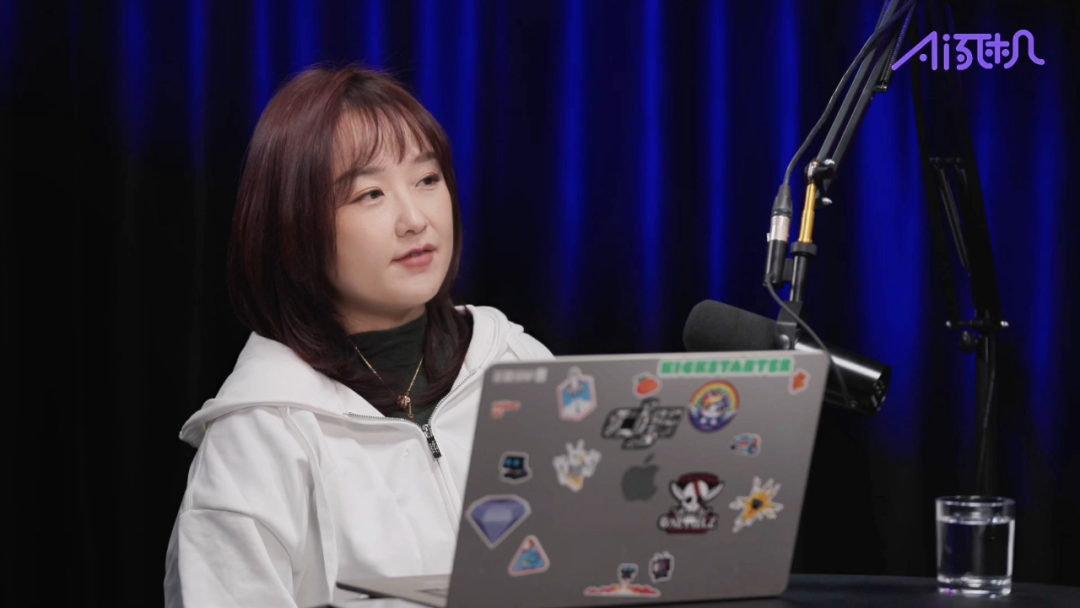
She also insisted on keeping her laptop open throughout the recording. On screen: a Lark document titled "How a Cool Fund Answers Questions."
Fine. "Data-driven, candid and clear, truth-seeking and pragmatic" — thoroughly, unmistakably "Jinqiu."
Over four hours of recording, my strongest impression was this: she may be the least ego-driven fund partner I've met. In multiple conversations, she's expressed her resistance to playing "dad" — no lecturing founders, no encouraging people to start companies.
Yang says entrepreneurship is too bitter, too hard. When Xianyu asked her to teach him how to spin a story to scam $1 million from investors, her response was: scams don't work easily. Founders should talk about something they genuinely want to do. It doesn't have to be huge, but you need to solve it exceptionally, exceptionally well.
"Think about it — you're awake maybe a dozen-plus hours a day... If starting a company means basically all your waking hours are work, and the work isn't something you love, that's pretty miserable."
What Jinqiu hasn't officially announced: it completed fundraising for its second fund last year, at roughly $500 million. When market rumors started circulating, many questioned the figure's accuracy. Yang's response: "As deals gradually close, the market won't have questions or doubts about that number."
To date, Jinqiu has deployed nearly $300 million across 70-plus projects. By incomplete count, its number of AI investments ranks second among Chinese dollar funds.
But this year's investment climate has troubled Yang. Around this time last year, with the broader environment cooled, Jinqiu's aggressive strategy meant rarely encountering competitors when evaluating deals. Starting this year, inevitable head-to-heads with Mega Funds like HSG and Hillhouse became unavoidable.
She urgently needs to answer: what is Jinqiu's differentiation?
Another problem: beyond its pre-IPO investment in Unitree, her portfolio lacks star projects. She passed on all six of the "Little Tigers" large model startups (defensible as fund strategy, perhaps). Among publicly disclosed deals above $500 million valuation — Manus, Lovart, GenSpark — she missed all three. Liang Chenqi, Leon Ming, and Yueguang Zhang, fiercely contested by dollar VCs, also went unbacked.
At an internal Jinqiu sharing session last month, Yang acknowledged that missing some star founders was her mistake. "But we're not born strong. We can grow, bit by bit, and hopefully grow a little faster."
At the end of our recording, we hoped she'd close with a story — something from her dozen-plus years in investing, or not — like pulling out all the stops to win a deal, successfully or not. She said she's not that kind of person. She only started a fund because of an organizational restructuring, which led to Jinqiu.
So how about a Jinqiu story instead: "When I started the fund in 2022, many friends asked why this year? I thought, why not? If you're all stepping back, I'll step up. I'll keep doing what I want to do. As for everything else, my sensitivity is pretty dulled."
Below is our conversation. You're also welcome to watch our video podcast:
01
"We Named It Jinqiu to Remember the ByteDance Feeling"
Xianyu: When people hear Jinqiu, they think ByteDance. What's the actual relationship between Jinqiu Fund and ByteDance?
Jie Yang: We originate from ByteDance. Tianyu, Xiaochao, and I — the three core partners — all came from ByteDance together. ByteDance is our main LP. But that's about it.
Xianyu: At the recent Jinqiu CEO summit, you said the reason for the name was to remember ByteDance's entrepreneurial spirit — finding certainty amid uncertainty, and executing like crazy. What specifically is that feeling?
Yang: At the time, the internet was shifting to mobile. Reading information on phones was already convenient, but there wasn't yet a good format for presenting it. Everyone was exploring how to display information on new hardware, how to commercialize it — that was the uncertainty.
But mobile users were growing. Phone usage kept rising. That was certain. So it was about finding certainty within uncertainty.
"Executing like crazy" describes the team's state then. Early-stage entrepreneurship — problems constantly surface. You encounter them, you solve them.
Xianyu: Do you still wear ByteDance gear often to remember that feeling?
Yang: I haven't noticed whether I wear ByteDance clothes frequently. Today I'm wearing Jinqiu. But most of my clothes are either Jinqiu or bought during my ByteDance days.
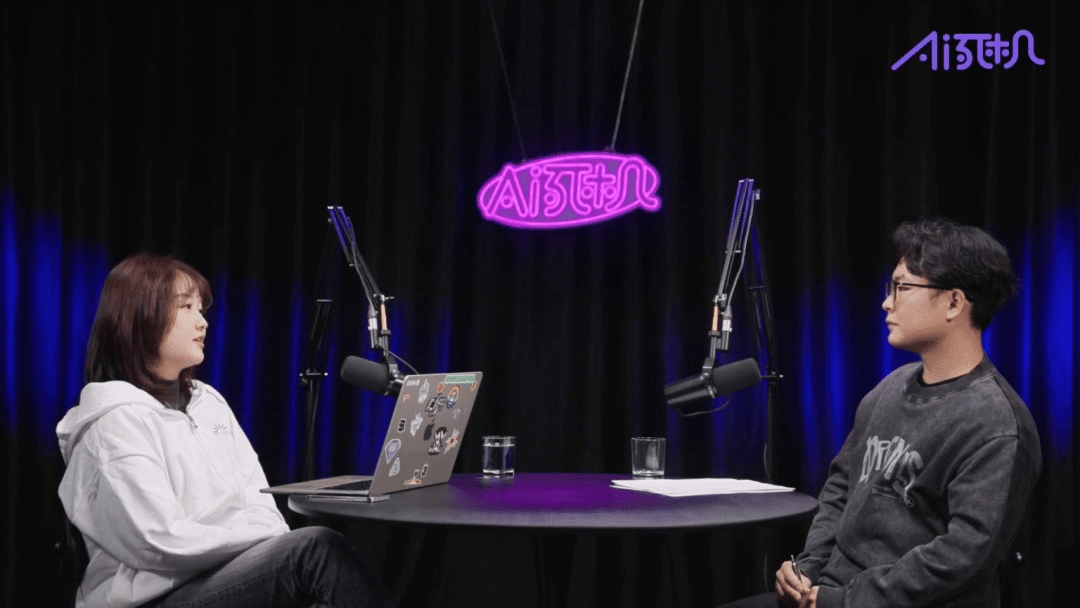
Xianyu: Why isn't the fund called "Jie Yang Bounces" then?
Yang: Uh.
Jinqiu is about remembering that feeling at Jinqiao Jiayuan. Things were full of uncertainty, but a group of people believed in where the future was headed, and worked together to solve problems. "Jie Yang Bounces" doesn't carry that meaning.
Xianyu: Most observers say you lack distinguishing features. You're not a particularly colorful investor. Is this perception wrong? What do you think your characteristics are?
Yang: The perception isn't wrong. In the past, even though we've invested in so many projects, we rarely spoke to media or went out to say things publicly. Second, I genuinely don't have much personality.
Xianyu: That's impossible. What are your characteristics?
Yang: Things should be what they should be. In investing, in work — people serve the task.
Xianyu: Do you particularly believe in being data-driven? Needing to see very clear data? Earlier I asked a very macro question comparing post-90s and post-00s founders, and you said you'd need to look at data to answer.
Yang: Those are two separate things — whether to look at data, and whether to overgeneralize. The post-90s, post-00s thing you mentioned — I think that's overgeneralization. Maybe people do it to understand things more easily, to digest them quickly. But things have their own diversity and complexity. Overgeneralizing often leads to significant information loss. Data matters, but how to see complete data, how to combine it with actual circumstances for reasonable analysis and judgment — that's another level above data. Data matters, but it doesn't directly lead to decisions.
02
"The Most Important Thing in Entrepreneurship Is Resilience"
Xianyu: Over the past year-plus, Jinqiu has invested in 50-plus projects. You've emphasized being a 12-year-cycle dollar fund, with a 4-5 year investment period. Why invest so fast?
Yang: Investment period is 4 years. Fifty-plus projects in a year and a half is a reasonable pace. We've deployed less than $300 million so far.
Xianyu: How many total projects has Jinqiu invested in?
Yang: Over 70 companies. Largest check $20 million, smallest around $300,000.
Xianyu: When Jinqiu people meet founders — partners, investors — what do you emphasize as Jinqiu's biggest differentiator?
Yang: First, we decide fast. Second, we only invest in AI. So whether it's our expertise in this area, or our portfolio community, it's the group most relevant to AI.
Xianyu: Jinqiu can talk about having a longer investment horizon, making decisions quickly. But any fund can say they're patient, they can wire money fast. Compared to very large funds like HSG or Hillhouse, what is Jinqiu's differentiation? Where's the scarcity?
Yang: This has been a question that's troubled me for a while, and it became especially pronounced in 2025. In 2024, it was relatively manageable, because the broader market hadn't yet developed such strong investment enthusiasm for AI application companies. We were actively investing, enthusiastically investing, and we were pulling founders together for events, so we had a certain scarcity in the market. Because we were investing, we had scarcity. So 2024 was a year where competitive pressure felt less intense. But in 2025, the competitive pressure became much more obvious, and the question you just asked is even more critical: what exactly is our differentiation? At least what we've seen so far is that our decision-making is genuinely quite fast.
Other funds can say whatever they want, but whether they can actually make decisions that fast is not guaranteed. Additionally, we're building out our post-investment service capabilities. I spent quite a long time working inside companies before, so I actually have a pretty clear sense of what keeps CEOs up at night as a startup grows from small to large. That's where we focus our efforts to help solve problems and stockpile resources.
Xianyu: For example, can Jinqiu introduce portfolio companies to ByteDance resources?
Yang: That's definitely not a problem. But we don't bear ByteDance's strategic responsibilities. If a portfolio company needs to collaborate with ByteDance, we're certainly happy to make introductions.
Xianyu: Before I met you, I had also interacted with Jinqiu investors, and some founder friends of mine had spoken with Jinqiu people. There was a consistent impression: Jinqiu's young investors are relatively average in caliber. Whatever entrepreneurs say, the investors respond with "mm-hmm, uh-huh," without being able to say anything else. They don't understand the industry. Do you accept this assessment?
Yang: It depends who you're comparing against — it might be somewhat objective.
Internally, our fund has a requirement: don't casually point fingers at entrepreneurs. When it comes to entrepreneurship, you need to have reverence.
Some of our colleagues are indeed quite young. We've also made exceptional hires of fresh graduates — there aren't many firms in this industry willing to hire fresh graduates.
I think young people are great. Although they make mistakes and need time to learn, young people are bold and daring. They may sometimes lack a bit of experience, but as time and experience accumulate, they all grow. So I think it depends who you're comparing against. If you're comparing them to these battle-tested, highly active big shots on the front lines, then yes, absolutely. But compared to the average person out there, they're probably fine.
Xianyu: Did previous dollar funds like giving entrepreneurs lectures?
Yang: I don't know about previous dollar funds. It was after my experience at ByteDance that I deeply felt how different the investment perspective is from the actual business operations perspective. In the process of running a business, investors only see a starting point and an endpoint. But how do you get from start to finish? Every company's path is different.
Xianyu: How do you allocate attention across different segments of the AI chain? For example, in terms of project count you invest most in AI applications, but in terms of dollar amount it might be compute, while also investing in embodied intelligence.
Yang: **We follow industry trends, and we follow actual industry conditions.
For example, we've invested quite heavily in compute because we see that existing GPU solutions have major bottlenecks in memory. But there are also new processes and new compute technologies moving forward.
So in this direction, we invest in solving actual compute problems. But this investment was mainly concentrated in 2023, 2024, and the first half of 2025 — it will decrease going forward. On embodied intelligence, on one hand it's following technological development, and on the other hand it's following capital enthusiasm. We've invested in bodies, we've invested in brains, we're also investing in key modules and components, and next we want to look at deployment in certain scenarios. Applications — we've become more aggressive in investing as reasoning capabilities have strengthened.
Xianyu: Jinqiu has intensively invested in a great many AI applications, but I've seriously studied those AI applications, and not one of them is particularly distinctive or left a clear impression on me. Most of them feel like demo products to me — it seems like what you've invested in aren't the top-tier applications.
Yang: What are the top-tier applications?
Xianyu: At least something I can actually use. For example, Manus has all kinds of controversies, but it's genuinely a useful thing. Or take Toki — I just tap the back of my iPhone twice, and it takes a screenshot of my WeChat chat, like scheduling information with someone, sends it to Toki, and Toki can add a corresponding reminder to my calendar. Or Cherry Studio can call various large model APIs, I can have conversations with large models inside it, and it can do branches within a single conversation.
But I looked carefully, and among Jinqiu's AI application investments, the vast majority are somewhat gimmicky applications. I don't know what they actually do, or their interfaces are so complex that even if I'm willing to spend ten-plus minutes trying to use one, I still can't figure out what this thing is actually for.
Yang: You might not be the core user. You mentioned Cherry Studio's branches — ChatGPT has that too.
Xianyu: It did it before ChatGPT.
Yang: That doesn't matter. Actually this is a point I want to make: when we select applications, for certain companies that have the capability to build products — big company products — we still try to draw clear boundaries with them.
I'm not worried about model vendors' products competing with other AI products, but I'm more concerned about Google, OpenAI, and ByteDance's products. AI application companies should still try to draw boundaries with them.
So general-purpose personal assistants, Deep Research, "browsers" — we haven't invested in any of these, mainly because we believe these three companies will definitely do them, and will likely do them well.
But this category of products has the best user experience because they're closest to the models.
Actually there's another category of products — of course you might want to discuss with me whether their ceiling is big or small, but I want to tell you, I'm not looking at ceiling right now.
Xianyu: I wouldn't ask such a pretentious question.
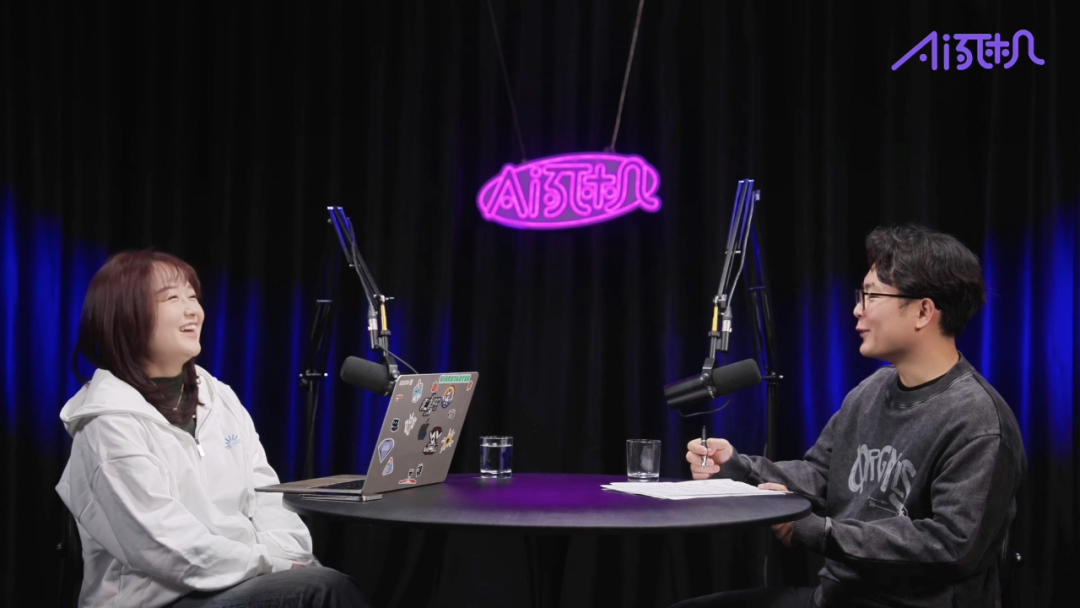
Yang: Hahahaha. So there's this other category of products whose users are quite niche.
You might not use them, but their users will pay.
For example, another company I invested in — I'm actually a core user because I have massive amounts of invoices to organize all the time. I really don't want to deal with this, I just dump it to them, and they generate very nice-looking Excel spreadsheets for me.
There are many very vertical and granular product companies that we're actually investing in. Their boundaries with the three types of big companies I mentioned earlier are relatively distant. I think such product companies have relatively higher safety margins.
You still need to win on your main battlefield first, then look for a second curve. If the battle on your main battlefield keeps going poorly, that's also very painful.
Xianyu: Why did Jinqiu choose to invest in such a large quantity this way? Most of these applications will likely fail, and most of them I feel have no actual value. They're not things that make you feel excited when you use them.
Yang: What excites you?
Xianyu: Either the design is beautiful even if it's completely useless, like Macaron. Or it genuinely helps my life. But today many entrepreneurs say I have a new concept, I'm making a new Agent OS product, or a year ago they might say I'm making an emotional companionship product. These various new things — they just released a promotional video but didn't provide real value.
Yang: I don't know which company you're referring to, but you mentioned emotional companionship — we invested in two companies. Zaomeng Ciyuan is still Volcano Engine's largest customer by API call volume, and from the call volume you can see users are constantly using it, with very long session durations.
Wang Dengke's DAU and paid conversions are both quite good. I don't know which emotional companionship product you're talking about.
Xianyu: I used Wang Dengke's Duxiang.
Yang: That's for girls.
Xianyu: I used it for ten-plus minutes and felt it (Duxiang) was a very boring thing.
Yang: You can schedule an interview with him and the two of you can discuss this question.
Xianyu: So for Jinqiu's AI investments, for some biased people, like someone like me...
Yang: You're not biased — think about it, you live in Beijing, you have a pretty good job, you're male. The various profiles that all match you are actually quite rare in China's entire population.
When we invested in Wang Dengke, he hadn't made this product yet. He's a very resilient entrepreneur, constantly starting businesses.
Actually, resilience is a very important trait for entrepreneurs, because other skills can be cultivated — you can learn, you can study.
You can learn technology, you can learn marketing. If it really comes down to it, you can hire people to do it. But resilience is a personality trait. Probably more innate.
And resilience is especially important for entrepreneurship. Whether the company is developing smoothly or not, founders face all kinds of problems every day. When things are going smoothly, there are problems that come with smooth development; when things aren't going smoothly, there are problems that come with difficulty.
Constantly solving problems — the challenges and difficulties encountered along the entire journey will be extremely numerous.
What if you can't raise enough money, what if your core team leaves, what if a competitor suddenly launches a major move.
All kinds of problems you encounter, you have to solve them. So good resilience is what allows a founder to persist continuously in this endeavor.
Resilience is also somewhat different from stress resistance. Resilience means being able to maintain rational decision-making and stable execution in the face of all kinds of problems. So this is a capability I think is very scarce.
Xianyu: Do you think you have resilience?
Yang: I'm quite resilient.
Xianyu: Your resilience manifests in being able to stay in investing for over ten years.
Yang: I think it's more that my perception of pressure and difficulty is somewhat dulled.
For example, when I started the fund in 2022, many friends asked why start in this year, and I thought, why not? If none of you are doing it, then I'll do it.
There were many similar situations before. For example, when I went to ByteDance — it was still called Toutiao back then — many friends also asked why go.
I have things I want to do, and I keep doing them in that direction. As for other things, my perception is relatively dulled.
"Don't Over-Summarize"
Xianyu: A couple days ago you expressed a view that Jinqiu believes large models will become commodities, and applications are where the value lies. Many people say this, but what's the process through which you formed this cognitive logic?
Yang: The statement that models are commodities wasn't mine — it was something Sam Altman said before, that last year's models were commodities. If you only do models themselves, it's very hard to sell them at excess profit. But they require enormous investment, carry huge risk, and the returns don't match the investment.
By 2023, we had already formed this view internally, so we didn't invest in a single large model company.
Starting a business to do models — the vision is grand, but the difficulties are also enormous, and the ultimate returns may not be as good as imagined. That's our judgment.
Looking at it today, I think it's about right. Model competition will continue, and going forward the competition will require even greater magnitudes of funding, talent, and chips, but the moat around models themselves isn't that high either.
Xianyu: Large models are very grueling, very intense competition, but there are also institutions that invest in large models thinking they can invest in early rounds and someone will take them out. Why didn't you consider this?
Jie Yang: We weren't thinking about exiting that early, and we wouldn't push a company to go public. If it's a deal where you invest in this round and exit in the next, we'd rather pass on that.
There's another practical difficulty with mid-journey exits. We're a fairly active fund, so if we exit mid-journey, that's a signal that could be read into by the company and others.
Xianyu: But with Unitree, you invested at the Pre-IPO round. Was that because you could exit quickly?
Jie Yang: We'd actually been in touch with Unitree since 2019, but the timing never worked out. Every time they were raising, we'd either be out of money or just leaving ByteDance and in the middle of fundraising for our own fund.
So by the time we actually had money to invest, it was last year.
Xianyu: Over the past six months, some of the hottest Chinese AI applications have been Manus, GenSpark, and Lovart. Jinqiu Fund didn't invest in any of them. Was it because you didn't think they were good, or you couldn't get in?
Jie Yang: All three are different. With Manus, we missed the first round. After that, there wasn't really a suitable opportunity to get in. GenSpark had a very high valuation from the first round, and what they were doing then (search) was different from what they're doing now. That high valuation combined with what they were working on at the time made us hesitate on that decision. For the last one, can I not comment on that?
Xianyu: Why can't you comment?
Jie Yang: Because I didn't look at it.
Xianyu: Such a hot AI application, now valued at $500-600 million (recording time was early November), how could Jinqiu not have looked at it?
Jie Yang: I'm saying I didn't look at it.
Xianyu: Why didn't you look at it?
Jie Yang: Didn't get around to it, I guess.
Xianyu: Were there any projects you found particularly absurd, that left a deep impression? Can you go through and comment on them?
Jie Yang: What do you mean by absurd?
Xianyu: You don't understand it, but you're deeply impressed. You don't understand it, but it raised money very well. Or you think the product experience is terrible, but it's still doing fine, still out there hyping itself.
Jie Yang: There definitely are. We try any product that comes our way. But you still have to distinguish between a demo and how much iteration space there is before the final launched version.
Xianyu: Have you used any particularly bad products or demos? Can you give examples?
Jie Yang: Many. We look at so many projects in a day, and honestly, not many can successfully run a task or that I can actually pick up and use smoothly.
Xianyu: Terrible but memorable.
Jie Yang: Too many.
Xianyu: Can you name names?
Jie Yang: I can't remember.
Xianyu: Really can't remember, or unwilling to name names?
Jie Yang: Really can't remember. Sometimes there's this scenario: someone tells me what they want to build, and I just run it with Claude code right there. If I can spin up a simple demo on the spot, I feel like there's not much value there.
Xianyu: Do you think Fellou is bad?
Jie Yang: I tried Fellou before it officially launched, when the product completeness was pretty poor. The last time I tried it was two months ago, and it's much better now. For example, the integration with email functionality was pretty surprising.
Xianyu: Macarons, have you used it?
Jie Yang: I looked at Macarons, used it, didn't really get it.
Xianyu: YouWare?
Jie Yang: At the time we tested several similar products together, ran different tasks, and the one that came out with the best results was the overseas version of Tiangong.
Xianyu: A couple days ago at the Jinqiu CEO Summit I was chatting with Wels, COO of Head AI. There's a ton of negative reviews about Head AI on Reddit. He himself doesn't care about it, because he figures if you're building a marketing agent you're going to get flamed. I really admire that.
But if any VC before investing just searched on Reddit, there'd be at least dozens of negative reviews. Did the VC not search? Or searched and decided the negative reviews didn't matter?
Jie Yang: When we invested, she had nothing.
Xianyu: When Head AI was getting flamed, your public opinion monitoring system knew about it.
Jie Yang: There was definitely discussion, but it wasn't really being blackened or attacked. I think people had some questions, like whether its bids were higher than competitors.
Xianyu: Using raised funding to pay KOLs higher advertising fees, promoting the correct transfer of wealth?
Jie Yang: Not necessarily using investment money to subsidize. It's mainly because traditional ways of organizing work are too backward.
Some competitors will have opinions too. Also, startups make mistakes in the early days. They used various methods to do outreach, and as a result one person would receive several emails from company email addresses.
Xianyu: So do VCs care if founders get flamed?
Jie Yang: I certainly don't want founders to have too much negative discussion, don't want founders to be attacked. If there's a product problem, then talk about the product problem, everyone adjusts the product problem. If there's a company problem, point out the company problem.
Xianyu: Besides personal attacks, none of it matters.
Jie Yang: Why should it matter?
Xianyu: Confidence is good.
Jie Yang: If you want to get things done, controversy is inevitable. If what you're doing conflicts with others, you'll inevitably be discussed. If the product isn't well done, or company management isn't well done, you'll inevitably be criticized. So being criticized, being discussed isn't necessarily a bad thing.
Xianyu: In the industry there's a very famous framework for evaluating people: the four-quadrant framework of prodigy, veteran, operator, scientist, proposed by ZhenFund. Does Jinqiu have a similar framework?
Jie Yang: In our overall work, we're relatively opposed to excessive inductive summarization. With matters it's like this, with people even more so.
Inductive summarization is a shortcut to quickly understand something, but if you're using it for investing, you want to try as much as possible to restore the real situation, analyzing case by case.
Every person is different. You have to specifically look at whether this person matches what they're doing, and what competitive environment they were facing at the time.
So we don't do this kind of categorization for matters, and even less so for people, and especially not for CEOs.
Xianyu: But even with everyone adhering to case-by-case, specific discussion, from an observer's perspective, a concrete framework can still be summarized. For example, some people summarize your framework as liking to invest in two types of people. One is relatively young, high-level, accomplished people from major companies — I call them grind lords. The other is so-called prodigies, very young, working in a very new field, shouting slogans very loudly, a bit like divine beings or hype dogs. Do you not recognize this framework?
Jie Yang: We have indeed invested in these two types of people, but if you're asking what percentage they represent in our portfolio, it's definitely not high.
It's still the same thing: entrepreneurs are too diverse, I find it hard to categorize. Probably any label you come up with is just a small label in our CEO population.
I think these should also be the two types of people that everyone in the market invests in.
As for "hype dog," I don't know if that's a positive or negative term in internet culture. I hope to understand it as a positive or neutral term.
Because as a CEO or founder, if you can bring more exposure to the company, attract more resources to the company through that exposure, that's pretty additive on this point.
04
"Everyone's Paying, Just Not Paying You"
Xianyu: The internet business model was free, then monetize through advertising. With AI applications, does the free model still work?
Jie Yang: Not necessarily in the short term, because originally marginal cost approached zero, but now every use has a cost, especially for applications at scale — it's hard to be free.
Xianyu: This is a topic VCs love to tell founders: you must do subscription, you must do overseas markets, definitely don't do domestic market. Because domestic market is very hard for subscription. Do you agree?
Jie Yang: I don't think so.
Doing subscription in China isn't a problem. Doing B2B in China isn't a problem either. It might have been a problem before, because there used to be so much free stuff.
Now every user use is a cost. Before, everyone calculated LTV minus CAC, and variable costs beyond CAC were basically zero. But now every call, every consumption is a cost. So doing free lacks confidence.
Xianyu: But China's mainstream AI products right now, Doubao and Quark are still free. I can hardly name a single AI product in China that definitely charges.
Jie Yang: When you need to complete higher-requirement tasks, you'll switch to other models and pay, because other models have "larger parameters," higher token costs.
Xianyu: If I only use domestic AI products, Quark, Doubao, including Qwen, I almost never pay, and these products hardly even have payment points.
Jie Yang: The products you mentioned, you don't use them often either. You still use paid models. This shows that if something can really solve your problem, you're willing to pay, and you're paying in China.
Xianyu: So if it's not working it's because you suck, don't blame everyone for not being willing to pay, don't blame any business model. If it's not working it's because your capability isn't there, because you suck.
Jie Yang: That's a bit absolute. But actually, everyone is paying, just not paying you.
Xianyu: Do you think your information channels have a problem? Our information channels are very different. I'm exposed to a lot of young guys, maybe their titles aren't high, VCs don't take them seriously. But they are indeed capable, thoughtful young people. And because your title is very high now, the people who can meet you are either very high-level or very good at performing. It takes a certain amount of energy to break through your information cocoon.
Jie Yang: It might not be comprehensive, but there's also no way to be comprehensive. When I was at ByteDance I used to regularly run around third- and fourth-tier cities, or spend a week in neighboring cities. Now I'm just staring at the top few products, feeling like I can't even get through a day of that.
Xianyu: Before, by running around third- and fourth-tier cities, did you discover any opportunities?
Jie Yang: Mixue Ice Cream & Tea.
Xianyu: Didn't invest before.
Jie Yang: Discovered that company, not investing is a separate matter.
Xianyu: Do you browse Reddit? Suppose on some subreddit users recommend an application, maybe as good as Mixue Ice Cream & Tea, but no one discovered it. But today you can't even get through the top applications.
Jie Yang: I really haven't browsed Reddit one by one myself, there's too much information. I have Codex run it, give it sentiment classification and look at statistics. But product collection still has some issues — for example, products that just launched this week and haven't been covered by media might not get collected.
The new products in my database definitely aren't comprehensive. How to add new products to this database every week is something to work on next.
Also, KOLs on X who review and try products, I automate grabbing that information, do classification and organization. The ones that can't be classified get listed separately. I look at those.
Xianyu: US AI and China AI, which is greater?
Jie Yang: How to compare? What's the quantified metric?
Xianyu: Greatness is a spirit, there's no quantified metric. Moonshot AI or Anthropic, which is greater?
Jie Yang: I don't know how to compare. If you're talking about product user volume, product influence, Anthropic is much stronger. The US has far fewer compute restrictions, Moonshot AI faces many more difficulties. So I don't know how to compare.
05
"If Work Isn't What You Love, That's Pretty Miserable"
Xianyu: What will AI change about Jinqiu Fund?
Jie Yang: AI has changed Jinqiu Fund quite a bit. We use AI tools for initial project screening, for gathering, organizing, and collecting large amounts of industry-related information, and for many steps in the due diligence process.
Without these tools, our small team couldn't possibly handle this much work.
Xianyu: Will AI change the VC industry?
Jie Yang: There will be changes, and significant ones. But exactly how, and at what pace — I haven't figured that out yet. You can watch how we evolve over time.
Because VC is tied to outcomes, and it takes so long to validate results, with all kinds of variables along the way. That's what makes it difficult. But if you break down every step of the work, and redefine the starting point and endpoint for each step, it becomes relatively easier.
Xianyu: I think the biggest change in content over the past decade is that scale has been thoroughly debunked. Any large content organization is being replaced by something smaller and faster. Movies are being squeezed by short dramas; 36Kr is being displaced by snappier tech WeChat accounts. Do you think the same thing will happen to VC?
Jie Yang: These two things are completely different. Why does content go from big to small? Because the human brain inherently craves higher-frequency stimulation — that's what drives content to shrink. Traditional films have three acts over one or two hours; now short dramas need two climaxes in one or two minutes. Content fragmentation is determined by the structure of the human brain. It's not deliberate.
But VC doesn't work that way. Our current fund is only $500 million, and future funds won't be much larger. Yet the US and China markets require enormous amounts of capital every year, and there are massive numbers of startups. Even if we multiplied our size many times over, we wouldn't capture even 1%. It's inherently an industry with relatively scarce and fragmented supply.
Xianyu: Suppose I'm a young, aggressive investor who goes independent to raise my own fund. I'm constantly posting on Xiaohongshu, writing articles, or meeting ByteDance PMs for drinks and dinner, building great relationships with them, getting access to these people earlier. I can convince them to leave and start companies. Would someone like that compete with Jinqiu?
Jie Yang: Every fund is already doing this. Everyone is working hard to emphasize coverage. Coverage equals headcount times execution per person. So if it's a coverage game, larger funds still have the advantage — they have more people.
Xianyu: No, headcount doesn't matter. You still need initiative. A distinctive person going solo, convincing a bunch of good buddies to start companies — they'd definitely do better.
Jie Yang: It's not necessarily true that headcount doesn't matter, nor that it does. It entirely depends on each fund's specific situation. I don't see this as competition. We ourselves invest in some early-stage funds.
Also, convincing people to start companies doesn't necessarily lead to excellent founders or good investment outcomes.
Xianyu: What does a cool fund look like?
Jie Yang: I don't know. I actually want to do some user research on that.
Xianyu: For example, who's cooler between Benchmark and a16z?
Jie Yang: Both are pretty cool. Achieving that kind of performance, returns, and influence — that's cool.
Xianyu: Have you felt the gravity of mediocrity? Does Jinqiu feel it?
Jie Yang: I feel it. You have to fight against it. Including myself — I often think about not working, just spending all day online.
Jinqiu has it too. Every organization does. As a manager or the person leading an organization, you have to fight against what people call the gravity of mediocrity.
Xianyu: What is Jinqiu's gravity of mediocrity?
Jie Yang: Actually, you can see we're very interested in and optimistic about this industry. All our work revolves around AI.
I see many AI companies constantly reconstructing themselves, or breaking themselves down and rebuilding, because model progress has been so rapid over the past two years. So many application companies, product companies are iterating nonstop.
Like when you asked earlier — the VC industry is very traditional, with very little iteration. People in this industry watch others iterate a lot, but iterate very little themselves. I think that's Jinqiu's gravity of mediocrity.
Xianyu: In the investment market, is there a type of founder who's especially good at hype, or especially good at scamming, especially good at talking — as long as they've been around long enough, they have a very high probability of getting funded? Have you been fooled by someone like that?
Jie Yang: I've never invested in someone who took the money and didn't do the work. I think it relates to the fund's background. At least when I was at established organizations, at ByteDance — these were relatively influential companies — so I genuinely encountered very few of these fraudsters.
If we're talking about the gap between the story a founder tells when fundraising and what they ultimately deliver — most are at 50-60%, a small portion reach 80-100, and very rarely someone exceeds expectations.
Xianyu: If I wanted to scam you out of $1 million, could you teach me how to talk?
Jie Yang: Scamming isn't easy, and it has costs.
Actually it's not about teaching how to pitch investors — it's about what to build in the first place. Sometimes when chatting with founders we know fairly well, many want to do something big.
Xianyu: Want to be the next Yiming Zhang?
Jie Yang: Few people put it that way. They want to build something in a $10 billion market, a $100 billion market. Working backward from that angle — that's one approach, and it's not necessarily unworkable.
But mainly I think entrepreneurship is just too hard, too difficult. It requires extremely strong motivation.
If you're thinking, "I have to build a top company in a $100 billion market or I can't survive" — that motivation is strong enough. Give it a try.
Most of the time though, I still advise them: what are you genuinely interested in? What problem do you most want to solve? Go do that.
Only this gives you the patience and resilience to face the challenges and difficulties ahead.
Xianyu: I need to tell a coherent, self-convincing mega-story.
Jie Yang: That's not it. Tell a story about something you genuinely want to do. It doesn't have to be huge, but you can solve it really, really well.
You don't need 100 million users, or 1 billion users. Maybe you only need 100,000 users, or 1 million users. But those 100,000 or 1 million users use it every day, keep using it, and are willing to pay.
I think achieving that as a first step in entrepreneurship is already excellent. And it has to be something you truly want to do — you're willing to keep refining it, keep thinking through every detail of how to optimize it. You're willing to spend time in user groups, talking to users one by one, carefully reading every bug they report. I think entrepreneurship is much more comfortable this way.
Xianyu: Even if what I do can't scale — but whether it scales doesn't matter anymore, whether VCs buy in doesn't matter anymore. It's something I love anyway. Isn't that Bilibili's slogan: "What you love is your life."
Jie Yang: Exactly. Think about it — you're awake for over ten hours a day, and more than eight of those are spent working. If you're an entrepreneur, basically all your waking hours are work. If the work isn't something you love, that's pretty miserable.
06
"Bonus"
Xianyu: You posted an "Ask me anything" on Xiaohongshu. Some questions from netizens you didn't answer — I picked out a few.
Jie Yang: I thought I answered them all. I reply to a few when I have time.
Xianyu: Among your portfolio founders, which one is most like Justin Sun?
Jie Yang: I don't know Justin Sun.
Xianyu: Do you think I'm like Justin Sun?
Jie Yang: First of all, I really don't know Justin Sun.
Xianyu: Do you think I'm a hype merchant?
Jie Yang: What are you hyping?
Xianyu: Hyping AI, hyping hype itself.
Jie Yang: I don't know.
Xianyu: "Teacher Yang, seeking advice — I've done extensive research on LLM anthropomorphic roleplay... What entrepreneurial opportunities in AI roleplay do you think are suitable for young people?" Do you remember your answer?
Jie Yang: I remember. I said if you're asking me this question, don't start a company.
Xianyu: Your answer was, "For what my heart truly desires, though I die nine times I would not regret."
Jie Yang: Something like that.
Xianyu: "Boss, how about writing a book or biography to share your experience and benefit future generations?"
Jie Yang: What makes me worthy of that?
Xianyu: Crypto — do you look at it?
Jie Yang: No.
Xianyu: Alright, no investing in crypto hype merchants. Someone left a malicious comment: "Losing money is inevitable. I work in primary market data. For seed funds like this, fewer than 10% reach a 10-year DPI of 1." How do you respond to the haters?
Jie Yang: Their data might not be wrong. Early-stage investing is inherently high-risk. Early-stage requires less capital, so more people raise funds, so ultimate results may not be that great.
Xianyu: Is Jinqiu Fund ByteDance's family office?
Jie Yang: No.
Xianyu: "Boss Yang, there's a building on Zhichun Road called Jinqiu Building. Is your firm interested in moving there?"
Jie Yang: We have three years left on our lease.
(Images in this article generated by ChatGPT, purely human-written 🤓)